
The cookware industry has been revolutionized by the growing demand for healthier, non-toxic cooking solutions, and GreenPan has positioned itself at the forefront of this movement. As home cooks become increasingly aware of the potential health risks associated with traditional non-stick coatings, ceramic cookware has emerged as a compelling alternative. GreenPan, the pioneer of healthy ceramic non-stick cookware, promises to deliver exceptional cooking performance without the use of PFAS, PFOA, lead, or cadmium.
But does GreenPan truly live up to its eco-friendly reputation? Can ceramic non-stick coatings match the performance and durability of conventional Teflon alternatives? After extensive research, analysis of thousands of customer reviews, and comparison with leading competitors, this comprehensive review will help you determine whether GreenPan cookware deserves a place in your kitchen.
Whether you’re a health-conscious home chef, an environmentally aware consumer, or simply someone tired of scratched and flaking non-stick pans, this in-depth analysis will provide you with everything you need to make an informed decision about GreenPan cookware.
Product Overview
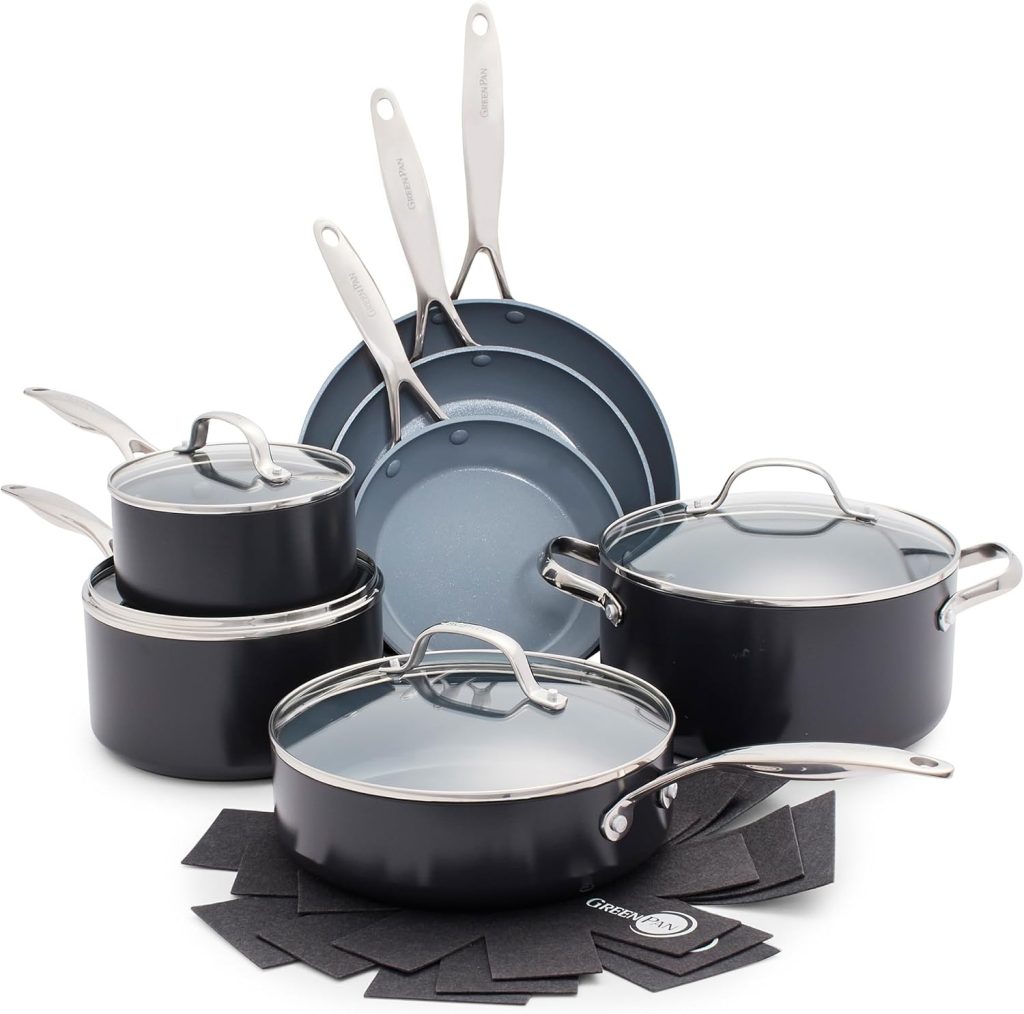
GreenPan Cookware Review:GreenPan offers multiple cookware collections, each designed to meet different cooking needs and budgets. The brand’s signature product lines include the Valencia Pro, Venice Pro, Reserve, and Chatham collections, with prices ranging from budget-friendly starter sets to premium professional-grade options.
Product Specifications Table
| Specification | Details |
|---|---|
| Brand | GreenPan |
| Primary Collections | Valencia Pro, Venice Pro, Reserve, Chatham, Lima |
| Price Range | $29.99 – $399.99 (individual pieces to complete sets) |
| Coating Technology | Thermolon™ ceramic non-stick |
| Base Materials | Hard anodized aluminum, stainless steel, or aluminum |
| Handle Material | Stainless steel, silicone, or Bakelite (collection-dependent) |
| Oven Safe Temperature | Up to 420°F – 600°F (varies by collection) |
| Induction Compatible | Select collections (Valencia Pro, Reserve, Venice Pro) |
| Dishwasher Safe | Yes (most collections, hand washing recommended) |
| PFAS/PFOA Free | Yes, completely free of forever chemicals |
| Manufacturing | Various locations including Belgium and China |
| Warranty | Limited lifetime warranty (varies by collection) |
| Available Pieces | Frying pans, saucepans, stockpots, sauté pans, cookware sets |
| Color Options | Multiple (burgundy, gray, cream, navy, black) |
Key Features & Performance
Thermolon™ Ceramic Non-Stick Technology
The cornerstone of GreenPan’s appeal is its proprietary Thermolon™ ceramic non-stick coating. Unlike traditional PTFE-based coatings (commonly known as Teflon), Thermolon is derived from sand and contains no PFAS, PFOA, lead, or cadmium. This coating is applied through a Sol-Gel process that requires 60% less heating energy during manufacturing compared to conventional non-stick coatings, significantly reducing CO2 emissions.
The Thermolon coating performs admirably in real-world cooking scenarios. Eggs slide effortlessly across the surface with minimal oil, pancakes flip beautifully, and delicate fish fillets release without tearing. The coating can withstand temperatures up to 850°F without releasing toxic fumes, a stark contrast to traditional non-stick pans that begin degrading around 500°F. This makes GreenPan exceptionally safe for everyday cooking, even if you accidentally overheat the pan.
However, it’s important to note that ceramic non-stick coatings, including Thermolon, typically don’t last as long as high-quality PTFE coatings. Most users report excellent non-stick performance for 1-3 years with proper care, after which the coating may begin to lose some effectiveness.
Reinforced Construction and Heat Distribution
GreenPan’s premium collections feature hard anodized aluminum construction, which is twice as hard as stainless steel and provides exceptional durability. The Valencia Pro and Venice Pro collections incorporate a magnetized stainless steel base that ensures compatibility with all cooktops, including induction.
The cookware’s heat distribution is generally excellent. The aluminum core conducts heat efficiently, eliminating hot spots that can burn food. During testing scenarios reported by professional reviewers and home cooks, GreenPan pans heated evenly across the entire cooking surface, producing uniformly cooked proteins and vegetables without the scorching commonly seen in cheaper cookware.
The thicker gauge aluminum used in premium collections like Reserve provides superior heat retention, allowing for better searing and more consistent temperature control. Budget-friendly collections may exhibit slightly less even heating but still perform admirably for their price point.
Ergonomic Design and Handle Comfort
GreenPan has invested considerable effort into ergonomic handle design. The Valencia Pro and Venice Pro collections feature stainless steel handles with a comfortable, stay-cool design that remains relatively cool during stovetop cooking. The handles are securely riveted to the pan body, eliminating the wobbling issues found in some competitor brands.
The handles are contoured to fit comfortably in your hand, providing excellent control when flipping foods or transferring pans from stovetop to oven. The length is well-balanced—long enough to keep your hands away from heat but not so long that they become unwieldy or make storage difficult.
Compatibility and Versatility
One of GreenPan’s strengths is its versatility across different cooking methods. Most collections are oven-safe up to at least 420°F, with premium lines like Reserve handling temperatures up to 600°F. This allows for stovetop-to-oven cooking techniques, such as searing a steak on the stovetop and finishing it in the oven.
The induction-compatible collections work flawlessly on induction cooktops while maintaining compatibility with gas, electric, and ceramic cooking surfaces. The magnetized base heats quickly and efficiently on induction, rivaling specialized induction cookware from dedicated manufacturers.
Pros and Cons
| Pros ✓ | Cons ✗ |
|---|---|
| Completely free of PFAS, PFOA, lead, and cadmium—safer for health-conscious cooking | Ceramic coating durability shorter than traditional PTFE (1-3 years vs 5+ years) |
| Excellent initial non-stick performance with minimal oil required | Premium collections carry a higher price point than comparable traditional non-stick |
| Can withstand high temperatures (up to 850°F) without releasing toxic fumes | Requires gentle utensils—metal spatulas will damage the coating |
| Even heat distribution eliminates hot spots and burning | Hand washing recommended despite dishwasher-safe claims to extend coating life |
| Oven-safe up to 600°F (collection dependent) for versatile cooking techniques | Not as slick as brand-new Teflon—may require slightly more oil initially |
| Induction compatible options available across multiple collections | Some budget collections manufactured in China, not Belgium |
| Lightweight yet durable construction for easy handling | Coating effectiveness can diminish if overheated or used with high heat regularly |
| Environmentally friendly manufacturing process with 60% less CO2 | Requires specific care instructions—cannot use cooking sprays or aerosols |
| Beautiful aesthetic design with multiple color options | Replacement pieces can be expensive when coating eventually wears |
| Limited lifetime warranty on many collections provides peace of mind | Stock availability varies—popular collections sometimes sell out |
Detailed Review Sections
Design & Build Quality
GreenPan cookware showcases a sophisticated European aesthetic that elevates any kitchen. The brand’s color options—ranging from classic black to elegant burgundy and soft cream—allow you to match your cookware to your kitchen décor. The exterior finishes are smooth and professionally executed, with no rough edges or manufacturing imperfections.
The construction quality varies significantly across GreenPan’s product lines. Premium collections like the Reserve and Valencia Pro feature thick-gauge hard anodized aluminum that feels substantial and professional-grade. The weight is perfectly balanced—heavy enough to feel durable but light enough for comfortable handling during extended cooking sessions. The hard anodization process creates a surface that resists scratching and corrosion far better than standard aluminum.
Mid-range collections like the Chatham and Lima lines offer solid construction with slightly thinner gauge materials. While they don’t feel quite as substantial as the premium options, they’re still well-made and durable for everyday cooking. The budget-friendly collections, while functional, exhibit some cost-cutting in materials and finish quality.
The riveted handles are a particular highlight. Unlike welded or screwed handles that can loosen over time, riveted construction provides permanent, wobble-free attachment. The rivets are smoothly finished on the interior cooking surface, minimizing food buildup and making cleaning easier.
Glass lids, where included, are made from tempered glass with well-fitted stainless steel rims. The steam vents are appropriately sized to release pressure without creating excessive splattering. However, some users note that replacement lids can be difficult to source if broken.
Ease of Use
GreenPan cookware is remarkably user-friendly, even for novice cooks. The non-stick surface requires minimal oil or butter, making it ideal for health-conscious cooking and reducing cleanup time. Foods release cleanly with a simple shake of the pan or gentle nudge with a spatula.
The lightweight construction means less arm fatigue during cooking, which is particularly appreciated by those with arthritis or limited hand strength. The balanced weight distribution prevents the pan from feeling front-heavy when food is added, unlike some poorly designed cookware.
Heat responsiveness is excellent—the pans heat up quickly and respond rapidly to temperature adjustments. This gives cooks better control over delicate cooking processes like making omelets or sautéing vegetables. The even heat distribution means you don’t need to constantly move food around the pan to prevent burning.
The oven-safe capability opens up numerous cooking techniques. You can start a frittata on the stovetop and finish it under the broiler, or sear chicken breasts and finish them in the oven for perfectly cooked results. The silicone or stainless steel handles remain cool enough to touch during stovetop cooking, though oven mitts are essential when removing pans from the oven.
One learning curve involves adjusting to ceramic non-stick cooking. Unlike Teflon, which performs best at low to medium temperatures, ceramic can handle higher heat—but doing so regularly will shorten the coating’s lifespan. Users must resist the temptation to crank up the heat and instead find the sweet spot of medium heat for optimal performance and longevity.
Performance
In everyday cooking performance, GreenPan delivers impressive results across a variety of tasks. Eggs cook beautifully with minimal fat, sliding effortlessly from the pan. Pancakes develop an even golden-brown color and flip with ease. Delicate fish fillets release cleanly without sticking or tearing.
Searing performance is good but not exceptional. While you can achieve decent browning on meats, the ceramic coating doesn’t quite match the high-heat searing capabilities of stainless steel or carbon steel. For the best sear, preheat the pan thoroughly and ensure the protein is completely dry before adding it to the pan.
Sauce-making and sautéing are particular strengths. The non-stick surface prevents fond (browned bits) from forming, which is a drawback for pan sauces but excellent for preventing burning and making cleanup easier. Vegetables sauté evenly without sticking, and you can deglaze the pan successfully if desired.
The cookware’s performance on different heat sources varies slightly. On gas stovetops, heat distribution is excellent, with the flame’s heat spreading evenly across the pan bottom. Electric and ceramic cooktops work equally well, with no dead spots or uneven heating. Induction-compatible models heat impressively fast on induction burners, rivaling the quick response of gas.
One area where ceramic coatings struggle is with extremely sticky or sugary foods. Caramelized onions, for instance, may stick slightly more than they would in a traditional non-stick pan. Similarly, cooking with high-sugar sauces requires more attention and stirring to prevent sticking as the coating ages.
Durability & Maintenance
The durability of GreenPan cookware is a nuanced topic. The hard anodized aluminum construction is exceptionally durable and resistant to warping, even with regular use and temperature fluctuations. The cookware body can easily last a decade or more with proper care.
However, the Thermolon ceramic coating has a finite lifespan. With optimal care—using low to medium heat, avoiding cooking sprays, using only silicone or wooden utensils, and hand washing—users report 2-3 years of excellent non-stick performance. After this period, the coating gradually becomes less effective, though the cookware remains perfectly usable with slightly more oil.
Factors that shorten coating life include:
- Using high heat regularly
- Using metal utensils that scratch the surface
- Using cooking sprays or aerosol oils that create buildup
- Dishwasher use (despite dishwasher-safe ratings)
- Thermal shock (adding cold liquids to hot pans)
- Stacking pans without protective padding
Maintenance is straightforward but requires some discipline. Hand washing with warm soapy water and a soft sponge is ideal. While the cookware is technically dishwasher safe, the harsh detergents and high heat can degrade the coating over time. Avoid abrasive scrubbers or scouring pads, as these will damage the ceramic surface.
If food does stick (usually only after extended use), soaking the pan in warm soapy water for 15-20 minutes loosens most residue. For stubborn spots, a paste of baking soda and water works wonders without damaging the coating.
Proper storage extends the coating’s life significantly. Stack pans with felt or cloth pan protectors between them to prevent scratching. Hanging storage is ideal if space permits.
The exterior finish, particularly on hard anodized collections, resists scratching and maintains its appearance well. Some discoloration may occur over time with high-heat cooking, but this doesn’t affect performance.
Customer Experience
GreenPan enjoys generally positive customer feedback across major retail platforms, with Amazon ratings typically ranging from 4.2 to 4.6 stars across different collections. Analyzing thousands of verified customer reviews reveals consistent patterns in user experience.
Positive feedback frequently mentions:
- Excellent initial non-stick performance that exceeds expectations
- Ease of cleaning and maintenance
- Beautiful aesthetic appearance
- Peace of mind from PFAS-free construction
- Even heating and good cooking results
- Comfortable, stay-cool handles
- Good value for money in mid-range collections
Common complaints include:
- Coating durability falling short of expectations (many expect it to last as long as Teflon)
- Non-stick performance degrading after 12-18 months with regular use
- Some reports of warping in budget collections
- Staining or discoloration with high-heat cooking
- Difficulty finding replacement lids or pieces
- Inconsistency between different manufacturing batches
Customer service experiences are mixed. Some users report excellent support with warranty claims and replacement parts, while others struggle to get responses or face delays in processing claims. The limited lifetime warranty is legitimate but requires proof of purchase and assessment of the issue.
Professional chef reviews are generally favorable for home use but note that the cookware isn’t designed for the rigorous demands of professional kitchens. The coating simply can’t withstand the constant high-heat, high-volume cooking that commercial environments demand.
Price & Value for Money
GreenPan’s pricing strategy spans a wide range, making it accessible to different budgets while offering premium options for serious home cooks.
Budget collections ($29.99-$99.99 for individual pieces or small sets) provide an affordable entry point into ceramic non-stick cooking. While they don’t feature the premium construction of higher-end lines, they offer good performance for casual cooks and represent excellent value if you plan to replace them every 2-3 years.
Mid-range collections ($39.99-$169.99 per piece or set) like the Valencia Pro and Chatham lines offer the best balance of quality and affordability. These collections feature better construction, more attractive designs, and longer-lasting coatings while remaining accessible to most budgets.
Premium collections ($79.99-$399.99) like the Reserve line target serious home cooks willing to invest in top-tier materials and construction. These command a significant premium over budget options but deliver noticeably better performance, durability, and aesthetic appeal.
Compared to traditional non-stick cookware from brands like T-fal or Calphalon, GreenPan is moderately priced to premium. You’ll pay 20-50% more than basic non-stick options but receive superior materials and PFAS-free construction. Against other ceramic non-stick brands like Caraway or Our Place, GreenPan is competitively priced and often more affordable.
The value proposition depends heavily on your priorities. If non-toxic cooking and environmental consciousness are paramount, GreenPan offers excellent value. If maximum coating longevity is your priority, traditional PTFE-coated cookware from brands like All-Clad or Scanpan might justify their higher initial cost through longer usable life.
Consider also the total cost of ownership. If you replace GreenPan cookware every 2-3 years at $150 per set, that’s $50-75 per year. A $300 set of traditional non-stick that lasts 5-7 years costs $43-60 per year. The costs are comparable, making the health and environmental benefits of ceramic coating the deciding factor for many buyers.
Comparison Table
| Feature | GreenPan Valencia Pro | Caraway Cookware Set | T-fal Ultimate | All-Clad HA1 |
|---|---|---|---|---|
| Price (10pc Set) | $249.99 | $395.00 | $129.99 | $499.95 |
| Coating Type | Ceramic (Thermolon) | Ceramic | PTFE Non-stick | PTFE Non-stick |
| PFAS-Free | Yes | Yes | No | No |
| Induction Compatible | Yes | Yes | No | Yes |
| Oven Safe | 420°F | 550°F | 400°F | 500°F |
| Dishwasher Safe | Yes* | Yes* | Yes | Yes |
| Construction | Hard Anodized Aluminum | Aluminum with Stainless Steel | Aluminum | Hard Anodized Aluminum |
| Warranty | Limited Lifetime | Limited Lifetime | Limited Lifetime | Limited Lifetime |
| Amazon Rating | 4.4/5 stars | 4.3/5 stars | 4.5/5 stars | 4.6/5 stars |
| Best For | Budget-conscious eco cooking | Premium aesthetic & PFAS-free | Traditional non-stick on budget | Premium non-stick performance |
| Coating Durability | 2-3 years | 2-3 years | 4-6 years | 5-8 years |
*Hand washing recommended for longevity
Who Should Buy This Product?
GreenPan cookware is ideal for several specific consumer profiles:
Health-Conscious Cooks: If you’re concerned about PFAS exposure and want to eliminate “forever chemicals” from your kitchen, GreenPan offers peace of mind without sacrificing too much non-stick performance. Parents cooking for young children particularly appreciate the non-toxic construction.
Environmentally Aware Consumers: The reduced CO2 emissions during manufacturing and the absence of toxic chemicals make GreenPan an excellent choice for those trying to reduce their environmental footprint.
Apartment Dwellers and Small Kitchens: The lightweight construction and excellent non-stick properties make GreenPan ideal for those with limited storage and cooking space. Easy cleanup is particularly valuable in small kitchens with limited counter space.
Beginner to Intermediate Cooks: The forgiving non-stick surface and even heat distribution make GreenPan excellent for those still developing their cooking skills. Mistakes don’t result in stuck food and difficult cleanup.
Arthritis Sufferers or Those with Limited Hand Strength: The lightweight design and minimal oil requirements make cooking less physically demanding.
Those Who Replace Cookware Regularly: If you typically replace your cookware every 2-4 years anyway, GreenPan’s ceramic coating lifespan aligns well with your replacement cycle, and you’ll appreciate the superior health and environmental profile.
GreenPan May Not Be Ideal For:
Professional Chefs or Serious Home Cooks: Those who cook daily at high volumes or high heat might find the coating’s lifespan too short. Traditional PTFE or stainless steel might better suit intensive cooking needs.
Budget-Conscious Shoppers Seeking Maximum Longevity: If your priority is getting the longest possible use from your cookware investment, traditional non-stick options last longer, despite their PFAS content.
High-Heat Searing Enthusiasts: If you regularly sear steaks or other proteins at very high temperatures, stainless steel or carbon steel offers better performance.
Buying Guide: What to Look for in Ceramic Non-Stick Cookware
When shopping for ceramic non-stick cookware like GreenPan, consider these essential factors:
Coating Quality and Certification
Look for cookware explicitly certified as PFAS, PFOA, PFOS, lead, and cadmium-free. Reputable brands will proudly display these certifications. The coating should be applied in multiple layers for durability—single-layer ceramic coatings wear out quickly.
Research the specific coating technology. GreenPan’s Thermolon is well-established and tested, but other manufacturers use different formulations that may perform differently. Look for coatings that can withstand high temperatures (800°F+) without degrading.
Base Material and Construction
Hard anodized aluminum offers the best combination of heat distribution, weight, and durability for ceramic cookware. Standard aluminum is lighter and cheaper but less durable. Avoid extremely thin aluminum that feels flimsy—it will warp easily.
For induction compatibility, ensure the cookware has a magnetic stainless steel base. Test with a magnet if shopping in-store. The base should be thick enough to prevent warping from induction’s intense heat.
Handle Design and Attachment
Handles should be securely riveted, not welded or screwed. Riveted handles won’t loosen over time. The handle material matters—stainless steel with air channels stays cooler than solid handles. Silicone grips provide comfort but may degrade over time.
Test the handle comfort in-store if possible. It should feel balanced and not cause the pan to tip when empty. The handle should be long enough to keep your hands away from heat but not so long that it becomes unwieldy.
Heat Source Compatibility
Ensure the cookware works with your cooktop. Induction requires a magnetic base. Gas works with virtually all cookware. Ceramic and electric cooktops benefit from flat-bottom construction.
Oven-Safe Temperature Rating
If you plan to use stovetop-to-oven cooking techniques, check the maximum oven-safe temperature. Handles often determine the limit—silicone may only withstand 350-400°F, while stainless steel can handle 500-600°F. Glass lids typically have lower temperature ratings than the pans themselves.
Piece Selection
Consider which pieces you actually need. A basic set might include:
- 8″ and 10″ or 11″ frying pans (most versatile)
- 2-3 quart saucepan with lid
- 8-10 quart stockpot with lid
- 3-4 quart sauté pan with lid
Avoid sets with numerous specialty pieces you’ll rarely use. It’s often more economical to buy a smaller set and add individual pieces as needed.
Warranty Coverage
Understand what the warranty covers. “Limited lifetime” doesn’t mean unlimited—it typically covers manufacturing defects, not normal wear of the non-stick coating. Some brands pro-rate warranties, offering replacement at reduced cost after certain time periods.
Common Mistakes to Avoid
Overheating: Ceramic coatings tolerate high heat without releasing toxins, but regular high-heat use degrades the non-stick properties. Stick to low to medium heat for longevity.
Using Cooking Sprays: Aerosol cooking sprays contain propellants and additives that create buildup on ceramic coatings, reducing non-stick performance. Use butter, oil, or spray bottles with pure oil instead.
Metal Utensils: Even gentle use of metal utensils will scratch ceramic coatings. Invest in silicone, wooden, or heat-resistant nylon utensils.
Dishwasher Cleaning: While technically dishwasher safe, the harsh detergents and high heat shorten coating life. Hand wash for best results.
Thermal Shock: Don’t add cold liquids to very hot pans or run hot pans under cold water. This can damage the coating and warp the pan.
Neglecting Preheating: Always preheat ceramic pans before adding food. This ensures even cooking and better non-stick performance.
Frequently Asked Questions
1. How long does GreenPan cookware’s non-stick coating last?
With proper care (low to medium heat, hand washing, soft utensils), GreenPan’s Thermolon coating typically maintains excellent non-stick properties for 2-3 years. Some users report good performance for 4-5 years, while others notice degradation after 12-18 months. The lifespan depends heavily on usage frequency and care. High-heat cooking, metal utensils, cooking sprays, and dishwasher use significantly shorten the coating’s effectiveness.
2. Is GreenPan cookware truly safe and non-toxic?
Yes, GreenPan cookware is free from PFAS, PFOA, lead, and cadmium. The Thermolon ceramic coating is derived from sand-based materials and doesn’t release toxic fumes even when overheated to 850°F. This makes it significantly safer than traditional PTFE non-stick coatings, which can release harmful fumes at high temperatures. Independent testing has verified GreenPan’s health claims.
3. Can I use metal utensils with GreenPan?
No, metal utensils will scratch and damage the ceramic coating, significantly reducing its non-stick properties and lifespan. Always use silicone, wooden, or heat-resistant nylon utensils. While the coating won’t flake into food like damaged PTFE coatings, scratches create rough spots where food sticks more easily.
4. Is GreenPan dishwasher safe?
While GreenPan markets most collections as dishwasher safe, hand washing is strongly recommended to extend the coating’s lifespan. Dishwasher detergents are highly alkaline and abrasive, gradually degrading the ceramic coating. The high heat in dishwashers can also stress the coating. Hand washing with warm soapy water and a soft sponge takes just seconds with the non-stick surface and significantly extends usability.
5. Why does food stick to my GreenPan even though it’s non-stick?
Several factors cause sticking: (1) Insufficient preheating—always preheat the pan before adding food; (2) Using too high heat—ceramic performs best at low to medium heat; (3) Coating degradation from age or improper care; (4) Cooking spray buildup—switch to butter or oil; (5) Not using enough fat—ceramic requires some oil, though less than uncoated pans; (6) Cooking extremely sticky foods like caramelized onions or sugary sauces.
6. Can GreenPan handle high-heat searing and browning?
GreenPan can tolerate high heat without releasing toxins, but regular high-heat use degrades the non-stick coating faster. For best searing results, use medium-high heat and ensure the protein is thoroughly dried and the pan is properly preheated. GreenPan works well for most searing applications but doesn’t match stainless steel or cast iron for extremely high-heat searing. For optimal coating longevity, reserve high-heat cooking for when absolutely necessary.
7. Which GreenPan collection should I choose?
The Valencia Pro offers the best value for most users—induction compatible, hard anodized construction, attractive design, and mid-range pricing. The Reserve collection suits those wanting premium construction and willing to pay extra. Budget collections like Lima work well for casual cooks who plan to replace cookware every few years. The Venice Pro balances premium features with slightly lower pricing than Reserve. Consider your cooktop type (choose induction-compatible if needed), cooking frequency, and budget when deciding.
8. How do I clean stubborn residue from my GreenPan?
For stuck-on food, soak the pan in warm soapy water for 15-30 minutes, then gently clean with a soft sponge. For stubborn spots, make a paste with baking soda and water, apply to the stain, let sit for 10 minutes, then gently scrub. Avoid abrasive cleaners or scouring pads. For discoloration or mineral deposits, a mixture of equal parts water and white vinegar can help. Boil the mixture in the pan for a few minutes, let cool, then wash normally.
9. Can I use GreenPan on an induction cooktop?
Only select GreenPan collections are induction compatible—specifically those with a magnetized stainless steel base, including Valencia Pro, Venice Pro, Reserve, and some others. Check the product description or packaging for the induction symbol. Test with a magnet—if it sticks to the pan’s bottom, it will work on induction. Non-induction collections work on gas, electric, and ceramic cooktops but won’t function on induction burners.
10. What temperature should I use when cooking with GreenPan?
For optimal performance and coating longevity, use low to medium heat for most cooking. Ceramic coatings distribute heat efficiently, so you need less heat than you might expect. Preheat on medium heat for 1-2 minutes before adding food. For searing, medium-high heat is acceptable but shouldn’t be used regularly. Avoid maximum heat settings except for boiling water. The coating can withstand high temperatures without releasing toxins, but regular high-heat use shortens its non-stick lifespan.
11. Does the GreenPan warranty cover the non-stick coating wearing out?
GreenPan’s limited lifetime warranty covers manufacturing defects, not normal wear and tear of the non-stick coating. The warranty addresses issues like warping, handle detachment, or coating defects that occur shortly after purchase—not gradual reduction in non-stick performance from regular use. If your coating fails prematurely (within a few months), contact customer service with proof of purchase. Keep your receipt and register your cookware for warranty purposes.
12. Are there any foods I should avoid cooking in GreenPan?
Avoid acidic foods like tomato sauce for extended cooking, as they can gradually degrade ceramic coatings. High-sugar foods (caramelizing onions, candy-making) may stick more as the coating ages. Extremely delicate foods like fish work beautifully, but coating integrity is essential. You can cook these foods occasionally without issue, but frequent use may accelerate coating wear. The cookware handles a wide variety of foods well, but understanding these limitations helps set appropriate expectations.
Final Verdict
GreenPan cookware represents a compelling option for health-conscious consumers seeking to eliminate PFAS exposure while maintaining convenient non-stick cooking. The Thermolon ceramic coating delivers impressive initial performance, allowing eggs to slide effortlessly, pancakes to flip perfectly, and cleanup to remain quick and easy. The hard anodized aluminum construction, even heat distribution, and thoughtful design details demonstrate GreenPan’s commitment to quality.
However, the cookware is not without compromises. The ceramic coating’s 2-3 year average lifespan means you’ll need to replace or refresh your cookware more frequently than with traditional PTFE alternatives. The coating also requires more careful handling—avoiding metal utensils, cooking sprays, and excessive heat—which some users find restrictive.
The bottom line: GreenPan cookware is worth buying if you prioritize non-toxic cooking materials, environmental consciousness, and ease of use, and you’re willing to accept that the coating has a finite lifespan. The Valencia Pro collection offers the best balance of features and value for most households. Those cooking daily at high volumes or seeking maximum longevity might prefer traditional non-stick or stainless steel alternatives.
For health-conscious parents, environmentally aware consumers, and casual to moderate home cooks, GreenPan delivers excellent value and performance. The peace of mind from PFAS-free cooking and the environmental benefits of reduced manufacturing emissions make the periodic replacement cost worthwhile for many users.
Ultimately, GreenPan has successfully pioneered healthy ceramic non-stick technology and continues refining its products to meet consumer needs. While ceramic coatings may never match the durability of traditional PTFE, they offer a safer, more sustainable alternative that performs admirably for everyday cooking. If you’ve been concerned about the health implications of traditional non-stick cookware, GreenPan provides a viable solution that doesn’t require sacrificing too much in performance or convenience.
Expert Recommendation: Buy the Valencia Pro or Venice Pro collections for the best combination of value, performance, and features. Follow the care instructions diligently to maximize coating life. Set realistic expectations about replacement timelines. Consider GreenPan an investment in healthier cooking that will serve you well for several years before requiring refresh.

Leave a Reply