
Running late and need to get dinner on the table fast? We’ve all been there. Staring into the fridge, the clock ticking, and the thought of a complicated recipe feels impossible.
You need a cooking surface that can keep up with your busy life. This guide explores the ideal cooktop options for making delicious meals in a flash, saving you precious time without sacrificing flavor. Get ready to transform your weeknight cooking!
Choosing A Fast Cooktop For Meals
When time is short, the right cooktop can make all the difference. A cooktop is the heart of your kitchen, and its speed and efficiency directly impact how quickly you can prepare food. This section looks at the main factors that contribute to a cooktop’s ability to deliver quick meals.
We will explore how different technologies heat up, cook, and respond to temperature changes, all of which are vital for speed.
The primary goal is to find a cooktop that minimizes preheating time and cooks food rapidly and evenly. This means considering the material, heating element type, and overall power output. A cooktop that heats up quickly and allows for precise temperature control will enable you to sauté vegetables in minutes, boil water for pasta in a jiffy, and sear proteins to perfection without long waits.
Understanding Cooktop Heating Technologies
Different cooktop technologies heat food in various ways, affecting speed and performance. Understanding these differences helps you select the best cooktop for quick meals. We will break down how each type works and why it matters for fast cooking.
Electric Coil Cooktops
Electric coil cooktops use metal coils that heat up when electricity passes through them. These coils are covered by a metal surface. They are a common and often budget-friendly option.
The main drawback for quick meals is their slow heat-up and cool-down time. The coils need time to become hot enough to cook effectively, and they retain heat for a while after being turned off. This can make precise temperature adjustments challenging for rapid cooking.
Electric Smooth Top Cooktops
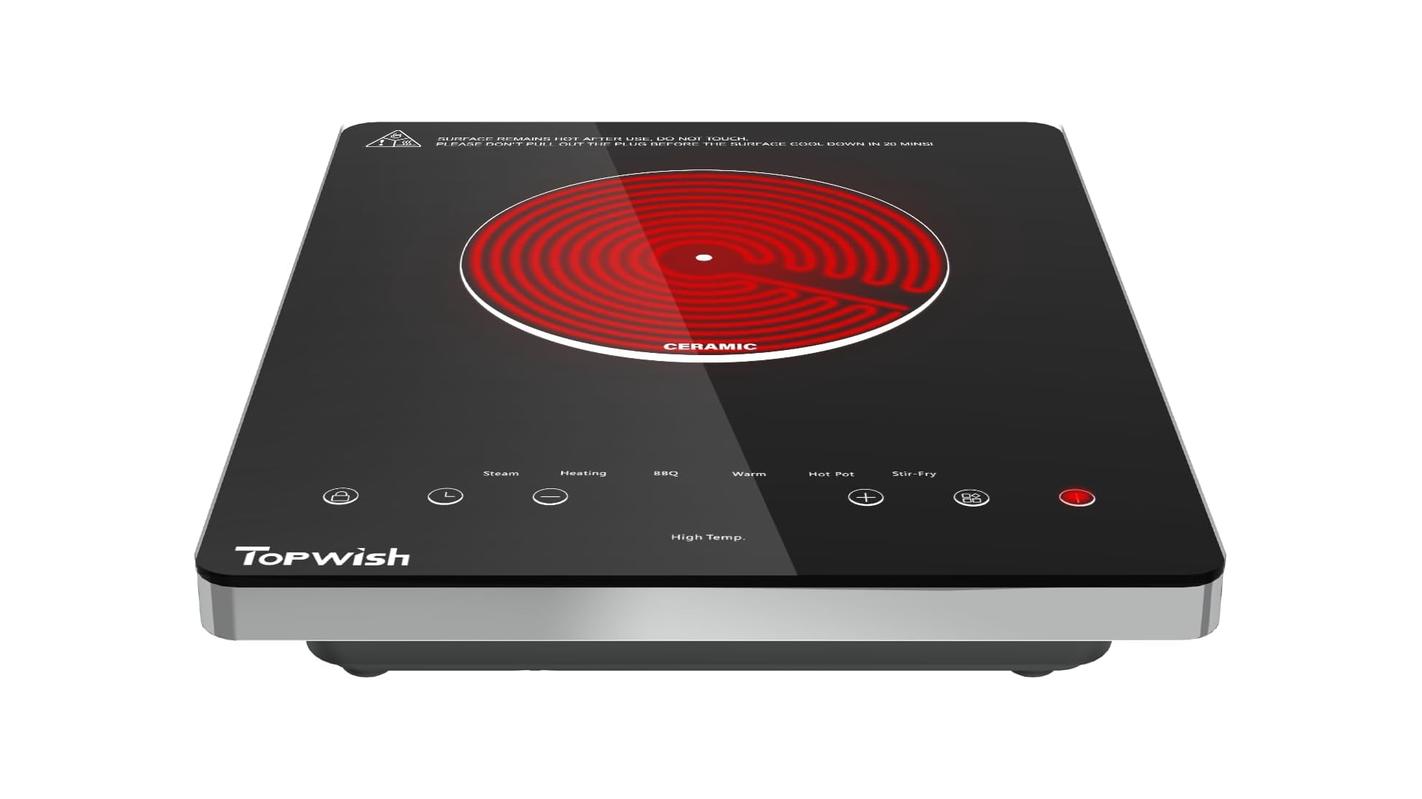
Electric smooth top cooktops have a ceramic glass surface with heating elements beneath. Radiant heat from the elements warms the glass, which then transfers heat to the cookware. They offer a sleeker look than coil tops.
While an improvement over coils in terms of cleaning and aesthetics, radiant smooth tops also have a noticeable preheating period. The heat needs to travel through the glass, which takes time. This can be a bottleneck for meals that require immediate high heat.
Halogen Cooktops
Halogen cooktops are a type of radiant electric cooktop that uses halogen lamps as the heat source. These lamps heat up very quickly, transferring heat directly to the cookware. This makes them faster than standard radiant smooth tops.
The rapid response of halogen elements is beneficial for stir-frying or searing. You can get a hot pan almost instantly. However, their heat distribution can sometimes be less even than other types, and they might not reach the extreme temperatures some cooking methods require.
Gas Cooktops
Gas cooktops use an open flame from burning natural gas or propane to heat cookware. This is a traditional and popular choice for many cooks. The visible flame offers immediate heat.
Gas offers instant on and off heat, with very quick temperature adjustments. You can see the flame change size as you turn the knob, giving a clear indication of heat level. This immediate control is excellent for fast cooking tasks like searing and sautéing.
Induction Cooktops
Induction cooktops are an electric option that uses electromagnetic fields to heat cookware directly. This technology is exceptionally fast and efficient. It’s a leading choice for those prioritizing speed and precision.
Induction heats the pan itself, not the cooktop surface. This means virtually no heat is wasted. The response time is almost instantaneous, comparable to gas, but with far greater control and efficiency.
This makes induction a top contender for the best cooktop for quick meals.
A study by Consumer Reports found that induction cooktops could boil water significantly faster than other types of cooktops. For example, an induction cooktop boiled a quart of water in just over two minutes, while a gas cooktop took about four minutes, and electric radiant took over seven minutes. This time saving directly translates to quicker meal preparation.
Features That Speed Up Cooking
Beyond the basic heating technology, several features can make any cooktop more efficient for preparing quick meals. These elements enhance usability and performance, ensuring you spend less time waiting and more time cooking. We will examine these specific attributes.
When you are looking for a cooktop for quick meals, consider how these features integrate with your cooking style. Some features are designed for immediate impact, while others contribute to overall efficiency over time. The combination of a good heating technology and smart features creates the ultimate fast-cooking experience.
Power Burners and Boost Functions
Many modern cooktops offer high-power burners or special boost functions. These are designed to deliver an extra surge of heat for a limited time. This is perfect for quickly bringing liquids to a boil or searing food rapidly.
A power burner can significantly cut down on heating times for large pots of water or dense ingredients. Boost functions on induction cooktops, for instance, can reach very high temperatures almost instantly, ideal for flash-frying or achieving a perfect sear in seconds. These are invaluable for busy cooks.
Responsive Controls
The ability to quickly and accurately adjust heat levels is critical for fast cooking. Cooktops with highly responsive controls allow for instant changes in temperature. This means less guesswork and more control.
For example, if you are sautéing delicate vegetables, you might need to quickly lower the heat to prevent burning. A cooktop with precise, responsive dials or touch controls will allow you to do this without delay. This immediate feedback loop is essential for dynamic cooking.
Even Heat Distribution
Uneven heating can lead to hot spots and cold spots on the cooktop surface. This results in food cooking unevenly, requiring constant stirring or repositioning. For quick meals, you want consistent heat across the entire cooking surface of the burner.
Cooktops designed for even heat distribution ensure that your food cooks uniformly. This means you can place ingredients anywhere on the burner and expect consistent results. This saves time by reducing the need to constantly move food around.
Induction technology is particularly good at providing very even heat.
Cookware Compatibility
The type of cookware you use can also affect cooking speed. Some cooktop technologies, especially induction, require specific types of magnetic cookware to function correctly. Using the right pans ensures maximum heat transfer and efficiency.
For induction, cast iron and magnetic stainless steel pots and pans are ideal. These materials respond well to the magnetic fields. Using cookware with a flat bottom and sufficient thickness also helps in achieving even and rapid heating.
Ensure your pots and pans are the correct size for the burners to optimize heat transfer.
Intuitive User Interface
A cooktop that is easy to operate saves time and reduces frustration. Intuitive controls, clear markings, and simple settings allow you to get cooking quickly without having to consult a manual every time.
When you’re in a rush, you don’t want to fumble with complicated buttons or menus. A well-designed user interface means you can select the right burner, set the desired power level, and start cooking almost immediately. This ease of use contributes significantly to the overall speed of meal preparation.
Gas vs. Induction The Speed Race
When comparing the fastest options for a cooktop for quick meals, gas and induction often come up. Both offer speed, but in different ways. Understanding their strengths will help you choose the best fit for your kitchen and cooking habits.
We will explore their speed capabilities in detail.
The debate between gas and induction for speed is a common one. Gas provides instant visual feedback and excellent adjustability. Induction offers unparalleled efficiency and rapid heating without the open flame.
Let’s break down their performance metrics.
Gas Cooktop Performance
Gas cooktops provide immediate heat the moment you turn them on. The flame is visible, allowing for quick adjustments to temperature. This makes them very agile for cooking tasks that require frequent heat changes, such as stir-frying or delicate sauce making.
The highest BTU (British Thermal Unit) burners on gas cooktops can heat up very quickly. However, not all gas burners are created equal. Lower BTU burners might not heat as rapidly.
Also, gas cooktops lose a significant amount of heat to the surrounding air, making them less energy-efficient than induction.
A typical gas cooktop with a high-output burner can bring water to a boil in roughly 3-4 minutes, depending on the volume of water and the burner’s BTU rating. This is quite fast, but it’s important to note the energy loss.
Induction Cooktop Performance
Induction cooktops are incredibly fast because they heat the cookware directly. This process is highly efficient, with very little energy lost to the environment. The heat transfer is almost instantaneous.
In head-to-head comparisons for boiling water, induction often outperforms gas. As mentioned earlier, it can boil water in just over two minutes, significantly faster than most gas burners. This speed advantage extends to other cooking tasks like searing, as induction can reach very high temperatures rapidly.
The responsiveness of induction is also a major plus. While gas offers visual feedback, induction offers near-instantaneous electronic feedback. Turning the heat down on an induction cooktop results in an immediate temperature drop in the pan.
This precise control is key for executing quick, complex recipes.
Key Differences in Speed
While both gas and induction are fast, their speed characteristics differ. Gas offers visual immediacy and a familiar cooking experience. Induction offers superior energy efficiency and often faster boiling and heating times.
For tasks where instant searing or rapid boiling is paramount, induction often has a slight edge in overall speed and efficiency. Gas, however, provides a more traditional cooking feel and is less reliant on specific cookware. The choice often comes down to personal preference and the importance of energy savings alongside speed.
Practical Tips for Speedy Cooking
Having a fast cooktop is only part of the equation for quick meals. Smart preparation and cooking techniques are also essential. Here are some practical tips to help you maximize your time in the kitchen.
These tips will help you leverage your chosen cooktop, whether it’s a powerful gas model or an efficient induction surface. By combining the right tools with smart habits, you can shave valuable minutes off your meal preparation.
Mise en Place is Key
Mise en place is a French culinary term meaning “everything in its place.” It refers to organizing and preparing all your ingredients before you start cooking. This is perhaps the single most important tip for quick cooking.
When you have all your vegetables chopped, meats portioned, and spices measured out before you turn on the heat, you avoid stopping mid-cook to prepare ingredients. This dramatically speeds up the process and reduces stress. For example, if you are making a stir-fry, have all your vegetables cut into uniform pieces and your sauce mixed before you heat your wok.
Use High-Heat Cooking Methods
Methods like stir-frying, searing, and grilling use high heat to cook food quickly. These methods are ideal for thin cuts of meat, poultry, seafood, and most vegetables. The intense heat sears the outside of the food, locking in juices and flavor while cooking the interior rapidly.
For instance, searing a chicken breast takes only a few minutes per side on a hot cooktop. Stir-frying thinly sliced vegetables and protein can be completed in under 10 minutes. These techniques are perfectly suited for a cooktop for quick meals.
Batch Cook Staples
Save time during the week by batch cooking staples on the weekend or whenever you have more time. Things like grains (rice, quinoa), beans, roasted vegetables, or even portioned proteins can be prepared in advance.
Having these ready to go means you can assemble meals quickly. For example, pre-cooked rice can be reheated in minutes and added to a quick curry or a grain bowl. Roasted vegetables can be added to salads or pasta dishes.
This strategy significantly reduces the active cooking time required for daily meals.
Invest in Quality Cookware
As mentioned earlier, the right cookware is essential. For gas, ensure your pots and pans have a thick, flat bottom. For induction, use magnetic cookware.
Quality cookware distributes heat evenly and responds quickly to temperature changes, which is vital for speed.
Heavy-bottomed stainless steel or cast iron pans are excellent choices for both gas and induction cooktops. They retain heat well and distribute it evenly, preventing hot spots. Using pans that are appropriately sized for your burners also optimizes heat transfer and cooking efficiency.
Plan Your Meals
Meal planning is a proactive approach that saves immense time. Knowing what you will cook each day eliminates the need to decide on the fly when you are tired and hungry. This also allows you to shop efficiently, ensuring you have all the necessary ingredients.
When planning, consider meals that are naturally quick to prepare or that can be made faster with advance preparation. For instance, one-pan meals or recipes that use pre-cooked components are great for busy weeknights. A clear plan turns cooking from a chore into a streamlined process.
Cooktop Types Comparison Table
| Feature | Electric Coil | Electric Smooth Top | Gas | Induction |
|---|---|---|---|---|
| Heating Speed | Slow | Moderate | Fast (Instant Flame) | Very Fast (Instant Pan Heat) |
| Temperature Control | Poor | Fair | Excellent (Visual) | Excellent (Precise Electronic) |
| Energy Efficiency | Low | Moderate | Moderate (Heat Loss) | High |
| Cookware Required | Any | Any flat-bottomed | Any flat-bottomed | Magnetic (Cast Iron, Stainless Steel) |
| Best For Quick Meals | Not Ideal | Fair | Good | Excellent |
Frequently Asked Questions
Question: Which type of cooktop is the absolute fastest for boiling water
Answer: Induction cooktops are generally the fastest for boiling water, often boiling a quart in just over two minutes due to their direct heating technology.
Question: Can I use my existing pots and pans on an induction cooktop
Answer: You can only use magnetic cookware on an induction cooktop. Test your pans by seeing if a magnet sticks to the bottom; if it does, they should work.
Question: How does a gas cooktop’s speed compare to induction
Answer: Gas cooktops offer instant heat with a visible flame and quick adjustments, while induction provides even faster boiling and heating due to direct pan heating and superior efficiency.
Question: Are smooth top electric cooktops good for quick meals
Answer: Smooth top electric cooktops are better than coil tops but still have a noticeable preheating time. They are not as fast as gas or induction for rapid meal preparation.
Question: What is the most important factor for a cooktop to be good for quick meals
Answer: The most important factors are rapid heating time, precise and responsive temperature control, and even heat distribution to minimize cooking time and ensure consistent results.
Wrap Up
Selecting a cooktop for quick meals means prioritizing speed and control. Induction and gas cooktops lead the pack with their ability to heat up fast and adjust temperatures instantly. Pairing a capable cooktop with smart meal prep like mise en place will transform your kitchen experience.
Enjoy faster, more delicious meals tonight.

Leave a Reply