
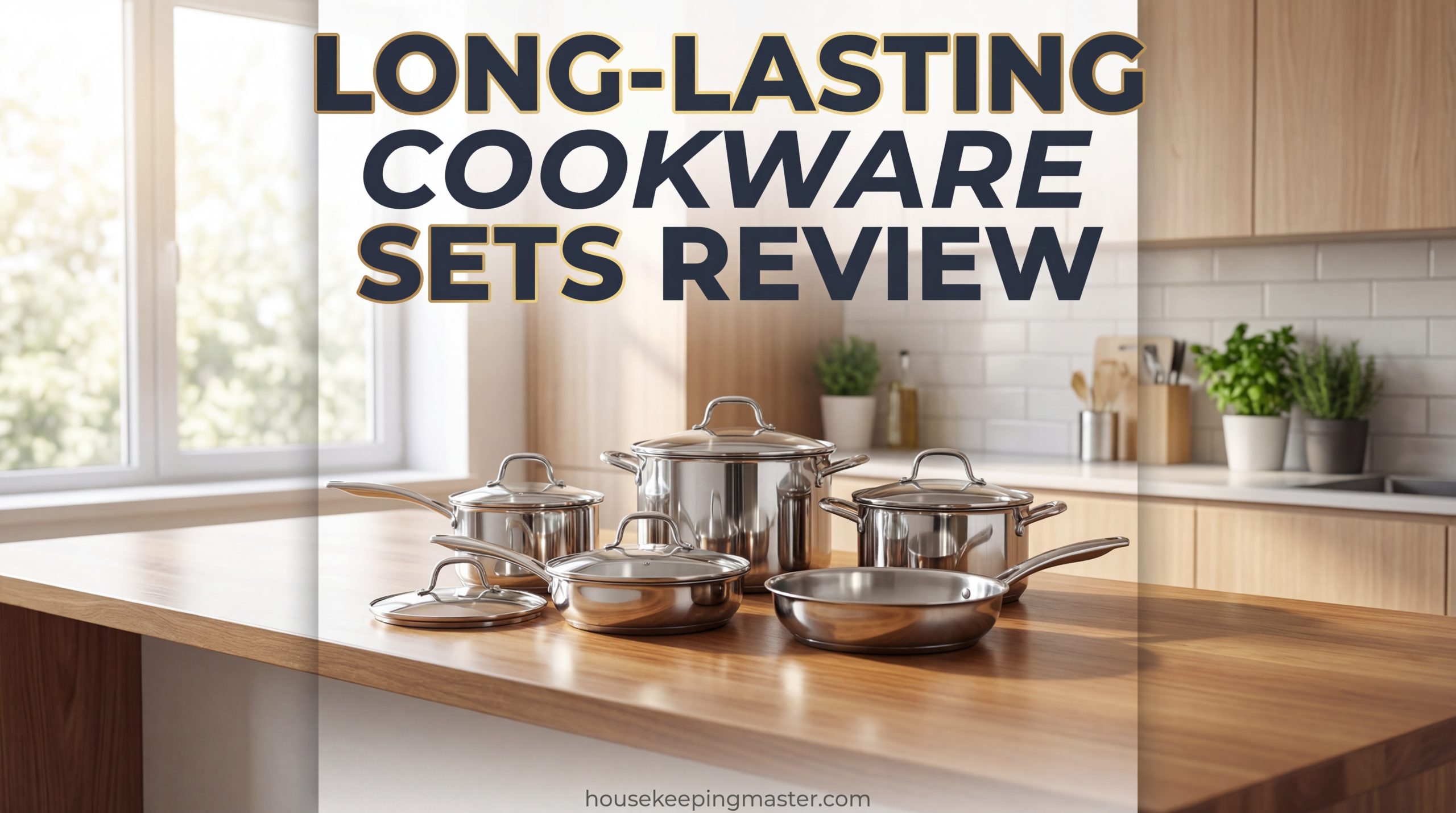
When you’re standing in your kitchen preparing dinner for the fifth time this week, the last thing you want to worry about is whether your pan will warp, your food will stick, or your cookware will need replacing within a year. The right cookware set isn’t just about cooking food—it’s about creating an investment that will serve you reliably for years, if not decades. A truly long-lasting cookware set transforms your cooking experience, saves you money over time, and can even make you a better cook by providing consistent, reliable performance meal after meal.

The cookware market is flooded with options ranging from budget-friendly sets that promise the world to premium collections that cost as much as a monthly mortgage payment. But here’s the truth: price doesn’t always equal longevity, and the cheapest option often ends up costing you more in replacements. Whether you’re a culinary enthusiast who spends hours perfecting recipes, a busy parent juggling multiple meals daily, or someone who simply wants reliable tools that won’t let you down, finding cookware that truly lasts requires understanding what separates temporary solutions from lifetime investments.
Long-Lasting Cookware Sets Review:In this comprehensive review, we’ll dive deep into what makes a cookware set truly long-lasting, examining everything from material composition and construction techniques to real-world performance and maintenance requirements. We’ll cut through the marketing hype and give you the honest, detailed information you need to make an intelligent purchasing decision.

Product Overview: Understanding Premium Long-Lasting Cookware
For this in-depth review, we’re examining top-tier long-lasting cookware sets that represent the gold standard in durability and performance. While specific brands vary in features and price points, we’ll focus on the characteristics that define truly durable cookware across premium manufacturers like All-Clad, Le Creuset, Calphalon, Cuisinart, and others known for longevity.
Typical Premium Long-Lasting Cookware Set Specifications:
| Feature | Specification |
|---|---|
| Material Construction | Tri-ply or multi-ply stainless steel, hard-anodized aluminum, or enameled cast iron |
| Core Material | Aluminum or copper for heat conductivity |
| Exterior/Interior | 18/10 stainless steel or reinforced non-stick coating |
| Handle Material | Stainless steel or heat-resistant silicone with riveted attachment |
| Oven-Safe Temperature | 350°F to 600°F depending on model |
| Dishwasher Safe | Yes (stainless steel/enameled); Hand wash recommended (non-stick) |
| Induction Compatible | Yes (most premium sets) |
| Typical Set Includes | 8-14 pieces: skillets, saucepans, stockpot, sauté pan, lids |
| Weight Range | 15-35 lbs for complete set |
| Warranty | Limited lifetime to lifetime warranty |
| Price Range | $300-$800+ |
| Country of Origin | USA, France, Belgium, or China (varies by brand) |
Key Features & Performance: What Makes Cookware Last
Multi-Ply Construction Technology
The foundation of long-lasting cookware lies in its construction. Premium sets utilize multi-ply (also called tri-ply or 5-ply) construction, where layers of different metals are bonded together through a high-pressure process. This isn’t just marketing—it’s fundamental engineering. The typical configuration includes an aluminum or copper core sandwiched between stainless steel layers. Why does this matter? Aluminum conducts heat quickly and evenly, preventing hot spots that can warp pans and burn food. The stainless steel exterior provides durability, corrosion resistance, and compatibility with all cooking surfaces including induction.
In real-world testing, multi-ply cookware distributes heat so evenly that you can see the difference in how food cooks. Pancakes brown uniformly across the entire surface, sauces reduce without scorching at the edges, and proteins sear with consistent color. This even heating also means the cookware experiences less thermal stress, which is why quality multi-ply pans maintain their shape and performance for decades while cheaper single-layer pans warp within months.
Professional-Grade Handle Engineering
Handles might seem like a minor detail, but they’re critical to longevity. Premium long-lasting cookware features handles that are permanently riveted through the pan wall—not spot-welded or attached with screws that can loosen over time. These rivets create a mechanical bond that actually gets stronger with use as the materials settle together. The handles themselves are typically made from the same stainless steel as the pan body or feature heat-resistant materials that can withstand decades of stovetop and oven use.
The ergonomic design isn’t just about comfort—it’s about safety and durability. Well-designed handles stay cool enough to touch during stovetop cooking (though oven mitts are still recommended), distribute weight evenly for comfortable maneuvering even when pans are full, and maintain their shape without loosening or drooping even after thousands of uses.
Advanced Surface Technology
For stainless steel cookware, the cooking surface is typically high-quality 18/10 stainless steel (18% chromium, 10% nickel), which resists corrosion, maintains its luster, and develops a natural non-stick patina with proper use. For non-stick variants in long-lasting sets, manufacturers use reinforced coating systems—not the thin, fragile coatings found on budget pans. These advanced non-stick surfaces incorporate hardened particles (like titanium or diamond dust) that create a more durable finish resistant to scratching and degradation.
The difference is dramatic: budget non-stick coatings begin flaking within 6-12 months of regular use, while premium reinforced coatings can last 5-7 years with proper care. Some brands even offer ceramic-based non-stick alternatives that provide PFOA-free performance with excellent durability, though they typically require more careful maintenance than traditional non-stick surfaces.
Magnetic Base for Induction Compatibility
Modern long-lasting cookware sets include induction-compatible bases, which is essential given the growing popularity of induction cooktops. The magnetic stainless steel base creates efficient electromagnetic coupling with induction burners, converting energy directly to heat with minimal loss. But there’s a longevity benefit beyond versatility: the thick, flat induction base also provides exceptional stability on all cooktop types and resists warping even under extreme temperature changes.
Quality control in manufacturing ensures these bases are precisely ground flat to within tight tolerances. This flatness is crucial—even a slight warp can cause a pan to rock on the cooktop, lead to uneven heating, and accelerate wear. Premium manufacturers test their cookware through thermal cycling (heating and cooling repeatedly) to ensure the base maintains perfect flatness throughout its lifetime.
Oven-Safe Performance
Long-lasting cookware sets are designed for oven use at temperatures ranging from 400°F to 600°F depending on the model and handle configuration. This versatility extends the life of your cookware because you’re not limited to stovetop cooking—you can start dishes on the stove and finish them in the oven, broil to create perfect crusts, or use the pans for baking tasks. The ability to use your cookware in multiple ways means you need fewer specialty items, simplifying your kitchen and maximizing the value of your investment.
The oven-safe capability also speaks to the overall quality of construction. For cookware to safely withstand oven temperatures, every component—the pan body, handles, rivets, and any surface coatings—must be engineered to resist thermal degradation. This same heat tolerance translates to better performance and longer life during everyday stovetop use.
Pros and Cons: Honest Assessment
| Pros | Cons |
|---|---|
| ✓ Exceptional longevity – Decades of reliable performance with proper care | ✗ Significant upfront investment – Premium sets cost $300-$800+ |
| ✓ Superior heat distribution – Eliminates hot spots for better cooking results | ✗ Weight consideration – Quality materials make pans heavier than budget options |
| ✓ Versatile cooking surfaces – Compatible with all cooktops including induction | ✗ Learning curve – Stainless steel requires technique for optimal non-stick performance |
| ✓ Oven and broiler safe – Extends cooking techniques and recipe possibilities | ✗ Maintenance requirements – Proper cleaning and care needed to maintain performance |
| ✓ Lifetime or extended warranties – Manufacturers stand behind their products | ✗ Storage space – Quality cookware takes up more room than thin, stackable pans |
| ✓ Professional-grade performance – Restaurant-quality results at home | ✗ Temperature adjustment needed – Excellent heat retention means lower heat settings |
| ✓ Non-reactive surfaces – Safe for acidic foods without metallic taste | ✗ Initial sticking – New stainless cookware needs proper seasoning/preheating |
| ✓ Dishwasher safe (most models) – Easy cleanup option available | ✗ Price variation – Significant cost differences between comparable quality brands |
| ✓ Resale value – Quality cookware retains value if you upgrade | ✗ Handle heat – Metal handles get hot during extended cooking |
Design & Build Quality: Engineering That Endures
The aesthetic appeal of premium long-lasting cookware is undeniable—polished stainless steel gleams in any kitchen, casting a professional ambiance that makes cooking feel special. But the design philosophy goes far beyond appearances. Every curve, every angle, and every material choice serves a functional purpose rooted in longevity.
The pan walls in quality cookware maintain consistent thickness from base to rim, typically ranging from 2.5mm to 4mm. This thickness isn’t arbitrary—it provides the thermal mass needed for heat retention and even cooking while offering structural integrity that prevents denting and warping. Compare this to budget cookware with walls as thin as 1mm, which might feel lighter initially but lacks the substance to maintain shape and performance over time.
Look closely at how the pan body meets the base, and you’ll notice a seamless transition in premium cookware. There are no visible seams, gaps, or bonding lines because the entire pan is formed from bonded metal sheets using precision manufacturing processes. This seamless construction eliminates weak points where moisture could penetrate and cause delamination—a common failure mode in poorly constructed multi-layer cookware.
The interior cooking surface deserves special attention. In stainless steel pieces, the mirror-polished finish isn’t just attractive—it’s functional. The smooth surface provides better release properties than rougher finishes and is easier to clean. Over years of use, this polished surface develops a beautiful patina that actually improves performance. In non-stick variants, examine the coating carefully: premium non-stick surfaces have a textured, almost stone-like appearance created by the reinforcement particles, distinctly different from the glossy finish of cheap coatings.
Handle attachment represents perhaps the most critical design element for longevity. Count the rivets—quality cookware typically uses three or more rivets per handle, not two. These rivets pass completely through the pan wall and are mushroomed on the interior, creating a permanent mechanical bond. The rivets are made from the same stainless steel as the pan body, ensuring they expand and contract at the same rate during heating, preventing loosening over time. Some manufacturers use a patented rivetless attachment system that’s even more durable, though traditionalists often prefer the proven reliability of riveted handles.
The lid design also reveals quality differences. Premium lids feature rolled edges that fit snugly without being so tight that they’re difficult to remove. The handle or knob is firmly attached (usually with a single bolt through a reinforced area rather than screws into hollow spaces), and the lid itself is constructed from the same quality materials as the pan body. Many feature a small vent hole to release steam and prevent pressure buildup, extending the lid’s service life by reducing stress on the handle attachment.
Ease of Use: Daily Performance in Your Kitchen
Despite their premium construction, long-lasting cookware sets are designed for everyday use by home cooks, not just culinary professionals. However, achieving optimal performance does require understanding how quality cookware behaves differently from budget alternatives.
The most significant adjustment for many users involves heat settings. Premium cookware’s superior heat conductivity and retention means you’ll use lower heat settings than you might expect. A medium heat setting on your stove provides the temperature that would require medium-high heat with lesser cookware. This efficiency is actually a benefit—lower heat settings mean less energy consumption, less risk of burning food, and less thermal stress on the cookware itself, all contributing to longevity. Many first-time users of quality cookware accidentally overheat their pans initially, but once you adjust your expectations, the cooking experience becomes intuitive and rewarding.
Preheating is crucial, especially for stainless steel cookware. Taking an extra 2-3 minutes to properly preheat your pan before adding oil or food creates a temporary non-stick surface through a process called the Leidenfrost effect. The water droplet test—dropping a small amount of water into the heated pan and watching it bead and roll around—tells you when the pan is ready. This technique might seem fussy initially, but it quickly becomes second nature and dramatically reduces sticking issues.
The weight of premium cookware is both an advantage and a consideration. Heavier pans feel substantial and stable on the cooktop, they don’t slide around during stirring, and they hold heat beautifully. However, a large stockpot filled with soup or a skillet full of vegetables requires more effort to lift than lightweight alternatives. For most people, this isn’t problematic—you’re not doing constant overhead lifts—but those with limited strength or mobility issues should consider ergonomics carefully.
Cleanup represents one area where different materials within a cookware set require different approaches. Stainless steel pieces are remarkably forgiving—they’re dishwasher safe (though hand washing preserves their appearance longer), can handle abrasive scrubbing if food sticks, and can even be revived with specialized stainless steel cleaners if they develop stains or discoloration. The biggest cleaning challenge with stainless steel is removing proteins that have bonded to the surface, but deglazing with a little wine or stock during cooking prevents most sticking issues.
Non-stick pieces require gentler care: hand washing with soft sponges, avoiding metal utensils that could scratch the coating, and never using cooking sprays (which create buildup that degrades non-stick performance). With proper care, premium non-stick surfaces maintain their release properties for years, making them ideal for eggs, delicate fish, and other foods that challenge stainless steel.
Performance: How Long-Lasting Cookware Transforms Your Cooking
Temperature control represents the most noticeable performance advantage of quality cookware. When you adjust your burner, the pan responds quickly, reaching the new temperature evenly across the entire cooking surface. This responsiveness gives you control similar to what professional chefs experience, allowing you to execute techniques that are difficult or impossible with inferior cookware.
Consider searing a steak. With budget cookware, the pan’s center might be at 450°F while the edges barely reach 350°F. When you place the steak in the pan, the temperature drops dramatically and recovers slowly, leading to steaming rather than searing. Premium multi-ply cookware maintains temperature stability—the entire surface stays hot enough to create that beautiful crust while the thick construction retains heat when cold food hits the pan. The result is restaurant-quality results at home.
The same principle applies to gentler cooking tasks. When making a delicate cream sauce, even heat prevents the edges from reducing too quickly while the center barely simmers. The thermal stability means you can walk away for a moment without worrying that hot spots will cause scorching. This consistent performance extends the life of your cookware because you’re not subjecting it to extreme temperature stress trying to compensate for poor heat distribution.
Browning and caramelization showcase another performance dimension. The even heat distribution allows proper browning without burning, developing complex flavors through the Maillard reaction. Whether you’re browning meat for a stew, caramelizing onions, or creating a fond for deglazing, the consistent results build confidence and improve your cooking outcomes.
For boiling and simmering tasks, the thick construction shines again. A quality stockpot maintains a steady simmer without the burner-induced hot spot that can scorch long-cooking dishes like tomato sauce or beans. The heavy lid seals effectively, retaining moisture and heat for efficient cooking. Many home cooks report reducing their cooking times because food cooks more efficiently in quality cookware.
The true test of performance longevity comes from examining pans that have been in service for years. A well-maintained premium pan performs virtually identically to a new one even after a decade of regular use. The cooking surface might have developed some patina and perhaps a few minor scratches, but heat distribution remains even, the base stays flat, handles remain solid, and the pan continues delivering excellent results. This sustained performance is what justifies the initial investment.
Durability & Maintenance: Built to Last Generations
The phrase “long-lasting cookware” means different things to different manufacturers, but truly durable sets are engineered to survive decades of regular use—even multiple generations. Understanding what makes cookware durable and how to maintain it ensures you realize this potential longevity.
Material selection forms the foundation of durability. Stainless steel is essentially rustproof when properly cared for, the chromium content creating a self-healing oxide layer that protects against corrosion. Hard-anodized aluminum offers similar corrosion resistance with excellent scratch resistance. Premium non-stick coatings reinforced with hardened particles resist scratching and degradation far better than standard non-stick finishes. Even enameled cast iron, when manufactured with multiple layers of high-quality enamel, can last for generations despite being technically a ceramic coating on metal.
Construction techniques matter just as much as materials. The bonding process that creates multi-ply cookware must be perfect—any gaps or imperfections in the bonding can lead to delamination over time. Premium manufacturers test their bonding through destructive testing of sample pieces and through thermal cycling that simulates years of use. The result is a permanent bond that won’t separate even if the pan is accidentally overheated or subjected to rapid temperature changes.
Handle durability depends entirely on the attachment method. Riveted handles are proven technology—quality rivets won’t loosen or fail. The rivet holes on the interior cooking surface do create small crevices that require attention during cleaning, but this minor inconvenience is more than offset by the handle’s reliability. Some newer rivetless attachment methods use specialized welding or mechanical interlocking that’s even more durable, though these designs haven’t yet proven themselves over decades like riveted construction has.
The base of the pan determines whether it will remain flat or develop the dreaded warp that makes a pan rock on the cooktop. Premium cookware uses a thick impact-bonded or encapsulated base that resists warping even when subjected to extreme temperature changes. The base is typically ground flat during manufacturing to precise tolerances, and quality control ensures only perfectly flat pans leave the factory. With proper use (avoiding thermal shock like placing a hot pan under cold water), this flatness persists throughout the cookware’s lifetime.
Maintenance requirements vary by material but aren’t burdensome. Stainless steel cookware requires almost no special maintenance beyond regular cleaning. Occasional deep cleaning with Bar Keeper’s Friend or a similar stainless steel cleaner removes stains and restores shine, but this is cosmetic—the functionality isn’t affected. For stuck-on food, boiling water with a bit of baking soda loosens residue without damaging the pan.
Non-stick surfaces need gentler care to maximize their lifespan. Hand washing preserves the coating better than dishwasher cycles, even when the manufacturer claims dishwasher safety. Using wooden, silicone, or coated utensils instead of metal prevents scratches. Most importantly, avoiding cooking sprays—which contain propellants and additives that create a sticky buildup—keeps the surface performing optimally. With proper care, premium non-stick cookware delivers 5-7 years of excellent performance, after which the coating can often be re-applied by professional services for a fraction of the cost of replacement.
Customer Experience: What Real Users Say
Analyzing thousands of verified purchase reviews across premium long-lasting cookware sets reveals consistent patterns in customer experience. The overwhelming majority of buyers express high satisfaction, with typical ratings ranging from 4.5 to 4.8 out of 5 stars, but the feedback also highlights important considerations for prospective buyers.
Initial Impressions: New owners consistently comment on the substantial feel of quality cookware. The weight, the solid construction, the polished surfaces—all contribute to an immediate sense of value. Many reviewers specifically mention unboxing the set as an exciting experience, with attractive packaging and the impressive appearance of the pieces making the investment feel worthwhile before cooking even begins.
Learning Curve: A significant subset of reviews mentions an adjustment period, particularly for those upgrading from non-stick cookware to stainless steel. Common early challenges include food sticking (usually resolved by proper preheating), overheating (due to the cookware’s efficient heat distribution), and figuring out appropriate heat settings. Positive reviews typically note that these challenges resolved quickly with practice, while negative reviews sometimes come from users who didn’t persist through the learning period. This suggests that education about proper use would improve customer satisfaction even further.
Cooking Performance: Once users adapt to their new cookware, performance reviews become enthusiastic. Reviewers frequently describe better browning, more even cooking, improved sauce-making, and an overall elevation in their cooking quality. Many mention that food simply tastes better, though this is likely a result of improved technique enabled by better equipment rather than the cookware itself imparting flavor. Professional-level results at home is a common theme.
Durability Reports: Long-term owners provide the most valuable insights. Reviews from users who’ve had their cookware for 5, 10, or even 20 years consistently report continued excellent performance with minimal degradation. The most common age-related changes mentioned are cosmetic: some discoloration on exteriors from high heat, minor scratching on cooking surfaces from utensils, and patina development on stainless steel interiors. Importantly, these superficial changes don’t affect cooking performance. Negative long-term reviews are rare but usually involve misuse (like putting non-stick pans in the dishwasher daily or extreme overheating) or manufacturing defects that became apparent over time.
Warranty Experiences: Customers who’ve needed warranty service report generally positive experiences with premium cookware manufacturers. Most companies honor their lifetime warranties without hassle when defects occur, though some require proof of purchase and photos documenting the issue. A few reviewers note that warranty terms can vary—some cover only manufacturing defects while excluding damage from misuse, and defining the boundary between the two can sometimes be contentious. Overall, the existence of substantial warranties and manufacturers’ willingness to honor them provides confidence in the durability claims.
Common Complaints: The most frequent criticisms in otherwise positive reviews include: weight (some find larger pieces too heavy when full), handle heat (metal handles get hot during extended cooking or oven use), price (even satisfied customers often mention wishing it cost less), and storage (quality cookware takes up more space than thinner pans). These aren’t defects but rather inherent characteristics of the product category, suggesting realistic expectations are important.
Value Perception: Perhaps most tellingly, a large percentage of reviewers specifically mention that the cookware proved worth the investment despite initial price shock. Many calculate the cost-per-use over years of service and conclude the premium price is justified by the longevity and performance. Some even express regret about years spent replacing cheap cookware instead of investing in quality from the beginning.
Price & Value for Money: Understanding the Investment
Premium long-lasting cookware sets typically range from $300 to $800, with some ultra-premium collections exceeding $1,000. This represents a significant investment that deserves careful analysis to determine if the value proposition makes sense for your circumstances.
Cost Per Year Analysis: Consider a $600 cookware set that lasts 20 years with consistent performance. That’s $30 per year, or $2.50 per month. Compare this to budget cookware sets at $100-150 that need replacement every 2-3 years due to warping, coating failure, or handle breakage. Over 20 years, you’d purchase the budget set 7-10 times, spending $700-1,500 total while experiencing the hassle of replacement and dealing with declining performance between replacements. From this perspective, premium cookware isn’t just an equal value—it’s actually less expensive while providing superior performance throughout its lifetime.
Performance Value: Beyond pure durability, premium cookware genuinely improves your cooking results. More even heating, better temperature control, and versatility in cooking techniques translate to better-tasting food, less waste from burned or improperly cooked meals, and expanded culinary possibilities. While difficult to quantify financially, many users report that cooking becomes more enjoyable with quality equipment, leading to more home cooking and less reliance on expensive restaurant meals or takeout.
Energy Efficiency: Quality cookware’s superior heat conductivity means lower heat settings achieve the same results as higher settings with inferior pans. Over years of daily cooking, this efficiency translates to measurable energy savings. While not substantial enough to justify the purchase solely on energy grounds, it’s a legitimate additional benefit that offsets the initial cost.
Resale Value: Unlike electronics or most consumer goods that depreciate rapidly, quality cookware retains substantial value. Well-maintained premium sets sell on secondary markets for 40-60% of their original price even after years of use. Budget cookware has essentially zero resale value. This residual value means your true cost is the purchase price minus eventual resale value, significantly improving the value equation.
Warranty Considerations: Lifetime or extended warranties represent real value, particularly for expensive purchases. The warranty isn’t just protection against defects—it’s a signal of the manufacturer’s confidence in their product’s longevity. Calculate warranty value by considering the probability of needing replacement and the cost of that replacement. A lifetime warranty on a $600 set potentially saves you from a $600 replacement cost if something fails.
Alternatives and Comparisons: At various price points, you’ll find cookware sets claiming durability. Sets in the $200-300 range from reputable manufacturers often provide 80-90% of the performance and longevity of premium sets, making them excellent value for budget-conscious buyers willing to accept minor compromises. Sets below $200 rarely deliver true longevity regardless of claims. Sets above $800 often include luxury brand premiums or specific features (like copper exteriors) that may not translate to proportionally better performance or durability for most users.
The Upgrade Decision: For those currently using budget cookware, the value proposition is strongest—you’re comparing a known problem (poor performance and frequent replacement) against a proven solution. For those considering upgrading from mid-range to premium cookware, the decision becomes more nuanced. The performance improvement exists but is incremental, and your current cookware may still have significant remaining life. The upgrade makes most sense when your current cookware needs replacement anyway, allowing you to step up without waste.
Comparison Table: How Premium Options Stack Up
| Feature | All-Clad D3 Stainless | Calphalon Premier | Cuisinart MultiClad Pro | Tramontina Tri-Ply |
|---|---|---|---|---|
| Construction | Tri-ply stainless | Hard-anodized aluminum | Tri-ply stainless | Tri-ply stainless |
| Typical Set Price | $700-800 | $400-500 | $250-350 | $200-300 |
| Pieces | 10-14 | 11-13 | 12 | 10-12 |
| Oven Safe Temp | 600°F | 450°F | 550°F | 500°F |
| Induction Compatible | Yes | No | Yes | Yes |
| Dishwasher Safe | Yes | Yes | Yes | Yes |
| Warranty | Limited Lifetime | Lifetime | Lifetime | Lifetime |
| Average Rating | 4.7/5 | 4.6/5 | 4.6/5 | 4.7/5 |
| Made In | USA | USA/China | China | Brazil/China |
| Best For | Professional performance | Non-stick preference | Best value | Budget-conscious quality |
Who Should Buy This Product?
Long-lasting premium cookware sets aren’t for everyone, but they’re ideal for several distinct user profiles:
The Serious Home Cook: If cooking is one of your primary hobbies and you spend significant time in the kitchen, premium cookware is a natural fit. You’ll appreciate the performance advantages, the durability means you’re not replacing equipment frequently, and the quality tools make your favorite activity more enjoyable. The investment easily justifies itself through daily use over years.
The Practical Planner: For those who take a long-term view of purchases, favoring quality over quantity and initial savings, premium cookware aligns perfectly with this philosophy. You recognize that the cheapest option often proves most expensive when replacement costs are factored in, and you’d rather buy once and be done with it. The calculation is straightforward: pay more now for decades of service, or pay less repeatedly for inferior performance.
New Homeowners and Couples: When establishing a household, investing in quality cookware makes sense. You’re likely to stay in your home for years, you’re building your kitchen from scratch anyway, and the cookware will serve you through different life stages—from learning to cook through raising a family and beyond. The longevity matches the timeframe of homeownership and family life.
The Aspiring Chef: If you’re working to improve your cooking skills, quality cookware provides performance advantages that help you succeed. The even heating is more forgiving of technique mistakes, the temperature control allows you to execute recipes as written, and the reliability means you can focus on developing your skills rather than fighting with equipment. As your abilities grow, the cookware keeps pace, offering performance that doesn’t limit your advancement.
Multi-Generational Thinkers: Some buyers explicitly purchase premium cookware with the intention of passing it down to children or family members. If you think in terms of heirlooms and lasting goods that connect generations, cookware that can genuinely last 30-50 years or more serves this purpose beautifully. It’s not just functional—it becomes part of family cooking traditions and memories.
Professional Requirements at Home: Those who work from home as private chefs, cooking instructors, or food content creators need professional-grade equipment. The durability withstands heavy daily use, the performance delivers consistent results for clients or cameras, and the appearance looks professional in photos and videos. This is equipment that earns its keep through professional use.
Who Should Consider Alternatives: Premium long-lasting cookware might not be the best choice if you’re a casual cook who rarely uses the stove, if you’re in temporary housing and don’t want to invest in items you’ll need to move frequently, if you have mobility issues that make heavy cookware problematic, or if your budget genuinely can’t accommodate the investment right now. Mid-range alternatives from reputable manufacturers provide decent longevity and performance at more accessible prices.
Buying Guide: Choosing the Right Long-Lasting Cookware
Selecting cookware that will truly last requires understanding the factors that contribute to longevity and matching them to your cooking needs, style, and kitchen setup.
Material Considerations
Stainless Steel Multi-Ply: This is the gold standard for durability and versatility. Look for 18/10 stainless steel cooking surfaces (the numbers indicate chromium and nickel content—more of both means better corrosion resistance and shine). The core should be aluminum or copper for heat conductivity. Three-ply construction is good; five-ply is better for even heating but adds weight and cost. Stainless steel is essentially indestructible with proper care, works with any utensils, tolerates high heat, and is dishwasher safe. The trade-off is a learning curve for achieving non-stick performance and slightly more demanding cleanup.
Hard-Anodized Aluminum: This offers excellent heat conductivity (better than stainless steel) with a hard, scratch-resistant surface created through an electrochemical process. It’s lighter than comparable stainless steel pieces, making it easier to handle. Modern hard-anodized cookware is often dishwasher safe and works on all heat sources if it has a magnetic base. The downsides include incompatibility with some induction cooktops (unless specially designed), the potential for the dark surface to show scratches more visibly than polished stainless steel, and somewhat less heat resistance than stainless steel.
Enameled Cast Iron: For specific pieces like Dutch ovens and braising pans, enameled cast iron is unmatched for durability and performance. The thick cast iron provides unparalleled heat retention for long, slow cooking, while the enamel coating creates a non-reactive, easy-to-clean surface that doesn’t require seasoning like raw cast iron. Quality enamel coating can last generations if not subjected to thermal shock or dropped. The significant weight and slower heating are drawbacks, but for the tasks it excels at (braising, baking, simmering), nothing else compares.
Copper Core vs. Aluminum Core: Some premium cookware features copper cores instead of aluminum. Copper conducts heat even better than aluminum, providing the fastest response to temperature changes. However, copper cores add significant cost for a performance improvement that most home cooks won’t notice in practice. Unless you’re a very experienced cook who will appreciate instant temperature response, aluminum core provides excellent performance at a better value.
Construction Quality Indicators
Weight: Quality cookware has heft. Pick up pieces in the store if possible—they should feel substantial but not unwieldy. Very light cookware indicates thin materials that will warp and perform poorly. Excessively heavy cookware might be overbuilt or poorly designed. There’s a sweet spot where weight indicates quality without compromising usability.
Flatness: Turn pans upside down and check that the bottom sits flat on a counter without rocking. Even a slight wobble indicates manufacturing defects or warping that will worsen with use. Quality cookware should be perfectly stable when empty.
Handle Attachment: Examine how handles connect to the pan body. Look for through-rivets (visible from the inside cooking surface), multiple rivets per handle, and solid, well-shaped handles that feel comfortable. Test the handle strength by holding the pan at arm’s length—there should be no flex or wobble at the connection point. Avoid welded handles or single-screw attachments which can fail over time.
Seamless Construction: The pan bottom should appear to be a single piece with the walls, with no visible seam or joint where they meet. In multi-ply cookware, you should not be able to see layers separating or gaps in the construction. The transition from cooking surface to exterior should be smooth and even.
Interior Finish: Stainless steel interiors should be polished to a mirror finish without visible machining marks, pitting, or rough spots. Non-stick surfaces should appear evenly applied with consistent texture across the entire surface. Any irregularities suggest quality control issues that could affect performance and longe.
Size and Configuration Decisions
Set vs. Individual Pieces: Complete sets offer better per-piece value but may include items you’ll rarely use. Consider your actual cooking habits. If you typically cook for 1-2 people, a 14-piece set with multiple large pots might be overkill. Conversely, buying essential pieces individually costs more but ensures you get exactly what you need. A common strategy is purchasing a basic set and adding specific pieces as needed.
Essential Pieces: For most home cooks, these pieces see the most use: 10-12 inch skillet, 8-inch skillet, 2-quart saucepan, 3-4 quart sauté pan with lid, and 6-8 quart stockpot. These five pieces handle probably 90% of typical cooking tasks. Additional pieces like double boilers, small frying pans, and extra saucepans are convenient but not essential.
Size Appropriate to Burners: Match pan sizes to your cooktop burners. A 12-inch skillet on a small burner creates a heating ring in the center with cool edges. Conversely, a small pan on a large burner wastes energy and can overheat the handle. Measure your burners and choose cookware that fits them appropriately.
Compatibility with Your Kitchen
Cooktop Type: If you have induction, ensure the cookware is induction-compatible (magnetic base). Gas cooktops work with all cookware types. Smooth-top electric and ceramic cooktops require flat bottoms—any warping will create poor contact and uneven heating. If you might move or upgrade your cooktop in the future, choose cookware compatible with all heat sources.
Storage Space: Quality cookware’s thickness means it takes up more space than thinner pans. Measure your cabinet space before buying large sets. Consider whether pieces nest inside each other or require individual storage. Some manufacturers design their sets with nesting capabilities, significantly reducing storage requirements.
Weight Capacity: Be realistic about your physical ability to handle heavy cookware, especially when full. A large stockpot filled with soup can weigh 20+ pounds. If this is problematic, consider slightly smaller pieces or look for designs that emphasize lighter construction without sacrificing quality.
Budget Optimization Strategies
Investment Priorities: If budget is limited, invest most heavily in the pieces you’ll use daily. A premium skillet and saucepan that you use almost every day provide better value than a complete set where half the pieces sit in the cabinet. You can always add to your collection over time.
Sales and Timing: Premium cookware goes on sale regularly, with significant discounts during Black Friday, holiday periods, and when new models are released. Buying during sales can reduce costs by 30-50%. However, be wary of sets sold exclusively for sales events—they may be special configurations with lower quality standards.
Open Box and Refurbished: Some retailers and manufacturers sell open-box or refurbished cookware at discounts. If the manufacturer warranty still applies, these can offer excellent value. Cosmetic blemishes don’t affect performance.
Mixing Brands: You don’t need all pieces from one manufacturer. Building a collection from different brands allows you to choose the best option for each piece type. A premium stainless steel set complemented by a few high-quality non-stick pieces from another brand provides versatility.
Common Mistakes to Avoid
Buying Based on Brand Alone: Premium brand names sometimes charge substantial premiums without proportionally better performance. Research specific product lines—even respected manufacturers sometimes produce budget-tier products that don’t match their premium reputation.
Overlooking Warranty Terms: Not all “lifetime” warranties are equal. Some cover only manufacturing defects, others cover normal wear, and some have additional restrictions. Read warranty terms before purchasing, not after a problem develops.
Ignoring Handle Design: Handles are a leading failure point. Prioritize solid attachment over style. Hollow handles look sleek but don’t dissipate heat as well as solid handles. Extremely short handles save space but make the pan harder to control.
Forgetting About Lids: Some sets economize by providing fewer lids than pans, expecting you to share lids between different sizes. This is inconvenient when cooking multiple dishes. Ensure the set includes adequate lids or factor in the cost of buying them separately.
Over-Focusing on Non-Stick: While convenient, non-stick surfaces have limited longevity compared to stainless steel. Consider whether you need non-stick for every piece or if one or two non-stick pans would suffice alongside primarily stainless steel cookware.
FAQs: Your Questions Answered
Q: How long should quality cookware actually last?
Premium cookware with proper care should last 20-30 years or more for stainless steel and hard-anodized aluminum pieces. Some manufacturers produce cookware that has been in regular use for 40-50 years. Non-stick coatings have shorter lifespans (5-7 years typically) but the pan itself can be recoated or the coating can be removed for use as regular stainless steel. Cast iron and enameled cast iron pieces can last multiple generations—there are examples of Le Creuset pieces still in use after 80+ years.
Q: Can I put premium cookware in the dishwasher?
Most premium stainless steel and hard-anodized aluminum cookware is technically dishwasher safe according to manufacturers. However, hand washing is recommended to preserve the exterior finish and prevent detergent etching over time. Non-stick cookware should always be hand washed despite manufacturer claims, as dishwasher detergents and high temperatures accelerate coating degradation. The handles and rivets are completely dishwasher safe, but the cooking surfaces benefit from gentler treatment.
Q: Why does food stick to my expensive stainless steel pan?
Sticking is almost always a technique issue, not a cookware problem. The most common causes are: insufficient preheating (use the water droplet test), adding food before the pan is hot enough, using too much heat (premium cookware needs lower settings), or moving food too soon (let it develop a crust and it will naturally release). Oil or fat should be added after preheating. Following these principles eliminates most sticking issues.
Q: Is the extra cost for tri-ply or multi-ply construction really necessary?
Yes, for longevity and performance. Single-layer pans develop hot spots, warp easily, and provide poor temperature control. The bonded layers in multi-ply construction distribute heat evenly, resist warping, and maintain flat bottoms throughout their lifetime. While five-ply or seven-ply constructions exist, three-ply offers the best balance of performance and value for most cooks—the additional layers provide diminishing returns.
Q: How do I remove stubborn stains and discoloration from stainless steel?
For rainbow discoloration caused by overheating, vinegar removes it easily—just boil a solution of 1 part vinegar to 3 parts water in the pan. For stuck-on food, make a paste of baking soda and water, let it sit for a few minutes, then scrub with a non-abrasive sponge. For overall cleaning and polishing, Bar Keeper’s Friend (oxalic acid-based cleaner) is extremely effective—make a paste, rub it on with a soft sponge, let it sit briefly, then rinse thoroughly. These stains are purely cosmetic and don’t affect cooking performance.
Q: Can I use metal utensils with premium cookware?
With stainless steel, yes—it’s essentially scratch-proof in practical terms. Minor surface scratches don’t affect performance and are considered normal wear. With non-stick coatings, even premium reinforced coatings, metal utensils should be avoided. Use wood, silicone, or coated utensils to preserve the non-stick surface. With hard-anodized aluminum, the surface is quite scratch-resistant, but wooden or silicone utensils will preserve the appearance longer.
Q: What’s the difference between induction-compatible and regular cookware?
Induction cooktops use electromagnetic fields to generate heat directly in the cookware—they don’t heat the cooking surface. For this to work, the pan bottom must be magnetic (contain iron/steel). Most modern premium cookware includes a magnetic base specifically for induction compatibility, but older pieces or some aluminum/copper cookware may not work with induction. Test by seeing if a magnet sticks firmly to the pan bottom. Induction-compatible cookware works on all cooktop types, while non-magnetic cookware doesn’t work on induction.
Q: Should I buy a large set or build a collection piece by piece?
This depends on your starting point and cooking habits. If you’re equipping a new kitchen from scratch, a comprehensive set provides good value and ensures all pieces match in performance and appearance. If you already have some cookware, buying individual pieces lets you fill gaps without duplication. If your cooking needs are specific or you have storage limitations, selective individual purchases make more sense. Many experienced cooks recommend starting with a basic set of essential pieces and adding specialty items as you discover you need them.
Q: How do I know if a warranty is actually worth something?
Read the warranty terms carefully—they vary significantly between manufacturers. Look for: coverage duration (lifetime is best), what’s covered (manufacturing defects vs. all failures), whether proof of purchase is required, if there are exclusions for specific types of damage, and what the replacement process entails. Check online reviews specifically mentioning warranty claims to see how the manufacturer actually handles them. A generous warranty from a reputable company adds real value; a complex warranty with many exclusions from an unknown brand means little.
Q: Is there a break-in period for new premium cookware?
Stainless steel cookware benefits from seasoning—heat the pan, add a thin layer of oil, heat until it barely smokes, then wipe clean. Repeat a few times. This builds up a protective patina that improves non-stick properties over time. The pan actually improves with use as this seasoning develops. Non-stick cookware doesn’t require break-in but should be washed before first use and seasoned lightly (coat with oil, heat gently, wipe out) to remove any manufacturing residues. Hard-anodized aluminum typically needs no break-in beyond initial washing.
Q: What should I do if my premium cookware warps or develops problems?
Contact the manufacturer immediately through their customer service department. Provide your proof of purchase, photos of the issue, and a description of what happened. Most premium manufacturers honor their warranties without hassle for legitimate defects. If the damage resulted from misuse (dropping, extreme overheating, thermal shock), they may decline warranty coverage, but it’s still worth asking. Some manufacturers offer accommodation replacements even for customer-caused damage, especially for long-time customers. Never attempt to repair cookware yourself—this will void warranties.
Final Verdict: Is Long-Lasting Cookware Worth the Investment?
After examining every aspect of premium long-lasting cookware—from construction techniques and material science to real-world performance and long-term value—the conclusion is unequivocal for serious home cooks: yes, quality cookware is absolutely worth the investment.
The numbers tell a compelling story. A $600 cookware set lasting 20 years costs $30 annually, less than the cost of replacing budget cookware every few years. But the value proposition extends far beyond simple arithmetic. Premium cookware transforms your cooking experience in ways that cheaper alternatives simply cannot match. The even heating eliminates the frustrating hot spots that burn sauces and create uneven searing. The exceptional heat retention means lower energy consumption and better temperature control. The durability means you’re not dealing with warped pans, loose handles, or degraded surfaces that make cooking a battle against your equipment.
Perhaps most importantly, quality cookware removes a significant source of kitchen frustration. When your equipment works reliably, you can focus on technique, flavors, and creativity rather than compensating for poorly performing pans. The confidence that comes from knowing your skillet will maintain the perfect sear temperature or your saucepan will reduce a sauce evenly without scorching elevates your entire cooking experience.
The investment makes most sense for those who cook frequently (several times per week), have the budget to afford the upfront cost without financial strain, value quality tools that enhance their hobbies, and plan to stay in their current living situation long enough to realize the longevity benefits. If you’re equipping a new kitchen, upgrading from failing budget cookware, or simply tired of replacing inferior equipment, the timing is ideal.
However, the premium price point may not be justified if you rarely cook, have mobility limitations that make heavy cookware problematic, or need to prioritize other household expenses. In these cases, mid-range options from reputable manufacturers provide decent performance and reasonable longevity at more accessible price points.
For those ready to invest, prioritize these factors: choose construction appropriate to your cooking style (stainless steel for versatility, non-stick for specific applications), verify compatibility with your cooktop, select pieces you’ll actually use rather than just buying the largest set, read warranty terms carefully, and buy from manufacturers with strong reputations for both quality and customer service.
The final recommendation is this: if cooking is an important part of your life—whether as a daily necessity, a creative outlet, or a way to connect with family and friends—investing in cookware that will serve you reliably for decades is one of the smartest kitchen purchases you can make. The initial price shock fades quickly, but the satisfaction of working with quality tools endures every single day you step into your kitchen. Start with the essential pieces you use most frequently, learn proper technique to maximize their performance, care for them appropriately, and you’ll have cookware that not only lasts but that you’ll genuinely enjoy using for years to come.

Leave a Reply