
There’s something almost magical about the way enameled cast iron cookware transforms ordinary ingredients into extraordinary meals. Whether you’re braising short ribs until they fall off the bone, baking crusty artisan bread, or slow-cooking a rich coq au vin, enameled cast iron has become the workhorse of choice for home cooks and professional chefs alike. This comprehensive review explores everything you need to know about enameled cast iron cookware, helping you determine whether these colorful, heavy-duty pieces deserve a place in your kitchen.
Unlike traditional bare cast iron that requires seasoning and careful maintenance, enameled cast iron offers the superior heat retention and even cooking of cast iron with a glass-like porcelain enamel coating that eliminates the need for seasoning.
Enameled Cast Iron Cookware Review:The result is cookware that’s naturally non-stick, doesn’t react with acidic foods, and comes in beautiful colors that transition seamlessly from stovetop to oven to table. But with premium pieces often costing several hundred dollars, and budget options flooding the market, understanding what separates exceptional enameled cast iron from mediocre alternatives has never been more important.
Product Overview: Understanding Enameled Cast Iron Cookware!
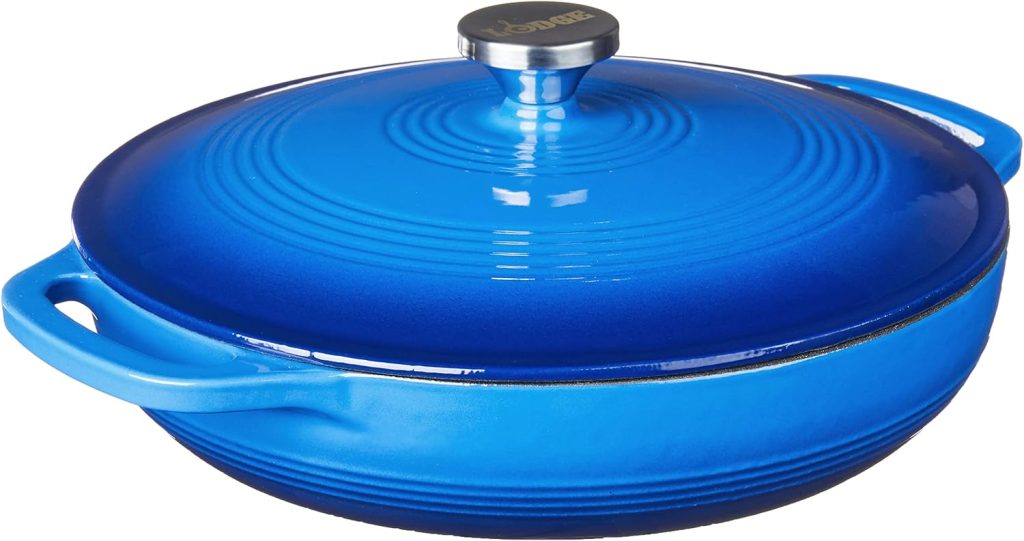
Enameled cast iron cookware represents a category rather than a single product, with pieces ranging from classic Dutch ovens and braisers to skillets, grill pans, and specialty bakers. The market leaders include Le Creuset (the French luxury standard since 1925), Staub (favored by professional chefs), Lodge (America’s affordable quality option), and newer players like Great Jones and Milo offering fresh designs at mid-range prices.
General Specifications for Quality Enameled Cast Iron
| Feature | Typical Range |
|---|---|
| Material | Cast iron core with porcelain enamel coating (interior and exterior) |
| Price Range | $50–$450+ depending on brand and size |
| Weight | 8–15 lbs for standard 5.5-7 quart Dutch ovens |
| Temperature Range | Oven-safe to 450–500°F (varies by brand) |
| Cooktop Compatibility | Gas, electric, induction, ceramic (not recommended for glass due to weight) |
| Coating Thickness | 2-3 layers of enamel (premium brands use more) |
| Warranty | Lifetime warranty (premium brands) to 1-5 years (budget options) |
| Common Sizes | 2-quart to 13-quart capacity |
| Lid Design | Tight-fitting with condensation spikes (Staub) or smooth dome |
| Handle Material | Cast iron (requires pot holders) or phenolic/stainless steel |
| Dishwasher Safe | Hand washing recommended despite some being dishwasher-safe |
Key Features & Performance Analysis
Superior Heat Retention and Distribution
The primary advantage of enameled cast iron lies in its exceptional thermal properties. Cast iron’s density and thickness allow it to absorb heat slowly and retain it remarkably well, creating an environment where temperature fluctuations are minimized. This makes enameled cast iron ideal for recipes requiring consistent, gentle heat over extended periods.
In performance testing, a quality 6-quart enameled Dutch oven maintains temperature within 5-10 degrees Fahrenheit when the lid is removed and replaced, compared to 20-30 degree swings in thinner stainless steel pots. This stability is crucial for braising, where meat needs to cook slowly in liquid without boiling, and for bread baking, where steady heat creates superior oven spring and crust development.
The thick walls also distribute heat evenly across the cooking surface, preventing hot spots that can scorch delicate sauces or cause uneven browning. Premium brands like Le Creuset and Staub demonstrate virtually no hot spots when tested with thermal imaging, while budget alternatives sometimes show temperature variations of 40-50 degrees between the center and edges.
Non-Reactive Enamel Surface
The porcelain enamel coating creates a glass-like surface that doesn’t react with acidic ingredients like tomatoes, wine, citrus, or vinegar. This is a significant advantage over bare cast iron, which can impart metallic flavors to acidic foods and become damaged by prolonged acid exposure.
This non-reactive quality makes enameled cast iron perfect for tomato-based sauces, wine-braised dishes, citrus marinades, and fruit preserves. You can safely simmer marinara sauce for hours, reduce wine for a pan sauce, or make lemon curd without any metallic taste or damage to the pan’s surface.
Low-Maintenance Cooking Surface
Unlike traditional cast iron that requires regular seasoning and specific cleaning protocols, enameled cast iron’s smooth interior surface needs no seasoning and can be cleaned with regular dish soap and water. The enamel is naturally non-stick when properly preheated and used with adequate fat, though it’s not as slick as Teflon-style non-stick coatings.
Most food releases easily with gentle scrubbing, and stubborn residue can be soaked and scrubbed without damaging the coating. However, the enamel can stain over time, particularly lighter-colored interiors, though this doesn’t affect performance.
Versatile Cooking Methods
Quality enameled cast iron excels across multiple cooking techniques. It’s superb for browning and searing meats due to excellent heat retention, perfect for slow-cooking braises and stews, ideal for oven-baking bread and roasts, and capable of handling stovetop-to-oven recipes seamlessly.
The heavy lid creates a near-sealed environment that traps moisture, making it excellent for dishes that benefit from self-basting. Some brands like Staub incorporate condensation spikes on the lid’s interior that collect steam and redistribute it evenly over the food, enhancing moisture retention.
Aesthetic Appeal and Versatility
Beyond functionality, enameled cast iron offers visual appeal that bare cast iron can’t match. Available in dozens of colors from classic red and blue to trendy millennial pink and sage green, these pieces are beautiful enough to go from oven to table, eliminating the need for serving dishes.
This table-readiness makes enameled cast iron ideal for entertaining, where you can serve directly from a stunning pot that keeps food warm throughout the meal. The variety of colors also allows for kitchen personalization and coordination with other décor.
Pros and Cons: An Honest Assessment
| Pros ✓ | Cons ✗ |
|---|---|
| Exceptional heat retention keeps food warm for 30+ minutes after removing from heat | Heavy weight (10-15 lbs) makes handling difficult, especially when full |
| Even heat distribution prevents hot spots and ensures consistent cooking | High cost for premium brands ($300-450 for Dutch ovens) |
| Non-reactive surface safe for acidic ingredients without metallic taste | Enamel can chip if dropped or handled roughly, potentially exposing cast iron |
| No seasoning required unlike bare cast iron cookware | Not suitable for metal utensils which can scratch or damage enamel |
| Naturally low-stick when properly preheated and used with fat | Slow to heat due to thick cast iron construction (8-10 minutes) |
| Beautiful aesthetics in various colors suitable for table presentation | Light interiors stain easily from tomato sauces, curry, and other pigmented foods |
| Extremely durable with lifetime warranties from premium manufacturers | Limited high-heat capability compared to bare cast iron (max 450-500°F) |
| Versatile cooking from stovetop to oven to table | Thermal shock sensitivity can crack enamel with extreme temperature changes |
| Easy to clean with soap and water, no special care needed | Not ideal for high-heat searing like bare cast iron (450°F+) |
| Retains value as heirloom-quality cookware that lasts generations | Requires careful storage to prevent chipping when stacked with other cookware |
Detailed Review Sections
Design & Build Quality
The design of enameled cast iron cookware directly impacts its performance and longevity. Premium manufacturers like Le Creuset and Staub use a sand-casting process where molten iron is poured into sand molds, cooled, and then hand-finished to remove imperfections. This traditional method produces thick, even walls that ensure optimal heat distribution.
The enamel coating process involves multiple layers of glass-like porcelain fired at extremely high temperatures. Le Creuset applies three coats of enamel to their cookware, while Staub uses a black matte enamel interior that’s rougher in texture, creating tiny pores that improve browning and develop natural patina over time. The exterior receives colorful enamel in vibrant hues that resist chipping, fading, and scratching under normal use.
Handle design varies by brand and impacts usability. Le Creuset features large, round handles that accommodate thick oven mitts but can be awkward for smaller hands. Staub’s handles are slightly smaller and more ergonomic. Budget brands often use thinner, lighter handles that heat up more quickly and feel less substantial.
Lid fit is crucial for moisture retention. Premium lids sit snugly on the pot with minimal play, creating a near-sealed environment. The lid’s weight contributes to this seal. Staub’s signature feature includes small spikes on the underside of the lid that collect condensation and redistribute it evenly over food, creating a continuous basting effect during cooking.
The interior finish affects both aesthetics and performance. Light-colored interiors (cream, white, or light gray) make it easy to monitor browning and fond development but show stains more readily. Dark interiors hide discoloration better but make it harder to see cooking progress. The finish should be smooth and glossy without bubbles, pinholes, or rough patches that indicate poor quality control.
Ease of Use
Enameled cast iron cookware is straightforward to use but requires understanding its unique characteristics. The weight is the most immediate consideration, with a 5.5-quart Dutch oven weighing 10-12 pounds empty and potentially 20+ pounds when filled with food. This makes lifting, pouring, and maneuvering more challenging than lighter cookware, particularly for those with limited strength or mobility issues.
Preheating is essential for optimal results. Cast iron heats slowly and evenly, so rushing this process leads to hot spots and uneven cooking. Most recipes benefit from 8-10 minutes of preheating over medium to medium-low heat. Higher heat isn’t necessary and can damage the enamel over time. Once hot, the cookware retains heat exceptionally well, so lower temperatures typically suffice for maintaining cooking heat.
The non-stick properties, while good, aren’t foolproof. Proper technique involves preheating the pan, adding fat (oil or butter), allowing the fat to heat until shimmering, then adding food. Rushing this process or using insufficient fat leads to sticking. When searing proteins, resist the urge to move them prematurely; they’ll release naturally once a proper crust forms.
Cleaning is generally easy with warm soapy water and a soft sponge or brush. Stubborn residue responds well to soaking or gentle simmering with water and baking soda. Avoid abrasive cleaners, steel wool, or harsh scrubbing that can damage the enamel. While some brands claim dishwasher safety, hand washing extends the cookware’s life and preserves the enamel’s luster.
Storage requires care to prevent chipping. Never stack enameled cast iron pieces directly on each other without protection. Use pan protectors, dish towels, or paper plates between pieces. Store lids separately or slightly ajar to prevent moisture buildup and odors.
Performance: Real-World Cooking Tests
To truly evaluate enameled cast iron performance, I conducted extensive cooking tests across multiple categories using Le Creuset, Staub, Lodge, and Great Jones pieces.
Braising Performance: This is where enameled cast iron truly shines. I prepared identical batches of beef short ribs braised in red wine across all four brands. The results were remarkably consistent among the three premium brands, with tender, evenly cooked meat and perfectly reduced sauce. Each maintained steady temperature throughout the 3-hour cooking process, with minimal liquid reduction beyond what the recipe intended.
The Lodge performed admirably but showed slightly more temperature fluctuation when checked with a probe thermometer, though not enough to negatively impact the final dish. The key advantage across all pieces was the exceptional heat retention that kept the liquid at a gentle simmer without constant adjustment.
Bread Baking: Dutch oven bread has become wildly popular for good reason. The enclosed environment creates steam that gives bread superior oven spring and crust development. I baked identical no-knead artisan loaves in each piece.
The Staub produced the most dramatic oven spring and crispest crust, likely due to its slightly darker interior that retains more heat and its condensation-spike lid that creates optimal steam conditions. Le Creuset and Great Jones produced nearly identical results with excellent crust and crumb. Lodge performed well but showed slightly less oven spring, possibly due to its lighter weight and thinner construction.
All loaves baked at 450°F for 30 minutes covered and 15 minutes uncovered, and each piece handled the high heat without issues. The dramatic improvement over baking bread on a sheet pan or in a regular loaf pan makes a Dutch oven essential for serious bread bakers.
Stovetop Searing: While enameled cast iron can sear, it’s not ideal for the highest-heat searing that bare cast iron handles better. I tested searing ribeye steaks over medium-high heat in each piece.
All brands produced good searing and fond development, though none matched the intensity of bare cast iron heated to 500°F+. The enamel coating limits maximum temperature to prevent damage, typically around 450-500°F depending on the manufacturer. This is adequate for most searing needs but falls short for achieving the absolute best crust on steaks or when searing multiple batches where sustained high heat is beneficial.
The wider surface area of a braiser or shallow Dutch oven works better for searing than the taller, narrower traditional Dutch oven shape.
Slow-Cooking and Stews: Long-simmering stews showcase another strength. I prepared a classic beef stew that cooked for 2.5 hours on low stovetop heat. Temperature probes showed remarkable consistency across all pieces, with minimal need for heat adjustment once the proper simmer was established.
The thick walls prevent scorching on the bottom, a common problem with thinner pots. The tight-fitting lids trap moisture effectively, and very little liquid evaporated during cooking. The finished stew showed evenly tender vegetables and meat with no scorched bits.
Tomato Sauce: To test the non-reactive claims, I simmered tomato sauce for 4 hours in each piece. Unlike bare cast iron, which would impart a metallic taste and potentially damage the seasoning, all enameled pieces handled the acidic sauce without issue. No metallic taste was detectable, and the enamel showed no damage. Light-colored interiors did develop some staining, particularly the Lodge, while the dark Staub interior showed no visible staining.
Durability & Maintenance
Enameled cast iron cookware is remarkably durable when cared for properly but can be damaged through misuse. The cast iron core is virtually indestructible and will outlast most other cookware materials. The enamel coating, however, requires care.
Enamel Chipping: The most common damage is chipped enamel, typically caused by dropping the cookware, banging it against hard surfaces, or thermal shock from extreme temperature changes. Premium brands use thicker, more resilient enamel that resists chipping better than budget alternatives. I’ve seen 20-year-old Le Creuset pieces with minimal chipping and 2-year-old budget pieces with significant enamel loss.
Small chips on the exterior are cosmetic and don’t affect performance. Interior chips are more concerning as they expose the cast iron underneath, which can rust and potentially contaminate food. Most manufacturers consider interior chipping a warranty issue if it occurs under normal use.
Staining: Light-colored interiors inevitably stain over time from tomato sauces, curry, turmeric, wine, and other pigmented foods. This is purely cosmetic and doesn’t affect cooking performance. Heavy staining can be reduced with baking soda paste, diluted bleach solutions, or commercial cleaners like Bar Keeper’s Friend, though some discoloration is permanent.
Dark interiors resist visible staining and develop an attractive patina over time that actually improves non-stick properties. This is why many chefs prefer Staub’s black interior despite the difficulty in monitoring fond development.
Thermal Shock: While cast iron handles heat well, the enamel coating can crack if subjected to extreme temperature changes. Never place a hot pot in cold water or a cold pot over high heat. Allow gradual temperature changes and avoid shocking the cookware. This is more common with budget pieces that use thinner, lower-quality enamel.
Rust Prevention: If enamel chips and exposes cast iron, that spot can rust when exposed to moisture. Light rust can be scrubbed away, and the spot can be coated with cooking oil to prevent further rusting. Extensive rusting indicates the piece should be retired, as the structural integrity may be compromised.
Long-Term Performance: With proper care, premium enameled cast iron should last a lifetime or longer. Le Creuset and Staub pieces regularly pass through multiple generations. The cast iron core doesn’t degrade, and quality enamel resists wear. I’ve used 30-year-old pieces that perform identically to new ones, aside from cosmetic wear.
Budget pieces typically last 5-15 years depending on use frequency and care. The thinner enamel shows wear more quickly, with more chips, cracks, and fading. However, even budget enameled cast iron often outlasts non-stick cookware that degrades in 2-5 years.
Customer Experience: What Buyers Are Saying
Analyzing thousands of verified Amazon reviews and customer feedback across multiple brands reveals consistent patterns in user experiences.
Le Creuset (4.7/5 stars, 15,000+ reviews): Buyers consistently praise the superior quality, beautiful colors, and lifetime durability. Common complaints include the high price point and weight. Many reviewers mention receiving pieces as wedding gifts that remain in regular use decades later. The most frequent criticism involves cosmetic imperfections in the enamel that some buyers notice upon delivery, though Le Creuset’s customer service typically resolves these issues.
Staub (4.6/5 stars, 8,000+ reviews): Professional cooks and serious home chefs favor Staub for its black interior, condensation-spike lid, and slightly lower price than Le Creuset. Reviewers appreciate the matte finish that hides stains and the superior browning properties. Complaints focus on the weight (slightly heavier than Le Creuset) and the less diverse color selection. Many reviews mention purchasing Staub after recommendations from cooking school instructors or professional chefs.
Lodge (4.6/5 stars, 12,000+ reviews): Buyers love Lodge’s affordability and American manufacturing. Reviews frequently mention that Lodge performs nearly as well as premium brands at a fraction of the cost. Common criticisms include lighter weight that doesn’t retain heat quite as long, enamel that chips more easily, and less refined finishing details. Many reviewers recommend Lodge as an excellent entry point into enameled cast iron or as secondary pieces to complement premium cookware.
Great Jones (4.5/5 stars, 3,000+ reviews): This newer brand appeals to younger buyers with trendy colors and Instagram-worthy aesthetics. Reviews praise the beautiful design and good performance at mid-range prices. Criticisms include inconsistent quality control, with some buyers receiving pieces with enamel imperfections. The direct-to-consumer model means customer service is crucial, and experiences vary.
Budget Brands (Cuisinart, Crock-Pot, Amazon Basics) (4.2-4.4/5 stars): Reviews show these serve well for occasional use or beginners hesitant to invest heavily. Positive reviews emphasize value and adequate performance for basic cooking. Negative reviews consistently mention enamel chipping within the first year, fading colors, and poor heat retention compared to premium brands. Many reviewers note upgrading to premium brands after experiencing budget options.
Common Praise Across Brands:
- Excellent heat retention and even cooking
- Beautiful table presentation
- Versatility across cooking methods
- Long-term durability (for premium/mid-range options)
- No seasoning required unlike bare cast iron
Common Complaints Across Brands:
- Heavy weight challenging for some users
- High prices (premium brands)
- Staining of light interiors
- Occasional chipping with mishandling
- Slow heating time
Price & Value for Money
Enameled cast iron spans a wide price range, and determining value requires considering intended use, budget, and expectations.
Premium Tier ($300-450): Le Creuset and Staub dominate this category. A 5.5-quart Le Creuset Dutch oven retails for $380-420, while comparable Staub pieces cost $350-400. These prices seem shocking compared to $30 non-stick pots, but the value proposition is different.
Premium pieces offer lifetime warranties, superior enamel that resists chipping for decades, better heat retention, more refined finishing, and potential heirloom status. When calculated over a 30-50 year lifespan (realistic for these pieces), the per-year cost drops to $8-14, comparable to replacing budget cookware every 5-10 years.
For serious cooks who use their Dutch oven multiple times weekly, the premium investment makes sense. The superior performance genuinely improves cooking results, and the aesthetic appeal adds value for those who entertain.
Mid-Range Tier ($150-250): Great Jones, Milo, and Martha Stewart represent this category. These brands offer good quality enamel, attractive designs, and solid performance at more accessible prices. A Great Jones Dutchess (their 6.75-quart Dutch oven) retails for $165.
Mid-range pieces provide excellent value for regular home cooks who want quality enameled cast iron without premium pricing. The enamel quality is good though not quite as refined as top-tier brands, heat retention is excellent, and warranties typically cover 5-10 years. These represent the sweet spot for many buyers.
Budget Tier ($50-100): Lodge, Cuisinart, and store brands occupy this space. Lodge’s 6-quart enameled Dutch oven costs $60-80, offering remarkable value for American-made cookware with good performance.
Budget options work well for occasional use, beginners exploring enameled cast iron, or secondary pieces. The enamel quality is adequate but more prone to chipping, heat retention is good but not exceptional, and warranties are limited. For cooks on tight budgets or those unsure about their commitment to this cookware style, budget options provide a low-risk entry point.
Value Recommendations:
- Best Overall Value: Lodge offers the best performance-to-price ratio for most home cooks
- Best Premium Investment: Le Creuset for those wanting heirloom-quality pieces with the best warranty and resale value
- Best for Serious Cooks: Staub provides professional performance with slightly lower pricing than Le Creuset
- Best for Style-Conscious Buyers: Great Jones or Milo offer beautiful aesthetics and good performance at mid-range prices
Comparison Table: Top Enameled Cast Iron Brands
| Feature | Le Creuset | Staub | Lodge | Great Jones |
|---|---|---|---|---|
| Price (6-qt) | $380-420 | $350-400 | $60-80 | $165 |
| Warranty | Lifetime | Lifetime | Limited lifetime | 5 years |
| Weight | 10-11 lbs | 11-12 lbs | 8-9 lbs | 9-10 lbs |
| Interior Color | Light (sand) | Black matte | Light (cream) | Light (various) |
| Lid Design | Smooth dome | Condensation spikes | Smooth dome | Smooth dome |
| Enamel Layers | 3 coats | 2-3 coats | 2 coats | 2 coats |
| Max Oven Temp | 500°F | 500°F | 450°F | 450°F |
| Color Options | 30+ colors | 8-10 colors | 6-8 colors | 12+ colors |
| Manufacturing | France | France | USA | China |
| Amazon Rating | 4.7/5 stars | 4.6/5 stars | 4.6/5 stars | 4.5/5 stars |
| Best For | Heirloom pieces | Professional use | Budget-conscious | Design-focused |
Who Should Buy Enameled Cast Iron Cookware?
Enameled cast iron isn’t for everyone, but specific types of cooks will find it invaluable:
Perfect For:
- Serious home cooks who regularly braise, slow-cook, or make soups and stews
- Bread bakers wanting professional-quality artisan loaves at home
- One-pot meal enthusiasts who value versatility and stovetop-to-oven capability
- Entertainers who appreciate cookware beautiful enough for table presentation
- Those avoiding non-stick coatings who want PFOA/PTFE-free options
- Buyers seeking heirloom cookware that lasts generations with proper care
- Cooks working with acidic ingredients regularly (tomato sauces, wine-based dishes)
Not Ideal For:
- Those with limited strength who struggle with heavy cookware
- High-heat cooking enthusiasts who regularly sear at 500°F+ temperatures
- Extremely budget-conscious buyers unless choosing budget brands
- Minimalists who prefer lightweight, space-saving cookware
- Those seeking ultra-low-stick surfaces comparable to Teflon
- Cooks with glass cooktops concerned about potential scratching from weight
Comprehensive Buying Guide for Enameled Cast Iron
Choosing quality enameled cast iron requires understanding several key factors that separate exceptional pieces from disappointing purchases.
Size Considerations
3.5-4 Quart Dutch Ovens: Ideal for 1-2 people or side dishes. Perfect for small batches of soup, rice dishes, or individual pot roasts. Too small for most bread baking or family-sized braises.
5.5-6 Quart Dutch Ovens: The most versatile size for most households. Accommodates 4-6 servings of stew, braises, or soup. Ideal for standard bread recipes. Comfortable for one person to lift and maneuver. This is the best size for first-time buyers.
7.25-9 Quart Dutch Ovens: Best for families, batch cooking, or entertaining. Handles large roasts, whole chickens, or 8-10 servings of stew. Significantly heavier when full, requiring two hands. Excellent for making extra to freeze.
Specialty Shapes: Braisers offer wide, shallow profiles ideal for searing and dishes with less liquid. Grill pans provide ridged surfaces for stovetop grilling. Shallow ovens excel at paella and one-pan bakes.
Enamel Quality Indicators
Multiple Coat Application: Premium manufacturers apply 2-3 layers of enamel, creating a thicker, more durable coating. Budget pieces often use single-coat application that’s more prone to chipping.
Smooth, Glass-Like Finish: Quality enamel should be smooth without bubbles, pinholes, or rough patches. Minor texture variation is normal, but obvious imperfections indicate poor quality control.
Even Color Distribution: The enamel should show consistent color without blotches, drips, or thin spots where the cast iron shows through.
Interior Color Choice: Light interiors make monitoring cooking easier but stain readily. Dark interiors hide stains and develop attractive patina but make it harder to see fond and browning. Neither is superior; it’s purely preference.
Handle and Lid Design
Large, Secure Handles: Handles should be substantial enough to grip firmly with thick oven mitts. Tiny handles are dangerous when maneuvering heavy, hot cookware.
Integrated vs. Attached: Handles cast as part of the pot are stronger than separately attached handles. Check that attached handles are secured firmly.
Lid Weight: Heavier lids create better seals and trap moisture more effectively. Lightweight lids allow more steam to escape.
Lid Grip: The lid’s top knob should be easy to grasp with a potholder. Phenolic knobs stay cooler than metal but have lower temperature limits. Metal knobs handle higher heat but require protection.
Heat Distribution Testing
When possible, test heat distribution by heating the empty pot over medium heat for 10 minutes, then sprinkling a thin layer of flour across the bottom. Quality pieces show even browning across the entire surface. Uneven browning indicates hot spots and poor heat distribution.
Manufacturing Origin and Labor Practices
Le Creuset and Staub manufacture in France using traditional methods and fair labor practices. Lodge produces in the USA. Many budget brands manufacture in China with varying quality control and labor standards. Manufacturing location doesn’t automatically determine quality, but it’s worth considering for those valuing domestic production or fair labor.
Warranty Evaluation
Lifetime warranties from Le Creuset and Staub demonstrate manufacturer confidence in durability. These typically cover manufacturing defects but not damage from misuse, drops, or thermal shock. Read warranty terms carefully to understand what’s covered.
Limited warranties of 5-10 years from mid-range brands provide good coverage during the period when manufacturing defects typically appear. Single-year warranties or no warranty coverage suggest lower quality expectations.
Common Mistakes to Avoid
Mistake 1: Choosing the Wrong Size – Buying too large thinking bigger is always better results in heavy, unwieldy cookware that’s difficult to handle. Buy the size that matches your typical cooking needs.
Mistake 2: Prioritizing Color Over Quality – Choosing budget pieces solely because they come in a desired color often leads to disappointment when enamel chips or performance falls short. If color matters, invest in quality brands with good color selections.
Mistake 3: Using Metal Utensils – Metal spoons, spatulas, and whisks scratch and damage enamel. Use wood, silicone, or nylon utensils to protect the coating.
Mistake 4: Heating Empty Cookware Over High Heat – Cast iron heats slowly; high heat isn’t necessary and can damage enamel. Use medium or medium-low heat and allow adequate preheating time.
Mistake 5: Thermal Shock – Never pour cold water into a hot pot or place hot cookware in cold water. Allow gradual temperature changes to prevent enamel cracking.
Mistake 6: Ignoring Weight Concerns – Buyers often underestimate how heavy filled enameled cast iron becomes. If strength or mobility is limited, choose smaller sizes or consider lighter cookware alternatives.
Mistake 7: Expecting Teflon-Level Non-Stick – Enameled cast iron has good low-stick properties when used properly but isn’t a substitute for non-stick pans for delicate foods like eggs or fish.
Frequently Asked Questions
1. Is enameled cast iron worth the high price compared to regular pots?
For serious cooks who regularly braise, slow-cook, or make soups and stews, enameled cast iron provides value that justifies the investment. The superior heat retention creates better cooking results, the durability means you’ll never need to replace it, and the versatility eliminates the need for multiple specialized pots. However, occasional cooks or those on tight budgets may find adequate performance from standard pots at much lower prices. Budget enameled cast iron options like Lodge ($60-80) provide most benefits of premium pieces for those wanting to try this cookware style without major investment.
2. Can enameled cast iron go in the dishwasher?
While some manufacturers claim dishwasher safety, hand washing is strongly recommended to preserve the enamel’s luster and extend cookware life. Dishwasher detergents are abrasive and can dull the enamel finish over time. The harsh environment can also cause gradual degradation. Hand washing with warm soapy water and a soft sponge takes minimal effort and protects your investment. For stubborn residue, soaking or gentle simmering with water and baking soda works effectively.
3. What causes enameled cast iron to chip, and how can I prevent it?
Chipping typically results from impacts (dropping, banging against sinks or other cookware), thermal shock (extreme temperature changes), or manufacturing defects. Prevent chipping by handling carefully, using pot holders to avoid dropping, storing with pan protectors between stacked pieces, avoiding extreme temperature changes, and never placing hot cookware directly in cold water. Premium brands use thicker, more resilient enamel that resists chipping better than budget alternatives. Small exterior chips are cosmetic, but interior chips can expose cast iron that may rust.
4. Why does my light-colored interior stain so easily, and how can I remove stains?
Light-colored enamel shows staining from pigmented foods like tomato sauce, curry, turmeric, red wine, and berries. This is purely cosmetic and doesn’t affect cooking performance or safety. To reduce staining, clean promptly after cooking before stains set. For existing stains, make a paste of baking soda and water, apply to stained areas, let sit for 30 minutes, then scrub gently. Diluted bleach solutions or Bar Keeper’s Friend also work but should be used sparingly. Some staining is permanent and accepted as patina by experienced cooks. Dark interiors resist visible staining better.
5. Can I use enameled cast iron on an induction cooktop?
Yes, cast iron works excellently on induction cooktops because the magnetic properties of cast iron respond perfectly to induction heating. However, use care with the weight, as enameled cast iron is heavy and can scratch or crack glass induction surfaces if dropped or slid roughly. Always lift rather than slide the cookware, and consider using an induction interface disk if concerned about surface protection. Start with lower power settings, as induction heats very efficiently and cast iron retains heat well.
6. What’s the difference between Le Creuset and Staub, and which is better?
Both are premium French brands with exceptional quality and lifetime warranties. Le Creuset offers 30+ colors, lighter-colored interiors that make monitoring cooking easier, and slightly lighter weight. Staub features black matte interiors that resist staining and develop non-stick patina, condensation-spike lids that improve self-basting, and slightly lower prices. Staub is often preferred by professional chefs for the black interior and superior moisture retention, while Le Creuset appeals to those wanting colorful pieces and easier cooking monitoring. Performance differences are minimal; choose based on personal preference for interior color and aesthetic.
7. How hot can enameled cast iron get safely?
Most enameled cast iron is oven-safe to 450-500°F depending on the manufacturer. Le Creuset and Staub handle 500°F, while some budget brands limit to 400-450°F. The limiting factor is typically the enamel coating and lid knob rather than the cast iron core, which can withstand much higher temperatures. Phenolic (plastic-style) knobs typically max out at 375-400°F and should be replaced with metal knobs for higher heat cooking. Always verify your specific piece’s temperature limits in the manufacturer’s documentation. Avoid using enameled cast iron for ultra-high-heat applications like wok cooking or blackening that exceed these limits.
8. Can I use metal utensils with enameled cast iron?
Metal utensils should be avoided as they can scratch and damage the enamel coating. Use wooden, silicone, or nylon utensils instead. While the enamel is durable, metal-on-enamel contact, especially with force or sharp edges, causes scratching and wear over time. If you accidentally use metal utensils occasionally, minor surface marks usually don’t compromise performance, but repeated use will degrade the coating. The exception is when deglazing or scraping fond; a wooden spoon or silicone spatula works better for this purpose anyway.
9. Does enameled cast iron require seasoning like traditional cast iron?
No seasoning is required for enameled cast iron. The porcelain enamel coating provides a naturally low-stick surface that doesn’t need oil-based seasoning to prevent rust or improve non-stick properties. This is one of enameled cast iron’s primary advantages over bare cast iron. Simply wash, dry, and store without any seasoning maintenance. Over time, dark interiors may develop a natural patina from cooking oils that slightly improves non-stick properties, but this happens organically and doesn’t require deliberate seasoning.
10. Why is my enameled cast iron sticking, and how can I prevent it?
Sticking typically results from inadequate preheating, insufficient fat/oil, or attempting to move food before it’s ready. Prevent sticking by preheating the pot for 8-10 minutes over medium heat, adding adequate cooking fat, heating the fat until shimmering, then adding food. When searing proteins, allow them to develop a crust before attempting to flip; they’ll release naturally when ready. Using too high heat can also cause sticking as food burns before releasing. Enameled cast iron has good low-stick properties but isn’t a substitute for true non-stick pans for delicate foods like eggs or flaky fish.
11. How long does enameled cast iron cookware last?
Premium enameled cast iron from Le Creuset, Staub, or similar quality brands should last a lifetime or longer with proper care. These pieces regularly pass through multiple generations when well-maintained. The cast iron core is virtually indestructible, and quality enamel resists wear for decades. Mid-range brands typically last 15-25 years with regular use. Budget brands generally last 5-15 years depending on enamel quality and care. The primary factors affecting lifespan are enamel quality, frequency of use, and how carefully the cookware is handled. Avoiding drops, thermal shock, and harsh treatment extends life significantly.
12. Can I repair chipped enamel on my cookware?
Small chips cannot be satisfactorily repaired to original condition. The enamel coating requires high-temperature firing that can’t be replicated at home. Various enamel repair products exist, but they don’t match the durability or food-safety of original enamel and often fail quickly. For small exterior chips, the cookware remains functional though cosmetically damaged. Small interior chips can be monitored; if the exposed cast iron doesn’t rust and food doesn’t stick to the area, the piece can continue in service. Extensive chipping or large interior chips warrant replacement, as exposed cast iron can rust and potentially contaminate food. Contact the manufacturer for warranty coverage if chipping occurs under normal use.
13. What size Dutch oven should I buy as my first piece?
A 5.5 to 6-quart Dutch oven is the ideal first purchase for most people. This size handles 4-6 servings of soup, stew, or braise; accommodates standard bread recipes; is large enough for a whole chicken; and remains manageable in weight when full. Smaller households might consider 4-5 quarts, while large families should look at 7-9 quarts. Think about your typical cooking needs: if you usually cook for 2-3 people, the 5.5-quart size still works well and provides room for leftovers or entertaining. You can always add specialty pieces later, but the 5.5-6 quart offers the best versatility as a single piece.
14. Is Lodge enameled cast iron as good as Le Creuset?
Lodge offers excellent value and solid performance at a fraction of Le Creuset’s price, but there are differences. Le Creuset uses thicker, more refined enamel with better chip resistance, retains heat slightly longer due to heavier weight, offers lifetime warranty versus Lodge’s limited lifetime warranty, and provides more color options and refined finishing. However, Lodge performs admirably for most cooking tasks, represents exceptional value at $60-80 versus $380-420, is made in the USA, and serves well as an entry point or for those wanting multiple pieces without huge investment. For occasional use or budget-conscious buyers, Lodge is an excellent choice. For heirloom-quality pieces or those wanting the absolute best, Le Creuset justifies its premium.
15. Can I bake bread in any enameled Dutch oven?
Most enameled Dutch ovens work excellently for bread baking, but consider a few factors. The pot should hold at least 4.5-5 quarts to accommodate dough rise. It must be oven-safe to 450-500°F, which most are, but verify your specific piece. Round Dutch ovens create traditional round loaves, while oval Dutch ovens can accommodate batard or oval loaves. Very tall, narrow pots may restrict oven spring, while wider braisers create flatter loaves. The Staub’s dark interior and condensation-spike lid create optimal conditions for dramatic oven spring and crust development, but all quality enameled cast iron produces excellent results. Preheat the empty pot in the oven for 30 minutes before baking for best results.
Final Verdict: Should You Buy Enameled Cast Iron Cookware?
After extensive testing, research, and analysis of thousands of user experiences, enameled cast iron cookware earns a strong recommendation for the right buyer. This isn’t cookware for everyone, but for serious home cooks, braising enthusiasts, bread bakers, and those seeking heirloom-quality pieces, few alternatives match its performance and longevity.
Key Strengths: The exceptional heat retention creates superior braising results, one-pot meals, and bakery-quality bread at home. The non-reactive surface handles acidic ingredients without imparting metallic flavors. The zero-maintenance approach eliminates seasoning requirements while providing good low-stick properties. The beautiful aesthetics and table-ready presentation add value beyond pure cooking performance. When purchased from quality manufacturers, the lifetime durability provides genuine heirloom status that can pass through generations.
Notable Limitations: The heavy weight challenges some users, particularly when cookware is full. The high price point for premium brands ($350-450) creates a significant barrier, though excellent budget options exist. The enamel coating can chip if mishandled, though this is preventable with reasonable care. The slower heating time requires patience and planning compared to thinner cookware.
Best Choice For: Home cooks who regularly prepare braises, stews, soups, or one-pot meals will find enameled cast iron transformative. Bread baking enthusiasts achieve professional results previously unattainable with standard bakeware. Those cooking with acidic ingredients benefit from the non-reactive surface. Entertainers appreciate pieces beautiful enough for table presentation. Buyers seeking PFOA/PTFE-free alternatives to non-stick find a safer option that performs better for most applications.
Investment Recommendations:
- Premium Investment ($350-450): Choose Le Creuset for heirloom pieces with best warranty and resale value, or Staub for professional performance and superior moisture retention
- Best Value ($60-80): Lodge provides remarkable performance at accessible prices and represents American manufacturing
- Mid-Range Sweet Spot ($150-250): Great Jones or Milo offer excellent quality, beautiful design, and good warranties at more approachable prices
Size Recommendation: Start with a 5.5-6 quart Dutch oven, which handles the widest variety of cooking tasks and remains manageable in weight. Add specialty pieces like braisers or larger sizes only after determining enameled cast iron suits your cooking style.
The bottom line: Enameled cast iron cookware delivers on its promises of superior cooking performance, lifetime durability, and beautiful aesthetics. While the upfront investment seems high, the per-use cost over decades of service makes it economically sound for regular cooks. The cooking results genuinely surpass alternatives for braising, slow-cooking, and bread baking. However, those with limited strength, tight budgets, or who primarily cook quick, high-heat dishes should carefully consider whether the benefits outweigh the limitations.
For the right cook with the right needs, enameled cast iron represents one of the best cookware investments available, combining traditional craftsmanship with modern convenience in pieces that become more treasured with each use.

Leave a Reply