
Have you ever stared at a new cooktop, wondering where to even begin? Maybe you just moved into a new place with a different kind of stove, or perhaps you’re finally ready to upgrade from your old one. It can feel a little overwhelming with all the knobs, settings, and types of cooktops out there.
But don’t worry, this guide is here to make cooking on your new cooktop simple and enjoyable. We’ll cover the basics so you can get cooking right away, making sure you gain the confidence needed to prepare delicious meals.
Choosing Your First Cooktop Type
Selecting the right cooktop is the first step for anyone starting their cooking adventures. The type of cooktop you choose will greatly influence your cooking experience, affecting everything from how quickly it heats up to how easy it is to clean. Understanding the different options available will help you make a decision that suits your kitchen and your cooking style.
This section breaks down the most common cooktop types, explaining their pros and cons so you can feel confident in your selection.
Electric Coil Cooktops
Electric coil cooktops are a classic choice, known for their durability and affordability. They feature exposed heating elements that glow red when hot. These coils are robust and can withstand rough handling, making them a forgiving option for beginners.
Cleaning can sometimes be a bit tricky, as spills can get into the coils themselves. However, many models have removable drip pans underneath to catch messes.
- Ease of Use These are very straightforward to operate. You simply turn a knob to control the heat level for each burner.
- Durability The physical heating coils are tough and can last a long time with proper care.
- Affordability Electric coil cooktops are generally the least expensive option on the market.
- Heat Control While they heat up and cool down slower than other types, they offer a predictable heat output once they reach temperature.
A common statistic is that electric coil cooktops still make up a significant portion of the appliance market, especially in rental properties and older homes, due to their low cost and reliability. For instance, many surveys indicate that over 15% of households still use electric coil cooktops as their primary cooking appliance.
Smooth Top Electric Cooktops
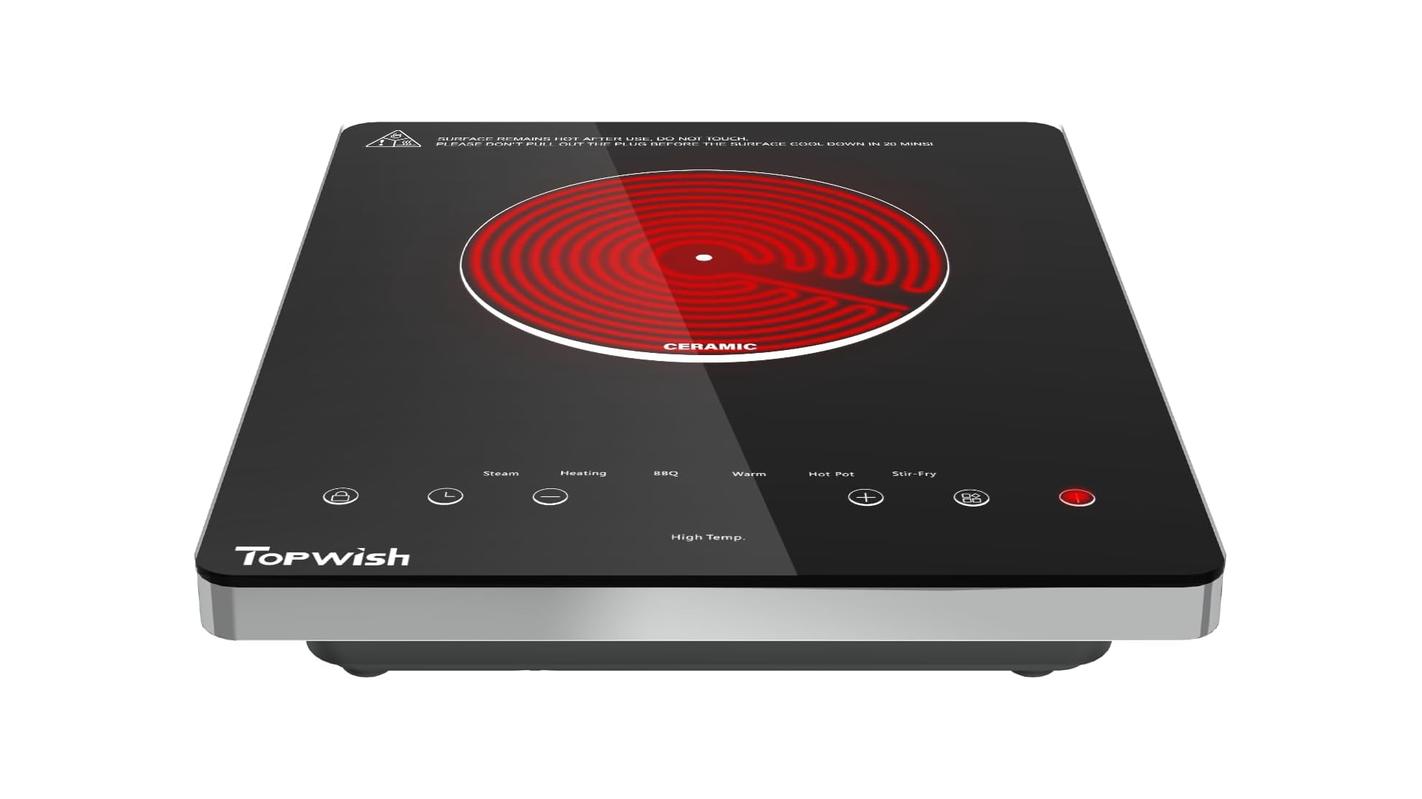
Smooth top electric cooktops, also known as radiant cooktops, have a sleek ceramic-glass surface with heating elements hidden beneath. This design makes them very easy to clean, as spills sit on a flat surface. They offer a more modern look than coil tops and heat up relatively quickly.
The glass surface can be delicate, so it’s important to avoid sliding heavy pots or pans across it. Also, using the correct cookware is essential to prevent scratches.
- Aesthetics They offer a clean, modern look that enhances any kitchen decor.
- Easy Cleaning Wipe down spills with a damp cloth or specialized cleaner. No nooks or crannies to worry about.
- Safety Features Many models include indicator lights that show when a burner is still hot, even after it has been turned off.
- Even Heating The radiant heat is distributed evenly across the cooking surface, leading to more consistent cooking results.
These cooktops are popular for their balance of style and functionality. A report from appliance manufacturers shows that smooth top electric cooktops account for nearly 40% of all electric cooktop sales in recent years, highlighting their appeal for homeowners and renters alike.
Gas Cooktops
Gas cooktops use natural gas or propane to produce an open flame for cooking. They are favored by many home chefs for their instant and precise heat control. You can see and adjust the flame, making it easy to fine-tune the heat for different cooking tasks, from a gentle simmer to a rapid boil.
Cleaning can be more involved due to grates and burner caps, but many are designed for easy disassembly and washing.
- Instant Heat Control Turning the knob directly adjusts the flame, giving immediate feedback and control.
- Visible Flame The open flame allows you to see exactly how much heat you’re applying.
- Versatile Cooking Ideal for techniques requiring quick temperature changes, like stir-frying or searing.
- Energy Source Relies on gas lines or propane tanks, which can be more economical in some regions.
Studies show that gas cooktops are preferred by a substantial number of professional chefs for their superior control. In residential settings, about 40-50% of households use gas for cooking, with many appreciating the responsive nature of gas flames. This preference is often linked to culinary traditions and the desire for immediate heat adjustments.
Induction Cooktops
Induction cooktops are the most advanced electric option. They use electromagnetism to heat cookware directly, rather than heating the cooktop surface itself. This makes them incredibly fast, energy-efficient, and safe, as the cooktop surface remains relatively cool.
The catch is that they require specific magnetic cookware, such as cast iron or some stainless steel pots and pans. While often more expensive upfront, their speed and efficiency can be a significant advantage.
- Speed They heat water much faster than any other type of cooktop.
- Energy Efficiency Since heat is generated directly in the pan, less energy is wasted.
- Safety The cooktop surface stays cool to the touch, reducing burn risks.
- Precise Control Offer highly accurate temperature settings, comparable to gas.
The adoption of induction cooktops is growing rapidly. Market research indicates a surge in sales, with some regions seeing growth rates of over 20% year-over-year as consumers become aware of their benefits. This trend points to their increasing popularity for both new builds and kitchen renovations.
Getting To Know Your Cooktop Controls
Once you’ve chosen your cooktop, the next crucial step is understanding how to use its controls. Even the simplest cooktop has a system for managing heat. Learning these controls will allow you to cook safely and effectively, ensuring your food is prepared just right.
This section will demystify the knobs, buttons, and indicators you’ll encounter, making you feel much more comfortable in the kitchen.
Understanding Burner Dials and Knobs
Most cooktops, whether electric or gas, use dials or knobs to control individual burners. These are typically labeled with numbers or heat settings like low, medium, and high. For electric cooktops, a setting of ‘1’ might be the lowest heat, and ‘9’ or ’10’ the highest.
For gas cooktops, you’ll often see symbols representing flame sizes, from a tiny simmer to a full roaring flame.
- Number Settings (Electric) Typically range from 1 to 9 or 1 to 10. Lower numbers mean less heat, higher numbers mean more heat. It’s good to experiment to find the sweet spot for different tasks.
- Flame Adjustments (Gas) Look for indicators showing small, medium, and large flames. Adjusting the knob allows for smooth transitions between these levels.
- Simmer Settings Many burners have a special low setting designed for simmering sauces or keeping food warm without burning.
- High Heat Used for quickly bringing liquids to a boil or searing meats.
Learning to recognize the feel of the heat is part of becoming a better cook. For instance, a gentle simmer might be a ‘2’ or ‘3’ on an electric stove, while a strong boil could be a ‘9’. On a gas stove, the flame might only be a whisper for a simmer, but a large, active flame for boiling pasta.
Practicing with water is a great way to get a feel for your specific cooktop’s settings.
Touch Controls and Digital Displays
Modern electric and induction cooktops often feature touch controls instead of physical knobs. These are integrated directly into the glass surface. They can offer a sleeker look and are easier to clean.
Digital displays may show the exact temperature setting or a timer. While they can seem intimidating at first, they are usually quite intuitive once you get used to them.
- Activating Controls Usually requires a light tap or a brief press, often indicated by a small icon.
- Temperature Selection You might slide your finger across a bar or tap specific numbers to set the heat level.
- Timer Functions Many digital controls include a built-in timer to help you track cooking times accurately.
- Child Lock A common safety feature that prevents accidental activation by children.
Touch controls offer precise digital readouts, which can be helpful for recipes that call for exact temperatures. For example, a delicate sauce might require a precise 150 degrees Fahrenheit, something that’s easier to achieve with digital settings than with a traditional dial that only offers approximate levels.
Indicator Lights and Safety Features
Safety is paramount, and cooktops come with various indicators to keep you safe. Hot surface indicators are common on electric cooktops, warning you if a burner is still hot. Some gas cooktops have electronic ignition, meaning you don’t need a pilot light or matches.
Always pay attention to these lights and sounds; they are there to help you.
- Hot Surface Indicators These lights stay on as long as the burner is hot, even after you’ve turned it off. They are a critical safety warning.
- Burner Indicator Lights On some models, a small light next to each control knob will illuminate to show which burner is currently in use.
- Flame Failure Safety Devices (Gas) If the flame goes out on a gas burner, this device automatically shuts off the gas supply, preventing leaks.
- Automatic Shut-off Some advanced cooktops will automatically turn off a burner if it’s left on for an excessive amount of time without any adjustments.
These safety features are designed to prevent common accidents. For instance, the hot surface indicator light is a simple but effective way to prevent burns. A study by the Consumer Product Safety Commission found that a significant number of kitchen burns could be prevented with better awareness of hot surfaces, highlighting the importance of these lights.
Essential Cookware For Your Cooktop
The cookware you use can make a big difference in how well your food cooks and how easy your cooktop is to maintain. Different cooktop types have specific cookware requirements. Using the right pots and pans ensures efficient heating and protects your cooktop surface.
Cookware for Electric Coil and Smooth Tops
For electric coil and smooth top electric cooktops, you have a lot of flexibility. Most common materials work well. The key is to ensure the bottom of your pots and pans is flat and smooth, especially for smooth tops, to ensure good contact and prevent scratches.
Heavy-bottomed pans distribute heat more evenly.
- Materials Stainless steel, aluminum, copper, and enameled cast iron are all good choices. Avoid glass or ceramic cookware that isn’t specifically designed for cooktop use.
- Flat Bottoms Crucial for smooth tops to ensure full contact and efficient heat transfer. Warped pans will heat unevenly and can damage the glass.
- Weight Distribution Pans with a good weight are less likely to slide around. A heavier base also contributes to more even heating.
- Pan Size Use pans that match the size of the burner. A small pan on a large burner wastes energy and can overheat the handle.
A good rule of thumb for electric cooktops is that if a magnet sticks to the bottom of the pan, it will likely work well. This is a simple test that applies to many stainless steel and cast iron cookware options. For smooth tops, avoiding abrasive scrubbers is key to keeping the surface looking new.
Cookware for Gas Cooktops
Gas cooktops are very forgiving when it comes to cookware. The open flame means heat is applied from all sides, so a perfectly flat bottom isn’t as critical as with electric. However, a stable, flat-bottomed pan will still give you the best cooking results.
You can use a wide variety of materials and shapes.
- Material Versatility Most materials like stainless steel, cast iron, copper, and non-stick pans are suitable.
- Stability Ensure pots and pans sit securely on the grates. Wobbly pans can be a safety hazard.
- Heat Distribution Pans with thicker bottoms will offer more even heat, preventing hot spots common with direct flames.
- Grates vs. Pans The design of the grates can sometimes accommodate round-bottomed woks, though flat bottoms are generally recommended for everyday use.
Many seasoned cooks prefer cast iron on gas for its ability to retain and distribute heat evenly. A well-seasoned cast iron skillet can provide a consistent surface for searing steaks or frying eggs, even with the direct heat of a gas flame.
Cookware for Induction Cooktops
Induction cooktops have a specific requirement: magnetic cookware. The cooktop generates a magnetic field, and this field interacts with the base of your pots and pans to create heat. If a magnet sticks firmly to the bottom of a pot or pan, it’s likely induction-compatible.
- Magnetic Base Required This is the most important rule. Test with a magnet.
- Materials Cast iron, magnetic stainless steel, and carbon steel are excellent choices.
- Pan Thickness Induction works best with pans that have a reasonably thick base to ensure even heat distribution and to prevent warping.
- Flat Bottoms Like smooth tops, induction requires a flat bottom for optimal contact with the cooktop surface.
A common misconception is that all stainless steel cookware works on induction. This is not true. Only stainless steel that contains iron (and is therefore magnetic) will work.
Non-magnetic stainless steel, aluminum, copper, and glass cookware will not heat on an induction cooktop.
Basic Cooking Techniques For Beginners
Now that you know your cooktop and have the right cookware, it’s time to talk about actually cooking. Starting with simple techniques will build your confidence. These methods are fundamental and can be applied to a wide variety of dishes.
Boiling and Simmering
Boiling is used to cook foods like pasta, rice, or vegetables in a large amount of water. Simmering is a gentler form of cooking, where food is cooked in liquid just below the boiling point, indicated by small bubbles rising to the surface. This is perfect for sauces, stews, and soups.
- Boiling Water Fill a pot with the desired amount of water, add salt if needed, and place it on the cooktop. Turn the heat to high. Wait for large, rolling bubbles to form throughout the water.
- Adding Food to Boil Carefully add your ingredients to the boiling water. Don’t overcrowd the pot.
- Simmering Once food is cooked to your liking in boiling water, or if you are starting a soup or stew, reduce the heat to low. The liquid should have just a few small bubbles rising occasionally.
- Maintaining Simmer Adjust the heat as needed to keep the liquid at a gentle simmer. Stir occasionally to prevent sticking.
Example scenario: To cook pasta, you’d bring a large pot of water to a rolling boil over high heat. Once boiling, add the pasta and stir. Cook according to package directions, then drain.
For a simple tomato sauce, you might sauté aromatics, add canned tomatoes, then reduce the heat to a gentle simmer for 20-30 minutes, stirring occasionally, until the sauce thickens.
Sautéing
Sautéing involves cooking food quickly in a small amount of hot fat (like oil or butter) over medium-high heat. It’s a great way to cook vegetables, chicken, or fish, giving them a nice browned exterior and tender interior.
- Preheat Pan Place a skillet on the cooktop over medium-high heat. Add a tablespoon or two of your chosen fat.
- Heat the Fat Wait until the fat is shimmering but not smoking. This indicates the pan is hot enough.
- Add Food in Single Layer Place your ingredients in the pan in a single layer. Do not overcrowd the pan, as this will steam the food instead of sautéing it.
- Cook and Stir Cook for a few minutes, stirring or tossing the food occasionally, until it’s browned and cooked through.
Sample scenario: To sauté mushrooms and onions, heat oil in a skillet. Add sliced onions and cook until softened. Then, add sliced mushrooms and cook, stirring, until they are golden brown and tender.
This can be a side dish or the base for many other recipes.
Pan-Frying
Pan-frying is similar to sautéing but uses a bit more fat and often cooks larger pieces of food, like chicken cutlets, fish fillets, or burgers. The goal is to get a nice crispy crust.
- Heat Fat Add enough oil or butter to coat the bottom of the pan. Heat over medium-high heat until hot.
- Add Food Carefully place food into the hot pan. Do not overcrowd.
- Cook One Side Let the food cook undisturbed for several minutes until a golden-brown crust forms.
- Flip and Finish Flip the food and cook the other side until done. For thicker items, you might need to reduce the heat slightly and cover the pan to ensure the inside cooks through.
A practical example: To pan-fry chicken breasts, heat oil in a skillet. Season chicken breasts and place them in the hot pan. Cook for about 5-7 minutes per side, or until golden brown and cooked through.
Ensure the internal temperature reaches 165°F (74°C).
Maintaining Your Cooktop
Keeping your cooktop clean and well-maintained will ensure it functions properly and lasts longer. Different cooktop types have specific cleaning needs, but a few general principles apply to all.
Cleaning Electric Coil Cooktops
Coil cooktops require cleaning around the heating elements. The drip pans underneath the coils are often removable and can be washed in the sink or dishwasher.
- Unplug or Turn Off Power Always ensure the cooktop is cool and unplugged or the circuit breaker is off before cleaning.
- Remove Coils and Drip Pans Lift out the heating coils and wash the drip pans with warm, soapy water.
- Wipe Down Surface Use a damp cloth to wipe the cooktop surface. For tough spots, a paste of baking soda and water can be effective.
- Clean Coils (Carefully) Coils are generally not meant for submersion. Wipe them down with a damp cloth, avoiding getting the electrical connections wet.
Many people find that cleaning drip pans as soon as spills occur makes the job much easier. For baked-on food on drip pans, soaking them in hot, soapy water for an hour can help loosen the residue.
Cleaning Smooth Top Electric Cooktops
Smooth top cooktops require a gentle approach to avoid scratching the glass surface. Specialized cleaners are available, but mild dish soap and a soft cloth can often do the trick.
- Cool Down Completely Ensure the cooktop is cool to the touch before cleaning.
- Wipe with Damp Cloth Start by wiping away loose crumbs and debris with a soft, damp cloth.
- Use Cooktop Cleaner (Optional) For stubborn stains, apply a small amount of ceramic cooktop cleaner and buff with a soft cloth or paper towel.
- Avoid Abrasives Never use steel wool, abrasive sponges, or harsh chemical cleaners, as these can permanently scratch or damage the glass.
A key tip for maintaining a smooth top is to wipe up any sugary spills immediately. Sugars can caramelize and bond to the glass, making them very difficult to remove if left to cool and harden.
Cleaning Gas Cooktops
Gas cooktops involve cleaning grates, burner caps, and the cooktop surface. Many components are designed to be removed for easier cleaning.
- Remove Grates and Burner Caps Allow them to cool completely, then wash in the sink with hot, soapy water. Some may be dishwasher safe, but check your manual.
- Clean Burner Heads Wipe down the burner heads with a damp cloth. Use a pin or paperclip to gently clear any clogged ports in the burner.
- Wipe Cooktop Surface Use a sponge or cloth with warm, soapy water. For tough grease, a degreaser can be used.
- Dry Thoroughly Ensure all parts are completely dry before reassembling to prevent rust and ensure proper ignition.
For gas grates, using a stiff brush can help remove burnt-on food. If they are very heavily soiled, a soak in a solution of water and a little dish soap, or even a specialized oven cleaner (used outdoors or in a well-ventilated area), can be effective.
Cleaning Induction Cooktops
Induction cooktops are cleaned similarly to smooth top electric cooktops, emphasizing gentleness and the avoidance of abrasive materials.
- Cool Down Wait until the cooktop surface is cool before cleaning.
- Wipe with Soft Cloth Use a damp, soft cloth to remove any food particles or residue.
- Specialized Cleaners Ceramic or glass cooktop cleaners can be used for tougher spots, buffing with a clean cloth.
- Avoid Metal Scrubbers Just like smooth tops, never use steel wool or abrasive pads, as they will scratch the surface.
Induction cooktops offer a safety feature where they often display a “hot surface” warning light, but the surface itself doesn’t get as hot as radiant electric cooktops, making accidental burns less likely. This also means spills are less likely to bake on compared to other electric types.
Frequently Asked Questions
Question: What is the best type of cooktop for a beginner?
Answer: For absolute beginners, an electric coil or a smooth top electric cooktop is often recommended due to their straightforward controls and forgiving nature. Gas cooktops offer excellent control but require a gas line. Induction is fast and efficient but needs specific cookware and can have a steeper learning curve regarding temperature settings.
Question: Do I need special pots and pans for my cooktop?
Answer: It depends on the type of cooktop. Electric coil and smooth tops work with most flat-bottomed cookware. Gas cooktops are very versatile.
Induction cooktops, however, require magnetic cookware; test with a magnet to see if it sticks to the bottom.
Question: How do I prevent my smooth top cooktop from scratching?
Answer: Always lift pots and pans instead of sliding them across the surface. Use cookware with flat, smooth bottoms. Avoid using abrasive cleaning pads or harsh chemical cleaners.
Clean up spills promptly, especially sugary ones.
Question: Is it safe to leave a gas cooktop on low heat for a long time?
Answer: Yes, many gas cooktops are designed for simmering. However, always keep an eye on it and ensure the flame is stable and small. Never leave any cooking appliance unattended for extended periods.
Your cooktop’s manual will provide specific guidance on simmer settings.
Question: How quickly do induction cooktops heat up?
Answer: Induction cooktops are incredibly fast. They can often bring water to a boil significantly faster than gas or traditional electric cooktops. This speed is due to the direct heating of the cookware itself through electromagnetic induction.
Conclusion
Learning to use a new cooktop doesn’t have to be difficult. By understanding the different types, controls, and basic cooking methods, you can start making delicious meals with confidence. Remember to always use the right cookware and clean your cooktop regularly.
You’ve got this!

Leave a Reply