
Finding cookware that seamlessly transitions from stovetop to oven isn’t just a convenience—it’s a game-changer for home cooks who value efficiency, versatility, and culinary creativity. Whether you’re searing a perfect steak on the stovetop before finishing it in the oven, or starting a frittata on the range and sliding it under the broiler, the right cookware can elevate your cooking while simplifying cleanup.
Best Stove to Oven Cookware:The kitchen landscape has evolved dramatically in recent years. Gone are the days when you needed separate pans for stovetop and oven cooking. Modern stove-to-oven cookware combines durability, heat conductivity, and temperature resistance in ways that were unimaginable just a decade ago. These versatile pieces have become essential tools for anyone serious about cooking, from beginners following their first recipe to seasoned chefs crafting restaurant-quality meals at home.
What makes stove-to-oven cookware so indispensable? The answer lies in technique and practicality. Many cooking methods require both direct stovetop heat and the surrounding, consistent warmth of an oven. Think of braised short ribs that start with a high-heat sear before spending hours in gentle oven heat. Or consider Dutch baby pancakes that need stovetop preheating followed by oven baking. Without proper cookware, these dishes become juggling acts involving multiple pans and unnecessary complications.
The market offers an overwhelming array of options, from affordable non-stick pans to premium copper-core cookware that costs more than some appliances. Materials range from traditional cast iron and stainless steel to modern ceramic and hard-anodized aluminum. Each material brings distinct advantages and limitations regarding heat distribution, maintenance requirements, weight, and maximum oven temperature tolerance.
Why the Right Stove-to-Oven Cookware Matters!
Choosing the wrong cookware can lead to frustrating experiences: handles that become dangerously hot, non-stick coatings that break down under high heat, warped bases that cook unevenly, or pieces too heavy for comfortable handling. Conversely, investing in quality stove-to-oven cookware pays dividends through years of reliable performance, expanded cooking techniques, and meals that simply taste better because they’re cooked properly.
This comprehensive guide examines eleven outstanding cookware options that excel in both stovetop and oven environments. We’ve evaluated each piece based on heat distribution, durability, ease of use, maintenance requirements, and overall value. Whether you’re outfitting your first kitchen or upgrading worn cookware, you’ll find options spanning budget-friendly to premium investment pieces, each suited to different cooking styles and needs.
Top 11 Best Stove-to-Oven Cookware Reviewed!
1. Lodge Pre-Seasoned Cast Iron Skillet 12-Inch
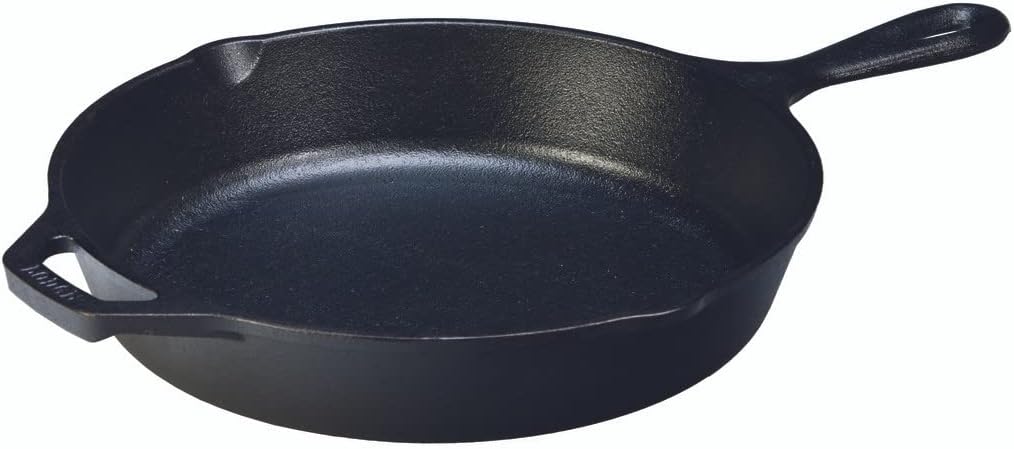
The Lodge 12-inch cast iron skillet represents over a century of American cookware manufacturing expertise. This iconic piece has earned its place in millions of kitchens through unmatched heat retention, virtually indestructible construction, and the ability to handle temperatures from freezer to 500°F+ ovens without complaint.
Cast iron’s reputation for exceptional heat retention makes this skillet perfect for searing steaks, baking cornbread, or roasting vegetables. The pre-seasoned surface arrives ready to use, though it improves significantly with regular use and proper care. Unlike many modern cookware options, this skillet actually gets better with age as layers of seasoning build up, creating an increasingly non-stick surface that rivals expensive coated pans.
The 12-inch diameter provides generous cooking space for family meals while the 2-inch depth accommodates everything from shallow frying to braising. Two handles—one long and one assist—offer secure grip options, though both get extremely hot and require protection. The rough-textured cooking surface is characteristic of Lodge’s sand-casting process; while not mirror-smooth like vintage cast iron, it performs excellently once properly seasoned.
Key Features:
- Pre-seasoned with 100% vegetable oil for immediate use
- Suitable for all cooking surfaces including induction
- Oven-safe to any temperature
- Dual handles for secure lifting
- Lifetime durability with proper care
- Made in the USA
Pros:
✅ Exceptional value—professional performance at budget-friendly price
✅ Unbeatable heat retention for perfect searing and even cooking
✅ Naturally develops non-stick properties over time
✅ Broiler-safe without temperature limitations
✅ Chemical-free cooking surface
✅ Can last generations with basic maintenance
Cons:
❌ Heavy at 8+ pounds—challenging for some users
❌ Requires seasoning maintenance to prevent rust
❌ Not dishwasher safe
❌ Slow to heat compared to thinner cookware
❌ Handles get dangerously hot during cooking
❌ Reactive with acidic foods until well-seasoned
Ideal For: Home cooks who appreciate traditional cookware, value hunters seeking restaurant-quality performance on a budget, anyone wanting versatile cookware that handles stovetop-to-oven cooking effortlessly, and those willing to invest minimal effort in maintenance for decades of use.
Final Verdict: The Lodge cast-iron skillet delivers unmatched value and performance that improves with time. While it demands more care than modern non-stick pans, the cooking results, durability, and chemical-free surface make it an essential piece for serious home cooks. The slight learning curve pays off quickly with properly seared meats, crispy-bottomed cornbread, and restaurant-quality results that justify its position in countless professional and home kitchens.
2. All-Clad D3 Stainless Steel Tri-Ply Bonded Fry Pan 12-Inch
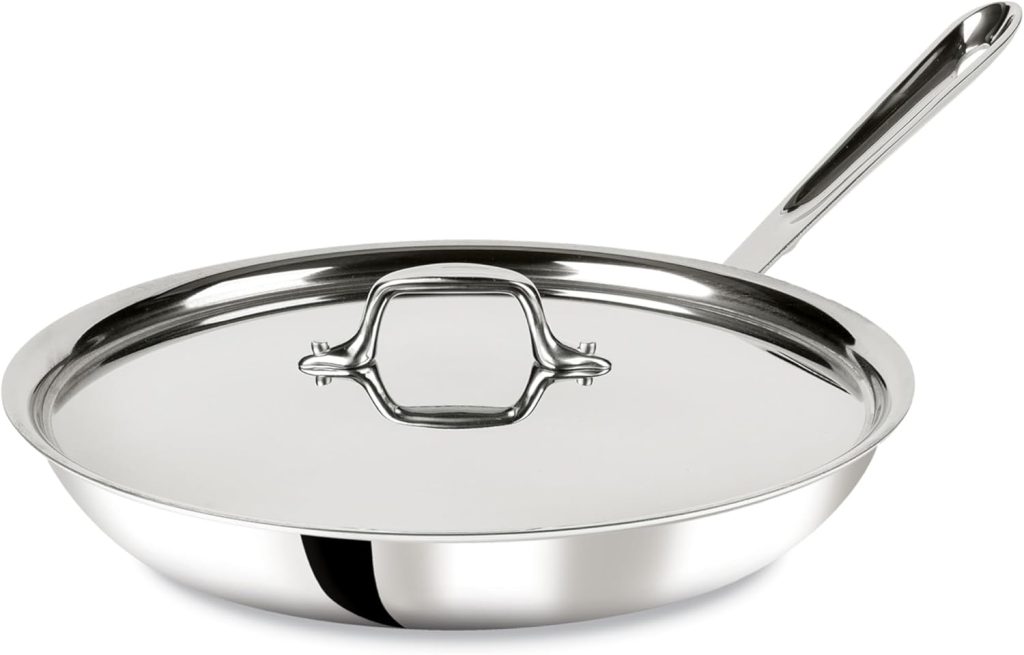
All-Clad’s D3 fry pan represents the gold standard in stainless steel cookware, combining American craftsmanship with thoughtful engineering that serious cooks appreciate immediately. The tri-ply construction bonds stainless steel exterior and interior layers around an aluminum core, creating cookware that heats evenly, responds quickly to temperature changes, and performs beautifully from stovetop to 600°F oven environments.
This 12-inch fry pan showcases All-Clad’s signature polished exterior and brushed stainless cooking surface. The straight sides maximize cooking surface while the flared rim facilitates drip-free pouring. Unlike non-stick surfaces, stainless steel develops fond—those flavorful browned bits that form the foundation for exceptional pan sauces. Deglazing becomes a joy rather than a chore, transforming simple weeknight meals into restaurant-caliber experiences.
The permanently riveted stainless steel handle stays cooler than fully metal handles but still requires protection when pan-roasting or oven-finishing dishes. Precision pouring rims on both sides accommodate left and right-handed cooks. The flat base ensures excellent contact with all cooktops including induction, while the aluminum core eliminates hot spots that plague lesser stainless cookware.
Key Features:
- Tri-ply bonded construction for superior heat distribution
- Highly polished stainless exterior resists sticking and scratching
- Oven and broiler-safe up to 600°F
- Compatible with all cooktops including induction
- Dishwasher safe for easy cleanup
- Made in the USA with limited lifetime warranty
Pros:
✅ Professional-grade performance with exceptional heat control
✅ Non-reactive surfaces handle all ingredients, including acidic foods
✅ Develops fond for superior sauce-making
✅ Highly durable with no coating to wear out
✅ Beautiful enough to go from stove to table
✅ Backed by legendary All-Clad warranty and customer service
Cons:
❌ Premium price point—significant investment
❌ Requires oil or butter to prevent sticking
❌ Learning curve for temperature management
❌ Shows fingerprints and water spots easily
❌ Heavier than non-stick alternatives
❌ Food can stick if pan not properly preheated
Ideal For: Serious home cooks and culinary enthusiasts who prioritize performance over convenience, those who frequently make pan sauces and need non-reactive surfaces, cooks transitioning from non-stick who want professional results, and anyone seeking heirloom-quality cookware that will outlast cheaper alternatives many times over.
Final Verdict: The All-Clad D3 fry pan justifies its premium price through exceptional performance, lifetime durability, and cooking versatility that non-stick pans simply cannot match. While the initial investment stings, the per-use cost over decades of service makes it remarkably economical. For cooks ready to master temperature control and proper preheating techniques, this pan unlocks cooking techniques and flavor development impossible with coated cookware.
3. Le Creuset Enameled Cast Iron Signature Skillet 11.75-Inch
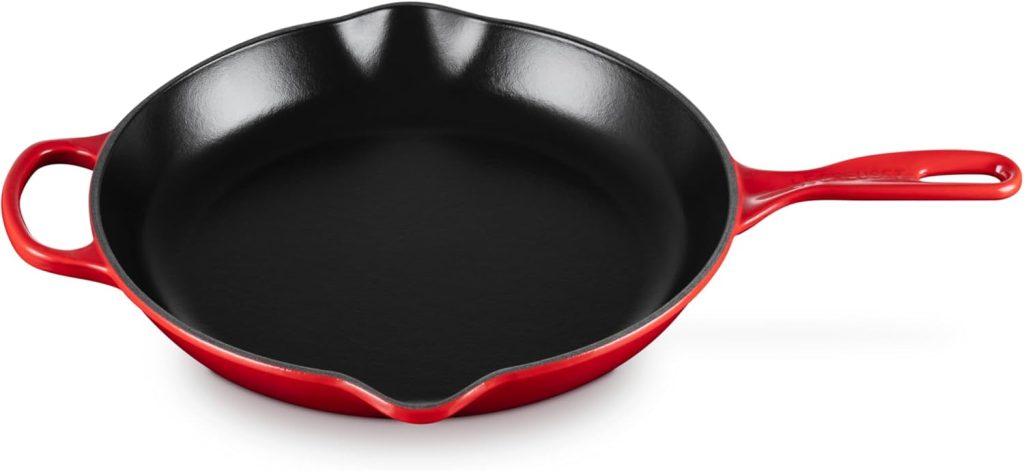
Le Creuset’s enameled cast iron skillet combines the heat retention and versatility of traditional cast iron with a porcelain enamel coating that eliminates seasoning requirements and adds stunning visual appeal. This French-designed, responsibly manufactured cookware has graced kitchens worldwide for nearly a century, earning devotion from home cooks and professional chefs alike.
The vibrant enamel exterior resists chipping and staining while the light-colored interior enamel makes it easy to monitor browning and fond development. Unlike raw cast iron, enameled versions handle acidic ingredients without issue, allowing you to braise tomato-based sauces or deglaze with wine without affecting flavor or finish. The superior heat retention means food stays warmer longer when brought to the table, making this skillet ideal for family-style serving.
At 11.75 inches, this skillet offers substantial cooking surface while remaining manageable for most cooks. The wide loop handle provides secure grip even with oven mitts, while a helper handle opposite aids in lifting when full. The black satin enamel interior develops natural patina over time, improving release properties without active seasoning maintenance.
Key Features:
- Enameled cast iron construction with superior heat retention
- Sand-colored interior enamel for monitoring cooking progress
- Oven-safe to 500°F including lid
- Works on all heat sources including induction
- Stainless steel knob safe to 500°F
- Limited lifetime warranty
Pros:
✅ Combines cast iron benefits with easy-care enamel coating
✅ No seasoning required—ready to use immediately
✅ Non-reactive surface for all ingredients
✅ Beautiful enough for stovetop-to-table serving
✅ Superior heat retention keeps food warm longer
✅ Dishwasher safe though hand washing recommended
Cons:
❌ Very expensive—luxury price point
❌ Heavy at nearly 7 pounds empty
❌ Enamel can chip if dropped or struck
❌ Lower maximum temperature than raw cast iron
❌ Light interior shows staining over time
❌ Requires careful handling to prevent thermal shock
Ideal For: Cooks who love cast iron performance but dislike seasoning maintenance, those who frequently cook acidic foods, home chefs who value beautiful cookware for entertaining, and buyers seeking premium pieces that combine function with kitchen décor.
Final Verdict: Le Creuset’s enameled skillet commands premium pricing but delivers accordingly with stunning aesthetics, foolproof performance, and lifetime durability. The convenience of no seasoning combined with cast iron’s legendary heat retention creates cookware that’s both practical and pleasurable to use. While budget-conscious shoppers may hesitate, those who invest rarely regret the decision, often expanding their Le Creuset collection over time.
4. Cuisinart Chef’s Classic Nonstick Hard-Anodized 12-Inch Skillet
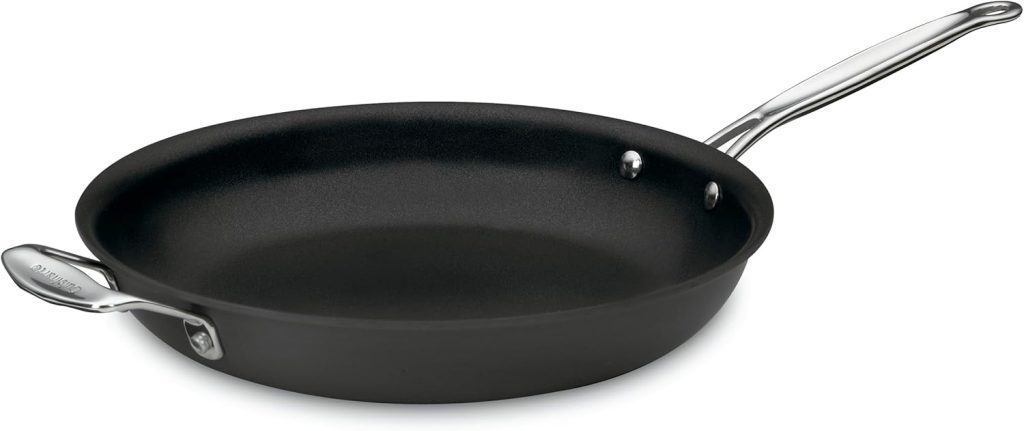
Cuisinart’s hard-anodized skillet offers an attractive middle ground between budget cookware and premium options, delivering solid performance through thoughtful design and quality materials. The hard-anodized aluminum construction provides excellent heat distribution while resisting warping and scratching far better than standard aluminum or lighter non-stick pans.
The Quantanium non-stick interior, reinforced with titanium, releases food effortlessly while tolerating metal utensils better than standard non-stick coatings. This durability matters for cooks who prefer metal spatulas or occasionally forget to grab silicone tools. The coating also facilitates healthier cooking with minimal oil, appealing to those monitoring fat intake without sacrificing results.
At 12 inches with 2.5-inch depth, this skillet handles everything from morning eggs to evening stir-fries. The Cool Grip handle stays comfortable during stovetop cooking, though it requires protection in the oven. Tapered rims allow easy food release and pouring. The tempered glass lid, sold separately or as set, enables moisture-control cooking techniques.
Key Features:
- Hard-anodized aluminum construction for durability
- Quantanium non-stick with titanium reinforcement
- Oven-safe to 500°F
- Compatible with gas, electric, and glass cooktops (not induction)
- Dishwasher safe though hand washing extends life
- Limited lifetime warranty
Pros:
✅ Excellent value for performance level
✅ Superior non-stick release with minimal oil needed
✅ Hard-anodized exterior resists scratching and warping
✅ Cool-touch handle during stovetop cooking
✅ Metal utensil safe with reasonable care
✅ Easy cleanup even after high-heat cooking
Cons:
❌ Not induction-compatible
❌ Non-stick coating eventually degrades
❌ Handle can loosen over time with heavy use
❌ Exterior darkens and shows wear
❌ Not broiler-safe above 500°F
❌ Less prestigious than premium brands
Ideal For: Everyday cooks seeking reliable non-stick performance without premium pricing, those cooking for families who need easy cleanup, health-conscious cooks minimizing cooking fats, and buyers wanting solid performance without the learning curve of stainless steel or cast iron.
Final Verdict: The Cuisinart hard-anodized skillet punches well above its price class, offering durability and performance that satisfy most home cooking needs. While it won’t last generations like cast iron or become a kitchen heirloom like All-Clad, it provides years of reliable service at a fraction of premium cookware costs. The combination of easy non-stick cooking and genuine oven capability makes it particularly valuable for busy households prioritizing convenience and results over cookware prestige.
5. Staub Cast Iron Deep Skillet 11-Inch
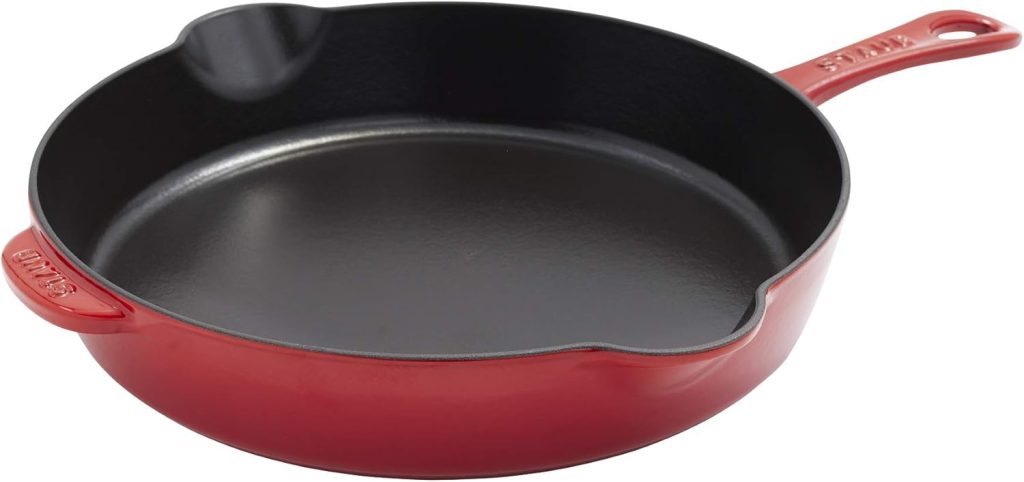
Staub’s cast iron deep skillet brings French culinary tradition and innovative design to everyday cooking. While visually similar to Le Creuset, Staub cookware incorporates unique features including a black matte enamel interior that improves browning and requires no seasoning. The deep profile—deeper than standard skillets—increases versatility for braising, frying, and one-pot meals.
The signature textured interior, called “black matte enamel,” develops natural patina that enhances non-stick properties over time. Unlike light-colored interiors that show every stain, the black finish conceals discoloration while making it easier to judge browning. The smooth enamel exterior comes in various colors, resisting chips while adding visual appeal to any kitchen.
Staub’s nickel-steel knob handles oven temperatures to 500°F, higher than many competitors’ phenolic knobs. The tight-fitting lid incorporates tiny spikes on its underside that collect condensation and rain it back onto food, creating self-basting action that keeps dishes moist. At 11 inches with 3.3-quart capacity, this skillet bridges the gap between fry pan and Dutch oven.
Key Features:
- Black matte enamel interior resists staining and improves searing
- Textured surface for enhanced browning
- Self-basting lid with condensation spikes
- Oven-safe to 500°F
- Compatible with all cooktops including induction
- Lifetime warranty
Pros:
✅ Superior browning and searing compared to lighter interiors
✅ Black finish hides staining and develops beneficial patina
✅ Self-basting lid adds moisture during cooking
✅ Deep profile increases versatility
✅ Exceptional heat retention and distribution
✅ Dishwasher safe though hand washing preferred
Cons:
❌ Very expensive—premium luxury pricing
❌ Extremely heavy at 8+ pounds
❌ Smaller cooking diameter than some 12-inch pans
❌ Enamel requires careful handling to prevent chips
❌ Not suitable for high-temperature searing above 500°F
❌ Dark interior makes it harder to see fond development
Ideal For: Serious home cooks who braise, roast, and one-pot cook frequently, those who appreciate French culinary tradition and design, cooks seeking versatile pieces that replace multiple pans, and buyers prioritizing performance and aesthetics equally.
Final Verdict: Staub’s deep skillet represents the pinnacle of enameled cast iron cookware, combining gorgeous design with thoughtful functionality. The black interior, self-basting lid, and increased depth make it more versatile than standard skillets while maintaining the heat retention cast iron enthusiasts love. Though expensive, the combination of performance, beauty, and lifetime durability creates value that budget alternatives simply cannot match.
6. Rachael Ray Cucina Hard-Anodized Nonstick 12-Inch Deep Skillet
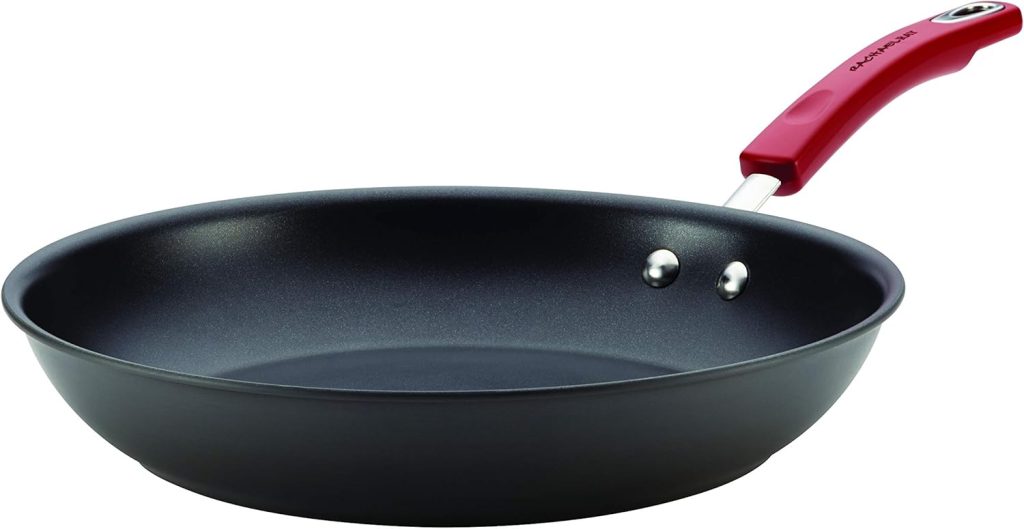
Rachael Ray’s Cucina line brings rustic Italian-inspired style to practical, budget-friendly cookware. This hard-anodized deep skillet combines the durability of anodized aluminum with reliable non-stick performance, wrapped in earthy colors that add personality to functional cookware. The increased depth compared to standard fry pans expands cooking possibilities while maintaining easy stovetop-to-oven transitions.
The espresso-colored exterior coordinates with other Cucina pieces while hiding cooking splatters and wear better than shiny finishes. The PFOA-free non-stick interior releases food easily with minimal oil, simplifying everything from scrambled eggs to pan-seared chicken. The rubberized dual-riveted handle provides comfortable grip and stays cooler during stovetop cooking than metal alternatives.
At 12 inches with 3.5-inch walls, this skillet handles generous portions and deep-dish preparations. The tempered glass lid allows visual monitoring without releasing heat or moisture. The shatter-resistant construction tolerates temperature changes better than cheaper glass lids that crack from thermal shock.
Key Features:
- Hard-anodized construction resists warping
- PFOA-free non-stick interior coating
- Oven-safe to 400°F
- Works on gas, electric, and glass cooktops
- Rubberized handles stay cool during cooking
- Lifetime warranty against defects
Pros:
✅ Affordable pricing for quality construction
✅ Attractive rustic styling adds kitchen personality
✅ Comfortable ergonomic handles
✅ Deep profile handles diverse recipes
✅ Easy cleanup with dishwasher-safe construction
✅ Included glass lid adds value
Cons:
❌ Not induction-compatible
❌ Lower oven temperature limit than premium options
❌ Non-stick coating wears over time
❌ Handle coating can degrade with heavy use
❌ Not suitable for metal utensils despite marketing claims
❌ Exterior finish shows scratches eventually
Ideal For: Budget-conscious cooks who don’t want to sacrifice style, those building first kitchens or outfitting rental properties, home chefs who prioritize easy cleanup, and anyone seeking functional cookware with personality at accessible prices.
Final Verdict: Rachael Ray’s Cucina skillet delivers impressive value, combining style, functionality, and accessibility in ways that make quality cooking attainable for everyone. While it won’t outlast cast iron or premium stainless steel, it provides years of reliable service at a price point that makes replacement painless when necessary. The combination of deep profile, attractive design, and solid performance makes it particularly appealing for casual cooks and those furnishing kitchens on realistic budgets.
7. Calphalon Contemporary Nonstick 12-Inch Fry Pan
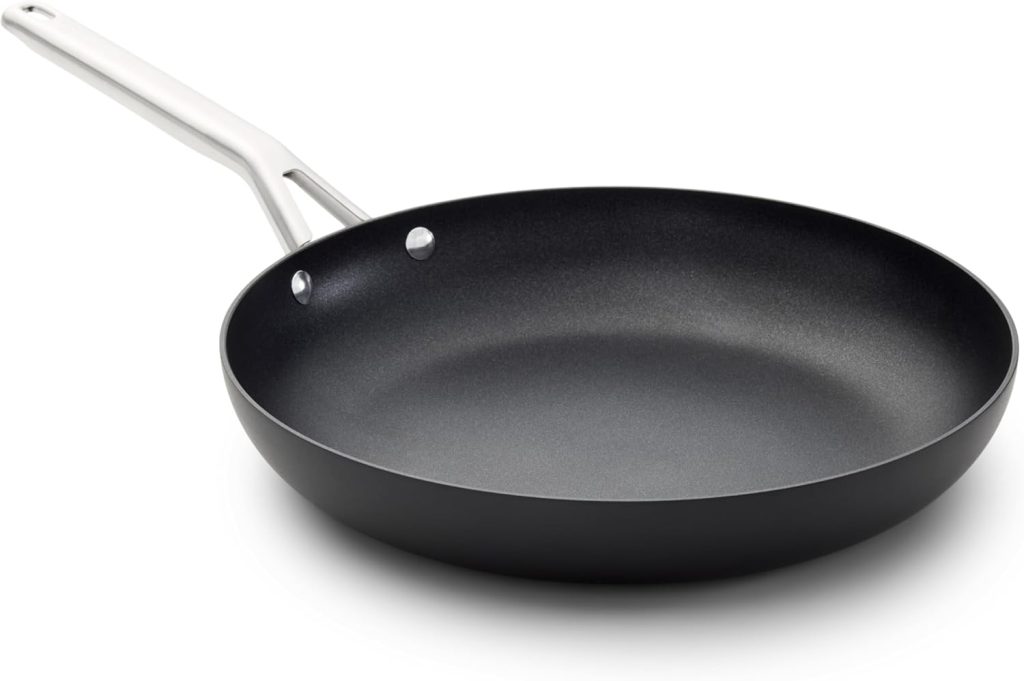
Calphalon’s Contemporary line represents refined design meeting everyday practicality. This hard-anodized aluminum fry pan features a three-layer non-stick system that balances release performance with surprising durability. The modern brushed exterior contrasts with the sleek black interior, creating cookware that looks at home in contemporary kitchens while performing in traditional ways.
The heavy-gauge aluminum construction heats evenly across the cooking surface, eliminating hot spots that plague cheaper pans. The long stainless steel handle stays securely attached through dual rivets and remains comfortable even during extended cooking sessions. Slightly angled sides facilitate tossing and turning food while maintaining enough depth for shallow braising or pan-roasting.
At 12 inches, this pan provides ample room for family meals without becoming unwieldy. The sloped sides make it particularly effective for sautéing vegetables or tossing pasta with sauce. Dishwasher-safe construction simplifies cleanup, though hand washing extends non-stick coating life as with all similar cookware.
Key Features:
- Heavy-gauge hard-anodized aluminum construction
- Three-layer premium non-stick interior
- Oven-safe to 450°F
- Compatible with gas, electric, and glass cooktops
- Dual-riveted stainless steel handles
- Full lifetime warranty
Pros:
✅ Excellent heat distribution eliminates hot spots
✅ Durable non-stick coating with long service life
✅ Dishwasher-safe for convenient cleanup
✅ Stay-cool handles during stovetop cooking
✅ Comfortable weight—substantial without being heavy
✅ Great value for performance level
Cons:
❌ Not induction-compatible
❌ Lower maximum oven temperature than stainless or cast iron
❌ Non-stick coating eventually requires replacement
❌ Dark exterior shows fingerprints and water spots
❌ Sloped sides reduce flat cooking surface
❌ Handle can get hot in oven
Ideal For: Home cooks wanting reliable non-stick performance with above-average durability, those who frequently sauté and need comfortable tossing action, buyers seeking the sweet spot between budget and premium cookware, and cooks who value easy maintenance and cleanup.
Final Verdict: Calphalon’s Contemporary fry pan hits the middle ground expertly, offering performance and durability that justify its moderate price without demanding premium investment. The thoughtful design details—proper weight, comfortable handle, effective non-stick—create daily cooking experiences that feel more expensive than the price suggests. While limitations exist, particularly regarding induction compatibility and maximum temperature, most home cooks will find this pan meets their needs reliably for years.
8. GreenPan Lima Ceramic Nonstick Fry Pan 12-Inch
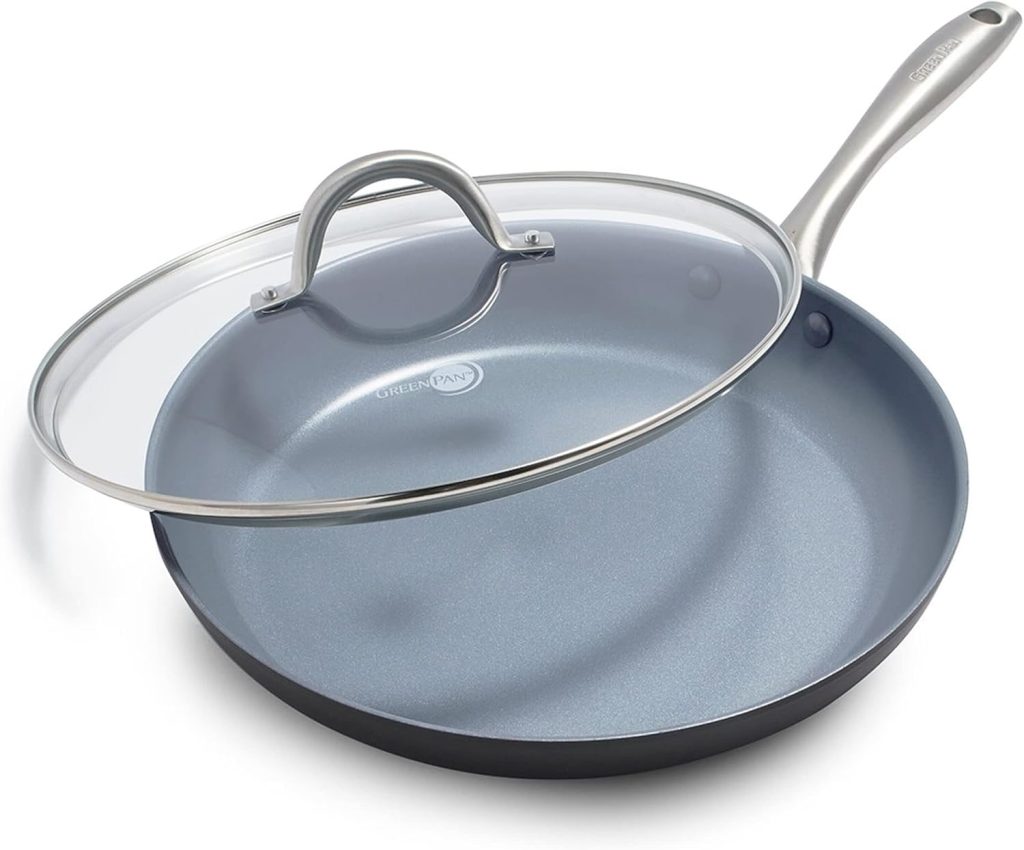
GreenPan’s Lima skillet represents the growing ceramic non-stick movement, offering an alternative to traditional PTFE coatings. The Thermolon ceramic coating derives from sand rather than petroleum, creating a non-stick surface free from PFAS, PFOA, lead, and cadmium. For health-conscious cooks concerned about cookware chemicals, this approach provides peace of mind without sacrificing performance.
The hard-anodized aluminum body distributes heat effectively while resisting warping and scratching. Unlike some ceramic pans that lose non-stick properties quickly, GreenPan’s diamond-reinforced coating maintains release characteristics through extended use. The coating also tolerates higher temperatures than traditional non-stick, making it suitable for recipes requiring hotter pans.
The ergonomic stainless steel handle features a comfortable contour that stays cool during stovetop cooking. Oven-safe to 600°F, this pan handles higher temperatures than most non-stick alternatives, though the ceramic coating performs best below 500°F. The rivet-free interior eliminates crevices where food can stick and bacteria can hide.
Key Features:
- Thermolon ceramic non-stick coating (PFAS-free)
- Hard-anodized aluminum construction
- Oven and broiler-safe to 600°F
- Compatible with all stovetops including induction
- Diamond-reinforced coating for durability
- Dishwasher safe though hand washing recommended
Pros:
✅ Free from PFAS, PFOA, lead, and cadmium
✅ Withstands higher temperatures than traditional non-stick
✅ Induction-compatible unlike many non-stick options
✅ Rivet-free interior simplifies cleaning
✅ Environmentally conscious manufacturing
✅ Comfortable, stay-cool handle design
Cons:
❌ Ceramic coating less durable than PTFE long-term
❌ Requires oil even when new for best performance
❌ Higher price than traditional non-stick
❌ Can develop staining that affects appearance
❌ Non-stick performance degrades faster with metal utensils
❌ Limited color options compared to some brands
Ideal For: Health-conscious cooks avoiding traditional non-stick chemicals, those seeking induction-compatible non-stick cookware, environmentally aware buyers prioritizing sustainable manufacturing, and home chefs wanting higher temperature capability than standard non-stick offers.
Final Verdict: GreenPan’s Lima skillet successfully delivers on its promise of healthier non-stick cooking without major performance compromises. While the ceramic coating won’t outlast quality PTFE alternatives, the peace of mind from chemical-free cooking and the higher temperature tolerance create value beyond pure longevity. For cooks prioritizing health and environmental concerns alongside cooking performance, this pan represents an excellent choice that doesn’t require sacrificing results for principles.
9. Tramontina Tri-Ply Clad Stainless Steel 12-Inch Fry Pan
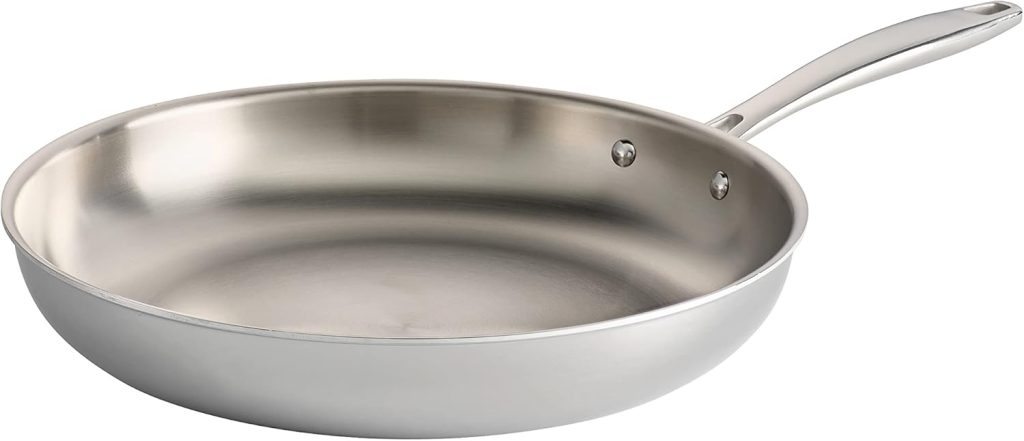
Tramontina’s tri-ply fry pan challenges the notion that professional-grade stainless steel cookware requires premium pricing. This Brazilian-manufactured pan employs the same tri-ply construction as cookware costing two to three times more: stainless steel interior and exterior layers bonded to an aluminum core for superior heat distribution and responsiveness.
The mirror-polished interior showcases professional-quality finishing that rivals far more expensive competitors. The aluminum core extends fully up the sides, ensuring even heating across the entire cooking surface rather than just the base. This construction detail, sometimes skipped by budget manufacturers, makes the difference between good and excellent performance when developing fond or reducing sauces.
The cast stainless steel handle stays cooler than hollow handles while providing secure grip even when wearing oven mitts. Precision pour rims on both sides accommodate right and left-handed cooks. The flat, heavy base ensures excellent contact with all cooktop types including induction while resisting warping even after years of use.
Key Features:
- Tri-ply construction with full aluminum core
- 18/10 stainless steel cooking surface
- Oven and broiler-safe to 500°F
- Compatible with all cooktops including induction
- Dishwasher safe
- Limited lifetime warranty
Pros:
✅ Professional performance at remarkable value pricing
✅ Even heating eliminates hot spots
✅ Durable construction that withstands heavy use
✅ Non-reactive surface for all ingredients
✅ Beautiful mirror finish comparable to premium brands
✅ Backed by solid warranty and customer service
Cons:
❌ Heavier than non-stick alternatives
❌ Requires proper preheating technique
❌ Shows fingerprints and water spots
❌ Food sticks without adequate fat and temperature control
❌ Handle can get warm during extended cooking
❌ Less prestigious brand name than All-Clad or Cuisinart
Ideal For: Value-conscious cooks who want premium performance without premium prices, those learning stainless steel cooking techniques without huge investment, home chefs who appreciate quality construction regardless of brand prestige, and anyone seeking versatile, durable cookware that will last decades.
Final Verdict: Tramontina’s tri-ply fry pan represents perhaps the best value in stainless steel cookware, delivering performance virtually indistinguishable from brands costing significantly more. While it lacks the name recognition of American and European competitors, the quality speaks for itself through even heating, solid construction, and genuine tri-ply design. For cooks willing to overlook branding in favor of performance-per-dollar, this pan deserves serious consideration as a foundation piece for any kitchen.
10. Nordic Ware Natural Aluminum Commercial Baker’s Half Sheet
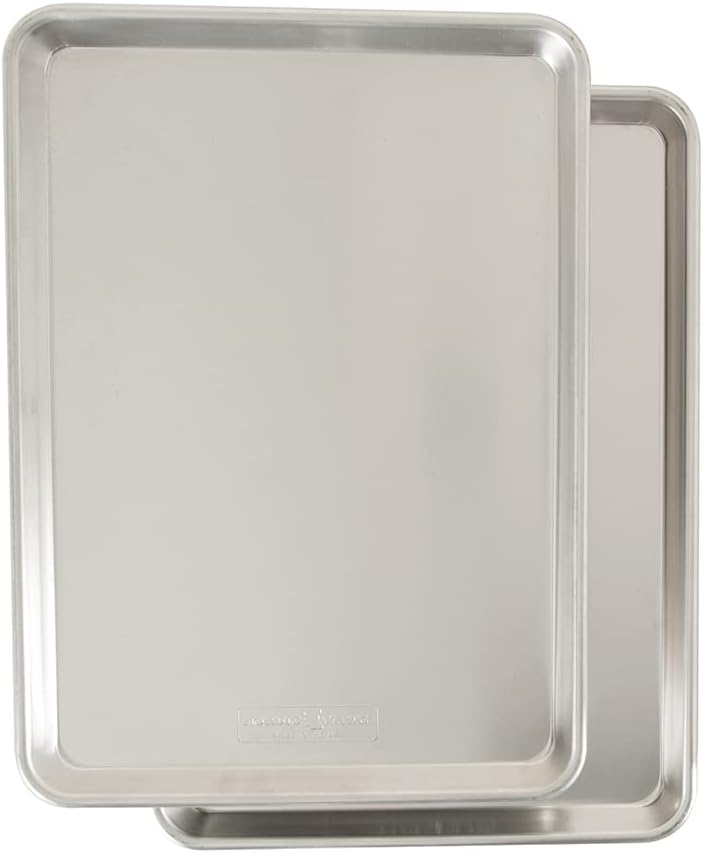
While not a traditional skillet, Nordic Ware’s half sheet pan deserves consideration in any discussion of versatile stove-to-oven cookware. This professional-grade baking sheet handles everything from roasting vegetables to baking cookies, and its stovetop compatibility (on electric and gas ranges, though not recommended for extended use) expands possibilities beyond typical sheet pan applications.
The pure aluminum construction without non-stick coating provides superior heat conductivity and even baking. Unlike coated pans where coating eventually degrades, this sheet pan maintains consistent performance indefinitely. The reinforced encapsulated steel rim prevents warping even at high temperatures or when thermal shock occurs from adding cold ingredients to hot pans.
At 18×13 inches, the half-sheet size fits most home ovens while providing generous surface area for batch cooking, meal prep, and entertaining. The naturally non-stick aluminum surface improves with use as it develops seasoning, though it never becomes fully non-stick like coated alternatives. Parchment paper or silicone mats provide easy release when needed.
Key Features:
- Pure aluminum construction for superior heat conductivity
- Reinforced encapsulated steel rim prevents warping
- Natural finish improves with use
- Oven-safe to any temperature
- Made in the USA
- Limited lifetime warranty
Pros:
✅ Exceptional value—professional quality at budget price
✅ Superior heat distribution for even cooking
✅ Virtually indestructible with basic care
✅ No coating to wear out or degrade
✅ Versatile for roasting, baking, and broiling
✅ Stackable for efficient storage
Cons:
❌ Not traditional stovetop cookware
❌ Aluminum reacts with acidic ingredients
❌ Develops patina that affects appearance
❌ Not dishwasher safe
❌ Requires liners for easy cleanup
❌ Can stain permanently from certain foods
Ideal For: Bakers and roasters who need reliable sheet pans, meal preppers cooking large batches, those seeking versatile oven cookware that transitions to table service, and anyone who values American-made quality at accessible prices.
Final Verdict: Nordic Ware’s half sheet transcends typical baking pan expectations, delivering professional-grade performance that home cooks immediately appreciate. While not a traditional stove-to-oven skillet, its versatility, durability, and exceptional value make it an essential piece that complements skillets and sauté pans. The lifetime durability and consistent performance justify its place in any well-equipped kitchen, particularly for those who roast vegetables, bake cookies, or meal prep regularly.
11. Caraway Ceramic Nonstick Sauté Pan 10.5-Inch
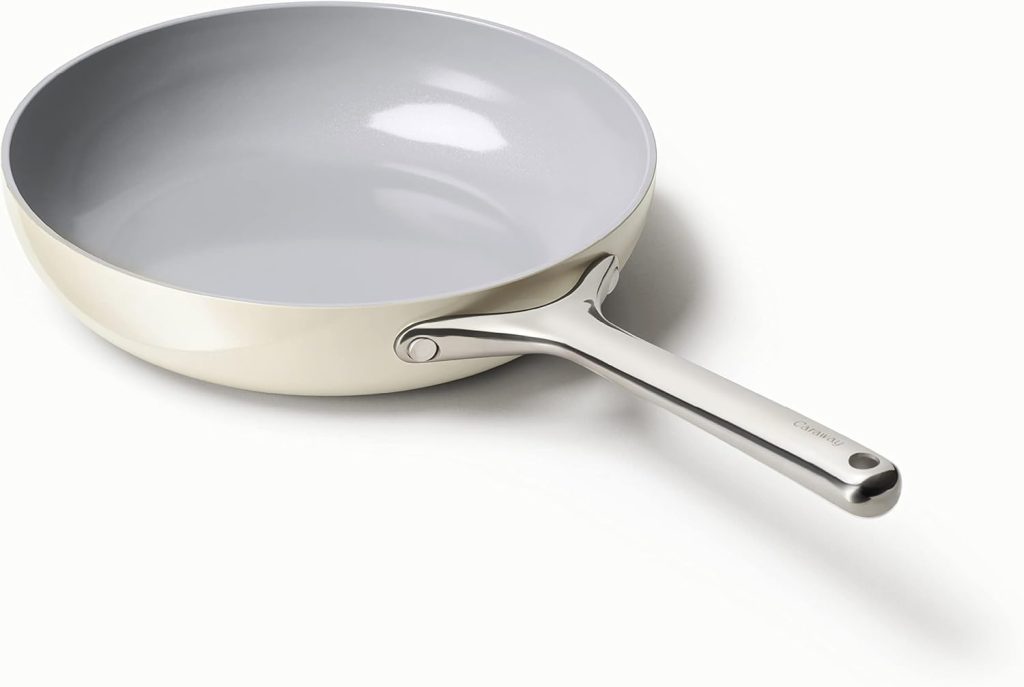
Caraway’s sauté pan brings modern design sensibility to functional cookware, combining ceramic non-stick performance with Instagram-worthy aesthetics. The aluminum core distributes heat evenly while the ceramic coating provides chemical-free non-stick release. Available in sophisticated colors from cream to navy, this pan appeals to cooks who view kitchen tools as design elements worthy of display.
The mineral-based ceramic coating contains no PTFE, PFOA, or other harmful chemicals, addressing growing concerns about traditional non-stick safety. Unlike some ceramic pans that develop sticking issues quickly, Caraway’s coating maintains performance through proper care and use. The coating also resists high temperatures better than traditional non-stick, tolerating oven temperatures to 550°F.
At 10.5 inches, this sauté pan suits individuals and couples rather than large families. The included magnetic pan rack and canvas lid holder demonstrate Caraway’s commitment to holistic kitchen organization. The stainless steel handle stays cool during stovetop cooking while tolerating oven heat when recipes require finishing dishes under broilers or in ovens.
Key Features:
- Aluminum core with ceramic non-stick coating
- Free from harmful chemicals (PTFE, PFOA, PFAS-free)
- Oven-safe to 550°F
- Compatible with all cooktops including induction
- Includes storage solutions (magnetic rack, canvas lid holder)
- Lifetime warranty against defects
Pros:
✅ Beautiful design in multiple sophisticated colors
✅ Chemical-free ceramic coating for health-conscious cooking
✅ Higher temperature tolerance than traditional non-stick
✅ Thoughtful storage solutions included
✅ Easy cleanup with minimal oil required
✅ Stay-cool handles during stovetop use
Cons:
❌ Premium pricing for ceramic cookware
❌ Smaller than standard 12-inch pans
❌ Ceramic coating less durable than PTFE long-term
❌ Limited to single-pan purchase—no sets
❌ White/light exteriors show staining
❌ Not dishwasher safe despite marketing suggestions
Ideal For: Design-conscious cooks who value aesthetics alongside performance, health-focused buyers avoiding traditional non-stick chemicals, those cooking for one or two people, apartment dwellers with limited storage who appreciate included organizers, and anyone seeking cookware that complements modern kitchen décor.
Final Verdict: Caraway’s sauté pan successfully merges form and function, creating cookware that performs well while looking exceptional. The premium pricing reflects both quality construction and thoughtful design, though the ceramic coating won’t last as long as stainless steel or cast iron alternatives. For cooks who view their kitchens as spaces deserving beautiful tools and who prioritize chemical-free cooking, the combination of performance, safety, and aesthetics justifies the investment despite the higher cost and smaller size.
Comprehensive Buying Guide: How to Choose the Right Stove-to-Oven Cookware!
Selecting the perfect stove-to-oven cookware involves understanding materials, construction methods, your cooking style, and practical considerations that impact daily use. This guide breaks down essential factors to help you make informed decisions that align with your needs, budget, and culinary ambitions.
Understanding Cookware Materials
Cast Iron: The Traditional Workhorse
Cast iron represents the oldest cookware material still widely used, and for good reason. Its exceptional heat retention means food stays hot longer and develops superior crusts when searing. Once properly heated, cast iron distributes warmth evenly, though it heats slowly compared to aluminum or copper. The material is virtually indestructible—many cooks use skillets passed down through generations.
Raw cast iron requires seasoning maintenance: regular oiling that builds up layers of polymerized fat creating a natural non-stick surface. This seasoning improves with use but demands basic care including immediate drying after washing and occasional re-seasoning.
Enameled cast iron eliminates seasoning requirements while maintaining heat retention benefits. The porcelain enamel coating prevents rust, handles acidic ingredients without issue, and comes in various colors. However, the enamel can chip if dropped, and enameled pieces cost significantly more than raw cast iron equivalents.
Stainless Steel: The Professional Standard
Stainless steel cookware dominates professional kitchens for good reason: durability, versatility, and non-reactive properties that handle all ingredients. However, stainless steel alone conducts heat poorly. Quality stainless cookware employs multi-ply construction, bonding stainless steel layers around aluminum or copper cores.
Tri-ply construction features three layers: stainless interior, aluminum core, and stainless exterior. This combination provides excellent heat distribution, durability, and compatibility with all cooktops including induction. Five-ply adds additional layers for even better performance, though the improvement may not justify the higher cost for most home cooks.
Stainless steel develops fond—flavorful browned bits essential for pan sauces. Learning proper preheating and temperature management prevents sticking and unlocks techniques impossible with non-stick surfaces. While stainless demands more technique than non-stick alternatives, the cooking results and lifetime durability reward the effort.
Aluminum: Heat Conductivity Champion
Aluminum excels at heat conductivity, heating quickly and responding immediately to temperature changes. However, raw aluminum reacts with acidic and alkaline foods, affecting flavor and appearance. Hard-anodizing addresses this limitation through electrochemical treatment that hardens the surface, making it non-reactive, more durable, and scratch-resistant.
Hard-anodized aluminum often serves as the base for non-stick coatings, combining aluminum’s heat distribution with convenient release properties. This combination creates affordable cookware suitable for everyday use, though it lacks the lifetime durability of stainless steel or cast iron.
Non-Stick Coatings: Convenience and Concerns
Traditional non-stick coatings use PTFE (polytetrafluoroethylene), commonly known by the brand name Teflon. These coatings provide excellent food release with minimal oil, simplifying cooking and cleanup. Modern PTFE coatings are PFOA-free, addressing previous health concerns, though questions remain about other chemicals used in manufacturing.
Ceramic non-stick offers an alternative derived from sand-based minerals rather than petroleum. These coatings avoid PFAS, PFOA, and related chemicals while providing decent non-stick performance. However, ceramic coatings typically degrade faster than quality PTFE alternatives, losing effectiveness within a few years even with careful use.
All non-stick coatings eventually wear out, making them consumable items rather than lifetime investments. They also limit maximum temperatures—most PTFE coatings shouldn’t exceed 400-500°F, while ceramic alternatives tolerate slightly higher heat. Metal utensils damage all non-stick surfaces despite marketing claims of metal-utensil safety.
Critical Features and Construction Quality
Handle Design and Attachment
Handles significantly impact usability and safety. Cast metal handles withstand any oven temperature but get dangerously hot and require protection. Hollow metal handles stay cooler but may eventually loosen from repeated temperature cycling. Silicone or phenolic handles remain comfortable during stovetop cooking but limit maximum oven temperatures.
Riveted handles provide superior strength compared to welded or screwed attachments. Check that rivets sit flush with the cooking surface—protruding rivets create cleaning challenges and food-trapping crevices. Some manufacturers use rivet-free construction where handles attach beneath the cooking surface, creating smooth interiors without compromising strength.
Helper handles on larger pieces significantly improve safety when lifting full, heavy cookware. This secondary grip point allows two-handed control, reducing strain and preventing accidents.
Base Construction and Cooktop Compatibility
Flat, heavy bases ensure good contact with cooktops, crucial for even heating and energy efficiency. Thin bases warp over time, creating wobbling pans with hot spots. Quality cookware features thick, reinforced bases that remain flat through years of temperature cycling.
Induction cooktops require ferromagnetic materials—cast iron, stainless steel, or cookware with magnetic bases. Pure aluminum and copper don’t work on induction without magnetic disks bonded to their bases. If you have or might purchase induction, verify compatibility before buying.
Oven Temperature Ratings
Maximum oven temperatures vary dramatically by material and construction. Raw cast iron handles any temperature home ovens produce. Stainless steel typically tolerates 500-600°F depending on handle materials. Non-stick cookware ranges from 350°F for budget options to 500°F for quality pieces.
Consider your cooking style when evaluating temperature limits. If you frequently use broilers or techniques requiring very high heat, prioritize cookware rated to 500°F minimum. For typical roasting and baking, 400-450°F suffices for most recipes.
Sizing Considerations
Diameter and Cooking Surface
Listed pan sizes typically refer to diameter at the top rim, not actual cooking surface. A 12-inch skillet might offer only 9-10 inches of flat cooking surface due to sloped sides. Consider what you typically cook—a couple cooking for two has different needs than parents preparing family meals.
Smaller pans (8-10 inches) excel for individual servings, eggs, and small batches. They heat quickly, maneuver easily, and store conveniently. Medium pans (11-12 inches) represent the sweet spot for most home cooks, handling two to four servings comfortably. Larger options (13+ inches) suit big families and entertaining but take up significant stove and storage space.
Depth and Capacity
Standard fry pans typically measure 1.5-2 inches deep, suitable for sautéing and pan-frying. Deeper skillets (2.5-3.5 inches) increase versatility for braising, one-pot meals, and recipes requiring more ingredients or liquid. Sauté pans feature straight sides that maximize surface area while containing splatters better than sloped-side skillets.
Consider your most frequent cooking methods. If you primarily sauté vegetables and cook proteins, standard depth suffices. If you enjoy braised dishes, one-pot meals, or cooking for crowds, deeper options provide needed capacity.
Budget Considerations and Value Assessment
Entry-Level Options ($20-$60)
Budget cookware serves beginning cooks, rental properties, and those exploring new cooking methods without major investment. Expect decent performance but limited durability. Non-stick coatings wear faster, bases may warp over time, and handles might loosen. However, quality budget options like Lodge cast iron punch well above their price, offering lifetime performance at entry-level costs.
Mid-Range Cookware ($60-$150)
This category offers the best value for most home cooks. Expect quality construction that lasts years with proper care, good heat distribution, and thoughtful design. Brands like Tramontina, Cuisinart, and Calphalon deliver performance approaching premium options at reasonable prices. Non-stick coatings in this range typically outlast budget alternatives by years.
Premium Cookware ($150-$400+)
Premium pieces justify their cost through superior materials, exceptional craftsmanship, better warranties, and often lifetime durability. All-Clad, Le Creuset, and Staub represent this category, offering cookware that can last generations. While the upfront investment stings, the per-use cost over decades often beats repeatedly replacing cheaper alternatives.
Consider lifetime value rather than initial price. A $300 All-Clad pan used for 30 years costs $10 per year. A $50 non-stick pan replaced every 3 years costs $16.67 annually. Premium cookware also maintains resale value if your needs change.
Common Mistakes to Avoid
Prioritizing Non-Stick for Everything
New cooks often gravitate toward non-stick cookware for its convenience. However, non-stick prevents the fond development essential for great sauces and limits cooking techniques. Build a collection that includes both non-stick for eggs and delicate fish, and stainless steel or cast iron for searing, browning, and developing complex flavors.
Ignoring Weight Considerations
Cookware weight impacts daily use more than many realize. Enameled cast iron skillets weighing 6-8 pounds become burdensome for those with limited strength or mobility. Consider who will use the cookware and whether weight might discourage its use. Sometimes lighter construction better serves practical needs despite theoretical performance advantages.
Matching Sets vs. Individual Pieces
Cookware sets tempt with apparent savings but often include pieces you’ll rarely use. Build collections thoughtfully, purchasing individual pieces suited to your actual cooking patterns. Most cooks need a large skillet, medium saucepan, and stockpot. Add specialty pieces like small non-stick for eggs or cast iron for searing based on actual needs rather than set contents.
Overlooking Maintenance Requirements
Different materials demand different care. Cast iron requires seasoning maintenance. Stainless steel needs proper preheating technique. Non-stick demands gentle handling and degrades over time. Copper requires polishing. Choose cookware whose maintenance aligns with your willingness and ability to provide proper care.
Assuming Price Equals Quality
Premium pricing doesn’t guarantee the right choice for your needs. A $300 copper-core pan offers minimal advantages over quality tri-ply for most home cooking. Conversely, ultra-cheap cookware usually disappoints quickly. Research construction details, read reviews from actual users, and understand what specific features justify higher prices.
Expert Recommendations by Use Case
For Everyday Family Cooking
Prioritize durability, ease of use, and moderate pricing. A quality hard-anodized non-stick skillet handles weeknight dinners with minimal fuss. Add a tri-ply stainless steel piece for building pan sauces and searing proteins. Consider a cast iron skillet for its versatility and ability to move from stovetop to oven seamlessly. This combination covers most cooking needs without excessive investment or maintenance demands.
For Serious Home Chefs
Invest in professional-grade stainless steel for superior temperature control and technique development. Add enameled or raw cast iron for braising and high-heat searing. Minimize non-stick pieces, reserving them for specific tasks like eggs where they excel. Prioritize multi-ply construction and brands with excellent warranties. Quality cookware enables advanced techniques while lasting decades with proper care.
For Health-Conscious Cooks
Choose ceramic non-stick or well-seasoned cast iron to avoid traditional non-stick chemicals. Stainless steel provides non-reactive cooking without concerns about coating degradation. Enameled cast iron combines convenience with chemical-free surfaces. Research brands committed to transparency about materials and manufacturing processes.
For Small Kitchens and Limited Storage
Select multi-functional pieces that serve multiple purposes. A 10-11 inch skillet with lid and oven-safe construction handles more tasks than specialized pieces. Consider stackable designs and cookware that looks good enough to hang on walls. Prioritize quality over quantity—three excellent pieces beat ten mediocre ones.
For Budget-Conscious Buyers
Lodge cast iron delivers exceptional value, offering lifetime performance at entry-level prices. Tramontina tri-ply stainless provides near-premium performance at mid-range pricing. Reserve premium pieces for items used daily while choosing budget options for specialty pieces used occasionally. Watch for sales on quality brands rather than buying cheap alternatives that disappoint.
Warranty and Customer Service Considerations
Quality manufacturers back products with meaningful warranties—limited lifetime coverage for constructional defects is standard among premium brands. However, read warranty details carefully. Some exclude commercial use, damage from dishwashers, or normal wear like non-stick degradation.
Customer service matters when issues arise. Established brands typically offer better support, easier warranty claims, and sometimes replacement even outside warranty periods for loyal customers. Newer direct-to-consumer brands may offer generous policies to build customer loyalty but lack track records for long-term support.
Making Your Final Decision
Choosing stove-to-oven cookware requires balancing performance, durability, price, and personal cooking style. Start by honestly assessing your cooking frequency, skill level, and maintenance willingness. Identify your most common cooking methods and which techniques you want to develop.
Create a priority list: must-have features versus nice-to-have options. Set a realistic budget accounting for long-term value rather than just initial cost. Research specific models, reading both professional reviews and actual user experiences. Pay attention to consistent praise or complaints across multiple sources.
When possible, handle cookware in person before purchasing. Weight, handle comfort, and build quality become apparent when physically examining pieces. If buying online, purchase from retailers with generous return policies allowing you to evaluate cookware risk-free.
Remember that no single piece handles every task perfectly. Building a thoughtful collection of complementary cookware serves you better than searching for mythical do-everything pans. Start with essential pieces matching your cooking style, then expand strategically based on actual needs rather than perceived gaps.
Frequently Asked Questions (FAQs)!
Q1: Can I use non-stick cookware in the oven, and what temperature is safe?
Most non-stick cookware is oven-safe, but maximum temperatures vary significantly by brand and coating type. Traditional PTFE (Teflon) non-stick typically tolerates 400-500°F depending on quality, while ceramic non-stick often handles slightly higher temperatures, sometimes to 550°F. Always check manufacturer specifications before oven use.
The limiting factor is usually the handle material rather than the coating. Silicone or plastic handles restrict oven use even if the coating withstands higher heat. Metal handles allow higher temperatures but get extremely hot and require protection when removing cookware from ovens.
Exceeding temperature limits damages non-stick coatings, causing them to degrade, release fumes, or fail prematurely. If you frequently cook at high temperatures or use broilers, consider stainless steel or cast iron instead of non-stick alternatives. For typical roasting and baking below 400°F, quality non-stick performs well when oven-safe ratings allow.
Q2: How do I prevent food from sticking to stainless steel pans?
Sticking issues with stainless steel typically result from improper preheating or insufficient fat, not defective cookware. Master these techniques for excellent results:
Preheat thoroughly before adding oil or food. Heat the empty pan over medium heat for 2-3 minutes until a water droplet forms a ball that rolls around the surface. This indicates proper temperature and that the metal pores have contracted.
Add adequate fat after preheating. Oil should shimmer and flow easily across the surface. For proteins, use slightly more fat than seems necessary initially—you can always drain excess later.
Bring food to room temperature before cooking. Cold food hitting hot stainless steel causes immediate sticking as moisture rapidly evaporates and proteins bond to the surface. Allow proteins to sit at room temperature for 15-30 minutes before cooking.
Don’t move food prematurely. Proteins naturally release once a proper crust forms. If food resists when you attempt to flip it, wait another 30-60 seconds. Forcing it tears the crust and creates sticking issues.
With practice, stainless steel becomes nearly as convenient as non-stick while enabling superior browning and fond development impossible with coated surfaces.
Q3: What’s the difference between enameled and raw cast iron, and which should I choose?
Raw cast iron requires seasoning—layers of polymerized oil that create a natural non-stick surface and prevent rust. This seasoning improves with use but demands basic maintenance: hand washing, immediate drying, and occasional re-seasoning. Raw cast iron reacts with acidic ingredients like tomatoes or wine, affecting both flavor and seasoning when used for extended cooking times.
Enameled cast iron features a porcelain coating that eliminates seasoning requirements while preventing reactions with acidic foods. You can make tomato sauces, deglaze with wine, or cook anything without affecting the surface or flavors. The enamel also enables beautiful colors and simplified cleaning—many pieces are even dishwasher safe, though hand washing is recommended.
However, enamel adds cost, sometimes significantly. Enameled pieces from quality manufacturers like Le Creuset or Staub cost 3-5 times more than equivalent raw cast iron. The enamel can also chip if dropped or struck, potentially exposing the iron underneath to rust.
Choose raw cast iron if you want maximum value, don’t mind basic maintenance, and cook primarily non-acidic foods. Choose enameled if you frequently cook acidic ingredients, want low-maintenance cookware, or appreciate the aesthetic appeal of colorful enameled pieces.
Q4: How long does non-stick cookware actually last?
Non-stick cookware lifespan varies dramatically based on coating quality, usage frequency, and care practices. Budget non-stick pans typically last 1-3 years with regular use. Mid-range options last 3-5 years. Premium non-stick from brands like All-Clad or Calphalon may last 5-7 years or longer with careful use.
Several factors affect longevity:
Heat levels: Consistently high heat degrades coatings faster. Keep temperatures at medium or lower when possible.
Utensil choices: Metal utensils scratch and damage coatings despite marketing claims of metal-utensil safety. Use silicone, wood, or plastic exclusively.
Cleaning methods: Hand washing extends life significantly compared to dishwasher cycles. Avoid abrasive scrubbers that damage coatings.
Usage frequency: Daily use wears coatings faster than occasional use. A pan used twice daily won’t last as long as one used weekly, regardless of quality.
Empty preheating: Heating empty non-stick pans damages coatings. Always add oil or food before applying heat.
When non-stick performance noticeably declines—food begins sticking even with proper technique and adequate oil—replacement time has arrived. Don’t wait until coating visibly flakes or peels, as consuming coating fragments is undesirable.
Q5: Are expensive brands like All-Clad and Le Creuset worth the investment?
Premium cookware justifies its cost for many cooks through superior materials, exceptional craftsmanship, better heat distribution, and often lifetime durability. However, “worth it” depends entirely on individual circumstances, cooking frequency, and priorities.
All-Clad stainless steel features complete tri-ply construction where aluminum extends fully up the sides, ensuring even heating across the entire cooking surface. Cheaper tri-ply often uses disk bases only, with thinner sides that heat unevenly. This construction difference becomes apparent when reducing sauces or cooking foods in contact with pan sides.
Le Creuset and Staub enameled cast iron feature thicker enamel that resists chipping better than budget alternatives. The thick bases and walls provide superior heat retention. Premium brands also offer better warranties and customer service when issues arise.
That said, mid-range brands like Tramontina deliver 90% of premium performance at 40% of the cost. For casual cooks or those building first kitchens, excellent mid-range options provide better value. Save premium purchases for pieces used daily or techniques where quality makes noticeable differences.
Consider your cooking frequency and skill development. If you cook daily and constantly improve your techniques, premium cookware rewards the investment through enhanced performance and lifetime durability. If you cook occasionally or haven’t yet developed sophisticated techniques to appreciate the differences, mid-range quality better serves your needs.
Q6: Can I use metal utensils with hard-anodized cookware?
Hard-anodized aluminum itself resists scratching and can tolerate metal utensils better than standard aluminum. However, most hard-anodized cookware features non-stick coatings on the cooking surface, and those coatings absolutely cannot withstand metal utensils regardless of marketing claims.
The hard-anodized surface appears on the exterior and sometimes the rim, providing durability and scratch resistance. But the cooking surface coating—whether PTFE or ceramic—damages easily with metal spatulas, spoons, or whisks. Even “reinforced” or “metal utensil safe” non-stick coatings degrade faster with metal use than with silicone, wood, or plastic alternatives.
If you prefer metal utensils, choose uncoated cookware like stainless steel or cast iron instead. These materials not only tolerate but sometimes benefit from metal utensil use—metal spatulas excel at scraping fond from stainless steel pans for sauce-making.
Some hard-anodized cookware features no interior coating, offering a bare anodized cooking surface. These pieces handle metal utensils without issue, though they lack non-stick properties and require cooking techniques similar to stainless steel.
Q7: What’s the best material for even heat distribution?
Copper offers the absolute best heat conductivity, heating quickly and distributing warmth evenly. However, pure copper cookware requires regular polishing, reacts with most foods, and costs significantly more than alternatives. Most copper cookware features stainless steel interiors, combining copper’s conductivity with stainless steel’s non-reactive properties.
For practical home cooking, multi-ply construction combining stainless steel with aluminum cores provides excellent heat distribution at reasonable costs. The aluminum conducts heat efficiently while stainless steel adds durability and non-reactive properties. Quality tri-ply cookware heats nearly as evenly as copper at a fraction of the price.
Cast iron distributes heat very evenly once fully heated but takes significantly longer to reach temperature than aluminum or copper. The mass and heat retention create different benefits—maintaining consistent temperature when cold food is added, and staying hot for serving.
Avoid single-layer stainless steel without aluminum or copper cores—it heats very unevenly, creating hot spots that burn food while other areas remain cool. Similarly, thin aluminum without adequate thickness develops hot spots despite aluminum’s generally good conductivity.
Q8: How do I clean and maintain cast iron cookware?
Raw cast iron requires straightforward care that seems complicated until you establish a routine:
Clean while still warm using hot water and a stiff brush or chain mail scrubber. Avoid soap for well-seasoned pans, though modern dish soaps won’t destroy seasoning as lye-based soaps once did. For stuck-on food, use coarse salt as an abrasive with a little oil.
Dry immediately and thoroughly. Water is cast iron’s enemy, causing rust within hours. Dry with towels, then place over low heat for a few minutes to evaporate any remaining moisture.
Apply a thin oil layer after each use. While still warm, rub a tiny amount of cooking oil across all surfaces using a paper towel. Wipe away excess—you want the thinnest possible layer. This maintenance seasoning prevents rust and gradually builds the non-stick patina.
Avoid harsh detergents, dishwashers, and soaking. These remove seasoning you’ve worked to build up.
Re-season as needed if food begins sticking or rust appears. Apply thin oil layers and bake upside-down at 450-500°F for an hour. Repeat 2-3 times for thorough re-seasoning.
Enameled cast iron requires different care: hand wash with soap and water, dry thoroughly, and store without worrying about seasoning. The enamel prevents rust and doesn’t develop patina, simplifying maintenance considerably.
Q9: Is induction-compatible cookware different from regular cookware?
Induction cooktops work through magnetic fields that heat ferromagnetic materials directly. This requires cookware made from or containing magnetic metals like cast iron or stainless steel. Pure aluminum, copper, and glass don’t work on induction regardless of quality.
Some manufacturers add magnetic steel disks to aluminum or copper cookware bases, making them induction-compatible. These hybrid pieces work on induction while maintaining the heat conductivity of aluminum or copper. Check for “induction compatible” labels or test with a magnet—if it sticks firmly to the base, the cookware works on induction.
Stainless steel cookware isn’t automatically induction-compatible. Some stainless steel alloys aren’t sufficiently magnetic. Quality manufacturers design specifically for induction, ensuring adequate ferromagnetic properties.
If you have induction, verify compatibility before purchasing any cookware. If you have gas or electric but might move or upgrade to induction eventually, choosing induction-compatible pieces now prevents needing to replace your entire collection later.
Performance differences on induction are minimal—compatible cookware works excellently regardless of whether the base is fully magnetic or features added disks. The key consideration is simply whether a magnet sticks firmly to the bottom.
Q10: Should I buy cookware sets or individual pieces?
Individual pieces almost always provide better value and more appropriate coverage of your actual needs. Cookware sets tempt with apparent savings and matching aesthetics, but they typically include items you’ll rarely use while missing pieces you need.
Most cooks use the same few pieces repeatedly: a large skillet for proteins and sautéing, a medium saucepan for grains and vegetables, and a stockpot for soups and pasta water. Specialized pieces like small skillets, huge sauté pans, or double boilers sit unused in most kitchens despite being included in comprehensive sets.
Start with essential pieces matching your cooking style. Add specialty items only after establishing genuine need through actual cooking patterns. This approach costs less overall while ensuring every piece earns its storage space.
The exception occurs when you need to outfit a kitchen from scratch and sets provide significant discounts on pieces you’ll definitely use. Even then, scrutinize set contents—if you won’t use 3-4 pieces, individual purchases likely offer better value.
Consider mixing materials based on purpose rather than matching sets. A cast iron skillet for searing, stainless steel for sauces, and non-stick for eggs serves you better than all stainless or all non-stick regardless of how coordinated they look.
Final Verdict: Expert Recommendations and Closing Thoughts!
Choosing the right stove-to-oven cookware transforms cooking from frustrating compromise to culinary opportunity. The eleven products reviewed here represent genuinely excellent options across price points, materials, and use cases. Your ideal choice depends less on finding the “best” pan in absolute terms and more on identifying which cookware aligns with your cooking style, budget, and priorities.
For budget-conscious cooks seeking maximum value, the Lodge Cast Iron Skillet remains unbeatable. Its combination of lifetime durability, exceptional performance, and minimal cost creates value no modern alternative matches. Yes, it requires basic maintenance, but the cooking results and decades of reliable service reward that modest effort many times over.
Those prioritizing convenience and everyday functionality will appreciate the Cuisinart Chef’s Classic Hard-Anodized Skillet. It delivers genuine quality and thoughtful design at accessible pricing, making quality cooking attainable without premium investment. The reliable non-stick performance and durable construction satisfy most home cooking needs for years.
Serious home chefs ready to invest in professional-grade performance should consider the All-Clad D3 Stainless Steel Fry Pan. While expensive, the exceptional heat control, lifetime durability, and cooking versatility justify the cost for those who cook frequently and value technique development. This represents cookware you’ll use for decades and potentially pass to the next generation.
For those seeking the sweet spot between budget and premium, the Tramontina Tri-Ply Stainless Steel Fry Pan offers remarkable value. You get near-premium performance at mid-range pricing, proving that smart manufacturing and honest value proposition can compete with prestigious brands. This represents perhaps the best performance-per-dollar in modern cookware.
Health-conscious cooks concerned about traditional non-stick chemicals will find reassurance in options like GreenPan Lima or Caraway Ceramic Nonstick. These chemical-free alternatives provide peace of mind without major performance compromises, though they cost more than traditional non-stick while typically lasting fewer years.
The Le Creuset and Staub enameled cast iron skillets represent the pinnacle of their category, combining stunning aesthetics with exceptional functionality. These pieces cost significantly more than alternatives but deliver accordingly through superior construction, thoughtful features, and the confidence of lifetime warranties backed by companies that honor them.
Ultimately, the best stove-to-oven cookware is whatever you’ll actually use regularly and care for properly. A $50 pan you use enthusiastically delivers more value than a $300 piece that intimidates you into leaving it in the cabinet. Start with quality basics matching your current skill level and cooking frequency. As your techniques develop and cooking patterns become clear, add specialized pieces that address genuine needs rather than perceived gaps.
Remember that quality cookware represents an investment in better meals, more enjoyable cooking experiences, and often healthier eating through expanded home cooking. While premium prices can shock initially, the per-use cost over years or decades often beats repeatedly replacing cheaper alternatives that disappoint.
Build your collection thoughtfully rather than quickly. Research specific needs, read reviews from actual users, and consider long-term value alongside initial cost. With the information in this guide and the detailed product reviews provided, you now have the knowledge to make confident decisions that will serve your kitchen well for years to come.
Choose wisely, cook enthusiastically, and enjoy the enhanced results that quality stove-to-oven cookware enables. Your future self—and your dinner guests—will thank you for the investment in tools that make great cooking not just possible, but genuinely pleasurable.

Leave a Reply