
Indian cuisine is renowned for its rich flavors, aromatic spices, and diverse cooking techniques that have been perfected over thousands of years. From the sizzling tandoori dishes of North India to the coconut-infused curries of the South, each region brings its unique culinary traditions that require specific cooking methods and, importantly, the right cookware.
The art of Indian cooking involves various techniques including tempering (tadka), slow simmering, deep frying, steaming, and grilling. Each method demands cookware that can handle high heat, distribute it evenly, and withstand the test of time. Whether you’re a seasoned home cook looking to upgrade your kitchen arsenal or a beginner eager to explore the world of Indian cuisine, selecting the right cookware is crucial for achieving authentic flavors and textures.
Best Cookware for Indian Cooking:In this comprehensive review, we’ll explore the top 15 cookware pieces specifically chosen for Indian cooking, available on Amazon. We’ve carefully selected products based on their performance, durability, user reviews, and suitability for traditional Indian cooking methods. From traditional brass and copper vessels to modern non-stick options, we’ll cover everything you need to know to make an informed decision.
Why Indian Cooking Requires Special Cookware
Indian cooking is fundamentally different from Western culinary traditions in several key ways. Understanding these differences is essential for choosing the right cookware:
High Heat Cooking: Many Indian dishes require cooking at very high temperatures, especially for techniques like tadka (tempering spices) and making rotis. The cookware must be able to withstand and distribute this heat evenly.
Spice Integration: Indian cooking heavily relies on whole and ground spices that need to be heated to release their essential oils. The right cookware helps in proper spice blooming without burning.
Long Cooking Times: Many Indian dishes, particularly dals (lentils) and meat curries, require slow, prolonged cooking. The cookware should maintain consistent heat and prevent food from sticking or burning.
Acidic Ingredients: Indian cuisine frequently uses tomatoes, tamarind, yogurt, and other acidic ingredients that can react with certain metals, affecting both flavor and the cookware’s longevity.
Volume and Capacity: Indian cooking often involves preparing large quantities of food, especially for family gatherings and festivals. The cookware should have adequate capacity while maintaining cooking efficiency.
Top 15 Best Cookware for Indian Cooking – Amazon Reviews
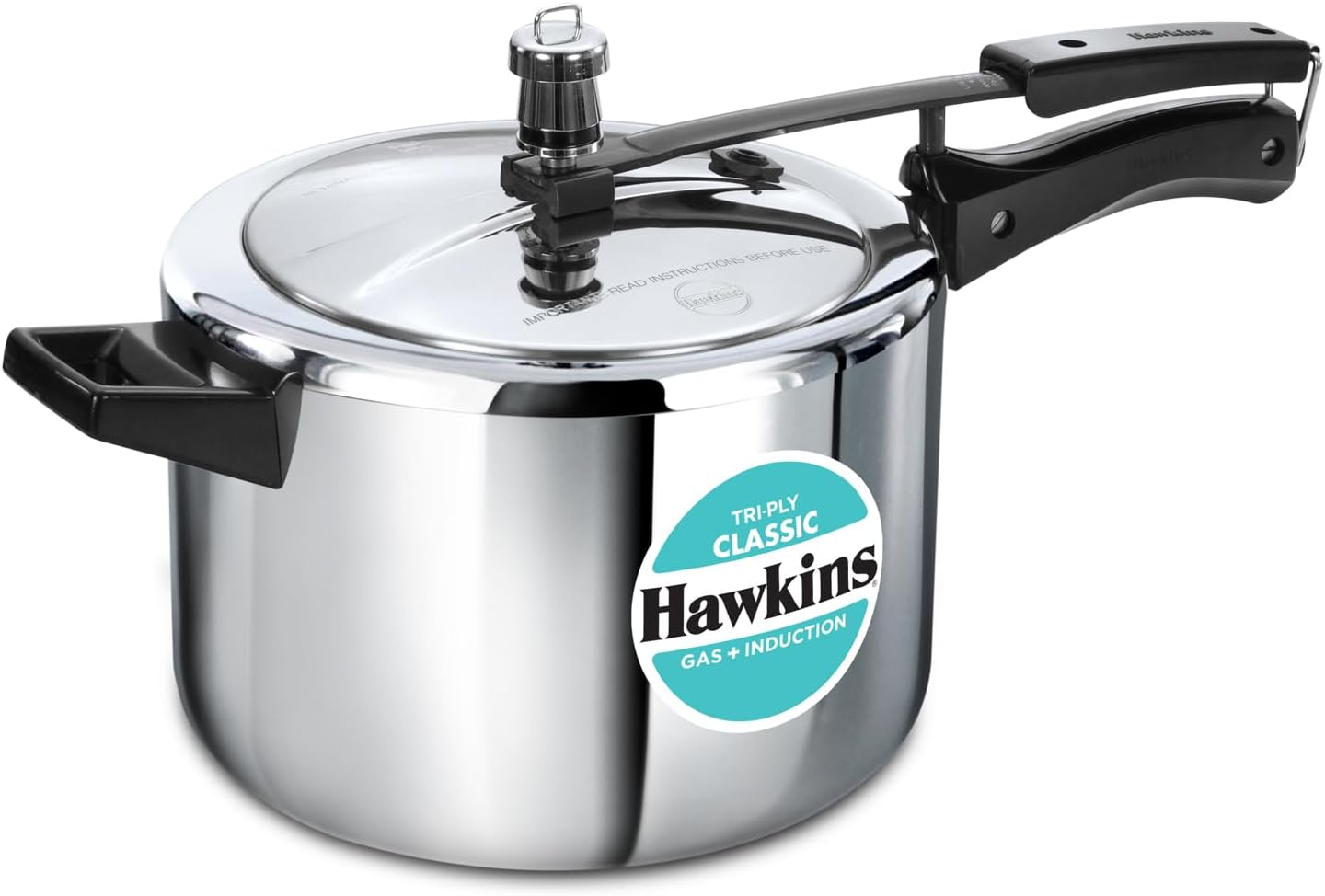
1. Hawkins Classic Aluminum Pressure Cooker – 5 Liter
Amazon Rating: 4.3/5 stars (12,000+ reviews) Price Range: $35-45

The Hawkins Classic Aluminum Pressure Cooker is a staple in Indian kitchens and for good reason. This 5-liter capacity cooker is perfect for preparing dals, rice, vegetables, and even meat dishes with remarkable efficiency.
Key Features:
- Heavy gauge aluminum construction for even heat distribution
- Pressure regulator weight for automatic pressure control
- Stay-cool Bakelite handles for safe operation
- Compatible with gas and electric cooktops
- 2-year manufacturer warranty
Performance Review: The Hawkins Classic excels in cooking traditional Indian dishes. The aluminum construction heats up quickly and maintains consistent pressure, reducing cooking times by up to 70%. The pressure regulator weight provides excellent control, preventing overcooking while ensuring thorough preparation of tough ingredients like chickpeas and meat.
Users particularly praise its performance in cooking perfect rice and fluffy dals. The 5-liter capacity is ideal for families of 4-6 people, allowing you to prepare substantial quantities of food without compromising quality.
Pros:
- Exceptional value for money
- Quick and even heating
- Durable construction
- Perfect size for family cooking
- Easy to clean and maintain
Cons:
- Requires careful handling due to aluminum construction
- Not dishwasher safe
- May discolor over time with heavy use
Best For: Daily cooking of dals, rice, vegetables, and quick meal preparation.
2. Futura Hard Anodised Pressure Cooker – 3.5 Liter
Amazon Rating: 4.4/5 stars (8,500+ reviews) Price Range: $45-55

The Futura Hard Anodised Pressure Cooker represents the evolution of traditional pressure cooking technology. Its hard anodized aluminum construction offers superior durability and performance compared to regular aluminum cookers.
Key Features:
- Hard anodized aluminum body for enhanced durability
- Unique curved body design for better heat circulation
- Stay-cool handles with comfortable grip
- Compatible with induction cooktops
- 5-year warranty on manufacturing defects
Performance Review: The hard anodized surface provides excellent heat retention and distribution, making it particularly effective for dishes that require precise temperature control. The cooker performs exceptionally well with delicate dishes like fish curry and vegetable preparations that can easily overcook in regular pressure cookers.
The 3.5-liter capacity is perfect for smaller families or when preparing side dishes. The induction compatibility makes it versatile for modern kitchens, while the curved body design ensures even cooking throughout.
Pros:
- Superior heat distribution
- Induction compatible
- Scratch and stain resistant
- Longer lifespan than regular aluminum
- Even cooking results
Cons:
- Higher price point
- Smaller capacity may not suit large families
- Requires special care for cleaning
Best For: Precision cooking of delicate curries, smaller portion preparations, and induction cooktop users.
3. Cello Aluminium Tawa/Griddle – 11 Inch
Amazon Rating: 4.2/5 stars (15,000+ reviews) Price Range: $15-25

The Cello Aluminum Tawa is an essential piece of cookware for any Indian kitchen. This 11-inch griddle is perfect for making rotis, parathas, dosas, and other Indian flatbreads.
Key Features:
- Heavy gauge aluminum construction
- 11-inch diameter suitable for large rotis
- Even heat distribution across the surface
- Compatible with gas cooktops
- Lightweight yet durable design
Performance Review: The Cello Tawa heats evenly across its surface, ensuring that rotis cook uniformly without hot spots. The aluminum construction provides quick heating, making it efficient for daily bread making. The 11-inch size accommodates large rotis and parathas comfortably.
Users appreciate its ability to maintain consistent temperature, which is crucial for achieving the perfect texture in Indian breads. The tawa seasons well over time, developing a natural non-stick surface that improves with use.
Pros:
- Affordable and accessible
- Even heat distribution
- Perfect size for Indian breads
- Develops natural non-stick properties
- Easy to maintain
Cons:
- Not suitable for induction cooktops
- May warp if overheated
- Requires proper seasoning initially
Best For: Daily roti and paratha making, dosas, and other Indian flatbreads.
4. Pigeon by Stovekraft Favourite Non-Stick Kadai – 24cm
Amazon Rating: 4.1/5 stars (10,500+ reviews) Price Range: $20-30

The Pigeon Favourite Non-Stick Kadai combines traditional kadai design with modern non-stick technology. This 24cm kadai is perfect for preparing curries, stir-fries, and deep-fried foods.
Key Features:
- Superior non-stick coating
- Heavy gauge aluminum base for even heating
- Heat-resistant handles
- Induction compatible
- PFOA-free coating for health safety
Performance Review: The non-stick surface performs excellently for Indian cooking, where dishes often involve multiple ingredients and spices that can stick to traditional cookware. The kadai shape is ideal for Indian cooking techniques, allowing for proper stirring and mixing of ingredients.
The aluminum base ensures even heat distribution, preventing hot spots that can burn delicate spices. The 24cm size is perfect for cooking for 3-4 people, making it ideal for family meals.
Pros:
- Excellent non-stick performance
- Induction compatible
- Easy to clean and maintain
- Affordable pricing
- Good heat distribution
Cons:
- Non-stick coating may wear over time
- Not suitable for very high heat cooking
- Requires careful handling to prevent scratching
Best For: Daily curry preparation, stir-fries, and dishes requiring easy cleanup.
5. Vinod Platinum Triply Stainless Steel Kadai – 24cm
Amazon Rating: 4.5/5 stars (6,800+ reviews) Price Range: $60-80

The Vinod Platinum Triply Kadai represents premium cookware designed specifically for Indian cooking. The triply construction combines stainless steel with an aluminum core for superior performance.
Key Features:
- Triply construction (stainless steel-aluminum-stainless steel)
- 24cm diameter with curved sides
- Induction compatible
- Dishwasher safe
- 25-year warranty
Performance Review: The triply construction provides exceptional heat distribution and retention, making it perfect for dishes that require consistent temperature control. The stainless steel surface is non-reactive, ensuring that acidic ingredients don’t affect the cookware or food flavor.
The kadai performs excellently for tempering spices, making curries, and even deep frying. The curved sides facilitate easy stirring and mixing, while the sturdy construction ensures long-lasting durability.
Pros:
- Superior heat distribution
- Non-reactive surface
- Extremely durable
- Dishwasher safe
- Long warranty period
Cons:
- Higher price point
- Heavier than aluminum alternatives
- May require oil for optimal performance
Best For: Serious home cooks, dishes requiring precise temperature control, and long-term investment.
6. Butterfly Premium Aluminum Pressure Pan – 5.5 Liter
Amazon Rating: 4.3/5 stars (9,200+ reviews) Price Range: $40-50

The Butterfly Premium Aluminum Pressure Pan is designed specifically for Indian cooking needs, combining the benefits of a pressure cooker with the shallow design of a pan, making it perfect for dishes like biryanis and pulavs.
Key Features:
- Wide, shallow design for even cooking
- 5.5-liter capacity
- Aluminum construction for quick heating
- Pressure cooking capability
- Suitable for gas and electric cooktops
Performance Review: The unique design of this pressure pan makes it exceptionally good for preparing layered dishes like biryani, where even heat distribution across a wide surface is crucial. The shallow depth allows for better ingredient layering while the pressure cooking capability reduces cooking time significantly.
Users particularly appreciate its performance in preparing rice dishes, where the wide surface area prevents rice from breaking and ensures uniform cooking. The 5.5-liter capacity is generous enough for large family meals or gatherings.
Pros:
- Unique design perfect for biryanis
- Large capacity
- Quick and even heating
- Versatile for multiple dish types
- Good value for money
Cons:
- Takes up more storage space
- May be too large for small families
- Requires careful temperature control
Best For: Biryani preparation, large-batch cooking, and dishes requiring wide, shallow cooking surface.
7. Prestige Omega Deluxe Granite Non-Stick Fry Pan – 24cm
Amazon Rating: 4.2/5 stars (11,000+ reviews) Price Range: $25-35

The Prestige Omega Deluxe features a granite-finish non-stick coating that’s particularly well-suited for Indian cooking. The 24cm size is perfect for preparing dry vegetables, eggs, and other dishes that require minimal oil.
Key Features:
- Granite-finish non-stick coating
- Spiral base for even heat distribution
- Induction compatible
- Metal spoon friendly coating
- PFOA-free construction
Performance Review: The granite finish provides superior non-stick properties while being more durable than traditional non-stick coatings. The pan performs excellently for preparing dry Indian vegetables (sabzis) that often require minimal oil and precise heat control.
The spiral base ensures even heat distribution, preventing hot spots that can burn delicate spices. The coating is metal spoon friendly, which is particularly useful in Indian cooking where vigorous stirring is often required.
Pros:
- Durable non-stick surface
- Metal spoon friendly
- Even heat distribution
- Induction compatible
- Easy maintenance
Cons:
- Higher price than basic non-stick pans
- May not be suitable for very high heat
- Coating durability depends on usage
Best For: Dry vegetable preparations, egg dishes, and cooking with minimal oil.
8. Amazon Brand – Solimo Stainless Steel Idli Maker – 4 Plates
Amazon Rating: 4.0/5 stars (7,500+ reviews) Price Range: $20-28

The Solimo Stainless Steel Idli Maker is essential for South Indian cooking, allowing you to prepare perfect steamed idlis at home. The 4-plate design can make 16 idlis at once.
Key Features:
- Food-grade stainless steel construction
- 4 plates with 4 cavities each
- Stackable design for space efficiency
- Compatible with pressure cookers and steamers
- Easy to clean and maintain
Performance Review: The stainless steel construction ensures even steaming and prevents any metallic taste in the idlis. The 16-cavity design is perfect for families, allowing you to prepare a substantial batch in one go. The plates stack neatly, making efficient use of steamer space.
Users praise its consistent performance in creating fluffy, well-shaped idlis. The stainless steel material heats evenly, ensuring all idlis cook uniformly regardless of their position in the steamer.
Pros:
- Food-safe stainless steel
- Large capacity (16 idlis)
- Even steaming
- Durable construction
- Easy to clean
Cons:
- Requires separate steamer or pressure cooker
- Takes practice to achieve perfect consistency
- May stick initially before seasoning
Best For: South Indian breakfast preparation, steamed food cooking, and healthy meal options.
9. Nirlon Non-Stick Aluminium Cookware Set (5 pieces)
Amazon Rating: 4.1/5 stars (8,800+ reviews) Price Range: $85-110

The Nirlon 5-piece cookware set provides a comprehensive solution for Indian cooking, including different sizes of kadais, saucepans, and a tawa, all with superior non-stick coating.
Key Features:
- 5-piece set including kadai, saucepans, and tawa
- Superior non-stick coating
- Induction compatible
- Aluminum base for even heating
- Ergonomic handles
Performance Review: This comprehensive set covers most Indian cooking needs with its varied sizes and shapes. The non-stick coating performs consistently across all pieces, making it excellent for dishes that traditionally stick to cookware. The aluminum construction ensures quick and even heating.
The set is particularly valuable for new households or those looking to upgrade their entire cookware collection. Each piece is designed with Indian cooking techniques in mind, from the deep kadais for curries to the flat tawa for breads.
Pros:
- Comprehensive cooking solution
- Consistent non-stick performance
- Good value as a set
- Induction compatible
- Suitable for daily cooking
Cons:
- Non-stick coating may wear with heavy use
- Not suitable for very high temperature cooking
- Requires careful maintenance
Best For: Complete kitchen setup, daily Indian cooking, and those preferring non-stick convenience.
10. Wonderchef Nigella Lawson Aluminium Pressure Cooker – 3 Liter
Amazon Rating: 4.4/5 stars (5,200+ reviews) Price Range: $55-70

The Wonderchef Nigella Lawson Pressure Cooker combines premium design with functional excellence. The 3-liter capacity is perfect for small to medium families and specialized dish preparation.
Key Features:
- Premium aluminum construction
- Unique design by celebrity chef Nigella Lawson
- Advanced safety features
- Induction compatible
- Elegant appearance
Performance Review: This pressure cooker excels in both performance and aesthetics. The premium aluminum construction provides excellent heat distribution, while the advanced safety features make it reliable for daily use. The 3-liter capacity is ideal for preparing dals, small batches of rice, or vegetables for 2-4 people.
The cooker performs exceptionally well with delicate preparations that require precise pressure control. Users appreciate its consistent results and the peace of mind provided by its safety features.
Pros:
- Premium build quality
- Excellent safety features
- Beautiful design
- Reliable performance
- Perfect size for small families
Cons:
- Higher price point
- Limited capacity
- May be too small for large families
Best For: Small families, precision cooking, and those valuing design aesthetics.
11. Bergner Argent Triply Stainless Steel Kadai with Lid – 28cm
Amazon Rating: 4.3/5 stars (4,100+ reviews) Price Range: $70-90

The Bergner Argent Triply Kadai is a premium cookware piece designed for serious Indian cooking enthusiasts. The 28cm size with lid makes it versatile for various cooking techniques.
Key Features:
- Triply stainless steel construction
- 28cm diameter with matching lid
- Induction compatible
- Riveted handles for durability
- Dishwasher safe
Performance Review: The triply construction provides superior heat retention and distribution, making it excellent for dishes requiring consistent temperature. The larger 28cm size accommodates bigger batches, perfect for family gatherings or meal prep.
The included lid adds versatility, allowing for steaming, braising, and slow cooking techniques. The stainless steel surface is completely non-reactive, ensuring that acidic ingredients don’t affect taste or cookware integrity.
Pros:
- Large capacity with lid
- Superior heat distribution
- Non-reactive surface
- Dishwasher safe
- Long-lasting durability
Cons:
- Premium pricing
- Heavy weight
- May require oil for optimal performance
Best For: Large batch cooking, professional-level home cooking, and versatile meal preparation.
12. Prestige Popular Plus Aluminum Pressure Cooker – 2 Liter
Amazon Rating: 4.2/5 stars (16,000+ reviews) Price Range: $25-35

The Prestige Popular Plus is one of the most trusted pressure cooker brands in India. This 2-liter model is perfect for small families or single-person households.
Key Features:
- Thick-bottom aluminum construction
- Metallic safety plug
- Pressure indicator for safe operation
- Compatible with gas cooktops
- Affordable pricing
Performance Review: Despite its compact size, this pressure cooker delivers excellent performance for small-batch cooking. The thick aluminum base ensures even heat distribution, while the safety features provide reliable operation. It’s particularly effective for cooking dals, small portions of rice, and quick vegetable preparations.
The 2-liter capacity is perfect for preparing 1-2 servings, making it ideal for working professionals or small households. The quick heating and pressure building save significant time in daily cooking routines.
Pros:
- Excellent value for money
- Perfect for small portions
- Quick heating and cooking
- Reliable safety features
- Widely available spare parts
Cons:
- Limited capacity
- Basic design features
- Not induction compatible
Best For: Small households, quick single-serving meals, and budget-conscious buyers.
13. Meyer Anzen Non-Stick Wok with Lid – 28cm
Amazon Rating: 4.0/5 stars (3,800+ reviews) Price Range: $45-60

The Meyer Anzen Non-Stick Wok brings Asian cooking techniques to Indian cuisine. The 28cm size with lid makes it excellent for stir-frying vegetables and preparing Indo-Chinese dishes.
Key Features:
- Large 28cm diameter
- Superior non-stick coating
- Includes matching lid
- Induction compatible
- Ergonomic handles
Performance Review: While traditionally used for Chinese cooking, this wok performs exceptionally well for Indian dishes that require high-heat cooking and frequent stirring. The large size accommodates substantial quantities of vegetables or meat, while the non-stick surface prevents sticking even with minimal oil.
The included lid adds versatility for steaming and braising techniques. The wok shape facilitates the Indian cooking technique of bhuno (frying and stirring at high heat), making it excellent for dishes like aloo gobi and mixed vegetables.
Pros:
- Large cooking surface
- Excellent for high-heat cooking
- Versatile with lid
- Non-stick convenience
- Good for Indo-Chinese dishes
Cons:
- Unconventional shape for traditional Indian cooking
- May require learning curve
- Non-stick coating requires careful maintenance
Best For: Indo-Chinese cooking, high-heat vegetable preparations, and those wanting cooking versatility.
14. Sumeet Traditional Copper Bottom Stainless Steel Tawa – 10 Inch
Amazon Rating: 4.1/5 stars (2,900+ reviews) Price Range: $30-40

The Sumeet Copper Bottom Tawa combines the heat conduction properties of copper with the durability and hygiene of stainless steel, creating an ideal surface for Indian bread preparation.
Key Features:
- Stainless steel top with copper bottom
- 10-inch diameter
- Even heat distribution
- Compatible with gas and electric cooktops
- Durable construction
Performance Review: The copper bottom provides excellent heat conduction, ensuring even temperature across the tawa surface. This results in uniformly cooked rotis and parathas with perfect texture. The stainless steel top is easy to clean and maintain, while being completely food-safe.
Users particularly appreciate how this tawa heats up quickly and maintains consistent temperature, making it efficient for daily bread making. The combination of materials provides the benefits of both copper’s heat conduction and steel’s durability.
Pros:
- Excellent heat distribution
- Quick heating
- Durable stainless steel surface
- Professional-quality results
- Easy to clean
Cons:
- Higher price than aluminum alternatives
- Heavier than traditional tawas
- Copper bottom may discolor over time
Best For: Serious bread makers, those wanting professional results, and long-term investment.
15. Hawkins Contura Hard Anodised Pressure Cooker – 4 Liter
Amazon Rating: 4.5/5 stars (7,100+ reviews) Price Range: $65-85

The Hawkins Contura represents the premium end of Hawkins’ pressure cooker range. The hard anodized construction and modern design make it suitable for contemporary kitchens while maintaining traditional cooking efficiency.
Key Features:
- Hard anodized aluminum construction
- Modern curved body design
- Stay-cool handles
- Induction compatible
- Advanced safety features
Performance Review: The hard anodized surface provides superior durability and heat retention compared to regular aluminum pressure cookers. The curved body design ensures better heat circulation, resulting in more even cooking. This is particularly beneficial for dishes requiring precise temperature control.
The 4-liter capacity strikes a perfect balance for medium-sized families, allowing preparation of substantial meals without being overly bulky. The induction compatibility makes it suitable for modern kitchen setups.
Pros:
- Superior durability
- Even heat distribution
- Modern design aesthetics
- Induction compatible
- Excellent build quality
Cons:
- Premium pricing
- Heavier than regular aluminum
- Requires specific cleaning care
Best For: Premium cooking experience, induction cooktop users, and those prioritizing durability.
Comprehensive Buying Guide for Indian Cookware
Choosing the right cookware for Indian cooking involves understanding various factors that affect performance, durability, and cooking results. This detailed buying guide will help you make informed decisions based on your specific needs and preferences.
Material Considerations
Aluminum Cookware: Aluminum is the most popular choice for Indian cookware due to its excellent heat conduction properties. It heats up quickly and distributes heat evenly, making it perfect for dishes requiring precise temperature control. However, aluminum can react with acidic foods, so it’s important to choose anodized or coated versions for better durability and safety.
Advantages:
- Excellent heat conduction
- Lightweight and affordable
- Quick heating
- Good for daily cooking
Disadvantages:
- May react with acidic foods
- Can discolor over time
- Not always dishwasher safe
- May warp under extreme heat
Stainless Steel Cookware: Stainless steel is non-reactive, durable, and easy to maintain. It’s particularly good for dishes with acidic ingredients like tomato-based curries. However, pure stainless steel doesn’t conduct heat as well as aluminum, so look for tri-ply or clad construction with aluminum cores.
Advantages:
- Non-reactive surface
- Extremely durable
- Dishwasher safe
- Professional appearance
- Long-lasting
Disadvantages:
- Higher cost
- Heavier than aluminum
- May require oil for best results
- Can have hot spots without aluminum core
Hard Anodized Aluminum: Hard anodized aluminum combines the heat conduction benefits of aluminum with enhanced durability. The anodizing process creates a hard, non-reactive surface that’s scratch-resistant and doesn’t discolor.
Advantages:
- Superior durability
- Non-reactive surface
- Excellent heat distribution
- Scratch resistant
- Even cooking
Disadvantages:
- Higher cost than regular aluminum
- Requires special care for cleaning
- May not be dishwasher safe
- Darker color shows stains more
Non-Stick Coatings: Non-stick cookware is convenient for Indian cooking, especially for dishes that traditionally stick to cookware. However, the coating quality varies significantly, and cheaper options may not withstand the high heat often required in Indian cooking.
Advantages:
- Easy cleaning
- Requires minimal oil
- Good for delicate foods
- Convenient for daily cooking
Disadvantages:
- Coating may wear over time
- Not suitable for very high heat
- Requires careful handling
- May need replacement periodically
Copper Cookware: Copper provides the best heat conduction but requires more maintenance. It’s often combined with other materials like stainless steel for practical use.
Advantages:
- Superior heat conduction
- Professional cooking performance
- Beautiful appearance
- Responsive to temperature changes
Disadvantages:
- Expensive
- Requires regular maintenance
- May react with certain foods
- Heavy weight
Size and Capacity Guidelines
Choosing the right size depends on your family size and cooking habits:
Small Household (1-2 people):
- 1.5-2 liter pressure cooker
- 8-9 inch tawa
- 20-22 cm kadai
- 16-18 cm saucepans
Medium Family (3-4 people):
- 3-4 liter pressure cooker
- 10-11 inch tawa
- 24-26 cm kadai
- 20-22 cm saucepans
Large Family (5+ people):
- 5-6 liter pressure cooker
- 11-12 inch tawa
- 28-30 cm kadai
- 24-26 cm saucepans
Heat Source Compatibility
Gas Cooktops: Most cookware works well with gas, but ensure the bottom is thick enough for even heat distribution.
Electric Cooktops: Require flat-bottomed cookware for proper contact and heat transfer.
Induction Cooktops: Need magnetic materials (stainless steel or magnetic aluminum). Check for induction compatibility symbols.
Multi-fuel Compatibility: If you use different heat sources, choose cookware that works across all types.
Essential Features to Look For
Safety Features in Pressure Cookers:
- Multiple pressure release systems
- Pressure indicators
- Safety plugs
- Locking mechanisms
- Clear instruction manual
Handle Design:
- Heat-resistant materials
- Comfortable grip
- Securely attached (riveted preferred)
- Stay-cool design
- Ergonomic shape
Base Construction:
- Thick, heavy base for even heating
- Flat bottom for stability
- Compatible with your cooktop type
- Warp-resistant design
Lid Design:
- Tight-fitting for steam retention
- Easy to clean
- Durable construction
- Clear visibility (for glass lids)
Maintenance and Care Considerations
Seasoning Requirements: Some cookware requires initial seasoning for optimal performance. This is particularly true for:
- Iron and carbon steel cookware
- Some aluminum products
- Traditional brass and copper items
Cleaning Requirements: Consider how much maintenance you’re willing to do:
- Dishwasher-safe options for convenience
- Hand-wash only for premium materials
- Special cleaning products for certain coatings
- Storage requirements for different materials
Durability Expectations: Set realistic expectations based on material and usage:
- Non-stick coatings: 2-5 years with proper care
- Aluminum cookware: 5-10 years
- Stainless steel: 10-20 years or more
- Cast iron: Lifetime with proper care
Budget Planning
Budget Category Recommendations:
Entry Level ($100-200 total):
- Basic aluminum pressure cooker
- Aluminum tawa
- Non-stick kadai
- Basic saucepan set
Mid-Range ($200-500 total):
- Hard anodized pressure cooker
- Quality non-stick set
- Stainless steel pieces
- Specialty items (idli maker, etc.)
Premium ($500+ total):
- Tri-ply stainless steel sets
- Professional-grade pieces
- Copper or premium materials
- Complete cookware systems
Brand Reputation and Warranty
Established Indian Brands:
- Hawkins: Known for pressure cookers
- Prestige: Comprehensive cookware range
- Pigeon: Good value products
- Butterfly: Innovative designs
International Brands:
- Meyer: Premium non-stick options
- Vinod: Professional-quality stainless steel
- Bergner: European design and quality
Warranty Considerations:
- Minimum 1-year warranty on quality products
- Extended warranties on premium items
- Availability of spare parts
- Customer service quality
Specific Cooking Technique Requirements
For Pressure Cooking:
- Multiple sizes for different dish types
- Good safety features
- Compatible with your cooktop
- Easy pressure release mechanisms
For Bread Making:
- Even heat distribution
- Appropriate size (10-11 inches ideal)
- Good heat retention
- Non-stick or well-seasoned surface
For Curry Preparation:
- Deep sides for stirring
- Non-reactive materials for acidic ingredients
- Good heat distribution
- Easy to clean surfaces
For Deep Frying:
- Deep, stable vessels
- Heat-resistant handles
- Good temperature control
- Easy oil drainage
For Steaming:
- Tight-fitting lids
- Steam-friendly materials
- Appropriate rack systems
- Easy cleaning
Environmental and Health Considerations
Non-Toxic Materials: Choose PFOA-free non-stick coatings and avoid reactive materials for acidic foods.
Energy Efficiency: Good heat conduction saves energy and reduces cooking times.
Longevity: Durable cookware reduces waste and environmental impact.
Recyclability: Consider the end-of-life disposal options for different materials.
Frequently Asked Questions (FAQs)
Q1: What is the most important piece of cookware for Indian cooking?
A: The pressure cooker is arguably the most essential piece of Indian cookware. It’s used for cooking dals, rice, vegetables, and even meat dishes, significantly reducing cooking time while preserving nutrients and flavors. A good quality 3-5 liter pressure cooker can handle most Indian cooking needs for a typical family.
Q2: Is aluminum cookware safe for Indian cooking?
A: Yes, aluminum cookware is safe when used properly. However, raw aluminum can react with acidic foods like tomatoes and tamarind, potentially affecting taste and releasing small amounts of aluminum. Hard anodized aluminum or aluminum with non-stick coating eliminates this concern. For dishes with high acidity, consider stainless steel alternatives.
Q3: What size tawa should I buy for making rotis?
A: For making rotis, a 10-11 inch tawa is ideal for most households. This size accommodates medium to large rotis comfortably while being manageable for daily use. Smaller tawas (8-9 inches) work for smaller portions, while larger ones (12+ inches) are better for commercial or large-scale cooking.
Q4: Can I use regular cookware for Indian cooking, or do I need special Indian cookware?
A: While you can adapt regular cookware for Indian cooking, specialized Indian cookware is designed for specific techniques and performs better. For example, the curved sides of a kadai facilitate the stirring and mixing essential in Indian cooking, while the design of a pressure cooker is optimized for the lentils and grains common in Indian cuisine.
Q5: What’s the difference between a kadai and a regular frying pan?
A: A kadai has deeper, more curved sides compared to a regular frying pan. This design makes it perfect for Indian cooking techniques like tempering spices, making curries, and stir-frying vegetables. The deeper sides prevent ingredients from spilling out during vigorous stirring, and the curved shape facilitates even mixing of spices and ingredients.
Q6: How do I season a new aluminum or iron tawa?
A: To season a new tawa:
- Wash thoroughly with soap and water, then dry completely
- Apply a thin layer of oil (preferably coconut or mustard oil) all over the surface
- Heat on medium flame for 10-15 minutes
- Turn off heat and let it cool completely
- Wipe with a clean cloth
- Repeat this process 2-3 times before first use Over time, the tawa will develop a natural non-stick surface that improves with regular use.
Q7: Should I buy a cookware set or individual pieces?
A: This depends on your needs and budget. Cookware sets offer better value and ensure matching pieces, making them ideal for new households or complete kitchen upgrades. However, buying individual pieces allows you to choose specific materials and sizes for your cooking style. If you’re just starting with Indian cooking, consider buying essential pieces individually: a pressure cooker, kadai, and tawa.
Q8: How do I maintain non-stick cookware for Indian cooking?
A: To maintain non-stick cookware:
- Use wooden or silicone utensils instead of metal ones
- Cook on medium heat; avoid high temperatures that can damage the coating
- Clean with soft sponges and mild detergent
- Avoid abrasive cleaners or steel wool
- Store carefully to prevent scratching
- Replace when the coating starts peeling or becomes ineffective Indian cooking often requires high heat, so invest in quality non-stick cookware designed for higher temperature cooking.
Q9: Is induction-compatible cookware necessary?
A: Induction compatibility is only necessary if you have an induction cooktop. Induction cooktops are becoming increasingly popular due to their energy efficiency and precise temperature control. If you plan to upgrade to induction or want cookware that works on all heat sources, choose magnetic stainless steel or induction-compatible aluminum cookware.
Q10: What’s the ideal pressure cooker size for a family of four?
A: For a family of four, a 3-5 liter pressure cooker is ideal. A 3-liter cooker works well for daily cooking of dals and vegetables, while a 5-liter cooker allows for larger batches and cooking rice for the family. Many households find it useful to have both sizes – a smaller one for quick daily cooking and a larger one for batch cooking and special occasions.
Q11: Can I use my Indian cookware in a dishwasher?
A: This depends on the material:
- Stainless steel: Generally dishwasher safe
- Hard anodized aluminum: Usually dishwasher safe, but check manufacturer instructions
- Non-stick: Some are dishwasher safe, but hand washing is recommended to preserve coating
- Regular aluminum: Not recommended for dishwasher use
- Copper: Hand wash only
- Iron/carbon steel: Hand wash only to prevent rusting
Q12: Why do some recipes specify using specific cookware materials?
A: Different materials affect cooking results:
- Clay pots impart a unique earthy flavor and retain moisture well
- Copper provides excellent heat control for delicate dishes
- Iron adds nutritional value and retains heat well for slow cooking
- Stainless steel doesn’t react with acidic ingredients
- Aluminum conducts heat quickly, perfect for dishes requiring rapid temperature changes
Q13: How do I prevent food from sticking to stainless steel cookware?
A: To prevent sticking:
- Preheat the pan before adding oil
- Use adequate oil or ghee
- Don’t move food immediately after adding it to the pan
- Cook on appropriate heat levels
- Clean properly after use to maintain the surface With proper technique, stainless steel can become quite non-stick naturally.
Q14: What should I look for in a pressure cooker safety system?
A: A good pressure cooker should have:
- Pressure indicator to show when pressure builds up
- Safety plug that releases if pressure becomes too high
- Locking mechanism that prevents opening under pressure
- Multiple pressure release options
- Clear and detailed instruction manual
- Quality gasket/rubber ring for proper sealing
- Sturdy handle construction
Q15: Is it worth investing in expensive cookware for Indian cooking?
A: Quality cookware is generally worth the investment because:
- Better heat distribution leads to improved cooking results
- Durable materials last longer, providing better value over time
- Premium cookware often has better safety features
- Even heating prevents burning and sticking
- Better materials don’t react with spices and acidic ingredients However, expensive doesn’t always mean better – focus on quality construction and appropriate materials for your cooking style.
Q16: How do I know when it’s time to replace my cookware?
A: Replace cookware when:
- Non-stick coating is peeling or completely worn off
- There are cracks or warping in the base
- Handles become loose or damaged
- Pressure cooker gaskets become hard or cracked
- Stainless steel develops pitting or permanent staining
- Aluminum shows excessive wear or deep scratches
- Food consistently sticks despite proper cooking technique
Q17: Can I use metal utensils with all types of cookware?
A: Metal utensils compatibility varies:
- Stainless steel: Safe to use metal utensils
- Hard anodized aluminum: Generally safe, but wooden/silicone is better
- Non-stick: Avoid metal utensils to prevent coating damage
- Regular aluminum: Metal utensils can cause scratching
- Copper: Use wooden or silicone utensils
- Cast iron: Metal utensils are acceptable
Q18: What’s the difference between regular and hard anodized aluminum?
A: Hard anodized aluminum undergoes an electrochemical process that creates a harder, more durable surface. Benefits include:
- More scratch-resistant than regular aluminum
- Non-reactive surface that doesn’t affect food taste
- Better heat retention
- More durable and longer-lasting
- Darker color that hides stains better However, it’s more expensive and may require special cleaning care.
Q19: Should I buy imported or Indian-made cookware?
A: Both have advantages: Indian-made cookware:
- Designed specifically for Indian cooking techniques
- Better value for money
- Easily available spare parts and service
- Familiar with local cooking requirements
Imported cookware:
- Often has advanced technology and materials
- May offer better build quality in premium segments
- International design standards
- Sometimes better warranty coverage
Choose based on your specific needs, budget, and quality requirements rather than origin alone.
Q20: How do I store my cookware to maximize its lifespan?
A: Proper storage extends cookware life:
- Stack carefully with protective layers between pieces
- Hang pans when possible to prevent scratching
- Store lids separately or with protective padding
- Keep in dry areas to prevent rusting
- Ensure complete drying before storage
- Use pan protectors for non-stick surfaces
- Store knives and sharp utensils separately
Advanced Tips for Indian Cookware Selection and Use
Understanding Heat Distribution Patterns
Different cookware materials create distinct heat distribution patterns that affect cooking results:
Aluminum cookware creates hot spots quickly but also cools down rapidly when heat is reduced. This makes it excellent for dishes requiring quick temperature adjustments but requires attention to prevent burning.
Stainless steel with aluminum core provides more even heating than pure stainless steel, making it ideal for dishes that need consistent temperature throughout the cooking process.
Cast iron retains heat exceptionally well, making it perfect for slow-cooking dishes like biryanis or dishes that benefit from residual heat cooking.
Optimizing Cookware for Different Indian Regions
North Indian Cooking: Emphasizes wheat-based breads, dairy-rich curries, and tandoor-style cooking. Key cookware includes:
- Large tawas for rotis and naans
- Deep kadais for rich gravies
- Heavy-bottomed pans for slow-cooked dishes
South Indian Cooking: Features rice-based dishes, steamed foods, and coconut-based curries:
- Idli steamers and stands
- Wide, shallow pans for dosas
- Small kadais for tempering and sambars
Eastern Indian Cooking: Known for fish curries, sweets, and rice dishes:
- Wide pans for fish preparation
- Heavy-bottomed pans for sweets
- Medium-sized pressure cookers for rice dishes
Western Indian Cooking: Includes diverse preparations from street food to traditional thalis:
- Multiple small kadais for different dishes
- Specialized pans for dhokla and other steamed snacks
- Pressure cookers for dal preparations
Professional Tips for Cookware Maintenance
Daily Maintenance Routine:
- Clean immediately after use while cookware is still warm
- Use appropriate cleaning agents for each material type
- Dry thoroughly to prevent water spots and rust
- Store properly to prevent damage
Weekly Deep Cleaning:
- Remove stubborn stains using material-appropriate methods
- Check for signs of wear or damage
- Re-season cookware that requires it
- Inspect handles and safety features
Monthly Inspection:
- Check pressure cooker gaskets and safety valves
- Examine non-stick coatings for wear
- Test handle tightness and stability
- Clean hard-to-reach areas thoroughly
Energy Efficiency Considerations
Choosing Energy-Efficient Cookware:
- Thick, heavy bases reduce cooking time
- Tight-fitting lids retain heat and steam
- Appropriate sizes prevent energy waste
- Pressure cookers dramatically reduce cooking times
Optimal Heat Settings:
- Start with high heat for quick heating
- Reduce to medium for most cooking processes
- Use low heat for simmering and slow cooking
- Turn off heat early and use residual heat when possible
Building Your Indian Cookware Collection Gradually
Phase 1 – Essential Basics (First 3 months):
- One quality pressure cooker (3-5 liters)
- One tawa (10-11 inches)
- One kadai (24cm)
- Basic saucepan set
Phase 2 – Expanding Options (Months 3-6):
- Additional pressure cooker size
- Non-stick options for convenience
- Steaming equipment (idli maker, etc.)
- Specialty items based on cooking preferences
Phase 3 – Premium Upgrades (Months 6-12):
- High-quality stainless steel or triply cookware
- Specialty regional items
- Professional-grade pieces for favorite dishes
- Complete sets for comprehensive cooking
Phase 4 – Specialized Equipment (Year 2+):
- Traditional materials (clay, copper)
- Restaurant-quality equipment
- Rare or specialized regional items
- Backup pieces for heavy-use items
Troubleshooting Common Cookware Issues
Food Sticking Problems:
- Insufficient preheating of the pan
- Wrong oil quantity or type
- Incorrect heat level
- Poor quality or worn cookware surface
- Solution: Proper preheating, adequate oil, medium heat, cookware upgrade
Uneven Cooking:
- Warped or thin-bottomed cookware
- Incorrect heat source size
- Poor quality materials
- Solution: Quality cookware with thick, flat bases
Handle Problems:
- Loose screws or rivets
- Heat damage to materials
- Poor original construction
- Solution: Tighten hardware, replace if necessary, choose better construction
Pressure Cooker Issues:
- Worn gaskets causing steam leaks
- Blocked pressure release valves
- Damaged safety plugs
- Solution: Regular maintenance, genuine replacement parts
Cultural and Traditional Aspects
Regional Preferences: Different regions in India have traditional preferences for cookware materials:
- Kerala: Clay pots and coconut shell ladles
- Rajasthan: Brass and copper vessels
- Bengali: Iron kadais for fish preparations
- Punjab: Heavy-bottomed aluminum for rich gravies
Festival and Special Occasion Cookware:
- Large-capacity items for family gatherings
- Traditional materials for religious significance
- Specialized shapes for specific festival foods
- Serving pieces that complement cooking vessels
Ayurvedic Considerations: Traditional Indian medicine suggests certain materials for health:
- Copper for its antimicrobial properties
- Iron for nutritional supplementation
- Clay for natural cooling properties
- Brass for its traditional medicinal beliefs
Conclusion
Selecting the right cookware for Indian cooking is a journey that combines practical considerations with cultural understanding. The 15 products reviewed in this article represent some of the best options available on Amazon, each serving specific needs and cooking styles within the diverse world of Indian cuisine.
From the essential pressure cooker that forms the backbone of any Indian kitchen to specialized items like idli makers and traditional tawas, each piece of cookware contributes to creating authentic flavors and textures that define Indian cooking. The key is understanding your specific cooking needs, family size, budget constraints, and long-term culinary goals.
Investment Priorities: Start with essential items – a quality pressure cooker, a reliable tawa, and a versatile kadai. These three pieces can handle the majority of Indian cooking tasks. As your confidence and interest grow, gradually add specialized items and upgrade to premium materials.
Quality vs. Budget Balance: While premium cookware offers superior performance and durability, excellent results can be achieved with mid-range options when chosen wisely. Focus on functionality over aesthetics, especially when building your initial collection.
Maintenance Commitment: Remember that great cookware requires proper care and maintenance. Factor in the time and effort you’re willing to invest in maintaining your cookware when making purchasing decisions. Some materials require more attention but reward you with superior performance and longevity.
Future-Proofing Your Kitchen: Consider your evolving needs when selecting cookware. Choose pieces that will grow with your cooking skills and can adapt to different cooking methods. Induction compatibility, dishwasher safety, and modular sizing can add value over time.
The world of Indian cookware is rich and varied, reflecting the diversity of Indian cuisine itself. Whether you’re a beginner taking your first steps into Indian cooking or an experienced cook looking to upgrade your equipment, the right cookware can transform your culinary experience. The products reviewed in this article, combined with the buying guide and FAQ sections, provide a comprehensive foundation for making informed decisions that will serve you well in your Indian cooking journey.
Remember that the best cookware is the one that matches your cooking style, fits your budget, and inspires you to create delicious meals for yourself and your loved ones. Happy cooking!

Leave a Reply