
Starting your cooking journey can feel overwhelming, especially when faced with endless cookware options promising professional results. The truth is, having the right pots and pans makes all the difference between enjoying your time in the kitchen and dreading every meal prep session.
For beginners, cookware selection isn’t just about finding the cheapest option or the flashiest brand. It’s about discovering tools that forgive mistakes, distribute heat evenly, and grow with your skills. Poor-quality cookware can burn food unevenly, warp after a few uses, or require such meticulous care that cooking becomes a chore rather than a joy.
Best Cookware for Beginners:Quality beginner cookware should tick several important boxes. First, it needs to be forgiving—meaning it won’t punish you for slight temperature miscalculations or forgetting to stir for a minute. Second, it should be versatile enough to handle most cooking techniques without requiring specialized knowledge. Third, maintenance should be straightforward because the last thing a beginner needs is complicated seasoning rituals or hand-washing requirements that take longer than the cooking itself.
Why Choosing the Right Cookware Matters for Beginners!
The cookware market has evolved significantly in recent years. Modern materials blend the best of traditional cooking surfaces with contemporary convenience. Non-stick coatings have become safer and more durable. Stainless steel sets now come with aluminum or copper cores for better heat distribution. Even cast iron manufacturers have started offering pre-seasoned options that are ready-to-use straight from the box.
Budget considerations matter too. Beginners shouldn’t feel pressured to invest thousands in professional-grade cookware before they’ve even mastered scrambled eggs. However, going too cheap, often means replacing warped pans within months. The sweet spot lies in mid-range options that offer genuine quality without the premium brand markup.
This comprehensive guide examines eleven exceptional cookware sets and individual pieces specifically chosen for beginner cooks. Each product has been evaluated based on real-world performance, ease of use, durability, and value for money. Whether you’re furnishing your first apartment kitchen, upgrading from hand-me-down pans, or simply tired of burnt dinners, you’ll find detailed insights to make an informed decision.
We’ll walk through everything from complete cookware sets that cover all your basics to individual specialty pieces worth adding to your collection. You’ll learn which materials work best for different cooking styles, how to identify quality construction, and what features actually matter versus marketing gimmicks. By the end of this guide, you’ll have the confidence to choose cookware that matches your needs, skill level, and budget perfectly.
Top 11 Best Cookware for Beginners – Detailed Reviews
1. T-fal E93808 Professional Nonstick Cookware Set
Overview:
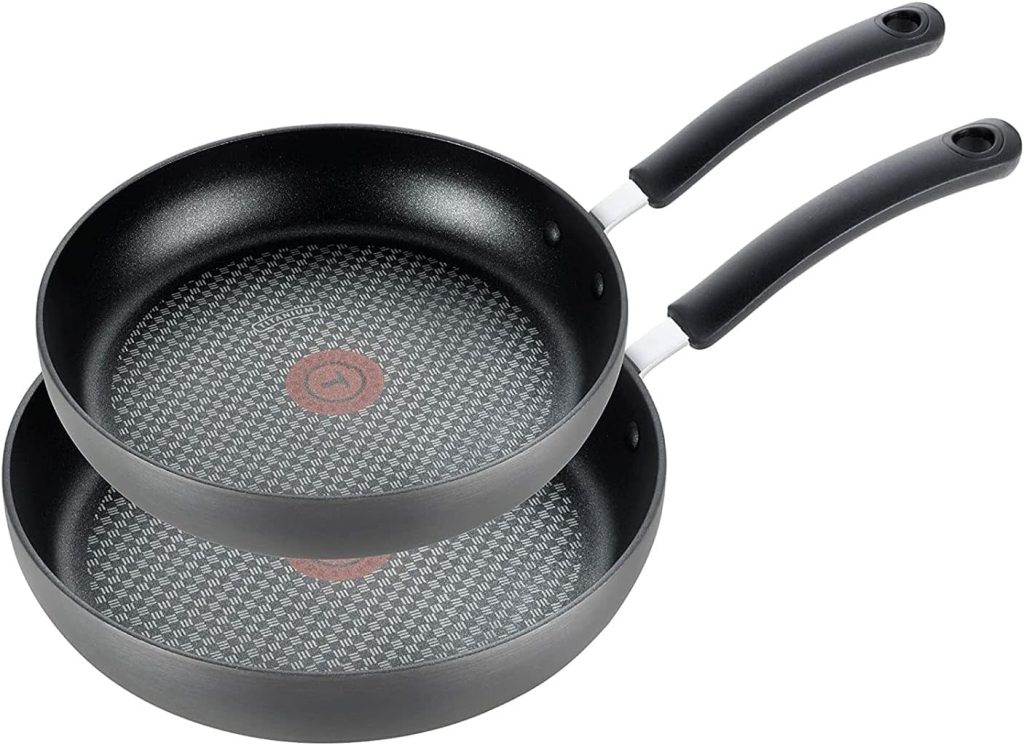
The T-fal E93808 Professional set has earned its reputation as one of the most beginner-friendly cookware collections available on Amazon. This 12-piece set includes everything most home cooks need: fry pans in multiple sizes, saucepans with lids, a Dutch oven, and even a square griddle. What makes it special is T-fal’s Thermo-Spot technology—a heat indicator that turns solid red when the pan reaches optimal cooking temperature, eliminating guesswork for beginners.
Key Features:
- Thermo-Spot Heat Indicator: Built-in visual cue shows when pans are properly preheated
- PFOA-Free Non-Stick Interior: Safe coating that requires minimal oil and cleans easily
- Riveted Silicone Handles: Stay cool during stovetop cooking and provide comfortable grip
- Oven Safe to 400°F: Versatile enough for stovetop-to-oven recipes
- Dishwasher Safe: Simplifies cleanup for busy beginners
- Even Heat Base: Prevents hot spots that cause uneven cooking
Performance and User Experience:
The T-fal Professional set performs admirably across various cooking tasks. Eggs slide off effortlessly without sticking, pancakes brown evenly, and sauces heat uniformly without scorching. The Thermo-Spot indicator genuinely helps beginners learn proper preheating—a skill that many overlook but dramatically impacts cooking results.
The non-stick coating holds up well with proper care, though it’s not indestructible. Users report that with metal utensil use and dishwasher cleaning, the coating maintains its effectiveness for 2-3 years of regular use. Hand washing and using silicone or wooden utensils extends longevity considerably.
Heat distribution is solid for the price point. The aluminum construction heats quickly and evenly, though it lacks the heat retention of heavier materials. This actually benefits beginners since pans respond quickly to temperature adjustments, making it easier to prevent overcooking.
The handles stay remarkably cool during cooking, a safety feature beginners truly appreciate. The 10.25-inch fry pan strikes the perfect balance for most tasks—large enough for family meals but not so oversized that it’s awkward to handle or store.
Pros:
✅ Thermo-Spot technology teaches proper preheating technique
✅ Excellent non-stick performance makes cooking and cleanup effortless
✅ Complete set covers all basic cooking needs
✅ Affordable price point for beginners on a budget
✅ Dishwasher safe for convenient maintenance
✅ Handles remain cool and comfortable during use
✅ Lightweight design is easy to maneuver for new cooks
Cons:
❌ Non-stick coating degrades faster with dishwasher use and metal utensils
❌ Not compatible with induction cooktops
❌ Aluminum construction lacks durability of heavier materials
❌ Moderate oven-safe temperature limit restricts some recipes
❌ Glass lids can become loose over time
Ideal For:
First-time home cooks seeking an affordable, complete cookware solution. Perfect for apartment dwellers, college students, or anyone transitioning from minimal cooking to regular meal preparation. Best suited for those who prioritize convenience and easy cleanup over professional-grade durability.
Final Verdict:
The T-fal E93808 Professional set represents exceptional value for beginners. While it won’t last a lifetime, it provides several years of reliable service while you develop cooking skills and determine your long-term preferences. The Thermo-Spot technology alone justifies the purchase for beginners who struggle with temperature control. At this price point, you simply won’t find a more complete, user-friendly starter set.
2. Cuisinart MCP-12N Multiclad Pro Stainless Steel Cookware Set
Overview:
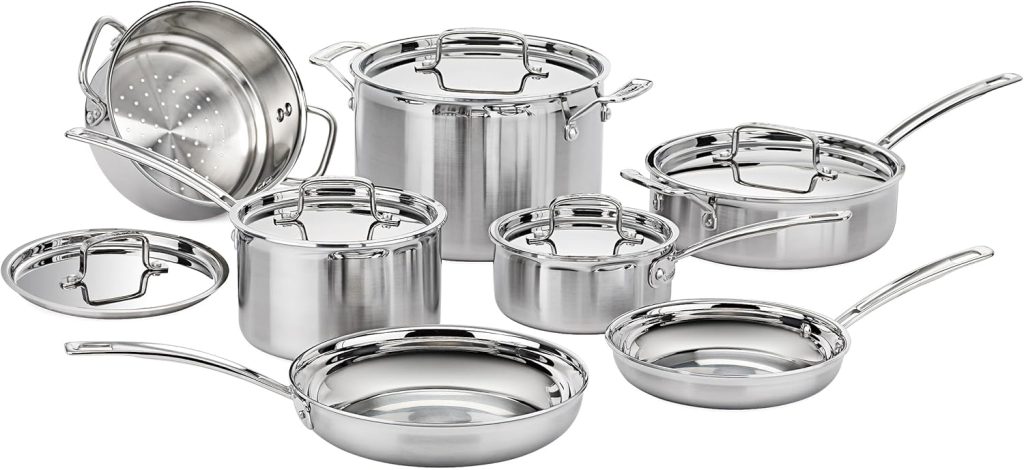
The Cuisinart Multiclad Pro represents a significant step up in quality and longevity. This 12-piece stainless steel set introduces beginners to professional-grade cookware without the intimidating price tag. Unlike single-layer stainless steel, this tri-ply construction features an aluminum core sandwiched between stainless steel layers, delivering superior heat distribution while maintaining the durability and non-reactive properties of stainless steel.
Key Features:
- Triple-Ply Construction: Aluminum core between stainless steel layers ensures even heating
- Induction Compatible: Works on all cooktop types including induction
- Oven and Broiler Safe to 550°F: Handles high-heat cooking techniques
- Cool Grip Handles: Solid stainless steel handles stay cooler than expected
- Drip-Free Pouring: Tapered rims prevent messy spills
- Tight-Fitting Lids: Lock in moisture and nutrients during cooking
Performance and User Experience:
Stainless steel presents a learning curve compared to non-stick, but the Multiclad Pro makes that transition smoother. The tri-ply construction heats evenly, reducing hot spots that cause sticking. Once you learn proper preheating and fat usage, food releases reasonably well—though it’s never as effortless as non-stick.
The real advantage shows in versatility. You can sear steaks at high heat, create beautiful fond for pan sauces, and move pans directly from stovetop to oven without concern. The 550°F oven-safe rating accommodates virtually any recipe. Acidic foods like tomato sauces won’t react with the stainless steel surface, preserving flavor purity.
Maintenance requires more effort than non-stick. Foods will stick occasionally, especially proteins before they develop a sear. However, stuck-on bits release easily with proper deglazing or a soak with Bar Keeper’s Friend. The stainless steel finish resists scratching, and proper cleaning keeps pans looking new for years.
Weight strikes a good balance—substantial enough to feel quality but not so heavy that beginners find them unwieldy. The handles, while metal, feature a design that stays surprisingly cool during most cooking tasks.
Pros:
✅ Professional tri-ply construction at accessible price point
✅ Excellent heat distribution eliminates hot spots
✅ Induction compatible for modern cooktops
✅ Extremely high oven-safe temperature for versatility
✅ Non-reactive surface won’t alter food flavors
✅ Dishwasher safe (though hand washing preserves appearance)
✅ Lifetime warranty demonstrates manufacturer confidence
✅ Metal utensils won’t damage cooking surface
Cons:
❌ Steeper learning curve than non-stick cookware
❌ Requires proper preheating and fat to prevent sticking
❌ More demanding cleaning process
❌ Handles can get warm with extended high-heat cooking
❌ Water spots and discoloration require regular maintenance
Ideal For:
Beginners ready to invest in cookware they won’t outgrow as skills develop. Perfect for aspiring home chefs who want to learn proper cooking techniques without the training wheels of non-stick. Ideal for those who cook frequently and value durability over convenience.
Final Verdict:
The Cuisinart Multiclad Pro offers the best value in mid-range stainless steel cookware. While it demands more from cooks than non-stick alternatives, it rewards that effort with superior versatility, longevity, and cooking performance. For beginners committed to developing serious cooking skills, this set provides professional results without professional pricing. The learning investment pays dividends as your culinary abilities grow.
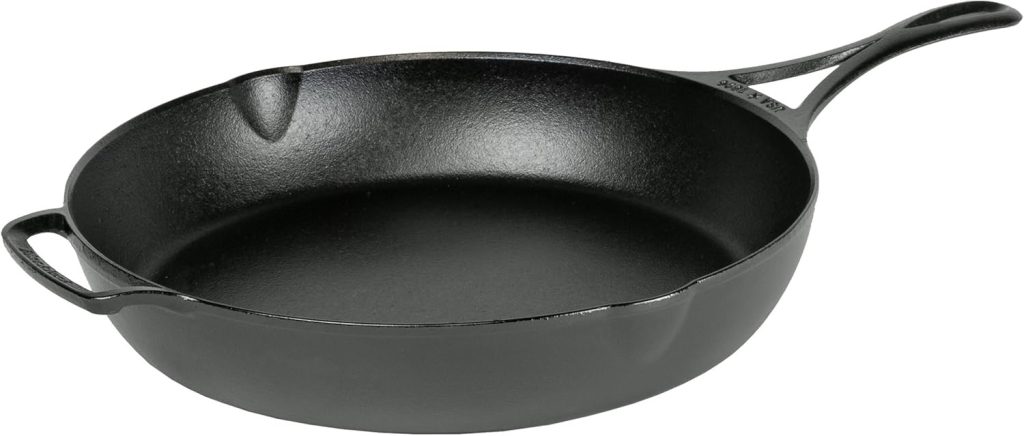
3. Lodge Pre-Seasoned Cast Iron Skillet (12-inch)
Overview:
No beginner’s kitchen is complete without cast iron, and Lodge has been America’s trusted source for over a century. This 12-inch pre-seasoned skillet eliminates the intimidating seasoning process that once deterred beginners from cast iron. It arrives ready to cook, with a factory-applied seasoning that improves with each use. Cast iron cooking offers unique benefits—unparalleled heat retention, natural non-stick properties (when properly maintained), and the ability to transition seamlessly from stovetop to oven to campfire.
Key Features:
- Pre-Seasoned Finish: Ready to use immediately without initial seasoning work
- Unmatched Heat Retention: Holds temperature better than any other material
- Naturally Non-Stick (When Maintained): Develops better release properties over time
- Oven Safe at Any Temperature: No temperature limitations whatsoever
- Induction Compatible: Works perfectly on all heat sources including open flames
- Two Pouring Spouts: Convenient draining on both sides
- 助 Handle: Additional handle aids in lifting when pan is full or hot
Performance and User Experience:
Cast iron excels at tasks requiring sustained high heat. Searing steaks produces restaurant-quality crusts. Cornbread bakes with crispy edges and perfect texture. Even roasting whole chickens yields crispy skin and juicy meat. The 12-inch size handles family-sized portions while remaining manageable for most beginners.
The heat retention means cast iron stays hot longer than other materials—beneficial for serving dishes warm but requiring caution when handling. Beginners quickly learn to keep potholders handy since the entire pan, including handles, becomes blazing hot.
Maintenance sparks the most debate around cast iron. Modern Lodge skillets make care simpler than old-school advice suggests. You can use soap (despite myths), but you must dry thoroughly and apply a thin oil layer after each wash. Properly maintained cast iron develops an increasingly effective non-stick surface that rivals modern coatings for many foods.
Weight is the primary consideration. At roughly 8 pounds, this skillet requires two hands for most people. Flipping pancakes or sautéing vegetables demands more arm strength than lighter pans. However, this heft contributes to the superior heat retention that makes cast iron special.
Pros:
✅ Virtually indestructible with proper care—lasts generations
✅ Superior heat retention for perfect searing and baking
✅ Improves with age as seasoning builds
✅ Adds trace iron to foods (nutritional benefit)
✅ Affordable price for cookware that lasts forever
✅ Versatile across all cooking methods and heat sources
✅ Pre-seasoned eliminates intimidating initial preparation
Cons:
❌ Heavy weight makes handling challenging for some users
❌ Requires specific maintenance routine (drying, oiling)
❌ Not dishwasher safe under any circumstances
❌ Slow to heat up compared to thinner materials
❌ Handle gets extremely hot during cooking
❌ Reactive with highly acidic foods (can strip seasoning)
Ideal For:
Beginners interested in traditional cooking methods and willing to invest minimal effort in maintenance. Perfect for those who enjoy grilling steaks, baking cornbread, or creating one-pan meals. Ideal for budget-conscious cooks seeking cookware that genuinely lasts a lifetime.
Final Verdict:
The Lodge 12-inch skillet is arguably the best value in all of cookware. While it requires more care than modern materials, the performance and longevity justify the extra attention. For beginners willing to embrace a slightly different approach, cast iron delivers unmatched versatility and value. Every serious home cook should own at least one Lodge skillet—it’s the one piece of cookware you’ll likely never replace.
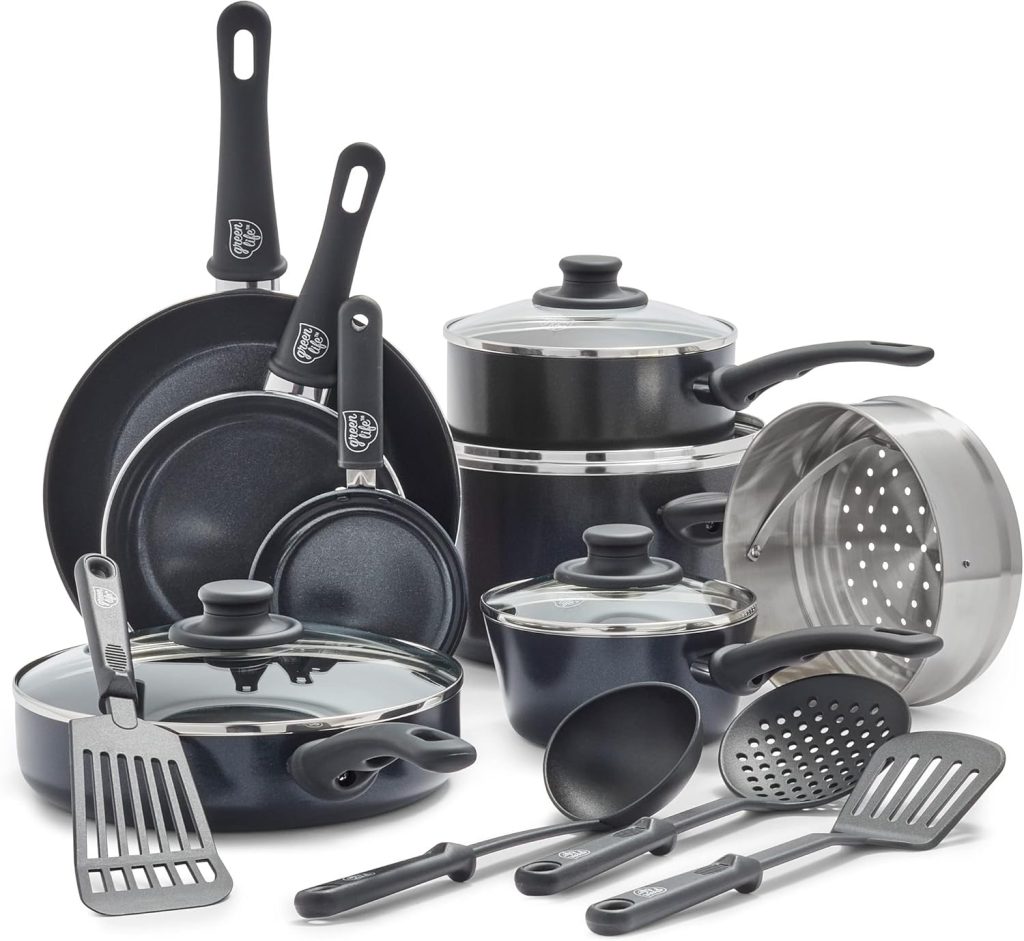
4. GreenLife Soft Grip Ceramic Non-Stick Cookware Set
Overview:
GreenLife has carved a niche with affordable ceramic non-stick cookware that appeals to health-conscious beginners. This 16-piece set showcases Thermolon ceramic coating—a sand-derived, PFAS-free alternative to traditional non-stick surfaces. Beyond the health angle, these pans feature vibrant turquoise exterior colors that add personality to kitchens. The soft-grip handles provide comfort, and the lightweight construction makes handling easy for beginners still building confidence.
Key Features:
- Thermolon Ceramic Coating: PFAS, PFOA, lead, and cadmium-free non-stick surface
- Soft Grip Handles: Comfortable, stay-cool handles with ergonomic design
- Reinforced Construction: Wobble-free base prevents warping
- Oven Safe to 350°F: Accommodates moderate oven cooking
- Dishwasher Safe: Easy cleanup for convenient maintenance
- Rivetless Interior: Smooth cooking surface prevents food buildup
Performance and User Experience:
GreenLife pans perform well for light to moderate cooking tasks. Eggs cook beautifully without sticking, vegetables sauté evenly, and cleanup is genuinely effortless. The ceramic coating requires less oil than stainless steel while avoiding the chemical concerns some associate with traditional non-stick.
However, ceramic non-stick has performance limitations beginners should understand. The coating loses effectiveness faster than PTFE non-stick, typically degrading noticeably after 12-18 months of regular use. High heat accelerates this degradation—keeping temperatures moderate extends longevity. Metal utensils also damage ceramic faster than they would PTFE.
Heat distribution is adequate but not exceptional. The aluminum construction heats quickly but can develop hot spots on larger burners. For even cooking, especially with delicate foods, matching pan size to burner size matters more than with heavier-gauge cookware.
The lightweight design cuts both ways. New cooks appreciate the easy handling, but the thin construction means less heat retention and greater susceptibility to warping if subjected to temperature extremes (like rinsing a hot pan with cold water).
Pros:
✅ Completely free of PFAS chemicals and heavy metals
✅ Excellent non-stick performance when new
✅ Comfortable soft-grip handles stay cool
✅ Bright color options add visual appeal
✅ Very affordable for a complete 16-piece set
✅ Lightweight construction is beginner-friendly
✅ Rivetless interior simplifies cleaning
Cons:
❌ Ceramic coating degrades faster than traditional non-stick
❌ Not suitable for high-heat cooking methods
❌ Thin construction can warp with temperature abuse
❌ Lower oven-safe temperature limits versatility
❌ Not induction compatible
❌ Performance declines noticeably after first year
Ideal For:
Health-conscious beginners prioritizing chemical-free cookware over maximum longevity. Perfect for light cooking—think scrambled eggs, vegetables, and simple sauces rather than high-heat searing. Ideal for those who don’t mind replacing cookware every 2-3 years in exchange for affordability and peace of mind about coating safety.
Final Verdict:
GreenLife offers an attractive entry point for beginners concerned about cookware chemicals. While it won’t last as long as stainless steel or quality PTFE non-stick, it provides solid performance during its lifespan at a price point that makes replacement painless. If chemical-free cooking matters to you and you’re willing to accept shorter longevity, this set delivers excellent value and functionality for everyday cooking.
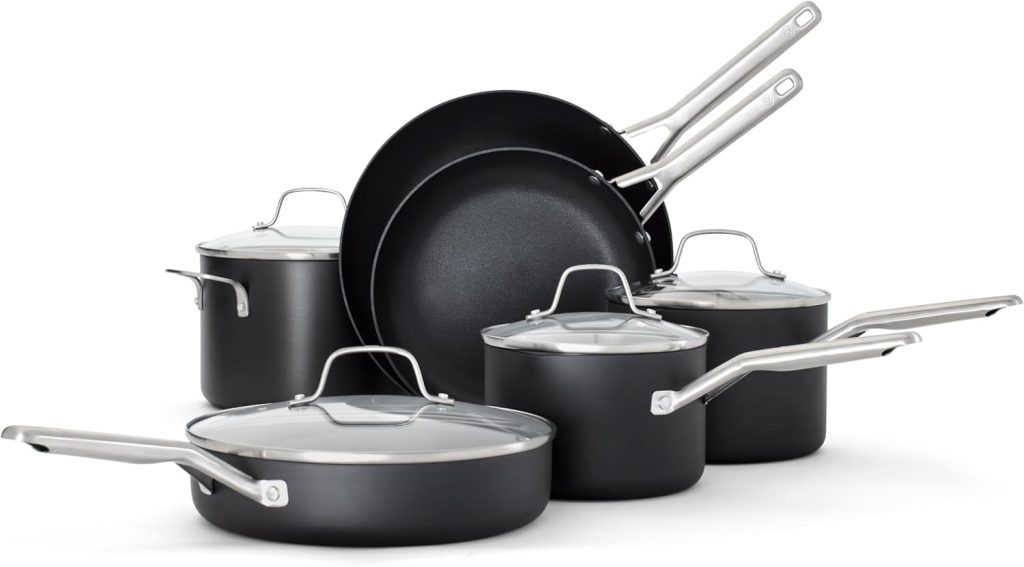
5. Calphalon Classic Nonstick Cookware Set (10-piece)
Overview:
Calphalon has built a reputation for reliable, well-designed cookware, and the Classic Nonstick set exemplifies their approach. This 10-piece collection hits the sweet spot for beginners—quality construction without luxury pricing, durable non-stick coating that outlasts budget alternatives, and a thoughtful selection of pieces covering essential cooking needs. The dual-layer non-stick interior resists wear better than single-layer coatings, extending the usable life significantly.
Key Features:
- Dual-Layer Non-Stick Interior: More durable than single-layer alternatives
- Hard-Anodized Aluminum Construction: Harder than stainless steel, resists warping
- Long, Ergonomic Handles: Stay cool and provide comfortable control
- Oven Safe to 450°F: Higher temperature tolerance than many non-stick sets
- Dishwasher Safe: Convenient cleaning (though hand washing recommended)
- Tempered Glass Lids: See food while cooking, oven safe to 450°F
Performance and User Experience:
The Calphalon Classic delivers consistent, reliable performance across various cooking tasks. The hard-anodized aluminum construction heats evenly and resists warping even with frequent use. Hot spots are minimal, which beginners appreciate when learning temperature control.
The dual-layer non-stick coating performs exceptionally well. Foods release effortlessly, cleanup takes seconds, and the coating maintains effectiveness longer than comparable budget sets. With gentle use (avoiding metal utensils and abrasive cleaners), this coating can remain functional for 4-5 years—significantly longer than cheaper alternatives.
The handles deserve special mention. Their length keeps hands safely away from heat sources, and the design balances pans well even when full. They stay cool during most cooking tasks, though extended high-heat cooking can warm them moderately.
Weight and balance hit the ideal middle ground. These pans feel substantial enough to signal quality but aren’t so heavy that beginners struggle with handling. The balance point sits comfortably in hand, making tasks like flipping pancakes or transferring pans to the oven feel natural.
Pros:
✅ Hard-anodized construction is exceptionally durable
✅ Dual-layer non-stick outlasts single-layer coatings
✅ Excellent heat distribution prevents hot spots
✅ Handles stay cool and provide great control
✅ Higher oven-safe temperature than most non-stick
✅ 10-year warranty shows manufacturer confidence
✅ Includes essential pieces without unnecessary extras
Cons:
❌ Not induction compatible
❌ Hand washing recommended despite dishwasher-safe claim
❌ More expensive than budget non-stick options
❌ Coating will eventually wear despite durability
❌ Dark interior makes it harder to judge browning
Ideal For:
Beginners seeking quality non-stick cookware that balances performance, durability, and price. Perfect for those who cook regularly and want equipment that won’t need replacement within a year. Ideal for cooks who appreciate the convenience of non-stick but want something more substantial than budget alternatives.
Final Verdict:
The Calphalon Classic Nonstick set represents smart spending for beginners. While it costs more than budget sets, the superior construction and coating durability make it cheaper over time than replacing budget pans annually. The performance is genuinely reliable, the warranty provides peace of mind, and the selection of pieces covers real cooking needs without filler items. For beginners willing to invest modestly for better quality, this set rarely disappoints.
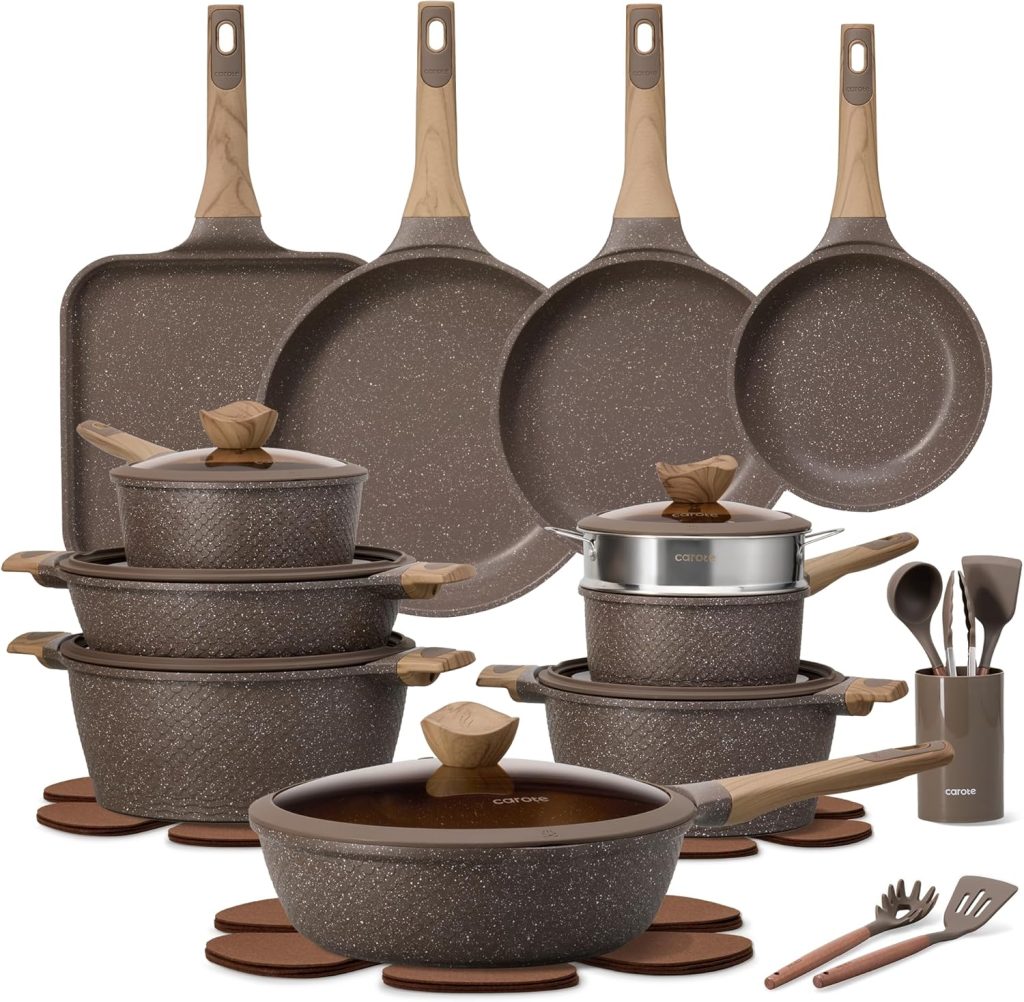
6. Carote Non-Stick Granite Cookware Set
Overview:
Carote has gained significant traction on Amazon with its distinctive granite-effect coating and budget-friendly pricing. This 10-piece set features what the manufacturer calls “granite stone” coating—essentially mineral-reinforced non-stick that claims superior durability compared to standard coatings. The cream-white exterior with speckled finish certainly stands out visually. For beginners on tight budgets who want more than basic non-stick but can’t afford premium brands, Carote presents an intriguing middle option.
Key Features:
- Granite Stone Coating: Mineral-reinforced non-stick surface for enhanced durability
- PFOA-Free Construction: No toxic chemicals in coating process
- Detachable Handles (Select Models): Space-saving storage option
- Induction Compatible: Works on all cooktop types
- Oven Safe to 350°F: Moderate oven-cooking capability
- Bakelite Handles: Stay-cool design with comfortable grip
Performance and User Experience:
Carote cookware performs admirably considering the price point. The granite coating releases foods well, though not quite as effortlessly as premium non-stick surfaces. Eggs slide around nicely, pancakes flip without tearing, and cleanup is straightforward. The non-stick properties hold up reasonably well with proper care, though longevity reports vary widely.
The induction compatibility is a genuine advantage in this price range. Many budget sets skip this feature, so having it expands the cookware’s utility for those with induction cooktops or anticipating a future kitchen upgrade.
Heat distribution is decent but not exceptional. The pans heat relatively evenly for light to moderate tasks, though high-heat cooking can produce some hot spots. The thin aluminum construction heats quickly but also loses heat rapidly when you add cold ingredients—something to expect at this price point.
The detachable handle design on some pieces is clever for storage-challenged kitchens, though it feels less secure than fixed handles. Beginners may initially worry about the connection failing, though it proves reliable with experience. The trade-off between space savings and psychological security is personal preference.
Pros:
✅ Attractive granite-effect finish adds visual appeal
✅ Induction compatible despite budget pricing
✅ Solid non-stick performance for everyday cooking
✅ Detachable handles save significant storage space
✅ Very affordable complete set
✅ PFOA-free coating for health-conscious buyers
✅ Lightweight and easy to handle
Cons:
❌ Thin construction provides minimal heat retention
❌ Coating durability inconsistent across user reports
❌ Detachable handles require adjustment period
❌ Not dishwasher safe despite some conflicting information
❌ Lower oven-safe temperature than competitors
❌ Limited warranty compared to established brands
Ideal For:
Budget-conscious beginners who need induction compatibility without premium pricing. Perfect for first apartments, dorm rooms, or temporary living situations where space is limited. Ideal for those who cook occasionally and prioritize affordability and storage convenience over maximum longevity.
Final Verdict:
Carote delivers reasonable value at its price point, particularly for those needing induction compatibility on a budget. The granite coating performs adequately, and the detachable handles solve real storage problems in compact kitchens. However, expect to replace this set sooner than premium alternatives. For beginners who need functional cookware now without significant investment, Carote provides a workable solution that looks better than typical budget offerings.
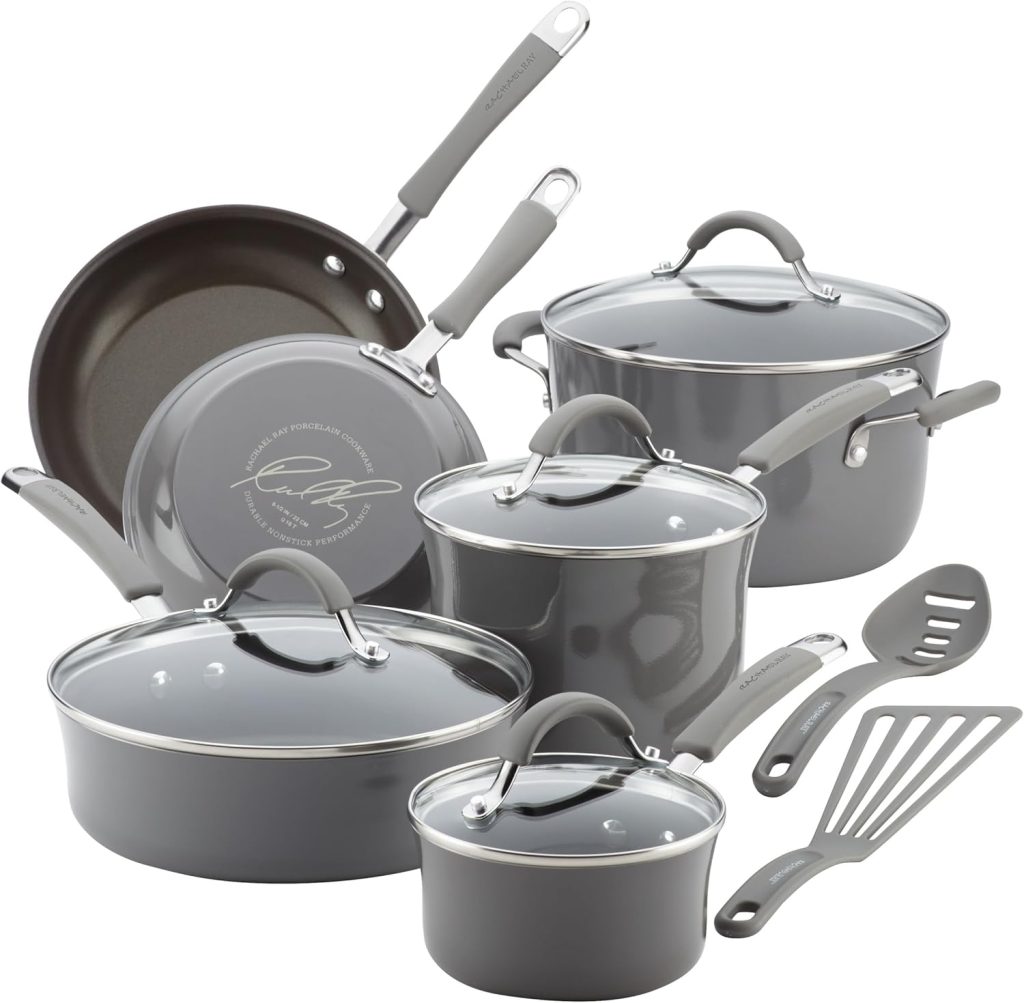
7. Rachael Ray Cucina Hard-Anodized Nonstick Cookware Set
Overview:
Rachael Ray’s Cucina line brings personality and proven performance together in a beginner-friendly package. The rustic, earthy aesthetic—featuring warm colors like cranberry red and mushroom brown—makes these pans as display-worthy as they are functional. Beyond appearances, the hard-anodized construction provides genuine durability, and the PFOA-free non-stick interior delivers reliable performance. The espresso-colored silicone handles add grip comfort while coordinating with the overall design theme.
Key Features:
- Hard-Anodized Aluminum Construction: Durable, warp-resistant material
- PFOA-Free Non-Stick Interior: Safe, effective food release
- Rubberized Silicone Handles: Stay cool with comfortable, secure grip
- Oven Safe to 400°F: Versatile cooking options
- Shatter-Resistant Glass Lids: See your food while cooking
- Lifetime Warranty (with registration): Long-term manufacturer support
Performance and User Experience:
The Cucina line performs consistently well across typical home cooking tasks. The hard-anodized exterior heats evenly and maintains temperature effectively. The non-stick coating works excellently when new and, with proper care, retains functionality for several years. Foods release cleanly, making both cooking and cleanup straightforward for beginners.
The silicone handles are a standout feature. They provide exceptional grip—even when wet—and stay genuinely cool during cooking. For beginners concerned about burning themselves, this design choice offers valuable peace of mind. The dual-riveted construction ensures handles remain secure through years of use.
The pans’ aesthetic quality means many users keep them displayed on pot racks or hanging systems rather than hidden in cabinets. This can actually benefit beginners by keeping cookware visible and encouraging more frequent cooking. When your tools look good, you’re more likely to use them.
Heat distribution is solid, though not quite at the level of tri-ply stainless steel. For typical stovetop cooking, the performance satisfies most needs. The pans heat relatively quickly and respond reasonably well to temperature adjustments. The weight feels substantial without being cumbersome.
Pros:
✅ Attractive design enhances kitchen aesthetics
✅ Hard-anodized construction ensures durability
✅ Exceptional handle comfort and safety
✅ Reliable non-stick performance
✅ Solid construction quality for the price
✅ Glass lids allow visual monitoring
✅ Lifetime warranty with registration provides security
Cons:
❌ Not induction compatible
❌ Hand washing recommended despite dishwasher claims
❌ Higher price than basic non-stick alternatives
❌ Colored exterior can show scratches and wear
❌ Non-stick coating will eventually require replacement
❌ Somewhat limited oven-safe temperature
Ideal For:
Beginners who appreciate cookware that performs well and looks good doing it. Perfect for those setting up a kitchen with attention to cohesive design. Ideal for cooks who value comfortable, safe handling and want durable non-stick that outlasts budget alternatives without reaching premium pricing.
Final Verdict:
Rachael Ray Cucina strikes an appealing balance between form and function. While you’re partly paying for the brand name and design aesthetic, you’re also getting genuinely quality construction that performs reliably. The superior handle design, durable build, and lifetime warranty make this set a smart choice for beginners who want cookware they’ll enjoy using for years. If aesthetics matter to you alongside performance, Cucina delivers both.
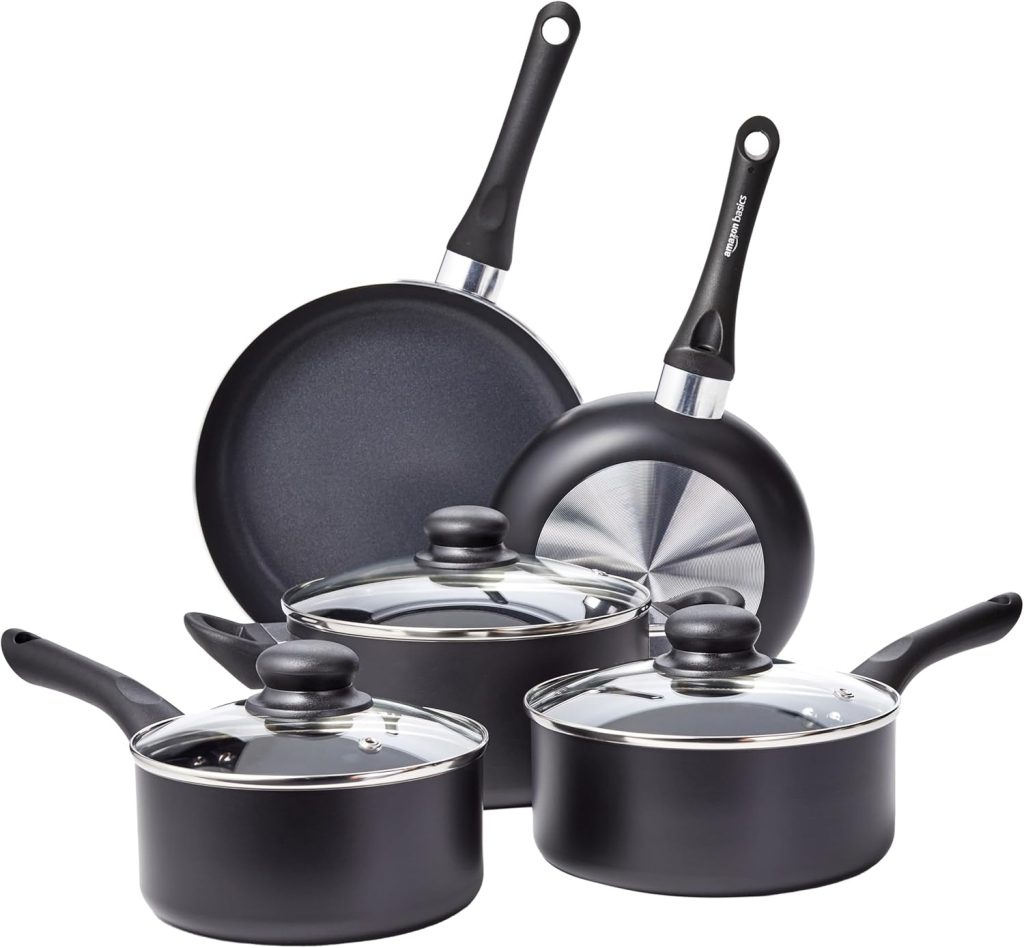
8. AmazonBasics Non-Stick Cookware Set (8-piece)
Overview:
Amazon’s house brand delivers exactly what you’d expect—functional, no-frills cookware at rock-bottom prices. This 8-piece set strips away all extras to focus on basic necessities: a couple of fry pans, saucepans with lids, and essential functionality. The non-stick coating works, the handles stay reasonably cool, and everything does its job without pretension or premium features. For beginners on extremely tight budgets or those uncertain about their cooking commitment, this set provides a low-risk entry point.
Key Features:
- PFOA-Free Non-Stick Coating: Basic but functional food release
- Aluminum Construction: Lightweight, heats quickly
- Soft-Touch Handles: Basic comfort and cool-touch design
- Spiral Bottom: Intended to prevent warping (with mixed results)
- Oven Safe to 350°F: Basic oven capability
- Dishwasher Safe: Convenient cleanup option
Performance and User Experience:
The AmazonBasics set performs adequately for light, occasional cooking. The non-stick surface releases eggs and pancakes reasonably well when new. Heat distribution is uneven compared to quality cookware but acceptable for simple tasks like heating soup or scrambling eggs. These pans heat quickly due to thin construction—beneficial for convenience but problematic for heat retention and even cooking.
The coating degrades relatively quickly. Expect noticeable performance decline within 6-12 months of regular use, even with careful maintenance. High heat accelerates degradation, and the coating chips more easily than quality alternatives. Metal utensils should be strictly avoided as they damage the surface almost immediately.
The handles feel flimsy compared to established brands. They stay cool during most cooking but can become warm with extended use. The attachment points are potential weak spots—some users report handles loosening or failing after moderate use.
The spiral bottom does provide some warp resistance, though it’s not foolproof. Thermal shock (hot pan, cold water) still causes warping. The thin gauge means these pans will never distribute heat as evenly as heavier construction.
Pros:
✅ Extremely affordable price point
✅ Adequate for basic cooking needs
✅ Lightweight and easy to handle
✅ Dishwasher safe for convenient cleanup
✅ Covers essential cookware pieces
✅ Low financial risk for beginners testing the waters
✅ Amazon return policy provides purchase protection
Cons:
❌ Short lifespan—expect replacement within 1-2 years
❌ Thin construction warps relatively easily
❌ Uneven heat distribution causes hot spots
❌ Non-stick coating chips and degrades quickly
❌ Handles feel less secure than quality brands
❌ Not induction compatible
❌ Limited warranty coverage
Ideal For:
Absolute beginners on the tightest budgets or those truly uncertain about cooking regularly. Perfect for temporary living situations—college dorms, short-term apartments, vacation homes. Ideal for emergency replacement needs when you can’t afford quality cookware immediately.
Final Verdict:
Amazon basics cookware represents the absolute minimum viable product. It functions adequately when new but declines quickly with use. For beginners who genuinely can’t afford better options or aren’t sure they’ll cook regularly, this set provides a low-risk trial. However, if you have any room in your budget, spending slightly more on sets like T-fal or Carote will provide significantly better value through longer usable life. This is cookware to use until you can upgrade, not cookware to keep long-term.
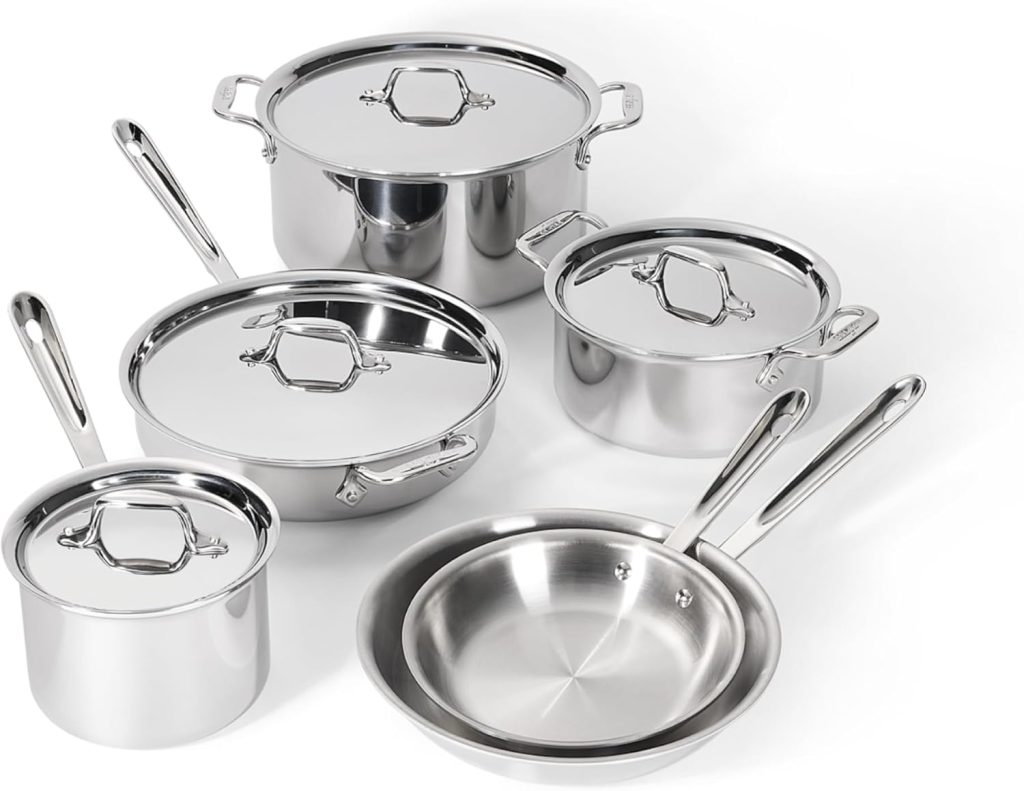
9. All-Clad D3 Stainless Steel 3-Ply Bonded Cookware Set (10-piece)
Overview:
All-Clad represents the gold standard in American-made cookware. While this 10-piece D3 set sits at the premium end of beginner budgets, it offers something unique—cookware you’ll genuinely never outgrow. The tri-ply construction bonds stainless steel exterior and interior layers to an aluminum core, delivering restaurant-quality heat distribution and responsiveness. For beginners serious about cooking and willing to invest in lifetime quality, All-Clad provides the pinnacle of performance and durability.
Key Features:
- Three-Ply Bonded Construction: Stainless steel-aluminum-stainless steel for optimal performance
- Made in USA: Pennsylvania manufacturing with rigorous quality control
- Induction Compatible: Works flawlessly on all cooktop types
- Oven and Broiler Safe (600°F): Exceptional heat tolerance
- Dishwasher Safe: Though hand washing preserves appearance
- Limited Lifetime Warranty: Full manufacturer support
- Magnetic Stainless Steel: Optimized for induction efficiency
Performance and User Experience:
All-Clad’s performance justifies its premium positioning. Heat distribution is genuinely exceptional—no hot spots, even cooking across entire surfaces, and responsive temperature control that rewards skill development. The pans feel substantial in hand, with perfect weight that signals quality without being cumbersome.
The stainless steel cooking surface presents a learning curve, particularly for beginners accustomed to non-stick. Proteins initially stick until they develop proper sear, and eggs require proper preheating and fat. However, this “difficult” cooking surface actually teaches proper technique better than forgiving non-stick. You learn when pans are properly heated, how much fat is needed, and when food is ready to flip naturally.
The construction quality is immediately apparent. From the perfectly flush rivets to the comfortable, balanced handles to the precise-fitting lids, everything demonstrates meticulous manufacturing. These pans will look essentially new decades later with proper care.
The 600°F oven-safe rating means virtually any recipe is possible. Sear on the stovetop, finish in the oven, run under the broiler—All-Clad handles everything without concern. The induction performance is exceptional, with rapid heating and excellent control.
Pros:
✅ Unmatched heat distribution and cooking performance
✅ Lifetime durability—genuinely buy-it-for-life quality
✅ Exceptional oven and broiler safe temperatures
✅ Made in USA with superior quality control
✅ Perfect weight and balance for control
✅ Works flawlessly on induction cooktops
✅ Lifetime warranty covers manufacturing defects
✅ Non-reactive surface for all foods
Cons:
❌ Premium pricing strains many beginner budgets
❌ Requires learning proper stainless steel technique
❌ More demanding cleanup than non-stick
❌ Food will stick without proper preheating
❌ Can develop water spots and discoloration
❌ Heavy investment if cooking interest wanes
Ideal For:
Beginners genuinely committed to developing serious cooking skills who can justify the investment. Perfect for those setting up a long-term home who want to buy cookware once. Ideal for aspiring home chefs who view quality tools as essential to skill development and cooking enjoyment.
Final Verdict:
All-Clad D3 is the set you buy if you want to skip the upgrade cycle entirely. While the price requires serious consideration for beginners, the lifetime value proposition is genuine—this cookware will outlast you. The performance teaches proper technique, rewards skill development, and never becomes a limiting factor as your abilities grow. If you’re committed to cooking and can afford the investment, All-Clad eliminates any “I wish I had better pans” thoughts forever. It’s not for everyone, but for those who choose it, buyer’s remorse is essentially unknown.
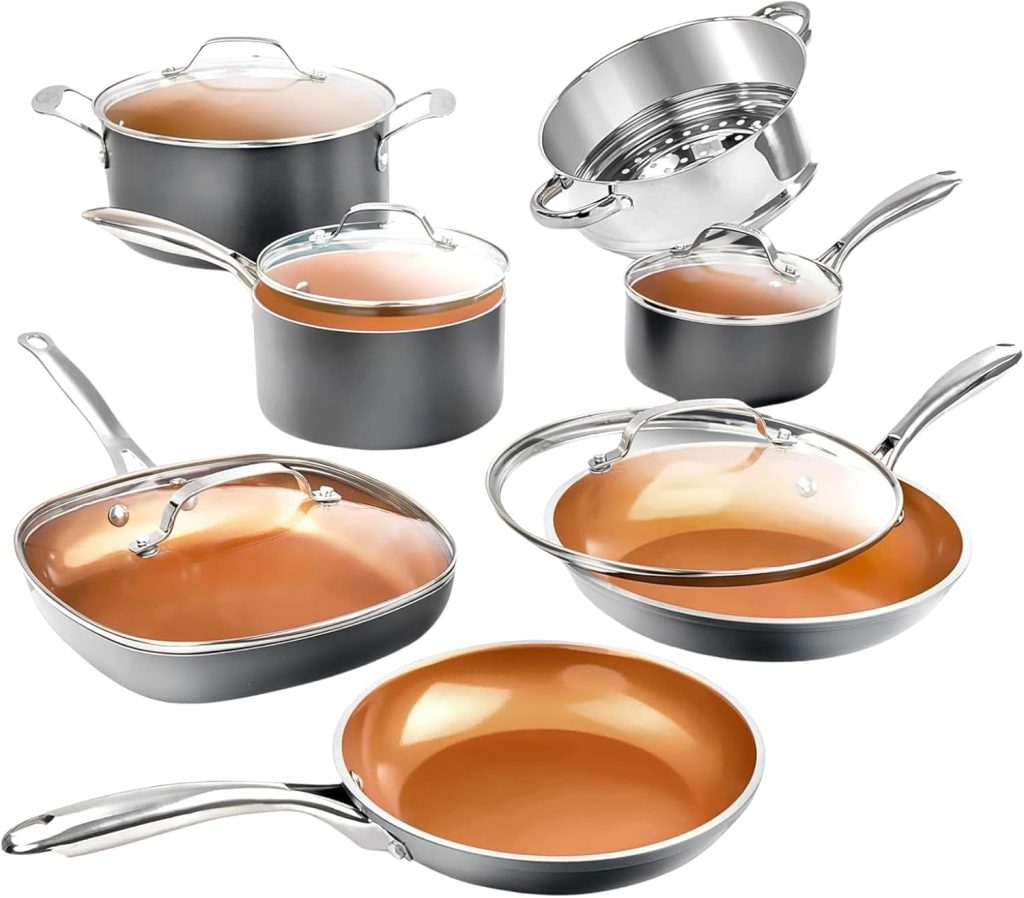
10. Gotham Steel Non-Stick Ti-Cerama Coating Pan Set
Overview:
Gotham Steel gained popularity through aggressive infomercial marketing claiming titanium-reinforced ceramic coating that’s virtually indestructible. While reality doesn’t quite match the hype, this set does offer decent performance at budget-friendly prices. The copper-colored exterior creates distinctive visual appeal, and the ceramic non-stick coating provides chemical-free cooking. For beginners attracted to “As Seen on TV” products and wanting ceramic non-stick, Gotham Steel delivers functional cookware with reasonable, if not exceptional, performance.
Key Features:
- Ti-Cerama Coating: Titanium-infused ceramic non-stick surface
- PTFE/PFOA/PFOS Free: Chemical-free cooking surface
- Oven Safe to 500°F: Impressive temperature tolerance for ceramic
- Dishwasher Safe: Convenient cleanup option
- Metal Utensil Safe (claimed): Manufacturer claims scratch resistance
- Aluminum Construction: Lightweight, quick-heating material
Performance and User Experience:
Gotham Steel pans perform well initially. The ceramic coating releases foods effectively when new, and the 500°F oven-safe rating genuinely expands cooking options beyond typical ceramic cookware. The lightweight construction makes handling easy, and the distinctive appearance stands out among standard cookware.
However, performance doesn’t match marketing claims long-term. The coating degrades faster than advertised, with most users reporting noticeable decline within 6-12 months of regular use. The “metal utensil safe” claim proves overly optimistic—metal utensils do scratch and damage the coating, accelerating degradation.
Heat distribution is mediocre. The thin aluminum construction creates hot spots, particularly on gas burners. Food browns unevenly, and delicate cooking tasks require constant attention to prevent scorching. The pans heat and cool quickly, which can be advantageous or problematic depending on your cooking style.
The handles stay reasonably cool but feel less substantial than quality brands. They’re adequate but not confidence-inspiring, particularly when lifting heavier pans full of food.
Pros:
✅ Affordable ceramic non-stick option
✅ Distinctive copper-colored appearance
✅ Higher oven-safe temperature than typical ceramic
✅ Completely free of PTFE and PFOA chemicals
✅ Lightweight and easy to handle
✅ Good initial non-stick performance
✅ Dishwasher safe for convenience
Cons:
❌ Non-stick coating degrades rapidly despite claims
❌ Not actually metal-utensil safe long-term
❌ Thin construction creates uneven heating
❌ Copper finish shows scratches and wear prominently
❌ Performance doesn’t justify marketing hype
❌ Not induction compatible
❌ Short effective lifespan despite durability claims
Ideal For:
Budget-conscious beginners wanting ceramic non-stick and attracted to the infomercial product appeal. Perfect for those prioritizing chemical-free cooking over maximum longevity. Ideal for light cooking with the understanding that replacement will be needed relatively soon.
Final Verdict:
Gotham Steel delivers functional ceramic non-stick at accessible prices, but temper expectations against marketing claims. The coating isn’t indestructible, metal utensils do damage it, and longevity is limited. However, if you understand these limitations and appreciate the chemical-free cooking at budget prices, it provides adequate value. Just don’t expect it to perform like premium cookware or last as long as advertisements suggest. For curious beginners wanting to try ceramic non-stick without major investment, Gotham Steel offers an acceptable entry point.
11. Tramontina Tri-Ply Clad Stainless Steel Cookware Set (12-piece)
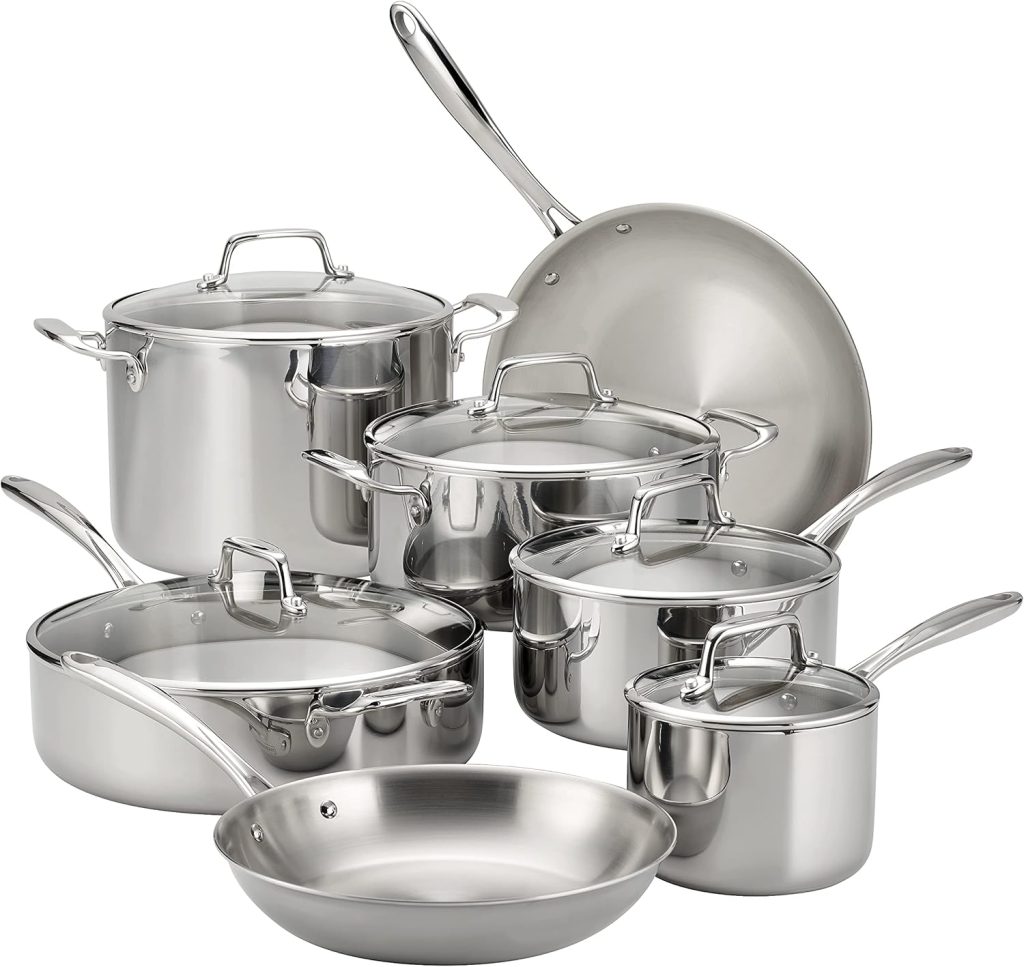
Overview:
Tramontina represents one of cookware’s best-kept secrets—professional-quality tri-ply construction at a fraction of All-Clad’s price. This Brazilian manufacturer has been crafting quality cookware for over a century, and their tri-ply line brings premium features to mid-range budgets. The construction mirrors All-Clad’s approach: aluminum core fully clad in stainless steel for exceptional heat distribution. For beginners wanting All-Clad performance without the premium price tag, Tramontina delivers remarkable value.
Key Features:
- Tri-Ply Base-to-Rim Construction: Aluminum core clad in stainless steel throughout
- Induction Compatible: Works on all cooktop types
- Oven and Broiler Safe (500°F): Excellent heat tolerance
- Precision-Cast Stainless Steel Handles: Stay cool with ergonomic design
- NSF Certified: Meets professional commercial standards
- Limited Lifetime Warranty: Manufacturer stands behind quality
- Compatible with Metal Utensils: Surface won’t scratch or chip
Performance and User Experience:
Tramontina’s tri-ply construction delivers heat distribution rivaling cookware costing twice as much. The aluminum core conducts heat beautifully, eliminating hot spots and providing the even heating that makes stainless steel cooking successful. Proteins develop perfect sears, sauces reduce evenly, and rice cooks without scorching.
The cooking surface requires the same learning curve as any stainless steel—proper preheating, adequate fat, and patience waiting for proteins to release naturally. However, the superior heat distribution makes this learning process more forgiving than cheaper stainless steel that develops hot spots.
Build quality feels genuinely premium. The handles balance pans perfectly, staying cool even during extended cooking. The lids fit precisely, and the overall construction inspires confidence. These pans feel substantial—heavier than non-stick or cheap stainless but not unwieldy.
The 500°F oven-safe rating accommodates most recipes, though it’s slightly lower than All-Clad’s 600°F. For home cooking, this rarely matters. The induction compatibility performs excellently, with rapid heating and precise control.
Maintenance follows standard stainless steel protocols. Bar Keeper’s Friend removes discoloration and stuck-on food. The dishwasher is safe but hand washing preserves the polished appearance longer.
Pros:
✅ Premium tri-ply construction at mid-range pricing
✅ Heat distribution rivals far more expensive brands
✅ NSF certification confirms quality standards
✅ Exceptional value for quality delivered
✅ Induction compatible with excellent performance
✅ Comfortable, stay-cool handle design
✅ Lifetime warranty provides confidence
✅ Made in Brazil with strong quality control
Cons:
❌ Requires learning stainless steel cooking technique
❌ More demanding maintenance than non-stick
❌ Heavier than budget cookware options
❌ Less prestigious brand recognition than All-Clad
❌ Can develop discoloration requiring maintenance
❌ Initial stickiness during learning curve
Ideal For:
Budget-conscious beginners seeking professional-quality cookware without premium pricing. Perfect for those who’ve researched All-Clad but can’t justify the investment. Ideal for aspiring home chefs who value performance over brand prestige and want cookware that grows with developing skills.
Final Verdict:
Tramontina Tri-Ply represents extraordinary value in the cookware market. The performance genuinely competes with All-Clad at roughly half the price. While brand prestige might matter in some contexts, in your kitchen, only performance counts—and Tramontina delivers. For beginners committed to stainless steel cooking who want professional results without professional pricing, this set is difficult to beat. It’s the cookware secret that experienced home cooks recommend while keeping for themselves.
Comprehensive Buying Guide: How to Choose the Perfect Cookware for Beginners!
Selecting your first quality cookware set involves navigating numerous options, materials, and price points. This guide breaks down everything beginners need to know to make informed decisions that match their cooking style, budget, and long-term goals.
Understanding Cookware Materials
Non-Stick Cookware
Non-stick remains the most popular choice for beginners, and for good reason. These coatings—typically PTFE (Teflon) or ceramic—prevent food from adhering to cooking surfaces, making both cooking and cleanup effortless. Eggs slide out perfectly, pancakes flip without tearing, and cleanup often requires just a quick wipe.
However, non-stick cookware comes with important limitations. The coatings degrade over time, typically lasting 2-5 years depending on quality and care. High heat accelerates degradation, so non-stick isn’t ideal for searing steaks or achieving deep caramelization. Metal utensils scratch the coating, and dishwashers (despite “dishwasher safe” claims) reduce longevity.
Quality matters significantly in non-stick. Premium coatings like those from Calphalon or All-Clad resist wear better than budget alternatives. Look for multiple coating layers and reinforced construction. PFOA-free certifications ensure the coating doesn’t contain harmful chemicals, though modern manufacturers have largely eliminated these anyway.
Stainless Steel Cookware
Stainless steel represents the professional standard for good reason. It’s incredibly durable, non-reactive (won’t interact with acidic foods), and can handle any cooking temperature. Quality stainless steel cookware lasts generations with proper care.
The catch is that stainless steel isn’t naturally non-stick. Food will adhere, particularly proteins, until you master proper technique—preheating thoroughly, using adequate fat, and allowing proteins to develop sear before attempting to move them. This learning curve frustrates some beginners but teaches essential cooking skills.
Look for tri-ply or multi-ply construction where aluminum or copper cores are sandwiched between stainless steel layers. Single-ply stainless steel develops hot spots that cause uneven cooking and increased sticking. Quality tri-ply cookware heats evenly and responds well to temperature changes.
Maintenance requires more effort than non-stick. Food sticks occasionally, requiring deglazing or soaking. Water spots and discoloration appear with use but are easily removed with products like Bar Keeper’s Friend.
Cast Iron Cookware
Cast iron offers unique benefits—unmatched heat retention, natural non-stick properties (when properly maintained), and genuine buy-it-for-life durability. Pre-seasoned modern cast iron eliminates the intimidating initial seasoning process that once deterred beginners.
Cast iron excels at high-heat cooking—searing steaks, baking cornbread, roasting whole chickens. It moves seamlessly from stovetop to oven to campfire. Properly maintained cast iron improves with age as seasoning builds, creating increasingly effective non-stick properties.
The weight presents the primary challenge. A 12-inch cast iron skillet weighs 8+ pounds, requiring two-handed handling for most people. The entire pan, including handles, becomes extremely hot during use. Maintenance requires specific care—immediate drying, thin oil coating after washing—though modern cast iron is more forgiving than old-school advice suggests.
Highly acidic foods can strip seasoning, requiring re-seasoning. Dishwashers are absolutely off-limits as they destroy seasoning and can cause rust.
Ceramic Non-Stick
Ceramic coatings represent the newest non-stick technology, derived from sand rather than petroleum-based chemicals. They’re completely free of PTFE, PFOA, and other chemicals that concern some cooks. Ceramic performs well when new, releasing food easily and cleaning effortlessly.
However, ceramic non-stick degrades faster than PTFE alternatives. The coating typically loses effectiveness within 12-18 months of regular use. High heat accelerates degradation—ceramic should never exceed medium-high heat. Once degraded, ceramic coating can’t be restored; the pan requires replacement.
Ceramic works well for health-conscious beginners prioritizing chemical-free cooking who accept shorter cookware lifespan. It’s best suited for low to medium-heat cooking—eggs, vegetables, delicate fish—rather than high-heat searing.
Key Features to Consider
Heat Distribution
Even heat distribution dramatically impacts cooking success. Poor heat distribution creates hot spots that scorch food in some areas while leaving it undercooked elsewhere. Quality cookware eliminates this problem through multiple layers of metal that spread heat uniformly.
Tri-ply construction (aluminum core between stainless steel layers) provides excellent heat distribution across all cookware types. Single-layer aluminum non-stick heats quickly but may develop hot spots. Cast iron heats slowly but retains temperature extraordinarily well. Copper cores (found in premium cookware) offer the best heat conductivity but add significant cost.
Handle Design
Handles significantly impact safety and cooking ease. Look for stay-cool designs that minimize heat transfer. Long handles keep hands away from heat sources—particularly important on gas cooktops. Comfortable grips reduce hand fatigue during extended cooking sessions.
Riveted handles attach more securely than welded ones, though they create small crevices on cooking surfaces that trap food. Silicone or rubberized grips stay cooler than bare metal. Helper handles on larger pans aid in safe lifting when full.
Test handle weight distribution when possible. Well-balanced cookware feels comfortable even when full of food, reducing spill risk and cooking fatigue.
Lid Quality
Quality lids fit snugly, trapping heat and moisture effectively. Glass lids let you monitor cooking without releasing heat, though they’re heavier and more fragile than metal lids. Look for oven-safe lids that match or exceed the pan’s temperature rating, allowing covered dishes to move from stovetop to oven seamlessly.
Vent holes prevent excessive pressure buildup when boiling liquids. Lids should feel substantial—flimsy lids indicate overall lower quality.
Oven-Safe Temperature Ratings
Oven-safe capability expands cooking options significantly. Many recipes start on the stovetop and finish in the oven—seared steaks, skillet cornbread, baked pasta dishes. Higher temperature ratings provide greater versatility.
Budget non-stick typically offers 350°F ratings—adequate for many recipes but limiting for high-heat techniques. Quality non-stick reaches 400-450°F. Stainless steel commonly handles 500-600°F, and cast iron has no practical temperature limit.
Consider your cooking style. If you primarily cook on the stovetop, lower ratings matter less. If you enjoy roasting or baking in skillets, prioritize higher limits.
Induction Compatibility
Induction cooktops are increasingly common in modern kitchens due to energy efficiency and precise temperature control. They require cookware with magnetic properties—stainless steel and cast iron work perfectly, while aluminum and copper don’t (unless they have magnetic bases added).
If you have or might acquire an induction cooktop, verify compatibility before purchasing. Most manufacturers clearly mark induction-compatible cookware, often with a coil symbol on packaging or bases.
Warranty Coverage
Warranty length and terms indicate manufacturer confidence in product quality. Lifetime warranties (from established brands like All-Clad, Calphalon, or Tramontina) suggest genuine durability. Short warranties or no warranty often signal lower quality that won’t justify repair/replacement programs.
Read warranty fine print. Some cover only manufacturing defects, excluding normal wear. Others require registration within specific timeframes. Understanding coverage prevents disappointment if issues arise.
Cookware Set Considerations
Piece Count vs. Actual Value
High piece counts can mislead. A “16-piece set” might include only 5-6 actual pans, with lids and utensils inflating the count. Evaluate what you’re actually getting—how many pans, what sizes, which types—rather than fixating on piece count marketing.
Essential pieces for beginners include: 10-12 inch fry pan, 8-inch fry pan, 2-3 quart saucepan with lid, 6-8 quart stockpot with lid. These four pans handle most home cooking needs. Additional skillets, sauté pans, and specialty pieces add convenience but aren’t mandatory initially.
Sets vs. Individual Pieces
Complete sets cost less than purchasing equivalent individual pieces. They provide matching aesthetics and usually include essential sizes. However, sets sometimes bundle pieces you won’t use, wasting money on unnecessary items.
Building a collection from individual pieces costs more but ensures you only buy what you’ll actually use. You can also mix materials strategically—non-stick for eggs, stainless steel for sauce-making, cast iron for searing—optimizing performance for specific tasks.
For absolute beginners, a quality basic set provides the most practical starting point. As you discover your cooking preferences, add individual specialty pieces that match your needs.
Budget Strategies
Entry-Level Budget ($50-$150)
This budget covers basic functional cookware that performs adequately for light to moderate cooking. Options like T-fal, AmazonBasics, or Carote provide acceptable non-stick performance but expect replacement within 2-3 years. Focus on essential pieces—two fry pans, one saucepan, and one stockpot cover most needs.
At this level, prioritize non-stick over stainless steel. Budget stainless steel typically has poor heat distribution that frustrates beginners. Budget non-stick still performs its primary function reasonably well.
Mid-Range Budget ($150-$400)
This sweet spot delivers significant quality improvements. Brands like Calphalon, Cuisinart, or Tramontina provide durable construction that lasts years longer than budget options. You can afford quality stainless steel or premium non-stick that rewards developing skills.
Consider splitting your budget—quality stainless steel set for most cooking, plus a non-stick pan for eggs and delicate items. This combination provides versatility without compromise.
Premium Budget ($400+)
Premium budgets access professional-grade cookware from brands like All-Clad. These investments genuinely last lifetimes with proper care. The superior heat distribution, impeccable construction, and lifetime warranties justify premium pricing for committed home cooks.
At this level, stainless steel tri-ply construction delivers the best value. Premium non-stick still degrades eventually, making it harder to justify luxury pricing. One quality cast iron piece rounds out a premium collection perfectly.
Common Mistakes to Avoid
Mistake 1: Buying Low-Quality Non-Stick to Save Money
Cheap non-stick seems economical but degrades so quickly that you’ll replace it multiple times over quality cookware’s lifespan. The thin construction warps easily, creating unsafe wobbling on burners. Poor coating quality means food starts sticking within months, negating the primary benefit.
Instead, spend slightly more on quality brands like T-fal or Calphalon. The extended lifespan and better performance make them cheaper long-term.
Mistake 2: Choosing Stainless Steel Without Understanding the Learning Curve
Beginners sometimes buy stainless steel expecting non-stick performance, then get frustrated when food adheres. Stainless steel requires specific techniques—proper preheating, adequate fat, patience. Without understanding this, beginners may conclude they bought “defective” cookware.
If you choose stainless steel as a beginner, invest time learning proper technique. Watch tutorials, practice with eggs (the hardest test), and accept the learning curve. The payoff is superior versatility and durability.
Mistake 3: Ignoring Induction Compatibility
Many people buy beautiful cookware only to discover it doesn’t work on their induction cooktop. Always verify compatibility if you have or might acquire induction cooking. Adding magnetic bases to existing non-compatible cookware rarely works well.
Mistake 4: Buying Sets with Unnecessary Pieces
Large sets often include odd-sized pans you’ll rarely use—like 1-quart saucepans that are too small for most tasks or specialty pieces like double boilers that address niche needs. Evaluate each piece’s utility before buying sets primarily based on price-per-piece calculations.
Mistake 5: Neglecting Proper Care
Even quality cookware fails prematurely with improper care. Never put non-stick in dishwashers despite “dishwasher safe” claims—hand washing extends life significantly. Don’t use metal utensils on non-stick surfaces. Never quench hot pans with cold water. Dry cast iron immediately and apply thin oil coats.
Reading care instructions and following them adds years to cookware life, making any investment more worthwhile.
Expert Recommendations by Use Case
For Budget-Conscious Students/First Apartments:
Start with T-fal E93808 Professional Non-Stick set. It provides complete essential pieces at minimal cost, requires little skill to use successfully, and cleans effortlessly. When you move to larger spaces or develop greater cooking interest, upgrade strategically to quality pieces.
For Health-Conscious Beginners:
Choose GreenLife Soft Grip Ceramic set for chemical-free non-stick, or invest in Tramontina Tri-Ply stainless steel. Both avoid PTFE coatings while delivering reliable performance. Add a Lodge cast iron skillet for versatility—cast iron is completely chemical-free and naturally non-stick when properly maintained.
For Aspiring Home Chefs:
Invest in Cuisinart Multiclad Pro or Tramontina Tri-Ply stainless steel. These teach proper cooking techniques while providing professional-level performance that won’t limit your developing skills. Add a Lodge cast iron skillet and one quality non-stick pan (Calphalon Classic) for eggs and delicate items.
For Convenience-Focused Cooks:
Prioritize quality non-stick like Calphalon Classic or Rachael Ray Cucina. These balance easy cooking and cleanup with durability that outlasts budget alternatives. The time savings justify any premium over cheaper options.
For Long-Term Value Seekers:
All-Clad D3 or Tramontina Tri-Ply represent genuine buy-it-for-life quality. While requiring higher initial investment and learning proper technique, these sets last decades, making them cheaper long-term than replacing budget cookware every few years.
Making the Final Decision
Choosing cookware involves balancing numerous factors: budget constraints, cooking frequency, skill level, maintenance willingness, and long-term goals. There’s no universal “best” choice—only the best choice for your specific situation.
Consider these final questions:
- How often will you cook? Daily cooking justifies higher investment; occasional cooking suggests starting affordable.
- What’s your patience for learning curves? Willing to master technique opens stainless steel options; seeking immediate success points toward non-stick.
- How important is maintenance convenience? Dishwasher-safe non-stick saves time; hand-wash-required stainless steel demands more care attention.
- What’s your budget reality? Be honest—stretching too thin financially creates regret, but going too cheap often means replacing soon.
- What are your long-term cooking goals? Serious cooking aspirations justify quality investments; casual cooking needs support more modest spending.
Trust that any of the reviewed options serve specific needs well. Focus on matching cookware characteristics to your personal situation rather than chasing the “best” in abstract terms. The perfect cookware set is the one you’ll actually use regularly and enjoy cooking with.
Frequently Asked Questions (FAQs)!
1. What’s the difference between non-stick, stainless steel, and cast iron cookware for beginners?
Non-stick cookware features coated surfaces that prevent food from adhering, making cooking and cleanup incredibly easy. It’s the most beginner-friendly option since it forgives temperature mistakes and requires minimal cooking skills. However, non-stick coatings degrade over time (typically 2-5 years) and can’t handle high-heat cooking methods like searing.
Stainless steel offers superior durability, lasting decades with proper care. It can handle any temperature and works for all cooking techniques. The trade-off is a learning curve—food will stick until you master proper preheating and fat usage. Stainless steel teaches better cooking technique but demands more patience initially.
Cast iron provides unmatched heat retention and develops natural non-stick properties over time. It’s virtually indestructible and improves with age. However, it’s heavy, requires specific maintenance (immediate drying, oiling), and the entire pan gets extremely hot. Cast iron excels at high-heat cooking but isn’t ideal for delicate tasks like eggs.
Most beginners benefit from starting with non-stick for everyday cooking, then adding stainless steel or cast iron pieces as skills develop. This combination provides versatility without overwhelming learning curves.
2. Is it worth buying an expensive cookware set as a beginner?
The answer depends on your commitment level and budget reality. Expensive cookware like All-Clad genuinely lasts lifetimes and provides superior performance that supports skill development. If you’re certain about regular cooking and can afford it without financial stress, premium cookware represents excellent long-term value—you’ll never need to upgrade.
However, many beginners overestimate their cooking frequency or discover specific material preferences through experience. Starting with quality mid-range options (Cuisinart, Tramontina, Calphalon) provides excellent performance at lower risk. These sets last years and perform well enough that you may never feel compelled to upgrade.
Avoid the extremes—don’t buy the cheapest possible cookware (it will frustrate you and need replacement quickly), but don’t feel pressured into premium brands before you’re certain about your needs. The sweet spot for most beginners lies in the $150-$400 range where quality construction meets reasonable pricing.
3. How do I know if cookware is induction compatible?
Induction cooktops require cookware with magnetic properties. The simplest test: if a magnet sticks to the cookware bottom, it will work on induction. Most manufacturers mark induction-compatible cookware with a coil symbol on the packaging or base.
Stainless steel and cast iron naturally work on induction. Pure aluminum and copper don’t—though some manufacturers add magnetic bases to these materials for induction compatibility. Always verify before purchasing if you have or might acquire an induction cooktop.
If you inherit or already own non-compatible cookware, avoid purchasing expensive magnetic “converter discs”—they rarely work well. It’s better to replace with induction-compatible pieces when budget allows.
4. Can I put non-stick pans in the dishwasher?
Technically yes for most modern non-stick, but practically no. While many manufacturers claim “dishwasher safe,” dishwasher detergents and high heat gradually degrade non-stick coatings. Hand washing with gentle soap and soft sponges extends non-stick lifespan significantly—often doubling effective usage time.
Dishwashing is particularly harsh on non-stick. The aggressive detergents strip coating gradually, reducing food release properties. High heat cycles can also break down non-stick chemistry faster than hand-washing temperatures.
Hand washing takes under a minute per pan given non-stick’s easy cleanup. The minimal time investment substantially extends your cookware’s usable life, making it worthwhile for most users.
5. What’s the best material for beginner cooks who cook daily?
Daily cooking justifies investing in quality stainless steel like Cuisinart Multiclad Pro or Tramontina Tri-Ply. While it requires learning proper technique, you’ll use it enough that the investment pays off quickly. Daily cooking also means faster skill development—you’ll master stainless steel technique within weeks.
Add one quality non-stick pan (10-12 inches) for eggs and delicate items where non-stick truly simplifies cooking. This combination handles everything efficiently: stainless steel for most cooking tasks, non-stick for specific foods that genuinely benefit from those coatings.
Daily cooks should also consider adding a Lodge cast iron skillet. The frequent use maintains seasoning naturally, and cast iron’s heat retention benefits multiple daily cooking sessions. With daily use, the care routine becomes automatic rather than burdensome.
6. How long should cookware last, and when should I replace it?
Lifespan varies dramatically by material and quality:
Budget non-stick: 1-2 years with regular use. Replace when coating shows visible damage or food starts sticking consistently.
Quality non-stick: 3-5 years with proper care (hand washing, gentle utensils). Replace when food release degrades noticeably.
Stainless steel: Decades to lifetime with proper care. Only replace if physically damaged (severe warping, handle failure). Discoloration and minor scratches are cosmetic, not functional issues.
Cast iron: Truly lifetime cookware if properly maintained. Even neglected, rusty cast iron can usually be restored. Only severe cracking (rare) necessitates replacement.
Ceramic non-stick: 1-2 years typically. Replace when food starts sticking—ceramic can’t be restored once degraded.
Signs requiring replacement: excessive warping causing instability on burners, non-stick coating peeling or flaking into food, handles becoming loose or breaking, bottom surfaces developing significant unevenness. For stainless steel and cast iron, these issues are rare; for non-stick, coating degradation is inevitable eventually.
7. Should I buy individual pieces or complete sets?
Sets offer better value for beginners needing multiple pieces simultaneously. You’ll pay roughly 40-60% less buying a set versus equivalent individual pieces. Sets also ensure matching aesthetics and consistent performance characteristics.
However, sets sometimes include pieces you won’t use—small saucepans, specialty pans, or duplicate sizes. Evaluate each included piece’s utility. If you’ll genuinely use everything, sets are clearly worthwhile. If several pieces seem questionable, individual purchases might serve better.
Building from individual pieces costs more but ensures you only buy what matches your actual cooking. You can also mix materials strategically—stainless steel set plus non-stick pan plus cast iron skillet optimizes performance for different tasks.
For absolute beginners uncertain about cooking frequency, start with a smaller set (6-10 pieces) covering basics. Add individual pieces as you discover specific needs. This staged approach minimizes upfront spending while ensuring you acquire tools you’ll actually use.
8. How do I care for stainless steel cookware to prevent sticking?
Stainless steel sticking results primarily from improper technique rather than cookware defects. Follow this process for better results:
Preheat properly: Heat pan over medium-high for 2-3 minutes until water droplets bounce across the surface (Leidenfrost effect). This creates a temporary non-stick layer.
Use adequate fat: Add oil or butter after preheating. The fat should shimmer or ripple, indicating proper temperature. Too little fat or adding it to cold pans causes sticking.
Don’t move food prematurely: Proteins especially will stick initially but release naturally when properly seared. If food resists moving, it’s not ready—wait another minute.
Deglaze stuck bits: Stuck-on food (fond) isn’t a problem—it’s delicious. Deglaze with wine, broth, or water to create pan sauces while cleaning the surface.
Clean properly: For stuck-on residue, let the pan cool slightly, add water and a drop of dish soap, then simmer briefly. The stuck food will release easily. Bar Keeper’s Friend removes discoloration and stubborn residue effectively.
With practice, stainless steel becomes nearly as easy to use as non-stick for most foods while offering far superior versatility.
9. Is ceramic non-stick safer than traditional non-stick?
Ceramic coatings are completely free of PTFE (Teflon) and PFOA, chemicals that concern some consumers. They’re derived from sand and water-based solutions, making them “greener” from a manufacturing perspective. If avoiding these specific chemicals matters to you, ceramic delivers that peace of mind.
However, “safer” is somewhat misleading. Modern PTFE non-stick is also PFOA-free (PFOA was phased out industry-wide by 2015). PTFE itself is chemically inert at cooking temperatures—it only releases potentially harmful fumes if heated above 500°F, well beyond typical cooking temperatures. Normal cooking use presents no safety concerns with modern PTFE non-stick.
Ceramic’s primary advantage is environmental and philosophical rather than safety-based. The performance trade-off—shorter lifespan, lower heat tolerance, faster degradation—means you’ll replace ceramic more frequently. Some argue this creates more environmental waste than longer-lasting PTFE non-stick.
Choose ceramic if chemical avoidance provides personal peace of mind. But don’t fear quality PTFE non-stick—both are safe for normal cooking use when used as directed.
10. What’s the best cookware for small kitchens with limited storage?
For space-constrained kitchens, prioritize these strategies:
Choose sets with nesting design: Many cookware sets nest inside each other, minimizing storage footprint. Look specifically for “space-saving” or “nesting” descriptions.
Consider detachable handles: Brands like Carote offer pans with removable handles that nest flat and even go in the oven without handle limitations. The trade-off is psychological uncertainty about handle security.
Limit piece count strategically: Rather than complete 12-piece sets, choose 6-8 essential pieces that cover actual needs. A 10-inch fry pan, 8-inch fry pan, 3-quart saucepan, and 6-quart stockpot handle most cooking without overwhelming storage.
Use vertical storage: Pot racks, wall-mounted hooks, or magnetic strips utilize vertical space, freeing cabinet room. Quality cookware often includes hanging holes in handles for this purpose.
Choose multi-purpose pieces: A large sauté pan with lid replaces separate frying pans and sauce pots for many tasks. Combination pieces reduce total quantity needed.
Avoid unnecessary specialty pieces: Skip items like double boilers, specialty griddles, or multiple duplicate sizes unless you’ll use them regularly. Streamlined collections work better in compact spaces.
11. How much should a beginner spend on their first cookware set?
Budget recommendations vary by financial situation and cooking commitment:
Minimum functional budget ($50-$100): Gets basic non-stick sets like T-fal that perform adequately for occasional cooking. Expect replacement within 2-3 years, but sufficient for determining cooking interest.
Recommended beginner budget ($150-$250): Accesses quality mid-range options like Calphalon Classic or Cuisinart that last significantly longer and perform better. This range offers the best value-to-performance ratio for committed beginners.
Serious home chef budget ($300-$500): Reaches premium brands like Tramontina Tri-Ply or All-Clad that deliver professional performance and genuine longevity. Worth it for daily cooks committed to skill development.
Rather than fixating on absolute numbers, allocate based on cooking frequency. If you’ll cook daily, higher investment pays off quickly through better results and longer life. If cooking occasionally, budget options suffice while you develop interest.
Consider splitting budgets strategically: quality stainless steel set ($200-$300) plus one non-stick pan ($30-$50) plus cast iron skillet ($25-$40) provides complete versatility at reasonable total cost.
12. What mistakes damage cookware most often?
Thermal shock: Moving hot pans directly under cold water causes warping, especially in thinner cookware. Always let pans cool before washing, or at minimum use hot water.
Metal utensils on non-stick: Scratches and gouges remove protective coatings, accelerating degradation. Always use silicone, wood, or plastic utensils with non-stick surfaces.
Dishwasher use on non-stick: Despite “dishwasher safe” labels, aggressive detergents and high heat gradually strip coatings. Hand washing extends life substantially.
Improper cast iron storage: Storing cast iron without drying thoroughly or in humid environments causes rust. Always dry immediately and apply thin oil coats.
Overheating empty pans: Heating empty non-stick pans, especially on high heat, damages coatings and can warp thin constructions. Always preheat with oil/butter or on medium heat maximum.
Using aerosol cooking sprays: These sprays leave sticky residue that builds up on non-stick surfaces, reducing effectiveness. Use traditional oils and butter instead.
Stacking without protection: Stacking pans without separating material (pot protectors, paper towels, or cloths) scratches surfaces, particularly stainless steel. This doesn’t affect function but damages appearance.
Avoiding these common mistakes extends cookware life dramatically, maximizing your investment regardless of quality level.
Final Verdict: Expert Recommendations & Closing Advice!
Choosing your first quality cookware represents more than a simple purchase—it’s an investment in your cooking journey. The right tools make learning enjoyable rather than frustrating, while poor-quality cookware can discourage even enthusiastic beginners.
Top Picks by Category
Best Overall Value for Beginners: T-fal E93808 Professional Non-Stick Set provides unbeatable combination of affordability, performance, and ease of use. The Thermo-Spot technology teaches proper preheating while the complete set covers all essential needs. While not lifetime cookware, it delivers exceptional value during your learning phase.
Best Mid-Range Investment: Cuisinart Multiclad Pro Stainless Steel Set offers professional tri-ply construction at accessible pricing. Beginners committed to developing serious cooking skills get cookware they won’t outgrow, backed by lifetime warranty and performance that justifies the investment.
Best Budget-Friendly Option: Carote Granite Cookware Set combines affordability with induction compatibility and clever space-saving features. Perfect for extremely tight budgets or temporary living situations where minimal investment makes sense.
Best Premium Choice: All-Clad D3 Stainless Steel Set represents the ultimate buy-it-for-life option. While requiring significant investment, the exceptional performance, lifetime durability, and manufacturer support make it the last cookware purchase you’ll ever need.
Best Single Piece Addition: Lodge Pre-Seasoned 12-inch Cast Iron Skillet belongs in every kitchen. At roughly $25-$30, it provides lifetime versatility that complements any cookware collection perfectly.
Final Thoughts for Beginners
Remember that cookware quality matters, but it doesn’t replace cooking knowledge and practice. Even the finest cookware won’t automatically make you a better cook—but it will make the learning process smoother and more enjoyable.
Start with whatever fits your current budget and commitment level. As your skills and interest develop, upgrade strategically based on discovered needs. Many experienced home cooks maintain mixed collections: non-stick for eggs, stainless steel for most cooking, cast iron for searing, each material chosen for what it does best.
Don’t fall into the trap of waiting for “perfect” cookware before starting to cook regularly. Adequate cookware used frequently teaches more than premium cookware sitting unused. Begin with what you can afford, practice consistently, and upgrade when your skills justify the investment.
Pay attention to your actual cooking patterns after a few months. Do you mostly make simple quick meals? Non-stick priority. Attempting complex recipes regularly? Stainless steel becomes worthwhile. Love breakfast foods? That cast-iron skillet will see daily use. Your real-world experience guides better purchasing decisions than any review.
Proper care matters more than brand names for longevity. Hand washing, gentle utensils, proper preheating, and avoiding thermal shock extend even budget cookware life substantially. Treat your tools well regardless of cost—the habits you develop now carry forward to better cookware later.
Most importantly, enjoy the cooking process. The right cookware removes obstacles and builds confidence, but the real joy comes from creating delicious meals and sharing them with others. Whether you start with a $75 T-fal set or a $500 All-Clad collection, focus on developing skills, experimenting with recipes, and discovering what cooking means to you.
Your cookware should support your culinary journey, not define it. Choose wisely based on your needs, care for what you have, and let the cooking itself remain the priority. Happy cooking!


Leave a Reply