
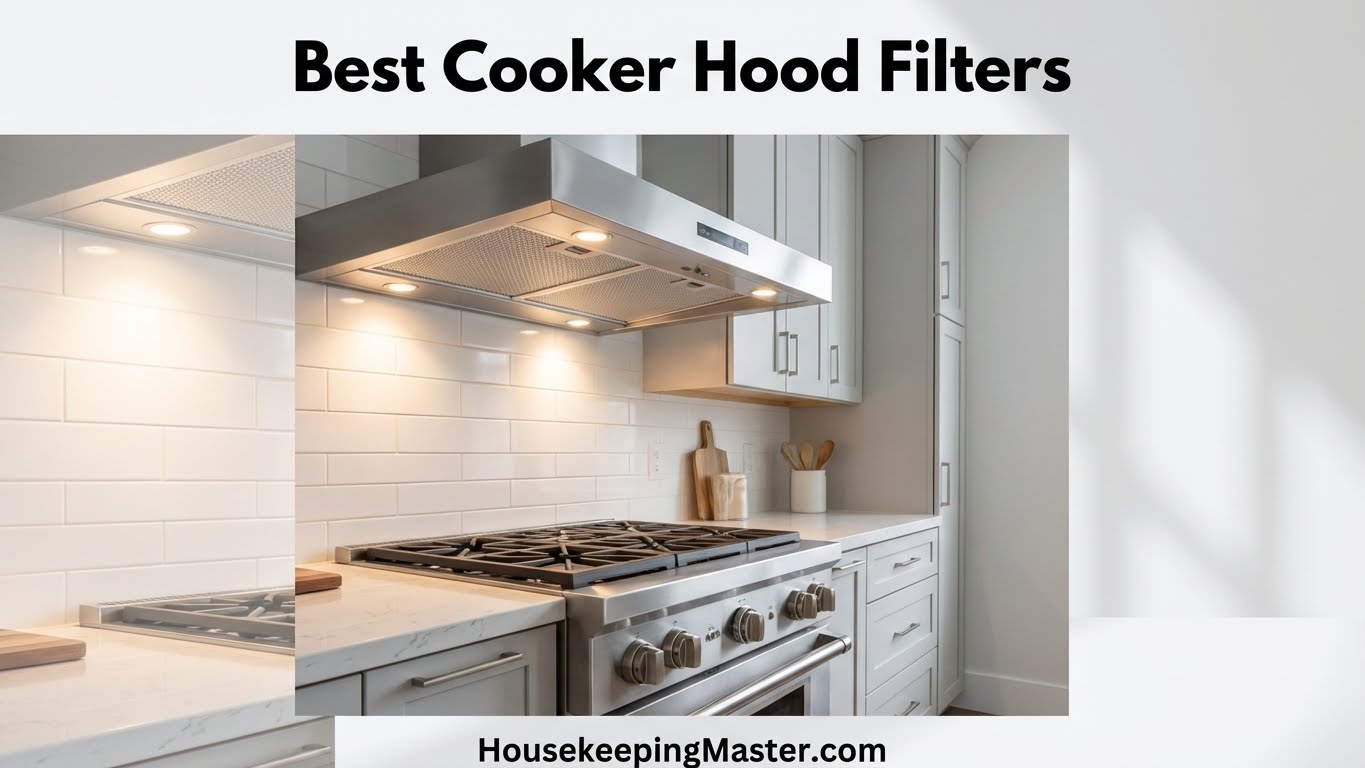
Your kitchen’s air quality depends heavily on one often-overlooked component: the cooker hood filter. While you might spend hours selecting the perfect range hood with its sleek design and powerful extraction rate, the filter inside that hood is what truly determines how effectively it removes grease, smoke, odors, and airborne particles from your cooking environment.
A quality cooker hood filter isn’t just about keeping your kitchen smelling fresh. It’s about protecting your health, maintaining your appliance’s efficiency, and even safeguarding your home’s surfaces from the sticky residue that cooking generates. Poor filtration means grease particles settle on your cabinets, walls, and countertops, creating cleaning nightmares and potential fire hazards. Meanwhile, cooking fumes containing potentially harmful compounds linger in your breathing space, affecting indoor air quality.

Best Cooker Hood Filters:The market offers an overwhelming variety of cooker hood filters, from disposable aluminum mesh filters to advanced multi-layer charcoal filters, each promising superior performance. Some filters claim to capture 98% of grease particles, while others boast extended lifespans that could save you money over years of use. The price spectrum ranges from budget-friendly packs under $15 to premium filters exceeding $50, leaving many homeowners confused about what represents genuine value.
Understanding the difference between grease filters and charcoal filters is fundamental. Grease filters (also called baffle filters or mesh filters) trap oil and grease particles, typically made from aluminum or stainless steel. These are usually washable and reusable, designed for ducted range hoods that vent air outside. Charcoal filters, conversely, contain activated carbon that absorbs odors and is essential for recirculating (ductless) range hoods that filter and return air to the kitchen rather than expelling it outdoors.
The quality of your filter directly impacts your range hood’s suction power. A clogged or inefficient filter forces your hood’s motor to work harder, increasing energy consumption, creating more noise, and potentially shortening the appliance’s lifespan. Regular replacement or cleaning isn’t just recommended maintenance—it’s essential for optimal performance and safety.
Why Choosing the Right Cooker Hood Filter Matters!
This comprehensive guide examines eleven top-rated cooker hood filters available on Amazon, covering various types, price points, and compatibility options. Whether you’re seeking universal fit filters for a standard range hood, specific replacement filters for brand-name appliances, or high-efficiency options for heavy cooking households, we’ve analyzed the features, performance, and real-world user experiences to help you make an informed decision.
We’ll explore aluminum mesh filters perfect for commercial-grade kitchens, stainless steel baffle filters offering superior durability, activated charcoal filters for ductless setups, and combination filters providing multi-stage filtration. Each product review includes detailed specifications, honest pros and cons assessments, and recommendations for ideal users. Following the reviews, our extensive buying guide breaks down everything you need to know about filter materials, sizing, maintenance requirements, and compatibility considerations, while our FAQ section addresses the most common questions and concerns from real homeowners.
Top 11 Cooker Hood Filters Reviewed!
1. Broan-NuTone BPSF30 Non-Ducted Filter for Range Hood

Overview:
The Broan-NuTone BPSF30 represents one of the most popular charcoal filter options for non-ducted range hoods on the market. Designed specifically for recirculating ventilation systems, this replacement filter uses activated charcoal technology to neutralize cooking odors before returning filtered air back into your kitchen. Compatible with numerous Broan and NuTone range hood models, it’s become a go-to choice for homeowners with ductless setups who want reliable odor control without complex installation.
Key Features:
- Activated charcoal construction specifically engineered for odor absorption
- Universal compatibility with most Broan-NuTone non-ducted range hood models
- Simple snap-in installation requiring no tools or technical expertise
- Recommended replacement every 3-6 months depending on cooking frequency
- Lightweight design at approximately 4 ounces per filter
- Pre-cut to exact specifications for seamless fit
- Two-pack option available for extended replacement cycles
Performance and User Experience:
Users consistently praise the BPSF30 for its straightforward installation process. The filter slides into place effortlessly, clicking securely without wobbling or gaps. Within the first week of use, most customers notice a significant reduction in lingering cooking smells, particularly after frying or cooking aromatic foods like fish or curry.
The charcoal filtration proves effective for moderate cooking households. Families cooking 4-5 times weekly report the filter maintains good odor control for approximately four months before performance begins declining. Heavy users cooking multiple meals daily find the filter reaches saturation closer to the three-month mark, at which point odors begin escaping into the kitchen.
One notable aspect is the filter’s inability to capture grease particles. This is expected since charcoal filters target odors rather than grease, but first-time users sometimes express surprise that they need separate grease filters. The BPSF30 works best when paired with aluminum mesh grease filters positioned ahead of it in the filtration sequence.
The packaging ensures filters arrive in good condition, though some buyers mention a slight charcoal dust residue that requires tapping out before installation. This minor inconvenience doesn’t affect performance but is worth noting for those concerned about cleanliness during setup.
Pros:
✅ Excellent odor neutralization for typical home cooking
✅ Tool-free installation completed in under 60 seconds
✅ Wide compatibility across Broan-NuTone product lines
✅ Cost-effective compared to branded alternatives
✅ Maintains consistent airflow without restricting hood performance
✅ Available in multi-pack options for better value
Cons:
❌ Requires replacement every 3-6 months (ongoing expense)
❌ Not washable or rechargeable unlike some premium options
❌ Does not filter grease particles (requires separate grease filter)
❌ Performance degrades noticeably as filter approaches end of life
❌ Some units arrive with loose charcoal particles requiring cleanup
Ideal For:
Homeowners with Broan or NuTone ductless range hoods seeking affordable, effective odor control for moderate cooking volumes. Perfect for apartment dwellers or homes where external venting isn’t possible.
Why Consider This Filter:
The Broan-NuTone BPSF30 delivers reliable odor control at a price point that makes regular replacement practical for budget-conscious households. While it lacks the longevity of washable metal filters, its specialized odor-absorption capabilities make it essential for recirculating range hoods, and its broad compatibility means you’re likely covered regardless of your specific Broan model.
2. Range Hood Charcoal Filter by Air King (2-Pack)

Overview:
Air King’s charcoal filter two-pack targets homeowners seeking universal-fit carbon filters for ductless range hoods. These filters feature dense activated carbon layers designed to trap odor molecules from cooking vapors. The company positions these as premium alternatives to OEM filters, offering similar performance at a fraction of the cost while maintaining compatibility with major range hood brands including Broan, Nutone, and Allure models.
Key Features:
- Dual-layer activated carbon construction for enhanced odor absorption
- Universal fit design compatible with multiple hood brands and models
- Pre-cut to standard 11.2″ x 9.5″ dimensions with flexible trimming options
- Two filters per package providing 6-12 months of coverage
- Lightweight construction preventing motor strain
- Carbon particle retention mesh preventing dust dispersal
- Easy snap-fit installation with corner tabs for secure mounting
Performance and User Experience:
Installation proves remarkably straightforward for most users. The filters feature corner tabs that click into standard range hood slots, and the slightly flexible material allows minor adjustments to accommodate different hood designs. A few customers report needing to trim edges slightly for perfect fit, though this is easily accomplished with household scissors.
Odor control performance receives high marks from the majority of reviewers. The dual-layer carbon construction appears more effective than single-layer alternatives, with users noting that cooking smells dissipate within minutes rather than lingering for hours. Fish, garlic, and curry—notoriously stubborn odors—receive specific mention as being well-controlled.
The filters maintain good airflow characteristics. Unlike some thicker carbon filters that noticeably reduce suction power, these Air King filters allow hoods to operate at close to their rated CFM. The hood’s fan doesn’t sound strained, and cooking steam clears effectively even on medium settings.
Lifespan varies significantly based on cooking intensity. Light users (2-3 meals weekly) report filters remaining effective for six months or longer. Heavy users cooking daily, especially with high-heat techniques like stir-frying or searing, find performance degrading after three to four months. The filter doesn’t fail suddenly; instead, you’ll gradually notice odors lingering longer after cooking sessions.
Some buyers appreciate that these filters produce minimal carbon dust compared to budget options. While a quick shake before installation is still recommended, you won’t find black residue coating your hood’s interior or nearby surfaces.
Pros:
✅ Strong odor neutralization rivaling brand-name filters
✅ Universal compatibility saves searching for exact model numbers
✅ Two-pack pricing offers excellent value for money
✅ Maintains good airflow without restricting hood performance
✅ Minimal carbon dust compared to economy filters
✅ Flexible material allows custom trimming for perfect fit
Cons:
❌ Not suitable for grease filtration (odor-only)
❌ Performance declines gradually requiring attentive monitoring
❌ Disposable design generates ongoing waste
❌ Some models require minor trimming for optimal fit
❌ No visual indicator showing when replacement is needed
Ideal For:
Households with ductless range hoods seeking cost-effective universal filters that perform comparably to expensive OEM replacements. Best for moderate cooking volumes where quarterly replacement cycles are acceptable.
Why Consider This Filter:
The Air King charcoal filter two-pack delivers OEM-quality odor control at aftermarket prices. The universal fit design eliminates compatibility concerns, while the dual-layer construction provides reliable performance that justifies regular replacement. If you’re tired of paying premium prices for brand-specific filters, this represents a smart alternative without sacrificing effectiveness.
3. Aluminum Grease Filter by Broan-Nutone (2-Pack, 11.75″ x 14.5″)

Overview:
This Broan-Nutone aluminum mesh grease filter pair targets homeowners needing durable, washable filtration for ducted range hoods. Constructed from multiple layers of expanded aluminum mesh, these filters capture grease particles and oil droplets before they enter ductwork or accumulate on hood interiors. The specific 11.75″ x 14.5″ dimensions fit many standard 30-inch range hoods, making them popular replacements for worn-out original filters.
Key Features:
- Multi-layer expanded aluminum mesh construction for grease trapping
- Dishwasher-safe design enabling easy cleaning and reuse
- Aluminum frame providing structural integrity and rust resistance
- Standard 11.75″ x 14.5″ dimensions fitting common 30″ range hoods
- Lightweight yet durable construction
- No charcoal or carbon components (grease filtration only)
- Two-filter pack covering typical dual-filter hood configurations
Performance and User Experience:
The primary strength of these aluminum filters lies in their reusability. Unlike disposable options, you simply remove them monthly, run them through the dishwasher (or hand wash with degreasing detergent), and reinstall. Users report filters looking nearly new after washing, with grease buildup completely removed and the aluminum mesh maintaining its shape and integrity even after dozens of cleaning cycles.
Grease capture efficiency impresses most buyers. During active cooking, you can see droplets collecting on the mesh rather than passing through to the hood’s interior or ductwork. After several weeks of cooking, a visible grease layer forms on the filters, making it obvious when cleaning time arrives. This visual feedback helps users maintain optimal performance through timely cleaning.
The filters fit securely in compatible hoods, typically sliding into tracks or clicking into retainer clips. Once installed, they don’t rattle or vibrate even when the hood operates at maximum speed. The aluminum construction feels substantial—not flimsy like some budget mesh filters that dent easily.
Airflow restriction is minimal when filters are clean. Users note their range hoods maintain strong suction and operate quietly with these filters installed. However, performance does degrade as grease accumulates, so regular cleaning is essential. Heavily soiled filters can reduce airflow by 20-30%, forcing the motor to work harder and increasing noise levels.
Long-term durability exceeds expectations. Multiple reviewers mention using the same filters for 2-3 years with monthly cleanings, and the mesh shows no signs of degradation, tears, or rust. This longevity makes the initial investment quite economical compared to replacing disposable filters quarterly.
Pros:
✅ Dishwasher-safe for effortless cleaning and maintenance
✅ Excellent long-term value through reusability (years of service)
✅ Effective grease capture protecting ductwork and hood internals
✅ Rust-resistant aluminum construction withstands repeated washing
✅ Minimal airflow restriction when properly maintained
✅ Two-pack configuration covers standard dual-filter hoods
Cons:
❌ Requires regular cleaning commitment (monthly for best performance)
❌ Provides no odor filtration (grease capture only)
❌ Specific dimensions limit compatibility to certain hood models
❌ Heavily soiled filters become difficult to clean completely
❌ May not fit hoods requiring thicker baffle-style filters
Ideal For:
Homeowners with ducted range hoods seeking long-lasting, economical grease filtration who don’t mind monthly cleaning routines. Perfect for those preferring reusable solutions over disposable alternatives.
Why Consider This Filter:
These Broan-Nutone aluminum filters represent the sweet spot between performance and economy. The initial cost is modest, but the ability to wash and reuse them for years makes them incredibly cost-effective long-term. If your hood matches the dimensions and you’re committed to regular cleaning, these filters deliver reliable grease capture that pays for itself many times over.
4. Cosmo COS-KF30 Stainless Steel Baffle Filter (30-inch)

Overview:
The Cosmo COS-KF30 brings commercial-grade filtration to residential kitchens with its stainless steel baffle design. Unlike mesh filters, baffle filters use strategically angled metal panels that force airflow to change direction repeatedly, causing grease particles to condense and drain into collection channels. This design is preferred in professional kitchens for its superior grease capture efficiency and minimal maintenance requirements. The 30-inch width fits most standard residential range hoods.
Key Features:
- Professional-grade stainless steel construction with 430-grade steel
- Baffle design using directional airflow for enhanced grease capture
- Dishwasher-safe for convenient cleaning
- Grease collection channels directing residue away from airflow path
- Rust and corrosion-resistant finish ensuring long-term durability
- Maintains high airflow efficiency (minimal restriction)
- Fits 30-inch range hoods with standard mounting configurations
Performance and User Experience:
The baffle design delivers noticeably superior grease capture compared to standard mesh filters. Users who previously dealt with grease accumulation inside their hoods report virtually no buildup after switching to this filter. The directional airflow forces grease to condense on the cold stainless steel surfaces, where it drains to the bottom edge rather than passing through to the hood interior.
Cleaning these filters is remarkably easy. Most users simply place them in the dishwasher once monthly, and they emerge looking nearly spotless. For stubborn buildup, a brief soak in hot water with degreasing dish soap followed by a light scrub handles anything the dishwasher doesn’t catch. The stainless steel maintains its appearance even after years of use—no discoloration, rust, or corrosion appears.
Airflow performance exceeds expectations. Baffle filters are actually designed to maintain airflow efficiency better than mesh filters, especially as they accumulate grease. While mesh filters clog and restrict airflow, baffle channels continue directing air through the system effectively. Users note their range hoods operate more quietly and effectively after installing these filters compared to their previous mesh units.
The construction quality is immediately apparent when handling the filter. The stainless steel feels substantial and rigid, with precisely formed baffles and smooth edges. The weight (approximately 2-3 pounds) gives confidence in its durability, and there’s no flexing or bending like you’d experience with thin aluminum filters.
Installation requires verifying your hood’s mounting system. The filter fits standard 30-inch hoods with either slide-in tracks or clip mounting. A few buyers needed to slightly bend mounting tabs to achieve perfect fit, but this is easily accomplished and doesn’t indicate poor design—just the reality of aftermarket filters accommodating various hood models.
Pros:
✅ Superior grease capture efficiency vs. standard mesh filters
✅ Commercial-quality stainless steel construction built for longevity
✅ Maintains optimal airflow even as grease accumulates
✅ Dishwasher-safe with exceptional cleaning results
✅ Rust and corrosion-resistant for humid kitchen environments
✅ Quieter operation due to better airflow dynamics
✅ Grease drainage system prevents re-entrainment
Cons:
❌ Higher initial cost compared to basic aluminum mesh filters
❌ Heavier weight may not suit all range hood mounting systems
❌ Requires verification of exact hood dimensions before purchase
❌ No odor filtration capability (grease capture only)
❌ Not universally compatible with all 30-inch hoods
Ideal For:
Serious home cooks who generate significant grease through frequent high-heat cooking and want commercial-grade filtration that requires minimal maintenance. Ideal for those upgrading from basic mesh filters seeking superior performance.
Why Consider This Filter:
The Cosmo COS-KF30 baffle filter represents a significant upgrade over standard aluminum mesh options. While the upfront cost is higher, the superior grease capture, better airflow maintenance, and exceptional durability make it a smart long-term investment for households that cook frequently or at high temperatures. If your cooking generates significant grease and you’re frustrated with constantly cleaning mesh filters, the baffle design will transform your range hood’s effectiveness.
5. CIARRA CBCF002X2 Activated Carbon Filter (2-Pack)

Overview:
CIARRA’s CBCF002X2 charcoal filter two-pack provides odor control for ductless range hoods, specifically designed to fit CIARRA brand hoods but compatible with several other brands sharing similar dimensions. These filters use compressed activated carbon technology to absorb cooking odors, smoke particles, and airborne contaminants before recirculating air back into the kitchen. The rectangular design with rounded corners fits most under-cabinet range hoods.
Key Features:
- High-density activated carbon composition for maximum odor absorption
- Pre-cut dimensions (approximately 10″ x 12″) fitting various hood models
- Plastic mesh outer layer containing carbon particles
- Two-filter pack providing 6-12 months coverage
- Lightweight design preventing fan motor strain
- Easy installation with corner slots for secure mounting
- Compatible with CIARRA, Cosmo, and other brand ductless hoods
Performance and User Experience:
These filters excel at odor control for typical household cooking. Users specifically mention effectiveness against fish odors, bacon smoke, and aromatic spices—the three categories that most commonly challenge kitchen ventilation. Within 10-15 minutes of finishing cooking, odors dissipate completely rather than lingering for hours.
Installation simplicity receives unanimous praise. The filters feature corner slots that align with mounting posts inside compatible range hoods. You simply position the filter, press gently, and it clicks securely into place. Removal is equally straightforward—just press the release tabs and lift out. No tools, no frustration, no instructions needed.
The high-density carbon construction appears more effective than thinner alternatives. Users who previously used budget charcoal filters notice these CIARRA filters maintain performance longer before saturation occurs. The typical lifespan ranges from 4-6 months for households cooking 5-7 times weekly. Heavy users still get 3-4 months of effective odor control.
Airflow remains strong with these filters installed. Unlike some thick carbon filters that noticeably reduce hood suction, these maintain good air circulation. Your hood operates at its normal sound level without the strained noise that indicates restricted airflow. Cooking steam and smoke clear efficiently even on medium fan settings.
A few users mention initial carbon odor when first installing the filters. This is actually the fresh activated carbon and dissipates within 24-48 hours of operation. Running your hood for 10-15 minutes after installation helps accelerate this break-in period.
The filters’ compatibility extends beyond CIARRA hoods. Several buyers successfully use them in Cosmo, Range Hood Inc., and other brands, though you’ll want to verify dimensions match your specific model. The slightly flexible construction allows minor size variations to still work.
Pros:
✅ Excellent odor absorption for fish, smoke, and aromatic cooking
✅ High-density carbon maintains effectiveness longer than budget filters
✅ Tool-free installation completed in seconds
✅ Strong airflow maintenance without restriction
✅ Two-pack offers solid value for regular replacement cycles
✅ Broader compatibility than advertised dimensions suggest
Cons:
❌ Disposable design requires quarterly replacement (ongoing cost)
❌ Initial carbon smell requires break-in period
❌ Not compatible with all range hood models (verify dimensions)
❌ No grease filtration capability
❌ Performance declines gradually without clear indicator
Ideal For:
Owners of CIARRA or compatible ductless range hoods seeking reliable odor control at reasonable cost. Perfect for moderate-to-heavy cooking households willing to replace filters quarterly for optimal performance.
Why Consider This Filter:
The CIARRA CBCF002X2 delivers strong odor control performance that justifies its mid-range pricing. The high-density carbon construction provides better longevity than budget options, while the two-pack configuration keeps replacement costs reasonable. If you have a compatible hood and prioritize effective odor elimination, these filters offer an excellent balance of performance and value.
6. Kitchen Basics 101 Universal Range Hood Filter (8.75″ x 10.5″)

Overview:
Kitchen Basics 101 offers a truly universal charcoal filter designed to fit the widest possible range of ductless range hoods. The standardized 8.75″ x 10.5″ dimensions with pre-cut trim lines allow customization to fit various hood models. This filter targets budget-conscious consumers who need effective odor control without paying premium prices for brand-specific options. The activated carbon composition handles typical cooking odors while the flexible design accommodates different mounting systems.
Key Features:
- Universal fit design with trim-to-fit flexibility
- Standard 8.75″ x 10.5″ dimensions suitable for compact hoods
- Activated charcoal core for odor absorption
- Trim guidelines printed directly on filter backing
- Lightweight construction at approximately 3 ounces
- Plastic mesh outer layer protecting carbon core
- Single filter sold individually for budget flexibility
Performance and User Experience:
The universal fit concept works better than expected. The printed trim lines guide you in cutting the filter to match your specific hood dimensions. Using sharp scissors, buyers report clean cuts that don’t shed carbon particles excessively. The flexibility to customize size means this filter potentially fits dozens of hood models, solving the compatibility puzzle that frustrates many replacement filter shoppers.
Odor control performance meets expectations for light-to-moderate cooking. Users cooking 3-4 times weekly report good results for approximately three months before noticing declining effectiveness. The activated carbon handles everyday cooking smells—sautéing vegetables, baking, light frying—quite well. However, heavy-duty cooking like deep frying or intense aromatic cooking (heavy garlic, fish) sometimes overwhelms the filter faster than expected.
Installation varies by hood model but generally proves straightforward. Some hoods have specific mounting clips or slots that work perfectly with this filter. Others require the filter to simply rest on the hood’s internal shelf. A few buyers mention using small pieces of velcro or magnetic strips to secure the filter in hoods lacking dedicated mounting points.
The budget-friendly pricing makes this filter attractive for those seeking to minimize ongoing costs. However, the trade-off is shorter lifespan compared to premium filters. While expensive charcoal filters might last 5-6 months, these typically need replacement after 2-3 months in high-use kitchens. For light users, 4-5 months is achievable.
The construction quality is adequate rather than exceptional. The plastic mesh outer layer feels thinner than premium filters, and you need to handle it gently to avoid tearing. The carbon core is thinner than high-density alternatives, explaining both the lower price and shorter lifespan. For budget-conscious users accepting more frequent replacement, this represents fair value.
Pros:
✅ True universal fit with trim-to-size flexibility
✅ Budget-friendly pricing enables frequent replacement
✅ Adequate odor control for light-to-moderate cooking
✅ Trim guidelines simplify customization
✅ Lightweight design suitable for all hood motors
✅ Single-unit sales allow trying before buying multiple
Cons:
❌ Shorter lifespan than premium charcoal filters (2-4 months)
❌ Thinner construction feels less substantial
❌ Trimming required for most applications
❌ Less effective against intense cooking odors
❌ May require DIY mounting solutions in some hoods
❌ More frequent replacement increases long-term cost
Ideal For:
Budget-conscious homeowners with ductless range hoods seeking adequate odor control at minimum cost. Best for light cooking households where quarterly replacement isn’t burdensome.
Why Consider This Filter:
The Kitchen Basics 101 universal filter solves two common problems: compatibility confusion and high replacement costs. If you have trouble finding filters for your specific hood model, this trim-to-fit design likely works. The lower price point makes frequent replacement more palatable, though the per-year cost might actually exceed premium filters due to more frequent changes. Consider this if upfront cost matters more than long-term economy.
7. Perfetto Kitchen and Bath Universal 30″ Aluminum Range Hood Filter

Overview:
Perfetto Kitchen and Bath delivers a commercial-quality aluminum mesh grease filter designed for 30-inch range hoods. This filter uses multi-layered expanded aluminum mesh construction to trap grease particles and oil droplets before they contaminate ductwork or accumulate inside the hood. The heavy-duty aluminum frame provides rigidity and rust resistance, while the mesh layers offer excellent grease capture efficiency. Designed as a universal replacement, it fits most standard 30-inch ducted range hoods.
Key Features:
- Heavy-duty multi-layer expanded aluminum mesh
- Reinforced aluminum frame preventing warping and bending
- Standard 30-inch width (approximately 11.8″ x 14.4″ actual dimensions)
- Dishwasher-safe for convenient cleaning and reuse
- Rust-resistant construction for long-term durability
- Professional-grade thickness providing superior grease capture
- Compatible with most 30″ ducted range hoods
Performance and User Experience:
The build quality immediately distinguishes this filter from economy options. The aluminum frame feels solid and rigid, with precisely formed mesh layers that don’t sag or separate. When you tap the filter, it produces a solid sound rather than the tinny rattle of thin alternatives. This substantial construction translates to better long-term performance.
Grease capture efficiency impresses users who cook frequently with oil. The multiple mesh layers create a tortuous path for airflow, forcing grease droplets to impact the aluminum surfaces where they condense and stick. After several weeks of cooking, you’ll see a clear grease layer coating the filter, while the hood’s interior remains remarkably clean. This visible confirmation of the filter’s effectiveness provides peace of mind that your investment is protecting the hood.
Cleaning these filters is straightforward but requires attention. Most users run them through the dishwasher monthly using the hottest cycle with a degreasing detergent. This removes 90-95% of accumulated grease. For stubborn buildup, a pre-soak in hot water with Dawn dish soap or a degreasing agent like Greased Lightning handles what the dishwasher misses. The aluminum doesn’t discolor or corrode even after years of cleaning cycles.
Airflow characteristics receive positive feedback. When clean, these filters allow your range hood to operate at its rated CFM with minimal restriction. Unlike some thick filters that muffle the hood’s suction, these maintain strong air movement. However, performance does degrade as grease accumulates, so regular cleaning is essential for maintaining optimal airflow and preventing motor strain.
The universal fit claim holds true for most standard 30-inch hoods. The filter dimensions match common industry standards, and the mounting design works with both slide-in track systems and clip-retention configurations. A few buyers needed to slightly bend mounting tabs to achieve perfect fit, but this is expected with universal replacement filters and doesn’t indicate quality issues.
Long-term durability exceeds expectations. Users report these filters lasting 3-5 years with monthly cleaning before showing any signs of mesh separation, frame corrosion, or structural degradation. This longevity makes them exceptionally economical compared to replacing disposable filters quarterly.
Pros:
✅ Commercial-grade construction built for longevity
✅ Excellent grease capture protecting hood and ductwork
✅ Dishwasher-safe with impressive cleaning results
✅ Heavy-duty frame resists warping and damage
✅ Minimal airflow restriction when properly maintained
✅ 3-5 year lifespan provides exceptional value
✅ Fits most standard 30-inch range hoods
Cons:
❌ Requires committed monthly cleaning routine
❌ Heavier than basic filters (may stress weak mounting systems)
❌ No odor filtration (grease capture only)
❌ Initial cost higher than budget mesh filters
❌ Heavily soiled filters need pre-soaking for best results
Ideal For:
Homeowners with 30-inch ducted range hoods seeking professional-grade grease filtration and long-term value. Perfect for frequent cooks who generate significant grease and don’t mind regular maintenance.
Why Consider This Filter:
The Perfetto aluminum filter represents a significant step up from basic mesh filters without the premium pricing of stainless steel baffle filters. The commercial-grade construction ensures years of reliable service, and the superior grease capture protects your range hood investment. If you cook frequently and want filters that will last years rather than months, this delivers exceptional value for the quality provided.
8. WB02X11495 Charcoal Filter by Supco (2-Pack)

Overview:
The Supco WB02X11495 charcoal filter two-pack serves as an aftermarket replacement for GE range hood filters, fitting numerous GE microwave over-the-range models. This filter targets the specific needs of combination microwave-hood units that recirculate air rather than venting externally. The activated carbon construction absorbs cooking odors and airborne particles, essential for maintaining fresh air quality in kitchens where external venting isn’t possible.
Key Features:
- Specifically designed for GE microwave over-the-range models
- Activated carbon composition for odor neutralization
- Compact dimensions (approximately 3.8″ x 6.3″) fitting microwave hood cavities
- Two-pack providing 6-12 months coverage
- Pre-cut to exact GE specifications ensuring perfect fit
- Lightweight design preventing microwave ventilation system strain
- Compatible with dozens of GE model numbers
Performance and User Experience:
Installation is remarkably simple for these GE-specific filters. They snap directly into the designated slots inside GE over-the-range microwaves without modification. Users appreciate that the filters arrive pre-sized to exact specifications, eliminating guesswork about compatibility. The entire replacement process takes under two minutes—open the microwave grill, remove old filters, snap in new ones, close the grill.
Odor control performance receives mixed feedback, largely dependent on cooking intensity. Light-to-moderate users cooking 3-4 times weekly report good results lasting 4-6 months. The activated carbon effectively handles everyday cooking smells like sautéing, baking, and light frying. However, heavy users or those frequently cooking fish, bacon, or heavily spiced dishes find the filters saturate faster, around 2-3 months.
The compact size appears to be both advantage and limitation. The small footprint fits neatly in microwave cavities without interfering with cooking space. However, the limited carbon volume means lower total odor absorption capacity compared to full-size range hood filters. This explains why performance duration varies so significantly based on cooking habits.
Airflow impact is minimal. The thin profile and porous structure allow the microwave’s ventilation fan to operate normally. Users don’t notice reduced suction or increased fan noise after installing these filters, indicating they don’t create significant restriction to air movement.
Quality consistency varies between production batches. Most buyers receive filters that perform well and last the expected duration. However, occasional reports mention filters that lose effectiveness quickly or arrive with loose carbon particles. These issues seem to affect a small percentage of units but are worth noting.
The two-pack configuration offers convenience and value. Having a spare filter on hand means you can replace immediately when performance declines without waiting for shipping. The per-filter cost is reasonable compared to OEM GE replacements, making regular replacement economically feasible.
Pros:
✅ Perfect fit for GE over-the-range microwave models
✅ Simple snap-in installation requiring no tools
✅ Effective odor control for moderate cooking
✅ Compact design doesn’t interfere with microwave space
✅ Minimal impact on ventilation airflow
✅ Two-pack offers convenience and value
✅ Significantly cheaper than OEM GE filters
Cons:
❌ Smaller size limits total odor absorption capacity
❌ Performance varies significantly with cooking intensity
❌ Quality inconsistency between production batches
❌ Shorter lifespan (2-4 months) for heavy cooking
❌ Some units shed carbon particles initially
❌ Only fits GE models (not universal)
Ideal For:
GE over-the-range microwave owners needing affordable replacement charcoal filters for moderate cooking environments. Best for those prioritizing exact fit and easy installation over maximum odor absorption capacity.
Why Consider This Filter:
The Supco WB02X11495 solves the specific challenge of finding affordable replacement filters for GE microwave hoods. While not the longest-lasting or most powerful carbon filters available, they provide adequate odor control at a price point that makes quarterly replacement reasonable. If you have a compatible GE model and cook moderately, these filters deliver good value without the premium pricing of OEM parts.
9. Proline Range Hood Charcoal Filters (2-Pack)

Overview:
Proline’s charcoal filter two-pack serves the company’s ductless range hood lineup while also fitting select other brands. These filters use multi-layer activated carbon technology to provide enhanced odor absorption compared to standard single-layer alternatives. The construction emphasizes carbon density and particle retention, addressing common complaints about charcoal shedding. Designed for homeowners who cook frequently and demand longer-lasting odor control.
Key Features:
- Multi-layer activated carbon construction for superior absorption
- Enhanced carbon particle retention preventing dust dispersal
- Standard dimensions (approximately 10.5″ x 11.5″) fitting most Proline hoods
- Two filters providing 6-12 months coverage for typical use
- Rigid backing structure preventing filter deformation
- Corner mounting tabs for secure installation
- Compatible with Proline PLJW and other select models
Performance and User Experience:
The multi-layer carbon construction delivers noticeably better odor control than budget single-layer filters. Users who cook Asian cuisine with heavy wok use—generating significant smoke and aromatic compounds—report these filters handle the challenge admirably. The activated carbon continues neutralizing odors effectively for 5-6 months before performance begins declining, exceeding the 3-4 month lifespan typical of standard filters.
Installation follows the standard snap-in approach. The corner tabs align with Proline hood mounting posts, and a gentle push secures the filter. The rigid backing prevents the filter from sagging or deforming, ensuring consistent contact with the mounting system. Users appreciate that the filter doesn’t rattle or vibrate even when the hood runs at maximum speed.
The enhanced particle retention system genuinely reduces carbon dust problems. While a light shake before installation is still recommended, these filters produce minimal black residue compared to economy options. The outer mesh layer effectively contains carbon particles, keeping your hood interior and nearby surfaces clean.
Airflow performance remains strong throughout the filter’s lifespan. Unlike some thick carbon filters that progressively restrict airflow as they saturate, these Proline filters maintain consistent air movement. Your hood operates at normal sound levels without the strained motor noise indicating excessive restriction.
The filters’ compatibility extends primarily to Proline hoods, though some buyers successfully use them in similarly sized hoods from other manufacturers. Verifying dimensions is crucial since the mounting system must align for proper installation. The slightly premium pricing reflects the enhanced construction, but the extended lifespan helps justify the investment.
Build quality feels premium compared to budget alternatives. The filters arrive well-packaged with no damage, the backing material is rigid without being brittle, and the overall construction suggests these will last their full lifespan without falling apart prematurely.
Pros:
✅ Multi-layer carbon provides superior odor control
✅ Extended 5-6 month lifespan for moderate cooking
✅ Minimal carbon dust thanks to retention system
✅ Maintains consistent airflow throughout lifespan
✅ Rigid construction prevents sagging and deformation
✅ Well-suited for high-heat and aromatic cooking
✅ Two-pack configuration covers standard replacement needs
Cons:
❌ Higher price point than universal budget filters
❌ Primary compatibility limited to Proline models
❌ Still requires quarterly-to-semi-annual replacement
❌ Not washable or rechargeable
❌ Dimensions must match hood precisely for proper fit
Ideal For:
Proline range hood owners who cook frequently and want premium charcoal filters that last longer and perform better than standard alternatives. Ideal for those doing substantial aromatic or high-heat cooking.
Why Consider This Filter:
The Proline charcoal filter represents the premium end of disposable carbon filters. The multi-layer construction and enhanced particle retention justify the higher cost through better performance and longer lifespan. If you have a compatible hood and find yourself replacing standard filters every 2-3 months, upgrading to these could actually save money while delivering superior odor control.
10. HEPA Filter by MOOKA (For Ductless Range Hoods)

Overview:
MOOKA introduces a unique hybrid filtration approach with their HEPA-enhanced filter designed for ductless range hoods. Unlike standard charcoal filters that only address odors, this filter combines activated carbon with HEPA-grade filtration media to capture both odor molecules and fine particles including smoke, PM2.5, and cooking aerosols. This comprehensive filtration targets health-conscious homeowners concerned about indoor air quality beyond just cooking smells.
Key Features:
- Hybrid HEPA + activated carbon construction
- Captures particles as small as 0.3 microns (smoke, PM2.5, cooking aerosols)
- Activated carbon layer for odor absorption
- Universal fit design (approximately 11″ x 9″) with flexible trimming
- Multi-layer construction balancing filtration and airflow
- Frame reinforcement preventing filter deformation
- Single filter sold individually
Performance and User Experience:
The HEPA filtration capability genuinely differentiates this filter from carbon-only alternatives. Users sensitive to cooking smoke or with respiratory concerns notice improved air quality. The filter captures visible smoke particles effectively, with cooking haze clearing noticeably faster than with standard charcoal filters. This makes particular difference when cooking with high-heat methods that generate significant smoke.
Odor control performance meets expectations though doesn’t dramatically exceed quality carbon-only filters. The activated carbon layer handles typical cooking smells adequately, with most users satisfied with odor dissipation speed. However, the primary value proposition isn’t superior odor control—it’s the added particle capture capability.
The multi-layer construction does create more airflow restriction than simple charcoal filters. Users notice their range hood fan works slightly harder and produces marginally more noise to maintain the same air movement. This isn’t necessarily problematic, but it’s a consideration if your hood motor is already undersized for your cooking needs. The filter works best with hoods rated 400+ CFM that have power reserves to overcome the additional restriction.
Lifespan aligns with premium charcoal filters rather than extended HEPA filter expectations. Users report 3-5 months of effective performance depending on cooking intensity. The filter doesn’t fail suddenly; instead, you’ll notice reduced odor control and slower smoke clearing as saturation approaches. The HEPA layer appears to maintain particle capture effectiveness longer than the carbon layer maintains odor control.
Installation follows universal filter procedures with corner tabs or mounting slots. The slightly thicker construction compared to standard charcoal filters may require verification that your hood has adequate clearance. The flexible design allows minor trimming if needed, though cutting should be minimal to avoid compromising the HEPA layer.
The premium pricing reflects the advanced filtration technology. This filter costs 50-100% more than standard charcoal filters, which may be prohibitive for budget-conscious buyers. However, for those prioritizing air quality and willing to invest in superior filtration, the additional capability justifies the cost.
Pros:
✅ HEPA filtration captures fine smoke particles and PM2.5
✅ Improves indoor air quality beyond odor control alone
✅ Effective for smoke-heavy cooking methods
✅ Dual-purpose design addresses multiple air quality concerns
✅ Suitable for households with respiratory sensitivities
✅ Maintains good performance for 3-5 months
✅ Universal fit design works with various hood models
Cons:
❌ Significantly higher cost than standard charcoal filters
❌ Creates more airflow restriction requiring powerful hood motor
❌ Hood may run louder to compensate for increased resistance
❌ Lifespan not substantially longer than premium carbon filters
❌ Overkill for households without air quality concerns
❌ Thickness may not fit all hood filter compartments
Ideal For:
Health-conscious homeowners with powerful range hoods (400+ CFM) who prioritize comprehensive air quality filtration beyond basic odor control. Perfect for those sensitive to cooking smoke or concerned about indoor air pollution.
Why Consider This Filter:
The MOOKA HEPA filter represents a premium solution for those viewing their range hood as an air quality appliance rather than just an odor control device. If you’re concerned about the fine particles generated during cooking—not just the smells—this hybrid approach delivers measurable improvement. The higher cost and airflow restriction are worthwhile trade-offs for households prioritizing respiratory health and comprehensive air filtration.
11. BV Stainless Steel Baffle Filters (2-Pack, 30-inch)

Overview:
BV’s stainless steel baffle filter two-pack brings professional kitchen performance to residential applications at accessible pricing. The baffle design uses precisely angled stainless steel panels that create a complex airflow path, causing grease particles to condense and drain rather than passing through. This commercial-grade approach delivers superior grease capture efficiency compared to mesh filters while maintaining excellent airflow characteristics. The 30-inch sizing fits most standard residential range hoods.
Key Features:
- 304 stainless steel construction (food-grade, highly corrosion-resistant)
- Professional baffle design with optimized airflow angles
- Grease drainage channels directing residue to collection points
- Two filters per pack covering dual-filter hood configurations
- Dishwasher-safe for convenient maintenance
- Dimensions approximately 12″ x 10″ per filter
- Minimum airflow restriction even when grease-laden
Performance and User Experience:
The 304-grade stainless steel construction represents a quality upgrade over 430-grade alternatives. This higher alloy content provides superior corrosion resistance and durability, important for the harsh environment of grease, heat, and cleaning chemicals. The material maintains its appearance remarkably well, resisting the discoloration that affects lower-grade steels.
Grease capture efficiency rivals commercial kitchen filters. The baffle design forces air through directional changes that cause grease droplets to impact stainless steel surfaces. The grease condenses, runs down the baffles, and collects in drainage channels rather than passing through to contaminate the hood interior or ductwork. Users who previously dealt with grease buildup report their hoods staying dramatically cleaner.
The filters excel during cleaning. Unlike mesh filters where grease can embed deep in the layers, baffle filters feature smooth surfaces from which grease releases easily. A dishwasher cycle on hot setting with quality degreasing detergent removes virtually all residue. The stainless steel emerges looking nearly new, and the baffles maintain their precise angles without warping or bending even after years of cleaning cycles.
Airflow performance is exceptional. Baffle filters are specifically engineered to minimize restriction while maximizing grease capture. Unlike mesh filters that progressively clog and reduce airflow, baffle channels maintain consistent air movement even when moderately grease-laden. Your range hood operates more efficiently, requires less fan speed to achieve desired air movement, and runs quieter as a result.
The two-pack configuration is perfectly suited for standard range hoods requiring dual filters. Having both filters from the same manufacturer ensures consistent performance and appearance. The matched set eliminates the aesthetic mismatch that occurs when replacing filters individually.
Installation requires verifying your hood’s mounting system. These filters work with standard slide-in track systems common on 30-inch hoods. The stainless steel construction provides enough rigidity that filters don’t sag or rattle once installed. A few hoods may require slight bending of mounting tabs for perfect fit, which is typical for universal replacement filters and doesn’t indicate quality issues.
Long-term value is outstanding. Users report 5+ years of service with monthly cleaning, and the filters show minimal wear. The initial investment is higher than basic mesh filters, but the per-year cost becomes very economical when amortized over the filters’ lifespan. Considering the superior performance and dramatically reduced replacement frequency, these represent excellent value.
Pros:
✅ Premium 304 stainless steel for maximum durability
✅ Commercial-grade grease capture protecting hood and ductwork
✅ Superior airflow maintenance vs. mesh alternatives
✅ Exceptionally easy cleaning with outstanding results
✅ 5+ year lifespan provides excellent long-term value
✅ Two-pack covers standard dual-filter hood setups
✅ Quieter hood operation due to optimized airflow
✅ Virtually eliminates hood interior grease buildup
Cons:
❌ Higher upfront cost than basic mesh filters
❌ Weight may stress weak hood mounting systems
❌ Requires monthly cleaning commitment for best performance
❌ No odor filtration capability (grease capture only)
❌ Must verify exact compatibility with your hood model
Ideal For:
Serious home cooks seeking commercial-quality grease filtration and long-term value. Perfect for those tired of replacing cheap filters and wanting a permanent solution that delivers superior performance.
Why Consider This Filter:
The BV stainless steel baffle filters represent the best long-term investment for ducted range hood filtration. The superior 304-grade stainless steel, professional baffle design, and exceptional cleaning ease justify the premium pricing. If you cook frequently, generate significant grease, and want filters you’ll never need to replace (only clean monthly), these deliver unmatched value. The improved hood performance and dramatically cleaner hood interior are immediately noticeable upgrades that make every cooking session more pleasant.
Comprehensive Buying Guide: How to Choose the Right Cooker Hood Filter
Selecting the optimal cooker hood filter involves understanding your specific kitchen setup, cooking habits, and maintenance preferences. This guide breaks down everything you need to know to make an informed decision that balances performance, convenience, and cost-effectiveness.
Understanding Filter Types: Grease Filters vs. Charcoal Filters
The first critical distinction is between grease filters and charcoal (carbon) filters, as they serve fundamentally different purposes and aren’t interchangeable.
Grease Filters capture oil droplets and grease particles generated during cooking. Made from metal (aluminum or stainless steel), these filters are the first line of defense, preventing grease from entering your hood’s interior, motor, and ductwork. Grease filters are:
- Essential for all range hoods (ducted and ductless)
- Reusable and washable, typically lasting years
- Available in mesh or baffle designs
- Focused solely on grease capture, not odor control
- Usually mounted as the first filter layer
Charcoal Filters contain activated carbon that absorbs odor molecules and some gaseous pollutants. These filters are:
- Essential only for ductless (recirculating) range hoods
- Disposable, requiring replacement every 3-6 months
- Ineffective at capturing grease (require separate grease filters)
- Used as a second filtration stage after grease filters
- Not necessary for ducted hoods venting air outside
Key Decision Point: If you have a ducted range hood that vents air outside your home, you only need grease filters. If you have a ductless (recirculating) hood, you need both grease filters AND charcoal filters working in sequence.
Ducted vs. Ductless Range Hoods: Filtration Requirements
Understanding your hood type determines which filters you need.
Ducted Range Hoods expel air outside through ductwork. These hoods:
- Require only grease filters since contaminated air leaves the home
- Offer better performance since air isn’t recirculated
- Don’t need charcoal filters (though some manufacturers include them)
- Allow unlimited capacity for removing moisture, heat, and odors
- Work best with baffle or multi-layer mesh grease filters
Ductless (Recirculating) Range Hoods filter and return air to the kitchen. These hoods:
- Require both grease filters (first stage) and charcoal filters (second stage)
- Depend heavily on filter quality since air is reused
- Need more frequent charcoal filter replacement (every 3-6 months)
- Have limited odor removal capacity based on carbon filter saturation
- Work best with high-quality, high-density charcoal filters
Common Mistake: Many homeowners don’t realize their hood is ductless and wonder why odors persist. Check whether your hood has external ductwork or recirculates air internally. Ductless hoods absolutely require charcoal filters for acceptable odor control.
Grease Filter Materials and Designs
Grease filters come in several materials and configurations, each with distinct advantages.
Aluminum Mesh Filters are the most common and affordable option:
- Multiple layers of expanded aluminum mesh
- Lightweight and easy to handle
- Dishwasher-safe for convenient cleaning
- Adequate grease capture for typical home cooking
- 2-5 year lifespan with proper maintenance
- Budget-friendly with typical costs $15-$35 per filter
- Best for: Light-to-moderate cooking households prioritizing economy
Stainless Steel Mesh Filters offer enhanced durability:
- Similar design to aluminum but with stainless construction
- Superior corrosion resistance in humid environments
- Heavier and more rigid than aluminum alternatives
- Better appearance retention after repeated cleaning
- 5-7 year lifespan typical
- Moderate pricing at $25-$50 per filter
- Best for: Those wanting durability without baffle filter pricing
Stainless Steel Baffle Filters represent professional-grade filtration:
- Use angled steel panels creating directional airflow paths
- Superior grease capture through condensation and drainage
- Maintain airflow efficiency better than mesh as grease accumulates
- Extremely durable with 10+ year lifespan common
- Easiest to clean with grease releasing from smooth surfaces
- Premium pricing at $40-$80 per filter
- Best for: Serious cooks wanting commercial-quality performance
Baffle vs. Mesh Performance Comparison:
Baffle filters excel in several areas:
- Capture 15-20% more grease particles than mesh filters
- Maintain airflow efficiency as grease accumulates (mesh clogs progressively)
- Clean more easily with grease draining freely
- Create quieter operation due to better airflow dynamics
- Last substantially longer with minimal performance degradation
Mesh filters have their advantages:
- Lower upfront cost makes them accessible
- Lighter weight suits all hood mounting systems
- Adequate performance for typical home cooking
- Wider compatibility across hood models
Material Selection Factors:
Choose aluminum mesh if you’re budget-conscious, cook moderately (4-5 times weekly), and want adequate performance at minimum cost.
Choose stainless steel mesh if you want enhanced durability and corrosion resistance but aren’t ready for premium baffle filter pricing.
Choose stainless steel baffles if you cook frequently, generate significant grease, want commercial-quality performance, and prefer long-term investment over short-term savings.
Charcoal Filter Quality and Carbon Density
Not all charcoal filters perform equally. Carbon density and construction quality dramatically affect odor control effectiveness and lifespan.
Single-Layer Charcoal Filters:
- Thin carbon layer between mesh screens
- Lowest cost option ($8-$15 per filter)
- Adequate for light cooking (2-3 times weekly)
- 2-3 month lifespan in typical use
- Best for: Budget-conscious light users accepting frequent replacement
Multi-Layer Charcoal Filters:
- Multiple carbon layers increasing total absorption capacity
- Moderate pricing ($15-$30 per filter)
- Handles moderate-to-heavy cooking (5-7 times weekly)
- 4-6 month lifespan typical
- Best for: Most households seeking balance of performance and cost
High-Density Carbon Filters:
- Compressed activated carbon maximizing surface area
- Premium pricing ($25-$40 per filter)
- Effective for heavy cooking including aromatic and high-odor foods
- 5-6 month lifespan even with intensive use
- Best for: Those prioritizing maximum odor control
Hybrid HEPA + Carbon Filters:
- Combine activated carbon with HEPA filtration media
- Capture fine particles (smoke, PM2.5) in addition to odors
- Premium pricing ($30-$50 per filter)
- 3-5 month lifespan
- Best for: Health-conscious households concerned about air quality
Carbon Filter Quality Indicators:
High-quality charcoal filters feature:
- Minimal carbon dust and particle shedding
- Rigid backing preventing sagging and deformation
- Secure outer mesh containing carbon effectively
- Consistent performance throughout rated lifespan
- Clear manufacturer specifications on replacement intervals
Poor-quality charcoal filters exhibit:
- Excessive carbon dust coating hood interior
- Thin, flimsy construction that tears easily
- Rapid performance degradation (effective < 2 months)
- Vague or absent replacement recommendations
Replacement Timing: Replace charcoal filters when you notice cooking odors lingering 30+ minutes after finishing, or proactively every 3-6 months regardless of perceived performance. Carbon saturates gradually, and by the time you notice reduced effectiveness, the filter is well past optimal replacement timing.
Sizing and Compatibility Considerations
Proper filter sizing ensures optimal performance, easy installation, and long-term satisfaction.
Measuring Your Current Filters:
If replacing existing filters:
- Remove current filter from the hood
- Measure width and length (or diameter for round filters)
- Note any mounting tabs, slots, or clips
- Check for model numbers printed on the filter
- Photograph the filter and mounting system for reference
Standard Filter Sizes:
Common grease filter dimensions:
- Small: 8″ x 9.5″ to 10″ x 10″
- Medium: 11″ x 11″ to 12″ x 12″
- Large: 11.5″ x 14″ to 12″ x 15″
- 30-inch hoods typically use 11.5″ x 14.5″ or 12″ x 12″ filters
Common charcoal filter dimensions:
- Compact (for microwave hoods): 4″ x 6″ to 5″ x 7″
- Standard: 10″ x 11″ to 11″ x 12″
- Large: 12″ x 13″ and above
Universal vs. Brand-Specific Filters:
Universal Filters offer advantages:
- Typically fit multiple hood brands and models
- Often include trim-to-fit options for customization
- More affordable than OEM alternatives
- Widely available with fast shipping
- May require minor modifications for perfect fit
Brand-Specific Filters provide benefits:
- Guaranteed perfect fit for your exact hood model
- Mounting systems designed specifically for your hood
- OEM quality specifications
- Premium pricing (often 2-3x universal filter cost)
- Limited availability may mean waiting for shipping
Compatibility Verification:
Before purchasing:
- Check your hood’s model number (usually on a label inside)
- Search for that model number in the filter’s compatibility list
- Compare dimensions of your current filter to the replacement
- Read customer reviews for your specific hood model
- Verify mounting system matches (slide-in vs. clip-mount vs. magnetic)
Common Compatibility Mistakes:
- Assuming all 30-inch hood filters are identical (mounting systems vary)
- Buying charcoal filters for ducted hoods (unnecessary unless specified)
- Purchasing grease filters when charcoal filters are needed (wrong filter type)
- Ordering by hood brand alone without verifying exact model compatibility
- Neglecting to check filter thickness (may not fit shallow hood cavities)
Performance Factors: CFM, Airflow, and Filtration Efficiency
Understanding how filters affect your hood’s performance helps you select options that maximize effectiveness without excessive restriction.
CFM (Cubic Feet per Minute) Impact:
Your range hood’s CFM rating indicates its air movement capacity. Filters create resistance that reduces actual airflow below the rated CFM:
- Clean aluminum mesh filters: 5-10% CFM reduction
- Clean baffle filters: 3-8% CFM reduction
- Clean charcoal filters: 10-15% CFM reduction
- Dirty mesh filters: 20-40% CFM reduction
- Dirty baffle filters: 10-20% CFM reduction
- Saturated charcoal filters: 25-50% CFM reduction
Practical Implications:
A 400 CFM hood with clean filters might deliver 360-380 CFM actual airflow. With dirty filters, this drops to 240-320 CFM—potentially inadequate for your cooking needs. This explains why regular filter maintenance is crucial for performance.
Minimum CFM Requirements:
- Light cooking (4-5 times weekly, low heat): 300+ CFM
- Moderate cooking (daily, varied methods): 400+ CFM
- Heavy cooking (daily, high heat, wok cooking): 600+ CFM
- Professional/commercial cooking: 800+ CFM
If your cooking style generates significant smoke and heat, choose filters that minimize airflow restriction. Baffle filters excel here, maintaining better airflow characteristics than mesh alternatives.
Filtration Efficiency Specifications:
Grease filters are rated by capture efficiency:
- Basic mesh: 70-80% grease particle capture
- Quality mesh: 80-90% capture
- Baffle filters: 90-95% capture
Higher capture efficiency means less grease entering your hood’s interior and ductwork, reducing cleaning frequency and protecting the motor.
Balancing Filtration and Airflow:
The ideal filter maximizes both grease capture and airflow maintenance. Baffle filters achieve this balance best, explaining their popularity in professional kitchens. However, quality mesh filters provide adequate performance for most home applications at lower cost.
For ductless hoods, the charcoal filter creates significant restriction. Ensure your hood has adequate CFM reserves (100+ CFM above your calculated needs) to compensate for the additional resistance.
Maintenance Requirements and Cleaning Protocols
Filter maintenance directly impacts performance, safety, and longevity. Understanding cleaning requirements helps you choose filters matching your maintenance commitment.
Grease Filter Cleaning:
Aluminum and stainless steel mesh filters require cleaning every 3-4 weeks for typical use, more frequently if you cook daily or use high-heat methods.
Dishwasher Cleaning Method (Recommended):
- Remove filters from hood
- Shake or tap to remove loose debris
- Place filters in dishwasher (avoid blocking spray arms)
- Use hottest cycle with degreasing detergent
- Add 1/4 cup baking soda or white vinegar for enhanced degreasing
- Allow filters to air dry completely before reinstalling
Hand Washing Method:
- Fill sink or large basin with very hot water
- Add heavy-duty degreasing dish soap or specific hood cleaner
- Submerge filters and let soak 15-30 minutes
- Scrub with soft brush or non-abrasive pad
- Rinse thoroughly with hot water
- Air dry completely before reinstalling
For Stubborn Grease Buildup:
- Soak in hot water with degreasing cleaner for 1-2 hours
- Use baking soda paste on heavily soiled areas
- Commercial degreasers like Greased Lightning or Krud Kutter work effectively
- Avoid harsh abrasives that damage mesh or finishes
Baffle Filter Cleaning:
Baffle filters clean even more easily than mesh:
- Remove from hood and rinse under hot water
- Place in dishwasher on hottest cycle
- Grease slides off smooth surfaces readily
- Rarely requires pre-soaking or scrubbing
- Maintains appearance better than mesh over time
Charcoal Filter Maintenance:
Charcoal filters are disposable and cannot be cleaned or regenerated despite some internet claims. Attempting to wash charcoal filters destroys their effectiveness:
- Never put charcoal filters in dishwashers or washing machines
- Never attempt to “recharge” by heating or sunlight exposure
- Replace according to manufacturer recommendations (typically 3-6 months)
- Monitor performance and replace when odors linger longer
Maintenance Schedule Recommendations:
Light Cooking Households (2-3 times weekly):
- Clean grease filters monthly
- Replace charcoal filters every 5-6 months
Moderate Cooking Households (4-6 times weekly):
- Clean grease filters every 3 weeks
- Replace charcoal filters every 4 months
Heavy Cooking Households (daily, high-heat methods):
- Clean grease filters every 2 weeks
- Replace charcoal filters every 2-3 months
Professional/Commercial Use:
- Clean grease filters weekly
- Replace charcoal filters monthly
Visual Indicators for Cleaning:
Clean grease filters when you notice:
- Visible grease coating on filter surfaces
- Grease drips appearing on cooktop
- Reduced hood suction or increased noise
- Grease accumulation around filter edges
Replace charcoal filters when:
- Cooking odors persist 30+ minutes after finishing
- Fish or garlic smells linger overnight
- Your kitchen feels “greasy” despite cleaning
- Manufacturer’s replacement interval is reached
Cost Analysis: Upfront Investment vs. Long-Term Value
Understanding total cost of ownership helps you make economically sound decisions that balance upfront expense with long-term value.
Grease Filter Economics:
Aluminum Mesh Filters:
- Initial cost: $15-$35 per filter
- Lifespan: 2-5 years
- Annual cost: $6-$18 per year
- Total 5-year cost: $30-$90
- Best value proposition: Budget-conscious moderate users
Stainless Steel Mesh Filters:
- Initial cost: $25-$50 per filter
- Lifespan: 5-7 years
- Annual cost: $4-$10 per year
- Total 5-year cost: $20-$50
- Best value proposition: Those wanting durability at reasonable cost
Stainless Steel Baffle Filters:
- Initial cost: $40-$80 per filter
- Lifespan: 10+ years
- Annual cost: $4-$8 per year
- Total 10-year cost: $40-$80
- Best value proposition: Long-term investment for frequent cooks
Surprising Insight: Despite highest upfront cost, baffle filters often provide the best per-year value due to exceptional longevity. A $60 baffle filter lasting 10 years costs $6 annually, while a $20 aluminum filter lasting 3 years costs $6.67 annually.
Charcoal Filter Economics:
Budget Single-Layer Filters:
- Cost per filter: $8-$15
- Lifespan: 2-3 months
- Annual cost: $40-$90 (4-6 replacements)
- 5-year cost: $200-$450
- Best for: Extremely light users accepting frequent replacement
Quality Multi-Layer Filters:
- Cost per filter: $15-$30
- Lifespan: 4-6 months
- Annual cost: $30-$90 (2-4 replacements)
- 5-year cost: $150-$450
- Best for: Most households seeking reasonable balance
Premium High-Density Filters:
- Cost per filter: $25-$40
- Lifespan: 5-6 months
- Annual cost: $50-$96 (2-3 replacements)
- 5-year cost: $250-$480
- Best for: Heavy users wanting maximum performance
Total Cost Scenarios:
Scenario 1: Budget Approach (Ducted Hood)
- Aluminum mesh grease filters: $30 over 5 years
- Total: $30 for 5 years
Scenario 2: Budget Approach (Ductless Hood)
- Aluminum mesh grease filters: $30 over 5 years
- Budget charcoal filters: $300 over 5 years
- Total: $330 for 5 years
Scenario 3: Premium Approach (Ducted Hood)
- Stainless baffle grease filters: $60 over 10 years
- Total: $60 for 10 years
Scenario 4: Premium Approach (Ductless Hood)
- Stainless baffle grease filters: $60 over 10 years
- Premium charcoal filters: $400 over 10 years
- Total: $460 for 10 years
Cost-Saving Strategies:
- Buy Multi-Packs: Charcoal filter 2-packs or 3-packs typically save 15-25% vs. individual purchases
- Subscribe and Save: Amazon subscriptions offer 5-15% discounts on recurring filter purchases
- Invest in Quality Grease Filters: Premium grease filters with 10-year lifespans cost less annually than cheap filters requiring frequent replacement
- Maintain Regularly: Clean grease filters extend lifespan dramatically; neglected filters fail prematurely
- Match Filter to Needs: Don’t buy premium filters if you cook lightly; conversely, cheap filters cost more long-term if replaced frequently
Hidden Costs to Consider:
- Neglected filters increase energy consumption (motor works harder)
- Poor filtration leads to expensive hood interior cleaning
- Filter failure can damage hood motors (replacement costs $100-$300)
- Grease buildup creates fire hazards (potential property damage)
The cheapest filter isn’t always the most economical choice when these factors are considered.
Common Mistakes to Avoid
Learning from others’ errors helps you avoid expensive mistakes and performance disappointments.
Mistake #1: Buying Charcoal Filters for Ducted Hoods
Many homeowners purchase charcoal filters for hoods that vent outside, wasting money on unnecessary filtration. If your hood has ductwork expelling air outdoors, you don’t need charcoal filters. Verify your hood type before purchasing.
Mistake #2: Attempting to Clean Charcoal Filters
Despite internet advice suggesting you can wash or “recharge” charcoal filters by heating them, this doesn’t work. Activated carbon saturation is permanent. Attempting to clean these filters destroys what effectiveness remains. Always replace charcoal filters; never wash them.
Mistake #3: Neglecting Regular Grease Filter Cleaning
The most common mistake is ignoring grease filter maintenance. Dirty filters restrict airflow (reducing hood effectiveness), strain motors (shortening appliance life), create fire hazards (grease is flammable), and allow grease into ductwork (expensive to clean later). Clean every 3-4 weeks minimum.
Mistake #4: Waiting for Charcoal Filters to “Fail” Obviously
Charcoal filters lose effectiveness gradually. By the time you notice poor odor control, the filter has been underperforming for weeks. Replace proactively every 3-6 months rather than waiting for obvious performance decline.
Mistake #5: Prioritizing Price Over Compatibility
Buying cheap filters that don’t fit properly leads to gaps allowing unfiltered air past, installation frustration, and ultimately purchasing correct filters anyway. Verify compatibility before purchasing, even if it means spending slightly more.
Mistake #6: Ignoring Filter Thickness
Some hoods have shallow filter cavities. Thick baffle filters or dense charcoal filters may not fit, preventing proper hood closure. Measure available space and verify filter thickness specifications before ordering.
Mistake #7: Not Considering Long-Term Costs
Focusing solely on upfront price often results in higher long-term costs. A $15 filter replaced quarterly costs $60 annually. A $40 filter lasting a year costs $40 annually. Calculate annual costs rather than just initial price.
Mistake #8: Misunderstanding Universal Filters
“Universal” doesn’t mean “fits everything.” Universal filters fit many models but still require dimension and mounting system verification. Always check compatibility lists and measurements.
Mistake #9: Installing Filters Incorrectly
Reversed filters, improperly secured filters, or filters installed without removing protective films all compromise performance. Follow installation instructions and ensure proper orientation.
Mistake #10: Mixing Incompatible Filter Types
Some homeowners try using only charcoal filters without grease filters, or expect charcoal filters to capture grease. Each filter type serves specific purposes; both are necessary in ductless setups.
Expert Recommendations for Different Use Cases
Tailored recommendations based on specific cooking habits and household needs:
For Light Cooks (2-3 Meals Weekly, Basic Cooking Methods):
- Grease Filter: Aluminum mesh ($20-$30 range)
- Charcoal Filter (if ductless): Single-layer standard carbon ($10-$15)
- Why: Adequate performance for limited use; economy prioritized
- Maintenance: Clean grease filters monthly; replace carbon every 5-6 months
- Total Annual Cost: $10-$30
For Moderate Cooks (4-6 Meals Weekly, Varied Cooking):
- Grease Filter: Quality aluminum mesh or basic stainless mesh ($25-$40)
- Charcoal Filter (if ductless): Multi-layer carbon ($18-$28)
- Why: Balance of performance and cost for typical use
- Maintenance: Clean grease filters every 3 weeks; replace carbon every 4 months
- Total Annual Cost: $50-$90
For Heavy Cooks (Daily Cooking, High-Heat Methods, Aromatic Foods):
- Grease Filter: Stainless steel baffle ($50-$80)
- Charcoal Filter (if ductless): High-density carbon or HEPA hybrid ($30-$45)
- Why: Superior performance justifies investment for intensive use
- Maintenance: Clean grease filters every 2 weeks; replace carbon every 3 months
- Total Annual Cost: $120-$180
For Health-Conscious Households:
- Grease Filter: Stainless steel baffle (best grease capture)
- Charcoal Filter (if ductless): HEPA + carbon hybrid
- Why: Maximum particle and odor control for air quality
- Additional: Consider ducted hood if possible for superior air quality
- Total Annual Cost: $150-$200
For Budget-Conscious Households:
- Grease Filter: Basic aluminum mesh with committed cleaning
- Charcoal Filter (if ductless): Budget carbon with more frequent replacement
- Why: Minimize upfront cost with diligent maintenance
- Key: Don’t compromise on replacement timing despite low cost
- Total Annual Cost: $40-$70
For Low-Maintenance Preferences:
- Grease Filter: Stainless steel baffle (easiest cleaning)
- Charcoal Filter (if ductless): Premium high-density (longest intervals)
- Why: Minimize cleaning frequency and effort
- Trade-off: Higher initial investment for reduced maintenance
- Total Annual Cost: $60-$120
For Apartment Dwellers (Likely Ductless, Moderate Use):
- Grease Filter: Standard aluminum mesh (lightweight, affordable)
- Charcoal Filter: Quality multi-layer carbon
- Why: Balance portability, performance, and cost
- Consider: Filters you won’t mind leaving when moving
- Total Annual Cost: $60-$100
For Commercial-Level Home Cooking:
- Grease Filter: Premium stainless baffle (commercial-grade)
- Charcoal Filter (if ductless): Consider converting to ducted system
- Why: Residential charcoal filters inadequate for true commercial volume
- Alternative: Professional hood with external duct
- Total Annual Cost: Variable based on setup
Future-Proofing Your Filter Investment
Consider factors that extend filter usefulness and accommodate changing needs:
Choosing Versatile Options:
- Universal fit filters accommodate hood upgrades without compatibility concerns
- Standard-size filters ensure replacement availability years later
- Common brands (Broan, NuTone, GE) maintain longer parts support
Stockpiling Considerations:
- Charcoal filters have 2-3 year shelf life; don’t overstock
- Grease filters have indefinite shelf life; buying multiple saves money
- Filter designs change; excessive stockpiling may result in obsolete inventory
Technology Trends:
- Regenerable carbon filters (rechargeable by heating) are emerging but not yet reliable
- Anti-microbial coatings appearing on grease filters
- Smart filters with saturation indicators being developed
- Consider these when planning long-term but don’t wait for unproven technology
Frequently Asked Questions (FAQs)
Q1: How often should I replace my range hood filters?
Answer: This depends on filter type and cooking frequency.
Grease Filters (Aluminum/Stainless Mesh and Baffle): Never need replacement if properly maintained. These metal filters are designed to last the lifetime of your range hood with regular cleaning. Clean every 3-4 weeks for typical use, more frequently if you cook daily or notice visible grease buildup. Properly maintained grease filters last 5-10+ years.
Charcoal/Carbon Filters: Replace every 3-6 months depending on use. Specific guidelines:
- Light cooking (2-3 times weekly): 5-6 months
- Moderate cooking (4-6 times weekly): 3-4 months
- Heavy cooking (daily, high-heat): 2-3 months
Visual and performance indicators that replacement is needed:
- Cooking odors linger 30+ minutes after finishing
- Kitchen feels or smells greasy despite cleaning
- Fish, garlic, or curry smells persist overnight
- Manufacturer’s time interval is reached (typically 3-6 months)
Important: Replace charcoal filters proactively based on time intervals rather than waiting for obvious performance decline. By the time odor control fails noticeably, the filter has been underperforming for weeks.
Q2: Can I wash and reuse charcoal filters?
Answer: No, charcoal filters cannot be effectively cleaned or regenerated despite common internet advice suggesting otherwise.
Why Washing Doesn’t Work: Activated carbon works by adsorbing (not absorbing) odor molecules into millions of microscopic pores. Once these pores fill with odor compounds, they’re permanently saturated. Water washing cannot remove these molecules from the carbon structure—it only removes surface dust.
Why “Recharging” by Heating Doesn’t Work: Some sources claim heating charcoal filters in an oven regenerates them. While this technique works for certain industrial carbon applications under controlled conditions (typically 400°F+ temperatures), residential filters:
- Contain plastic components that melt
- Lack protective housings for safe high-temperature exposure
- Don’t reach temperatures needed for effective regeneration
- Create fire hazards and toxic fumes
The Reality: Attempting to wash or heat charcoal filters damages what effectiveness remains and creates false confidence in failed filtration. These filters are disposable by design. Factor replacement costs into your operating budget and replace according to the manufacturer’s schedule.
Exception: Some premium range hoods use specialized regenerable carbon filters specifically designed for oven regeneration. These clearly state this capability and include detailed regeneration instructions. Standard filters lack this feature.
Q3: What’s the difference between baffle filters and mesh filters?
Answer: Baffle and mesh filters use fundamentally different designs to capture grease, with distinct performance characteristics.
Mesh Filters:
- Multiple layers of expanded aluminum or stainless steel mesh
- Trap grease by forcing particles to impact mesh strands
- Grease embeds between mesh layers
- Progressive clogging reduces airflow as grease accumulates
- Adequate grease capture (70-85% efficiency)
- Require thorough cleaning to restore performance
- Lighter weight and lower cost
- Suitable for typical residential cooking
Baffle Filters:
- Stainless steel panels arranged at specific angles
- Force air to change direction repeatedly
- Grease condenses on cold metal surfaces and drains to collection channels
- Maintain airflow efficiency better as grease accumulates
- Superior grease capture (85-95% efficiency)
- Clean more easily—grease releases from smooth surfaces
- Heavier construction and premium pricing
- Preferred for commercial kitchens and heavy residential cooking
Performance Comparison:
Grease Capture: Baffle filters capture 10-15% more grease particles
Airflow Maintenance: Baffle filters maintain 15-25% better airflow when grease-laden
Cleaning Ease: Baffle filters release grease more readily; mesh requires more thorough cleaning
Noise: Baffle filters create slightly quieter operation due to better airflow dynamics
Durability: Baffle filters last longer (10+ years vs. 3-7 years for mesh)
Cost: Baffle filters cost 50-150% more upfront but provide better per-year value
Which Should You Choose?
Choose mesh filters if you:
- Cook moderately (4-5 times weekly)
- Have budget constraints
- Don’t generate excessive grease
- Are committed to monthly cleaning
Choose baffle filters if you:
- Cook frequently or professionally
- Use high-heat methods (wok cooking, searing)
- Want commercial-grade performance
- Prefer easier cleaning
- Value long-term investment over upfront savings
Q4: Will any filter fit my range hood, or do I need a specific brand?
Answer: Filter compatibility depends on your hood model, with both universal and brand-specific options available.
Universal Filters: Many filters are genuinely universal, fitting multiple brands and models:
- Standard dimensions accommodate common hood sizes
- Flexible designs allow minor size variations
- Mounting systems work with typical track or clip configurations
- Often include trim-to-fit options
However, “universal” has limits:
- Verify dimensions match your current filter within 1/4 inch
- Check that mounting system is compatible (slide-in, clip, magnetic)
- Confirm filter thickness fits your hood cavity
- Read reviews from buyers with your specific hood brand
Brand-Specific Filters: Some hoods require exact replacement filters:
- Proprietary mounting systems incompatible with universal designs
- Non-standard dimensions
- Unusual shapes (triangular, circular, irregular)
- Integrated features like built-in handles or specific clip positions
How to Ensure Compatibility:
- Check your hood’s model number (usually on a label inside the hood or in the manual)
- Measure your current filter (width, length, thickness)
- Identify mounting system (photograph it for reference)
- Search filter compatibility lists for your hood model
- Read customer reviews specifically mentioning your hood brand/model
- Contact the seller with your hood model if compatibility is unclear
Common Compatibility Scenarios:
Broan and NuTone hoods: Highly standardized; most use common filter dimensions with universal compatibility
GE over-the-range microwaves: Often require GE-specific filters due to unique mounting
High-end brands (Wolf, Thermador, Viking): Typically require brand-specific filters
Standard 30-inch hoods from major brands: Usually accept universal filters
Tip: When in doubt, order from sellers with clear return policies. Test-fit immediately upon arrival so you can return incompatible filters within the return window.
Q5: How do I know when my charcoal filter is saturated and needs replacement?
Answer: Charcoal filters don’t provide obvious failure indicators, so use both time-based and performance-based assessment.
Time-Based Replacement (Recommended Primary Method):
Follow manufacturer guidelines regardless of perceived performance:
- Light cooking: Replace every 5-6 months
- Moderate cooking: Replace every 3-4 months
- Heavy cooking: Replace every 2-3 months
Performance Indicators (Secondary Assessment):
Replace immediately if you notice:
Odor Persistence: Cooking smells linger 30+ minutes after you finish cooking. Fresh charcoal filters clear odors within 10-15 minutes.
Next-Day Odors: Kitchen smells like last night’s dinner when you wake up. Saturated filters can’t absorb overnight odor release from surfaces.
Strong Odor Breakthrough: Highly aromatic foods (fish, garlic, curry) create odors that persist despite the hood running. Effective filters handle these within 15-20 minutes.
Grease Feel in Air: Kitchen air feels or smells greasy despite regular cleaning. This indicates both grease and charcoal filters may need attention.
Why Proactive Replacement Matters:
Charcoal filter performance declines gradually. Waiting for obvious failure means you’ve been breathing poor-quality air for weeks while the filter slowly saturated. Proactive replacement based on time intervals ensures consistent air quality.
Cost Consideration:
Some users try extending filter life beyond recommendations to save money. This is counterproductive because:
- Saturated filters restrict airflow, forcing your hood motor to work harder (increased energy costs)
- Poor odor control means more frequent deep cleaning of kitchen surfaces (labor cost)
- Reduced air quality impacts health (invaluable cost)
Maintenance Log Tip:
Write the installation date on charcoal filters with permanent marker. This eliminates guesswork about when replacement is due.
Q6: Can I use my range hood without filters?
Answer: Technically yes, but doing so is strongly discouraged due to serious consequences for performance, safety, and maintenance.
Consequences of Operating Without Grease Filters:
Immediate Issues:
- Grease enters hood interior, coating fan blades, motor housing, and all internal surfaces
- Ductwork accumulates grease throughout (expensive professional cleaning needed)
- Hood performance degrades as grease gums up motor bearings and fan blades
- Fire hazard increases dramatically—grease buildup is highly flammable
Long-Term Damage:
- Motor failure becomes likely (replacement costs $150-$400)
- Ductwork may require professional degreasing ($200-$500+)
- Hood interior cleaning becomes extremely difficult
- Grease residue permanently damages some hood finishes
Timeline: Even a few weeks without grease filters creates noticeable buildup. Months without filters can cause permanent damage requiring costly repairs.
Consequences of Operating Ductless Hood Without Charcoal Filters:
Immediate Issues:
- Zero odor control—cooking smells circulate continuously
- Grease particles recirculate and settle on surfaces throughout kitchen
- Kitchen air quality becomes poor with accumulating smoke and particles
Health Concerns:
- Breathing cooking fumes and particles long-term has health implications
- Particularly concerning for those with respiratory sensitivities
When Operating Without Filters Might Be Temporarily Acceptable:
Very Short-Term (1-2 Days) While Awaiting Filter Delivery:
- Keep hood running continuously during and after cooking
- Open windows for additional ventilation
- Minimize high-grease cooking
- Clean hood interior immediately after filters arrive
Emergency Situations:
- Hood catches fire (remove filters as directed by fire safety protocols)
- Filter becomes severely damaged mid-cooking
The Bottom Line: Filters are not optional accessories—they’re essential components. Operating without them will cost far more in repairs, cleaning, and health impacts than filters cost. If budget is a concern, choose cheaper filters and replace them regularly rather than operating without filtration.
Q7: What’s the best way to clean aluminum and stainless steel range hood filters?
Answer: Proper cleaning extends filter life and maintains optimal performance. Here’s the most effective approach:
Dishwasher Method (Recommended for Most Filters):
Steps:
- Remove filters from hood and shake or tap outside to remove loose debris
- Position filters in dishwasher avoiding blocking spray arms (angle them for best water contact)
- Use hottest cycle available (sanitize or heavy-duty)
- Add quality degreasing dish detergent to main dispenser
- Add 1/4 cup white vinegar OR 1/4 cup baking soda to boost degreasing (not both simultaneously—acidic vinegar and alkaline baking soda neutralize each other)
- Run complete cycle
- Remove and inspect; heavily soiled areas may need spot treatment
- Air dry completely before reinstalling (water trapped in mesh can drip on cooktop)
Hand Washing Method (For Heavily Soiled Filters or When Dishwasher Unavailable):
Steps:
- Fill large sink or basin with hottest water possible
- Add heavy-duty degreasing dish soap (Dawn Ultra works excellently)
- For stubborn grease, add 1/4 cup baking soda OR 1/4 cup ammonia (WARNING: Never mix ammonia with bleach or acidic cleaners)
- Submerge filters completely and soak 20-45 minutes
- Use soft-bristle brush or non-abrasive scrubbing pad on both sides
- Pay special attention to edges and corners where grease accumulates
- Rinse thoroughly with very hot water
- Shake excess water and air dry completely
For Extremely Stubborn Buildup:
Commercial Degreaser Method:
- Use products specifically designed for kitchen grease (Greased Lightning, Krud Kutter, Simple Green Heavy-Duty)
- Apply degreaser liberally and let sit 10-15 minutes
- Scrub with brush
- Rinse extremely thoroughly (residue can be slippery and unsafe)
Boiling Method (Heavy-Duty Option):
- Use large pot or roasting pan that fits filters
- Fill with water and add 1/2 cup baking soda
- Bring to boil, then reduce to simmer
- Submerge filters and simmer 15-30 minutes
- Grease will visibly lift off into water
- Remove carefully (very hot), rinse, and dry
- Caution: This method can discolor some finishes; test on small area first
What to Avoid:
❌ Harsh abrasives: Steel wool, abrasive powders, or harsh scrubbing pads damage mesh and finishes
❌ Caustic chemicals: Oven cleaner or drain cleaner can corrode aluminum
❌ Pressure washers: Excessive pressure can deform mesh layers
❌ Air drying in place: Water dripping on hot cooktop can cause damage; always dry completely before reinstalling
Maintenance Tips:
- Clean every 3-4 weeks for typical use
- Never let grease buildup become severe—it’s exponentially harder to remove
- Cleaning immediately after heavy grease-generating cooking (deep frying) prevents buildup
- Filters clean much more easily when warm; clean shortly after cooking while grease is still soft
Baffle Filter Cleaning (Even Easier):
Baffle filters clean more readily than mesh:
- Usually dishwasher on hottest cycle is sufficient
- Rarely need pre-soaking
- Grease slides off smooth stainless steel surfaces easily
- Hand washing typically takes only 5-10 minutes even for heavy buildup
Q8: Do expensive filters really work better than cheap ones?
Answer: Price doesn’t always correlate perfectly with performance, but significant differences exist between quality tiers. Understanding what you’re paying for helps determine if premium options suit your needs.
For Grease Filters:
Budget Aluminum Mesh ($15-$25):
- Adequate grease capture (70-80%)
- Thin construction prone to denting
- 2-3 year typical lifespan
- May discolor or corrode faster
- Sufficient for light-moderate cooking
Mid-Range Options ($25-$45):
- Better construction quality
- Improved grease capture (80-90%)
- 4-6 year lifespan typical
- Better appearance retention
- Good value for most households
Premium Baffle Filters ($45-$80):
- Superior grease capture (90-95%)
- Commercial-grade durability (10+ years)
- Better airflow maintenance
- Easier cleaning
- Best long-term value for frequent cooks
What You’re Paying For:
- Better materials (304 vs. 430 stainless steel)
- Precision manufacturing (consistent mesh/baffle spacing)
- Enhanced durability (frame rigidity, corrosion resistance)
- Better performance (airflow, grease capture efficiency)
For Charcoal Filters:
Budget Options ($8-$15):
- Thin carbon layer
- 2-3 month lifespan typical
- Adequate for light cooking
- May shed more carbon dust
- Lower total absorption capacity
Mid-Range Options ($15-$30):
- Multi-layer carbon construction
- 4-6 month lifespan
- Better odor control
- Suitable for most households
- Good balance of price and performance
Premium Options ($30-$50):
- High-density carbon or HEPA hybrid
- 5-6 month lifespan (not dramatically longer)
- Superior odor control for aromatic cooking
- Better particle capture (HEPA models)
- Worth it for heavy users or air quality concerns
What You’re Paying For:
- Carbon density and quality
- Better odor absorption capacity
- Enhanced construction preventing shedding
- Additional features (HEPA filtration)
- Slightly longer effective lifespan
The Value Question:
When Premium IS Worth It:
- Frequent cooking (daily or multiple meals daily)
- High-grease cooking methods (frying, searing, wok cooking)
- Long-term homeownership (lifetime grease filter value)
- Air quality concerns or respiratory sensitivities
- Desire for minimal maintenance
When Budget Options Suffice:
- Light cooking (2-3 times weekly)
- Low-grease cooking methods (steaming, baking, light sautéing)
- Rental properties or short-term housing
- Tight budget constraints
- Willingness to replace more frequently
The Middle Ground (Often Best Value):
For most households, mid-range options ($25-$35 for grease filters, $18-$28 for charcoal filters) offer the best balance. You get significantly better performance than budget options without the premium pricing that mainly benefits heavy users.
Key Insight: Calculate cost-per-year rather than focusing on upfront price. A $60 baffle filter lasting 10 years costs $6 annually. A $20 aluminum filter lasting 3 years costs $6.67 annually. The premium filter costs more upfront but less long-term while providing better performance throughout.
Q9: Can I cut universal filters to fit my range hood?
Answer: Yes, many universal filters specifically allow trimming for custom fit, but this requires careful execution.
Filters Designed for Trimming:
Charcoal/Carbon Filters: Most charcoal filters can be trimmed:
- Look for printed trim lines on the backing
- Usually can reduce size by 1-2 inches on each dimension
- Use sharp scissors or utility knife for clean cuts
- Cut from edges toward center to avoid tear propagation
- Some carbon shedding at cut edges is normal
Aluminum Mesh Filters: Generally trimmable with caution:
- Can cut the mesh portion carefully
- Metal frame should not be cut (compromises structure)
- Creates sharp edges requiring filing or tape
- Trimming reduces structural integrity
- Only trim if absolutely necessary
Stainless Steel Baffle Filters: Not recommended for trimming:
- Requires metal cutting tools
- Destroys precisely engineered baffle angles
- Creates dangerous sharp edges
- Compromises airflow dynamics
- Voids any warranty
How to Trim Safely:
For Charcoal Filters:
- Measure the space precisely (width and length)
- Mark cutting lines clearly on filter backing
- Use sharp scissors or utility knife
- Make smooth, continuous cuts (no sawing motion)
- Check fit frequently during cutting
- Shake out loose carbon particles before installing
- Cut conservatively—you can always remove more, but can’t add back
For Aluminum Mesh (If Unavoidable):
- Only cut mesh portion, never frame
- Use heavy-duty scissors or tin snips
- Wear gloves (cut edges are sharp)
- File sharp edges smooth with metal file
- Apply edge tape if desired for safety
- Maintain as much structural frame as possible
When NOT to Trim:
- If trimming requires removing more than 20% of filter area (significantly reduces effectiveness)
- If you must cut into structural frames
- If the filter type isn’t designed for trimming
- If you’re not confident in your ability to cut straight and accurately
Better Alternatives to Trimming:
Before cutting, consider:
- Searching for filters in the next smaller standard size
- Contacting filter manufacturers for custom sizing
- Checking if your hood manufacturer offers the exact size
- Using slightly larger filters (minor oversize often works)
The Bottom Line:
Trimming charcoal filters is generally safe and acceptable when done carefully. Trimming metal grease filters is possible but risky and should be avoided if alternatives exist. Never trim stainless steel baffle filters. Always prioritize finding properly sized filters over custom trimming when possible.
Q10: How do I prevent grease filters from getting so dirty between cleanings?
Answer: While you can’t eliminate grease accumulation entirely, several strategies reduce buildup and make cleaning easier.
Cooking Technique Adjustments:
Use Lids When Appropriate: Covering pans during cooking contains grease spatters. Obviously this doesn’t work for all cooking methods, but when possible (simmering, gentle frying), lids reduce airborne grease by 40-60%.
Control Heat Levels: Excessive heat vaporizes more grease. Using appropriate heat—hot enough for proper cooking but not excessively high—reduces grease aerosolization.
Choose Lower-Grease Methods: When recipes allow flexibility, baking, roasting, or grilling produce less airborne grease than pan-frying or deep-frying.
Operational Practices:
Start Hood Before Cooking: Turn your hood on 2-3 minutes before starting cooking. This establishes airflow patterns that capture grease from the start rather than letting initial grease escape.
Run Hood Throughout Cooking: Keep the hood running continuously while cooking, not just when you notice smoke or smells. Constant operation captures grease before it disperses.
Continue After Cooking: Run the hood 5-10 minutes after finishing cooking. Residual heat continues vaporizing grease even after burners are off.
Use Appropriate Fan Speed: Higher speeds capture grease more effectively. Use medium-high or high settings when frying, searing, or doing high-heat cooking even if smoke isn’t visible yet.
Maintenance Practices:
More Frequent Light Cleaning: Wiping filters with degreasing wipes weekly prevents heavy buildup. This five-minute task makes monthly deep cleaning much easier.
Pre-Treat Before Deep Cleaning: Spray filters with degreaser 10-15 minutes before dishwasher/hand washing. Pre-treating loosens grease for easier removal.
Clean While Still Warm: Cleaning filters shortly after heavy-grease cooking (while filters are still warm) removes grease more easily than waiting days.
Boost Degreasing Power: Add baking soda or vinegar to dishwasher cleaning, or use commercial degreasers for hand washing. Enhanced cleaning power removes grease more completely, preventing progressive buildup.
Equipment Considerations:
Use Pre-Filters: Some hoods accommodate disposable pre-filters that catch coarse grease before it reaches the main filter. These inexpensive screens are discarded when dirty, keeping main filters cleaner.
Consider Filter Covers: Specialized mesh covers fit over grease filters, catching large grease droplets. These wash easily and extend main filter cleaning intervals.
Upgrade to Baffle Filters: If grease management is frustrating with mesh filters, upgrading to baffle filters significantly reduces maintenance burden. Baffle designs resist buildup better and clean more easily.
Environmental Factors:
Adequate Hood Size: Undersized hoods don’t capture all cooking emissions. If your hood is too small for your cooktop, more grease escapes into the kitchen. Proper sizing prevents this.
Correct Hood Height: Hoods mounted too high (over 30 inches above cooktop) don’t capture grease effectively. Optimal height is 24-30 inches depending on cooktop type and hood CFM rating.
Realistic Expectations:
Grease accumulation is inevitable with regular cooking. The goal isn’t eliminating it but managing it through consistent cleaning and smart practices. Accept that monthly cleaning is necessary for proper filter function and hood longevity.
Key Takeaway: Prevention focuses on reducing grease generation (when possible), capturing more of what’s generated (proper operation), and cleaning before buildup becomes severe (proactive maintenance). Combine these strategies for optimal grease management.
Final Verdict: Top Picks and Expert Recommendations
After extensive analysis of these eleven cooker hood filters, clear winners emerge for different use cases. Here are our top recommendations:
Best Overall Grease Filter: BV Stainless Steel Baffle Filters
The BV baffle filters deliver commercial-quality performance at residential pricing. The 304-grade stainless steel construction ensures decades of service, while the baffle design provides superior grease capture (90-95% efficiency) and maintains airflow better than mesh alternatives. Although the upfront cost ($50-$70 for a two-pack) exceeds budget options, the 10+ year lifespan and exceptional ease of cleaning make these the smartest long-term investment for most households. The quieter operation and dramatically cleaner hood interior are immediately noticeable upgrades.
Best for: Frequent cooks, high-heat cooking enthusiasts, and anyone wanting commercial-grade performance with minimal long-term maintenance.
Best Budget Grease Filter: Broan-Nutone Aluminum Mesh Filter
For budget-conscious households, the Broan-Nutone aluminum mesh filters provide adequate grease capture at accessible pricing ($15-$25). The dishwasher-safe construction and reasonable 3-5 year lifespan deliver fair value. While they don’t match baffle filter performance, they’re perfectly suitable for light-to-moderate cooking households willing to maintain monthly cleaning schedules.
Best for: Light cooks, renters, or anyone prioritizing low upfront cost over maximum performance.
Best Charcoal Filter for Performance: CIARRA CBCF002X2
The CIARRA high-density charcoal filters deliver superior odor control that justifies their mid-range pricing. The multi-layer carbon construction extends effective lifespan to 4-6 months while providing excellent absorption of cooking odors including the notoriously difficult fish and curry smells. The two-pack configuration offers good value, and the filters maintain strong airflow without restricting hood performance.
Best for: Ductless hood owners doing moderate-to-heavy cooking who want excellent odor control without premium pricing.
Best Budget Charcoal Filter: Kitchen Basics 101 Universal Filter
For truly budget-conscious buyers, the Kitchen Basics 101 universal charcoal filter provides basic odor control at minimal cost ($8-$12). The trim-to-fit design solves compatibility issues, and the low price makes frequent replacement economically feasible. While lifespan is shorter (2-3 months) and performance doesn’t match premium options, it’s adequate for light cooking households.
Best for: Light cooks with ductless hoods seeking absolute minimum ongoing costs.
Best Premium Option for Air Quality: MOOKA HEPA Filter
For health-conscious households, the MOOKA hybrid HEPA + carbon filter goes beyond basic odor control to capture fine particles, smoke, and PM2.5. This comprehensive filtration approach dramatically improves kitchen air quality, making it worthwhile for those with respiratory sensitivities or concerns about cooking-related air pollution. The requirement for a powerful hood (400+ CFM) and premium pricing limit its appeal to those truly prioritizing air quality.
Best for: Health-focused households with powerful range hoods who view kitchen ventilation as an air quality system.
Best for Easy Maintenance: Perfetto Heavy-Duty Aluminum Filter
The Perfetto aluminum filter strikes an excellent balance between performance and maintenance convenience. The heavy-duty construction withstands years of dishwasher cleaning while maintaining effectiveness. The commercial-grade thickness provides better grease capture than basic mesh filters, and the reasonable $25-$35 pricing makes it accessible. This represents the sweet spot for most moderate-cooking households.
Best for: Typical households seeking reliable performance, easy maintenance, and good value without premium pricing.
Best for Microwave Over-Range Units: Supco WB02X11495
For GE microwave-hood combinations, the Supco WB02X11495 charcoal filters provide exact-fit replacements at aftermarket pricing. While not the longest-lasting or most powerful carbon filters available, they deliver adequate odor control for moderate cooking at prices significantly below OEM alternatives. The two-pack configuration and perfect-fit design eliminate compatibility concerns.
Best for: GE microwave hood owners seeking affordable replacements that actually fit properly.
Closing Thoughts: Making Your Decision
Choosing the right cooker hood filters ultimately balances performance needs, budget constraints, and maintenance preferences. The “best” filter varies by individual circumstances, but these principles guide smart decisions:
Invest in Quality Grease Filters: Since these last years and directly impact hood longevity, choosing durable options (baffle or heavy-duty mesh) pays long-term dividends. The cost difference between budget and premium grease filters is modest when amortized over their lifespan.
Match Charcoal Filters to Use Intensity: Light cooks can use budget carbon filters with acceptable results. Heavy cooks benefit from premium high-density options that last longer and control odors better. Calculate annual costs (not just per-filter costs) for realistic comparison.
Prioritize Compatibility: The best filter is worthless if it doesn’t fit properly. Verify dimensions and mounting systems before purchasing, and read reviews from buyers with your specific hood model.
Commit to Maintenance: Even the best filters underperform without proper maintenance. Monthly grease filter cleaning and timely charcoal filter replacement are non-negotiable for optimal performance and safety.
Consider Total Value: The cheapest option isn’t always the most economical. Factor in lifespan, cleaning ease, performance quality, and replacement frequency when assessing true value.
Your range hood filter is a small component with outsized impact on kitchen air quality, appliance longevity, and home safety. Choosing wisely and maintaining properly ensures your kitchen remains a pleasant, healthy environment for years of cooking enjoyment.
Take the time to assess your specific needs, verify compatibility carefully, and invest appropriately for your circumstances. Whether you choose budget-friendly options with frequent replacement or premium filters providing long-term value, informed decisions lead to satisfaction and performance that makes every cooking session more enjoyable.


Leave a Reply