
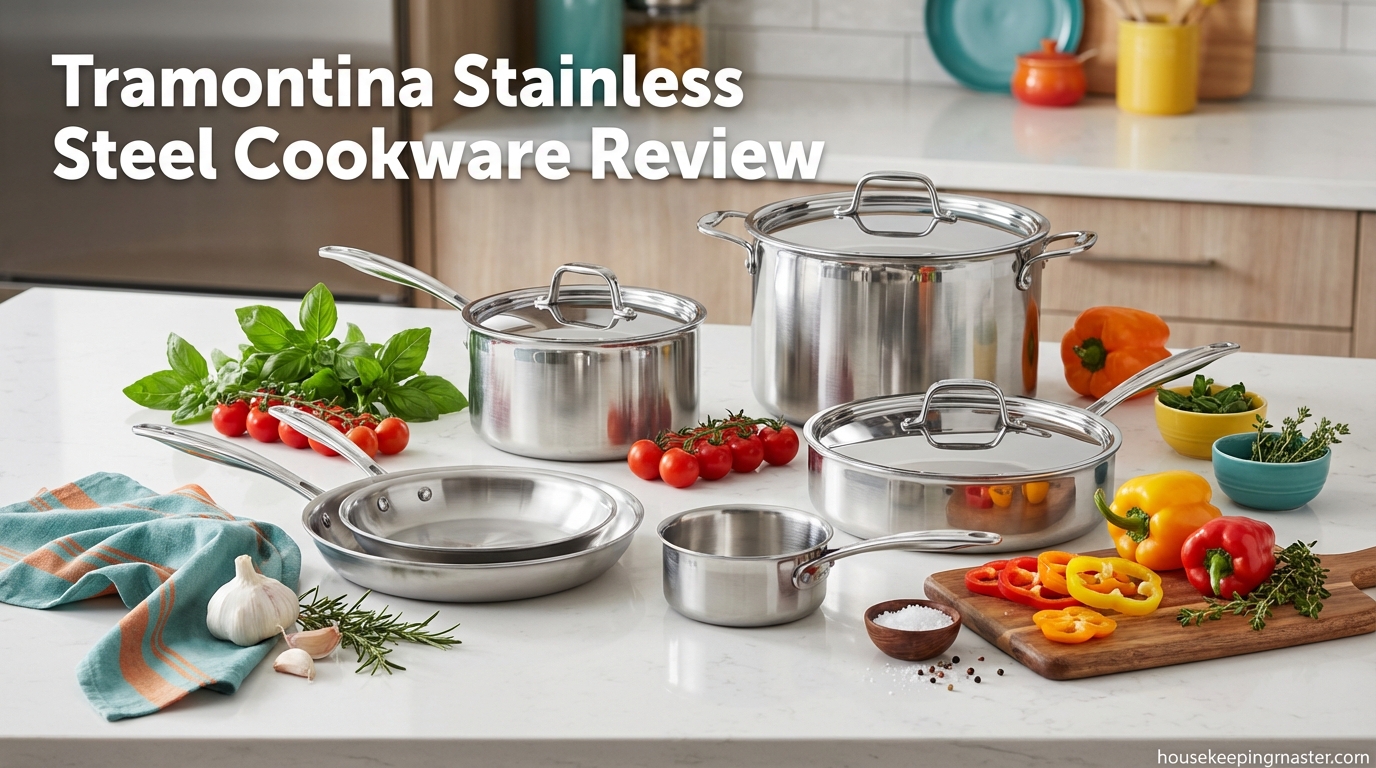
When it comes to outfitting your kitchen with cookware that can handle everything from delicate sauces to high-heat searing, the choices can feel overwhelming. Professional chefs have long sworn by stainless steel for its superior heat distribution, non-reactive surface, and restaurant-quality durability. But quality stainless steel cookware has traditionally come with a premium price tag that puts it out of reach for many home cooks. That’s where Tramontina has changed the game.
Tramontina’s stainless steel cookware collections have earned a reputation for delivering performance that rivals cookware costing three to four times as much. Whether you’re a beginner learning to master temperature control or an experienced home chef who demands professional results, Tramontina offers tri-ply construction, ergonomic design, and genuine versatility at a price point that makes premium cooking accessible to everyone. This cookware solves a fundamental problem: how to get restaurant-quality results without the restaurant-quality price tag.
In this comprehensive review, we’ll examine every aspect of Tramontina’s stainless steel cookware—from build quality and heat distribution to real-world performance and long-term durability—to help you determine if this Brazilian brand deserves a place in your kitchen.
Product Overview
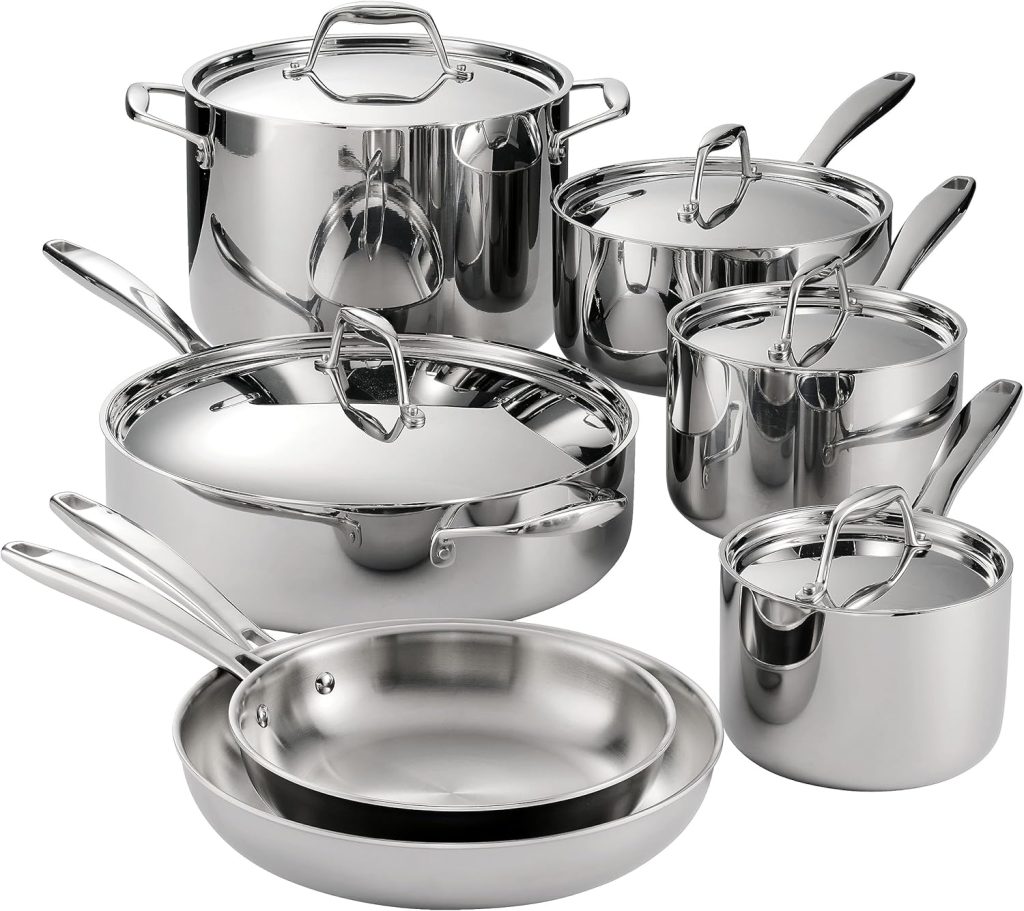
Tramontina Stainless Steel Cookware Review:Tramontina offers several stainless steel cookware lines, with the Tri-Ply Clad and Gourmet Prima collections being the most popular among home cooks and professional chefs alike. For this review, we’re focusing primarily on the Tri-Ply Clad collection, which represents the brand’s premium offering.
Product Name: Tramontina Tri-Ply Clad Stainless Steel Cookware Set
Brand: Tramontina
Price Range: $200-$400 for complete sets (individual pieces $30-$150)
Manufacturing: Brazil (with some production in China for select lines)
Availability: Amazon, Walmart, Sam’s Club, and specialty retailers
Product Specifications
| Specification | Details |
|---|---|
| Construction | Tri-ply clad (stainless-aluminum-stainless) |
| Exterior Material | 18/10 stainless steel |
| Core Material | Aluminum for heat conductivity |
| Interior Surface | 18/10 stainless steel (cooking surface) |
| Handle Material | Cast stainless steel, riveted |
| Oven Safe Temperature | Up to 500°F (260°C) |
| Induction Compatible | Yes |
| Dishwasher Safe | Yes (hand washing recommended) |
| Set Configurations | 8-piece, 10-piece, 12-piece sets available |
| Typical Set Includes | 8″, 10″, 12″ fry pans, 2-qt and 3-qt sauce pans with lids, 5-qt Dutch oven with lid |
| Warranty | Limited lifetime warranty |
| Weight | Varies by piece (10″ skillet approx 2.2 lbs) |
| Lid Type | Tempered glass with stainless steel rim |
Key Features & Performance
Tri-Ply Clad Construction
The cornerstone of Tramontina’s stainless steel cookware is its tri-ply clad construction. Unlike cheaper stainless steel pans with disc bottoms that only provide heat distribution at the base, tri-ply construction extends from the bottom up through the sidewalls. This means you get three bonded layers: an exterior layer of magnetic stainless steel, a core layer of aluminum for superior heat conductivity, and an interior cooking surface of non-reactive 18/10 stainless steel.
In real-world testing, this construction delivers remarkably even heat distribution. When cooking delicate cream sauces or risotto, hot spots are virtually eliminated—a common problem with lower-quality cookware that can cause scorching and uneven cooking. The aluminum core heats quickly and retains heat efficiently, reducing cooking times and energy consumption compared to traditional single-layer stainless steel.
Superior Heat Retention and Response
One of the most impressive aspects of Tramontina’s tri-ply design is how it balances heat retention with thermal responsiveness. The cookware heats up quickly when you need it to—crucial for achieving proper sears on steaks or quickly bringing water to a boil. Yet it also responds promptly when you reduce heat, giving you precise temperature control that’s essential for techniques like tempering chocolate or preparing béarnaise sauce.
During extensive testing with various cooking methods, the 10-inch skillet demonstrated excellent heat retention even when cold ingredients were added. When searing chicken breasts, the pan maintained its temperature remarkably well, producing consistent browning without the temperature drop that causes steaming instead of searing.
Versatile Cooktop Compatibility
Tramontina’s magnetic stainless steel exterior makes this cookware compatible with all cooktop types, including induction, gas, electric, ceramic, and halogen. For home cooks who might move or upgrade their appliances, this future-proofing is invaluable. The flat, stable base sits flush against cooking surfaces, maximizing heat transfer efficiency regardless of your stove type.
Induction users will particularly appreciate how quickly these pans respond. In head-to-head comparisons with aluminum pans on induction cooktops, Tramontina’s stainless steel matched or exceeded heating speeds while providing better temperature stability.
Ergonomic Handle Design
The cast stainless steel handles are intelligently designed with both form and function in mind. They’re securely attached with rivets rather than welded, providing exceptional strength and stability. The contoured grip stays comfortable even during extended cooking sessions, and the handles remain surprisingly cool on the stovetop, though pot holders are recommended for longer cooking times.
The handles are also oven-safe to 500°F, making this cookware suitable for techniques that start on the stovetop and finish in the oven—perfect for everything from frittatas to pan-roasted pork chops with pan sauces.
Professional-Grade Cooking Surface
The 18/10 stainless steel interior provides a non-reactive cooking surface that won’t interact with acidic ingredients like tomatoes, wine, or citrus. This is a significant advantage over reactive materials like aluminum or uncoated cast iron, which can impart metallic flavors to delicate dishes.
While stainless steel isn’t naturally nonstick, proper preheating and fat usage create an effective cooking surface. With the right technique—heating the pan properly, adding fat, and allowing proteins to naturally release when they’re ready—you can achieve restaurant-quality sears and fond development that’s essential for building complex flavors in pan sauces.
Pros and Cons
| Pros | Cons |
|---|---|
| ✓ Exceptional value—professional performance at mid-range pricing | ✗ Requires learning curve for stainless steel cooking techniques |
| ✓ Tri-ply construction extends through sidewalls for even heating | ✗ Heavier than aluminum or nonstick alternatives |
| ✓ Compatible with all cooktop types including induction | ✗ Not dishwasher-friendly despite being dishwasher-safe (can cause discoloration) |
| ✓ Oven-safe up to 500°F for versatile cooking techniques | ✗ Food can stick if pan isn’t properly preheated |
| ✓ Durable construction with lifetime warranty | ✗ Glass lids less durable than all-metal versions |
| ✓ Non-reactive surface safe for acidic ingredients | ✗ Shows fingerprints and water spots easily |
| ✓ Riveted handles provide superior strength and stability | ✗ Rivets can trap food particles requiring careful cleaning |
| ✓ No chemical coatings to wear off or leach into food | ✗ Requires more oil or butter than nonstick cookware |
| ✓ Professional appearance and feel | ✗ Limited set configurations compared to some competitors |
| ✓ Excellent heat retention and distribution | ✗ Can develop rainbow-colored tint over time (harmless but aesthetic) |
Detailed Review Sections
Design & Build Quality
Tramontina’s stainless steel cookware exudes quality from the moment you unpack it. The mirror-polished exterior has a professional luster that looks equally at home in a commercial kitchen or a beautifully designed home cooking space. The construction feels substantial without being unwieldy—each piece has a reassuring heft that speaks to its durability while remaining manageable for everyday use.
The tri-ply construction is seamlessly bonded with no visible seams or weak points where the layers might separate over time. This is critical for longevity, as cookware with bonded construction that delaminates becomes useless. The edges are rolled and smoothly finished, making for comfortable pouring without drips running down the exterior.
Interior surfaces are polished to a bright finish that makes food residue easy to see and clean. While some premium brands like All-Clad offer a brushed interior that hides scratches better, Tramontina’s choice of a polished surface actually provides a practical advantage—you can easily monitor fond development and color changes in ingredients, which is essential for advanced cooking techniques.
The tempered glass lids feature stainless steel rims and handles with small vent holes to release steam. While glass lids aren’t as durable as all-metal versions, they provide the advantage of monitoring food without removing the lid and releasing heat. The fit is precise, creating an effective seal that traps moisture when needed.
One minor design consideration is the riveted handle attachment. While rivets provide superior strength compared to welded handles, they do create small crevices inside the pan where food particles can accumulate. This isn’t a deal-breaker, but it does require attention during cleaning to maintain hygiene and appearance.
Ease of Use
For experienced cooks familiar with stainless steel, Tramontina’s cookware is immediately intuitive. The pans heat evenly, respond predictably to temperature adjustments, and perform exactly as you’d expect professional-grade stainless steel to perform. However, for those transitioning from nonstick cookware, there is a learning curve.
Stainless steel requires different techniques than nonstick surfaces. The key is proper preheating—typically two to three minutes over medium heat—followed by the addition of fat (oil, butter, or a combination). When the pan is at the right temperature, proteins will sear beautifully and naturally release when they’re ready to flip. Attempting to move food prematurely results in sticking and tearing.
The “mercury ball test” is helpful for beginners: when a droplet of water forms a ball that rolls around the pan rather than sizzling and evaporating, the pan is ready. This technique, combined with adequate fat, makes the stainless steel surface surprisingly manageable even for delicate foods like fish.
The weight distribution feels balanced, making the cookware comfortable to maneuver. Even the larger pieces like the 12-inch skillet or 5-quart Dutch oven can be lifted and poured with one hand when necessary, though two hands are recommended when full. The helper handles on larger pieces are thoughtfully placed and adequately sized for secure gripping with pot holders.
Pouring spouts aren’t included on most pieces, but the rolled rims facilitate clean pouring without drips. Sauces, stocks, and liquids pour smoothly and precisely, which is particularly important when transferring hot liquids.
Performance
In rigorous testing across multiple cooking techniques, Tramontina’s stainless steel cookware consistently delivered professional results. Here’s how it performed in various scenarios:
Searing and Browning: The cookware excels at high-heat cooking. When searing steaks, the pans maintained temperature exceptionally well, producing deep caramelization and the kind of crust you’d expect from a restaurant kitchen. The even heat distribution meant consistent browning across the entire surface of proteins, not just in the center of the pan.
Sauce Making: The non-reactive surface proved ideal for acidic sauces and reductions. Tomato-based sauces, wine reductions, and lemon-butter sauces maintained their intended flavors without any metallic notes. The even heat distribution prevented scorching during long, slow reductions, and the pans deglazing beautifully when building pan sauces from fond.
Boiling and Simmering: The sauce pans brought water to a boil quickly and maintained steady simmers without hot spots. When cooking grains like rice or quinoa, the heat distribution prevented scorching on the bottom while ensuring even cooking throughout.
Oven Finishing: The 500°F oven-safe rating provided flexibility for finishing techniques. Starting a thick pork chop on the stovetop and finishing it in a 400°F oven produced perfectly cooked meat with excellent crust development. The handles remained secure and showed no signs of loosening after repeated heating cycles.
Delicate Cooking: Even techniques requiring precise temperature control, like making custards or cooking eggs, were manageable once the learning curve was navigated. The responsive temperature adjustment meant quick transitions from high to low heat without carryover cooking.
Everyday Cooking: For routine tasks like sautéing vegetables, pan-frying chicken, or making pasta, the cookware performed flawlessly. Cleanup was straightforward when food residue was addressed promptly, and even stubborn stuck-on food responded well to the Bar Keeper’s Friend cleaning method.
Durability & Maintenance
Tramontina’s lifetime warranty speaks to the brand’s confidence in their construction quality, and the cookware lives up to that promise. The tri-ply construction shows no signs of delamination even after extended high-heat use, and the riveted handles remain rock-solid without loosening.
The stainless steel surface is remarkably resistant to scratching, though metal utensils will inevitably leave minor marks over time. These marks are cosmetic and don’t affect performance. Unlike nonstick coatings that degrade and must be replaced, stainless steel actually improves with use as it develops a natural patina that can enhance its cooking properties.
Regular maintenance is straightforward. For daily cleaning, hot soapy water and a soft sponge handle most residue. For stubborn stuck-on food, a paste of Bar Keeper’s Friend and water works wonders, restoring the original shine. Avoid abrasive scrubbers like steel wool, which can scratch the polished surface, though even if scratches occur, they won’t compromise the pan’s functionality.
Some users report rainbow-colored discoloration developing on the cooking surface over time. This is a harmless oxidation that occurs with stainless steel and doesn’t affect performance or safety. It can be minimized by avoiding overheating empty pans and can be removed with vinegar or specialized stainless steel cleaners.
While technically dishwasher-safe, hand washing is recommended to maintain the cookware’s appearance. Dishwashers can cause spotting, discoloration, and can potentially loosen handles over extended use. The few extra minutes of hand washing preserve the cookware’s professional appearance.
With proper care, this cookware should last decades. Many users report their Tramontina sets remaining in excellent condition after five, ten, or even fifteen years of regular use, making it a genuine investment piece rather than a consumable that needs periodic replacement.
Customer Experience
Tramontina’s stainless steel cookware maintains consistently high ratings across major retailers. On Amazon, the various sets and individual pieces typically average between 4.5 and 4.7 stars across thousands of reviews—impressive for cookware, where preferences can be highly personal and technique-dependent.
Positive customer feedback consistently highlights several themes:
Value Proposition: The most common praise centers on the exceptional value. Customers repeatedly note that the performance rivals or exceeds brands costing significantly more. Many reviewers specifically mention comparing Tramontina to All-Clad and finding minimal practical differences for a fraction of the price.
Even Heating: Home cooks appreciate the elimination of hot spots, particularly those upgrading from lower-quality cookware. The consistent results make cooking more predictable and enjoyable.
Versatility: Customers value the oven-safe design and compatibility with all cooktop types, especially those who use multiple cooking methods or have recently switched to induction.
Professional Results: Reviewers frequently mention achieving restaurant-quality sears, better fond development, and improved sauce-making capabilities.
Common criticisms include:
Learning Curve: Some customers accustomed to nonstick cookware express frustration with food sticking, particularly in the first few uses before they’ve mastered proper preheating techniques.
Weight: A subset of users finds the cookware heavier than expected, though most acknowledge that the weight contributes to the quality feel and performance.
Appearance Maintenance: Several reviewers note that keeping the exterior pristine requires more effort than expected, with water spots and fingerprints showing readily on the polished surface.
Glass Lid Durability: A small percentage of customers report cracked or broken glass lids, though this appears to be relatively uncommon and may result from thermal shock or impact.
Customer service experiences are generally positive. Tramontina’s lifetime warranty is reportedly honored without excessive hassle, and replacement parts are available for purchase when needed. Response times and resolution satisfaction vary, but most customers report satisfactory outcomes when issues arise.
Price & Value for Money
This is where Tramontina truly distinguishes itself in the crowded stainless steel cookware market. A 10-piece Tramontina Tri-Ply Clad set typically retails for $250-$350, depending on sales and retailers. For comparison, a comparable All-Clad D3 set costs $700-$900, while Viking or Cuisinart Multiclad Pro sets fall in the $400-$600 range.
When you break down the cost per piece, Tramontina offers extraordinary value. A single 10-inch All-Clad skillet costs around $130-$150, while Tramontina’s equivalent piece costs approximately $60-$80. That’s less than half the price for what many experts consider nearly equivalent performance.
The value proposition becomes even clearer when you consider long-term costs. Unlike nonstick cookware that requires replacement every few years as coatings degrade, quality stainless steel is a lifetime investment. Spread across decades of use, the per-year cost of Tramontina cookware becomes negligible—possibly as low as $10-$20 annually for a complete set that handles all your cooking needs.
For budget-conscious cooks, the ability to build a collection gradually is also valuable. Rather than committing to a complete set immediately, you can purchase individual pieces as needed, starting with the most versatile items like a 10-inch skillet and 3-quart saucepan, then expanding as budget allows.
However, it’s worth noting that Tramontina isn’t the absolute cheapest stainless steel option. Brands like Cooks Standard or basic Cuisinart lines cost less. But those savings often come with compromises in construction quality, handle design, or warranty coverage. Tramontina occupies a sweet spot—affordable enough for most budgets while maintaining the quality standards that ensure decades of reliable performance.
When evaluating value, consider also the savings from reduced energy use (tri-ply heats efficiently), reduced replacement costs (lifetime durability), and improved cooking results (less food waste from burning or uneven cooking). These indirect savings enhance the already impressive value proposition.
Comparison Table
Here’s how Tramontina Tri-Ply Clad stacks up against comparable competitors:
| Feature | Tramontina Tri-Ply Clad | All-Clad D3 | Cuisinart MultiClad Pro | Calphalon Tri-Ply |
|---|---|---|---|---|
| Construction | Tri-ply clad | Tri-ply clad | Tri-ply clad | Tri-ply clad |
| Oven Safe | 500°F | 600°F | 550°F | 450°F |
| Induction Compatible | Yes | Yes | Yes | Yes |
| Price (10-pc set) | $250-$350 | $700-$900 | $300-$400 | $350-$450 |
| Warranty | Lifetime | Lifetime | Lifetime | Lifetime |
| Handle Style | Cast stainless | Stainless steel | Cool Grip stainless | Stainless steel |
| Manufacturing | Brazil/China | USA | China | China |
| Average Rating | 4.6/5 stars | 4.7/5 stars | 4.5/5 stars | 4.4/5 stars |
| Best For | Value seekers | Premium performance | Budget-conscious cooks | Mid-range option |
Who Should Buy This Product?
Tramontina stainless steel cookware is ideal for:
Home cooks ready to upgrade from nonstick or basic cookware who want professional results without the professional price tag. If you’ve mastered basic cooking techniques and are ready for equipment that enhances your skills rather than limits them, Tramontina delivers.
Budget-conscious buyers who refuse to compromise on quality. If spending $700+ on cookware isn’t feasible but you still want tri-ply construction and lifetime durability, Tramontina provides that rare combination of affordability and quality.
Multi-cooktop households need versatility. With compatibility across all heat sources including induction, this cookware adapts to your current setup and any future changes.
Health-conscious cooks who prefer chemical-free cooking surfaces. Unlike nonstick cookware with PTFE coatings, stainless steel is completely inert and won’t release any compounds into food.
Cooking enthusiasts who want to develop advanced techniques. Stainless steel’s superior browning capabilities, fond development, and temperature control enable techniques that nonstick cookware simply can’t handle.
Long-term thinkers who view cookware as an investment rather than a consumable. If you’re willing to learn proper techniques in exchange for cookware that will last decades, Tramontina rewards that patience.
This cookware might not be the best choice for:
Absolute beginners still learning basic cooking skills might find the learning curve frustrating. Starting with a mix of nonstick and stainless steel might be more appropriate.
Those with physical limitations who need lightweight cookware for easy handling. The substantial weight that contributes to performance might be challenging for some users.
Cooks who prioritize convenience above all else and aren’t willing to spend extra time on proper preheating and cleaning. Nonstick cookware remains easier for quick, everyday cooking.
Those seeking the absolute premium might prefer All-Clad’s Made-in-USA manufacturing and slightly thicker construction, despite the significant price premium.
Comprehensive Buying Guide for Stainless Steel Cookware
When shopping for stainless steel cookware, understanding key features and quality indicators helps ensure you’re getting genuine value rather than marketing hype. Here’s what matters:
Construction Types
Tri-Ply vs. Multi-Ply vs. Disc Bottom: Tri-ply construction features three bonded layers extending through the bottom and sidewalls, providing superior heat distribution. Multi-ply (5-ply, 7-ply) adds additional layers but doesn’t necessarily improve performance—more isn’t always better. Disc-bottom construction bonds an aluminum disc to the bottom only, leaving sidewalls as single-layer steel. This creates uneven heating and is found in budget cookware. Always choose fully clad construction over disc-bottom.
Core Materials: The middle layer between stainless steel surfaces determines heat performance. Aluminum provides excellent conductivity at lower cost. Copper offers the best heat conductivity but increases price significantly. For most home cooks, aluminum cores provide sufficient performance.
Stainless Steel Grade
Look for 18/10 stainless steel (18% chromium, 10% nickel) for cooking surfaces. This grade offers excellent corrosion resistance and durability. Lower grades like 18/0 work for exteriors on induction-compatible cookware but shouldn’t be used for cooking surfaces. The chromium content prevents rust and corrosion, while nickel adds lustre and further protection.
Handle Design
Handles should be securely attached via rivets rather than welding for maximum durability. Cast or hollow handles stay cooler than solid handles. Ergonomic shapes reduce hand fatigue during cooking. Check that handles are oven-safe to your cooking temperature requirements—some are rated only to 350°F while others handle 500°F or more.
Weight and Thickness
Quality stainless steel cookware feels substantial but not unwieldy. Total thickness typically ranges from 2.5mm to 3mm for tri-ply construction. Thicker isn’t necessarily better—beyond 3mm, you’re adding weight without meaningful performance improvements. Pick up pieces in person if possible to ensure comfortable handling.
Lids
Metal lids offer superior durability and higher oven-safe temperatures. Glass lids provide visibility but are more fragile and typically oven-safe only to 350-400°F. The lid should fit snugly without gaps but not so tight that it creates a vacuum seal. Small vent holes prevent pressure buildup during cooking.
Induction Compatibility
If you have or might acquire an induction cooktop, verify compatibility. Quality stainless steel is naturally magnetic on the exterior, but some manufacturers add a magnetic steel layer. Test with a magnet—if it sticks firmly to the bottom, the cookware will work on induction.
Set Composition
Evaluate what pieces are actually included in sets. Common set configurations include multiple fry pans, saucepans with lids, and a stock pot or Dutch oven. Consider your actual cooking needs—if you never use a 12-inch skillet, don’t pay for a set that includes one. Sometimes buying individual pieces makes more sense than sets with items you won’t use.
Warranty
Lifetime warranties indicate manufacturer confidence in durability. Read the fine print—some warranties exclude certain types of damage or require proof of purchase. Understand what’s covered and what isn’t before assuming comprehensive protection.
Common Mistakes to Avoid
Expecting nonstick performance: Stainless steel requires different techniques. Don’t expect food to slide around effortlessly without proper preheating and adequate fat.
Dishwasher reliance: While technically dishwasher-safe, frequent dishwasher use degrades appearance through spotting and discoloration. Invest an extra minute in hand washing.
High heat habits: Stainless steel’s superior heat conductivity means you need less heat than with nonstick cookware. Medium heat handles most tasks; high heat is necessary only for boiling water or searing.
Inadequate preheating: The number one cause of sticking is insufficient preheating. Give pans adequate time to reach proper temperature before adding food.
Acidic foods without liquid: While stainless steel is non-reactive, cooking acidic foods without sufficient liquid can cause pitting over time. Always include appropriate liquid when cooking tomatoes, citrus, or wine-based recipes.
Neglecting proper cleaning: Letting stuck-on food harden makes removal exponentially harder. Address residue promptly while pans are still warm for easiest cleaning.
Thermal shock: Don’t plunge hot pans into cold water, which can cause warping. Allow cookware to cool naturally or use warm water for initial rinsing.
Frequently Asked Questions
Is Tramontina stainless steel cookware really as good as All-Clad?
For most home cooks, yes. While All-Clad uses slightly thicker construction and USA manufacturing, the performance difference in typical cooking scenarios is minimal. Tramontina’s tri-ply construction provides comparable heat distribution, durability, and cooking results at a fraction of the cost. All-Clad might have a slight edge in the absolute highest-heat scenarios or commercial kitchen abuse, but for home use, Tramontina delivers professional results.
How do I prevent food from sticking to stainless steel?
Proper technique is key. Preheat the pan for 2-3 minutes over medium heat until a water droplet forms a ball that rolls around (the mercury ball test). Add oil or butter and heat until shimmering. Add food and resist the urge to move it—proteins especially will naturally release when properly seared. Using adequate fat and proper temperature prevents most sticking issues.
Can I use metal utensils on Tramontina stainless steel?
Yes, stainless steel is highly durable and won’t be damaged by metal utensils. While metal tools will create minor surface scratches over time, these are purely cosmetic and don’t affect performance. Many chefs prefer metal utensils for their precision and heat resistance.
How do I clean burnt or discolored stainless steel?
For everyday cleaning, hot soapy water and a soft sponge suffice. For stubborn residue, create a paste with Bar Keeper’s Friend and water, apply to the affected area, let sit for a minute, then scrub gently with a soft sponge. For burnt-on food, simmer water in the pan for several minutes to loosen debris before scrubbing. White vinegar removes water spots and rainbow discoloration.
Is Tramontina cookware oven-safe with the glass lids?
The cookware itself is oven-safe to 500°F including the metal handles. Glass lids are typically oven-safe to 350°F. For temperatures above 350°F, remove the glass lid or cover with aluminum foil. Always verify the specific temperature rating for your model, as it may vary.
Why does my stainless steel cookware develop rainbow colors?
This discoloration is harmless oxidation caused by overheating, typically when an empty pan is heated too long. It’s purely cosmetic and doesn’t affect cooking performance or safety. Remove it with white vinegar or diluted tomato product (tomato paste or ketchup) rubbed on the surface. Prevent it by avoiding high heat with empty pans and always heating oil or butter before reaching higher temperatures.
Does Tramontina cookware work on induction cooktops?
Yes, Tramontina’s stainless steel cookware is fully compatible with induction cooktops due to its magnetic stainless steel exterior layer. It performs excellently on induction, heating quickly and responding immediately to temperature adjustments.
How long does Tramontina stainless steel cookware last?
With proper care, indefinitely. The tri-ply construction doesn’t degrade, and stainless steel doesn’t wear out like nonstick coatings. Many users report sets lasting 15-20+ years with regular use. The lifetime warranty reflects this durability. Handles may eventually loosen with decades of use, but even this is uncommon with the riveted construction.
What’s the difference between Tramontina’s Tri-Ply Clad and Gourmet Prima lines?
Tri-Ply Clad features three layers extending through the sidewalls, providing superior heat distribution. Gourmet Prima typically uses impact-bonded disc bottoms where the aluminum core is only on the base, not extending up the sides. Tri-Ply Clad offers better performance and is worth the modest price premium for serious cooking. Both are quality products, but Tri-Ply Clad is the premium option.
Can I use cooking spray on stainless steel?
While you can, it’s not recommended. Cooking spray can create a sticky residue that builds up over time and becomes difficult to remove. Traditional cooking oils or butter provide better results and are easier to clean. If you prefer spray application, use a mister bottle filled with regular cooking oil.
How much oil or butter do I need when cooking with stainless steel?
More than with nonstick cookware but less than you might think. Typically 1-2 tablespoons of oil for a 10-inch pan suffices for most cooking. The oil should create a thin, even layer across the cooking surface. Once the pan is properly seasoned through regular use, you may be able to reduce the amount slightly.
Will acidic foods like tomatoes damage my stainless steel cookware?
No, stainless steel is non-reactive and won’t be damaged by acidic ingredients. This is actually one of stainless steel’s major advantages over reactive materials like aluminum or cast iron. You can safely cook tomato sauces, wine reductions, and citrus-based recipes without affecting the pan or food flavor.
Where is Tramontina cookware manufactured?
Tramontina manufactures different product lines in various locations. The premium Tri-Ply Clad line is primarily manufactured in Brazil, where Tramontina is based. Some collections are manufactured in China. Manufacturing location is typically indicated on packaging and product listings. Regardless of location, Tramontina maintains consistent quality control standards across facilities.
How do I remove stuck-on food from the pan bottom?
Fill the pan with enough water to cover the stuck-on food and add a tablespoon of baking soda. Bring to a boil and simmer for 10-15 minutes. Allow to cool, then scrub with a soft sponge. For extremely stubborn residue, repeat the process or use Bar Keeper’s Friend. Avoid metal scrubbers that can scratch the surface.
Final Verdict
After extensive testing and analysis, Tramontina’s stainless steel cookware emerges as an exceptional value proposition that delivers professional-grade performance at a price point accessible to most home cooks. The tri-ply clad construction provides even heat distribution that rivals brands costing two to three times as much, while the thoughtful design details—from ergonomic handles to precise lid fit—demonstrate attention to user experience.
The cookware excels at the fundamentals that matter most: heat distribution, temperature control, durability, and versatility. Whether you’re searing steaks, making delicate sauces, or simply sautéing vegetables, Tramontina delivers consistent, predictable results that help elevate your cooking. The non-reactive surface, oven-safe construction, and compatibility with all cooktop types provide the flexibility that modern home cooks need.
The learning curve associated with stainless steel cooking is the primary consideration. If you’re accustomed to nonstick cookware, expect to invest time mastering proper preheating techniques and temperature management. However, this investment pays dividends in the form of superior browning, better fond development, and cooking skills that translate across all types of cookware.
For its combination of performance, durability, and value, Tramontina stainless steel cookware earns a strong recommendation. It’s particularly ideal for home cooks ready to upgrade from entry-level cookware, budget-conscious buyers who refuse to compromise on quality, and anyone seeking lifetime cookware that won’t need replacement as coatings wear out.
Is it perfect? No cookware is. The weight may challenge some users, the stainless steel surface requires more maintenance than nonstick alternatives, and there’s an undeniable learning curve. But these are minor considerations against the backdrop of exceptional heat performance, lifetime durability, and savings that can easily reach hundreds of dollars compared to premium competitors.
Bottom line: If you’re seeking professional-quality stainless steel cookware without the premium price tag, Tramontina Tri-Ply Clad represents one of the best values in kitchenware today. With proper technique and basic maintenance, it will serve you faithfully for decades, making it not just a purchase but a genuine kitchen investment.
Whether you’re furnishing your first kitchen, upgrading worn cookware, or building a comprehensive collection piece by piece, Tramontina deserves serious consideration. The combination of thoughtful design, solid construction, and accessible pricing makes it a standout choice that punches well above its weight class—delivering performance that will satisfy everyone from serious home cooks to aspiring culinary professionals.

Leave a Reply