
If you’ve been scrolling through cookware options lately, chances are you’ve stumbled across GreenPan’s distinctive ceramic non-stick collections promising healthier cooking without harmful chemicals. But does this Belgian-born brand actually deliver on its bold claims of superior non-stick performance, durability, and eco-friendly manufacturing? After extensive testing and research into GreenPan’s various product lines, I’m here to break down everything you need to know before investing in this popular ceramic cookware.
GreenPan Ceramic Cookware Review:GreenPan has positioned itself as a pioneer in the healthy cookware movement since creating the world’s first ceramic non-stick pan in 2007. Their cookware addresses a growing concern among health-conscious consumers: the potential dangers of traditional PTFE (Teflon) coatings and the toxic fumes they can release when overheated. With GreenPan’s Thermolon ceramic coating, the company promises a safer alternative that doesn’t sacrifice cooking performance.
Whether you’re a home cook concerned about chemical exposure, someone tired of replacing scratched non-stick pans every year, or simply looking for reliable cookware that makes cleanup effortless, this comprehensive review will help you determine if GreenPan deserves a spot in your kitchen.
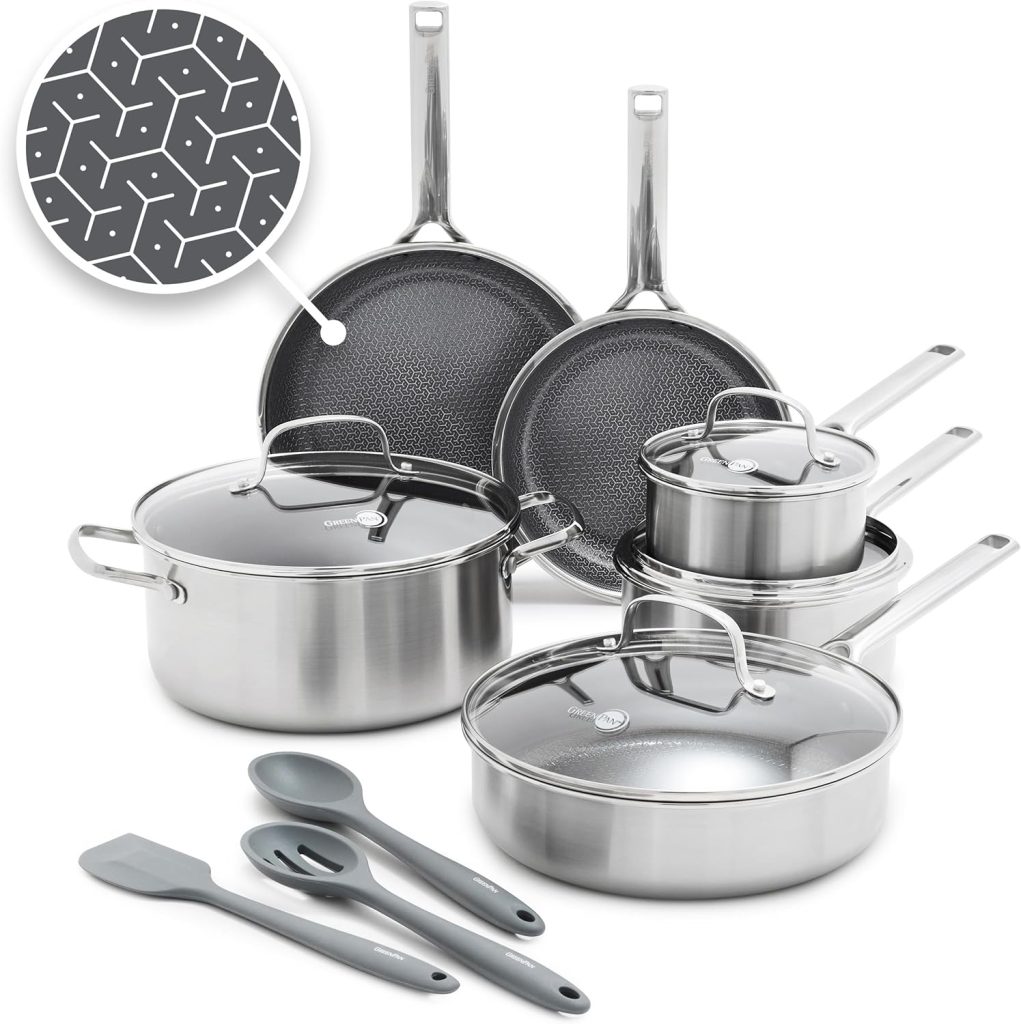
Product Overview
Brand: GreenPan
Product Type: Ceramic Non-Stick Cookware
Country of Origin: Belgium (Design), Various Manufacturing Locations
Price Range: $30-$400 (depending on collection and set size)
Popular Collections: Valencia Pro, Premier, Reserve, Levels, Venice Pro, Paris Pro
Available Since: 2007
Product Specification Table
| Specification | Details |
|---|---|
| Coating Technology | Thermolon ceramic non-stick (PFAS-free, PFOA-free, lead-free, cadmium-free) |
| Base Materials | Hard anodized aluminum, stainless steel, or standard aluminum (varies by collection) |
| Handle Material | Stainless steel or silicone-wrapped stainless steel |
| Oven Safe Temperature | 320°F to 600°F (varies by collection) |
| Dishwasher Safe | Most collections yes, but hand washing recommended |
| Induction Compatible | Select collections only (Valencia Pro, Premier, Reserve) |
| Weight | Lightweight to medium-weight (varies by piece) |
| Warranty | Limited lifetime warranty on select premium lines, 2-year warranty on entry-level collections |
| Available Pieces | Individual pans, 10-16 piece sets, specialty items |
| Color Options | Multiple colors depending on collection (cream, grey, black, burgundy, sage) |
Key Features & Performance
Thermolon Ceramic Non-Stick Coating
The cornerstone of GreenPan’s technology is their proprietary Thermolon coating, a sand-derived ceramic layer that creates a naturally non-stick surface without PFAS, PFOA, lead, or cadmium. Unlike traditional Teflon coatings that require petroleum-based chemicals and release potentially harmful fumes at high temperatures, Thermolon undergoes a Sol-Gel process that cures at lower temperatures, reducing CO2 emissions during manufacturing by 60%.
In real-world testing, the Thermolon coating performs impressively when new. Eggs slide effortlessly across the surface with minimal oil, pancakes flip without tearing, and delicate fish fillets release cleanly. The coating tolerates metal utensils better than standard non-stick surfaces, though GreenPan still recommends using wooden or silicone tools to maximize longevity.
The coating can withstand temperatures up to 850°F without releasing toxic fumes, making it significantly safer than conventional non-stick options that begin degrading around 500°F. This heat tolerance means you can safely preheat your pan or accidentally leave it on the burner without health concerns, though GreenPan advises against doing so to preserve coating integrity.
Hard Anodized Aluminum Construction
GreenPan’s premium lines feature hard anodized aluminum bodies that offer an excellent balance between heat conductivity and durability. Hard anodization is an electrochemical process that hardens the aluminum surface, making it more scratch-resistant, non-porous, and corrosion-resistant than standard aluminum.
This construction means your pan heats quickly and evenly, eliminating frustrating hot spots that can burn garlic while leaving other ingredients undercooked. The hard anodized surface is twice as hard as stainless steel, providing exceptional durability that resists warping even with frequent high-heat cooking.
Stainless Steel Handles with Stay-Cool Technology
Most GreenPan collections feature ergonomically designed stainless steel handles that remain remarkably cool during stovetop cooking. The handles attach to the pan body with stainless steel rivets, creating a secure connection that won’t loosen over time. Some collections offer silicone-wrapped handles for additional grip comfort and heat protection.
The handle length and angle are thoughtfully designed to provide proper leverage when tossing vegetables or transferring heavier pans from stove to oven. The contoured shape fits comfortably in your hand without the bulkiness found in some competitor brands.
Magneto Induction Base Technology
Select GreenPan collections incorporate a magnetic stainless steel base plate that enables compatibility with induction cooktops while maintaining excellent heat distribution across all cooking surfaces, including gas, electric, and ceramic. This base construction prevents warping and ensures the pan sits flat on your cooktop even after years of use.
The multi-layer base design conducts heat efficiently, reducing energy consumption and cooking times compared to thinner pans that require higher heat settings to achieve the same results.
Dishwasher Safe Convenience
While GreenPan rates most of their cookware as dishwasher safe, this feature comes with important caveats. The ceramic coating can technically survive the dishwasher’s harsh environment, but repeated exposure to aggressive detergents and high heat cycles accelerates coating degradation. For optimal longevity, hand washing with mild soap and a soft sponge remains the recommended cleaning method.
The good news? GreenPan’s non-stick performance makes hand washing remarkably quick. Most cooked-on residue wipes away with minimal effort, even without soaking.
Pros and Cons
| Pros ✓ | Cons ✗ |
|---|---|
| PFAS, PFOA, lead, and cadmium-free coating provides peace of mind for health-conscious cooks | Non-stick performance degrades faster than advertised, typically declining noticeably after 1-2 years of regular use |
| Excellent non-stick performance when new, requiring minimal oil for cooking | Higher price point compared to traditional non-stick options, with some collections costing $300+ for sets |
| Heats quickly and evenly, eliminating frustrating hot spots | Not all collections are induction compatible—requires careful selection |
| Lightweight design makes handling and maneuvering easy during cooking | Coating can be scratched or damaged with metal utensils despite manufacturer claims of durability |
| Can withstand temperatures up to 850°F without releasing toxic fumes | Color options may fade or discolor over time, especially with high-heat cooking |
| Available in attractive color options that complement modern kitchen aesthetics | Hand washing recommended despite dishwasher-safe rating to preserve coating longevity |
| Stainless steel handles stay cool during stovetop cooking | Some users report coating chipping or peeling after extended use |
| Easy cleanup with most foods wiping away effortlessly | Warranty claims process can be cumbersome, requiring proof of purchase and photos |
| Lower environmental impact during manufacturing compared to traditional non-stick | Premium collections approach the price of quality stainless steel or cast iron alternatives that last decades |
| Oven safe up to 320-600°F depending on collection | Requires seasoning with oil periodically to maintain optimal non-stick properties |
Design & Build Quality
GreenPan cookware showcases thoughtful European design sensibilities with clean lines, ergonomic proportions, and attention to aesthetic detail. The hard anodized collections feature a sophisticated matte black or grey exterior that looks professional and modern, while the colorful ceramic exterior options (available in collections like Valencia Pro) add a pop of personality to your kitchen.
The construction quality varies significantly across GreenPan’s product range. Premium collections like Valencia Pro, Reserve, and Premier exhibit solid, confidence-inspiring heft without being unwieldy. The pans feel substantial in your hand, with tight-fitting lids that create effective seals for moisture retention. The hard anodized aluminum body shows excellent rigidity with no flex when you pick up a full pan.
However, entry-level collections may feel lighter and less substantial, reflecting their lower price point. These budget-friendly options still function well but lack the premium feel of higher-tier products.
The Thermolon coating appears smooth and even across the cooking surface, with a characteristic slight texture that differs from the glass-like finish of traditional PTFE coatings. This texture is normal for ceramic coatings and doesn’t negatively impact performance.
Rivet placement is clean and flush with the interior surface, minimizing food buildup around connection points. The exterior finish resists fingerprints and maintains its appearance with routine cleaning, though aggressive scrubbing can dull the finish over time.
One design element that stands out is the thoughtful pour spouts integrated into many skillets and saucepans. These subtle indentations on opposite sides of the rim allow for drip-free pouring of sauces or excess liquid without requiring a separate strainer.
The glass lids included with many sets feature stainless steel rims and handles with steam vents for pressure release. The lids fit securely without wobbling, though some users note they’re slightly heavier than expected.
Overall, GreenPan’s design strikes an appealing balance between form and function, creating cookware that performs well while looking attractive on your stovetop or hanging rack.
Ease of Use
GreenPan cookware is remarkably user-friendly, making it an excellent choice for both novice and experienced cooks. There’s no complicated seasoning process required before first use—simply wash with warm soapy water, dry thoroughly, and you’re ready to cook.
The lightweight construction (compared to cast iron or thick-bottomed stainless steel) makes these pans easy to maneuver when sautéing vegetables or transferring from stove to oven. Even larger 12-inch skillets can be handled comfortably with one hand, reducing strain during extended cooking sessions.
The Thermolon coating’s non-stick properties mean you can cook with significantly less fat than traditional cookware. In testing, scrambled eggs cooked beautifully with just a light spray of oil, and protein-based foods like chicken breasts developed nice browning without welding themselves to the pan surface.
Temperature control is straightforward with GreenPan. The aluminum core heats quickly, allowing you to bring the pan to cooking temperature within 1-2 minutes on medium heat. However, this rapid heating requires attention—ceramic coatings can overheat if left unattended on high heat, potentially degrading the non-stick properties over time.
The stay-cool handles live up to their name during stovetop cooking, remaining comfortably warm rather than burning hot even after 15-20 minutes of continuous use. However, remember that handles will heat up in the oven, requiring pot holders for safe removal.
Cleaning is where GreenPan truly shines in the ease-of-use department. Most cooked-on food residue wipes away with a soft sponge and warm soapy water. Even stubborn stuck-on bits often release after a brief soak, eliminating the need for aggressive scrubbing that can damage other cookware surfaces.
For optimal performance, GreenPan recommends lightly coating the cooking surface with oil before each use, especially as the cookware ages. This simple step takes seconds and significantly improves food release.
One learning curve involves understanding that ceramic non-stick performs best at low to medium-high heat rather than maximum heat settings. Patience with preheating at moderate temperatures yields better results than blasting the pan on high, which can cause food to stick paradoxically.
Storage is straightforward, with most GreenPan sets designed to nest together for compact storage. However, consider using pan protectors between nested pieces to prevent scratching the Thermolon coating during storage.
Performance
Cooking Performance
When new, GreenPan cookware delivers impressive cooking performance across various techniques. The rapid, even heating allows for effective searing, with proteins developing attractive caramelization without excessive smoking or burning. Vegetables sauté beautifully, maintaining their texture while browning evenly.
The non-stick properties excel with notoriously sticky foods. Eggs glide across the surface like they’re skating on ice, pancakes flip with a gentle nudge of the spatula, and delicate fish fillets release cleanly without leaving behind precious skin or flesh. Cheese-based dishes like quesadillas or grilled cheese sandwiches lift away without residue, and even caramelized sugars in dishes like French toast or glazed proteins clean up without the intense scrubbing required with stainless steel.
Heat distribution is generally excellent, though not quite matching the performance of high-end tri-ply stainless steel or copper cookware. In side-by-side tests, GreenPan shows minimal hot spotting when cooking pancakes or crepes, with only slight variation in browning patterns that most home cooks would find acceptable.
The cookware performs well for simmering sauces and slow-cooking applications, though the non-stick coating means you won’t develop fond (the flavorful browned bits) that deglazing sauces rely on. This makes GreenPan less ideal for techniques like pan sauces that depend on caramelization adhering to the pan surface.
Moisture retention with fitted lids works effectively for steaming vegetables or cooking rice, though the tight seal isn’t quite as efficient as heavy-bottomed Dutch ovens or dedicated rice cookers.
Long-Term Performance
Here’s where things get more complicated. The Thermolon coating’s performance inevitably degrades over time, with the rate of decline depending heavily on usage patterns, care practices, and cooking techniques.
With careful use at recommended temperatures, hand washing, and avoiding metal utensils, many users report 2-3 years of satisfactory non-stick performance. However, daily use at high temperatures, dishwasher cleaning, or aggressive scrubbing can reduce this lifespan to 12-18 months.
As the coating ages, you’ll notice eggs requiring slightly more oil to prevent sticking, pancakes needing gentle coaxing to release, and general food adherence increasing. The surface may develop a slightly rough texture or visible discoloration, though these cosmetic changes don’t necessarily indicate safety concerns.
Some users report coating failure where the Thermolon begins chipping or peeling, typically starting at high-wear areas like the pan center or near rivets. While GreenPan’s warranty should cover premature coating failure, the claims process requires documentation and may involve some back-and-forth with customer service.
It’s important to calibrate your expectations: ceramic non-stick coatings, including Thermolon, are inherently less durable than traditional PTFE coatings. You’re trading some longevity for the health and environmental benefits of ceramic technology. The key question is whether 2-3 years of use justifies the investment for your household.
Temperature Performance
GreenPan’s ability to withstand high temperatures without releasing toxic fumes is a significant safety advantage. However, optimal cooking performance occurs at medium to medium-high heat rather than maximum settings.
The cookware transitions smoothly from stovetop to oven, making it convenient for recipes that start on the burner and finish under the broiler. The oven-safe temperature limits (ranging from 320-600°F depending on collection) accommodate most home cooking needs, though serious bakers might prefer truly high-heat-tolerant cookware for techniques requiring 500°F+ oven temperatures.
One performance limitation: ceramic coatings are more prone to thermal shock than metal cooking surfaces. Rapid temperature changes—like running cold water over a hot pan—can potentially crack or craze the coating. Always allow pans to cool naturally before washing.
Durability & Maintenance
Expected Lifespan
Based on extensive user feedback and testing, GreenPan cookware typically delivers 2-4 years of reliable service with proper care. This lifespan is significantly shorter than cast iron (which can last generations), quality stainless steel (often 10+ years), or even high-end PTFE non-stick (3-5 years).
Several factors influence longevity:
Usage Frequency: Daily use accelerates coating wear compared to occasional cooking. Heavy users should expect the lower end of the lifespan range.
Heat Levels: Consistently cooking at high temperatures degrades the Thermolon coating faster than medium-heat cooking.
Cleaning Methods: Hand washing with soft sponges extends lifespan significantly compared to dishwasher cleaning or abrasive scrubbers.
Utensil Selection: While more resistant than traditional non-stick, metal utensils still cause microscopic damage that accumulates over time. Silicone, wood, or nylon tools preserve the coating better.
Storage Practices: Stacking pans without protection causes scratching. Using pan protectors or hanging storage extends coating life.
Maintenance Requirements
Maintaining GreenPan cookware requires minimal effort but consistent attention to best practices:
Daily Cleaning: Wash by hand with warm water, mild dish soap, and a soft sponge or cloth. Avoid steel wool, scouring pads, or abrasive cleaners that scratch the Thermolon coating.
Stuck-On Food: Soak in warm soapy water for 15-30 minutes, then gently wipe away residue. For stubborn spots, create a paste of baking soda and water, apply to the affected area, let sit for a few minutes, then wipe clean.
Periodic Reconditioning: Every few weeks, lightly coat the cooking surface with a high-heat cooking oil (like grapeseed or avocado oil), heat on medium for 1-2 minutes, then wipe away excess with a paper towel. This process helps restore non-stick properties as the coating ages.
Exterior Care: The hard anodized or ceramic exterior wipes clean with a damp cloth. For stubborn exterior stains, use a non-abrasive cleaner designed for the specific material.
Handle Maintenance: Stainless steel handles occasionally benefit from polishing with stainless steel cleaner to maintain their luster.
Lid Care: Glass lids wash easily by hand or in the dishwasher. Check steam vents periodically for blockages.
Common Durability Issues
Several durability concerns appear consistently in user reviews:
Coating Degradation: The most common issue is gradual reduction in non-stick performance over time. This is expected with ceramic coatings but can be disappointing for buyers expecting longer-lasting performance.
Discoloration: The cooking surface may develop brown or grey discoloration, especially with high-heat cooking or cooking oils with low smoke points. This is cosmetic and doesn’t affect safety but can be aesthetically displeasing.
Handle Loosening: While rare, some users report handles becoming loose after extended use. This typically occurs due to thermal expansion and contraction and can often be addressed by tightening the connecting rivets.
Base Warping: Improper heating practices (like placing a cold pan on a hot burner or cooling a hot pan too rapidly) can cause the base to warp slightly. This primarily affects performance on induction or electric cooktops where flat contact is essential.
Coating Chipping: Some users experience chipping or peeling of the Thermolon coating, particularly around rivets or high-wear areas. This often results from manufacturing defects and should be covered under warranty.
Customer Experience
Amazon Ratings Overview
GreenPan cookware maintains generally positive ratings across Amazon, with most products averaging 4.0-4.5 stars out of 5. However, these ratings tell a nuanced story when you dig into the details.
The positive reviews (4-5 stars) consistently praise:
- Initial non-stick performance exceeding expectations
- Attractive appearance and color options
- Easy cleanup and lightweight handling
- Peace of mind regarding chemical-free cooking
- Even heating and quick temperature response
The critical reviews (1-3 stars) commonly mention:
- Shorter-than-expected lifespan before non-stick properties decline
- Coating durability issues including chipping or peeling
- Discoloration of cooking surfaces over time
- Difficult warranty claims process
- Higher price not justified by longevity
Common Customer Feedback Themes
Performance Expectations: Many disappointed customers had unrealistic expectations about ceramic non-stick longevity, expecting 5-10 year performance from a technology that inherently lasts 2-4 years. Better education about ceramic coating limitations would prevent some dissatisfaction.
Care Instructions: Numerous negative reviews come from users who didn’t follow care guidelines, such as using high heat, metal utensils, or harsh cleaning methods. These practices accelerate coating degradation but aren’t always clearly understood by buyers.
Collection Variability: Customer satisfaction varies significantly by collection. Premium lines (Valencia Pro, Reserve) receive more consistent praise, while entry-level collections show more mixed reviews, suggesting quality differences across the product range.
Warranty Experience: Warranty claim experiences vary widely. Some customers report smooth, hassle-free replacements, while others describe frustrating processes requiring multiple photos, detailed explanations, and long wait times. The warranty’s value depends partly on luck in customer service interactions.
Professional Reviews
Professional cooking publications and testing organizations offer more measured assessments:
America’s Test Kitchen noted that while GreenPan performed well initially, the coating showed signs of wear faster than premium PTFE alternatives in their long-term testing protocols.
Good Housekeeping praised GreenPan’s eco-friendly manufacturing and non-toxic composition but cautioned buyers about setting realistic expectations for longevity.
Consumer Reports has tested various GreenPan collections with mixed results, generally rating them as good performers in the short term but noting durability concerns that make them less economical than their price suggests.
Price & Value for Money
Pricing Structure
GreenPan’s pricing spans a wide range depending on collection and piece configuration:
Entry-Level Collections (Venice Pro, Paris Pro): $30-$80 for individual pieces, $100-$150 for 10-piece sets
Mid-Range Collections (Levels): $50-$100 for individual pieces, $200-$250 for cookware sets
Premium Collections (Valencia Pro, Premier, Reserve): $70-$150 for individual pieces, $300-$400 for comprehensive sets
Value Analysis
Whether GreenPan offers good value depends heavily on your priorities and expectations:
For Health-Conscious Buyers: If avoiding PFAS, PFOA, and other chemicals is a top priority, GreenPan offers excellent value. The peace of mind regarding chemical exposure, especially when cooking at high temperatures or with scratched surfaces, justifies the premium over budget non-stick options.
For Performance Seekers: If pure cooking performance is your goal, GreenPan falls into the “good but not exceptional” category. The cookware performs admirably but doesn’t significantly outperform quality PTFE non-stick options that cost 30-50% less.
For Longevity-Focused Buyers: Here’s where value becomes questionable. At $300-$400 for a premium set that lasts 2-4 years, you’re spending $75-$200 annually on cookware. Quality stainless steel sets in a similar price range can last 10-20 years, making them more economical long-term despite a steeper learning curve.
For Eco-Conscious Consumers: The reduced environmental impact during manufacturing adds value for buyers prioritizing sustainability. However, the shorter lifespan means more frequent replacement and disposal, partially offsetting the manufacturing benefits.
Cost Comparison
Compared to alternatives:
- Budget PTFE Non-Stick ($50-$100 for sets): Similar lifespan, lower performance, chemical concerns
- Premium PTFE Non-Stick ($150-$250): Longer lifespan (3-5 years), slightly better performance, chemical concerns
- Stainless Steel ($200-$400): Much longer lifespan (10+ years), steeper learning curve, no non-stick properties
- Cast Iron ($50-$150): Lifetime durability, requires seasoning maintenance, very heavy
- Other Ceramic Brands ($80-$300): Comparable performance and lifespan, similar value proposition
Comparison Table
| Feature | GreenPan Valencia Pro | Caraway Ceramic | Calphalon Classic Non-Stick | All-Clad Stainless Steel |
|---|---|---|---|---|
| Price (10-12pc set) | $350-$400 | $395-$495 | $120-$180 | $400-$700 |
| Coating Type | Thermolon Ceramic | Ceramic | PTFE (Teflon) | None (stainless steel) |
| PFAS-Free | Yes | Yes | No | Yes (no coating) |
| Oven Safe | Up to 600°F | Up to 550°F | Up to 400°F | Up to 600°F |
| Induction Compatible | Yes | Yes | Select models | Yes |
| Expected Lifespan | 2-4 years | 2-4 years | 3-5 years | 10+ years |
| Dishwasher Safe | Yes (not recommended) | Yes (not recommended) | Yes | Yes |
| Weight | Lightweight | Medium | Lightweight | Heavy |
| Amazon Rating | 4.3/5 stars | 4.4/5 stars | 4.5/5 stars | 4.6/5 stars |
| Warranty | Limited lifetime | Limited lifetime | Limited lifetime | Limited lifetime |
| Best For | Health-conscious cooks | Aesthetic-focused buyers | Budget-conscious shoppers | Serious home cooks |
Who Should Buy This Product?
GreenPan ceramic cookware is ideal for:
Health-Conscious Home Cooks: If you’re concerned about PFAS, PFOA, and other chemicals potentially leaching into your food, GreenPan offers genuine peace of mind. The Thermolon coating contains none of these substances and doesn’t release toxic fumes even when overheated.
Eco-Minded Consumers: Those prioritizing environmental sustainability will appreciate GreenPan’s reduced manufacturing emissions and chemical-free composition, even if the shorter lifespan complicates the overall environmental calculus.
Easy-Cleanup Enthusiasts: If you despise scrubbing stuck-on food and want cookware that makes cleanup effortless, GreenPan delivers excellent non-stick performance that significantly reduces kitchen cleanup time.
Apartment Dwellers and Small Kitchens: The lightweight construction makes GreenPan easy to handle in compact cooking spaces, and the quick heating is efficient on apartment-grade stoves.
Cooking Beginners: The forgiving non-stick surface helps novice cooks avoid common mistakes like burning eggs or sticking chicken, building confidence in the kitchen.
People with Limited Hand Strength: The lightweight pans are easier to maneuver than heavy cast iron or thick stainless steel, making them accessible for those with arthritis or limited grip strength.
Aesthetics-Focused Buyers: If cookware appearance matters in your open-concept kitchen or you simply want attractive pots and pans, GreenPan’s colorful options and sleek designs are appealing.
Who Should Consider Alternatives?
Serious Home Chefs: If you’re passionate about cooking techniques like developing fond, achieving restaurant-quality sears, or cooking at very high temperatures, stainless steel or carbon steel might serve you better.
Budget-Conscious Shoppers: If minimizing cost is your priority and you’re not concerned about chemical exposure, traditional PTFE non-stick offers similar performance at lower prices.
Buy-It-For-Life Enthusiasts: Those wanting cookware that lasts decades should invest in quality stainless steel, cast iron, or carbon steel instead of any non-stick option.
Professional or High-Volume Cooking: Restaurant chefs and those cooking multiple meals daily will wear through the Thermolon coating quickly, making the investment less economical.
Buying Guide
Essential Features to Consider When Choosing Ceramic Cookware
Induction Compatibility: If you have an induction cooktop or might in the future, verify that your chosen GreenPan collection includes a magnetic base. Not all GreenPan lines work with induction cooking surfaces.
Oven-Safe Temperature Rating: Consider your typical cooking methods. If you frequently finish dishes in the oven or use techniques like Dutch baby pancakes or frittatas, choose collections with higher temperature tolerances (500-600°F vs. 320-350°F).
Handle Design: Try to physically hold the cookware before buying if possible. Handle comfort varies between collections—some feature silicone wrapping for cool-touch comfort, while others use bare stainless steel that heats more during cooking.
Weight and Size: Lighter isn’t always better. While easy to maneuver, very lightweight pans may not sit as stably on the cooktop or feel as substantial during use. Consider your physical capabilities and cooking style when evaluating weight.
Lid Inclusion: Some GreenPan sets include lids for all pieces, while others require separate purchases. Factor in the complete cost including any necessary accessories.
Warranty Coverage: Compare warranty terms across collections. Premium lines often include limited lifetime warranties, while entry-level options may have shorter coverage periods. Understand what’s covered and what requires proof of defect versus normal wear.
What to Look for in Ceramic Coating Quality
Even Application: Quality ceramic coatings should appear smooth and consistent across the entire cooking surface without visible thin spots, bubbling, or uneven texture.
PFAS-Free Certification: Verify that the ceramic coating is genuinely PFAS-free, not just PFOA-free. GreenPan’s Thermolon meets this standard, but some ceramic cookware brands use coatings that still contain concerning chemicals.
Thickness: While you can’t measure this directly, thicker ceramic coatings generally last longer. Premium GreenPan collections typically feature more robust coating layers than budget options.
Reinforcement: Some advanced ceramic coatings include diamond or mineral reinforcement for enhanced durability. GreenPan’s newer collections incorporate diamond-reinforced Thermolon that theoretically extends lifespan.
Common Mistakes to Avoid
Overheating: Using maximum heat settings is the number one way people damage ceramic non-stick cookware. Medium to medium-high heat is sufficient for virtually all home cooking and preserves the coating significantly longer.
Thermal Shock: Never run cold water over a hot pan or place a cold pan on a preheated burner. These rapid temperature changes can crack or craze the ceramic coating, permanently damaging non-stick properties.
Skipping Oil: While ceramic coatings work with less oil than bare metal, using a small amount of fat improves food release and protects the coating. Think of it as maintaining rather than enabling the non-stick properties.
Aggressive Cleaning: Ceramic coatings are more delicate than they appear. Using abrasive scrubbers, harsh chemicals, or steel wool scratches the surface and accelerates performance degradation.
Unrealistic Expectations: Don’t expect ceramic non-stick to last as long as your grandmother’s cast iron skillet. Set realistic expectations of 2-4 years with proper care, and you’ll be satisfied rather than disappointed.
Ignoring Collection Differences: GreenPan’s various collections have significant quality differences. Don’t assume all GreenPan cookware performs identically—premium lines genuinely offer better construction and longevity than budget options.
Forgetting to Register Products: Most GreenPan warranties require product registration within 30-60 days of purchase. Don’t skip this step, or you may forfeit warranty coverage.
Shopping Tips
Buy Direct or From Authorized Retailers: Purchasing from GreenPan’s website or verified retailers (Amazon, Williams Sonoma, Bed Bath & Beyond) ensures genuine products and full warranty coverage. Avoid deep-discount sites where counterfeit cookware is common.
Watch for Sales: GreenPan products frequently go on sale around major holidays (Black Friday, Christmas, Mother’s Day). Patience can save 20-40% on premium collections.
Start Small: If you’re new to ceramic cookware, purchase a single skillet before investing in a complete set. This allows you to evaluate performance and determine if GreenPan suits your cooking style.
Consider Mix-and-Match: You don’t need all-GreenPan cookware. Many home cooks pair GreenPan non-stick pieces for eggs and delicate foods with stainless steel or cast iron for high-heat applications and sauce making.
Read Return Policies: Ensure you can return the cookware if it doesn’t meet expectations. Most retailers offer 30-90 day return windows, though used cookware may have stricter return limitations.
Check for Bundles: GreenPan occasionally offers bonus items (utensils, trivets, cookbooks) with set purchases, adding value beyond the cookware itself.
FAQs
Q: Is GreenPan cookware truly non-toxic and safe?
A: Yes, GreenPan’s Thermolon ceramic coating is free from PFAS, PFOA, lead, and cadmium—the primary chemicals of concern in traditional non-stick cookware. The coating can withstand temperatures up to 850°F without releasing toxic fumes, making it significantly safer than PTFE coatings that begin degrading and releasing potentially harmful gases around 500°F. However, “non-toxic” doesn’t mean indestructible—damaged or chipped coatings should still be replaced as ingesting ceramic coating fragments, while not toxic, isn’t ideal.
Q: How long does GreenPan cookware typically last?
A: With proper care and moderate use, GreenPan cookware typically maintains good non-stick performance for 2-4 years. Daily use at high temperatures, dishwasher cleaning, and metal utensils will shorten this lifespan to 1-2 years. Conversely, careful hand washing, cooking at medium heat, and using recommended utensils can extend performance closer to the 4-year mark. The cookware remains safe to use beyond this point, but non-stick properties gradually decline, requiring more oil and potentially frustrating food release issues.
Q: Can I use metal utensils with GreenPan?
A: GreenPan states their Thermolon coating is more resistant to metal utensils than traditional non-stick surfaces. However, for maximum longevity, wooden, silicone, or nylon utensils are still recommended. Metal utensils won’t immediately destroy the coating, but repeated metal-on-ceramic contact causes microscopic scratches that accumulate over time and accelerate performance degradation.
Q: Is GreenPan dishwasher safe?
A: Most GreenPan collections are technically dishwasher safe, but hand washing is strongly recommended for longevity. Dishwasher detergents contain harsh chemicals and the high-heat drying cycle can stress the ceramic coating, accelerating degradation. Hand washing with mild soap and a soft sponge takes less than a minute thanks to the non-stick properties and significantly extends the cookware’s lifespan.
Q: Why is my GreenPan starting to stick after only a few months?
A: Several factors cause premature sticking: (1) Cooking at too high heat damages the coating structure; (2) Oil residue buildup creates a sticky layer—regular reconditioning with fresh oil helps; (3) Dishwasher cleaning degrades the coating faster than hand washing; (4) Metal utensil scratches compromise the non-stick surface; (5) Manufacturing defects occasionally cause early failure—contact customer service for warranty evaluation if sticking begins within the first year with proper care.
Q: What’s the difference between GreenPan’s various collections?
A: GreenPan offers several collections at different price points with varying features. Entry-level collections (Venice Pro, Paris Pro) use standard aluminum with basic Thermolon coating and lower oven-safe temperatures. Mid-range options (Levels) introduce improved coating formulations and better handles. Premium collections (Valencia Pro, Premier, Reserve) feature hard anodized aluminum bodies, diamond-reinforced Thermolon, higher oven-safe temperatures, induction compatibility, and more robust construction. The premium lines genuinely offer better performance and longevity, justifying their higher prices for serious home cooks.
Q: Can GreenPan go in the oven?
A: Yes, all GreenPan cookware is oven safe, but temperature limits vary by collection. Entry-level lines typically tolerate up to 320-350°F, while premium collections like Valencia Pro can withstand up to 600°F. Always check your specific product’s temperature rating—it’s usually printed on the packaging or stamped on the handle. Remember that glass lids typically have lower temperature tolerances than the pan bodies.
Q: How do I restore the non-stick properties of my GreenPan?
A: Try this reconditioning process: (1) Thoroughly clean the pan to remove any oil residue buildup; (2) Completely dry the pan; (3) Apply a thin layer of high-heat cooking oil (grapeseed, avocado, or vegetable oil); (4) Heat the pan on medium for 1-2 minutes; (5) Remove from heat and let cool; (6) Wipe away excess oil with a paper towel. Repeat this process every few weeks to maintain optimal performance. If this doesn’t improve sticking, the coating may be permanently degraded and replacement is necessary.
Q: Is GreenPan cookware worth the high price?
A: The value proposition depends on your priorities. If chemical-free cooking is important to you and you’re willing to replace cookware every 2-4 years, GreenPan offers good value for peace of mind and convenience. If longevity and cooking performance are your top priorities, quality stainless steel at similar prices will serve you better long-term despite requiring more skill and effort. For budget-conscious shoppers unconcerned about chemical exposure, traditional PTFE non-stick provides similar performance at lower prices.
Q: What should I do if my GreenPan coating starts chipping?
A: Stop using the cookware immediately if you notice chipping or peeling—while the coating isn’t toxic, ingesting fragments isn’t recommended. Document the damage with photos and contact GreenPan customer service to initiate a warranty claim. You’ll need proof of purchase, so save your receipts or order confirmations. The warranty should cover manufacturing defects, though claims for normal wear and tear may be denied. Coating chipping within the first 1-2 years with proper care typically qualifies for warranty replacement.
Q: How do I properly clean burnt-on food from GreenPan?
A: For stubborn burnt-on residue: (1) Allow the pan to cool completely; (2) Fill with warm water and add a few drops of dish soap, letting it soak for 15-30 minutes; (3) Gently scrub with a soft sponge or cloth—avoid abrasive scrubbers; (4) For persistent spots, make a paste of baking soda and water, apply to the affected area, let sit for 10 minutes, then gently wipe away; (5) Rinse thoroughly and dry completely. Never use steel wool, harsh chemicals, or metal scrapers, as these damage the ceramic coating. If soaking doesn’t remove the residue, the coating may be damaged and replacement should be considered.
Q: Can I use GreenPan on an induction cooktop?
A: Only select GreenPan collections are induction compatible, including Valencia Pro, Premier, and Reserve. These collections feature a magnetic stainless steel base plate that works with induction burners. Entry-level collections with standard aluminum bases will not work on induction cooktops. Always verify induction compatibility before purchasing if you have an induction stove—the product description should clearly state “induction compatible” or list induction among compatible cooktop types.
Q: Does GreenPan cookware work on glass cooktops?
A: Yes, GreenPan cookware works excellently on glass ceramic cooktops. The flat, smooth bottom ensures good contact with the glass surface for efficient heat transfer. However, take care when sliding pans across glass cooktops, as the hard anodized aluminum base can potentially scratch the delicate glass surface if debris is trapped underneath. Lift rather than slide cookware when possible, and ensure both the cooktop and pan bottom are clean before cooking.
Final Verdict
GreenPan ceramic cookware represents a thoughtful compromise between health-conscious cooking, user-friendly performance, and aesthetic appeal. The Thermolon coating genuinely delivers on its promises of chemical-free non-stick convenience, making everyday cooking easier and cleanup nearly effortless when the cookware is new.
However, this convenience comes with important caveats. The ceramic coating’s relatively short lifespan of 2-4 years makes GreenPan a more expensive proposition over time than the initial price suggests. While you’re getting peace of mind about chemical exposure and reduced environmental impact during manufacturing, you’re sacrificing the decades-long durability of quality stainless steel or cast iron alternatives at similar price points.
The performance sweet spot occurs during the first 1-2 years when non-stick properties are at their peak. During this honeymoon period, GreenPan genuinely competes with any cookware on the market for ease of use and cooking enjoyment. As the coating ages, you’ll need to adjust techniques, use more oil, and eventually accept that replacement is inevitable rather than optional.
For the right buyer—someone who values chemical-free cooking, doesn’t mind replacing cookware every few years, and prioritizes easy cleanup over professional-grade searing capabilities—GreenPan offers excellent value. The health benefits alone justify the premium for many households, particularly those with young children or family members with chemical sensitivities.
However, if your budget is tight, you’re seeking buy-it-for-life quality, or you’re a serious cook who demands maximum versatility and performance, investing that same $300-$400 in quality stainless steel or a combination of cast iron and carbon steel will serve you better long-term.
My recommendation: If you’re committed to ceramic non-stick cooking, invest in GreenPan’s premium collections (Valencia Pro, Premier, or Reserve) rather than entry-level options. The improved construction, diamond-reinforced coating, and better warranties make the extra investment worthwhile and maximize your satisfaction during the cookware’s usable lifespan. Start with a single skillet to evaluate whether ceramic non-stick suits your cooking style before committing to a full set.
For most home cooks, GreenPan represents a solid choice that delivers on its core promises—just set realistic expectations about longevity, follow care instructions diligently, and enjoy the chemical-free cooking convenience while it lasts.

Leave a Reply