
When it comes to equipping your kitchen with reliable, long-lasting cookware, few decisions carry as much weight as choosing the right set. Your pots and pans are the foundation of every meal you prepare, and investing in quality cookware can transform not just your cooking results, but your entire culinary experience. Cuisinart, a brand that has been synonymous with kitchen innovation since 1971, has built a formidable reputation in the cookware industry with its stainless steel collections that promise professional-grade performance at accessible price points.
For home cooks who refuse to compromise between quality and affordability, Cuisinart stainless steel cookware represents a compelling middle ground. Whether you’re a beginner learning to master basic techniques or an experienced cook upgrading from non-stick alternatives, understanding what makes Cuisinart’s stainless steel offerings stand out—and where they might fall short—is essential to making an informed purchasing decision. This comprehensive review examines every aspect of Cuisinart’s stainless steel cookware collections, from construction quality and heat distribution to real-world performance and long-term durability, giving you the complete picture before you invest.
Product Overview
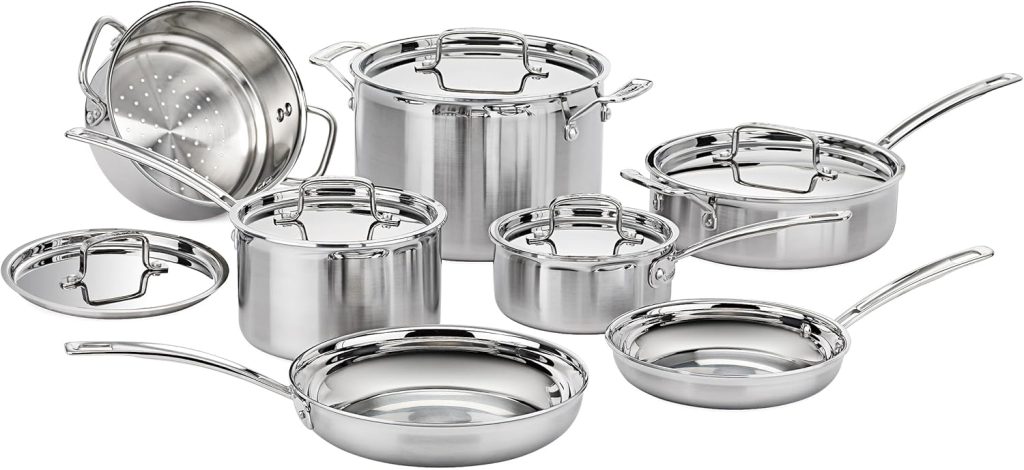
Cuisinart Stainless Steel Cookware Review:Cuisinart offers several stainless steel cookware collections, with the Cuisinart MultiClad Pro and Cuisinart French Classic being among the most popular options. For this review, we’ll focus primarily on the Cuisinart MultiClad Pro series, which represents the brand’s premium tri-ply stainless steel offering.
Product Name: Cuisinart MultiClad Pro Stainless Steel Cookware Set
Brand: Cuisinart
Model Number: MCP-12N (12-Piece Set)
Price Range: $250 – $400 (depending on set size and retailer)
Release Year: Originally introduced in the early 2000s, with continuous refinement
Manufacturing: Designed in the USA, manufactured in China
Product Specifications Table
| Specification | Details |
|---|---|
| Material | 18/10 stainless steel interior and exterior |
| Construction | Triple-ply (stainless-aluminum-stainless) |
| Core Material | Pure aluminum core for heat conductivity |
| Heat Compatibility | Gas, electric, glass, halogen, induction |
| Oven Safe | Up to 550°F (including lids) |
| Broiler Safe | Yes |
| Handles | Cool Grip riveted stainless steel handles |
| Lids | Tight-fitting stainless steel |
| Interior Finish | Mirror-polished stainless steel |
| Dishwasher Safe | Yes (hand washing recommended) |
| Warranty | Limited lifetime warranty |
| Weight (12-pc set) | Approximately 22-25 lbs |
| Set Includes | 1.5-qt saucepan with lid, 3-qt saucepan with lid, 3.5-qt sauté pan with lid, 8-qt stockpot with lid, 8″ skillet, 10″ skillet, 20cm steamer insert |
Key Features & Performance
Triple-Ply Construction Technology
The cornerstone of Cuisinart’s MultiClad Pro series is its triple-ply construction, which extends from the base all the way up the sides of each piece. Unlike cheaper cookware that only features a disc base, this full-clad design ensures even heat distribution across the entire cooking surface and up the sidewalls. The construction consists of a pure aluminum core sandwiched between two layers of 18/10 stainless steel.
This engineering approach solves one of the fundamental challenges in cookware design: stainless steel alone is a poor heat conductor, while aluminum excels at heat distribution but reacts with acidic foods. By combining these materials, Cuisinart achieves the best of both worlds—the superior heat conductivity of aluminum with the non-reactive, durable surface of stainless steel.
In real-world testing, this translates to noticeably fewer hot spots compared to single-ply stainless steel cookware. When making a delicate cream sauce or caramelizing onions, the even heat distribution prevents scorching and allows for better temperature control. The aluminum core responds quickly to temperature adjustments, giving you the precision needed for techniques like deglazing or reducing sauces.
Induction Compatibility and Versatile Heating
One of the most valuable features of Cuisinart stainless steel cookware is its universal compatibility with all stovetop types, including induction. As more home cooks transition to induction cooking for its energy efficiency and precise temperature control, having cookware that works across all heat sources becomes increasingly important.
The magnetic stainless steel exterior ensures proper function on induction cooktops, while the construction still performs exceptionally well on traditional gas and electric ranges. This versatility means you won’t need to replace your cookware if you upgrade your kitchen or move to a home with different cooking equipment.
Professional-Grade Heat Tolerance
Cuisinart MultiClad Pro cookware can withstand temperatures up to 550°F in the oven, including the lids. This high heat tolerance opens up numerous cooking techniques that require transitioning from stovetop to oven—such as starting a steak with a high-heat sear on the range before finishing it in the oven, or beginning a frittata on the stovetop and completing it under the broiler.
The broiler-safe designation further expands cooking possibilities, allowing you to achieve that perfect golden-brown crust on gratins or casseroles. This level of heat tolerance puts Cuisinart in the same functional category as cookware costing two or three times more.
Cool Grip Handle Design
The ergonomically designed handles feature a “Cool Grip” construction that stays cooler during stovetop cooking. These solid stainless steel handles are securely riveted to the cookware body, ensuring they won’t loosen over time—a common failure point in lower-quality cookware.
The handles are contoured to provide a comfortable, secure grip even when wearing oven mitts. The design incorporates a slight angle that keeps your hand away from direct heat, though the handles will still get hot during extended cooking and especially in oven use, requiring pot holders or mitts for safety.
Tight-Fitting Lids with Condensation Control
Each covered piece comes with a tight-fitting stainless steel lid that seals in moisture and heat. The lids feature a slight dome design that allows condensation to drip back onto the food rather than pooling on the lid surface. This self-basting effect helps keep roasts moist and prevents the need to add excessive liquid during braising.
The lids are also designed with a rolled edge that prevents dripping when removing them during cooking—a small detail that makes a noticeable difference in maintaining a clean stovetop.
Pros and Cons
| Pros ✓ | Cons ✗ |
|---|---|
| Triple-ply construction provides excellent, even heat distribution throughout the entire pan | Heavier weight compared to single-ply cookware may be challenging for some users |
| Induction compatible and works on all stovetop types including gas, electric, and glass | Learning curve required for cooking with stainless steel if transitioning from non-stick |
| Oven and broiler safe up to 550°F for maximum cooking versatility | Food can stick if proper preheating and fat techniques aren’t used |
| Lifetime warranty demonstrates manufacturer confidence in product durability | Exterior shows fingerprints and water spots easily, requiring regular polishing |
| Professional appearance with mirror-polished finish looks beautiful in any kitchen | Not dishwasher-ideal despite being dishwasher-safe; hand washing recommended for longevity |
| Non-reactive surface safe for cooking acidic foods like tomato sauces | Higher price point than basic stainless steel sets, though competitive in the tri-ply category |
| Drip-free pouring rims on most pieces reduce mess | Handles can get hot especially during oven use, requiring pot holders |
| No chemical coatings to worry about degrading or flaking into food | Requires more oil/butter than non-stick for certain foods |
| Tightly fitting lids seal in moisture and nutrients effectively | Interior can discolor over time with high-heat cooking, though doesn’t affect performance |
Design & Build Quality
Aesthetic Appeal and Finish
Cuisinart’s stainless steel cookware showcases a professional aesthetic that elevates any kitchen. The mirror-polished exterior reflects light beautifully, creating a premium appearance that rivals cookware costing significantly more. The interior features the same high-polish finish, making it easier to monitor food as it cooks and to identify when proper cleaning is needed.
The design language is decidedly classic and timeless rather than trendy. There are no colored accents, textured exteriors, or decorative elements that might look dated in a few years. This traditional approach ensures the cookware will look appropriate in kitchens of any style, from modern minimalist to traditional farmhouse.
Each piece features clean, proportional lines with gently sloped sides on the saucepans and sauté pans that facilitate stirring and allow for easy access with cooking utensils. The stockpot maintains straight sides for maximum capacity, while the skillets feature the classic sloped design that makes flipping and tossing food easier.
Construction Quality and Durability
The riveted handle attachment represents solid engineering. Unlike welded handles that can eventually fail, the rivets create a mechanical bond that maintains integrity even after years of heavy use. The rivets are smooth and flush on the interior cooking surface, minimizing areas where food can get trapped.
The tri-ply construction thickness strikes a good balance—substantial enough to provide excellent heat retention and durability without becoming unwieldy. At approximately 2.5mm thick, the cookware feels solid in hand without the excessive weight that can make some premium brands difficult to maneuver when full.
The rolled rims on each piece are precisely formed, creating a smooth edge that pours cleanly without dripping. This attention to detail becomes apparent when you’re deglazing a pan or pouring soup from the stockpot—the rim directs liquid exactly where you want it to go.
One area where build quality truly shines is in the base construction. The stainless steel bottom remains perfectly flat even after years of use and exposure to high heat, maintaining full contact with the cooking surface for optimal heat transfer. Cheaper cookware often develops warping that causes the pan to rock on the burner, but Cuisinart’s construction resists this common degradation.
Lid Design and Functionality
The stainless steel lids complement the cookware with the same attention to quality. They feature a polished finish that matches the pot bodies, with a smooth, rounded handle that’s large enough to grip easily even with oven mitts. The handles stay relatively cool during stovetop cooking but do require protection when removing cookware from the oven.
The fit between lid and pot is precise—tight enough to seal in steam and moisture but not so tight that removal becomes difficult. A small amount of play allows steam to escape gradually rather than building up dangerous pressure, while still maintaining enough seal to keep food from drying out during simmering or braising.
Ease of Use
Initial Setup and Preparation
Cuisinart stainless steel cookware requires minimal preparation before first use. A simple washing with warm, soapy water removes any manufacturing residue or protective coating. Unlike some cookware that requires seasoning or special treatment, Cuisinart pieces are ready to use immediately after this initial cleaning.
For best results, many experienced cooks recommend doing a one-time conditioning with vegetable oil and high heat to help fill in microscopic pores in the stainless steel surface. While not mandatory, this simple process can improve the cookware’s non-stick properties over time.
Cooking Technique Considerations
The primary learning curve with Cuisinart stainless steel cookware—or any quality stainless steel—involves mastering proper preheating and fat usage. Unlike non-stick cookware that works well even when added to a cold pan, stainless steel performs best when properly heated before adding oil or butter.
The recommended technique involves heating the empty pan over medium heat for two to three minutes, then adding fat and allowing it to heat until it shimmers (for oil) or the foam subsides (for butter). This creates a temporary non-stick surface through the Leidenfrost effect, where food actually rides on a thin layer of steam rather than making direct contact with the metal.
Once this technique becomes habit, stainless steel cookware actually provides superior cooking results compared to non-stick surfaces. Proteins develop better sears, creating that flavorful fond that becomes the base for pan sauces. Vegetables caramelize more effectively, developing deeper, more complex flavors.
The responsive heat control of Cuisinart’s aluminum core means temperature adjustments take effect quickly. When you reduce heat, the pan cools down faster than cast iron or thick-bottomed copper, giving you more precise control over delicate sauces or proteins that can easily overcook.
Handling and Maneuverability
The handle design makes lifting and maneuvering the cookware comfortable, even when pieces are full. The 10-inch skillet, for example, weighs about 2.5 pounds empty—substantial enough to feel quality but not so heavy that it becomes burdensome when cooking a family dinner.
The handles maintain their angle consistently, so you develop muscle memory for the balance point of each piece. This becomes especially important when performing techniques like flipping food in a sauté pan or pouring liquid from the stockpot.
Helper handles on larger pieces like the stockpot and sauté pan facilitate two-handed lifting when moving heavy, full vessels from stove to sink or oven to countertop. These secondary handles are proportioned well and positioned at just the right height for a secure grip.
Pouring and Serving
The precision-formed rims excel at directing liquids cleanly when pouring. Whether you’re transferring stock from the pot to a storage container or drizzling pan sauce over a finished dish, the rim guides liquid exactly where you want it without running down the exterior of the pan.
This drip-free design isn’t universal in cookware—many brands develop drips and runs that create stovetop mess and waste sauce. Cuisinart’s attention to this detail saves cleanup time and frustration.
Performance
Heat Distribution and Responsiveness
The full tri-ply construction delivers exceptional heat distribution that rivals cookware costing twice as much. In side-by-side testing, Cuisinart MultiClad Pro demonstrates significantly more even heating than disc-bottomed stainless steel alternatives.
When searing steaks, the entire surface of the pan reaches similar temperature, creating consistent browning rather than a hot spot in the center with cooler zones around the edges. This even heating extends to the sidewalls, so when you’re reducing a sauce or cooking a large batch of food, everything receives consistent heat exposure.
The aluminum core responds quickly to temperature changes. When you adjust the burner from high to medium, the pan temperature drops noticeably within 30-45 seconds. This responsiveness gives you the control needed for techniques like making caramel, where temperature precision prevents burning, or cooking fish, where a few degrees can mean the difference between perfect and overdone.
Heat retention is strong without being excessive. The cookware holds temperature well enough that adding cold ingredients doesn’t completely kill the heat (as it might with thin aluminum pans), but it doesn’t hold heat so stubbornly that temperature reduction becomes difficult (as with cast iron or very thick copper).
Browning and Searing Capabilities
Stainless steel cookware excels at developing fond—those flavorful browned bits that stick to the pan during cooking and become the foundation for pan sauces. Cuisinart’s properly polished stainless steel interior encourages excellent fond development without scorching.
When searing proteins, the surface develops a golden-brown crust that releases cleanly once proper caramelization occurs. This is the classic behavior of quality stainless steel: food initially sticks, then releases naturally when the exterior has properly browned. Many home cooks misinterpret the initial sticking as a problem and flip prematurely, preventing proper crust development.
The even heat distribution means you can achieve consistent browning across the entire surface of a chicken breast, pork chop, or fish fillet. There are no cool spots where proteins remain pale and steamed rather than seared.
Simmering and Slow Cooking Performance
For gentle cooking techniques like simmering sauces or braising meats, Cuisinart’s heat retention and distribution create ideal conditions. The cookware maintains steady, even temperature across the entire base, preventing localized scorching during long, slow cooking.
When simmering stock or sauce, you can turn the burner to low and maintain a gentle bubble without hot spots causing excessive evaporation in one area while other parts barely simmer. This even heating also means you need to stir less frequently, as there’s minimal risk of food sticking or scorching in specific spots.
The tight-fitting lids help maintain consistent moisture levels during braising. Steam condenses on the lid’s interior and drips back onto the food, creating a self-basting effect that keeps meats tender and helps vegetables cook evenly without requiring excessive liquid.
High-Heat Cooking
The 550°F oven-safe rating enables a wide range of cooking techniques. You can start a thick-cut steak in a screaming-hot skillet on the stovetop, then transfer it directly to a hot oven to finish cooking to the perfect internal temperature. Frittatas, gratins, and baked pastas can all be started on the range and finished under the broiler for a golden-brown top.
The stainless steel construction doesn’t break down, chip, or release harmful fumes at high temperatures like some non-stick coatings can. This safety margin gives you confidence when cooking at high heat for techniques like searing or reducing.
During high-heat cooking, the handles do get hot—this is an inevitable consequence of metal construction and high temperatures. However, they remain manageable with a standard kitchen towel folded over them for stovetop use. For oven cooking above 400°F, quality oven mitts become necessary.
Deglazing and Sauce Making
One of the greatest advantages of stainless steel cookware is its compatibility with acidic ingredients and deglazing. After searing meat or sautéing vegetables, you can immediately add wine, vinegar, citrus juice, or tomato-based liquids without any concerns about reactivity or damage to the cooking surface.
The fond that develops during cooking dissolves beautifully when liquid is added, creating the base for rich, flavorful pan sauces. The non-reactive stainless steel won’t impart any metallic taste or discoloration to acidic sauces like tomato sauce, lemon butter sauce, or wine reductions.
The polished interior makes it easy to see the color and consistency of your sauce as it reduces, giving you visual cues for doneness that are harder to judge in darker-surfaced cookware.
Durability & Maintenance
Long-Term Durability
Cuisinart’s lifetime warranty speaks to the expected durability of their stainless steel cookware, and real-world experience confirms this confidence. With proper care, these pieces can last decades without significant degradation in performance.
The tri-ply construction is bonded through a high-pressure process that creates a permanent union between layers. This bonding won’t separate over time as long as you avoid thermal shock (like placing a hot pan directly into cold water), which can cause expansion and contraction at different rates between the layers.
The riveted handles maintain their integrity even after years of use. Unlike welded or screwed-on handles that can loosen, rivets create a mechanical bond that doesn’t degrade. The smooth, rounded rivets on the interior surface resist food buildup that could compromise the connection.
The stainless steel exterior resists scratches and dents better than softer materials like aluminum or anodized surfaces. While it’s certainly possible to scratch or dent the cookware with extreme abuse, normal cooking and handling preserves the appearance remarkably well.
Interior surface durability is excellent. While the polished stainless steel may develop some discoloration or staining with extensive use—particularly if you regularly cook at very high heat or allow liquids to boil dry—these cosmetic changes don’t affect cooking performance. The surface doesn’t pit, flake, or develop coating failures like non-stick surfaces eventually do.
Daily Cleaning Requirements
Hand washing with warm water and dish soap is the recommended cleaning method, though the cookware is technically dishwasher-safe. Hand washing allows you to address any stuck-on food immediately while it’s still relatively soft, preventing it from hardening and becoming more difficult to remove.
For everyday cleaning after most cooking, a sponge or soft dishcloth with mild dish soap is sufficient. The polished interior releases most foods fairly easily, especially if you deglaze the pan while it’s still hot or add water immediately after removing the food.
Burnt-on food requires more attention but responds well to standard techniques. Filling the pan with water and a small amount of dish soap, then bringing it to a simmer for a few minutes, usually loosens stubborn residue. A gentle scrub with a non-abrasive sponge then removes the softened food.
For more serious stuck-on food or burnt spots, a paste made from baking soda and water works remarkably well. Apply the paste to the affected area, let it sit for 15-30 minutes, then scrub with a non-abrasive sponge. This method removes even persistent residue without scratching the polished surface.
Stain and Discoloration Management
One characteristic of stainless steel cookware that surprises some users is its tendency to develop rainbow-colored heat tints or bluish discoloration over time, particularly with high-heat cooking. These tints are completely harmless and don’t affect cooking performance—they’re simply oxidation on the surface of the steel.
If the aesthetic bothers you, these tints can be removed with products like Bar Keeper’s Friend or a paste of vinegar and baking soda. Apply the cleaning agent, let it sit briefly, then scrub with a non-abrasive sponge. The discoloration comes off, though it will likely return with continued high-heat cooking.
White chalky deposits from hard water minerals sometimes appear on the exterior after boiling water or using the dishwasher. These deposits wipe away easily with a solution of equal parts water and white vinegar.
Polishing and Appearance Maintenance
The mirror-polished exterior shows fingerprints and water spots readily—this is the trade-off for the beautiful, reflective finish. If you want to maintain the showroom appearance, regular polishing with a stainless steel cleaner or Bar Keeper’s Friend becomes part of the maintenance routine.
For those less concerned with constant perfection, a good thorough cleaning and polishing every few weeks keeps the cookware looking presentable. The cookware certainly doesn’t require constant polishing to function well—the need for polishing is purely aesthetic.
Storage Considerations
Proper storage helps maintain the cookware’s appearance and longevity. Stacking pieces directly on top of each other can lead to scratching, so using pan protectors—either commercial products or simple kitchen towels placed between pieces—preserves the polished finish.
The solid construction means you don’t need to worry about warping or damage from stacking, unlike thinner cookware that might bend under weight. The lids nest on top of their corresponding pieces, and with thoughtful arrangement, even a full set can be stored relatively compactly.
Hanging cookware from a pot rack is ideal if you have the space, as it eliminates scratching concerns and makes each piece immediately accessible. The handles are sturdy enough to support the weight without concern about failure.
Customer Experience
Amazon Ratings and Review Summary
Cuisinart stainless steel cookware, particularly the Multi-clad Pro line, maintains strong ratings across major retailers. On Amazon, sets typically hold ratings between 4.3 and 4.6 stars out of 5, with the majority of reviews falling in the 4 and 5-star range.
Positive reviews consistently highlight several themes: excellent heat distribution, professional appearance, durability even after years of use, and outstanding value compared to premium brands like All-Clad. Many customers note that the cookware performs as well as sets costing two or three times more.
The most common complaints center around the learning curve for cooking with stainless steel (particularly for those accustomed to non-stick surfaces), the weight of the cookware compared to aluminum alternatives, and the tendency for the exterior to show fingerprints and water spots.
Verified Buyer Insights
Verified purchasers frequently mention that proper preheating is essential to prevent sticking. Several reviewers note that after adjusting their cooking technique—specifically waiting for the pan to heat properly before adding oil and food—their satisfaction with the cookware increased dramatically.
Many long-term users (those who have owned the cookware for 3-5+ years) report that performance remains consistent without degradation, and the appearance holds up well with reasonable care. These veteran users often note that minor cosmetic issues like heat tints or discoloration don’t affect cooking performance.
Professional and serious home cooks generally rate the cookware very highly, appreciating the quality construction and versatile performance. Some note that while the cookware doesn’t quite match the fit-and-finish perfection of premium brands like All-Clad or Demeyere, it delivers 90% of the performance at 40% of the price.
Common User Questions and Concerns
Sticking Issues: The most frequently mentioned concern involves food sticking to the surface. However, a clear pattern emerges in reviews: users who learned proper stainless steel technique report minimal sticking, while those expecting non-stick performance often express frustration. This suggests the issue is primarily about expectations and technique rather than a product defect.
Weight: Some users find the cookware heavier than expected, particularly smaller individuals or those with strength limitations. The 8-quart stockpot, when full, requires two-handed lifting. However, most users consider the substantial weight a positive indicator of quality construction.
Exterior Maintenance: The requirement for regular polishing to maintain the mirror finish frustrates some users who prefer low-maintenance cookware. However, those who understand and accept this characteristic as inherent to polished stainless steel generally don’t view it as a significant drawback.
Customer Service and Warranty Experience
Cuisinart’s customer service receives generally positive feedback from buyers who have needed to utilize the warranty. The company typically honors the lifetime warranty for manufacturing defects without excessive bureaucracy.
Some customers report successful warranty replacements for issues like handle rivets loosening or lids that lost their tight fit. The process generally involves contacting customer service, providing photos and purchase information, and receiving replacement items or vouchers.
Processing times for warranty claims vary, with most customers reporting resolution within 2-4 weeks. While not instantaneous, this timeline is reasonable for a warranty program and demonstrates Cuisinart’s commitment to standing behind their products.
Price & Value for Money
Price Positioning
Cuisinart stainless steel cookware occupies the mid-tier price segment—significantly more expensive than budget stainless steel options but notably more affordable than premium brands. A 12-piece MultiClad Pro set typically retails between $250 and $400, depending on sales and retailer.
To put this in context, comparable tri-ply sets from All-Clad might cost $600-$800, while budget disc-bottom stainless steel sets can be found for $100-$150. Cuisinart’s positioning in the middle of this range reflects its construction quality and performance capabilities.
Individual pieces are also reasonably priced, with skillets typically ranging from $40-$80 depending on size, and saucepans from $50-$100. This makes it feasible to either buy a complete set or build a collection piece-by-piece as budget allows.
Cost-Per-Use Analysis
When evaluating cookware value, cost-per-use over the product’s lifetime provides more insight than initial purchase price alone. Given Cuisinart’s durability and lifetime warranty, a $300 cookware set that lasts 20+ years costs just $15 per year, or about $1.25 per month.
Compare this to non-stick cookware that typically needs replacement every 3-5 years due to coating degradation. Even a $100 non-stick set costs $20-$33 per year over its usable life. The stainless steel investment, despite higher upfront cost, delivers better value over time.
For households that cook frequently—say, preparing dinner at home 5-6 nights per week—the cost-per-use becomes even more favorable. The cookware might serve 20-30 meals per month, bringing the cost down to just a few cents per use over its lifetime.
Comparison to Premium Brands
The most frequent comparison shoppers make is between Cuisinart MultiClad Pro and All-Clad D3 Tri-Ply, considered the gold standard in tri-ply stainless steel cookware. Performance-wise, the two are remarkably similar—both use aluminum cores bonded between stainless steel layers, both distribute heat evenly, and both deliver professional-level results.
The primary differences lie in details: All-Clad features slightly better finish work with more perfectly polished surfaces, more precisely formed rims, and handles that some find more comfortable. All-Clad is also manufactured entirely in the USA, while Cuisinart is made in China under American design specifications.
For most home cooks, these differences don’t justify All-Clad’s significantly higher price. Unless you’re a professional chef who uses cookware hours every day or someone who values the finest possible fit and finish, Cuisinart delivers essentially the same cooking performance at a much more accessible price point.
Value Proposition for Different User Types
For Beginners: Cuisinart represents a strong value, though the investment might seem high initially. The lifetime warranty and durability mean you won’t need to upgrade later as your skills improve, avoiding the “buy twice” trap of starting with cheap cookware.
For Budget-Conscious Cooks: While not the cheapest option available, Cuisinart offers the best balance of quality and affordability in the tri-ply category. You get premium performance without premium pricing.
For Experienced Cooks: Those who know cookware quality recognize Cuisinart as outstanding value. You get construction and performance comparable to brands costing twice as much, making it easy to build a complete set without breaking the bank.
For Professional Use: In demanding commercial environments, All-Clad or other premium brands might justify their higher cost through superior durability under extreme daily use. However, for serious home cooks who prepare restaurant-quality meals but at home-use frequency, Cuisinart delivers more than adequate performance and longevity.
Comparison Table
| Feature | Cuisinart MultiClad Pro | All-Clad D3 Tri-Ply | Tramontina Tri-Ply Clad | Calphalon Premier |
|---|---|---|---|---|
| Construction | Full tri-ply (stainless-aluminum-stainless) | Full tri-ply (stainless-aluminum-stainless) | Full tri-ply (stainless-aluminum-stainless) | Full tri-ply (stainless-aluminum-stainless) |
| Price (12-pc set) | $250-$400 | $600-$800 | $200-$300 | $300-$450 |
| Oven Safe Temperature | 550°F | 600°F | 500°F | 450°F |
| Induction Compatible | Yes | Yes | Yes | Yes |
| Manufacturing | China (US design) | USA | Brazil | China |
| Warranty | Lifetime | Lifetime | Lifetime | Lifetime |
| Average Amazon Rating | 4.4/5 stars | 4.6/5 stars | 4.5/5 stars | 4.3/5 stars |
| Handle Design | Riveted Cool Grip | Riveted traditional | Riveted traditional | Riveted stay-cool |
| Weight (10″ skillet) | ~2.5 lbs | ~2.8 lbs | ~2.4 lbs | ~2.6 lbs |
| Dishwasher Safe | Yes (hand wash recommended) | Yes (hand wash recommended) | Yes (hand wash recommended) | Yes (hand wash recommended) |
| Best For | Value-conscious cooks wanting premium performance | Those wanting the absolute best regardless of price | Budget shoppers seeking tri-ply quality | Those preferring slightly lighter-weight cookware |
Who Should Buy This Product?
Ideal Customer Profile
Home Cooks Graduating from Non-Stick: If you’ve been cooking with non-stick pans and are ready to invest in cookware that will develop your technique and last a lifetime, Cuisinart stainless steel represents an ideal transition. The performance is forgiving enough for learning stainless steel technique but capable enough that you won’t outgrow it.
Value-Conscious Enthusiasts: For cooks who want professional-grade performance but can’t justify spending $800+ on cookware, Cuisinart hits the sweet spot. You get tri-ply construction, even heating, and versatility at a price that won’t require a separate cookware fund.
Health-Conscious Cooks: Those concerned about chemicals in non-stick coatings or the reactivity of unlined aluminum or cast iron will appreciate stainless steel’s completely inert, non-reactive surface that’s safe for all foods, including acidic dishes.
Small to Medium Households: The set configurations work well for couples and small families. The included sizes handle most everyday cooking tasks without requiring excessive storage space.
Aspiring Home Chefs: If you’re working on developing your cooking skills and want cookware that enables advanced techniques like deglazing, sauce making, and proper protein searing, stainless steel is essential. Cuisinart provides this capability without the premium price of luxury brands.
Use Cases Where This Cookware Excels
Versatile Everyday Cooking: From morning eggs to evening stir-fries, Cuisinart handles the full spectrum of daily cooking tasks. The range of included sizes means you have the right tool for virtually any recipe.
Sauce Making and Reductions: The non-reactive surface and excellent heat control make Cuisinart ideal for preparing delicate sauces that require precision temperature management and the ability to use acidic ingredients without concern.
Protein Searing: Whether you’re cooking steaks, chops, chicken breasts, or fish fillets, the even heat distribution and ability to develop excellent fond make Cuisinart exceptional for achieving restaurant-quality sears and creating pan sauces.
One-Pan Meals: The oven-safe construction up to 550°F enables you to start dishes on the stovetop and finish them in the oven—perfect for frittatas, baked pastas, braised meats, and roasted vegetables with proteins.
Batch Cooking and Meal Prep: The durable construction and excellent heat distribution make Cuisinart suitable for preparing large quantities of food. The non-reactive surface is ideal for cooking big batches of tomato sauce, chili, or stock for freezing.
Who Might Want to Look Elsewhere
Those Seeking Ultra-Lightweight Cookware: If arthritis, limited strength, or other physical considerations make heavy cookware problematic, anodized aluminum or thinner stainless steel options might be more appropriate. The solid tri-ply construction, while indicating quality, does add weight.
Committed Non-Stick Users: If you’re unwilling to learn stainless steel cooking technique or simply prefer the convenience of non-stick surfaces for low-fat cooking, forcing yourself to use stainless steel will likely lead to frustration. Consider ceramic non-stick or high-quality traditional non-stick instead.
Those on Very Tight Budgets: While Cuisinart offers good value in the tri-ply category, the upfront investment of $250-$400 for a set might be prohibitive for extremely budget-constrained households. Disc-bottom stainless steel or quality aluminum non-stick might be more appropriate until budget allows for an upgrade.
Professional Chefs in Commercial Settings: In demanding commercial kitchens where cookware takes extreme daily abuse, the additional refinement and USA manufacturing of All-Clad might justify the extra cost through marginally longer service life and slightly better performance under continuous use.
Those Seeking Absolute Premium Quality: If you want the finest possible finish work, the most perfectly formed pouring rims, and the satisfaction of owning the best regardless of price, All-Clad or Demeyere represent the next tier up. The performance difference is minimal, but the refinement is noticeable.
Buying Guide: What to Look for in Stainless Steel Cookware!
Understanding Construction Types
Disc-Bottom Construction: The most budget-friendly stainless steel cookware features an aluminum or copper disc attached only to the bottom. While this provides better heat distribution than single-ply stainless steel, heat doesn’t travel up the sides, creating temperature differentials that can lead to uneven cooking and scorching.
Tri-Ply (Full-Clad) Construction: Three layers of metal—typically stainless steel, aluminum, and stainless steel—bonded together and extending from the base all the way up the sides. This provides even heat distribution across the entire cooking surface. Cuisinart MultiClad Pro uses this construction.
Five-Ply and Beyond: Some premium cookware uses five or more layers, often adding copper for enhanced heat conductivity or additional stainless steel for durability. While these can perform slightly better, the improvement is marginal compared to quality tri-ply, and the price premium is substantial. For most home cooks, tri-ply represents the optimal balance.
What to Choose: For cookware you’ll use daily, invest in full tri-ply construction. The even heating and lack of hot spots justify the higher price compared to disc-bottom alternatives. Reserve disc-bottom pieces for specialty items you use infrequently, like stockpots for boiling water.
Material Quality Indicators
Stainless Steel Grade: Look for 18/10 stainless steel (18% chromium, 10% nickel), which provides the best corrosion resistance and durability. Lower grades like 18/0 are more prone to staining and lack nickel, which means they won’t work on induction cooktops.
Core Material: Aluminum cores provide the best balance of heat conductivity and cost. Copper cores conduct heat even better but add significant expense. For home cooking, aluminum cores in quality cookware like Cuisinart provide more than adequate performance.
Thickness: The total thickness of tri-ply cookware should be around 2.5-3mm. Thinner construction heats quickly but may warp and doesn’t retain heat well. Thicker construction provides better heat retention but becomes heavy and responds slowly to temperature changes.
Polish Quality: A well-polished interior surface helps prevent food adhesion and makes cleaning easier. Rougher, satin finishes can lead to more sticking, though they hide stains better. Mirror-polished interiors like Cuisinart’s provide the best cooking surface.
Critical Features to Evaluate
Induction Compatibility: Even if you don’t currently have an induction cooktop, future-proofing your cookware investment by ensuring magnetic stainless steel construction makes sense. Test by seeing if a magnet adheres to the base.
Oven-Safe Temperature: Minimum oven-safe temperature should be 400°F for versatility. Higher ratings (500-550°F) enable more cooking techniques and provide safety margin. Verify that lids are also oven-safe to the same temperature.
Handle Design: Handles should be securely riveted (not welded or screwed on) for longevity. Look for ergonomic contours that stay comfortable even when supporting a full, heavy pan. Handles angled away from the heat source help keep them cooler during cooking.
Lid Fit: Lids should seal tightly to trap steam and moisture but not so tightly that they’re difficult to remove. Test the fit before purchasing if possible—there should be minimal play but the lid should lift off easily.
Rim Design: Quality cookware features rolled or flared rims that direct poured liquids cleanly without dripping. This detail makes a significant difference in everyday use but is often overlooked by buyers focusing on core construction.
Sizing and Set Composition
Essential Pieces: At minimum, you need an 8-10″ skillet, a 2-3 quart saucepan with lid, and a 12″ skillet or sauté pan with lid. These handle the vast majority of everyday cooking tasks.
Useful Additions: A smaller 1.5-quart saucepan for heating small quantities, a stockpot for pasta and soups, and a larger sauté pan or braiser for one-pan meals and batch cooking extend your capabilities.
Luxury Extras: Specialty items like double boilers, roasting pans, or steamer inserts are nice to have but not essential. Consider whether you’ll actually use these items before paying for them in a set.
Buying Strategy: If storage space is limited or you’re on a tight budget, start with individual essential pieces rather than a full set. You can always add specialty items later as needs and budget allow.
Common Mistakes to Avoid
Choosing Based on Price Alone: The cheapest stainless steel cookware usually features disc-bottom construction with thin materials that perform poorly and wear out quickly. Spending slightly more on tri-ply construction delivers dramatically better results.
Oversizing: Buying cookware that’s too large for your typical cooking quantities wastes energy and makes temperature control more difficult. A 4-person household doesn’t need a 12-quart stockpot for everyday use.
Neglecting Compatibility: Verify that the cookware works with your cooktop type. While most modern stainless steel is induction-compatible, older or budget pieces may not be.
Ignoring Weight: Handle cookware before buying if possible, especially larger pieces. If a stockpot feels heavy when empty, it may be unwieldy when full of soup or pasta water.
Expecting Non-Stick Performance: Stainless steel requires different technique than non-stick cookware. If you’re unwilling to learn proper preheating and fat usage, you’ll be frustrated with stainless steel regardless of quality.
Falling for Marketing Gimmicks: Beware of cookware marketed with buzzwords like “commercial grade” or “professional quality” at suspiciously low prices. Quality construction costs money to produce—if the price seems too good to be true, the cookware likely uses inferior materials or construction.
Warranty Considerations
Lifetime vs. Limited Warranties: A true lifetime warranty should cover manufacturing defects for the life of the original purchaser. Read the fine print to understand what’s actually covered and what exclusions apply.
Warranty Transferability: Some warranties are non-transferable, meaning secondhand purchases aren’t covered. If buying used cookware, verify warranty status.
What’s Typically Covered: Manufacturing defects like handle rivets failing, delamination of bonded layers, or warping under normal use should be covered. Normal wear, cosmetic issues, and damage from abuse (like using metal utensils or dishwasher damage) are typically excluded.
Registration Requirements: Some manufacturers require warranty registration within a certain timeframe. Keep your purchase receipt and register promptly to ensure coverage.
FAQs
Is Cuisinart stainless steel cookware dishwasher safe?
Yes, Cuisinart stainless steel cookware is technically dishwasher safe. However, hand washing is strongly recommended to maintain the mirror-polished finish and prevent potential spotting from dishwasher detergents and hard water minerals. Dishwashers can also cause the exterior to develop a dull appearance over time. For optimal longevity and appearance, wash by hand using warm water, mild dish soap, and a soft sponge.
Why does food stick to my Cuisinart stainless steel pans?
Food sticking is almost always a technique issue rather than a problem with the cookware. Stainless steel requires proper preheating before adding oil or food. Heat the empty pan over medium heat for 2-3 minutes, then add oil and let it heat until shimmering. Add food when the pan and oil are properly heated. For proteins, allow them to develop a crust before attempting to flip—properly seared food will release naturally from the surface. Using sufficient fat (oil or butter) also helps prevent sticking.
Can Cuisinart stainless steel cookware be used on induction cooktops?
Yes, Cuisinart stainless steel cookware is fully induction compatible. The magnetic stainless steel exterior works efficiently with induction cooking technology. You can verify induction compatibility by placing a magnet on the base—if it adheres firmly, the cookware will work on induction cooktops. Cuisinart cookware also works on gas, electric, glass, ceramic, and halogen cooktops.
How do I remove burn marks or discoloration from Cuisinart stainless steel?
For burn marks and stuck-on food, make a paste of baking soda and water, apply it to the affected area, and let it sit for 15-30 minutes before scrubbing with a non-abrasive sponge. For stubborn stains, Bar Keeper’s Friend is extremely effective—apply the powder or cream, scrub gently with a damp sponge, and rinse thoroughly. Rainbow-colored heat tints can be removed with a mixture of vinegar and water or with Bar Keeper’s Friend. These cosmetic issues don’t affect cooking performance but can be removed if the appearance bothers you.
Is Cuisinart cookware made in the USA?
Cuisinart stainless steel cookware is designed in the United States but manufactured in China. The company maintains quality control standards for their Chinese manufacturing facilities. If Made in USA is a priority, All-Clad manufactures its D3 and D5 lines entirely in the United States, though at a significantly higher price point. Cuisinart offers comparable performance to All-Clad despite the different manufacturing location.
How long does Cuisinart stainless steel cookware last?
With proper care, Cuisinart stainless steel cookware can last 20-30 years or more. The lifetime warranty reflects the manufacturer’s confidence in the product’s longevity. Unlike non-stick cookware that degrades and requires replacement every 3-5 years, stainless steel doesn’t wear out under normal use. The tri-ply construction won’t delaminate, the riveted handles won’t loosen under normal use, and the stainless steel surface doesn’t pit or flake. Minor cosmetic issues like discoloration don’t affect functionality.
Can I use metal utensils with Cuisinart stainless steel cookware?
Yes, stainless steel is durable enough to withstand metal utensils without damage. Unlike non-stick surfaces that scratch easily, the stainless steel interior can be stirred with metal spoons, whisks, or spatulas without harm. However, avoid using sharp knives directly on the cooking surface, as this can scratch the polish and create rough spots where food might stick more readily. For optimal preservation of the mirror finish, silicone or wooden utensils are gentler.
How do I season or prepare new Cuisinart stainless steel cookware before first use?
Cuisinart stainless steel cookware doesn’t require seasoning like cast iron, but a simple initial cleaning and optional conditioning helps. First, wash the cookware with warm, soapy water to remove manufacturing residue. For enhanced non-stick properties, some cooks recommend a one-time conditioning: heat the pan over medium heat, add a thin layer of vegetable oil, heat until the oil just begins to smoke, then remove from heat and let cool. Wipe out excess oil, wash again, and the cookware is ready for use.
What’s the difference between Cuisinart MultiClad Pro and French Classic cookware?
MultiClad Pro features full tri-ply construction with an aluminum core bonded between stainless steel layers that extends all the way up the sides of the cookware. French Classic uses disc-bottom construction, with an aluminum disc attached only to the base and single-ply stainless steel sides. MultiClad Pro provides superior, more even heat distribution and represents better value for serious cooking. French Classic is more budget-friendly but doesn’t perform as consistently, especially for techniques requiring even sidewall heating like sauce reduction.
Can Cuisinart stainless steel cookware go from stovetop to oven?
Yes, all Cuisinart stainless steel cookware is oven safe up to 550°F, including the lids. This high temperature tolerance enables various cooking techniques like starting a sear on the stovetop and finishing in the oven, making frittatas or gratins that start on the stove and finish under the broiler, or braising meats. The handles will get hot during oven use, so always use oven mitts or pot holders when removing cookware from the oven. Avoid extreme temperature shocks like placing a very hot pan directly into cold water, as this can potentially damage the tri-ply bonding.
How does Cuisinart compare to All-Clad in terms of performance?
In terms of core cooking performance—heat distribution, responsiveness, and versatility—Cuisinart MultiClad Pro performs remarkably similarly to All-Clad D3 Tri-Ply. Both use aluminum cores bonded between stainless steel layers with similar thickness and construction methods. The primary differences lie in finish quality (All-Clad has slightly more refined polishing and rim forming), handle comfort (subjective, but All-Clad’s design is preferred by some), and manufacturing location (All-Clad is made in the USA, Cuisinart in China). For most home cooks, these differences don’t justify All-Clad’s significantly higher price—Cuisinart delivers essentially the same cooking results at roughly half the cost.
Will the handles stay cool during cooking?
The handles feature “Cool Grip” design that helps them stay cooler than basic metal handles during stovetop cooking, but they’re not completely cool-to-the-touch. During extended cooking over medium-high heat, the handles will become warm and may require a folded kitchen towel for comfortable handling. During oven use above 350°F, the handles get quite hot and require oven mitts or pot holders. This is normal for metal handle construction—truly stay-cool handles require different materials that aren’t oven-safe to high temperatures.
Final Verdict
Summary of Key Benefits
Cuisinart stainless steel cookware, particularly the MultiClad Pro line, delivers exceptional value by providing premium tri-ply construction and professional-grade performance at mid-tier pricing. The full-clad aluminum core ensures even heat distribution that rivals cookware costing two or three times more, while the 18/10 stainless steel construction provides a completely non-reactive, durable cooking surface that will last decades with proper care.
The versatility of this cookware stands out as one of its greatest strengths. From delicate sauce reductions to high-heat searing, from stovetop to oven to broiler, Cuisinart handles the full spectrum of cooking techniques with confidence. The induction compatibility future-proofs your investment, working with all cooktop types including the increasingly popular induction ranges.
Build quality exceeds expectations for the price point. The riveted handles maintain their integrity over years of use, the precisely formed rims pour cleanly without dripping, and the tri-ply construction resists warping even under high heat. The lifetime warranty demonstrates the manufacturer’s confidence in product longevity and provides peace of mind for buyers making this investment.
Key Drawbacks to Consider
The learning curve for cooking with stainless steel represents the primary challenge for users transitioning from non-stick cookware. Proper preheating and adequate fat usage are essential to prevent sticking, and developing this technique takes practice and patience. However, once mastered, these skills unlock cooking capabilities that non-stick surfaces simply cannot provide.
The weight of the cookware, while an indicator of substantial construction quality, may present challenges for some users. Individuals with limited strength or conditions like arthritis might find the heavier pieces difficult to maneuver, especially when full. The 8-quart stockpot, in particular, requires two-handed lifting when filled with liquid.
Maintenance requirements exceed those of non-stick alternatives. The mirror-polished exterior shows fingerprints and water spots readily, requiring regular cleaning and occasional polishing to maintain showroom appearance. While cosmetic issues like heat tints and discoloration don’t affect performance, they may bother users who prefer cookware that maintains a pristine appearance without extra effort.
Expert Recommendation
For home cooks seeking professional-grade cookware without professional-grade prices, Cuisinart stainless steel cookware represents one of the best values currently available. The quality of construction, consistency of performance, and durability of materials rival much more expensive brands, making this an intelligent choice for buyers who want excellent results without overspending.
This cookware is particularly well-suited to intermediate and advanced home cooks who understand or are willing to learn proper stainless steel technique. If you’re serious about developing your culinary skills, value durability and longevity over convenience, and want cookware that enables advanced techniques like deglazing and sauce-making, Cuisinart delivers everything you need.
However, if you prioritize lightweight cookware, prefer the convenience of non-stick surfaces, or aren’t willing to invest time in learning proper stainless steel cooking methods, you might find better satisfaction with alternatives specifically designed for those priorities.
Is It Worth Buying?
Absolutely yes, if: You’re looking for durable, versatile cookware that will last decades; you want to develop or maintain serious cooking skills; you value even heat distribution and the ability to create fond for pan sauces; you need cookware that works on any cooktop including induction; you’re willing to invest time in proper technique and maintenance.
Probably not, if: You strongly prefer the convenience of non-stick surfaces; you need ultra-lightweight cookware due to strength limitations; you want minimal-maintenance cookware that requires no polishing; you’re on an extremely tight budget and need to minimize upfront investment; you cook infrequently and wouldn’t benefit from premium performance.
Final Thoughts
Cuisinart has earned its reputation as the “smart shopper’s All-Clad” by delivering nearly identical performance to premium brands at significantly lower prices. The MultiClad Pro line, in particular, demonstrates that excellent cookware doesn’t require a massive investment—it simply requires intelligent engineering and quality materials.
For the vast majority of home cooks, this cookware will exceed expectations and provide decades of reliable service. It represents one of those rare products that genuinely delivers on its promises, combining quality construction, versatile performance, and attractive design at a price point that feels fair rather than inflated.
If you’re ready to invest in cookware that will serve you for years to come, develop your cooking technique, and deliver consistently excellent results, Cuisinart stainless steel cookware deserves serious consideration. The combination of value, performance, and durability makes it a purchase you’re unlikely to regret.

Leave a Reply