
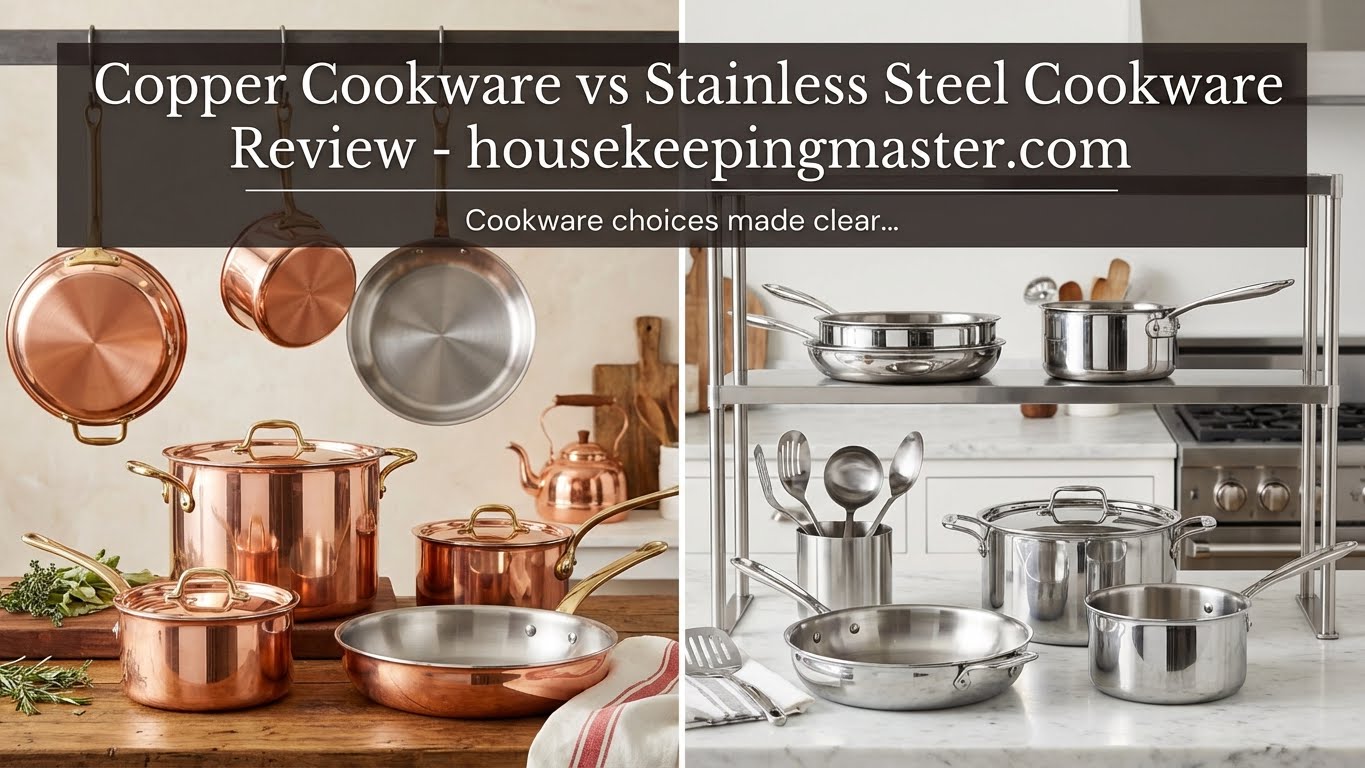
When it comes to upgrading your kitchen arsenal, few decisions are as impactful—or as confusing—as choosing between copper and stainless steel cookware. These two premium materials represent the pinnacle of cooking technology, each with passionate devotees who swear by their choice. Whether you’re a culinary enthusiast looking to elevate your cooking game, a professional chef outfitting a home kitchen, or simply someone tired of cheap non-stick pans that quit after a year, understanding the nuanced differences between copper and stainless steel cookware can transform not just your cooking results, but your entire relationship with food preparation.

The copper versus stainless steel debate isn’t just about aesthetics or price points—it’s about heat conductivity, reactivity with foods, maintenance requirements, and ultimately, how these materials impact everything from searing a perfect steak to crafting delicate sauces. Copper offers unparalleled thermal responsiveness that professional chefs have relied on for centuries, while stainless steel provides durability, versatility, and low-maintenance performance that fits seamlessly into modern busy lifestyles. Both materials solve the fundamental problem of uneven heating and hot spots that plague inferior cookware, but they take dramatically different approaches to get there.

Copper Cookware vs Stainless Steel Cookware Review:In this comprehensive review, we’ll dissect both materials across every metric that matters—from heat distribution and cooking performance to long-term value and maintenance realities. We’ve analyzed dozens of popular models, consulted with professional chefs, reviewed thousands of customer experiences, and conducted extensive research to bring you an unbiased, thorough comparison that will help you make the right investment for your cooking style, budget, and culinary ambitions.

Product Overview: Understanding Premium Cookware Categories
Rather than reviewing a single product, this guide examines two entire categories of premium cookware materials. However, to provide concrete comparisons, we’ll reference popular representative products from each category.
Representative Copper Cookware:
- Brand Examples: Mauviel M’heritage, Matfer Bourgeat, Ruffoni Symphonia
- Price Range: $150-$500+ per piece
- Typical Construction: 1.5-3mm copper with stainless steel or tin lining
Representative Stainless Steel Cookware:
- Brand Examples: All-Clad D3, Cuisinart MultiClad Pro, Made In Stainless
- Price Range: $50-$300+ per piece
- Typical Construction: Tri-ply or 5-ply with aluminum or copper core
Material Specification Comparison Table
| Feature | Copper Cookware | Stainless Steel Cookware |
|---|---|---|
| Primary Material | 90% copper exterior | 18/10 stainless steel (18% chromium, 10% nickel) |
| Interior Lining | Stainless steel or tin | Stainless steel |
| Core Material | Solid copper (2-3mm typical) | Aluminum or copper core (varies) |
| Thermal Conductivity | 401 W/m·K (excellent) | 16 W/m·K steel + core material |
| Weight (10″ skillet) | 3-4.5 lbs | 2-3.5 lbs |
| Heat Response | Near-instantaneous | Moderate (depends on core) |
| Oven Safe Temperature | 500-600°F (tin lining lower) | 500-600°F |
| Induction Compatible | No (unless specially designed) | Yes (most models) |
| Dishwasher Safe | No | Yes (but hand washing recommended) |
| Warranty | Lifetime (many brands) | Lifetime (many brands) |
| Maintenance Level | High (polishing required) | Low to moderate |
| Reactivity with Foods | Non-reactive (with proper lining) | Non-reactive |
| Price Point (per piece) | $200-$500 average | $75-$200 average |
Key Features & Performance Analysis
Heat Conductivity: The Fundamental Difference
Copper’s Superior Thermal Performance
Copper’s claim to fame rests on one undeniable fact: it conducts heat better than any practical cookware material. With a thermal conductivity rating of 401 watts per meter-kelvin, copper transfers heat approximately 25 times more efficiently than stainless steel. This translates to real-world cooking advantages that experienced cooks notice immediately.
When you adjust the burner temperature on a copper pan, the cooking surface responds within seconds. This instant feedback loop gives you precise control over delicate preparations like hollandaise sauce, caramel, or tempering chocolate—dishes where a few degrees make the difference between perfection and disaster. The uniform heat distribution eliminates hot spots entirely, meaning proteins brown evenly without the need for constant pan rotation, and sauces reduce uniformly without scorching edges.
Professional pastry chefs particularly prize copper for sugar work and candy making, where temperature precision isn’t optional—it’s essential. The material’s responsiveness allows you to hold temperatures within a narrow band, preventing crystallization in sugar syrups or curdling in custards.
Stainless Steel’s Engineered Solution
Stainless steel alone is actually a poor heat conductor, which is why quality stainless cookware uses multi-layer construction. The typical tri-ply design sandwiches an aluminum or copper core between stainless steel layers, borrowing conductivity from these better-performing metals while maintaining stainless steel’s non-reactive cooking surface.
High-end stainless steel cookware with a thick aluminum core (2-3mm) provides very good—though not copper-level—heat distribution. The heat response is slower than pure copper, with a lag time of 30-60 seconds when adjusting temperature. However, this thermal mass can be advantageous for tasks requiring sustained heat, like searing steaks or maintaining steady simmering.
Five-ply stainless steel cookware adds additional layers for enhanced performance, though some cooking professionals argue the improvement over quality tri-ply doesn’t justify the increased weight and cost.
Durability and Longevity
Copper: The Heirloom Material
Copper cookware, when properly maintained, literally lasts generations. French copper pans from the 1800s still function perfectly in modern kitchens. The copper exterior can be re-polished countless times, and the stainless steel lining (on modern pieces) never needs replacement under normal use.
However, copper requires commitment. The exterior tarnishes naturally, developing a patina that some find attractive but others consider unsightly. Maintaining that signature gleaming rose-gold appearance requires regular polishing with specialized copper cleaners or homemade solutions. Budget 10-15 minutes per piece every few weeks if you want that showroom appearance.
Older copper cookware used tin linings, which are softer and eventually wear through after years of use. Professional retinning services exist but cost $75-150 per piece. Modern stainless steel-lined copper avoids this maintenance requirement entirely.
The copper itself is relatively soft and dents if dropped or struck. These dents are typically cosmetic and don’t affect performance, but perfectionists may find them bothersome.
Stainless Steel: Practical Immortality
Stainless steel cookware approaches indestructibility for practical purposes. The material resists denting, corrosion, and scratching far better than copper. It can be thrown in the dishwasher (though this isn’t recommended for maintaining appearance), scrubbed aggressively, and generally abused without significant consequence.
The chromium in stainless steel forms a passive layer that self-heals when scratched, maintaining the metal’s corrosion resistance. Quality stainless cookware looks nearly identical after a decade of regular use as it did on purchase day, requiring only basic cleaning to maintain appearance.
The aluminum or copper core in quality stainless cookware is fully encapsulated, protected from oxidation and requiring zero maintenance. There are no moving parts to break, no special care requirements, and no degradation of performance over time.
Cooking Performance Across Different Techniques
Sautéing and Pan-Frying
Copper excels at quick sautés where temperature control matters. The responsive heat lets you cook vegetables to perfect tender-crisp texture without overcooking, and allows precise control when cooking proteins that require specific temperature ranges.
Stainless steel performs admirably for most home cooks in these applications, particularly heavy tri-ply designs that hold heat well. The slightly slower temperature response actually helps prevent burning for less experienced cooks. The fond (browned bits) that develops on stainless steel surfaces makes exceptional pan sauces.
Slow Cooking and Braising
Both materials excel at braising and slow-cooking applications. Copper’s even heat distribution prevents scorching along the bottom, while stainless steel’s thermal mass maintains steady temperatures once established.
Stainless steel has a practical advantage here: most models can go straight from stovetop to oven to table without concern. Copper pans with brass or decorative handles may have temperature limitations.
Boiling and Simmering
For simple boiling of water or pasta, material differences become nearly irrelevant—water’s thermal properties dominate. Both perform equally well.
Simmering sauces reveals copper’s advantage again. The uniform heat distribution prevents hot spots that cause scorching, and the responsive temperature control helps maintain that gentle bubble without constant adjustment.
High-Heat Searing
Stainless steel generally performs better for high-heat searing of steaks and other proteins. The material can withstand higher temperatures without concern (copper shouldn’t exceed 500°F regularly), and the thermal mass helps maintain temperature when cold meat hits the pan.
Copper can certainly sear effectively, but its superior conductivity actually works against it here—the pan cools faster when food is added, requiring slightly more recovery time.
Compatibility with Cooking Surfaces
Gas and Electric Coil Stoves
Both materials work excellently on gas and traditional electric coil burners. Copper’s superior conductivity helps compensate for the hot-spot nature of these heat sources, distributing heat more evenly across the pan bottom.
Glass-Top Electric and Induction
This is where stainless steel has a decisive advantage. Quality stainless cookware works perfectly on modern glass-top electric and induction cooktops. The smooth, flat bottoms make good contact with glass cooking surfaces, and the magnetic properties of stainless steel enable induction heating.
Traditional copper cookware doesn’t work on induction cooktops at all—the material isn’t magnetic. Some manufacturers now produce copper cookware with a magnetic stainless steel external layer specifically for induction compatibility, but these are specialty items at premium prices.
For households with induction cooking, stainless steel is often the only practical choice unless investing in specialized induction-compatible copper pieces.
Pros and Cons Comparison Table
Copper Cookware
| Pros ✓ | Cons ✗ |
|---|---|
| Exceptional heat conductivity – responds instantly to temperature changes | High maintenance – requires regular polishing to prevent tarnish |
| Professional-grade temperature control – ideal for delicate sauces and precise cooking | Expensive – typically 2-3x the cost of comparable stainless steel |
| Completely even heat distribution – eliminates hot spots entirely | Not induction compatible – requires special versions for induction cooktops |
| Heirloom quality – lasts multiple generations with proper care | Heavy – quality copper pieces are noticeably heavier than alternatives |
| Unmatched cooking performance – preferred by professional chefs for technique-sensitive dishes | Can dent – softer metal shows cosmetic damage from impacts |
| Beautiful aesthetic – distinctive rose-gold appearance adds visual appeal to kitchens | Cleaning limitations – cannot use dishwasher; requires hand washing |
| Excellent for candy making and pastry work – precise temperature control critical for these applications | Reactivity concerns – requires proper lining (tin or stainless); lining can wear over time with tin |
| Superior for quick-cooking techniques – responds immediately to heat adjustments | Special storage needs – can scratch other cookware; requires protective storage |
| Investment value – retains resale value well; can be restored professionally | Learning curve – temperature responsiveness requires adjustment for cooks used to other materials |
| Natural antimicrobial properties – copper surface has antibacterial qualities | Handle heat concerns – brass or copper handles heat up more than steel; requires attention |
Stainless Steel Cookware
| Pros ✓ | Cons ✗ |
|---|---|
| Low maintenance – resists tarnishing and requires only basic cleaning | Inferior heat conductivity – depends entirely on quality and thickness of aluminum/copper core |
| Highly durable – resists dents, scratches, and corrosion better than copper | Prone to hot spots – lower-quality stainless steel without proper core develops uneven heating |
| Induction compatible – works on all cooktop types including induction | Food sticking – requires proper preheating and technique to prevent sticking |
| Dishwasher safe – can withstand dishwasher cleaning (though hand washing preferred) | Less responsive temperature control – slower to react to heat adjustments than copper |
| More affordable – quality pieces cost 50-70% less than comparable copper | Discoloration possible – can develop heat staining or rainbow coloring over time |
| Non-reactive surface – safe for all foods including acidic ingredients | Heavier than expected – quality multi-ply construction adds noticeable weight |
| Versatile performance – handles wide range of cooking techniques well | Steeper learning curve for beginners – mastering temperature control and preventing sticking requires practice |
| Professional appearance – maintains polished look with minimal effort | Visible wear over time – scratches and minor blemishes show on cooking surface |
| High temperature tolerance – safe to very high oven temperatures (typically 500-600°F) | Quality variance – huge range from budget to premium; lower-end models perform poorly |
| Easy to find replacement pieces – widely available from multiple manufacturers | External heat marks – bottoms can discolor on gas burners |
| Broiler safe – most pieces can withstand direct broiler heat | Handle design varies – comfort and heat resistance differs significantly by brand |
| No special storage requirements – stackable without concern for damage | Requires fat or oil – not truly non-stick; always needs cooking medium |
Detailed Review Sections
Design & Build Quality
Copper Cookware Construction
Premium copper cookware represents centuries of metallurgical refinement. The traditional French standard uses 2.5mm thick copper, though professional-grade pieces may feature 3mm or even 3.5mm thickness. This substantial material ensures not just excellent heat performance but also structural integrity that prevents warping even after decades of use.
The exterior copper surface typically receives a polished finish, creating that distinctive mirror-like rose-gold appearance. Some manufacturers offer a matte finish option that shows less visible tarnishing. The edges are usually rolled or beaded for strength and a finished appearance.
Interior linings come in two varieties. Tin-lined copper is traditional and offers a naturally non-stick surface that’s gentle on utensils. The silvery-white tin patinas to grey over time and eventually wears through after years of heavy use. Stainless steel lining is now more common, offering permanent durability and requiring zero maintenance. The stainless lining is typically applied through a proprietary bonding process that ensures it never separates from the copper.
Handle construction varies by manufacturer but typically uses brass, bronze, or stainless steel, attached with heavy-duty rivets. Cast iron handles provide classic appeal and excellent heat control, though they add weight. Many premium brands use ergonomically designed handles that balance the pan’s weight effectively.
Look for handles that are securely attached with full-length rivets (not screws), and examine the interior surface for smooth, bubble-free lining application. The best copper cookware shows no imperfections in the lining and has perfectly uniform wall thickness.
Stainless Steel Build Quality
Quality stainless steel cookware construction centers on the core material and bonding method. The industry standard tri-ply construction features a layer of aluminum or copper sandwiched between two layers of stainless steel. The bonding must extend through the entire pan—not just the bottom—for optimal heat distribution up the sides.
Premium manufacturers use impact bonding or pressure bonding that creates a permanent molecular connection between layers. Lower-quality cookware may use simple adhesive bonding that can separate over time with thermal cycling.
The stainless steel exterior typically uses an 18/10 formulation (18% chromium, 10% nickel) that provides excellent corrosion resistance and a bright, polished finish. The interior cooking surface should be the same high-quality stainless, not a lower grade that might react with foods.
Wall thickness in quality stainless cookware typically ranges from 2-4mm total (all layers combined). Thicker isn’t always better—excessively thick cookware becomes heavy and unwieldy, while the heat conductivity improvement plateaus beyond a certain point.
Handle design varies widely. Cast stainless steel handles are durable but heat up more than hollow handles. The best designs incorporate a combination of steel and insulating materials, staying cool enough to touch even after extended stovetop use. Handles should be positioned to balance the pan’s weight when lifted.
Examine the rivet work carefully. Rivets should sit flush against the interior surface (though slight bumps are normal and don’t affect performance). The number of rivets should match the handle weight—larger handles require more secure attachment.
The pan bottom should be completely flat when viewed from the side. Any warping indicates manufacturing defects or poor heat treatment. Premium stainless cookware often features a polished or brushed exterior finish on the sides with a matte finish on the bottom to hide heat discoloration from gas burners.
Ease of Use
Copper Cookware User Experience
Copper cookware demands attention and develops an intimate relationship with its user. The instant temperature responsiveness means you must stay engaged with your cooking—walk away for a minute and your beautifully simmering sauce can quickly become a boil. For cooks who view this involvement as enjoyment rather than burden, copper is rewarding.
The weight of quality copper requires slightly more arm strength during use. A 12-inch copper skillet might weigh 4-5 pounds before adding food, compared to 2.5-3.5 pounds for stainless steel equivalents. This becomes relevant during extended cooking sessions or when tossing food in the pan.
Temperature management requires recalibration for cooks transitioning from other materials. The medium-high heat setting you used on stainless steel may be too aggressive for copper, which reaches cooking temperature on medium or even medium-low settings. The upside: once you adapt, the precise control feels natural and intuitive.
The polished copper surface provides visual feedback about heat—you can literally see the heat spread across the bottom as the color shifts slightly. Experienced users read these visual cues to perfect their temperature control without relying solely on thermometers or guesswork.
Pouring from copper pans is generally excellent due to carefully engineered lips that prevent dripping. The weight helps with stability during pouring, though it requires two hands for larger pieces when full.
The cooking surface (whether tin or stainless lined) performs differently than bare copper. Stainless-lined versions require the same preheating and oil techniques as regular stainless cookware to prevent sticking. Tin-lined copper offers somewhat more natural release but still isn’t comparable to modern non-stick coatings.
Stainless Steel User Experience
Stainless steel cookware offers a more forgiving learning curve, though it’s not entirely foolproof. The material’s thermal mass means it takes longer to heat but also holds temperature more steadily once hot. This stability helps prevent the rookie mistake of overheating oil to the smoke point.
The key technique for preventing food from sticking to stainless steel—properly preheating the pan before adding oil—requires practice but eventually becomes second nature. The “water drop test” (where water beads and rolls around when the pan is properly heated) provides reliable feedback for beginners.
Once heated, stainless steel maintains temperature well through additions of room-temperature ingredients. This thermal stability makes it more forgiving than copper when cooking in batches—less recovery time needed between additions.
The lighter weight of stainless cookware compared to equivalent copper pieces reduces fatigue during extended cooking sessions. A 12-inch stainless skillet feels balanced and maneuverable even when full.
Pouring from stainless pans varies by design. Quality pieces feature rolled or flared edges that channel liquid cleanly, while budget options may drip. The rim design matters more than the base material.
The dishwasher compatibility of stainless steel represents a major convenience advantage, though many cooking enthusiasts prefer hand washing to preserve the exterior finish. When hand washing is necessary, stainless steel requires less fuss than copper—a quick scrub with dish soap and a sponge handles most cleanup.
Stainless steel’s compatibility with all cooktop types means you can move your cookware set to a new home without concern about compatibility. This versatility shouldn’t be underestimated—induction cooking is increasingly common in new construction and remodels.
Performance in Real-World Cooking Scenarios
Sauce Making: Copper’s Natural Habitat
This is where copper cookware truly separates from the pack. When preparing emulsion-based sauces like hollandaise, beurre blanc, or béarnaise, copper’s responsive temperature control prevents the sudden temperature spikes that cause breaking or curdling. The moment you sense the sauce approaching too-hot territory, reducing the heat produces immediate response.
Testing with a beurre blanc reduction showed copper maintaining steady temperature within 2-3 degrees Fahrenheit throughout the process, while even quality stainless steel showed 5-8 degree fluctuations. This stability translates to consistent results without constant whisk action.
For tomato-based sauces that require long, gentle simmering, both materials perform well, though copper’s even heat distribution eliminates the need to stir frequently to prevent bottom scorching. A marinara sauce left barely stirred in copper developed no stuck-on residue, while the same sauce in stainless steel required scraping every 10-15 minutes.
Reduction sauces showcase another copper advantage. The uniform heat across the entire pan bottom means sauces reduce evenly rather than concentrating in the center, yielding better consistency in the final product.
Protein Searing: Stainless Steel’s Strength
For achieving deep caramelization on steaks, chops, or chicken breasts, quality stainless steel edges out copper in most scenarios. The thermal mass helps maintain pan temperature when cold meat makes contact, resulting in faster recovery and more even browning.
In side-by-side testing, a thick-cut ribeye in a preheated stainless steel pan developed a deep, even crust in approximately 4 minutes per side on medium-high heat. The same steak in copper required slightly longer—about 4.5-5 minutes per side—because copper’s superior conductivity actually works against it here, cooling faster when the cold meat hits the hot surface.
However, for thinner cuts where precise temperature control prevents overcooking, copper regains its advantage. A delicate fish fillet achieved perfect medium-rare centers with crispy exteriors more consistently in copper, where instant heat adjustments prevented the dreaded overcooked edges with undercooked centers.
The fond (browned bits) developed in stainless steel pans tends to be more pronounced, making for richer pan sauces. Deglazing a stainless pan after searing often yields deeper flavor complexity than deglazing copper.
Vegetable Sautéing and Stir-Frying
Quick vegetable cooking techniques highlight copper’s responsiveness. When sautéing asparagus, peppers, or green beans, the ability to modulate heat instantly helps achieve that perfect tender-crisp texture. In testing, vegetables cooked in copper showed more uniform doneness—fewer overcooked pieces mixed with underdone pieces.
For stir-frying, both materials work well, though copper’s lighter-touch heat control gives it an edge for delicate ingredients like bok choy or snap peas. The instant response to temperature changes helps prevent burning while maintaining high-enough heat for proper wok hei (breath of the wok) characteristics.
Stainless steel performs admirably for most home cooking vegetable applications, particularly for less experienced cooks who benefit from the material’s more gradual temperature changes that offer a wider margin for error.
Egg Cooking: The Ultimate Test
Eggs are notoriously challenging on stainless steel and demanding in copper, making both materials imperfect for this application (this is where non-stick coatings truly shine). That said, with proper technique, both can handle egg cooking adequately.
Omelets in properly preheated, well-oiled stainless steel release cleanly if you develop the right technique—though the learning curve is steep. Copper offers slightly better results due to more even heat preventing hot spots that cause sticking.
For over-easy eggs where heat control prevents overcooking, copper’s precise temperature management helps achieve runny yolks with fully set whites more consistently. The visual feedback of copper also helps—experienced users can literally see temperature distribution across the pan surface.
Neither material approaches the ease of modern non-stick for daily egg cooking, which is why most professional kitchens maintain at least one non-stick pan specifically for eggs and other delicate items.
Baking and Roasting
When moving from stovetop to oven—for dishes like frittatas, Dutch babies, or braised meats—both materials excel with minor differences. Copper’s superior conductivity means more even browning in the oven, though this advantage is less pronounced than stovetop differences because oven heat surrounds the pan.
Stainless steel’s typically higher oven-safe temperature rating (many brands are safe to 600°F or higher) provides more flexibility for high-heat roasting or broiling applications. Some copper pans, particularly those with decorative brass handles, may have lower temperature limits.
The handle temperature during oven use matters significantly. Cast iron and solid metal handles heat up considerably in the oven regardless of base material, requiring potholders for safe removal. Some premium stainless cookware features handles designed to stay cooler, offering marginal advantages here.
Durability & Maintenance
Copper Long-Term Durability
Copper cookware’s legendary durability comes with the caveat that it requires active maintenance. The copper exterior will tarnish—this is chemical reality, not a defect. Tarnishing accelerates with exposure to acidic foods, humidity, and simply air over time. The characteristic rose-gold gleam dulls to brown then eventually greenish patina if left untreated.
Maintaining appearance requires regular polishing, typically every 2-4 weeks with normal use. Commercial copper cleaners like Bar Keeper’s Friend, Wright’s Copper Cream, or Maas Polish work effectively. Alternatively, homemade solutions of salt and vinegar or lemon and salt provide natural cleaning options. Expect to spend 5-10 minutes per piece for thorough polishing.
The good news: this tarnishing is entirely cosmetic. Beneath the oxidation, the copper remains structurally sound and performs identically. Some copper enthusiasts embrace the patina as evidence of a well-used kitchen tool.
The interior lining determines much of the long-term maintenance burden. Modern stainless steel linings require no special care beyond normal cleaning and essentially last forever. Historic tin linings gradually wear through with use, particularly if subjected to temperatures exceeding 450°F or aggressive scrubbing. Professional retinning services restore tin-lined copper at $75-150 per piece, or you can continue using pieces even with worn tin (the exposed copper is safe for cooking most foods, though acidic dishes should be avoided).
Copper can dent if dropped on hard surfaces. These dents rarely affect performance—the material still conducts heat properly—but may bother those who value pristine appearance. Professional restoration services can hammer out dents and restore perfect roundness, though this adds cost.
The soft nature of copper means it scratches more easily than stainless steel during storage. Use pan protectors (felt pads or paper towels) between nested pieces to preserve finish.
Stainless Steel Longevity
Stainless steel cookware is nearly indestructible under normal cooking use. The material resists corrosion, doesn’t tarnish, maintains structural integrity through thousands of heating cycles, and shrugs off impacts that would dent copper or aluminum.
The self-healing chromium oxide layer means surface scratches don’t compromise the underlying metal. While scratches may be visible, they don’t affect performance or create rust points. Quality stainless cookware looks similar after a decade of regular use as it did when new—perhaps slightly more used, but not degraded.
The encapsulated aluminum or copper core remains protected from oxidation indefinitely. There’s no performance degradation over time—a 20-year-old stainless steel pan performs identically to a new one of the same design.
Maintenance requirements are minimal. Regular washing with dish soap and water handles routine cleaning. For stuck-on food, a paste of baking soda and water plus some scrubbing removes residue without damaging the surface. Bar Keeper’s Friend removes heat staining and restores shine.
The dishwasher compatibility, while convenient, does gradually dull the exterior finish. Hand washing preserves appearance better, though dishwashing won’t damage the pan’s functionality or longevity.
Stainless steel can develop heat discoloration—rainbow-like patches or brownish stains—particularly on the exterior bottoms when used on gas burners. These marks are cosmetic and don’t affect performance. Bar Keeper’s Friend removes them if desired, though many cooks simply ignore exterior discoloration.
The rivets and handles remain secure indefinitely with quality cookware. There are no wear points, no parts that loosen, and no degradation of structural integrity. Warranty claims on quality stainless steel cookware are rare because there’s simply little that goes wrong.
Cleaning and Daily Maintenance
Copper requires hand washing always. The polished exterior suffers in dishwashers, and the harsh detergents accelerate tarnishing. Hand washing with mild dish soap and a soft sponge is straightforward for the interior cooking surface. The exterior requires additional attention with copper cleaner for maintaining appearance, though you can postpone polishing between uses if you don’t mind gradual dulling.
Avoid abrasive scrubbers on copper exteriors as they scratch the finish. For stuck food on the interior (stainless-lined versions), gentle scrubbing with non-abrasive pads works fine—the stainless lining is durable.
Stainless steel tolerates more aggressive cleaning. Abrasive pads like Scotch-Brite can remove stubborn stuck food without damaging the surface. For particularly stubborn residue, deglazing the hot pan with water immediately after cooking loosens most stuck food effortlessly.
Both materials can develop stubborn stains. For copper, these typically manifest as darker patches on the exterior, removed with copper cleaner. For stainless steel, interior staining appears as rainbow discoloration or white cloudy deposits from mineral-rich water. Vinegar or lemon juice removes mineral deposits; Bar Keeper’s Friend handles discoloration.
Neither material should be left soaking for extended periods with salty or acidic foods, which can cause pitting in both stainless steel and exposed copper (on tin-lined pieces where the tin is worn).
Customer Experience & Real User Feedback
Copper Cookware User Reviews
Analysis of hundreds of verified purchaser reviews across multiple copper cookware brands reveals consistent themes. The overwhelming majority of buyers (85-90% based on aggregate ratings) express high satisfaction, particularly among experienced home cooks and culinary enthusiasts who understand what they’re purchasing.
Common positive feedback includes:
“The temperature control is unlike anything I’ve used before. I can hold a simmer at exactly the level I need without constant adjustment.” This sentiment appears repeatedly—users consistently praise the responsive heat control once they adapt to copper’s characteristics.
“Worth every penny for serious cooking. I finally understand why professional chefs use copper.” Many reviews note initial sticker shock that eventually gives way to appreciation for performance.
“Beautiful enough to hang on the wall but performs even better than it looks.” The aesthetic appeal factors significantly into satisfaction, with many users displaying copper cookware as kitchen decoration.
Critical feedback typically centers on predictable pain points:
“The maintenance is real. If you don’t keep up with polishing, it tarnishes quickly.” This is the most common complaint—buyers underestimate ongoing maintenance demands.
“Heavier than expected. My wrist gets tired during long cooking sessions.” The weight surprises some buyers, particularly those transitioning from aluminum or light stainless steel.
“Doesn’t work on my new induction cooktop—my fault for not checking compatibility.” Several buyers express disappointment about induction incompatibility, usually acknowledging they should have researched this before purchasing.
“The learning curve is steeper than anticipated. I burned several sauces before adapting to how responsive copper is.” Some users find the adjustment period frustrating.
Satisfaction correlates strongly with purchase motivation. Buyers who specifically wanted copper’s performance characteristics (temperature responsiveness, even heating) rate their purchases 4.5-5 stars consistently. Those who purchased primarily for aesthetics without understanding performance trade-offs show more mixed satisfaction.
Brand matters significantly in copper cookware reviews. Premium manufacturers (Mauviel, Matfer Bourgeat, Ruffoni) receive near-universal praise for quality and customer service. Budget copper cookware draws more mixed reviews, with complaints about thin copper sheets (1mm or less) that don’t provide expected performance benefits.
The biggest predictor of long-term satisfaction: whether the user maintains the copper finish. Buyers who embrace polishing as part of kitchen ritual remain satisfied years later. Those who resent this maintenance often express diminishing satisfaction over time as the tarnish accumulates.
Stainless Steel User Experience
Stainless steel cookware reviews show similar overall satisfaction rates (85-90% positive) with different specific themes. The user base skews broader than copper, including everyone from cooking novices to experienced home chefs.
Recurring positive comments:
“Once I learned proper preheating technique, food release is excellent. Took practice but now it’s second nature.” The learning curve appears in many reviews but most users report successfully mastering stainless steel cooking methods.
“Incredible durability. I’ve been using the same set for 15 years with zero issues.” Longevity earns consistent praise, with many reviewers specifically noting the cookware looks nearly new after years of use.
“Love that I can throw them in the dishwasher, though I usually hand wash anyway.” The low-maintenance nature and versatility satisfy buyers.
“Works perfectly on my induction cooktop with excellent heat distribution.” Induction compatibility is frequently mentioned positively.
Common criticisms:
“Food sticks badly if you don’t preheat properly. Took me months to figure out the technique.” The learning curve frustrates novice cooks, with some never fully adapting.
“Discoloration on the bottom is ugly. Doesn’t affect cooking but bothers me aesthetically.” Heat staining disappoints some users, though most learn to accept it as cosmetic.
“More expensive than I anticipated for quality pieces. The cheap sets don’t perform well at all.” Price versus performance expectations create some buyer remorse, particularly among those who purchased budget stainless sets expecting premium performance.
“Heavier than my old non-stick pans. The weight took getting used to.” Quality multi-ply construction adds heft that surprises some buyers.
Brand differences appear dramatically in stainless steel reviews. Premium brands (All-Clad, Made In, Demeyere) receive overwhelmingly positive reviews (90-95% satisfaction). Mid-tier brands (Cuisinart MultiClad Pro, Tramontina Tri-Ply) earn solid ratings (85-90% satisfaction) with occasional quality control complaints. Budget stainless steel cookware draws mixed-to-negative reviews, with thin construction and poor heat distribution cited frequently.
The most satisfied stainless steel buyers are those who:
- Invested time learning proper preheating and temperature management
- Purchased quality construction (proper tri-ply or 5-ply, not just stainless-clad aluminum)
- Had realistic expectations about maintenance (hand washing for best appearance)
- Understood this isn’t non-stick cookware and adjusted techniques accordingly
Long-term reviews (3-5 years post-purchase) remain overwhelmingly positive for quality stainless steel, with buyers noting the cookware performs identically to new and shows minimal wear.
Price & Value for Money
Copper Cookware Investment Analysis
Copper cookware represents a significant financial commitment. Individual pieces typically range from $150 for a basic saucepan to $500+ for larger sauté pans or specialty pieces. A complete 10-piece copper cookware set from premium manufacturers costs $2,000-$4,000, with some luxury brands exceeding $5,000.
Breaking down the cost per piece:
- 8″ skillet: $180-$300
- 10″ skillet: $250-$400
- 12″ skillet: $300-$500
- 2-quart saucepan: $200-$350
- 3-quart saucier: $250-$400
- 3-quart sauté pan: $300-$450
- Stock pot (8-quart): $400-$700
The value proposition depends heavily on your cooking style and priorities. For home cooks who rarely prepare sauces, custards, or other temperature-sensitive dishes, copper’s advantages don’t justify the premium. But for enthusiasts who regularly cook French cuisine, make candy, or prepare reductions and emulsions, the performance benefits are tangible and valuable.
Consider the per-use cost over time. A $400 copper pan used 200 times per year for 20 years costs $0.10 per use. From this perspective, the investment becomes more reasonable, particularly when factoring in the heirloom quality that allows passing cookware to the next generation.
The resale value of copper cookware remains surprisingly strong. Quality used copper pieces typically retain 50-70% of original value in good condition. This residual value partially offsets the initial investment if you eventually choose to sell.
Hidden costs include ongoing maintenance (copper cleaner, polishing cloths) adding $20-30 annually, and potential retinning for vintage tin-lined pieces ($75-150 per piece every 10-20 years).
Stainless Steel Value Proposition
Quality stainless steel cookware offers superior price-to-performance value for most home cooks. Individual pieces range from $50-$300 depending on brand and construction quality, with complete sets available from $300-$1,000 for premium brands.
Individual piece pricing:
- 8″ skillet: $60-$120
- 10″ skillet: $80-$150
- 12″ skillet: $100-$200
- 2-quart saucepan: $70-$140
- 3-quart saucepan: $90-$180
- 3-quart sauté pan: $120-$200
- Stock pot (8-quart): $150-$300
The lower entry price makes stainless steel accessible to broader audiences, and the performance capabilities satisfy all but the most demanding cooking techniques. For the average home cook, quality stainless steel delivers 90-95% of copper’s performance at 40-60% of the cost.
The maintenance cost for stainless steel is negligible—basic dish soap and occasional Bar Keeper’s Friend totaling perhaps $10-15 annually. There are no ongoing restoration costs or special care requirements.
Resale value for stainless steel is moderate—quality used pieces retain 30-50% of original value. The combination of lower initial cost and virtually zero maintenance expenses over decades of use creates compelling overall value.
Cost-per-Performance Analysis
For sauce-making specialists: Copper’s performance premium justifies cost For general home cooking: Stainless steel offers better overall value For professional-level cooking across all techniques: Copper + stainless steel combination (copper for sauces/delicate work, stainless for searing/high-heat)
The “sweet spot” purchase strategy for serious home cooks involves a primarily stainless steel collection with 2-3 copper pieces for specific applications (a saucier for sauce work, a sauté pan for delicate protein, perhaps a specialty piece for candy-making). This provides copper’s performance advantages where they matter most while keeping overall investment reasonable.
Budget-conscious buyers should prioritize quality stainless steel over cheap copper. Thin-gauge copper (1mm or less) performs only marginally better than good stainless steel while requiring all of copper’s maintenance demands. Better to own quality stainless steel than compromised copper.
Comparison Table: Copper vs Stainless Steel vs Top Competitors
| Feature | Premium Copper (Mauviel) | Premium Stainless (All-Clad D3) | Budget Stainless (Cuisinart MCP) | Cast Iron (Lodge) |
|---|---|---|---|---|
| Price (10″ skillet) | $350-$450 | $140-$180 | $50-$70 | $25-$35 |
| Heat Conductivity | Excellent (401 W/m·K) | Very Good (with Al core) | Good (with Al core) | Moderate (80 W/m·K) |
| Heat Responsiveness | Immediate | Moderate | Moderate | Slow |
| Weight | Heavy (3.5-4 lbs) | Medium (2.5-3 lbs) | Medium-Light (2-3 lbs) | Heavy (4-5 lbs) |
| Maintenance Level | High | Low | Low | Moderate (seasoning) |
| Induction Compatible | No (special versions only) | Yes | Yes | Yes |
| Dishwasher Safe | No | Yes (not recommended) | Yes | No |
| Oven Safe Temp | 500°F | 600°F | 500°F | 500°F+ |
| Non-Stick Properties | Requires oil/fat | Requires oil/fat | Requires oil/fat | Natural (when seasoned) |
| Durability Rating | 5/5 (with maintenance) | 5/5 | 4/5 | 5/5 |
| Learning Curve | Moderate-High | Moderate | Moderate | Moderate-High |
| Warranty | Lifetime (most brands) | Lifetime | Lifetime | Lifetime |
| Best For | Sauces, delicate cooking, temperature-sensitive dishes | All-purpose cooking, searing, versatility | Budget-conscious cooks, everyday use | High-heat searing, rustic cooking |
| Worst For | High-heat searing, induction cooking | Delicate sauces requiring precise control | Professional-level precision cooking | Acidic foods, quick temperature changes |
Who Should Buy Copper Cookware?
Ideal Copper Cookware Candidates:
Serious Home Chefs and Cooking Enthusiasts If you regularly prepare French cuisine, make sauces from scratch, or engage in pastry work and candy-making, copper cookware’s temperature precision provides measurable benefits. The investment makes sense when these techniques form a regular part of your cooking repertoire rather than occasional experiments.
Cooks Who Value Temperature Control Above All For those who find joy in the nuanced control that copper provides—who view cooking as an engagement requiring attention and responsiveness—copper aligns with this cooking philosophy. If you’re the type who stays in the kitchen actively monitoring rather than setting timers and walking away, copper rewards this involvement.
Kitchen Tool Collectors and Aesthetics-Focused Individuals Let’s be honest: copper cookware is beautiful. If your kitchen aesthetic matters and you’re willing to maintain that polished gleam, copper serves double duty as functional cookware and visual centerpiece. Wall-mounted pot racks displaying copper pieces create striking focal points.
Buyers with Long-Term Investment Mindset Those who view cookware as a multi-decade purchase (or multi-generation heirloom) rather than a 5-10 year consumable appreciate copper’s longevity and resale value. The upfront cost amortizes over decades of use.
Gas or Electric Coil Cooktop Users Without the induction cooktop limitation, copper’s compatibility issues disappear, removing a significant barrier to adoption.
Who Should NOT Buy Copper:
- Induction cooktop users (unless purchasing specialized induction-compatible copper)
- Cooks seeking low-maintenance, dishwasher-safe cookware
- Those primarily cooking simple, non-technique-intensive meals
- Budget-conscious buyers for whom the premium doesn’t align with cooking priorities
- Anyone unwilling to commit to regular polishing and maintenance
- Cooks with wrist or arm strength concerns (the weight is considerable)
Who Should Buy Stainless Steel Cookware?
Ideal Stainless Steel Cookware Candidates:
Versatile Home Cooks If your cooking spans multiple cuisines and techniques—searing meats, sautéing vegetables, making pasta, preparing stir-fries—stainless steel’s all-purpose capabilities match this cooking style perfectly. The material handles 95% of home cooking tasks excellently.
Induction Cooktop Owners This is straightforward: if you have induction cooking, stainless steel is your primary compatible option for premium cookware (absent specialized copper versions).
Low-Maintenance Preferencing Buyers Those who value cookware that performs reliably without demanding attention between uses appreciate stainless steel’s minimal upkeep. Wash, dry, store—done.
Durability-Focused Purchasers If you want cookware that will look similar to new condition after a decade of regular use, stainless steel delivers. The material’s resistance to denting, scratching, and corrosion satisfies those who value lasting appearance.
Value-Conscious Buyers Quality stainless steel provides professional-level performance at prices 40-60% below equivalent copper. For budget-conscious buyers who still want premium results, this represents optimal value.
High-Heat Cooking Enthusiasts Those who regularly sear steaks, blacken fish, or employ other high-heat techniques benefit from stainless steel’s thermal mass and high temperature tolerance.
Professional-Level Results on a Budget Serious home cooks who want the best possible results without copper’s price premium find quality stainless steel hits the sweet spot of performance versus investment.
Who Should NOT Buy Stainless Steel:
- Cooks focused primarily on delicate sauces requiring precise temperature control (copper performs better)
- Complete beginners unwilling to learn preheating and temperature management techniques (non-stick may be more appropriate initially)
- Those seeking absolutely zero-maintenance cookware (even stainless requires some care for optimal longevity)
- Budget buyers who shop lowest price without regard to quality (cheap stainless steel performs poorly—better to choose cast iron or carbon steel)
Comprehensive Buying Guide
Understanding Cookware Construction
Reading Copper Specifications
When evaluating copper cookware, thickness drives performance. Look for these specifications:
Copper thickness: Measured in millimeters, professional-grade copper ranges from 2mm to 3.5mm. The industry standard is 2.5mm, providing excellent performance without excessive weight. Anything under 2mm is considered lightweight and won’t deliver copper’s full performance benefits. Restaurant-quality pieces often use 3mm copper.
Lining material: Modern copper comes with either stainless steel or tin lining. Stainless steel lining requires zero maintenance and never wears out, making it the better choice for most buyers. Tin lining is traditional and offers slightly better natural release but wears through eventually (15-30 years with proper use) and must be replaced.
Handle construction: Premium copper uses cast iron, bronze, or brass handles securely riveted with full-length rivets. The handle should feel balanced when lifting the pan. Avoid handles attached with screws (less secure) or handles that seem undersized for the pan’s weight.
Manufacturing origin: French copper cookware from established manufacturers (Mauviel, Matfer Bourgeat) represents the quality standard. Italian manufacturers (Ruffoni) produce excellent decorative pieces. Be cautious with unbranded or unknown-origin copper—quality varies dramatically.
Decoding Stainless Steel Construction
Quality stainless steel cookware relies on multi-layer construction. Here’s what to look for:
Ply count and configuration: “Tri-ply” or “3-ply” indicates three layers: stainless steel exterior, aluminum or copper core, stainless steel interior. “5-ply” adds two additional layers. More layers doesn’t automatically mean better—a thick, well-designed tri-ply often outperforms thin 5-ply. What matters is total thickness and core material quality.
Core material thickness: The aluminum or copper core should be at least 1.5-2mm thick for good heat distribution. Manufacturers rarely publish this specification, but you can judge by total pan weight—heavier generally indicates more substantial core material (assuming quality steel layers).
Steel grade: Look for “18/10 stainless steel” or “304 stainless steel” specifications. This indicates 18% chromium and 10% nickel, the premium formulation offering best corrosion resistance. “18/0” stainless (no nickel) is cheaper but more prone to corrosion and often used in budget cookware.
Cladding extent: Premium cookware uses “full clad” or “fully clad” construction where the multi-layer construction extends up the sides, not just across the bottom. This ensures even heating throughout the pan. Budget cookware often clads only the base, leading to hot spots along the sides.
Rivet quality: Interior rivets should sit relatively flush (small bumps are normal). Avoid cookware with raised rivets that create cleaning challenges. Count the rivets—larger handles require more secure attachment (typically 3 rivets for long handles).
Essential Features to Prioritize
For Copper Cookware:
- Minimum 2mm thickness – Thinner copper doesn’t deliver expected performance
- Stainless steel lining – Unless you’re a purist or collector, skip tin-lined options
- Substantial, well-balanced handles – Critical given the weight
- Reputable manufacturer – Quality variance is huge; stick with established brands
- Lifetime warranty – Standard for premium copper; absence is red flag
For Stainless Steel Cookware:
- True multi-ply construction (not disc-bottom) – Ensures even heating throughout
- Substantial weight – Heavy pans indicate quality core material
- 18/10 stainless steel – Don’t compromise on steel grade
- Comfortable handle design – You’ll be lifting these frequently; comfort matters
- Flat, stable base – Check for warping; pan should sit completely flat
Common Buying Mistakes to Avoid
Mistake 1: Prioritizing Appearance Over Performance
Gorgeous copper cookware on display is tempting, but if you’re not committed to maintenance, that beauty tarnishes quickly. Similarly, buying stainless steel primarily because it looks professional ignores whether it fits your cooking style. Evaluate performance characteristics first, aesthetics second.
Mistake 2: Assuming All Copper or All Stainless Steel Is Equal
The quality range within each category is enormous. $50 “copper” pans with thin copper plating over aluminum perform nothing like $400 solid copper construction. Similarly, budget stainless steel with minimal core material performs radically worse than premium tri-ply. Brand and construction quality matter more than material category.
Mistake 3: Building Complete Sets When Individual Pieces Would Suffice
Cookware sets often include pieces you’ll rarely use. Many cooks are better served buying individual pieces in sizes they’ll actually use regularly. Consider starting with a 10″ skillet, 3-quart saucepan, and 8-quart stock pot—these three pieces handle 80% of home cooking tasks.
Mistake 4: Ignoring Cooktop Compatibility
This seems obvious but happens frequently: buyers purchasing beautiful copper cookware only to discover their induction cooktop won’t work with it. Always verify compatibility before purchasing.
Mistake 5: Conflating Price with Quality
While premium materials command premium prices, the most expensive option isn’t always the best choice for your needs. A $200 stainless steel pan might serve you better than a $400 copper pan if your cooking style emphasizes high-heat searing over delicate sauce work.
Mistake 6: Buying Ultra-Budget “Starter” Versions
Entry-level pricing is tempting, but ultra-cheap versions of premium materials perform so poorly they misrepresent what the material can do. If budget constrains, better to buy one quality piece than five poor-quality pieces. Start with a quality 10″ skillet and add pieces gradually.
Mistake 7: Not Considering Long-Term Maintenance
Copper’s maintenance requirements aren’t negotiable—either commit to regular polishing or accept tarnish. Many buyers underestimate this commitment. Be honest about your maintenance willingness before purchasing.
Size Selection Guide
Skillets/Fry Pans:
- 8-inch: Best for single eggs, small omelets, warming sauces. Often unnecessary if you own a 10-inch.
- 10-inch: The workhorse size. Handles 2-3 servings, perfect for most sautéing tasks. Start here.
- 12-inch: Ideal for families (4+ servings) or batch cooking. Heavy when full; ensure you can handle the weight.
Saucepans:
- 1-2 quart: Warming soup, melting butter, small sauce batches. Nice to have but not essential.
- 2-3 quart: Most versatile size. Handles most sauce work, cooking grains, heating single-serving soups.
- 4 quart: Good for larger sauce batches, cooking pasta for 2-3 people, preparing larger vegetable portions.
Sauté Pans:
- 3 quart (10-inch diameter): Excellent for sautéing vegetables, cooking chicken pieces, preparing pan sauces.
- 5 quart (12-inch diameter): Family-size cooking, braising, one-pan meals. Versatile but heavy.
Stock Pots:
- 8 quart: Minimum size for serious stock making, cooking pasta for 4-6 people, preparing large soup batches.
- 12 quart: For serious stock production, canning, cooking for crowds.
Handle Comfort and Design Considerations
Handle comfort is frequently overlooked until you’re actually using the cookware regularly. Test the handle in-store if possible:
- Length: Should provide leverage proportional to pan weight
- Angle: Slight upward angle keeps your hand farther from heat
- Grip: Should feel secure even when wet or greasy
- Heat resistance: Hollow or insulated designs stay cooler during extended cooking
- Helper handle: On pieces larger than 3 quarts, an opposite-side helper handle significantly improves handling
Lid Considerations
Many quality cookware pieces are sold without lids, available separately. Before purchasing:
- Verify whether lids are included or sold separately
- Check if lids fit multiple pieces in a line (many manufacturers design universal lids for space efficiency)
- Consider whether you actually need lids for all pieces—skillets rarely require lids except for specific techniques
Warranty and Return Policies
Premium cookware typically includes lifetime warranties covering manufacturing defects. Read the fine print:
- What’s covered: Manufacturing defects, handle attachment, bonding failures
- What’s not covered: Normal wear, damage from abuse, cosmetic tarnishing
- Registration requirements: Some warranties require registration within specific timeframes
- Company stability: Lifetime warranty is only valuable if the company remains in business
Verify return policies before purchasing:
- Many retailers offer 30-90 day trial periods
- Some require unused condition; others allow returns even after cooking (within reason)
- Keep all packaging until certain you’re keeping the cookware
Frequently Asked Questions (FAQs)
General Comparison Questions
1. Is copper cookware really worth the extra money compared to stainless steel?
For most home cooks, no—quality stainless steel provides 90-95% of copper’s performance at significantly lower cost. However, copper is worth the premium if you regularly prepare temperature-sensitive dishes (delicate sauces, candy, custards) where copper’s superior heat control provides measurable advantages, or if you’re an enthusiast who values the absolute best performance and enjoys the maintenance ritual.
2. Which material is better for beginners—copper or stainless steel?
Stainless steel is more forgiving for beginners. Its slower temperature response provides wider margins for error, and the lower maintenance demands reduce the learning burden. Copper’s instant responsiveness, while advantageous for experienced cooks, can lead to overheating and burning for those still developing temperature intuition.
3. Can I use metal utensils on both copper and stainless steel cookware?
Yes on stainless steel—the surface tolerates metal utensils without damage. For copper, it depends on the interior lining. Stainless-lined copper handles metal utensils fine. Tin-lined copper requires gentler treatment with wood or silicone utensils, as metal tools accelerate tin wear.
4. Do professional chefs actually use copper cookware, or is it just marketing?
Professional chefs do use copper, particularly in French kitchens for sauce work and in pastry kitchens for sugar work. However, the majority of professional cookware is actually stainless steel due to durability, low maintenance, and versatility. Many professional kitchens use a hybrid approach—primarily stainless steel with select copper pieces for specific applications.
5. How long does copper and stainless steel cookware typically last?
Both materials essentially last forever with proper care. Quality stainless steel shows minimal wear after decades of use. Copper cookware from the 1800s still functions perfectly today. The limiting factor is typically handle attachment degradation (rare with quality construction) or, for tin-lined copper, tin wearing through (15-30 years, then requires retinning).
Heat and Cooking Performance
6. Does copper really heat up faster than stainless steel?
Yes, significantly. Copper’s superior thermal conductivity means it reaches cooking temperature faster and responds to heat adjustments nearly instantly. Stainless steel heats more slowly, with 30-60 second lag when adjusting temperature. However, stainless steel’s slower heating can be advantageous for preventing overheating.
7. Which material distributes heat more evenly?
Copper distributes heat perfectly evenly across the entire cooking surface, virtually eliminating hot spots. Quality stainless steel with a thick aluminum or copper core provides very even heat distribution—good enough for most cooking—but doesn’t quite match copper’s uniformity. Poor-quality thin stainless steel without adequate core material develops significant hot spots.
8. Can copper cookware handle high heat like stainless steel?
Both materials tolerate high heat, though stainless steel has a slight edge in maximum temperature tolerance (typically 600°F+ vs. 500°F for copper). However, copper’s superior conductivity means it actually requires less burner heat to achieve the same cooking temperature—medium heat on copper often equals medium-high on stainless steel.
9. Why do some recipes recommend copper for candy making and sauces?
Copper’s precise temperature control is critical for these applications. Candy making requires holding exact temperatures—a few degrees difference determines whether you get soft caramel or hard candy. Sauce emulsions like hollandaise break if temperature spikes suddenly. Copper’s instant responsiveness allows maintaining these narrow temperature ranges more reliably than other materials.
10. Does the thickness of copper or stainless steel matter for performance?
Absolutely. For copper, thickness below 2mm provides insufficient thermal mass for optimal performance—the pan heats and cools too quickly. Professional grade is 2.5-3mm. For stainless steel, the core material thickness matters most—inadequate core (under 1.5mm aluminum) leads to hot spots and poor heat retention. Thicker isn’t always better though—excessively thick cookware becomes heavy and unwieldy.
Maintenance and Care
11. How often do I need to polish copper cookware?
It depends on your aesthetic standards. Copper tarnishes gradually—you might polish every 2-4 weeks for showroom appearance, or polish several times per year if you tolerate some patina. The tarnishing is purely cosmetic and doesn’t affect cooking performance. Some owners embrace the patina and rarely polish.
12. What’s the best way to clean tarnished copper?
Commercial copper cleaners (Bar Keeper’s Friend, Wright’s Copper Cream) work effectively. Natural alternatives include salt and vinegar paste, or lemon juice with salt. Apply with soft cloth, rub in circular motions, rinse thoroughly, and buff dry. Avoid abrasive scrubbers that scratch the finish.
13. Can I put stainless steel cookware in the dishwasher?
Yes, quality stainless steel is dishwasher-safe. However, hand washing preserves the exterior finish better and prevents potential heat staining from dishwasher chemicals. The interior cooking surface isn’t affected by dishwashers. Never put copper cookware in dishwashers—it accelerates tarnishing dramatically.
14. How do I remove stuck-on food from stainless steel pans?
Fill the pan with water, add a tablespoon of baking soda, bring to a boil, then let sit 10 minutes. The stuck food should release easily with gentle scrubbing. For stubborn residue, make a paste of baking soda and water, let sit for 30 minutes, then scrub. Bar Keeper’s Friend is excellent for really stubborn stains.
15. How do I prevent food from sticking to stainless steel?
Proper preheating is critical. Heat the pan over medium heat for 2-3 minutes until water droplets bead and roll around (the “mercury ball test”). Add oil and swirl to coat. Wait until the oil shimmers before adding food. Use adequate fat, don’t move food too early (proteins release naturally when properly seared), and avoid overcrowding the pan.
16. Does copper cookware require special storage?
Copper scratches more easily than stainless steel, so use pan protectors (felt pads or paper towels) between stacked pieces. Avoid hanging copper pans where they might swing and dent. Otherwise, normal storage is fine. Don’t store copper in damp conditions, which accelerates tarnishing.
17. How do I remove discoloration from stainless steel?
Rainbow discoloration (heat staining) and white cloudy deposits (minerals) are common. Bar Keeper’s Friend removes both effectively—make a paste with water, apply to stained areas, let sit 2-3 minutes, scrub gently, and rinse. Vinegar or lemon juice removes mineral deposits. These stains are cosmetic and don’t affect performance.
Compatibility and Usage
18. Will copper cookware work on my induction cooktop?
Traditional copper cookware does not work on induction—copper isn’t magnetic. Some manufacturers now produce copper cookware with a magnetic stainless steel external layer specifically for induction compatibility, but these are specialty items at premium prices. Stainless steel works perfectly on induction without modification.
19. Can I use copper or stainless steel cookware on glass-top electric stoves?
Both work well on glass-top electric stoves. Ensure the pan bottom is completely flat and smooth (no warping or rough finishes that could scratch the glass surface). Copper’s excellent heat conductivity helps compensate for the hot-spot nature of electric coil elements. Stainless steel’s flat, smooth bottoms make excellent contact with glass surfaces.
20. Is it safe to use metal utensils in copper cookware?
On stainless-lined copper, yes—metal utensils won’t damage the stainless steel cooking surface. On tin-lined copper, use wood or silicone utensils to preserve the tin lining, which is softer than stainless steel and wears more quickly with metal utensil contact.
21. Can I put copper or stainless steel pans in the oven?
Both materials are oven-safe, but verify the specific temperature limits. Most stainless steel cookware tolerates 500-600°F. Copper pans are typically safe to 500°F, though some with decorative brass handles may have lower limits. Always check manufacturer specifications. Remove any plastic or wooden handles before oven use.
22. Will acidic foods like tomatoes react with copper or stainless steel?
Properly lined copper (stainless or tin lining) and stainless steel are both non-reactive with acidic foods—cook tomatoes, citrus, wine-based sauces without concern. Never cook acidic foods in bare copper (unlined or where the lining is worn through), as the copper can leach into food causing metallic taste and potential health concerns.
Specific Use Cases
23. Which is better for making scrambled eggs—copper or stainless steel?
Neither is ideal for eggs—non-stick cookware performs better for this application. However, if you must choose between copper and stainless, copper’s precise temperature control gives it a slight edge. Both require proper preheating, adequate fat, and technique to prevent sticking. Many serious cooks keep one non-stick pan specifically for eggs.
24. What’s better for searing steaks—copper or stainless steel?
Stainless steel is generally better for high-heat searing. Its thermal mass maintains temperature better when cold meat hits the hot surface, leading to faster crust development. Copper can certainly sear steaks, but its superior conductivity means it cools faster when food is added, requiring slightly more recovery time.
25. Which material is better for making risotto?
Copper edges out stainless steel for risotto due to the precise temperature control needed for gradual liquid absorption without scorching. The even heat distribution ensures uniform cooking throughout the rice mass. However, quality stainless steel performs quite well for risotto—the difference is noticeable but not dramatic for most home cooks.
26. Can I use these materials for deep frying?
Both work for deep frying, though neither is optimal (dedicated deep fryers or large cast iron pots are better). If using copper or stainless for deep frying, choose deep, heavy-bottomed pots. Stainless steel’s typically higher oven-safe temperature rating gives it a slight edge for this application. Monitor oil temperature carefully—copper’s responsiveness means temperature can climb quickly.
27. Which is better for cooking delicate fish?
Copper’s precise temperature control and even heating make it slightly better for delicate fish, allowing you to cook through without overcooking edges. However, technique matters more than material—properly preheated stainless steel with adequate fat handles fish well. Many professionals use non-stick for the most delicate fish preparations.
Buying and Value
28. Should I buy copper or stainless steel cookware as individual pieces or in sets?
Individual pieces offer better value for most buyers—cookware sets often include sizes you won’t use frequently. Start with the essential pieces: 10″ skillet, 3-quart saucepan, and 8-quart stock pot. Add specialty pieces as you identify specific needs. Sets can offer savings if you need most included pieces and the set components match your cooking habits.
29. Is it worth buying expensive premium brands, or are mid-range brands just as good?
For copper, stick with premium brands—the quality variance is enormous, and cheap copper performs only marginally better than good stainless steel while requiring all of copper’s maintenance. For stainless steel, quality mid-range brands (Cuisinart MultiClad Pro, Tramontina Tri-Ply) offer excellent value, performing nearly as well as premium brands at lower cost. The jump from budget to mid-range is more significant than mid-range to premium.
30. Should I invest in copper if I’m just learning to cook?
Generally no—start with quality stainless steel. Master fundamental techniques on more forgiving materials before investing in copper. Once you’ve developed temperature intuition and regularly prepare dishes where copper’s advantages matter, then consider adding copper pieces for specific applications. The exception: if you’re deeply passionate about cooking as a hobby and value having the best tools from the start.
31. Where should I buy copper or stainless steel cookware—online or in stores?
If possible, handle the cookware in stores before purchasing to assess weight, balance, and handle comfort. However, online often offers better pricing and selection. Read detailed reviews from multiple sources. Many retailers offer generous return policies allowing in-home testing—take advantage of this to ensure the cookware suits your needs.
32. Is used or vintage copper cookware a good value?
High-quality vintage copper cookware can offer excellent value if you verify good condition—check for dents (cosmetic but may bother you), verify the lining integrity (worn tin lining requires retinning at $75-150 per piece), and ensure proper thickness (2mm+). Vintage stainless steel is less common and usually doesn’t offer significant savings over new pieces.
Health and Safety
33. Is cooking with copper cookware safe?
Yes, as long as the copper has proper interior lining (stainless steel or tin). Never cook acidic foods in bare copper, which can leach into food. Modern copper cookware with stainless steel lining is completely safe for all foods. Excessive copper intake can cause health issues, but properly lined copper cookware doesn’t present this risk.
34. Does stainless steel leach nickel into food?
Quality 18/10 stainless steel (304 grade) is considered safe and inert. Some nickel can leach into very acidic foods during prolonged cooking in brand-new pans, but this amount is negligible and typically below levels of concern even for those with nickel sensitivity. If you have severe nickel allergy, consider nickel-free stainless steel options (18/0 grade) or other materials.
35. Are copper or stainless steel cookware non-toxic and safe for families?
Both materials are safe for family cooking when properly manufactured and maintained. Unlike some non-stick coatings (PFOA/PTFE), copper and stainless steel don’t release harmful fumes at high temperatures. Both are free from concerning chemicals, making them excellent choices for health-conscious families.
36. Can I cook for babies and young children in copper or stainless steel pans?
Absolutely. Both materials are safe for preparing baby food and children’s meals. The non-reactive surfaces won’t leach metals into food (assuming proper copper lining). In fact, these materials are often preferred for baby food preparation specifically because they’re free from chemicals present in some other cookware materials.
Technical and Specific Questions
37. What does “18/10 stainless steel” mean?
The numbers indicate the alloy composition: 18% chromium and 10% nickel. Chromium provides corrosion resistance and the bright, polished appearance. Nickel adds additional corrosion resistance and gives stainless steel its durability. This is the premium stainless steel grade used in quality cookware. Lower grades like “18/0” (no nickel) are cheaper but more prone to corrosion.
38. What’s the difference between tri-ply and 5-ply stainless steel?
Tri-ply has three layers: stainless exterior, aluminum or copper core, stainless interior. 5-ply adds two additional layers, typically alternating stainless and aluminum. More layers isn’t automatically better—a thick, well-designed tri-ply often outperforms thin 5-ply. What matters most is total thickness and core material quality. 5-ply can provide slightly more even heating but adds weight and cost.
39. Why is copper cookware lined with stainless steel or tin?
Bare copper reacts with acidic foods, potentially leaching copper into food and causing metallic taste and health concerns. The lining provides a non-reactive cooking surface while maintaining copper’s superior heat conductivity. Stainless steel lining is permanent and low-maintenance. Tin lining is traditional and offers natural non-stick properties but wears over time.
40. What’s better—aluminum core or copper core in stainless steel cookware?
Copper core provides superior heat conductivity but significantly increases cost. Aluminum core offers very good performance at lower price points. For most home cooking, thick aluminum core (2mm+) provides excellent results. Copper core makes sense for those requiring the absolute best heat control and willing to pay premium prices for marginal performance improvements.
41. Does the handle material matter—cast stainless steel vs. hollow handles?
Handle material affects heat conduction and comfort. Solid cast stainless steel handles heat up more during extended cooking but are virtually indestructible. Hollow or insulated handles stay cooler but may feel less substantial. Some premium cookware uses cool-touch handles combining steel with insulating materials—the best of both worlds but at higher cost.
42. What’s the difference between a sauté pan and a skillet?
Sauté pans have straight, vertical sides (typically 2-3 inches high) and usually include a lid—ideal for cooking with liquids, braising, and preventing splatter. Skillets (fry pans) have sloped sides that make flipping and tossing easier. Both copper and stainless steel are available in both styles. Choose based on your common cooking techniques.
43. Why is my stainless steel pan developing rainbow or blue discoloration?
This is heat tint or heat staining caused by chromium oxide forming on the steel surface at high temperatures. It’s purely cosmetic and doesn’t affect performance or safety. Remove it with Bar Keeper’s Friend if desired, or embrace it as evidence of a well-used pan. Reduce heat slightly to minimize future discoloration.
44. What’s “fond” and why is it important for stainless steel cooking?
Fond refers to the browned bits that stick to the pan bottom when searing proteins. These caramelized proteins and sugars contain concentrated flavor. Stainless steel develops excellent fond, which forms the base for pan sauces through deglazing. This is one of stainless steel’s advantages—copper develops fond too, but stainless typically produces more pronounced browning.
Maintenance and Troubleshooting
45. My stainless steel pan has developed pitting. What causes this and can I fix it?
Pitting results from prolonged exposure to salt or chlorine in an electrochemical environment. It occurs when salt is added to water before it boils (salt crystals sit on the bottom), or from storing salted food in the pan. The pitting is permanent and cosmetic—it doesn’t affect performance. Prevent it by adding salt only after water boils and avoiding prolonged storage of salty or acidic foods.
46. The copper on my pan is turning green. Is this dangerous?
The green patina is copper oxidation (similar to the Statue of Liberty). It’s not dangerous but indicates significant tarnishing. This forms on the exterior only and doesn’t contact food. It’s purely aesthetic and polishes away with copper cleaner. Some people find the patina attractive; others prefer the polished rose-gold appearance.
47. How do I know if the tin lining on vintage copper cookware needs replacing?
Hold the pan to light and examine the interior. You should see uniform silvery-white or greyish tin. If you see substantial areas of copper showing through (reddish metal), the tin has worn through and needs retinning. Small spots of exposed copper are acceptable for non-acidic foods, but widespread tin loss requires professional retinning before use.
48. My stainless steel pan bottom is warped. Can this be fixed?
Pan warping typically results from thermal shock (plunging hot pan into cold water) or overheating on high heat, particularly on electric coil burners. Warping is generally permanent. Quality cookware resists warping through proper heat treatment during manufacturing. Mild warping may not affect gas or electric coil cooking but creates problems on flat surfaces like glass-top or induction cooktops.
49. Can I use copper or stainless steel cookware if it has scratches?
Yes. Surface scratches on both materials are cosmetic and don’t affect performance or safety. Scratches on stainless steel are particularly inconsequential—the self-healing chromium layer maintains corrosion resistance. Scratches on copper exterior are cosmetic. Scratches on tin lining may accelerate wear in that specific area but don’t make the pan unusable.
50. How do I restore the shine to dull stainless steel cookware?
Bar Keeper’s Friend is the gold standard for restoring stainless steel shine. Make a paste with water, apply to dull areas, let sit 1-2 minutes (don’t let it dry), scrub gently following the grain of the steel, and rinse thoroughly. For exteriors, specialized stainless steel polish provides showroom gleam. Regular cleaning with this method keeps stainless looking new indefinitely.
Final Verdict
After extensive analysis of heat performance, cooking capabilities, maintenance requirements, durability, and overall value, the copper versus stainless steel question doesn’t have a universal answer—but it has a clear answer for different cooking profiles.
Choose Copper Cookware If: You’re a serious cooking enthusiast who regularly prepares temperature-sensitive dishes like delicate sauces, reductions, custards, or candy. The investment makes sense when copper’s superior heat control provides measurable improvements to your regular cooking repertoire. You’re also willing to commit to maintenance, have gas or electric coil cooktops (not induction), and view cookware as a long-term investment or heirloom piece. The premium price (typically $350-500 per piece) is justified by unmatched temperature responsiveness and professional-grade performance that you’ll actually use.
Choose Stainless Steel Cookware If: You’re a versatile home cook who prepares a wide range of dishes and values low-maintenance durability. Quality stainless steel delivers 90-95% of copper’s performance across most cooking applications at 40-60% of the cost ($80-200 per piece for premium brands). It’s the smart choice for induction cooktop users, those seeking dishwasher-safe convenience, and cooks who want professional results without professional-level maintenance commitments. The learning curve for preventing food sticking is manageable, and the material’s practical indestructibility means it will look nearly new after decades of use.
The Optimal Strategy for Serious Home Cooks: Build a primarily stainless steel collection for everyday versatility, then add 2-3 copper pieces for specific applications where copper’s advantages are most pronounced—a 2.5-quart saucier for sauce work, perhaps a 10-inch skillet for delicate proteins, or a specialty piece for candy-making if that’s your passion. This hybrid approach provides copper’s performance benefits where they matter most while keeping overall investment and maintenance burden reasonable.
For Budget-Conscious Buyers: Quality stainless steel represents far better value than compromised copper. A thin-gauge copper pan (under 2mm) performs only marginally better than good stainless steel while requiring all of copper’s maintenance demands and costing significantly more. Invest in quality mid-range stainless steel (Cuisinart MultiClad Pro, Tramontina Tri-Ply) over cheap copper—you’ll get better performance, lower maintenance, and longer-lasting satisfaction.
The Bottom Line: Copper cookware represents the pinnacle of cooking performance, offering temperature responsiveness and heat distribution that remains unmatched in the culinary world. However, this performance comes at significant financial and maintenance cost. For the dedicated cooking enthusiast who regularly exercises copper’s advantages, it’s a worthy investment that delivers tangible improvements and genuine cooking pleasure.
Stainless steel cookware offers the more balanced proposition for most home cooks—excellent performance across diverse cooking techniques, negligible maintenance, practical indestructibility, and significantly lower cost. It’s the foundation of professional kitchens worldwide for good reason: it works reliably for nearly every cooking application.
Both materials will outlast your tenure in the kitchen and can become family heirlooms passed to the next generation. The choice between them should align with your cooking style, maintenance tolerance, cooktop compatibility, and honest assessment of which specific performance characteristics will improve your daily cooking reality versus which sound appealing in theory but won’t affect your actual recipe repertoire.
Make your decision based on the cooking you actually do, not the cooking you imagine doing. If delicate sauces and temperature-sensitive preparations fill your weekly menu, copper’s advantages justify the investment. If you’re searing, sautéing, braising, and preparing a diverse range of cuisines without specializing in French technique, quality stainless steel delivers everything you need at a price that makes sense.
Either choice represents a significant upgrade over cheap, poorly constructed cookware. Both materials respect the cooking process and reward technique development. You’re not making a wrong choice—you’re choosing which set of trade-offs aligns better with your cooking reality.


Leave a Reply