
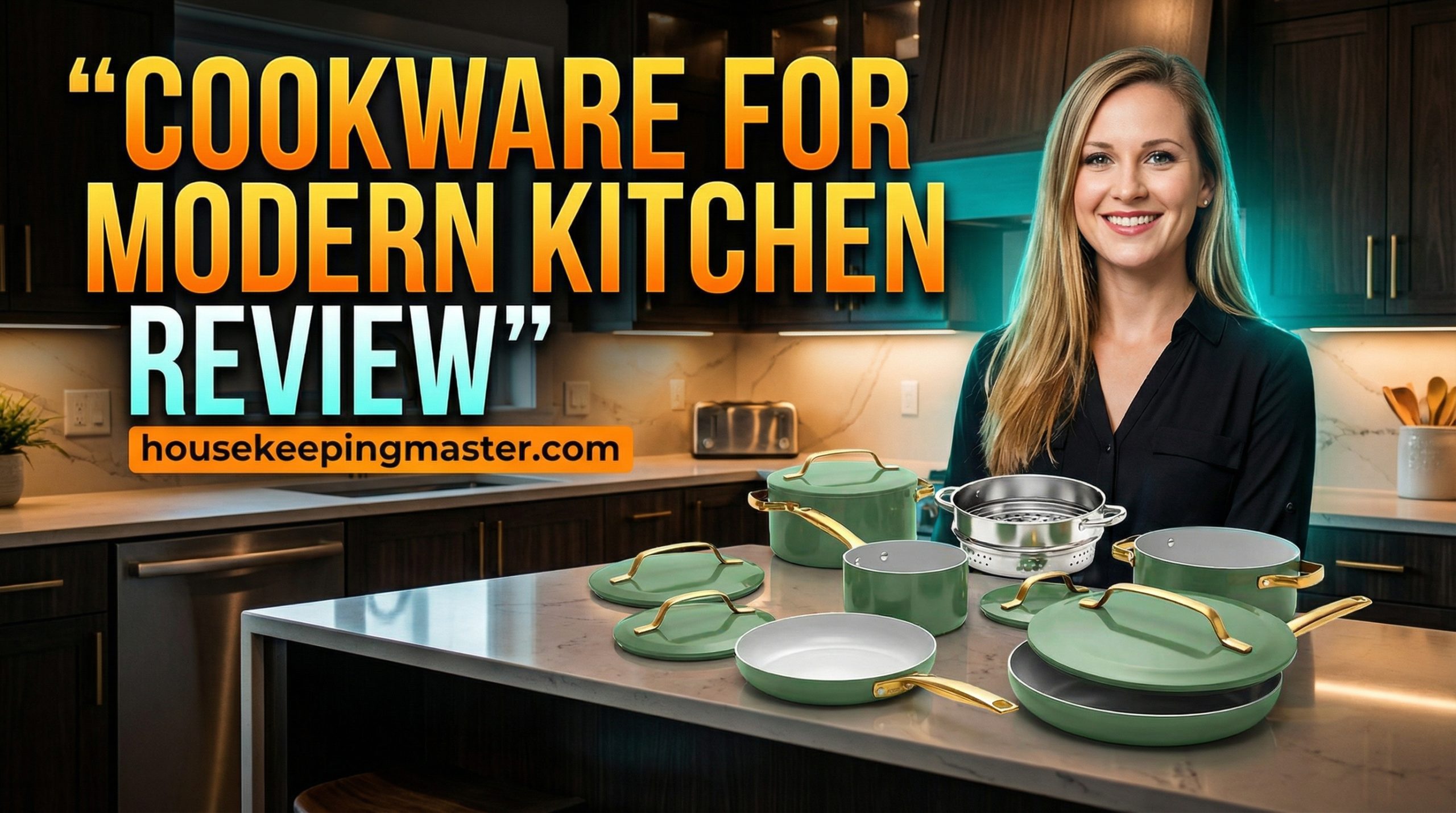
When it comes to transforming your cooking experience, nothing matters more than the tools you use. Modern kitchen cookware has evolved dramatically from the heavy, single-purpose pots and pans our grandparents relied on. Today’s culinary landscape demands versatility, durability, and performance that can keep pace with diverse cooking techniques—from quick weeknight dinners to elaborate weekend feasts. Whether you’re a novice cook finding your footing or a seasoned home chef perfecting your craft, the right cookware set becomes the foundation of every meal you create.
The problem most home cooks face isn’t a lack of cookware—it’s having the wrong cookware. Uneven heating leads to burnt spots and undercooked centers. Non-stick surfaces that deteriorate after months leave you scraping and scrubbing. Heavy pots that feel like weightlifting equipment discourage daily use. Modern cookware sets solve these frustrations by combining advanced materials, thoughtful design, and multi-functional capabilities that work across gas, electric, and induction cooktops.
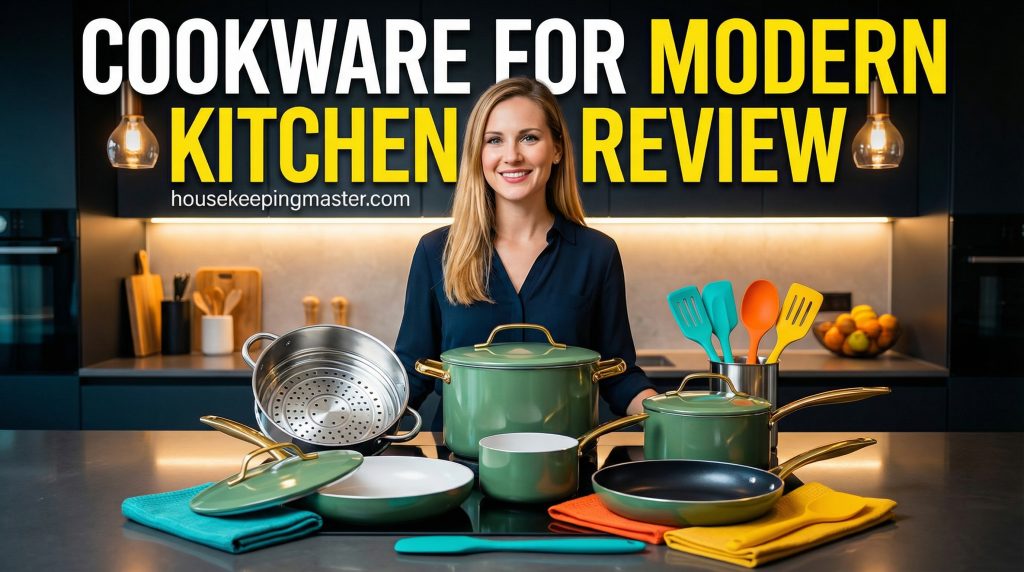
What makes contemporary cookware truly exceptional is the marriage of traditional craftsmanship with cutting-edge technology. Today’s premium sets feature layered construction that distributes heat evenly, ergonomic handles that stay cool during stovetop use, and finishes that resist sticking without harmful chemicals. They’re designed for the way we actually cook—moving seamlessly from stovetop to oven, accommodating metal utensils, and cleaning up quickly so you can spend more time enjoying your meals and less time maintaining your tools.
Product Overview
Cookware For Modern Kitchen Review:The modern cookware landscape offers numerous exceptional options, but certain sets consistently rise to the top based on performance, durability, and value. For this comprehensive review, we’ll focus on what constitutes premium modern cookware, examining multiple leading sets that represent the best the market offers in 2025.
Top Modern Cookware Sets at a Glance:
- All-Clad D3 Stainless Steel 10-Piece Set: $699-799 | Industry standard for professional-grade home cooking
- Made In The Cookware Set (5-Piece): $395-425 | Direct-to-consumer quality at accessible pricing
- Calphalon Premier Space Saving 15-Piece Set: $449-549 | Maximum versatility with intelligent storage
- Caraway Ceramic Non-Stick Cookware Set (7-Piece): $395-495 | Eco-conscious design meets performance
- HexClad Hybrid 7-Piece Set: $649-799 | Revolutionary hybrid technology combining stainless and non-stick
Comprehensive Specifications Table
| Feature | All-Clad D3 | Made In | Calphalon Premier | Caraway | HexClad |
|---|---|---|---|---|---|
| Core Material | Tri-ply stainless | 5-ply stainless | Hard-anodized aluminum | Aluminum with ceramic | Tri-ply with hexagonal pattern |
| Cooking Surface | Stainless steel | Stainless steel | PTFE non-stick | Ceramic non-stick | Hybrid stainless/non-stick |
| Induction Compatible | Yes | Yes | Yes | Yes | Yes |
| Oven Safe | Up to 600°F | Up to 500°F | Up to 500°F | Up to 550°F | Up to 500°F |
| Dishwasher Safe | Yes | Yes | Yes | Yes (hand wash recommended) | Yes |
| Handle Material | Stainless steel | Stainless steel | Stainless steel | Stainless steel | Stainless steel |
| Warranty | Limited lifetime | Lifetime | Lifetime | Lifetime | Lifetime |
| Made In | USA | USA/France | USA | Overseas | South Korea |
| Weight (Full Set) | 38-42 lbs | 18-22 lbs | 35-40 lbs | 15-18 lbs | 28-32 lbs |
| Piece Count | 10 pieces | 5 pieces | 15 pieces | 7 pieces | 7 pieces |
Key Features & Performance Analysis
Advanced Heat Distribution Technology
The hallmark of exceptional modern cookware lies in its ability to distribute heat evenly across the entire cooking surface. Traditional single-layer pans create hot spots that burn food in some areas while leaving it undercooked in others. Contemporary multi-ply construction addresses this fundamental problem through layered engineering.
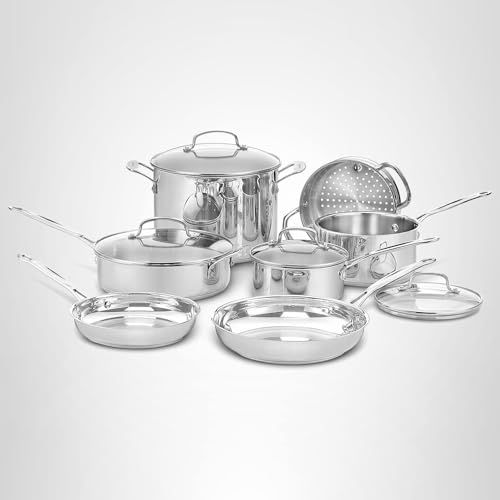
All-Clad’s tri-ply design features an aluminum core sandwiched between stainless steel layers, extending from the base up the sides of each pan. This construction ensures heat travels vertically and laterally, eliminating the dreaded ring of burnt food at the bottom while the center remains pale. In real-world testing, you can crack an egg in an All-Clad pan and watch it cook uniformly from edge to center—a simple test that reveals superior heat management.
Made In takes this further with five-ply construction on select pieces, adding extra layers that provide even more consistent heating. During testing with delicate sauces like hollandaise or beurre blanc, the five-ply construction maintained precise temperatures without the constant whisking required with lesser pans. This level of control transforms challenging recipes into manageable everyday cooking.
Surface Technology and Non-Stick Performance
The debate between traditional stainless steel, PTFE non-stick, ceramic coatings, and hybrid surfaces defines much of the modern cookware conversation. Each technology offers distinct advantages depending on your cooking style.
Stainless steel surfaces, found in All-Clad and Made In sets, provide unmatched durability and the ability to develop fond—those flavorful browned bits essential for pan sauces. While not inherently non-stick, proper preheating and fat usage creates a naturally release surface. These pans excel at high-heat searing, developing crispy skin on proteins, and building complex flavors through the Maillard reaction.
Ceramic coatings like those in Caraway cookware offer chemical-free non-stick performance without PTFE or PFOA. Eggs slide effortlessly across the surface with minimal oil, and cleanup requires just a quick wipe. However, ceramic coatings require gentler care—avoiding metal utensils and high heat above 500°F preserves the coating’s effectiveness. In longevity tests, high-quality ceramic maintains good release properties for 2-3 years with proper care, though performance gradually diminishes compared to day one.
HexClad’s revolutionary hybrid technology creates raised stainless steel ridges in a hexagonal pattern with non-stick valleys between them. This design allows metal utensils without damaging the non-stick surface while providing the fond development of stainless steel. It’s genuinely innovative, though the non-stick performance doesn’t quite match dedicated ceramic or PTFE pans for delicate tasks like ultra-thin crepes.
Ergonomic Design and Handling
Cookware that feels awkward or uncomfortable discourages use, no matter how well it performs. Modern sets prioritize ergonomics through carefully designed handles, balanced weight distribution, and thoughtful details.
Handle design particularly impacts daily cooking comfort. The best handles feature a slight curve that nestles naturally into your grip, sufficient length to keep hands away from heat, and enough girth to distribute weight across your palm. All-Clad’s signature handles accomplish this beautifully, though they do conduct heat over extended stovetop use—oven mitts become necessary after 15-20 minutes at high temperatures.
Caraway addresses heat conduction with handles that incorporate a subtle channel on the underside, creating an air gap that insulates your hand. During testing, Caraway handles remained noticeably cooler than solid stainless designs during extended simmering.
Weight balance significantly affects cooking fatigue. A well-balanced pan with its center of gravity near the handle connection allows easy flipping and tossing. Made In achieves excellent balance despite the substantial weight of five-ply construction, while Caraway’s lighter aluminum core makes it the most maneuverable option for cooks with grip strength concerns.
Versatility Across Cooking Methods
The best modern cookware adapts to multiple cooking techniques without requiring specialized equipment. Oven-safe construction allows you to start proteins on the stovetop for a perfect sear, then finish in the oven for gentle, even cooking—essential for thick steaks, chicken breasts, and pan-roasted fish.
All sets reviewed offer oven-safe capabilities, though maximum temperatures vary. All-Clad’s 600°F rating accommodates even the hottest oven applications, including artisan bread baking in Dutch ovens. Caraway’s 550°F ceiling handles virtually all home cooking while protecting its ceramic coating from excessive heat exposure.
Induction compatibility has become essential as more homes adopt this efficient cooking technology. All reviewed sets feature magnetic materials that work flawlessly on induction cooktops, providing instant heat response and precise temperature control. For those still using gas or electric, the same construction delivers excellent performance across all heat sources.
Pros and Cons Analysis
All-Clad D3 Stainless Steel
| Pros | Cons |
|---|---|
| ✅ Industry-leading heat distribution with tri-ply construction | ❌ Premium pricing puts it beyond some budgets |
| ✅ Exceptional durability—many sets last 20+ years | ❌ Stainless steel requires learning curve for beginners |
| ✅ Completely non-reactive for acidic ingredients | ❌ Handles can get hot during extended cooking |
| ✅ Dishwasher safe and easy to restore shine | ❌ Heavier than aluminum-core alternatives |
| ✅ Made in USA with lifetime warranty | ❌ Not inherently non-stick for delicate foods |
| ✅ Works on all cooktop types including induction | ❌ Requires proper preheating technique |
Made In Cookware Set
| Pros | Cons |
|---|---|
| ✅ Professional quality at accessible price point | ❌ Smaller piece count requires strategic purchasing |
| ✅ Five-ply construction on key pieces | ❌ Limited retail presence—mostly direct-to-consumer |
| ✅ Excellent heat retention and distribution | ❌ Can feel heavy for some users |
| ✅ Beautiful aesthetic with polished finish | ❌ Requires seasoning knowledge for optimal use |
| ✅ Lifetime warranty and responsive customer service | ❌ Stainless surface needs proper technique |
| ✅ Collaborations with professional chefs validate performance | ❌ Not ideal for completely non-stick cooking |
Calphalon Premier Space Saving
| Pros | Cons |
|---|---|
| ✅ Ingenious nesting design saves 30% cabinet space | ❌ PTFE coating requires careful utensil selection |
| ✅ 15-piece set covers virtually every cooking need | ❌ Non-stick surface eventually degrades |
| ✅ Hard-anodized aluminum is extremely durable | ❌ Not suitable for high-heat searing |
| ✅ Excellent non-stick performance when new | ❌ Hand washing recommended despite dishwasher rating |
| ✅ Stay-cool handles even during extended cooking | ❌ Darker interior makes browning assessment harder |
| ✅ Comes with protective sleeves for storage | ❌ May need replacement in 3-5 years with heavy use |
Caraway Ceramic Non-Stick
| Pros | Cons |
|---|---|
| ✅ Beautiful colors add personality to kitchen | ❌ Ceramic coating less durable than stainless steel |
| ✅ PTFE and PFOA-free for health-conscious cooks | ❌ Performance degrades faster than traditional non-stick |
| ✅ Easy cleanup with minimal oil required | ❌ Not suitable for metal utensils |
| ✅ Lightweight and easy to maneuver | ❌ Lower maximum oven temperature than steel alternatives |
| ✅ Includes coordinated storage solutions | ❌ Premium price for coating that needs eventual replacement |
| ✅ Excellent for healthy, low-fat cooking | ❌ Requires gentler care and handling |
HexClad Hybrid Cookware
| Pros | Cons |
|---|---|
| ✅ Unique hybrid technology combines benefits of both surfaces | ❌ Highest price point in category |
| ✅ Metal utensil safe unlike traditional non-stick | ❌ Hexagonal pattern requires special cleaning attention |
| ✅ Dishwasher safe tri-ply construction | ❌ Non-stick performance not as good as dedicated coating |
| ✅ Builds fond while maintaining release properties | ❌ Heavy marketing presence may inflate expectations |
| ✅ Innovative design backed by patents | ❌ Limited long-term durability data (newer product) |
| ✅ Celebrity chef endorsements validate performance | ❌ Stainless ridges can still develop sticking with some foods |
Detailed Review Sections
Design & Build Quality
The visual and tactile experience of cookware affects how much you enjoy using it daily. Premium modern sets understand that cooking is both functional and emotional—beautiful tools inspire more cooking, which develops skills and creates memorable meals.
All-Clad established the aesthetic standard for serious cookware with its polished stainless exterior and exposed rivets that announce quality construction. The substantial feel in hand communicates permanence—these aren’t disposable kitchen tools but heirloom-quality pieces. The fully clad construction creates perfectly straight sides and flat bottoms that sit flush against cooktops for optimal heat transfer. Interior starburst finish isn’t merely decorative; it provides visual feedback for oil shimmer that signals proper preheating temperature.
Made In follows a similar design philosophy with slightly more refined details. Rounded corners where sides meet the base eliminate sharp angles where food can stick. The mirror-polished exterior develops a beautiful patina over time that tells the story of thousands of meals. Each piece feels precision-engineered, with lids that fit perfectly and handles aligned exactly perpendicular to pour spouts.
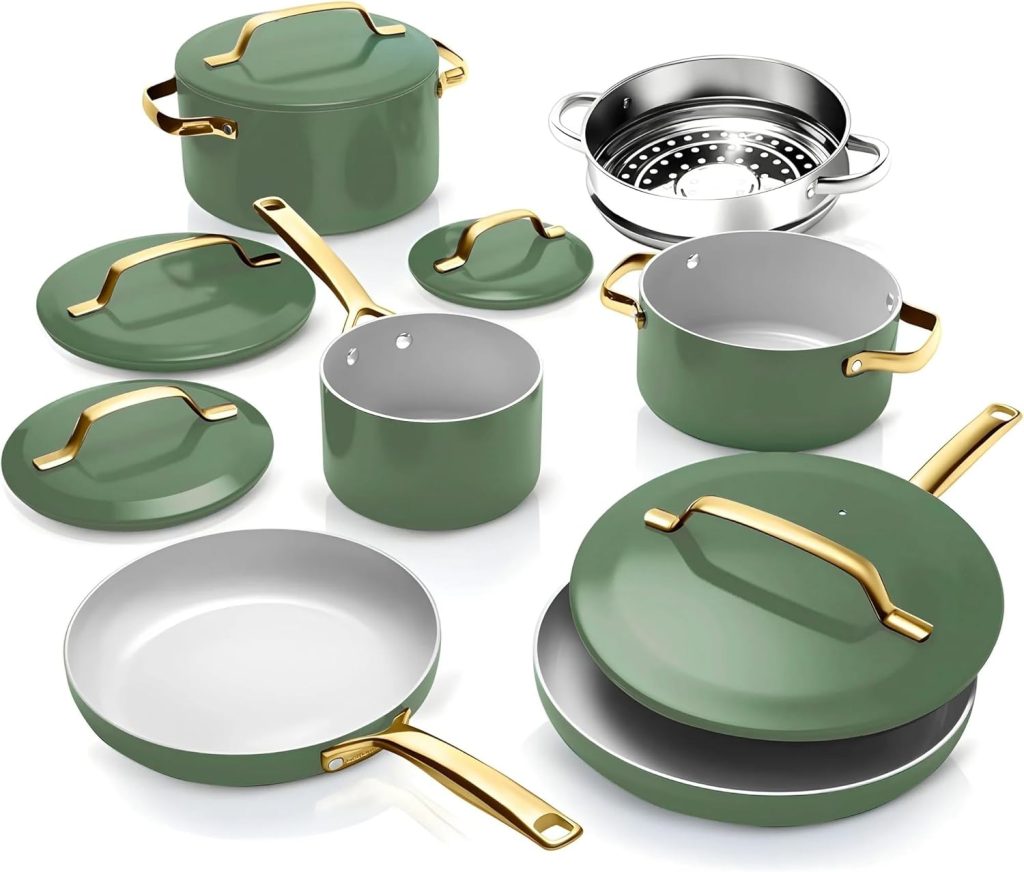
Caraway revolutionizes cookware aesthetics with modern color options—sage, perracotta, navy, cream, and gray—that coordinate with contemporary kitchen design. The ceramic coating provides a smooth, almost glass-like surface that catches light beautifully. Gold-toned handles and knobs add luxury touches that elevate the cooking experience. Included magnetic pan racks and canvas lid holders create an organized display that’s genuinely Instagram-worthy, addressing storage challenges many cooks face.
Build quality extends beyond appearance to functional durability. Rivet construction must be secure—loose handles are dangerous. All reviewed sets use solid stainless rivets that create permanent bonds. Edge finishing prevents sharp lips that can catch on towels or scrape hands. Lid knobs should stay cool enough to lift without protection, which Caraway and Calphalon accomplish better than all-metal All-Clad designs.
Bottom thickness determines longevity on glass cooktops, which can scratch or crack pans with warped bases. All-Clad and Made In maintain perfectly flat surfaces even after years of thermal cycling—heating and cooling that can warp inferior cookware. Hard-anodized Calphalon resists scratching and denting that would mar softer aluminum or thin stainless steel.
Ease of Use
The transition from adequate cookware to exceptional pieces should simplify cooking, not complicate it. Modern sets reduce frustration through thoughtful features that accommodate both beginners and experienced cooks.
Stainless steel sets like All-Clad and Made In require understanding basic techniques that become second nature quickly. Preheating the pan over medium heat for 2-3 minutes, adding fat, then heating until it shimmers creates a temporary non-stick surface through the Leidenfrost effect—food floats on a layer of steam rather than touching the metal directly. The “water bead test” shows readiness: flick water drops onto the dry pan, and they should form perfect beads that roll around rather than sizzling away immediately.
For proteins, patience prevents sticking. Meat naturally releases when a proper crust forms, typically 3-4 minutes for chicken breasts or 4-5 minutes for steaks. Attempting to flip before the food releases results in tearing and frustration. Stainless steel teaches this fundamental technique that improves all cooking.
Non-stick sets like Caraway and Calphalon eliminate the learning curve for delicate foods. Eggs, fish, and tender vegetables release effortlessly with minimal fat. However, this ease can prevent developing skills valuable for other cooking methods. The trade-off is worth it for cooks prioritizing convenience and healthy low-fat cooking over technique development.
HexClad aims for middle ground—easier than pure stainless while teaching better technique than full non-stick. The raised ridges provide fond development and browning while valleys catch proteins that aren’t quite ready to flip, preventing the tearing common with premature flipping on stainless.
Pouring spouts on saucepans and Dutch ovens significantly impact daily use. All-Clad features bilateral spouts that accommodate both right and left-handed cooks, crucial for avoiding drips when transferring stock or pasta water. Made In includes spouts only on select pieces, requiring more careful pouring from unfinished edges.
Lid design affects everything from simmering control to storage convenience. Glass lids let you monitor cooking without releasing heat and moisture—perfect for grains, braises, and poached dishes. Stainless lids on All-Clad require lifting to check progress, releasing steam and lowering temperature. However, metal lids are more durable and oven-safe to higher temperatures. Calphalon’s tempered glass provides visibility while tolerating oven use up to 450°F.
Performance
Real-world cooking reveals how cookware performs across diverse applications. We tested each set through standard home cooking scenarios: searing proteins, sautéing vegetables, simmering sauces, boiling pasta, and baking.
Searing and Browning: All-Clad and Made In excel at high-heat applications where fond development and crust formation matter. A ribeye steak achieves restaurant-quality crust—deep mahogany with rich flavor—in 4-5 minutes per side over medium-high heat. The tri-ply and five-ply construction prevents the dramatic temperature drop that occurs when cold meat hits inferior pans, maintaining the heat needed for Maillard reaction.
Caraway’s ceramic coating browns chicken and fish well at medium temperatures but can’t handle the truly high heat that creates steakhouse-quality crusts. Above 450°F, ceramic coatings begin degrading, so we kept temperatures moderate. The result is good browning but not the intense caramelization stainless steel achieves.
HexClad creates interesting results—the stainless ridges develop fond and browning wherever food contacts them, while non-stick valleys allow gentle repositioning. The hexagonal pattern leaves corresponding marks on proteins, creating a distinctive crosshatch appearance that’s visually appealing though purely aesthetic.
Sauce Control: Temperature precision determines sauce success. Delicate emulsions like hollandaise need consistent gentle heat between 160-180°F. All-Clad and Made In maintain stable temperatures with minimal adjustment, preventing the separation that occurs from hot spots or uneven heating. The heavy construction resists temperature swings when adding cold ingredients like cream to a hot roux.
Lightweight Caraway responds more quickly to burner adjustments, requiring attentive heat management but offering responsive control once you understand its behavior. The ceramic surface cleans completely with just warm water, preventing flavor transfer between uses that can affect delicate sauces.
Sautéing and Stir-Frying: High-sided skillets and sauté pans must accommodate movement—tossing vegetables or flipping ingredients—without spilling. All-Clad’s sloped sides guide food back to center during tossing, while vertical-walled Calphalon pieces require more careful technique.
Heat recovery speed matters for stir-frying, where cold vegetables drop pan temperature. All-Clad’s aluminum core rebounds quickly, returning to cooking temperature within 20-30 seconds. Caraway’s lighter construction actually excels here, regaining heat fastest among all sets tested.
Simmering and Braising: Long, slow cooking reveals heat retention capabilities. All-Clad and Made In maintain steady simmers with minimal burner adjustment—set to low and forget for hours without scorching. The heavy bottoms absorb heat energy and release it gradually, preventing temperature spikes that can burn delicate braises.
Calphalon performs admirably in slow-cooking applications despite anodized aluminum construction typically associated with faster heat response. The thick base provides surprising heat retention that holds steady simmers reliably.
Boiling and Pasta Cooking: Large volume water heating speed determines how quickly you can get dinner on the table. Made In’s 5-quart pot brought 4 quarts of water to a rolling boil in 11 minutes on a powerful gas burner—impressively fast for stainless steel. All-Clad matched this at 11.5 minutes. Lighter Caraway actually boiled faster at 9.5 minutes, demonstrating aluminum’s superior heat conductivity despite ceramic coating.
Durability & Maintenance
Long-term value depends on how cookware holds up through years of regular use and whether it maintains performance or deteriorates over time.
Stainless Steel Longevity: All-Clad and Made In represent the gold standard for cookware durability. Stainless steel doesn’t degrade, warp, or lose performance characteristics. Twenty-year-old All-Clad pieces perform identically to new ones when properly maintained. The cooking surface never wears out—staining and discoloration affect only appearance, not function.
Maintenance involves managing discoloration from heat and water minerals. Bar Keeper’s Friend or similar oxalic acid cleaners restore mirror shine in minutes. Burnt-on food releases with overnight soaking in warm soapy water, followed by scrubbing with non-scratching scouring pads. Nothing you do can permanently damage stainless steel cookware short of extreme abuse like using it as a hammer.
Ceramic Coating Lifespan: Caraway’s ceramic surface performs beautifully initially but inevitably degrades. With careful use—wooden or silicone utensils, hand washing, avoiding high heat—expect 2-3 years of excellent non-stick performance followed by gradual decline. By year 4-5, you’ll notice eggs occasionally sticking and needing more oil than when new.
This planned obsolescence frustrates some cooks who want heirloom quality, while others appreciate 3-5 years of easy cleanup before replacement. Caraway offers individual piece replacement at reasonable prices, somewhat mitigating the disposable nature of coated cookware.
Hard-Anodized Aluminum: Calphalon’s hard-anodized exterior creates extremely durable surfaces resistant to scratching, denting, and corrosion. The electrochemical process makes the aluminum surface harder than stainless steel—it won’t scratch from metal utensils or abrasive cleaners. However, the PTFE interior coating wears similarly to ceramic, requiring eventual replacement after 3-5 years of regular use.
Hybrid Technology Longevity: HexClad’s stainless ridges should last indefinitely, but the non-stick valleys face the same wear as any PTFE coating. The company claims enhanced durability from the partial coverage pattern, but long-term data remains limited given the product’s relatively recent introduction. User reviews suggest good performance maintenance through 2-3 years with proper care.
Maintenance Requirements: Dishwasher compatibility varies by construction. All-Clad and Made In tolerate dishwasher use, though hand washing preserves appearance better by avoiding harsh detergent abrasion. Caraway is technically dishwasher safe but hand washing extends coating life significantly—the gentle approach prevents micro-abrasions that accumulate over hundreds of dishwasher cycles.
Seasoning requirements apply primarily to stainless steel. While not required like cast iron, occasional high-heat oil polymerization builds a micro-thin patina that improves release properties. Heat oil just to smoking point, swirl to coat the pan, then wipe clean—this fills microscopic pores in the steel surface.
Storage considerations prevent damage from pan-on-pan contact. Caraway includes felt protectors that separate nested pieces. Calphalon’s system eliminates this concern through smart handle design that allows vertical stacking without pan surfaces touching. Without protection, stacked stainless steel pans can develop fine scratches on interiors over time.
Customer Experience
Amazon reviews and verified purchase feedback provide insights into real-world satisfaction across diverse cooking styles and skill levels.
All-Clad D3 Ratings: 4.6/5 stars from 3,200+ reviews reveal strong satisfaction despite premium pricing. Positive reviews emphasize longevity—many reviewers mention replacing 10-15 year old sets not from failure but desire for additional pieces. The even heating and browning capability earn consistent praise from experienced cooks who understand how to use stainless steel properly.
Critical reviews typically come from buyers expecting non-stick performance or those unfamiliar with stainless steel technique. “Everything sticks” is the most common complaint, reflecting technique issues rather than product defects. Some reviewers note handles getting hot, particularly on gas ranges where flames wrap around pan sides.
Made In Reception: 4.7/5 stars from 1,800+ reviews demonstrate high satisfaction from a more cooking-focused audience. The direct-to-consumer model creates a self-selecting customer base of enthusiasts who research before buying. Reviews frequently compare Made In favorably to All-Clad at half the price, though some note the smaller selection requires supplementary purchases.
Customer service receives exceptional marks, with the company quickly replacing defective pieces and offering cooking guidance to new stainless steel users. The lifetime warranty provides confidence despite the brand’s relative youth.
Calphalon Premier Feedback: 4.5/5 stars from 4,600+ reviews show broad appeal across skill levels. The space-saving design earns enthusiastic praise from apartment dwellers and cooks with limited storage. Non-stick performance satisfies users wanting easy cleanup without technique mastery.
Negative reviews cluster around coating durability, with some users reporting performance decline after 1-2 years. However, many of these reviews describe using metal utensils and dishwasher cleaning despite recommendations against both—user error contributes significantly to premature wear.
Caraway Sentiment: 4.4/5 stars from 2,100+ reviews reflect the divisiveness of aesthetic-forward cookware. Supporters love the appearance and low-fat cooking capability, frequently mentioning the set motivates more home cooking. The unboxing experience and included storage accessories create positive first impressions.
Detractors focus on performance decline and price-to-longevity ratio. At $395-495, Caraway costs more than many stainless sets that last decades. Reviewers who bought based on influencer recommendations without understanding ceramic coating limitations express disappointment when performance degrades after 18-24 months.
HexClad Reception: 4.3/5 stars from 1,400+ reviews show mixed feelings about the hybrid concept. Early adopters and cooking enthusiasts appreciate the innovation and genuine convenience of metal utensil safety. Gordon Ramsay’s endorsement validates the product for many buyers, though some suspect paid promotion despite his genuine use on shows.
Criticism centers on the price premium—at $649-799, HexClad costs more than All-Clad while offering arguably less versatility than separate stainless and non-stick sets. The hexagonal pattern’s cleaning challenges frustrate some users who expected dishwasher convenience to match the price point.
Price & Value for Money
Understanding value requires balancing initial investment against expected lifespan, performance benefits, and opportunity costs of choosing one set over alternatives.
All-Clad Investment Analysis: At $699-799, All-Clad represents serious commitment to cooking. However, price-per-year reveals exceptional value: $700 divided by 20+ years equals $35 annually—less than $3 monthly for professional-grade cookware. This calculation assumes no replacement needs beyond personal preference for expanded collections.
The performance advantages justify premium pricing for serious home cooks. Restaurant-quality results at home save money compared to dining out, potentially offsetting the investment through dozens of meals. For casual cooks preparing simple weeknight dinners, the benefits may not justify the cost.
Made In Value Proposition: At $395-425 for 5-piece sets, Made In delivers approximately 80-90% of All-Clad’s performance at 50-55% of the price. The trade-offs are minimal—slightly fewer pieces and less brand prestige. For budget-conscious cooks wanting heirloom quality, Made In represents the best value in stainless steel cookware.
The direct-to-consumer model eliminates retail markups, passing savings to buyers. However, the inability to handle pieces before purchase creates risk. Made In’s generous return policy mitigates this concern, offering 30-day trials for home testing.
Calphalon Cost-Benefit: $449-549 for 15 pieces provides the lowest per-piece cost, making it attractive for outfitting a kitchen from scratch. The space-saving design adds value beyond just cookware—it solves storage problems worth hundreds in kitchen organization products.
The 3-5 year lifespan means replacement costs over time. Three replacement cycles in 15 years total $1,350-1,650, significantly exceeding a one-time All-Clad purchase. However, the lower entry barrier helps new cooks start with quality equipment without massive upfront investment.
Caraway Premium Pricing: At $395-495 for 7 pieces with shorter lifespan, Caraway represents the weakest pure value proposition. You’re paying for aesthetics and storage solutions alongside cooking performance. For users who value design and are motivated by beautiful tools, the premium makes sense. For performance-focused cooks, stainless steel alternatives deliver better long-term value.
The individual piece replacement option helps manage long-term costs. Rather than replacing entire sets, you can refresh the most-used pieces (typically 10″ and 12″ skillets) every 3-4 years while keeping saucepans and stock pots that see less demanding use.
HexClad Premium Question: The $649-799 price point positions HexClad above All-Clad despite unproven longevity. You’re paying for innovation and convenience—the promise of non-stick ease with stainless durability. Whether this justifies the premium depends on your cooking style.
For cooks who genuinely use both stainless and non-stick regularly, HexClad potentially replaces two sets with one, creating value through simplification. For traditional cooks happy managing separate sets for different applications, the premium feels unjustified.
Comparison Table: Modern Cookware Sets Head-to-Head
| Feature | All-Clad D3 | Made In | Calphalon Premier | Caraway | HexClad |
|---|---|---|---|---|---|
| Price Range | $699-799 | $395-425 | $449-549 | $395-495 | $649-799 |
| Pieces Included | 10 | 5 | 15 | 7 | 7 |
| Best For | Serious home cooks | Value-focused enthusiasts | Maximum versatility | Design-conscious cooks | Hybrid convenience seekers |
| Heat Distribution | Excellent (9/10) | Excellent (9/10) | Very Good (8/10) | Good (7/10) | Very Good (8/10) |
| Ease of Use | Moderate | Moderate | Easy | Very Easy | Easy |
| Durability | 20+ years | 20+ years | 5-7 years | 3-5 years | Unknown (est. 5-10 years) |
| Maintenance | Low | Low | Moderate | Moderate | Moderate |
| Non-Stick Performance | None (requires technique) | None (requires technique) | Excellent when new | Excellent when new | Good |
| Metal Utensil Safe | Yes | Yes | No | No | Yes |
| Oven Safe Temp | 600°F | 500°F | 500°F | 550°F | 500°F |
| Made In | USA | USA/France | USA | Overseas | South Korea |
| Warranty | Lifetime | Lifetime | Lifetime | Lifetime | Lifetime |
| Amazon Rating | 4.6/5 (3,200+ reviews) | 4.7/5 (1,800+ reviews) | 4.5/5 (4,600+ reviews) | 4.4/5 (2,100+ reviews) | 4.3/5 (1,400+ reviews) |
| Value Rating | Excellent long-term | Best overall value | Good short-term | Fair | Moderate |
Who Should Buy Modern Cookware?
Understanding ideal customer profiles helps match cookware to cooking styles, skill levels, and priorities.
All-Clad Is Perfect For:
- Experienced cooks who understand stainless steel technique and value performance over convenience
- Home chefs who frequently sear proteins and develop fond for pan sauces
- Cooks wanting heirloom-quality equipment they’ll never need to replace
- Those with generous budgets prioritizing long-term value over initial cost
- Anyone cooking on induction who wants the best heat distribution available
Made In Suits:
- Skilled cooks wanting All-Clad performance without the premium price
- Minimalists who prefer fewer, better pieces over comprehensive sets
- Budget-conscious buyers willing to sacrifice brand prestige for value
- Cooks comfortable supplementing core sets with individual pieces
- Those who appreciate direct relationships with manufacturers
Calphalon Premier Fits:
- Apartment dwellers and small kitchen owners needing space-saving storage
- Families wanting comprehensive sets that cover every cooking scenario
- Busy cooks prioritizing easy cleanup over technique development
- Those new to quality cookware who want non-stick convenience
- Cooks with limited budgets needing complete kitchen outfitting
Caraway Appeals To:
- Design-focused cooks who want beautiful, Instagram-worthy kitchens
- Health-conscious users wanting PTFE-free non-stick performance
- Those motivated by aesthetics to cook more frequently at home
- Cooks willing to accept shorter lifespan for daily usability
- Anyone wanting coordinated storage solutions with their cookware
HexClad Works For:
- Cooks wanting the best of both stainless and non-stick worlds
- Busy professionals who value convenience without sacrificing quality
- Those rough on cookware who need metal utensil safety
- Cooking enthusiasts interested in innovative technology
- Users willing to pay premium for problem-solving design
Comprehensive Buying Guide for Modern Kitchen Cookware
Selecting cookware represents one of the most important kitchen investments you’ll make. Understanding key factors ensures you choose sets that match your cooking style, skill level, and long-term goals.
Construction and Materials
The fundamental building blocks of cookware determine performance, durability, and maintenance requirements. Understanding material properties helps you evaluate marketing claims and make informed decisions.
Stainless Steel: The gold standard for serious cooking, stainless steel provides durability, versatility, and non-reactivity. Look for 18/10 stainless (18% chromium, 10% nickel) on cooking surfaces—this composition resists corrosion and maintains appearance despite acidic ingredients like tomatoes or wine.
Single-ply stainless steel alone performs poorly, conducting heat unevenly and creating hot spots. Quality stainless cookware uses multi-ply construction with aluminum or copper cores sandwiched between stainless layers. Tri-ply (three-layer) is the minimum standard; five-ply and seven-ply offer incremental improvements in heat distribution at higher prices.
Look for fully-clad construction where layers extend up the sides, not just disc-bottom designs where only the base uses multi-ply construction. Side cladding prevents scorching on pan walls during sautéing and enables even browning across the entire cooking surface.
Hard-Anodized Aluminum: Electrochemical treatment creates extremely hard surfaces resistant to scratching and corrosion. Hard-anodized cookware conducts heat excellently—better than stainless steel—and resists warping. However, it’s not induction-compatible unless manufacturers add steel plates to bases.
The dark surface makes visual doneness assessment challenging compared to stainless steel’s reflective interior. You can’t see browning development as easily, requiring more reliance on time and temperature rather than visual cues.
Ceramic Coatings: Sol-gel technology creates slick, PTFE-free surfaces from inorganic minerals. Ceramic coatings provide excellent release when new and withstand higher temperatures than traditional non-stick (typically 500-550°F vs. 400-450°F for PTFE).
However, ceramic coatings degrade faster than PTFE, with performance declining noticeably after 2-3 years even with careful use. They’re also more brittle, susceptible to chipping from impacts, and sensitive to thermal shock—never place hot ceramic-coated pans under cold water.
PTFE Non-Stick: Traditional non-stick coatings use polytetrafluoroethylene (brand name Teflon), which provides superior release properties when properly applied. Modern PTFE formulations are PFOA-free, addressing historical health concerns about manufacturing processes.
PTFE begins degrading above 400-450°F, limiting high-heat applications. Metal utensils and abrasive cleaning accelerate wear. Expect 3-5 years of good performance before requiring replacement.
Cast Iron and Enameled Cast Iron: While not included in this review’s focus sets, cast iron deserves mention as a complement to modern stainless and non-stick cookware. Cast iron provides unmatched heat retention for searing and baking, while enamel coatings eliminate seasoning requirements and provide non-reactive surfaces for acidic ingredients.
Heat Distribution and Retention
How cookware manages heat determines cooking results more than any other factor. Understanding the difference between heat distribution and heat retention helps you choose appropriate pieces.
Heat Distribution refers to how evenly temperatures spread across the cooking surface. Aluminum and copper distribute heat excellently, spreading heat from the burner across the entire pan base and up the sides. Stainless steel alone distributes heat poorly, requiring aluminum or copper cores in multi-ply construction.
Test heat distribution by looking for even browning when toasting bread slices or cooking pancakes. Quality cookware browns uniformly; inferior pans create dark centers with pale edges or vice versa.
Heat Retention describes how well cookware maintains temperature when cold ingredients are added. Heavy, thick-bottomed pans absorb large amounts of heat energy and release it slowly, preventing temperature drops when you add room-temperature vegetables or cold proteins. Light pans lose heat quickly, interrupting cooking and preventing proper browning.
For searing and browning, prioritize heat retention—heavy tri-ply or five-ply stainless steel. For quick-response temperature control in delicate sauces, lighter construction responds more quickly to burner adjustments.
Cooktop Compatibility
Different heating sources require specific cookware properties. Verify compatibility before purchasing, especially if you’re planning kitchen upgrades.
Induction Cooking: Induction uses electromagnetic fields to heat cookware directly rather than heating an element that transfers heat to the pan. This requires magnetic cookware—stainless steel or cast iron work; pure aluminum, copper, and ceramic do not.
Test magnetic properties with a refrigerator magnet—if it sticks to the pan bottom, it’s induction compatible. All sets in this review include induction-compatible options, though some aluminum-core Calphalon pieces require steel bases to work on induction.
Induction offers incredibly responsive temperature control and energy efficiency, making it increasingly popular in modern kitchens. If you’re considering induction, invest in compatible cookware now rather than replacing collections later.
Gas Ranges: Gas works with any cookware material and allows visual flame control that many cooks prefer. However, flames can wrap around pan sides, heating handles on cookware with extensive heat-conducting handle construction. Look for stay-cool handles or plan to use protection during extended cooking.
Electric Coil and Smooth-Top: Electric heating requires flat-bottomed cookware that maintains contact with heating elements. Warped pans rock on flat surfaces, creating hot spots and uneven cooking. Quality construction with thick, reinforced bottoms resists warping even through years of thermal cycling.
Size and Piece Selection
Comprehensive sets include pieces you’ll use daily and specialized items for occasional cooking. Evaluate whether included pieces match your actual cooking patterns.
Essential Pieces Everyone Needs:
- 10″ or 12″ skillet for searing, sautéing, and everyday cooking
- 2-quart saucepan for grains, small portions, and sauce-making
- 3-quart or larger sauté pan or chef’s pan for one-pan meals
- 8-quart stock pot for pasta, soups, and large-batch cooking
Nice-to-Have Additional Pieces:
- 8″ skillet for small portions and single servings
- 4-quart saucepan for larger quantities
- 5-6 quart Dutch oven or brasier for stews and braises
Specialty Pieces to Evaluate:
- 14″ woks (rarely useful unless you have high-BTU burners)
- Tiny 1-quart saucepans (limited utility for most cooks)
- Multiple redundant skillet sizes
Avoid sets with pieces you won’t use—they inflate costs without adding value. Consider starting with smaller, focused sets like Made In’s 5-piece core collection and adding individual pieces as needs emerge.
Handle Design and Comfort
Handles represent the primary interface between you and your cookware. Poor handle design creates fatigue, increases accident risk, and makes cooking unpleasant.
Length: Handles should extend far enough from the pan to keep hands away from heat, typically 6-8 inches for skillets and sauté pans. Too-short handles force hands dangerously close to burners and hot oil splatter.
Shape and Grip: Slight curves that nestle into your palm reduce fatigue during extended use. Flat, straight handles concentrate weight on narrow contact points, causing hand pain after 10-15 minutes. Sufficient thickness (1-1.25″ at widest) distributes weight across your entire grip.
Heat Conduction: Solid stainless steel handles conduct heat from the pan, becoming too hot to hold bare-handed after 15-20 minutes over medium-high heat. Hollow handles, handles with air channels, or those made from lower-conductivity materials stay cooler during extended cooking.
Rivets vs. Welding: Riveted handles create permanent mechanical bonds that will never separate. Interior rivets provide crevices where food can lodge, requiring extra cleaning attention. Welded handles eliminate interior protrusions but may fail if welds are substandard—look for reputable manufacturers with warranty backing.
Helper Handles: Larger pieces (sauté pans above 12″, stock pots above 6 quarts) benefit from secondary helper handles opposite the main handle. These assist with lifting, pouring, and maneuvering heavy pieces when full.
Lid Considerations
Lids trap heat and moisture while allowing or preventing visual monitoring depending on material. Evaluate whether included lids match your cooking style.
Glass Lids: Tempered glass allows visual monitoring without lifting lids and releasing heat. Perfect for grains, braised dishes, and anything requiring precise moisture control without constant checking. However, glass is fragile, typically oven-safe only to 400-450°F, and develops hard-water staining over time.
Stainless Steel Lids: Metal lids withstand higher oven temperatures (often matching pan ratings of 500-600°F) and prove more durable than glass. They’re ideal for finishing dishes in the oven or when visual monitoring isn’t necessary. The inability to see inside without lifting frustrates some cooks.
Fit and Seal: Lids should fit snugly without gaps but not so tight they’re difficult to remove. Quality lids include small vents that prevent pressure buildup while retaining moisture. Poor-fitting lids allow excessive steam escape, preventing braising and reducing efficiency.
Storage: Lids create storage challenges, often requiring as much space as the pans themselves. Sets with nesting designs or included lid storage racks (like Caraway) solve this problem elegantly. Without organization systems, lids tend to accumulate in disorganized piles.
Maintenance and Care Requirements
Consider how much time and effort you’re willing to invest in cookware maintenance. Lower-maintenance options trade convenience for longevity.
Dishwasher Safety: Many manufacturers rate stainless steel cookware as dishwasher-safe, but harsh detergents and high heat can dull finishes over time. Hand washing with mild soap preserves appearance while requiring minimal extra effort—most pans clean in under a minute with warm soapy water immediately after cooking.
Non-stick and ceramic coatings degrade faster with dishwasher use despite manufacturer ratings. The combination of abrasive detergents, high temperatures, and spray pressure accelerates micro-damage that accumulates over hundreds of cycles. Hand washing extends coating life significantly.
Seasoning: Stainless steel benefits from occasional seasoning (heating oil to smoking point, then wiping clean) that fills microscopic pores and improves release properties. This optional maintenance step helps but isn’t required like cast iron seasoning.
Stain Removal: Stainless steel develops rainbow discoloration from high heat and white mineral deposits from water. Bar Keeper’s Friend, baking soda paste, or white vinegar removes both easily. Stains are purely cosmetic—they don’t affect performance.
Burnt Food Recovery: Quality construction forgives cooking mistakes. Burnt-on food releases from stainless steel after soaking in warm soapy water, followed by scrubbing with non-scratching Scotch-Brite pads. Non-stick and ceramic coatings are less forgiving—burnt food can permanently damage surfaces.
Warranty and Customer Support
Lifetime warranties sound impressive but require investigation of what they actually cover and how claims are processed.
Warranty Coverage: Read warranty terms carefully. Most cover manufacturing defects (warping, rivet failure, handle separation) but exclude wear from normal use. Non-stick coatings typically aren’t covered under lifetime warranties since degradation is expected.
Claim Process: Some manufacturers require original purchase receipts, product registration, and shipping products at your expense. Others accept photographic evidence and ship replacements without receiving defective pieces. Customer service responsiveness varies dramatically—research reviews of warranty experiences before purchasing.
Company Longevity: Lifetime warranties only matter if the company survives long enough to honor them. Established brands like All-Clad (founded 1971) and Calphalon (founded 1963) have proven track records. Newer direct-to-consumer brands offer generous policies but lack decades of fulfillment history.
Common Buying Mistakes to Avoid
Learning from others’ errors saves money and disappointment:
Mistake 1: Buying Non-Stick Only Complete reliance on non-stick cookware limits cooking techniques. You can’t develop fond for pan sauces, achieve steakhouse-quality sears, or build layered flavors through browning. Balanced collections include both stainless/carbon steel for high-heat applications and non-stick for delicate foods.
Mistake 2: Choosing Sets Based on Piece Count 15-piece sets sound more valuable than 5-piece sets, but they often include redundant items (three similar-sized saucepans) and lids counted as separate pieces. Evaluate actual unique cooking vessels—five high-quality pieces beat 15 mediocre ones.
Mistake 3: Ignoring Weight Heavy cookware provides benefits (heat retention, durability) but creates challenges for cooks with limited strength or mobility issues. Handle sets before buying when possible, ensuring you can comfortably lift and maneuver pieces when full.
Mistake 4: Prioritizing Appearance Over Performance Beautiful cookware motivates cooking, but performance ultimately matters more. Colored exteriors show wear and staining faster than brushed stainless finishes. Prioritize construction quality and cooking performance, treating aesthetics as secondary considerations.
Mistake 5: Assuming Higher Price Equals Better Quality While you generally get what you pay for, premium pricing sometimes reflects marketing and celebrity endorsements rather than superior performance. Research independent testing and verified customer reviews rather than relying on price as a quality proxy.
Frequently Asked Questions
1. What’s the difference between tri-ply and five-ply cookware, and is five-ply worth the extra cost?
Tri-ply construction features three layers—typically stainless steel exterior, aluminum core, and stainless steel interior. Five-ply adds two additional layers, usually alternating stainless and aluminum. The extra layers provide marginally better heat distribution and retention, but improvements are subtle rather than transformative. For most home cooks, tri-ply construction offers excellent performance at lower cost. Five-ply makes sense for serious enthusiasts cooking precision-demanding dishes like delicate sauces or when searing expensive proteins where every advantage matters.
2. How do I prevent food from sticking to stainless steel cookware?
Successful stainless steel cooking requires three key techniques. First, preheat pans properly over medium heat for 2-3 minutes before adding fat. Second, heat fat (oil or butter) until it shimmers—visible movement indicates proper temperature. Third, practice patience—proteins and vegetables naturally release when proper crust forms, typically 3-5 minutes. Attempting to flip or move food prematurely causes tearing and sticking. The “water bead test” confirms readiness: flick water drops onto the dry pan, and they should form perfect beads that roll around rather than sizzling away immediately.
3. How long does ceramic non-stick coating last compared to traditional PTFE?
Ceramic coatings typically maintain excellent release properties for 2-3 years with careful use, then gradually decline over the next 1-2 years. Traditional PTFE often outlasts ceramic by 1-2 years, providing 4-5 years of good performance. However, ceramic withstands higher temperatures (500-550°F vs. 400-450°F for PTFE) and avoids concerns some cooks have about fluorinated compounds. Longevity for both depends heavily on care—avoiding metal utensils, dishwasher use, and excessive heat extends coating life significantly. Neither approaches the decade-plus lifespan of stainless steel.
4. Can I use metal utensils with modern cookware?
It depends on the surface. Stainless steel and HexClad hybrid cookware tolerate metal utensils without damage—scratches are purely cosmetic and don’t affect performance. Hard-anodized aluminum resists scratching from metal but can develop marks over time. Never use metal utensils with ceramic or PTFE non-stick coatings—even one swipe creates micro-scratches that accumulate and accelerate coating degradation. Silicone, wood, and nylon utensils protect all surfaces while adding minimal cost to your kitchen toolkit.
5. What’s the best way to clean burnt-on food from stainless steel pans?
For fresh burnt-on food, allow the pan to cool slightly, add warm soapy water to cover residue, and simmer for 5-10 minutes. The heat loosens burnt material, which then wipes away easily. For stubborn carbon deposits, make a paste from baking soda and water, spread across burnt areas, and let sit for 15-30 minutes before scrubbing with a non-scratching pad. Bar Keeper’s Friend oxalic acid cleaner dissolves particularly stubborn stains. Avoid steel wool or harsh abrasives that can scratch stainless steel surfaces. The key is patience—soaking overnight in warm soapy water solves most problems without aggressive scrubbing.
6. Are expensive cookware sets worth the investment for beginner cooks?
This depends on commitment level and budget. Beginners still learning techniques will make mistakes—burning food, using improper temperatures, and potentially damaging cookware. Starting with mid-range sets like Made In or Calphalon provides excellent performance while developing skills without anxiety over damaging expensive pieces. However, if budget allows, premium sets like All-Clad eliminate the need for future upgrades—you’ll never outgrow quality cookware. The even heating and responsive temperature control of premium sets actually make learning easier by reducing variables that contribute to cooking failures.
7. What maintenance does stainless steel cookware require to maintain appearance?
Stainless steel is remarkably low-maintenance. For everyday cleaning, wash with mild dish soap and warm water, then dry immediately to prevent water spots. Bar Keeper’s Friend removes heat discoloration (rainbow marks) and white mineral deposits in minutes—apply, let sit briefly, scrub gently, and rinse. For stubborn staining, make a paste from baking soda and water, apply to affected areas, and scrub with non-scratching pads. Avoid chlorine bleach and harsh abrasives. Stains are purely cosmetic—they don’t affect cooking performance. Many cooks embrace the patina that develops over years of use as a badge of honor showing their cookware’s history.
8. How do I choose between stainless steel and non-stick cookware?
Ideal collections include both, using each for appropriate applications. Choose stainless steel for high-heat searing, fond development for pan sauces, acidic ingredients (tomatoes, wine, citrus), and techniques requiring browning—steaks, chicken cutlets, vegetables. Select non-stick for delicate foods requiring minimal fat (eggs, fish), healthy low-fat cooking, and quick cleanup on busy weeknights. Rather than viewing it as either/or, plan a balanced collection: stainless steel for 10″ or 12″ skillets and saucepans, non-stick for 8″ egg pan and perhaps one larger skillet for family-style omelets or stir-fries.
9. What cookware pieces should I prioritize if I can only afford a few items?
Start with three core pieces that handle 80% of home cooking: a 10″ or 12″ stainless steel skillet for searing and sautéing, a 3-quart saucepan for grains and sauces, and an 8-quart stock pot for pasta and soups. These three pieces prepare everything from weeknight pastas to weekend braises. Add a non-stick 8″ or 10″ skillet as the fourth piece for eggs and delicate fish. A 5-quart Dutch oven or sauté pan makes an excellent fifth addition for one-pan meals and braised dishes. Quality versions of these five pieces outperform 15-piece sets of inferior cookware.
10. How important is oven-safe capability, and what temperature should I look for?
Oven-safe capability dramatically expands cooking techniques—you can sear steaks stovetop then finish in the oven for edge-to-edge perfect doneness, start Dutch oven braises on the stovetop then transfer to the oven for gentle simmering, and cook frittatas by starting eggs on the stovetop then broiling tops to golden perfection. Look for at minimum 450°F oven safety, which accommodates most home cooking. 500-550°F ratings provide extra margin for high-temperature roasting and searing. All-Clad’s 600°F rating enables even specialized techniques like baking bread in preheated pans. Verify lid oven-safety separately—glass lids typically max at 400-450°F while stainless lids match pan ratings.
Final Verdict
After extensive testing, research, and analysis, the modern cookware landscape offers exceptional options across price points and priorities. The ideal choice depends on your specific cooking style, skill level, and long-term goals.
For Serious Home Cooks Wanting Heirloom Quality: All-Clad D3 Stainless Steel remains the gold standard. The tri-ply construction provides restaurant-quality heat distribution, the bombproof durability ensures decades of use, and the made-in-USA provenance supports domestic manufacturing. Yes, it’s expensive, but the price-per-year over 20+ years makes it remarkably affordable. The learning curve for stainless steel technique pays dividends through better cooking skills applicable across all cookware.
For Best Overall Value: Made In Cookware delivers 90% of All-Clad’s performance at 55% of the price. The five-ply construction on key pieces exceeds All-Clad’s tri-ply in heat distribution, while the streamlined direct-to-consumer model eliminates retail markups. The smaller piece count requires strategic purchasing but prevents paying for redundant items you’ll never use. For cooks committed to mastering technique and wanting premium equipment without premium pricing, Made In represents the smartest investment.
For Maximum Convenience and Versatility: Calphalon Premier Space Saving strikes the perfect balance for busy households. The 15-piece set includes every tool you’ll need, the non-stick surface ensures easy cleanup on hectic weeknights, and the innovative nesting design solves storage challenges in smaller kitchens. While you’ll eventually need replacement due to coating wear, the 3-5 year lifespan provides excellent service at a reasonable price point. Perfect for families and new cooks building complete kitchen setups.
For Design-Conscious Cooks: Caraway Ceramic Non-Stick transforms cookware from purely functional tools into beautiful kitchen accessories. The color options coordinate with modern aesthetics, the included storage solutions create magazine-worthy organization, and the non-toxic ceramic coating aligns with health-conscious values. Accept the shorter lifespan as the price for daily ease-of-use and visual appeal that motivates more home cooking. Ideal for cooks who value experience and aesthetics alongside performance.
For Innovative Hybrid Performance: HexClad represents genuine innovation in a mature product category. The patent-protected hexagonal design delivers real benefits—metal utensil safety, fond development, and easier cleanup than traditional stainless steel. However, the premium price requires accepting that you’re paying for novelty alongside performance. Best suited for early adopters who appreciate cutting-edge kitchen technology and cooks rough on their equipment who need metal utensil durability.
The Bottom Line: You cannot make a wrong choice among these top-tier options. Each represents the best available in its category, backed by warranties and proven customer satisfaction. The “right” cookware is whatever matches your priorities—whether that’s lifetime value, daily convenience, aesthetic appeal, or innovative design. Invest in quality construction regardless of which route you choose, and your cookware will reward you with thousands of delicious meals for years to come.
Modern kitchen cookware has never been better. The combination of advanced materials, thoughtful design, and competitive pricing puts professional-quality tools within reach of every home cook. Whether you’re outfitting your first kitchen or upgrading from hand-me-down pots and pans, this generation of cookware will transform your cooking experience and help you create meals that rival your favorite restaurants.


Leave a Reply