
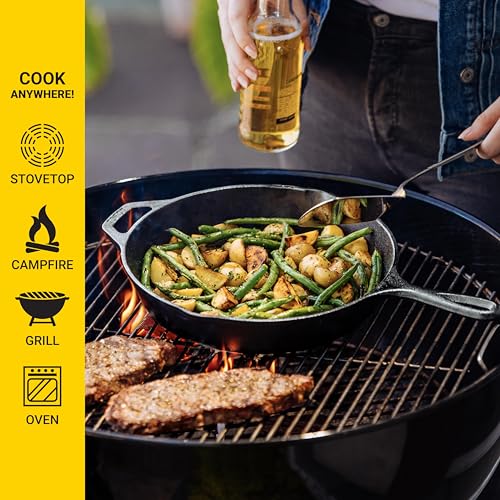
Both are winners: bare cast iron for searing, enameled cast iron for easy cleanup and acidic dishes.
I remember burning the first steak I tried in a new pan, then switching between a bare skillet and an enameled pot for weeks. The cast iron vs enameled cast iron choice kept coming up in my kitchen tests. I’ve used both for roasting, braising, baking, and one-pot weeknight dinners. I’ll share what worked, what annoyed me, and which one I pick for each task to help you choose.
Is cast iron Good?
Yes — cast iron is excellent for people who want rugged cookware that builds a natural nonstick surface. It is best for high-heat searing, crisping, and long, steady heat. If you like quick browning and don’t mind a bit of care, cast iron rewards you with flavor and longevity. For home cooks who like rustic cooking and a pan that can go from stove to campfire, cast iron is a clear yes.
I’ve used a seasoned cast iron skillet every week for years. Once, on a camping trip, I seared steaks on a hot coals bed and then baked cornbread by covering the skillet with coals—no other pan would do that. At home I sear pork chops, finish them in the oven, and use the pan’s fond to make pan sauce. The more I use cast iron, the more it improves. It needs occasional reseasoning and careful drying, but it gives back in flavor and performance.
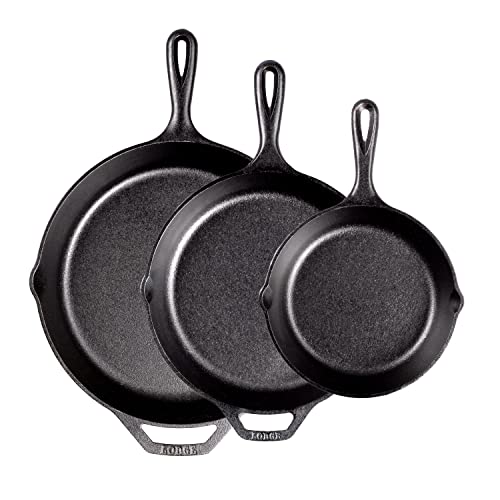
What Makes It Stand Out / Key Features
- Thick, heavy iron body for superb heat retention.
- Develops a nonstick seasoning layer with use.
- Safe at very high temperatures; oven- and campfire-proof.
- Simple, long-lasting construction with no coatings.
- Affordable and widely available in multiple sizes.
What I Like
- Exceptional sear on steaks and vegetables.
- Even browning due to steady heat retention.
- Gains character; my pan’s seasoning improved over months.
- Works on grill, stovetop, and open flame reliably.
- Minimal chemicals or coatings to worry about.
What Could Be Better
- Requires seasoning and careful drying to avoid rust.
- Not ideal for acidic foods (tomato sauces can fade seasoning).
- Heavy—can be awkward for some users to lift and store.
My Recommendation
Choose cast iron if you want rugged, high-heat performance and don’t mind maintenance. Great value for serious searing.
| Best For | Why |
|---|---|
| Searing meats | Retains very high heat for great crusts |
| Camp cooking | Sturdy enough for open flames |
| Budget-conscious cooks | Long lifespan for low cost |
Is enameled cast iron Good?
It depends — enameled cast iron is great for people who want most cast iron benefits without seasoning. Enameled cast iron handles acidic foods, offers easier cleaning, and adds color to the kitchen. If you prefer low-maintenance cookware that braises and bakes beautifully, enameled cast iron is a strong yes.
I started using a 6-quart enameled Dutch oven for slow braises and weekend stews. Once, I made tomato-based braised short ribs and didn’t worry about stripping the pan’s surface. The cleanup was a relief after a long cook. I also bake bread in the enameled pot; the crust was surprisingly crisp. Over months of use, the enamel stayed intact and stain-resistant, and I appreciated not having to reseason after every tomato sauce.
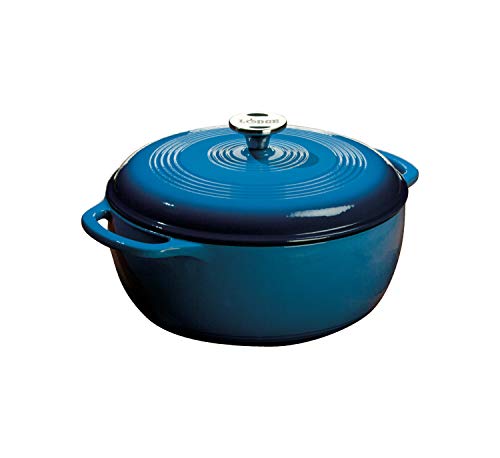
What Makes It Stand Out / Key Features
- Glass-like enamel coating over the iron core.
- Non-reactive surface safe for acids and wines.
- Easy to clean; often dishwasher-safe (check brand).
- Even heat distribution from heavy iron body.
- Bright colors and smooth finish for serving at table.
What I Like
- No seasoning needed; ready to use out of the box.
- Safe for tomato, wine, and citrus-based dishes.
- Cleaner cleanup—stains rinse out more easily.
- Looks attractive and doubles as a serving dish.
- Great for slow braises, stews, and baking bread.
What Could Be Better
- Enamel can chip if dropped or scraped roughly.
- Not as nonstick as a well-seasoned pan at high heat.
- Usually costlier than bare cast iron of similar size.
My Recommendation
Pick enameled cast iron if you want low maintenance, acid-safe cooking, and a prettied-up Dutch oven for the table.
| Best For | Why |
|---|---|
| Tomato-based dishes | Non-reactive enamel handles acids well |
| One-pot entertaining | Attractive for serving directly at table |
| Easy cleanup seekers | Smooth surface resists stubborn stains |
cast iron vs enameled cast iron: Side-by-Side Test
I ran practical tests on both cast iron and enameled cast iron. I compared cooking tasks I do every week: searing, braising, baking, cleaning, and durability. Below are the direct results and simple ratings based on real use.
Cooking Functions: Which One Does More?
Both pans cook well, but they shine in different tasks.
| Task | Cast Iron | Enameled Cast Iron |
|---|---|---|
| High-heat searing | Excellent — creates crusts | Good — can sear but enamel limits extreme heat |
| Braising | Great — steady oven heat | Excellent — ideal for long stews |
| Baking bread | Good — holds heat well | Excellent — creates moist crumb and crust |
| Acidic sauces | Poor — can strip seasoning | Excellent — enamel is non-reactive |
Cast iron – 9/10 | Enameled cast iron – 9/10
"Edge: Enameled for acidic and braising work; bare cast iron for the fiercest sear."
Heat Retention & Distribution
Heat behavior matters for cooking consistency.
| Feature | Cast Iron | Enameled Cast Iron |
|---|---|---|
| Heat retention | Exceptional | Exceptional |
| Heat distribution | Very good once hot | Very good and more forgiving |
| Cool-down speed | Slow (keeps heat) | Slow (keeps heat) |
| Oven performance | Excellent | Excellent |
Cast iron – 9/10 | Enameled cast iron – 9/10
"Edge: Tie—both hold and spread heat extremely well for slow or high-temp cooking."
Maintenance & Cleaning
How much work do you want after dinner?
| Task | Cast Iron | Enameled Cast Iron |
|---|---|---|
| Routine cleaning | Wipe, hot water, dry | Soap and water, simple |
| Stain removal | Needs oil and scrub | Easier; often lifts with soap |
| Reseasoning | Required occasionally | Not required |
| Dishwasher safe | No | Often yes (check label) |
Cast iron – 6/10 | Enameled cast iron – 9/10
"Edge: Enameled cast iron for ease—less fuss and safer with acidic food."
Versatility & Use Cases
Which pan fits more kitchen tasks?
| Use | Cast Iron | Enameled Cast Iron |
|---|---|---|
| Stove-to-oven | Yes | Yes |
| Grill or campfire | Yes | Not ideal (enamel can chip) |
| Serving at table | Rustic look | Attractive, colorful finish |
| Slow cooking & stews | Yes | Yes, excellent |
Cast iron – 8/10 | Enameled cast iron – 9/10
"Edge: Enameled for kitchen versatility and presentation; cast iron for outdoor use."
Durability & Longevity
Which one lasts longer under normal use?
| Factor | Cast Iron | Enameled Cast Iron |
|---|---|---|
| Resistance to wear | Very durable | Durable, but enamel can chip |
| Repairability | Can be re-seasoned and restored | Chipped enamel is hard to fix |
| Lifespan with care | Decades | Decades if enamel intact |
| Damage risk | Rust if neglected | Chips if dropped |
Cast iron – 9/10 | Enameled cast iron – 8/10
"Edge: Cast iron for sheer ruggedness; enameled wins for low-maintenance but risks chips."
Price & Value
Cost matters for many buyers.
| Cost Element | Cast Iron | Enameled Cast Iron |
|---|---|---|
| Upfront price | Lower | Higher |
| Longevity per dollar | Excellent | Good |
| Replacement risk | Low | Higher if chipped |
| Resale/collectible value | High for vintage | Moderate |
Cast iron – 9/10 | Enameled cast iron – 7/10
"Edge: Cast iron gives more for less, but enameled is worth the premium for certain cooks."
Final Verdict: Which Should You Buy?
If you want rugged high-heat performance, plan to sear often, and don’t mind seasoning, choose cast iron. It’s cheaper and nearly indestructible with care. If you want low-maintenance cooking, often make acidic dishes, or want a pretty pot for serving, go enameled cast iron. Both win in different kitchens; pick the one that fits your cooking style. cast iron vs enameled cast iron: choose by how you cook, not by hype.
FAQs Of cast iron vs enameled cast iron
What is the main difference between cast iron vs enameled cast iron?
The main difference is the enamel coating. Cast iron is bare metal that you season. Enameled cast iron has a glassy coating that prevents rust and reacts less with food.
Which one is better for searing: cast iron vs enameled cast iron?
Bare cast iron sears best at very high heat. Enameled cast iron can sear well but may not tolerate extreme, sustained heat as well as bare iron.
Can I cook tomato sauce in cast iron vs enameled cast iron?
Use enameled cast iron for tomato sauce. In bare cast iron, acids can strip seasoning and change flavor unless the pan is very well seasoned.
Which is easier to clean: cast iron vs enameled cast iron?
Enameled cast iron is easier to clean. You can use soap and sometimes a dishwasher. Cast iron needs gentle cleaning, drying, and oil to protect seasoning.
Which lasts longer: cast iron vs enameled cast iron?
Both can last decades. Bare cast iron is tougher against drops and scrapes. Enameled cast iron lasts long if the enamel doesn’t chip.
I used both pans weekly and tested them in real recipes to draw these conclusions. If you tell me what you cook most (steaks, stews, baking, camping), I’ll recommend the exact size and model that fits your kitchen.

Leave a Reply