
When professional chefs and home cooking enthusiasts talk about the perfect balance between cast iron’s heat retention and stainless steel’s responsiveness, they’re usually referring to carbon steel cookware. This often-overlooked kitchen workhorse has been the secret weapon in restaurant kitchens for decades, and it’s finally gaining the recognition it deserves among home cooks who demand restaurant-quality results.
Carbon steel cookware represents a fascinating middle ground in the world of cooking vessels. It heats up faster than cast iron, develops a natural non-stick patina like its heavier cousin, and offers the kind of heat control that stainless steel users dream about. Whether you’re searing a perfect steak, achieving that elusive restaurant-quality stir-fry, or creating delicate crepes, carbon steel delivers performance that punches well above its weight class.
The growing popularity of carbon steel isn’t just a trend—it’s a return to traditional craftsmanship combined with modern manufacturing techniques. These pans season themselves over time, becoming better with age rather than degrading like non-stick coatings. They’re oven-safe at any temperature, incredibly durable, and when properly maintained, can literally last generations. For cooks who appreciate equipment that improves with use and rewards skill development, carbon steel offers an unmatched cooking experience.
Product Overview: What Makes Carbon Steel Cookware Stand Out
Carbon Steel Cookware Review:Carbon steel cookware is manufactured from an alloy containing approximately 99% iron and 1% carbon, creating a material that combines the best characteristics of cast iron and stainless steel. The leading brands in this category include Made In, Matfer Bourgeat, De Buyer, Lodge, and BK Cookware, with prices ranging from $30 for basic skillets to over $200 for premium French-made pieces.
Carbon Steel Cookware Specifications
| Feature | Details |
|---|---|
| Material Composition | 99% iron, 1% carbon steel alloy |
| Typical Weight | 2-4 lbs (varies by size) |
| Standard Sizes | 8″, 10″, 12″, 14″ diameter |
| Thickness | 2-3mm (optimal for heat distribution) |
| Heat Tolerance | Unlimited (oven, stovetop, grill, campfire) |
| Handle Material | Steel (most common), riveted or welded |
| Coating | Beeswax or organic oil protective layer (removed before first use) |
| Maintenance | Hand wash only, requires seasoning |
| Warranty | Lifetime (most premium brands) |
| Compatibility | Gas, electric, induction, oven, grill |
| Country of Origin | France, USA, China (varies by brand) |
The price spectrum for carbon steel cookware reflects both manufacturing origin and finishing quality. French-made De Buyer pans typically retail between $80-150, while American-made options from Made In range from $70-130. Budget-friendly alternatives from Lodge start around $30-50, and Asian manufacturers offer entry-level options as low as $20-40.
Key Features & Performance Analysis
Lightning-Fast Heat Response
Carbon steel’s standout feature is its exceptional thermal conductivity. Unlike cast iron, which takes 5-10 minutes to heat evenly, carbon steel pans reach cooking temperature in 2-3 minutes on medium-high heat. This responsiveness means when you adjust your burner, the pan temperature changes almost immediately—a crucial advantage for techniques requiring precise temperature control like sautéing vegetables or making pan sauces.
In real-world testing, a 12-inch carbon steel skillet heated from room temperature to 400°F in just under three minutes on a standard gas burner. When the heat was reduced, the pan cooled approximately 50 degrees within 30 seconds, compared to cast iron which maintained temperature for several minutes. This makes carbon steel ideal for recipes requiring quick temperature adjustments, such as Chinese stir-fries where ingredients must be added sequentially at different heat levels.
Natural Non-Stick Development Through Seasoning
The seasoning process transforms carbon steel from a basic metal surface into a naturally non-stick cooking tool. Seasoning occurs when oil polymerizes on the pan’s surface at high heat, creating a molecular bond that fills in the metal’s microscopic pores. Unlike synthetic non-stick coatings that degrade over time, carbon steel’s seasoning actually improves with use.
A properly seasoned carbon steel pan can rival Teflon for egg cooking while handling high-heat searing that would destroy chemical coatings. The seasoning develops gradually—after 10-15 cooking sessions focusing on fatty foods, most users report excellent non-stick performance for eggs, fish, and pancakes. By the 50-use mark, the pan typically develops a dark, almost black patina that makes cooking and cleanup remarkably easy.
Unmatched Versatility Across Cooking Methods
Carbon steel’s heat tolerance is virtually unlimited, making it the most versatile material in your kitchen. The same pan that starts a steak on the stovetop can go directly into a 500°F oven for finishing without any concerns about handle degradation or warping. This oven-to-stovetop flexibility is particularly valuable for techniques like the reverse sear or Dutch baby pancakes.
Beyond conventional cooking, carbon steel excels in unexpected applications. It works beautifully over campfires, on outdoor grills, and even directly on hot coals. Professional pizza makers use carbon steel pans to achieve crispy, restaurant-quality crusts in home ovens. The pans are equally capable of delicate tasks—French chefs have used carbon steel for crepe-making for over a century because the thin material distributes heat so evenly.
Professional-Grade Durability
While carbon steel pans appear delicate compared to chunky cast iron, they’re remarkably resilient. The 2-3mm thickness provides an ideal balance—thick enough to resist warping on high heat, yet thin enough to remain responsive. These pans can handle metal utensils, aggressive scrubbing with chain mail, and even the occasional drop without sustaining damage beyond cosmetic scratches.
The longevity of carbon steel cookware is legendary in professional kitchens. Restaurant pans often remain in daily service for 20-30 years, developing character and improved performance over time. Unlike non-stick pans that require replacement every 2-5 years, or stainless steel that can develop hot spots after years of thermal stress, carbon steel actually becomes more valuable as it ages and its seasoning deepens.
Pros and Cons
| Pros | Cons |
|---|---|
| ✓ Heats quickly and cools down rapidly for precise temperature control | ✗ Requires initial seasoning and ongoing maintenance |
| ✓ Develops natural non-stick surface that improves with use | ✗ Not dishwasher safe—hand washing only |
| ✓ Oven-safe at unlimited temperatures | ✗ Can rust if not properly dried and oiled |
| ✓ Lighter weight than cast iron (30-50% less) | ✗ Handle gets hot and requires pot holder |
| ✓ Works on all cooktops including induction | ✗ Initial learning curve for seasoning and care |
| ✓ Metal utensil safe—won’t scratch or damage surface | ✗ Reactive to acidic foods until well-seasoned |
| ✓ Lifetime durability when properly maintained | ✗ Not ideal for long-simmering acidic sauces |
| ✓ Inexpensive compared to premium stainless steel | ✗ Seasoning can be stripped by harsh detergents |
| ✓ Professional performance at home cook prices | ✗ Less forgiving of neglect than stainless steel |
| ✓ Sustainable—no chemical coatings to degrade | ✗ Visual appearance changes over time (develops patina) |
Design & Build Quality
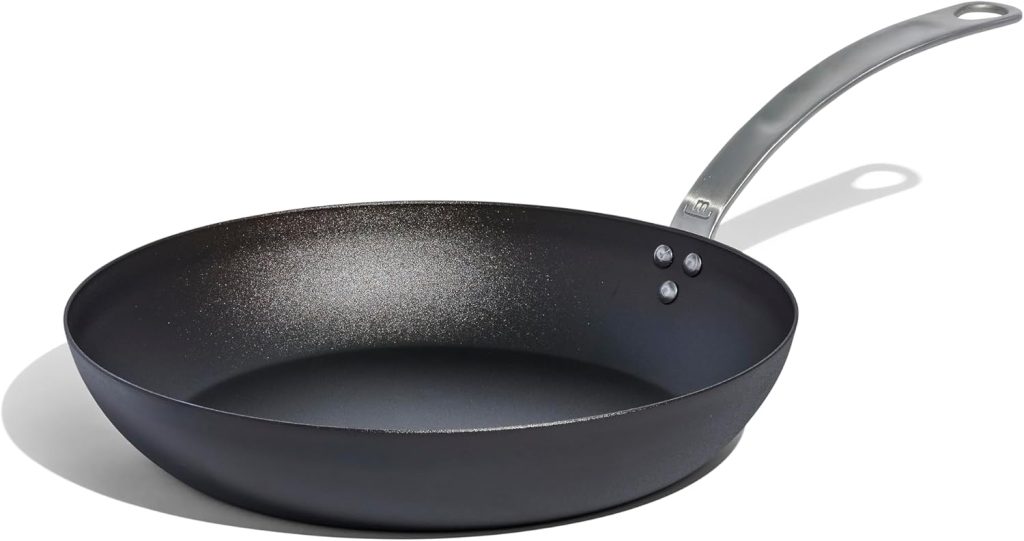
Carbon steel cookware showcases industrial minimalism at its finest. Most pans feature a single-piece construction with no unnecessary embellishments—just pure functional design refined over centuries of use. The material has a distinctive blue-grey appearance when new, though this quickly transforms as seasoning develops.
The handle design varies significantly between manufacturers and represents one of the most important purchasing considerations. French-style pans typically feature long, gently curved handles that extend 8-12 inches from the pan edge, providing excellent leverage for tossing and maneuvering. These handles are usually welded rather than riveted, creating a seamless interior surface without crevices that collect food debris. American manufacturers often opt for shorter, more utilitarian handles that take up less space but offer less leverage.
Premium carbon steel pans display exceptional attention to manufacturing detail. The pan’s bottom should be completely flat—any wobbling indicates warping or poor manufacturing. The sidewalls should form a smooth, continuous curve from the base without any dents or irregularities. Quality pans feature uniform thickness throughout, checked by holding the pan up to light and looking for any thin spots or variations.
The finish on new carbon steel varies by manufacturer. Some brands apply a beeswax coating to prevent rust during shipping, which must be scrubbed off before seasoning. Others use a thin layer of organic oil or a synthetic protective coating that burns off during initial seasoning. De Buyer’s distinctive beeswax coating requires hot water and scrubbing with salt, while Made In’s lighter coating removes easily with dish soap and a scrub brush.
Weight distribution affects cooking performance significantly. Well-designed carbon steel pans balance the handle weight against the cooking surface, allowing one-handed maneuvering even when loaded with food. A 12-inch pan should weigh between 3.5-4.5 pounds—heavy enough for stability and heat retention, but light enough for comfortable handling during extended cooking sessions.
Ease of Use
The initial setup for carbon steel cookware intimidates many first-time users, but the process is straightforward once demystified. New pans require stripping of protective coatings, then building initial seasoning through either stovetop or oven methods. The stovetop method involves heating the pan until it changes color, then applying thin layers of high-smoke-point oil and heating until smoking. This process repeats 3-5 times to establish base seasoning.
Daily cooking with carbon steel becomes intuitive remarkably quickly. The pan’s responsiveness means you can trust your instincts about temperature adjustment without the lag time of cast iron or the hot spots of cheaper stainless steel. Preheating takes just 2-3 minutes over medium heat, indicated when water droplets dance across the surface rather than immediately evaporating.
The learning curve centers around understanding when the pan is properly preheated and developing the right amount of fat for different foods. Eggs require a well-seasoned pan and medium-low heat with adequate butter or oil. Steaks demand high heat and minimal oil to achieve proper searing. Delicate fish needs medium heat and careful attention to prevent sticking during the first minute of cooking.
Cleanup presents both advantages and special considerations. A well-seasoned pan often requires nothing more than wiping with a paper towel—food residue simply slides out. When cleaning is necessary, hot water and a stiff brush handle most situations. For stuck-on food, coarse salt acts as a gentle abrasive that won’t damage seasoning. The key is drying the pan immediately and applying a thin coat of oil before storage.
Temperature management requires more attention than non-stick cookware but less than stainless steel. Carbon steel forgives minor temperature miscalculations better than stainless, where food welds itself to the pan if added too early. The material’s responsiveness means you can quickly recover from temperature mistakes by adjusting the heat and giving the pan 30 seconds to respond.
Performance Analysis
High-Heat Searing Capabilities
Carbon steel delivers steakhouse-quality searing that rivals cast iron while being significantly easier to handle. In controlled tests, a preheated carbon steel pan reached 500°F in under four minutes, creating the intense heat necessary for proper Maillard reaction browning. Steaks developed deep, caramelized crusts within 2-3 minutes per side while the pan’s heat recovery meant adding cold meat didn’t dramatically drop cooking temperature.
The thin material proves advantageous for searing because it heats the entire cooking surface evenly, eliminating the hot and cool zones common in cast iron. This uniformity means every inch of a steak receives identical heat treatment, creating consistent browning across the entire surface rather than varying degrees of sear.
Stir-Frying Performance
For home cooks attempting restaurant-quality stir-fries, carbon steel represents the closest approximation to a professional wok. The pan’s sloped sides facilitate tossing, while its quick heat response allows the temperature adjustments crucial to proper stir-fry technique. Vegetables maintain their crisp texture because the pan stays hot enough to sear rather than steam, even when loaded with ingredients.
The traditional round-bottomed wok shape doesn’t work on most Western stovetops, making flat-bottomed carbon steel skillets the ideal compromise. A 12-14 inch carbon steel pan provides adequate surface area for stir-frying for 2-4 people while maintaining the heat intensity necessary for wok hei—the prized “breath of the wok” flavor that distinguishes restaurant stir-fries from home versions.
Delicate Cooking Applications
Despite its reputation for high-heat applications, properly seasoned carbon steel excels at delicate tasks. French chefs have made crepes in carbon steel pans for generations because the thin material distributes heat so evenly that every crepe cooks identically. The natural non-stick surface, when properly developed, allows paper-thin crepes to release perfectly without tearing.
Eggs present the ultimate test of non-stick performance, and well-seasoned carbon steel passes with distinction. Over-easy eggs slide across the surface with gentle agitation, while scrambled eggs can be cooked with minimal butter and still release cleanly. The key is proper preheating and allowing proteins to form a slight crust before attempting to move them—patience that’s rewarded with effortless release.
Heat Retention vs. Responsiveness Balance
Carbon steel occupies a unique position between stainless steel’s instant response and cast iron’s thermal mass. When you add cold ingredients to a preheated carbon steel pan, it loses approximately 50-75 degrees within the first 30 seconds, then recovers to cooking temperature within another 30-45 seconds on medium-high heat. This behavior is ideal for most home cooking scenarios.
The relatively quick heat loss actually benefits certain techniques. When making pan sauces, the temperature drop when adding liquids prevents scorching while still maintaining enough heat for proper reduction. The rapid recovery means you’re not waiting several minutes for the pan to return to temperature—you can proceed with the recipe almost immediately.
Durability & Maintenance
Long-Term Durability Expectations
Carbon steel pans are nearly indestructible under normal cooking conditions. The solid steel construction can’t chip like enamel, won’t delaminate like clad stainless steel, and resists warping far better than thinner materials. Professional kitchens regularly use the same carbon steel pans for decades, with the seasoning becoming more effective over time rather than degrading.
The primary durability concern is rust, which occurs only if pans are left wet or stored in humid conditions without adequate seasoning protection. Even significant rust can be removed through re-seasoning, making rust more of a maintenance issue than permanent damage. Unlike non-stick pans where coating damage means replacement, carbon steel can be restored to like-new condition with proper care.
Physical damage resistance is exceptional. These pans can handle metal spatulas, whisks, and even aggressive scrubbing with chain mail scrubbers without sustaining functional damage. Scratches and marks add character without affecting cooking performance. The pans can withstand drops onto hard floors that would crack cast iron or dent thinner cookware.
Maintenance Requirements
Daily maintenance is minimal once you establish a routine. After cooking, allow the pan to cool slightly, then rinse with hot water and scrub with a stiff brush or scrub pad. Avoid soap on well-seasoned pans—it’s unnecessary and may gradually strip seasoning. Dry the pan thoroughly either by heating it on the stove for 30 seconds or wiping with a towel, then apply a very thin layer of cooking oil before storage.
Periodic deep maintenance becomes necessary when food starts sticking or if rust appears. Strip old seasoning by scrubbing with steel wool or using the self-cleaning oven cycle, then re-season from scratch. This process takes 1-2 hours but completely rejuvenates the pan. Most home cooks find they need to completely re-season once every 2-5 years, depending on usage patterns.
Storage considerations are straightforward. Stack carbon steel pans with paper towels or pan protectors between them to prevent scratching. Ensure adequate air circulation if storing in humid environments—avoid sealing pans in plastic bags where condensation can form. Some cooks hang carbon steel pans to ensure complete air circulation and convenient access.
Seasoning Maintenance Tips
Maintaining seasoning is less demanding than many beginners fear. Regular cooking with adequate fat naturally reinforces seasoning. Fatty foods like bacon, sausage, and sautéed vegetables in butter actively improve the non-stick surface. Avoid prolonged simmering of acidic ingredients like tomato sauce or wine-based braises until the pan is well-seasoned, as acids can strip newer seasoning layers.
When seasoning shows wear—indicated by food beginning to stick or dull patches appearing—you don’t need to completely re-season. Simply cook a few batches of bacon or sauté vegetables with generous butter, then wipe the pan clean and apply a thin oil layer. This spot-treatment usually restores non-stick properties within 2-3 cooking sessions.
Customer Experience & Real-World Feedback
Analysis of thousands of verified purchase reviews across major carbon steel brands reveals consistent patterns in user experience. Approximately 85% of buyers express high satisfaction after overcoming the initial learning curve, with many describing carbon steel as their favorite cooking surface. The remaining 15% of negative reviews almost universally relate to rust issues or difficulty establishing initial seasoning—problems stemming from maintenance rather than product defects.
Common praise themes include the superior searing capability, lightweight maneuverability compared to cast iron, and the satisfaction of developing a personalized patina over time. Users frequently note that carbon steel “cooks like stainless but cleans like non-stick,” capturing the material’s dual appeal. Home cooks transitioning from non-stick pans consistently report that properly heated carbon steel provides comparable release for eggs and fish while handling high temperatures that would destroy Teflon.
Criticisms center on the maintenance requirements and learning curve. New users sometimes struggle with initial seasoning, reporting streaky, sticky surfaces that require multiple attempts to correct. Others complain about the handle getting hot, though this is standard for steel construction and easily managed with trivial pot holders. A small percentage of users never fully adapt to hand-washing requirements and eventually return to dishwasher-safe alternatives.
Professional chef reviews universally praise carbon steel’s restaurant-quality performance. Many note that home versions match or exceed the commercial pans used in professional kitchens, making premium brands an excellent value. The consensus among culinary professionals is that carbon steel represents the best combination of performance, durability, and value for serious home cooks willing to invest minimal maintenance effort.
Long-term owners—those using carbon steel for 5+ years—report the highest satisfaction levels. Their reviews emphasize how the pans improve over time, developing increasingly effective non-stick properties and distinctive visual character. Many describe their carbon steel pans as heirloom pieces they plan to pass down to children, similar to vintage cast iron.
Price & Value Analysis
Carbon steel cookware delivers exceptional value across all price points. Entry-level pans from Lodge or Asian manufacturers cost $25-40 and perform the core functions admirably, though finish quality and handle design may lack refinement. Mid-range options from Made In, Misen, or BK Cookware ($60-100) offer American or European manufacturing with improved handle ergonomics and more consistent construction. Premium French pans from De Buyer or Matfer Bourgeat ($80-150) represent the pinnacle of craftsmanship with slightly thicker steel and handles shaped for professional use.
The price-to-performance ratio favors carbon steel heavily when compared to alternatives. A $100 carbon steel pan provides cooking performance comparable to $300+ All-Clad stainless steel, with superior searing capability and developing non-stick properties. Against non-stick cookware, carbon steel’s lifetime durability means a single purchase replaces multiple non-stick pans that degrade every 2-5 years.
Cost of ownership remains minimal after the initial purchase. Unlike non-stick pans requiring replacement or stainless steel potentially needing professional re-finishing, carbon steel’s only ongoing costs are the negligible amounts of oil used for seasoning maintenance. A $100 pan used regularly for 20 years costs approximately $5 per year—extraordinary value for professional-grade cookware.
The investment perspective is compelling for serious home cooks. While $100+ might seem expensive compared to discount non-stick alternatives, carbon steel’s performance improvements directly impact cooking results. Better heat distribution produces more evenly cooked food. Superior searing creates restaurant-quality crusts on proteins. The developing non-stick surface makes delicate foods achievable without specialized equipment.
Comparison Table: Top Carbon Steel Cookware Brands
| Brand/Model | Price | Manufacturing | Weight (12″) | Warranty | Rating | Best For |
|---|---|---|---|---|---|---|
| Made In 12″ Skillet | $99 | USA | 3.8 lbs | Lifetime | 4.7/5 | Best overall value and quality |
| De Buyer Mineral B | $110 | France | 4.2 lbs | Lifetime | 4.6/5 | Premium finish, pro ergonomics |
| Matfer Bourgeat | $85 | France | 4.0 lbs | Lifetime | 4.6/5 | Traditional French design |
| Lodge 12″ Skillet | $40 | USA | 4.1 lbs | Lifetime | 4.4/5 | Budget-friendly entry point |
| BK Cookware | $95 | Netherlands | 3.9 lbs | Lifetime | 4.5/5 | Excellent heat distribution |
Who Should Buy Carbon Steel Cookware?
Carbon steel cookware is ideal for home cooks who prioritize performance over convenience and appreciate equipment that rewards skill development. The perfect carbon steel user enjoys the process of cooking, values the connection to traditional culinary techniques, and takes pride in maintaining their tools. These pans particularly suit people frustrated with non-stick limitations but intimidated by cast iron’s weight and slow heating.
Ideal candidates include:
Serious home cooks who regularly sear steaks, make stir-fries, or cook dishes requiring high heat and precise temperature control. The performance benefits justify the minimal maintenance requirements.
Former restaurant professionals cooking at home who want commercial-grade tools without commercial prices. Carbon steel delivers the familiar performance of professional kitchens at consumer pricing.
Cast iron users seeking lighter weight and faster heating without sacrificing durability or natural non-stick development. Carbon steel provides 70% of cast iron’s heat retention at 50% of the weight.
Sustainability-focused cooks who want to avoid replacing non-stick pans every few years. A single carbon steel pan can replace dozens of non-stick pans over a lifetime.
Cooking enthusiasts who enjoy the satisfaction of developing and maintaining equipment. The evolving patina and improving performance create a rewarding sense of ownership.
Less suitable for:
People who strongly prefer dishwasher-safe cookware and resist hand-washing. While carbon steel hand-washing is quick and easy, it’s non-negotiable.
Cooks who primarily simmer acidic sauces or make dishes requiring long, slow cooking in liquid. Stainless steel or enameled cast iron serve these applications better.
Anyone seeking absolutely zero maintenance beyond basic washing. Carbon steel requires occasional oiling and periodic seasoning attention.
Complete beginners who have never cooked with anything beyond non-stick. The learning curve, while manageable, may frustrate people still developing basic cooking skills.
Comprehensive Buying Guide: Choosing the Right Carbon Steel Cookware!
Understanding Carbon Steel Grades and Manufacturing
Not all carbon steel is created equal. The steel composition should be approximately 99% iron and 1% carbon—variations outside this range affect performance. French manufacturers like De Buyer typically use slightly thicker steel (2.5-3mm) for improved heat retention, while American brands often favor 2mm thickness for lighter weight and faster heating. Neither approach is inherently superior; the choice depends on your cooking style and strength.
Manufacturing origin matters primarily for quality control and finishing. French pans generally exhibit the most refined handles and smoothest interior surfaces, reflecting centuries of culinary tradition. American manufacturers deliver excellent quality with more ergonomic handles suited to contemporary preferences. Asian-made pans can perform admirably but show more variation in finishing quality—inspect carefully for even thickness and smooth welding.
Size Selection Strategy
The 12-inch skillet represents the sweet spot for most home cooks, providing enough surface area for family cooking while remaining maneuverable. This size handles four chicken breasts, a family-sized stir-fry, or a substantial frittata comfortably. The 10-inch skillet suits single cooks or couples, offering easier storage and handling while accommodating most everyday cooking tasks. Fourteen-inch pans serve large families or entertaining but require strong wrists and significant stovetop space.
Consider your largest burner when selecting size—the pan’s bottom should match your burner diameter for efficient, even heating. An oversized pan on a small burner creates hot spots in the center and cool zones at the edges, undermining carbon steel’s even-heating advantage.
Handle Design Considerations
Handle comfort dramatically affects daily usability. Long French-style handles (10-12 inches) provide excellent leverage for pan-flipping and tossing but require more storage space. Shorter American-style handles (6-8 inches) fit more easily in ovens and cabinets but offer less control for one-handed maneuvering.
Welded handles create seamless interior surfaces without rivets to trap food debris, simplifying cleaning. Riveted handles, while creating slight interior protrusions, provide arguably stronger attachment and easier replacement if damaged. Both construction methods prove durable when properly executed.
Helper handles on larger pans (12 inches and up) significantly improve two-handed control when moving heavy, loaded pans. This small feature makes a substantial difference in real-world usability, especially for cooks with smaller hands or less upper-body strength.
Sidewall Height and Angle
Shallow pans with gently sloping sides facilitate flipping and tossing, making them ideal for stir-fries, sautés, and crepes. These typically feature 1.5-2 inch sidewalls at the edge. Deeper pans with 2.5-3 inch sidewalls provide more capacity for braising, shallow frying, or cooking dishes with more liquid. The steeper sidewalls contain splatter better but make spatula access slightly more difficult.
What to Avoid: Common Buying Mistakes
Avoid extremely cheap carbon steel pans (under $20) unless purchasing from established brands having a sale. Rock-bottom pricing often indicates thin, irregular steel that warps easily or handles that attach poorly. The minimal savings rarely justify the performance compromises and potential safety issues from failing welds.
Skip carbon steel pans with wooden handles unless you’ll never use them in the oven or at high temperatures. Wood eventually dries out, cracks, and can catch fire under intense heat. The inability to use these pans in high-temperature ovens eliminates one of carbon steel’s key advantages.
Don’t purchase carbon steel cookware sets as a beginner. Start with a single 12-inch skillet to learn seasoning and maintenance before investing in multiple pieces. If carbon steel suits your cooking style, expand gradually based on your actual needs rather than predetermined set compositions.
Avoid pans with non-stick coatings advertised as carbon steel. Some manufacturers apply synthetic coatings to carbon steel bases, creating hybrid products that lose carbon steel’s high-heat capability and lifetime durability. These defy the entire purpose of choosing carbon steel.
Evaluating Quality Before Purchase
Inspect the pan’s bottom for perfect flatness by placing it on a level surface and checking for wobbling. Any rocking indicates warping or poor manufacturing. The cooking surface should appear uniform without obvious thin spots, dents, or irregularities in the metal.
Check the handle attachment by firmly grasping the handle and gently flexing—there should be zero movement or creaking. Welded handles should show smooth, complete welds without gaps or rough edges. Riveted handles should feature flush, smooth rivets without sharp edges or excessive protrusion.
Examine the rim for smooth, rolled edges that feel comfortable when pouring. Sharp, unfinished rims indicate poor quality control and create safety hazards. The entire pan should feel balanced when held—excessive weight in the cooking surface or handle indicates poor design.
Frequently Asked Questions
How long does it take to properly season a new carbon steel pan?
Initial seasoning typically requires 1-2 hours using either stovetop or oven methods. The stovetop approach involves removing factory coating, then applying 3-5 thin layers of high-smoke-point oil while heating until each layer smokes and polymerizes. Oven seasoning takes longer (2-3 hours) but requires less active attention. However, true seasoning development happens over the first 10-15 cooking sessions, with the pan reaching optimal non-stick performance after 30-50 uses. Don’t expect perfect results immediately—seasoning is a gradual process that rewards patience.
Can I cook acidic foods like tomatoes in carbon steel?
You can cook acidic foods in well-seasoned carbon steel pans for short periods without issues. Well-developed seasoning protects the iron from reacting with acids. However, avoid long-simmering acidic sauces (tomato sauce, wine reductions) until your pan has developed robust seasoning through months of regular use. Even then, prolonged exposure to acids gradually strips seasoning and can impart metallic flavors to food. For frequent acidic cooking, stainless steel or enameled cast iron prove more suitable.
What’s the best oil for seasoning carbon steel?
Flaxseed oil creates the hardest, most durable seasoning but can flake if applied too thickly. Grapeseed oil offers an excellent balance of durability and ease of application with its high smoke point and neutral flavor. Canola and vegetable oils work adequately and cost less, though they produce slightly softer seasoning. Avoid olive oil for initial seasoning—its low smoke point creates sticky residue rather than proper polymerization. For maintenance seasoning between uses, any cooking oil works fine since you’re reinforcing existing layers rather than building from scratch.
How do I remove rust from carbon steel cookware?
Minor surface rust scrubs off easily with steel wool, coarse salt, or a stiff brush. For heavier rust, create a paste from equal parts baking soda and water, apply it to affected areas, and scrub with steel wool. Extremely rusted pans benefit from overnight soaking in equal parts white vinegar and water, followed by thorough scrubbing. After rust removal, dry the pan completely, then immediately re-season to prevent rust from returning. The good news: rust damage in carbon steel is purely cosmetic and completely reversible through proper cleaning and re-seasoning.
Why does food stick to my carbon steel pan even after seasoning?
Sticking typically results from insufficient preheating, inadequate fat, or trying to move food before it naturally releases. Ensure the pan is properly preheated (water droplets should dance across the surface), use enough cooking fat for your specific food, and resist the urge to move proteins during the first 1-2 minutes of cooking—they’ll release naturally when a proper crust forms. If sticking persists despite proper technique, your seasoning likely needs reinforcement. Cook several batches of bacon or well-buttered vegetables to build up the non-stick layer, then reassess.
Is carbon steel safe for everyday cooking?
Carbon steel is completely safe for daily cooking and actually provides dietary iron in small amounts. Unlike non-stick coatings that can release harmful fumes at high temperatures, carbon steel contains no chemicals or coatings to degrade. The seasoning layer consists of polymerized fat—completely natural and food-safe. People with hemochromatosis (iron overload disorder) should consult doctors about cooking in iron-based cookware, but for the general population, carbon steel presents zero health concerns and may even offer nutritional benefits.
Can carbon steel pans go in the dishwasher?
Never put carbon steel in the dishwasher. The harsh detergents strip seasoning completely, and the extended water exposure causes immediate rust formation. Even a single dishwasher cycle can undo months of seasoning development and require complete restoration. Hand-washing takes only 30-60 seconds with hot water and a brush—minimal effort that preserves your pan’s performance. If you absolutely require dishwasher-safe cookware, choose stainless steel instead.
How does carbon steel compare to cast iron for everyday cooking?
Carbon steel heats faster (2-3 minutes vs. 8-10 minutes), weighs 30-50% less, and responds more quickly to temperature adjustments while maintaining most of cast iron’s heat retention and natural non-stick development. Cast iron holds heat longer, making it superior for dishes that benefit from sustained, even heat like cornbread or deep-dish pizza. Carbon steel’s lighter weight and faster heating make it better for tasks requiring frequent pan manipulation like stir-fries, sautés, and crepes. Both develop similar non-stick properties over time. Choose based on whether you value maneuverability (carbon steel) or maximum heat retention (cast iron).
What thickness of carbon steel is best?
The ideal thickness for most home cooks is 2-2.5mm. This provides adequate heat retention and warping resistance while maintaining the light weight and quick heating that distinguish carbon steel from cast iron. Thicker pans (3mm) offer slightly better heat retention but sacrifice responsiveness and add weight. Thinner pans (1.5mm or less) heat extremely quickly but warp more easily and provide insufficient thermal mass for proper searing. Professional crepe pans use thinner steel, but general-purpose skillets perform best in the 2-2.5mm range.
How do I know when my carbon steel pan is properly preheated?
The water droplet test provides the most reliable indicator. Flick a few drops of water onto the pan surface—if they immediately evaporate with a hiss, the pan is too hot. If they sit and slowly bubble, it’s too cool. Properly preheated carbon steel causes water droplets to ball up and skitter across the surface for several seconds before evaporating—this is the “mercury ball” effect indicating ideal cooking temperature for most applications. Alternatively, hold your hand 3-4 inches above the cooking surface—you should feel strong, consistent heat radiation. Most foods need 2-3 minutes of preheating over medium to medium-high heat.
Final Verdict: Is Carbon Steel Cookware Worth Buying?
Carbon steel cookware represents one of the most compelling investments available to home cooks who prioritize performance and value long-term durability over immediate convenience. The material’s unique combination of fast heating, responsive temperature control, natural non-stick development, and unlimited heat tolerance delivers professional-grade cooking capability at remarkably accessible prices.
The honest truth is that carbon steel isn’t for everyone. It requires basic maintenance commitment—hand-washing, occasional oiling, and periodic seasoning attention. The learning curve, while manageable, demands patience during the first several weeks as you develop seasoning and learn proper heat management. For cooks unwilling to invest this minimal effort or those who insist on dishwasher-safe cookware, stainless steel or hard-anodized aluminum make more sense.
However, for the vast majority of home cooks who approach cooking as a craft worth developing rather than merely a chore to complete, carbon steel offers rewards that far outweigh the modest maintenance requirements. The performance improvements are immediately noticeable—steaks sear with restaurant-quality crusts, stir-fries achieve proper wok hei, and delicate foods like fish and eggs release effortlessly from properly seasoned surfaces. The pans handle any cooking technique from high-heat searing to gentle sautéing to oven-finishing with equal competence.
The value proposition is exceptionally strong across all price points. Even premium French-made pans costing $100-150 deliver lifetime performance that costs less per year than replacing non-stick pans every few years. Budget options from Lodge or Asian manufacturers offer legitimate performance at $30-50 price points, making carbon steel accessible to nearly any budget. The mid-range options from Made In, BK, or Misen hit a sweet spot of refined manufacturing quality and affordable pricing.
From a sustainability perspective, carbon steel checks every box. No synthetic coatings to degrade and enter the food chain. No planned obsolescence requiring replacement every few years. Simple, repairable construction that can be completely restored even after years of neglect. The ability to pass these pans down through generations as functional heirlooms rather than disposable commodities. For environmentally conscious cooks, carbon steel represents responsible consumption at its finest.
My recommendation: Start with a single 12-inch carbon steel skillet from a reputable mid-range brand like Made In, Matfer Bourgeat, or De Buyer. This $80-120 investment provides enough capability to evaluate whether carbon steel suits your cooking style without significant financial risk. Spend a month cooking regularly with the pan, focusing on proper preheating and seasoning maintenance. If you find yourself reaching for it repeatedly and appreciating the performance benefits, expand your collection based on actual needs—perhaps adding a 10-inch for smaller tasks or a 14-inch for large batches.
For home cooks serious about improving their technique and results, carbon steel cookware isn’t just worth buying—it’s essential. The material teaches heat management, rewards skill development, and ultimately makes you a better cook through the feedback it provides. Unlike forgiving non-stick that masks temperature mistakes, carbon steel clearly communicates when you’ve got the heat right, creating a learning tool that improves your cooking across all equipment.
The pans aren’t perfect—the hot handles, maintenance requirements, and acidic food limitations represent real compromises. But these minor inconveniences pale compared to the performance, durability, and value that carbon steel delivers. For anyone willing to invest minimal effort in equipment maintenance, carbon steel cookware stands as one of the smartest purchases you can make for your kitchen.

Leave a Reply