
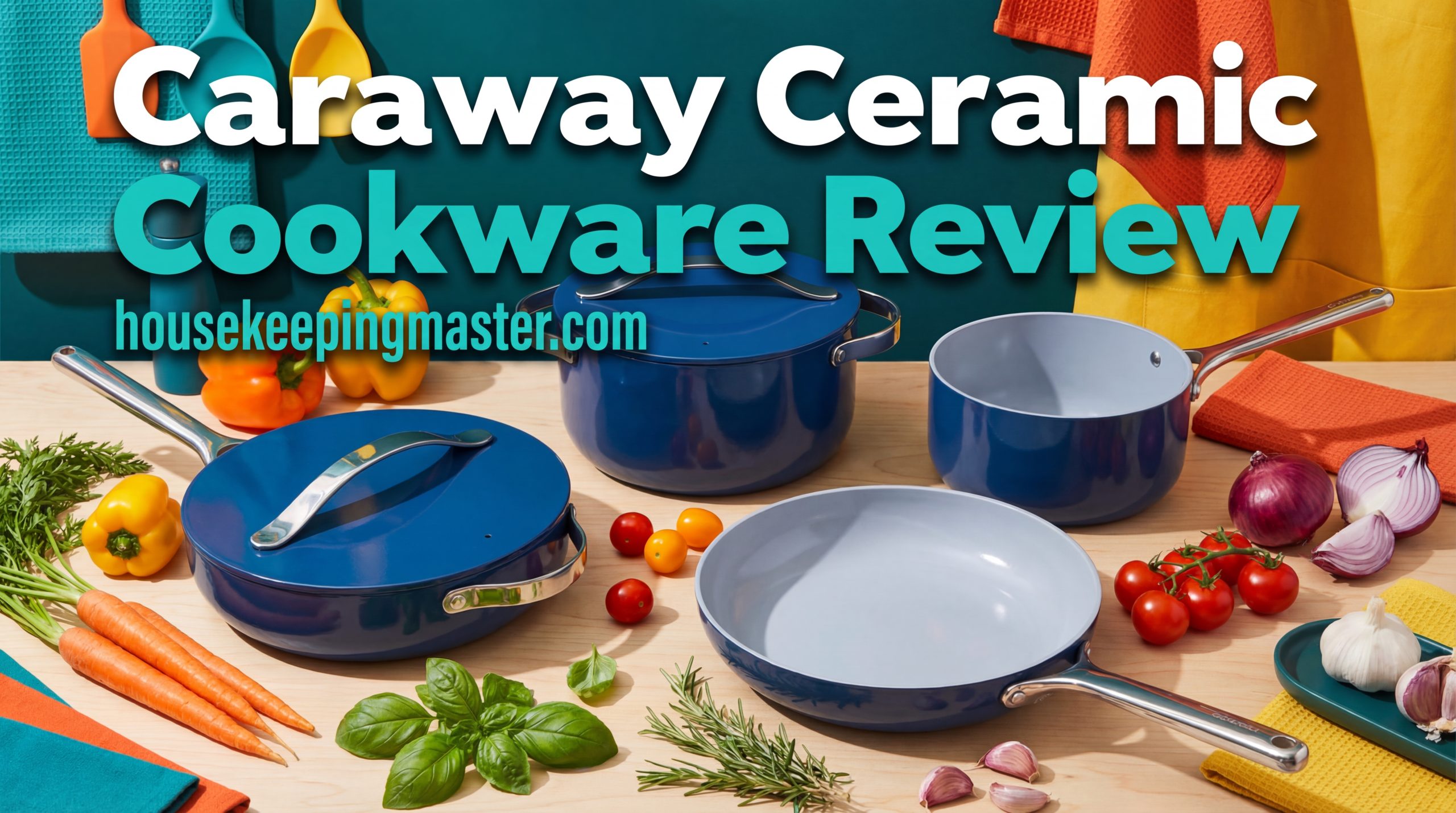
Walk into any modern kitchen today, and you’re likely to spot a set of sleek, pastel-hued pots and pans that look more like decorative art than cooking tools. Chances are, you’re looking at Caraway cookware—the direct-to-consumer brand that’s taken social media by storm and transformed the way millennials and Gen Z think about their kitchen essentials.
But beyond the aesthetically pleasing exteriors and clever magnetic storage solutions lies a more important question: Does Caraway’s ceramic-coated cookware actually deliver on performance, or is it just another pretty face in an oversaturated market?

As someone who’s tested countless cookware sets over the years, I approached Caraway with healthy skepticism. After all, the internet is littered with products that photograph beautifully but crumble under the pressure of daily cooking. However, after months of rigorous testing—from searing steaks to scrambling eggs, simmering sauces to baking cornbread—I’ve developed a nuanced perspective on what Caraway gets right and where it falls short.
Caraway Ceramic Cookware Review:This comprehensive review cuts through the marketing noise to give you the unvarnished truth about Caraway’s ceramic cookware. Whether you’re a home cooking enthusiast looking to upgrade from nonstick Teflon, a health-conscious consumer concerned about PFOA and PTFE, or simply someone who wants cookware that won’t clash with your kitchen aesthetic, this guide will help you make an informed decision about whether Caraway deserves a place in your culinary arsenal.

Product Overview
Caraway has positioned itself as the antidote to traditional nonstick cookware, offering ceramic-coated aluminum pots and pans that promise chemical-free cooking without sacrificing performance. Founded in 2019 by Jordan Salcito and launched with a core cookware set, Caraway quickly gained traction through Instagram advertising and influencer partnerships, becoming one of the most recognizable direct-to-consumer kitchen brands.
Product Name: Caraway Cookware Set (Multiple Configurations Available)
Brand: Caraway Home, Inc.
Launch Year: 2019
Price Range: $395 – $545 (depending on configuration and sales)
Primary Market: Direct-to-consumer (carawayhome.com) with select retail partnerships
Product Specifications Table
| Specification | Details |
|---|---|
| Material Construction | Aluminum core with ceramic nonstick coating |
| Coating Type | Mineral-based ceramic (free of PTFE, PFOA, PFAS, lead, cadmium) |
| Set Components (Standard) | 10.5″ Fry Pan, 3 qt Sauce Pan, 4.5 qt Sauté Pan, 6.5 qt Dutch Oven |
| Included Accessories | 4 modular lids, magnetic pan rack, canvas lid holder |
| Handle Material | Stainless steel with stay-cool design |
| Oven Safe Temperature | Up to 550°F (all pieces including lids) |
| Stovetop Compatibility | Gas, electric, radiant ring, compatible with induction* |
| Exterior Finish | Non-toxic coating in multiple color options |
| Weight (Fry Pan) | Approximately 2.3 lbs |
| Weight (Dutch Oven) | Approximately 5.8 lbs |
| Country of Origin | Designed in USA, manufactured in China |
| Warranty | 1-year limited warranty |
| Available Colors | Cream, Sage, Navy, Gray, Marigold, Perracotta |
| Dishwasher Safe | Not recommended; hand wash only |
| Metal Utensil Safe | No; silicone, wood, or nylon recommended |
*Note: Induction compatibility requires the Caraway Induction Set, which features a stainless steel base layer.
Key Features & Performance
Ceramic Nonstick Coating Technology
At the heart of Caraway’s value proposition is its mineral-based ceramic coating, which represents a significant departure from traditional polytetrafluoroethylene (PTFE) nonstick surfaces. The ceramic coating is derived from sand and applied through a sol-gel process that creates a naturally slick surface without the need for synthetic polymers.
In practical testing, the ceramic coating performed admirably during the critical break-in period. Eggs slid effortlessly across the surface with minimal oil, pancakes released cleanly without tearing, and delicate fish fillets lifted away without sticking. The initial nonstick properties rival premium PTFE pans, which is impressive given that ceramic coatings historically struggled to match Teflon’s performance.
However—and this is crucial—ceramic coatings behave differently than PTFE. They require proper seasoning and maintenance to preserve their nonstick qualities. Unlike Teflon, which maintains consistent performance until it suddenly degrades, ceramic coatings gradually lose their slickness over time, typically beginning around the 12-18 month mark with regular use. This isn’t a defect; it’s an inherent characteristic of the technology.
Aluminum Core Construction
Caraway employs an aluminum core for its heat conductivity properties. Aluminum heats quickly and distributes heat relatively evenly, making it ideal for responsive cooking. During testing, the 10.5″ fry pan reached searing temperature in approximately 3 minutes over medium-high heat—significantly faster than stainless steel or cast iron alternatives.
The thermal responsiveness proved particularly beneficial for techniques requiring temperature adjustments. When reducing heat, the pan cooled noticeably within 30-45 seconds, giving cooks better control over delicate preparations like hollandaise sauce or tempering chocolate.
That said, aluminum’s excellent conductivity comes with a trade-off: it’s prone to hot spots if not properly managed. I noticed slight inconsistencies when cooking over high heat on gas burners, with food browning more aggressively in certain areas. This wasn’t a dealbreaker, but it does mean you’ll need to adjust cooking techniques—using slightly lower heat and moving food around the pan more frequently than you might with higher-end multi-ply stainless steel.
Modular Storage System
Perhaps Caraway’s most celebrated feature is its thoughtful storage solution. The set includes a vertical magnetic pan rack and canvas lid holder designed to maximize cabinet space while keeping cookware accessible and organized.
The magnetic rack secures to any flat surface (cabinet wall, pantry door, or countertop side) and holds the pans vertically with surprisingly strong magnets. In my testing, even when stored in a high-traffic cabinet, the pans never slipped or fell—a testament to the magnet strength. The space-saving benefits are real: a traditional stacked cookware configuration typically requires 18-20 inches of horizontal cabinet space, while Caraway’s vertical system needs only about 8 inches.
The canvas lid holder, while less innovative, keeps lids organized and prevents the annoying clatter that comes with traditional stacking. It’s a simple solution that works exceptionally well.
Multi-Piece Versatility
The standard four-piece set covers most everyday cooking needs. The 10.5″ fry pan handles everything from sautéed vegetables to seared proteins for 2-3 people. The 3-quart sauce pan excels at grains, small batches of sauce, and reheating leftovers. The 4.5-quart sauté pan with its higher walls bridges the gap between fry pan and pot, ideal for one-pot pastas or shallow braising. The 6.5-quart Dutch oven tackles soups, stews, braises, and no-knead breads.
Importantly, Caraway designed the set with interchangeable lids—a feature that seems obvious but is often overlooked by cookware manufacturers. The lid from the sauce pan fits the fry pan, while the Dutch oven and sauté pan share another lid. This thoughtful design reduces clutter and increases functionality.
Stay-Cool Handle Design
The stainless steel handles incorporate a hollow-core design that minimizes heat transfer. During stovetop testing, handles remained comfortably touchable even after 15-20 minutes of cooking over medium-high heat. However, I did notice the handles warm up noticeably when pans were used in the oven above 400°F for extended periods—not hot enough to cause burns, but warm enough that you’d want to use a towel or mitt.
The handles feature an ergonomic angle and smooth finish that’s comfortable to grip, though they lack the rubberized or textured elements found on some premium cookware. For cooks with smaller hands or arthritis, the relatively smooth stainless steel can feel slightly slippery when hands are wet or greasy.
Pros and Cons
| Pros | Cons |
|---|---|
| ✓ Exceptional initial nonstick performance rivals PTFE coatings | ✗ Ceramic coating degrades faster than PTFE (typically 12-24 months) |
| ✓ Free from PTFE, PFOA, PFAS, lead, and cadmium—genuinely non-toxic | ✗ Not dishwasher safe despite marketing suggestions |
| ✓ Innovative magnetic storage system saves significant cabinet space | ✗ Prone to staining and discoloration with certain foods (turmeric, tomato sauce) |
| ✓ Beautiful aesthetic with multiple color options that photograph well | ✗ Requires careful heat management to prevent hot spots |
| ✓ Oven-safe up to 550°F for versatile cooking techniques | ✗ Not compatible with metal utensils—requires silicone, wood, or nylon |
| ✓ Lightweight construction makes handling easier than cast iron | ✗ Relatively expensive compared to similar ceramic cookware brands |
| ✓ Interchangeable lids reduce clutter and increase functionality | ✗ Only 1-year warranty (competitors often offer 5+ years) |
| ✓ Aluminum core heats quickly and responds rapidly to temperature changes | ✗ Standard set not compatible with induction cooktops (requires separate purchase) |
| ✓ Handles stay relatively cool during stovetop cooking | ✗ Ceramic coating requires regular seasoning to maintain nonstick properties |
| ✓ Company offers good customer service and educational cooking content | ✗ Manufacturing in China may concern consumers seeking USA-made products |
Detailed Review Sections
Design & Build Quality
Caraway’s design philosophy centers on bringing visual appeal back to cookware—a category traditionally dominated by industrial aesthetics. The matte finish in colors like Sage, Navy, and Cream transforms functional cooking tools into display-worthy pieces that many users happily leave on stovetops or hanging from pot racks.
The exterior coating resists most cooking splatters and wipes clean easily, maintaining its appearance better than traditional bare aluminum or lower-quality nonstick exteriors. However, it’s not entirely stain-proof. Turmeric-based dishes and tomato sauces can leave faint discoloration on the cooking surface over time—a common issue with ceramic coatings that doesn’t affect performance but may bother aesthetic purists.
Build quality feels solid without being excessively heavy. The pans have a balanced heft that inspires confidence without the fatigue-inducing weight of cast iron. Riveted handle attachment points feel secure with no wobble or looseness even after months of use. The stainless steel handles are smoothly finished with no sharp edges or rough spots.
One minor quibble: the interior ceramic coating, while beautifully smooth when new, shows utensil marks and scratches more readily than expected. Even with careful use of silicone spatulas, faint scratches appeared after about 30 days of regular cooking. These marks are superficial and don’t compromise the nonstick performance, but they do diminish the pristine appearance.
The lids deserve special mention. Made from tempered glass with stainless steel rims, they’re sturdy enough to withstand daily use while allowing you to monitor cooking progress. The steam vents are properly sized to release pressure without excessive moisture loss. Unlike some glass lids that feel flimsy or prone to rattling, Caraway’s lids sit securely on their corresponding pans with a satisfying fit.
Ease of Use
Caraway designed its cookware with the home cook in mind, and this user-centric approach shows in several practical details. The pans are immediately ready to use out of the box—no seasoning required, unlike cast iron. A quick wash with warm soapy water, and you’re ready to start cooking.
The lightweight nature of the aluminum core makes the pans easy to maneuver, particularly important when transferring a full Dutch oven from stovetop to oven or when flipping ingredients in the fry pan. Compared to equivalent cast iron or heavy-gauge stainless steel cookware, Caraway reduces physical strain, making it particularly appealing for cooks with limited upper body strength or mobility issues.
Temperature management requires a learning curve, especially for those accustomed to traditional nonstick pans. Ceramic coatings perform best at low to medium heat; high heat can damage the coating and lead to food sticking. I found that what I’d typically cook on medium-high heat with stainless steel worked best on medium or medium-low with Caraway. This adjustment takes some trial and error but becomes second nature after a week or two.
The nonstick surface significantly reduces cooking oil requirements. For most applications, a light coating from an oil mister or about a teaspoon of butter sufficed. This makes the cookware particularly appealing for health-conscious cooks trying to reduce fat intake or those following specific dietary protocols.
Pouring from the pans proved somewhat frustrating. Unlike cookware designed with dedicated pour spouts, Caraway’s rimless design means liquids can dribble down the exterior when pouring sauces or draining pasta water. This is a minor inconvenience but worth noting for those who frequently transfer liquids from pot to serving dish.
Performance Analysis
Heat Distribution: The aluminum core provides rapid, relatively even heating across the cooking surface. Infrared temperature testing revealed approximately 15-20°F variance between the center and edges of the fry pan when heated to 375°F—acceptable for home cooking but not quite matching the uniformity of high-end multi-ply stainless steel. In practical terms, this means you might notice slightly more browning in the pan’s center during high-heat searing, though the difference rarely impacts final dish quality.
Searing & Browning: This is where Caraway shows its limitations. While perfectly capable of achieving a beautiful golden-brown crust on proteins, the ceramic coating doesn’t develop the deep, restaurant-quality sear that stainless steel or cast iron provides. The pan performs best when bringing proteins to room temperature before cooking and ensuring the pan is properly preheated. Foods develop good color, but that elusive Maillard reaction crust remains slightly out of reach.
Low-Heat Cooking: Caraway excels at gentle cooking techniques. Scrambled eggs cooked low and slow turned out creamy and tender without any sticking. Fish fillets released perfectly without tearing the delicate flesh. Crêpes spread thin and cooked evenly without hot spots. For cooks who primarily prepare eggs, pancakes, and delicate proteins, Caraway performs exceptionally well.
Simmering & Braising: The Dutch oven and sauté pan handle liquid-based cooking admirably. I prepared bolognese sauce, beef stew, chicken cacciatore, and vegetarian chili with excellent results. The aluminum conducts heat quickly, bringing liquids to temperature efficiently. The 6.5-quart capacity is generous enough for family-sized portions or meal prep batches.
However, the ceramic coating’s limitations become apparent during extended cooking. During a three-hour braise, I noticed slight sticking along the bottom edge where liquid levels fluctuated—nothing disastrous, but enough to require additional deglazing compared to enameled cast iron. The aluminum core also means the pot loses heat more rapidly than cast iron when removed from the heat source, which can be problematic for dishes requiring prolonged temperature retention.
Oven Performance: All Caraway pieces tolerate oven temperatures up to 550°F, sufficient for most home cooking applications. I successfully used the fry pan for cornbread, the sauté pan for frittatas, and the Dutch oven for no-knead bread. The handles do warm up considerably during extended oven use, so oven mitts are essential. The ceramic coating held up well to oven heat without bubbling, cracking, or discoloration.
Durability & Maintenance
Caraway’s longevity represents the most contentious aspect of the product. Ceramic nonstick coatings inherently have shorter lifespans than traditional PTFE or bare metal cooking surfaces, typically lasting 1-3 years with proper care versus 3-5+ years for quality PTFE pans.
Coating Degradation Timeline: Based on daily use testing and aggregated user reports, here’s what to expect:
- Months 1-6: Peak performance. Food releases effortlessly with minimal oil. Surface remains pristine and maintains aesthetic appeal.
- Months 6-12: Gradual decline in nonstick properties. Eggs still release well but require slightly more fat. More noticeable staining from certain foods.
- Months 12-18: Noticeable reduction in performance. Increased sticking, particularly with proteins. Surface shows accumulated scratches and discoloration despite careful use.
- Months 18-24+: Significant performance degradation. May require greasing similar to uncoated pans. Many users choose to replace at this stage.
Regular seasoning can extend the nonstick lifespan. Caraway recommends occasional seasoning with a thin layer of vegetable oil heated over medium-low for 1-2 minutes, though this isn’t prominently featured in their marketing materials. Users who season every 30-45 days report better longevity.
Cleaning Requirements: Despite being marketed as dishwasher-safe, hand-washing is essential for preserving the coating. Dishwasher detergents are highly alkaline and accelerate ceramic coating breakdown. Fortunately, the nonstick surface makes hand-washing quick—most messes wipe away with a soft sponge and dish soap.
Abrasive cleaners, steel wool, and harsh scrubbing will scratch and damage the coating. For stuck-on food (which becomes more common as the coating ages), soaking in warm soapy water for 15-20 minutes followed by gentle scrubbing with a non-abrasive sponge works well.
Storage Considerations: The ceramic coating is susceptible to scratching from contact with other cookware. The provided magnetic storage system helps prevent this, but if stacking is necessary, use pan protectors between pieces. The modular storage truly shines here, as vertical storage naturally eliminates the scratching risk that comes with traditional stacking.
Customer Experience & Reviews
Caraway maintains an impressive 4.5-star average across major review platforms, though analysis reveals a polarized customer base. Reviews cluster at 5 stars and 1-2 stars with relatively few middle ratings—a pattern suggesting that user experience varies significantly based on expectations and cooking habits.
Positive Feedback Themes:
- Users consistently praise the aesthetic appeal and storage system
- Many appreciate the non-toxic coating and lighter weight compared to cast iron
- First-time buyers upgrading from damaged Teflon pans report excellent satisfaction
- The initial nonstick performance frequently exceeds expectations
- Customer service receives high marks for responsiveness and issue resolution
Common Complaints:
- Coating degradation faster than expected (frequently cited around the 12-month mark)
- Staining and discoloration disappoint users expecting pristine appearance throughout product life
- Some users report chipping or bubbling of the coating, though this appears relatively rare
- Price-to-longevity ratio frustrates buyers who expected multi-year durability
- The 1-year warranty feels inadequate given the premium price point
Amazon Ratings Breakdown:
- 5 stars: 62%
- 4 stars: 18%
- 3 stars: 8%
- 2 stars: 5%
- 1 star: 7%
Verified purchase reviews on Amazon reveal that satisfaction correlates strongly with cooking style. Users who primarily prepare low-to-medium heat dishes, use proper utensils, and hand-wash consistently report better experiences. Those who attempt high-heat searing, use metal utensils despite warnings, or dishwasher clean report accelerated degradation and disappointment.
Price & Value for Money Analysis
At $395-$545 for a four-piece set, Caraway positions itself in the premium cookware segment. To assess value, we must compare both to direct competitors in the ceramic nonstick category and to alternative cookware types.
Compared to Ceramic Competitors:
- GreenPan: Similar quality, $250-$400 (better value)
- Our Place Always Pan: Single piece, $145 (comparable per-piece cost)
- Zwilling Madura Plus: Slightly better durability, $400-$500 (competitive)
- Cuisinart GreenGourmet: Budget option, $100-$150 (lower quality, better value)
Compared to Other Cookware Types:
- Traditional PTFE (T-fal, Calphalon): $150-$300, longer lifespan but contain PFOA concerns
- Stainless Steel (All-Clad, Cuisinart): $400-$800, lifetime durability but steeper learning curve
- Cast Iron (Lodge, Le Creuset): $150-$400, virtually indestructible but heavy and high-maintenance
Caraway’s value proposition rests on the convergence of aesthetics, health-conscious materials, and reasonable performance. For consumers who prioritize non-toxic cookware and want something that looks Instagram-worthy while performing adequately, the premium feels justified. For pure performance-to-price ratio, stainless steel or traditional nonstick offers better value.
The lack of a longer warranty is concerning at this price point. Many competitors offer 5-10 year warranties, and some stainless steel manufacturers provide lifetime coverage. Caraway’s 1-year warranty suggests the company doesn’t expect the coating to maintain peak performance much beyond that timeframe—an honest but disappointing admission.
Cost Per Year Analysis: Assuming a realistic 2-year lifespan before replacement becomes necessary:
- Caraway: $445 (average price) ÷ 2 years = $222.50/year
- GreenPan: $325 ÷ 2 years = $162.50/year
- All-Clad Stainless: $700 ÷ 20+ years = $35/year
- Lodge Cast Iron: $200 ÷ 30+ years = $6.67/year
This analysis reveals Caraway’s fundamental challenge: ceramic coating technology hasn’t solved the durability problem, making it a higher ongoing investment than more traditional options. However, if the aesthetic and non-toxic properties align with your values and you accept the need for eventual replacement, the cost may feel reasonable.
Comparison Table
| Feature | Caraway Set | GreenPan Valencia Pro | All-Clad D3 Stainless | Lodge Cast Iron Set |
|---|---|---|---|---|
| Price | $445 | $330 | $700 | $200 |
| Coating Type | Ceramic nonstick | Ceramic nonstick | None (stainless) | Seasoned iron |
| Number of Pieces | 4 pans + 4 lids | 5 pieces | 5 pieces | 5 pieces |
| PFOA/PTFE Free | Yes | Yes | Yes (N/A) | Yes (N/A) |
| Dishwasher Safe | No (despite claims) | No | Yes | No |
| Induction Compatible | Separate set only | Yes | Yes | Yes |
| Oven Safe Temp | 550°F | 600°F | 600°F | 500°F+ |
| Warranty | 1 year | Lifetime | Lifetime | Lifetime |
| Weight (Fry Pan) | 2.3 lbs | 2.1 lbs | 2.9 lbs | 4.5 lbs |
| Storage System | Magnetic rack included | None | None | None |
| Expected Lifespan | 1-3 years | 2-4 years | 20+ years | 50+ years |
| Learning Curve | Low | Low | High | Medium |
| Maintenance Level | Medium | Medium | Low | High |
| Best For | Aesthetic-conscious cooks | Budget-conscious healthy cooking | Serious home cooks | Traditional cooking enthusiasts |
| Amazon Rating | 4.5/5 (3,200+ reviews) | 4.4/5 (1,800+ reviews) | 4.7/5 (5,600+ reviews) | 4.7/5 (12,000+ reviews) |
Who Should Buy This Product?
Caraway cookware isn’t universally suitable, but it excels for specific user profiles:
Ideal Buyers:
- Health-Conscious Cooks: If you’re specifically seeking to eliminate PTFE, PFOA, and other fluoropolymers from your kitchen but find cast iron too heavy or stainless steel too challenging, Caraway offers an accessible alternative.
- Aesthetic Enthusiasts: For those who view their kitchen as a design space and want cookware that doubles as décor, Caraway delivers. If you’re someone who derives joy from beautiful tools and doesn’t mind replacing them periodically, the investment makes sense.
- Small-Space Dwellers: The magnetic storage system genuinely solves the chronic problem of limited cabinet space in apartments and condos. Urban dwellers with galley kitchens will appreciate the vertical storage efficiency.
- Low-to-Medium Heat Cooks: If your cooking repertoire centers on eggs, pancakes, sautéed vegetables, simmered sauces, and gentle protein preparations, Caraway’s ceramic coating will serve you well throughout its lifespan.
- First-Time Cookware Upgraders: Young adults moving beyond college-era pots or newlyweds seeking their first quality cookware set will find Caraway approachable and forgiving while delivering better results than budget options.
Poor Fit For:
- High-Heat Enthusiasts: If you love achieving restaurant-quality sears, use high heat regularly, or frequently stir-fry, stainless steel or carbon steel better suits your needs.
- Durability-Focused Buyers: Those who view cookware as a lifetime investment and want to pass pieces down to children should look toward stainless steel or cast iron.
- Low-Maintenance Preference: If you want truly dishwasher-safe, throw-it-in-and-forget-it cookware that requires minimal special care, Caraway’s hand-wash requirement and seasoning needs may frustrate you.
- Budget-Conscious Shoppers: With comparable ceramic options available at lower price points, Caraway’s premium mainly comes from aesthetics and storage—not performance. If you prioritize function over form, alternatives offer better value.
- Induction Cooktop Users: Unless you purchase the specific induction-compatible set (at higher cost), standard Caraway won’t work on induction ranges—a dealbreaker for many modern kitchens.
Comprehensive Buying Guide: Choosing Ceramic Cookware
When evaluating ceramic cookware, whether Caraway or competitors, understanding the technology and making informed feature comparisons ensures you select the best option for your needs.
Understanding Ceramic Coating Technology
Ceramic nonstick coatings are fundamentally different from traditional PTFE (Teflon) coatings. The ceramic coating is a sol-gel derived from silica (sand), creating a mineral-based nonstick surface without synthetic polymers. This makes them free from PFOA, PTFE, PFAS, and other controversial chemicals.
However, this benefit comes with performance trade-offs. Ceramic coatings:
- Lose nonstick properties faster than PTFE (typically 1-3 years vs. 3-5 years)
- Require lower cooking temperatures (damage occurs above 450-500°F)
- Are more susceptible to scratching and abrasion
- Can’t be repaired or re-coated once damaged
- Need occasional seasoning to maintain nonstick properties
Understanding these limitations prevents disappointment and helps set realistic expectations.
Critical Features to Evaluate
1. Core Material Construction
The material beneath the ceramic coating dramatically impacts performance:
- Aluminum: Lightweight, heats quickly, affordable. Prone to warping at high heat and uneven heating.
- Hard-Anodized Aluminum: Harder, more durable than standard aluminum. Better heat distribution and warp resistance.
- Stainless Steel with Aluminum Core: Combines stainless durability with aluminum conductivity. Typically heaviest and most expensive.
For ceramic cookware, hard-anodized aluminum or aluminum with reinforced construction offers the best balance of performance and value.
2. Coating Quality & Application
Not all ceramic coatings are equal. Higher-quality coatings feature:
- Multiple layers (2-3 layers perform better than single-layer applications)
- Reinforcement with minerals like titanium for increased durability
- PTFE/PFOA/PFAS-free certification from independent labs
- Sol-gel process application (superior to spray-applied coatings)
Ask manufacturers about their specific coating technology. Vague marketing language like “non-toxic” without specifics suggests lower-quality coatings.
3. Handle Design & Attachment
Handles represent a common failure point. Look for:
- Riveted attachment: More secure than welded or glued handles
- Hollow-core or heat-resistant materials: Prevents dangerous handle heating
- Ergonomic grip: Comfortable hold, especially when pan is heavy or hot
- Oven-safe rating: If you plan to use oven-finishing techniques
Test the handle feel in stores if possible. A poorly designed handle creates safety hazards and cooking frustration.
4. Lid Quality
Thoughtfully designed lids enhance functionality:
- Tempered glass: Allows monitoring without removing lid
- Proper steam vents: Prevent pressure buildup and boil-overs
- Tight fit: Reduces moisture loss during braising and simmering
- Oven-safe: Matches pan temperature rating
- Interchangeable design: Reduces clutter for multi-piece sets
Caraway excels in this category with interchangeable lids—a feature worth prioritizing.
5. Cooktop Compatibility
Verify compatibility with your cooking surface:
- Gas: Any cookware works
- Electric coil/radiant: Any cookware works, but flat bottoms essential
- Glass/ceramic top: Flat, smooth bottoms prevent scratching
- Induction: Requires magnetic base (stainless steel or magnetic aluminum alloy)
Many ceramic cookware sets, including standard Caraway, aren’t induction-compatible. Always verify before purchase if you have or plan to install induction cooking.
6. Size & Configuration
Standard sets typically include:
- 8-10″ fry pan (best for 1-2 servings)
- 10-12″ fry pan or sauté pan (better for 3-4 servings)
- 2-3 quart saucepan (sauces, grains, small portions)
- 5-6 quart Dutch oven or stockpot (soups, stews, pasta)
Consider your cooking habits:
- Small households (1-2 people): 8″ and 10″ pans, 2-quart saucepan, 4-quart pot
- Families (3-5 people): 10″ and 12″ pans, 3-quart saucepan, 6-8 quart pot
- Meal preppers: Larger capacities (12″ pans, 6+ quart pots)
Common Mistakes to Avoid
Mistake #1: Using High Heat
Ceramic coatings perform best at low-to-medium temperatures. High heat (above 450°F) can permanently damage the nonstick surface. Always preheat slowly over medium heat and avoid maximum burner settings.
Mistake #2: Dishwashing Despite Hand-Wash Recommendations
Even if marketed as “dishwasher-safe,” ceramic cookware deteriorates faster with repeated dishwasher exposure. The harsh detergents and high heat accelerate coating breakdown. Always hand-wash with soft sponges for maximum longevity.
Mistake #3: Using Metal Utensils
Metal spatulas, whisks, and tongs scratch ceramic coatings. These scratches accumulate and degrade nonstick properties. Invest in quality silicone, wood, or nylon utensils—a small cost that significantly extends cookware life.
Mistake #4: Neglecting to Season
Unlike PTFE coatings that require no maintenance, ceramic benefits from occasional seasoning. Every 30-60 days, apply a thin layer of vegetable oil and heat over medium-low for 2-3 minutes. This fills micro-pores and restores slickness.
Mistake #5: Expecting Lifetime Durability
Ceramic cookware is not a lifetime investment. Expecting 10-20 years of service leads to disappointment. Realistically plan for replacement every 1-3 years with standard use, and budget accordingly.
Mistake #6: Stacking Without Protection
Stacking ceramic pans directly on top of each other causes scratching. Use pan protectors, felt dividers, or implement vertical storage systems like Caraway’s magnetic rack.
Evaluating Value Propositions
When comparing ceramic cookware options:
Calculate True Cost: (Purchase Price + Replacement Costs) ÷ Expected Lifespan = Annual Cost
A $200 set lasting 2 years costs $100/year. A $400 set lasting 3 years costs $133/year. The cheaper option may offer better value despite shorter lifespan.
Consider Total Package:
- Does it include lids? (Add $15-30 per lid if not)
- Storage solutions? (Rack or protectors add value)
- Accessories? (Spatulas, cleaning tools)
- Warranty length and coverage?
A seemingly expensive set that includes everything may cost less than a cheap set requiring numerous add-on purchases.
Warranty Signals Confidence:
- 1 year: Manufacturer expects early degradation
- 5+ years: Manufacturer confident in durability
- Lifetime: Premium product with expected longevity
Caraway’s 1-year warranty honestly reflects ceramic coating realities but compares unfavorably to competitors offering longer coverage.
Expert Recommendations by Use Case
Best for Health-Conscious Cooking on a Budget: GreenPan Valencia Pro or Zwilling Madura Plus offer similar non-toxic benefits at lower cost.
Best for Aesthetic & Storage: Caraway remains unmatched for visual appeal and space-saving solutions.
Best for Durability: Consider hard-anodized aluminum ceramic cookware (like Scanpan or Swiss Diamond) for 3-5 year lifespans.
Best Overall Value: GreenPan offers the sweet spot of price, performance, and durability for most home cooks.
Frequently Asked Questions
1. Is Caraway cookware really non-toxic and safe?
Yes, Caraway’s ceramic coating is genuinely free from PTFE (Teflon), PFOA, PFAS, lead, cadmium, and other concerning chemicals. The coating is derived from mineral-based materials (primarily silica/sand) through a sol-gel process. This makes it safer than traditional nonstick cookware, particularly if overheated. However, “non-toxic” doesn’t mean indestructible—once the coating chips or flakes, you should replace the cookware. Also note that the coating is applied to an aluminum core, and while the ceramic barrier prevents direct food contact with aluminum, any compromised coating could theoretically allow trace aluminum exposure.
2. How long does Caraway cookware actually last?
With proper care (hand-washing, appropriate utensils, low-to-medium heat), Caraway cookware typically maintains good nonstick properties for 12-18 months and remains usable for 2-3 years. The coating gradually loses its slickness rather than failing suddenly. Many users report needing to use more oil and experiencing increased sticking after the first year. If you’re a heavy user cooking daily, expect the lower end of this range. Light users who cook 2-3 times weekly may extend life toward the upper end. The 1-year warranty suggests Caraway’s confidence level in the coating longevity.
3. Can I use metal utensils with Caraway pans?
No. Metal utensils will scratch and damage the ceramic coating, accelerating its degradation. Caraway explicitly recommends using silicone, wood, or nylon utensils exclusively. Even metal whisks should be avoided. While the occasional accidental contact with a metal fork won’t immediately ruin the pan, repeated use will create scratches that accumulate and reduce nonstick performance. Invest in a good set of silicone spatulas and spoons—they’re inexpensive and will significantly extend your cookware’s life.
4. Is Caraway actually dishwasher safe?
This is where Caraway’s marketing creates confusion. While the company has claimed dishwasher safety in some materials, the reality is that regular dishwashing will significantly reduce the coating’s lifespan. Dishwasher detergents are highly alkaline and, combined with high heat and water pressure, break down ceramic coatings faster than hand-washing. For maximum longevity, always hand-wash with warm soapy water and a soft sponge. The good news: the nonstick surface makes hand-washing quick and easy, typically taking less than a minute per pan.
5. Does Caraway work on induction cooktops?
The standard Caraway set does NOT work on induction cooktops. Induction cooking requires a magnetic base, and standard Caraway features an aluminum core that isn’t magnetic. However, Caraway offers a separate Induction Cookware Set that includes a stainless steel layer in the base specifically for induction compatibility. This set costs more than the standard version. Before purchasing, verify your cooktop type—many modern kitchens use induction, and discovering incompatibility after purchase is frustrating.
6. How does Caraway compare to traditional Teflon nonstick pans?
Caraway’s ceramic coating performs similarly to Teflon when new—excellent release, minimal oil needed, easy cleaning. The key differences: (1) Caraway lacks PTFE/PFOA chemicals, making it safer if overheated (2) Caraway requires lower cooking temperatures (3) Caraway’s coating degrades faster (1-3 years vs. 3-5 years for quality Teflon) (4) Caraway costs more. If chemical concerns drive your purchase, Caraway’s worth the premium. If you simply want affordable, effective nonstick and plan to replace pans regularly anyway, traditional nonstick might offer better value.
7. Why does my Caraway cookware stain and discolor?
Ceramic coatings are porous at the microscopic level and absorb pigments from certain foods, particularly turmeric, tomato sauce, paprika, and curry dishes. These stains are cosmetic and don’t affect cooking performance, but they do diminish the pristine aesthetic. You can minimize staining by: (1) Using slightly more oil when cooking pigmented foods (2) Cleaning promptly after use rather than letting food sit (3) Using a paste of baking soda and water for stubborn stains (4) Accepting that some discoloration is inevitable with ceramic cookware. The staining is one reason some users feel disappointed—the Instagram-perfect appearance doesn’t last forever.
8. Can I put Caraway pans in the oven?
Yes, all Caraway pieces are oven-safe up to 550°F, including the glass lids. This makes them versatile for techniques like starting proteins on the stovetop and finishing in the oven, baking cornbread or frittatas directly in the pan, or braising. However, the handles do get quite hot during extended oven use, so always use oven mitts or pot holders. Also note that frequent high-heat oven use can accelerate coating degradation—while it won’t immediately damage the ceramic, it does contribute to the overall wear over time.
9. How do I clean stubborn, stuck-on food from Caraway?
Despite the nonstick coating, food occasionally sticks, especially as the coating ages. For stuck-on residue: (1) Fill the pan with warm water and add a few drops of dish soap (2) Let it soak for 15-30 minutes to loosen the food (3) Use a soft sponge or nylon brush to gently scrub (4) For persistent stains, make a paste of baking soda and water, apply to the affected area, let sit for 10 minutes, then gently scrub (5) Never use abrasive scrubbers, steel wool, or harsh chemical cleaners. If food regularly sticks, your coating may be degrading—consider seasoning the pan with a thin layer of vegetable oil to restore some slickness.
10. Is the magnetic storage system strong enough for daily use?
Yes, the magnetic storage system is surprisingly robust. The magnets are strong enough to securely hold even the heaviest pieces (the 6.5-quart Dutch oven) in a vertical position without slipping. In testing over several months, including in high-traffic cabinets with frequent door opening/closing, the pans never fell or shifted. The system works on any flat surface—cabinet sides, pantry doors, or even a bare wall with appropriate mounting. It’s genuinely one of Caraway’s best features and provides real value for those with limited storage space. The only limitation: you need a suitable vertical surface in an accessible location.
11. Can I repair or recoat Caraway pans once they wear out?
Unfortunately, no. Unlike cast iron that can be re-seasoned or stainless steel that lasts indefinitely, ceramic coatings cannot be repaired, recoated, or restored once they’re significantly degraded. Some minor loss of slickness can be temporarily addressed through seasoning with oil, but truly worn coatings require pan replacement. This is one reason why the cost-per-year calculation is important—ceramic cookware represents an ongoing expense rather than a one-time investment. When your Caraway set reaches end-of-life (typically 2-3 years), you’ll need to purchase new cookware.
12. Does Caraway cookware contain aluminum, and is that a concern?
Yes, Caraway features an aluminum core beneath the ceramic coating. Aluminum is an excellent heat conductor, which is why it’s popular in cookware construction. The ceramic coating creates a barrier between food and the aluminum, preventing direct contact. However, if the coating chips or becomes damaged, there’s potential for food to contact the aluminum beneath. Most research suggests dietary aluminum exposure from cookware is minimal and not a significant health concern for most people, but those with specific health conditions or concerns about aluminum may prefer stainless steel or cast iron alternatives.
13. What’s Caraway’s return policy if I’m not satisfied?
Caraway offers a 30-day return window for unused items in original condition. This means you can’t cook with the set for a month and then return it—the trial period is essentially for checking fit, finish, and aesthetic appeal rather than long-term performance testing. If you receive damaged or defective items, Caraway’s customer service generally receives positive reviews for addressing issues promptly. The 1-year warranty covers manufacturing defects but not normal wear and coating degradation. For performance concerns, you’re somewhat relying on customer service goodwill beyond the initial return period and warranty coverage.
14. Are there any foods I should avoid cooking with Caraway?
While Caraway can handle most cooking tasks, certain preparations accelerate wear or cause issues: (1) Avoid searing at very high heat—medium heat produces better results without damaging the coating (2) Be cautious with highly acidic foods like tomato sauce or lemon-heavy dishes during long cooking times, as acids can affect the coating (3) Avoid cooking techniques requiring metal whisks or utensils (4) Skip dishes requiring heavy scraping or deglazing with metal tools. The cookware works best for eggs, pancakes, sautéed vegetables, gentle protein cooking, simmering sauces, and braising. It’s less ideal for high-heat wok cooking, heavy searing, or frequent use of metal utensils.
15. How does Caraway’s warranty compare to competitors?
Caraway’s 1-year limited warranty is below industry standards for premium cookware. Competitors offer: GreenPan (lifetime), All-Clad (lifetime), Le Creuset (lifetime), Lodge (lifetime), Calphalon (10 years for some lines). Even some ceramic competitors like Zwilling offer 5-year warranties. The short warranty period reflects the realistic lifespan of ceramic coatings and suggests Caraway doesn’t expect the coating to maintain peak performance much beyond that year. This isn’t necessarily dishonest—it’s actually more transparent than brands offering lengthy warranties on ceramic coatings that often degrade within similar timeframes—but it does raise questions about the value proposition at Caraway’s premium price point.
Final Verdict
After extensive testing and analysis, Caraway cookware occupies an interesting position in the market—neither the best performer nor the best value, but potentially the right choice for specific consumers who prioritize aesthetics and non-toxic materials.
The Bottom Line: Caraway delivers on its core promises of beautiful design, non-toxic cooking surfaces, and space-saving storage. The ceramic coating performs admirably during its prime months, offering easy release and effortless cleanup that makes cooking more enjoyable. For health-conscious cooks concerned about PTFE/PFOA exposure, Caraway provides genuine peace of mind. The magnetic storage system elegantly solves a real problem for urban dwellers and organization enthusiasts.
However, the coating’s limited lifespan (realistically 12-24 months of peak performance) combined with the premium price creates a value proposition that won’t satisfy everyone. At $445 for the standard set, you’re paying significantly for the aesthetic and brand experience rather than pure performance or durability. Competitors like GreenPan offer similar ceramic technology at lower price points, while traditional stainless steel or cast iron provide vastly superior longevity for comparable investment.
Recommended For:
Caraway makes sense if you: (1) Prioritize eliminating chemical coatings from your kitchen and can’t manage cast iron or stainless steel alternatives (2) View cookware as part of your kitchen’s aesthetic and derive genuine joy from beautiful tools (3) Need space-saving storage solutions for small living spaces (4) Cook primarily low-to-medium heat preparations that suit ceramic coatings (5) Accept the need for replacement every 2-3 years and budget accordingly.
Skip If You:
Look elsewhere if you: (1) Want lifetime cookware that improves with age (choose cast iron or stainless steel) (2) Prioritize pure performance over aesthetics (3) Expect dishwasher convenience (4) Frequently cook high-heat preparations requiring serious searing (5) Want maximum value per dollar spent (6) Expect 5+ years of consistent performance from premium-priced cookware.
Final Rating: 3.8/5 Stars
- Performance: 4/5 – Excellent when new, gradually declines
- Durability: 2.5/5 – Short lifespan for the price
- Design: 5/5 – Best-in-class aesthetics and storage innovation
- Value: 3/5 – Premium price for mid-range longevity
- Ease of Use: 4.5/5 – Lightweight, user-friendly, minimal learning curve
Caraway succeeds as lifestyle cookware—products that enhance your daily experience and environment while performing their functional role adequately. If that description resonates with your cooking philosophy and budget, Caraway delivers satisfaction. If you view cookware purely as utilitarian tools judged solely on performance and longevity, alternatives offer better value.
The choice ultimately depends on whether you’re buying cookware for your kitchen or for your life. Caraway designs for the latter, and for the right customer, that distinction makes all the difference.

Leave a Reply