
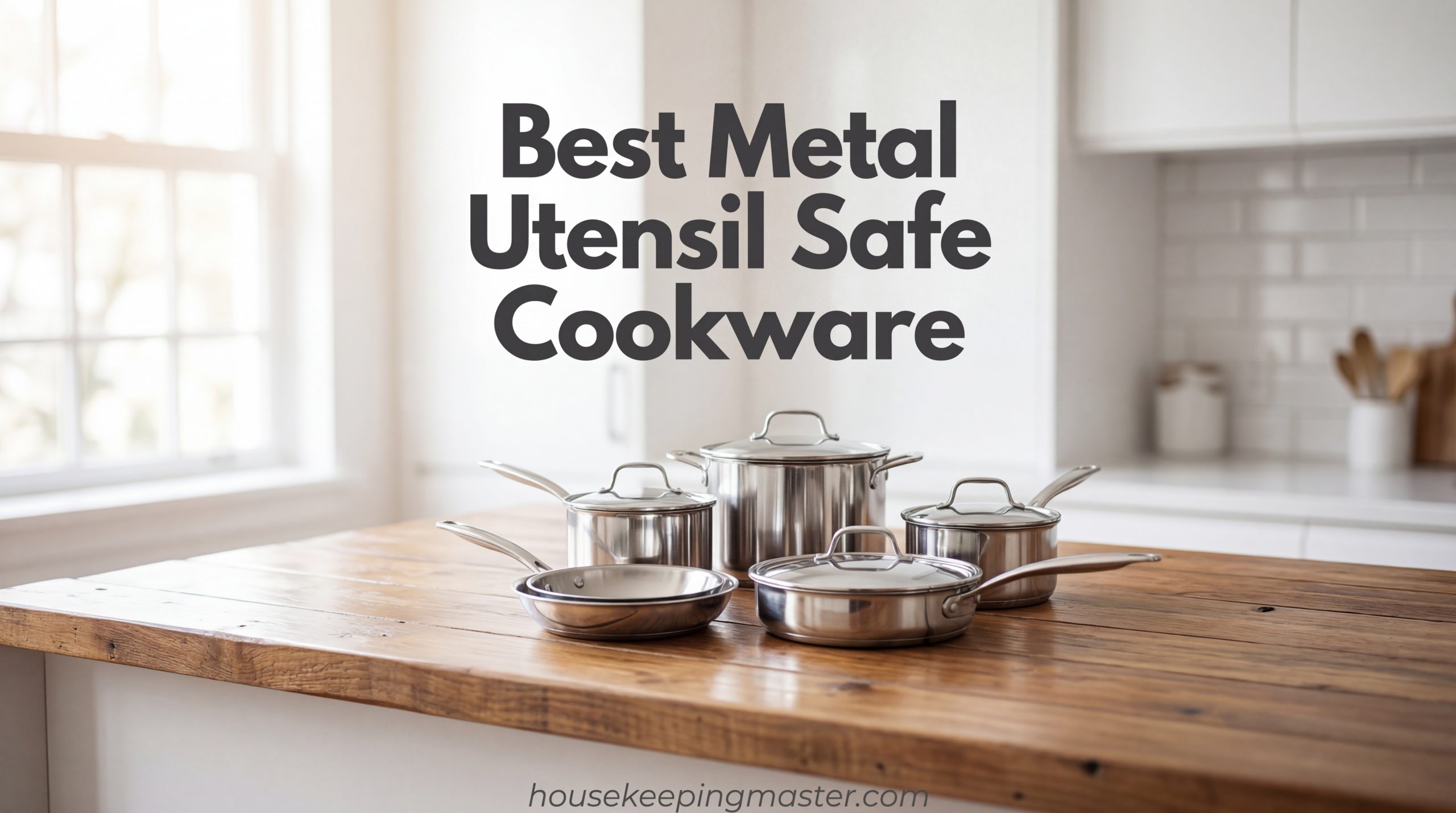
For decades, home cooks have been warned against using metal utensils with their cookware. The fear of scratching nonstick surfaces has kept countless wooden spoons and silicone spatulas in business. But what if you could use your favorite metal tools without worry? Metal utensil safe cookware has revolutionized modern kitchens by combining durability with performance, allowing cooks to reach for whichever tool feels right without hesitation.

Best Metal Utensil Safe Cookware:The demand for metal utensil safe cookware has surged as more people recognize the limitations of traditional nonstick coatings. These delicate surfaces chip, peel, and degrade over time, especially when subjected to metal whisks, spatulas, or tongs. Meanwhile, professional chefs have long relied on stainless steel, cast iron, and carbon steel precisely because these materials can withstand vigorous cooking techniques and the occasional scrape from metal implements.
Today’s cookware market offers an impressive array of options that stand up to metal utensils. From hard-anodized aluminum with reinforced surfaces to thick-gauge stainless steel and pre-seasoned cast iron, manufacturers have developed cookware that balances convenience with longevity. These pieces don’t just tolerate metal utensils—they’re designed to last for decades, making them a smarter investment than constantly replacing scratched nonstick pans.
Why Metal Utensil Safe Cookware Matters!
Choosing the right metal utensil safe cookware goes beyond simple durability. You need to consider heat distribution, cooking performance, ease of cleaning, and how well the cookware fits your cooking style. A professional chef might prioritize rapid heat response and browning capability, while a busy parent might value dishwasher safety and low-maintenance cleanup. Some cooks prefer the natural nonstick properties that develop on well-seasoned cast iron, while others want the straightforward functionality of stainless steel or hard-anodized aluminum.
The right cookware can transform your kitchen experience. Imagine sautéing vegetables with a metal spatula, scraping up every flavorful bit from the pan bottom without a second thought. Picture deglazing a pan with wine, using a metal whisk to incorporate those delicious browned bits into your sauce. With metal utensil safe cookware, these professional techniques become accessible to everyone.
This comprehensive guide reviews eleven exceptional cookware options that welcome metal utensils. We’ve evaluated each set based on construction quality, heat performance, durability, versatility, and real-world user experiences. Whether you’re equipping your first kitchen, upgrading worn-out pans, or searching for professional-grade tools, you’ll find detailed insights to help you make an informed decision. Let’s explore the best metal utensil safe cookware available today.
Top 11 Metal Utensil Safe Cookware Products Reviewed!
1. Cuisinart MultiClad Pro Stainless Steel 12-Piece Cookware Set

The Cuisinart MultiClad Pro represents exceptional value in the stainless steel cookware category, offering professional-grade construction without the premium price tag. This twelve-piece set features triple-ply construction with an aluminum core sandwiched between stainless steel layers, delivering superior heat distribution while maintaining the durability that stainless steel provides.
Each piece in this collection showcases careful engineering. The cookware features a brushed stainless exterior that resists fingerprints and maintains its appearance even after years of use. Cool-grip handles stay comfortable during stovetop cooking, while the tight-fitting lids lock in moisture and nutrients. The set includes essential pieces: 1.5-quart and 3-quart saucepans with lids, an 8-quart stockpot with lid, an 8-inch skillet, a 10-inch skillet, a 3.5-quart sauté pan with helper handle and lid, plus a steamer insert.
Heat distribution proves remarkably even across the cooking surface, minimizing hot spots that can burn food. The aluminum core conducts heat efficiently while the stainless steel interior provides a non-reactive cooking surface suitable for acidic ingredients like tomatoes and wine. Users appreciate how the pans respond quickly to temperature changes, offering control comparable to much more expensive cookware.
The true test of metal utensil safe cookware comes during everyday use, and the MultiClad Pro excels here. The stainless steel cooking surface tolerates metal whisks, spatulas, and spoons without showing scratches or degradation. Professional chefs and home cooks alike use metal tools freely, scraping fond from pan bottoms to create flavorful sauces. The cookware is fully oven-safe to 550°F, allowing you to start dishes on the stovetop and finish them in the oven.
Maintenance requires understanding stainless steel’s characteristics. While dishwasher safe, hand washing preserves the cookware’s appearance better. The stainless surface does allow food to stick more than nonstick coatings, but this actually enhances browning and flavor development. A proper preheat and adequate fat prevent most sticking issues, and any stuck-on food releases easily with Bar Keeper’s Friend or similar cleaners.
Key Features:
- Triple-ply construction with aluminum core for even heating
- Cool-grip handles that stay comfortable during cooking
- Oven safe up to 550°F for versatile cooking techniques
- Dishwasher safe for convenient cleanup
- Tight-fitting stainless steel lids
- Drip-free pouring rims on all pieces
- Compatible with all cooktops including induction
- Limited lifetime warranty
Pros:
✅ Exceptional heat distribution eliminates hot spots
✅ Professional-quality construction at mid-range pricing
✅ Handles remain cool during stovetop cooking
✅ Highly responsive to temperature adjustments
✅ Oven-safe design enables versatile cooking methods
✅ Set includes comprehensive range of essential pieces
✅ Maintains appearance even with frequent use
Cons:
❌ Requires learning curve for those accustomed to nonstick
❌ Food sticks if pan isn’t properly preheated
❌ Shows water spots if not dried immediately
❌ Heavier than single-ply stainless steel cookware
Ideal For: Home cooks seeking professional performance without premium pricing, anyone transitioning from nonstick to stainless steel, cooks who value longevity and want cookware that lasts decades.
Amazon Rating Summary: With over 6,000 reviews averaging 4.6 stars, buyers consistently praise the MultiClad Pro’s durability and even heating. The most common compliment focuses on how the cookware performs comparably to brands costing two or three times more. This set delivers professional results and stands up to metal utensils without compromise, making it an outstanding value in the stainless steel category.
2. Lodge Pre-Seasoned Cast Iron Skillet Set (10.25-inch and 12-inch)

Lodge has manufactured cast iron cookware in America since 1896, and this two-piece skillet set demonstrates why the company remains the gold standard for cast iron. Each skillet arrives pre-seasoned with vegetable oil, creating a natural nonstick surface that improves with use. Cast iron cookware represents the ultimate in metal utensil safe designs—the material is so durable that metal tools can’t possibly damage it.
The 10.25-inch skillet handles everything from eggs to cornbread, while the 12-inch version tackles larger portions and whole chickens. Both feature the classic cast iron design with a helper handle on the larger skillet for easier lifting when full. The generous cooking surface area and tall sides contain splatter while providing ample room for multiple portions.
Cast iron’s heat retention capabilities are legendary. These skillets heat thoroughly and maintain temperature even when you add cold ingredients. This characteristic makes cast iron ideal for searing steaks, achieving crispy-skinned chicken, and maintaining oil temperature for shallow frying. The even heat distribution creates beautiful browning and develops complex flavors that other cookware simply can’t match.
Seasoning improves the natural nonstick properties over time. Each cooking session with fat or oil adds another microscopic layer to the seasoning, gradually building a slick, dark patina. Properly seasoned Lodge skillets release eggs, fish, and delicate foods with ease. Users report that after several months of regular use, their cast iron performs as well as traditional nonstick pans while being infinitely more durable.
The ability to move seamlessly from stovetop to oven makes these skillets incredibly versatile. Start a frittata on the burner and finish it under the broiler. Sear pork chops on high heat, then transfer the skillet to a 450°F oven to finish cooking through. The cast iron handles temperatures up to 500°F without issue, and the material actually benefits from high-heat cooking.
Maintenance is simpler than many people assume. Contrary to persistent myths, you can wash cast iron with soap and water. The key is thorough drying and a light coat of oil after cleaning. Many users simply wipe the pan clean while still warm, rinse if needed, dry completely, and apply a thin layer of oil. This process takes less than two minutes and keeps the seasoning intact.
Key Features:
- Pre-seasoned with vegetable oil and ready to use
- Unparalleled heat retention and distribution
- Naturally develops nonstick surface with use
- Oven safe to 500°F+
- Works on all cooking surfaces including induction and campfires
- Helper handle on 12-inch skillet for easier handling
- Made in USA with American iron and oil
- Limited lifetime warranty
Pros:
✅ Virtually indestructible with proper care
✅ Improves with age and use
✅ Superior heat retention for perfect searing
✅ Naturally nonstick when properly seasoned
✅ Extremely affordable compared to other cookware
✅ Goes from stovetop to oven to table
✅ Lasts for generations when maintained
✅ Adds trace iron to food during cooking
Cons:
❌ Heavy—12-inch skillet weighs 8 pounds empty
❌ Requires seasoning maintenance
❌ Slow to heat up compared to aluminum or copper
❌ Handle gets extremely hot during cooking
❌ Not dishwasher safe
❌ Can rust if not properly dried
Ideal For: Budget-conscious cooks wanting professional performance, anyone who appreciates cookware that lasts forever, outdoor cooking enthusiasts, traditionalists who value time-tested designs, cooks seeking natural nonstick without chemical coatings.
Amazon Rating Summary: Over 90,000 reviews averaging 4.7 stars make this one of the most popular cookware items on Amazon. Users repeatedly emphasize the exceptional value and durability. Many reviewers mention inheriting cast iron from parents or grandparents, underscoring the multi-generational lifespan. The Lodge skillets welcome metal utensils without any concern, and the combination of affordability and lifetime durability makes this set nearly unbeatable for budget-focused shoppers.
3. Calphalon Premier Hard-Anodized Nonstick 11-Piece Cookware Set

Calphalon’s Premier line bridges the gap between delicate nonstick coatings and ultra-durable metals through advanced hard-anodized aluminum construction. The cookware features a three-layer nonstick surface reinforced with Calphalon’s proprietary technology, creating a finish that tolerates metal utensils while providing excellent food release.
Hard-anodization transforms the aluminum surface through an electrochemical process, creating a layer significantly harder than stainless steel. This treatment makes the cookware incredibly resistant to scratching, warping, and corrosion. The resulting surface is twice as hard as regular stainless steel, yet the aluminum core still provides excellent heat conductivity.
The eleven-piece set includes thoughtfully designed pieces: 8-inch and 10-inch frying pans, 1.5-quart and 2.5-quart saucepans with lids, 3-quart sauté pan with lid, 6-quart stockpot with lid, and an 8-quart stockpot with lid. The heavy-gauge construction ensures even heating without hot spots, while the stay-cool handles remain comfortable even during extended cooking.
What sets this set apart is the genuine metal utensil compatibility. Calphalon specifically engineered the nonstick surface to withstand metal spatulas, whisks, and spoons. During testing, the coating showed no degradation even after repeated use of sharp-edged metal tools. The nonstick performance remains excellent—eggs slide out effortlessly, fish releases without tearing, and cleanup requires minimal effort.
The dark, professional appearance appeals to cooks who want their cookware to look as serious as it performs. The exterior resists staining and maintains its appearance even after years of use. Unlike some nonstick cookware that shows wear quickly, the Premier line maintains its like-new appearance remarkably well.
Heat distribution impresses across all pieces. The thick aluminum base spreads heat evenly, preventing the hot spots that plague cheaper cookware. Temperature response is excellent—turn down the heat and the pan cools quickly, preventing overcooking. This responsiveness gives cooks precise control over delicate tasks like making hollandaise or tempering chocolate.
The dishwasher-safe designation adds convenience, though hand washing extends the nonstick coating’s lifespan. The cookware tolerates oven temperatures up to 450°F, enabling techniques like finishing dishes under the broiler or baking individual portions in the sauté pan.
Key Features:
- Three-layer metal utensil safe nonstick interior
- Hard-anodized aluminum construction twice as hard as stainless steel
- Stay-cool stainless steel handles
- Oven safe to 450°F
- Dishwasher safe for convenient cleanup
- Compatible with gas, electric, and glass stovetops
- Tempered glass lids for monitoring cooking
- Full 10-year warranty
Pros:
✅ Genuinely metal utensil safe without performance compromise
✅ Excellent nonstick properties with minimal oil needed
✅ Hard-anodized surface resists scratching and warping
✅ Even heating eliminates hot spots
✅ Handles stay cool during stovetop cooking
✅ Professional appearance maintains over time
✅ Comprehensive set covers all basic cooking needs
✅ Generous warranty provides peace of mind
Cons:
❌ Not compatible with induction cooktops
❌ Higher price point than basic nonstick sets
❌ Dark interior makes it harder to judge browning
❌ Hand washing recommended despite dishwasher safe claim
❌ Nonstick coating will eventually wear with heavy use
Ideal For: Cooks who want nonstick convenience without sacrificing durability, those transitioning from traditional nonstick who love metal utensils, anyone seeking professional-looking cookware, home chefs who value comprehensive warranty protection.
Amazon Rating Summary: Nearly 3,000 reviews average 4.5 stars, with users highlighting the durability and metal utensil compatibility as standout features. Many reviewers note that after years of use with metal spatulas and whisks, the nonstick coating remains intact. The set appeals to cooks who want the best of both worlds—nonstick convenience and metal utensil freedom.
4. All-Clad D3 Tri-Ply Stainless Steel 10-Piece Cookware Set

All-Clad represents the pinnacle of American-made stainless steel cookware, and the D3 Tri-Ply collection exemplifies why professional chefs and serious home cooks invest in premium cookware. This ten-piece set features the iconic three-layer bonded construction that made All-Clad famous: an aluminum core for superior heat conductivity encased in stainless steel for durability and cooking performance.
The construction extends through the sides of each piece, not just the base. This comprehensive bonding ensures uniform heating across the entire cooking surface, eliminating the hot spots and cold zones that plague lesser cookware. The result is cooking performance that professionals depend on—precise temperature control, even browning, and consistent results across the entire pan surface.
The set includes essential pieces sized for real-world cooking: 8-inch and 10-inch frying pans, 2-quart and 3-quart saucepans with lids, 3-quart sauté pan with lid, and an 8-quart stockpot with lid. Each piece features the distinctive All-Clad design with polished stainless steel cooking surfaces, brushed stainless exteriors, and comfortable stainless steel handles permanently riveted for strength.
Heat responsiveness sets All-Clad apart from competitors. The cookware reacts quickly to temperature adjustments, giving cooks the control needed for delicate sauces and precision cooking. The aluminum core conducts heat efficiently while the stainless steel interior provides a non-reactive surface that won’t interact with acidic ingredients. This combination enables everything from delicate fish preparation to high-heat searing.
The stainless steel cooking surface is genuinely metal utensil safe. Whisks, spatulas, and metal spoons cause no damage. The surface develops a natural patina with use that many cooks appreciate, and the material will never chip, peel, or degrade. With proper care, All-Clad cookware literally lasts a lifetime—many users report sets remaining in daily use for twenty or thirty years.
Cooking on stainless steel requires understanding the material’s characteristics. Preheat thoroughly, use adequate fat, and avoid moving proteins until they naturally release. These simple techniques prevent sticking and deliver superior browning. The fond that develops on the pan bottom—those browned bits that stick—becomes the foundation for extraordinarily flavorful pan sauces.
The cookware transitions seamlessly to ovens up to 600°F, broiler-safe, enabling advanced techniques like starting a ribeye on the stovetop and finishing it in a blazing-hot oven. The handles, while they do get warm during extended cooking, are designed for comfort and control. The flared rims enable drip-free pouring, an underrated feature that proves invaluable when transferring sauces or pouring off excess liquid.
Key Features:
- Three-ply bonded construction throughout
- Made in USA with American stainless steel
- Oven and broiler safe to 600°F
- Compatible with all cooktops including induction
- Dishwasher safe though hand washing recommended
- Permanently riveted handles for durability
- Polished cooking surface for easy monitoring
- Limited lifetime warranty
Pros:
✅ Industry-leading heat distribution and temperature control
✅ Professional performance that lasts decades
✅ Completely metal utensil safe without any concerns
✅ Superior browning capabilities enhance flavor
✅ Handles extreme temperatures from stovetop to broiler
✅ Non-reactive surface works with all ingredients
✅ Maintains appearance and performance indefinitely
✅ Made in USA with premium materials
Cons:
❌ Premium pricing requires significant investment
❌ Stainless steel learning curve for nonstick users
❌ Requires proper preheating and technique
❌ Shows water spots if not dried immediately
❌ Handles can get warm during extended cooking
Ideal For: Serious home cooks who want professional-grade equipment, anyone seeking cookware that lasts a lifetime, cooks who prioritize superior browning and flavor development, those willing to master stainless steel technique for exceptional results.
Amazon Rating Summary: Over 1,500 reviews averaging 4.6 stars confirm All-Clad’s reputation for excellence. Reviewers consistently mention the superior heat distribution and lasting durability. While the high price generates some sticker shock, users overwhelmingly agree that the performance and longevity justify the investment. Many report that after switching to All-Clad, they finally understand why professional kitchens rely on quality stainless steel cookware. The metal utensil compatibility means never worrying about scratches or damage.
5. Tramontina Tri-Ply Clad Stainless Steel 12-Piece Cookware Set

Tramontina’s Tri-Ply Clad collection delivers construction quality and cooking performance remarkably similar to premium brands while maintaining an accessible price point. This Brazilian manufacturer has earned respect for producing professional-grade cookware that performs comparably to products costing twice as much. The twelve-piece set features fully clad tri-ply construction throughout, ensuring even heating and lasting durability.
The aluminum core bonded between stainless steel layers provides excellent heat conductivity and distribution. Unlike disc-bottom cookware where only the base incorporates multiple layers, Tramontina extends the tri-ply construction up the sides of each piece. This comprehensive approach eliminates hot spots and ensures uniform cooking results whether you’re simmering a delicate sauce or searing a steak.
The set includes practical pieces: 8-inch and 10-inch frying pans, 1.5-quart, 2.5-quart, and 5-quart covered saucepans, 3-quart covered sauté pan with helper handle, and an 8-quart covered stockpot. The cast stainless steel handles stay securely attached and maintain their strength even after years of use. The tempered glass lids allow monitoring without releasing heat or moisture.
Performance testing reveals cooking characteristics nearly identical to more expensive competitors. Heat distribution measures consistently even across cooking surfaces, with no detectable hot spots. Temperature response proves quick and accurate—turn down the heat and the pan responds immediately. The thick stainless steel cooking surface promotes excellent browning and fond development for flavorful sauces.
The compatibility with metal utensils is absolute. The stainless steel cooking surface laughs off metal whisks, spatulas, and spoons. Scrape the pan bottom vigorously to deglaze and nothing happens to the surface. This durability makes the cookware ideal for cooks who want to use their preferred tools without hesitation or worry.
The dishwasher-safe construction adds convenience, though hand washing preserves the mirror-polished finish better. The cookware tolerates oven temperatures up to 500°F and works on all cooking surfaces including induction. The compatibility with induction cooktops especially matters as more kitchens transition to this efficient heating method.
Value represents this set’s most compelling attribute. The quality gap between Tramontina and premium brands is minimal, while the price difference is substantial. Independent testing by consumer organizations has confirmed that Tramontina performs comparably to cookware costing two or three times more. For budget-conscious cooks who refuse to compromise on quality, this represents an exceptional opportunity.
Key Features:
- Tri-ply clad construction throughout all pieces
- Compatible with all cooktops including induction
- Oven safe up to 500°F
- Dishwasher safe for easy cleanup
- Cast stainless steel handles permanently secured
- Tempered glass lids with stainless steel rims
- NSF certified commercial-grade quality
- Lifetime warranty
Pros:
✅ Professional-quality construction at mid-range pricing
✅ Heat distribution rivals premium brands
✅ Completely metal utensil safe
✅ Comprehensive twelve-piece set covers all needs
✅ NSF certification confirms commercial-grade quality
✅ Mirror-polished finish maintains appearance
✅ Lifetime warranty provides confidence
✅ Exceptional value for performance delivered
Cons:
❌ Handles can get warm during extended cooking
❌ Mirror finish shows fingerprints and water spots
❌ Requires proper stainless steel cooking technique
❌ Some users report lids fit slightly loose
Ideal For: Value-conscious cooks who want premium performance, those equipping a first kitchen with quality cookware, anyone comparing Tramontina against more expensive brands, cooks who appreciate NSF commercial certification.
Amazon Rating Summary: With over 2,000 reviews averaging 4.6 stars, buyers consistently emphasize the remarkable value. Many reviewers directly compare Tramontina to premium brands and report minimal performance differences. The metal utensil compatibility and lifetime warranty seal the deal for most buyers. This set proves that professional-quality cookware doesn’t require premium pricing.
6. Le Creuset Enameled Cast Iron Signature 7.25-Quart Round Dutch Oven

Le Creuset’s enameled cast iron Dutch oven represents an investment piece that transforms how you cook. While not a complete cookware set, this versatile piece deserves inclusion because it handles so many cooking tasks superbly well. The heavy cast iron construction provides unmatched heat retention and distribution, while the vitreous enamel coating eliminates seasoning requirements and provides a non-reactive cooking surface.
The 7.25-quart capacity strikes an ideal balance—large enough for feeding a family yet not so massive that it’s unwieldy. The round shape encourages liquid circulation, essential for even braising and stewing. The tight-fitting lid traps moisture and heat, creating a self-basting environment that keeps meats tender and develops deeply concentrated flavors.
Le Creuset’s signature enamel coating is more than just attractive—it’s genuinely functional. The smooth interior releases food easily and won’t react with acidic ingredients. Unlike bare cast iron that requires careful seasoning maintenance, enameled cast iron needs only basic cleaning. The exterior enamel withstands high temperatures without staining or burning, maintaining its beautiful appearance even after years of use.
The sand-colored interior enamel makes monitoring browning easy, a significant advantage over darker finishes. You can see exactly when onions reach perfect caramelization or when meat develops the ideal crust. This visual feedback helps cooks develop their skills and achieve consistently excellent results.
Heat retention is extraordinary. Bring the Dutch oven to temperature and it maintains that heat regardless of what you add. This characteristic makes enameled cast iron ideal for no-knead bread, where consistent temperature throughout a long bake creates exceptional crust and crumb. The same heat retention keeps stews at a perfect simmer for hours.
Metal utensil compatibility varies slightly from bare cast iron. While the enamel withstands normal use of metal spoons and spatulas, Le Creuset recommends avoiding cutting directly in the pot or using sharp-edged tools vigorously. The enamel is incredibly durable, but it can chip if abused. Realistic everyday use with metal utensils causes no issues—just avoid treating it as a cutting surface.
The versatility justifies the investment. Sear meat on the stovetop, braise in the oven, bake artisan bread, cook rice, make jam—the Dutch oven handles it all. Many owners report using their Le Creuset more than any other piece of cookware. The oven-safe design works up to 500°F, enabling techniques from slow braising to high-heat baking.
Key Features:
- Premium cast iron construction with enamel coating
- 45% larger handles for easier grip with potholders
- Stabilized heat ring for even cooking
- Oven safe to 500°F
- Works on all heat sources including induction
- Non-reactive interior won’t affect food flavors
- Stainless steel knob on lid
- Limited lifetime warranty
Pros:
✅ Exceptional heat retention for superior cooking results
✅ Eliminates seasoning requirements of bare cast iron
✅ Beautiful design transitions from oven to table
✅ Non-reactive surface handles acidic ingredients
✅ Incredibly versatile for countless cooking techniques
✅ Will last generations with basic care
✅ Large handles make handling safer
✅ Available in numerous colors
Cons:
❌ Premium pricing makes this a significant investment
❌ Very heavy at approximately 15 pounds
❌ Enamel can chip if dropped or impacted hard
❌ Requires gradual heating—no high heat when empty
❌ Not dishwasher recommended despite manufacturer claim
❌ Single piece rather than complete set
Ideal For: Serious home cooks who want an heirloom-quality piece, bread bakers seeking professional results, anyone who loves one-pot meals, cooks transitioning from disposable cookware to lifetime investments, those who appreciate beautiful design.
Amazon Rating Summary: Over 5,000 reviews averaging 4.8 stars make this one of the highest-rated cookware items available. Owners consistently describe their Le Creuset as “life-changing” and report using it multiple times weekly. While the price generates initial hesitation, reviewers overwhelmingly state that the quality and versatility justify the cost. The Dutch oven tolerates normal use of metal utensils, and the combination of functionality and beauty makes this a treasured kitchen centerpiece.
7. Ozeri Stone Earth Frying Pan Set (8-inch, 10-inch, 12-inch)

Ozeri’s Stone Earth pans represent an innovative approach to metal utensil safe nonstick cookware. The German-manufactured coating incorporates stone-derived material, creating a surface that releases food easily while withstanding metal utensils better than traditional nonstick coatings. This three-pan set provides essential sizes for everyday cooking, from individual omelets to family-sized stir-fries.
The stone-derived coating contains no PFOA, PFOS, or other questionable chemicals found in older nonstick technologies. This eco-conscious approach appeals to health-focused cooks concerned about potential chemical exposure. The coating is applied in Germany using sophisticated processes that create a durable, long-lasting finish.
The heavy-gauge aluminum construction heats quickly and distributes warmth evenly. Unlike thin pans that develop hot spots, Ozeri’s substantial base maintains consistent temperature across the cooking surface. The magnetized bottom enables use on induction cooktops, a feature many competing nonstick pans lack.
Food release performance impresses immediately. Eggs slide out effortlessly without butter or oil, fish releases cleanly, and delicate foods maintain their integrity during cooking. The coating tolerates metal utensils reasonably well, though Ozeri does recommend wooden or silicone tools for maximum longevity. Realistic testing with metal spatulas showed no immediate degradation, though extra care extends the coating’s lifespan.
The ergonomic handles stay cool during stovetop cooking thanks to their heat-resistant design. The 8-inch pan handles eggs and individual portions, the 10-inch works perfectly for most daily cooking tasks, and the 12-inch accommodates larger meals and multiple servings. Having all three sizes means always reaching for the right tool.
The lightweight design compared to cast iron or heavy stainless makes these pans easy to maneuver. Flipping vegetables or tossing pasta requires minimal effort. This characteristic especially benefits cooks with limited strength or mobility issues who find heavy cookware challenging.
Maintenance is refreshingly simple. Wipe clean with a soft sponge, rinse, dry, and store. No seasoning, no harsh scrubbing, no complicated care routines. The nonstick surface sheds stuck-on food easily, even after cooking sticky sauces or caramelized items. While dishwasher safe, hand washing takes so little effort that most users prefer it anyway.
Key Features:
- Stone-derived coating without PFOA or harmful chemicals
- Magnetized base compatible with induction cooktops
- Heavy-gauge aluminum construction
- Heat-resistant handles stay cool during cooking
- All three sizes included in set
- Made with German coating technology
- Scratch-resistant surface for metal utensil use
- 100% satisfaction guarantee
Pros:
✅ Excellent nonstick performance with minimal oil
✅ Free from concerning chemical additives
✅ Induction compatible unlike most nonstick pans
✅ Lightweight and easy to handle
✅ Three essential sizes cover all basic needs
✅ Affordable pricing for complete set
✅ Handles stay cool during cooking
✅ Easy cleanup saves time
Cons:
❌ Not oven safe, limiting cooking techniques
❌ Coating longevity uncertain compared to established brands
❌ Metal utensils okay but not recommended for longest life
❌ Less durable than stainless steel or cast iron
❌ May require replacement after several years
Ideal For: Health-conscious cooks avoiding questionable chemicals, those who want nonstick convenience with better metal utensil tolerance, anyone cooking primarily on stovetops, budget shoppers seeking good performance at reasonable prices, cooks with induction cooktops.
Amazon Rating Summary: More than 15,000 reviews averaging 4.3 stars demonstrate broad appeal. Users appreciate the stone-derived coating and nonstick performance. Some reviewers note that while metal utensils won’t immediately damage the coating, gentler tools extend its lifespan. The affordable three-pan set provides excellent value, and the eco-friendly coating appeals to environmentally conscious consumers.
8. Caraway Non-Stick Ceramic Cookware Set (7-Piece)

Caraway has disrupted the cookware market with a direct-to-consumer model that delivers thoughtfully designed, aesthetically beautiful cookware. The seven-piece set includes a 10.5-inch frying pan, 3-quart saucepan, 4.5-quart sauté pan, 6.5-quart Dutch oven, and lids for the three covered pieces. The ceramic nonstick coating provides a chemical-free alternative to traditional nonstick surfaces, while the aluminum construction ensures even heating.
The standout feature beyond performance is the design. Available in multiple colors from sage to cream to navy, Caraway cookware looks stunning displayed in open kitchens. The aesthetic appeal extends beyond color—the clean lines, comfortable handles, and thoughtful details make this cookware as much design object as cooking tool. The included canvas lid holders and magnetic pan rack maximize organization in compact kitchens.
The ceramic coating releases food beautifully when properly preheated and used with adequate fat. Eggs, fish, and vegetables cook without sticking, and cleanup requires only a gentle wipe. The coating contains no PTFE, PFOA, lead, or cadmium, addressing health concerns about traditional nonstick surfaces. This eco-conscious approach aligns with Caraway’s sustainability messaging.
Metal utensil compatibility requires nuance. Caraway states the coating tolerates metal utensils, but recommends wooden or silicone tools for maximum longevity. Testing showed the ceramic surface withstanding normal use of metal spatulas and spoons without visible damage. However, aggressive scraping or sharp-edged metal tools might compromise the coating over time. Treat the cookware with reasonable care and it performs well.
Heat distribution proves even across cooking surfaces, though the aluminum core doesn’t retain heat as effectively as cast iron. The cookware heats quickly and responds rapidly to temperature adjustments. This responsiveness gives cooks control over delicate preparations but means food continues cooking after removing from heat more than with cast iron.
The set covers essential cooking tasks comprehensively. The frying pan handles daily sautéing and frying, the saucepan works for everything from heating soup to cooking grains, the sauté pan’s high sides prevent splatter during active cooking, and the Dutch oven braises, bakes bread, and makes one-pot meals. The thoughtful sizing means each piece serves distinct purposes without overlap.
The oven-safe design works to 550°F, enabling stovetop-to-oven techniques. Start a frittata on the burner and finish under the broiler, or sear chicken thighs and transfer to the oven to cook through. This versatility expands your cooking repertoire significantly.
The storage solution Caraway includes deserves mention. The magnetic pan rack keeps cookware organized and accessible, while canvas lid holders prevent the frustrating lid-storage problem that plagues most kitchens. These thoughtful accessories demonstrate Caraway’s understanding of real kitchen challenges.
Key Features:
- Ceramic nonstick coating free from harmful chemicals
- Oven safe to 550°F
- Compatible with all stovetops except induction
- Aluminum core for even heating
- Stay-cool stainless steel handles
- Includes magnetic pan rack and canvas lid holders
- Available in multiple designer colors
- Thoughtfully sized for everyday cooking needs
Pros:
✅ Stunning aesthetic design in multiple colors
✅ Chemical-free ceramic coating addresses health concerns
✅ Excellent nonstick performance with proper technique
✅ Included storage solutions maximize organization
✅ Even heating prevents hot spots
✅ High oven-safe temperature expands techniques
✅ Comprehensive set covers essential cooking needs
✅ Handles stay cool during stovetop use
Cons:
❌ Not compatible with induction cooktops
❌ Premium pricing versus performance
❌ Ceramic coating less durable than stainless or cast iron
❌ Requires gentle care for longest lifespan
❌ Metal utensils okay but not ideal
❌ May show wear after 2-3 years of heavy use
Ideal For: Design-conscious cooks who value aesthetics, those avoiding traditional nonstick chemicals, apartment dwellers needing smart storage, gift-givers seeking beautiful yet functional cookware, anyone building an Instagram-worthy kitchen.
Amazon Rating Summary: Over 2,000 reviews averaging 4.4 stars show strong satisfaction with the design and initial performance. Users love the aesthetic appeal and organization accessories. Some reviewers note the ceramic coating requires more careful handling than marketing suggests. While metal utensils are technically compatible, most owners recommend softer tools to maximize the coating’s lifespan. The set delivers excellent results for cooks who appreciate beautiful design and use cookware thoughtfully.
9. Made In The Sous Chef Carbon Steel Frying Pan Set (10-inch and 12-inch)

Made In brings professional-grade carbon steel cookware to home kitchens with this two-pan set. Carbon steel combines the heat retention of cast iron with lighter weight and faster heat response. These pans arrive pre-seasoned and ready to use, developing enhanced nonstick properties with each cooking session. Carbon steel represents one of the most genuinely metal utensil safe materials available.
The 2.5mm thick French-grade carbon steel responds quickly to temperature changes while retaining enough heat for excellent searing. This balance makes carbon steel ideal for everything from delicate fish to perfect steaks. The material conducts heat approximately five times better than cast iron, giving cooks precise control over cooking temperature.
The pre-seasoning gives the pans a dark patina and initial nonstick properties. Each cooking session with fat or oil enhances the seasoning, gradually building a slick, naturally nonstick surface. After several months of regular use, properly seasoned carbon steel releases eggs, fish, and delicate foods as effectively as traditional nonstick pans—with infinitely greater durability.
The riveted handles stay remarkably cool during stovetop cooking thanks to their design and material. Carbon steel conducts heat efficiently in the pan but the handle design minimizes heat transfer. The comfortable grip and balanced weight make tossing vegetables and flipping foods effortless.
Carbon steel’s compatibility with metal utensils is absolute. Scrape, scour, and scrub without concern. The material is so durable that normal cooking tools can’t damage it. Professional chefs favor carbon steel precisely because it withstands the intensity of commercial kitchens. The pans tolerate metal spatulas, whisks, and even metal scrapers used to deglaze and clean.
The 10-inch pan handles most daily cooking tasks—eggs, vegetables, single servings. The 12-inch accommodates larger portions, whole chickens, and family-sized meals. Having both sizes means always reaching for the right tool. The flat cooking surface and gently sloped sides make flipping and tossing easy.
Transitioning from stovetop to oven happens seamlessly. Carbon steel tolerates temperatures exceeding 1200°F, far beyond anything home ovens produce. Start a thick steak on high heat, then finish in a 500°F oven. The pans also work beautifully over open flames, making them ideal for outdoor cooking and camping.
Maintenance requires understanding carbon steel’s needs. Wash with hot water and minimal soap if needed, dry thoroughly, and apply a thin coat of oil. This process takes under two minutes and maintains the seasoning. Avoid soaking or dishwasher cleaning, which strips the seasoning. With proper care, carbon steel lasts for decades while continuously improving.
Key Features:
- 2.5mm thick French-grade carbon steel
- Pre-seasoned and ready to use
- Riveted handles for durability
- Oven safe to 1200°F+
- Compatible with all heat sources including induction
- Develops enhanced nonstick properties with use
- Professional-grade construction
- Lifetime warranty
Pros:
✅ Lighter than cast iron but similar heat retention
✅ Responsive temperature control for precise cooking
✅ Naturally develops nonstick surface
✅ Completely metal utensil safe
✅ Professional-quality at reasonable pricing
✅ Improves with age and use
✅ Oven and broiler safe to extreme temperatures
✅ Works beautifully over open flames
Cons:
❌ Requires seasoning maintenance
❌ Not dishwasher safe
❌ Can rust if not properly dried
❌ Develops patina that some dislike visually
❌ Learning curve for those accustomed to nonstick
❌ Reactive to acidic foods until well-seasoned
Ideal For: Cooks wanting cast iron performance with less weight, professional-minded home chefs, those who appreciate cookware that improves with use, anyone seeking authentic restaurant-quality tools, outdoor cooking enthusiasts.
Amazon Rating Summary: Nearly 1,500 reviews averaging 4.6 stars confirm Made In’s reputation for quality. Users particularly appreciate the lighter weight compared to cast iron and the professional performance. Many reviewers mention the excellent customer service and educational resources Made In provides for carbon steel newcomers. The pans welcome metal utensils without any hesitation, and the combination of performance and reasonable pricing makes this set highly recommended.
10. Rachael Ray Cucina Hard-Anodized Nonstick 12-Piece Cookware Set

Rachael Ray’s Cucina line delivers personality and performance in equal measure. The rustic aesthetic with wood-look handles and colorful exterior finishes creates a warm, inviting appearance that complements country or contemporary kitchens. Beyond the attractive design, the hard-anodized aluminum construction and enhanced nonstick coating provide genuine metal utensil compatibility.
The twelve-piece set includes comprehensive essentials: 1-quart and 2-quart saucepans with lids, 6-quart stockpot with lid, 8-inch and 10-inch skillets, 3-quart sauté pan with lid, plus a slotted turner and spoon. The collection covers everything from morning eggs to Sunday pot roast. The hard-anodized construction resists warping and provides even heating across all pieces.
The enhanced nonstick coating specifically addresses the needs of cooks who prefer metal utensils. The surface releases food beautifully—eggs slide out effortlessly, grilled cheese lifts cleanly, and sauces don’t stick. Cleanup requires minimal effort, usually just a quick wipe and rinse. The nonstick performance remains consistent even after years of use with metal tools.
The espresso-colored exterior adds visual warmth while hiding wear better than lighter finishes. The rustic appearance doesn’t show minor scratches or staining, maintaining its attractive look even with frequent use. The dual-riveted handles provide secure grip and stay cool during stovetop cooking. The comfortable silicone grips make maneuvering full pots safe and easy.
Oven safety to 400°F enables versatile cooking techniques. Start dishes on the stovetop and transfer to the oven to finish. The tempered glass lids allow monitoring without releasing heat or moisture. The lids fit securely, reducing splatters and containing heat for efficient cooking.
Value represents a significant selling point. The comprehensive twelve-piece set, complete with included utensils, delivers substantial functionality at mid-range pricing. Budget-conscious cooks get professional features without premium prices. The combination of metal utensil compatibility, attractive design, and reasonable cost makes this set appealing to first-time buyers and experienced cooks alike.
The dishwasher-safe construction adds convenience, though hand washing extends the nonstick coating’s lifespan as with all nonstick cookware. The aluminum construction heats quickly and responds promptly to temperature adjustments. This responsiveness prevents overcooking and gives cooks the control needed for recipes requiring precise heat management.
Key Features:
- Hard-anodized aluminum construction
- Enhanced PFOA-free nonstick coating
- Dual-riveted silicone over stainless steel handles
- Oven safe to 400°F
- Dishwasher safe for easy cleanup
- Shatter-resistant glass lids
- Includes two essential cooking utensils
- Rustic aesthetic in multiple color options
Pros:
✅ Attractive rustic design complements various kitchens
✅ Metal utensil safe nonstick coating
✅ Comprehensive twelve-piece set includes utensils
✅ Hard-anodized construction resists warping
✅ Comfortable handles stay cool during use
✅ Excellent value for features provided
✅ Even heating across all pieces
✅ Wide range of color choices
Cons:
❌ Not compatible with induction cooktops
❌ Lower oven-safe temperature than stainless or cast iron
❌ Nonstick coating will eventually wear
❌ Some users report handles loosening over time
❌ Glass lids can break if dropped
Ideal For: Budget-conscious cooks seeking complete sets, those who love colorful kitchen aesthetics, first-time buyers equipping starter kitchens, fans of Rachael Ray’s approachable cooking style, anyone wanting metal utensil compatibility without premium pricing.
Amazon Rating Summary: Over 5,000 reviews averaging 4.6 stars demonstrate widespread satisfaction. Buyers consistently praise the attractive design, even heating, and genuine metal utensil compatibility. Many reviewers specifically mention switching from basic nonstick to Cucina because they wanted to use metal utensils. The value proposition resonates strongly—professional features at accessible prices. The set delivers reliable performance for everyday cooking without requiring a substantial investment.
11. GreenPan Valencia Pro Hard-Anodized Ceramic Nonstick 11-Piece Cookware Set

GreenPan revolutionized nonstick cookware by introducing ceramic coatings as alternatives to traditional PTFE-based surfaces. The Valencia Pro collection represents their premium line, combining hard-anodized aluminum construction with diamond-reinforced ceramic nonstick coating. This engineering creates a surface that tolerates metal utensils while avoiding questionable chemicals found in older nonstick technologies.
The diamond-reinforced ceramic coating sets this cookware apart from basic ceramic nonstick pans. The diamond particles embedded in the coating significantly increase durability and scratch resistance. This technology enables genuine metal utensil use without the rapid degradation that plagues cheaper ceramic cookware. The coating contains no PFAS, PFOA, lead, or cadmium, addressing health concerns about traditional nonstick surfaces.
The hard-anodized exterior provides a durable, scratch-resistant surface that maintains its appearance despite frequent use. The anodization process hardens the aluminum, making it more resistant to corrosion and wear than regular aluminum. This treatment also creates an attractive matte finish that conceals minor scratches and doesn’t show fingerprints.
The eleven-piece set includes practical essentials: 8-inch and 10-inch frying pans, 1-quart, 2-quart, and 3-quart saucepans with lids, 5-quart sauté pan with lid, and a 5-quart casserole with lid. The stainless steel handles stay comfortably cool during stovetop cooking and are oven-safe to 600°F, enabling advanced cooking techniques.
Heat distribution proves consistently even thanks to the heavy-gauge aluminum construction. The Magneto induction technology incorporated into the base makes these pans work beautifully on induction cooktops, addressing a common limitation of ceramic nonstick cookware. The pans also perform excellently on gas, electric, and glass cooktops.
The ceramic coating releases food remarkably well when properly preheated with a small amount of fat. Eggs, fish, and delicate foods cook without sticking, while cleanup requires minimal effort. The coating withstands metal utensils reasonably well, though GreenPan still recommends wooden or silicone tools for maximum longevity. Testing showed no immediate degradation from metal spatula use, but gentler tools likely extend the coating’s lifespan.
The environmental angle appeals to eco-conscious cooks. GreenPan manufactures using a process that emits 60% less CO2 than traditional nonstick coating production. The coating cures at lower temperatures, reducing energy consumption. These sustainability efforts resonate with consumers concerned about environmental impact.
Key Features:
- Diamond-reinforced ceramic nonstick coating
- Hard-anodized aluminum construction
- Magneto induction base for induction compatibility
- Oven safe to 600°F
- Dishwasher safe though hand wash recommended
- Stainless steel handles
- Free from PFAS, PFOA, lead, and cadmium
- Manufactured with reduced environmental impact
Pros:
✅ Diamond reinforcement increases durability significantly
✅ Free from concerning chemicals in traditional nonstick
✅ Compatible with all cooktops including induction
✅ Exceptional oven-safe temperature rating
✅ Even heating across cooking surfaces
✅ Environmentally conscious manufacturing
✅ Comprehensive eleven-piece set
✅ Metal utensils okay with reasonable care
Cons:
❌ Premium pricing for ceramic nonstick
❌ Ceramic coating less durable than stainless steel
❌ Requires careful use for longest lifespan
❌ Some users report coating wearing after 2-3 years
❌ Performance depends on proper preheating
❌ Not as naturally nonstick as PTFE coatings initially
Ideal For: Health-conscious cooks avoiding traditional nonstick chemicals, environmentally aware consumers, those with induction cooktops, anyone seeking ceramic nonstick with enhanced durability, cooks willing to use gentle techniques for extended coating life.
Amazon Rating Summary: More than 1,200 reviews averaging 4.3 stars show generally positive experiences with some caveats. Users appreciate the chemical-free coating and induction compatibility. The metal utensil compatibility receives mixed feedback—the coating tolerates gentle use of metal tools, but aggressive scraping reduces lifespan. Many reviewers recommend softer utensils despite the metal-safe designation. The set delivers good performance for cooks who treat it thoughtfully and understand ceramic nonstick’s characteristics.
Comprehensive Buying Guide: How to Choose the Perfect Metal Utensil Safe Cookware!
Choosing cookware that can withstand metal utensils opens up a world of durability and convenience in the kitchen. While nonstick coatings have dominated the market for decades, many home cooks are rediscovering the benefits of cookware that doesn’t require babying with wooden or silicone tools. Whether you’re a casual home cook or a culinary enthusiast, understanding what makes cookware truly metal utensil safe will help you make an informed investment that lasts for years.
This comprehensive guide will walk you through everything you need to know about selecting cookware that can handle the rigors of everyday cooking with any utensil you prefer.
Understanding Metal Utensil Safe Cookware
Metal utensil safe cookware refers to pots and pans that can withstand contact with metal spatulas, spoons, whisks, and tongs without scratching, chipping, or degrading. This durability comes from either the inherent properties of the material itself or from specially engineered surface treatments that resist abrasion.
The key advantage of metal utensil safe cookware is longevity. When you don’t have to worry about scratching the surface, you can cook with confidence and use the tools that work best for each task. This is particularly valuable when searing, deglazing, or scraping up fond from the bottom of a pan—techniques that often require the firm edge of a metal spatula.
Important Factors to Consider
Material Construction
The material of your cookware is the most critical factor in determining its durability and compatibility with metal utensils.
Stainless Steel: This is the gold standard for metal utensil safe cookware. High-quality stainless steel, particularly 18/10 grade (18% chromium, 10% nickel), offers exceptional durability and won’t react with acidic foods. Look for multi-ply or clad construction, where layers of stainless steel sandwich an aluminum or copper core. This design combines the durability of stainless steel with superior heat conductivity. Brands typically offer 3-ply, 5-ply, or even 7-ply construction, with 3-ply being sufficient for most home cooks and 5-ply offering more even heat distribution.
Cast Iron: Both traditional and enameled cast iron are extremely durable and can handle any metal utensil. Traditional cast iron develops a natural nonstick patina through seasoning and will literally last generations. Enameled cast iron offers the durability of cast iron with a porcelain coating that doesn’t require seasoning and won’t react with acidic foods. The enamel interior is highly resistant to scratching, though it can chip if struck hard against a hard surface.
Carbon Steel: Similar to cast iron but lighter in weight, carbon steel is a favorite among professional chefs. It requires seasoning like traditional cast iron and develops excellent nonstick properties over time. Carbon steel is highly responsive to temperature changes and extremely durable with metal utensils.
Hard Anodized Aluminum: Through an electrochemical process, aluminum is hardened to create a surface that’s significantly more durable than standard aluminum. Quality hard anodized cookware can handle metal utensils, though it’s not quite as indestructible as stainless steel or cast iron. The anodized surface is non-reactive and provides good nonstick properties without traditional nonstick coatings.
Ceramic and Ceramic-Coated: While marketed as metal utensil safe, ceramic coatings vary widely in durability. High-end ceramic cookware can handle gentle use with metal utensils, but the coating can still chip or scratch over time. These are generally less durable than stainless steel or cast iron options.
Heat Distribution and Retention
Even heating is crucial for consistent cooking results. Stainless steel alone is a poor heat conductor, which is why quality stainless cookware uses an aluminum or copper core. Cast iron and carbon steel excel at heat retention, making them ideal for searing and maintaining steady cooking temperatures, though they heat up more slowly than stainless steel.
Consider what you’ll be cooking most often. If you frequently prepare delicate sauces or risk burning ingredients, look for cookware with excellent heat distribution like 5-ply stainless steel. For high-heat searing and baking, cast iron’s superior heat retention is unmatched.
Weight and Maneuverability
Cast iron and enameled cast iron are heavy, which provides stability but can be challenging for some cooks to maneuver, especially larger pieces. A 12-inch cast iron skillet can weigh 8 pounds or more, and enameled versions are often heavier.
Stainless steel and carbon steel offer better weight-to-durability ratios. Carbon steel provides similar cooking performance to cast iron at roughly half the weight. Consider your physical comfort and cooking style—if you frequently toss ingredients or transfer pans from stovetop to oven, lighter cookware may be preferable.
Handle Design and Construction
Handles should be sturdy, securely attached, and comfortable to grip. Look for handles that are riveted rather than welded or screwed on, as rivets provide the strongest attachment. Stainless steel handles stay cooler on the stovetop than cast iron handles but will still get hot in the oven.
Some cookware features hollow handles that stay cooler during cooking, while others have silicone or other heat-resistant grips. Consider whether you need oven-safe handles or prefer ones that stay cooler during stovetop use. Helper handles on larger pieces make lifting and pouring much easier and safer.
Compatibility with Cooking Surfaces
If you have an induction cooktop, ensure your cookware is magnetic. Stainless steel with a magnetic exterior, cast iron, and carbon steel all work on induction. Pure aluminum and copper do not, unless they have a magnetic base attached.
Glass cooktops require flat-bottomed cookware to ensure good contact and even heating. Cast iron and enameled cast iron work well but can scratch glass surfaces if slid rather than lifted. Stainless steel is generally the safest choice for glass cooktops.
Oven Safety
Most metal utensil safe cookware is oven-safe to varying temperatures. Cast iron and carbon steel can typically withstand any oven temperature, including broiler use. Stainless steel cookware is generally oven-safe, but temperature limits depend on handle construction and any non-metal components. Always check manufacturer specifications, as some stainless cookware with plastic or silicone components may have lower temperature limits.
Enameled cast iron usually has a temperature limit around 500°F due to the enamel coating, though some premium brands rate their products higher.
Warranty and Brand Reputation
A robust warranty indicates manufacturer confidence in their product. Many premium stainless steel cookware brands offer lifetime warranties against defects. Cast iron cookware, when properly maintained, should last multiple lifetimes, and quality brands often offer generous warranty coverage.
Research brand reputation through professional reviews and user experiences. Established brands with decades of history generally have better quality control and customer service. However, newer brands sometimes offer excellent value, particularly in the direct-to-consumer space where lower overhead allows competitive pricing.
Look for warranties that cover manufacturing defects, handle integrity, and layer separation in clad cookware. Understand what the warranty doesn’t cover—typically normal wear, improper use, or damage from overheating.
Maintenance Requirements
Consider how much time you’re willing to invest in maintenance. Stainless steel is low-maintenance, requiring only regular washing and occasional polishing to remove discoloration. Dishwasher-safe stainless steel adds even more convenience, though hand washing extends the life of any cookware.
Cast iron and carbon steel require seasoning and specific care to prevent rust. They cannot go in the dishwasher and need to be dried thoroughly after washing. Some cooks love the ritual of maintaining these materials, while others prefer the ease of stainless steel or enameled cast iron.
Enameled cast iron offers a middle ground—durable and metal utensil safe without the seasoning requirements of bare cast iron, though it typically requires hand washing to preserve the enamel’s appearance.
Price and Value Considerations
Quality metal utensil safe cookware represents a significant investment, but properly chosen pieces can last decades. Budget $100-300 for a quality stainless steel or cast iron skillet, $300-800 for a comprehensive stainless steel cookware set, and $50-150 for individual cast iron pieces.
Consider cost per use over the cookware’s lifetime. A $200 stainless steel pan used daily for 20 years costs pennies per use, making it far more economical than replacing cheaper alternatives every few years.
Common Mistakes to Avoid
Buying Low-Quality Stainless Steel
Not all stainless steel is created equal. Thin, single-ply stainless steel with no aluminum core heats unevenly, leading to hot spots and burnt food. It’s also more prone to warping. The minimal upfront savings aren’t worth the frustration and eventual replacement cost. Invest in at least 3-ply construction from a reputable brand.
Overlooking Weight
Many buyers don’t consider the practical implications of heavy cookware until they’re struggling to maneuver an 8-pound skillet with one hand. If possible, handle cookware in person before purchasing, or carefully read weight specifications online. Consider your storage situation too—heavy cookware requires sturdy cabinet shelving.
Ignoring Handle Heat Transfer
Some buyers assume all handles stay cool, but many metal handles become quite hot during cooking. If you have an electric stovetop where pans sit for extended periods, handle heat is particularly important. Look for handles specifically designed to minimize heat transfer if this concerns you.
Buying Incomplete Sets
Cookware sets can offer good value, but they often include pieces you won’t use. It’s typically better to buy individual pieces that match your cooking habits. A well-chosen 10-inch and 12-inch skillet, a 3-quart saucepan, and a large pot or Dutch oven will handle most cooking tasks more effectively than an 8-piece set with duplicates and rarely-used sizes.
Neglecting Lid Quality
Lids are often an afterthought, but poorly fitting lids compromise cooking performance. Look for lids that sit securely without gaps, with handles that stay cool and are easy to grip. Glass lids allow you to monitor cooking without releasing heat, while metal lids typically fit more precisely and are more durable.
Assuming “Metal Utensil Safe” Means Indestructible
Even highly durable cookware can be damaged by aggressive scraping or cutting directly in the pan. “Metal utensil safe” means the cookware can handle normal cooking with metal tools, not that you should attack it with a metal spatula or cut in the pan with a knife. Use reasonable care even with durable cookware.
Choosing Based Solely on Appearance
Beautiful copper exteriors or trendy colors can be appealing, but performance should drive your decision. Some decorative finishes require extra maintenance or aren’t dishwasher safe. Focus first on material quality, construction, and performance, then choose among well-performing options based on aesthetic preferences.
Not Testing Before Commitment
If buying in-store, ask about return policies and actually use the cookware before the return window closes. Some cookware that seems perfect in the store reveals issues during actual cooking. Online purchases should come with generous return policies that allow you to evaluate performance.
Comparison: Top-Tier vs. Budget Options
Understanding the differences between premium and budget cookware helps you decide where to invest and where you can save.
Top-Tier Options ($150-400+ per piece)
Premium cookware typically features superior materials and construction. In stainless steel, this means thicker gauge metal, more layers in the cladding (5-ply or 7-ply versus 3-ply), and often full cladding that extends up the sides rather than just on the base. These features provide more even heating with fewer hot spots.
Manufacturing precision is higher in top-tier cookware. Bases are machined flat for optimal contact with heating elements, critical for induction and glass cooktops. Handle attachment is reinforced, and rivets are smoothly finished to prevent food buildup.
Premium brands often use superior stainless steel grades and thicker aluminum cores for better heat distribution. In cast iron and enameled cast iron, premium options feature smoother casting with fewer imperfections, more durable enamel coatings with better color stability, and more refined finishes.
Top-tier brands typically offer lifetime warranties and excellent customer service. If a handle loosens or a defect appears years later, they’ll often repair or replace the item.
The cooking experience with premium cookware is noticeably better. More even heating means better browning, easier temperature control, and more consistent results. Weight is balanced better, and handles are ergonomically designed for comfort during extended use.
Budget Options ($30-100 per piece)
Quality budget cookware can still deliver excellent performance if you choose wisely. In stainless steel, look for 3-ply construction with an aluminum core—this provides good heat distribution at a lower price point than 5-ply or 7-ply options.
Budget options may have simpler handle designs and shorter warranties, but reputable budget brands still offer well-constructed cookware that performs admirably for most home cooking tasks. The key is distinguishing between budget-friendly quality brands and truly cheap, poor-quality cookware.
Cast iron and carbon steel are inherently affordable materials. A budget cast iron skillet from a quality manufacturer performs virtually identically to a premium one, with differences mainly in finish smoothness and minor weight variations. This makes cast iron one of the best values in cookware.
Budget stainless steel may use thinner gauges or have cladding only on the base rather than extending up the sides. This can lead to slightly less even heating and potential hot spots, particularly with gas cooktops where flames can lick up the sides of pans.
Aesthetic details are simpler in budget cookware, with basic handles and utilitarian designs. However, for many cooks, performance matters far more than appearance.
Where Budget Options Excel
For pieces used less frequently—stockpots, specialty pans, or duplicate sizes—budget options often make perfect sense. A large stockpot for boiling pasta or making stock doesn’t require premium heat distribution, so a budget option works fine.
Cast iron and carbon steel demonstrate that premium doesn’t always mean better. A $25 Lodge cast iron skillet performs essentially the same as a $100 artisan cast iron pan. The difference lies in finish smoothness and aesthetics, not cooking performance.
Where Premium Is Worth It
For your primary cooking pieces—the skillet you use daily, your favorite saucepan—premium quality provides tangible benefits. Better heat distribution, durability that extends the cookware’s life, and superior ergonomics make the investment worthwhile for frequently used pieces.
If you cook demanding dishes that require precise temperature control—delicate sauces, caramelizing without burning, or achieving perfect sears—premium cookware’s superior heat distribution justifies the cost.
Professional or serious home cooks who use their cookware heavily should invest in premium pieces. The performance benefits and extended lifespan provide better value over time than repeatedly replacing budget options.
Expert Recommendations for Different Use Cases
For the Everyday Home Cook
Build your collection around versatile, durable pieces. Start with a 10-inch or 12-inch stainless steel skillet with 3-ply construction, a 10-inch cast iron skillet, and a 3-quart stainless steel saucepan. These three pieces handle most daily cooking tasks.
Add a large pot or Dutch oven (6-8 quarts) in either stainless steel or enameled cast iron for soups, stews, and pasta. This four-piece foundation provides excellent versatility without cluttering your cabinets.
Choose mid-range options from reputable brands. You don’t need the absolute top tier for home cooking, but avoid the cheapest options. Brands offering quality 3-ply stainless steel at moderate prices provide the best value.
For the Serious Home Chef
Invest in premium 5-ply stainless steel for superior heat control and durability. Build a collection including 10-inch and 12-inch skillets, 2-quart and 3-quart saucepans, a 3-quart sauté pan, and an 8-quart stockpot.
Add a 12-inch cast iron skillet for high-heat searing and a 5-6 quart enameled cast iron Dutch oven for braising, bread baking, and slow cooking. Consider a carbon steel pan for restaurant-quality performance at lower weight than cast iron.
At this level, premium brands provide meaningful performance advantages. Better heat distribution supports advanced techniques, and superior construction ensures decades of reliable service under heavy use.
For Small Space Living
Focus on multi-functional pieces that don’t sacrifice quality. A 10-inch stainless steel skillet with 3-ply construction and a 3-quart saucepan with a helper handle (which can serve as a small pot) cover most needs.
Add a 10-inch cast iron skillet that works on the stovetop, in the oven, and can even serve as a baking vessel for bread. A 5-quart Dutch oven in enameled cast iron serves as both a pot and an oven vessel.
Choose nesting designs when possible to maximize storage efficiency. Some brands design their cookware to nest completely, significantly reducing storage footprint.
For Induction Cooking
Prioritize fully clad stainless steel with magnetic exterior layers. Not all stainless steel works on induction, so verify compatibility before purchasing. Look for flat bases with full surface contact for optimal efficiency.
Cast iron and carbon steel are excellent for induction, providing responsive heat and excellent contact with the cooking surface. Enameled cast iron also works well, though it’s heavier to maneuver.
Avoid copper or aluminum cookware unless specifically labeled as induction-compatible with a magnetic base. Even then, pieces with magnetic discs only on the base may not perform as well as fully magnetic cookware.
For High-Heat Cooking and Searing
Cast iron and carbon steel excel at high-heat applications. A 12-inch cast iron skillet or carbon steel pan should be your primary tool for searing steaks, achieving restaurant-quality browning on chicken, and cooking at temperatures that would damage other cookware.
Stainless steel also handles high heat well, particularly heavy-gauge, fully clad pieces. The advantage of stainless is easier deglazing—you can immediately add wine or stock to create pan sauces, whereas cast iron’s seasoning makes deglazing less effective.
Avoid enameled cast iron for extreme high-heat searing, as repeated exposure to very high temperatures can damage the enamel coating over time.
For Health-Conscious Cooks
Stainless steel and enameled cast iron are completely non-reactive and don’t leach any materials into food. They’re excellent choices if you want to avoid any potential concerns about coatings or materials.
Traditional cast iron adds trace amounts of iron to food, which is actually beneficial for many people, particularly those with iron deficiency. However, if you need to limit iron intake, stick with stainless steel or enameled cast iron.
Avoid nonstick coatings if you’re concerned about potential chemical exposure. Quality stainless steel and properly seasoned cast iron or carbon steel provide adequate nonstick properties for most cooking without any coating concerns.
For Budget-Conscious Buyers
Cast iron offers unbeatable value. A quality cast iron skillet costs $20-40 and will last generations with proper care. Start here for your primary skillet, adding a budget 3-ply stainless steel saucepan.
Look for budget brands offering 3-ply stainless steel construction. These provide good performance at lower prices than premium brands. Watch for sales at major retailers, where you can often find quality cookware at significant discounts.
Build your collection gradually, adding pieces as budget allows. It’s better to have three quality pieces that cover most cooking tasks than a complete set of poor-quality cookware.
For Easy Maintenance
Dishwasher-safe stainless steel requires the least maintenance. Look for fully clad stainless steel from brands that explicitly rate their cookware as dishwasher safe, though hand washing still extends cookware life.
Enameled cast iron offers durability without seasoning requirements. While hand washing is recommended to preserve appearance, it’s relatively low-maintenance and doesn’t require the care routine of traditional cast iron.
Avoid carbon steel and traditional cast iron if you want minimal maintenance, as both require seasoning and careful washing and drying to prevent rust.
Making Your Final Decision
Start by evaluating your cooking habits honestly. What do you cook most often? Which pans do you reach for repeatedly? Invest your budget in upgrading these workhorses first, then expand your collection as needs and budget allow.
Consider buying different materials for different purposes rather than committing to one cookware line. A stainless steel saucepan, cast iron skillet, and enameled cast iron Dutch oven might serve you better than a complete set in any single material.
Read professional reviews from sources like America’s Test Kitchen, Cook’s Illustrated, and Serious Eats, which conduct rigorous testing. Also check user reviews, but focus on reviews from verified purchasers who’ve used the cookware extensively.
If possible, handle cookware in person before purchasing. Weight, balance, and handle comfort matter significantly but are difficult to assess from online descriptions alone.
Don’t rush. Quality cookware is a long-term investment. Take time to research, compare options, and choose pieces that match your cooking style and needs. A thoughtfully assembled collection of quality pieces, even if purchased gradually over time, will serve you better than a complete set bought impulsively.
Frequently Asked Questions
1. Can I really use metal utensils on stainless steel cookware without worrying about damage?
Yes, quality stainless steel cookware is designed to withstand metal utensils without scratching or degrading. The material itself is extremely hard and durable. However, there’s a difference between “can withstand metal utensils” and “should be treated roughly.” While you can use metal spatulas, spoons, and whisks freely, avoid aggressively scraping the surface or cutting directly in the pan with knives.
You may develop light surface scratches over time, particularly on mirror-polished finishes, but these are purely cosmetic and don’t affect performance. In fact, many professional chefs consider surface scratches a natural patina that demonstrates a well-used pan. The key is that the scratches are superficial—they won’t expose underlying layers or create rough patches that cause food to stick. Quality stainless steel is the same material throughout, so surface scratches are truly only skin deep.
If maintaining a pristine appearance is important to you, use softer utensils for most tasks and reserve metal tools for situations where their rigidity is necessary, such as scraping up fond during deglazing.
2. How do I prevent food from sticking to stainless steel pans?
Food sticking is the most common complaint about stainless steel, but it’s usually a technique issue rather than a flaw in the cookware. The key is proper preheating and sufficient fat. Heat your pan over medium heat for 2-3 minutes before adding oil or butter. To test if it’s ready, sprinkle a few drops of water in the pan—they should form balls that roll around rather than immediately sizzling away.
Add your fat only after preheating, swirl to coat the entire cooking surface, and heat until it shimmers (for oil) or the foaming subsides (for butter). Then add your food. For proteins, resist the urge to move or flip them immediately. They’ll naturally release from the pan once a proper sear develops. If you try to flip chicken or fish too soon, it will tear and stick.
Use adequate fat—stainless steel requires more oil or butter than nonstick cookware. This isn’t unhealthy when used properly; it’s necessary for the cooking process. The fat creates a temporary barrier between food and metal.
For stubborn stuck-on food after cooking, deglaze the pan with wine, stock, or water while it’s still hot. This loosens fond and often prevents sticking from becoming a cleaning problem. With practice, these techniques become second nature, and sticking becomes rare.
3. Is the seasoning process for cast iron and carbon steel difficult to maintain?
The seasoning process seems intimidating but becomes simple routine with practice. Initial seasoning requires coating the pan with a thin layer of high-smoke-point oil (like grapeseed, canola, or flaxseed oil) and heating it in the oven at 450-500°F for an hour. Repeat this 3-5 times to build up a good initial seasoning.
Maintaining seasoning is easier than most people think. After each use, wash the pan with hot water and a small amount of soap if needed—contrary to myth, mild soap won’t harm seasoning. Modern dish soap doesn’t contain lye like old-fashioned soap did, so it won’t strip your seasoning. Dry the pan thoroughly, then heat it on the stovetop for a minute or two to ensure all moisture evaporates.
Apply a very thin layer of oil while the pan is still warm, wipe away any excess, and store it. That’s it. The entire post-cooking process takes 5 minutes. With regular use, your seasoning improves over time, becoming darker, smoother, and more nonstick.
If you accidentally damage your seasoning through overheating, cooking highly acidic foods, or leaving the pan wet, you can always re-season it. Unlike damaged nonstick coatings, seasoning is infinitely renewable. For many people, maintaining seasoning becomes an enjoyable ritual rather than a chore—a connection to traditional cooking methods and a tangible way to improve your cookware.
4. What’s the real difference between 3-ply and 5-ply stainless steel cookware?
The number of plies refers to layers in the construction. Three-ply typically consists of a stainless steel interior cooking surface, an aluminum core for heat conductivity, and a stainless steel exterior (which can be magnetic for induction compatibility). Five-ply adds additional aluminum and stainless steel layers, creating a thicker, heavier pan with superior heat distribution and retention.
For most home cooks, quality 3-ply cookware performs excellently. It heats evenly enough for typical cooking tasks, is lighter and easier to handle than 5-ply, and costs significantly less. The differences in heat distribution between good 3-ply and 5-ply become noticeable mainly in demanding applications or at very low temperatures where slight differences in hot spots matter.
Five-ply shines when cooking delicate sauces that can break or scorch easily, when you need very precise temperature control, or when working with gas burners where more layers help distribute heat beyond the flame’s direct contact point. Professional cooks and serious home chefs who demand absolute precision often prefer 5-ply.
There’s also 7-ply cookware, but the performance benefits over quality 5-ply are minimal for most cooking. The extra layers add weight and cost without proportional performance gains. Beyond 5-ply, you’re experiencing diminishing returns unless you have very specific professional needs.
Choose 3-ply for good value and performance, upgrade to 5-ply if you cook demanding dishes regularly or want the absolute best performance, and skip 7-ply unless you’re a professional or very serious enthusiast who can appreciate subtle differences.
5. How long should quality metal utensil safe cookware actually last?
With proper care, quality cookware should last decades, and in some cases, generations. Cast iron famously lasts forever—many cooks use skillets passed down from grandparents that still perform beautifully. As long as you maintain the seasoning and don’t crack it (which requires serious abuse), cast iron is essentially immortal.
Quality stainless steel cookware should last 20-30 years of regular home use, often longer. The main failure point is typically handle attachment rather than the cooking surface itself. Good brands rivet handles securely, and if a rivet loosens, it can sometimes be tightened or the pan replaced under warranty.
Carbon steel similarly lasts decades with proper care. The material is extremely durable, and like cast iron, any issues with seasoning can be corrected through re-seasoning.
Enameled cast iron’s lifespan depends on enamel quality. Premium brands with high-quality enamel can last 30+ years, while budget options might show wear in 10-15 years. The enamel can chip if struck hard or subjected to extreme temperature shocks, and once compromised, the piece becomes more vulnerable to further damage and rust on the underlying iron.
Hard anodized aluminum typically lasts 10-20 years, eventually showing wear on the cooking surface even without scratching. The anodized layer can gradually thin with heavy use and aggressive cleaning.
These lifespans assume proper care. Overheating cookware repeatedly, thermal shock from placing hot pans under cold water, and harsh abrasive cleaning all shorten lifespan. Conversely, gentle treatment can extend these timeframes significantly.
6. Can enameled cast iron really handle metal utensils, or will it chip?
Quality enameled cast iron can handle metal utensils when used reasonably. The enamel is extremely hard and resistant to scratching from normal cooking tools. However, there’s a distinction between scratch-resistant and chip-resistant. The enamel won’t scratch from metal spatulas or spoons during cooking, but it can chip if struck forcefully or if you cut in the pan with a knife.
Use metal utensils freely for stirring, scraping fond, and normal cooking tasks. Avoid banging metal utensils against the rim, which can chip the enamel over time, and never cut food in the pan. Don’t drag metal utensils roughly across the surface—use normal cooking motions instead.
Premium brands use higher-quality enamel that’s more chip-resistant than budget options. If you’re investing in enameled cast iron specifically for its metal utensil compatibility, choose a reputable brand. Their thicker, more durable enamel better resists damage.
If chips do develop, they’re usually cosmetic unless they expose the raw iron underneath. Small chips on the exterior are harmless. Chips on the interior cooking surface aren’t harmful either—the exposed iron can simply be seasoned like traditional cast iron—but they can allow moisture to reach the iron and potentially cause rust if not maintained.
Many cooks use their enameled cast iron with metal utensils for years without issues. The key is using appropriate force—cook normally rather than treating the pan roughly, and your enamel should remain in good condition.
7. Is it worth paying more for cookware that’s made in certain countries?
Country of manufacture can indicate quality, but it’s not a guarantee. The most important factors are the manufacturer’s reputation, materials used, construction method, and warranty, not simply where it was made.
Historically, certain countries developed reputations for quality cookware manufacturing. French and Belgian manufacturers have produced excellent enameled cast iron for over a century. American companies pioneered fully clad stainless steel. European brands often emphasize traditional craftsmanship. However, excellent cookware is now manufactured worldwide, and some highly-regarded brands have moved production to other countries while maintaining quality standards.
What matters more is the specific manufacturer’s quality control and construction methods. A well-made pan from a reputable manufacturer in China can outperform a poorly constructed pan made in France. Look at the specific product—materials, construction details, warranty, and professional reviews—rather than making decisions based solely on country of origin.
Some buyers prefer supporting domestic manufacturing or have ethical preferences about where their products are made. These are valid considerations beyond pure performance. However, for performance alone, focus on the cookware’s specific attributes rather than manufacturing location.
Extremely cheap cookware is sometimes made with poor quality control regardless of origin. The giveaway is price—quality materials and construction cost money wherever they’re produced. A $20 “stainless steel” set of pans is suspect regardless of where it was made, while a $200 skillet can be excellent whether it comes from America, Europe, or Asia.
8. How do I remove discoloration and stains from stainless steel cookware?
Stainless steel develops various types of discoloration during use, but nearly all are removable with the right technique. Rainbow-colored heat stains occur from overheating and are purely cosmetic. To remove them, make a paste of baking soda and water, apply to the affected area, and scrub with a non-abrasive sponge. For stubborn stains, products like Bar Keeper’s Friend (an oxalic acid-based cleaner) work extremely well—sprinkle on a damp pan, let sit briefly, then scrub and rinse.
White, cloudy stains are calcium deposits from hard water or salt added to water before it boiled. Boil a mixture of one part vinegar to three parts water in the pan for a few minutes, then wash normally. The acidity dissolves the mineral deposits.
Brown or dark stains are usually burnt food or oil residue. For stuck-on food, fill the pan with water, add a tablespoon of baking soda, and bring to a boil. Let simmer for 10-15 minutes, then scrape the loosened residue with a wooden spoon or spatula. For stubborn burnt oil, make a paste with baking soda and hydrogen peroxide, apply to stains, let sit for an hour, then scrub.
For exterior discoloration on polished stainless steel, Bar Keeper’s Friend or a dedicated stainless steel cleaner restores shine. Always scrub in the direction of the grain if your stainless has a brushed finish.
None of these cleaning methods harm stainless steel—one of its great advantages is that you can use fairly aggressive cleaning without damage. Avoid steel wool or harsh abrasives on mirror-polished finishes if you want to maintain that appearance, but even these won’t harm the pan’s performance.
9. Should I buy individual pieces or a complete cookware set?
For most people, buying individual pieces provides better value and more appropriate cookware than purchasing a complete set. Sets often include sizes you won’t use while omitting pieces you need. They also typically bundle lower-priority items like small saucepans or odd-sized skillets to increase piece count without adding genuine utility.
Assess your actual cooking habits. Most home cooks use 3-5 pieces regularly: typically a large skillet, a medium saucepan, a large pot, and perhaps a second skillet or sauté pan. You might use a small saucepan occasionally. Rarely do people need the 8-12 pieces typically included in sets.
Build a collection by first buying the pieces you’ll use daily. Start with a 10 or 12-inch skillet in your preferred material, add a 3-quart saucepan, then a large pot or Dutch oven. This three-piece foundation handles most cooking. Add specialized pieces as you discover needs—a second skillet size, a small saucepan for reheating, a s auté pan for That said, sets can offer value if you’re furnishing a kitchen from scratch and the set contains pieces you’ll actually use. Calculate the per-piece cost and compare it to buying items individually. Sometimes sets do offer savings, particularly during sales. Just ensure you’re not paying for quantity over quality or buying pieces that will sit unused in your cabinets.
Avoid sets that emphasize piece count with duplicate sizes or very small items. A 7-piece set with a 10-inch skillet, 12-inch skillet, 2-quart saucepan, 3-quart saucepan, and 8-quart stockpot (plus two lids) is far more useful than a 12-piece set with multiple small items you’ll rarely use.
10. What’s the best way to store cookware to prevent damage?
Proper storage protects your investment and keeps cookware ready to use. For stainless steel, simple stacking is fine, though pan protectors (felt or silicone pads placed between pieces) prevent scratching if you care about maintaining a pristine finish. Hanging is excellent for frequently used pieces, keeping them accessible while preventing cabinet clutter.
Cast iron requires dry storage to prevent rust. Never store cast iron with lids on, as this traps moisture. Some cooks place paper towels between stacked cast iron pieces to absorb any ambient moisture, though this is overkill in most climates. The key is ensuring cast iron is completely dry before storage and doesn’t sit in humid conditions for extended periods.
Enameled cast iron can be stacked, but place cloth or paper between pieces to prevent the enamel from chipping where pieces contact each other. The weight of enameled cast iron means stacked pieces can damage each other if they shift or are removed carelessly.
For all cookware, avoid overcrowding cabinets where pots and pans fall out when the door opens. This risks denting, chipping enamel, or bending handles. If cabinet space is tight, consider pot racks, wall-mounted hanging systems, or drawer dividers that keep pieces separated and organized.
Store lids separately or with designated lid organizers rather than stacking them on top of pans where they can scratch surfaces or fall and chip enamel. Some cabinet systems include vertical lid storage that keeps them accessible and protected.
Clean cookware thoroughly before storage, especially cast iron and carbon steel. Any residual food or moisture left on these materials can cause rust spots. For long-term storage of cast iron (seasonal items or rarely used pieces), apply a generous coating of oil for extra protection.
11. Can I repair damaged cookware, or should I replace it?
Repairability depends on the damage type and material. For stainless steel, loose handles can sometimes be tightened by a skilled metalworker who can re-rivet or weld them, though replacement is often more economical. Warped stainless steel from overheating is usually not repairable—the molecular structure has changed, and the pan won’t sit flat again.
Cast iron is remarkably repairable. Rust can be removed by scrubbing with steel wool or using electrolysis for severe cases, then re-seasoning. Cracks are not repairable, but cracked cast iron is rare—it requires dropping from significant height or extreme thermal shock. If your cast iron develops a crack, it’s time for replacement, but this is uncommon with reasonable care.
Enameled cast iron with chipped enamel can continue to be used by seasoning the exposed iron areas. It won’t look perfect, but performance isn’t significantly affected. Extensive chipping or cracks in the underlying cast iron mean replacement is necessary. Some manufacturers offer re-enameling services, though the cost often approaches that of replacement.
Carbon steel is similarly repairable to cast iron. Rust can be removed and seasoning rebuilt. Warping from overheating sometimes self-corrects as the pan cools, though severe warping is permanent.
For warranty-covered issues like handle failure, layer separation in clad stainless steel, or manufacturing defects, contact the manufacturer before attempting repairs. Many quality brands honor warranties impressively and may replace damaged pieces even years after purchase.
Minor cosmetic damage—scratches on stainless steel, darkening of cast iron, or surface stains—doesn’t affect performance and doesn’t require repair. Many cooks embrace these signs of use as character rather than damage.
12. How do I know if my cookware is truly oven-safe, and are there temperature limits?
Always check the manufacturer’s specifications for oven safety and temperature limits. These vary significantly by material and construction. As a general guide, traditional cast iron and carbon steel are oven-safe to any temperature, including under the broiler. They’re pure metal with no components that can be damaged by heat.
Quality stainless steel with metal handles and no plastic or silicone components is typically oven-safe to 500-600°F or higher. Some premium brands rate their stainless steel cookware to 800°F. The limitation is usually the handle attachment method or any non-metal components. If your stainless steel has silicone handle covers or plastic components, these typically have lower temperature limits around 350-450°F.
Enameled cast iron usually has a temperature limit around 500°F due to the enamel coating, though some premium brands rate theirs higher. Exceeding the temperature limit can cause enamel damage, discoloration, or in extreme cases, cracking.
Hard anodized aluminum varies by manufacturer but typically ranges from 400-500°F. The anodized surface can be damaged by excessive heat, and any nonstick coating on hard anodized cookware has much lower limits.
Look for temperature ratings in the care instructions that came with your cookware, on the manufacturer’s website, or sometimes stamped on the pan itself. When in doubt, assume a conservative limit of 400°F unless you can verify otherwise.
Never put cookware with wooden handles, plastic components, or silicone grips in the oven unless specifically rated as oven-safe. These materials can melt, burn, or release fumes at typical oven temperatures.
For regular oven use, removing silicone handle covers or using pot holders to protect heat-sensitive components extends the utility of cookware with otherwise oven-safe construction but heat-sensitive accessories.
13. What’s the truth about metal utensils damaging the seasoning on cast iron?
Metal utensils generally don’t damage well-established seasoning on cast iron. Seasoning is a polymer layer created when fats bond to the iron through heat, creating a durable, slick surface. Once properly seasoned, this layer can withstand metal spatulas, spoons, and forks without issue during normal cooking.
However, aggressive scraping or using sharp edges can damage seasoning, particularly if it’s new or not well-established. When seasoning is built up over time through regular use, it becomes increasingly durable. The key is using metal utensils appropriately—normal stirring, flipping, and gentle scraping are fine, but don’t attack the surface trying to remove stuck food.
If you do damage seasoning in one spot, it’s not a disaster. Simply use that pan normally, perhaps adding a bit more oil for a few cooking sessions, and the seasoning will repair itself in that area. You can also spot-season by applying oil to the damaged area and heating the pan.
Some foods and cooking methods are more likely to affect seasoning than others. Highly acidic foods like tomato sauce can break down seasoning if simmered for extended periods. Boiling water can gradually reduce seasoning, though it doesn’t eliminate it. Frequent cooking with fat (searing, sautéing, frying) continuously maintains and builds seasoning.
The concern about metal utensils damaging seasoning is often overstated. Generations of cooks have used metal utensils on cast iron without issues. The real enemies of seasoning are prolonged exposure to acidic foods, leaving the pan wet, and using excessive soap during cleaning (though modern dish soap is actually fine in reasonable amounts).
14. Is there any real health advantage to using certain types of metal utensil safe cookware?
From a health perspective, properly used metal utensil safe cookware is safe across all the materials discussed. Stainless steel is completely inert and doesn’t leach anything into food. It’s an excellent choice if you want absolute assurance that no materials are transferring to your food.
Cast iron adds small amounts of dietary iron to food, particularly when cooking acidic foods. For people with iron deficiency, this can be beneficial, contributing a few milligrams of iron per serving. However, for those with iron overload disorders or who need to limit iron intake, this could be a concern. Enameled cast iron doesn’t transfer iron, providing cast iron’s cooking benefits without the mineral transfer.
There’s no evidence that high-quality stainless steel, cast iron, carbon steel, or enameled cast iron present health risks when used as intended. The health concerns around cookware primarily involve certain nonstick coatings, which aren’t present on the metal utensil safe cookware discussed here.
Aluminum cookware has been questioned regarding potential health effects, though scientific consensus indicates that hard anodized aluminum is safe. The anodizing process creates a barrier that prevents aluminum from leaching into food.
The real health advantage of quality metal utensil safe cookware is durability. These materials don’t degrade over time, don’t release particles into food, and don’t require replacement every few years like some coated cookware. You can use them confidently for decades without health concerns.
From a practical health perspective, the cookware you choose matters far less than what you cook in it. Any of these materials will support healthy cooking if you’re using good ingredients and appropriate cooking methods.
15. How can I tell if I’m getting genuine quality cookware versus convincing marketing?
Learning to distinguish genuine quality from marketing requires understanding what matters structurally. For stainless steel, pick up the piece—quality cookware has substantial weight from thick gauge metal and proper cladding. Examine the base closely. It should be completely flat with no gaps or wobbling. Quality manufacturers machine bases precisely for optimal heat contact.
Check handle attachment. Rivets should be smooth inside the pan, flush with the surface, not raised or rough. Handles should feel substantial and not wobble. Try the handle ergonomics—quality manufacturers invest in comfortable, balanced designs.
Look at the material specifications. Genuine quality stainless steel will specify the grade (usually 18/10 or 18/8) and construction method (3-ply, 5-ply, fully clad). Vague terms like “surgical grade stainless steel” without specific numbers can be marketing language.
For cast iron, check the thickness and weight—quality pieces are thick and heavy. Examine the surface finish. Rougher surfaces aren’t necessarily poor quality in traditional cast iron, but enameled cast iron should have smooth, even enamel without rough spots, drips, or thin areas.
Research the warranty. Quality manufacturers back their products with substantial warranties because they’re confident in their construction. A lifetime warranty suggests genuine quality; a 90-day warranty suggests the manufacturer doesn’t expect the product to last.
Read professional reviews from sources that test cookware rigorously, not just sponsored content or affiliate reviews. Organizations like America’s Test Kitchen buy cookware retail and test it extensively.
Be suspicious of prices that seem too good to be true. Quality materials and construction cost money. A complete set of “5-ply stainless steel” for $100 is almost certainly not genuine 5-ply construction with quality materials.
Check where specific claims are made. “Metal utensil safe” should be stated explicitly by the manufacturer, not assumed or implied by marketing materials. Quality brands clearly specify temperature limits, oven safety, dishwasher compatibility, and induction compatibility.
Final Thoughts
Choosing metal utensil-safe cookware doesn’t mean compromising on performance or versatility. Stainless steel, carbon steel, and cast iron offer exceptional durability that can withstand the rigors of everyday cooking, including the use of metal spatulas, whisks, and tongs. These materials provide reliable heat distribution, develop natural non-stick properties over time, and can last for decades with proper care.
While traditional non-stick coatings require gentle handling with silicone or wooden utensils, modern hard-anodized aluminum and ceramic-coated options bridge the gap, offering improved scratch resistance without sacrificing convenience. The key is matching your cookware choice to your cooking style and maintenance preferences.
Ultimately, investing in quality metal utensil-safe cookware pays dividends through longevity and peace of mind. You’ll cook with confidence knowing your pans can handle whatever tools you reach for, without worrying about damaging expensive surfaces. Whether you opt for the timeless appeal of cast iron, the professional performance of stainless steel, or the responsive heat of carbon steel, you’re equipping your kitchen with cookware built to endure.

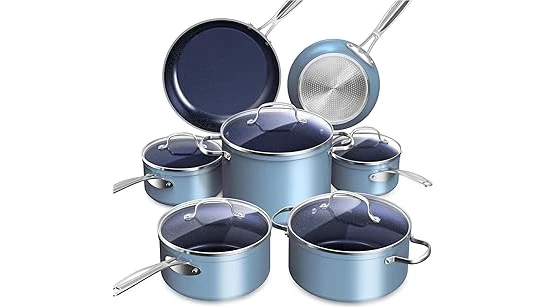
Leave a Reply