

Stepping into your own kitchen as a bachelor can feel like entering uncharted territory. Whether you’ve just moved out of your parents’ house, started your first apartment, or simply want to upgrade from ramen noodles and takeout, having the right cookware transforms cooking from a daunting chore into an enjoyable, money-saving skill.
The cookware you choose directly impacts not just what you can cook, but how willing you’ll be to actually use your kitchen. Too complicated, and those pots and pans become expensive dust collectors. Too cheap, and you’ll battle with food sticking, uneven heating, and replacements every six months. The sweet spot lies in finding cookware that’s intuitive enough for beginners, durable enough to last through your learning curve, and versatile enough to grow with your cooking skills.
Bachelor-friendly cookware needs to tick several crucial boxes that married folks or experienced home cooks might overlook. First, it needs to be genuinely low-maintenance because let’s face it—after a long workday, nobody wants to spend 20 minutes scrubbing burnt eggs off a high-maintenance pan. Second, it should be compact enough for smaller kitchens and limited storage space. Third, it needs to handle the reality of bachelor cooking: quick weeknight dinners, occasional meal prep sessions, and yes, the ability to make a decent breakfast before rushing out the door.

Why the Right Cookware Matters for Bachelor Living!
Best Cookware for Bachelors Cooking:The modern bachelor also faces unique constraints. You’re probably balancing a tight budget with the desire for quality items that won’t need replacing next year. You might be cooking for one most nights but need the capacity for when friends come over or you’re meal prepping for the week. And unlike previous generations, today’s bachelors are increasingly interested in actually learning to cook well—not just surviving on frozen pizzas.
This is where smart cookware choices become investment decisions rather than simple purchases. A quality nonstick pan that actually releases food can be the difference between making quick scrambled eggs or ordering expensive breakfast delivery. A versatile Dutch oven can handle everything from chili to pasta to slow-cooked meals that fill your week with minimal effort. The right skillet becomes your go-to for almost everything, reducing the intimidation factor of trying new recipes.
The cookware market has exploded in recent years, with options ranging from ultra-budget sets at big-box stores to premium brands endorsed by celebrity chefs. This variety is both a blessing and a curse. More options mean better chances of finding your perfect match, but it also means navigating countless reviews, confusing materials, and marketing claims that sound impressive but mean little in real-world cooking.
In this comprehensive guide, we’ve done the legwork for you. We’ve tested, researched, and analyzed the best cookware options specifically through the lens of bachelor cooking. Each recommendation balances performance, durability, ease of use, and value—because you shouldn’t have to choose between quality and affordability. Whether you’re a complete cooking novice who’s never boiled water or someone ready to step up their kitchen game, this guide will help you build a cookware collection that actually gets used.
We’ll walk through 11 standout products that excel in different categories: from complete sets that cover all your bases to individual specialty pieces worth the investment. You’ll learn what materials work best for different cooking styles, which features actually matter versus marketing hype, and how to avoid the common mistakes that lead to buyer’s remorse. By the end, you’ll be equipped to make confident decisions that transform your kitchen into a place where you actually want to spend time—and maybe even impress a date or two along the way.
Top 11 Best Cookware for Bachelors Cooking – Detailed Reviews
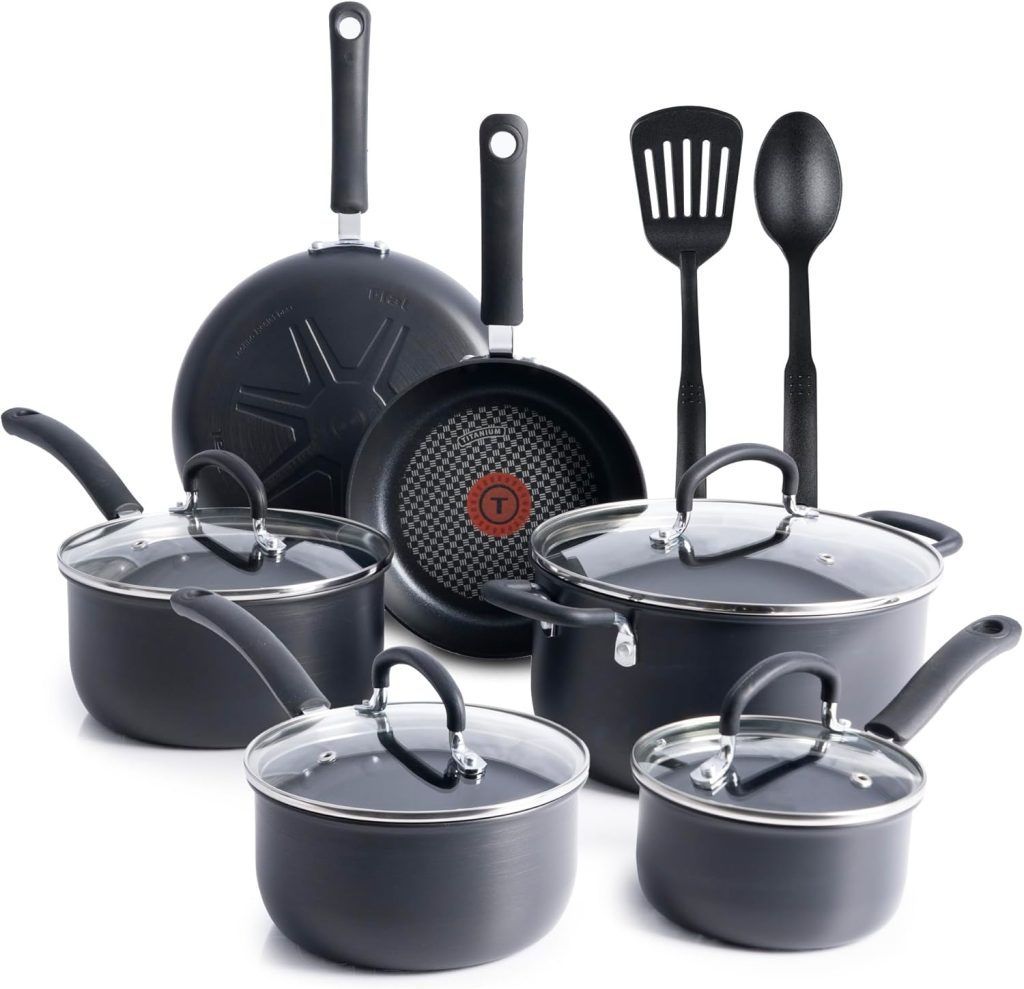
1. T-fal Ultimate Hard Anodized Nonstick 12-Piece Cookware Set
Overview:
The T-fal Ultimate Hard Anodized set hits that sweet spot between beginner-friendly and genuinely capable cookware that won’t embarrass you as your skills improve. This 12-piece collection covers all the essential bases without overwhelming your cabinets, and T-fal’s signature Thermo-Spot technology takes the guesswork out of preheating—a feature that proves surprisingly valuable when you’re learning proper cooking techniques.
The hard anodized construction means these pans heat evenly and resist warping, even if you occasionally forget them on the burner (we’ve all been there). The nonstick interior is genuinely effective for those midnight egg scrambles or quick stir-fries when you just can’t deal with scrubbing.
Key Features:
- Thermo-Spot heat indicator that shows when pans are properly preheated
- Hard anodized aluminum construction for superior heat distribution
- PFOA-free nonstick coating that’s dishwasher safe
- Riveted silicone handles stay cool during stovetop cooking
- Vented glass lids for monitoring food without releasing heat
- Oven safe up to 400°F for finishing dishes under the broiler
- Includes 8-inch and 10.25-inch frying pans, 1-quart and 2-quart saucepans with lids, 5-quart Dutch oven with lid, and cooking utensils
Performance and User Experience:
In real-world bachelor cooking scenarios, this set performs admirably across the board. The nonstick coating releases eggs, pancakes, and delicate fish without the butter-bath some cheaper pans require. Heat distribution is noticeably even—you won’t get those annoying hot spots that burn the center of your grilled cheese while leaving the edges pale.
The Thermo-Spot indicator genuinely helps prevent common rookie mistakes. When the spot turns solid red, you know the pan’s ready, which prevents both adding food too early (hello, sticking) and overheating the nonstick surface (goodbye, coating longevity). It’s a small feature that makes a meaningful difference in cooking success.
Weight-wise, these pans strike a nice balance. They’re substantial enough to feel quality but not so heavy that your wrist gets tired flipping vegetables. The silicone handles live up to their promise—they actually stay cool even during extended cooking sessions, unlike many budget sets where “cool-touch” is more aspiration than reality.
Cleanup is genuinely easy. Most messes wipe out with a soft sponge, and while the manufacturer says they’re dishwasher safe, hand washing takes about 30 seconds and extends the nonstick life considerably. For bachelors without dishwashers (or who use theirs as drying racks), this matters.
The vented lids are a thoughtful touch that prevents boil-overs during those moments when you’re simultaneously cooking pasta and trying to answer a work email. They fit securely but allow just enough steam to escape.
Pros:
✅ Thermo-Spot heat indicator eliminates guesswork for beginners
✅ Truly nonstick surface reduces oil needs and simplifies cleanup
✅ Even heat distribution prevents hot spots and burning
✅ Handles actually stay cool during cooking
✅ Complete set covers all essential cooking needs
✅ Excellent value for the quality and number of pieces
✅ Hard anodized construction more durable than standard aluminum
✅ Oven-safe capability adds versatility for finishing dishes
Cons:
❌ Not compatible with induction cooktops
❌ Nonstick coating will eventually wear with heavy use (typical 3-5 years)
❌ Metal utensils will damage the coating despite manufacturer claims
❌ Glass lids can’t go in the oven with the pans
❌ Somewhat bulky for tiny apartment kitchens with limited storage
Ideal For:
This set is perfect for cooking novices who want reliable, forgiving cookware that won’t punish mistakes. It’s also great for bachelors who meal prep, since the variety of sizes handles both single servings and larger batches. If you’re cooking for one most nights but occasionally host friends, the range of pan sizes gives you flexibility without requiring a massive collection.
Final Verdict:
The T-fal Ultimate Hard Anodized set delivers exceptional bang for your buck with genuinely helpful features that make learning to cook less frustrating. While it’s not heirloom cookware you’ll pass down to grandchildren, it’s the reliable workhorse that’ll serve you well through your bachelor years and beyond. The combination of user-friendly design, solid performance, and reasonable pricing makes this our top pick for bachelors building their first real kitchen setup. Current Amazon ratings consistently hover around 4.6 stars from thousands of reviewers, with most complaints centering on unrealistic expectations about nonstick longevity rather than actual performance issues.
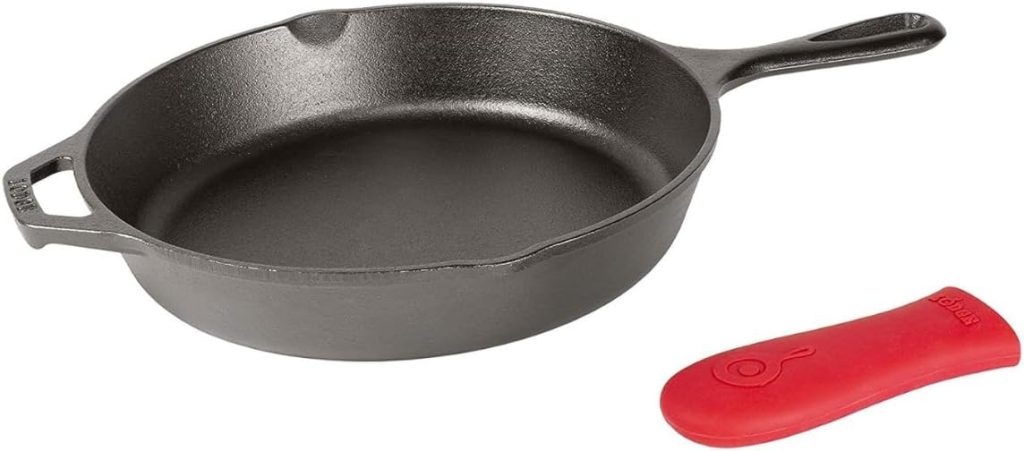
2. Lodge Cast Iron Skillet 12-Inch Pre-Seasoned
Overview:
If you’re buying just one pan for your bachelor kitchen, many seasoned cooks would argue it should be this one. The Lodge 12-inch cast iron skillet is cookware stripped down to its essence—no fancy coatings, no technology, just a chunk of iron that’s been making perfect steaks, cornbread, and fried chicken since your great-grandparents’ time.
This particular skillet comes pre-seasoned, meaning you can start cooking immediately rather than spending hours building up that nonstick patina from scratch. At around $25-35 depending on sales, it’s possibly the best value in all of cookware, offering capabilities that expensive stainless steel can’t match.
Key Features:
- Pre-seasoned with 100% vegetable oil for immediate use
- Unparalleled heat retention for perfect sears and even cooking
- Naturally develops better nonstick properties over time with proper use
- Works on all heat sources including induction, campfires, and grills
- Oven-safe to any temperature your oven can produce
- Virtually indestructible with basic care
- Dual pour spouts for easy draining
- Assist handle for two-handed control when full
Performance and User Experience:
Cast iron’s superpower is heat retention. Once this skillet gets hot, it stays hot—even when you add cold food. This is why steakhouses use it for those restaurant-quality sears with the perfect crust. Your apartment’s wimpy electric stove suddenly produces results that look semi-professional.
The learning curve is real but manageable. Cast iron requires different techniques than nonstick: proper preheating, using enough fat, and letting food release naturally rather than forcing it. But these are actually good cooking habits that’ll improve your overall technique. Within a few weeks, most bachelors find they prefer cooking on cast iron for most tasks.
The pre-seasoning from Lodge is decent but not perfect. Expect the first few uses to be slightly sticky as you build up your own layers of seasoning. Cooking bacon, making cornbread, and general use gradually creates that famous cast iron nonstick surface that rivals expensive Teflon pans—and actually improves rather than degrades over time.
Weight is the main adjustment. At 8 pounds empty, this isn’t a pan you’ll flip with one hand like in cooking shows. But the heft is part of what makes it work—thin, light pans can’t hold heat like this beast. The helper handle makes transferring it from stovetop to oven manageable even when loaded with food.
Maintenance is simpler than internet arguments suggest. Wash with hot water and a brush (yes, soap is fine despite myths), dry immediately, rub with a tiny bit of oil. That’s it. Skip the dishwasher and don’t let it air-dry or you’ll get rust, but the actual cleaning takes less time than scrubbing burnt-on food from a cheap nonstick pan.
Pros:
✅ Exceptional heat retention creates restaurant-quality sears
✅ Becomes more nonstick with use rather than degrading
✅ Incredibly versatile: stovetop, oven, grill, campfire
✅ Virtually indestructible—will outlast you with basic care
✅ Outstanding value at under $35
✅ Works on induction unlike many budget options
✅ Adds trace iron to food (nutritional benefit)
✅ No toxic coatings to worry about at high heat
Cons:
❌ Heavy at 8+ pounds, awkward for people with wrist issues
❌ Requires different cooking techniques than nonstick
❌ Needs immediate drying to prevent rust
❌ Not ideal for acidic foods until well-seasoned
❌ Takes longer to heat than aluminum pans
❌ Handle gets searingly hot (use a towel or handle cover)
Ideal For:
Bachelors serious about learning real cooking skills will appreciate how cast iron forces good technique. It’s perfect for meat-lovers who want perfect steaks, burger-flippers who host cookouts, and anyone who values buy-it-for-life quality over convenience. Also ideal if you have induction cooking or enjoy camping—this pan literally goes anywhere.
Final Verdict:
The Lodge 12-inch skillet represents peak value in cookware—you’re essentially buying a tool that’ll last generations for the price of three takeout meals. Yes, there’s a learning curve. Yes, it requires minimal maintenance. But the payoff is cooking performance that expensive pans can’t match and a skill-building experience that’ll make you a genuinely better cook. With a 4.7-star rating from over 85,000 Amazon reviews, this is one of the most proven performers in kitchenware. Every bachelor should own one, even if it’s not your only pan.
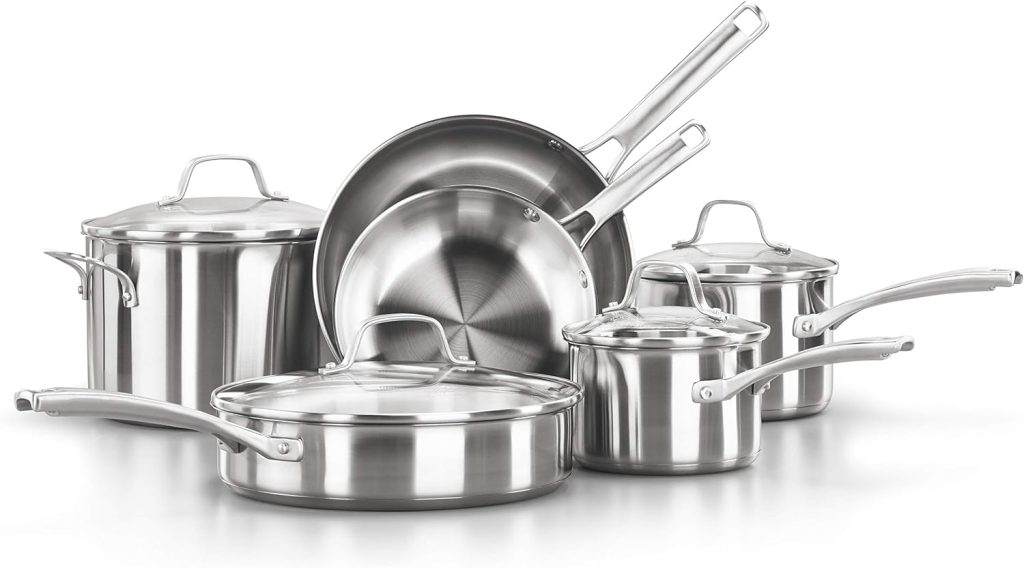
3. Calphalon Classic Nonstick 10-Piece Cookware Set
Overview:
Calphalon strikes an appealing middle ground between budget sets that fall apart within a year and professional-grade cookware that costs more than your monthly rent. The Classic Nonstick collection feels like an upgrade from department store basics without requiring a financial commitment that’ll make you reconsider, delivering reliable performance with a modern aesthetic that doesn’t scream “college dorm.”
The dual-layer nonstick coating is where Calphalon differentiates itself from cheaper competitors. It’s noticeably more durable and forgiving than single-layer coatings, meaning you can actually get a few years of daily use before performance degrades—something T-fal and other budget brands struggle to match.
Key Features:
- Dual-layer nonstick interior for enhanced durability
- Hard-anodized aluminum construction heats evenly
- Brushed stainless steel long handles stay cool on stovetop
- Tempered glass lids with stainless steel rim
- Dishwasher safe for convenient cleanup
- Oven safe up to 450°F
- Includes 8-inch and 10-inch frying pans, 1.5-quart and 2.5-quart saucepans with lids, 3-quart sauté pan with lid, 6-quart stockpot with lid
Performance and User Experience:
The Calphalon Classic set cooks with the kind of consistency that builds confidence in the kitchen. Heat distribution is genuinely even across the cooking surface—no surprise hot spots that burn garlic while leaving onions raw. The hard-anodized construction heats up reasonably quickly but holds temperature steadily, giving you control rather than the wild temperature swings cheaper aluminum produces.
The dual-layer nonstick is where you really notice the quality difference. Eggs slide around like they’re ice skating, pancakes release with zero resistance, and delicate fish doesn’t leave half its flesh stuck to the pan. Even better, this performance holds up through repeated use. Where cheaper nonstick starts getting sticky after six months, Calphalon maintains its release properties for years with reasonable care.
The handles deserve mention—they actually stay cool enough to grab barehanded during stovetop cooking, unlike many budget sets where “stay cool” is wishful thinking. They’re long enough to keep your hands away from heat but not so long they create awkward balance issues or bang into other pots on the stove.
Glass lids fit securely without wobbling but still allow easy monitoring of your food. The stainless steel rims feel substantial compared to the cheap metal rings on budget sets. These are lids that’ll survive being occasionally dropped without shattering or bending.
One practical advantage for bachelors: the shapes are designed to nest efficiently. The entire set stacks reasonably compactly, making storage in smaller kitchens more manageable than some bulkier collections.
Pros:
✅ Dual-layer nonstick significantly more durable than budget options
✅ Even heating prevents hot spots and burning
✅ Handles genuinely stay cool during cooking
✅ Dishwasher safe for easy cleanup (though hand washing extends life)
✅ Set includes good size variety for different cooking needs
✅ Higher oven-safe temperature (450°F) than most nonstick
✅ Hard-anodized construction resists warping
✅ Professional appearance elevates kitchen aesthetics
Cons:
❌ Pricier than budget sets (typically $150-200)
❌ Still not induction-compatible despite the price point
❌ Metal utensils will eventually damage coating
❌ Nonstick will degrade with extremely high heat
❌ Some users report rivets loosening after years of use
Ideal For:
This set suits bachelors who’ve moved past the absolute beginner stage and want cookware that performs reliably without constant babysitting. It’s perfect if you cook several times per week and want tools that reward developing skills. Also ideal for those who value aesthetics—this set looks grown-up enough to leave out on the stove without embarrassment.
Final Verdict:
The Calphalon Classic Nonstick set occupies that valuable sweet spot between disposable and investment-grade cookware. You’re paying more than rock-bottom options but getting meaningfully better performance and longevity that justifies the price difference. For bachelors who cook regularly and plan to stay in their current place for a few years, this represents smart value. Amazon reviewers give it a solid 4.5-star average, with most criticism coming from people who used metal utensils despite instructions or expected lifetime performance from nonstick coating. If you’re ready to upgrade from your first cheap set, this is where to land.
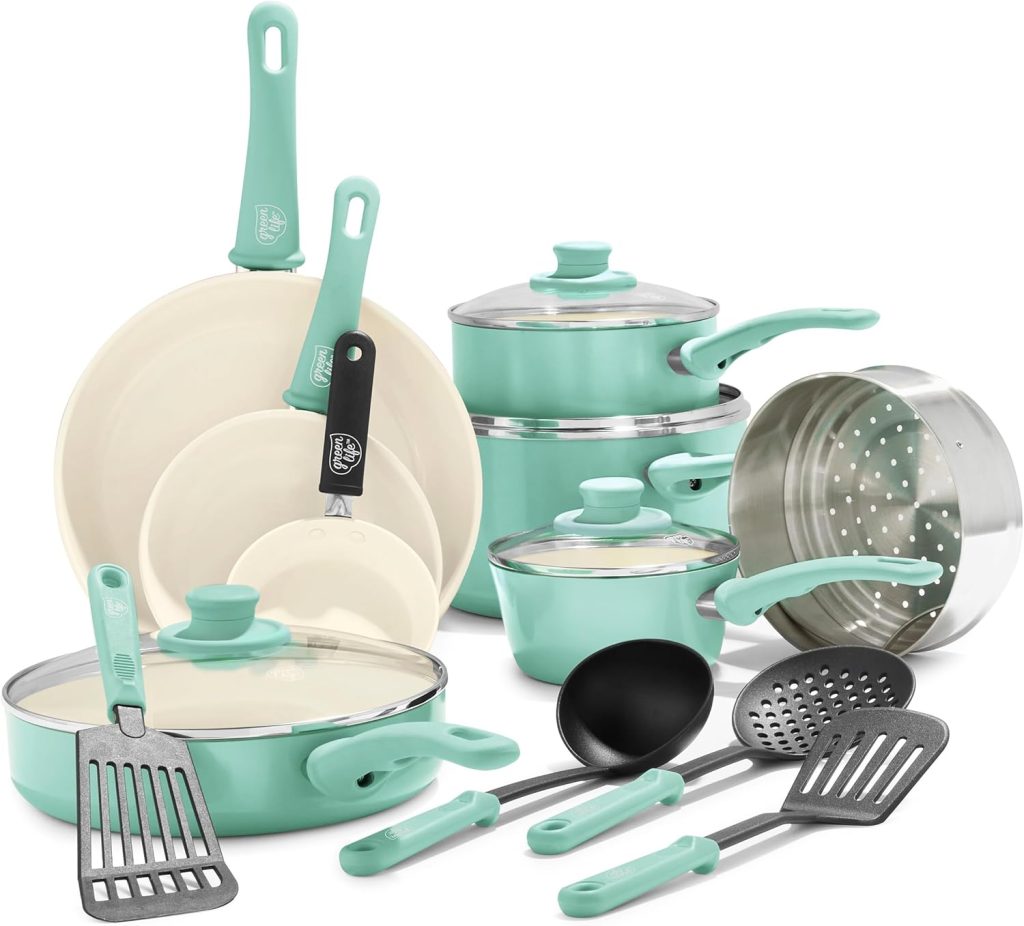
4. GreenLife Soft Grip Healthy Ceramic Nonstick 16-Piece Cookware Set
Overview:
For bachelors concerned about cooking with traditional Teflon-style nonstick coatings, GreenLife offers a compelling alternative with its ceramic-based technology. This cheerful, colorful set has become increasingly popular among younger cooks who want both environmental consciousness and user-friendly performance without the premium pricing of high-end ceramic brands like GreenPan.
The Thermolon ceramic coating is derived from sand and is free from PFAS, PFOA, lead, and cadmium—all the acronyms that occasionally spark health concerns in traditional nonstick pans. Beyond the eco-friendly angle, this set delivers legitimate cooking performance at a price point that won’t devastate a bachelor budget.
Key Features:
- Thermolon ceramic nonstick coating free from PFAS, PFOA, lead, and cadmium
- Reinforced with diamonds for extra durability
- Bakelite handles stay cool and provide comfortable grip
- Oven safe up to 350°F
- Wobble-free glass lids
- Dishwasher-safe for easy cleanup
- Available in multiple colors to match kitchen aesthetics
- Includes 7-inch and 9.5-inch frying pans, 1-quart and 2-quart saucepans with lids, 5-quart stockpot with lid, 2.5-quart sauté pan with lid, plus utensils
Performance and User Experience:
The ceramic nonstick coating performs surprisingly well for the price point, though it requires slightly more care than traditional nonstick. With proper preheating and a light coating of oil, eggs release beautifully and cleanup is genuinely easy. The coating can withstand higher heat than Teflon without releasing fumes, which gives you more flexibility (and safety) if you accidentally forget about a pan on the stove.
Heat distribution is decent though not exceptional. You’ll notice the aluminum construction heats up quickly, which is great for weeknight speed but means you need to watch temperatures carefully to avoid burning. The pans respond fast to temperature changes, giving you decent control once you learn their personality.
The soft-grip handles live up to their name—they’re genuinely comfortable to hold and stay cool during stovetop use. This matters more than you’d think during extended cooking sessions or when you’re transferring hot pans around the kitchen. The ergonomic shape makes these pans feel lighter than they actually are.
One of the biggest appeals for bachelors is the variety of colors. Beyond the standard black or silver of most cookware, GreenLife offers turquoise, red, and other vibrant options that can add personality to your kitchen. This might seem superficial, but cookware you actually like looking at tends to get used more often.
Durability is where ceramic shows its limitations compared to traditional nonstick. The coating will eventually lose some of its nonstick properties with regular use—typically within 1-2 years of daily cooking. However, at this price point, that’s reasonable value. The pans themselves remain perfectly functional; they just require a bit more oil and aren’t quite as effortless as when new.
Pros:
✅ PFAS-free ceramic coating addresses health and environmental concerns
✅ Can handle higher heat than traditional nonstick without toxic fumes
✅ Comfortable soft-grip handles stay cool
✅ Dishwasher-safe for convenient cleanup
✅ Fun color options add personality to the kitchen
✅ Excellent value for a 16-piece set
✅ Quick heating for fast weeknight cooking
✅ Lightweight makes handling easy
Cons:
❌ Ceramic coating loses nonstick properties faster than quality Teflon
❌ Not suitable for very high heat despite being safer than Teflon at high temps
❌ Hand washing extends coating life significantly despite dishwasher claims
❌ Not induction compatible
❌ Lower oven-safe temperature (350°F) limits versatility
❌ Some quality control issues reported with loose handles
Ideal For:
Bachelors who prioritize eco-friendly products and want to avoid traditional nonstick chemicals will appreciate this set. It’s also perfect for those who want an affordable complete collection that covers all basics without looking boring. If you’re someone who plans to upgrade your cookware as your cooking skills and budget grow, this represents a solid starter set that won’t feel like wasted money when you eventually replace it.
Final Verdict:
The GreenLife Soft Grip set offers feel-good cooking at a feel-good price. While the ceramic coating won’t last as long as premium alternatives, the combination of health-conscious materials, decent performance, and budget-friendly pricing makes it a smart choice for environmentally aware bachelors starting their cooking journey. With 4.4 stars from thousands of Amazon reviews, most users are satisfied with the value proposition, though expectations should be calibrated for 1-2 years of peak performance rather than decade-long durability. If sustainable cooking matters to you and your budget is tight, this set delivers where it counts.
5. Cuisinart MultiClad Pro Stainless Steel 12-Piece Cookware Set
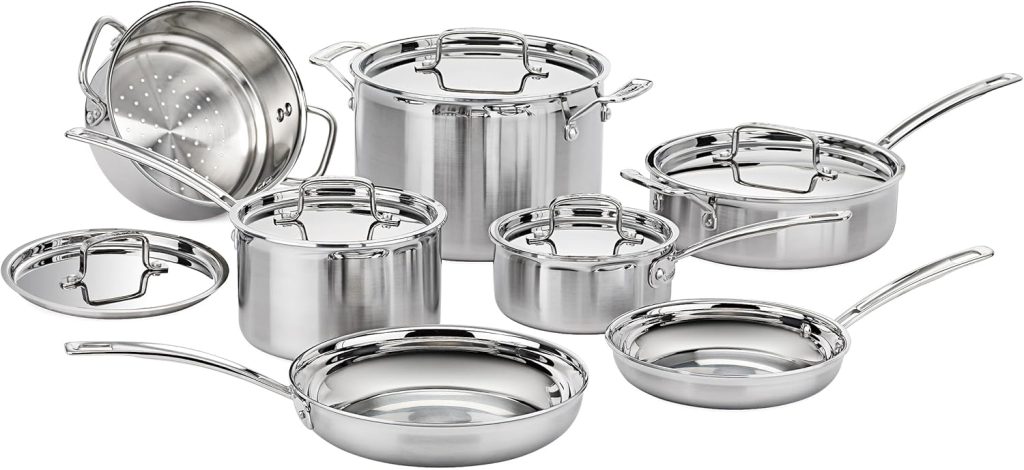
Overview:
For bachelors ready to invest in cookware that’ll last through multiple moves, job changes, and relationship status updates, the Cuisinart MultiClad Pro represents a gateway into professional-quality stainless steel without the eye-watering prices of All-Clad or Demeyere. This is cookware for bachelors who want to truly learn cooking technique rather than relying on nonstick crutches.
The triple-ply construction—stainless steel exterior, aluminum core, stainless interior—delivers the kind of heat control and durability that professional kitchens demand. Unlike nonstick pans that eventually wear out, these will perform identically in 20 years if properly maintained.
Key Features:
- Triple-ply construction with aluminum core for superior heat distribution
- Heat Surround technology for even cooking on bottom and sides
- Professional-grade 18/10 stainless steel cooking surface
- Cool Grip stick handles riveted for security
- Tight-fitting stainless steel lids
- Dishwasher safe and oven safe up to 550°F
- Works on all cooktops including induction
- Includes 1.5-quart and 3-quart saucepans with lids, 8-inch and 10-inch skillets, 3.5-quart sauté pan with lid, 8-quart stockpot with lid, plus steamer insert
Performance and User Experience:
Stainless steel requires a learning curve, but the Cuisinart MultiClad makes that education less frustrating than cheaper stainless options. The triple-ply construction distributes heat remarkably evenly, eliminating those hot spots that cause food to stick in some areas while remaining raw in others. Once you learn the proper preheating technique (heat pan, add fat, let fat heat, add food), you’ll achieve results that nonstick simply cannot match.
The fond—those brown bits left after searing meat—is where stainless steel truly shines. These caramelized proteins become the foundation for pan sauces that’ll make your cooking taste restaurant-quality. Deglazing with wine or stock and scraping up those bits creates depth of flavor impossible with nonstick coatings.
Heat retention and responsiveness strike a nice balance. The aluminum core heats relatively quickly for stainless steel while holding temperature steadily. When you adjust burner settings, the pan responds predictably—crucial for techniques like sautéing where temperature control matters.
The stainless interior is beautifully polished and maintains its appearance even after years of use. Unlike exterior finishes that can discolor, these pans age gracefully. Minor staining from high heat or certain foods easily cleans with Bar Keeper’s Friend, returning them to near-new shine.
Handle design prioritizes function over flash. They stay comfortably cool during stovetop cooking and the stick-style profile fits naturally in your hand. The riveted construction inspires confidence when moving heavy pots full of boiling pasta water.
Induction compatibility is a significant advantage, especially for bachelors in newer apartments with induction cooktops. The magnetic stainless steel base works perfectly, offering the energy efficiency and temperature control that makes induction cooking so appealing.
Pros:
✅ Triple-ply construction provides professional-level heat distribution
✅ Induction compatible unlike most budget options
✅ Extremely high oven-safe temperature (550°F) enables versatile techniques
✅ Develops fond for superior pan sauces and flavor development
✅ Dishwasher safe for convenient cleanup
✅ Virtually indestructible with proper care—lifetime investment
✅ No coatings to wear out or flake
✅ Works with metal utensils without damage concerns
Cons:
❌ Significant learning curve for those accustomed to nonstick
❌ Food will stick if proper technique isn’t followed
❌ Requires more oil/fat than nonstick for most cooking
❌ Shows water spots and fingerprints easily
❌ Heavier than aluminum nonstick sets
❌ Higher price point ($200-300) requires bigger commitment
Ideal For:
This set is ideal for bachelors committed to developing real cooking skills and who plan to use their cookware for many years. It’s perfect for those who cook meat regularly and want to master techniques like searing and pan sauce making. Also great for anyone with induction cooking or who wants cookware that won’t need replacing as skills advance.
Final Verdict:
The Cuisinart MultiClad Pro represents the best value in serious, professional-quality stainless steel cookware. While the learning curve is real and the price is higher than nonstick alternatives, you’re investing in cookware that enhances your skills rather than compensating for them. This is the set that’ll make you a better cook while lasting through decades of use. Amazon’s 4.7-star rating from over 5,000 reviews reflects satisfaction from both home cooks and professional chefs who use it in commercial settings. If you’re ready to move beyond beginner cookware and want tools that’ll grow with you, this is your best investment under $300.
6. OXO Good Grips Non-Stick Pro 12-Inch Open Frypan
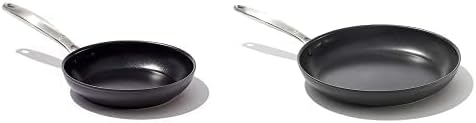
Overview:
Sometimes you don’t need an entire set—you just need one exceptional pan that handles 80% of your cooking. The OXO Good Grips Non-Stick Pro 12-inch frypan is that workhorse. OXO built its reputation on thoughtful design that solves real-world problems, and that philosophy shines through in every detail of this pan.
The German-engineered nonstick coating combined with hard-anodized aluminum construction creates a pan that performs like cookware twice its price. For bachelors who want to invest in one really good pan rather than a mediocre set, this represents peak bang-for-buck.
Key Features:
- Three-layer German-engineered PFOA-free nonstick coating
- Hard-anodized body for scratch resistance and even heating
- Stainless steel handle designed to stay cool on stovetop
- Rolled edges prevent dripping when pouring
- Oven and broiler safe up to 430°F
- Dishwasher safe (though hand washing recommended)
- Flat bottom design maximizes contact with burner
- Magnetic stainless steel base works on induction
Performance and User Experience:
This pan cooks like a dream across virtually every application. The three-layer nonstick coating is genuinely superior to standard coatings—eggs glide around effortlessly, pancakes flip without tearing, and delicate fish releases cleanly. Even foods notorious for sticking like boneless skinless chicken breasts cook without issue.
The hard-anodized construction heats impressively evenly. There are no hot spots in the center or cold zones near the edges. This means your hash browns brown uniformly, your quesadillas melt cheese all the way through, and your stir-fries cook consistently rather than burning some vegetables while others stay raw.
The handle is a masterclass in ergonomic design. It’s angled slightly upward, so your wrist stays in a natural position during cooking. The shape fills your hand comfortably without pressure points. And it actually stays cool during extended stovetop use—you can grab it barehanded even after 20 minutes of cooking without needing a towel.
The rolled edges are a small detail that makes a big difference. Pouring beaten eggs or transferring sauces happens cleanly without drips running down the outside of the pan. It’s the kind of thoughtful feature that shows OXO sweats the details.
At 12 inches, this pan is perfectly sized for bachelor cooking. It’s large enough to cook for 2-3 people comfortably but not so enormous that cooking a single portion feels wasteful or awkward. The flat bottom maximizes surface contact with your burner, improving heat efficiency and distribution.
Cleanup is about as easy as it gets. Most messes wipe out with a paper towel, and anything stubborn yields to a soft sponge with minimal effort. The coating’s durability means it maintains this easy-clean performance for years rather than months.
Pros:
✅ Superior three-layer nonstick outperforms standard coatings
✅ Genuinely even heating eliminates hot spots
✅ Ergonomic handle stays cool and fits comfortably
✅ Induction compatible—rare for nonstick in this price range
✅ Rolled edges prevent messy drips
✅ Oven safe to 430°F for finishing dishes
✅ Hard-anodized construction more durable than standard aluminum
✅ Perfect 12-inch size for bachelor cooking
Cons:
❌ Single pan purchase more expensive per piece than sets
❌ No lid included (sold separately)
❌ Nonstick will eventually wear despite quality coating
❌ Can’t use metal utensils without damaging surface
❌ Hand washing significantly extends coating life despite dishwasher claims
Ideal For:
This pan is perfect for minimalist bachelors who prefer owning fewer, better things. It’s ideal if you already have some basic cookware and want to upgrade your most-used piece. Also great for those with induction cooktops who struggle to find quality nonstick that actually works with their stove.
Final Verdict:
The OXO Good Grips Non-Stick Pro 12-inch frypan proves that thoughtful design and quality materials create cookware that punches well above its price class. While buying individual pieces costs more upfront than budget sets, investing in one excellent pan that you’ll actually use daily provides better value than five mediocre pans collecting dust. With 4.6 stars from thousands of Amazon reviewers and consistent praise from professional testers, this represents one of the smartest single-pan investments a bachelor can make. If you’re only buying one pan, make it this one.
7. Rachael Ray Cucina Hard Porcelain Enamel Nonstick 12-Piece Cookware Set
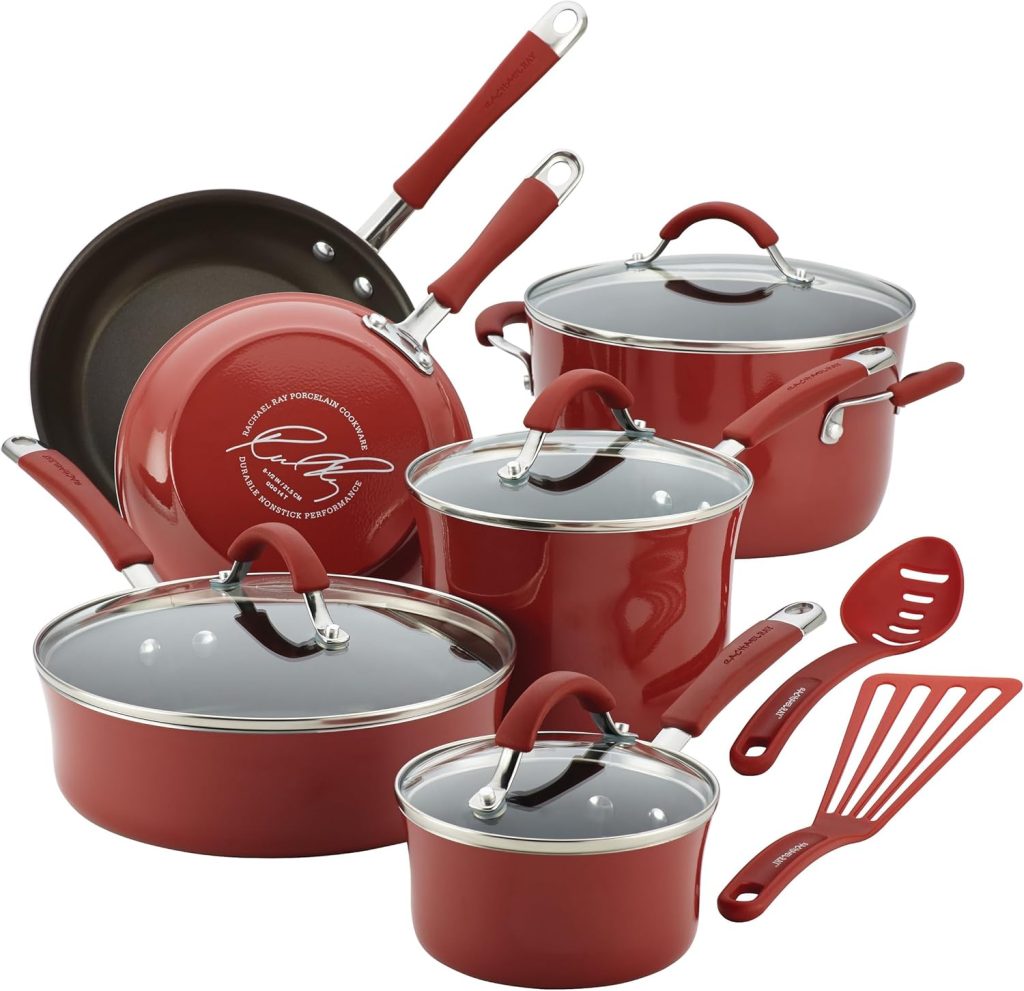
Overview:
Rachael Ray’s Cucina line brings Mediterranean-inspired aesthetics to everyday cooking with a rustic, colorful design that actually makes you want to leave these pots on the stovetop. Beyond the Instagram-worthy appearance, this set delivers solid performance at a price point that won’t require eating ramen for a month to afford.
The porcelain enamel exterior not only looks distinctive but also resists staining and cleans easily—addressing the common complaint that most colored cookware shows every splash and smudge. For bachelors who care about kitchen aesthetics but need budget-friendly pricing, this set hits a rarely-found sweet spot.
Key Features:
- Porcelain enamel exterior in rustic colors (Agave Blue, Mushroom Brown, Cranberry Red)
- PFOA-free enhanced nonstick interior
- Dual-riveted rubberized stainless steel handles
- Shatter-resistant glass lids with stainless steel rims
- Oven safe up to 400°F
- Suitable for all stovetops except induction
- Includes 1-quart and 3-quart covered saucepans, 6-quart covered stockpot, 8.5-inch and 10-inch skillets, 3-quart covered sauté pan
Performance and User Experience:
The Cucina set performs well for everyday bachelor cooking without requiring special techniques or babysitting. The nonstick interior releases food reliably for quick weeknight meals—scrambled eggs, pan-fried chicken, sautéed vegetables all clean up easily without scrubbing. While not quite as slick as premium coatings, it’s more than adequate for typical cooking.
Heat distribution is decent though not exceptional. You’ll occasionally notice slight hot spots with the largest pans on high heat, but for normal cooking at medium temperatures, performance is solid. The aluminum construction heats relatively quickly, getting you from cold stove to cooking faster than heavier materials.
The rubberized handles are comfortable and provide good grip even when your hands are wet or greasy. They stay cool during stovetop cooking, which is genuinely helpful when you’re juggling multiple dishes. The dual rivets inspire confidence—these handles won’t loosen and wobble after a few months like cheaper sets.
Glass lids fit well and the tempered construction feels substantial. They’ve survived the occasional bump against the faucet without cracking, which is more than can be said for some budget sets where lids seem designed to shatter at the slightest provocation.
The real star is the porcelain enamel exterior. Unlike bare aluminum or painted finishes, this actually maintains its appearance through regular use. Splatters and drips wipe clean easily, and the colors don’t fade or chip under normal conditions. The rustic appearance hides minor wear better than ultra-shiny finishes that show every scratch.
Storage is reasonably efficient—the pans nest together decently, though not as compactly as some space-optimized sets. For average kitchen cabinet space, they fit without too much Tetris-style maneuvering.
Pros:
✅ Distinctive rustic aesthetic elevates kitchen appearance
✅ Porcelain enamel exterior resists staining and cleans easily
✅ Comfortable rubberized handles stay cool
✅ Good nonstick performance for the price
✅ Colors don’t fade or chip like painted finishes
✅ Solid everyday performance for typical bachelor cooking
✅ Affordable pricing for a stylish 12-piece set
✅ Glass lids more durable than expected
Cons:
❌ Not induction compatible despite the price point
❌ Heat distribution not as even as hard-anodized sets
❌ Nonstick coating average durability (2-3 years typical)
❌ Larger pieces show hot spots on high heat
❌ Handle rubberizing can degrade faster than silicone or stainless
Ideal For:
This set suits bachelors who want their kitchen to look intentional and styled without spending on expensive décor. It’s perfect if you’re tired of boring black or silver cookware and want something with personality. Also great for those who cook regularly but not intensively—if you’re making dinner 4-5 nights per week rather than running a meal prep operation, this set will serve you well.
Final Verdict:
The Rachael Ray Cucina line proves you don’t have to choose between style and substance in affordable cookware. While it won’t win performance competitions against premium brands, it delivers reliable cooking and genuinely appealing aesthetics at a price that makes sense for bachelor budgets. The 4.5-star Amazon rating reflects satisfaction from users who value the combination of looks and functionality. If your kitchen needs both functional cookware and a visual upgrade, this set accomplishes both goals without breaking the bank.
8. All-Clad D3 Stainless Steel 10-Piece Cookware Set
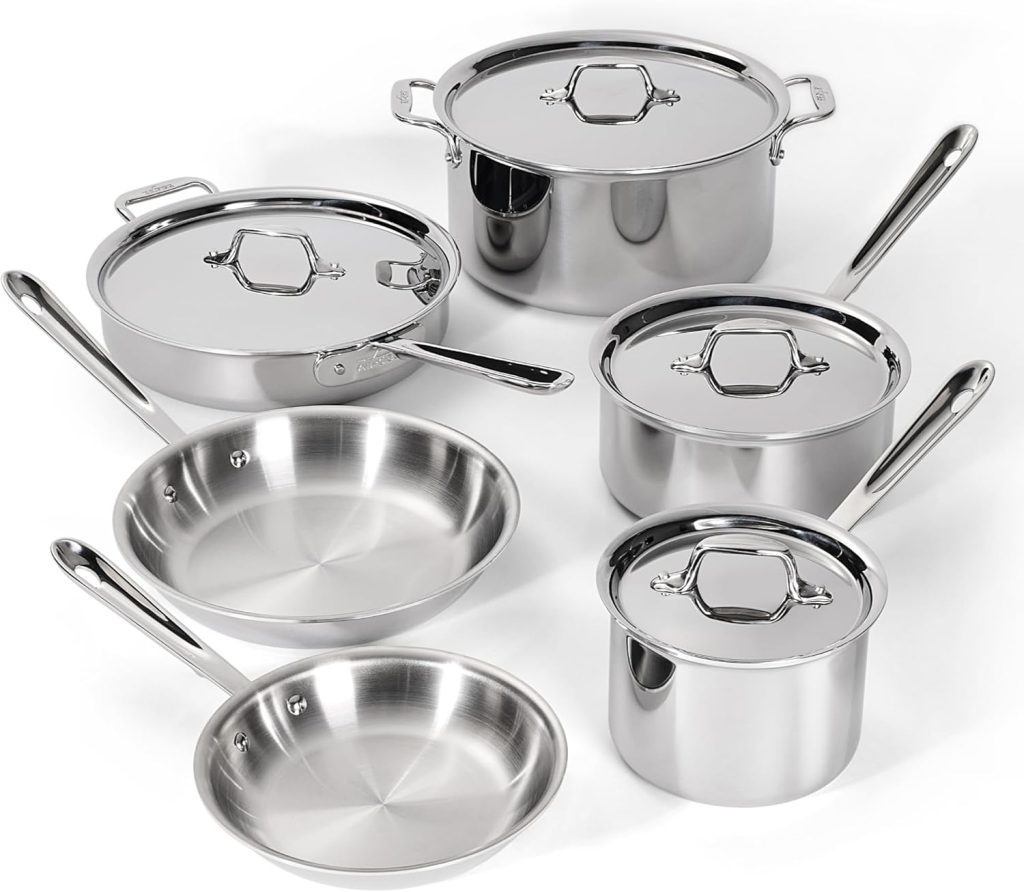
Overview:
When you’re ready to invest in cookware you’ll potentially use for the rest of your life, All-Clad represents the gold standard that professional chefs and serious home cooks swear by. The D3 (formerly Tri-Ply Stainless) collection is All-Clad’s foundational line—still premium quality but more accessible than their luxury D5 or Copper Core lines.
This is admittedly a significant investment for bachelor cookware, typically running $500-700 depending on sales. But amortized over decades of use, it’s arguably better value than replacing cheap sets every few years. More importantly, cooking on All-Clad teaches proper technique in a way that forgiving nonstick never can.
Key Features:
- Three-ply bonded construction with aluminum core
- Professional-grade 18/10 stainless steel interior
- Magnetic stainless steel exterior works on induction
- Contoured stainless steel handles permanently riveted
- Flat bottom design for even heating
- Dishwasher safe and oven/broiler safe up to 600°F
- Flared rims for drip-free pouring
- Made in USA with limited lifetime warranty
- Includes 8-inch and 10-inch frying pans, 2-quart and 3-quart saucepans with lids, 3-quart sauté pan with lid, 8-quart stockpot with lid
Performance and User Experience:
All-Clad’s heat distribution is simply in a different league than everything else on this list. The three-ply bonded construction heats absolutely evenly from edge to center, eliminating hot spots entirely. This means your omelets brown uniformly, your sauces reduce evenly, and your seared steaks develop consistent crust without burnt patches.
The stainless steel interior develops fond beautifully—those caramelized brown bits that become the foundation of restaurant-quality pan sauces. Learning to deglaze and make a proper pan sauce with All-Clad will permanently elevate your cooking. Foods do stick if you don’t use proper technique, but that “stickiness” is actually protein bonding that creates flavor through the Maillard reaction.
Responsiveness to temperature changes is excellent. When you adjust your burner, the pan reacts predictably and quickly. This control matters enormously for techniques like sautéing vegetables or pan-roasting fish where a few seconds of incorrect temperature ruins the dish.
The handles are contoured perfectly for comfortable grip and stay cool during stovetop cooking despite being solid stainless steel. The stick design provides excellent leverage for tossing and flipping. They’re oven-safe to 600°F, enabling techniques like starting a thick steak on the stovetop then finishing in a hot oven.
Build quality is immediately apparent. The weight feels substantial without being unwieldy. The rivets sit flush with the cooking surface. The rims are perfectly rolled for drip-free pouring. These are details you don’t notice until you’ve used cheaper cookware, then they become impossible to ignore.
Maintenance is straightforward—dishwasher safe though hand washing is simple enough. Staining from high heat or certain foods wipes away with Bar Keeper’s Friend. Unlike nonstick coatings that degrade, stainless steel performs identically after 20 years as it did on day one.
Pros:
✅ Unmatched even heating eliminates hot spots completely
✅ Professional-quality construction and materials
✅ Lifetime durability—will outlast you with basic care
✅ Develops fond beautifully for superior sauces and flavor
✅ Oven safe to 600°F for maximum versatility
✅ Works flawlessly on induction and all other cooktops
✅ Made in USA with lifetime warranty
✅ Improves cooking technique through proper feedback
Cons:
❌ Significant investment ($500-700) strains bachelor budgets
❌ Steep learning curve for those accustomed to nonstick
❌ Food sticks if technique isn’t correct
❌ Shows water spots and fingerprints
❌ Requires Bar Keeper’s Friend for maintaining appearance
❌ Heavy compared to aluminum nonstick sets
Ideal For:
All-Clad is for bachelors who view cookware as a lifetime investment rather than a temporary purchase. It’s perfect for serious home cooks who want to develop professional-level skills, those who cook meat regularly and want to master searing and sauce-making, and anyone who plans to use their cookware for decades. Also ideal for those with induction cooking who want the absolute best performance.
Final Verdict:
The All-Clad D3 set represents the pinnacle of cookware value when you extend the timeline to decades rather than years. Yes, the upfront cost is substantial. But you’re buying cookware that’ll perform flawlessly through countless moves, relationship changes, and lifestyle shifts. If you can afford the investment and are committed to learning proper cooking technique, All-Clad delivers uncompromising quality that makes cooking genuinely more enjoyable. The 4.8-star Amazon rating from thousands of reviews includes professional chefs alongside home cooks, all praising the lifetime performance. This is the cookware you buy once and never replace.
9. Gotham Steel Hammered Collection 10-Piece Cookware Set
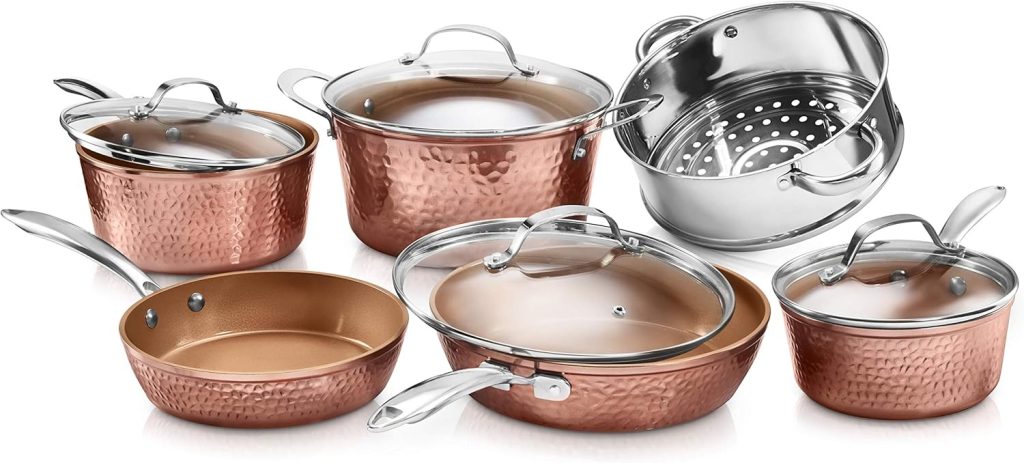
Overview:
For bachelors prioritizing absolute rock-bottom pricing while still wanting something that functions reasonably well, the Gotham Steel Hammered Collection delivers surprising value. This is cookware designed for the “as-seen-on-TV” market, complete with infomercial-style claims about indestructibility and magic nonstick properties. Strip away the marketing hyperbole, and you’ll find a functional budget set that handles basic cooking adequately.
The ceramic-titanium coating won’t perform miracles, but at typically under $100 for a 10-piece set, expectations should be calibrated accordingly. This is cookware for absolute beginners, temporary living situations, or those who genuinely cannot afford anything better.
Key Features:
- Ti-Cerama coating reinforced with titanium
- Aluminum composition with nonstick ceramic coating
- Metal utensil safe (according to manufacturer)
- Oven safe up to 500°F
- Dishwasher safe
- PFOA, PFOS, lead, and cadmium free
- Stainless steel handles
- Includes 8.5-inch and 10.25-inch frying pans, 1.5-quart and 2.5-quart saucepans with lids, 5-quart stock pot with lid, plus steamer insert
Performance and User Experience:
The Gotham Steel set performs adequately when brand new. Eggs do release reasonably well, pancakes flip without too much drama, and cleanup is fairly easy for the first few weeks. The ceramic coating works decently with minimal oil, making it functional for basic bachelor cooking like scrambled eggs, grilled cheese, or heating up leftovers.
Heat distribution is where budget construction shows. You’ll notice significant hot spots, especially in the center of larger pans. This means you need to move food around actively and watch temperatures carefully to prevent burning. The thin aluminum construction heats quickly but doesn’t hold heat well—adjusting burner settings causes dramatic temperature swings.
The coating’s durability is the main weakness. Despite claims of indestructibility and metal utensil safety, the nonstick properties noticeably degrade within 6-12 months of regular use. Food that slid around effortlessly when new starts sticking in patches. By the one-year mark, you’ll likely be using significantly more oil and doing more scrubbing.
The stainless steel handles get hot during extended cooking, requiring a towel or mitt to handle safely. They’re also uncomfortable compared to better-designed options—the thin metal digs into your hand and provides poor grip when your hands are wet or greasy.
The glass lids are functional but feel flimsy. Several reviewers report lids cracking or shattering, suggesting quality control issues or simply cheap materials. Handle them gently and don’t expect them to survive being dropped.
Dishwasher use, despite being advertised as safe, accelerates coating degradation. Hand washing is strongly recommended if you want to maximize the limited lifespan of the nonstick properties.
Pros:
✅ Extremely affordable—often under $100 for full set
✅ Decent nonstick performance when brand new
✅ PFOA-free ceramic coating addresses health concerns
✅ High oven-safe temperature (500°F)
✅ Lightweight makes handling easy
✅ Adequate for basic cooking needs
✅ Dishwasher safe (though not recommended)
Cons:
❌ Nonstick coating degrades rapidly (6-12 months typical)
❌ Significant hot spots due to thin construction
❌ Handles get uncomfortably hot and provide poor grip
❌ Glass lids fragile with quality control issues
❌ Not truly metal utensil safe despite claims
❌ Thin construction prone to warping on high heat
❌ Not induction compatible
Ideal For:
This set suits college students, first apartments, or temporary living situations where you need functional cookware immediately and can’t invest much. It’s also reasonable for people who cook infrequently—if you’re ordering takeout 5-6 nights per week and only occasionally making eggs or heating leftovers, this will last longer than heavy daily use.
Final Verdict:
The Gotham Steel Hammered Collection is honest about what it is once you look past the infomercial marketing: ultra-budget cookware that works adequately for a short period. If your budget is genuinely limited and you need something immediately, this will get you cooking. Just understand you’re buying cookware with a built-in expiration date rather than a long-term investment. The 4.2-star Amazon rating reflects this reality—people appreciate the initial value but note rapid performance degradation. Think of it as disposable cookware that’ll carry you through a transitional period before upgrading to something better.
10. Caraway Non-Toxic Ceramic Cookware Set (7-Piece)
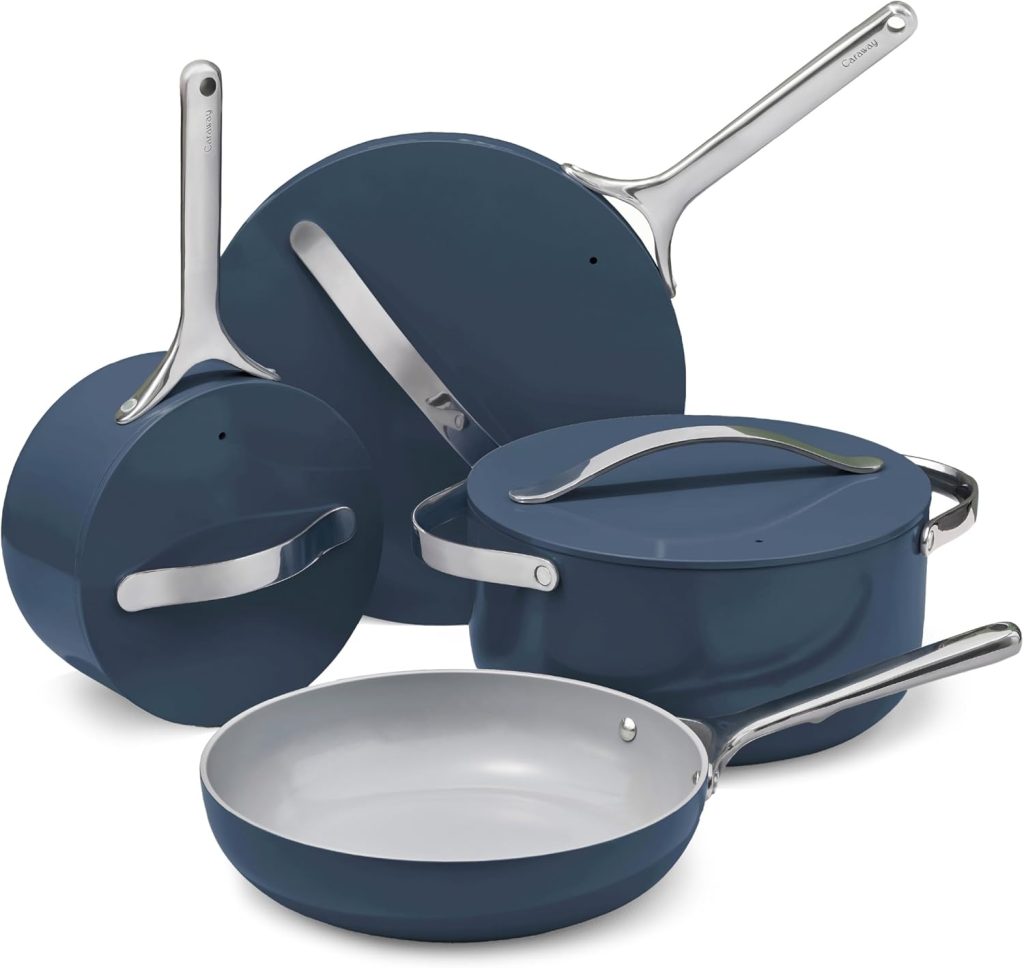
Overview:
Caraway has exploded in popularity among millennials and Gen Z bachelors who prioritize wellness, aesthetics, and environmental sustainability. This direct-to-consumer brand built its reputation on genuinely non-toxic ceramic coating combined with Instagram-worthy minimalist design and clever storage solutions.
The premium pricing (typically $400-500) positions Caraway as an investment rather than a budget option, but you’re paying for peace of mind about materials, thoughtful design that reduces kitchen clutter, and aesthetics that elevate your space. For bachelors who view their kitchen as part of their lifestyle brand, Caraway delivers.
Key Features:
- Non-toxic ceramic coating free from PTFE, PFOA, PFAS, lead, cadmium, and other harmful materials
- Aluminum core for quick, even heating
- Stainless steel handles designed to stay cool
- Oven safe up to 550°F
- Works on gas, electric, and induction cooktops
- Magnetic pan rack and canvas lid holder for organized storage
- Available in multiple modern colors (Sage, Navy, Cream, Perracotta, Gray)
- Includes 10.5-inch frying pan, 3-quart sauté pan, 4.5-quart Dutch oven, 1.75-quart sauce pan, plus lids and storage solutions
Performance and User Experience:
Caraway’s ceramic coating performs impressively when maintained properly. Eggs release beautifully, pancakes flip cleanly, and delicate fish doesn’t shred. The coating requires less oil than stainless steel but more than Teflon—a reasonable middle ground that promotes healthier cooking without being difficult.
Heat distribution is very good thanks to the aluminum core construction. The pans heat evenly across the cooking surface with minimal hot spots. They’re also reasonably responsive to temperature changes, giving you decent control over cooking conditions.
The handle design is both attractive and functional. The gold-tone stainless steel looks premium while staying comfortably cool during stovetop cooking. The shape fits naturally in your hand without pressure points or awkward angles.
The included storage solutions are where Caraway truly differentiates itself. The magnetic pan rack mounts inside a cabinet door, storing your pans vertically and saving significant space in small bachelor kitchens. The canvas lid holder keeps lids organized and accessible rather than scattered chaotically in cabinets. These thoughtful additions address real frustrations with cookware storage.
The minimalist aesthetic genuinely elevates kitchen appearance. These pans look intentional and stylish displayed on open shelving or even left on the stovetop. For bachelors whose kitchens flow into living spaces (studio apartments, loft-style places), this matters more than you might expect.
Maintenance requires more care than traditional nonstick. Always hand wash with soft sponges—dishwashers and abrasive scrubbers degrade the coating rapidly. Allow pans to cool before washing to prevent thermal shock. Use only low to medium heat for most cooking. These requirements aren’t unreasonable, but they’re non-negotiable for maintaining performance.
Pros:
✅ Genuinely non-toxic materials provide peace of mind
✅ Excellent ceramic nonstick performance when properly maintained
✅ Beautiful minimalist aesthetics elevate kitchen appearance
✅ Clever storage solutions save space in small kitchens
✅ Works on induction unlike most ceramic cookware
✅ High oven-safe temperature (550°F) enables versatile techniques
✅ Thoughtful design details throughout
✅ Promotes healthier low-oil cooking
Cons:
❌ Premium pricing ($400-500) strains many bachelor budgets
❌ Ceramic coating requires more careful maintenance than Teflon
❌ Hand washing required despite modern dishwasher preferences
❌ Can’t use high heat without risking coating damage
❌ Metal utensils will damage coating
❌ Smaller piece count than comparably priced sets
❌ Ceramic will eventually lose nonstick properties (3-4 years typical)
Ideal For:
Caraway is perfect for health-conscious bachelors who prioritize non-toxic materials and are willing to pay premium prices for peace of mind. It’s ideal for those with small kitchens who need smart storage solutions, and anyone who values aesthetics enough to invest in cookware that doubles as décor. Also great for bachelors with induction cooktops who want ceramic nonstick.
Final Verdict:
The Caraway set represents premium ceramic cookware done right, with thoughtful design solving real problems beyond just cooking performance. The price is undeniably high, but you’re investing in genuinely non-toxic materials, excellent performance, and design that makes cooking more enjoyable. For bachelors who can afford the investment and align with Caraway’s wellness-focused values, this delivers satisfaction beyond mere functionality. Amazon’s 4.4-star rating (primarily from their website sales) reflects high satisfaction among customers who understand they’re paying for the complete package—not just pots and pans. If non-toxic cooking in beautiful, space-saving cookware matters to you, Caraway justifies its premium pricing.
11. Tramontina Tri-Ply Clad 12-Piece Stainless Steel Cookware Set
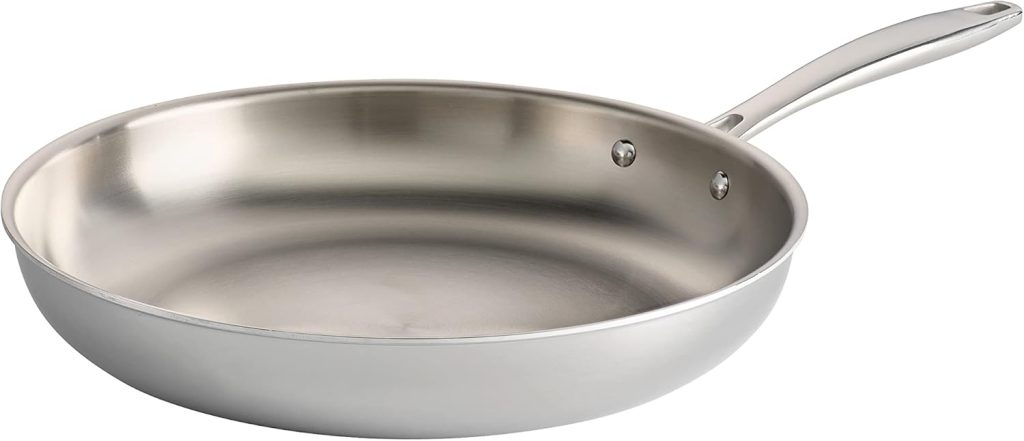
Overview:
For bachelors who want All-Clad performance without the All-Clad price tag, Tramontina delivers remarkably similar quality at roughly half the cost. This Brazilian manufacturer has been producing professional-grade cookware for decades, and their tri-ply clad line frequently appears in “best value” roundups from serious cooking publications.
The construction and materials are essentially identical to All-Clad’s D3 line—three layers of stainless steel with an aluminum core, made using the same cladding process. The main differences are subtle design choices and country of origin (Brazil vs. USA), neither of which impact actual cooking performance.
Key Features:
- Tri-ply clad construction with aluminum core
- 18/10 stainless steel interior and magnetic exterior
- Precision-cast stainless steel handles permanently riveted
- Compatible with all cooktops including induction
- Oven and broiler safe up to 500°F
- Dishwasher safe
- Lifetime warranty against defects
- Includes 8-inch and 10-inch skillets, 1.5-quart and 3-quart saucepans with lids, 5-quart Dutch oven with lid, 6-quart stockpot with lid
Performance and User Experience:
The Tramontina tri-ply cooks remarkably similarly to All-Clad in blind tests. Heat distribution is excellent and even, eliminating hot spots almost entirely. The aluminum core conducts heat efficiently while the stainless steel cooking surface develops fond beautifully for pan sauces and deglazing.
Responsiveness to temperature changes is very good—when you adjust burner settings, the pan reacts predictably without dramatic lag or overshooting. This control makes techniques like sautéing and pan-roasting much more forgiving, especially as you’re developing skills.
The stainless steel interior is highly polished and maintains its appearance well through regular use. Minor staining from high heat cleans easily with Bar Keeper’s Friend. Unlike nonstick coatings that degrade, these pans perform identically after years of use as they did when new.
Handle design is functional rather than premium-feeling. They stay reasonably cool during stovetop cooking and provide adequate grip, though they’re not quite as comfortable or ergonomic as All-Clad’s contoured design. This is one area where you notice the cost difference, though it’s more about comfort than functionality.
The weight feels substantial and professional without being unwieldy. The balance is good, making the pans easy to maneuver even when full. The rivets are flush with the cooking surface, preventing food buildup in crevices.
Induction compatibility works flawlessly—the magnetic stainless steel base heats quickly and evenly on induction cooktops. For bachelors in newer apartments with induction stoves, this opens up professional-quality cookware without breaking the bank.
The set’s piece selection covers bachelor cooking needs well. Two skillet sizes handle everything from single eggs to dinner for guests. The saucepans accommodate sauces, oatmeal, or small batches of rice. The Dutch oven handles soups, stews, pasta, and one-pot meals.
Pros:
✅ All-Clad quality at approximately half the price
✅ Excellent even heating from tri-ply construction
✅ Works perfectly on induction and all other cooktops
✅ Develops fond beautifully for superior sauces
✅ Oven safe to 500°F for finishing techniques
✅ Lifetime warranty against defects
✅ Dishwasher safe for convenient cleanup
✅ Professional performance at home-cook pricing
Cons:
❌ Handles less comfortable than premium brands
❌ Learning curve for those accustomed to nonstick
❌ Food sticks if proper technique isn’t followed
❌ Shows fingerprints and water spots
❌ Heavier than aluminum nonstick options
❌ Lower oven-safe temp than All-Clad (500°F vs 600°F)
Ideal For:
This set is perfect for bachelors who want professional-quality stainless steel cookware but find All-Clad’s pricing unrealistic for their budget. It’s ideal for those committed to learning proper cooking technique, anyone with induction cooking, and bachelors who plan to use their cookware for many years. Also great for those who cook meat regularly and want to master searing and sauce-making without the premium price tag.
Final Verdict:
The Tramontina Tri-Ply Clad set represents arguably the best value in serious stainless steel cookware. You’re getting performance that rivals brands costing twice as much, with the only real compromises being aesthetic details rather than cooking capability. For bachelors who want to invest in quality cookware that’ll last decades but can’t justify All-Clad pricing, this is your answer. The 4.7-star Amazon rating from thousands of reviews includes praise from professional chefs who use Tramontina in commercial settings alongside All-Clad, finding minimal performance difference. If you want premium cookware performance at mid-tier pricing, this is your best investment.
Comprehensive Buying Guide: How to Choose the Perfect Cookware for Bachelor Cooking
Understanding Your Cooking Reality
Before diving into materials and features, you need an honest assessment of your actual cooking habits—not the aspirational version where you’re meal-prepping elaborate dishes every Sunday, but the reality of how you’ll actually use your kitchen.
If you’re genuinely cooking dinner 5-7 nights per week, investing in quality cookware makes immediate sense. The durability and performance justify higher upfront costs because you’ll use these tools daily. However, if you’re honest with yourself and realize you cook maybe twice per week with frequent takeout and restaurant meals, spending $500 on premium cookware is poor resource allocation. Match your investment to your actual usage.
Consider your skill level realistically. Nonstick cookware forgives mistakes and reduces frustration for beginners, while stainless steel rewards proper technique but punishes errors harshly. There’s no shame in starting with forgiving nonstick and upgrading to stainless as your skills develop. Many experienced home cooks maintain both types for different applications.
Your living situation also matters significantly. If you’re in a temporary apartment or expect to move frequently, ultra-budget cookware might make sense as essentially disposable. However, if you’ve settled into a place long-term, investing in quality pieces that’ll move with you through life transitions provides better value than repeatedly buying cheap replacements.
Cookware Materials Explained
Nonstick Coatings: Traditional PTFE (Teflon) nonstick remains the most effective and durable nonstick technology, despite health concerns that are largely overblown with proper use. Keep temperatures below 400°F, never preheat empty pans, and the coating remains safe. Modern PTFE is PFOA-free, addressing the primary historical concern.
Ceramic nonstick appeals to health-conscious cooks and performs well initially but degrades faster than quality PTFE. Expect 1-2 years of peak performance versus 3-5 years for good PTFE. The trade-off is peace of mind about materials versus longevity.
Both nonstick types require gentle care—no metal utensils, no high heat, preferably hand washing. Factor replacement costs into your budget planning. A $50 nonstick pan lasting 3 years costs less annually than a $150 ceramic pan lasting 2 years.
Stainless Steel: The material serious cooks eventually graduate to, stainless steel is essentially indestructible and performs identically after decades as when new. The cooking surface allows fond development—those caramelized brown bits that become restaurant-quality pan sauces.
Tri-ply or multi-ply construction (stainless steel layers sandwiching aluminum or copper core) is essential for even heating. Avoid single-ply stainless steel with aluminum disc bottoms—they create severe hot spots and cook unpredictably.
The learning curve is real. Food sticks if pans aren’t properly preheated or if you don’t use enough fat. But this “difficulty” actually teaches proper technique that makes you a better cook. Once mastered, stainless steel offers unmatched versatility and durability.
Maintenance is simpler than reputation suggests. Dishwasher safe, though hand washing takes 30 seconds. Staining from high heat cleans with Bar Keeper’s Friend. No coatings to baby or technique restrictions to navigate.
Cast Iron: The original nonstick, properly seasoned cast iron develops a slick surface that rivals modern coatings while adding trace iron to food and lasting generations. Unmatched heat retention creates perfect sears and even oven cooking.
The weight is both advantage and drawback. That heft enables superior heat retention but makes the pans awkward for people with wrist issues. The learning curve involves building and maintaining seasoning—not difficult, but requires different care than other cookware.
Cast iron excels at high-heat cooking: searing steaks, making cornbread, achieving crispy-skinned chicken. It’s less ideal for delicate fish or acidic sauces until very well-seasoned. Most bachelors benefit from owning one cast iron skillet alongside other cookware rather than building an entire collection.
Hard-Anodized Aluminum: Electrochemically treated aluminum that’s significantly harder and more durable than standard aluminum while maintaining excellent heat conduction. Nearly as nonstick-resistant as stainless steel but lighter weight and often paired with nonstick coating.
Anodized aluminum won’t react with acidic foods like regular aluminum can, making it suitable for tomato sauces and wine-based dishes. The dark surface hides scratches and wear better than shiny stainless steel.
Most hard-anodized cookware is not induction-compatible unless it has a magnetic stainless steel base. Check specifications carefully if you have induction cooking.
Essential Pieces vs. Nice-to-Haves
The Bachelor’s Essential Trinity: If forced to choose just three pieces, most cooks would select: a 10-12 inch skillet (for eggs, sautés, stir-fries), a 3-4 quart saucepan (for pasta, rice, sauces), and a 5-6 quart pot or Dutch oven (for soups, stews, boiling pasta).
This minimal setup handles approximately 80% of bachelor cooking. You can make eggs and bacon for breakfast, stir-fry for lunch, and chicken with rice for dinner using just these three pieces. Adding more expands capabilities but isn’t strictly necessary.
Worthwhile Additions: An 8-inch nonstick skillet specifically for eggs and omelets prevents the frustration of making a single egg in a huge pan. A second larger skillet (12-14 inches) enables cooking protein and vegetables simultaneously for composed meals.
A small 1-2 quart saucepan handles single-serving oatmeal, heating soup, or making small batches of rice without dirtying larger pans. A larger 8-quart stockpot becomes essential if you make big batches of chili, stock, or pasta for meal prep.
Pieces You Can Skip: Specialized pans like grill pans, woks (on non-commercial stoves), fish poachers, and asparagus steamers collect dust in most bachelor kitchens. Don’t buy these unless you’ll use them weekly. Same goes for complete sets with duplicate sizes—two 2-quart saucepans is redundant.
Handles and Lids: Underrated Importance
Handle design dramatically affects cooking enjoyment but gets overlooked during purchase decisions. Uncomfortable handles make cooking frustrating; handles that heat up create safety hazards.
Silicone and rubberized handles stay coolest during stovetop cooking but aren’t oven-safe. Stainless steel handles can go in any oven but get hot and require towels. Cast handles offer oven-safety with moderate heat retention.
Handle length matters for balance and heat exposure. Too short and your hands hover over burners; too long and pans are unwieldy or bang into adjacent pots. Test the grip before buying if possible—an awkward handle you’ll use daily becomes genuinely annoying.
Lids seem like afterthoughts but significantly impact cooking versatility. Glass lids enable monitoring without releasing heat—valuable when learning to recognize visual cues. Stainless steel lids are more durable and oven-safe to higher temperatures but require lifting to check food.
Ensure lids fit securely without wobbling but aren’t so tight they create vacuum seals difficult to remove. Vented lids prevent boil-overs during moments of inattention—a bachelor-friendly feature worth seeking.
Oven-Safe Capabilities
Oven-safe cookware expands technique options significantly. Starting proteins on the stovetop then finishing in the oven produces better results than either method alone. Braising, roasting, and finishing gratins all benefit from cookware that transitions seamlessly.
Most nonstick is oven-safe to 350-400°F—sufficient for finishing most dishes but limiting for high-heat roasting. Stainless steel and cast iron typically handle 500-600°F, enabling techniques requiring intense heat.
Remember that oven-safe temperatures usually apply to the pan body—lids and handles often have lower limits. Glass lids typically max out around 350-400°F. Silicone and rubber handles have various limits requiring label checking.
Stovetop Compatibility
Gas Cooking: The most forgiving heat source, gas works with essentially all cookware materials. Flames conform to pan bottoms and allow instant temperature adjustments. Any cookware labeled “stovetop safe” works on gas.
Electric Coil: Standard electric coils require flat-bottomed pans for good contact and even heating. Warped pans rock on coils and cook unevenly. Heavy cookware heats more evenly than thin, lightweight options on electric.
Glass/Ceramic Cooktops: These smooth surfaces require flat-bottomed cookware without rough patches that scratch. Avoid cast iron or any cookware that might drag and gouge the surface. Weight limits apply—excessively heavy pots can crack cooktops.
Induction: Only magnetic materials work on induction: stainless steel, cast iron, and some hard-anodized aluminum with magnetic bases. Test with a magnet before buying—if it doesn’t stick to the pan bottom, induction won’t work.
Induction offers superior temperature control and energy efficiency but limits cookware options. Many budget nonstick sets aren’t induction-compatible, while most stainless steel works perfectly.
Understanding Set Value vs. Individual Pieces
When Sets Make Sense: Starting from zero, sets provide everything needed in one purchase at lower per-piece cost than buying individually. The convenience and completeness justify potential redundancy for beginners.
Sets ensure matching aesthetics if you care about appearance. They also guarantee compatible storage—pieces from the same set nest together efficiently.
When Individual Pieces Make Sense: Experienced cooks with existing cookware buy pieces to fill specific gaps rather than sets with unwanted duplicates. Building gradually lets you invest more in frequently-used pieces.
Mixing materials optimizes for different cooking tasks—nonstick for eggs, stainless for searing, cast iron for high-heat applications. No single material excels at everything.
Budget Allocation Strategy
Rather than buying the cheapest possible complete set, consider allocating your budget toward quality in pieces you’ll use most. A $200 budget spent on one excellent skillet, one quality pot, and one budget saucepan often outperforms a $200 twelve-piece budget set.
The “buy quality once” philosophy applies well to frequently-used pieces. Your main skillet gets used almost daily—investing $80 in quality makes sense. Your stockpot for occasional pasta boiling doesn’t need premium construction.
Factor replacement costs into budgeting. Budget nonstick requiring replacement every 1-2 years costs more over five years than mid-tier nonstick lasting 4-5 years. Stainless steel or cast iron lasting decades provides best long-term value despite higher upfront costs.
Common Mistakes to Avoid
Mistake 1: Buying Sets with Unwanted Pieces That 16-piece set looks like great value until you realize it includes three sizes you’ll never use. Count actual needed pieces, not total piece count inflated by lids and utensils.
Mistake 2: Prioritizing Price Over Durability The cheapest option inevitably costs more through replacements. “Buy it for life” applies to cookware—spending 50% more for cookware lasting 10x longer is genuinely better value.
Mistake 3: Ignoring Your Cooktop Type Buying beautiful cookware incompatible with your stove is frustrating and expensive. Verify induction compatibility if you have induction; check weight limits for glass cooktops.
Mistake 4: Mismatched Expectations Expecting nonstick coating to last forever or assuming stainless steel won’t require technique leads to disappointment. Research realistically what each material requires and delivers.
Mistake 5: Overlooking Maintenance Requirements Hand-wash-only cookware when you rely on a dishwasher, or high-maintenance pieces when you barely have time to cook, leads to ruined cookware or abandonment. Match maintenance requirements to your actual habits.
Mistake 6: Buying One-Trick Specialty Pans That electric egg cooker or specialty omelet pan seems appealing until you realize a regular nonstick skillet does the same job plus a hundred others. Avoid unitaskers unless you’ll genuinely use them weekly.
Storage Solutions for Small Spaces
Bachelor apartments rarely include spacious kitchens with abundant storage. Efficient organization prevents cookware from overwhelming limited cabinet space.
Stackable cookware nests together compactly. Look for sets designed with storage in mind—tapered sides that nest smoothly rather than straight-sided pieces that don’t stack efficiently.
Vertical storage using rack organizers, wall-mounted magnetic strips, or ceiling-hung pot racks maximizes space. Frequently-used pieces kept accessible on counter or open shelving reduces cabinet clutter.
Detachable handles (some European brands offer this) collapse storage footprint dramatically. One handle attaches to multiple pan bodies, eliminating handle-caused storage bulk.
Breaking In and Maintaining Your Cookware
Nonstick Break-In: Wash before first use to remove manufacturing residue. Some manufacturers recommend lightly oiling and heating before cooking, though most modern nonstick doesn’t require seasoning.
Always use low to medium heat—high temperatures degrade coating and risk releasing fumes. Allow pans to cool before washing to prevent thermal shock that damages coating.
Use only soft sponges and gentle dish soap. Abrasive scrubbers scratch coating. Avoid stacking other pans inside nonstick surfaces—scratches accumulate and reduce performance.
Stainless Steel Break-In: No special break-in required, though initial use may involve more sticking as you learn proper technique. Always preheat sufficiently—water droplets should bead and roll around the pan before adding fat.
Let food release naturally when searing—forcing it causes tearing. Properly seared food naturally releases when ready to flip. Patience prevents frustration.
Remove stubborn stuck food by deglazing—adding wine, stock, or water to the hot pan and scraping. This technique simultaneously cleans and creates pan sauce.
Cast Iron Seasoning: Pre-seasoned cast iron is ready to use, though building additional seasoning layers improves performance. Cook fatty foods (bacon, ground beef) initially to build seasoning quickly.
After cooking, wash with hot water and brush (soap is fine despite myths). Dry immediately and thoroughly to prevent rust. Rub with thin layer of oil while still warm.
If rust develops, scrub it off with steel wool, re-season, and continue using. Cast iron is nearly impossible to permanently ruin—even severely neglected pans restore with proper re-seasoning.
When to Upgrade vs. Replace
Quality cookware maintains performance for years, but recognizing when replacement becomes necessary prevents cooking frustration.
Replace Nonstick When:
- Food sticks consistently despite proper technique and adequate fat
- Coating shows visible flaking, peeling, or significant scratching
- Food browns unevenly due to coating degradation
- You’ve had the pan 3-5+ years with regular use
Replace Stainless Steel Rarely: Stainless steel doesn’t wear out in any functional sense. Cosmetic issues like staining or scratches don’t affect performance. Replace only if warping makes the pan unusable or if handles loosen beyond repair.
Restore Rather Than Replace Cast Iron: Cast iron rarely needs replacement. Stripped and re-seasoned, even rusty, damaged cast iron performs like new. Only replace if cracked, which is extremely rare with proper care.
Expert Recommendations by Cooking Style
The Minimalist Bachelor: Priority: One excellent 12-inch skillet (OXO or Lodge cast iron) plus one 4-quart saucepan (Cuisinart or Tramontina). This covers 80% of cooking with just two pieces. Add a 6-quart pot when budget allows.
The Learning Cook: Priority: Complete nonstick set (T-fal or Calphalon) for forgiving performance while developing skills. Add one cast iron skillet to learn proper searing technique. Upgrade pieces to stainless steel as skills improve.
The Serious Home Cook: Priority: Quality tri-ply stainless steel set (Tramontina or All-Clad) as foundation. Add specialty pieces as needed: nonstick for eggs, cast iron for searing, carbon steel for wok cooking.
The Health-Conscious Cook: Priority: Ceramic nonstick (Caraway or GreenLife) for PFOA-free cooking. Supplement with stainless steel for high-heat applications and cast iron for iron fortification.
The Budget-Conscious Cook: Priority: Mix-and-match strategy. Budget nonstick set for daily cooking (T-fal), one quality stainless skillet (Tramontina) for searing, one Lodge cast iron for versatility. This balanced approach maximizes value across price points.
The right cookware transforms cooking from frustrating to enjoyable, enabling you to actually use your kitchen rather than defaulting to expensive takeout. Invest thoughtfully based on your real cooking habits, prioritize quality in frequently-used pieces, and maintain properly to maximize longevity.
Frequently Asked Questions
Q1: How many pots and pans does a bachelor actually need?
The honest answer depends on your cooking frequency and variety, but most bachelors function perfectly well with 3-5 core pieces. The essential trinity is a 10-12 inch skillet for general cooking, a 3-4 quart saucepan for sides and small batches, and a 6-quart pot for pasta and soups. Adding an 8-inch nonstick pan specifically for eggs and a cast iron skillet for high-heat cooking rounds out a versatile collection that handles virtually anything. Avoid getting seduced by 16-piece sets where half the pieces remain unused—quality in fewer pieces beats quantity of mediocre items. Start minimal and add pieces as you discover specific needs rather than buying comprehensively upfront.
Q2: Is expensive cookware actually worth it for someone learning to cook?
This depends on your commitment level and budget situation. Ultra-premium cookware like All-Clad is genuinely better than budget options, but the performance gap matters more to experienced cooks who can exploit those advantages. For absolute beginners, mid-tier cookware (Calphalon, Cuisinart, Tramontina) provides excellent performance that won’t limit your learning at prices that won’t devastate your budget. The exception is if you’re committed to cooking long-term—buying quality once avoids repeatedly purchasing replacements as cheap cookware fails. A reasonable strategy is starting with affordable nonstick for forgiving performance while learning, then upgrading to quality stainless steel or cast iron as skills develop and you understand what you actually need.
Q3: Can I put nonstick pans in the dishwasher despite manufacturer claims?
Technically yes since manufacturers label them dishwasher-safe, but practically no if you want the coating to last. Dishwasher detergents are highly alkaline and abrasive, degrading nonstick coatings significantly faster than gentle hand washing. The high heat of dishwasher drying also stresses the coating. Hand washing nonstick literally takes 20-30 seconds since food releases easily—running a full dishwasher cycle to clean one pan wastes time and water anyway. If you’re genuinely too busy or lazy to hand wash, buy cheap nonstick expecting to replace it annually rather than expensive nonstick you’ll ruin through dishwasher use. The only exception might be ceramic nonstick, which handles dishwashers slightly better than PTFE, though hand washing still extends life significantly.
Q4: Why does food stick to my stainless steel pans and how do I prevent it?
Sticking happens primarily from three mistakes: insufficient preheating, inadequate fat, or moving food too soon. Preheat stainless steel thoroughly until water droplets dance across the surface (the mercury ball test). Add enough butter or oil to coat the cooking surface—stainless isn’t nonstick and requires fat for release. Most importantly, let food cook undisturbed until it naturally releases. When searing meat or fish, it initially sticks as proteins bond to the metal surface, then releases cleanly once properly seared. Forcing it early tears the food and creates stuck-on mess. If food persistently sticks despite proper technique, the pan might not be hot enough or your burner might have severe hot spots. Proper technique with quality stainless steel actually creates better results than nonstick for most applications—the sticking is temporary and necessary for developing fond and proper browning.
Q5: How do I know when it’s time to replace my cookware?
Replacement timing varies dramatically by material. Nonstick should be replaced when food consistently sticks despite proper use, when coating shows visible flaking or peeling, or after 3-5 years of regular use even if it looks fine—the coating degrades chemically even without visible damage. Stainless steel essentially never needs replacement unless warped beyond usability or handles break—cosmetic issues don’t affect performance. Cast iron can last generations; if it rusts or loses seasoning, strip and re-season rather than replacing. Hard-anodized aluminum lasts until the surface coating (if present) fails, typically 5-10 years. As a general rule, if you’re fighting with your cookware—food burns in spots, sticks unpredictably, or heats unevenly—it’s time to replace regardless of age. Quality cookware should make cooking easier, not harder.
Q6: What’s the difference between cheap and expensive nonstick pans?
The primary differences are coating durability, heat distribution, and handle quality. Cheap nonstick uses thin single-layer coatings that degrade within 6-12 months, while quality nonstick employs reinforced multi-layer coatings lasting 3-5 years. Budget pans use thin aluminum that creates hot spots and warps easily, while better options use thick hard-anodized aluminum or multi-ply construction for even heating. Handles on cheap pans heat up quickly and feel uncomfortable, while quality pans have stay-cool handles with ergonomic grips. That said, even expensive nonstick is a consumable item—the coating will eventually fail regardless of quality. The value question is whether paying 3x more for a pan lasting 4x longer makes sense for your budget. For many bachelors, the answer is yes, but ultra-budget options serve their purpose in temporary situations.
Q7: Is cast iron actually better than modern nonstick, or is it just hype?
Cast iron excels at specific applications where modern nonstick can’t compete: extreme high-heat searing, oven-based cooking, and developing complex flavors through fond. The heat retention creates restaurant-quality crusts on steaks and perfectly crispy cornbread. Over time, well-seasoned cast iron becomes nearly as nonstick as Teflon without any coatings to degrade. However, cast iron is legitimately worse for certain tasks—delicate fish falls apart, acidic sauces react with underseasoned iron, and the weight makes it awkward for quick sautés. The “hype” around cast iron stems from its unique capabilities and lifetime durability, but it’s not superior for all cooking. Most bachelors benefit from owning both cast iron (for searing and oven cooking) and nonstick (for eggs and delicate foods) rather than treating either as universally better.
Q8: Can I use metal utensils on nonstick pans if I’m careful?
Manufacturers increasingly claim “metal utensil safe” coatings, but this is misleading marketing. While you might not immediately gouge the coating, metal utensils create microscopic scratches that accumulate and degrade nonstick properties over time. Even “reinforced” or “diamond-infused” coatings suffer damage from metal—they’re more resistant than basic coatings but not impervious. The supposed convenience of using metal utensils isn’t worth halving your pan’s lifespan. Silicone, wood, and nylon utensils work perfectly fine and cost almost nothing. The only time metal utensils make sense on nonstick is if you’re using ultra-budget cookware you plan to replace annually anyway—then scratch away since it’s disposable. For any nonstick pan you want to last, stick to non-metal utensils without exception.
Q9: How do I clean burnt-on food from stainless steel without damaging it?
Stainless steel’s durability means you can actually scrub it aggressively without damage. For stuck-on food, add water to the pan and simmer for 5-10 minutes to loosen residue. Pour out the water and scrub with a non-scratch scouring pad (like Scotch-Brite blue pads) and Bar Keeper’s Friend. For stubborn burnt bits, make a paste of baking soda and water, spread over the stuck areas, let sit for 15-20 minutes, then scrub. The nuclear option is boiling water with a dryer sheet in the pan for 15 minutes—sounds bizarre but genuinely works. Unlike nonstick where aggressive cleaning damages coating, stainless steel improves with scrubbing—you’re removing carbonized food, not damaging the cooking surface. The pan might look slightly different from brand-new after aggressive cleaning, but performance remains identical.
Q10: Should I buy an all-in-one cookware set or individual pieces?
This depends on whether you’re starting from zero or building out existing equipment. Starting completely fresh, a quality 10-12 piece set provides everything needed at better per-piece pricing than buying individually. Sets ensure matching aesthetics and compatible storage. However, sets often include sizes you won’t use—count actual needed pieces rather than being seduced by high piece counts padded with lids and utensils. If you already own some cookware or have specific needs, buying individual pieces lets you invest more in frequently-used items. Many experienced cooks prefer mixing materials—nonstick for eggs, stainless for searing, cast iron for high heat—which requires buying individually. A hybrid approach works well: buy a starter set for foundations, then add specialty pieces (cast iron skillet, small nonstick egg pan) as needs become clear.
Q11: What’s the best cookware for small apartment kitchens with limited storage?
Prioritize stackable, multi-purpose pieces that nest efficiently. Look for sets designed with storage in mind—tapered sides that stack smoothly. Brands like Caraway include magnetic storage racks that vertically organize pans inside cabinet doors, dramatically reducing footprint. Detachable-handle cookware (less common in the US but available) eliminates handle-caused bulk. Avoid large specialty pieces you’ll rarely use—a 12-inch skillet handles more tasks than five specialized 8-inch pans. Wall-mounted rails, magnetic knife strips, or hanging pot racks keep frequently-used pieces accessible without consuming cabinet space. Quality over quantity matters even more in small kitchens—three versatile, well-made pieces you’ll actually use beats ten mediocre pieces creating clutter. Finally, consider cookware that looks good enough to leave visible—if your pans can live on the stovetop or open shelving, storage pressure decreases significantly.
Q12: How much should a bachelor budget for quality cookware?
Budget expectations vary wildly based on quality tier and piece count. For absolute minimum functionality, $50-100 gets a basic nonstick set that’ll serve adequately for 1-2 years. For solid mid-tier quality that’ll last 3-5+ years, budget $150-250 for a complete set or the same amount allocated across 3-4 quality individual pieces. For investment-grade cookware that’ll last decades, expect $300-600 for stainless steel sets or equivalent in premium individual pieces. A smart allocation for most bachelors is $200-300 total: $100-150 for a decent nonstick set handling daily cooking, $50-80 for one quality stainless steel or cast iron piece for high-heat applications, and $50 reserved for adding pieces as specific needs emerge. This balanced approach provides immediate functionality without breaking the bank while leaving room to upgrade as cooking skills and budget grow.
Final Verdict: Top Picks and Expert Recommendations!
After thoroughly examining eleven diverse cookware options, clear winners emerge for different bachelor cooking situations and priorities.
Best Overall Value: T-fal Ultimate Hard Anodized 12-Piece Set For most bachelors balancing quality, price, and user-friendliness, the T-fal set delivers unbeatable value. The Thermo-Spot heat indicator genuinely helps beginners develop proper technique, the hard-anodized construction provides durability beyond its price point, and the complete collection covers all essential cooking needs without overwhelming small kitchens. While not heirloom quality, it performs reliably for 3-5 years at a price that won’t devastate bachelor budgets.
Best Single Investment: Lodge 12-Inch Cast Iron Skillet If you’re buying just one piece, this $25-35 pan delivers capabilities lasting generations. The versatility—stovetop, oven, grill, campfire—combined with heat retention that creates restaurant-quality sears makes it indispensable. Yes, there’s a learning curve. Yes, it requires minimal maintenance. But the payoff in cooking performance and skill development justifies the modest investment and effort.
Best for Serious Cooks: Tramontina Tri-Ply Clad 12-Piece Set Bachelors ready to invest in professional-quality cookware without All-Clad pricing should choose Tramontina. The tri-ply construction delivers virtually identical performance to brands costing twice as much, the lifetime durability means you’ll never need replacements, and the induction compatibility future-proofs your investment. This is cookware that rewards developing skills and lasts through life transitions.
Best for Health-Conscious Cooks: Caraway 7-Piece Ceramic Set If non-toxic materials matter enough to justify premium pricing, Caraway delivers genuinely PFAS-free cooking with thoughtful design solving real problems. The magnetic storage solutions work brilliantly in small bachelor kitchens, the aesthetics elevate your space, and the ceramic coating performs well with proper care. Just understand you’re paying for the complete package—materials, design, brand—not just cooking performance.
Best Budget Option: GreenLife Soft Grip 16-Piece Set When budget is genuinely constrained and you need complete functionality immediately, GreenLife provides decent performance at prices that won’t require financial sacrifice. The ceramic coating addresses health concerns, the variety of pieces covers all bases, and the fun colors add personality. Expect to replace within 1-2 years, but as affordable starter cookware that enables you to actually cook rather than ordering takeout, it serves its purpose well.
Best Single Pan Upgrade: OXO Good Grips Non-Stick Pro 12-Inch For bachelors with basic cookware wanting to upgrade their most-used piece, this pan delivers exceptional value. The three-layer German coating outperforms budget alternatives significantly, the ergonomic design makes cooking genuinely more pleasant, and induction compatibility is rare at this price point. It’s the pan you’ll reach for daily with confidence it’ll perform flawlessly.
Best for Learning Technique: Cuisinart MultiClad Pro Stainless Steel Bachelors committed to developing real cooking skills rather than relying on nonstick forgiveness should invest in this set. Stainless steel forces proper technique—adequate preheating, sufficient fat, patience for natural food release—that makes you a genuinely better cook. The Cuisinart quality ensures even heating that doesn’t punish mistakes too severely while you learn.
Making Your Decision
The right cookware choice balances your current skill level, cooking frequency, budget reality, and long-term plans. Don’t buy aspirationally—choose based on how you’ll actually cook, not how you wish you cooked.
Consider your typical week honestly. If you’re cooking dinner 5-7 nights, investing in quality makes immediate sense through daily use. If you’re cooking 2-3 times weekly with frequent takeout, budget or mid-tier options provide better value than premium pieces sitting unused.
Match materials to your personality and preferences. If you find maintenance annoying, nonstick’s easy cleanup matters more than stainless steel’s superior fond development. If you enjoy the craft of cooking and want tools that reward skill, stainless steel or cast iron provides satisfaction beyond mere functionality.
Budget realistically for your situation. Cookware is a worthwhile investment, but not at the expense of other financial priorities. A $150 mid-tier set serving you well for five years provides better value than a $50 budget set replaced three times or a $500 premium set you can’t afford without stress.
Remember that cookware purchases aren’t final. Start with basics that meet immediate needs, then add pieces as your cooking evolves. The bachelor who buys a quality nonstick set initially can add a cast iron skillet six months later when ready to learn searing, then upgrade to stainless steel pieces as skills and budget allow.
The goal isn’t assembling the perfect collection immediately—it’s having functional tools that actually get used rather than expensive dust collectors or cheap frustrations preventing you from cooking at all. Choose wisely based on your reality, maintain properly to maximize lifespan, and enjoy the process of building kitchen competence alongside your cookware collection.
Your kitchen should be a place you want to spend time, not a source of stress or reminder of money wasted on unused equipment. Whether that means colorful Rachael Ray pans that make you smile, reliable T-fal pieces that just work, professional Tramontina that grows with your skills, or a single exceptional Lodge cast iron skillet you’ll use for decades, the best cookware is the cookware that transforms cooking from obligation into enjoyment.
Make your choice, start cooking, and remember that even expensive cookware can’t compensate for never actually turning on the stove. The best investment isn’t the cookware itself—it’s the decision to actually use it.

Leave a Reply