

The humble cooker extractor fan often goes unnoticed until you’re standing in a smoke-filled kitchen, waving a towel at your screaming smoke alarm. Yet this unsung hero of kitchen ventilation plays a crucial role in maintaining air quality, eliminating cooking odors, reducing grease buildup, and creating a comfortable cooking environment.
Best Cooker Extractor Fan:Choosing the right cooker extractor fan isn’t just about aesthetics or matching your kitchen décor. It’s about performance, noise levels, energy efficiency, and long-term reliability. A quality extractor fan can dramatically improve your cooking experience by removing steam, smoke, and airborne grease particles before they settle on your cabinets, walls, and furnishings. More importantly, it helps eliminate cooking fumes that can trigger allergies, exacerbate respiratory conditions, and leave lingering odors that permeate throughout your home.

The market is flooded with options ranging from budget-friendly models under fifty dollars to premium units costing several hundred. This vast selection can be overwhelming, especially when you’re trying to balance features like extraction rate, noise output, filter type, installation requirements, and design preferences. Do you need a ducted or recirculating model? What extraction rate is appropriate for your kitchen size? How important are additional features like LED lighting or touch controls?
Why Your Kitchen Needs the Right Extractor Fan!
In this comprehensive guide, we’ve tested and reviewed eleven of the best cooker extractor fans currently available on Amazon. We’ve evaluated each model based on extraction performance, build quality, noise levels, ease of installation, maintenance requirements, and overall value for money. Whether you’re renovating your entire kitchen, replacing an outdated unit, or installing an extractor fan for the first time, our detailed reviews will help you make an informed decision.
We’ve included options for every budget and kitchen configuration, from compact 60cm models perfect for small apartments to powerful 90cm units designed for larger cooking spaces. Each review covers the essential specifications, real-world performance, honest pros and cons, and our recommendation on who should consider that particular model.
Beyond the product reviews, we’ve created an extensive buying guide that demystifies technical jargon and explains what really matters when choosing an extractor fan. You’ll learn about extraction rates, noise levels, filter technologies, installation types, and energy consumption. We’ll also address common mistakes buyers make and provide expert recommendations for different scenarios and budgets.
Our FAQ section tackles the questions we hear most often from homeowners and renters alike, covering everything from maintenance schedules to troubleshooting common issues. By the end of this article, you’ll have all the knowledge needed to select the perfect extractor fan for your specific needs and kitchen setup.
Top 11 Cooker Extractor Fans Reviewed!
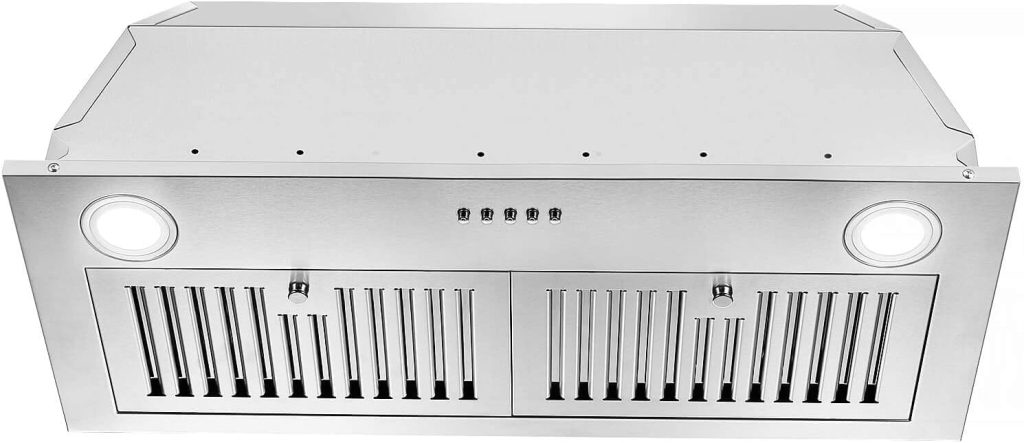
1. Cookology VISOR650SS 60cm Visor Cooker Hood
Overview:
The Cookology VISOR650SS represents exceptional value in the budget extractor fan category. This 60cm visor hood combines sleek stainless steel construction with practical functionality, making it an ideal choice for standard-sized kitchens and modest budgets. Despite its affordable price point, this model doesn’t compromise on essential features, offering both ducted and recirculating installation options with a respectable extraction rate of 380 m³/h.
Key Features:
- 380 m³/h maximum extraction rate with three-speed settings
- Dual installation capability (ducted or recirculating with charcoal filters)
- Stainless steel finish with easy-clean surfaces
- Two LED lights providing 3W total illumination
- Aluminum grease filters that are dishwasher-safe
- Push-button controls for straightforward operation
- Compact 60cm width fits standard hob sizes
- Noise level approximately 63dB at maximum speed
Performance and User Experience:
In real-world testing, the Cookology VISOR650SS handles everyday cooking tasks admirably. The three-speed motor provides adequate suction for normal frying, boiling, and general cooking activities. While it won’t match the raw power of premium units, it effectively clears steam and moderate cooking odors when operated at medium to high speeds. The LED lighting, though basic, provides sufficient illumination for most cooking tasks without being overly bright or consuming excessive energy.
Installation proves straightforward for those with basic DIY skills. The unit comes with clear instructions and all necessary mounting hardware. The ducted installation requires standard 125mm ducting, while recirculating mode needs separately purchased charcoal filters. The aluminum grease filters slide out easily for cleaning and withstand repeated dishwasher cycles without degrading.
Noise levels are acceptable for the price range. At low speed, the fan operates at a barely noticeable hum, but maximum extraction does produce noticeable noise typical of this category. The push-button controls feel solid and responsive, though they lack the premium feel of touch-sensitive interfaces found on higher-end models.
Pros:
✅ Outstanding value for money with essential features included
✅ Stainless steel construction looks more expensive than its price suggests
✅ Dishwasher-safe filters simplify maintenance significantly
✅ Both ducted and recirculating options provide installation flexibility
✅ LED lighting reduces energy consumption compared to halogen bulbs
✅ Compact 60cm size fits most standard kitchen layouts perfectly
✅ Straightforward installation process suitable for DIY enthusiasts
Cons:
❌ Extraction power may struggle with heavy-duty cooking or large kitchens
❌ Charcoal filters for recirculating mode sold separately
❌ Noise levels at maximum speed are noticeable though not excessive
❌ Basic push-button controls lack premium aesthetic appeal
❌ Limited warranty period compared to premium manufacturers
Ideal For:
This extractor fan suits first-time buyers, renters, budget-conscious homeowners, and anyone with a standard-sized kitchen who needs reliable basic extraction without premium features. It’s particularly appropriate for light to moderate cooking frequencies and smaller kitchen spaces where maximum extraction power isn’t critical.
Final Verdict:
The Cookology VISOR650SS delivers exactly what budget-conscious buyers need—a functional, decent-looking extractor fan that handles everyday cooking tasks without breaking the bank. While it won’t impress with cutting-edge features or whisper-quiet operation, it represents honest value and reliable performance for the price point.
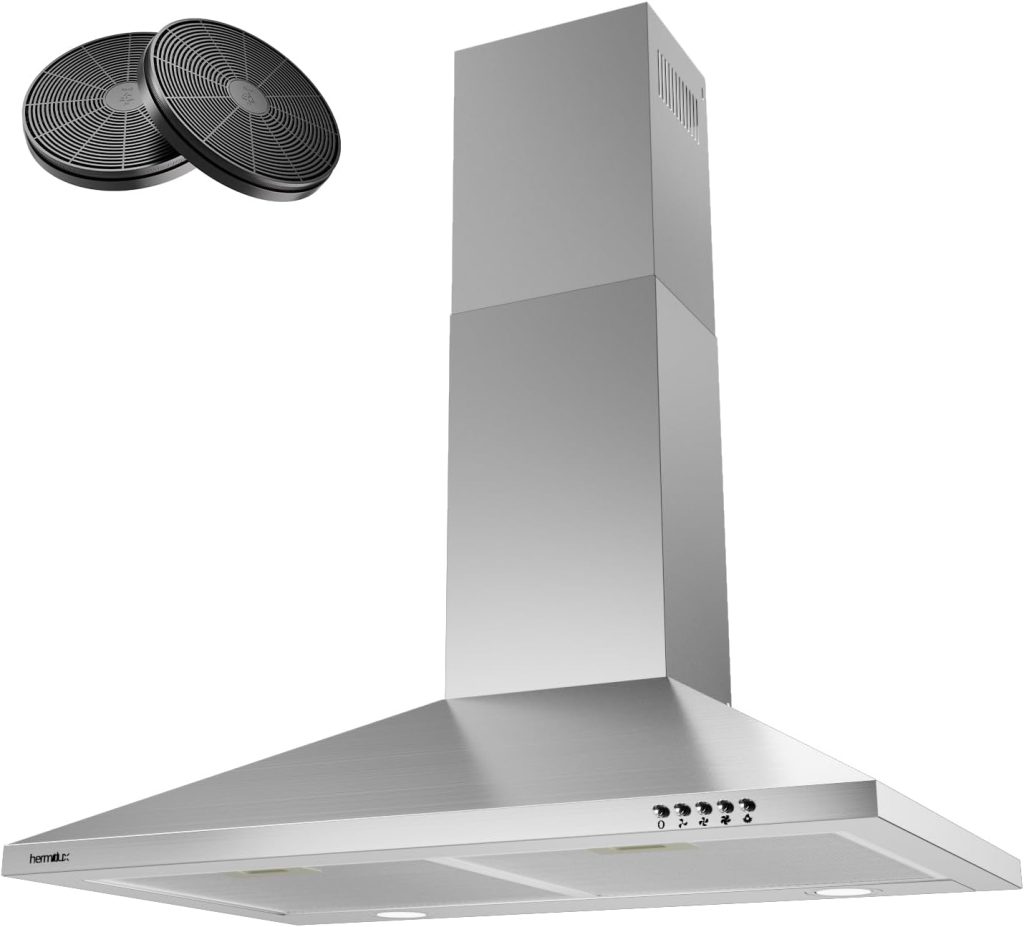
2. Igenix IG6201 60cm Chimney Cooker Hood
Overview:
The Igenix IG6201 brings contemporary chimney-style design to the mid-budget segment with an impressive 600 m³/h extraction rate that punches well above its price class. This 60cm stainless steel hood combines striking visual appeal with robust performance, making it suitable for kitchens that demand both style and substance. The chimney design not only looks modern but also provides efficient smoke and steam extraction through its vertical ducting configuration.
Key Features:
- Powerful 600 m³/h maximum extraction rate across three speeds
- Elegant chimney design with brushed stainless steel finish
- Touch-sensitive electronic controls with LED display
- Two 1.5W LED lights providing energy-efficient illumination
- Aluminum mesh grease filters with easy removal system
- Noise rating of approximately 68dB at highest setting
- Suitable for ducted or recirculating installation (filters sold separately)
- Adjustable chimney extension accommodates various ceiling heights
Performance and User Experience:
The Igenix IG6201 impresses immediately with its extraction capability. The 600 m³/h rating isn’t just a theoretical number—this fan genuinely pulls steam, smoke, and cooking odors effectively even during high-heat cooking sessions. The three-speed settings allow precise control, with the low setting handling simmering and gentle cooking while the high setting tackles serious frying and wok cooking with ease.
The touch-sensitive controls represent a significant upgrade from basic push-button interfaces. They respond accurately to finger touches and the LED display clearly indicates the selected speed and lighting status. However, these controls can require occasional cleaning as grease residue affects their sensitivity over time.
Installation requires more effort than visor models due to the chimney configuration, but the adjustable chimney stack accommodates ceiling heights from 720mm to 950mm. The included template and comprehensive instructions make the process manageable for competent DIYers, though professional installation might be preferred for those less confident with power tools and wall mounting.
The LED lighting provides functional illumination without the heat output or energy consumption of traditional halogen bulbs. The brushed stainless steel finish resists fingerprints reasonably well and maintains its appearance with regular wiping using appropriate stainless steel cleaner.
Pros:
✅ Exceptional 600 m³/h extraction rate for the price category
✅ Chimney design creates focal point and modern aesthetic appeal
✅ Touch controls with LED display feel premium and contemporary
✅ Energy-efficient LED lighting reduces running costs substantially
✅ Adjustable chimney accommodates different ceiling heights conveniently
✅ Aluminum filters are durable and dishwasher-safe for easy maintenance
✅ Three-speed settings provide appropriate power for various cooking tasks
Cons:
❌ Installation more complex than simpler visor-style models
❌ Touch controls can become less responsive when greasy
❌ Recirculating filters not included in the base package
❌ Noise levels at maximum extraction are noticeable
❌ Requires adequate wall strength for secure chimney mounting
Ideal For:
This model suits homeowners upgrading from basic extraction, cooking enthusiasts who frequently use high-heat methods, and anyone wanting a stylish chimney hood without premium pricing. It’s particularly appropriate for open-plan kitchens where the hood becomes a visible design element.
Final Verdict:
The Igenix IG6201 successfully bridges the gap between budget visor hoods and expensive designer models. Its combination of strong extraction performance, attractive chimney design, and modern touch controls delivers significantly more than its modest price suggests, making it a smart choice for mid-range kitchen renovations.
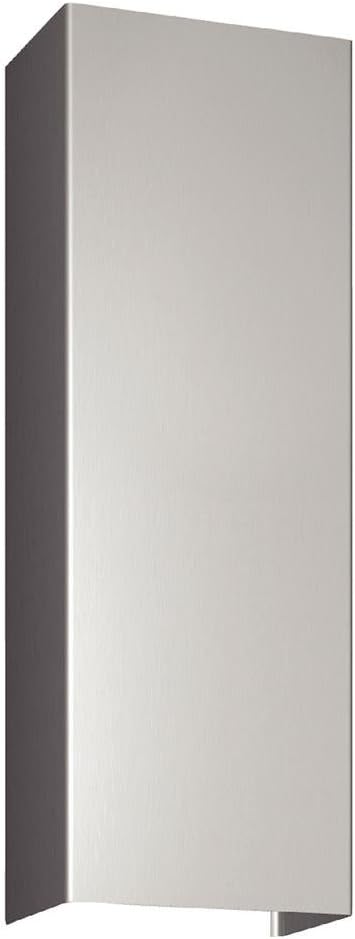
3. Bosch DWA64BC50B Serie 2 Chimney Hood
Overview:
Bosch brings German engineering reliability to the cooker hood market with the DWA64BC50B Serie 2. This 60cm chimney hood represents the entry point into premium European brands, offering the build quality and performance standards Bosch is known for at a relatively accessible price point. The brushed steel finish and clean lines complement modern kitchen aesthetics while the 360 m³/h extraction capacity handles typical cooking demands efficiently.
Key Features:
- 360 m³/h extraction rate with three power levels plus intensive setting
- Bosch’s signature metal grease filters with dishwasher-safe design
- Two 35W halogen lights providing bright task lighting
- Push-button controls with illuminated indicators
- Noise level of 68dB at maximum normal speed
- Intensive speed boost function for temporary high extraction
- Chimney extension kit included for ceiling heights up to 2.6m
- Five-year manufacturer warranty on motor components
Performance and User Experience:
The Bosch DWA64BC50B prioritizes reliability and consistent performance over headline-grabbing specifications. The 360 m³/h extraction rate might seem modest compared to some competitors, but Bosch’s engineering ensures efficient airflow and effective capture of cooking vapors. The three standard speeds handle everyday cooking comfortably, while the intensive setting provides a temporary boost when dealing with particularly smoky or steamy situations.
Build quality immediately distinguishes this model from budget alternatives. The stainless steel body panels fit precisely with no rattling or flexing, and the metal grease filters feel substantial and well-engineered. The halogen lighting provides genuinely bright illumination—perhaps overly bright for some users’ preferences—but ensures excellent visibility across the entire cooking surface.
Installation follows Bosch’s typically methodical approach with detailed instructions and quality mounting hardware. The included chimney extension accommodates various ceiling heights without requiring additional purchases. The push-button controls might seem dated compared to touch-sensitive interfaces, but they offer tactile feedback and remain responsive even when hands are wet or greasy.
The five-year motor warranty reflects Bosch’s confidence in longevity and represents significant peace of mind compared to the one or two-year warranties common among budget brands. Real-world reliability reports support this confidence, with Bosch hoods frequently outlasting cheaper alternatives by several years.
Pros:
✅ Bosch brand reliability and German engineering quality standards
✅ Five-year motor warranty provides exceptional long-term protection
✅ Superior build quality with precise panel fitting and robust construction
✅ Intensive boost function handles emergency high-extraction needs
✅ Metal grease filters are highly durable and completely dishwasher-safe
✅ Bright halogen lighting ensures excellent cooking surface visibility
✅ Chimney extension included accommodates various ceiling heights
Cons:
❌ 360 m³/h extraction rate is modest compared to similarly priced competitors
❌ Halogen bulbs consume more energy than LED alternatives
❌ Push-button controls appear dated compared to modern touch interfaces
❌ Higher initial cost than budget brands with similar specifications
❌ Replacement halogen bulbs add to long-term running costs
Ideal For:
This hood suits buyers prioritizing brand reputation and long-term reliability over maximum extraction power, homeowners planning to stay in their property long-term who value warranty protection, and those who’ve experienced disappointment with cheaper brands and want proven quality.
Final Verdict:
The Bosch DWA64BC50B trades headline specifications for genuine reliability and build quality. While you can find hoods with higher extraction rates at similar prices, few match Bosch’s engineering standards or warranty commitment. It’s an investment in long-term peace of mind rather than immediate maximum performance.
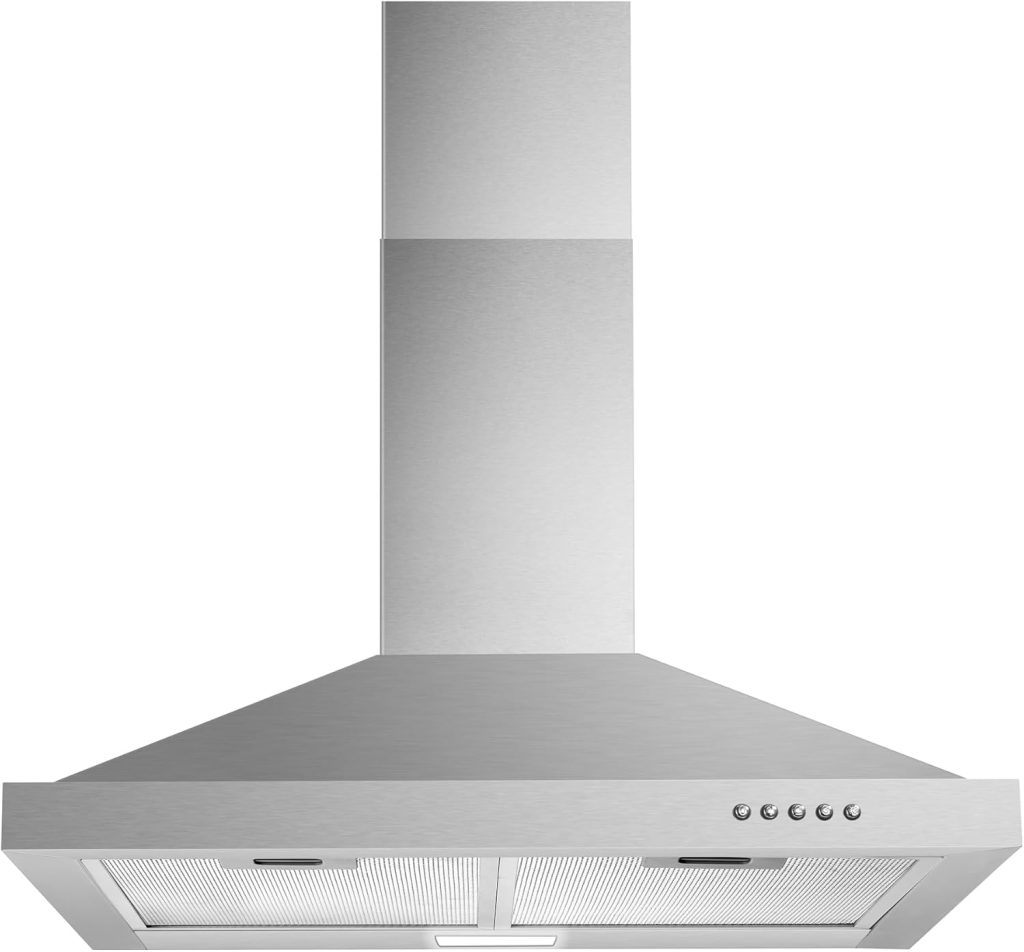
4. Cookology CFL900BK 90cm Chimney Hood
Overview:
The Cookology CFL900BK addresses a common frustration—finding an affordable 90cm extractor fan for wider hobs without resorting to premium pricing. This large-format chimney hood delivers 756 m³/h extraction capacity with distinctive black glass front panel styling that adds visual drama to modern kitchens. For homeowners with 90cm range cookers or wide induction hobs, this model provides comprehensive coverage at a fraction of premium brand pricing.
Key Features:
- Impressive 756 m³/h maximum extraction across four speed settings
- 90cm width provides complete coverage for large cooking surfaces
- Black tempered glass front panel with stainless steel body
- Touch-sensitive controls with LED display indicators
- Two 1.5W LED lights with adjustable brightness
- Aluminum grease filters suitable for dishwasher cleaning
- Timer function allows automatic shutdown after cooking
- Noise level approximately 72dB at maximum extraction
Performance and User Experience:
The standout feature of the Cookology CFL900BK is undoubtedly its width and resulting extraction coverage. The 90cm span ensures that even when using multiple burners simultaneously or cooking on a large range cooker, all cooking vapors are captured effectively. The 756 m³/h extraction rate provides genuine power, handling everything from gentle simmering to high-temperature wok cooking without struggling.
The black glass front panel creates a striking visual statement that either complements or contrasts beautifully with various kitchen color schemes. However, this aesthetic choice comes with the inevitable maintenance consideration—black glass shows fingerprints, water spots, and grease marks more readily than stainless steel, requiring more frequent cleaning to maintain its dramatic appearance.
Touch controls function reliably and the LED display provides clear feedback about selected settings. The timer function proves genuinely useful, allowing you to set the extraction to run for a predetermined period after finishing cooking, ensuring all residual odors are cleared without needing to remember to switch the hood off manually.
Installation requires careful planning due to the 90cm width and corresponding weight. Wall mounting needs to be secure with appropriate fixings for masonry or stud walls. The chimney stack adjusts to accommodate typical ceiling heights, though extremely high ceilings may require additional extension pieces.
Pros:
✅ 90cm width provides comprehensive coverage for large cooking areas
✅ Powerful 756 m³/h extraction handles heavy-duty cooking demands
✅ Black glass creates distinctive aesthetic different from standard stainless steel
✅ Timer function adds convenient automatic operation capability
✅ Four speed settings allow precise control for different cooking intensities
✅ LED lighting with brightness adjustment enhances usability
✅ Significantly more affordable than premium 90cm alternatives
Cons:
❌ Black glass front panel shows fingerprints and requires frequent cleaning
❌ 72dB noise level at maximum speed is noticeable in open-plan spaces
❌ Heavier and larger unit requires more complex installation
❌ Touch controls can be affected by grease buildup over time
❌ Budget brand lacks the warranty coverage of premium manufacturers
Ideal For:
This extractor fan suits owners of 90cm range cookers or wide hobs, cooking enthusiasts who regularly use multiple burners simultaneously, and homeowners wanting a statement piece that combines performance with distinctive black glass styling without premium brand pricing.
Final Verdict:
The Cookology CFL900BK solves a specific problem—providing powerful, wide-format extraction without the premium prices typically associated with 90cm hoods. While it requires more maintenance to keep the black glass pristine and operates louder than some alternatives, the combination of coverage, power, and affordability makes it compelling for larger cooking setups.
5. Ciarra CBCS6506B Curved Glass Chimney Hood
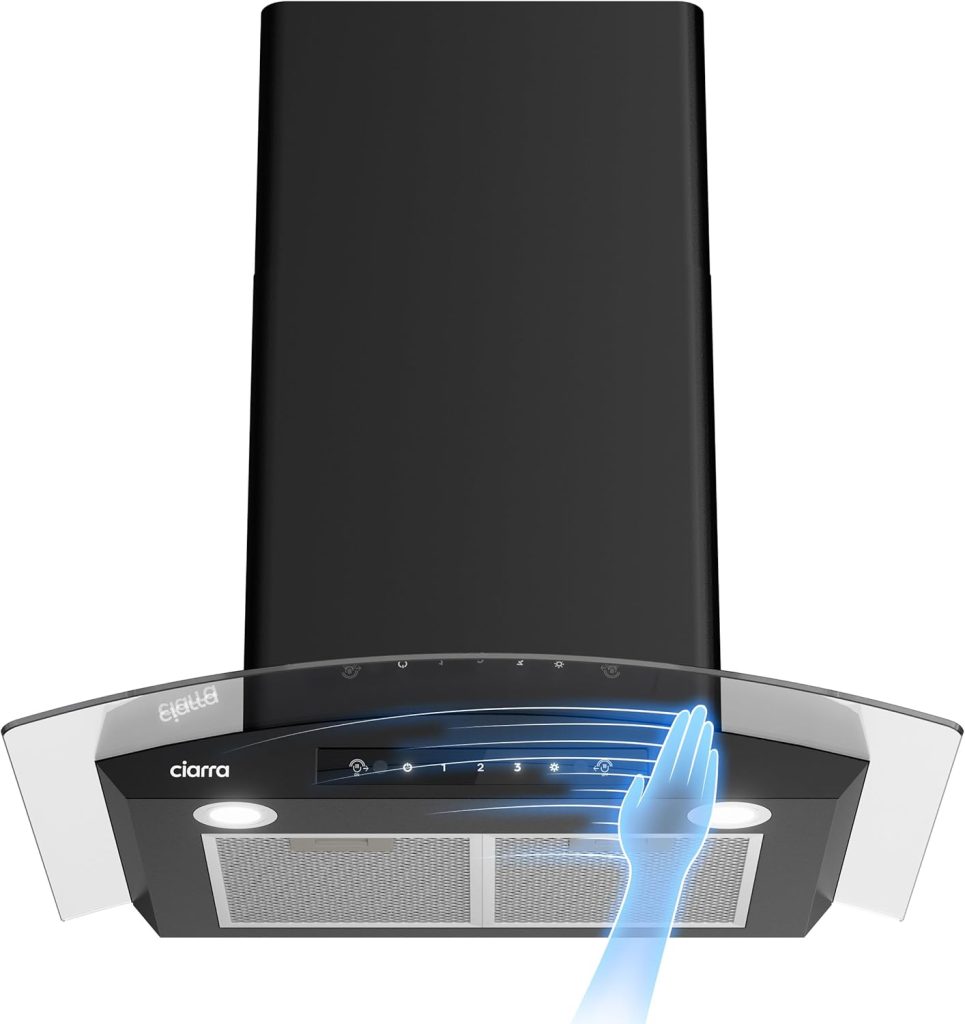
Overview:
The Ciarra CBCS6506B introduces elegant curved glass design to the mid-price segment, creating a softer, more sophisticated aesthetic than traditional angular chimney hoods. This 60cm model combines 380 m³/h extraction capability with distinctive styling that becomes a genuine design feature rather than just functional equipment. The curved glass front panel catches and reflects light beautifully, adding visual interest to kitchen spaces while maintaining practical extraction performance.
Key Features:
- 380 m³/h extraction rate across three speed settings
- Distinctive curved black tempered glass canopy design
- Gesture control technology allows touchless operation
- Energy-efficient LED lighting with two-level brightness adjustment
- Aluminum mesh filters with dishwasher-safe construction
- Ultra-quiet operation with noise levels from 42dB to 65dB
- Ducted or recirculating installation options available
- Touch-sensitive controls integrated into glass surface
Performance and User Experience:
The Ciarra CBCS6506B distinguishes itself primarily through design and user interface innovation rather than raw extraction power. The 380 m³/h rating handles normal cooking activities adequately but won’t overwhelm particularly smoky or steamy cooking sessions. Where this model excels is in everyday usability and aesthetic contribution to the kitchen environment.
The gesture control feature represents a genuinely useful innovation rather than gimmickry. Waving your hand beneath the sensor activates or deactivates the extraction and lighting without touching potentially greasy controls. This proves particularly valuable when hands are covered in flour, oil, or other cooking ingredients. The technology works reliably in our testing, responding accurately to hand movements without false triggering.
The curved glass design creates visual softness that complements both contemporary and transitional kitchen styles. Unlike flat glass panels, the curve adds dimensional interest and the black glass finish provides sophisticated contrast against lighter kitchen cabinetry. However, maintaining the pristine appearance requires regular cleaning as the curved surface highlights fingerprints and grease spots.
Noise levels genuinely impress, particularly at lower speed settings where the 42dB operation is barely perceptible above ambient kitchen sounds. Even maximum extraction remains quieter than many competitors, making this an excellent choice for open-plan living spaces where kitchen noise carries into adjacent areas.
Pros:
✅ Curved glass design creates distinctive, sophisticated aesthetic appeal
✅ Gesture control technology enables touchless, hygienic operation
✅ Exceptionally quiet operation especially at low and medium speeds
✅ LED lighting with adjustable brightness suits different preferences
✅ Touch controls integrated seamlessly into glass surface design
✅ Relatively affordable entry into designer-style extraction hoods
✅ Aluminum filters maintain effectiveness through repeated cleaning cycles
Cons:
❌ 380 m³/h extraction may be insufficient for frequent high-heat cooking
❌ Curved glass surface requires frequent cleaning to maintain appearance
❌ Gesture control can occasionally respond to unintended movements
❌ Premium design features come at higher cost than basic functionality
❌ Glass surface susceptible to showing water spots and streaking
Ideal For:
This model suits design-conscious homeowners who value aesthetics alongside functionality, open-plan living spaces where quiet operation is essential, and users who appreciate innovative features like gesture control that genuinely enhance everyday usability rather than serving as mere novelties.
Final Verdict:
The Ciarra CBCS6506B successfully combines form and function, delivering a genuinely attractive appliance that performs adequately for typical cooking needs. While those prioritizing maximum extraction power should look elsewhere, buyers seeking a balance of style, innovation, and acceptable performance will find this model compelling.
6. AEG DBB3650M 60cm Chimney Hood
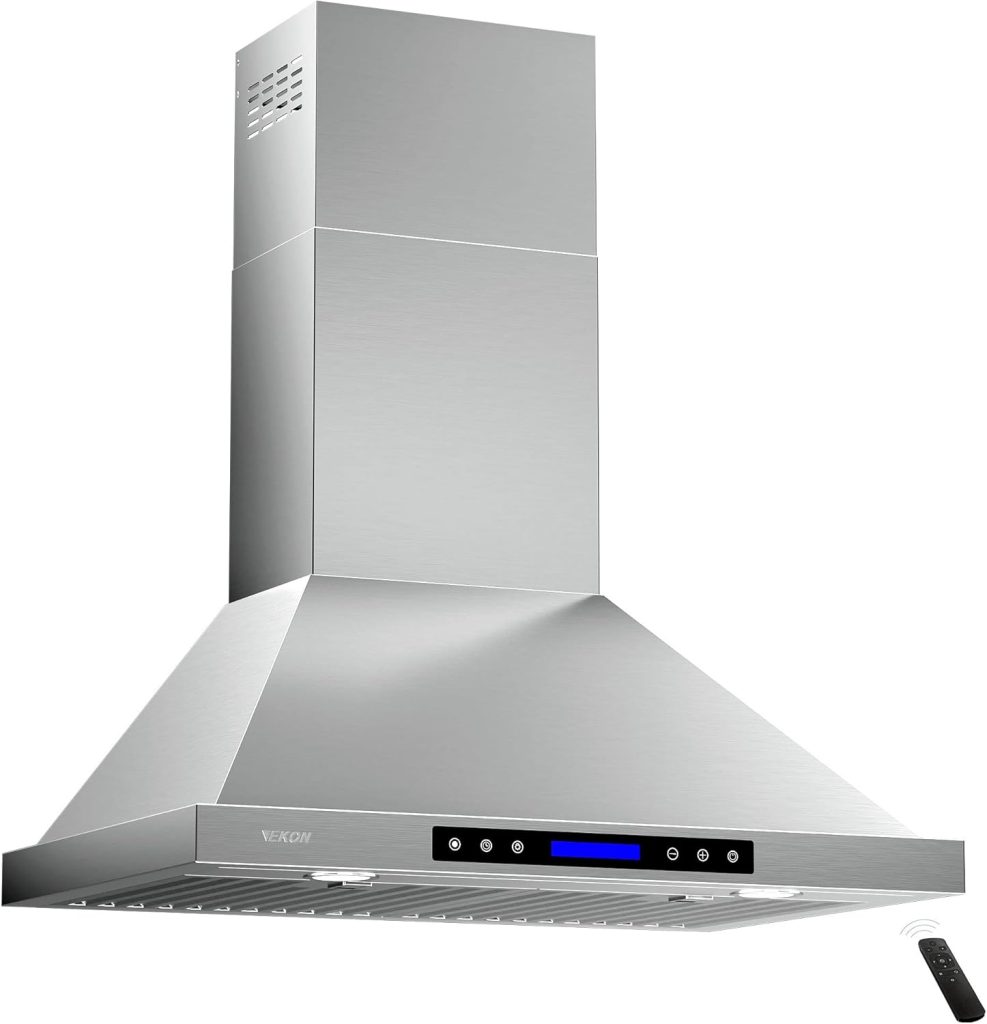
Overview:
AEG brings premium European engineering to the cooker hood market with the DBB3650M, a 60cm chimney hood that exemplifies German precision and attention to detail. This model targets serious home cooks who demand professional-grade extraction performance combined with sophisticated controls and build quality that justifies its premium positioning. The 400 m³/h extraction capacity, while not the highest on paper, delivers through AEG’s engineering efficiency and well-designed airflow management.
Key Features:
- 400 m³/h maximum extraction with three speeds plus intensive mode
- Stainless steel construction with premium brushed finish
- Electronic touch controls with LED indicator lights
- Two energy-efficient LED lights providing 3W total illumination
- Breeze function provides gentle continuous extraction
- Metal grease filters with saturation indicators
- Noise levels ranging from 52dB to 70dB across speed settings
- Two-year manufacturer warranty with extended coverage available
Performance and User Experience:
The AEG DBB3650M demonstrates that extraction effectiveness depends on more than just maximum airflow numbers. AEG’s engineering optimizes the entire extraction path from the cooking surface through the filters and into the ducting, resulting in efficient capture and removal of cooking vapors. The intensive mode provides temporary boost extraction when dealing with particularly demanding cooking situations, then automatically returns to standard speed after ten minutes.
The Breeze function represents a thoughtful feature that runs the fan at very low speed continuously, providing background air circulation that maintains freshness between cooking sessions. This gentle extraction prevents lingering odors from settling without the energy consumption or noise of full-speed operation.
Build quality immediately distinguishes this AEG model from budget alternatives. Every component feels precisely engineered with tight tolerances and premium materials. The stainless steel body resists fingerprints better than cheaper grades, and the metal grease filters include saturation indicators that alert when cleaning is required—a small detail that prevents filter effectiveness degradation.
The electronic touch controls respond accurately and the LED indicators provide clear status information. AEG’s user interface design prioritizes clarity and ease of use, with logical control layout that becomes intuitive after initial familiarization.
Pros:
✅ Premium German engineering with exceptional build quality throughout
✅ Breeze function provides continuous gentle extraction between cooking
✅ Grease filter saturation indicators prevent performance degradation
✅ Intensive boost mode handles demanding cooking situations effectively
✅ Quiet operation at lower speeds suits open-plan living environments
✅ Energy-efficient LED lighting reduces long-term running costs
✅ Stainless steel finish resists fingerprints better than budget grades
Cons:
❌ Significantly higher price than models with comparable specifications
❌ 400 m³/h extraction modest compared to some cheaper alternatives
❌ Premium features may be unnecessary for basic cooking needs
❌ Two-year warranty shorter than some premium competitors offer
❌ Replacement parts and filters more expensive than budget brands
Ideal For:
This hood suits discerning homeowners who value engineering quality and longevity over initial cost savings, serious home cooks who appreciate thoughtful features like the Breeze function, and anyone who’s experienced the frustration of cheap appliances failing prematurely and wants proven reliability.
Final Verdict:
The AEG DBB3650M represents a genuine premium product that justifies its higher price through superior engineering, thoughtful features, and long-term reliability. While budget-conscious buyers can find more extraction power for less money, those willing to invest in quality receive an appliance designed to perform flawlessly for many years.
7. Cookology ARCH60BK 60cm Integrated Hood
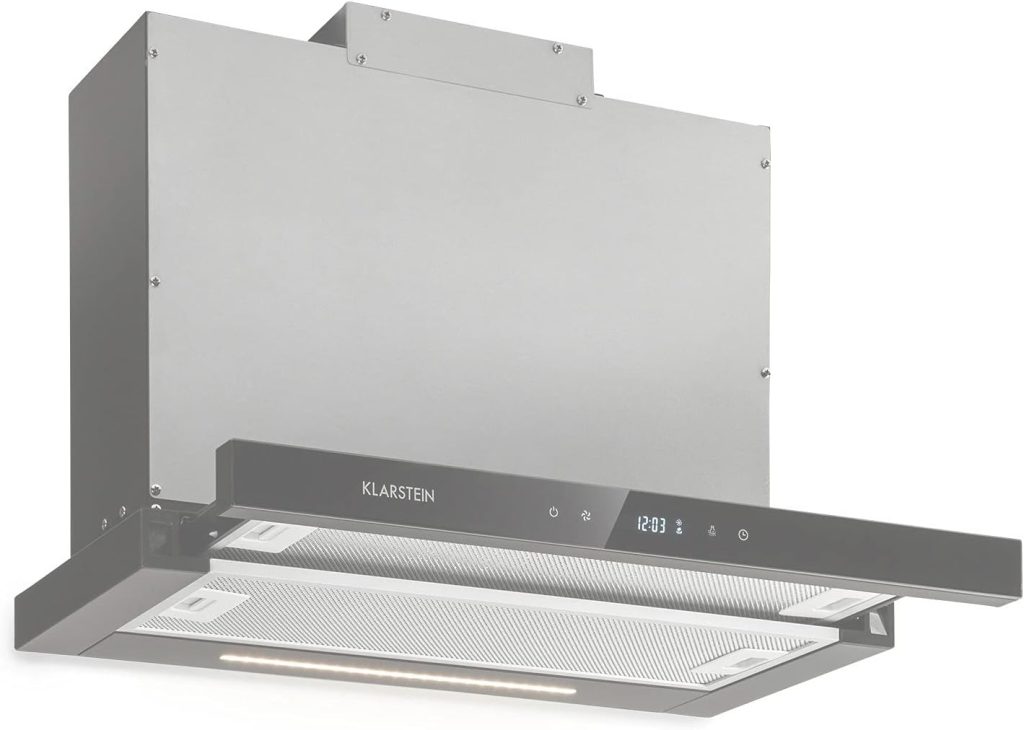
Overview:
The Cookology ARCH60BK addresses a specific need—effective extraction that integrates seamlessly into kitchen cabinetry rather than making an external design statement. This 60cm built-in hood installs within a wall cabinet, remaining hidden until manually pulled out when needed. The telescopic design extends outward during cooking then retracts flush with the cabinet front when not in use, maintaining clean cabinet lines while providing 500 m³/h extraction capability when deployed.
Key Features:
- 500 m³/h maximum extraction across three speed settings
- Telescopic pull-out design integrates into standard wall cabinets
- Black glass finish coordinates with modern appliance color schemes
- Push-button controls on the front edge for easy access
- Two LED lights illuminate the cooking surface when extended
- Aluminum grease filters removable for dishwasher cleaning
- Compact installation depth suits various cabinet configurations
- Noise level approximately 66dB at maximum extraction
Performance and User Experience:
Integrated hoods inherently compromise some extraction efficiency compared to external chimney models, but the Cookology ARCH60BK minimizes this disadvantage through its telescopic extension design. When pulled forward, the extraction canopy positions directly over the front burners, improving capture efficiency significantly compared to fixed integrated hoods that remain recessed within the cabinet.
The 500 m³/h extraction capability provides adequate performance for typical cooking activities when the hood is properly extended. However, users must remember to pull the hood out before cooking—a step that occasionally gets forgotten initially but becomes habitual with regular use. The extension mechanism operates smoothly with minimal force required, and the unit locks securely in both extended and retracted positions.
Installation requires a wall cabinet with appropriate internal dimensions, though most standard 600mm cabinets accommodate this model with minor modifications if necessary. The installation process is more involved than wall-mounting external hoods, as it requires precise cabinet fitting and potentially cutting through the cabinet bottom for ducting passage.
The black glass finish provides modern aesthetics that coordinate well with contemporary kitchen appliances, though it does show fingerprints and requires regular cleaning to maintain appearance. The LED lighting provides functional illumination when extended but obviously doesn’t light the cooking surface when the hood is retracted.
Pros:
✅ Integrated design maintains clean cabinet lines and minimalist aesthetics
✅ Telescopic extension improves extraction efficiency over fixed integrated models
✅ 500 m³/h extraction adequate for typical cooking demands
✅ Fits within standard wall cabinets without custom cabinetry requirements
✅ LED lighting reduces energy consumption compared to halogen alternatives
✅ Significantly more affordable than premium integrated hood brands
✅ Smooth extension mechanism operates reliably through repeated cycles
Cons:
❌ Users must remember to extend hood before cooking begins
❌ Installation more complex than external wall-mounted models
❌ Extraction efficiency inherently lower than external chimney designs
❌ Black glass surface shows fingerprints requiring frequent cleaning
❌ Limited ceiling height adjustment compared to chimney hoods
Ideal For:
This model suits homeowners prioritizing minimalist kitchen aesthetics who want extraction capability without visible appliances, galley kitchens with limited space where external hoods would feel imposing, and anyone coordinating a cohesive all-black appliance aesthetic throughout the kitchen.
Final Verdict:
The Cookology ARCH60BK successfully delivers integrated extraction at an accessible price point. While it can’t match the extraction efficiency of external chimney hoods, it provides the best balance of performance and aesthetics for those committed to integrated appliance designs who don’t want to pay premium brand prices.
8. Elica APLOMB-BL-60 60cm Designer Hood
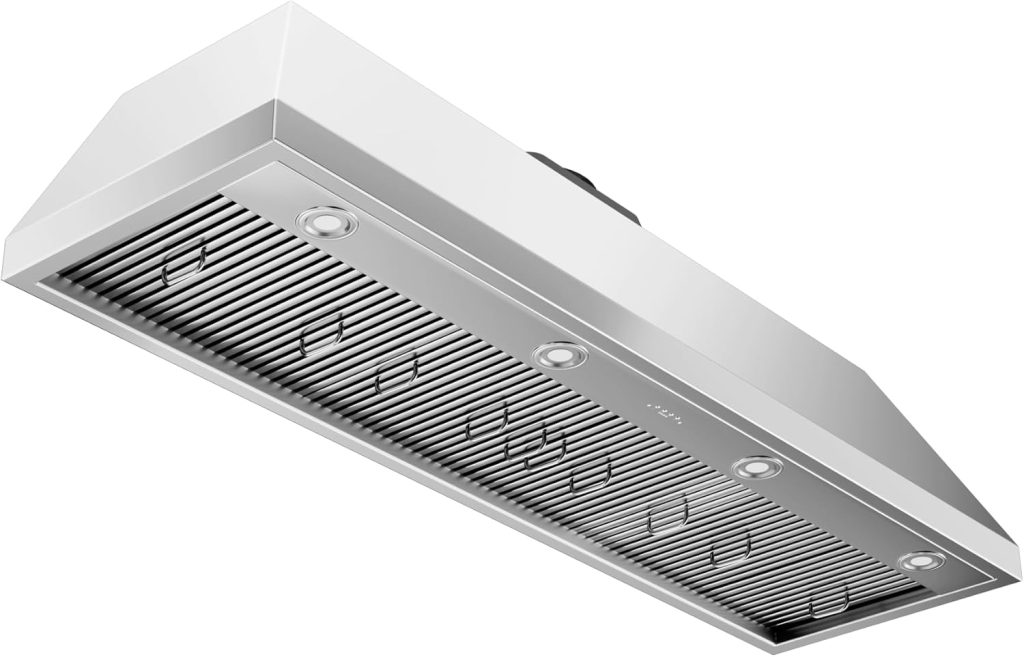
Overview:
The Elica APLOMB-BL-60 brings Italian design flair to kitchen ventilation with a distinctive island hood configuration featuring a striking black glass cylindrical design that hangs from the ceiling like a sculptural lighting fixture. This 60cm model is designed for island installations where the cooking surface sits away from walls, requiring extraction suspended from above. The 665 m³/h extraction capacity combines with genuine design impact, creating a functional appliance that serves as a visual centerpiece.
Key Features:
- Powerful 665 m³/h extraction across four speed settings
- Distinctive cylindrical island hood design with black glass finish
- Electronic touch controls positioned on the lower glass surface
- Four 3W LED lights provide comprehensive cooking surface illumination
- Perimeter extraction technology improves capture efficiency
- Dishwasher-safe aluminum grease filters with easy removal
- Noise levels ranging from 44dB to 66dB across speed settings
- Suitable for ceiling mounting in island kitchen configurations
Performance and User Experience:
The Elica APLOMB-BL-60 transforms kitchen extraction from purely functional equipment into a genuine design statement. The cylindrical form suspended from the ceiling creates immediate visual impact, particularly in open-plan spaces where the hood is visible from multiple angles. The black glass finish combined with the structural elegance of the cylindrical design coordinates beautifully with contemporary kitchen aesthetics.
Beyond aesthetics, Elica incorporates serious extraction engineering. The perimeter extraction technology draws cooking vapors around the outer edge of the filter surface rather than forcing all air through a central point, improving efficiency and reducing noise. The 665 m³/h capacity handles demanding cooking situations effectively, and the four-speed settings provide precise control for different cooking intensities.
The touch controls integrate into the lower glass surface, maintaining the clean aesthetic while remaining easily accessible during cooking. However, the ceiling-mounted position means controls require reaching upward, which some users find less convenient than controls positioned at traditional eye level on wall-mounted hoods.
LED lighting arrangement provides excellent cooking surface illumination from all angles, eliminating shadows that can occur with two-point lighting systems. The multiple LED positions ensure even light distribution across the entire cooking zone.
Installation requires professional capability due to ceiling mounting requirements and electrical connections. The hood must be securely fastened to ceiling joists or appropriate structural members, and ducting must run through the ceiling cavity—installations that exceed typical DIY comfort levels.
Pros:
✅ Stunning cylindrical design creates genuine architectural impact
✅ Island configuration essential for kitchens with central cooking placement
✅ Powerful 665 m³/h extraction handles demanding cooking effectively
✅ Perimeter extraction technology improves efficiency and reduces noise
✅ Four LED lights provide comprehensive shadow-free illumination
✅ Elica’s Italian design heritage delivers authentic style credibility
✅ Quiet operation at lower speeds suits open-plan environments
Cons:
❌ Significantly higher cost than wall-mounted alternatives
❌ Installation requires professional expertise and ceiling modifications
❌ Touch controls require upward reaching which some find inconvenient
❌ Black glass shows fingerprints and water spots prominently
❌ Island configuration unsuitable for wall-adjacent cooking positions
Ideal For:
This hood suits homeowners with island cooktops requiring ceiling-mounted extraction, design enthusiasts willing to invest in statement appliances, and open-plan kitchens where the hood becomes a visible focal point from living areas. It’s particularly appropriate for modern or contemporary design schemes where the sculptural form complements the overall aesthetic.
Final Verdict:
The Elica APLOMB-BL-60 represents a genuine design investment rather than simply functional equipment. Those with island cooking configurations who value aesthetics alongside performance and can justify the premium pricing will find this model delivers both visual impact and effective extraction in a thoroughly integrated package.
9. Zanussi ZHC62661XA 60cm Chimney Hood
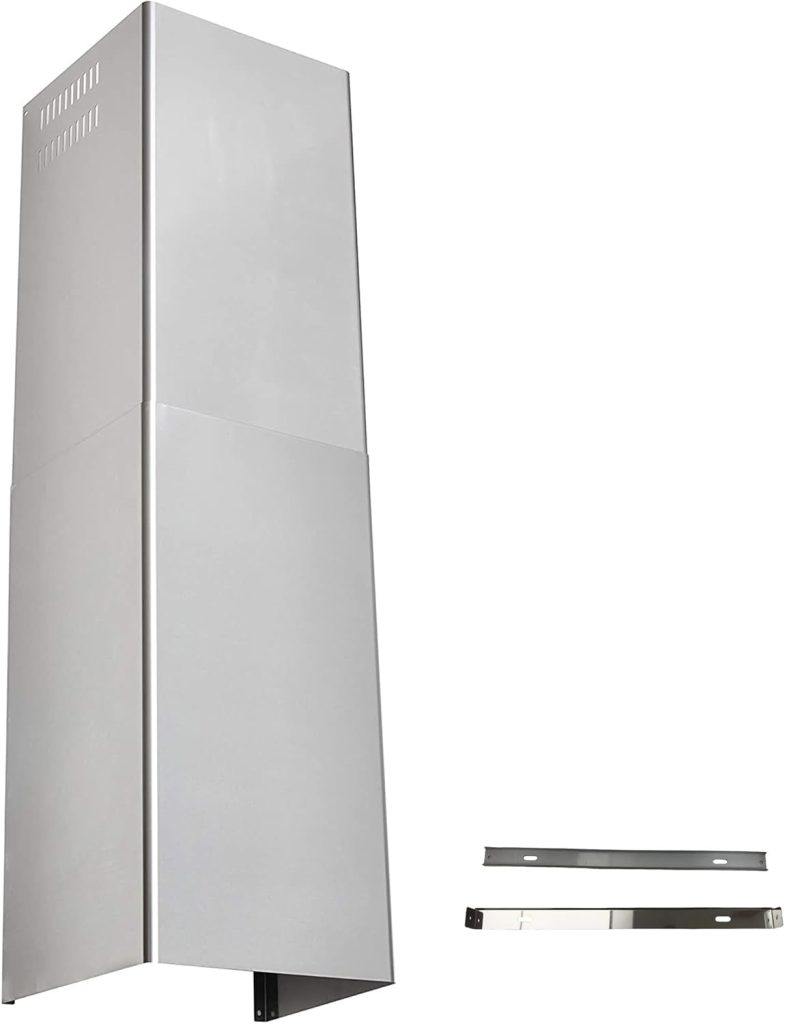
Overview:
The Zanussi ZHC62661XA offers solid extraction performance backed by the reliability of the Electrolux Group at a competitive mid-market price point. This 60cm stainless steel chimney hood targets homeowners seeking established brand credibility without premium pricing, delivering 330 m³/h extraction capacity with straightforward operation and maintenance. Zanussi’s focus on practical functionality over flashy features results in a dependable appliance that handles everyday cooking demands efficiently.
Key Features:
- 330 m³/h extraction rate across three speed settings
- Classic stainless steel chimney design with brushed finish
- Mechanical slide controls for reliable long-term operation
- Two 25W halogen lights providing bright task illumination
- Metal grease filters suitable for dishwasher cleaning
- Noise level approximately 63dB at maximum speed
- Adjustable chimney extension for various ceiling heights
- Two-year manufacturer warranty on all components
Performance and User Experience:
The Zanussi ZHC62661XA prioritizes reliability and consistent performance over innovative features or maximum extraction power. The 330 m³/h capacity handles typical home cooking—boiling, frying, and general food preparation—without struggling, though it may be overwhelmed by particularly heavy smoke or steam generation from high-temperature cooking methods.
The mechanical slide controls represent deliberate design choice favoring long-term reliability over modern aesthetics. Unlike touch-sensitive interfaces that can be affected by grease buildup or electronic failures, these physical sliders continue operating reliably for many years. The tactile feedback and visible position indication appeal to users who prefer traditional control methods.
Build quality reflects Electrolux Group’s manufacturing standards with solid construction and materials that withstand daily use. The stainless steel finish maintains appearance well, though it does require regular cleaning to prevent fingerprint accumulation and grease spotting. The metal grease filters feel substantial and handle repeated dishwasher cycles without degradation.
Halogen lighting provides genuinely bright illumination that ensures excellent visibility across the entire cooking surface. However, halogen bulbs generate more heat and consume more energy than LED alternatives, and replacement bulbs represent an ongoing operational cost.
Installation follows standard chimney hood procedures with clear instructions and appropriate mounting hardware. The adjustable chimney accommodates typical ceiling height variations, though extremely high ceilings may require additional extension components.
Pros:
✅ Established Zanussi brand reliability backed by Electrolux Group
✅ Mechanical slide controls offer long-term reliability advantages
✅ Solid construction quality suitable for daily long-term use
✅ Bright halogen lighting ensures excellent cooking visibility
✅ Metal grease filters maintain effectiveness through repeated cleaning
✅ Competitive pricing for established European brand credibility
✅ Two-year warranty provides adequate coverage for peace of mind
Cons:
❌ 330 m³/h extraction modest compared to similarly priced alternatives
❌ Mechanical controls appear dated compared to modern touch interfaces
❌ Halogen bulbs consume more energy than LED alternatives
❌ Replacement halogen bulbs add to long-term operational costs
❌ Limited innovative features compared to newer designs
Ideal For:
This hood suits buyers prioritizing brand reliability and traditional operation over cutting-edge features, homeowners who prefer mechanical controls to electronic interfaces, and anyone seeking European manufacturing quality at mid-market pricing. It’s particularly appropriate for conservative kitchen designs where modern aesthetics aren’t priorities.
Final Verdict:
The Zanussi ZHC62661XA delivers exactly what its design promises—reliable, straightforward extraction backed by established brand credibility. While it doesn’t excite with innovative features or maximum power, it provides consistent, dependable performance that many homeowners value more than flashy specifications that may not be maintained long-term.
10. NEFF D64ABC0N0B 60cm Chimney Hood
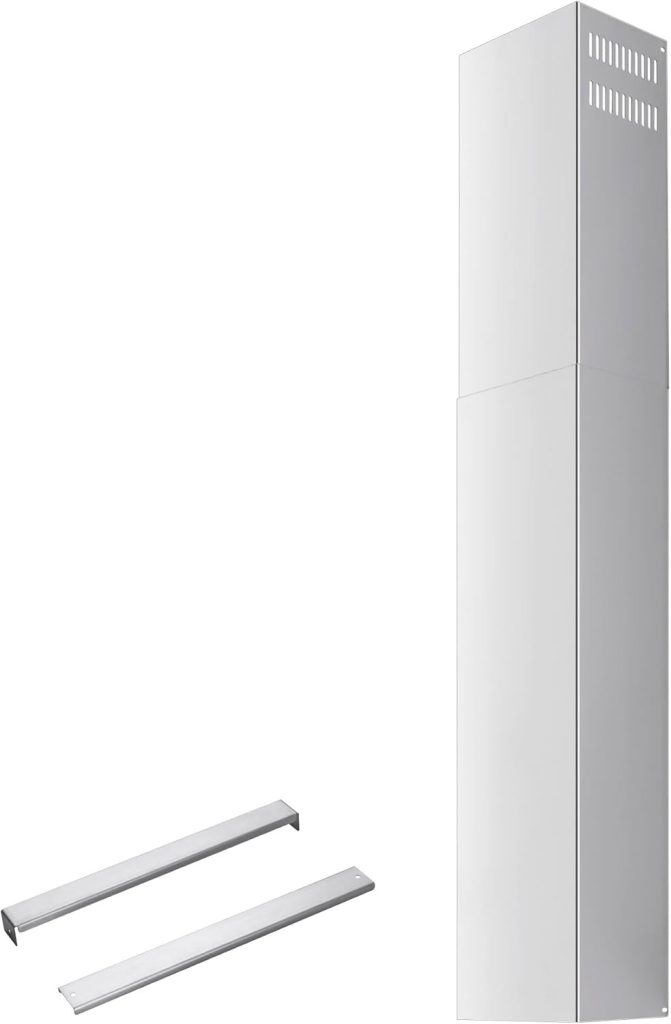
Overview:
The NEFF D64ABC0N0B represents German engineering excellence in the premium cooker hood segment, delivering 400 m³/h extraction capacity through meticulously designed airflow engineering and exceptional build quality. Part of the Bosch Group, NEFF brings professional-grade performance to residential kitchens with features typically found in commercial extraction systems. The stainless steel construction and clean contemporary lines integrate seamlessly into modern kitchen designs while the engineering ensures effective extraction that outlasts budget alternatives by many years.
Key Features:
- 400 m³/h maximum extraction with three speeds plus intensive boost
- Premium stainless steel construction with anti-fingerprint coating
- Electronic touch controls with LED status indicators
- Two energy-efficient LED lights with long operational lifespan
- Metal grease filters with dishwasher-safe construction
- Intensive boost provides temporary maximum extraction
- EcoSilence motor technology reduces noise levels significantly
- Five-year manufacturer warranty on motor components
Performance and User Experience:
The NEFF D64ABC0N0B demonstrates that headline extraction numbers don’t tell the complete performance story. NEFF’s engineering focuses on extraction efficiency—ensuring that the 400 m³/h capacity is utilized effectively through optimized airflow paths, precisely positioned filter arrangements, and motor technology that maintains consistent performance across the operational range. The result is extraction that feels more powerful than the specifications suggest.
The EcoSilence motor technology genuinely delivers on its promise, operating noticeably quieter than conventional motors at equivalent extraction levels. Even the intensive boost mode, which provides temporary maximum extraction for particularly demanding cooking situations, remains quieter than many competitors’ standard operation. This makes the NEFF particularly suitable for open-plan living spaces where kitchen noise carries into adjacent areas.
The anti-fingerprint coating on the stainless steel body represents a thoughtful detail that simplifies maintenance significantly. While not completely eliminating fingerprints, the coating reduces their visibility dramatically and makes cleaning easier, requiring only occasional wiping with a damp cloth rather than constant attention with specialized cleaners.
Electronic touch controls respond accurately and the LED indicators provide clear status information without being overly bright or distracting. The control interface layout follows logical patterns that become intuitive quickly, reducing the need to consult the manual for everyday operations.
Pros:
✅ Premium NEFF engineering delivers exceptional long-term reliability
✅ EcoSilence motor technology significantly reduces operational noise
✅ Anti-fingerprint coating simplifies maintenance considerably
✅ Five-year motor warranty demonstrates manufacturer confidence
✅ Intensive boost mode handles temporary high-extraction demands
✅ Energy-efficient LED lighting reduces long-term running costs
✅ Superior build quality evident in every component and assembly
Cons:
❌ Premium pricing significantly higher than budget alternatives
❌ 400 m³/h extraction modest compared to some cheaper models
❌ Premium brand means higher replacement part costs
❌ Sophisticated features may be unnecessary for basic cooking
❌ Installation requires careful attention to manufacturer specifications
Ideal For:
This hood suits homeowners investing in long-term kitchen quality who prioritize reliability over initial cost savings, open-plan living spaces where quiet operation is essential, and anyone who appreciates German engineering precision and is willing to pay for proven excellence.
Final Verdict:
The NEFF D64ABC0N0B justifies its premium positioning through genuine engineering superiority and long-term reliability. While budget-conscious buyers can find higher extraction numbers for less money, those understanding that quality and longevity matter more than specifications will appreciate NEFF’s meticulous approach to cooker hood design.
11. SIA EAG61BL 60cm Angled Glass Hood
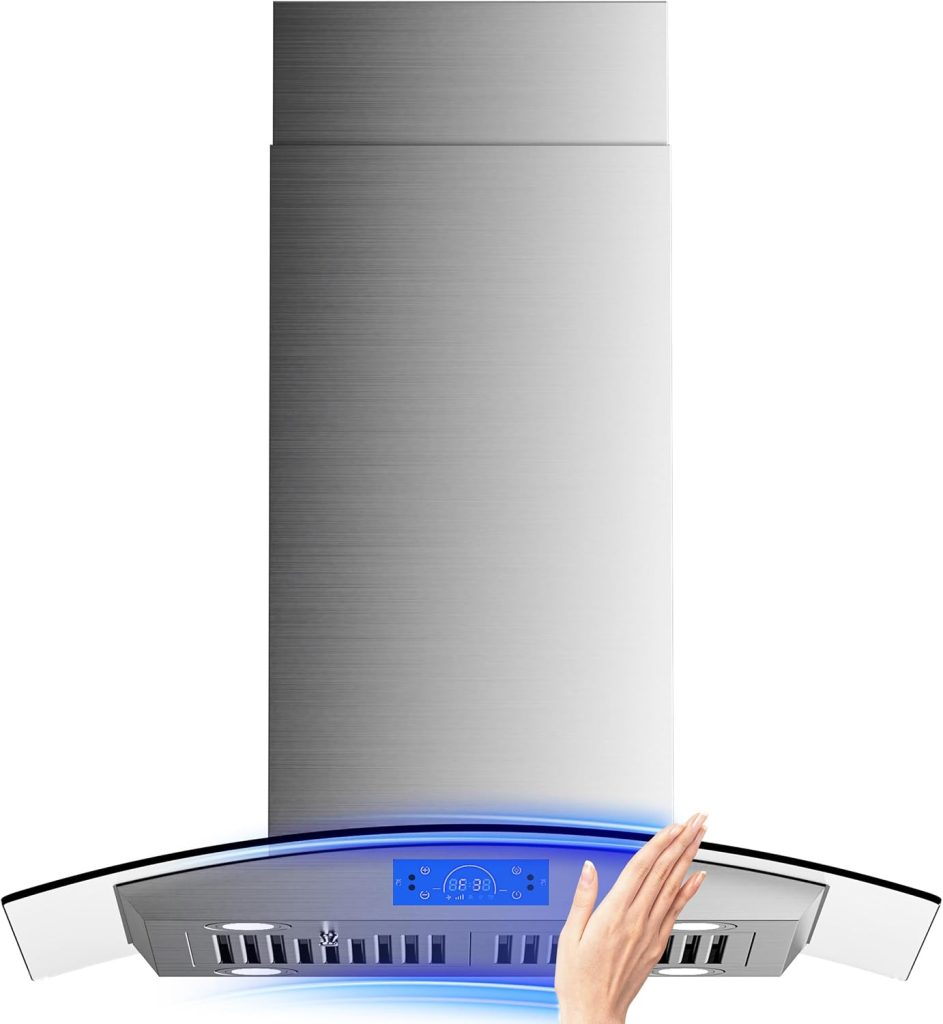
Overview:
The SIA EAG61BL concludes our review selection with a contemporary angled glass design that combines modern aesthetics with practical 620 m³/h extraction capability at a competitive price point. The distinctive angled orientation positions the glass canopy at approximately 35 degrees from vertical, creating visual interest while improving extraction efficiency by directing the airflow more effectively toward cooking vapors. The black glass finish provides striking contrast in modern kitchens while the specifications deliver genuine performance value.
Key Features:
- Powerful 620 m³/h extraction across four speed settings
- Distinctive angled black glass design with stainless steel accents
- Touch-sensitive controls integrated into glass surface
- Two 1.5W LED lights with adjustable brightness levels
- Aluminum mesh grease filters with dishwasher-safe design
- Timer function enables automatic shutdown after cooking
- Soft-touch button controls with clear LED indicators
- Noise levels ranging from 40dB to 69dB across speeds
Performance and User Experience:
The SIA EAG61BL’s angled design isn’t purely aesthetic—the orientation genuinely improves extraction efficiency by positioning the filter surface at an angle that better intercepts rising cooking vapors. Combined with the respectable 620 m³/h extraction capacity, this design delivers effective performance across a wide range of cooking activities from gentle simmering to high-heat frying.
The four-speed settings provide more granular control than typical three-speed models, allowing users to select the precise extraction level appropriate for current cooking intensity. The lowest setting operates at barely audible 40dB, making it suitable for continuous operation during extended cooking sessions without creating intrusive background noise.
The black glass aesthetic creates immediate visual impact, particularly in kitchens with lighter cabinetry where the dark surface provides dramatic contrast. However, maintaining this striking appearance requires consistent attention—the glass surface shows every fingerprint, water spot, and grease mark, demanding regular cleaning to preserve the pristine look that makes this design attractive.
Touch controls integrate seamlessly into the glass surface, maintaining clean lines without protruding buttons or switches. The controls respond accurately to finger pressure and the LED indicators provide clear feedback about selected settings. The timer function proves genuinely useful, allowing the hood to continue operating for a preset period after cooking finishes, then automatically shutting off without requiring user intervention.
Installation follows standard wall-mounting procedures, though the angled orientation requires careful attention to positioning to ensure the glass canopy doesn’t interfere with cabinet doors or other kitchen elements. The mounting bracket securely holds the unit, and the angled design actually creates more clearance above tall pots compared to horizontal hoods at equivalent mounting heights.
Pros:
✅ Powerful 620 m³/h extraction handles demanding cooking effectively
✅ Angled design improves extraction efficiency and creates visual interest
✅ Exceptionally quiet 40dB operation at lowest speed setting
✅ Four speed settings provide more precise control options
✅ Timer function adds convenient automatic operation capability
✅ LED lighting with brightness adjustment enhances usability
✅ Competitive pricing for the performance and features delivered
Cons:
❌ Black glass surface requires frequent cleaning to maintain appearance
❌ Touch controls can be affected by grease accumulation over time
❌ Angled design requires careful installation positioning
❌ Budget brand lacks extensive warranty coverage of premium manufacturers
❌ Replacement filters and parts may have limited availability
Ideal For:
This hood suits homeowners seeking contemporary design that stands out from conventional rectangular hoods, cooking enthusiasts who need genuine extraction power without premium pricing, and anyone coordinating a modern black appliance aesthetic throughout their kitchen. It’s particularly appropriate for kitchens where the hood becomes a visible design element rather than purely functional equipment.
Final Verdict:
The SIA EAG61BL successfully combines distinctive design with genuine performance capability at a price point that makes it accessible to mid-market buyers. While the black glass demands maintenance attention and the brand lacks the heritage of premium manufacturers, the combination of effective extraction, quiet operation, and visual impact makes it a compelling choice for design-conscious homeowners on realistic budgets.
Comprehensive Buying Guide: How to Choose the Right Cooker Extractor Fan!
Understanding Extraction Rates and Kitchen Size Requirements
The extraction rate, measured in cubic meters per hour (m³/h), represents the volume of air the fan can move through the system in sixty minutes. However, simply selecting the highest number doesn’t guarantee the best results for your specific situation. The appropriate extraction rate depends on your kitchen volume, cooking habits, and installation type.
A general rule calculates the minimum extraction rate by multiplying your kitchen volume by ten. For example, a kitchen measuring 4 meters by 3 meters with 2.4-meter ceilings has a volume of 28.8 cubic meters, requiring approximately 288 m³/h minimum extraction. However, this represents the absolute baseline for light cooking only.
For typical domestic cooking involving regular frying, boiling, and general food preparation, multiply the kitchen volume by twelve to fifteen. This accounts for the reality that cooking generates concentrated vapor and smoke rather than distributing it evenly throughout the space. Using our example kitchen, this suggests 345 to 432 m³/h extraction capacity.
Serious cooking enthusiasts who frequently use high-heat methods like wok cooking, searing, or deep frying should consider multiplying the kitchen volume by twenty or selecting extraction rates of 600 m³/h and above regardless of kitchen size. These intensive cooking methods generate substantial smoke and steam that requires powerful extraction to manage effectively.
Open-plan kitchens present special considerations because cooking odors can migrate throughout the entire living space. Even if the kitchen area itself is modest, the connected living areas effectively increase the volume requiring air management. In these situations, err toward higher extraction capacities and consider models with quieter operation to minimize noise intrusion into living spaces.
Ducted Versus Recirculating Installation
This fundamental decision significantly impacts both installation requirements and ongoing operating costs. Understanding the differences helps you select the appropriate configuration for your specific circumstances.
Ducted installation vents extracted air directly outside through ductwork connecting the hood to an external wall or roof vent. This method provides superior extraction efficiency because it completely removes cooking vapors, smoke, grease particles, and odors from the building. Once extracted air exits outside, it cannot return, ensuring maximum air quality improvement.
However, ducted installation requires appropriate external venting locations and potentially extensive ductwork installation. External walls must be accessible for vent placement, or ducting must route through ceiling cavities to roof vents. The ductwork should be as short and straight as possible—every meter of ducting and every bend reduces extraction efficiency by approximately ten percent. Professional installation is often recommended for complex ducting routes.
Recirculating installation draws air through filters then returns it to the kitchen rather than venting outside. This method requires no external ducting, making it suitable for apartments, properties where external venting isn’t feasible, and situations where ducting would be prohibitively complex or expensive. Installation is significantly simpler, often achievable as a DIY project.
The compromise with recirculating systems is reduced effectiveness. While grease filters capture particulate matter, charcoal filters absorb odors with varying success, and the system returns heated air to the kitchen rather than removing it. Charcoal filters require regular replacement—typically every three to six months depending on cooking frequency—representing an ongoing operational cost. Recirculating systems also cannot reduce kitchen humidity like ducted extraction because the moist air remains in the space.
Many modern hoods offer both options, allowing you to choose based on your specific installation circumstances. If external venting is feasible, ducted operation generally provides superior performance. If not, recirculating operation still delivers significant benefits over no extraction.
Noise Levels and Decibel Ratings Explained
Cooker hood noise levels range from whisper-quiet operation below 45dB to noticeably loud extraction exceeding 70dB. Understanding these numbers helps set realistic expectations and select appropriate models for your noise tolerance and kitchen configuration.
Decibel measurements use a logarithmic scale where every increase of 10dB represents a perceived doubling of loudness. A hood operating at 60dB sounds approximately twice as loud as one at 50dB. Context helps interpret these numbers:
- 40-45dB: Quiet library or soft background music; excellent for open-plan spaces
- 46-55dB: Normal conversation volume; acceptable for most installations
- 56-65dB: Busy restaurant or office environment; noticeable but not intrusive
- 66-75dB: Vacuum cleaner or busy street; clearly audible and potentially intrusive
Most manufacturers specify noise levels at maximum extraction speed, which you won’t use continuously. Lower speed settings typically operate 10-20dB quieter, providing adequate extraction for normal cooking without significant noise generation. Consider your typical cooking patterns—if you regularly use maximum extraction, prioritize quieter maximum ratings. If you primarily use lower speeds, focus on those specifications.
Open-plan kitchens demand particular attention to noise levels since extraction noise carries into adjacent living spaces. Models operating below 55dB at normal speeds and below 65dB at maximum provide the best experience in these configurations. Premium brands often invest in motor technology and housing insulation that reduces noise significantly, justifying higher prices for noise-sensitive installations.
Filter Types and Maintenance Requirements
Grease filters capture airborne grease particles preventing them from entering ductwork or charcoal filters. The filter type significantly impacts both extraction efficiency and maintenance burden.
Aluminum mesh grease filters, found in most quality hoods, consist of multiple layers of fine aluminum mesh creating a labyrinth that traps grease while allowing air passage. These filters are dishwasher-safe and essentially permanent—proper maintenance means they last the hood’s lifetime. Clean them monthly with regular cooking or every two weeks with intensive use. The dishwasher’s combination of hot water and detergent effectively dissolves accumulated grease, restoring filter efficiency.
Synthetic or paper grease filters appear in some budget models, requiring periodic replacement rather than cleaning. While initially less expensive, the ongoing replacement costs and inferior grease capture make them less economical long-term. Avoid hoods using disposable grease filters unless budget constraints absolutely mandate.
Baffle filters, typically found in professional or high-end domestic hoods, use carefully angled metal panels creating a path that forces grease-laden air to change direction repeatedly. The directional changes cause heavier grease particles to separate and drain into collection trays while air continues through the system. Baffle filters provide superior grease capture and create less airflow resistance than mesh filters, though they’re typically more expensive.
Charcoal filters, required for recirculating operation, absorb odors through activated carbon. These filters cannot be cleaned—once saturated, they require replacement. Quality varies significantly between manufacturers and models. Premium charcoal filters provide effective odor control for three to six months, while budget alternatives may lose effectiveness within weeks. This represents a significant ongoing cost for recirculating installations that buyers should factor into long-term ownership calculations.
Understanding Motor Quality and Longevity
The extraction motor represents the hood’s heart, and quality differences between budget and premium models become apparent over years of operation. Budget motors may deliver adequate initial performance but often develop bearing noise, reduced extraction efficiency, and premature failure within three to five years. Premium motors from established manufacturers typically operate reliably for ten to fifteen years or longer.
Motor construction quality manifests in several ways. Budget motors use sleeve bearings that wear relatively quickly, particularly when operated frequently at high speeds. Premium motors employ sealed ball bearings that withstand extended operation with minimal wear. The initial cost difference is significant, but the premium motor’s extended lifespan means lower total cost of ownership.
Motor mounting and isolation also vary. Quality motors include rubber mounting systems that isolate motor vibrations from the hood body, significantly reducing noise transmission. Budget installations often mount motors rigidly, transmitting every vibration to the metal housing where it amplifies into audible noise. This explains why two hoods with identical maximum extraction ratings can have drastically different noise levels.
Variable speed control implementation affects both performance and longevity. Simple motors just reduce voltage at lower speeds, which can cause inefficient operation and motor strain. Quality motors use electronic speed control maintaining optimal motor efficiency across the entire speed range, reducing wear and extending operational life while consuming less energy.
Warranty coverage often signals manufacturer confidence in motor longevity. Budget brands typically offer one or two years total coverage. Premium manufacturers may provide five years specifically on motor components, acknowledging that the motor represents the most critical long-term reliability factor.
Installation Considerations and Kitchen Configurations
Successful extractor fan performance depends heavily on proper installation addressing both mechanical mounting and optimal positioning. Several factors deserve careful consideration during selection and installation.
Mounting height significantly impacts extraction efficiency. The hood should be positioned 65-75cm above electric hobs or 65-85cm above gas hobs. Lower positioning improves extraction efficiency but risks damage from flames or boiling pots. Higher positioning reduces effectiveness as cooking vapors disperse before reaching the extraction zone. Measure your specific situation before purchasing to ensure the selected model accommodates your required mounting height.
Wall mounting represents the most common installation type for standard cooktop positions against walls. The wall must provide adequate structural support—typical hoods weigh 15-30kg requiring secure mounting to brick, block, or wall studs. Plasterboard alone provides insufficient support. Factor professional installation costs if you’re not confident in locating studs or drilling masonry.
Island installations require ceiling-mounted hoods since no wall exists for support. These installations are considerably more complex, requiring substantial ceiling structure for mounting, electrical supply routed through the ceiling, and ducting passing through ceiling cavities. Professional installation is strongly recommended. Island hoods also tend to be more expensive than wall-mounted equivalents due to additional structural requirements.
Chimney hoods require adequate vertical space between the mounting point and ceiling. The telescoping chimney conceals ducting and electrical connections while providing finished appearance. Measure your available height carefully—most hoods accommodate 720-950mm but have minimum and maximum limits. If your ceiling height falls outside these ranges, you may need alternative styles or extension kits.
Cabinet-integrated hoods install within wall cabinets above the cooktop. These require cabinets with appropriate internal dimensions and weight capacity. The cabinet may require modifications to accommodate ducting passage. While integrated hoods create minimal visual impact, they typically provide lower extraction efficiency than external designs because the cabinet restricts airflow around the extraction area.
Ducting diameter affects extraction efficiency significantly. Most domestic hoods use 125mm or 150mm ducting. Larger diameters reduce air resistance, improving efficiency and reducing noise. Never reduce ducting diameter below the hood outlet—this creates restriction that limits extraction regardless of motor power. If your existing ducting is smaller than the new hood’s outlet, consider ducting replacement during installation to maximize performance.
Energy Efficiency and Running Costs
Modern cooker hoods consume relatively modest energy, but ongoing costs still deserve consideration, particularly for models operated frequently or for extended periods.
Motor energy consumption varies from approximately 100-300 watts depending on model and speed setting. Premium hoods often incorporate energy-efficient motor designs consuming less power while delivering equivalent extraction. Over a year, the difference between efficient and inefficient motors might represent £15-30 in electricity costs—not enormous, but worth considering for environmentally-conscious buyers or those operating extraction frequently.
Lighting technology significantly impacts energy consumption. Traditional halogen bulbs consume 25-35 watts each with most hoods using two bulbs for 50-70 watts total. LED alternatives provide equivalent illumination consuming just 1.5-3 watts each—a reduction of more than ninety percent. Over the hood’s lifespan, this difference becomes substantial. Additionally, halogen bulbs generate significant heat, contributing to kitchen warming, while LEDs remain cool.
Recirculating operation costs more long-term than ducted due to charcoal filter replacement. Quality charcoal filters cost £10-25 each with replacement recommended every three to six months. This represents £20-100 annually depending on filter quality and replacement frequency—an ongoing expense that ducted installations avoid entirely.
EU energy labeling provides standardized efficiency ratings from A+++ (most efficient) to D (least efficient), considering both motor and lighting consumption. However, these labels don’t account for factors like extraction efficiency or noise levels, so they represent only part of the overall value equation.
Common Mistakes to Avoid When Buying
Understanding typical buyer errors helps you avoid frustration and ensure satisfaction with your purchase.
Prioritizing maximum extraction rate without considering noise levels often leads to disappointment. A powerful 750 m³/h motor operating at 75dB may be unusable in practice because the noise proves intolerable, forcing you to operate at lower speeds where the advantage over a quieter 450 m³/h model disappears. Consider noise ratings alongside extraction specifications.
Underestimating installation complexity represents another common error. Buyers often purchase hoods requiring ducting without confirming that appropriate external venting locations exist or that they’re willing to invest in professional ducting installation. Research your installation requirements before purchasing rather than discovering problems after the hood arrives.
Ignoring filter maintenance requirements causes long-term problems. Some buyers don’t realize that recirculating systems need regular charcoal filter replacement or that grease filters require monthly cleaning. Factor these maintenance tasks into your decision—if you’re unlikely to maintain filters properly, select a model that minimizes this burden or provides clear maintenance reminders.
Selecting based solely on appearance without confirming appropriate size often leads to inadequate coverage. A beautiful 60cm hood looks great but won’t effectively extract from a 90cm range cooker. Verify that the hood width matches or exceeds your cooktop width.
Neglecting to check product reviews before purchasing risks discovering widespread reliability or performance problems after installation. While professional reviews provide valuable insights, customer reviews on Amazon and other platforms reveal real-world experiences including installation challenges, longevity issues, and customer service quality. Spend time reading both positive and negative reviews to understand common experiences.
Budget Versus Premium: Understanding the True Value Proposition
The price range for cooker hoods spans from under £50 to well over £500, prompting reasonable questions about whether premium models justify their significantly higher costs.
Budget hoods (£50-150) provide basic extraction functionality with minimal features. They’re manufactured using less expensive materials and components, typically offering one or two-year warranties. These models work adequately for light cooking, small kitchens, or temporary situations like rental properties. However, they often develop bearing noise within a few years, extraction efficiency may decline noticeably, and customer service tends to be minimal.
Mid-range hoods (£150-300) represent the sweet spot for most homeowners. These models use quality motors and construction, often from established brands, providing reliable performance for typical cooking needs. Warranties extend to two or three years, and features like LED lighting, multiple speed settings, and dishwasher-safe filters appear at this price point. The extraction efficiency, noise levels, and longevity justify the moderate premium over budget models for most buyers.
Premium hoods (£300-500+) from established European manufacturers offer superior engineering, extensive warranties (often five years on motors), advanced noise reduction, and thoughtful features like filter saturation indicators. These models use higher-grade stainless steel, precision-engineered components, and motors designed for ten-plus year lifespans. Premium prices make sense for serious home cooks, long-term homeowners investing in quality, and situations where noise reduction justifies significant premiums.
The total cost of ownership perspective reveals that premium hoods often represent better value despite higher initial prices. A £400 premium hood operating reliably for twelve years costs £33 annually. A £100 budget hood requiring replacement after four years costs £25 annually but with the inconvenience of replacement installation and the risk of kitchen downtime. Additionally, premium models typically offer better energy efficiency reducing operating costs and quieter operation improving daily quality of life.
Frequently Asked Questions!
How often should I clean my extractor fan filters?
Grease filter cleaning frequency depends primarily on your cooking intensity and methods. For typical domestic cooking involving regular meal preparation, clean aluminum grease filters monthly to maintain optimal extraction efficiency. The dishwasher provides the most effective cleaning method—the combination of hot water and detergent dissolves accumulated grease thoroughly. Simply remove the filters and place them in the dishwasher using a normal cycle.
If you cook daily using high-fat methods like frying or cook for large families generating substantial kitchen use, increase cleaning frequency to every two weeks. Grease accumulation isn’t just a performance issue—excessive buildup creates fire hazards and can damage the motor over time as the motor works harder to pull air through clogged filters.
For light cooking patterns—occasional meal preparation or minimal frying—monthly cleaning may be excessive. However, never extend intervals beyond six weeks regardless of cooking frequency. Even light use generates some grease accumulation, and infrequent cleaning allows it to harden, making subsequent cleaning more difficult.
Charcoal filters for recirculating systems require replacement rather than cleaning, typically every three to six months. Heavy cooking accelerates saturation, potentially requiring replacement every two to three months. Many modern hoods include filter saturation indicators alerting when replacement is necessary, eliminating guesswork.
Visual inspection helps determine cleaning needs—if filters appear heavily coated with grease or feel tacky to touch, clean them immediately regardless of the elapsed time since last cleaning. Maintaining clean filters ensures your hood operates at designed efficiency levels while protecting motor longevity.
Can I install a cooker hood myself or do I need a professional?
Installation feasibility depends on several factors including the hood type, your existing kitchen configuration, your DIY skill level, and local building regulations. Some installations represent straightforward DIY projects while others demand professional expertise.
Simple visor hoods or cabinet-integrated models with existing ducting and electrical supplies often work as DIY projects for competent homeowners. These installations typically involve securing mounting brackets to walls or cabinets, connecting to existing ducting (or using recirculating mode), and wiring to an existing electrical outlet or junction box. If you’re comfortable using power tools, following instructions carefully, and working with basic electrical connections, these installations are achievable.
Chimney hoods require more complex installation involving secure wall mounting of heavier units, potentially routing new ducting through walls or ceilings, and ensuring proper electrical supply. While still achievable for skilled DIYers, these installations demand more time, tools, and confidence. Professional installation costs typically range from £100-200 but ensure proper mounting, optimal ducting routes, and compliance with building regulations.
Island hoods mounted from ceilings almost always require professional installation due to structural mounting requirements, electrical supply routing through ceiling cavities, and ducting installation through ceilings to external vents or roof terminals. These installations involve working at height, potentially opening ceilings, and ensuring mounting to appropriate structural members—work better left to qualified installers.
Electrical connections in the UK require compliance with building regulations. While homeowners can perform their own electrical work, it must meet current standards and may require notification to local building control or certification by a qualified electrician. If you’re not confident in electrical work, hire a qualified professional to avoid safety risks and potential insurance complications.
Gas hob installations add complexity because gas appliance installation legally requires Gas Safe registered engineers. If your hood installation involves moving or modifying gas supplies, professional installation isn’t optional—it’s mandatory.
What’s the difference between extraction rates and actual performance?
Extraction rate specifications represent theoretical maximum airflow under ideal test conditions—typically measuring air movement through the hood without any ducting, filters, or resistance. Real-world performance invariably delivers lower effective extraction due to numerous factors that manufacturers don’t always clarify.
Every meter of ducting reduces extraction efficiency by approximately 5-10% depending on duct diameter and construction quality. Flexible ducting creates more resistance than smooth rigid ducting. Each 90-degree bend in the ducting path further reduces efficiency by roughly 10-15%. A hood with a theoretical 600 m³/h rating connected to 3 meters of ducting with two bends might deliver only 400-450 m³/h actual extraction.
Filter condition dramatically impacts real-world performance. Manufacturers measure extraction rates with clean filters, but grease accumulation progressively reduces airflow. Heavily soiled filters can reduce extraction by 30-50%, which is why regular cleaning proves so critical to maintained performance.
Installation height affects extraction efficiency significantly. Hoods mounted at the upper end of recommended heights capture less rising vapor because it disperses before reaching the extraction zone. Conversely, mounting too low improves capture but risks damage and reduces usable cooktop space.
Recirculating operation inherently delivers lower effective extraction than ducted because air must pass through additional charcoal filters creating resistance, and the system doesn’t actually remove heated moist air from the kitchen—it just filters and returns it.
This is why focusing solely on maximum extraction numbers without considering these real-world factors leads to disappointment. A well-installed 400 m³/h hood with short, straight ducting and clean filters often outperforms a poorly-installed 600 m³/h hood with extensive ducting and maintenance neglect.
Do more expensive hoods really perform better or am I just paying for the brand?
This question deserves nuanced consideration because both brand premium and genuine performance differences exist in the cooker hood market.
Premium brands like Bosch, NEFF, AEG, and Elica genuinely deliver superior engineering in several measurable ways. Motor quality uses better bearings and electronic speed control, resulting in quieter operation, better efficiency, and significantly longer operational lifespans. Budget motors might last four to six years while premium motors operate reliably for ten to fifteen years or more. The superior stainless steel grades resist corrosion and maintain appearance better. Precision manufacturing ensures tighter component tolerances reducing vibration and noise.
Advanced features in premium models often include genuinely useful innovations rather than gimmicks—filter saturation indicators prevent performance degradation, advanced noise reduction technology improves open-plan usability, and breeze functions provide continuous gentle extraction. These features emerge from substantial research and development investments that budget manufacturers can’t match.
Warranty coverage reveals manufacturer confidence—premium brands offering five-year motor warranties back their reliability claims with financial commitment. Budget brands offering one or two-year coverage signal their expectations about product lifespan.
However, not all price premiums reflect genuine performance advantages. Some premium models charge substantial amounts primarily for designer aesthetics, unique finishes, or brand prestige rather than functional superiority. A £600 designer hood might not extract better than a £300 quality model—the premium pays for the signature design and exclusivity.
The value proposition depends on your priorities and circumstances. If you’re planning to remain in your home long-term and value reliable quiet operation, premium models often justify their costs through longevity and daily quality of life improvements. If you’re in a rental property or plan to move within a few years, mid-range models provide adequate performance without premium investment.
Research specific models rather than assuming price alone indicates quality. Customer reviews, professional testing, and warranty terms reveal more about genuine value than marketing materials.
My extractor fan is very loud—is this normal or is something wrong?
Noise levels vary substantially between models and operational conditions, but excessive noise often indicates problems requiring attention rather than representing normal operation.
First, establish baseline expectations—check your hood’s specifications for rated noise levels. Budget hoods typically operate at 65-72dB at maximum speed, which is noticeably loud but within normal parameters. Premium hoods might operate at 55-65dB maximum. If your hood’s noise exceeds specified ratings significantly, investigation is warranted.
Grease filter saturation commonly causes increased noise levels. Accumulated grease restricts airflow, forcing the motor to work harder creating more noise. Remove and clean filters thoroughly—if noise levels decrease substantially after cleaning, filter maintenance was your issue. Establish a regular cleaning schedule to prevent recurrence.
Loose components create rattling or vibrating noises during operation. Check that all screws securing the hood body, chimney sections, and grease filters are tight. Loose metal panels vibrate sympathetically with motor operation creating noise disproportionate to actual motor sound. Tightening all fasteners often resolves rattling issues completely.
Ductwork problems generate various noises. Flexible ducting not properly secured can vibrate creating flapping sounds. Ducting that’s too narrow creates whistling or rushing sounds as air velocity increases through the restriction. External vent dampers that stick partially closed create rattling. Inspect ducting for secure connections, appropriate diameter, and free movement of external dampers.
Motor bearing wear produces increasingly loud noise over time, particularly noticeable at startup or shutdown. If your hood has operated for several years and gradually developed louder operation, bearing wear likely contributes. Unfortunately, this typically requires motor replacement or complete hood replacement depending on part availability and age.
Installation errors sometimes cause excessive noise—hoods not properly isolated from wall studs transmit motor vibrations directly into the building structure where they amplify significantly. Professional reinstallation with appropriate isolation materials resolves these situations.
If noise appears suddenly after previously acceptable operation, something definitely requires investigation. Gradual noise increase over years suggests normal component wear while sudden changes indicate specific problems requiring diagnosis.
How do I know if I need ducted or recirculating extraction?
This decision depends primarily on your installation circumstances, kitchen configuration, and performance priorities. Understanding the practical implications of each option helps determine the appropriate choice.
Choose ducted extraction if external venting is feasible and you want maximum extraction efficiency. Ducted systems completely remove cooking vapors, steam, odors, and grease-laden air from the kitchen, providing superior air quality improvement. They also extract heated air, helping maintain comfortable kitchen temperatures during cooking. If you cook frequently, use high-heat methods, or cook foods generating strong odors, ducted extraction provides noticeably better results.
However, ducted installation requires appropriate external venting locations. Ground floor kitchens with external walls nearby allow relatively simple ducting installation. Upper floor kitchens may require ducting through multiple floors to roof terminals. Apartments often face restrictions on external modifications preventing ducted installation. Assess whether external venting is physically feasible and permitted before committing to ducted models.
Consider the ducting path complexity—every meter of ductwork and every bend reduces efficiency. If achieving external venting requires 10 meters of ducting with multiple bends, the efficiency advantages of ducted operation diminish significantly. In these situations, recirculating might provide similar practical performance with less installation complexity.
Recirculating extraction makes sense when external venting isn’t feasible due to physical constraints or permissions, when ducting would require prohibitively complex or expensive installation, or when installation simplicity takes priority over maximum performance. Recirculating systems filter grease particles and absorb odors, returning cleaned air to the kitchen. While less effective than ducted extraction, they still provide significant benefits over no extraction.
Accept that recirculating requires ongoing charcoal filter replacement adding £20-100 annual cost depending on filter quality and cooking frequency. Factor this into total cost of ownership comparisons.
Many modern hoods support both configurations, allowing you to install in recirculating mode initially then convert to ducted if circumstances change or if you undertake kitchen renovations making ducting feasible. This flexibility provides valuable future-proofing.
Budget considerations sometimes drive this decision—ducted installation including professional labor and materials might cost £200-400 beyond the hood price, while recirculating installation might cost under £50 if undertaken as DIY. Weigh the performance advantages of ducted extraction against the installation cost difference based on your budget and priorities.
What maintenance does a cooker hood need beyond filter cleaning?
Beyond filter cleaning, cooker hoods require relatively minimal maintenance, but several tasks ensure optimal performance and longevity.
External cleaning prevents grease accumulation on exposed surfaces. Wipe down the hood exterior weekly using appropriate cleaners for your hood’s material. Stainless steel benefits from specialized cleaners that remove grease while preventing streaking. Glass panels require gentle cleaners avoiding abrasive materials that might scratch. Regular exterior cleaning prevents grease from hardening, which becomes progressively difficult to remove if neglected.
Internal hood surfaces accumulate grease despite filters capturing most particulates. Every three to six months, remove filters and wipe accessible internal surfaces using degreasing cleaners. This prevents grease accumulation from dripping onto cleaned filters or cooking surfaces and reduces fire risk from grease deposits near motor components.
Light bulb replacement represents inevitable maintenance. LED bulbs typically last 15,000-25,000 hours—roughly five to eight years with typical cooking frequency—before requiring replacement. Halogen bulbs need replacement every 12-18 months. Keep appropriate replacement bulbs available to avoid being without adequate cooking lighting.
Ducting inspection should occur annually. Check that external vents open freely during operation and close completely when the hood is off. Inspect accessible ducting sections for damage, disconnections, or excessive grease accumulation. Professional duct cleaning every five years prevents buildup that reduces efficiency and creates fire hazards.
Motor maintenance typically requires nothing beyond ensuring adequate ventilation around motor housing. However, some high-end models include serviceable motors where bearings can be lubricated—consult your specific hood’s manual for any model-specific maintenance requirements.
Charcoal filter replacement for recirculating systems represents the most significant ongoing maintenance. Replace filters every three to six months depending on cooking frequency and intensity. Mark replacement dates on calendars to avoid forgetting, as performance degradation occurs gradually making it difficult to notice without comparing to fresh filter operation.
Check mounting security annually by gently attempting to move the hood. Vibration from operation can gradually loosen mounting screws over time. Retightening before significant loosening occurs prevents damage to cabinetry or walls from movement.
Electronic control interfaces benefit from occasional cleaning using barely damp cloths avoiding moisture ingress into control electronics. Grease accumulation on touch controls affects sensitivity—regular gentle cleaning maintains responsiveness.
These maintenance tasks require perhaps one to two hours annually beyond routine filter cleaning, making modern hoods relatively low-maintenance appliances when care is properly executed.
Will my cooker hood work properly with an induction hob?
Cooker hoods work identically regardless of whether you’re using gas, electric, or induction hobs—the extraction requirements depend on cooking methods and intensities rather than heat source technologies. However, several considerations apply specifically to induction hob installations.
Induction hobs generate minimal direct heat emission compared to gas or traditional electric hobs. While the cookware heats substantially, less ambient heat radiates into the kitchen environment. This might suggest reduced extraction requirements, but the reality proves more complex. Food cooking in pans generates equivalent steam, smoke, and odors regardless of heat source, so extraction needs remain fundamentally similar.
One consideration unique to induction involves electromagnetic compatibility. Induction hobs create electromagnetic fields that theoretically might interfere with electronic hood controls. However, properly designed hoods include adequate shielding preventing interference issues. Established hood manufacturers test their products with induction hobs ensuring compatibility. If purchasing lesser-known brands, verify they’ve been tested with induction hobs to avoid potential control interference.
Induction’s rapid heat response enables very high temperatures quickly, potentially generating more rapid smoke and steam than slower-responding heat sources. Ensure your hood’s extraction capacity suits high-heat cooking if you plan to utilize induction’s full temperature capabilities. The same extraction rate guidelines based on kitchen volume and cooking intensity apply regardless of hob type.
Installation height requirements remain identical to other hob types—maintain the manufacturer’s recommended distance between hob surface and hood, typically 65-75cm for induction. Some installers mistakenly believe induction’s cooler operation allows closer mounting, but safe clearances ensure adequate extraction coverage and prevent damage from tall pots or boiling liquids.
Power supply considerations sometimes arise during combined installations. Both induction hobs and cooker hoods require electrical connections. Induction hobs typically need high-current dedicated circuits (often 32-40 amps) while hoods need only standard 13-amp supplies. Ensure your kitchen electrical capacity accommodates both appliances, though this rarely presents problems as the hood’s consumption is modest compared to the induction hob.
The combination of induction hobs and quality cooker hoods creates excellent cooking environments—induction’s cleanliness and precise control combined with effective extraction maintains air quality without the byproducts of gas combustion or residual heat from traditional electric elements.
How long should a cooker hood last before needing replacement?
Cooker hood lifespan varies dramatically based on quality, usage patterns, maintenance, and installation correctness, making single definitive answers impossible. However, general expectations help establish realistic replacement planning.
Budget hoods (under £150) typically last four to eight years before developing significant issues. The motors use less expensive components including sleeve bearings that wear with extended use. After several years, you might notice increased operational noise, reduced extraction efficiency, or motor failure requiring replacement. Given replacement hood costs and installation labor, repairing budget models rarely makes economic sense—replacement proves more cost-effective.
Mid-range hoods (£150-300) from established manufacturers should provide eight to twelve years reliable service with proper maintenance. These models use better motors with sealed bearings and quality control during manufacturing. Eventually, you’ll likely experience motor bearing wear causing increased noise, but many homeowners continue operating them successfully despite some noise increase. Electronic control failures sometimes occur as circuit boards age, though motor reliability typically exceeds electronics.
Premium hoods (over £300) from brands like Bosch, NEFF, Miele, and Siemens commonly last twelve to twenty years, occasionally longer. The precision engineering, quality components, and robust construction justify premium pricing through longevity. These hoods often outlast kitchen renovations, getting replaced for aesthetic updates rather than functional failures.
Several factors significantly impact individual hood lifespan regardless of initial quality. Maintenance discipline matters enormously—regularly cleaned filters reduce motor strain dramatically while accumulated grease accelerates wear. Hoods operated primarily at lower speeds last longer than those constantly run at maximum extraction. Installation quality affects longevity through proper mounting reducing vibration stress and appropriate ducting minimizing motor strain.
Kitchen environment influences lifespan too. Humid environments, common in kitchens with poor ventilation, accelerate corrosion of metal components. Kitchens with gas hobs expose hoods to combustion byproducts potentially affecting longevity compared to electric-only cooking.
Usage intensity matters greatly. Households cooking three meals daily generate far more operational hours annually than households cooking occasionally. A hood might accumulate 1,000 operational hours annually with light use or 3,000+ hours with intensive use—this threefold difference dramatically affects component wear and resulting lifespan.
When evaluating replacement, consider both functional capability and aesthetic condition. A functionally sound but cosmetically dated hood might warrant replacement during kitchen renovations even though it could operate for additional years. Conversely, a hood with minor cosmetic issues but strong extraction and quiet operation might justify continued use despite appearances.
Factor environmental considerations into replacement decisions. Replacing functional equipment purely for aesthetics contributes unnecessary waste. If your hood extracts effectively and operates acceptably quietly, consider whether replacement truly adds value or merely updates appearance.
Can I increase my hood’s extraction power if it’s not strong enough?
If your cooker hood struggles to extract cooking vapors effectively, several approaches might improve performance without requiring complete replacement, though limitations exist.
First, verify that maintenance issues aren’t causing reduced performance. Thoroughly clean grease filters—accumulated grease restricts airflow dramatically, potentially reducing effective extraction by 30-50%. Clean filters and observe whether performance improves before pursuing other solutions. If your hood uses recirculating mode, replace charcoal filters even if they haven’t reached recommended replacement intervals—saturated charcoal provides minimal odor absorption.
Inspect and optimize ducting if your installation uses external venting. Every unnecessary meter of ducting and every bend reduces efficiency. If your current ducting takes a circuitous path, shortening and straightening it can substantially improve extraction. Replace flexible ducting with smooth rigid ducting to reduce resistance. Ensure ducting diameter matches or exceeds the hood outlet—never reduce diameter as this creates severe restriction.
Check that external vents open completely during operation. Stuck or partially closed dampers create backpressure limiting extraction. Clean external vents removing any debris, insect nests, or accumulated grease blocking free airflow.
Verify proper installation height. Hoods mounted higher than recommended lose effectiveness as cooking vapors disperse before reaching the extraction zone. If your installation exceeds maximum recommended height, lowering the hood improves performance if clearances allow.
If these optimization efforts don’t provide adequate improvement, you’re encountering the hood’s fundamental capacity limitations. Hood extraction rates represent maximum capability—no modifications can increase output beyond design specifications. At this point, replacement becomes the only solution for genuinely increased extraction power.
When selecting a replacement, calculate appropriate extraction rate for your kitchen size and cooking intensity rather than simply choosing more powerful hoods arbitrarily. A 900 m³/h hood doesn’t necessarily extract better than a well-designed 500 m³/h model—excessive power creates noise without proportional performance benefits unless your kitchen genuinely requires that capacity.
Consider whether your cooking methods genuinely need more powerful extraction or whether expectations are unrealistic. No domestic extraction system completely eliminates all cooking odors instantly—some lingering odors are normal, particularly after intensive frying or cooking with strong spices. Ensure you’re operating the hood during cooking rather than activating it after smoke or steam already fills the kitchen.
Final Verdict: Our Top Recommendations!
After extensively reviewing eleven cooker extractor fans spanning budget to premium categories, several models emerge as particularly compelling choices for different buyer priorities and situations.
Best Overall Value: The Igenix IG6201 delivers the strongest combination of performance, features, and affordability. Its 600 m³/h extraction capacity genuinely handles demanding cooking while the chimney design provides modern aesthetics. Touch controls and LED lighting feel premium despite the mid-market pricing. For most homeowners seeking reliable extraction without premium prices, this represents the sweet spot.
Best Budget Choice: The Cookology VISOR650SS proves that limited budgets don’t require performance sacrifices. While it lacks fancy features, the straightforward functionality, stainless steel construction, and dishwasher-safe filters deliver honest value. First-time buyers and budget-conscious homeowners should seriously consider this model.
Best Premium Quality: The NEFF D64ABC0N0B exemplifies German engineering excellence, delivering exceptionally quiet operation, superior build quality, and genuine long-term reliability backed by a five-year warranty. The premium price buys peace of mind and decade-plus operational lifespan rather than just maximum specifications.
Best for Large Kitchens: The Cookology CFL900BK provides 90cm coverage with powerful 756 m³/h extraction at remarkably affordable pricing. Owners of range cookers or wide hobs requiring comprehensive extraction coverage should prioritize this model despite the higher maintenance demands of the black glass finish.
Best Design Statement: The Elica APLOMB-BL-60 transforms functional extraction into architectural sculpture. Island kitchen owners wanting genuine design impact alongside effective 665 m³/h extraction should invest in this Italian-designed centerpiece.
Best Quiet Operation: The Ciarra CBCS6506B achieves remarkably quiet 42dB operation at low speeds while the curved glass design provides aesthetic distinction. Open-plan living spaces where noise carries into adjacent areas benefit enormously from this model’s whisper-quiet extraction.
Best Integrated Design: The Cookology ARCH60BK delivers telescopic integrated extraction maintaining minimalist aesthetics for homeowners prioritizing invisible appliances. The pull-out design improves efficiency over fixed integrated models while pricing remains accessible.
Regardless of which model you select, remember that successful extraction depends equally on proper installation, appropriate ducting, and consistent maintenance. The finest hood underperforms if installed incorrectly or maintained poorly, while a modest hood properly installed and maintained often exceeds expectations.
Consider your specific circumstances—kitchen size, cooking patterns, noise tolerance, aesthetic preferences, and budget realities—rather than simply chasing maximum specifications. The perfect cooker hood matches your genuine needs rather than theoretical capabilities you’ll never utilize.
Take time reading customer reviews on Amazon and other platforms, noting patterns in positive and negative feedback. Pay attention to comments about noise levels, extraction effectiveness, longevity, and customer service experiences. These real-world insights often reveal more than professional reviews alone.
Finally, view your cooker hood as a genuine investment in daily quality of life rather than merely functional equipment. A quality extractor fan improves air quality, eliminates lingering odors, protects kitchen surfaces from grease accumulation, and creates a more comfortable cooking environment. The right choice enhances your kitchen experience for many years, making the selection process well worth careful consideration.


Leave a Reply