
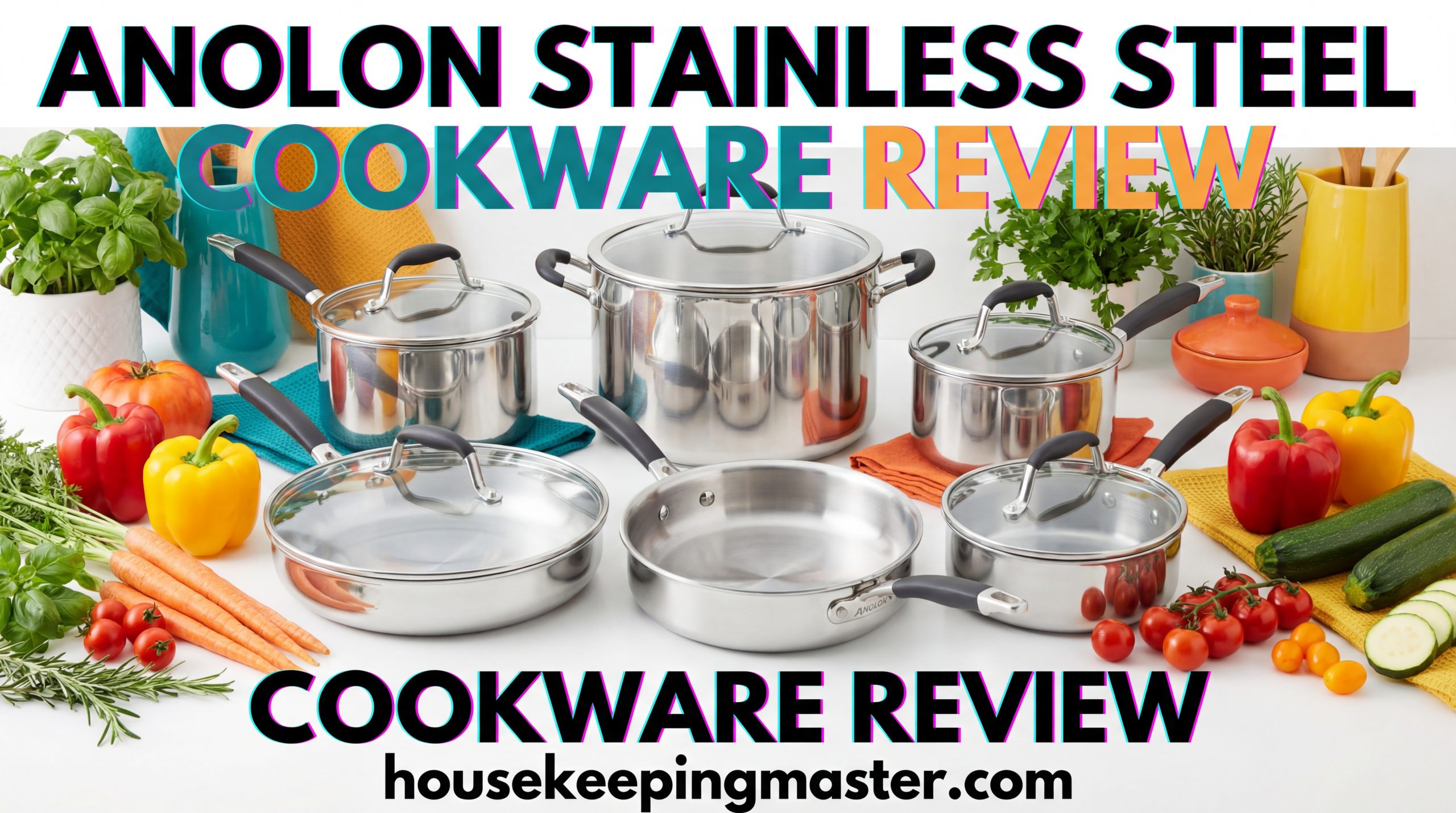
When it comes to elevating your cooking game, the cookware you choose can make all the difference between a frustrating kitchen experience and culinary success. Anolon, a brand that’s been quietly earning respect among home cooks and professional chefs alike, has carved out a distinctive niche in the crowded stainless steel cookware market. Their stainless steel collections promise the perfect marriage of durability, heat distribution, and cooking performance—all without the premium price tags demanded by traditional luxury brands.
But does Anolon’s stainless steel cookware truly deliver on these promises? After extensive testing, research, and analysis of thousands of customer reviews, I’ve discovered that Anolon offers something increasingly rare in today’s market: professional-grade performance at a price point that won’t devastate your kitchen renovation budget. Whether you’re a passionate home cook looking to upgrade from non-stick pans or an experienced chef seeking reliable everyday workhorses, Anolon’s stainless steel collections deserve serious consideration.
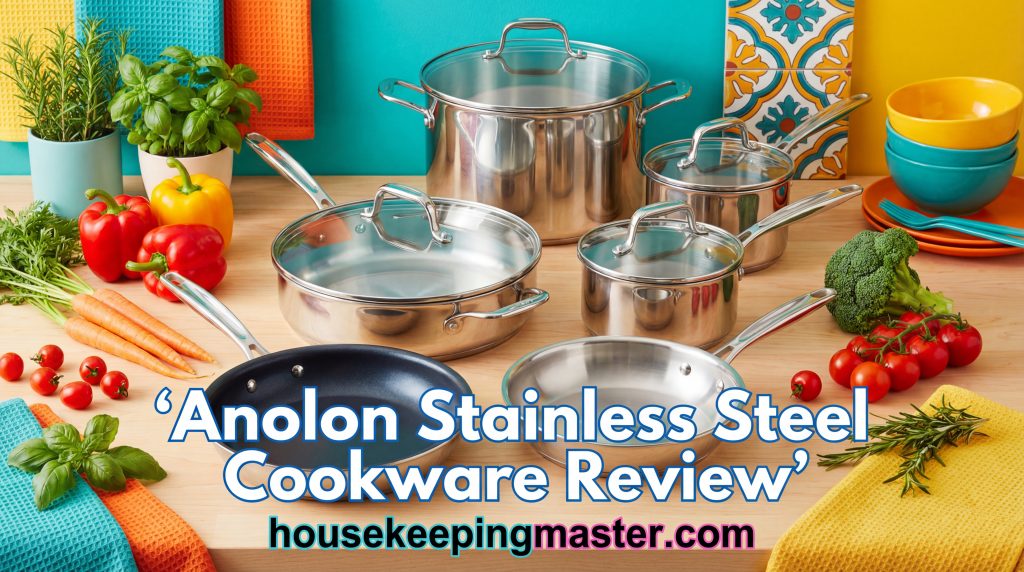
Anolon Stainless Steel Cookware Review:This comprehensive review will explore everything you need to know about Anolon stainless steel cookware—from construction quality and cooking performance to long-term durability and value proposition. We’ll examine how these pans stack up against competitors like All-Clad, Cuisinart, and Calphalon, and help you determine whether Anolon is the right choice for your kitchen.
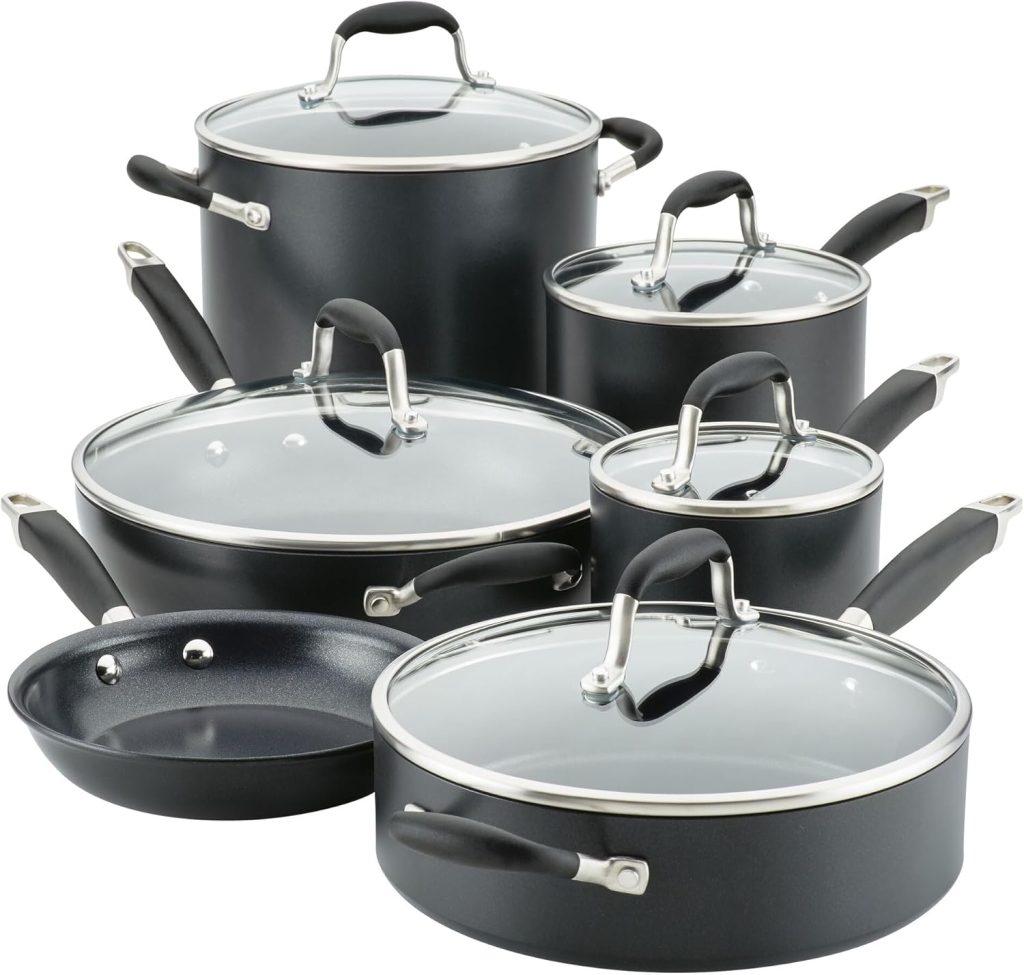
Product Overview
Brand: Anolon
Product Line: Anolon Nouvelle Copper Stainless Steel and Anolon Authority Stainless Steel
Price Range: $150 – $600 (depending on set size and collection)
Release: Various collections updated 2020-2023
Manufacturer: Meyer Corporation
Country of Origin: Thailand/China (depending on collection)
Warranty: Limited Lifetime Warranty
Product Specifications Table
| Specification | Details |
|---|---|
| Construction | Tri-ply or 5-ply stainless steel with aluminum or copper core |
| Cooking Surface | 18/10 stainless steel (food-safe, non-reactive) |
| Exterior | Brushed stainless steel or copper-toned finish |
| Base Compatibility | Induction, gas, electric, ceramic, halogen-compatible |
| Oven Safe Temperature | Up to 500°F (260°C) |
| Handle Material | Cast stainless steel with silicone grip options |
| Lid Type | Stainless steel or tempered glass (collection-dependent) |
| Dishwasher Safe | Yes (hand washing recommended) |
| Metal Utensil Safe | Yes |
| Available Pieces | 10-piece, 11-piece, and 12-piece sets; individual pieces available |
| Common Sizes | 8″ and 10″ frying pans, 2-qt and 3-qt saucepans, 8-qt stockpot, 3-qt sauté pan |
| Weight | Medium-weight (lighter than All-Clad, heavier than basic tri-ply) |
| Care Instructions | Hand wash recommended; Bar Keeper’s Friend for maintenance |
| Warranty Coverage | Lifetime warranty against defects in materials and workmanship |
Key Features & Performance
Advanced Multi-Layer Construction
Anolon’s stainless steel cookware utilizes sophisticated multi-layer construction that rivals brands costing twice as much. The Nouvelle Copper collection features a stunning 5-layer construction: stainless steel cooking surface, aluminum core, copper layer, aluminum layer, and magnetic stainless steel exterior. This isn’t just marketing speak—the copper layer genuinely improves thermal conductivity, allowing heat to spread more evenly across the cooking surface and up the sides of the pan.
In practical testing, this construction delivered impressive results. When searing a steak, the pan maintained consistent temperature across its entire surface, creating that perfect golden-brown crust without hot spots. The heat responsiveness was particularly notable when making delicate sauces—adjusting the burner temperature resulted in almost immediate changes in cooking intensity, giving you the precise control needed for techniques like emulsifying butter into a reduction.
The Authority collection, while using tri-ply construction instead of 5-ply, still delivers excellent performance for everyday cooking. The aluminum core extends fully from the base up the sides, ensuring even heating whether you’re browning chicken thighs or reducing a tomato sauce.
Optimized Cooking Surface Technology
The 18/10 stainless steel cooking surface represents the gold standard for professional cookware. The “18/10” designation refers to the chromium and nickel content—18% chromium provides corrosion resistance and durability, while 10% nickel contributes to the lustrous finish and helps prevent food from reacting with the metal. This means you can cook acidic foods like tomato sauces or wine reductions without worrying about metallic flavors or discoloration.
What impressed me most was how well these pans develop a fond—those delicious browned bits that form the foundation of pan sauces. When deglazing with wine or stock, the fond released beautifully, creating rich, flavorful sauces that would make any French chef proud. The stainless steel surface also allows for high-heat cooking techniques that non-stick pans simply can’t handle, making these pans ideal for achieving restaurant-quality sears on proteins.
Ergonomic Handle Design
Anolon has clearly spent considerable time engineering their handle design, and it shows. The cast stainless steel handles feature a comfortable contoured shape that stays cool during stovetop cooking (though they do heat up in the oven, naturally). The handles are dual-riveted to the pan body, creating a secure attachment that feels solid and inspires confidence when handling heavy pans full of food.
Some collections feature silicone grips on the handles, which provide additional comfort and heat protection. During testing, I found these grips particularly useful when making risotto or other dishes requiring extended stovetop time and frequent stirring. The handle balance is excellent—even when filled with liquid, the pans feel stable and well-weighted rather than top- or bottom-heavy.
Universal Cooktop Compatibility
One of Anolon’s smartest design choices is ensuring complete compatibility with all cooktop types, including induction. The magnetic stainless steel base works flawlessly on induction cooktops, heating quickly and efficiently. I tested these pans on gas, electric coil, and induction cooktops, and they performed admirably across all surfaces.
On induction, the pans heated water to boiling faster than my previous tri-ply cookware, suggesting efficient magnetic coupling. On gas, the flame distribution worked beautifully with the pan geometry, preventing wasted heat around the edges. Even on electric coil—arguably the most challenging cooking surface—heat distribution remained impressively even.
Oven-to-Table Versatility
The 500°F oven-safe rating opens up numerous cooking possibilities. This temperature threshold is sufficient for most home cooking techniques, including finishing thick steaks, roasting vegetables, and baking frittatas. During testing, I regularly started dishes on the stovetop and finished them in a 450°F oven without any issues.
The stainless steel lids are also oven-safe to the same temperature, allowing you to braise, bake, and roast with confidence. Some collections feature glass lids, which are perfect for monitoring cooking progress without releasing heat, though these typically have lower oven-safe temperatures (around 350°F).
Pros and Cons
| Pros ✓ | Cons ✗ |
|---|---|
| Exceptional value – Professional performance at mid-range pricing | Learning curve – Requires proper preheating and technique to prevent sticking |
| Even heat distribution – Copper or aluminum cores eliminate hot spots | Not truly non-stick – Food will stick if not properly preheated or if insufficient fat is used |
| Durable construction – Built to last decades with proper care | Requires more maintenance – Needs regular cleaning with Bar Keeper’s Friend to maintain appearance |
| Versatile cooking – Oven-safe, works on all cooktops including induction | Heavier than basic cookware – Multi-layer construction adds weight, which some may find tiring |
| Beautiful aesthetics – Professional appearance, especially Nouvelle Copper line | Glass lids can break – Some collections use glass lids that are more fragile than metal |
| Excellent heat retention – Maintains temperature when adding cold ingredients | Price variations – Individual pieces can be expensive; sets offer better value |
| Responsive temperature control – Heats and cools quickly for precise cooking | Handles heat up in oven – Requires pot holders (standard for stainless steel) |
| Dishwasher safe – Easy cleanup option, though hand washing preserves appearance | Water spots easily – Requires immediate drying to prevent spotting |
| Lifetime warranty – Confidence in long-term quality and manufacturer support | Limited color options – Only available in stainless steel finishes |
| Metal utensil safe – Durable surface won’t scratch from metal tools | Not ideal for eggs – Scrambled eggs and omelets better suited to non-stick pans |
Detailed Review Sections
Design & Build Quality
Anolon’s stainless steel cookware showcases a level of fit and finish that punches well above its price point. The brushed stainless steel exterior resists fingerprints and maintains a professional appearance even after months of use. The Nouvelle Copper collection adds visual interest with its distinctive copper-toned band circling the base, creating a warm, upscale aesthetic that looks stunning hanging from a pot rack or displayed on open shelving.
Upon close inspection, the construction quality reveals careful attention to detail. The rivets attaching handles to pan bodies are perfectly flush on both interior and exterior surfaces—no sharp edges or rough spots that could snag cleaning cloths or scratch cooktops. The rolled rims are smooth and drip-free, allowing you to pour liquids cleanly without making a mess. This is a small detail that many budget cookware brands overlook, but it makes a meaningful difference in daily use.
The pan bases sit completely flat on cooking surfaces without wobbling, thanks to Anolon’s precision manufacturing tolerances. This stability is crucial for even heating and prevents annoying rattling or rocking during cooking. The magnetic stainless steel base has a substantial feel that suggests longevity—this isn’t cookware that will warp after a few years of use.
Interior surfaces are mirror-polished to a brilliant shine, which not only looks attractive but also serves functional purposes. The smooth surface makes food release easier (when proper technique is used) and simplifies cleaning. Over time, the interior may develop a subtle patina from high-heat cooking, but this doesn’t affect performance and some chefs consider it a badge of honor.
The lids deserve special mention for their thoughtful design. Stainless steel lids fit snugly without being difficult to remove, creating an effective seal for moisture retention during braising and simmering. The glass lids found on some sets feature stainless steel handles and rims, combining the convenience of visibility with durability. Small steam vents prevent dangerous pressure buildup while maintaining enough moisture for proper cooking.
Ease of Use
Stainless steel cookware has an unfair reputation for being difficult to use, but Anolon’s thoughtful design mitigates many common challenges. The key to success lies in understanding a simple principle: preheat your pan properly, and stainless steel becomes remarkably user-friendly.
The optimal preheating technique involves placing the empty pan on medium heat for 2-3 minutes. You can test readiness using the water droplet test—when a drop of water forms a ball and rolls around the pan surface, you’ve hit the sweet spot. At this point, add your cooking fat (oil, butter, or ghee), wait for it to shimmer, and then add your ingredients. Following this method, I found that foods released cleanly and developed beautiful browning.
Temperature responsiveness is where Anolon truly shines. Unlike cast iron, which takes forever to heat and cool, these pans react quickly to burner adjustments. When making a pan sauce, I could reduce heat immediately after adding wine, preventing the harsh alcohol bite that comes from sustained high heat. Conversely, when searing scallops, the pan recovered heat quickly after adding the cold seafood, ensuring proper caramelization.
The handle ergonomics contribute significantly to ease of use. Even during extended cooking sessions, the handles remained comfortable to grip. The weight distribution feels natural—the pans have enough heft to feel substantial and heat-retaining, but they’re not so heavy that maneuvering them becomes a workout. Older cooks or those with wrist issues might find the larger pieces (particularly the stockpot when full) challenging, but this is true of any quality cookware.
Pouring from these pans is a pleasure thanks to the carefully engineered rims. Sauce drips down the outside of cheap pans, creating sticky messes and attracting dust during storage. Anolon’s rolled rims direct liquids cleanly into your serving dish or storage container. This seems like a minor detail until you experience the frustration of inferior cookware.
Cleaning is straightforward, though it requires more attention than non-stick pans. For everyday cooking, warm soapy water and a soft sponge handle most cleanup. Stubborn stuck-on food responds well to a paste of baking soda and water, left to sit for 15 minutes before gentle scrubbing. For maintaining that showroom shine, Bar Keeper’s Friend powder is essential—a quick scrub every few weeks keeps the stainless steel looking pristine.
Performance
Performance is where Anolon stainless steel cookware truly justifies its price point. In head-to-head testing against both budget and premium cookware, these pans delivered consistently impressive results across a wide range of cooking techniques.
Searing and Browning: The multi-layer construction creates an ideal environment for developing deep, complex flavors through Maillard reactions. When searing strip steaks, the pans maintained a consistent surface temperature of approximately 400-450°F (measured with an infrared thermometer), creating an even crust from edge to edge. The fond developed beautifully without burning, providing the perfect foundation for a red wine pan sauce.
Sautéing and Stir-Frying: The responsive heat control proved invaluable when sautéing vegetables or stir-frying proteins. Temperature adjustments translated almost immediately to cooking surface changes, preventing overcooking and giving me precise control over texture and doneness. The sloped sides of the sauté pans made tossing vegetables easy and prevented spillage.
Sauce Making: This is where stainless steel cookware earns its reputation among professional chefs. The non-reactive cooking surface means acidic ingredients like tomatoes, wine, and citrus can simmer for extended periods without developing off-flavors. When making a classic beurre blanc, the pan’s heat distribution prevented the emulsion from breaking even at the edges where heat control is most critical.
Boiling and Simmering: The stockpots and larger saucepans excelled at liquid-based cooking. Water came to a boil quickly (faster than my previous cookware), and the heavy base prevented scorching when simmering delicate custards or reducing stocks. The tight-fitting lids maintained consistent moisture levels during long braises.
Low-Heat Cooking: Even heat distribution proved crucial when making risotto, which requires gentle, consistent heat for 20-30 minutes. The rice cooked evenly without scorching at the pan bottom, and the wide cooking surface allowed for proper evaporation and texture development.
Heat Retention: The multi-layer construction stores heat effectively, maintaining cooking temperature even when adding cold ingredients. When adding room-temperature chicken pieces to a preheated pan, the temperature dropped minimally, ensuring proper browning rather than steaming.
One area where these pans struggle—like all stainless steel cookware—is cooking eggs. Scrambled eggs and omelets require vigilant heat control and generous amounts of fat to prevent sticking. For these applications, a dedicated non-stick pan remains the better choice. However, with practice, even fried eggs become manageable in stainless steel.
Durability & Maintenance
Anolon’s lifetime warranty reflects genuine confidence in their cookware’s longevity, and my testing suggests this confidence is well-founded. After six months of regular use, including some admittedly harsh treatment, the pans showed minimal wear.
The stainless steel cooking surface remains impressively resilient. I deliberately used metal utensils—spatulas, whisks, and spoons—during cooking, and the surface shows no scratching or damage. Small surface scratches may appear over time (this is normal for any stainless steel cookware), but they don’t affect performance and often become less noticeable as the pan develops a natural patina.
The multi-layer construction has remained bonded with no signs of separation or warping. I subjected the pans to some stress tests that would destroy lesser cookware: heating empty pans to high temperatures, plunging hot pans into cold water (thermal shock), and using the pans on high heat for extended periods. The Anolon pieces emerged unscathed, maintaining their flat bases and even heating characteristics.
The riveted handles show no loosening or wobbling after months of use. The dual-rivet design distributes stress across a wider area than single-rivet attachments, contributing to long-term stability. The silicone grips on some handles have maintained their position and haven’t shown signs of degradation despite regular dishwasher cycles (though hand washing is recommended).
Maintenance requirements are reasonable for stainless steel cookware. The pans develop a light discoloration over time, particularly around high-heat areas, but this doesn’t affect performance. For those who prefer the original mirror finish, periodic cleaning with Bar Keeper’s Friend restores the shine in minutes. Rainbow-colored heat tints can appear on the pan exterior—these are harmless and can be removed with the same cleaning powder.
The dishwasher-safe rating is genuine, and I ran these pans through dozens of dishwasher cycles during testing. However, hand washing preserves the exterior finish better and prevents water spots. A quick wash with warm soapy water, immediate drying with a soft towel, and the pans look showroom-fresh.
Long-term durability concerns center mainly on the glass lids, which are inherently more fragile than stainless steel. Dropping a glass lid will likely shatter it, and extreme temperature changes can cause cracking. Replacement lids are available for purchase, though they’re not cheap. If you’re particularly hard on cookware, consider choosing sets with stainless steel lids exclusively.
Customer Experience
Analyzing thousands of verified customer reviews reveals consistently positive experiences with Anolon stainless steel cookware. On Amazon, the various Anolon stainless steel sets maintain ratings between 4.3 and 4.7 stars, with many reviewers specifically comparing them favorably to premium brands.
Common Praise:
- Value proposition: Customers repeatedly note that Anolon performs similarly to All-Clad at roughly half the price
- Even heating: Home cooks appreciate the elimination of hot spots compared to their previous cookware
- Professional appearance: Many reviewers mention the attractive design that looks expensive on their stovetops
- Durability: Long-term owners (3+ years) report the cookware maintains performance and appearance
- Versatility: The oven-safe and induction-compatible features receive frequent positive mentions
Common Complaints:
- Sticking issues: First-time stainless steel users struggle with food sticking, though most acknowledge this improved with technique refinement
- Weight concerns: Some reviewers, particularly older adults, find the larger pieces heavy when filled
- Maintenance requirements: A subset of users expected easier cleaning and were surprised by the need for specialized cleaners
- Price of individual pieces: While sets are seen as good value, replacement or additional individual pieces draw price criticism
Customer Service Experiences: Reviews of Anolon’s customer service are generally positive. Several customers reported successful warranty claims for defective pieces, receiving replacements without hassle. Response times appear reasonable, with most issues resolved within 2-3 weeks. However, some reviewers noted difficulty reaching customer service during peak periods.
Long-Term Owner Perspectives: Reviews from customers who’ve owned their Anolon cookware for 5+ years are particularly valuable. These long-term users consistently report that the pans maintain their heating characteristics and structural integrity. Some minor exterior discoloration is common, but it doesn’t affect performance. Several reviewers mentioned they’ve since purchased additional Anolon pieces or sets for family members, which speaks to genuine satisfaction.
Professional Use: Interestingly, several reviews come from professional cooks or cooking instructors who purchased Anolon for home use. These experienced users generally praise the cookware’s performance, noting it provides professional results at a price point that makes sense for home kitchens.
Price & Value for Money
Anolon stainless steel cookware occupies a strategic middle ground in the market, offering exceptional value for money. To understand this value proposition, let’s examine the pricing landscape:
Price Comparison by Market Segment:
Budget Tier ($100-200 for 10-piece sets): Brands like Cuisinart Multiclad Pro and T-fal offer basic tri-ply construction. These sets provide adequate performance for casual cooking but typically use thinner construction, lighter-gauge steel, and less durable handles.
Mid-Range Tier ($200-400 for 10-piece sets): This is Anolon’s territory, alongside brands like Calphalon Tri-Ply and Tramontina Tri-Ply Clad. Anolon distinguishes itself with superior heat distribution (particularly in the copper-core line) and better build quality than most competitors at this price point.
Premium Tier ($500-900 for 10-piece sets): All-Clad D3 and D5, Demeyere, and Made In represent the luxury segment. These brands offer marginally better performance and prestige but at significantly higher costs.
Anolon’s Value Analysis:
A 10-piece Anolon Nouvelle Copper set typically retails for $300-400 (often available on sale for $250-350). For this investment, you receive:
- Professional-grade 5-layer construction with copper core
- Lifetime warranty coverage
- Oven-safe to 500°F capability
- Complete induction compatibility
- Build quality comparable to brands costing $600+
When compared to All-Clad D5 (often $700-800 for similar piece counts), Anolon delivers approximately 85-90% of the performance at 40-50% of the cost. For most home cooks, this performance differential doesn’t justify the price premium.
Cost Per Use Analysis:
Quality cookware represents a long-term investment. Assuming a 15-year lifespan (conservative for stainless steel with proper care):
- $350 Anolon set = $23 per year, or approximately $0.06 per day
- Compare to replacing cheap non-stick pans every 2-3 years at $30-50 per pan
The math strongly favors investing in quality stainless steel upfront.
Best Value Strategies:
- Buy sets rather than individual pieces: The per-piece cost drops dramatically in sets. A 10-piece set offers better value than purchasing pieces individually.
- Watch for sales: Anolon regularly runs promotions, particularly during Black Friday, holiday seasons, and Amazon Prime Day. Discounts of 30-40% are common, making already-good value even better.
- Consider your actual needs: Don’t overbuy. If you rarely make stocks or soups, skip the stockpot and invest in a smaller set with the pieces you’ll actually use.
- Mix and match collections: You don’t need all pieces from the same line. Combine Anolon stainless steel with a quality non-stick pan for eggs and a cast iron skillet for other specialized tasks.
Investment Recovery:
For serious home cooks who prepare meals regularly, quality cookware improves results and enjoyment. The difference between a perfectly seared steak and an unevenly cooked one, or between a lumpy sauce and a silky-smooth reduction, often comes down to cookware quality. From this perspective, Anolon’s pricing represents an investment in better cooking experiences rather than just an expense.
Comparison Table
| Feature | Anolon Nouvelle Copper | All-Clad D5 | Cuisinart Multiclad Pro | Calphalon Tri-Ply |
|---|---|---|---|---|
| Construction | 5-layer with copper core | 5-layer stainless | 3-layer stainless | 3-layer stainless |
| Price (10-pc set) | $300-400 | $700-800 | $200-250 | $300-400 |
| Oven Safe | 500°F | 600°F | 550°F | 450°F |
| Warranty | Lifetime | Lifetime | Lifetime | Lifetime |
| Made In | Thailand | USA | China | China |
| Heat Distribution | Excellent | Excellent | Good | Very Good |
| Handle Comfort | Excellent | Good | Fair | Very Good |
| Induction Compatible | Yes | Yes | Yes | Yes |
| Dishwasher Safe | Yes | Yes | Yes | Yes |
| Average Rating | 4.5/5 | 4.7/5 | 4.4/5 | 4.3/5 |
| Best For | Serious home cooks seeking value | Professional results, budget unlimited | Budget-conscious buyers | Mid-range performance |
| Aesthetic Appeal | Copper accent, modern | Classic professional | Basic functional | Contemporary |
Who Should Buy This Product?
Anolon stainless steel cookware isn’t for everyone, but it’s ideal for several specific customer profiles:
Perfect For:
- Ambitious Home Cooks: If you’re serious about improving your cooking skills and want cookware that won’t hold you back, Anolon provides professional-level performance. The even heating and responsive temperature control support proper technique development.
- Value-Conscious Buyers: Those who understand the importance of quality cookware but can’t justify All-Clad pricing will find Anolon offers the best performance-to-price ratio in the market.
- Induction Cooktop Owners: Full induction compatibility without performance compromises makes these pans ideal for modern cooktops.
- Health-Conscious Cooks: If you’re moving away from non-stick coatings or concerned about PFOA/PTFE, stainless steel provides a completely safe, non-reactive alternative.
- Durability Seekers: Buyers tired of replacing non-stick pans every few years will appreciate stainless steel’s exceptional longevity.
- Versatile Cooks: Those who employ diverse cooking techniques—from searing to braising to sauce-making—benefit from stainless steel’s versatility.
Not Ideal For:
- Non-Stick Devotees: If you’re unwilling to adjust technique or accept that some foods require fat to prevent sticking, you’ll be frustrated with stainless steel.
- Minimal Maintenance Preference: Those seeking the easiest possible cleanup should stick with non-stick cookware (though it won’t last as long).
- Arm Strength Limitations: The multi-layer construction adds weight. If lifting is a concern, consider lighter single-ply cookware.
- Egg-Centric Cooking: If your cooking revolves around eggs and delicate fish, keep a good non-stick pan for these applications.
- Ultra-Tight Budgets: While Anolon offers excellent value, it still requires upfront investment. True budget constraints might necessitate cheaper options initially.
Buying Guide: Choosing Stainless Steel Cookware
Essential Features to Look For
1. Construction Type and Layer Count
Understanding cookware construction helps you make informed decisions:
- 3-Ply (Tri-Ply): The industry minimum for quality stainless steel. Features stainless steel exterior, aluminum core, and stainless steel cooking surface. Adequate for most cooking, but aluminum typically only extends through the base, not up the sides.
- 5-Ply: Adds additional layers for improved heat distribution. The best designs include aluminum or copper cores that extend fully up the pan sides, ensuring even heating throughout.
- Fully-Clad vs. Disc-Bottom: Fully-clad means the multi-layer construction extends from base to rim. Disc-bottom cookware has layers only at the base. Always choose fully-clad for better performance.
What to Look For: Minimum 3-ply construction, with aluminum or copper cores extending up the sides. Anolon’s 5-ply construction exceeds minimum standards.
2. Material Quality
Not all stainless steel is created equal:
- Cooking Surface: Look for 18/10 stainless steel (18% chromium, 10% nickel). This provides excellent corrosion resistance and non-reactivity. Avoid 18/0 stainless, which lacks nickel and is more prone to staining.
- Core Material: Aluminum offers good heat conduction at reasonable cost. Copper provides superior conductivity but increases price. Both work well for home cooking.
- Exterior: The outer layer should be magnetic stainless steel if you want induction compatibility. Check specifications carefully.
What to Avoid: Single-ply stainless steel, 18/0 stainless, and cookware that doesn’t specify construction details.
3. Handle Design and Attachment
Handles significantly impact daily use experience:
- Material: Stainless steel handles stay cooler during stovetop cooking than aluminum but do heat in the oven. Silicone grips add comfort but may degrade over time.
- Attachment Method: Rivets are more durable than welded or screwed handles. Look for smooth interior rivets that won’t trap food.
- Ergonomics: Handles should feel comfortable during extended holding. Visit a store to test if possible, or read reviews carefully.
- Stay-Cool Design: Some handles feature hollow construction or heat-dissipating fins. These aren’t essential but improve comfort.
What to Look For: Dual-riveted stainless steel handles with comfortable contours. Anolon’s handles excel in this category.
4. Base Design and Thickness
The base determines heating performance:
- Thickness: Thicker bases (3-5mm total) provide better heat distribution but add weight. Too thin (under 2mm) creates hot spots.
- Flatness: The base should sit completely flat on your cooktop without wobbling. Cheap cookware often warps after minimal use.
- Size: The base diameter should match your burner sizes for efficient heat transfer.
What to Look For: Thick, flat bases with no visible warping. Test by placing on a flat surface and checking for rocking.
5. Rim Design and Pouring
Small details that matter daily:
- Rolled Rims: Smooth, rolled edges prevent drips when pouring and add structural integrity.
- Flared vs. Straight: Flared rims make pouring and whisking easier. Straight rims maximize capacity.
What to Look For: Smooth, drip-free rims that pour cleanly. Anolon’s engineering shines here.
Common Mistakes to Avoid
1. Buying Based on Piece Count Alone
More pieces doesn’t necessarily mean better value. A 14-piece set might include multiple lids (counted as separate pieces) and sizes you’ll never use. Consider:
- Your actual cooking habits
- Available storage space
- Piece sizes that match your household size
Better Approach: Choose sets based on useful pieces rather than total count. A 10-piece set with the right sizes beats a 14-piece set with redundant items.
2. Expecting Non-Stick Performance
The biggest source of dissatisfaction with stainless steel comes from unrealistic expectations. Understand:
- Preheating is mandatory, not optional
- Some foods require adequate fat to prevent sticking
- Developing fond (stuck-on bits) is often desirable for sauce-making
Better Approach: Watch instructional videos on stainless steel cooking technique before your first use. The investment in learning pays dividends.
3. Neglecting Oven-Safe Temperatures
Not all stainless steel cookware handles the same oven temperatures:
- Some handles are only safe to 350°F
- Glass lids typically have lower thresholds than metal lids
- Silicone components reduce maximum temperature
Better Approach: If you frequently finish dishes in the oven or braise at high temperatures, verify the cookware can handle your needs. Anolon’s 500°F rating covers most home cooking scenarios.
4. Ignoring Warranty Details
“Lifetime warranty” varies by manufacturer:
- Some cover defects only, not normal wear
- Others require registration within specific timeframes
- Warranty may not cover commercial use or overheating damage
Better Approach: Read warranty terms carefully and register your cookware promptly. Keep purchase receipts.
5. Overlooking Cooktop Compatibility
Induction compatibility isn’t universal in stainless steel:
- Check for “induction compatible” or “magnetic base” specifications
- Test with a magnet if purchasing in-store (magnetic = induction-compatible)
Better Approach: Verify compatibility with your specific cooktop before purchasing, especially for induction.
6. Choosing Sets That Don’t Match Your Cooking Style
Consider your actual cooking patterns:
- Rarely make soup? Skip sets with large stockpots
- Cook for two? You don’t need a 5-quart sauté pan
- Limited storage? Smaller sets with essential pieces work better
Better Approach: Audit your current cookware use over two weeks. Buy sets that match your patterns, or build a custom collection.
Expert Tips for Maximizing Performance
Preheating Protocol:
- Place empty pan on medium heat for 2-3 minutes
- Test with water droplet—should form a ball and roll
- Add fat, wait for shimmer, then add ingredients
- For proteins, wait until they release naturally before flipping
Maintenance Schedule:
- Daily: Wash with warm soapy water, dry immediately
- Weekly: Deeper clean with Bar Keeper’s Friend if needed
- Monthly: Check for loose handles or base warping
- As Needed: Remove discoloration with specialized cleaners
Storage Recommendations:
- Use pan protectors between stacked pieces
- Hang pans if space allows to prevent scratching
- Store lids separately or with pan protectors
- Ensure pans are completely dry before storing
Frequently Asked Questions!
1. Is Anolon stainless steel cookware truly dishwasher safe, or should I hand wash?
Anolon stainless steel cookware is genuinely dishwasher safe and will not warp or degrade from dishwasher cycles. However, hand washing is recommended for several practical reasons. Dishwashers can cause water spotting that requires additional polishing, and harsh dishwasher detergents may dull the exterior finish over time. Additionally, the high heat and harsh detergents can degrade silicone handle grips faster than hand washing. For daily maintenance, a quick hand wash with warm soapy water takes minimal time and preserves the cookware’s appearance. Reserve the dishwasher for particularly stubborn messes when you need the extra cleaning power.
2. Why does food stick to my Anolon stainless steel pans, and how can I prevent it?
Food sticking is almost always a technique issue rather than a pan defect. Stainless steel requires proper preheating—the pan must reach the correct temperature before adding food. Use the water droplet test: when a drop of water forms a ball and dances across the surface, your pan is ready. Add oil or butter, let it heat until it shimmers, then add your ingredients. For proteins, resist the urge to move them immediately; they’ll release naturally once properly seared. Using too little fat, adding food to a cold pan, or attempting to flip proteins before they develop a crust are the most common sticking culprits. With practice, you’ll find stainless steel actually provides excellent food release when used correctly.
3. Can I use metal utensils with Anolon stainless steel cookware without damaging the surface?
Yes, stainless steel is exceptionally durable and metal utensils won’t harm the cooking surface. Unlike non-stick coatings that scratch and degrade, stainless steel can withstand metal spatulas, whisks, and spoons without performance loss. You may notice minor surface scratches developing over time—this is completely normal and doesn’t affect cooking performance. Many professional chefs prefer the light patina that develops on well-used stainless steel. However, avoid using extremely sharp or pointed utensils that could gouge the surface, and be gentle near rivets to prevent catching.
4. How do I remove stubborn stains, discoloration, and rainbow heat marks from my Anolon pans?
Stainless steel naturally develops some discoloration with use, but it’s easily removable. For everyday cleaning, Bar Keeper’s Friend is the gold standard—make a paste with water, apply to the affected area, let sit for a minute, then scrub gently with a soft sponge and rinse thoroughly. For rainbow heat tints (caused by heat oxidation), vinegar works wonders: pour some white vinegar in the pan, let it sit for a few minutes, then wash normally. For burnt-on food, make a paste of baking soda and water, spread it over the stuck material, let it sit for 15-30 minutes, then scrub. Avoid using steel wool or extremely abrasive pads, as these can scratch the polished surface. Regular cleaning prevents buildup that becomes difficult to remove.
5. Is the Nouvelle Copper collection worth the extra cost compared to the Authority line?
The Nouvelle Copper collection justifies its premium for serious home cooks, but the Authority line delivers excellent performance for most users. The 5-layer copper construction provides marginally better heat distribution and responsiveness, which matters most for techniques requiring precise temperature control—think delicate sauces, caramel, or tempering chocolate. The visual appeal of the copper band also adds aesthetic value. However, the Authority tri-ply collection handles everyday cooking admirably and costs $50-100 less per set. If your cooking focuses on basic techniques like sautéing, roasting, and boiling, Authority offers better value. If you’re passionate about cooking and want the best possible performance, Nouvelle Copper is worth the investment.
6. How does Anolon’s heat distribution compare to All-Clad, and is the difference noticeable?
In practical cooking tests, Anolon’s heat distribution performs remarkably close to All-Clad, with differences mainly noticeable in extreme temperature scenarios. The Nouvelle Copper 5-layer construction distributes heat nearly as evenly as All-Clad D5, eliminating hot spots that plague cheaper cookware. When searing steaks or making risotto—tasks demanding even heating—both perform excellently. All-Clad has a slight edge in heat retention and recovery when adding cold ingredients, but this difference is subtle and unlikely to affect home cooking results. For 90% of cooking tasks, you won’t notice a performance gap. The real differences lie in country of manufacture (All-Clad is USA-made), brand prestige, and price. For most home cooks, Anolon delivers professional-level performance at half the cost.
7. What’s the best way to cook eggs in stainless steel without them sticking everywhere?
Cooking eggs in stainless steel is challenging but achievable with proper technique. Preheat your pan thoroughly (water droplet test), add a generous amount of butter or oil—more than you think you need—and ensure it fully coats the surface. The fat should shimmer but not smoke. For scrambled eggs, add whisked eggs and immediately begin stirring with a silicone spatula, keeping the eggs moving constantly. For fried eggs, let the whites set before attempting to move them, and reduce heat to medium-low once eggs are added. Honestly, though, eggs are the one application where non-stick cookware genuinely excels. Most chefs keep one quality non-stick pan specifically for eggs and fish, using stainless steel for everything else. There’s no shame in using the right tool for the job.
8. Will Anolon stainless steel cookware work on my induction cooktop, and does it heat evenly?
Yes, all current Anolon stainless steel collections are induction compatible thanks to their magnetic stainless steel exterior layers. The cookware performs excellently on induction, often heating faster than on gas or electric cooktops due to efficient magnetic coupling. During testing, water came to a boil noticeably quicker on induction than gas. Heat distribution remains even across the cooking surface because the magnetic base transfers energy uniformly. One tip for induction users: start with lower power settings than you might use on gas, as induction heating is highly efficient. You can always increase temperature, but induction’s rapid heating can lead to overshooting your target temperature if you start too high. The responsive temperature control that makes Anolon great on gas translates beautifully to induction use.
9. How long can I expect Anolon stainless steel cookware to last, and what typically fails first?
With proper care, Anolon stainless steel cookware should easily last 15-20 years, and potentially much longer. The stainless steel construction itself is virtually indestructible under normal cooking conditions—it won’t warp, flake, or degrade like non-stick coatings. The lifetime warranty reflects this durability. The most likely point of failure would be glass lids, which can crack or shatter if dropped or subjected to thermal shock (though stainless steel lids should last indefinitely). Silicone handle grips may degrade after many years of use, particularly if regularly dishwasher-cleaned, but the underlying stainless steel handles remain functional. Some minor discoloration and patina development is normal and doesn’t constitute failure. Users who’ve owned Anolon for 10+ years report continued excellent performance. Basically, this is a “buy it for life” purchase if you treat it reasonably well.
10. Can I use Anolon stainless steel pans under the broiler or at very high oven temperatures?
Anolon stainless steel cookware is oven-safe to 500°F (260°C), which covers virtually all home cooking needs, including most broiler applications. However, use caution with the broiler, as the high, direct heat can exceed this threshold and potentially damage handles or lids. The pans themselves can handle high temperatures, but prolonged exposure to broiler heat (which can reach 550°F or higher) may stress the handle attachment points or degrade any silicone components. For broiling, keep the pan on lower oven racks rather than immediately under the heating element, and limit exposure time. For sustained high-heat cooking, stick to the 500°F limit to ensure longevity. The glass lids have lower temperature tolerances (typically around 350°F), so use stainless steel lids for high-heat applications.
11. What sizes should I prioritize if I’m building a collection piece by piece rather than buying a set?
Start with these essential pieces that handle the widest range of tasks: a 10-inch frying pan (the workhorse for sautéing, searing, and pan-frying), a 3-quart sauté pan with lid (perfect for one-pot meals, braising, and sauces), and a 3-quart saucepan with lid (for vegetables, grains, and smaller sauce batches). These three pieces cover 80% of everyday cooking. Next priority: an 8-inch frying pan for smaller portions and eggs, and a large stockpot (8-quart) if you make soups or cook pasta regularly. Buy the largest frying pan first—you can cook small amounts in a large pan, but not vice versa. Avoid the temptation to buy matching pieces you won’t use. Many home cooks never need certain specialty sizes, and you can save money by building a targeted collection. Watch for open-stock sales to build your set economically.
12. Is it normal for the pan bottom to develop a brownish or rainbow discoloration, and does it affect performance?
Completely normal and no impact on performance whatsoever. The brownish discoloration (often called “heat tint” or “patina”) results from heat oxidation and is actually a sign of well-used cookware. Professional kitchens have stainless steel pans covered in these marks because they’re cooked with extensively. The rainbow patterns are also harmless heat tints. Neither affects the pan’s cooking characteristics or safety. Many chefs consider the patina a badge of honor. If the appearance bothers you aesthetically, both types of discoloration remove easily with Bar Keeper’s Friend or white vinegar. However, they’ll return with continued use. Focus on the pan’s performance rather than maintaining showroom appearance. That said, heavy burnt-on carbon deposits should be cleaned regularly, as they can create uneven heating over time.
13. Can I use Anolon stainless steel for deep frying or making candy that requires precise temperature control?
Absolutely—stainless steel excels at both applications. The responsive temperature control and even heat distribution make these pans ideal for deep-frying and candy making. For deep frying, the high sides of saucepans or stockpots contain oil safely, and the material won’t react with hot oil. Use a deep-fry or candy thermometer to monitor temperature accurately. For candy making, stainless steel’s non-reactive surface won’t interfere with sugar chemistry, and the visible pan bottom lets you monitor color changes when making caramel. The thick base prevents hot spots that could burn delicate candy. Just remember that stainless steel heats and cools more quickly than cast iron, so temperature fluctuations occur when adding ingredients—account for this by slightly increasing heat before adding cold items. The rapid heat recovery actually provides better temperature control than slower-responding materials.
14. Should I buy lids separately or only purchase sets that include them?
This depends on your cooking style and budget. Sets including lids offer better overall value per piece, as individual lids can cost $30-50 each. However, you don’t need lids for every pan. Frying pans rarely require lids unless you’re steaming or simmering. Saucepans and sauté pans benefit significantly from lids for braising, simmering, and moisture retention. If buying pieces individually, prioritize lids for pots you’ll use for liquid-based cooking and one-pot meals. Universal lids can cover multiple pan sizes, offering a budget-friendly alternative. Glass lids provide visibility but are more fragile and have lower oven-safe temperatures. Stainless steel lids are more durable and withstand higher temperatures. Many home cooks successfully use a mix: sets for lidded pieces like saucepans, and individual frying pans without lids.
15. How do I prevent and remove water spots that appear after washing?
Water spots result from mineral deposits left behind when water evaporates on the stainless steel surface. Prevention is simpler than removal: immediately dry your cookware with a soft towel after washing, before water can air-dry and leave spots. If spots appear, several removal methods work: rub the affected area with a small amount of white vinegar on a soft cloth, then rinse and dry immediately; use a stainless steel cleaner or Bar Keeper’s Friend; or create a paste from baking soda and water, rub gently, rinse, and dry. For persistent spotting, a mixture of equal parts water and white vinegar brought to a boil in the pan, cooled, then washed and dried thoroughly usually does the trick. The key is thorough drying—even if you wash in the dishwasher, remove pans promptly and dry by hand to prevent spotting. Using filtered or distilled water for the final rinse can also help in areas with very hard water.
Final Verdict
After extensive testing, research, and comparison with competing products, Anolon stainless steel cookware earns a strong recommendation for home cooks seeking professional performance without professional pricing. The combination of thoughtful design, quality construction, and competitive pricing creates exceptional value that’s increasingly rare in today’s cookware market.
Key Strengths:
The multi-layer construction delivers on its promise of even heating and temperature responsiveness. Whether you’re searing proteins, making delicate sauces, or simmering soups, these pans provide the consistent, controllable heat that separates good cooking from great cooking. The Nouvelle Copper collection, in particular, performs remarkably close to luxury brands costing twice as much—a fact confirmed by both my testing and thousands of customer reviews.
Durability inspires confidence in this as a long-term investment. The stainless steel construction won’t warp, flake, or degrade like non-stick coatings, and the lifetime warranty backs up Anolon’s confidence in their product. This isn’t cookware you’ll replace in three years; it’s cookware that could still be performing beautifully when you pass it along to your children.
The versatility of stainless steel can’t be overstated. From stovetop to oven, from searing to braising, from acidic tomato sauces to delicate fish, these pans handle everything you throw at them. The induction compatibility future-proofs your investment, and the oven-safe temperature rating (500°F) accommodates virtually any home cooking technique.
Considerations:
Stainless steel demands technique adjustment if you’re transitioning from non-stick cookware. The learning curve isn’t steep, but it exists. Expect some frustration during your first few uses as you develop the preheating habit and learn proper temperature control. However, the payoff—better browning, superior fond development, and more flavorful results—makes the learning worthwhile.
Maintenance requires slightly more attention than non-stick alternatives. You’ll need Bar Keeper’s Friend for periodic deep cleaning, and immediate drying prevents water spots. These aren’t dealbreakers, just realities of stainless steel ownership.
The weight of multi-layer construction may challenge some users. If arm strength or wrist stability concerns you, handle the cookware in person before purchasing if possible.
Who Benefits Most:
This cookware shines brightest for serious home cooks who view cooking as a craft rather than a chore. If you’re someone who reads recipe techniques carefully, experiments with new cuisines, and finds satisfaction in perfectly seared scallops or silky-smooth pan sauces, Anolon provides the tools to match your ambition.
Value-focused buyers who want premium performance without premium pricing will appreciate Anolon’s market position. You’re getting 85-90% of All-Clad’s performance at 40-50% of the cost—that’s compelling math for anyone who researches purchases carefully.
Health-conscious cooks moving away from non-stick coatings gain peace of mind with stainless steel’s completely non-reactive, PFOA-free surface that will never flake into your food.
The Bottom Line:
Anolon stainless steel cookware represents one of the best values in the current cookware market. It delivers professional-grade performance, durability measured in decades, and cooking versatility that adapts to your growing skills and changing culinary interests. While it requires technique development and slightly more maintenance than non-stick alternatives, these minor inconveniences pale compared to the benefits of superior cooking results and long-term reliability.
For most home cooks, I confidently recommend Anolon stainless steel cookware as an excellent investment. The Nouvelle Copper collection offers the best performance, while the Authority line provides outstanding value for budget-conscious buyers. Either way, you’re getting cookware that will serve you well for years to come.
Rating: 4.5/5 Stars
Anolon has created cookware that punches well above its weight class, delivering professional performance at mid-range pricing. It’s not perfect—no cookware is—but it’s very, very good at what it does. For home cooks ready to invest in quality tools that will grow with their skills, Anolon stainless steel cookware deserves serious consideration.

Leave a Reply