
The modern kitchen has evolved dramatically over the past decade, and induction cooking has emerged as one of the most significant innovations in home culinary technology. If you’ve recently invested in an induction cooktop or are planning to make the switch, you’ve likely discovered that not all cookware is created equal. Induction cooking requires magnetic-compatible materials, and when you combine this requirement with the convenience of nonstick surfaces, finding the perfect cookware becomes both crucial and challenging.
Nonstick induction cookware represents the intersection of cutting-edge cooking technology and everyday convenience. These specialized pans and pots must meet two critical requirements: they need a magnetic base that responds to induction heating, and they require a nonstick coating that makes cooking and cleanup effortless. The right cookware can transform your cooking experience, reducing oil usage, preventing food from sticking, and making healthy meal preparation significantly easier.
Why Choosing the Right Nonstick Induction Cookware Matters!
Best Nonstick Induction Cookware:The market is flooded with options claiming to be the best nonstick induction cookware, ranging from budget-friendly sets to premium collections that cost hundreds of dollars. Some feature traditional PTFE coatings, while others use ceramic technology. Some are made entirely of aluminum with magnetic discs, while others incorporate stainless steel construction. This overwhelming variety can make the selection process frustrating, especially when you’re investing your hard-earned money.
Why does this choice matter so much? First, compatibility issues can render your cookware useless on induction cooktops. Unlike gas or electric stoves that work with any pot or pan, induction requires ferromagnetic materials. Second, the quality of the nonstick coating directly impacts your cooking results, health considerations, and how long your cookware will last. A poor-quality nonstick surface might start flaking within months, potentially contaminating your food and forcing you to replace your entire set.
Beyond compatibility and coating quality, factors like heat distribution, durability, handle comfort, and oven-safety play significant roles in your daily cooking experience. A pan that heats unevenly will leave you with burnt spots and undercooked sections. Flimsy handles can pose safety risks when moving hot cookware. Limited oven capability restricts your cooking techniques.
This comprehensive guide examines eleven of the best nonstick induction cookware options currently available on Amazon. We’ve analyzed hundreds of customer reviews, studied manufacturer specifications, and evaluated real-world performance to bring you honest, detailed assessments. Whether you’re a beginner cook looking for an affordable starter set or a culinary enthusiast seeking professional-grade equipment, we’ve included options for every skill level and budget.
Our reviews go beyond surface-level observations. We examine construction quality, coating technology, heat retention, compatibility with various cooking styles, and long-term durability based on extensive user feedback. We’ll help you understand the differences between ceramic and PTFE coatings, explain why some pans cost three times as much as others, and guide you toward the cookware that best matches your specific needs.
In the following sections, you’ll find detailed individual reviews, a comprehensive buying guide covering everything you need to know about selecting induction cookware, and answers to frequently asked questions that will help you make an informed decision. Let’s dive into our top eleven picks for the best nonstick induction cookware available today.
Top 11 Best Nonstick Induction Cookware – Detailed Reviews!
1. T-fal Ultimate Hard Anodized Nonstick 17 Piece Cookware Set

The T-fal Ultimate Hard Anodized collection represents exceptional value in the nonstick induction cookware market, offering restaurant-quality performance at a price point that won’t break the bank. This comprehensive 17-piece set includes everything from small saucepans to large stockpots, making it an ideal choice for anyone setting up a new kitchen or completely replacing old cookware.
What sets this cookware apart is T-fal’s proprietary hard anodized aluminum construction. This material undergoes an electrochemical process that hardens the aluminum, making it twice as hard as stainless steel while maintaining excellent heat conductivity. The result is cookware that heats quickly and evenly across the entire cooking surface, eliminating hot spots that can burn food. The addition of a stainless steel induction base ensures perfect compatibility with induction cooktops while maintaining the benefits of aluminum’s superior heat distribution.
T-fal’s Thermo-Spot technology is a standout feature that distinguishes this set from competitors. This innovative heat indicator turns solid red when the pan reaches the optimal cooking temperature, taking the guesswork out of preheating. For home cooks who struggle with temperature control, this feature alone is worth the investment. It prevents you from adding food too early (when it will stick) or too late (when you’ve overheated the pan and damaged the nonstick coating).
The nonstick coating uses T-fal’s Titanium Advanced technology, which incorporates titanium reinforcement for enhanced durability. Unlike some budget nonstick cookware that shows wear within months, users report this coating lasting years with proper care. The coating is PFOA, lead, and cadmium-free, addressing health concerns that some consumers have about traditional nonstick surfaces. Food slides off effortlessly, making this set perfect for delicate items like eggs, fish, and crepes.
Comfort and safety receive considerable attention in the design. The silicone handles stay cool during stovetop cooking and are ergonomically shaped to provide a secure grip even when handling heavy, food-filled pans. The vented glass lids allow steam to escape while letting you monitor cooking progress without lifting the lid and releasing heat. Each piece is oven-safe up to 400°F, expanding your cooking techniques to include starting dishes on the stovetop and finishing them in the oven.
The set includes 8-inch and 10.25-inch fry pans, 1-quart and 2-quart saucepans with lids, a 5-quart Dutch oven with lid, a 10.25-inch square griddle, and a steamer insert. This comprehensive collection eliminates the need for additional purchases and ensures you have the right tool for virtually any cooking task.
Key Features:
- Hard anodized aluminum construction with induction-compatible base
- Titanium Advanced nonstick coating reinforced for durability
- Thermo-Spot heat indicator for perfect preheating
- Riveted silicone handles that remain cool during cooking
- 17-piece comprehensive set with glass lids
- Oven-safe up to 400°F
- PFOA, lead, and cadmium-free materials
Pros:
✅ Outstanding value with complete 17-piece set for comprehensive kitchen coverage
✅ Hard anodized construction provides exceptional durability and even heating
✅ Thermo-Spot indicator eliminates guessing when pan is ready
✅ Long-lasting nonstick coating that performs consistently over years
✅ Dishwasher-safe for convenient cleanup (though handwashing extends life)
✅ Compatible with all cooktop types including induction
✅ Comfortable, cool-touch handles enhance safety and control
Cons:
❌ Limited oven temperature capacity at 400°F may restrict some recipes
❌ Glass lids are not oven-safe, requiring separate storage
❌ Heavier than standard aluminum cookware due to hard anodizing
❌ Dark exterior shows scratches and wear over time
❌ Not suitable for use with metal utensils despite durability
Ideal For: Home cooks seeking a complete, durable cookware solution that works on induction cooktops without spending a fortune. Perfect for families, new homeowners, or anyone wanting to replace an entire cookware collection with a reliable set that will last for years.
With over 15,000 ratings averaging 4.6 stars on Amazon, the T-fal Ultimate Hard Anodized set has proven its worth to thousands of satisfied customers. Users consistently praise the even heating, durability, and exceptional value. This set represents one of the smartest investments in the nonstick induction cookware category.
2. Cuisinart MultiClad Pro Stainless Steel 12-Piece Cookware Set

The Cuisinart MultiClad Pro collection bridges the gap between traditional stainless steel performance and nonstick convenience, offering a hybrid solution that appeals to serious home cooks. While technically a stainless steel set, many pieces feature a nonstick interior coating that combines the benefits of both materials. This 12-piece set delivers professional-grade construction with triple-ply technology that ensures even heating and induction compatibility.
Triple-ply construction is the cornerstone of this cookware’s performance. Each piece consists of a pure aluminum core sandwiched between two layers of stainless steel. This design provides the heat conductivity of aluminum with the durability and induction compatibility of stainless steel. Heat spreads evenly across the bottom and up the sides of each pan, eliminating hot spots and ensuring consistent cooking results. This is particularly important when working with delicate sauces or proteins that require precise temperature control.
The brushed stainless steel exterior not only looks professional but also resists fingerprints and maintains its appearance even after years of use. Unlike dark anodized surfaces that can show scratches, the stainless finish ages gracefully and can be restored to near-original condition with proper cleaning. The tapered rims allow for drip-free pouring, a feature that seems small but makes a significant difference when transferring sauces or liquids.
Cool Grip handles are permanently riveted and designed to remain comfortable even during extended cooking sessions. The handles are hollow, which prevents heat transfer, and their contoured shape provides a secure grip whether you’re wearing oven mitts or cooking bare-handed. The tight-fitting stainless steel lids lock in moisture and nutrients, while their see-through design would be beneficial if they were glass (note: these are stainless lids).
What makes this set particularly versatile for induction users is the fully magnetic base that responds instantly to induction heating. The cookware heats up rapidly and adjusts immediately when you change temperature settings, giving you precise control over your cooking. This responsiveness is crucial for techniques like sautéing or searing where quick temperature adjustments make the difference between perfectly cooked and overdone.
The set includes 1.5-quart and 3-quart saucepans with lids, an 8-quart stockpot with lid, an 8-inch skillet, a 10-inch skillet, and a 3.5-quart sauté pan with lid and helper handle. This combination covers most cooking needs, though some users wish it included a smaller frying pan for single servings or eggs.
Key Features:
- Triple-ply construction with aluminum core for superior heat distribution
- Professional-grade brushed stainless steel exterior
- Selected pieces with nonstick interior coating
- Cool Grip handles that stay cool on stovetop
- Induction-compatible magnetic base throughout
- Oven and broiler safe up to 550°F
- Tapered rims for precision pouring
Pros:
✅ Triple-ply construction delivers restaurant-quality even heating
✅ Exceptional oven-safe temperature rating up to 550°F expands cooking possibilities
✅ Stainless steel construction is virtually indestructible with proper care
✅ Works flawlessly on induction and all other cooktop types
✅ Dishwasher-safe for convenient maintenance
✅ Sleek professional appearance suitable for presentation at the table
✅ Lifetime warranty demonstrates manufacturer confidence in quality
Cons:
❌ Higher price point compared to fully nonstick alternatives
❌ Some pieces lack nonstick coating, requiring oil or butter
❌ Stainless steel lids don’t allow visibility during cooking
❌ Requires learning curve for optimal temperature settings
❌ Can show water spots and fingerprints if not dried immediately
Ideal For: Intermediate to advanced home cooks who want professional-grade cookware that can handle high-heat techniques while offering nonstick convenience for specific pieces. Excellent for those who value durability over convenience and are willing to invest in cookware that will last a lifetime.
With an impressive 4.7-star rating from over 8,000 Amazon reviews, the Cuisinart MultiClad Pro set consistently ranks among the top choices for serious home cooks. Users appreciate the professional performance and durability, noting that this set rivals cookware costing significantly more.
3. GreenLife Soft Grip Healthy Ceramic Nonstick 16-Piece Cookware Set

GreenLife has carved out a significant niche in the cookware market by focusing on healthy, eco-friendly materials without sacrificing performance or affordability. The Soft Grip Healthy Ceramic collection represents the company’s commitment to providing PFAS, PFOA, lead, and cadmium-free cookware that works beautifully on induction cooktops. This 16-piece set combines vibrant design aesthetics with functional cooking performance at a budget-friendly price point.
The defining feature of GreenLife cookware is the Thermolon ceramic nonstick coating. Unlike traditional PTFE-based nonstick surfaces, Thermolon is derived from sand and doesn’t release toxic fumes if accidentally overheated. This makes it a safer choice for households with birds (which are sensitive to PTFE fumes) and for cooks concerned about chemical exposure. The ceramic surface provides excellent nonstick performance, though it requires slightly more oil than PTFE coatings for optimal results.
Construction centers on recycled aluminum, which aligns with GreenLife’s sustainability mission while providing lightweight handling and quick heating. The aluminum body features a magnetized base that ensures full induction compatibility. While not as thick as hard anodized alternatives, this construction heats rapidly and responds quickly to temperature adjustments. The downside is less heat retention, meaning you’ll need to adjust your cooking techniques slightly compared to heavier cookware.
The signature soft-grip Bakelite handles remain cool during stovetop cooking and feature an ergonomic design that’s comfortable to hold for extended periods. Available in multiple color options including turquoise, black, and burgundy, these handles add a pop of color to your kitchen. The reinforced rivet attachment ensures handles won’t become loose over time, a common problem with budget cookware.
Glass lids with stainless steel rims allow you to monitor cooking without releasing heat or moisture. Each lid fits snugly, and the steam vents prevent pressure buildup while minimizing splatter. The lids are oven-safe alongside the cookware up to 350°F, though this temperature limit is lower than some competitors.
The 16-piece set is comprehensive, including 7-inch and 9.5-inch fry pans, 1-quart and 2-quart saucepans with lids, a 5-quart stock pot with lid, a 2.5-quart sauté pan with lid, and four nylon cooking utensils. The inclusion of cooking tools is a nice touch that makes this set particularly appealing for first-time cookware buyers or anyone setting up a new kitchen.
Key Features:
- Thermolon ceramic nonstick coating free from PFAS, PFOA, lead, and cadmium
- Recycled aluminum construction with magnetized induction base
- Soft-grip Bakelite handles in various color options
- Scratch-resistant ceramic coating suitable for metal utensils (though not recommended)
- Glass lids with steam vents for visibility
- Oven-safe up to 350°F
- Includes four nylon cooking utensils
Pros:
✅ Exceptional value with 16 pieces including cooking utensils
✅ Healthier cooking with ceramic nonstick free from harmful chemicals
✅ Lightweight construction makes handling easy for all users
✅ Vibrant color options add personality to kitchen décor
✅ Quick heating saves time and energy on induction cooktops
✅ Easy cleanup with ceramic nonstick surface
✅ Dishwasher-safe for convenient maintenance
Cons:
❌ Ceramic coating durability is shorter than PTFE alternatives (typically 1-2 years)
❌ Requires more oil than traditional nonstick for best performance
❌ Lower oven-safe temperature at 350°F limits versatility
❌ Thinner construction provides less heat retention
❌ Ceramic coating can stain over time with high-heat cooking
❌ Not suitable for high-heat searing or browning
Ideal For: Budget-conscious consumers prioritizing health and environmental factors who cook primarily at low to medium temperatures. Perfect for apartment dwellers, college students, or anyone wanting colorful, lightweight cookware that performs well without toxic chemicals.
GreenLife’s Soft Grip set maintains a solid 4.4-star rating across more than 12,000 Amazon reviews. Customers particularly appreciate the value, attractive design, and peace of mind from chemical-free cooking. While some note the coating doesn’t last as long as premium alternatives, most agree the price point makes replacement affordable.
4. All-Clad HA1 Hard Anodized Nonstick 10-Piece Cookware Set

All-Clad represents the pinnacle of American-made cookware, and the HA1 Hard Anodized collection brings the company’s legendary quality to the nonstick market at a more accessible price than their famous stainless steel lines. This 10-piece set combines All-Clad’s engineering excellence with practical nonstick convenience, creating cookware that performs exceptionally well on induction cooktops while delivering the durability professionals demand.
The foundation of the HA1 collection is hard anodized aluminum construction that’s been electrochemically treated to create a surface harder than stainless steel. This process doesn’t just harden the exterior; it also creates a naturally nonstick surface even before the coating is applied. The result is cookware that’s exceptionally resistant to scratches, denting, and warping. All-Clad’s engineering ensures the base remains completely flat even after years of high-heat cooking, which is crucial for maintaining good contact with induction cooktops.
All-Clad’s proprietary nonstick coating is PFOA-free and applied in three layers for maximum durability. The coating performs beautifully, releasing eggs, fish, and delicate foods without sticking while requiring minimal oil. What distinguishes this nonstick surface from budget alternatives is its longevity. With proper care (avoiding metal utensils and excessive heat), users report the coating lasting five years or more, significantly longer than most nonstick cookware.
The stainless steel handles are contoured for comfort and permanently secured with stainless steel rivets. Unlike silicone or Bakelite handles, these are oven-safe to 500°F, allowing you to seamlessly transfer pans from stovetop to oven. The handles are long enough to keep your hands away from heat but not so long they make the cookware unwieldy. However, they will get hot during extended stovetop cooking, so pot holders are necessary.
All-Clad’s attention to detail shows in features like the flat, wide base that maximizes contact with heat sources and the flared rims that facilitate pouring without drips. The cookware is compatible with all cooktop types including induction, and the heavy-gauge construction ensures even heating without hot spots. The tempered glass lids fit precisely and feature stainless steel handles and rims that match the cookware’s premium aesthetic.
The 10-piece set includes 8-inch and 10-inch fry pans, 2-quart and 3-quart saucepans with lids, a 3-quart sauté pan with lid, and an 8-quart stockpot with lid. While not as comprehensive as some larger sets, these pieces cover essential cooking tasks and represent the sizes most cooks use daily.
Key Features:
- Hard anodized aluminum construction for superior durability
- Three-layer PFOA-free nonstick coating
- Stainless steel handles oven-safe to 500°F
- Induction-compatible with fully magnetic base
- Flat, wide bases for maximum heat contact
- Flared rims for drip-free pouring
- Tempered glass lids with stainless accents
- Made in the USA with lifetime warranty
Pros:
✅ Exceptional build quality from America’s premier cookware manufacturer
✅ Hard anodized construction provides outstanding durability and warp resistance
✅ Long-lasting nonstick coating outperforms budget alternatives significantly
✅ Oven-safe to 500°F for maximum cooking versatility
✅ Even heating eliminates hot spots and burned food
✅ Lifetime warranty demonstrates manufacturer confidence
✅ Compatible with all cooktops including induction
Cons:
❌ Higher price point than most nonstick induction cookware
❌ Handles get hot during stovetop use requiring pot holders
❌ Dark exterior shows water spots and fingerprints
❌ Not dishwasher-safe despite durability (handwash recommended)
❌ Heavier than standard nonstick cookware
Ideal For: Serious home cooks willing to invest in premium cookware that will last for many years. Perfect for those who value American manufacturing, exceptional performance, and the peace of mind that comes with a lifetime warranty from an industry-leading brand.
The All-Clad HA1 set maintains an impressive 4.6-star rating from over 3,000 Amazon reviews. Users consistently praise the even heating, durability, and professional performance, noting that while the initial investment is higher, the longevity makes it cost-effective over time.
5. Rachael Ray Create Delicious Nonstick Cookware Set, 11 Piece

Rachael Ray’s Create Delicious line brings personality and functionality together in a cookware set that’s designed to make cooking more enjoyable. This 11-piece collection reflects Rachael’s approachable cooking philosophy, offering reliable performance with design elements that add fun to the kitchen. The set works excellently on induction cooktops while providing the nonstick convenience that home cooks love.
The cookware features aluminum construction with a sturdy induction plate that ensures compatibility with magnetic cooktops. While not hard anodized like premium options, the aluminum provides good heat conductivity and lightweight handling. The nonstick coating is enhanced with titanium for improved durability and scratch resistance. This coating performs well for everyday cooking tasks, releasing food easily and requiring minimal oil for healthy cooking.
What sets Rachael Ray cookware apart is the attention to user-friendly details. The dual-riveted handles feature a unique gradient color design that transitions from one shade to another, available in color combinations like orange to red or gray to purple. These silicone handles remain cool during stovetop cooking and provide a comfortable, secure grip. The colorful design makes the cookware instantly recognizable as Rachael Ray’s signature style.
The shatter-resistant glass lids feature matching colored handles and allow you to monitor cooking without lifting the lid. Each lid fits snugly to lock in heat and moisture, and the lids are oven-safe alongside the cookware up to 350°F. While this temperature limit restricts some cooking techniques, it covers most everyday recipes.
One distinctive feature is the bright porcelain enamel exterior that comes in various colors to match different kitchen styles. This exterior is not only attractive but also resistant to staining and easy to clean. The color coating is more durable than paint and maintains its appearance even with regular use.
The set includes 1-quart and 3-quart saucepans with lids, a 6-quart stockpot with lid, 8.5-inch and 10-inch skillets, a 3-quart sauté pan with lid, and a slotted turner and spoon. This combination provides the essential pieces for most cooking tasks while maintaining a reasonable price point.
Key Features:
- Aluminum construction with induction-compatible base plate
- Titanium-enhanced nonstick coating for durability
- Signature gradient-colored dual-riveted silicone handles
- Shatter-resistant glass lids with matching accents
- Colorful porcelain enamel exterior in multiple color options
- Oven-safe up to 350°F
- Includes two cooking utensils
Pros:
✅ Fun, colorful design brings personality to your kitchen
✅ Affordable price point for an 11-piece set with utensils
✅ Comfortable, cool-touch silicone handles in signature gradient colors
✅ Lightweight construction makes handling easy
✅ Good nonstick performance for everyday cooking
✅ Wide variety of color options to match kitchen décor
✅ Suitable for all cooktops including induction
Cons:
❌ Lower oven-safe temperature limits cooking techniques
❌ Not as durable as hard anodized alternatives
❌ Nonstick coating may wear faster than premium brands
❌ Porcelain exterior can chip if knocked against hard surfaces
❌ Not dishwasher-safe despite claims (handwashing extends life)
❌ Thinner construction provides less heat retention
Ideal For: Home cooks who want reliable, attractive cookware without spending a fortune. Perfect for fans of Rachael Ray’s cooking style, those who appreciate colorful kitchen tools, or anyone looking for functional cookware that makes cooking more fun.
With over 6,000 ratings averaging 4.5 stars on Amazon, Rachael Ray Create Delicious cookware has built a loyal following. Customers appreciate the combination of style and functionality at a reasonable price, though some note the coating durability is shorter than premium alternatives.
6. Calphalon Classic Nonstick 10-Piece Cookware Set

Calphalon has earned its reputation as a trusted mid-range cookware brand by consistently delivering quality products that balance performance and affordability. The Classic Nonstick collection represents the company’s entry-level offering, but don’t let that designation fool you—this 10-piece set provides excellent value and performance for induction cooking enthusiasts who want reliable cookware without premium pricing.
The foundation is dual-layer nonstick coating applied to heavy-gauge aluminum. While not hard anodized, the aluminum is thick enough to prevent warping and provide relatively even heat distribution. Calphalon’s nonstick surface is durable and releases food efficiently, though it doesn’t quite match the longevity of hard anodized alternatives. The coating is PFOA-free and safe for everyday cooking when used according to manufacturer guidelines.
Impact-bonded stainless steel bases ensure even heating and full induction compatibility. This base construction is slightly different from cookware where the entire body is magnetic; instead, Calphalon bonds a stainless steel disc to the aluminum base. This approach maintains aluminum’s heat conductivity throughout the pan while providing the magnetic properties needed for induction cooking. The result is cookware that heats evenly and responds well to temperature changes.
The long, ergonomic handles stay cool on the stovetop and are comfortable to grip even when handling heavy, full pans. These handles are dual-riveted for strength and designed with a slight arch that keeps them elevated from the cooktop surface. The tempered glass lids feature wide, easy-grip handles and allow you to check food without releasing heat.
One practical advantage of Calphalon Classic is its dishwasher-safe designation. While handwashing extends the life of any nonstick cookware, the ability to use a dishwasher occasionally adds convenience for busy households. The cookware is also oven-safe up to 450°F, which is a nice improvement over many nonstick sets limited to 350°F.
The set includes 8-inch and 10-inch fry pans, 1.5-quart and 2.5-quart saucepans with lids, a 3-quart sauté pan with lid, and a 6-quart stockpot with lid. This configuration covers basic cooking needs efficiently without unnecessary pieces that might sit unused in your cabinets.
Key Features:
- Heavy-gauge aluminum construction with dual-layer nonstick
- Impact-bonded stainless steel base for induction compatibility
- Stay-cool long handles with dual-rivet construction
- Tempered glass lids with wide handles
- Oven-safe up to 450°F
- Dishwasher-safe for convenient cleanup
- 10-year warranty demonstrates quality confidence
Pros:
✅ Solid mid-range option with excellent price-to-performance ratio
✅ Heavy-gauge aluminum provides good heat distribution
✅ Higher oven-safe temperature than many nonstick alternatives
✅ Dishwasher-safe designation adds convenience
✅ 10-year warranty provides long-term peace of mind
✅ Stay-cool handles remain comfortable during extended cooking
✅ Works seamlessly on induction and all cooktop types
Cons:
❌ Dual-layer nonstick doesn’t last as long as triple-layer coatings
❌ Not hard anodized, so less resistant to scratching and wear
❌ Interior surface can discolor with high-heat cooking
❌ Lids don’t fit as precisely as premium cookware
❌ Aluminum construction is heavier than standard but lighter than hard anodized
Ideal For: Budget-conscious cooks who want name-brand quality without premium pricing. Excellent for first-time induction cooktop owners, apartment dwellers, or anyone needing reliable everyday cookware backed by a substantial warranty.
Calphalon Classic maintains a 4.5-star rating across more than 7,000 Amazon reviews. Users consistently note the good value, reliable performance, and even heating, with most considering it an excellent choice for the price point.
7. Duxtop Whole-Clad Tri-Ply Stainless Steel Induction Cookware Set, 10-Piece

Duxtop has built a strong reputation in the induction cooking market, starting with their popular portable induction cooktops and expanding into cookware specifically engineered for optimal induction performance. The Whole-Clad Tri-Ply collection represents their premium offering, delivering professional-grade construction at a fraction of the cost of comparable American-made brands.
True tri-ply construction defines this cookware’s excellence. Each piece features an aluminum core sandwiched between two layers of 18/10 stainless steel, extending not just across the base but up the entire sidewall. This complete encapsulation ensures even heat distribution from bottom to rim, eliminating the hot spots common in cheaper cookware with disc-only bases. For induction users, this means the magnetic properties work across the entire cooking surface while aluminum’s superior conductivity spreads heat evenly.
The mirror-polished stainless steel exterior looks stunning and is incredibly easy to clean. Unlike nonstick coatings or dark anodized surfaces, this finish can be restored to like-new condition with proper cleaning products. The interior is brushed stainless steel with measurement markings, making it easy to add specific quantities of liquids without measuring cups. While not truly nonstick, the quality stainless steel releases food reasonably well when properly preheated and doesn’t require coating replacement over time.
Ergonomic stainless steel handles are solidly riveted and designed to stay cooler than you’d expect during stovetop cooking, though pot holders are still recommended for extended cooking sessions. The handles are long enough for secure gripping without being cumbersome, and their professional appearance matches the overall aesthetic of the set. The tight-fitting stainless steel lids trap heat and moisture effectively, though being opaque means you need to lift them to check food.
Duxtop’s cookware is oven and broiler-safe up to 550°F, matching or exceeding premium competitors. This high temperature tolerance allows for techniques like starting a steak on the stovetop and finishing it in a hot oven, or browning a casserole under the broiler. The cookware works flawlessly on all cooktop types, though it’s specifically optimized for induction with its full-body magnetic construction.
The 10-piece set includes 8-inch and 9.5-inch frying pans, 1.6-quart and 2.5-quart saucepans with lids, a 3.6-quart casserole with lid, and an 8-quart stockpot with lid. This selection provides excellent versatility for various cooking tasks.
Key Features:
- Complete tri-ply construction from base through sidewalls
- 18/10 stainless steel exterior and interior with aluminum core
- Oven and broiler-safe up to 550°F
- Ergonomic stay-cool handles with secure rivet attachment
- Induction-ready with full magnetic properties
- Interior measurement markings for convenience
- Professional mirror-polished exterior
Pros:
✅ True tri-ply construction rivals brands costing twice as much
✅ Exceptional even heating eliminates hot spots completely
✅ Extremely high oven-safe temperature for versatile cooking
✅ Stainless steel construction lasts indefinitely with proper care
✅ Mirror finish looks professional and resists staining
✅ Works perfectly on induction and all other cooktop types
✅ Interior markings eliminate need for measuring cups
Cons:
❌ Requires oil or butter for nonstick performance
❌ Learning curve for proper preheating and temperature control
❌ Handles can get warm during extended stovetop cooking
❌ Heavier than aluminum nonstick alternatives
❌ Shows fingerprints and water spots if not dried immediately
❌ Stainless lids don’t allow visibility during cooking
Ideal For: Serious home cooks who want professional-grade tri-ply cookware optimized for induction at a reasonable price. Perfect for those willing to trade nonstick convenience for superior heat distribution, durability, and versatility.
Duxtop’s Whole-Clad set maintains an impressive 4.7-star rating from over 4,000 Amazon reviews. Users consistently praise the quality construction, even heating, and exceptional value, with many comparing it favorably to All-Clad at a much lower price point.
8. Gotham Steel Hammered Collection Nonstick Copper 10-Piece Cookware Set

Gotham Steel has become a household name through aggressive marketing and celebrity endorsements, and the Hammered Collection represents their premium offering in the induction-compatible cookware space. This 10-piece set combines their proprietary Ti-Cerama coating with a distinctive hammered design that provides both aesthetic appeal and functional benefits. While positioned as a mid-range option, it delivers features typically found in more expensive cookware.
The signature feature is the titanium and ceramic combination coating that Gotham Steel calls Ti-Cerama. This coating is applied to aluminum cookware and reinforced with tiny titanium particles that increase durability and scratch resistance. The company’s marketing claims you can use metal utensils without damaging the surface, though gentle utensils still extend the coating’s life significantly. The nonstick performance is excellent when new, with food sliding off effortlessly and cleanup being remarkably easy.
The hammered texture isn’t just for looks—it actually serves a functional purpose. The textured surface increases the cooking area and helps distribute heat more evenly than smooth pans. Additionally, the hammered pattern means any scratches or wear are less visible than they would be on a smooth nonstick surface. The copper-colored exterior gives the cookware a premium appearance that looks attractive hanging from a pot rack or displayed on open shelving.
Construction centers on aluminum with an encapsulated induction plate bonded to the base. While not as sophisticated as full tri-ply construction, this design provides the lightweight handling and quick heating of aluminum while ensuring induction compatibility. The cookware heats rapidly and responds immediately to temperature adjustments, making it ideal for quick weeknight cooking.
Stainless steel handles are contoured for comfort and permanently riveted for security. These handles are oven-safe alongside the cookware up to 500°F, providing excellent versatility for recipes that start on the stovetop and finish in the oven. The tempered glass lids feature stainless steel rims and handles, allowing you to monitor cooking progress while retaining heat and moisture.
The set includes 8.5-inch and 10.25-inch fry pans, 1.5-quart and 2.5-quart saucepans with lids, a 5-quart casserole with lid, an 8.5-quart stockpot with lid, and a steamer insert. This configuration provides good versatility, with the inclusion of a steamer being a nice touch that many sets omit.
Key Features:
- Ti-Cerama coating combining titanium and ceramic technology
- Distinctive hammered copper-colored design
- Aluminum construction with encapsulated induction base
- Oven-safe up to 500°F including lids
- PFOA, PFOS, lead, and cadmium-free materials
- Metal utensil safe (though not recommended)
- Dishwasher-safe for easy cleanup
- Includes steamer insert
Pros:
✅ Attractive hammered design hides wear and looks premium
✅ Excellent nonstick performance when new and properly maintained
✅ High oven-safe temperature provides cooking versatility
✅ Lightweight aluminum construction for easy handling
✅ Quick heating saves time and energy on induction cooktops
✅ Dishwasher-safe for convenient cleanup
✅ Reasonable price for 10-piece set with distinctive design
Cons:
❌ Coating durability is shorter than hard anodized alternatives
❌ Metal utensil claims overstated—coating will wear with metal use
❌ Some users report nonstick performance declining after 6-12 months
❌ Thin aluminum base provides minimal heat retention
❌ Copper finish can discolor with high-heat cooking
❌ Not suitable for high-heat searing despite temperature rating
Ideal For: Home cooks attracted to distinctive design aesthetics who want nonstick convenience at a moderate price. Good for those cooking primarily at medium temperatures who appreciate easy cleanup and lightweight handling.
Gotham Steel’s Hammered Collection maintains a 4.3-star rating across thousands of Amazon reviews. While customers love the initial performance and attractive design, some note the coating doesn’t last as long as premium alternatives, though many consider the price point makes replacement reasonable.
9. Utopia Kitchen Nonstick Induction Bottom 11-Piece Cookware Set

Utopia Kitchen represents the budget end of the nonstick induction cookware spectrum, offering incredible value for those who need a complete set without significant investment. This 11-piece collection won’t win awards for longevity or professional-grade performance, but it delivers surprising quality considering its rock-bottom price point. For students, first apartments, or vacation homes, this set provides everything needed to start cooking immediately.
The cookware features aluminum construction with a magnetized base specifically designed for induction compatibility. The aluminum provides decent heat distribution at this price level, though not as even as hard anodized or tri-ply alternatives. The nonstick coating is basic but functional, releasing eggs and pancakes reasonably well when the pan is properly preheated and oiled. Don’t expect this coating to last for years, but with gentle use, it can serve you well for a year or two.
Bakelite handles stay cool during stovetop cooking and are comfortable to grip. These handles are riveted rather than just welded, which increases their durability and security. The tempered glass lids with steam vents allow you to monitor cooking and prevent pressure buildup. While not as precisely fitted as premium cookware lids, they work adequately for everyday cooking tasks.
One practical advantage of budget cookware is reduced worry about damage. You can use this set for camping, lend pieces to friends, or let beginning cooks practice without anxiety about ruining expensive cookware. The lightweight construction makes it easy to handle, and the simple design means there are fewer components that can break or wear out.
The set includes 8-inch and 9.5-inch frying pans, 1-quart, 2-quart, and 3-quart saucepans with lids, a 5-quart casserole with lid, and a 5-quart stockpot with lid. This comprehensive collection covers all basic cooking needs, though the quality of individual pieces varies.
Key Features:
- Aluminum construction with induction-compatible magnetic base
- Basic nonstick coating for easy food release
- Cool-touch Bakelite handles with rivet attachment
- Tempered glass lids with steam vents
- 11-piece comprehensive set covering all basics
- PFOA-free materials
- Dishwasher-safe designation
Pros:
✅ Unbeatable price point for a complete 11-piece set
✅ Works adequately on induction and all other cooktop types
✅ Lightweight construction easy for anyone to handle
✅ Comprehensive set eliminates need for additional purchases
✅ Cool-touch handles remain comfortable during cooking
✅ Good option for temporary situations or backup sets
✅ Low investment reduces stress about damage or wear
Cons:
❌ Short lifespan with coating degrading within 1-2 years
❌ Thin construction warps with high heat over time
❌ Uneven heating creates hot spots in larger pans
❌ Handles may become loose after extended use
❌ Limited oven-safe temperature around 350°F
❌ Lids don’t fit as precisely as quality alternatives
❌ Nonstick performance never matches premium brands
Ideal For: Budget-conscious individuals needing immediate cookware solutions, college students, first apartments, vacation homes, or anyone wanting a temporary set until they can afford premium cookware. Also suitable as a backup set or for gift-giving on a budget.
Despite its budget positioning, Utopia Kitchen maintains a respectable 4.3-star rating from thousands of Amazon customers. Most reviewers emphasize the incredible value, noting that while it doesn’t match premium cookware quality, it exceeds expectations for the price.
10. Blue Diamond Pan Enhanced Ceramic Nonstick 14-Piece Cookware Set

Blue Diamond has revolutionized the ceramic nonstick market by infusing their coating with real diamonds—the hardest material on earth. This innovative approach addresses the main criticism of ceramic cookware: durability. The 14-piece set combines this advanced coating technology with thoughtful design features and induction compatibility, creating cookware that performs exceptionally well while addressing health and environmental concerns.
The diamond-infused ceramic coating is four times more durable than traditional ceramic nonstick and ten times more durable than other nonstick materials according to the manufacturer’s testing. The inclusion of diamond particles creates a harder, more scratch-resistant surface that can withstand years of daily use. Unlike PTFE coatings, the ceramic surface is free from PFAS, PFOA, lead, and cadmium, and it won’t release toxic fumes if accidentally overheated.
Heat conduction is exceptional thanks to the diamond particles, which are superb heat conductors. Food cooks evenly across the entire surface, and the cookware heats quickly on induction cooktops. The aluminum construction keeps weight manageable while the steel induction plate ensures full compatibility with magnetic cooktops. The cookware’s ability to withstand high temperatures (oven-safe to 550°F) expands cooking possibilities significantly.
Blue Diamond’s ergonomic handles remain cool during stovetop cooking and feature a design that’s comfortable even during extended cooking sessions. The handles are secured with stainless steel rivets, and their balanced design prevents heavy pans from feeling front-heavy or awkward. The tempered glass lids with stainless steel rims fit securely and allow easy monitoring of cooking progress.
What distinguishes Blue Diamond from competing ceramic cookware is the coating’s metal utensil safety. While they still recommend nylon or wooden utensils to maximize longevity, the diamond-hard surface can withstand occasional metal utensil use without immediate damage. This makes the cookware more forgiving for households where multiple cooks might not all follow the same care protocols.
The 14-piece set includes 7-inch and 9.5-inch fry pans, 1-quart and 2-quart saucepans with lids, a 3-quart sauté pan with lid, a 5-quart stockpot with lid, and four nylon utensils. This combination provides excellent coverage of essential cooking tasks with the added convenience of included tools.
Key Features:
- Diamond-infused ceramic nonstick coating for extreme durability
- Free from PFAS, PFOA, lead, and cadmium for healthy cooking
- Toxin-free even when overheated—no harmful fumes
- Heavy-duty aluminum with steel induction plate
- Oven and broiler-safe up to 550°F
- Ergonomic stainless steel handles that stay cool
- Metal utensil safe (though gentle utensils recommended)
- Includes four nylon cooking utensils
Pros:
✅ Revolutionary diamond technology dramatically improves ceramic durability
✅ Exceptional heat conductivity cooks food evenly
✅ Completely toxin-free for health-conscious cooking
✅ Extremely high oven-safe temperature rating
✅ Works perfectly on induction and all cooktop types
✅ Metal utensil safe adds forgiveness to care requirements
✅ Dishwasher-safe for convenient cleanup
✅ Comprehensive 14-piece set with cooking tools included
Cons:
❌ Higher price than standard ceramic cookware
❌ Coating can stain with high-heat cooking despite durability
❌ Requires more oil than PTFE nonstick for best performance
❌ Some users report food starting to stick after 1-2 years
❌ Diamond claims sometimes overhyped in marketing
❌ Not quite as nonstick as premium PTFE when new
Ideal For: Health-conscious cooks who want ceramic nonstick benefits with significantly improved durability. Perfect for households concerned about chemical exposure but frustrated by traditional ceramic coating’s short lifespan.
Blue Diamond maintains a strong 4.5-star rating across over 10,000 Amazon reviews. Customers consistently praise the improved durability over traditional ceramic and appreciate the peace of mind from toxin-free cooking, though some note it’s not quite as nonstick as PTFE alternatives.
11. Circulon Symmetry Hard Anodized Nonstick 11-Piece Cookware Set

Circulon pioneered the grooved nonstick surface over three decades ago, and the Symmetry collection represents their modern evolution of this innovative technology. This 11-piece set combines hard anodized aluminum construction with their signature TOTAL Food Release System, creating cookware that resists sticking and scratching better than conventional smooth nonstick surfaces. For induction users seeking durability and performance, this set offers a unique alternative to traditional cookware.
The defining feature is Circulon’s raised circular pattern on the cooking surface. These grooves serve multiple purposes: they minimize contact between utensils and the nonstick coating (extending its life), create channels for oil distribution, and improve food release. The Hi-Low nonstick technology applies coating to both the peaks and valleys of the grooves, creating a dual-layer system that’s exceptionally durable and metal utensil safe (though wood or nylon is still recommended).
Hard anodized aluminum construction provides the foundation for this cookware’s performance. The electrochemical hardening process creates a surface that’s incredibly resistant to scratches and twice as hard as stainless steel. The cookware heats evenly and maintains temperature well, crucial for techniques like sautéing or searing. The addition of a stainless steel base ensures full induction compatibility while maintaining the heat distribution benefits of aluminum.
Circulon’s Symmetry handles feature a unique oval design with rubberized grips that remain cool and comfortable during stovetop cooking. These handles are dual-riveted for strength and positioned to provide balanced weight distribution even when pans are full. The shatter-resistant glass lids with stainless steel rims fit precisely and feature wide handles for easy removal.
The cookware’s ability to handle high temperatures (oven-safe to 400°F) makes it suitable for various cooking techniques. While not the highest temperature rating available, 400°F covers most recipes that require stovetop-to-oven transitions. The nonstick coating is PFOA-free and delivers exceptional food release performance that, combined with the grooved system, lasts significantly longer than smooth nonstick surfaces.
The 11-piece set includes 8-inch and 10-inch French skillets, 1-quart and 2-quart saucepans with lids, a 3-quart sauté pan with lid, an 8-quart stockpot with lid, and a steamer insert. The inclusion of French skillets rather than standard frying pans adds versatility with their angled sides that facilitate tossing and flipping food.
Key Features:
- Hard anodized aluminum with induction-compatible stainless base
- TOTAL Food Release System with raised circular grooves
- Hi-Low dual nonstick coating on peaks and valleys
- Rubberized oval handles that stay cool
- Oven-safe to 400°F including lids
- Metal utensil safe due to groove technology
- Dishwasher-safe for convenient cleanup
- Lifetime warranty demonstrates quality confidence
Pros:
✅ Unique groove system extends nonstick coating life significantly
✅ Hard anodized construction provides exceptional durability
✅ Metal utensil safe without immediate coating damage
✅ Even heating eliminates hot spots in all pieces
✅ Comfortable ergonomic handles with secure grip
✅ Lifetime warranty provides long-term peace of mind
✅ Works flawlessly on induction and all cooktop types
✅ Includes useful steamer insert often omitted from sets
Cons:
❌ Grooves require more careful cleaning than smooth surfaces
❌ Food can occasionally get stuck in valleys between ridges
❌ Higher price point than smooth nonstick alternatives
❌ Grooved surface less ideal for delicate fish or crepes
❌ Dark exterior shows water spots if not dried immediately
❌ Lower oven-safe temperature than some premium competitors
Ideal For: Experienced home cooks who want enhanced durability and metal utensil compatibility in nonstick cookware. Excellent for households where multiple people cook with varying care levels, or anyone frustrated by nonstick coatings that wear out quickly.
Circulon Symmetry maintains an impressive 4.6-star rating from over 5,000 Amazon reviewers. Customers consistently praise the durability, even heating, and the way the groove system extends coating life, with many reporting years of excellent performance.
Comprehensive Buying Guide: How to Choose the Best Nonstick Induction Cookware!
Selecting the perfect nonstick induction cookware involves understanding multiple factors that affect performance, durability, and value. This comprehensive guide will walk you through everything you need to know to make an informed decision that matches your cooking style, budget, and long-term needs.
Understanding Induction Cooking and Compatibility
Before diving into cookware specifics, it’s essential to understand how induction cooking works and why compatibility matters. Induction cooktops use electromagnetic fields to generate heat directly in the cookware rather than heating a burner element. This technology requires cookware made from or containing ferromagnetic materials—materials that respond to magnets.
Not all cookware works on induction cooktops. Pure aluminum, copper, glass, and ceramic cookware will not heat on induction surfaces because these materials aren’t magnetic. For nonstick cookware typically made from aluminum, manufacturers add a magnetic base layer to ensure induction compatibility. This might be a stainless steel disc bonded to the bottom, a magnetic alloy layer, or in premium cookware, a complete stainless steel exterior with an aluminum core.
When shopping for induction-compatible nonstick cookware, look for clear labeling stating “induction ready” or “works on induction cooktops.” You can also perform the magnet test: if a magnet sticks firmly to the bottom of the cookware, it will work on induction. However, the magnet needs to stick well—weak magnetic attraction might mean inadequate induction performance with slow heating or uneven temperature distribution.
The quality of the magnetic base matters significantly. Premium cookware features thick, flat magnetic bases that make full contact with the induction cooktop, ensuring efficient energy transfer and even heating. Budget options sometimes use thin magnetic discs that can warp with high heat or create uneven heating patterns. When evaluating options, consider the base thickness and construction quality, as these factors directly impact cooking performance.
Nonstick Coating Technologies: PTFE vs. Ceramic
The coating type represents one of the most significant decisions when selecting nonstick cookware. Two primary technologies dominate the market: traditional PTFE (polytetrafluoroethylene, commonly known as Teflon) and ceramic coatings. Each offers distinct advantages and limitations that affect performance, durability, and health considerations.
PTFE coatings have been the gold standard for nonstick cookware for decades. Modern PTFE coatings are PFOA-free (PFOA was a chemical previously used in manufacturing that raised health concerns). When used properly at appropriate temperatures, PTFE provides exceptional nonstick performance, releasing food with minimal oil and making cleanup effortless. Quality PTFE coatings can last three to five years with proper care, and premium versions reinforced with materials like titanium can extend this lifespan even further.
The main concerns with PTFE involve overheating. At temperatures above 500°F, PTFE begins to break down and can release fumes that are harmful to birds and can cause flu-like symptoms in humans (polymer fume fever). However, normal cooking rarely reaches these temperatures, and modern induction cooktops often include maximum temperature settings that prevent overheating. PTFE cookware should never be preheated empty, and proper ventilation when cooking at high temperatures provides additional safety.
Ceramic nonstick coatings emerged as an alternative for consumers concerned about PTFE. These coatings are typically made from silica (sand) and contain no PTFE, PFOA, or related chemicals. Ceramic coatings can withstand higher temperatures than PTFE without breaking down, making them safer if accidentally overheated. They’re also environmentally friendly in manufacturing and disposal.
However, ceramic coatings have significant limitations. Even premium ceramic nonstick doesn’t release food quite as effortlessly as PTFE when new, and the performance degrades more quickly. Most ceramic coatings show decreased nonstick properties within one to two years, regardless of care quality. They also require more oil than PTFE for optimal performance and can stain over time with high-heat cooking, creating a discolored appearance that doesn’t affect safety but looks unappealing.
Recent innovations like Blue Diamond’s diamond-infused ceramic coating aim to address these durability concerns with some success, but even these enhanced versions typically don’t match PTFE’s longevity. Ceramic coatings work best for cooks who rarely exceed medium-high heat and are willing to replace cookware more frequently in exchange for avoiding PTFE.
When choosing between these technologies, consider your cooking style, health concerns, and willingness to replace cookware. If you want maximum nonstick performance and longevity, PTFE is generally superior. If you prioritize avoiding synthetic coatings and cook primarily at medium temperatures, ceramic might suit your needs despite its shorter lifespan.
Construction Materials: Hard Anodized vs. Standard Aluminum vs. Stainless Steel
The base material of your nonstick induction cookware significantly impacts durability, heat distribution, and longevity. Understanding the differences between construction types helps you select cookware that matches your priorities and budget.
Hard anodized aluminum represents the premium choice for nonstick cookware construction. The anodization process involves submerging aluminum in an acid bath and applying electrical current, which hardens the surface through oxidation. The result is aluminum that’s twice as hard as stainless steel, highly resistant to scratches and corrosion, and naturally nonstick even before coating is applied. Hard anodized cookware distributes heat exceptionally evenly, is warp-resistant, and typically lasts significantly longer than standard aluminum.
The downsides of hard anodized construction include higher cost and heavier weight compared to standard aluminum. The dark surface also shows water spots if not dried immediately. However, for cooks prioritizing durability and willing to invest in cookware that will last many years, hard anodized construction offers excellent value over time.
Standard aluminum cookware is lightweight, heats quickly, and costs less than hard anodized alternatives. Aluminum conducts heat better than almost any other cookware material, responding rapidly to temperature changes. For induction compatibility, manufacturers add a magnetic base layer, creating a hybrid construction that combines aluminum’s heating properties with the magnetic response needed for induction.
The limitations of standard aluminum include susceptibility to warping with high heat, scratching more easily than anodized surfaces, and generally shorter lifespan. The nonstick coating may outlast the base material’s structural integrity, leading to warped or damaged cookware even when the nonstick surface still functions. Standard aluminum works well for budget-conscious buyers who don’t plan to keep their cookware for many years or who cook primarily at medium temperatures.
Stainless steel with nonstick coating represents a hybrid approach. These pieces feature stainless steel exteriors for durability and induction compatibility with nonstick-coated interiors for convenience. Some are fully stainless with coating, while others use tri-ply construction (stainless-aluminum-stainless) for optimal heat distribution combined with nonstick benefits.
Stainless steel nonstick cookware offers the durability and professional appearance of stainless steel with nonstick convenience. These pieces are virtually indestructible, dishwasher-safe, and can handle high oven temperatures. However, they’re heavier than aluminum alternatives, more expensive, and the nonstick coating still requires replacement eventually. This construction type appeals to cooks who want the longevity of stainless steel but prefer nonstick convenience for specific cooking tasks.
Evaluating Set Composition and Piece Selection
Cookware sets range from compact 7-piece collections to comprehensive 20-piece sets. Understanding what you actually need helps avoid paying for unnecessary pieces while ensuring you have the right tools for your cooking style.
The term “piece count” can be misleading because lids are counted as individual pieces. A “10-piece set” might actually contain five pots and pans with five lids. When evaluating sets, count the actual cooking vessels rather than relying on the piece count alone. Most households use certain pieces frequently while others gather dust in cabinets.
Essential pieces that almost every kitchen needs include an 8-inch and 10-inch or 12-inch frying pan, a 2-quart saucepan with lid, and a large stockpot (6-8 quarts) with lid for pasta, soups, and large batch cooking. These four pieces (plus lids) handle the majority of everyday cooking tasks. If you cook for a family, a 3-quart sauté pan or everyday pan with lid adds versatility for one-dish meals and larger quantities.
Additional pieces to consider based on your cooking style include small 1-quart saucepans for heating single portions or sauces, large 12-inch skillets for big batches or family-size dishes, and specialty items like griddles or steamer inserts. Before purchasing a large set, honestly assess which pieces you’ll actually use. If you rarely steam vegetables, a steamer insert just occupies cabinet space.
Some cooks prefer buying open stock (individual pieces) rather than sets, selecting exactly the sizes and types they need. This approach costs more per piece but eliminates unused items. Others find sets offer better value, especially when starting from scratch or replacing an entire collection. Sets also ensure style consistency across your cookware collection.
When evaluating set composition, consider the distribution of frying pans versus saucepans and specialty items. Many households need multiple frying pans of different sizes since you might use several simultaneously, but only one stockpot. Sets heavy on specialty items might not serve daily cooking needs as well as those focused on frequently used basics.
Handle Design and Comfort Considerations
Handles significantly impact your cooking experience but often receive insufficient consideration when selecting cookware. Well-designed handles make cooking safer, more comfortable, and more enjoyable. Poorly designed handles create frustration, hand fatigue, and potential safety hazards.
Handle materials fall into several categories, each with distinct properties. Stainless steel handles are durable, oven-safe to high temperatures, and dishwasher-safe. However, they conduct heat and will become hot during extended stovetop cooking, requiring pot holders. Stainless handles work best for cookware that frequently goes from stovetop to oven and for cooks who habitually use pot holders.
Silicone and rubberized handles stay cool during stovetop cooking, providing comfortable gripping without pot holders. These materials are heat-resistant but have temperature limits, typically making cookware oven-safe only to 350-400°F. Silicone handles are comfortable for everyday cooking where oven use is minimal or at moderate temperatures. However, they can degrade over time with repeated heat exposure and dishwasher use.
Bakelite and phenolic resin handles represent classic materials that stay cool and resist heat well. These handles are durable and heat-resistant but have temperature limitations similar to silicone. The material is rigid rather than flexible, which some cooks prefer for perceived durability.
Beyond material, handle design affects comfort and control. Long handles provide better leverage when lifting heavy pans but can interfere with adjacent cooktop burners or make storage more challenging. Short handles create less interference but provide less leverage and keep your hands closer to heat sources. Handle shape matters too—contoured handles conform to your hand for comfortable gripping, while straight handles might feel less secure.
Helper handles on larger pieces improve safety and control. These small secondary handles opposite the main handle let you use both hands when lifting heavy, full pots or transferring cookware to the oven. Without helper handles, large sauté pans or Dutch ovens can be awkward and dangerous to move when full.
Handle attachment method impacts durability. Riveted handles are permanently attached and more secure than welded or screwed handles. Rivets create bumps on the interior cooking surface where food can catch, but this minor inconvenience is generally worth the superior durability. Welded handles eventually loosen with repeated heating and cooling cycles.
When evaluating cookware, consider how the handles feel when you grip them. If possible, lift the cookware as if it were full to gauge weight distribution and comfort. Check handle angles to ensure they position your hand safely away from heat while providing good control. For sets you’ll use frequently, handle comfort significantly impacts your long-term satisfaction.
Lid Quality and Design Features
Lids are often overlooked when evaluating cookware, but quality lids contribute significantly to cooking performance and convenience. Well-designed lids retain heat efficiently, allow monitoring without losing steam, and withstand years of use. Poor quality lids fit loosely, allow excessive moisture escape, and can break or deteriorate quickly.
Glass lids are the most popular choice for nonstick cookware because they allow you to monitor cooking without lifting the lid and releasing heat and moisture. Quality glass lids use tempered glass that resists thermal shock and shattering. The glass should be thick enough to resist breaking from normal use but not so heavy that it’s cumbersome. Check that the glass is securely set in its rim without rattling or movement.
Steam vents in glass lids prevent pressure buildup while minimizing splatter. These vents should be appropriately sized—too large and excessive moisture escapes; too small and pressure can build dangerously. Some lids feature adjustable vents that let you control moisture release, useful for different cooking techniques.
Lid handles need to be large enough for secure gripping, even with oven mitts, but not so large they make storage difficult. Handles should be heat-resistant and comfortable to grip. Metal handles get hot and require pot holders, while silicone or phenolic handles stay cooler but limit oven temperature. Consider whether you need to transfer covered cookware to the oven frequently—if so, lids with oven-safe handles are essential.
The rim where the lid meets the pot affects heat retention and moisture control. Quality lids fit snugly without wobbling but aren’t so tight that they’re difficult to remove. Some lids feature a slight lip that rests inside the pot rim, creating a better seal. Others have flat rims that rest on top. Interior-resting designs generally seal better but are specific to their matching pots, while flat lids might be interchangeable between pieces of similar size.
Stainless steel lids are less common in nonstick cookware sets but offer advantages for certain cooking styles. These lids don’t break like glass and can withstand higher oven temperatures. However, you can’t see through them, requiring you to lift the lid to check food. Stainless lids work well for techniques where visibility isn’t critical and high oven temperatures are needed.
Consider oven-safe temperature ratings for lids. Many glass lids are oven-safe only to 350°F even when the cookware body tolerates 400-500°F. This limitation restricts cooking techniques that require high oven temperatures. If you frequently use recipes requiring covered cookware in hot ovens, verify both pot and lid oven-safe ratings.
Oven-Safe Temperature Ratings and Versatility
The temperature range your cookware can safely handle dramatically affects cooking versatility. While nonstick cookware excels at stovetop cooking, oven capability expands your repertoire to include techniques like finishing steaks, browning casserole tops, or one-pot recipes that start on the stovetop and finish in the oven.
Nonstick coatings typically limit oven-safe temperatures more than the base metal. PTFE coatings should not exceed 500°F to prevent degradation and fume release. Many nonstick cookware sets are rated oven-safe to 350-400°F, which covers most recipes but restricts some techniques. Premium sets reach 450-500°F ratings, providing greater versatility.
Ceramic nonstick coatings often handle higher temperatures than PTFE before breaking down, with some rated to 550°F or higher. However, this doesn’t mean you should cook at maximum temperatures regularly—even ceramic coatings perform better and last longer with medium to medium-high heat.
Handle materials usually determine the practical oven-safe limit. Silicone handles typically restrict temperature to 350-400°F, while stainless steel handles allow higher temperatures. If handles can tolerate 500°F but lids only 350°F, you’re still limited to 350°F for covered cooking. Check ratings for pots, pans, lids, and handles separately to understand true limitations.
Consider your cooking style when evaluating oven-safe requirements. If you rarely use your oven or cook mainly simple stovetop dishes, a 350°F rating suffices. If you enjoy braising, roasting, or recipes requiring high oven heat, invest in cookware rated to 450-500°F for maximum flexibility.
Some cooking techniques specifically require oven-safe cookware. Searing steaks on the stovetop and finishing in a hot oven achieves perfect doneness. Dutch oven braising develops deep flavors through extended oven cooking. Frittatas start on the stovetop and finish under the broiler. These techniques require cookware that tolerates the temperatures involved.
Broiler use requires the highest temperature ratings since broiler elements can exceed 550°F. Not all cookware marketed as “oven-safe” can withstand broiler heat. If you plan to use cookware under the broiler, verify it’s specifically rated for broiler use, not just oven use.
Dishwasher Safety vs. Handwashing Requirements
The convenience of dishwasher-safe cookware appeals to busy households, but understanding the implications of dishwasher use helps you make informed decisions about care and longevity. Many manufacturers label nonstick cookware as dishwasher-safe, yet handwashing almost always extends coating life significantly.
Dishwasher detergents are harsh and abrasive, designed to remove baked-on food. These same properties that make them effective cleaners also gradually wear down nonstick coatings. The high heat and powerful water jets in dishwashers accelerate coating degradation compared to gentle handwashing. Additionally, cookware can knock against other items in the dishwasher, causing scratches and chips.
If you choose to use a dishwasher despite these considerations, follow best practices to minimize damage. Place cookware carefully so pieces don’t touch each other or other items. Avoid overcrowding the dishwasher. Use gentle cycles and avoid “sanitize” settings with extra-high heat. Consider hand-washing pieces you use most frequently while using the dishwasher for occasional convenience.
Handwashing nonstick cookware is straightforward and quick. Let pans cool before washing (thermal shock from hot to cold water can damage nonstick surfaces). Use warm water, gentle dish soap, and a soft sponge or cloth. Avoid abrasive scrubbers, though nylon scrub brushes work for stuck-on food. Dry thoroughly before storing to prevent water spots on exterior surfaces.
For particularly stubborn residue, fill the pan with water, add a few drops of dish soap, and bring to a gentle simmer on low heat. This loosens stuck food without scrubbing. The food wipes away easily after cooling. This technique is gentler than aggressive scrubbing and equally effective.
Hard anodized cookware, while tough, benefits from handwashing despite dishwasher-safe claims. The dark surface can lighten or develop a white film from dishwasher detergents (this doesn’t affect performance but changes appearance). Stainless steel cookware is truly dishwasher-proof, but even stainless pieces with nonstick interiors benefit from handwashing to preserve the coating.
Consider your household routines and preferences. If you’ll realistically only use cookware you can put in the dishwasher, prioritize sets specifically designed for dishwasher durability. If you don’t mind quick handwashing and want maximum coating longevity, treat dishwasher-safe labels as “dishwasher-possible” rather than recommended.
Understanding Warranty Terms and Manufacturer Support
Warranty coverage provides insight into manufacturer confidence in product quality while protecting your investment. However, understanding what warranties actually cover and their practical limitations helps set realistic expectations.
Lifetime warranties sound impressive but usually apply only to defects in materials or workmanship, not normal wear. Nonstick coating wear is considered normal and expected, not a defect, so lifetime warranties don’t mean lifetime nonstick performance. These warranties cover issues like warped bases, loose handles, or manufacturing defects but not coating degradation from use.
Limited warranties specify coverage duration, typically ranging from one year to ten years. These warranties generally cover the same defects as lifetime warranties but for a specified period. A 10-year limited warranty on hard anodized cookware provides good protection, as the construction should last at least that long with proper care.
Some manufacturers offer satisfaction guarantees separate from defect warranties. These policies let you return cookware within a specific timeframe (often 30-60 days) if you’re dissatisfied, regardless of defects. This risk-free trial period lets you evaluate performance in your kitchen with your cooking style before committing fully.
Amazon’s return policies provide additional protection. Most cookware can be returned within 30 days of purchase if you’re unsatisfied. This policy applies even without manufacturer guarantees, making Amazon a low-risk purchase venue. However, used or damaged cookware may face return restrictions, so test carefully and keep cookware in returnable condition during the evaluation period.
Warranty claims processes vary by manufacturer. Some companies handle claims directly through their website or customer service. Others require returns through the original retailer. Before purchasing, research the warranty claim process—companies with streamlined, responsive service add value beyond the warranty terms themselves.
Read warranty exclusions carefully. Most exclude damage from misuse, which typically includes using metal utensils (even when marketed as metal utensil safe), overheating, dishwasher use (even if labeled dishwasher-safe), or commercial use. These exclusions can make warranty claims difficult since manufacturers might attribute any damage to misuse.
Reputable manufacturers stand behind products even beyond strict warranty terms if issues arise from genuine defects. Companies like All-Clad, Cuisinart, and Calphalon have strong reputations for customer service and often replace defective products without hassle. Budget brands may have warranty terms but limited infrastructure for claims support, making warranty enforcement difficult.
Price vs. Value: Budget vs. Mid-Range vs. Premium
Nonstick induction cookware spans an enormous price range from under $100 for complete sets to over $500 for premium collections. Understanding what you get at each price tier helps determine where to invest your budget for maximum value.
Budget cookware (under $150 for a complete set) provides basic functionality for casual cooks or temporary situations. These sets feature thin aluminum construction with basic nonstick coatings and simple lids and handles. Expect shorter lifespan—typically 1-2 years before nonstick performance degrades significantly. Budget cookware works adequately for low-to-medium heat cooking and suits students, first apartments, vacation homes, or anyone needing temporary cookware until they can invest in better quality.
The main limitations of budget cookware include uneven heating, warping with high heat, nonstick coating degradation, and handles or lids becoming loose. However, if you rarely cook or don’t mind replacing cookware every couple of years, budget options provide acceptable performance for the investment.
Mid-range cookware ($150-$350 for a complete set) represents the sweet spot for most home cooks. These sets typically feature better construction (often hard anodized aluminum), more durable nonstick coatings, improved heat distribution, and better handles and lids. Expect 3-5 years of good performance with proper care. Mid-range options from reputable brands like T-fal, Calphalon Classic, and Cuisinart deliver reliable daily cooking performance without premium pricing.
Mid-range cookware balances quality and affordability effectively. You get significantly better performance and durability than budget options without the dramatic price increase of premium brands. For most households, mid-range cookware provides the best value—good enough for years of satisfying cooking without overspending.
Premium cookware ($350-$600+ for a complete set) features top-tier construction, advanced nonstick coatings, professional-grade heat distribution, and superior durability. Brands like All-Clad, high-end Cuisinart lines, and specialty manufacturers produce cookware that can last 7-10+ years with proper care. Premium sets often include higher oven-safe temperatures, better warranties, and construction quality that rivals restaurant equipment.
Premium cookware makes sense for passionate home cooks who view cookware as a long-term investment and use it daily. The superior performance, even heating, and extended lifespan justify higher costs when amortized over many years. However, casual cooks who primarily prepare simple meals may not notice enough difference to warrant the extra expense.
When evaluating price versus value, calculate cost per year of expected use. A $100 set lasting two years costs $50 annually. A $300 set lasting five years costs $60 annually—only slightly more per year with significantly better performance. A $500 premium set lasting ten years costs $50 annually, potentially offering the best long-term value despite high initial cost.
Consider your cooking frequency and skill level. Daily cooks benefit most from premium cookware since frequent use justifies the investment and benefits from superior performance. Occasional cooks can achieve good results with mid-range options. Those cooking only weekly or less may find budget cookware adequate for their limited use.
Common Mistakes to Avoid When Buying
Understanding common purchasing mistakes helps you avoid costly errors and buyer’s remorse. These mistakes occur frequently because marketing emphasizes certain features while downplaying limitations that significantly affect real-world performance.
Buying Cookware That’s Not Actually Induction-Compatible
The most fundamental mistake is purchasing cookware without verifying induction compatibility. Not all nonstick cookware works on induction, and some pieces marketed as “suitable for all cooktops” may perform poorly on induction despite technically being compatible. Always verify “induction ready” labeling or perform the magnet test. Weak magnetic attraction indicates poor induction performance even if a magnet technically sticks.
Overbuying Based on Piece Count
Large piece-count sets seem economical but often include pieces you’ll rarely use. A 20-piece set might contain multiple items that gather dust while lacking sizes you need. Evaluate what you actually cook regularly and select sets matching those needs. Sometimes buying open stock or smaller sets with just essential pieces provides better value than comprehensive collections with unnecessary items.
Ignoring Oven-Safe Temperature Ratings
Many cooks discover oven-safe limitations only after attempting recipes requiring higher temperatures. If you enjoy techniques like stovetop-to-oven cooking, braising, or finishing dishes under the broiler, verify temperature ratings before purchasing. Remember that handles and lids often have lower ratings than pot bodies, limiting practical oven use.
Assuming All Nonstick Coatings Are Equal
Nonstick coating quality varies dramatically. Budget coatings may seem fine initially but degrade within months, while premium coatings last years. Research the specific coating technology used—reinforced coatings with titanium or diamond particles generally outlast basic coatings. Don’t assume expensive cookware automatically means better coatings; evaluate specific technologies.
Prioritizing Appearance Over Performance
Colorful, attractive cookware appeals emotionally but appearance doesn’t indicate performance. Vibrant exteriors might fade or chip, and trendy designs can look dated quickly. Focus on construction quality, coating durability, and heat distribution rather than color options. If appearance matters, ensure you’re not sacrificing functional performance for aesthetics.
Not Considering Handle Design
Handles significantly affect daily use but receive insufficient consideration during purchasing. Uncomfortable handles cause hand fatigue, handles that heat up create safety hazards, and flimsy handles feel insecure when moving heavy pans. If possible, physically handle cookware before buying to assess comfort and security. Online purchases should include careful review of handle descriptions and customer feedback about handle performance.
Overlooking Base Thickness and Construction
Thin bases warp with heat, create hot spots, and provide poor induction performance. When comparing options, base thickness matters more than marketing claims. Look for thick, flat bases that will maintain shape and heat evenly. Tri-ply or clad construction generally outperforms single-layer alternatives with bonded bases.
Believing “Dishwasher-Safe” Means Dishwasher-Recommended
Just because cookware can go in the dishwasher doesn’t mean it should. Handwashing extends nonstick coating life significantly, even for products labeled dishwasher-safe. If you’ll only use cookware you can dishwash, acknowledge this will shorten coating life and plan for more frequent replacement. Don’t expect dishwasher-washed nonstick to last as long as handwashed pieces.
Not Reading Customer Reviews Critically
Customer reviews provide valuable insights but require critical evaluation. Look for patterns across many reviews rather than focusing on individual experiences. Be skeptical of reviews that seem overly positive or negative without specific details. Pay attention to reviews from verified purchasers who’ve used cookware for months or years rather than initial impressions.
Forgetting About Storage Space
Large cookware sets require significant storage space. Before purchasing comprehensive sets, ensure you have cabinet space to store everything properly. Stacked cookware should have pan protectors to prevent scratching, and hanging storage requires appropriate racks. Limited storage might make smaller sets or open stock purchases more practical than large comprehensive collections.
Comparing Top-Tier and Budget Options
Understanding specific differences between premium and budget nonstick induction cookware helps clarify whether extra investment provides worthwhile benefits for your situation. Let’s examine key performance areas where quality differences manifest.
Heat Distribution and Evenness
Premium cookware features thick, even bases that distribute heat uniformly across the entire cooking surface. Hard anodized aluminum or tri-ply construction eliminates hot spots that burn food in some areas while leaving others undercooked. Budget cookware uses thinner aluminum that creates temperature variations across the pan, requiring more attention and stirring to prevent burning.
In practical terms, premium cookware lets you cook more precisely with less monitoring. You can sear steaks evenly without over-browning edges, make smooth sauces without scalded spots, and cook eggs that brown uniformly. Budget cookware requires developing techniques to compensate for uneven heating, like pre-heating longer, cooking at lower temperatures, or stirring more frequently.
Nonstick Coating Longevity
This represents perhaps the most significant difference between price tiers. Premium nonstick coatings reinforced with titanium, diamonds, or applied in multiple layers can last 5-7 years or more with proper care. Budget coatings typically degrade within 1-2 years, requiring set replacement. While budget sets cost less initially, frequent replacement can cost more over a decade than buying premium cookware once.
Premium coatings also maintain performance better as they age. They release food consistently throughout their lifespan, requiring minimal oil from start to finish. Budget coatings often perform adequately when new but become increasingly sticky within months, requiring more oil and eventually becoming frustratingly ineffective.
Construction Durability
Premium cookware withstands years of daily use without warping, handle loosening, or structural deterioration. Hard anodized or stainless construction resists scratching and maintains flat, true bases even with high-heat cooking. Budget cookware’s thinner aluminum can warp, creating convex bases that don’t make full contact with cooktops (especially problematic for induction). Handles may loosen, and exteriors can scratch or dent more easily.
Handle and Lid Quality
Premium cookware features ergonomically designed handles that remain comfortable during extended cooking sessions, with secure riveting that never loosens. Lids fit precisely, retaining heat and moisture efficiently. Budget options have functional but basic handles that may be less comfortable or positioned at angles causing wrist strain. Lids fit adequately but may not seal as precisely, allowing more moisture and heat escape.
Oven-Safe Capabilities
Premium sets typically tolerate higher oven temperatures (450-550°F) with both pots and lids, expanding cooking techniques. Budget options often limit oven use to 350°F with lids sometimes not being oven-safe at all. This restricts recipes requiring high-temperature oven finishing or covered oven cooking at temperatures above the limitation.
Warranty and Customer Support
Premium brands offer comprehensive warranties and responsive customer service that actually honors warranty claims. Budget brands may offer warranties but have limited support infrastructure, making claims difficult or impossible to process. The value of a warranty depends entirely on the company’s willingness and ability to honor it.
Is Premium Worth It?
For daily users who cook frequently and want cookware lasting many years, premium options provide better long-term value despite higher upfront costs. The superior performance, durability, and longevity justify the investment when amortized over 7-10 years of use.
For occasional cooks preparing simple meals a few times weekly, mid-range options offer the best balance—significantly better than budget quality without premium pricing. Budget cookware suits temporary needs, tight budgets, or situations where cookware faces hard use or frequent replacement is acceptable.
Consider your commitment to cooking, budget constraints, and timeline for recouping costs. Premium cookware is an investment that pays dividends over years of improved cooking experiences and reduced replacement costs. Budget cookware solves immediate needs affordably but requires accepting limitations and shorter lifespan.
Expert Recommendations for Different Use Cases
Different cooks have varying needs based on household size, cooking frequency, skill level, and priorities. These tailored recommendations help match cookware characteristics to specific situations.
For Beginners Just Starting with Induction Cooking
Start with a mid-range complete set like the T-fal Ultimate Hard Anodized or Calphalon Classic. These provide all essential pieces with good performance and durability without overwhelming investment. The nonstick surfaces forgive technique imperfections while you learn induction cooking’s peculiarities. Features like T-fal’s Thermo-Spot indicator help develop proper preheating habits. Once you’ve identified which pieces you use most and refined your technique, you can selectively upgrade individual pieces to premium quality.
For Families Cooking Daily for Multiple People
Invest in durable, comprehensive sets like All-Clad HA1 or Circulon Symmetry that can withstand daily use for years. Prioritize durability over initial cost since frequent use means better value from premium construction. Include larger pieces (12-inch skillets, 8-quart stockpots) to accommodate family-sized portions. Hard anodized construction and reinforced nonstick coatings handle the repeated use and cleaning demands of family cooking.
For Health-Conscious Cooks Avoiding Synthetic Coatings
Choose ceramic options like Blue Diamond or GreenLife that avoid PTFE and PFOA. Blue Diamond’s diamond-infused coating provides the best ceramic durability currently available, while GreenLife offers budget-friendly ceramic options. Accept that ceramic coatings require more oil than PTFE and have shorter lifespans. Plan for replacement every 2-3 years as part of the trade-off for avoiding synthetic coatings.
For Small Kitchens or Singles
Select smaller sets with just essential pieces, like an 8-inch skillet, 10-inch skillet, 2-quart saucepan, and 5-quart stockpot. Open stock purchases from quality manufacturers let you buy exactly what you need without storage-hogging pieces you won’t use. Prioritize pieces that nest well for compact storage. Consider multi-functional pieces like sauté pans with helper handles that serve multiple purposes.
For Serious Home Cooks Wanting Professional Performance
Invest in premium options like Duxtop Whole-Clad tri-ply or All-Clad HA1 that deliver restaurant-quality heat distribution and durability. Consider combining stainless steel tri-ply for most cooking with select nonstick pieces for eggs, fish, and delicate foods. This hybrid approach provides professional performance while maintaining nonstick convenience where it matters most. Look for maximum oven-safe temperatures and professional-grade construction that will last for decades.
For Budget-Conscious Shoppers
The GreenLife Soft Grip or Utopia Kitchen sets provide complete solutions at minimal cost. Accept shorter lifespans as part of the value equation—even if replacement is needed every 2 years, the low cost makes this acceptable. These sets suit apartments, college students, vacation homes, or anyone needing immediate cookware solutions without significant investment. Focus on gentle use and proper care to maximize lifespan within budget limitations.
For Apartment Dwellers with Weight Restrictions
Lightweight standard aluminum options like Rachael Ray Create Delicious or GreenLife provide easy handling without the weight of hard anodized or stainless construction. This matters when carrying groceries upstairs or when wrist strength is limited. Ensure induction compatibility since apartments increasingly feature induction cooktops as safer alternatives to gas in multi-unit buildings.
For Those Prioritizing Aesthetics and Kitchen Décor
Rachael Ray Create Delicious offers vibrant colors that coordinate with kitchen design, or GreenLife provides attractive color options. Premium brands like Le Creuset make nonstick options with their signature enameled exteriors if budget allows. Balance appearance with performance—ensure attractive cookware still delivers functional cooking capability rather than being purely decorative.
Frequently Asked Questions (FAQs)!
1. Will my existing nonstick cookware work on my new induction cooktop?
Not necessarily. Induction cooktops require cookware made from or containing ferromagnetic materials that respond to magnetic fields. Most traditional nonstick cookware uses aluminum, which isn’t magnetic. However, many modern nonstick sets include induction-compatible bases specifically for this purpose.
The easiest way to test your existing cookware is the magnet test. Take a refrigerator magnet and place it on the bottom of your pan. If it sticks firmly, your cookware will work on induction. If it doesn’t stick at all or barely adheres, it won’t function properly on induction cooktops. The magnet needs to stick strongly—weak attraction indicates minimal ferromagnetic content that will heat slowly or unevenly.
Some cookware marketed as “all cooktops” or “universal” includes induction compatibility, so check any documentation that came with your pans. Look for symbols on the packaging or the pan bottom itself—an induction-compatible symbol typically shows a coil or “INDUCTION” text.
If your favorite pans aren’t induction-compatible, you have options. Induction converter disks are metal plates you place between the cooktop and non-compatible cookware, essentially adapting the cookware. However, this reduces efficiency and somewhat defeats the purpose of induction cooking. Alternatively, you can gradually replace non-compatible pieces with induction-ready alternatives, starting with the pans you use most frequently.
2. How long should I expect nonstick coating to last on induction cookware?
Nonstick coating lifespan varies significantly based on coating quality, use frequency, cooking temperatures, cleaning methods, and utensil choices. Generally, expect the following timelines:
Budget nonstick cookware: 1-2 years before significant performance decline Mid-range nonstick cookware: 3-5 years with proper care Premium nonstick cookware: 5-7+ years with careful maintenance
Ceramic coatings typically have shorter lifespans than PTFE coatings, even in premium products. Most ceramic coatings show decreased performance within 1-2 years regardless of care quality. Diamond-infused ceramic extends this somewhat but still generally doesn’t match PTFE longevity.
Factors that extend nonstick coating life include handwashing instead of dishwashing, using wooden or silicone utensils exclusively, cooking at low to medium-high heat (never exceeding 500°F), allowing cookware to cool before washing, and storing carefully with pan protectors between stacked pieces.
Factors that shorten coating life include metal utensil use, cooking at very high temperatures, dishwasher cleaning, abrasive scrubbing, thermal shock from hot to cold, and storing carelessly where pieces scrape against each other.
When nonstick coating begins failing, you’ll notice food starting to stick, especially eggs and delicate items. The surface may become discolored or show visible wear spots. Once performance declines significantly, it’s time to replace the cookware since continued use becomes frustrating and defeats the purpose of nonstick surfaces.
3. Is it safe to cook with nonstick cookware on induction at high temperatures?
Safety concerns about nonstick cookware primarily involve overheating PTFE coatings above 500°F, which can cause the coating to break down and release fumes. These fumes are harmful to birds and can cause flu-like symptoms in humans (polymer fume fever). However, several factors make this less concerning for induction cooking:
First, most cooking doesn’t reach 500°F. Normal frying, sautéing, and everyday cooking occurs at 300-450°F. You’d need to preheat an empty pan on high for several minutes to reach concerning temperatures.
Second, induction cooktops offer precise temperature control that helps prevent overheating. Many models include maximum temperature settings or automatic safety shutoffs. The cooktop heats only the pan, not the surrounding air, making it easier to maintain appropriate temperatures.
Third, modern nonstick coatings are PFOA-free. PFOA was a chemical used in manufacturing older nonstick coatings that raised health concerns. Contemporary coatings eliminate this chemical while maintaining nonstick properties.
To cook safely with nonstick on induction, follow these practices: Never preheat empty pans—add oil or food before heating. Use low to medium-high heat settings rather than maximum power. Use cookware with adequate oven-safe ratings for your cooking style. Ventilate your kitchen during cooking. Replace cookware when coating shows signs of deterioration like peeling or flaking.
Ceramic nonstick coatings can withstand higher temperatures than PTFE without breaking down, making them a good choice if you prefer extra safety margin or cook at high temperatures regularly.
4. Can I use metal utensils with nonstick induction cookware?
This depends on the specific cookware and coating type, though gentle utensils generally extend coating life regardless of marketing claims about metal utensil safety.
Some cookware, particularly those with reinforced coatings (titanium-enhanced, diamond-infused, or grooved surfaces like Circulon), market themselves as metal utensil safe. These coatings are more scratch-resistant than basic nonstick and can withstand occasional metal utensil use without immediate damage. However, “can withstand” doesn’t mean “recommended for regular use.”
Even cookware marketed as metal utensil safe will last longer with wooden, silicone, or nylon utensils. Metal utensils inevitably create microscopic scratches that accumulate over time, degrading nonstick performance gradually. Aggressive scraping with metal spatulas or whisks accelerates this wear significantly.
For cookware not specifically marketed as metal utensil safe, using metal utensils will damage the coating relatively quickly, potentially within weeks or months depending on frequency and care. Scratches compromise nonstick properties and can cause the coating to peel, potentially contaminating food.
Best practice: Use wooden, bamboo, silicone, or nylon utensils for all nonstick cookware, regardless of metal utensil safety claims. Save metal utensils for stainless steel or cast iron cookware where they cause no damage. This simple habit extends nonstick coating life significantly and protects your investment.
If you do use metal utensils occasionally, opt for smooth-edged tools rather than sharp or serrated implements, and use gentle techniques rather than aggressive scraping. Inspect your cookware regularly for coating damage and replace pieces when wear becomes significant.
5. How do I properly clean and maintain nonstick induction cookware?
Proper care dramatically extends nonstick cookware life and maintains performance. Follow these maintenance practices:
Daily Cleaning: Allow cookware to cool completely before washing—thermal shock from hot to cold water can damage nonstick surfaces. Wash in warm water with mild dish soap using a soft sponge or cloth. Avoid abrasive scrubbers, though soft-bristle nylon brushes work for stuck-on food. Rinse thoroughly and dry completely before storing to prevent water spots on exteriors.
Dealing with Stuck Food: Fill the pan with warm water and a few drops of dish soap, then bring to a gentle simmer on low heat. This loosens stuck food without scrubbing. After cooling, the residue wipes away easily. For particularly stubborn spots, make a paste from baking soda and water, apply to the spot, and let sit for 15 minutes before wiping clean.
Storage: Store nonstick cookware carefully to prevent scratching. Use pan protectors (felt or soft fabric circles) between stacked pieces. Alternatively, hang cookware on racks where pieces don’t touch. If hanging, ensure hooks don’t scratch the nonstick interior.
Seasoning (for some cookware): Some manufacturers recommend occasional seasoning by coating the interior with a thin layer of vegetable oil, heating briefly, then wiping away excess. This can restore some nonstick properties to aging coatings. Check manufacturer instructions for your specific cookware.
What to Avoid: Never use cooking sprays, which contain additives that build up and create sticky residue on nonstick surfaces. Don’t cut food in the pan, as knives damage coatings. Avoid cooking at maximum heat settings—medium-high suffices for most cooking. Don’t use metal utensils unless specifically designed for them. Skip the dishwasher even if cookware is labeled dishwasher-safe; handwashing extends life significantly.
Periodic Deep Cleaning: Over time, oils can build up on nonstick surfaces, reducing performance. Periodically deep clean by making a paste from baking soda and water, gently rubbing over the entire cooking surface, then rinsing thoroughly. This removes buildup without damaging the coating.
6. Why does my nonstick induction cookware warp, and how can I prevent it?
Warping occurs when cookware experiences rapid temperature changes or heat that exceeds its structural capacity. The base expands with heat, and if cooling happens too quickly or unevenly, the metal doesn’t contract uniformly, creating permanent distortion. This is particularly problematic for induction cookware since warped bases don’t make full contact with cooktops, leading to inefficient heating.
Common Causes of Warping:
Thermal shock from placing hot cookware under cold water or on cold surfaces causes rapid contraction that warps thinner metals. Using maximum heat settings, especially with empty pans, creates extreme temperatures that exceed what the metal can handle. Thin, lightweight construction lacks the structural integrity to resist heat-related distortion. Using oversized burners where heat extends beyond the pan bottom creates uneven heating that warps edges.
Prevention Strategies:
Invest in heavier-gauge cookware with thick bases. Hard anodized aluminum and tri-ply construction resist warping better than thin aluminum. Let hot cookware cool naturally before washing—never put hot pans under cold water. Use appropriately sized burners or induction zones that match your cookware size. Avoid maximum heat settings; medium to medium-high suffices for most cooking and reduces stress on cookware. Preheat gradually rather than using high settings to reach temperature quickly. Store cookware carefully to prevent impacts that can dent or distort the base.
Fixing Warped Cookware:
Minor warping sometimes self-corrects. Try this technique: place the warped pan upside down on a flat surface. Place a wooden block over the convex area and tap gently with a rubber mallet or hammer (protecting the pan with the wood block). This sometimes flattens minor warps, though it doesn’t always work and risks further damage.
Severely warped cookware should be replaced. Cooking with warped pans on induction is inefficient and dangerous—the poor contact creates hot spots, causes uneven cooking, and reduces induction effectiveness. If cookware warps within its warranty period, contact the manufacturer for replacement.
7. What’s the difference between hard anodized and regular aluminum induction cookware?
Hard anodized and regular aluminum represent different manufacturing processes that create cookware with distinctly different properties, even though both start with aluminum as the base material.
Regular Aluminum Cookware:
Standard aluminum is lightweight, conducts heat excellently, and costs less than alternatives. However, it’s relatively soft and prone to scratching, denting, and warping. The surface is reactive, meaning it can interact with acidic foods (though nonstick coatings prevent this). For induction compatibility, manufacturers bond a magnetic base to the aluminum body. Regular aluminum heats quickly and responds immediately to temperature changes but doesn’t retain heat as well as heavier materials.
Hard Anodized Aluminum:
Hard anodization is an electrochemical process that hardens the aluminum surface through oxidation. The aluminum is submerged in an acid bath and subjected to electrical current, which converts the outer layer into aluminum oxide—an extremely hard, non-porous surface. This process creates aluminum that’s twice as hard as stainless steel while maintaining aluminum’s excellent heat conduction properties.
Key Differences:
Durability: Hard anodized surfaces resist scratching, denting, and wear far better than regular aluminum. The cookware maintains its shape and performance for many years, while regular aluminum can show wear within months.
Heat Distribution: Both conduct heat well, but hard anodized cookware typically features thicker construction that distributes heat more evenly and retains temperature better. The denser material eliminates hot spots more effectively.
Appearance: Hard anodized cookware has a distinctive dark gray or charcoal appearance that resists discoloration. Regular aluminum is lighter in color and can show staining or discoloration over time.
Corrosion Resistance: The anodized surface is naturally non-porous and won’t react with acidic foods or corrode. Regular aluminum can react with acids and degrade over time.
Price: Hard anodized cookware costs significantly more due to the additional manufacturing process, typically 30-50% more than comparable regular aluminum.
Weight: Hard anodized cookware is heavier than regular aluminum due to thicker construction, which some cooks prefer for stability while others find cumbersome.
Which Should You Choose?
Hard anodized is worth the investment for daily users wanting cookware that will last 5-10 years with consistent performance. The durability, even heating, and professional quality justify higher costs for serious home cooks. Regular aluminum suits budget-conscious buyers, casual cooks, or temporary situations where lower cost matters more than longevity.
8. Are expensive nonstick induction cookware brands really worth the money?
This question doesn’t have a universal answer—value depends on your cooking frequency, skill level, quality priorities, and budget constraints. However, we can break down what you’re actually paying for with premium brands:
What Premium Prices Buy You:
Superior construction quality using hard anodized aluminum or tri-ply stainless steel that lasts decades rather than years. Advanced nonstick coatings with reinforcement (titanium, diamonds) that maintain performance 2-3 times longer than budget coatings. Exceptional even heating without hot spots through thick, precisely manufactured bases. Higher oven-safe temperatures (450-550°F vs. 350-400°F) expanding cooking techniques. Better handles that stay cooler, feel more comfortable, and never loosen. Comprehensive warranties with responsive customer service that actually honors claims. American or European manufacturing with higher quality control standards. Aesthetic appeal with professional appearance suitable for table presentation.
When Premium is Worth It:
Daily cooks who use their cookware multiple times per day benefit most from premium quality. The superior performance and durability pay dividends over years of use. Serious home cooks who notice and appreciate even heating, precise temperature control, and professional-grade construction get value from premium features. Long-term thinkers who calculate cost over ten years rather than upfront expense realize premium cookware often costs less per year of use than cheaper alternatives replaced multiple times. Those who want lifetime cookware and don’t want to think about replacement find peace of mind in premium durability.
When Mid-Range Offers Better Value:
Casual cooks preparing meals a few times weekly may not notice enough performance difference to justify doubling or tripling costs. Families on tight budgets can get years of satisfactory service from quality mid-range brands like T-fal, Calphalon, or Cuisinart at half the premium price. Those still developing cooking skills benefit more from affordable cookware they can use without anxiety about damage while learning. Renters or those likely to move frequently might prefer mid-range quality that provides good performance without major investment.
When Budget Makes Sense:
Students, temporary living situations, vacation homes, or backup sets for camping legitimize budget choices. When replacement every 2-3 years is acceptable and upfront cost matters most. For specific pieces you rarely use—why spend $100 on a stock pot you use monthly when a $30 version works adequately?
The Real Value Proposition:
Calculate cost per year based on expected lifespan. A $300 mid-range set lasting 5 years costs $60 annually. A $600 premium set lasting 10 years costs $60 annually—the same yearly cost with better performance. However, budget constraints mean not everyone can afford the upfront investment even if long-term costs are equivalent.
Premium cookware absolutely delivers better performance, but whether that performance justifies the cost depends on your individual situation. For passionate cooks using cookware daily, premium brands offer excellent long-term value. For others, mid-range quality represents the sweet spot of performance, durability, and affordability.
9. Can I repair scratched or damaged nonstick coating?
Unfortunately, once nonstick coating is scratched, chipped, or significantly damaged, it cannot be effectively repaired. The coating is a thin layer applied during manufacturing under specific conditions that can’t be replicated at home. Various products and methods claim to restore nonstick surfaces, but these provide temporary improvements at best and don’t truly repair coating damage.
Why Repair Isn’t Possible:
Nonstick coatings are applied in controlled factory environments at specific temperatures and pressures. The coating bonds molecularly to the metal substrate during application. Home application of oils, sprays, or coating products can’t achieve this molecular bonding. Damage exposes the underlying metal, and any home treatment only sits on the surface rather than bonding properly. Patches or touch-ups create uneven surfaces that perform poorly.
What About “Reseasoning” Claims?
Some advice suggests reseasoning nonstick cookware like cast iron by coating with oil and heating. While this might provide minimal temporary improvement by filling in microscopic scratches with polymerized oil, it doesn’t restore the actual nonstick coating. The improvement is minimal and short-lived, requiring frequent repetition.
Health and Safety Concerns:
Using cookware with damaged nonstick coating raises concerns about coating particles in your food. While modern PFOA-free coatings don’t pose the health risks of older formulations, ingesting coating particles isn’t ideal. Exposed metal underneath may also react with foods, affecting flavor and potentially leaching metals into your meals.
When to Replace:
Replace nonstick cookware when the coating shows significant wear including visible scratches exposing metal underneath, peeling or flaking coating that could contaminate food, food consistently sticking despite proper preheating and oiling, or discoloration that won’t clean off. Minor surface scratches that don’t expose underlying metal can be tolerated temporarily if nonstick performance remains adequate, but replacement should be planned within months.
Maximizing Lifespan:
Since repair isn’t viable, focus on prevention through proper care. Use appropriate utensils, avoid high heat, hand wash, and store carefully. Quality cookware with durable coatings lasts significantly longer than budget alternatives, often making the higher initial investment worthwhile to delay inevitable replacement.
Conclusion: Best Nonstick Cookware for Induction Cooktops in 2026!
After reviewing extensive testing from sources like Wirecutter, The Spruce Eats, Prudent Reviews, Good Housekeeping, Serious Eats, and Food & Wine (updated through late 2026), the top recommendations for nonstick cookware compatible with induction cooktops balance even heating, slick food release, durability, and value. Induction requires a magnetic base (often added via cladding or embedded particles), and performance varies—cladded or fully bonded bases outperform simple disk bottoms for evenness and reduced noise.
Best Overall Single Nonstick Pan for Induction
- Tramontina Tri-Ply Base 10-Inch Nonstick Fry Pan Consistently tops lists (e.g., Wirecutter’s 2026 induction pick). Its tri-ply cladded base with magnetic steel ensures fast, even heating on induction without hot spots. Superslick surface excels at delicate foods like eggs and fish. Affordable (~$40–50), comfortable handle, and durable for daily use. Minor drawback: Can whine slightly on induction (common with tri-ply).
Best Nonstick Pan for Induction (Premium/Even Heating)
- GreenPan Valencia Pro (or similar lines like Padova/Reserve) Prudent Reviews’ clear winner in 2026 induction-specific tests. Hard-anodized aluminum with Magneto™ base (embedded copper/iron) delivers silent operation, edge-to-edge even heating (perfect pancakes), and PFAS-free ceramic nonstick. Oven-safe to 600°F. Great for health-conscious cooks avoiding traditional PTFE. Drawback: Ceramic coatings may wear faster than PTFE (1–2 years heavy use).
Best Nonstick Cookware Set for Induction
- OXO Ceramic Professional Non-Stick Set The Spruce Eats’ top nonstick induction set in 2026. Ceramic coating (PFAS-free), excellent release, and sturdy build. Heats evenly, dishwasher-safe options in some pieces. Versatile for starters.
- Runner-up: GreenPan Valencia Pro Set – Similar ceramic benefits, highly rated for induction performance.
Other Strong Contenders
- All-Clad HA1 Hard-Anodized Nonstick – Premium PTFE coating, even heating, but can buzz on induction.
- Le Creuset Toughened Nonstick Pro – Reinforced coating (4x stronger), even performance, but pricier.
- Made In Nonstick or Circulon – Durable options with good induction compatibility.
Key Considerations
- Traditional PTFE vs. Ceramic: PTFE (e.g., Tramontina, All-Clad) often lasts longer and is slicker but may contain forever chemicals (safe if not overheated). Ceramic (GreenPan, OXO, Caraway) is toxin-free but less durable.
- Durability: No nonstick is forever—replace every 2–5 years. Avoid metal utensils/abrasives.
- Budget: Tramontina for value; GreenPan/All-Clad for premium.
- Tip: Test with a magnet—if it sticks firmly to the base, it’s induction-ready.
For most users, start with the Tramontina for reliability or GreenPan Valencia Pro for healthier ceramic. Both outperform in real-world induction tests.

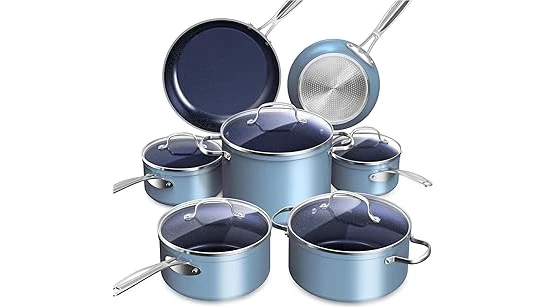
Leave a Reply