
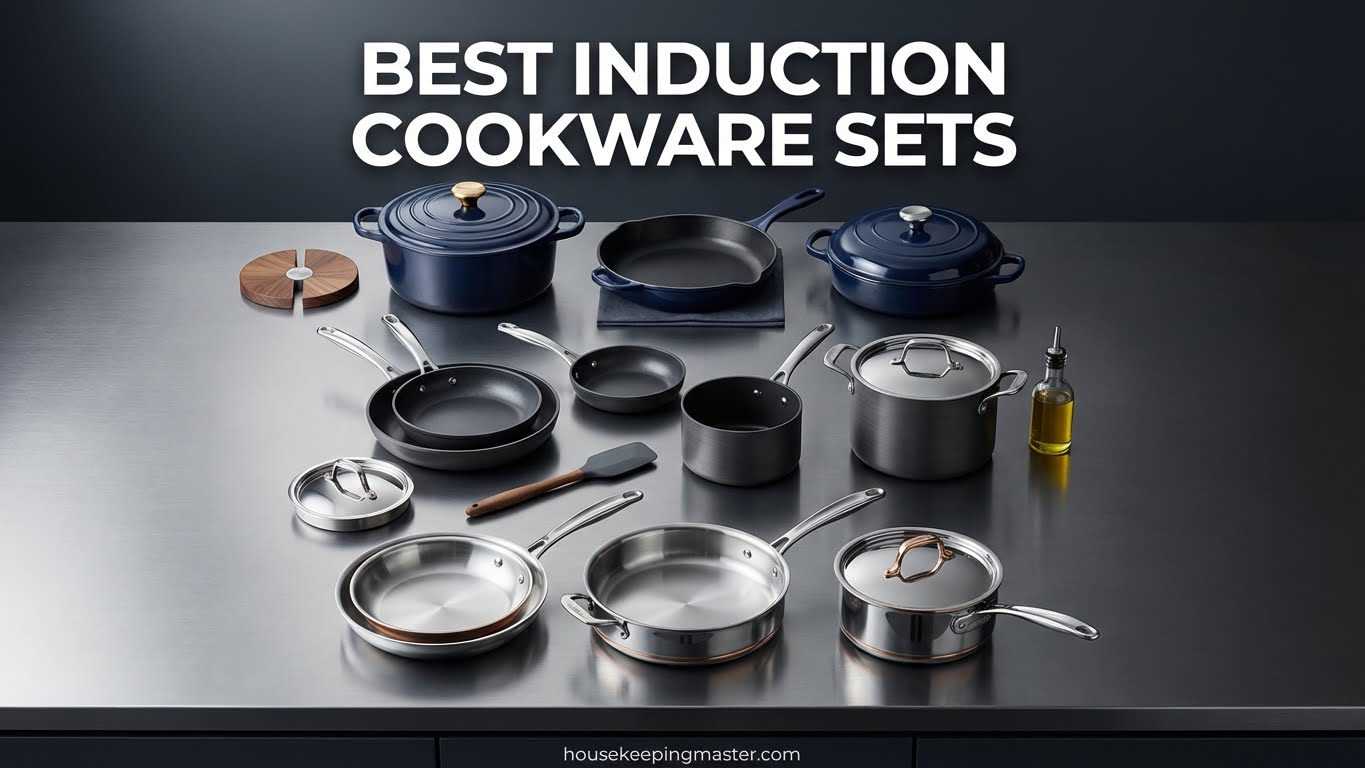
The shift to induction cooking represents one of the most significant advancements in modern kitchen technology. Unlike traditional gas or electric stoves, induction cooktops use electromagnetic energy to heat cookware directly, offering precise temperature control, faster cooking times, and improved energy efficiency. However, this innovative technology comes with a crucial requirement: you need cookware specifically designed to work with induction surfaces.
Best Induction Cookware Sets:Choosing the right induction cookware set isn’t just about compatibility—it’s about investing in tools that will transform your cooking experience. The best induction cookware sets combine magnetic-responsive materials with thoughtful design, delivering even heat distribution, durability, and versatility across all your cooking needs. Whether you’re searing steaks, simmering delicate sauces, or preparing elaborate multi-course meals, your cookware serves as the foundation for culinary success.

Why Choosing the Right Induction Cookware Set Matters!
The market offers an overwhelming array of options, from budget-friendly starter sets to premium professional-grade collections. Prices range from under $100 to well over $1,000, and the quality differences can be dramatic. Some sets feature magnetic stainless steel construction with aluminum or copper cores for optimal heat distribution. Others utilize ceramic non-stick coatings for easy cleanup, while traditionalists might prefer pure stainless steel for its longevity and browning capabilities.
Understanding what makes induction cookware effective is essential before making a purchase. The cookware must contain ferromagnetic materials—typically iron or magnetic stainless steel—to create the magnetic field necessary for induction heating. Beyond this basic requirement, factors like layer construction, handle design, lid quality, and oven-safe capabilities significantly impact your daily cooking experience.
In this comprehensive guide, we’ll review 11 top-rated induction cookware sets available on Amazon, examining everything from budget options perfect for apartment dwellers to professional-grade sets that belong in serious home kitchens. Each review provides detailed insights into performance, durability, and real-world user experiences. We’ll follow up with an extensive buying guide that demystifies the selection process, helping you identify which features matter most for your cooking style and budget. Finally, our FAQ section addresses the most common questions about induction cookware, from maintenance tips to troubleshooting performance issues.
Whether you’re upgrading to your first induction cooktop, replacing worn-out cookware, or simply looking to optimize your kitchen arsenal, this guide will equip you with the knowledge to make an informed decision. Let’s dive into the best induction cookware sets that combine quality, performance, and value.
Top 11 Induction Cookware Sets – Detailed Reviews!
1. Duxtop Whole-Clad Tri-Ply Stainless Steel Induction Cookware Set (17-Piece)

Overview:
The Duxtop Whole-Clad Tri-Ply represents exceptional value in the induction cookware market, offering professional-grade construction at a fraction of the cost of luxury brands. This 17-piece set features true tri-ply construction throughout the entire pan body—not just the base—ensuring even heat distribution from rim to rim. The combination of stainless steel exterior, aluminum core, and magnetic stainless steel interior creates optimal performance for induction cooking while remaining compatible with all other cooktop types.
Key Features:
- Complete tri-ply construction extending through the pan walls, not just the base, for superior heat distribution
- 17-piece comprehensive set including 1.5-qt and 3-qt saucepans with lids, 3.5-qt sauté pan with lid, 8-qt stockpot with lid, 8″ and 10″ frying pans, plus five cooking utensils
- Oven-safe up to 550°F, allowing for versatile cooking techniques including stovetop-to-oven recipes
- Polished stainless steel finish that’s dishwasher-safe and maintains its appearance with minimal maintenance
- Ergonomic cool-touch handles with secure riveted construction for comfortable, confident handling
- Impact-bonded induction-ready base that works seamlessly on all cooking surfaces
- Lifetime warranty demonstrating manufacturer confidence in product durability
Performance and User Experience:
Users consistently praise the Duxtop set for its impressive heat distribution and responsiveness on induction cooktops. The tri-ply construction eliminates hot spots that plague cheaper cookware, delivering restaurant-quality results at home. The pans heat quickly and evenly, with exceptional temperature control that makes techniques like sauce reduction and precise sautéing significantly easier.
The stainless steel cooking surface develops excellent fond for deglazing, and the polished interior resists sticking when properly preheated and oiled. While not non-stick, the surface cleans remarkably well, with most stuck-on food releasing after a brief soak. The weight of the cookware feels substantial without being cumbersome, striking an ideal balance that suggests quality construction.
Several reviewers note that the handles remain cool during stovetop cooking, though they do heat up in the oven as expected. The tempered glass lids fit securely and allow for easy monitoring without releasing steam. The included utensils, while basic, provide useful additions for those starting from scratch.
Pros:
✅ Exceptional heat distribution thanks to complete tri-ply construction throughout the pan body
✅ Outstanding value proposition—professional quality at mid-range pricing
✅ Comprehensive 17-piece set covers all essential cooking needs with bonus utensils
✅ Highly responsive to temperature changes on induction cooktops for precise control
✅ Lifetime warranty provides long-term peace of mind
✅ Dishwasher-safe for convenient cleanup
✅ Oven-safe to 550°F expands cooking technique options
✅ Compatible with all cooktop types, not just induction
Cons:
❌ Stainless steel surface requires proper preheating technique to prevent sticking
❌ Can show fingerprints and water spots on the polished exterior
❌ Heavier than non-stick alternatives, which may challenge some users
❌ Included utensils are fairly basic quality compared to the cookware itself
Ideal For:
This set is perfect for home cooks transitioning to induction cooking who want professional-quality results without luxury brand pricing. It’s especially well-suited for those who value versatility and durability over non-stick convenience, and for cooks who appreciate the superior browning and deglazing capabilities of stainless steel. The comprehensive piece count makes it ideal for outfitting a new kitchen or completely replacing an old collection.
The Duxtop Whole-Clad set represents the sweet spot between quality and affordability in the induction cookware market. Users consistently report that it performs comparably to sets costing three times as much, with only minor compromises in aesthetics and accessories. For those seeking professional-grade cooking performance on a realistic budget, this set delivers exceptional value that will serve reliably for years. The lifetime warranty further reinforces this as a smart long-term investment in your kitchen.
2. Cuisinart MCP-12N Multiclad Pro Stainless Steel 12-Piece Cookware Set

Overview:
Cuisinart’s Multiclad Pro series has earned a reputation as one of the most reliable mid-tier cookware options for induction cooking. This 12-piece set features triple-ply construction with a brushed stainless steel exterior, pure aluminum core, and 18/10 stainless steel cooking surface. The Heat Surround technology ensures even heating along the base and sidewalls, eliminating the hot spots common in lesser cookware. Cuisinart’s decades of cookware expertise shine through in the thoughtful design details that make daily cooking more enjoyable.
Key Features:
- Triple-ply Heat Surround technology with aluminum core sandwiched between stainless steel layers for optimal conductivity
- 12-piece set composition including 1.5-qt and 3-qt saucepans with lids, 3.5-qt sauté pan with helper handle and lid, 8-qt stockpot with lid, 8″ skillet, and 10″ skillet
- Tapered rim design that allows for drip-free pouring from any angle
- Cool Grip handles with contoured design and secure stainless steel rivets
- Oven and broiler-safe to 550°F for maximum cooking flexibility
- Dishwasher-safe construction though hand washing recommended for maintaining appearance
- Limited lifetime warranty covering manufacturing defects
Performance and User Experience:
The Multiclad Pro set performs admirably across various cooking tasks, with users particularly noting the excellent heat retention and distribution. On induction cooktops, the cookware responds quickly to temperature adjustments while maintaining stable heat throughout the cooking surface. The aluminum core ensures that heat spreads evenly, preventing the scorching that can occur with inferior constructions.
The brushed stainless steel finish resists scratching better than polished surfaces and maintains its professional appearance even after years of use. The tapered rim proves genuinely useful when pouring sauces or draining liquids, with minimal dripping. The handles stay cool during stovetop cooking and provide secure grip even when wearing oven mitts.
Users appreciate the substantial weight of the cookware, which feels solid without being exhausting to maneuver. The tight-fitting lids seal well, promoting efficient cooking and helping liquids come to a boil faster. The stainless steel interior develops excellent browning and fond, making it ideal for building flavorful sauces and pan gravies.
Pros:
✅ Excellent heat distribution and retention through aluminum core construction
✅ Brushed finish hides scratches and maintains appearance better than polished steel
✅ Tapered rims eliminate frustrating drips when pouring
✅ Cool-grip handles remain comfortable during extended cooking sessions
✅ Well-balanced weight distribution makes handling comfortable
✅ Limited lifetime warranty from a trusted, established brand
✅ Tight-fitting lids improve cooking efficiency
✅ Versatile oven-safe temperature tolerance
Cons:
❌ Stainless steel interior requires learning curve for preventing food adhesion
❌ Price point sits higher than budget alternatives without dramatic performance differences
❌ Some users report handles can become warm during very long cooking times
❌ Smaller set compared to some competitors at similar price points
Ideal For:
The Cuisinart Multiclad Pro excels for intermediate to advanced home cooks who appreciate proven brand reliability and quality construction. It’s particularly well-suited for those who cook frequently and want cookware that will maintain its performance and appearance through heavy use. The set works beautifully for anyone who values traditional cooking techniques—searing, sautéing, sauce-making—where stainless steel’s properties shine.
Cuisinart has built a solid reputation for delivering dependable kitchen products at accessible prices, and the Multiclad Pro set upholds that tradition admirably. While it doesn’t offer the exotic materials or marketing cachet of premium brands, it provides rock-solid performance that professional chefs and serious home cooks appreciate. The limited lifetime warranty demonstrates Cuisinart’s confidence in their construction quality, making this a safe choice for those seeking proven performance without excessive risk.
3. T-fal Ultimate Hard Anodized Nonstick Cookware Set (17-Piece)

Overview:
T-fal’s Ultimate Hard Anodized set represents the best option for those who prefer non-stick convenience in their induction cooking. The hard-anodized aluminum construction provides excellent heat conductivity while the induction-compatible base ensures compatibility with electromagnetic cooktops. T-fal’s proprietary Thermo-Spot heat indicator removes guesswork from preheating, while the titanium-reinforced non-stick coating promises durability and easy food release. This 17-piece set delivers comprehensive kitchen coverage with user-friendly features.
Key Features:
- Hard anodized aluminum construction that’s twice as hard as stainless steel and scratch-resistant
- Titanium Advanced nonstick coating providing long-lasting food release and durability
- Thermo-Spot technology with a heat indicator that turns solid red when pans are perfectly preheated
- 17-piece complete set including 8″ and 10.25″ fry pans, 1-qt and 2-qt covered saucepans, 3-qt covered sauté pan, 5-qt covered Dutch oven, 10.25″ square griddle, plus five kitchen tools
- Riveted silicone handles that stay cool during stovetop cooking and provide comfortable grip
- Oven-safe to 400°F for versatile cooking applications
- Dishwasher-safe though hand washing recommended for extending non-stick coating life
- Limited lifetime warranty on construction quality
Performance and User Experience:
Users consistently highlight the convenience factor of this T-fal set, with the non-stick surface making cooking and cleanup significantly easier than stainless steel alternatives. The Thermo-Spot indicator proves genuinely useful, taking the guesswork out of preheating and helping prevent food from sticking by ensuring proper pan temperature. On induction cooktops, the set heats quickly and evenly, with the aluminum construction distributing heat effectively.
The hard anodized exterior resists scratching and maintains its attractive appearance even after regular use. The non-stick interior releases food effortlessly when used with minimal oil, making it ideal for healthier cooking and reducing cleanup time dramatically. Most users report simply wiping out the pans after use, with stubborn residue easily removed with a soft sponge.
The silicone handles stay cool even during extended cooking, eliminating the need for hot pads when moving pans around the stovetop. The weight of the cookware feels lighter than stainless steel sets, which some users prefer for easier handling while others find less substantial. The included square griddle adds versatility for pancakes, grilled sandwiches, and other flat-surface cooking.
Pros:
✅ Effortless food release and cleanup thanks to titanium-reinforced non-stick coating
✅ Thermo-Spot indicator eliminates guessing about proper preheating
✅ Lightweight construction makes handling easy for all users
✅ Cool-touch silicone handles remain comfortable throughout cooking
✅ Comprehensive 17-piece set with useful square griddle inclusion
✅ Hard anodized exterior resists scratching and wear
✅ Quick, even heating on induction surfaces
✅ Excellent value for non-stick enthusiasts
Cons:
❌ Non-stick coating will eventually degrade with time and use, unlike stainless steel
❌ Lower oven-safe temperature (400°F) limits some cooking techniques
❌ Not suitable for high-heat searing that can damage non-stick surfaces
❌ Metal utensils can damage the coating; silicone or wooden utensils required
❌ Some users report the non-stick performance diminishes after 2-3 years of heavy use
Ideal For:
This set is perfect for home cooks who prioritize convenience and easy cleanup over the browning capabilities of stainless steel. It’s especially well-suited for those cooking healthier meals with minimal oil, busy families needing quick cleanup, or anyone who finds stainless steel too fussy or high-maintenance. The lighter weight also makes it ideal for those with limited hand strength or mobility concerns.
The T-fal Ultimate Hard Anodized set delivers on its promise of user-friendly cooking with minimal frustration. While the non-stick coating won’t last forever, the quality construction and reasonable pricing make replacement after several years of use economically sensible. The Thermo-Spot technology genuinely improves the cooking experience, helping users achieve better results consistently. For those who value convenience and are willing to accept the eventual need for replacement, this set offers outstanding practical value.
4. All-Clad D3 Stainless Steel 10-Piece Cookware Set

Overview:
All-Clad represents the gold standard in American-made cookware, and the D3 (formerly Tri-Ply Stainless) collection exemplifies why the brand commands premium pricing. This 10-piece set features patented three-layer bonded construction with a pure aluminum core sandwiched between stainless steel layers, extending from base to rim for unparalleled heat distribution. Handcrafted in the USA with meticulous attention to detail, All-Clad cookware is the choice of professional chefs and serious home cooks who demand the absolute best performance and longevity.
Key Features:
- Patented three-ply bonded construction with aluminum core for superior heat conductivity
- 18/10 stainless steel cooking surface that won’t react with food and maintains brilliant luster
- 10-piece set includes 8″ and 10″ fry pans, 2-qt and 3-qt saucepans with lids, 3-qt sauté pan with lid, and 8-qt stockpot with lid
- Stick-resistant starburst finish on cooking surface improves food release compared to standard polished steel
- Contoured stainless steel handles designed for balance and comfortable grip, secured with stainless steel rivets
- Oven and broiler-safe to 600°F for maximum versatility in cooking techniques
- Dishwasher-safe though hand washing recommended for maintaining appearance
- Limited lifetime warranty backed by All-Clad’s exceptional customer service
- Made in USA with strict quality control standards
Performance and User Experience:
All-Clad’s reputation for exceptional performance is well-earned, as evidenced by countless professional and home user testimonials. On induction cooktops, the D3 set delivers precise temperature control and remarkably even heating with no discernible hot spots. The cookware responds quickly to heat adjustments, providing the control necessary for techniques like delicate sauce emulsification or precise temperature maintenance for chocolate tempering.
The starburst finish on the cooking surface genuinely improves food release compared to mirror-polished stainless steel, though proper preheating and fat usage remain important. Users report that the surface develops beautiful browning and fond, essential for creating rich sauces and perfectly seared proteins. The stainless steel interior cleans up remarkably well, with Bar Keeper’s Friend easily removing any discoloration.
The handles are ergonomically designed with a slight angle that provides natural balance when lifting full pans. They remain cool during stovetop use thanks to thoughtful design that limits heat transfer. The lids fit snugly and feature broad handles that make removal easy even when wearing oven mitts. The weight of the cookware feels substantial and confidence-inspiring without being unwieldy.
Pros:
✅ Exceptional heat distribution and responsiveness thanks to full-clad construction
✅ Heirloom-quality construction that will last generations with proper care
✅ Precise temperature control ideal for advanced cooking techniques
✅ Starburst finish improves food release compared to polished stainless steel
✅ High oven-safe temperature (600°F) enables maximum cooking versatility
✅ Excellent customer service and warranty support from All-Clad
✅ Made in USA with rigorous quality standards
✅ Maintains beautiful appearance over years of use
✅ Professional-grade performance appreciated by serious cooks
Cons:
❌ Premium pricing places this set at 3-4 times the cost of budget alternatives
❌ Smaller 10-piece set means fewer pans compared to competitors at similar price
❌ Heavy construction may challenge users with limited strength
❌ Stainless steel requires learning proper technique for optimal results
❌ Polished exterior shows fingerprints and water spots easily
Ideal For:
The All-Clad D3 set is the ultimate choice for serious home cooks and culinary enthusiasts who view cookware as a lifetime investment rather than a disposable commodity. It’s ideal for those who frequently prepare complex recipes requiring precise temperature control, anyone who appreciates American manufacturing quality, and cooks who want to buy once and never replace their cookware.
All-Clad’s premium positioning isn’t merely marketing—the performance difference is tangible and appreciated by those who cook frequently and demand excellence. The company’s customer service, including their willingness to replace defective pieces decades after purchase, reinforces the investment value. While the initial outlay is significant, the per-use cost over a lifetime makes this set remarkably economical for dedicated home cooks. If you’re serious about cooking and can accommodate the budget, All-Clad D3 represents the pinnacle of induction cookware performance.
5. Rachael Ray Brights Hard Anodized Nonstick Cookware Set (14-Piece)

Overview:
Rachael Ray’s Brights collection brings personality and practicality to induction cooking with its distinctive color options and user-friendly design. The hard anodized construction provides durability and even heating, while the non-stick interior makes cooking and cleanup effortless. This 14-piece set balances performance with accessibility, offering home cooks a complete kitchen solution at a mid-range price point. The contemporary design and vibrant handle colors add visual appeal to functional cookware.
Key Features:
- Hard anodized construction providing durable, warp-resistant cookware with excellent heat distribution
- PFOA-free nonstick coating for healthier cooking with easy food release and cleanup
- 14-piece set includes 1-qt and 3-qt covered saucepans, 6-qt covered stockpot, 8.5″ and 10″ skillets, 3-qt covered sauté pan, plus five kitchen utensils
- Dual-riveted rubberized handles with signature Rachael Ray color options for comfortable, confident grip
- Shatter-resistant glass lids with stainless steel rims for easy monitoring
- Induction-suitable bases that also work on gas, electric, and ceramic cooktops
- Oven-safe to 400°F including lids for versatile cooking
- Dishwasher-safe for convenient cleanup
- Limited lifetime warranty for peace of mind
Performance and User Experience:
Users appreciate the approachable nature of the Rachael Ray Brights set, which performs reliably without requiring advanced cooking techniques. On induction cooktops, the cookware heats evenly and responds well to temperature adjustments. The non-stick surface delivers consistent food release, making it easy to cook delicate items like fish or eggs without frustration. The hard anodized exterior heats efficiently while resisting scratches and wear.
The rubberized handles provide excellent grip and stay cool during stovetop cooking, with the colorful accents adding a fun touch to the kitchen. Users note that the handles feel secure and comfortable even during extended cooking sessions. The glass lids fit well and allow for easy food monitoring without releasing heat and moisture.
The non-stick coating performs well with proper care, providing easy cleanup that many users cite as their favorite feature. Most cooking residue wipes away with minimal effort, and even when food does stick, it releases easily with gentle washing. The included utensils match the cookware aesthetics and provide basic functionality.
Pros:
✅ User-friendly non-stick surface makes cooking and cleanup effortless
✅ Attractive design with colorful handle options adds personality to the kitchen
✅ Comfortable rubberized handles provide secure, cool grip
✅ Excellent value proposition for the piece count and performance
✅ Hard anodized construction offers durability at accessible pricing
✅ Complete set with utensils provides everything needed for a functional kitchen
✅ Even heating eliminates hot spots and cooking frustration
✅ Lightweight compared to stainless steel, making handling easy
Cons:
❌ Non-stick coating will degrade over time, requiring eventual replacement
❌ Lower oven-safe temperature limits some cooking applications
❌ Not suitable for high-heat searing techniques
❌ Handle colors may not appeal to those preferring traditional aesthetics
❌ Metal utensils can damage the non-stick surface
Ideal For:
This set is perfect for casual home cooks who want reliable performance without fuss, busy families needing easy cleanup, and those who appreciate fun, colorful kitchen design. It’s especially well-suited for first-time induction users or anyone moving into a new home who needs a complete, affordable cookware solution. The accessible price point makes it ideal for those on a budget who still want quality construction.
The Rachael Ray Brights set successfully combines personality with practicality, delivering solid performance at a price point that won’t strain most budgets. While it won’t last a lifetime like premium stainless steel, the quality construction ensures years of reliable service with proper care. The brand’s approachable philosophy shines through in the thoughtful design details that make daily cooking more enjoyable. For those seeking a hassle-free cooking experience with a touch of style, this set delivers excellent value.
6. Tramontina Tri-Ply Clad Stainless Steel 12-Piece Cookware Set

Overview:
Tramontina has quietly built a reputation as the “best value” alternative to premium brands, and this Tri-Ply Clad set demonstrates why. Featuring full tri-ply construction throughout the pan body—not just the base—this Brazilian-manufactured cookware delivers performance remarkably similar to sets costing three times as much. The combination of surgical-grade 18/10 stainless steel interior, aluminum core, and magnetic stainless exterior creates optimal conditions for induction cooking while maintaining compatibility with all cooktop types.
Key Features:
- Full tri-ply clad construction extending from base through sidewalls for even heat distribution
- NSF certified 18/10 stainless steel interior that’s non-reactive and highly durable
- 12-piece set composition including 8″ and 10″ fry pans, 2-qt and 3-qt covered saucepans, 5-qt covered Dutch oven, and 3-qt covered sauté pan
- Cast stainless steel handles with ergonomic design, secured with heavy-duty rivets
- Tri-ply bottom and sides eliminating hot spots for consistent cooking results
- Oven, broiler, and grill-safe to 500°F for versatile cooking methods
- Dishwasher-safe for convenient cleanup
- Compatible with all cooktops including induction, gas, electric, and ceramic
- Limited lifetime warranty demonstrating manufacturer confidence
Performance and User Experience:
Tramontina consistently surprises users who expect lower performance based on the accessible pricing. On induction cooktops, the tri-ply construction delivers heat distribution comparable to premium brands, with excellent temperature control and responsiveness. The cookware heats evenly across the entire surface, preventing the hot spots that plague cheaper alternatives. Users report being able to maintain precise temperatures for delicate cooking techniques.
The stainless steel interior develops excellent fond and browning, creating the flavorful base for sauces and gravies. While the surface isn’t non-stick, proper preheating and fat usage yield good food release with minimal sticking. The polished interior cleans up well, with most residue releasing after a brief soak. The exterior maintains its attractive satin finish through regular use.
The handles are thoughtfully designed with a comfortable grip angle and stay cool during stovetop cooking. They’re substantial enough to feel secure when lifting full pans but not so bulky that they interfere with storage or handling. The tempered glass lids fit snugly and feature broad handles that make removal easy.
Pros:
✅ Exceptional value—premium performance at mid-tier pricing
✅ Full tri-ply construction provides even heating comparable to luxury brands
✅ NSF-certified stainless steel ensures food safety and durability
✅ Comfortable handle design with excellent heat resistance
✅ Versatile 500°F oven-safe temperature opens cooking possibilities
✅ Limited lifetime warranty provides long-term security
✅ Satin finish hides minor scratches better than polished steel
✅ Excellent temperature control and responsiveness on induction
Cons:
❌ Smaller piece count compared to some competitors at similar price
❌ Stainless steel interior requires proper technique to prevent sticking
❌ Handles, while functional, lack the refined aesthetics of premium brands
❌ Less well-known brand may give some buyers pause despite quality
Ideal For:
Tramontina Tri-Ply Clad is ideal for value-conscious cooks who refuse to compromise on performance. It’s perfect for those who want cookware that performs like All-Clad without the luxury brand premium. The set works beautifully for home cooks who appreciate the benefits of stainless steel construction and are willing to invest a bit of time learning proper cooking techniques for optimal results.
This set represents one of the best value propositions in the cookware market, consistently earning praise from both professional chefs and serious home cooks. Tramontina proves that premium performance doesn’t require premium pricing, delivering construction quality and cooking results that belie the moderate cost. For those seeking maximum performance per dollar spent, this set is difficult to beat. The limited lifetime warranty further reinforces this as a smart investment that will serve reliably for years to come.
7. GreenPan Valencia Pro Hard Anodized Healthy Ceramic Nonstick Cookware Set (11-Piece)

Overview:
GreenPan’s Valencia Pro represents the intersection of health-conscious cooking and modern convenience. This set features the company’s proprietary Thermolon ceramic non-stick coating, which contains no PFAS, PFOA, lead, or cadmium. The hard anodized body provides excellent durability and heat distribution while the scratch-resistant ceramic coating delivers reliable food release without the concerns associated with traditional non-stick surfaces. For those prioritizing eco-friendly, healthy cooking without sacrificing performance, GreenPan offers a compelling solution.
Key Features:
- Thermolon Minerals Pro ceramic non-stick coating free from PFAS, PFOA, lead, and cadmium
- Hard anodized aluminum construction providing superior heat distribution and durability
- 11-piece set includes 8″ and 10″ fry pans, 1-qt and 2-qt covered saucepans, 3-qt covered sauté pan, 5-qt covered casserole, and two kitchen tools
- Scratch-resistant coating that withstands metal utensils (though not recommended)
- Diamond-reinforced coating for enhanced durability and longevity
- Stainless steel handles with stay-cool design for safe, comfortable handling
- Oven and broiler-safe to 600°F for maximum cooking versatility
- Dishwasher-safe for convenient cleanup
- Magneto induction base ensuring excellent performance on induction cooktops
- Limited lifetime warranty covering manufacturing defects
Performance and User Experience:
Users particularly appreciate the peace of mind that comes with GreenPan’s PFAS-free ceramic coating, especially those concerned about the health implications of traditional non-stick surfaces. On induction cooktops, the Valencia Pro heats quickly and evenly, with the hard anodized construction distributing heat effectively across the cooking surface. The ceramic coating provides good food release, though it requires slightly more fat than traditional non-stick surfaces for optimal results.
The diamond-reinforced coating shows impressive durability compared to first-generation ceramic non-stick products, resisting scratching and wear better than many users expected. While GreenPan claims metal utensil safety, most users report better long-term results when using silicone, wood, or nylon utensils. The coating maintains its performance well over time when properly cared for.
The stainless steel handles stay cool during stovetop cooking and provide secure grip. The substantial feel of the cookware inspires confidence without being unwieldy. The high oven-safe temperature (600°F) enables techniques like starting proteins on the stovetop and finishing in the oven without limitation.
Pros:
✅ PFAS-free ceramic coating addresses health concerns with traditional non-stick
✅ Diamond-reinforced surface offers impressive durability for ceramic coating
✅ Excellent heat distribution through hard anodized construction
✅ High oven-safe temperature (600°F) provides cooking versatility
✅ Scratch-resistant coating shows good longevity with proper care
✅ Stay-cool stainless steel handles enhance safety and comfort
✅ Dishwasher-safe for convenient cleanup
✅ Eco-friendly manufacturing process appeals to environmentally conscious consumers
Cons:
❌ Ceramic non-stick performance not quite as effortless as traditional PTFE coatings
❌ Higher price point compared to traditional non-stick alternatives
❌ Coating can lose performance over time, though more gradually than early ceramic products
❌ Requires proper preheating and fat usage for best results
❌ Some users report food release diminishes after 1-2 years of heavy use
Ideal For:
The GreenPan Valencia Pro is perfect for health-conscious home cooks who want to avoid PFAS exposure while maintaining non-stick convenience. It’s ideal for those who primarily cook at medium temperatures and appreciate eco-friendly products. The set works beautifully for families with young children or anyone concerned about cookware safety while still wanting easy cleanup and versatile performance.
GreenPan has significantly improved ceramic non-stick technology over the years, and the Valencia Pro represents their most advanced formulation to date. While the coating won’t last forever, the health and environmental benefits make the eventual replacement worthwhile for many users. The combination of hard anodized durability and ceramic convenience strikes an appealing balance. For those willing to pay slightly more for peace of mind regarding cookware safety, this set delivers solid performance alongside ethical manufacturing practices.
8. Calphalon Premier Space Saving Stainless Steel 15-Piece Cookware Set

Overview:
Calphalon’s Premier Space Saving collection addresses one of the most common cookware frustrations: storage. This innovative 15-piece set features a unique design that allows pans to stack neatly, reducing required storage space by up to 30%. Beyond the space-saving innovation, the set delivers solid performance through three-layer construction with an aluminum core for even heating. The brushed stainless steel exterior resists scratching while the polished cooking surface provides excellent browning capabilities essential for developing flavor.
Key Features:
- Unique stacking design that nests securely, saving up to 30% cabinet space
- Three-layer metal construction with aluminum core for optimal heat distribution
- 15-piece set includes 8″ and 10″ fry pans, 1.5-qt and 2.5-qt covered saucepans, 3-qt covered sauté pan, 3-qt covered chef’s pan, 6-qt covered stockpot, and steamer insert
- Dual-layer nonstick interior (on select pieces) for easy food release
- Brushed stainless steel exterior that resists fingerprints and maintains appearance
- Stay-cool stainless steel handles with hanging loops for alternate storage
- Flat, wide bottom designed specifically for optimal induction performance
- Oven-safe to 450°F** for versatile cooking techniques
- Dishwasher-safe though hand washing recommended
- Full lifetime warranty demonstrating Calphalon’s confidence in construction
Performance and User Experience:
Users consistently praise the space-saving design as a game-changer, particularly those in apartments or homes with limited kitchen storage. The secure stacking system works as advertised, keeping lids organized and pans nested without the precarious balancing act typical of cookware storage. The specialized design doesn’t compromise performance—the cookware heats evenly on induction surfaces with excellent temperature control.
The three-layer construction delivers reliable heat distribution, though some users note it doesn’t quite match the performance of full tri-ply alternatives. The dual-layer non-stick interior (on select pieces) provides good food release and makes cleanup easier than pure stainless steel, though it requires more care than hard anodized non-stick surfaces. The brushed exterior successfully hides fingerprints and minor scratches better than polished alternatives.
The handles are comfortable and stay cool during stovetop use, with hanging loops providing additional storage flexibility. The included steamer insert adds versatility for healthy cooking. The pans feel solid and well-constructed, with weight that suggests quality without being burdensome.
Pros:
✅ Revolutionary space-saving design reduces storage requirements significantly
✅ Secure stacking system keeps lids organized and easily accessible
✅ Comprehensive 15-piece set covers all essential cooking needs
✅ Brushed exterior maintains appearance better than polished finishes
✅ Dual-layer non-stick on select pieces enhances versatility
✅ Full lifetime warranty provides excellent long-term value
✅ Flat, wide bottoms optimize induction performance
✅ Steamer insert included for healthy cooking options
Cons:
❌ Three-layer construction doesn’t heat quite as evenly as full tri-ply alternatives
❌ Mixed construction (some stainless, some non-stick) may not appeal to purists
❌ Specialized stacking design means limited flexibility for mixing with other cookware
❌ Non-stick pieces require careful handling to avoid coating damage
❌ Some users report handles can become warm during extended cooking
Ideal For:
This set is perfect for urban dwellers with limited kitchen storage, anyone living in apartments or smaller homes, and cooks who value organization and efficiency. It’s ideal for those who want comprehensive cookware coverage without dedicating multiple cabinets to storage. The mixed construction appeals to practical cooks who appreciate both stainless steel’s browning capabilities and non-stick convenience.
Calphalon’s space-saving innovation genuinely solves a real problem that many home cooks face daily. While the performance doesn’t quite reach the heights of premium tri-ply sets, the practical benefits of organized, compact storage create substantial value. The full lifetime warranty reinforces this as a solid long-term investment. For those frustrated by cluttered cabinets and cookware chaos, this set delivers meaningful improvement to daily kitchen life while maintaining respectable cooking performance.
9. Gotham Steel Stackmaster 10-Piece Cookware Set with Ultra Nonstick Ceramic Coating

Overview:
Gotham Steel’s Stackmaster represents the budget-friendly entry point for induction cooking, combining space-saving design with accessible pricing. The aluminum construction features a ceramic-titanium non-stick coating that promises effortless food release and cleanup. While not competing with premium brands in longevity, this set provides a practical solution for those on tight budgets, students, or anyone seeking basic induction-compatible cookware without significant investment.
Key Features:
- Ti-Cerama coating combining titanium and ceramic for non-stick performance
- Stackable design with removable handles for compact storage
- 10-piece set includes 9.5″ and 11″ frying pans, 1.5-qt and 2.5-qt saucepans with lids, 5-qt stockpot with lid, and steamer insert
- Aluminum construction providing lightweight handling and quick heating
- Metal utensil safe ceramic coating (though not recommended for longevity)
- Oven-safe to 500°F without lids
- Dishwasher-safe for convenient cleanup
- Induction-compatible base that also works on all cooktop types
- PFOA, PFOS, lead, and cadmium-free for healthier cooking
Performance and User Experience:
At its budget price point, the Gotham Steel Stackmaster delivers acceptable performance for basic cooking tasks. The non-stick coating works well initially, providing easy food release and simple cleanup that users appreciate. On induction cooktops, the aluminum construction heats quickly, though users note some unevenness compared to premium alternatives. Hot spots can develop, requiring more attention and stirring to prevent burning.
The lightweight construction makes handling easy, particularly appreciated by those with limited strength or mobility issues. The removable handles work as designed for compact storage, though some users find them less secure than traditional fixed handles. The stackable design saves meaningful cabinet space, helping to offset the set’s basic performance.
The ceramic coating performs adequately when new but shows wear more quickly than premium non-stick surfaces. Users report that the coating begins losing effectiveness after 6-12 months of regular use, with food sticking more readily and cleanup becoming more challenging. The coating can scratch despite metal utensil claims, so gentle care extends its functional life.
Pros:
✅ Extremely budget-friendly pricing makes induction cooking accessible
✅ Lightweight construction simplifies handling
✅ Stackable design with removable handles saves storage space
✅ Initial non-stick performance makes cooking and cleanup easy
✅ PFOA-free coating addresses health concerns
✅ Quick heating on induction surfaces
✅ Oven-safe to reasonable temperature for versatility
✅ Complete starter set for minimal investment
Cons:
❌ Non-stick coating degrades relatively quickly, often within 12-18 months
❌ Aluminum construction develops hot spots more readily than tri-ply alternatives
❌ Removable handles feel less secure than fixed alternatives
❌ Overall construction quality reflects budget positioning
❌ Not suitable for high-heat cooking techniques
❌ Short functional lifespan means more frequent replacement needed
Ideal For:
The Gotham Steel Stackmaster is ideal for budget-conscious shoppers, college students, first apartments, or temporary living situations where cookware longevity isn’t paramount. It’s perfect for occasional cooks who prioritize affordability and convenience over long-term durability. The set also works well for vacation homes, RVs, or as backup cookware.
This set delivers what it promises: basic induction-compatible cookware at rock-bottom pricing. Setting appropriate expectations is key—this isn’t heirloom cookware that will last decades, but rather practical, disposable kitchen tools that serve a purpose within budget constraints. The non-stick convenience and space-saving design provide genuine value during its functional lifespan. For those who need induction cookware immediately without financial flexibility, Gotham Steel offers an acceptable entry point with the understanding that replacement will eventually be necessary.
10. Anolon Nouvelle Copper Stainless Steel 11-Piece Cookware Set

Overview:
Anolon’s Nouvelle Copper collection brings premium aesthetics and performance together through distinctive copper-colored exterior and solid stainless steel construction. This set features full cap base construction with a copper exterior layer, aluminum core, and stainless steel cooking surface. The combination delivers excellent heat conductivity while the elegant copper finish adds visual warmth to any kitchen. For those who appreciate cookware that performs beautifully while looking stunning, Anolon offers compelling middle-ground pricing between budget and luxury options.
Key Features:
- Full cap base construction with copper exterior, aluminum core, and stainless steel interior
- Distinctive copper-colored exterior that adds elegant aesthetic appeal
- 11-piece set includes 8″ and 10″ skillets, 2-qt and 3-qt covered saucepans, 3-qt covered sauté pan, and 8-qt covered stockpot
- Dual-riveted bronze-toned handles providing secure, comfortable grip
- Induction-suitable base with excellent magnetic responsiveness
- Flared rims designed for clean, drip-free pouring
- Oven-safe to 500°F for versatile cooking methods
- Dishwasher-safe though hand washing recommended for maintaining appearance
- Lifetime warranty demonstrating long-term quality commitment
Performance and User Experience:
The Anolon Nouvelle Copper set delivers performance that justifies its mid-to-upper-tier positioning. On induction cooktops, the full cap base provides even heat distribution with minimal hot spots, allowing for consistent cooking results. The stainless steel cooking surface browns beautifully and develops excellent fond for sauce-making. Users appreciate the responsive temperature control, which makes techniques requiring precision significantly easier.
The copper exterior is more than decorative—it contributes to the cookware’s excellent heat conductivity. The distinctive color adds warmth and visual interest that many users cite as a favorite feature, making them proud to display the cookware rather than hiding it in cabinets. The finish maintains its appearance well with proper care, developing a patina that some users find attractive.
The handles are comfortable and well-balanced, staying cool during most stovetop cooking. The bronze-colored finish coordinates beautifully with the copper exterior. The flared rims genuinely improve pouring, with sauces and liquids flowing cleanly without dripping down the pan exterior. The lids fit securely and feature easy-grip knobs.
Pros:
✅ Distinctive copper-colored exterior adds elegant visual appeal
✅ Excellent heat distribution through full cap base construction
✅ Responsive temperature control ideal for precision cooking
✅ Comfortable handles with attractive bronze finish
✅ Flared rims enable clean, drip-free pouring
✅ Lifetime warranty provides long-term confidence
✅ Solid mid-tier performance at reasonable pricing
✅ Oven-safe to 500°F for cooking versatility
Cons:
❌ Copper exterior requires more maintenance to prevent tarnishing
❌ Stainless steel interior needs proper technique to prevent sticking
❌ Smaller piece count compared to some competitors at similar price
❌ Copper finish may not appeal to those preferring modern aesthetic
❌ Premium pricing compared to basic stainless steel alternatives
Ideal For:
The Anolon Nouvelle Copper set is perfect for home cooks who value both performance and aesthetics, wanting cookware that looks beautiful while delivering reliable results. It’s ideal for those who enjoy displaying their cookware and appreciate the warmth that copper tones bring to kitchen design. The set works wonderfully for cooks who have mastered stainless steel technique and want the beauty of copper without the maintenance challenges of actual copper cookware.
Anolon successfully bridges the gap between utilitarian cookware and decorative kitchen pieces. The Nouvelle Copper collection proves that functional kitchen tools can also serve as design elements that enhance your cooking space. While requiring slightly more care than basic stainless steel, the visual payoff and solid performance make the minimal extra effort worthwhile for design-conscious cooks. The lifetime warranty reinforces this as a quality investment that balances beauty with functionality.
11. Carote Nonstick Pots and Pans Set (11-Piece)

Overview:
Carote has emerged as a popular budget-friendly option on Amazon, offering non-stick convenience at highly competitive pricing. This 11-piece set features a granite-inspired finish with PFOA-free coating and claims to provide healthy, eco-friendly cooking. While the construction quality doesn’t match premium brands, the set delivers practical functionality for basic cooking needs. The unique woodgrain-style handles and attractive stone-like finish provide visual appeal that belies the budget positioning.
Key Features:
- Granite-inspired non-stick coating free from PFOA for healthier cooking
- 11-piece set includes 8″ and 9.5″ frying pans, 2.8-qt sauté pan with lid, 4.3-qt casserole with lid, 1.8-qt and 2.8-qt saucepans with lids, and 3 detachable handles
- Woodgrain-style Bakelite handles providing comfortable, cool-touch grip
- Detachable handle system enabling compact storage and space-saving
- Aluminum construction for lightweight handling and quick heating
- Induction-compatible base that also works on all cooktop types
- Oven-safe to 350°F without handles attached
- Dishwasher-safe for convenient cleanup
- Extended bottom design claimed to prevent warping and improve durability
Performance and User Experience:
Users generally express pleasant surprise at the Carote set’s performance given the remarkably low price point. The non-stick coating works well when new, providing easy food release and simple cleanup that makes daily cooking less frustrating. On induction cooktops, the set heats reasonably well, though some users note uneven heating with larger pans. Hot spots can develop, particularly when cooking at higher temperatures.
The lightweight aluminum construction makes handling easy but feels less substantial than heavier cookware. The detachable handle system works adequately for storage but requires careful attention to ensure secure attachment before use. Some users report concerns about the handles potentially detaching during use, recommending extra caution when moving pans with the removable system.
The aesthetic appeal exceeds expectations for budget cookware, with the granite-inspired finish and woodgrain handles creating an attractive presentation. However, the coating shows wear relatively quickly with regular use, typically losing effectiveness within 6-12 months. Proper care—avoiding high heat, using gentle utensils, and hand washing—extends the functional lifespan somewhat.
Pros:
✅ Exceptional pricing makes this an extremely accessible entry point
✅ Attractive granite-inspired finish and woodgrain handles exceed budget aesthetic expectations
✅ Detachable handles enable very compact storage
✅ Initial non-stick performance delivers easy cooking and cleanup
✅ PFOA-free coating addresses basic health concerns
✅ Lightweight construction simplifies handling
✅ Complete set provides all basic cookware needs
✅ Good value for occasional cooks or temporary needs
Cons:
❌ Non-stick coating degrades quickly, often within 6-12 months of regular use
❌ Lightweight aluminum construction feels less substantial and durable
❌ Detachable handles raise safety concerns for some users
❌ Uneven heating on induction surfaces, particularly with larger pans
❌ Overall construction quality reflects ultra-budget positioning
❌ Not suitable for high-heat cooking or frequent use
❌ Short functional lifespan means regular replacement necessary
Ideal For:
The Carote set is ideal for extremely budget-conscious shoppers, students, or anyone needing temporary cookware solutions. It’s perfect for occasional cooks who prioritize affordability and convenience over longevity. The set also works well for vacation rentals, dormitories, or first apartments where minimal investment is desired.
Carote delivers remarkable value at its ultra-low price point, providing functional cookware that exceeds the minimal expectations its cost suggests. However, setting realistic expectations is crucial—this is disposable cookware designed for temporary or light-duty use rather than long-term kitchen investment. The attractive appearance and initial performance provide genuine satisfaction during its limited functional life. For those absolutely constrained by budget or needing short-term solutions, Carote offers practical accessibility to induction cooking.
Comprehensive Buying Guide: How to Choose the Best Induction Cookware Set!
Selecting the right induction cookware set requires understanding both the unique requirements of induction technology and your personal cooking needs. This comprehensive guide breaks down everything you need to know to make an informed decision that will serve your kitchen well for years to come.
Understanding Induction Compatibility: The Foundation of Your Decision
Induction cooking works through electromagnetic energy that creates heat directly in the cookware rather than heating a surface that then transfers heat to the pan. This fundamental difference from traditional cooking methods creates a specific requirement: your cookware must contain ferromagnetic materials to function on induction cooktops.
The simplest test for induction compatibility is the magnet test. If a magnet firmly sticks to the bottom of your cookware, it will work on induction. Materials that work include cast iron, magnetic stainless steel, and carbon steel. Aluminum, copper, and non-magnetic stainless steel won’t work unless they have a magnetic base layer added by the manufacturer.
Most modern cookware marketed as “induction-ready” or “induction-compatible” features a magnetic stainless steel base layer, even when the rest of the construction uses non-magnetic materials. This allows manufacturers to create cookware with excellent heat conductivity (through aluminum or copper cores) while maintaining induction compatibility through the magnetic base.
Understanding this principle helps explain why some seemingly high-quality cookware won’t work on your induction cooktop. That expensive copper cookware from your grandmother? It won’t function on induction unless it has been specifically manufactured with a magnetic base layer. Similarly, traditional aluminum cookware requires a magnetic disk on the bottom to work with induction technology.
Material Construction: Single-Layer vs. Multi-Layer Cookware
The construction method significantly impacts cooking performance, price, and longevity. Understanding the differences helps you evaluate whether premium pricing delivers meaningful performance improvements or merely marketing hype.
Single-Layer Construction:
Basic cookware features a single material throughout. Pure stainless steel cookware exemplifies this approach—the entire pan consists of stainless steel from base to rim. While simple and inexpensive to manufacture, single-layer stainless steel performs poorly on induction (and all other heat sources) because stainless steel conducts heat slowly and unevenly. Hot spots develop easily, making consistent cooking results difficult to achieve.
Hard anodized aluminum represents another single-layer approach. The aluminum conducts heat excellently, providing even cooking across the pan surface. However, aluminum alone isn’t magnetic, so manufacturers add a magnetic stainless steel disk to the base for induction compatibility. This construction works reasonably well, though the heat distribution from the magnetic disk through the aluminum body isn’t as uniform as multi-layer alternatives.
Multi-Layer (Clad) Construction:
Premium cookware features multiple layers of different metals bonded together, combining the best properties of each material. Tri-ply construction—the most common premium approach—sandwiches a highly conductive aluminum or copper core between layers of stainless steel. The inner stainless steel provides a non-reactive cooking surface, the aluminum/copper core distributes heat evenly, and the outer magnetic stainless steel layer enables induction compatibility.
The critical distinction separates impact-bonded from fully-clad construction. Impact-bonded cookware features multi-layer construction only on the base, with single-layer walls extending upward. This approach reduces manufacturing costs but creates uneven heating—the base heats uniformly while the walls conduct heat slowly, creating temperature gradients. Fully-clad (or “whole-clad”) construction extends the multi-layer construction through the entire pan body, from base up through the rim. This delivers superior heat distribution but costs significantly more to manufacture.
Five-ply construction adds additional layers, typically alternating between conductive and structural materials. While theoretically superior, the practical performance differences between well-executed tri-ply and five-ply often prove minimal for home cooking. The added layers primarily improve durability and heat retention rather than dramatically changing responsiveness or evenness.
Cooking Surface Options: Stainless Steel vs. Non-Stick
Your cooking surface choice fundamentally shapes your daily cooking experience, with distinct advantages and disadvantages to each approach.
Stainless Steel Cooking Surfaces:
Stainless steel offers unmatched durability and versatility. The surface doesn’t degrade over time, tolerates high heat without damage, and develops excellent fond (the browned bits that form the flavorful base for pan sauces). Stainless steel won’t react with acidic foods, making it ideal for tomato sauces, wine reductions, and citrus-based dishes.
However, stainless steel requires proper technique to prevent sticking. The surface must be properly preheated, and adequate fat must be used. Even with proper technique, delicate proteins like fish or eggs can challenge even experienced cooks. Many users find the learning curve frustrating initially, though most adapt quickly with practice.
The non-reactive properties and high-heat tolerance make stainless steel the professional chef’s choice. You can achieve restaurant-quality searing, create complex pan sauces through deglazing, and use metal utensils without concern. The surface develops character over time—slight discoloration and patina that tell the story of thousands of meals prepared.
Non-Stick Cooking Surfaces:
Non-stick surfaces prioritize convenience and ease of use. Food releases effortlessly with minimal fat, cleanup takes seconds rather than minutes, and delicate items cook without sticking or tearing. For busy households, health-conscious cooks using minimal oil, or anyone who finds traditional cookware frustrating, non-stick delivers meaningful quality-of-life improvements.
Traditional PTFE (Teflon) non-stick coatings provide the most effective food release but raise health and environmental concerns for some users. When overheated above 500°F, PTFE can release toxic fumes harmful to humans and potentially fatal to birds. Additionally, the manufacturing process historically involved PFOA, though most manufacturers now produce PFOA-free PTFE coatings.
Ceramic non-stick alternatives address these concerns through mineral-based coatings free from PTFE, PFOA, and PFAS. While not quite as slippery as PTFE when new, ceramic coatings perform admirably and appeal to health-conscious consumers. However, all non-stick coatings—whether PTFE or ceramic—eventually degrade, losing effectiveness over time regardless of care quality.
The fundamental trade-off with non-stick cookware involves longevity versus convenience. Even the best non-stick pans typically last 2-5 years with regular use before requiring replacement, while stainless steel cookware can serve reliably for decades. This disposable nature means higher long-term costs despite lower initial pricing.
Handle Design and Heat Management: Often Overlooked, Always Important
Handle quality dramatically impacts your daily cooking experience, yet many buyers overlook this crucial feature when comparing cookware sets. Well-designed handles make cooking safer, more comfortable, and more enjoyable, while poor handles create frustration and potential safety hazards.
Handle Material Considerations:
Stainless steel handles offer durability and a professional appearance. When properly designed with hollow construction or heat-dissipating ribs, they stay cool during stovetop cooking through natural heat management. However, solid stainless steel handles conduct heat readily and can become uncomfortable or even dangerous to grip during extended cooking sessions.
Silicone-coated or rubber-grip handles provide cool-touch security during stovetop use, offering comfortable grip even during long cooking sessions. The softer material provides tactile security, reducing the likelihood of accidentally dropping hot, full pans. However, these handles have lower oven-safe temperature limits (typically 350-400°F) compared to bare metal, and the coating can degrade over time with regular dishwasher use or exposure to high heat.
Cast handles—whether stainless steel or aluminum—provide the most secure construction. Casting creates a single-piece handle integrated with the pan body or attached through robust mechanical means. Welded handles offer similar security with potentially more complex shapes and ergonomics. The attachment method matters as much as the material—poorly attached handles can loosen over time, creating serious safety concerns.
Ergonomic Considerations:
The handle angle significantly affects balance and comfort. Handles angled slightly upward from the pan provide more natural wrist positioning when lifting, reducing strain during meal preparation. Handles that extend straight out or angle downward feel awkward and concentrate weight poorly.
Handle length influences leverage and balance. Longer handles provide better leverage when lifting full pans but extend further from the cooktop, potentially interfering with other burners or creating hazards in crowded kitchens. Shorter handles take up less space but require stronger grip force to lift equivalent weight.
The grip thickness and shape impact comfort during use. Oval or D-shaped cross-sections generally feel more comfortable than round handles, distributing pressure more evenly across your palm. Handles too thin concentrate pressure uncomfortably, while handles too thick prove difficult to grip securely, especially for users with smaller hands.
Lid Quality: More Important Than You Think
Lids play crucial roles in efficient cooking, moisture retention, and monitoring food progress. Quality lids fit securely, trap heat effectively, and withstand regular use without warping or breaking.
Lid Material Options:
Tempered glass lids allow visual monitoring without removing the lid and releasing heat and moisture. This convenience proves particularly valuable when precise timing matters—watching rice absorption, monitoring sauce reduction, or checking if water has reached a boil. However, glass lids are heavier, more fragile, and have lower oven-safe temperature limits than metal alternatives.
Stainless steel lids offer maximum durability and higher oven-safe temperatures. They’re lighter than glass and virtually indestructible, making them ideal for rough use or households with children. The inability to see through them requires lifting to check food progress, releasing heat and moisture each time.
The fit quality matters more than the material. Well-designed lids seat securely on pan rims, creating effective seals that trap heat and moisture. Loose-fitting lids allow steam to escape freely, increasing cooking times and drying out food. The lid weight contributes to sealing—heavier lids naturally seal better through gravity, while lighter lids may require precision manufacturing for adequate sealing.
Size and Piece Count: Matching Sets to Your Cooking Reality
Cookware sets range from compact 7-piece collections to comprehensive 17-piece arsenals. More pieces don’t automatically mean better value—the right set matches your actual cooking habits and kitchen capacity.
Essential Pieces for Most Home Cooks:
A functional basic collection includes an 8″ skillet for single servings or small items, a 10″ or 12″ skillet for family-sized portions or multiple servings, a 2-quart saucepan for heating liquids and making small-batch sauces, a 3-quart saucepan or sauté pan for larger sauce batches and side dishes, and a 6-8 quart stockpot for pasta, soups, and large-batch cooking. This five-piece core (with lids for the covered pieces) handles approximately 90% of typical home cooking tasks.
When Larger Sets Make Sense:
Additional pieces add specialized capabilities rather than duplicating existing functionality. A 1-quart butter warmer efficiently melts butter or heats small quantities without dirtying larger pans. A 5-quart Dutch oven or casserole bridges the gap between sauté pan and stockpot, perfect for braising, one-pot meals, or moderate soup batches. Specialty items like steamer inserts, double boilers, or pasta inserts expand capabilities for specific cooking styles.
Sets including kitchen utensils or organizers inflate piece counts without adding meaningful cookware. While convenient for those starting from scratch, these bonus items rarely justify significant price premiums. Evaluate sets based on actual cookware pieces rather than total piece counts that include generic spatulas or trivets.
Storage Considerations:
Physical kitchen space limits practical set sizes. Measure your available cabinet depth, width, and height before selecting oversized sets that won’t fit comfortably. Stackable designs help maximize limited space, though they may compromise handle durability or lid storage. Consider whether you have space to hang pots on wall-mounted racks, freeing cabinet space for smaller pieces.
Budget Considerations: Where to Invest and Where to Compromise
Cookware pricing spans from under $100 for complete sets to over $2,000 for luxury collections. Understanding which features justify premium pricing helps you invest wisely.
Budget Tier ($100-$200):
Entry-level sets typically feature impact-bonded bases rather than fully-clad construction, simple handle designs without advanced ergonomics, thinner gauge metals that may warp or dent more easily, and shorter warranties or limited customer support. Performance proves adequate for occasional cooking or temporary needs, but longevity remains limited—expect 2-5 years of service before quality degradation necessitates replacement.
Budget sets make sense for students, first apartments, vacation homes, or anyone needing functional cookware without long-term commitment. They also work well for those learning to cook on induction, allowing skill development before investing in premium cookware.
Mid-Tier ($200-$500):
Middle-market options balance performance and affordability effectively. Expect partial or full tri-ply construction providing respectable heat distribution, comfortable handles with reasonable heat resistance, medium-gauge metals balancing weight and durability, and meaningful warranties demonstrating manufacturer confidence.
Performance matches many premium brands for typical home cooking, with only advanced techniques revealing limitations. Longevity extends significantly compared to budget options—well-maintained mid-tier cookware commonly serves 10-20 years. This tier represents the value sweet spot for most serious home cooks who use their cookware frequently.
Premium Tier ($500-$1,000+):
Luxury cookware delivers refinement rather than revolutionary performance differences. Full tri-ply or five-ply construction through entire pan body ensures absolutely even heating, precisely engineered handle ergonomics minimize strain during extended use, heavy-gauge metals resist warping and provide superior heat retention, and lifetime warranties backed by excellent customer service provide peace of mind.
The performance differences from mid-tier options prove subtle rather than dramatic—slightly more even heating, marginally better temperature control, incrementally superior durability. However, these refinements matter for those who cook frequently and demand absolute consistency. Premium cookware also tends to maintain resale value better and often serves multiple generations when properly cared for.
Where Premium Pricing Delivers Real Value:
Invest premium dollars in pieces you’ll use most frequently. Your primary skillet deserves quality construction because you’ll use it almost daily. Similarly, a high-quality stockpot proves worthwhile if you regularly prepare soups, stocks, or pasta. Conversely, specialty pieces used occasionally don’t require premium investment—that 1-quart butter warmer works fine with budget construction.
Full tri-ply construction through the pan body (not just the base) delivers meaningful performance improvements for pieces used at high heat or requiring precise temperature control. Sauté pans, sauce pans, and skillets benefit substantially from fully-clad construction, while stockpots—primarily used for boiling water—perform adequately with impact-bonded bases.
Maintenance Requirements and Longevity Expectations
Different cookware types demand varying maintenance levels, with direct correlation to longevity and performance retention.
Stainless Steel Maintenance:
Stainless steel cookware requires minimal regular maintenance. Hand washing with dish soap removes most cooking residue. For stuck-on food, Bar Keeper’s Friend or baking soda paste restores the surface to near-new condition. The material doesn’t degrade over time—properly maintained stainless steel cookware serves indefinitely, developing character rather than wearing out.
Avoid harsh abrasives that can scratch the cooking surface, creating areas where food sticks more readily. While stainless steel tolerates metal utensils, wooden or silicone tools minimize surface scratching. Dishwashers clean stainless steel safely, though hand washing better preserves the exterior appearance.
Non-Stick Maintenance:
Non-stick coatings demand careful treatment to maximize lifespan. Always use low to medium heat—high temperatures degrade the coating and can release harmful fumes from PTFE coatings. Use only silicone, wood, or nylon utensils; metal implements scratch the coating, creating failure points where food begins sticking.
Hand washing extends coating life significantly compared to dishwasher cleaning. While many manufacturers claim dishwasher safety, the harsh detergents and high heat accelerate coating breakdown. Avoid cooking sprays, which can create buildup that reduces non-stick effectiveness—use butter, oil, or cooking fats instead.
Even with perfect care, non-stick coatings eventually wear out. PTFE coatings typically last 3-5 years with regular use, while ceramic coatings may begin losing effectiveness after 2-3 years. Plan for periodic replacement as ongoing ownership cost.
Hard Anodized Maintenance:
Hard anodized aluminum combines durability with lower maintenance than stainless steel. The anodized surface resists scratching and staining while requiring only basic cleaning. Avoid soaking for extended periods, which can cause discoloration in some formulations. Hand washing preserves appearance better than dishwashers, though many hard anodized products tolerate automatic washing.
The coating doesn’t wear away like non-stick surfaces, making hard anodized cookware far more durable than non-stick alternatives. With proper care, expect 10-15 years of reliable service.
Warranty Coverage: What It Really Means
Warranty terms reveal manufacturer confidence and provide insight into expected product lifespan.
Lifetime Warranties:
“Lifetime” warranty definitions vary widely. Some cover the original purchaser’s lifetime, others cover the expected product lifetime (typically 20-30 years), and some truly guarantee the product indefinitely. Read warranty terms carefully—many exclude non-stick coatings (considered consumable), damage from misuse, or normal wear patterns.
Lifetime warranties from established brands (All-Clad, Cuisinart, Calphalon) generally provide meaningful coverage backed by good customer service. Lesser-known brands may offer lifetime warranties primarily for marketing purposes, with poor customer service making claims difficult.
Limited Warranties:
Shorter warranty periods (1-5 years) suggest either cost-cutting in construction or honest acknowledgment of limited product lifespan. Non-stick cookware often carries shorter warranties because the coatings inherently wear out. Budget cookware may limit warranties due to thinner materials that dent or warp more easily.
Evaluate warranty terms alongside price. A 2-year warranty on $100 cookware suggests adequate quality for the price, while a 2-year warranty on $500 cookware raises concerns about construction quality.
What Warranties Don’t Cover:
Almost no warranties cover normal wear and tear, including non-stick coating degradation, minor scratching or staining, handle loosening from normal use, or warping from excessive heat or thermal shock. Understanding these exclusions sets realistic expectations about long-term costs.
Common Mistakes to Avoid When Buying Induction Cookware
Assuming Compatibility Without Verification:
Not all cookware works on induction, even pieces that appear high-quality. Always verify induction compatibility explicitly through product descriptions or the magnet test. Don’t assume that expensive cookware automatically includes induction capability—some luxury brands still manufacture induction-incompatible products.
Prioritizing Piece Count Over Quality:
A 17-piece set of mediocre cookware provides less value than a 10-piece set of quality construction. Marketing emphasizes piece counts, but actual cookware quality matters more than quantity. Evaluate the construction quality, material thickness, and handle design of each piece rather than simply counting how many pans the box contains.
Ignoring Handle Design:
Uncomfortable or poorly designed handles create frustration multiple times daily. Test handle comfort before purchasing when possible, or carefully review user feedback about handle ergonomics and heat resistance. A beautifully made pan with terrible handles provides poor overall value.
Mismatching Cookware to Cooking Style:
Serious home cooks who use high heat and advanced techniques need stainless steel’s durability and heat tolerance.Casual cooks making eggs, pancakes, and simple meals may find stainless steel frustratingly fussy and benefit more from non-stick convenience. Match cookware characteristics to your actual cooking habits, not aspirational ideals about the cooking you wish you did.
Overlooking Size Appropriateness:
A 12″ skillet doesn’t fit comfortably on small induction burners, wasting the technology’s efficiency advantages. Conversely, 8″ pans on large burners heat unevenly. Measure your induction burner sizes and select cookware that matches appropriately—the cookware base should generally match or slightly exceed the burner diameter.
Failing to Consider Long-Term Costs:
Budget non-stick cookware costs less initially but requires replacement every 2-3 years. Premium stainless steel costs more upfront but serves 20+ years. Calculate the per-year cost rather than only the initial outlay. A $400 stainless steel set used for 20 years costs $20 annually, while a $100 non-stick set replaced every 3 years costs $33 annually—the premium option delivers better long-term value.
Expert Recommendations for Different Use Cases
For Serious Home Cooks Who Cook Daily:
Invest in fully-clad stainless steel construction from reputable manufacturers (All-Clad D3, Tramontina Tri-Ply, Demeyere). The superior heat distribution and lifetime durability justify the premium cost when cooking frequently. Prioritize core pieces (10-12″ skillet, 3-quart sauté pan, saucepans) in premium brands, potentially supplementing with budget pieces for less critical items like stockpots.
For Busy Families Prioritizing Convenience:
Choose quality hard anodized non-stick sets (T-fal Ultimate, Calphalon Contemporary) that balance convenience with durability. The easy cleanup and forgiving cooking surface reduce meal preparation stress. Accept that coatings will eventually wear and plan for replacement as part of kitchen maintenance.
For Budget-Conscious Shoppers:
Focus on mid-tier stainless steel (Cuisinart MultiClad Pro, Tramontina) rather than budget non-stick. The longer lifespan provides better value despite higher initial cost. Alternatively, purchase quality individual pieces gradually rather than buying complete budget sets—build your collection with durable items that serve indefinitely.
For Small Kitchens and Limited Storage:
Prioritize space-saving designs (Calphalon Premier Space Saving, Gotham Steel Stackmaster) that nest compactly. Alternatively, purchase fewer, versatile pieces rather than comprehensive sets. A 10-12″ skillet, 3-quart sauté pan, and 6-quart stockpot handle most cooking needs while minimizing storage requirements.
For Health-Conscious Cooks:
Select ceramic non-stick (GreenPan Valencia Pro) or stainless steel options that eliminate PFAS exposure concerns. While ceramic coatings still degrade eventually, they avoid the health questions surrounding traditional PTFE coatings. Stainless steel provides the most neutral cooking surface for those wanting absolutely no coating leaching.
For Aspiring Professional or Advanced Techniques:
Invest in premium fully-clad stainless steel (All-Clad D3 or D5, Demeyere Proline) that provides the precise temperature control and durability required for advanced techniques. The superior heat distribution and retention make complex recipes more forgiving and consistent results more achievable.
Frequently Asked Questions About Induction Cookware
Q1: Can I use my existing cookware on an induction cooktop, or do I need to buy all new pans?
The compatibility of your existing cookware depends entirely on its material composition and base construction. Induction cooking requires cookware with ferromagnetic (magnetic) properties to function. The simple magnet test provides immediate answers: if a kitchen magnet sticks firmly to the cookware bottom, it will work on induction. If the magnet doesn’t stick or only weakly adheres, the cookware won’t function properly on induction surfaces.
Cast iron and carbon steel cookware almost always works on induction because these materials are inherently magnetic. Most stainless steel cookware functions on induction, though some specialty stainless steel alloys lack magnetic properties. Aluminum, copper, glass, and ceramic cookware won’t work unless the manufacturer has added a magnetic steel base layer specifically for induction compatibility.
Many households find that 30-50% of their existing cookware works on induction cooktops without replacement. You may need to replace specific pieces while keeping others, allowing you to spread the replacement cost over time rather than purchasing an entire new set immediately. Start by testing your current cookware with the magnet test before investing in replacements.
Additionally, consider that even cookware that technically works on induction may not perform optimally. Thin, cheap pans with minimal magnetic material in the base may heat slowly or unevenly on induction surfaces. While they’ll technically function, you won’t experience the full benefits of induction cooking’s precision and efficiency. Conversely, quality cookware designed specifically for induction delivers superior performance through optimized base construction and thickness.
Q2: What’s the difference between expensive and cheap induction cookware—is the premium price worth it?
The price differences in induction cookware reflect genuine variations in materials, construction methods, and quality control, though the relationship between cost and performance isn’t always linear. Understanding what drives pricing helps you determine whether premium options deliver meaningful value for your cooking needs.
Construction quality represents the primary price driver. Budget cookware typically features impact-bonded bases—multiple layers bonded only to the pan bottom, with single-layer walls extending upward. This construction costs less to manufacture but creates uneven heating as the base conducts heat differently than the walls. Premium cookware uses fully-clad construction with multiple layers bonded throughout the entire pan body, delivering superior heat distribution but requiring more complex, expensive manufacturing.
Material thickness significantly impacts both cost and performance. Thicker gauge metals resist warping, provide better heat retention, and feel more substantial during use. Budget cookware uses thinner materials that reduce costs but may warp with high heat and provide less even cooking. The weight difference is immediately noticeable when handling budget versus premium cookware.
Handle design and attachment quality varies dramatically across price points. Premium brands invest in ergonomic research, comfortable materials, and secure attachment methods that ensure handles stay cool and firmly attached through years of use. Budget handles may be uncomfortable, conduct heat readily, or loosen over time, creating safety concerns.
Quality control standards differ between price tiers. Premium manufacturers maintain tighter tolerances for flatness (ensuring full contact with induction surfaces), surface finish, and component alignment. Budget manufacturers may accept greater variation, resulting in occasional lemons that perform poorly or fail prematurely.
For frequent cooks who use their cookware daily, premium options often justify their cost through superior performance, greater cooking pleasure, and multi-decade lifespans. However, mid-tier options (like Tramontina or Cuisinart MultiClad Pro) deliver 85-90% of premium performance at 40-50% of the cost, representing excellent value for most home cooks. Ultra-budget options serve adequately for occasional cooking or temporary needs but rarely satisfy serious cooks long-term.
Q3: How do I prevent food from sticking to stainless steel induction cookware?
Food sticking to stainless steel frustrates many cooks, but proper technique almost entirely eliminates the problem. Understanding the science behind sticking helps you develop reliable practices that make stainless steel as user-friendly as non-stick alternatives.
Proper preheating represents the most critical factor. Stainless steel develops a temporary non-stick effect when properly heated—the surface atoms reorganize slightly, creating smoother texture that releases food more readily. Heat your empty pan over medium heat for 2-3 minutes before adding fat or food. Test readiness with the water droplet test: sprinkle a few water drops onto the pan surface; if they form beads that dance across the surface, the pan is ready. If water simply sizzles and evaporates, the pan needs more heating time.
Adequate fat (oil, butter, or other cooking fats) creates a barrier between food and pan surface, preventing direct metal-to-protein contact that causes sticking. Use more fat than seems necessary when learning—you can reduce quantities as your technique improves. Add fat to the preheated pan and allow it to heat until it shimmers (for oil) or foam subsides (for butter) before adding food.
Food temperature matters significantly. Room-temperature food releases more easily than refrigerator-cold items. Allow proteins like chicken, fish, or steak to sit at room temperature for 15-20 minutes before cooking. The closer your food temperature matches the pan temperature, the less dramatic the thermal shock when contact occurs, reducing adherence.
Patience prevents sticking more effectively than any other single factor. When proteins initially contact the hot pan, they stick firmly—this is normal and expected. As the surface cooks and develops a crust, it naturally releases from the pan. Most sticking occurs when cooks try moving food before this natural release happens. If food resists movement, leave it alone and wait 30-60 seconds before trying again.
The type of fat influences sticking behavior. Oils with higher smoke points (avocado, grapeseed, refined coconut) tolerate the higher temperatures stainless steel allows without breaking down. Butter adds flavor but burns easily, making butter and oil combinations ideal for medium-heat cooking.
Q4: Is induction cooking really more energy-efficient than gas or electric, and will I notice savings on my energy bill?
Induction cooking provides genuinely superior energy efficiency compared to gas or traditional electric ranges, though the magnitude of savings depends on your cooking habits and local energy costs. Understanding how induction achieves these efficiencies helps set realistic expectations about economic impacts.
Induction technology converts approximately 85-90% of electrical energy into useful heat directly in the cookware, compared to roughly 40% for conventional electric coils and only 30-40% for gas burners. Traditional cooking methods waste substantial energy heating the surrounding air, the cooktop surface, and the kitchen environment. Induction’s direct heating approach eliminates most of these losses, concentrating energy precisely where needed.
Water boils significantly faster on induction—typically 2-4 minutes for a quart of water compared to 6-10 minutes on gas or electric. This time savings translates directly to energy savings. The faster you accomplish cooking tasks, the less total energy consumed. For households that frequently boil water (pasta, vegetables, tea, soup), these savings accumulate noticeably.
Temperature responsiveness allows more precise cooking with less energy waste. Induction cooktops respond almost instantly to temperature adjustments, eliminating the overshooting and undershooting common with slower-responding technologies. You use exactly the energy needed for each cooking phase without waste from imprecise temperature control.
However, the actual dollar savings depend heavily on your cooking frequency and local electricity costs. Households that cook 2-3 meals daily may save $5-15 monthly on energy costs compared to gas or electric alternatives. For those cooking less frequently, the savings might amount to just $2-5 monthly—meaningful but not dramatic.
Additionally, induction reduces air conditioning costs in warm climates by generating less waste heat that warms the kitchen. Gas burners release substantial heat into the environment, forcing air conditioning systems to work harder. Induction’s efficiency means less waste heat production, potentially saving $10-20 monthly during hot months in warm climates.
The total annual energy savings might range from $50-200 depending on usage patterns, energy costs, and climate. While genuinely more efficient, induction likely won’t dramatically reduce your energy bills. The primary benefits lie in convenience, precise control, and cooking speed rather than economic savings. View energy efficiency as a nice bonus rather than the primary purchasing motivation.
Q5: How long should I expect induction cookware to last before needing replacement?
Cookware lifespan varies dramatically based on construction quality, material choice, and maintenance practices. Understanding typical lifespans helps you evaluate long-term value and set realistic replacement expectations.
Stainless Steel Cookware:
Quality stainless steel induction cookware should last 20-30+ years with proper care, potentially serving multiple generations. The material doesn’t degrade over time—instead, it develops character through slight discoloration and surface patina that many cooks appreciate. Stainless steel tolerates high heat, metal utensils (though they’ll scratch), and rigorous cleaning without suffering performance loss.
Failure modes for stainless steel typically involve handle loosening rather than pan body degradation. Riveted handles may work loose after decades of thermal cycling and mechanical stress. Many manufacturers offer repair services for handle reattachment, extending functional life even further. Welded or cast handles prove even more durable, essentially lasting indefinitely.
Non-Stick Cookware:
Non-stick coatings represent consumable surfaces with limited lifespans regardless of care quality. PTFE (Teflon) coatings typically provide 3-5 years of effective performance with regular home use. Ceramic non-stick coatings may begin losing effectiveness after 2-3 years. Premium non-stick products with reinforced coatings might last 5-7 years, but even the best coatings eventually degrade.
Signs that non-stick cookware needs replacement include visible coating wear or peeling, food beginning to stick despite proper technique, surface discoloration or staining that won’t clean, and difficulty cleaning residue that previously wiped away effortlessly. Once coating performance diminishes notably, replacement becomes necessary—attempting to extend usage beyond this point creates frustration and potentially health concerns if coating particles flake into food.
Hard Anodized Cookware:
Hard anodized aluminum provides middle-ground longevity, typically lasting 10-15 years with proper care. The anodized surface resists scratching and wear better than non-stick coatings while requiring less fussy technique than stainless steel. However, the anodized layer can eventually wear through with heavy use, exposing the underlying aluminum and compromising performance.
Factors that shorten lifespan across all cookware types include excessive high heat (warps pans and degrades coatings), thermal shock from rapid temperature changes (plunging hot pans into cold water), improper utensils (metal implements on non-stick or anodized surfaces), harsh cleaning methods (abrasive scrubbers on delicate surfaces), and poor storage (stacking without protection causing scratches).
Budget cookware typically lasts 2-5 years before quality degradation necessitates replacement. Mid-tier options commonly serve 10-15 years. Premium stainless steel cookware from established brands often lasts a lifetime, justifying higher initial costs through decades of reliable service.
Q6: Can induction cookware go in the oven, and what temperatures are safe?
Most quality induction cookware offers oven-safe capabilities, though maximum safe temperatures vary significantly between products. Always verify the manufacturer’s specifications for your specific cookware before oven use.
Typical Oven-Safe Temperature Ranges:
Stainless steel cookware with metal handles typically tolerates 500-600°F, enabling virtually any cooking technique including broiling. The all-metal construction withstands high temperatures without damage. However, glass lids generally limit oven use to 400-450°F—the tempered glass may shatter at higher temperatures.
Non-stick cookware with silicone or rubber-coated handles usually limits oven use to 350-400°F. The coating materials degrade or melt at higher temperatures, creating safety hazards and releasing unpleasant odors. Additionally, non-stick coatings themselves may degrade or release fumes above 500°F, making high-temperature oven use inadvisable even if handles tolerate the heat.
Hard anodized cookware typically allows 400-450°F oven use, with exact limits depending on handle construction and any non-stick coating present. The anodized aluminum itself tolerates high temperatures, but additional components determine practical limits.
Why Oven-Safe Capabilities Matter:
Oven-safe cookware dramatically expands cooking techniques available. Techniques like starting proteins in a hot pan to develop crust then finishing in the oven to cook through work perfectly with oven-safe cookware. Frittatas, Dutch baby pancakes, and one-pan meals often require stovetop-to-oven transitions that demand oven-safe construction.
Braising—browning meat on the stovetop then slow-cooking in liquid in the oven—represents one of home cooking’s most rewarding techniques. Oven-safe sauté pans or Dutch ovens enable these complex preparations without transferring food between vessels.
Handle Considerations:
All-metal handles stay oven-safe across the cookware’s temperature range but require pot holders for safe handling when removing from the oven. The metal conducts heat readily, making bare-hand contact dangerous. Phenolic or silicone handles may stay cool to the touch but limit overall oven temperatures.
Some manufacturers offer detachable handles that remove before oven use, enabling higher temperature tolerance while maintaining cool-touch convenience for stovetop cooking. These designs work well for those wanting maximum versatility.
Always use thick oven mitts or pot holders when removing cookware from the oven, even if handles claim to stay cool. Temperature limits prevent melting or degradation but don’t guarantee handle coolness—metal conducts heat regardless of handle design, and “stay-cool” handles may still reach uncomfortable temperatures during extended oven use.
Q7: What’s the best way to clean and maintain induction cookware to maximize its lifespan?
Proper cleaning and maintenance extend cookware life significantly while preserving performance and appearance. Different materials require different approaches for optimal care.
Stainless Steel Cleaning and Maintenance:
Daily cleaning requires only dish soap and warm water for most cooking residue. Use a soft sponge or cloth to avoid unnecessary scratching, though stainless steel tolerates more aggressive cleaning than other surfaces. For stuck-on food, soak the pan in warm soapy water for 15-30 minutes before cleaning—this softens residue without requiring harsh scrubbing.
Bar Keeper’s Friend or baking soda paste removes discoloration, stubborn stains, and burnt-on residue that regular washing can’t address. Make a paste with the powder and water, apply to problem areas, let sit for a few minutes, then scrub with a non-abrasive pad. This treatment restores stainless steel to near-original appearance without damaging the surface.
Avoid allowing salty or acidic foods to sit in stainless steel pans for extended periods. While the material is non-reactive during cooking, prolonged contact with high-salt or high-acid foods can cause pitting—permanent damage creating rough spots where food sticks. Empty and rinse pans promptly after serving.
For the exterior, the same cleaning methods work well. Fingerprints and water spots on polished exteriors prove inevitable but cosmetic only. Accept minor cosmetic imperfections or clean exteriors regularly with stainless steel cleaner for pristine appearance.
Non-Stick Cleaning and Maintenance:
Hand washing with mild dish soap preserves non-stick coatings far better than dishwashers, despite many manufacturers claiming dishwasher safety. The harsh detergents and high heat in dishwashers gradually degrade coatings. Gentle hand washing takes only seconds given the non-stick surface and dramatically extends coating life.
Allow pans to cool before washing. Thermal shock from plunging hot pans into cold water can warp the cookware and damage coatings. Let pans cool for 5-10 minutes before washing—the brief wait pays dividends in extended lifespan.
Avoid abrasive cleaning tools entirely. Use only soft sponges, dishcloths, or plastic scrapers. Metal scrubbers, abrasive pads, or harsh brushes scratch coatings, creating failure points where non-stick properties diminish. Even if manufacturers claim metal utensil safety, gentle tools preserve performance longer.
For stubborn residue (which should be rare with non-stick), make a paste of baking soda and water, apply gently, let sit for 10-15 minutes, then wipe away. This approach removes residue without damaging the coating. Avoid cooking sprays, which create stubborn buildup that diminishes non-stick performance—use butter, oil, or cooking fats instead.
Hard Anodized Maintenance:
Clean hard anodized cookware with mild dish soap and soft sponges. The anodized surface resists scratching better than non-stick but can still be damaged by harsh abrasives. Avoid extended soaking, which may cause discoloration in some formulations. Prompt washing after use prevents this issue while keeping cleanup easy.
For stubborn spots, use baking soda paste rather than harsh chemicals. The anodized surface tolerates more aggressive cleaning than non-stick coatings but benefits from gentle treatment.
Universal Maintenance Tips:
Store cookware with protection between stacked pieces. Place paper towels, felt protectors, or cloth between nested pans to prevent scratching. This proves especially important for non-stick and polished stainless steel surfaces.
Avoid extreme temperature changes. Don’t plunge hot pans into cold water or place cold pans on very hot burners. Allow gradual temperature transitions to prevent warping and thermal stress.
Check riveted handles periodically, especially on older cookware. Tighten loose screws if possible, or contact the manufacturer about reattachment services. Loose handles create dangerous situations where pans might detach during use.
Q8: Do I need to season induction cookware like I would cast iron?
Seasoning requirements vary dramatically based on cookware material, with most modern induction cookware requiring no traditional seasoning.
Stainless Steel:
Stainless steel cookware requires no seasoning in the traditional cast iron sense. The surface doesn’t develop a polymerized oil coating that protects against rust and improves non-stick properties. Instead, stainless steel performs best when thoroughly cleaned between uses, maintaining a bright, clean surface.
However, some cooks perform a one-time initial “seasoning” of new stainless steel that slightly improves food release. Heat the clean, dry pan over medium heat, add a tablespoon of oil with a high smoke point, and swirl to coat the entire surface. Heat until the oil just begins smoking, remove from heat, and allow to cool completely. Wipe away excess oil. This process fills microscopic surface pores, creating slightly smoother texture that releases food more readily. The effect is subtle compared to cast iron seasoning but may help during the learning phase of cooking with stainless steel.
Non-Stick and Hard Anodized Cookware:
These surfaces explicitly don’t require seasoning. The manufacturing process creates the non-stick properties chemically rather than through oil polymerization. In fact, seasoning attempts may harm these surfaces by creating buildup that diminishes their engineered non-stick capabilities.
Simply wash non-stick and hard anodized cookware with soap and water before first use to remove any manufacturing residues, then begin cooking. Some manufacturers recommend lightly coating the surface with cooking oil and heating briefly before first use, but this is more about removing residues than creating seasoning.
Cast Iron and Carbon Steel:
If your induction cookware includes cast iron or carbon steel pieces, traditional seasoning becomes essential. These materials rust without protective seasoning, and the polymerized oil layer dramatically improves cooking performance. Season these pieces following traditional methods: coat with thin layers of oil, heat until smoking, cool, and repeat multiple times. Maintain seasoning between uses by avoiding harsh detergents and occasionally refreshing with thin oil coats.
The key difference is that stainless steel, non-stick, and hard anodized surfaces are engineered during manufacturing to provide desired cooking properties. They don’t require—and often don’t benefit from—home seasoning processes. Cast iron and carbon steel develop their cooking properties through use and home maintenance, making seasoning essential.
Q9: Can I use metal utensils on induction cookware, or will they cause damage?
Utensil selection depends entirely on your cookware’s surface material, with recommendations varying dramatically between types.
Stainless Steel Cookware:
Metal utensils are generally safe for stainless steel surfaces, which tolerate the hard contact without damage to cooking performance. However, metal implements will cause scratches that remain visible, potentially affecting appearance more than function. The scratches don’t harm the cookware’s cooking properties—you’ll simply develop a “working patina” of light scratches that tell the story of countless meals prepared.
Professional chefs commonly use metal utensils with stainless steel cookware without concern, prioritizing functionality over pristine appearance. However, if maintaining showroom appearance matters to you, use silicone, wood, or nylon utensils instead. The choice reflects personal priorities regarding aesthetics versus convenience.
Non-Stick Cookware:
Never use metal utensils on non-stick surfaces. Metal implements scratch the coating, creating failure points where non-stick properties deteriorate rapidly. Even careful use causes microscopic damage that accumulates over time. While some premium non-stick products claim metal utensil safety, gentle tools extend coating life significantly regardless of manufacturer claims.
Silicone utensils tolerate high heat and won’t damage non-stick surfaces, making them ideal for most cooking. Wooden utensils work beautifully for stirring and sautéing, though they may stain over time. Nylon utensils provide good performance at lower temperatures but may melt if left against hot pan surfaces.
The investment in gentle utensils is minimal compared to premature cookware replacement from coating damage. Purchase a basic set of silicone or wooden tools when buying non-stick cookware to protect your investment.
Hard Anodized Cookware:
Treat hard anodized surfaces similarly to non-stick coatings, avoiding metal utensils despite the surface’s hardness. While anodized aluminum resists scratching better than non-stick coatings, metal utensils still cause damage over time. Use silicone, wood, or nylon implements to preserve the surface through years of use.
Universal Recommendations:
When in doubt, choose gentle utensils. The slight inconvenience of using silicone or wood instead of metal is negligible compared to damaged cookware requiring early replacement. Keep separate utensil sets if you have mixed cookware types—metal tools for stainless steel, gentle tools for everything else—preventing accidental damage when cooking quickly.
Q10: Why is my induction cookware making noise, and is this normal or a problem?
Noise from induction cookware is common and usually harmless, though understanding the causes helps distinguish normal operation from potential problems.
Normal Induction Noises:
Humming, buzzing, or whirring sounds occur as electromagnetic fields induce electrical currents in the cookware. The oscillating magnetic field vibrates at high frequencies (typically 20-40 kHz), sometimes creating audible resonance depending on pan construction and size. Lightweight pans with thinner bases tend to produce more noise than heavy, thick-based cookware.
Clicking sounds often come from the induction cooktop’s internal components rather than the cookware itself. The temperature sensors and control electronics cycle on and off, creating clicking as relays engage and disengage. This is normal operation, not malfunction.
Fan noise comes from cooling fans in the induction unit, not the cookware. Induction cooktops generate heat in their electronics that requires cooling, leading to fan sounds during and after cooking. Higher power levels typically produce louder fan noise.
Cookware-Related Noise Factors:
Pan construction significantly influences noise levels. Thin, lightweight pans vibrate more readily, producing louder buzzing than thick, heavy alternatives. Pans with multiple layers may create more complex resonance patterns as different materials vibrate at different frequencies. Warped or uneven pan bottoms that don’t contact the cooktop surface uniformly may vibrate more, creating rattling sounds.
The size mismatch between cookware and burner affects noise. Small pans on large burners or vice versa can create uneven magnetic field distribution, potentially increasing vibration and noise. Using appropriately sized cookware minimizes this issue.
When Noise Indicates Problems:
Loud rattling, clanging, or metal-on-metal sounds suggest loose components or severe warping. Check that handles are securely attached and the pan base hasn’t warped so severely that it rocks on the cooktop. These sounds aren’t normal and suggest cookware damage or defect.
High-pitched squealing or very loud humming might indicate cookware with poor induction compatibility. Some pots technically work on induction but have minimal magnetic material in the base, creating inefficient energy transfer that manifests as excessive noise. Consider replacing these pieces with cookware designed specifically for induction.
Sudden changes in noise patterns might indicate cookware warping from thermal stress or cooktop problems rather than cookware issues. If previously quiet cookware suddenly becomes noisy, inspect for warping by placing the pan on a flat surface and checking for wobbling or gaps.
Reducing Induction Cookware Noise:
Choose heavier, thicker cookware with substantial bases. The additional mass dampens vibrations, reducing noise substantially. Fully-clad construction generally produces less noise than impact-bonded alternatives due to superior construction quality.
Ensure cookware sits flat and centered on burners. Proper positioning minimizes vibration and optimizes magnetic field coupling, reducing noise and improving heating efficiency.
Accept reasonable operational sounds as normal. Some noise is inherent to induction technology and doesn’t indicate problems with your cookware or cooktop. Unless sounds are extremely loud or change dramatically from normal patterns, they’re likely harmless operational characteristics rather than concerning issues.
Final Verdict: Expert Recommendations and Closing Advice!
Selecting the right induction cookware set ultimately depends on balancing your cooking style, budget constraints, and long-term expectations. The market offers genuine quality across price points, from budget-friendly options that make induction cooking accessible to premium collections that will serve multiple generations.
Top Pick for Best Overall Value:
The Tramontina Tri-Ply Clad 12-Piece Set delivers exceptional performance at mid-tier pricing, making it our top recommendation for most home cooks. The full tri-ply construction provides heat distribution comparable to brands costing three times as much, while the NSF-certified stainless steel ensures durability and food safety. At typically under $300, this set offers the best balance between professional-grade performance and realistic budget accessibility.
Best Premium Investment:
For those seeking absolute top performance and willing to invest accordingly, the All-Clad D3 Stainless Steel 10-Piece Set represents the pinnacle of American cookware manufacturing. The superior heat distribution, lifetime durability, and excellent customer support justify the premium pricing for serious home cooks who demand perfection. While expensive, the per-use cost over decades of service makes this a sound long-term investment.
Best Non-Stick Option:
The T-fal Ultimate Hard Anodized 17-Piece Set provides outstanding convenience through reliable non-stick performance, thoughtful features like the Thermo-Spot indicator, and comprehensive piece selection. For those prioritizing easy cooking and cleanup over ultimate longevity, this set delivers exceptional practical value at accessible pricing.
Best Budget Choice:
The Duxtop Whole-Clad Tri-Ply 17-Piece Set offers remarkable construction quality at budget-friendly pricing. The true tri-ply construction throughout the pan body delivers performance that belies the modest cost, making this ideal for those seeking professional results without premium expense.
Best for Health-Conscious Cooks:
The GreenPan Valencia Pro 11-Piece Set addresses PFAS concerns through ceramic coating technology while delivering solid cooking performance. For those prioritizing cookware safety and environmental responsibility, the slightly higher cost compared to traditional non-stick alternatives represents worthwhile investment.
Final Considerations:
Remember that cookware represents a tool serving your cooking vision. The “best” set is the one that matches your actual cooking habits, skill level, and maintenance willingness. Honest self-assessment prevents expensive mistakes—purchasing complicated stainless steel when your lifestyle demands non-stick convenience creates frustration, just as budget cookware disappoints those who cook frequently and demand consistent results.
Consider purchasing core pieces in premium materials while supplementing with budget options for specialized items. Your primary 10″ or 12″ skillet deserves quality investment since you’ll use it almost daily. Conversely, that 1-quart butter warmer or pasta insert doesn’t require premium construction for occasional use.
Don’t underestimate the learning curve with stainless steel if you’re accustomed to non-stick convenience. Budget time and patience for technique development—the initial frustration pays dividends in long-term satisfaction and capability.
Finally, view cookware as a long-term investment in your cooking pleasure and family’s nutrition. Quality tools make cooking more enjoyable, encouraging home meal preparation over convenience foods or restaurant dining. The health, financial, and satisfaction benefits of home cooking far exceed the modest cost difference between quality and budget cookware options.
Whatever set you choose, proper maintenance and technique development ensure you’ll enjoy years of reliable performance and culinary success. Happy cooking, and may your new induction cookware serve you well through countless delicious meals!

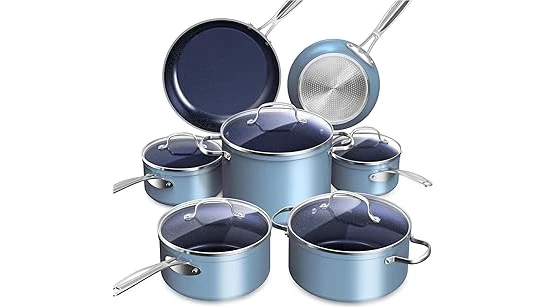
Leave a Reply