
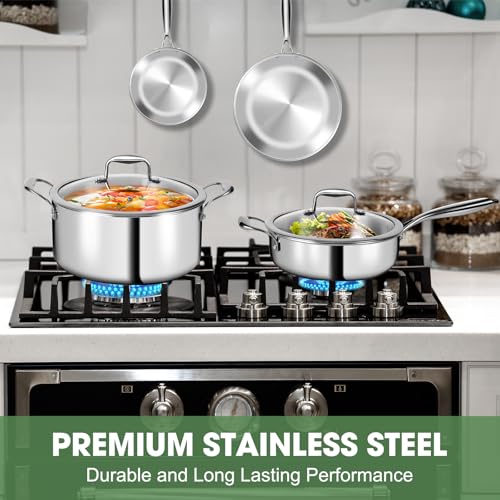
Both work well: stainless steel offers sear and durability, while titanium is light and nonstick.
I remember standing at my stove, deciding between stainless steel vs titanium cookware after gifting my old pans. Both promised great cooking. Stainless steel felt rugged and real. Titanium claimed lightness and easy release. I tested both for weeks. Below I share hands-on notes from my kitchen. My goal is simple: help you choose stainless steel vs titanium cookware that fits your life.
Is stainless steel cookware Good?
I’ll say yes — with a caveat. Stainless steel cookware is great for searing, browning, and oven use. It’s sturdy. It handles high heat without fear. For home cooks who like a good crust on meat or a reliable pan for gravy, stainless steel works best. It is good for those who want long life and no coatings to worry about. My verdict: yes for serious cooks and people who want a pan that lasts.
I used stainless steel cookware for stews, steaks, and sauce reductions. Once, I seared a roast at high heat, deglazed with wine, and made a pan sauce that tasted like a restaurant. The pan cleaned up after a soak and a scrub. Another time, I forgot a pot in the oven at 400°F and it came out fine. These small wins made me trust stainless steel cookware for everyday work and heavy use.

What Makes It Stand Out / Key Features
- Excellent heat conduction when bonded with aluminum or copper core.
- High-heat tolerance for searing and oven use.
- No nonstick coating—no flaking or chemical wear.
- Durable, long lifespan with proper care.
- Works on gas, electric, and induction stoves.
What I Like
- Reliable browning and fond for sauces.
- Oven-safe for finishing dishes.
- Feels solid in hand—no flexing.
- Resists scratches and scrubbing.
- Simple to repair or re-polish if needed.
What Could Be Better
- Food can stick if not preheated or oiled properly.
- Heavier than titanium—can tire your wrist.
- Requires more elbow grease to clean burned bits.
My Recommendation
For cooks who love high-heat searing and long-lasting gear, stainless steel cookware is a smart buy. It’s widely available and offers strong value.
| Best For | Why |
|---|---|
| Searing meat | Handles high heat and builds fond well. |
| Bakers and roasters | Oven-safe and stable at high temps. |
| Long-term use | Durable and low maintenance over years. |
Is titanium cookware Good?
It depends on what you value. Titanium cookware shines for lightness and ease of use. It often has a nonstick-like surface without traditional chemical coatings. For people who cook quick meals, stir-fry, or want a pan that’s easy to lift, titanium cookware is attractive. My verdict: yes for low-fat cooking and fast, easy clean-up. It’s ideal for busy cooks and small kitchens.
I tested titanium cookware for eggs, fish, and weeknight stir-fries. The first time I made an omelet, it slid out with almost no oil. I appreciated how quick the pan warmed and how little I needed to scrub afterward. Once, I carried a full saucepan from stovetop to dining table—its light weight made it feel effortless. Those moments showed how titanium cookware changes daily cooking routines.

What Makes It Stand Out / Key Features
- Very light weight for easy handling.
- Often offers nonstick-like performance without PTFE.
- Fast heating and cooling.
- Corrosion resistant and inert surface.
- Often rated for induction and oven use (check spec).
What I Like
- Easy release for eggs and fish.
- Fast, even cooking for quick meals.
- Comfortable to lift when full.
- Minimal scrubbing after use.
- Modern, sleek look on the stove.
What Could Be Better
- Less effective for deep searing or fond development.
- Some titanium pans are pricey for what you get.
- Thin models can dent if mishandled.
My Recommendation
Choose titanium cookware if you want light pans, easy clean-up, and gentle cooking. Great for busy homes and low-oil cooking. Affordable to high-end options exist.
| Best For | Why |
|---|---|
| Everyday quick cooking | Heats fast and releases food easily. |
| Small kitchens | Lightweight and easy to store or lift. |
| Low-oil diets | Nonstick-like surface reduces fat needs. |
stainless steel vs titanium cookware: Side-by-Side Test
I ran both pots and pans through real tasks. I cooked eggs, seared steaks, made sauces, and cleaned up. Below I compare key categories I care about. The goal: show which option fits which cook.
Cooking Functions: Which One Does More?
A quick look at common cooking tasks and how each pan performs.
| Function | Stainless Steel | Titanium |
|---|---|---|
| Searing meat | Excellent — builds fond | OK — browns but less fond |
| Frying eggs | Tricky without oil | Excellent — almost no oil |
| Sauces & deglazing | Excellent — fond helps flavor | Fair — less fond |
| Stir-frying | Good — heavier but stable | Excellent — light and quick |
Stainless Steel – 9/10 | Titanium – 8/10
“Stainless steel wins for high-heat and sauce work. Titanium wins for delicate and quick tasks.”
Heat & Performance: Which Heats Better?
How quickly and evenly the pans respond.
| Aspect | Stainless Steel | Titanium |
|---|---|---|
| Heat retention | High when clad with core | Lower—cools faster |
| Heat control | Precise with layered base | Responsive but less steady |
| Max safe heat | Very high | High but check spec |
| Hot spots | Few with good build | Possible in thin pans |
Stainless Steel – 9/10 | Titanium – 7/10
“Stainless steel has the edge for steady high-heat work. Titanium is quick but less stable.”
Durability & Longevity: Which Lasts Longer?
Which pan stands up to heavy use.
| Test | Stainless Steel | Titanium |
|---|---|---|
| Scratch resistance | High | Good (varies) |
| Dent resistance | High | Lower if thin |
| Coating wear | No coating—none to wear | No PTFE in some—varies |
| Long-term care | Easy—polish or recondition | Simple—avoid metal knocks |
Stainless Steel – 9/10 | Titanium – 8/10
“Stainless steel is more foolproof long-term. Titanium is durable but depends on build quality.”
Weight & Handling: Which Feels Better?
Comfort and ease of use at the stove.
| Characteristic | Stainless Steel | Titanium |
|---|---|---|
| Weight | Heavy | Very light |
| Lift when full | Heavier to lift | Easy to lift |
| Pouring comfort | Stable pour | Fast maneuvering |
| One-handed use | Harder | Easy |
Stainless Steel – 7/10 | Titanium – 9/10
“Titanium wins for handling and quick moves. Stainless steel feels solid but heavy.”
Maintenance & Cleaning: Which Is Easier?
Daily care and clean-up after tough jobs.
| Task | Stainless Steel | Titanium |
|---|---|---|
| Nonstick cleanup | Needs scrubbing | Wipes clean easily |
| Dishwasher safe | Often yes | Varies—check manual |
| Stain removal | Polish or paste | Usually simple |
| Seasoning | Not required | Not required |
Stainless Steel – 7/10 | Titanium – 9/10
“Titanium is easier to keep clean day to day. Stainless steel needs more work for stuck bits.”
Value for Money: Which Gives More?
Cost vs performance for different budgets.
| Factor | Stainless Steel | Titanium |
|---|---|---|
| Entry cost | Affordable to mid-range | Mid to high |
| Long-term value | High due to longevity | Good if well-built |
| Replacement frequency | Low | Low to medium |
| Resale or heirloom | Better | Fair |
Stainless Steel – 9/10 | Titanium – 7/10
“For long term value and return on investment, stainless steel often leads. Titanium pays off for light use.”
Final Verdict: Which Should You Buy?
Stainless steel wins if you want long-term strength, high-heat work, and classic performance. It’s my pick for steak, sauces, and oven tasks. Titanium wins if you want light pans, easy cooking, and fast clean-up. It’s my pick for eggs, quick meals, and tiny kitchens.
Choose stainless steel for durability and serious cooking. Choose titanium for speed, low-fat cooking, and easy handling. Both fit different needs in the kitchen.
FAQs Of stainless steel vs titanium cookware
What is the main difference between stainless steel vs titanium cookware?
Stainless steel is heavier and great for searing. Titanium is lighter and offers easy release. Both are durable but serve different cooking styles.
Does titanium cookware replace stainless steel for all tasks?
No. Titanium excels at light, quick cooking. For deep sears and sauce work, stainless steel is better. I use both for different jobs.
Which is safer: stainless steel or titanium?
Both are safe when made well. Stainless steel is inert. Titanium coatings often avoid PTFE. Check manufacturer specs for any coating details.
Which is easier to clean: stainless steel or titanium?
Titanium is generally easier to clean due to its nonstick surface. Stainless steel can need more scrubbing for stuck-on food.
Which offers better value in the long run for stainless steel vs titanium cookware?
Stainless steel usually offers better long-term value because it lasts and resists damage. Titanium gives convenience value, but cost varies.

Leave a Reply