
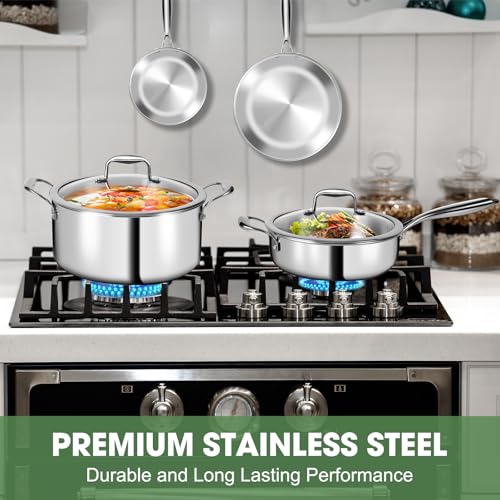
Both are great: stainless steel for searing and durability; titanium for light, nonstick cooking.
I picture a weeknight dinner where you need a pan that browns a steak and another you can toss eggs in without fuss. I’ve used both stainless steel vs titanium cookware in real kitchens. Stainless steel impressed me with heat control and a sear; titanium won for light weight and easy cleanup. I tested both and will share what worked, when, and who should pick which.
Is Stainless Steel Cookware Good?
Yes — stainless steel cookware is excellent for cooks who want durability and precise heat control. I rely on stainless steel for browning meat, making pan sauces, and deglazing. It holds heat, gives a great sear, and works on induction. For busy home cooks who like to finish sauces in the pan, stainless steel is a reliable choice.
I remember a Sunday when I seared pork chops on high heat and built a pan sauce from the fond. That stainless steel pan saved the day; the sauce came together and cleaned up fine after soaking. Another time I used a stainless pot for soup that needed long simmering. It never warped. These hands-on moments convinced me stainless steel cookware is a kitchen workhorse.

What Makes It Stand Out / Key Features
- Excellent heat retention and even cooking (often 3-ply or more).
- Durable, scratch-resistant surface that lasts years.
- Works on all cooktops including induction.
- High-heat tolerance for searing and deglazing.
- Oven and dishwasher safe on many sets.
What I Like
- Consistent searing—great for steaks and caramelizing.
- Solid weight gives a professional feel and even heat.
- The pans develop fond that makes sauces taste better.
- No chemical coatings to worry about at high heat.
- Long lifespan; I expect years of use with care.
What Could Be Better
- Food can stick if not preheated or if you don’t use enough fat.
- Heavier weight can be tiring for some users.
- Requires a bit more skill to avoid sticking and to clean properly.
My Recommendation
If you love searing, simmering, and building sauces, choose stainless steel cookware for its reliability and heat control.
| Best For | Why |
|---|---|
| Searing meats | Superior heat and fond formation |
| Oven finishing | High heat tolerance and sturdy build |
| Induction stoves | Magnetic base works reliably |
Is Titanium Cookware Good?
It depends — titanium cookware is excellent if you want light pans and easy cleanup. I turn to titanium when I want a nonstick-like feel without heavy coatings. It’s notably lighter than stainless steel and often marketed as very hard and corrosion-resistant. For quick weeknight meals and egg-based dishes, titanium excels.
In my kitchen, titanium pans became my go-to for omelets and stir-fries. I loved how little oil I needed and how fast cleanup was. On a camping trip, the low weight made a big difference—cooking on a portable stove felt effortless. Those practical uses showed me titanium cookware is great for speed and convenience.
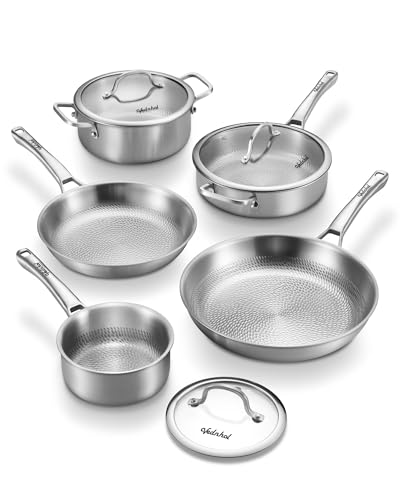
What Makes It Stand Out / Key Features
- Very lightweight compared to stainless steel.
- Often has a nonstick surface or naturally low-stick properties.
- Corrosion and rust resistant; good for outdoors.
- Fast to heat and cool—good for quick cooking.
- Usually PFAS/PFOA/PTFE free on modern coated versions.
What I Like
- Easy to lift and move—ideal for seniors or camping.
- Simple cleanup; eggs slide out with little oil.
- Good for quick jobs like sautéing and frying.
- Feels modern and often has a sleek finish.
- Less worry about seasoning and rust than carbon steel.
What Could Be Better
- Not as good at high-heat searing compared to stainless steel.
- Some lightweight titanium pans can warp under extreme heat.
- Premium titanium cookware can be costly for full sets.
My Recommendation
Choose titanium cookware if you value light pans, quick cleanup, and easy daily cooking.
| Best For | Why |
|---|---|
| Eggs and delicate food | Low-stick surface, minimal oil needed |
| Camping and travel | Lightweight and corrosion resistant |
| Quick weeknight meals | Heats fast and cleans up easily |
stainless steel vs titanium cookware: Side-by-Side Test
I compared stainless steel vs titanium cookware head-to-head. I tested heat, sticking, weight, cleanup, and value. Below are clear category-by-category notes from my hands-on use.
Cooking Functions: Which One Does More?
Here I look at searing, deglazing, simmering, and gentle cooking.
| Function | Stainless Steel | Titanium |
|---|---|---|
| Searing steaks | Excellent | Okay |
| Deglazing for sauces | Excellent | Poor to fair |
| Simmering soups | Great | Good |
| Cooking eggs | Tricky | Excellent |
Rating: Stainless Steel – 9/10 | Titanium – 7/10
“Stainless steel wins for heavy-duty cooking and sauce work; titanium wins for delicate, low-stick cooking.”
Heat Control & Performance
How well each pans hold and spread heat.
| Metric | Stainless Steel | Titanium |
|---|---|---|
| Even heat | Very even (multi-ply) | Good but lighter mass |
| Heat retention | High | Low to moderate |
| High-heat use | Excellent | Limited |
| Quick temperature changes | Slower | Faster |
Rating: Stainless Steel – 9/10 | Titanium – 7/10
“Stainless steel holds heat; titanium responds faster but doesn’t keep heat as long.”
Sticking & Cleanup
Which is easier to clean after cooking.
| Task | Stainless Steel | Titanium |
|---|---|---|
| Eggs | Sticks unless careful | Usually release well |
| Greasy pans | Needs soaking | Wipes clean easily |
| Dishwasher safe | Often yes | Often yes |
| Stain resistance | High | Very high |
Rating: Stainless Steel – 7/10 | Titanium – 9/10
“Titanium is easier for quick cleanup and sticky foods; stainless needs technique for best results.”
Weight & Handling
How heavy and comfortable each is to use daily.
| Metric | Stainless Steel | Titanium |
|---|---|---|
| Weight | Heavy | Light |
| Ease of flipping | Tiring | Easy |
| Storage | Bulkier | Compact feel |
| Travel/camping | Poor | Excellent |
Rating: Stainless Steel – 6/10 | Titanium – 9/10
“Titanium is best for light, nimble cooking; stainless steel feels substantial but heavy.”
Durability & Longevity
Which stands up to years of use and rough treatment.
| Factor | Stainless Steel | Titanium |
|---|---|---|
| Scratch resistance | High | High |
| Warping | Low with good core | Possible in cheap designs |
| Coating wear | None | Depends on finish |
| Corrosion | Low | Very low |
Rating: Stainless Steel – 9/10 | Titanium – 8/10
“Stainless steel often lasts longest in busy kitchens; quality titanium is durable too, but verify construction.”
Value for Money
Cost vs performance for typical users.
| Aspect | Stainless Steel | Titanium |
|---|---|---|
| Price per pan | Moderate to high | Moderate to high |
| Long-term value | High | Good if used often |
| Replacement cost | Low (repairable) | Higher for premium sets |
| Resale/hand-me-down value | High | Moderate |
Rating: Stainless Steel – 9/10 | Titanium – 7/10
“Stainless steel offers strong long-term value; titanium is worth it if you need light weight and easy cleaning.”
Final Verdict: Which Should You Buy?
Stainless steel cookware wins if you want top heat control, lifetime durability, and pro-level searing. Buy stainless steel if you love making pan sauces and want a set that lasts. Stainless steel vs titanium cookware here leans to stainless for heavy-duty cooking and long-term value.
Choose titanium cookware if you want light pans, fast cleanup, and gentle nonstick cooking. Pick titanium for eggs, travel, or if heavy pans tire you. For many kitchens, a mix—stainless steel for searing, titanium for everyday eggs—gives the best balance.
FAQs Of stainless steel vs titanium cookware
What is the main difference between stainless steel vs titanium cookware?
Stainless steel excels at heat retention and searing. Titanium is lighter and often easier to clean. Use stainless for sauces and high-heat work; use titanium for eggs and travel.
Is titanium safer than stainless steel?
Both are safe when high quality. Stainless steel has no coating to wear. Titanium may have a nonstick finish on some products; choose PFAS/PFOA-free versions.
Can I use stainless steel vs titanium cookware on induction?
Stainless steel often works on induction if it has a magnetic base. Titanium pans need a magnetic layer to work; check the product specs.
Which is better for beginners: stainless steel or titanium?
Titanium is easier for beginners because it’s lighter and more forgiving with sticking. Stainless steel has a learning curve but rewards technique.
Should I buy a full set of stainless steel vs titanium cookware?
Consider your needs. I recommend one stainless steel skillet for searing and one titanium pan for daily quick meals. A mixed set often serves most cooks best.

Leave a Reply