
Both work well; nonstick is easy for everyday cooking, hard-anodized wins on durability.
I stood over a sticky skillet and asked myself which is smarter to buy: nonstick vs hard anodized cookware. I’ve used both for years — nonstick for quick eggs and pancakes, hard anodized for searing and everyday family meals. Both are useful, but they solve different kitchen problems. I tested pans, cooked breakfasts and weeknight dinners, and will share what I learned so you can pick the right one for your needs.
Is Nonstick Good?
Yes — for most home cooks who want fuss-free cooking. Nonstick pans shine when you want easy release, fast cleanup, and lower-fat cooking. If you often make eggs, crepes, or delicate fish, nonstick saves time and reduces stress. It’s generally best for low-to-medium heat cooking, and it’s perfect if you don’t want to babysit a hot pan. For me, nonstick suits quick breakfasts and reheating dishes.
I remember a rainy Sunday when I made omelets for guests. The nonstick pan let me cook three different flavored omelets back-to-back without scrubbing. Another time, I used a nonstick skillet to make a quick stir-fry for dinner after work; the food didn’t stick, and cleanup took under a minute. Those small wins add up. Still, nonstick’s coating needs care. I avoid high heat and metal tools to keep it working longer.
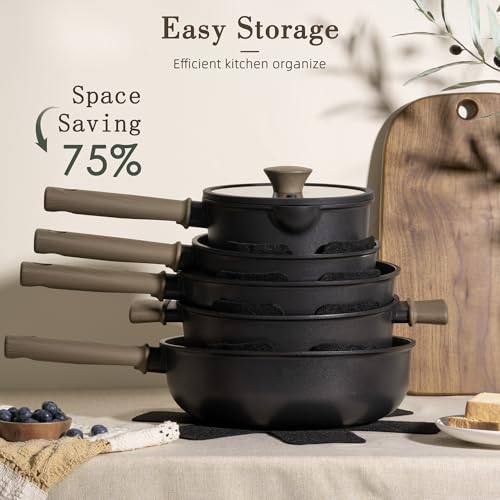
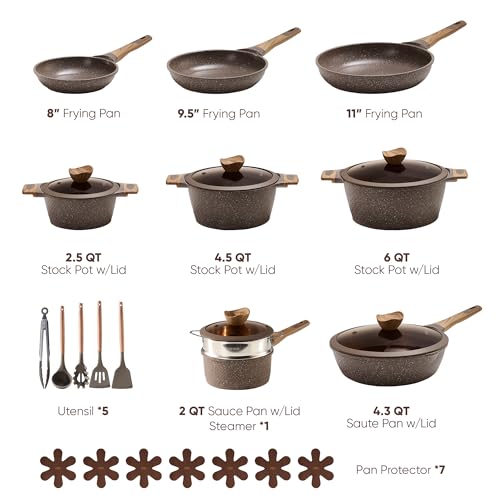
Astercook Non Stick Pots and Pans Set, Healthy Non-Toxic Titanium Induction Kitchen Cookware Sets for Cooking with Frying Pans, PFAS/PTFE/PFOA & PFOS Free, Black, 19 Pcs

What Makes It Stand Out / Key Features
- Low-friction nonstick surface for easy food release.
- PFOA/PFOS-free options available for safer cooking.
- Lightweight construction for quick handling.
- Works well on gas, electric, and many induction tops (model dependent).
- Often sold in multi-piece sets for full-kitchen coverage.
What I Like
- Food slides off — eggs and pancakes come out perfectly.
- Fast cleanup — a quick wipe or gentle wash is enough.
- Uses less oil, which helps with lower-fat cooking.
- Light pans heat up quickly and are easy to maneuver.
- Affordable sets give good kitchen coverage for a low price.
What Could Be Better
- Coating can wear over time, especially with high heat or metal utensils.
- Not ideal for heavy searing or browning at very high temperatures.
- Some cheaper nonstick pans warp sooner than sturdier options.
My Recommendation
Choose nonstick if you want easy cooking and quick cleanup for everyday meals. Great value and user-friendly for busy homes.
| Best For | Why |
|---|---|
| Quick breakfasts | Nonstick prevents eggs from sticking and cleans fast |
| Beginner cooks | Less risk of burning and easier handling |
| Low-fat cooking | Needs little or no oil |
Is Hard Anodized Cookware Good?
It depends — but often yes for serious home chefs. Hard anodized cookware is treated aluminum that’s denser and more scratch resistant than basic nonstick. It marries some nonstick benefits with greater durability and higher-heat performance. For me, hard anodized pans became the go-to when I needed steady heat, good browning, and a pan that survives daily use.
I seared steak in a hard anodized skillet and got a much better crust than I ever managed in my old nonstick. I also used a hard anodized set for family dinners where I browned meat and then made a pan sauce — the pan held up without warping. Over months, I noticed only minor wear. It’s not immune to scratching, but it tolerates metal tools better and stands up to regular oven use.
All-Clad HA1 Hard Anodized Nonstick Fry Pan Set – 5-Piece Cookware, 8″, 10″, 12″ Skillets with Lid, Induction Compatible, Oven Safe to 500°F, Lid Safe to 350°F, Black

What Makes It Stand Out / Key Features
- Hard-anodized aluminum for toughness and even heating.
- Often paired with a nonstick coating that resists wear.
- Better high-heat tolerance and oven-safe ranges.
- Heavier, more stable build that resists warping.
- Many models are induction compatible and dishwasher safe (model dependent).
What I Like
- Great searing and browning at higher heat.
- Lasts longer under daily use than standard nonstick.
- Stays flat and stable on the stove — no warping.
- Handles hold up and stay cool on stovetop.
- Makes one-pan braises and oven finishes easy.
What Could Be Better
- Heavier weight can be tiring for some users.
- Typically costlier than basic nonstick sets.
- Still needs care to avoid deep scratches to the coating.
My Recommendation
Pick hard anodized cookware if you want durability and performance for searing and everyday heavy use.
| Best For | Why |
|---|---|
| Searing meats | Handles high heat and browns well |
| Long-term value | Durable build lasts longer under heavy use |
| Oven finishes | Oven-safe at higher temps |
nonstick vs hard anodized cookware: Side-by-Side Test
I compared nonstick vs hard anodized cookware across common kitchen tasks. Below are clear, practical categories from my tests and daily use.
Cooking Functions: Which One Does More?
Short look at what each pan does best when cooking different foods.
| Function | Nonstick | Hard Anodized |
|---|---|---|
| Eggs and delicate foods | Excellent release, low oil | Good, needs slight oil |
| Searing meat | Poor at high heat | Excellent crust and browning |
| Pan sauces | Can be weak due to low fond | Strong fond, better sauce flavor |
| Braising/oven finishing | Limited oven temp | Oven-safe to higher temps |
Rating: Nonstick – 8/10 | Hard Anodized – 9/10
“Hard anodized takes the lead for more cooking functions due to higher-heat capability.”
Durability & Wear
How each surface holds up over months of use and minor abuse.
| Wear Test | Nonstick | Hard Anodized |
|---|---|---|
| Scratch resistance | Moderate; avoid metal | Better; resists wear |
| Warping over time | More likely | Less likely |
| Coating longevity | Shorter on budget models | Longer with quality brands |
| Daily-use resilience | Good with care | Very good |
Rating: Nonstick – 7/10 | Hard Anodized – 9/10
“Hard anodized wins durability; it tolerates daily use and higher heat much better.”
Heat Distribution & Performance
Which one gives more even heat and better results on the stove.
| Heat Factor | Nonstick | Hard Anodized |
|---|---|---|
| Evenness of heat | Good for quick tasks | Excellent across surface |
| Heat retention | Warms fast, cools fast | Holds heat longer |
| High-heat use | Not recommended | Designed for higher temps |
| Stovetop responsiveness | Very quick | Steady and even |
Rating: Nonstick – 7/10 | Hard Anodized – 9/10
“Hard anodized edges ahead for stable, even cooking, especially at higher temperatures.”
Ease of Cleaning
How simple is cleanup after real meals?
| Cleanup Task | Nonstick | Hard Anodized |
|---|---|---|
| Eggs & pancakes | Wipes clean | Needs soaking/wash |
| Stuck-on sauce | Rare | May require scrubbing |
| Dishwasher safety | Often yes (check label) | Some are dishwasher-safe |
| Routine maintenance | Gentle wash | Normal washing, less delicate |
Rating: Nonstick – 9/10 | Hard Anodized – 7/10
“Nonstick wins for cleanup and fuss-free use — great for quick meals.”
Safety & Health
Concerns about coatings, fumes, and safe use.
| Safety Topic | Nonstick | Hard Anodized |
|---|---|---|
| Risk of fumes at very high heat | Higher risk if overheated | Lower risk; tolerates more heat |
| Coating chemicals | Modern PFOA-free options available | Often similar nonstick finish but thicker base |
| Metal leaching | Low if coating intact | Low; anodized surface seals aluminum |
| Safe for everyday use | Yes with correct temps | Yes, more forgiving |
Rating: Nonstick – 8/10 | Hard Anodized – 9/10
“Hard anodized is slightly safer for higher-heat cooking and long-term wear.”
Value for Money
Which gives more bang for your buck over time?
| Value Metric | Nonstick | Hard Anodized |
|---|---|---|
| Initial price | Usually lower | Usually higher |
| Replacement frequency | May need replacing sooner | Lasts longer, so less often |
| Performance per dollar | High for light use | High for heavy use |
| Long-term cost | Can be higher if replaced often | Better amortized value |
Rating: Nonstick – 8/10 | Hard Anodized – 8/10
“Nonstick is cost-effective short-term; hard anodized is a smarter long-term buy for frequent cooks.”
Final Verdict: Which Should You Buy?
Nonstick is best if you want hassle-free cooking and quick cleanup. It’s ideal for eggs, pancakes, and light weekday meals. If you cook gently and want an affordable, easy option, choose nonstick.
Hard anodized cookware is better if you need durability, high-heat performance, and longevity. If you sear meats, finish dishes in the oven, or cook a lot, hard anodized is worth the extra cost.
FAQs Of nonstick vs hard anodized cookware
What is the main difference between nonstick vs hard anodized cookware?
Nonstick refers to the coating that prevents sticking. Hard anodized describes treated aluminum that is harder and more heat-tolerant. Hard anodized often pairs with nonstick but offers more durability.
Which is safer at high heat: nonstick vs hard anodized cookware?
Hard anodized is safer for high heat. Nonstick can release fumes if overheated. Use nonstick at low-to-medium heat and hard anodized for searing.
Which cleans easier: nonstick vs hard anodized cookware?
Nonstick cleans easier. Food slides off, so wiping or gentle washing is usually enough. Hard anodized may need more scrubbing after browning.
Which lasts longer: nonstick vs hard anodized cookware?
Hard anodized usually lasts longer. Its surface resists wear and warping. Nonstick works well but may need replacement sooner if used roughly.
Can you use metal utensils on nonstick vs hard anodized cookware?
Avoid metal on nonstick. Hard anodized can tolerate tougher use, but metal can still damage the coating. Use wood or silicone for best life.


Leave a Reply