
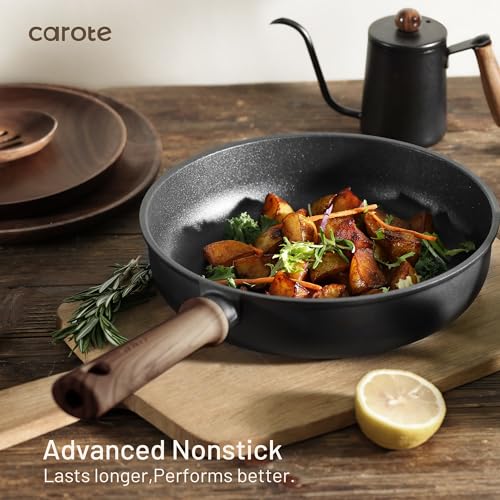
Both work well: nonstick for delicate cooking, granite for durability and higher-heat searing.
I was standing over a stove with a sticky omelet and a scratched pan and asked myself the classic nonstick vs granite cookware question. I’ve cooked with both types for years — nonstick for quick weekday eggs and granite-coated pans for tougher tasks. Both are useful, but one shines for gentle foods while the other handles heat and wear better. I’ve tested nonstick vs granite cookware in my kitchen and I’ll share what worked, what didn’t, and which one you should pick.
Is nonstick Good?
I’ll be blunt: yes — nonstick is excellent for many cooks. If you make eggs, pancakes, fish, or quick stir-fries, a good nonstick pan saves time and stress. It keeps food from clinging. It cleans fast. For me, nonstick has been a weekday hero. I used a nonstick set for years to make low-fuss breakfasts for my family. Those morning rushes demanded pans that let eggs slide right out. That convenience felt like a small miracle.
That said, nonstick has limits. It can scratch if you use metal utensils. High heat can wear its coating faster. I learned this the hard way when I tried searing steaks on a nonstick skillet — the pan did fine for the steak’s exterior but lost its nonstick sheen after repeated high-heat use. So, nonstick is great for delicate cooking and easy cleanup, but it needs gentler care. For nonstick vs granite cookware decisions, nonstick often wins on ease and speed.
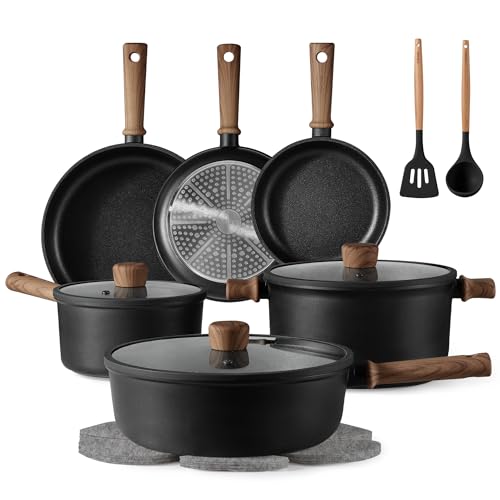
What Makes It Stand Out / Key Features
- Very low food adhesion for eggs, pancakes, and fish.
- Generally lightweight and easy to handle.
- PFOA/PFOS-free coatings on modern sets.
- Quick cleanup with mild soap and a sponge.
- Often affordable and widely available in many sizes.
What I Like
- Food releases effortlessly — I rarely scrape burnt bits.
- Fast weeknight meals — fewer steps and less oil.
- Easy to clean; saves time after dinner.
- Good for low-fat cooking; I use less oil for breakfast.
- Great for beginner cooks who fear sticking and burning.
What Could Be Better
- Coating can wear with metal utensils or high heat.
- Not ideal for long-term high-heat searing.
- Older or cheap nonstick can flake after heavy use.
My Recommendation
Choose nonstick if you want easy cleanup and cook delicate foods often. Great value and widely sold.
| Best For | Why |
|---|---|
| Breakfast cooks | Eggs and pancakes release cleanly. |
| Busy families | Fast meals and simple cleanup. |
| Beginners | Less skill needed to avoid sticking. |
Is granite Good?
It depends — granite-coated cookware is a solid all-rounder. For me, granite pans felt sturdier. They handled medium-high heat better and showed fewer scratches over time. I used granite-coated pans for sautéing vegetables, browning chicken, and one-pan dinners. They took a beating from spatulas and metal tongs more often than my nonstick pans did and still looked better after months of use.
I have a clear memory of searing pork chops in a granite pan. The pan gave a deep brown crust without the food sticking. Cleanup took a little more elbow grease than nonstick, but it wasn’t hard. For nonstick vs granite cookware comparisons, granite often wins when you need a tougher surface and more heat tolerance. It sits between classic nonstick and full stainless or cast iron in its feel and performance.

What Makes It Stand Out / Key Features
- Thicker, grainy coating that resists scratches.
- Better tolerance for medium-high heat than standard nonstick.
- Often marketed as PTFE/PFOA-free options.
- Heavier build for more stable cooking on stovetops.
- Good sear and browning for meats and veg.
What I Like
- Handles more rigorous cooking than regular nonstick.
- Feels durable — fewer signs of wear after months.
- Great for sautéing and one-pan dinners.
- Less oil needed than bare metal pans.
- Looks attractive on the stove; hides minor marks.
What Could Be Better
- Heavier than standard nonstick; not as quick to heat.
- Still not ideal for very high-heat searing like cast iron.
- Some brands vary in true scratch resistance.
My Recommendation
Pick granite cookware if you want durability with nonstick-like release and better heat tolerance. Good value for active kitchens.
| Best For | Why |
|---|---|
| Home cooks who sear | Better browning without immediate wear. |
| Durability seekers | Resists scratches and holds up to use. |
| One-pan meals | Handles varied cooking tasks well. |
nonstick vs granite cookware: Side-by-Side Test
I ran a simple set of tests at home. I used the nonstick pan for delicate foods and the granite pan for heavier work. Below are clear comparisons based on daily cooking.
Cooking Functions: Which One Does More?
A look at common cooking tasks and which pan performs them best.
| Task | Nonstick | Granite |
|---|---|---|
| Eggs & pancakes | Excellent — no sticking | Good — may need more oil |
| Searing meats | Fair — avoid very high heat | Good — better browning |
| Sauces & acidic foods | Good — careful with coating | Good — more tolerant |
| Stir-fry & veg | Excellent — quick release | Very good — holds heat |
Rating: Nonstick – 9/10 | Granite – 8/10
“Nonstick wins for delicate cooking; granite is stronger for browning and multi-step dishes.”
Durability & Scratch Resistance
How long each holds up to regular use.
| Test | Nonstick | Granite |
|---|---|---|
| Metal utensil use | Not recommended | More tolerant |
| Daily scouring | Can wear off | Holds finish better |
| Long-term coating life | Variable | Usually longer |
| Appearance over time | Shows scratches sooner | Hides minor marks |
Rating: Nonstick – 6/10 | Granite – 8/10
“Granite takes the edge on durability and scratch resistance in everyday kitchens.”
Heat Distribution & Speed
Which pan heats evenly and fast.
| Aspect | Nonstick | Granite |
|---|---|---|
| Heat-up speed | Faster, lighter | Slower, heavier |
| Evenness | Good with layered base | Very even in mid-range |
| High-heat stability | Less stable | More stable |
| Stovetop variance | Works on most stoves | Works well on most stoves |
Rating: Nonstick – 8/10 | Granite – 8/10
“Nonstick heats faster; granite keeps a steadier heat for longer tasks.”
Safety & Health
Nonstick coatings and safety, compared to granite surfaces.
| Concern | Nonstick | Granite |
|---|---|---|
| Coating chemicals | Modern sets are PFOA-free | Often PTFE/PTFE alternatives |
| High-temp fumes | Risk if overheated | Lower risk at medium-high |
| Food contamination | Risk if coating flakes | Lower risk if intact |
| Cleaning chemicals needed | Minimal | Minimal to moderate |
Rating: Nonstick – 7/10 | Granite – 8/10
“Granite offers a slight safety edge if you cook at higher temps regularly.”
Ease of Use & Cleaning
How painless is daily use.
| Task | Nonstick | Granite |
|---|---|---|
| Food release | Excellent | Very good |
| Hand wash effort | Very easy | Easy to moderate |
| Dishwasher safe | Often yes, but not ideal | Often yes, check brand |
| Maintenance | Gentle care | Moderate care |
Rating: Nonstick – 9/10 | Granite – 7/10
“Nonstick is easier to clean. Granite needs a bit more care but still manageable.”
Versatility & Oven Use
Which pans handle more types of cooking.
| Use | Nonstick | Granite |
|---|---|---|
| Oven-safe temps | Often limited | Generally higher temp tolerance |
| Broiling | Not recommended | Sometimes OK |
| Broader techniques | Limited | More versatile |
| Use with metal tools | No | Sometimes yes |
Rating: Nonstick – 6/10 | Granite – 8/10
“Granite is more versatile for oven and higher-heat uses; nonstick stays best for stovetop delicate tasks.”
Value for Money
Which gives more long-term value.
| Factor | Nonstick | Granite |
|---|---|---|
| Upfront cost | Often lower | Moderate |
| Replacement frequency | May need replacing sooner | Less frequent |
| Performance per dollar | High for delicate foods | High for durability |
| Resale/long-term value | Lower | Higher |
Rating: Nonstick – 8/10 | Granite – 8/10
“Nonstick offers quick value; granite gives longer-term savings if you use it hard.”
Final Verdict: Which Should You Buy?
Nonstick wins if you want easy weekday cooking, minimal cleanup, and mostly low-heat tasks. Choose it for eggs, pancakes, and gentle frying. I recommend nonstick for renters, beginners, or busy homes.
Granite wins if you need a tougher pan that tolerates medium-high heat, searing, and heavier use. It’s better for cooks who want one pan for many tasks. For nonstick vs granite cookware decisions, weigh your cooking style and pick the pan that matches daily needs.
FAQs Of nonstick vs granite cookware
What is the main difference between nonstick vs granite cookware?
Nonstick focuses on release and ease. Granite adds a textured, tougher coating for more heat and scratch resistance.
Which is safer at high temperatures: nonstick or granite?
Granite is generally safer for higher temps. Nonstick can emit fumes if overheated. Stay within manufacturer limits.
Which cleans easier, nonstick or granite?
Nonstick cleans easier. Wipe or wash gently. Granite cleans well but may need more scrubbing for browned bits.
Can I use metal utensils on granite but not on nonstick?
Often yes. Granite tolerates metal better than standard nonstick. Still check your brand’s guidance.
Which lasts longer: nonstick or granite?
Granite usually lasts longer if you cook often at higher temperatures. Nonstick lasts well with careful use.
Note: I tested both styles in my own kitchen for months. For many readers, the nonstick vs granite cookware choice comes down to your daily cooking — delicate speed vs rough-and-ready durability.

Leave a Reply