
Are you tired of trying to cook a full meal in a kitchen that feels like a postage stamp? Many of us face the challenge of limited counter space, making it hard to find appliances that fit and still perform well. Choosing the right cooktop for compact space can transform your cooking experience, allowing you to prepare delicious meals without feeling cramped.
This guide will help you discover the best options and features to maximize your small kitchen’s potential.
Small Kitchen Cooktop Options
When space is tight, selecting the right cooktop becomes a key decision for any kitchen renovation or upgrade. The goal is to find an appliance that offers functionality and fits seamlessly into a smaller footprint without sacrificing performance. Fortunately, there are several types of cooktops designed specifically with these constraints in mind, offering a variety of features to suit different cooking styles and needs. Exploring these options will empower you to make an informed choice for your home.
Electric Induction Cooktops
Induction cooktops are a modern and efficient choice, especially for compact kitchens. They work by using magnetic fields to heat the cookware directly, rather than heating the cooktop surface itself. This makes them very energy-efficient and fast to heat up.
Because they heat the pan directly, they also have a safer surface temperature, reducing the risk of burns. For a compact space, induction models often come in sleek, low-profile designs that can be easily integrated into countertops. Their precise temperature control makes them excellent for delicate tasks like simmering sauces or melting chocolate.
Benefits of Induction for Small Kitchens
- Energy Efficiency
Induction cooktops are highly energy-efficient. They transfer almost all the energy directly to the pot or pan. This means less heat is wasted into the surrounding air compared to traditional electric or gas cooktops. This is beneficial in small kitchens where heat buildup can make the space uncomfortable. - Fast Heating and Cooling
The direct heating method means induction cooktops heat up very quickly and also cool down just as fast when the heat is turned off. This rapid response time is great for quick cooking tasks and makes cleaning easier as spills are less likely to burn onto the surface. - Precise Temperature Control
Many users find that induction offers the most precise temperature control available. This precision is invaluable for complex recipes that require specific temperatures for simmering, searing, or gentle melting. - Safety Features
The cooktop surface itself doesn’t get as hot as other types, which is a significant safety advantage, especially in homes with children or pets. Many models also include automatic shut-off features if no pot is detected or if a boil-dry condition is sensed.
Induction Cooktop Specifications
Induction cooktops come in various sizes, with 12-inch, 15-inch, and 24-inch models being popular for smaller kitchens. They typically feature smooth ceramic glass surfaces that are easy to clean. Wattage can range from 1200W for smaller units to 1800W or more for larger or dual-burner models.
Electric Smooth Top Cooktops
Electric smooth top cooktops are another popular choice for their ease of cleaning and modern appearance. They feature a flat, ceramic glass surface with heating elements located underneath. This design makes them very simple to wipe down after cooking.
While not as energy-efficient or fast as induction, they are generally more affordable and do not require special magnetic cookware. For a compact space, their seamless look can help a small kitchen feel more open and organized. Many models offer multiple heating elements of varying sizes to accommodate different pot and pan sizes.
Advantages of Smooth Top Electric for Small Spaces
- Easy Maintenance
The biggest advantage of an electric smooth top is its effortless cleaning. A simple wipe with a damp cloth is usually all that’s needed to remove spills and splatters, which is a great benefit in any kitchen, especially a smaller one where messes can feel more prominent. - Wide Availability and Affordability
Electric smooth top cooktops are widely available in many appliance stores and are often more budget-friendly than induction models. This makes them an accessible option for many homeowners looking to equip their compact kitchens. - Standard Cookware Compatibility
Unlike induction, electric smooth tops work with most types of cookware, including stainless steel, aluminum, copper, and glass. This means you likely won’t need to buy new pots and pans to use your cooktop, saving additional expense and hassle. - Even Heat Distribution
While not as rapid as induction, the heating elements beneath the glass surface distribute heat relatively evenly to the cookware. This ensures consistent cooking results for most everyday dishes.
Smooth Top Electric Cooktop Features
These cooktops typically offer two to four heating elements, often with dual-ring elements that can be adjusted for smaller or larger pans. Control knobs can be located on the front or side of the unit. Wattage for individual burners can vary, generally ranging from 1000W to 2000W.
Gas Cooktops in Limited Spaces
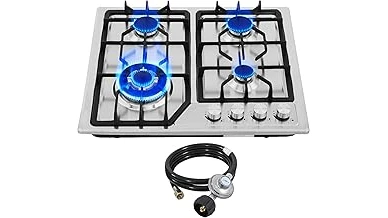
While less common in true compact designs due to venting requirements and fuel lines, small gas cooktops are still an option for those who prefer the responsiveness of gas flames. They offer instant heat and visual control over the flame, which many cooks find indispensable.
For a compact space, you might find 2-burner or 3-burner gas models designed to fit into smaller cutouts. The primary consideration here is proper ventilation, as gas cooktops produce combustion byproducts that need to be safely vented outside the home.
Why Consider Gas for a Compact Kitchen
- Precise Flame Control
Gas cooktops provide immediate and visual feedback on heat levels through the flame itself. This allows for very precise control over cooking temperatures, which is ideal for tasks requiring delicate adjustments, like charring vegetables or quickly reducing sauces. - Even Heating
The open flame wraps around the bottom and sides of the cookware, providing more even heating than some electric elements. This can lead to better searing and more consistent cooking results across the entire surface of the pan. - Independent of Electricity
Gas cooktops can continue to operate during power outages, provided they have a pilot light or manual ignition system. This is a significant advantage for reliability, especially in areas prone to frequent power disruptions. - Cookware Versatility
Like electric smooth tops, gas cooktops work with virtually any type of cookware. You don’t need special materials or magnetic properties, offering flexibility in your kitchenware choices.
Gas Cooktop Technical Considerations
Small gas cooktops often have sealed burners to prevent spills from seeping into the appliance. Ignition is usually electronic. Burner output is measured in BTUs (British Thermal Units), with common outputs ranging from 5,000 to 12,000 BTUs.
Proper installation requires a gas line and an exhaust hood system for safety and air quality.
Portable and Countertop Cooktops
For the absolute smallest spaces, or for those who need a flexible cooking solution, portable or countertop cooktops are an excellent choice. These units sit on your counter and plug into a standard electrical outlet, requiring no permanent installation.
They come in a wide variety of styles, including single or double induction burners, electric coil or smooth top burners, and even small grill or griddle tops. This makes them ideal for RVs, dorm rooms, workshops, or any situation where a full-size cooktop isn’t feasible or desired.
Advantages of Portable Cooktops
- Flexibility and Portability
The primary advantage is their ability to be moved easily. You can store them away when not in use, freeing up valuable counter space. They are perfect for temporary setups or for adding an extra cooking surface when entertaining. - No Installation Required
These units simply plug into a standard outlet, making them a plug-and-play solution. There are no complex installation procedures, no need for professional help, and no permanent alterations to your kitchen. - Cost-Effective Solutions
Portable cooktops are generally much less expensive than built-in cooktops. They offer a functional cooking solution at a lower entry price point, making them accessible for a wider range of budgets. - Variety of Types
From single induction burners to double ceramic plates, there’s a portable cooktop for almost any need. Some even offer unique functions like built-in hot plates or specialized grilling surfaces.
Choosing the Right Portable Cooktop
When selecting a portable cooktop, consider the number of burners you need, the power output (wattage), and the type of heating technology (induction, electric coil, or smooth top). Ensure the dimensions fit your available counter space and that the power requirements match your electrical outlets.
Key Features for a Compact Cooktop
When looking for a cooktop designed for a compact space, several features can make a big difference in usability and efficiency. Prioritizing these elements ensures you get the most value and functionality out of your appliance, even with limited room. Think about how you cook and what features would best support your daily routine.
Size and Dimensions
The most critical factor for a compact cooktop is its physical size. Standard cooktops can be 30 or 36 inches wide, which is often too large for small kitchens. For compact spaces, look for cooktops that are 12 inches, 15 inches, 20 inches, or 24 inches wide.
These smaller units can fit into much tighter counter cutouts, often replacing a section of countertop rather than requiring a full cabinet modification. Always measure your intended installation space precisely before purchasing.
Common Compact Cooktop Sizes
- 12-Inch Double Burner Cooktops
These are exceptionally compact, often featuring two induction or electric burners. They are perfect for very small kitchens or for adding a secondary cooking surface. - 15-Inch Cooktops
These might offer two burners or a single larger burner with a dual-zone element. They provide a bit more cooking flexibility than 12-inch models. - 20-Inch Cooktops
A 20-inch cooktop might come with two or three burners, offering a reasonable balance between size and cooking capacity for small households. - 24-Inch Cooktops
This is often the largest size considered “compact” and typically features three or four burners. It’s a good option if you need more cooking functionality but are still limited on space.
Burner Configuration and Power
The number and type of burners are crucial. A two-burner cooktop is often sufficient for single individuals or couples, while a three- or four-burner model offers more versatility for families or those who cook more elaborately.
Consider the power output (wattage for electric/induction, BTUs for gas). Higher power means faster heating, which can be a lifesaver in a busy small kitchen. Look for models with flexible burner sizes, such as dual-ring elements, that can accommodate both small saucepans and large frying pans efficiently.
Understanding Burner Power
For electric and induction cooktops, power is measured in watts. Higher wattage means more heat can be delivered quickly. For example, a 1800-watt burner will heat up faster and maintain higher temperatures than a 1200-watt burner.
For gas cooktops, power is measured in BTUs. A higher BTU rating indicates a more powerful burner capable of producing more heat. A simmer burner might have around 5,000 BTUs, while a high-output burner can reach 12,000 BTUs or more.
Ease of Cleaning
In any kitchen, ease of cleaning is important, but in a compact space, it becomes even more critical. Spills and splatters can make a small kitchen feel cluttered and dirty very quickly.
Smooth top electric and induction cooktops are generally the easiest to clean because they have a flat, seamless surface. Gas cooktops with sealed burners also offer good cleanability, as spills are contained on the surface rather than seeping into the appliance. Removable grates and burner caps on gas models can also make cleaning simpler.
Cleaning Tips for Compact Cooktops
- Wipe spills immediately
The longer spills sit, the harder they are to remove. For smooth tops, quickly wipe away any food residue before it bakes on. - Use appropriate cleaning tools
For ceramic glass cooktops, use a non-abrasive cleaner specifically designed for these surfaces and a soft cloth or sponge. Avoid scouring pads or harsh chemicals that can scratch the glass. - Regular maintenance for gas grates
For gas cooktops, clean grates and burner caps regularly. Some may be dishwasher safe, while others require hand washing. - Consider a cooktop cover
When the cooktop is not in use, a cover can protect the surface from dust and accidental spills, and also provide extra prep space.
Installation Requirements
The installation process varies significantly depending on the type of cooktop. Portable cooktops are the easiest, requiring only an outlet. Built-in electric cooktops need a dedicated electrical circuit, usually 240 volts, though some smaller models might work with 120 volts.
Gas cooktops require a gas line connection and proper ventilation. Always check the manufacturer’s specifications and local building codes to ensure your kitchen can accommodate the chosen cooktop’s installation needs. For very small kitchens, the availability of appropriate hookups can sometimes dictate the type of cooktop you can install.
Comparing Installation Needs
| Cooktop Type | Electrical Needs | Gas Needs | Ventilation | Complexity |
|---|---|---|---|---|
| Portable Electric | Standard 120V outlet | None | None (room ventilation is sufficient) | Very Easy (Plug and play) |
| Built-in Electric (240V) | Dedicated 240V circuit | None | Optional (range hood recommended) | Moderate (requires professional wiring) |
| Built-in Induction | Dedicated 240V circuit (usually) | None | Optional (range hood recommended) | Moderate (requires professional wiring) |
| Built-in Gas | May need low voltage for ignition | Dedicated gas line | Required (range hood or vent) | Complex (requires gas line and venting) |
Cooking with a Compact Cooktop
Living with a compact cooktop doesn’t mean compromising on your culinary adventures. It simply requires a bit of smart planning and technique. By understanding the capabilities and limitations of your smaller cooking surface, you can continue to prepare delicious and satisfying meals. Think of it as an opportunity to refine your cooking skills and become more efficient in the kitchen.
Smart Cooking Techniques
Maximizing your cooking experience on a compact cooktop often involves techniques that allow you to cook multiple items simultaneously or prepare ingredients efficiently. For instance, using combination cooking methods, like searing on one burner and then finishing in the oven, can save space and time. Prepping ingredients before you start cooking also ensures a smoother process.
Efficient Meal Preparation Strategies
- Mise en place
This French term means “everything in its place.” Before you turn on the heat, chop your vegetables, measure your spices, and have all your ingredients ready to go. This prevents frantic searching and potential burning while you’re cooking. - One-pot meals
Chili, stews, pasta dishes, and curries are perfect for compact cooktops. They minimize the number of pots and pans needed, reducing cleanup and maximizing the use of your limited burner space. - Utilize oven and microwave
Don’t forget your oven or microwave! They can handle tasks like baking, roasting, or reheating, freeing up your cooktop for other essential steps. For example, you can boil pasta on the cooktop while baking vegetables in the oven. - Batch cooking
Cook larger quantities of grains, proteins, or sauces when you have the chance. These can be stored and used in different meals throughout the week, reducing the need for extensive cooking sessions on your compact surface.
Choosing the Right Cookware
The type and size of cookware you use can significantly impact your cooking experience on a compact cooktop. Opt for pans that efficiently heat and are appropriately sized for the burner. Induction cooktops, as mentioned, require magnetic cookware.
For other types, consider flat-bottomed pans that make good contact with the heating element. Nesting cookware sets can save valuable storage space in a small kitchen.
Cookware Considerations
- Size matters
Avoid using pots and pans that are much larger than the burner. This wastes energy and can lead to uneven heating. Conversely, a tiny pan on a large burner may not heat efficiently. - Induction compatibility
If you have an induction cooktop, ensure your pots and pans are magnetic. A simple test is to see if a magnet sticks to the bottom of the pan. - Flat bottoms
For electric smooth tops and gas cooktops, flat-bottomed pans ensure maximum contact with the heat source, leading to more efficient and even cooking. - Stackable designs
Look for cookware that stacks neatly. This is especially helpful for smaller kitchens where storage space is at a premium.
Multitasking with Limited Burners
Cooking with only two or three burners requires a strategic approach to multitasking. This might involve using one burner for simmering while another is used for sautéing, or using a single burner for multiple steps in a recipe.
For example, you could boil water for pasta on one burner, then use the same pot for the sauce once the pasta is drained. Many recipes can be adapted to fit a limited burner setup with a little creativity.
Sample Scenario 1: A Two-Burner Meal
- Boil water for spaghetti on one burner.
- While water heats, chop garlic and onions for a simple marinara sauce.
- Once water boils, add spaghetti and cook according to package directions.
- In a separate pan on the second burner, sauté garlic and onions, then add marinara sauce and simmer.
- Drain pasta and combine with sauce.
Sample Scenario 2: A Three-Burner Dinner Party Appetizer
- Heat olive oil in a pan on burner one for searing scallops.
- Simmer a reduction sauce on burner two.
- On burner three, warm small plates for serving.
- Sear scallops until golden brown.
- Plate scallops, drizzle with reduction sauce.
Maintaining Your Compact Cooktop
Proper maintenance will ensure your compact cooktop lasts longer and continues to perform at its best. Regular cleaning and attention to manufacturer guidelines are key. This is especially true for delicate surfaces like ceramic glass.
Regular Cleaning Practices
The most important aspect of maintenance is regular cleaning. For electric and induction smooth tops, this means wiping down the surface after each use to prevent food particles from becoming baked on. For gas cooktops, this involves cleaning the grates, burner caps, and the surface around them.
Daily Cleaning Routine
- Wipe down surface
After the cooktop has cooled, use a damp cloth and mild detergent to wipe down the entire surface. - Clean spillages
Address any spills or splatters immediately to prevent them from hardening. - Dry thoroughly
Ensure the cooktop is completely dry before the next use to prevent water spots or streaks.
Deep Cleaning and Care
Beyond daily wiping, occasional deep cleaning is necessary. For ceramic glass, this might involve using a specialized cooktop cleaner and scraper for tough, baked-on residues. For gas cooktops, this could mean removing grates and burner caps for a more thorough cleaning.
Always refer to your cooktop’s manual for specific cleaning instructions. Some components, like burner grates or caps, may be dishwasher safe, while others should be hand-washed.
Periodic Deep Cleaning Steps
- Ceramic Glass Polish
Apply a specialized cooktop polish once a month to maintain shine and provide a protective layer. - Scraping Baked-On Food
Use a cooktop scraper held at a low angle to gently remove stubborn, burnt-on food from ceramic glass surfaces. Be careful not to scratch the glass. - Cleaning Gas Burner Ports
Ensure the small holes (ports) in gas burners are clear of debris. A straightened paperclip or a fine needle can be used to gently clear them if they become clogged, ensuring proper flame distribution.
Troubleshooting Common Issues
Even with proper care, you might encounter minor issues. For example, an electric smooth top might show scorch marks, or a gas burner might not ignite consistently. Many of these can be resolved with simple troubleshooting steps.
Common Problems and Solutions
- Cooktop not heating
Check that the cooktop is properly plugged in and that the circuit breaker hasn’t tripped. For gas, ensure the gas supply is on and that the igniter is functioning. - Uneven heating
Ensure your cookware is flat and properly sized for the burner. For gas, check that burner ports are not blocked. - Scratches on glass
While minor scratches are sometimes unavoidable, avoid using abrasive cleaners or sliding heavy pots across the surface. Use specialized cooktop scratch removers for very light surface marks. - Gas igniter issues
Ensure the igniter electrode is clean and dry. Sometimes, moisture or food debris can prevent proper sparking.
Frequently Asked Questions
Question: What is the best type of cooktop for a very small kitchen
Answer: For very small kitchens, induction or electric smooth-top cooktops in 12-inch or 15-inch sizes are excellent choices due to their compact footprint and easy cleaning. Portable induction burners are also a great flexible option.
Question: Do I need special pots and pans for a compact cooktop
Answer: If you choose an induction cooktop, yes, you will need magnetic cookware. Electric smooth-tops and gas cooktops work with most types of cookware, but flat-bottomed pans are recommended for best results.
Question: How much space do I need for a compact cooktop installation
Answer: Compact cooktops vary, but a 12-inch unit might require a cutout of around 11.5 inches by 20 inches, while a 24-inch unit might need approximately 23 inches by 20 inches. Always check the manufacturer’s specific dimensions.
Question: Are gas cooktops suitable for compact spaces
Answer: Small gas cooktops are available, but they require a gas line connection and proper ventilation, which can be challenging in some compact kitchen layouts. Electric or induction models are often simpler to install in tight spaces.
Question: How do I clean a ceramic glass cooktop effectively
Answer: Use a soft cloth with a non-abrasive cleaner specifically designed for ceramic glass. For tough stains, a cooktop scraper held at a low angle can help remove burnt-on food without scratching the surface.
Summary
Choosing the right cooktop for a compact space involves balancing size, functionality, and your cooking habits. Whether you opt for the efficiency of induction, the simplicity of an electric smooth top, or the precision of gas, there are excellent options available. Prioritize features like compact dimensions, easy cleaning, and suitable burner configurations to enhance your small kitchen’s utility. With smart planning and the right appliance, you can enjoy cooking without feeling cramped.

Leave a Reply