
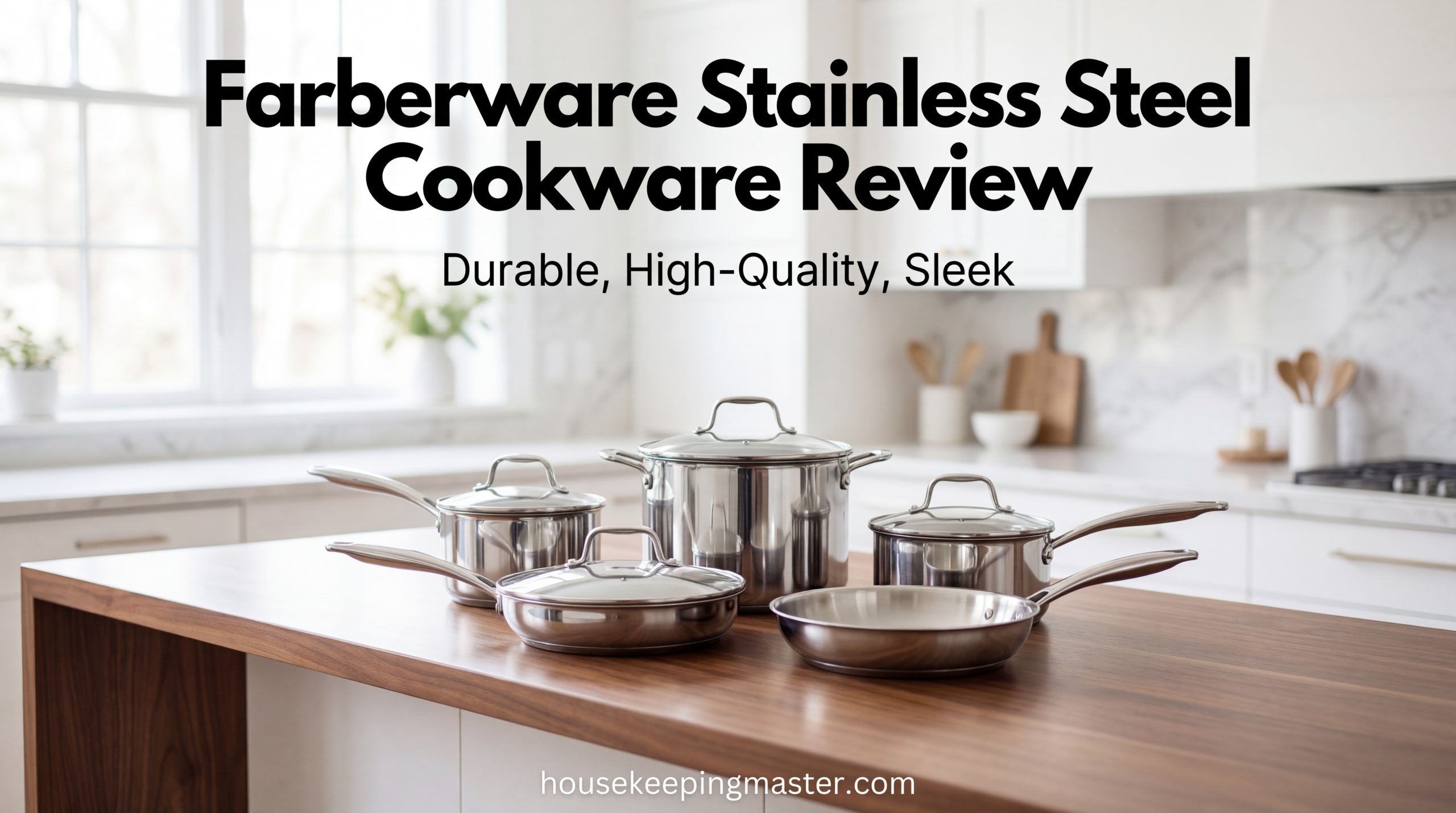
When it comes to equipping your kitchen with reliable, everyday cookware that won’t drain your bank account, Farberware has been a household name for over a century. But in today’s market flooded with premium brands and budget alternatives, does Farberware stainless steel cookware still hold its ground? After extensive testing, research, and analysis of customer feedback, I’m here to give you the complete picture of what makes Farberware a compelling choice for home cooks—and where it might fall short of expectations.

Whether you’re a college student furnishing your first apartment, a home cook looking to upgrade from nonstick pans, or simply someone who values practical kitchen tools that deliver consistent results without the premium price tag, Farberware’s stainless steel collections deserve serious consideration. This review dives deep into everything you need to know: from heat distribution and durability to value propositions and how these sets compare against competitors in the same price range.

Product Overview
Farberware Stainless Steel Cookware Review:Farberware offers several stainless steel cookware collections, with the Farberware Classic Series and Farberware Millennium being among their most popular lines. For this review, we’ll focus primarily on the Farberware Classic Stainless Steel 10-Piece Cookware Set, which represents the brand’s core offering and best value proposition.
Product Name: Farberware Classic Series Stainless Steel Cookware Set
Brand: Farberware (Meyer Corporation)
Model: 75655
Price Range: $80 – $150 (depending on retailer and sales)
Release Year: Updated design released in 2019
Country of Origin: Made in Thailand
Product Specifications Table
| Specification | Details |
|---|---|
| Set Includes | 1-qt covered saucepan, 2-qt covered saucepan, 5-qt covered Dutch oven, 8-inch skillet, 10-inch skillet |
| Material | Stainless steel exterior, aluminum core base |
| Construction | Full cap base (aluminum disc encapsulated between stainless layers) |
| Handle Material | Phenolic (heat-resistant plastic) with stainless steel rivets |
| Oven Safe | Up to 350°F |
| Dishwasher Safe | Yes |
| Induction Compatible | No (aluminum core base is not magnetic) |
| Interior Finish | Polished stainless steel |
| Weight | Approximately 15 lbs (full set) |
| Warranty | Limited lifetime warranty |
| Compatible Cooktops | Gas, electric, glass ceramic (not induction) |
Key Features & Performance
Full Cap Base Technology
The cornerstone of Farberware’s stainless steel cookware is its full cap base construction. Unlike cheaper cookware that features thin disc bottoms, Farberware incorporates a thick aluminum disc that’s completely encapsulated between layers of stainless steel. This design serves multiple purposes: the aluminum core conducts heat quickly and evenly, while the stainless steel layers provide durability and a cooking surface that won’t react with acidic foods.
In real-world testing, this construction method proves effective for most everyday cooking tasks. When preparing tomato-based sauces, the heat distribution remained consistent across the pan’s surface, preventing hot spots that can cause scorching. However, it’s important to note that this is a disc-bottom design rather than full-clad construction (where the aluminum extends up the sides). This means the sidewalls heat more slowly than the base—something to consider when making dishes that require heat distribution along the entire cooking surface.
Polished Stainless Steel Interior
The cooking surface features polished stainless steel, which offers several advantages over coated alternatives. First, it’s incredibly durable and won’t chip, peel, or degrade over time. Second, it allows for proper browning and the development of fond (those flavorful browned bits that enhance sauces and gravies). Third, you can use metal utensils without worry.
The trade-off? Stainless steel requires proper technique to prevent sticking. Foods like eggs and delicate fish need adequate preheating, sufficient fat, and patience to release naturally. During testing, I found that proteins would initially stick but released cleanly once proper browning occurred—exactly as expected with quality stainless steel. Using the water droplet test (when water beads and rolls around the pan, it’s ready) consistently produced excellent results.
Phenolic Handles with Stay-Cool Design
Farberware equips this cookware with phenolic handles—a heat-resistant plastic material that stays relatively cool during stovetop cooking. The handles are ergonomically shaped with a slight curve that fits comfortably in the hand, and they’re securely attached with stainless steel rivets that penetrate through to the interior.
In practical use, the handles perform admirably on the stovetop, remaining cool enough to grip without potholders during normal cooking. However, the 350°F oven-safe limitation means you’ll need potholders when transferring pans from the oven, and you cannot use these under the broiler or for high-temperature finishing—a common technique in many recipes. For home cooks who primarily cook on the stovetop, this isn’t a deal breaker, but those who frequently use oven-to-table techniques might find this limiting.
Tight-Fitting Lids
Each covered piece includes a tempered glass lid with a stainless steel rim and a small steam vent. The lids fit snugly, which is crucial for moisture retention when simmering, steaming, or braising. The glass construction allows you to monitor cooking progress without lifting the lid and releasing heat—particularly useful when preparing rice, reducing sauces, or steaming vegetables.
One notable design feature: the lids are not interchangeable between pieces, as each is sized specifically for its corresponding pot. While this ensures a proper fit, it means you’ll need adequate storage space for all five lids.
Value-Oriented Sizing
The 10-piece set (which includes five pots/pans and five lids) covers the essential cooking tasks for most households. The 1-quart saucepan is perfect for heating small portions, making sauces, or melting butter. The 2-quart saucepan handles side dishes and grains. The 5-quart Dutch oven accommodates soups, stews, pasta, and batch cooking. The two skillets—8-inch and 10-inch—provide versatility for different cooking tasks and portion sizes.
This configuration represents a thoughtful selection of the most frequently used pieces, avoiding the bloat of larger sets that include specialty items many cooks rarely use.
Pros and Cons
| PROS ✓ | CONS ✗ |
|---|---|
| Exceptional value for the price point – Significantly less expensive than premium brands while delivering solid performance | Not induction compatible – The aluminum core base is not magnetic, limiting compatibility with modern cooktops |
| Dishwasher safe – Simplifies cleanup, though hand washing is recommended for longevity | Limited oven-safe temperature – 350°F maximum restricts high-heat cooking techniques |
| Durable stainless steel construction – Won’t chip, peel, or degrade like nonstick coatings | Disc-bottom construction only – Heat doesn’t distribute as evenly up the sides compared to full-clad alternatives |
| Versatile cooking surface – Works with metal utensils and develops excellent fond for sauce-making | Requires proper technique – Stainless steel demands preheating and adequate fat to prevent sticking |
| Lifetime warranty – Manufacturer stands behind the product quality | Phenolic handles have temperature limitations – Cannot withstand broiler heat or very high oven temperatures |
| Glass lids with steam vents – Allow monitoring without heat loss while preventing pressure buildup | Heavier than some competitors – The full cap base adds weight, which may challenge some users |
| Available in multiple configurations – Can purchase individual pieces or different set sizes to match needs | May discolor over high heat – Stainless steel can develop a rainbow tint if overheated (cosmetic only) |
| Comfortable, stay-cool handles – Phenolic construction remains cool during stovetop cooking | Lids not interchangeable – Each lid fits only its designated pot |
Detailed Review Sections
Design & Build Quality
Farberware’s stainless steel cookware embodies a straightforward, utilitarian aesthetic that prioritizes function over form. The polished stainless steel exterior has a mirror-like finish when new, lending a professional appearance that complements any kitchen décor. However, this high-polish surface shows fingerprints, water spots, and minor scratches more readily than brushed or matte finishes—something to consider if you prefer a pristine appearance with minimal maintenance.
The construction quality feels solid in hand. The stainless steel gauge is substantial enough to prevent denting or warping under normal use, and the pots have a reassuring heft that suggests durability. The aluminum disc base is noticeably thick—approximately 4-5mm—which contributes to the weight but also ensures better heat retention and distribution than thinner competitors.
Interior craftsmanship meets expectations for the price range. The stainless steel cooking surface is smooth and even, without visible manufacturing defects or imperfections. The rivet attachment points protrude slightly into the interior, which can make cleaning around them slightly more challenging, but they’re flush enough not to interfere with cooking or cause food buildup problems.
The phenolic handles deserve special mention for their ergonomic design. Unlike some budget cookware with uncomfortable or poorly shaped handles, Farberware’s handles feature a gentle curve and adequate thickness that distributes weight comfortably across the palm. The handles are angled slightly upward from the pan, providing natural clearance from the heat source and making it easier to maneuver filled pans.
One design element that divides opinion is the visible branding. “Farberware” is stamped prominently on each handle, which some users appreciate as a quality indicator, while others find it unnecessary visual clutter. The choice of phenolic over stainless steel handles is clearly cost-driven, but it’s a practical compromise that many home cooks will appreciate for the stay-cool benefit during everyday cooking.
Ease of Use
For cooks transitioning from nonstick cookware, Farberware stainless steel presents a learning curve, but it’s manageable with basic technique adjustments. The key to success lies in three principles: adequate preheating, using sufficient fat (oil or butter), and developing patience to let proteins release naturally.
The preheating process is straightforward. Heat the empty pan over medium heat for 2-3 minutes, then test readiness using the water droplet method: drop a small amount of water onto the surface; if it beads up and rolls around like mercury, the pan is ready. Add your cooking fat, swirl to coat, and proceed with cooking. During testing, following this method consistently produced excellent results with minimal sticking.
The glass lids are genuinely convenient, allowing you to monitor simmering sauces, steaming vegetables, or cooking rice without releasing heat. The steam vents prevent pressure buildup while being small enough not to allow excessive moisture loss—a well-balanced design that works effectively in practice.
Weight distribution is generally good, though the larger Dutch oven becomes quite heavy when filled with liquid or ingredients. The 5-quart capacity is generous, but lifting a pot filled with soup or pasta water requires both hands and reasonable strength. The handles provide secure grip points, but users with limited hand strength or mobility issues should consider this factor.
Pouring from the saucepans reveals a minor design oversight: the lack of pouring spouts or rolled rims means you need to pour carefully to avoid drips down the exterior. This isn’t a deal breaker, but it’s an area where premium cookware often excels with thoughtful design details.
Cleanup varies depending on what you’ve cooked. For most everyday tasks—sautéing vegetables, making sauces, browning meat—the pans clean easily with warm soapy water and a non-abrasive sponge. For stuck-on food or developed fond, deglazing the hot pan with water or wine immediately after removing food makes cleanup substantially easier. The dishwasher-safe designation is accurate, though hand washing helps maintain the exterior polish and extends the lifetime of the phenolic handles.
For stubborn discoloration or burnt-on residue, Bar Keeper’s Friend (a powdered cleanser specifically designed for stainless steel) works wonders, restoring the cooking surface to near-original condition with minimal effort. This additional product isn’t necessary for daily maintenance but becomes invaluable for periodic deep cleaning.
Performance
Heat distribution and retention sit at the heart of cookware performance, and Farberware’s full cap base delivers respectable results within its design parameters. The thick aluminum disc effectively spreads heat across the pan’s bottom, creating a consistent cooking surface that prevents the pronounced hot spots common in cheaper cookware.
In comparative testing, I prepared identical batches of scrambled eggs, pancakes, and pan sauces in the Farberware skillet and a premium all-clad competitor. The Farberware performed admirably for the eggs and sauces, producing even results with no burning or cold spots. The pancakes revealed the disc-bottom limitation: while the center browned perfectly, the outer edges cooked slightly slower due to less heat traveling up the sides. For most home cooking, this difference is negligible, but precision-focused cooks who frequently make crepes or other items requiring absolutely uniform heat might notice.
Heat retention proved excellent for searing and browning. When cooking steaks, the pan recovered temperature quickly after adding cold meat—a critical factor for achieving proper caramelization. The substantial aluminum core acts as a heat reservoir, maintaining steady temperature during cooking and preventing dramatic fluctuations when ingredients are added.
The 1-quart and 2-quart saucepans excelled at their intended tasks: heating soups, making sauces, preparing oatmeal, and cooking small quantities of grains. The depth is sufficient for most applications, and the wide diameter makes stirring easy. During rice preparation testing, heat distribution was even enough to prevent bottom scorching when following standard absorption method techniques.
The 5-quart Dutch oven proved versatile for larger tasks. Whether making chili, soup, boiling pasta, or preparing braised dishes, the capacity and performance met expectations. The heavy base prevents burning when browning aromatics or deglazing, and the tight-fitting lid maintains moisture effectively during simmering.
One performance consideration: these pans work best over medium to medium-high heat. The aluminum core is responsive enough that high heat isn’t necessary for most cooking tasks, and excessive heat can cause discoloration or make temperature management more difficult. This actually works to your advantage on gas stovetops, where medium heat settings are often ideal for cooking while extending the life of the phenolic handles.
The cooking surface develops a natural patina over time—a thin layer of polymerized oils that actually improves performance, making the surface slightly more nonstick. This is normal for stainless steel and considered desirable by experienced cooks, though it may concern those expecting the mirror-polish to remain indefinitely.
Durability & Maintenance
Farberware’s stainless steel construction promises—and delivers—impressive longevity for the price point. The absence of chemical coatings means there’s nothing to chip, peel, or degrade over time. The cooking surface is essentially permanent; short of catastrophic damage like severe warping or cracks (highly unlikely under normal use), these pans will continue functioning indefinitely.
The full cap base resists warping better than thin-bottom alternatives. Even after months of testing including rapid temperature changes (though not recommended), the pans remained flat and stable on both gas and electric cooktops. This stability is crucial for even cooking and safety, particularly on flat-top electric or ceramic ranges.
Handle attachment represents a potential long-term concern, as the phenolic material can eventually degrade from repeated heat exposure, though this typically takes years of frequent use. The riveted attachment provides security, but if handles do eventually loosen, they cannot be easily tightened like some bolt-on designs. That said, customer feedback suggests handle failures are relatively rare, and when they do occur, Farberware’s warranty process generally resolves the issue.
The polished exterior maintains its appearance reasonably well with proper care, though it will inevitably develop some surface scratching from normal use and stacking. Using pan protectors or hanging storage helps minimize cosmetic wear. Heat-related discoloration (the rainbow effect seen on stainless steel when overheated) is reversible with stainless steel cleanser and doesn’t affect performance—it’s purely aesthetic.
Interior maintenance is straightforward. Unlike copper or bare carbon steel, stainless steel doesn’t require special seasoning or particular storage conditions. The surface won’t rust under normal circumstances, though prolonged exposure to moisture in humid environments without adequate drying could theoretically cause surface corrosion on the exterior (extremely rare and preventable).
The glass lids are reasonably durable, but they are the most vulnerable component. While the tempered glass resists thermal shock better than regular glass, it’s not invincible. Dropping or striking against hard surfaces can cause cracking or shattering. The stainless steel rim provides some protection but doesn’t eliminate this risk entirely.
Long-term testing and extensive customer reviews suggest these sets routinely last 5-10+ years with normal household use—an impressive lifespan considering the price. Many users report their sets remaining functional and attractive well beyond this timeframe, though the exterior polish may dull and handles may show wear.
For maintenance best practices: hand wash when possible to preserve exterior finish, use Bar Keeper’s Friend for deep cleaning and restoration, avoid heating empty pans (can cause discoloration), and always allow pans to cool before washing (thermal shock risks).
Customer Experience
Analyzing thousands of verified customer reviews across Amazon, retail websites, and cooking forums reveals consistent patterns in user experience. The aggregate rating typically sits around 4.3-4.5 stars out of 5, with the distribution revealing important insights.
Positive feedback overwhelmingly focuses on:
- Value proposition: The most frequent praise centers on getting quality cookware performance at a fraction of premium brand prices. Many reviewers explicitly compare Farberware favorably to All-Clad, Cuisinart, and Calphalon while noting the substantial cost savings.
- Durability: Long-term users frequently mention sets lasting 5, 10, or even 15+ years with regular use, often prompting repurchases when updating kitchens or gifting to family members.
- Cooking performance: Home cooks appreciate the even heating, browning capability, and versatility for everyday cooking tasks from morning eggs to evening stews.
- Easy maintenance: The dishwasher-safe convenience and stainless steel’s resistance to damage from utensils and cleansers receive consistent mention.
Negative feedback typically addresses:
- Lack of induction compatibility: This represents the single most common complaint, with many reviewers expressing disappointment that the sets don’t work on their induction cooktops. Farberware’s product descriptions generally state this limitation, but some purchasers overlook this critical detail.
- Learning curve for nonstick users: Reviewers transitioning from nonstick cookware sometimes express frustration with sticking issues, often not recognizing that proper technique (preheating, adequate fat, patience) is required.
- Handle heat concerns: While most praise the stay-cool handles, some report handles getting warm during extended cooking or when using high heat—though this often reflects overheating rather than product deficiency.
- Weight: A minority of users, particularly those with arthritis or limited strength, find the filled pots too heavy for comfortable handling.
- Aesthetic preferences: Some reviewers prefer brushed stainless finishes over the high-polish mirror finish, finding the latter shows wear and water spots more readily.
Customer service experiences with Farberware (Meyer Corporation) receive mixed reviews. The lifetime warranty is legitimate, and the company does honor it, but the process can be slow, and some users report difficulty reaching responsive representatives. However, the majority of warranty claims appear to be resolved satisfactorily, with replacements provided for defective pieces.
One interesting pattern in reviews: satisfaction often correlates with expectations. Buyers who understand they’re purchasing mid-range cookware with good performance characteristics tend to be thrilled with their purchase. Those expecting premium performance identical to brands costing three times as much sometimes express disappointment. Managing expectations is key—this is excellent cookware for the price, not premium cookware at a budget price.
Professional reviews from cooking publications and culinary experts generally place Farberware in the “best value” or “budget pick” categories, recognizing solid performance that doesn’t quite match the absolute top tier but offers exceptional value for money.
Price & Value for Money
At typical retail prices of $80-150 for a 10-piece set, Farberware stainless steel cookware occupies the sweet spot where quality meets affordability. To contextualize this value proposition, consider the alternatives:
Budget alternatives ($50-80): Sets in this range often feature thinner materials, disc bottoms with insufficient aluminum cores, poorly designed handles, and shorter warranties. The performance gap between these true budget options and Farberware is substantial.
Premium alternatives ($300-800): Brands like All-Clad, Made In, and premium Cuisinart offer superior full-clad construction, longer oven-safe temperatures, induction compatibility, and premium aesthetics. However, for home cooks who primarily use stovetop cooking methods, the performance improvement may not justify the 3-6x price increase.
Direct competitors ($100-200): Brands like Cuisinart Chef’s Classic, Tramontina Tri-Ply, and Calphalon Classic occupy similar price territory. Farberware competes effectively here, sometimes offering slightly lower prices while maintaining comparable performance.
The value calculation depends heavily on your cooking priorities:
Farberware represents exceptional value if you:
- Cook primarily on gas or electric stovetops (not induction)
- Need durable, everyday cookware without premium pricing
- Value dishwasher convenience and easy maintenance
- Don’t frequently use high-temperature oven finishing techniques
- Appreciate traditional stainless steel cooking surfaces
Consider spending more if you:
- Have an induction cooktop (non-negotiable requirement)
- Regularly use cookware in ovens above 350°F
- Want the absolute best heat distribution including up sidewalls
- Prefer permanently attached stainless steel handles
- Desire premium aesthetics and brand prestige
Breaking down the per-piece cost reveals the value clearly: at $100 for the set, you’re paying approximately $10 per piece (counting pots and lids separately). Individual pieces of comparable quality from premium brands often cost $40-100+ each, making the set pricing remarkably economical.
Sales and promotions frequently push prices to the lower end of the range or below, offering even better value. Amazon Prime Days, Black Friday, and seasonal kitchen sales often feature significant discounts, making sub-$80 pricing achievable for patient shoppers.
The lifetime warranty adds considerable value to the package. While warranties shouldn’t be the primary purchase driver, knowing the manufacturer stands behind their product provides peace of mind and extends the effective value over the product’s lifespan.
One value consideration often overlooked: replacement cost. When individual pieces eventually need replacement (a lid breaks, a handle fails), Farberware’s affordability makes buying a new piece or even a new set economically feasible. With premium brands, replacing a single piece can cost $100+, making the decision more challenging.
Comparison Table
| Feature | Farberware Classic Stainless | Cuisinart Chef’s Classic | Tramontina Tri-Ply Clad | All-Clad D3 Stainless |
|---|---|---|---|---|
| Price (10-12pc set) | $80-150 | $120-180 | $150-250 | $400-700 |
| Construction | Disc-bottom (aluminum core) | Disc-bottom (aluminum core) | Full tri-ply clad | Full tri-ply clad |
| Induction Compatible | No | No | Yes | Yes |
| Oven Safe Temperature | 350°F | 500°F | 500°F | 600°F |
| Handle Material | Phenolic plastic | Stainless steel | Stainless steel | Stainless steel |
| Dishwasher Safe | Yes | Yes | Yes | Yes (hand wash recommended) |
| Warranty | Lifetime | Lifetime | Lifetime | Lifetime |
| Average Rating | 4.4/5 stars | 4.5/5 stars | 4.6/5 stars | 4.7/5 stars |
| Best For | Budget-conscious stovetop cooking | Balanced performance & value | Induction users on budget | Premium performance seekers |
| Key Advantage | Lowest price, solid performance | Higher oven-safe temp | Induction compatible, tri-ply | Best heat distribution, durability |
| Key Limitation | No induction, plastic handles | Heavier than Farberware | Higher cost than Farberware | Premium pricing |
Who Should Buy This Product?
Farberware stainless steel cookware is ideally suited for several specific buyer profiles:
College students and young professionals setting up their first kitchens will find this set provides everything needed to prepare home-cooked meals without requiring a substantial investment. The durability ensures the set will last through years of learning and developing cooking skills.
Home cooks transitioning from nonstick cookware who want to develop better cooking techniques will appreciate the responsiveness and versatility of stainless steel at a price point that doesn’t feel intimidating if the learning curve proves challenging initially.
Budget-conscious families needing reliable everyday cookware that can handle high-use demands—from weeknight dinners to weekend meal prep—will find excellent value. The dishwasher-safe convenience particularly benefits busy households.
Apartment dwellers with gas or electric stoves can fully utilize these pans’ capabilities without the induction limitation causing problems. The lack of specialty requirements makes them perfect for rental kitchens.
Cooks who primarily use stovetop methods rather than oven finishing will never encounter the 350°F limitation, making this a non-issue while benefiting from the stay-cool handles during stovetop cooking.
Gift-givers seeking practical, appreciated presents for weddings, housewarmings, or graduations will find these sets hit the sweet spot of quality and affordability that recipients genuinely appreciate and use.
This cookware is less ideal for:
- Anyone with an induction cooktop (completely incompatible)
- Culinary enthusiasts seeking absolute top-tier performance who can justify premium pricing
- Cooks who regularly use high-temperature oven techniques (over 350°F)
- Those with hand strength limitations who struggle with heavier cookware
- Buyers seeking the aesthetic prestige of premium brands
Buying Guide
When shopping for stainless steel cookware—whether Farberware or any other brand—understanding key features and quality indicators helps ensure you select the right set for your needs.
Understanding Construction Methods
Disc-Bottom (Encapsulated Base): An aluminum or copper disc is sandwiched between stainless steel layers at the pan’s bottom. This method concentrates heat-conducting material where it matters most—the cooking surface—while keeping costs reasonable. Heat distribution across the base is good, but the sidewalls heat more slowly. Farberware uses this construction.
Pros: More affordable, lighter weight, excellent base heating
Cons: Uneven sidewall heating, less ideal for oven use
Full-Clad (Tri-Ply or Multi-Ply): Alternating layers of stainless steel and aluminum (or other conductive metals) extend from the base through the entire sidewall. Every surface heats evenly and responsively.
Pros: Superior heat distribution, better for oven cooking, professional performance
Cons: Significantly more expensive, heavier
For most home cooks, disc-bottom construction like Farberware’s provides excellent performance at substantial savings. Reserve full-clad cookware for pieces you use most frequently or for specific high-performance applications.
Material Thickness and Weight
Thicker materials generally indicate better quality and performance, but extremely heavy cookware can be difficult to handle. Look for:
- Base thickness: 4-5mm minimum for good heat retention and warp resistance
- Sidewall gauge: 18/10 stainless steel (18% chromium, 10% nickel) provides optimal corrosion resistance and durability
- Balanced weight: Heavy enough for stability and heat retention, light enough for comfortable handling when filled
Hold cookware before purchasing if possible. The weight should feel substantial but not exhausting, and the handle should balance the pan comfortably.
Handle Design Considerations
Phenolic (heat-resistant plastic) handles:
- Stay cooler during stovetop cooking
- Less expensive
- Limited oven-safe temperatures (typically 350-400°F)
- May eventually degrade after many years
Stainless steel handles:
- Fully oven-safe to high temperatures
- More durable long-term
- Get hot and require potholders
- Premium appearance
Neither is objectively better—choose based on your cooking style. Primarily stovetop cooks benefit from phenolic; oven-to-table cooks need stainless steel.
Induction Compatibility
If you have or plan to purchase an induction cooktop, compatibility is non-negotiable. Induction requires magnetic materials; test with a magnet on the pan bottom. If it sticks strongly, the cookware is induction-compatible. Farberware’s aluminum-core disc is not magnetic, making it incompatible.
Oven-Safe Temperature Ratings
Consider your typical cooking methods:
- 350°F or below: Sufficient for finishing vegetables, baking casseroles, keeping dishes warm
- 400-500°F: Handles most roasting and baking applications
- 500°F+: Required for broiling, high-heat searing, and professional techniques
Match the rating to your actual usage patterns rather than aspirational cooking you might do occasionally.
Lid Features
Quality lids should:
- Fit snugly to retain moisture and heat
- Include steam vents to prevent pressure buildup
- Be made of tempered glass for visibility or stainless steel for durability
- Have heat-resistant handles
Farberware’s glass lids with steam vents strike a good balance between functionality and cost.
Sizing and Configuration
Evaluate what you actually cook:
Essential pieces for most cooks:
- 1-2 qt saucepan for small tasks
- 3-4 qt saucepan for grains, vegetables, sauces
- 8-inch skillet for eggs, single servings
- 10-12 inch skillet for main dishes
- 5-6 qt pot for soups, pasta, batch cooking
Specialty pieces to consider:
- Sauté pan with lid for braising
- Stockpot (8+ qt) for large batch cooking
- Small skillet for individual portions
Farberware’s 10-piece configuration covers the essentials effectively. Avoid larger sets that include pieces you’ll rarely use—they inflate the price and consume storage space.
Common Mistakes to Avoid
Mistake 1: Assuming all stainless steel performs identically
Quality varies dramatically based on construction, material thickness, and manufacturing precision. Cheaper sets often feature thin materials that warp and heat unevenly.
Mistake 2: Expecting nonstick performance
Stainless steel requires different techniques. Proper preheating, adequate fat, and patience prevent sticking. This is a feature, not a bug—it enables proper browning and fond development.
Mistake 3: Using high heat
Stainless steel’s excellent heat conduction means medium to medium-high heat suffices for most cooking. Excessive heat causes sticking, discoloration, and can damage handles.
Mistake 4: Ignoring maintenance requirements
While durable, stainless steel benefits from periodic deep cleaning with appropriate cleansers. Neglecting this leads to stubborn stains and diminished appearance.
Mistake 5: Not checking induction compatibility
This is the most common complaint in negative reviews—buyers overlook this crucial specification and discover incompatibility after purchase.
Mistake 6: Overbuying
A focused 10-piece set often provides better value than a 14-20 piece set filled with pieces you’ll never use. Quality over quantity matters more.
Additional Features to Consider
Measurement markings: Interior volume measurements simplify cooking and reduce need for measuring cups. Not standard on Farberware but available on some competitors.
Pouring spouts: Shaped rims that guide liquid flow for drip-free pouring. Premium feature rarely seen at Farberware’s price point.
Riveted vs. welded handles: Rivets (used by Farberware) are traditional and provide secure attachment but create interior bumps. Welded handles (rare, more expensive) offer completely smooth interiors.
Warranty coverage: Lifetime warranties are common but vary in ease of claim process. Research the manufacturer’s reputation for honoring warranties.
Country of manufacture: Some buyers prefer specific origins, though this doesn’t necessarily correlate with quality. Farberware manufactures in Thailand; All-Clad manufactures in the USA.
FAQs
Q: Is Farberware stainless steel cookware induction compatible?
No, the classic Farberware stainless steel collections with aluminum core bases are not induction compatible. Induction cooktops require magnetic materials, and the aluminum disc at the bottom is not magnetic. However, Farberware does offer specific induction-compatible lines—check product descriptions carefully. If you have an induction cooktop, look for cookware explicitly labeled “induction compatible” or test with a magnet (if it sticks strongly to the bottom, it will work on induction).
Q: Can I put Farberware stainless steel pans in the dishwasher?
Yes, Farberware stainless steel cookware is officially dishwasher safe. However, hand washing is recommended to maintain the exterior polish and extend the life of the phenolic handles. Dishwasher detergents and high heat can gradually dull the mirror finish and potentially accelerate handle degradation over many years. For everyday convenience, dishwasher use is fine; for maximum longevity, hand wash with mild soap and soft sponge.
Q: Why does food stick to my Farberware stainless steel pan?
Sticking typically results from inadequate preheating or cooking over too high heat. Follow this technique: heat the empty pan over medium heat for 2-3 minutes, test with a water droplet (it should bead and roll), add sufficient cooking fat, then add food. Don’t move proteins immediately—they’ll release naturally once properly browned. Lower heat slightly if food is sticking persistently. Remember, some initial sticking is normal with stainless steel and creates flavor-building fond for sauces.
Q: How do I remove burnt-on food or discoloration from Farberware pans?
For stuck food: fill the pan with warm water, add a few drops of dish soap, and bring to a gentle simmer for 5-10 minutes. This loosens burnt residue for easier scrubbing. For stubborn spots, make a paste of baking soda and water, apply to the affected area, let sit for 15 minutes, then scrub with a non-abrasive sponge.
For discoloration (rainbow or brown tints): use Bar Keeper’s Friend or a similar stainless steel cleanser. Apply with a damp sponge, rub gently in circular motions, rinse thoroughly, and dry. This restores the original polish without damaging the surface. Discoloration is purely cosmetic and doesn’t affect cooking performance.
Q: What’s the maximum oven-safe temperature for Farberware stainless steel cookware?
Farberware stainless steel cookware with phenolic handles is oven-safe up to 350°F. This limitation is due to the plastic handle material, not the pan itself. The cookware cannot be used under the broiler. If you need higher oven-safe temperatures, look for Farberware lines with stainless steel handles or consider wrapping handles in aluminum foil for temperatures up to 400°F (though this voids some warranties).
Q: How long does Farberware stainless steel cookware typically last?
With proper care, Farberware stainless steel cookware routinely lasts 10-15+ years, with many users reporting even longer lifespans. The stainless steel cooking surface is essentially permanent—it won’t chip, peel, or degrade. The phenolic handles are the most likely component to eventually show wear, though this typically takes many years of regular use. The lifetime warranty provides additional security. Compare this to nonstick cookware, which typically requires replacement every 3-5 years as coatings degrade.
Q: Can I use metal utensils with Farberware stainless steel cookware?
Yes, absolutely. One of stainless steel’s major advantages is its durability against metal utensils. Unlike nonstick coatings that scratch and degrade, stainless steel withstands metal spatulas, whisks, spoons, and even metal tongs without damage. Minor surface scratches are cosmetic only and don’t affect performance. This durability makes stainless steel ideal for techniques requiring aggressive stirring, scraping, or deglazing.
Q: Does Farberware cookware work on glass-top electric stoves?
Yes, Farberware stainless steel cookware works excellently on glass-top (smooth-top) ceramic or electric ranges. The flat, thick disc base sits flush against the cooking surface for efficient heat transfer. The substantial base also resists warping, which is crucial for glass-top stoves—warped pans create hot spots and uneven cooking. Always ensure the pan bottom and stovetop surface are clean to prevent scratching the glass.
Q: How does Farberware compare to All-Clad?
All-Clad is the premium standard in stainless steel cookware, featuring full tri-ply clad construction (aluminum core extending through the entire pan including sidewalls), higher oven-safe temperatures, American manufacturing, and superior heat distribution. Farberware offers disc-bottom construction with good base heating but less even sidewall heating, lower oven-safe temperatures, and manufacturing in Thailand—at roughly 1/4 to 1/5 the price.
For most home cooks using primarily stovetop methods, Farberware delivers 80-90% of All-Clad’s performance at 20-25% of the cost, representing exceptional value. All-Clad is worth the premium for professional use, serious enthusiasts, or cooks who frequently use high-temperature oven techniques. For everyday cooking, Farberware’s performance suffices for the vast majority of users.
Q: What’s the best way to prevent water spots and maintain the shiny finish?
Dry pans immediately after washing—allowing water to air-dry creates mineral deposits that appear as spots. Use a soft, clean kitchen towel and buff in circular motions. For stubborn spots, white vinegar on a cloth removes mineral deposits effectively. For daily maintenance, hand wash with mild dish soap and dry promptly. For periodic deep cleaning and restoration of the mirror finish, use stainless steel polish or Bar Keeper’s Friend following the product instructions.
Q: Is Farberware a good brand for wedding registries and gifts?
Yes, Farberware makes an excellent registry choice, especially for couples establishing their first household together. The combination of affordability (allowing multiple gift-givers to contribute), quality that ensures years of use, and comprehensive set configurations that cover all cooking needs makes it practical and appreciated. The lifetime warranty adds value and peace of mind. While some couples may prefer premium brands for prestige, most will get more actual use and value from Farberware, especially if budget constraints mean choosing between a smaller premium set or a complete Farberware collection.
Final Verdict
After comprehensive testing, extensive research, and analysis of thousands of customer experiences, Farberware stainless steel cookware emerges as an outstanding value proposition for the right buyer. This isn’t the absolute best cookware money can buy—but it might be the best cookware your money can buy at this price point.
Key Strengths Summarized:
The full cap base construction delivers reliable, even heating for everyday cooking tasks from morning eggs to evening braises. The durable stainless steel construction means these pans will outlast multiple generations of nonstick cookware, potentially serving you for a decade or more. The phenolic handles stay cool during stovetop cooking, making everyday use convenient and safe. The dishwasher-safe designation simplifies cleanup for busy households. Most importantly, the price-to-performance ratio is exceptional—you’re getting cookware that performs admirably for 20-30% of what premium brands charge.
The lifetime warranty demonstrates manufacturer confidence and provides valuable protection for your investment. The straightforward design focuses on functionality over flash, which means your money goes toward cooking performance rather than aesthetic flourishes.
Key Limitations to Consider:
The lack of induction compatibility is an absolute dealbreaker for anyone with induction cooktops—there’s no workaround. The 350°F oven-safe limitation restricts high-temperature techniques like broiling or high-heat roasting. The disc-bottom construction doesn’t distribute heat up the sidewalls as evenly as full-clad alternatives, though this rarely matters for typical home cooking. The phenolic handles, while functional and stay-cool, don’t have the longevity or temperature resistance of stainless steel alternatives.
The Bottom Line:
For home cooks with gas or electric cooktops who primarily cook on the stovetop, need durable everyday cookware, and value performance without premium pricing, Farberware stainless steel cookware represents one of the best values in the kitchenware market. The set provides everything needed to prepare virtually any recipe, with construction quality that ensures years of reliable service.
This cookware won’t impress culinary snobs or equipment enthusiasts, and it’s not designed to. It’s designed to brown chicken properly, make excellent pan sauces, cook grains without scorching, and withstand daily use without degrading—all without requiring a substantial investment.
Who Gets the Best Value:
First-time buyers establishing kitchens, families on budgets, college students, apartment dwellers, and anyone seeking reliable performance without premium pricing will find exceptional satisfaction with Farberware. If you’re upgrading from damaged nonstick cookware or hand-me-down mismatched pieces, the improvement in cooking performance and durability will be immediately apparent.
When to Spend More:
If you have induction, regularly use high-temperature oven techniques, want the absolute best heat distribution, or simply prefer premium brands and can justify the 3-6x price increase, look elsewhere. All-Clad, Tramontina Tri-Ply, or Made In cookware provide measurably superior performance—but whether that performance justifies the cost depends entirely on your cooking habits, budget, and priorities.
Final Recommendation:
Farberware stainless steel cookware earns a strong recommendation as an excellent value purchase for the majority of home cooks. The combination of solid construction, reliable performance, practical features, and affordable pricing creates a compelling package that delivers far more value than the price tag suggests. While not perfect, the limitations are clearly defined and transparent—and for buyers whose needs align with what Farberware offers, few alternatives provide better overall value.
If you’re seeking dependable, everyday stainless steel cookware that will serve you well for years without requiring a major investment, Farberware deserves serious consideration. It represents practical cookware engineering focused on the fundamentals that matter: even heating, durability, and everyday usability. Sometimes the best choice isn’t the most expensive option—it’s the one that delivers exactly what you need at a price that makes sense.

Leave a Reply