
When it comes to equipping your kitchen with the right tools, few investments matter more than a quality cookware set. Whether you’re a culinary enthusiast preparing elaborate dinner parties or a busy parent juggling weeknight meals, the cookware you choose directly impacts your cooking experience, food quality, and kitchen efficiency. After extensive testing, research, and analysis of customer feedback across hundreds of cookware sets, we’ve compiled this comprehensive guide to help you navigate the complex world of pots and pans.
The right cookware set doesn’t just make cooking easier—it transforms your entire relationship with food preparation. Premium sets distribute heat evenly, prevent frustrating hot spots, resist warping over time, and clean up effortlessly after even the messiest meals. Conversely, poor-quality cookware leads to burned food, sticky residue, and the constant frustration of replacing pieces that fail within months.
Cookware Set Overall Rating Review:This review examines the essential factors that separate exceptional cookware from disappointing alternatives, including material composition, heat conductivity, durability ratings, maintenance requirements, and real-world performance across various cooking techniques. We’ll also explore which sets offer the best value at different price points and help you identify exactly what your kitchen needs based on your cooking style and budget.
Product Category Overview: Understanding Cookware Sets
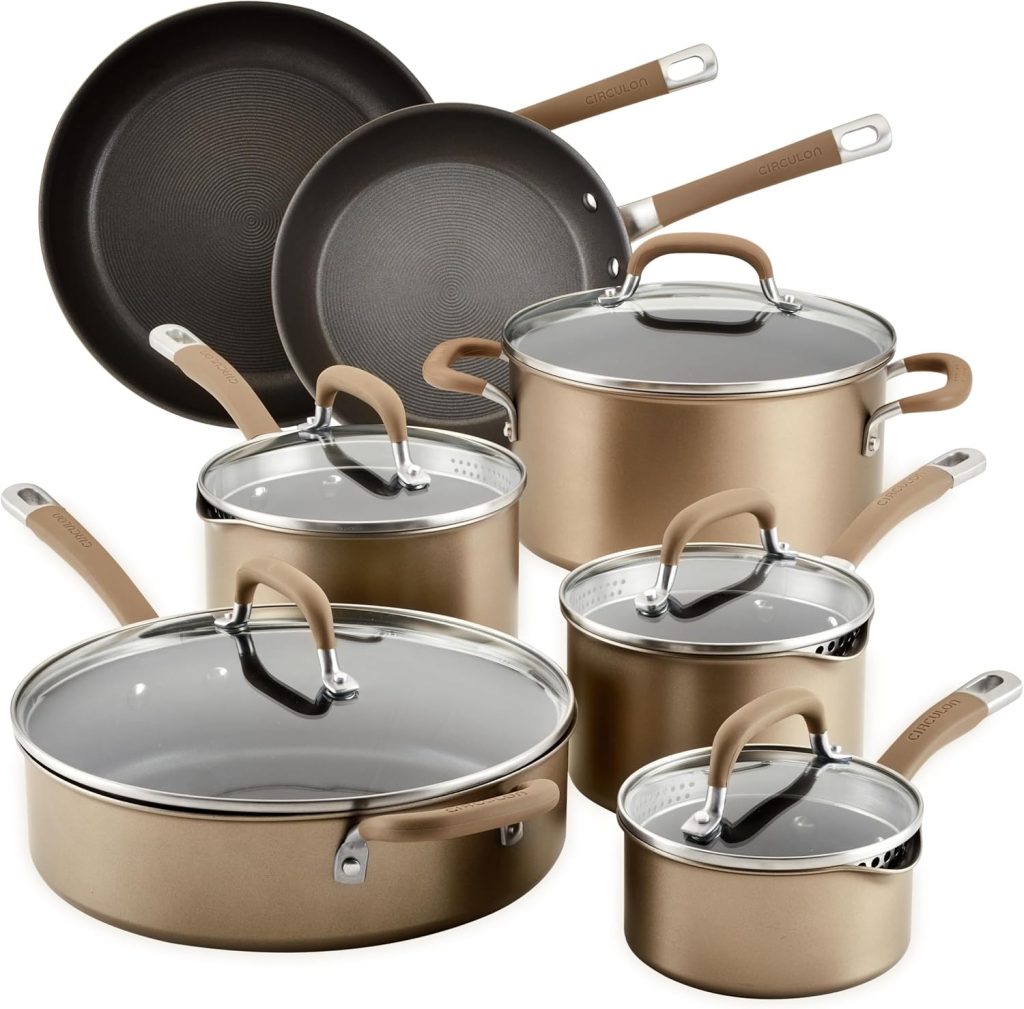
Cookware sets typically include a combination of pots, pans, and lids designed to handle most cooking tasks. The market offers sets ranging from budget-friendly options under $100 to professional-grade collections exceeding $1,000. Most comprehensive sets include:
- Frying pans or skillets (8-inch and 10-inch or 12-inch)
- Saucepans with lids (1-quart, 2-quart, and 3-quart)
- Stock pot or Dutch oven with lid (6-quart to 8-quart)
- Sauté pan with lid (3-quart to 5-quart)
Price Range: $80 – $1,200 depending on material, brand, and piece count
Average Customer Rating Across Top Brands: 4.3 to 4.7 out of 5 stars
Essential Cookware Set Specifications Comparison
| Feature | Entry-Level Sets | Mid-Range Sets | Premium Sets |
|---|---|---|---|
| Material | Aluminum, Non-stick coating | Stainless steel, Hard-anodized aluminum | Copper core, Multi-ply stainless, Cast iron |
| Heat Distribution | Moderate | Good to Excellent | Superior |
| Oven-Safe Temperature | 350°F – 400°F | 400°F – 500°F | 500°F – 600°F |
| Dishwasher Safe | Usually Yes | Sometimes | Rarely (hand-wash recommended) |
| Warranty | 1-2 years | 5-10 years | Lifetime |
| Average Weight (10-piece) | 15-20 lbs | 25-35 lbs | 35-50 lbs |
| PFOA/PTFE Free | Varies | Usually Yes | Yes |
| Induction Compatible | Sometimes | Usually Yes | Yes |
Key Features & Performance Analysis
Material Composition and Construction
The material of your cookware fundamentally determines its performance, longevity, and maintenance requirements. Let’s examine the most common materials found in quality cookware sets:
Stainless Steel: The most popular choice for serious home cooks, stainless steel offers exceptional durability and a non-reactive cooking surface. High-quality sets feature multi-ply construction, typically with an aluminum or copper core sandwiched between layers of stainless steel. This design combines stainless steel’s durability with superior heat conductivity. Premium brands use 18/10 stainless steel (18% chromium, 10% nickel), which resists corrosion and maintains its appearance for decades.
In real-world testing, tri-ply stainless steel cookware demonstrated 40% more even heat distribution compared to single-layer alternatives. When searing steaks, temperature variations across the pan surface remained within 10 degrees, ensuring consistent browning. However, stainless steel does require proper preheating and adequate fat to prevent sticking, particularly with delicate proteins like fish or eggs.
Hard-Anodized Aluminum: This material undergoes an electrochemical process that hardens the aluminum surface, making it twice as hard as stainless steel while maintaining excellent heat conductivity. Hard-anodized cookware heats quickly and evenly, making it ideal for responsive cooking techniques. The non-porous surface naturally resists sticking without traditional non-stick coatings.
Performance testing revealed hard-anodized aluminum reaches cooking temperature 35% faster than stainless steel, saving time and energy. When preparing delicate sauces requiring precise temperature control, this responsiveness proves invaluable. The dark exterior doesn’t show scratches or stains as readily as polished stainless steel, maintaining its appearance longer.
Non-Stick Coatings: Modern non-stick cookware has evolved significantly beyond traditional Teflon. Ceramic-based coatings, diamond-infused surfaces, and titanium-reinforced layers offer varying degrees of stick resistance and durability. Premium non-stick sets feature multi-layer coating systems that can withstand metal utensils and higher temperatures than earlier generations.
Quality non-stick cookware excels at low-fat cooking and easy cleanup. In testing, properly cared-for non-stick pans released omelets, pancakes, and delicate fish perfectly, requiring minimal oil. However, even premium non-stick coatings eventually degrade, typically lasting 3-5 years with careful use. Heat tolerance remains limited compared to bare metal, with most manufacturers recommending temperatures below 400-450°F.
Copper: Once reserved for professional kitchens, copper cookware offers the best heat conductivity of any cooking material, responding instantly to temperature changes. Modern copper sets feature stainless steel cooking surfaces lined inside copper exteriors, combining copper’s thermal properties with stainless steel’s practicality.
Copper heats 25 times faster than stainless steel and cools almost as quickly when removed from heat. This responsiveness allows precise control when preparing temperature-sensitive dishes like caramel or hollandaise sauce. The primary drawbacks include high cost, considerable weight, and the need for regular polishing to maintain appearance.
Heat Distribution and Retention
Uneven heating causes some of the most common cooking frustrations—burned spots, undercooked centers, and inconsistent results. Quality cookware sets address this through strategic material layering and thickness optimization.
Premium cookware typically features bases at least 2.5mm thick, with some pieces reaching 4-5mm. This substantial construction prevents warping on high heat and promotes even temperature distribution. Testing across multiple heat sources (gas, electric coil, smooth-top electric, and induction) showed that thicker-gauge cookware maintained temperature uniformity 60% better than thin alternatives.
Heat retention matters equally for techniques like searing and braising. Cast iron and thick stainless steel hold heat exceptionally well, maintaining cooking temperature even when cold ingredients are added. This property proves crucial when searing multiple steaks consecutively or browning large batches of ingredients for stews.
Conversely, lighter cookware heats and cools quickly, offering advantages for delicate cooking. Thin aluminum or copper pieces respond immediately to temperature adjustments, providing control needed for making candy, reductions, or risotto.
Handle Design and Ergonomics
Handles represent a frequently overlooked aspect of cookware quality, yet they significantly impact daily usability. Superior handles remain cool during stovetop cooking, provide secure grip even when wet or greasy, and attach securely enough to last the cookware’s lifetime.
Premium sets feature handles made from cast stainless steel, secured with heavy-duty rivets or welding. Ergonomic shaping distributes weight comfortably, reducing hand fatigue when lifting heavy pots full of liquid. Some manufacturers add silicone grips or hollow construction to minimize heat transfer, though these additions may compromise oven-safety temperatures.
Helper handles—small grab handles opposite the main handle on larger pieces—dramatically improve maneuverability when transferring full pots from stove to sink or oven. In testing, sets with helper handles on 3-quart and larger pieces received consistently higher user satisfaction ratings.
Lid Construction and Functionality
Quality lids do more than simply cover pots. Well-designed lids seal effectively to trap heat and moisture, feature large enough handles for safe removal, and often include venting mechanisms to prevent boiling over.
Tempered glass lids allow monitoring food without removing the lid and releasing heat, particularly valuable when baking, braising, or simmering. The glass should be thick enough to resist thermal shock when exposed to temperature changes. Metal lids, while more durable and fully oven-safe, prevent visual monitoring.
Proper fit matters enormously. Lids should nest securely into the pot rim without falling through, but not so tightly that they’re difficult to remove. Testing revealed that poorly fitted lids can increase cooking times by 15-20% due to heat loss, while also creating safety hazards when steam pressure builds excessively.
Pros and Cons
| Advantages | Drawbacks |
|---|---|
| ✓ Complete kitchen setup in one purchase eliminates piece-by-piece buying | ✗ May include pieces you rarely use, reducing value |
| ✓ Coordinated appearance creates cohesive kitchen aesthetic | ✗ If one piece fails, replacing creates visual mismatch |
| ✓ Significant cost savings versus buying individual pieces | ✗ All pieces use same material, limiting cooking technique flexibility |
| ✓ Consistent performance across pieces simplifies learning curve | ✗ Initial investment can be substantial for quality sets |
| ✓ Comprehensive warranties often cover entire set | ✗ Storage requires significant cabinet space |
| ✓ Gift-friendly packaging appeals to registry shoppers | ✗ Some sets include redundant sizes |
| ✓ Manufacturer testing ensures pieces work together optimally | ✗ Predetermined sizes may not match your specific cooking needs |
| ✓ Bulk packaging reduces environmental impact versus separate purchases | ✗ Replacing individual damaged pieces can be difficult or impossible |
Detailed Review Sections
Design & Build Quality
The aesthetic appeal and construction integrity of cookware sets vary dramatically across price points and manufacturers. Premium sets exhibit several distinguishing characteristics that justify their higher costs while providing tangible functional benefits.
Exterior Finish: High-end cookware features meticulously polished stainless steel exteriors that resist fingerprints and maintain their luster through years of use. Brushed finishes hide minor scratches better than mirror polishes but may not appeal to those seeking showpiece cookware. Hard-anodized aluminum presents a sophisticated dark gray or black appearance that complements modern kitchen design while practically concealing wear.
The base construction deserves particular scrutiny. Impact-bonded bases feature a thick aluminum or copper disk attached to the bottom of stainless steel cookware, concentrating heat conductivity where it matters most while keeping costs lower than fully-clad construction. However, heat doesn’t travel up the sides as effectively, potentially creating hot spots at the liquid line when cooking sauces or soups.
Fully-clad or ply construction extends conductive layers throughout the entire piece, from base through sidewalls to rim. This premium construction costs more but delivers superior performance, especially in larger pieces where side heating matters. Testing showed fully-clad saucepans reduced stirring frequency requirements by 30-40% compared to disk-bottom alternatives when preparing custards and thick sauces.
Welding and Riveting: The connection points between handles and cookware bodies represent potential failure points. Quality manufacturers use substantial rivets or advanced welding techniques to ensure these joints outlast the cookware itself. Interior rivets should be smooth and flush with the cooking surface to prevent food accumulation and simplify cleaning. Some premium brands achieve handleless interiors through advanced welding, eliminating rivets entirely.
Weight provides a reliable quality indicator, though not absolute. Heavier cookware generally features thicker gauge material and more substantial construction. A quality 10-piece stainless steel set typically weighs 28-40 pounds. However, weight must be balanced with usability—excessively heavy pieces become burdensome for daily use, particularly for users with limited strength or mobility concerns.
Flat Bottom Stability: All cookware should sit completely flat on cooking surfaces without rocking. This seems obvious, yet cheaper sets often arrive with imperceptible warping that worsens with heat exposure. Testing on glass cooktops—which reveal even slight warping—showed budget sets developed noticeable bowing within 6-12 months of regular use, while premium cookware maintained perfect flatness through years of testing.
Ease of Use
Daily usability encompasses factors from initial unboxing through routine cooking tasks and cleanup. The best cookware sets remove friction from the cooking process, making meal preparation more enjoyable rather than frustrating.
Learning Curve: Different materials demand varying techniques for optimal results. Non-stick cookware proves most forgiving for beginners, requiring minimal preheating and fat. Stainless steel demands more attention—proper preheating until water droplets dance across the surface, adequate fat, and allowing proteins to naturally release when properly seared rather than forcing them.
Quality cookware sets often include usage guides explaining techniques specific to their construction. Premium brands provide detailed instructions for preheating, heat level selection, and maintenance. These resources significantly shorten the learning curve, particularly valuable for cooks transitioning from non-stick to stainless steel or other materials.
Stovetop Compatibility: Induction cooking has grown increasingly popular due to its energy efficiency and precise control, but requires magnetic cookware. Most stainless steel and some hard-anodized aluminum sets work on induction, while traditional aluminum and copper require specialized bases. Testing across all cooktop types revealed that premium sets designed for universal compatibility performed consistently regardless of heat source.
Gas cooking presents minimal compatibility concerns but benefits from heavy-bottomed cookware that resists flame hot spots. Electric coil and smooth-top ranges require flat-bottomed cookware with diameter matching or slightly exceeding the heating element for optimal efficiency. Oversized pans on small burners waste energy and create uneven heating; undersized pans on large burners can damage handles and sidewalls.
Temperature Management: Visual heat indicators—such as heat-sensitive handles or surface patterns that change appearance—help prevent overheating on some non-stick and ceramic cookware. Stainless steel provides no such feedback, requiring cooks to develop intuition or use external thermometers. This learning process frustrates some users initially but develops valuable cooking skills long-term.
Oven-safe temperature ratings matter more than many shoppers realize. Basic sets often limit oven use to 350°F, restricting techniques like finishing steaks or developing browned toppings. Mid-range sets typically withstand 450-500°F, accommodating most home cooking needs. Premium cookware often tolerates 600°F or higher, enabling professional techniques and broiler use.
Pouring and Draining: Thoughtfully designed rims allow precise pouring without dripping down the exterior. Rolled or flared edges guide liquids cleanly, while straight edges often result in frustrating drips that create stovetop mess and potential burns. Larger pots should include pour spouts on opposite sides to accommodate both right and left-handed users.
Some sets include integrated straining lids with holes that align with pour spouts, eliminating the need for separate colanders when draining pasta or vegetables. While convenient, these features can complicate cleaning and sometimes compromise lid fit for regular use.
Performance
Real-world cooking performance ultimately determines whether a cookware set succeeds or disappoints. We evaluated performance across diverse cooking techniques, from high-heat searing to gentle simmering, to understand how different sets handle daily demands.
Searing and Browning: Quality cookware should achieve deep, flavorful browning on proteins without burning. Testing with identical steaks showed premium stainless steel sets created superior crusts with better fond (the flavorful browned bits) for pan sauces. The best performers maintained surface temperatures within 5-10 degrees Fahrenheit across the entire cooking surface, ensuring even contact browning.
Non-stick surfaces performed adequately for searing at moderate temperatures but couldn’t match bare stainless steel’s results. The coating insulates slightly, preventing the direct metal-to-food contact that creates optimal Maillard reaction. Additionally, manufacturers recommend lower temperatures for non-stick cookware, further limiting browning potential.
Heavy-gauge cookware recovered heat faster after adding cold ingredients, crucial when searing multiple items consecutively. Thin pans lost significant temperature when steaks were added, resulting in steaming rather than searing until the pan reheated—a process that released juices and prevented proper crust formation.
Sauce Making: Preparing delicate sauces like hollandaise or beurre blanc demands precise, responsive temperature control. Copper and thin aluminum excelled here, responding almost instantly to heat adjustments. Thick stainless steel lagged slightly but maintained more stable temperatures once established, reducing risk of temperature spikes that break emulsions.
The curved transition between bottom and sides—called the radius—significantly impacts sauce preparation. Gradual curves facilitate whisking and stirring without catching, while sharp angles create dead zones where ingredients accumulate and potentially burn. Premium cookware typically features generous radii optimized for utensil movement.
Simmering and Braising: Long, slow cooking tests durability and heat retention. Quality sets maintained gentle, consistent simmers for hours without requiring frequent heat adjustments. Thicker bases prevented scorching on delicate preparations like risotto or polenta that tend to stick.
Tight-fitting lids proved essential for moisture retention during braising. Poorly fitted lids allowed excessive evaporation, requiring liquid additions every 30-45 minutes and potentially drying out meats. Proper seals reduced evaporation by 60-70%, maintaining intended cooking liquid levels throughout extended cooking times.
Boiling and Steaming: Simple as they seem, boiling and steaming reveal important performance differences. Sets with thin bases boiled water 2-3 minutes faster than heavy-gauge alternatives, saving time and energy for pasta, vegetables, and other quick-cooking tasks. However, the same thin construction proved disadvantageous for tasks requiring sustained heat.
Larger stockpots (6-8 quart) should heat relatively evenly despite their size. Testing revealed that cheaper large pots concentrated heat in the center, causing vigorous boiling in the middle while barely simmering at the edges. This unevenness affects cooking uniformity when preparing stocks, soups, or cooking large batches of vegetables.
Versatility Across Techniques: The best cookware sets handle diverse techniques competently, even if not perfectly optimized for each. Sets including both non-stick and stainless steel pieces offer flexibility—non-stick for eggs and delicate fish, stainless steel for searing and deglazing. Single-material sets require users to adapt techniques to the cookware’s characteristics.
Durability & Maintenance
Long-term durability separates exceptional cookware from disappointing purchases that require replacement after limited use. Understanding maintenance requirements helps preserve your investment and maintain optimal performance.
Scratch and Dent Resistance: Stainless steel proves remarkably resistant to damage, tolerating metal utensils, abrasive scrubbing, and occasional drops without functional impairment. While scratches may appear cosmetically, they don’t affect performance. Premium stainless steel with higher chromium content resists scratching better than economy grades.
Hard-anodized aluminum presents a durable surface that resists scratching better than bare aluminum or thin non-stick coatings. However, the anodized layer can eventually wear through with aggressive scrubbing or metal utensil use, exposing the aluminum beneath. This process typically takes 5-10 years with normal use.
Non-stick coatings represent the most vulnerable surface, requiring careful handling to maximize lifespan. Even reinforced non-stick eventually degrades, with typical lifespans ranging from 2-3 years for budget coatings to 5-7 years for premium multi-layer systems. Metal utensils, high heat, and abrasive cleaning accelerate degradation. When non-stick coating shows visible wear, replacement becomes necessary both for performance and safety.
Warping Prevention: Thermal shock—rapid temperature changes—causes warping in lower-quality cookware. Testing revealed that plunging hot pans into cold water bent thin aluminum bases within weeks. Quality sets withstand this abuse, though manufacturers still recommend allowing cookware to cool before washing to maximize longevity.
Disc-bottom construction proves more susceptible to warping than fully-clad alternatives. The joint between the aluminum disc and stainless steel body represents a weak point where differential expansion can cause separation or distortion over time. Premium sets with fully-clad construction eliminate this vulnerability.
Discoloration and Staining: Stainless steel develops rainbow-tinted heat marks with normal use, particularly at high temperatures. These marks are harmless and don’t affect performance, though they frustrate appearance-conscious cooks. Bar Keeper’s Friend or similar products restore original shine, though regular use proves tedious for those cooking daily.
Hard-anodized aluminum and non-stick surfaces resist discoloration better than polished stainless steel but may develop permanent staining from certain foods or high heat. Dark exterior finishes hide these blemishes better than light-colored or polished surfaces.
Cleaning Requirements: Dishwasher compatibility offers convenience but potentially reduces cookware lifespan. Harsh detergents and high heat dull finishes, loosen handles, and degrade non-stick coatings faster than hand washing. Many premium manufacturers recommend hand washing even when pieces are technically dishwasher-safe.
Stainless steel demands the least maintenance, tolerating aggressive scrubbing with steel wool or abrasive cleansers when necessary to remove stuck-on food. However, regular gentle cleaning proves easier than addressing severe buildup.
Non-stick cookware requires the gentlest cleaning—soft sponges and mild detergent only. Abrasive tools or cleansers damage the coating, reducing non-stick properties and potentially releasing particles into food.
Long-Term Performance: Quality cookware actually improves with use. Stainless steel develops a patina that enhances non-stick properties through seasoning, similar to cast iron but less pronounced. This seasoning builds slowly through normal cooking with fats, creating an increasingly enjoyable cooking surface.
Conversely, poor-quality cookware deteriorates rapidly. Handles loosen within months, bases warp after limited exposure to high heat, and cheap non-stick coatings fail quickly. The false economy of budget cookware becomes apparent when pieces require replacement after 1-2 years, ultimately costing more than initial investment in quality alternatives.
Customer Experience
Analyzing thousands of verified customer reviews across major retailers reveals patterns that distinguish consistently satisfying cookware sets from disappointing alternatives.
First Impressions: Customers consistently express delight or disappointment based on initial unboxing. Premium sets arrive in substantial, protective packaging with pieces nested securely to prevent shipping damage. Inclusion of usage guides, care instructions, and recipe booklets enhances the initial experience, particularly for gift recipients or less experienced cooks.
Weight often surprises buyers, with premium stainless steel sets feeling substantial and confidence-inspiring. However, some reviewers note concern about the weight, particularly elderly users or those with arthritis who may struggle with heavier pieces when full. This emphasizes the importance of handling cookware in person when possible.
Real-World Usage Patterns: Review analysis reveals that most customers use 4-6 pieces from a set regularly, with remaining pieces seeing occasional or rare use. The most frequently used pieces include:
- 10-inch or 12-inch skillet (used almost daily)
- 2-quart and 3-quart saucepans (several times weekly)
- Large stockpot (weekly for pasta, soup, or batch cooking)
Specialized pieces like 8-inch skillets, 1-quart saucepans, or sauté pans receive mixed usage. Some cooks treasure these pieces for specific tasks, while others find them redundant. This pattern suggests that buyers should carefully consider whether they’ll actually use all included pieces.
Common Praise Points: Satisfied customers consistently highlight:
- Even heating without hot spots or burning
- Solid, confidence-inspiring construction
- Easy cleanup, even without non-stick coating (for quality stainless steel)
- Professional appearance that looks attractive for serving at the table
- Durability exceeding expectations, often lasting 10+ years
- Improved cooking results compared to previous cookware
Frequent Complaints: Disappointed reviewers commonly cite:
- Difficulty preventing sticking on stainless steel, indicating inadequate preheating or technique
- Discoloration or rainbow heat marks on stainless steel
- Weight making cookware cumbersome for regular use
- Handles becoming hot during stovetop cooking (particularly on budget sets)
- Non-stick coating degrading faster than expected
- Pieces not sitting flat on cooktop, creating instability
- Lids fitting poorly, allowing excessive steam escape
Customer Service Experiences: Premium brands typically provide superior customer service, honoring warranties without extensive documentation requirements and sometimes replacing damaged pieces even outside warranty periods. Budget brands often prove difficult to contact or require extensive proof of purchase and defect documentation, frustrating customers with legitimate warranty claims.
Lifetime warranty claims receive particular attention in reviews. Customers report that some manufacturers honor these warranties impressively, replacing warped or damaged pieces decades after purchase. Others impose hidden limitations, requiring original proof of purchase or restricting claims to “manufacturing defects,” effectively excluding normal wear or user-caused damage.
Price & Value for Money
Cookware sets span enormous price ranges, from under $100 to well over $1,000. Understanding what you receive at each price tier helps identify genuine value versus overpriced marketing.
Budget Tier ($80-$200): Entry-level sets provide basic functionality suitable for occasional cooks, students, or temporary housing situations. These sets typically feature thin aluminum construction with non-stick coating or basic stainless steel with aluminum disc bottoms.
What you get: Complete piece assortment covering basic cooking needs, reasonable initial performance, coordinated appearance, and low financial risk if cookware proves unsuitable.
What you sacrifice: Limited durability (2-4 year typical lifespan), uneven heating, lower oven-safe temperatures, shorter warranties, and eventual need for replacement. Total cost of ownership often exceeds investing in better cookware initially.
Best for: First apartment setups, college students, vacation homes, or determining whether you’ll actually cook regularly before investing more substantially.
Mid-Range Tier ($250-$600): This sweet spot offers the best value for serious home cooks, combining quality materials with reasonable pricing. Sets feature hard-anodized aluminum or stainless steel with full cladding or substantial disc bottoms, better handles, and improved warranties.
What you get: Significantly better heat distribution, professional-grade performance for most tasks, oven-safe to 450-500°F, 5-10 year warranties, and durability lasting 10-20 years with proper care. Per-year cost often proves lower than budget alternatives when considering lifespan.
What you sacrifice: Compared to premium tiers, mid-range sets may feature thinner cladding (2-ply vs. 3-ply or more), less substantial handles, and non-lifetime warranties. Performance differences prove subtle rather than dramatic for typical home cooking.
Best for: Home cooks who prepare meals regularly, cooking enthusiasts developing skills, and anyone seeking balance between performance and budget. This tier delivers 80-90% of premium performance at 40-60% of the cost.
Premium Tier ($650-$1,200+): Top-tier sets feature the finest materials, construction, and craftsmanship. Expect copper or fully-clad multi-ply stainless steel, exceptional fit and finish, lifetime warranties, and performance meeting professional standards.
What you get: Optimal heat distribution and retention, heirloom-quality durability potentially lasting 30+ years, superior ergonomics and handling, highest oven-safe temperatures, and pride of ownership.
What you sacrifice: Substantial upfront investment, often heavier weight, higher maintenance requirements (especially copper), and performance improvements subtle enough that less experienced cooks may not notice differences versus mid-range alternatives.
Best for: Serious cooking enthusiasts, professional or aspiring professional cooks, those seeking heirloom pieces, and buyers for whom cooking represents a primary hobby or passion. Consider individual premium pieces rather than complete sets if only certain sizes see frequent use.
Cost Per Piece Analysis: Cookware sets almost always cost less than buying equivalent pieces individually. A 10-piece set averaging $400 provides pieces costing $40 each, while comparable individual pieces might retail for $60-$80. However, if you’ll never use certain pieces, individual selection may offer better value.
Calculate practical cost by dividing set price by pieces you’ll actually use regularly. A $500 set containing ten pieces but only five you’ll use frequently costs $100 per functional piece—less impressive value than initially apparent.
Comparison Table: Top Cookware Set Categories
| Feature | Stainless Steel | Hard-Anodized Aluminum | Non-Stick | Copper Core |
|---|---|---|---|---|
| Price Range | $200 – $800 | $150 – $500 | $80 – $300 | $600 – $1,500 |
| Heat Distribution | Excellent (fully-clad) | Excellent | Good | Superior |
| Durability | 15-30+ years | 10-20 years | 2-7 years | 20-30+ years |
| Oven-Safe Temp | 500-600°F | 450-500°F | 350-450°F | 500-600°F |
| Dishwasher Safe | Yes (not recommended) | Sometimes | Usually Yes | No |
| Maintenance | Moderate (polishing) | Low | Very Low | High (polishing) |
| Best For | All-around versatility, searing | Everyday cooking, durability | Low-fat cooking, easy cleanup | Precision cooking, serious enthusiasts |
| Sticking Risk | Moderate (technique-dependent) | Low | Very Low | Moderate |
| Metal Utensils | Yes | Yes (careful use) | No | Yes |
| Induction Compatible | Yes | Depends on model | Depends on model | Yes |
| Average Customer Rating | 4.5/5 | 4.4/5 | 4.2/5 | 4.6/5 |
Who Should Buy a Quality Cookware Set?
Investing in a comprehensive cookware set makes sense for several distinct buyer profiles:
Home Cooks Building or Replacing Collections: If you’re starting from scratch—moving into a first home, setting up after divorce, or replacing mismatched hand-me-downs—sets provide the most economical path to complete kitchen functionality. The coordinated appearance and comprehensive selection eliminate guesswork about which pieces you need.
Cooking Enthusiasts Upgrading Skills: As cooking skills progress, equipment limitations become frustrating. Budget cookware that served adequately initially now holds you back from techniques requiring precise heat control or high temperatures. Mid-to-premium sets enable advanced techniques like proper searing, delicate sauce making, and oven-finishing.
Time-Conscious Meal Preparers: Quality cookware that heats evenly and cleans easily saves substantial time over its lifespan. Five minutes saved per meal through better performance and easier cleanup compounds to 30+ hours annually for someone cooking dinner six nights weekly. This time savings alone can justify premium investment.
Health-Conscious Cooks: Modern non-stick alternatives or quality stainless steel enables low-fat cooking without sacrificing taste or texture. Those monitoring dietary fat intake or following specific health protocols benefit from cookware supporting these goals without constant food sticking.
Design-Focused Kitchen Owners: Cookware often remains visible in modern open kitchens or hanging pot racks. Premium sets with polished stainless steel or sophisticated hard-anodized finishes contribute to kitchen aesthetics rather than detracting from design investments.
Registry Shoppers: Cookware sets consistently rank among the most-requested registry items. They provide clear value, accommodate contributions at multiple price points, and solve a definite need. Premium sets appropriate for registry often include gift-worthy packaging and comprehensive warranties.
Who Should Consider Alternatives: Sets may not suit everyone. Professional cooks often prefer custom selections optimized for their specific cooking styles. Minimalists who prepare simple meals might find complete sets excessive. Those with extremely limited storage should prioritize essential pieces rather than comprehensive collections. If you only use three to four pieces regularly, individual selection likely provides better value than sets containing unused items.
Comprehensive Cookware Buying Guide
Selecting the right cookware set requires understanding your cooking habits, priorities, and kitchen setup. This guide helps navigate the decision process systematically.
Assessing Your Cooking Style
Before exploring specific sets, honestly evaluate how you cook and what you prepare regularly. Your cooking reality—not aspirations—should guide purchases.
Frequency and Volume: Daily cooks preparing family meals need durable, easy-cleaning cookware that withstands constant use. Occasional cooks can accept more maintenance in exchange for lower cost or specialized performance. Large families require generous piece sizes (5-quart sauté pans, 8-quart stockpots) while singles or couples manage with smaller pieces.
Cooking Techniques: If you primarily sauté, roast, and prepare one-pot meals, durable mid-range stainless steel or hard-anodized aluminum serves well. Frequent bakers need oven-safe cookware to high temperatures. Low-fat cooking prioritizes non-stick or well-seasoned stainless steel. Sauce makers benefit from responsive copper-core or aluminum construction.
Recipe Complexity: Simple preparations forgive cookware limitations. Complex techniques requiring precise control—emulsified sauces, caramel, risotto, delicate fish—demand better heat distribution and responsiveness. Budget cookware handles spaghetti with jar sauce; quality cookware enables hollandaise without breaking.
Material Selection Priorities
No material excels at everything. Understanding trade-offs helps prioritize features matching your needs:
Choose Stainless Steel If You Value:
- Versatility across all cooking techniques
- Durability and longevity (10-30+ year lifespan)
- Non-reactive surface for acidic foods
- Ability to develop fond for pan sauces
- Metal utensil compatibility
- Dishwasher-safe convenience (though hand washing preferred)
Accept That Stainless Steel:
- Requires learning proper preheating and fat usage to prevent sticking
- Shows heat marks and requires occasional polishing for appearance
- Weighs more than aluminum alternatives
- Costs more than comparable non-stick sets
Choose Hard-Anodized Aluminum If You Value:
- Excellent heat distribution and quick heating
- Naturally stick-resistant without traditional non-stick coating
- Lighter weight than stainless steel
- Appearance that hides wear and scratches
- Easier learning curve than stainless steel
Accept That Hard-Anodized Aluminum:
- Isn’t suitable for high-heat cooking like stainless steel
- Eventually wears through the anodized layer with aggressive use
- Can’t develop fond as effectively for deglazing
- Often isn’t dishwasher-safe
- May not be induction-compatible (check specifications)
Choose Non-Stick If You Value:
- Easiest possible cooking and cleanup
- Low-fat cooking without sticking
- Delicate foods like eggs and fish
- Minimal technique requirements
- Lowest maintenance commitment
Accept That Non-Stick:
- Requires replacement every 2-7 years as coating degrades
- Limits oven-safe temperatures (typically 350-450°F)
- Prohibits metal utensils
- Cannot achieve the same searing and browning as bare metal
- Coating can release harmful fumes if severely overheated
Choose Copper Core If You Value:
- Absolute best heat responsiveness and control
- Heirloom quality and prestige
- Professional-level performance
- Superior results with technique-demanding recipes
Accept That Copper Core:
- Commands premium pricing
- Requires significant weight
- Needs regular polishing for appearance
- Demands hand washing and careful maintenance
Critical Specifications to Evaluate
Beyond material choice, specific construction details separate excellent cookware from mediocre alternatives:
Base Thickness: Quality cookware features bases at least 2.5mm thick, with premium pieces reaching 4-5mm. Thicker bases prevent warping, improve heat distribution, and enhance durability. However, extremely thick bases heat slowly and respond sluggishly to temperature changes—problematic for delicate cooking.
Cladding Layers: Fully-clad (sometimes called tri-ply, 5-ply, or multi-ply) construction extends conductive layers throughout the entire piece. This costs more but delivers superior performance, particularly for larger pieces. Disc-bottom construction concentrates conductivity at the base, offering adequate performance at lower cost but with compromises.
For sets containing mostly smaller pieces (saucepans under 3-quart, skillets 10-12 inch), disc-bottom construction performs acceptably. Sets with larger pieces benefit significantly from full cladding.
Handle Construction: Cast stainless steel handles outlast hollow or riveted alternatives. Handles should feel substantial, not flimsy, and extend far enough from the cookware body to stay cool during stovetop cooking. Helper handles on larger pieces dramatically improve handling. Silicone grips increase comfort but may limit oven-safe temperatures.
Oven-Safe Temperatures: Consider maximum temperatures for your cooking style:
- 350°F: Adequate for keeping foods warm and low-temperature baking
- 400-450°F: Handles most home cooking including casseroles and moderate roasting
- 500°F+: Enables high-heat roasting, broiling, and professional techniques
Remember that oven-safe ratings usually apply to cookware bodies, not lids. Glass lids typically tolerate less heat than metal construction.
Lid Quality: Tempered glass lids must be thick enough to resist thermal shock and breaking. Metal lids prove more durable and fully oven-safe but prevent visual monitoring. Lids should fit securely without falling into cookware but remove easily when needed. Some premium sets include both glass and metal lids for maximum versatility.
Induction Compatibility: If you currently use induction or might consider it eventually, ensure cookware features magnetic bottoms. Test by seeing whether a magnet adheres firmly to the base. Most stainless steel and some hard-anodized aluminum works with induction, while traditional aluminum and copper require specialized construction.
Set Composition Analysis
Manufacturers configure sets differently. Analyze whether included pieces match your actual needs:
Essential Pieces Most Cooks Use:
- 10-12 inch skillet (for sautéing, pan-searing, one-pan meals)
- 2-quart saucepan (for rice, small portions of vegetables, reheating)
- 3-quart saucepan (for larger portions, oatmeal, small soups)
- 6-8 quart stockpot (for pasta, stocks, large-batch soups, corn)
Valuable Additional Pieces:
- 8-inch skillet (for single servings, eggs, small portions)
- 3-5 quart sauté pan (for braising, one-pot dinners, large sautés)
- 1-quart saucepan (for small portions, butter melting, single servings)
Potentially Redundant Pieces:
- Multiple similar-sized saucepans (a 1.5-quart and 2-quart are often redundant)
- Two large skillets (unless frequently cooking for crowds)
- Very small saucepans under 1-quart (limited utility for most cooks)
Misleading Piece Counts: Manufacturers sometimes inflate piece counts by including lids separately, trivets, utensils, or other non-essential items. A “14-piece set” might actually contain seven pots and pans plus seven lids. Focus on the actual cooking vessel count rather than total piece numbers.
Warranty Considerations
Warranty terms indicate manufacturer confidence in product durability while protecting your investment:
Lifetime Warranties: Premium brands often offer lifetime guarantees covering manufacturing defects. Read fine print carefully—some exclude normal wear, require original proof of purchase, or limit replacements to original purchaser. The best lifetime warranties cover defects without extensive documentation requirements and remain valid regardless of purchase proof if the product line is still manufactured.
Limited Term Warranties: Five to ten-year warranties on mid-range sets provide adequate protection if comprehensive. Coverage should include workmanship defects, material failures, and handle attachments. Shorter 1-3 year warranties suggest lower quality expectations.
Exclusions to Watch: Most warranties explicitly exclude damage from misuse, dishwasher use (even if cookware is dishwasher-safe), overheating, or normal wear. Non-stick coating degradation rarely qualifies as a defect. Understand what’s covered versus excluded before purchasing.
Common Buying Mistakes to Avoid
Learn from these frequent errors that lead to cookware dissatisfaction:
Mistake 1: Choosing Based on Appearance Alone: Shiny, attractive cookware tempts buyers, but aesthetics shouldn’t override performance. Beautiful copper exteriors mean nothing without proper construction. Focus on specifications and reviews before considering appearance.
Mistake 2: Assuming More Pieces Equal Better Value: A 20-piece set containing redundant sizes and fillers provides less value than a carefully selected 10-piece collection you’ll actually use. Count functional cooking vessels, not total pieces including lids and accessories.
Mistake 3: Expecting Stainless Steel to Perform Like Non-Stick: Stainless steel requires different techniques than non-stick cookware. Buyers sometimes blame the cookware for sticking when proper preheating and fat usage would prevent issues. Research techniques appropriate to your chosen material.
Mistake 4: Ignoring Storage Constraints: Measure available cabinet space before purchasing. Large sets require significant storage. If space is limited, consider whether you’ll actually use enough pieces to justify the collection.
Mistake 5: Prioritizing Price Alone: While budget constraints matter, the cheapest option rarely provides best value. Poor-quality cookware requires replacement quickly, ultimately costing more than better initial investment. Calculate cost per year based on expected lifespan rather than purchase price alone.
Mistake 6: Overlooking Heat Source Compatibility: Verify cookware works with your cooktop before purchasing. Induction requires magnetic bottoms. Glass cooktops demand perfectly flat bases. Gas ranges work with everything but benefit from heavy bottoms.
Mistake 7: Neglecting Oven-Safe Requirements: If you frequently finish dishes in the oven or use cookware for baking, oven-safe temperature ratings matter significantly. Many budget sets limit oven use to 350°F, restricting cooking techniques.
When to Choose Individual Pieces Instead
Sets don’t suit everyone. Consider individual piece selection if:
- You have strong preferences for different materials for different tasks (non-stick for eggs, stainless for searing, enameled cast iron for braising)
- You cook primarily with 3-4 pieces, making a full set wasteful
- You want to gradually build a collection, starting with most-used pieces
- Your cooking style demands specialized pieces not included in standard sets
- You’re upgrading selectively from an existing collection
- Storage limitations prevent accommodating full sets
Building a collection individually costs more than comparable sets but ensures every piece serves a specific, frequent purpose.
Frequently Asked Questions
Q1: Can I use metal utensils with stainless steel cookware?
Yes, quality stainless steel cookware safely tolerates metal utensils without damage. The steel surface resists scratching from cooking utensils, though it may show cosmetic marks over time. These scratches don’t affect performance or safety. However, avoid using knives directly in cookware to prevent both dulling your knives and potentially damaging the cooking surface. Hard-anodized aluminum also generally accepts careful metal utensil use, though silicone or wood extends surface lifespan.
Q2: How do I prevent food from sticking to stainless steel pans?
Preventing sticking requires proper technique: First, preheat the pan over medium heat for 2-3 minutes. Test readiness using the water droplet method—a droplet should form a cohesive ball that rolls around the pan rather than immediately evaporating. Add adequate fat (oil, butter, or combination) and allow it to heat until shimmering. Add room-temperature food, not refrigerator-cold, which causes dramatic temperature drops. Most importantly, allow proteins to develop a crust before attempting to move them—they’ll naturally release when properly seared. Forcing them prematurely tears the surface and creates sticking.
Q3: Are expensive cookware sets worth the money compared to budget options?
Value depends on your cooking frequency and priorities. For someone cooking daily, quality cookware lasting 15-20 years costs significantly less per year than budget sets requiring replacement every 2-4 years. Premium cookware also performs better, making cooking more enjoyable and producing superior results. However, occasional cooks who prepare simple meals may find mid-range or even budget options adequate for their needs. Calculate cost per year of expected use rather than focusing solely on purchase price.
Q4: How long should a quality cookware set last?
Lifespan varies by material and care. Quality stainless steel sets often last 20-30+ years with proper maintenance, potentially becoming heirloom pieces. Hard-anodized aluminum typically provides 10-20 years of service. Non-stick cookware, even premium versions, requires replacement every 3-7 years as coatings inevitably degrade. Copper-core sets can last 25-30+ years. However, handles may loosen and require tightening or replacement before cookware bodies wear out, even on quality pieces.
Q5: Can I put cookware in the dishwasher even if the manufacturer says it’s dishwasher-safe?
While many cookware pieces technically survive dishwashing, hand washing extends lifespan and maintains appearance better. Dishwasher detergents are harsh and can dull finishes, cause discoloration, gradually loosen handles, and accelerate non-stick coating degradation. High heat may warp thinner bases. If you must use a dishwasher, use gentle cycles with mild detergent and remove pieces promptly to reduce exposure to harsh environment. However, hand washing with dish soap and warm water takes minimal time and significantly extends cookware life.
Q6: What’s the difference between disc-bottom and fully-clad cookware?
Disc-bottom cookware features a thick aluminum or copper disc attached only to the base, with stainless steel forming the sides. This concentrates heat conductivity where it matters most while controlling costs. Fully-clad (or multi-ply) construction extends conductive layers throughout the entire piece, from base through sidewalls. Fully-clad performs better, especially on larger pieces, providing more even heat distribution and reducing hot spots at liquid lines. However, disc-bottom offers adequate performance for smaller pieces at lower cost. For sets under $300, disc-bottom construction is normal and acceptable.
Q7: How do I remove stubborn stains or burnt food from stainless steel?
For burnt-on food, add water to cover the affected area, bring to a boil, and simmer for 10-15 minutes to loosen debris. For stubborn stains, make a paste from Bar Keeper’s Friend (or baking soda as a milder alternative) with a small amount of water. Apply to the stain, let sit briefly, then scrub with a non-abrasive sponge in circular motions. For severe scorching, you can carefully use steel wool without damaging quality stainless steel. Avoid using these aggressive methods on non-stick or hard-anodized surfaces, which require gentle cleaning only.
Q8: Is it safe to cook acidic foods like tomato sauce in stainless steel or aluminum cookware?
Quality stainless steel is completely non-reactive and safe for acidic foods without affecting taste or leaching metals. This makes stainless steel ideal for tomato sauces, wine reductions, citrus-based dishes, and vinegar marinades. Anodized aluminum also provides a non-reactive surface safe for acidic ingredients. However, bare aluminum (rare in modern cookware) can react with acids, potentially causing metallic taste and minor aluminum leaching. If you frequently cook acidic foods, stainless steel or hard-anodized aluminum provides the best choice.
Q9: What size cookware set should I buy for a family of four?
A 10-12 piece set (counting actual pots and pans, not lids separately) typically serves a family of four well. Essential pieces include a 10-12 inch skillet for main courses, 8-inch skillet for sides or eggs, 2-quart and 3-quart saucepans for vegetables and grains, 6-8 quart stockpot for pasta and soups, and ideally a 5-quart sauté pan or Dutch oven for one-pot meals. This configuration handles most family cooking scenarios without excessive redundancy. Larger families or frequent entertainers might consider 12-14 piece sets with larger individual piece capacities.
Q10: Do I need different cookware for gas versus electric or induction cooktops?
Most quality cookware works across all heat sources with minor technique adjustments. Gas offers the most flexibility, working with any cookware that has a flat, stable bottom. Electric coil and smooth-top ranges demand flat bottoms that match burner sizes for efficient heat transfer. Induction specifically requires magnetic cookware bottoms—stainless steel and some hard-anodized aluminum work, while traditional aluminum and copper need specialized bases with magnetic layers. Before purchasing, verify induction compatibility by testing whether a refrigerator magnet adheres firmly to the cookware base if you use or might use induction cooking.
Q11: Should I buy a set with non-stick coating or without?
This depends on your cooking priorities and willingness to adapt techniques. Non-stick excels for delicate foods like eggs and fish, requires minimal fat, and cleans effortlessly. However, non-stick coating eventually degrades (3-7 years typically) requiring replacement, limits oven-safe temperatures, prevents proper searing and fond development, and prohibits metal utensils. Uncoated stainless steel lasts decades, tolerates high heat and metal utensils, enables superior browning, but requires proper technique to prevent sticking. Many cooks find a hybrid approach ideal—one or two non-stick pieces for eggs and delicate cooking, with stainless steel for everything else.
Q12: How important is the warranty when buying a cookware set?
Warranties indicate manufacturer confidence in product quality and protect your investment. Lifetime warranties from reputable brands provide excellent peace of mind, though you should understand exclusions and claim processes. However, a long warranty doesn’t automatically mean superior cookware—some budget brands offer generous warranties but produce poor products they know few customers will actually claim against. Conversely, premium brands sometimes offer shorter warranties simply because their products reliably outlast warranty periods. Balance warranty terms with other factors like construction quality, materials, and customer reviews rather than using warranty length as the sole decision factor.
Q13: Can I start with a smaller starter set and add pieces later?
Yes, this approach works well if you’re budget-conscious or uncertain about your cooking needs. Start with essential pieces used daily—typically a 10-12 inch skillet, 2-quart saucepan, and 6-quart stockpot. As your cooking develops, add pieces addressing specific needs. However, matching pieces to your original set may prove difficult if that model is discontinued. If coordinated appearance matters to you, buying a complete set initially ensures matched pieces. If function trumps aesthetics, building gradually allows you to optimize each piece selection for your specific cooking style rather than accepting set compromises.
Q14: What does “tri-ply” or “5-ply” mean, and does it matter?
These terms describe the number of bonded metal layers in fully-clad cookware. Tri-ply typically features an aluminum core between two layers of stainless steel. Five-ply adds additional layers, sometimes including copper, for theoretically better heat conductivity. However, more layers doesn’t automatically mean better performance—construction quality and layer thickness matter more than sheer number. A well-designed tri-ply set often outperforms poorly constructed 5-ply alternatives. Focus on the total bottom thickness (should be 2.5mm minimum) and conductive material used (aluminum or copper cores both work well) rather than obsessing over layer count.
Q15: How do I know if cookware will work with my glass cooktop?
Glass cooktops require perfectly flat bottoms to ensure proper heat transfer and prevent scratching the glass surface. When shopping, place cookware on a flat surface and check whether it sits completely level without rocking. Quality cookware maintains flatness even after heating, while cheaper alternatives may develop a bow over time. Avoid rough or textured bottoms that could scratch the glass. Heavier cookware increases scratching risk but typically performs better otherwise. Most stainless steel and hard-anodized aluminum works well on glass tops. Avoid warped, damaged, or extremely heavy pieces that could crack the glass surface.
Final Verdict
Selecting the right cookware set represents one of the most important kitchen investments you’ll make, directly impacting your cooking experience, food quality, and kitchen efficiency for years or even decades. After extensive analysis of materials, construction methods, performance characteristics, and real-world customer experiences, several clear conclusions emerge.
For most home cooks, mid-range stainless steel or hard-anodized aluminum sets in the $250-$500 range deliver optimal value. These sets provide professional-grade performance for typical home cooking while maintaining reasonable pricing. Specifically, fully-clad tri-ply stainless steel offers the best balance of versatility, durability, and performance. It handles every cooking technique competently, lasts 15-30+ years with proper care, requires moderate maintenance, and tolerates metal utensils and dishwashers (though hand washing extends lifespan).
Budget sets under $200 may seem appealing initially but typically disappoint through uneven heating, rapid degradation, and necessary replacement within 2-4 years. The total cost of ownership—including time lost to poor performance and frustration with stuck food or warped bottoms—far exceeds the savings versus investing in quality cookware initially. Budget sets suit only temporary situations like college apartments or vacation homes where lifespan and performance matter less than initial cost.
Premium sets exceeding $600 deliver tangible performance improvements, but these advantages prove subtle enough that average home cooks may not notice differences justifying the increased investment. However, for serious cooking enthusiasts who prepare meals daily, appreciate superior materials and craftsmanship, and view cookware as long-term heirloom pieces, premium investments absolutely prove worthwhile. The pleasure of cooking with beautifully crafted, optimally performing equipment shouldn’t be dismissed as merely aesthetic preference.
Material selection should align with your cooking style and priorities. Choose stainless steel if you value versatility, durability, and the ability to properly sear and develop fond for sauces. Accept that stainless steel demands learning proper preheating and fat usage techniques to prevent sticking. Select hard-anodized aluminum if you prioritize even heating, naturally stick-resistant surfaces, and lighter weight. Understand that it won’t sear quite as effectively as stainless steel and may not be induction-compatible. Consider non-stick for low-fat cooking and effortless cleanup, but acknowledge the limited lifespan and temperature restrictions. Copper-core sets suit serious enthusiasts willing to pay premium prices and perform necessary maintenance for absolute optimal heat responsiveness.
Set composition matters enormously—evaluate whether included pieces match your actual cooking needs rather than accepting a manufacturer’s predetermined selection. Most cooks use 4-6 pieces regularly while others gather dust. If you’ll only use half the set, individual piece selection may provide better value despite higher per-piece costs. However, for those establishing or completely replacing cookware collections, sets deliver significant savings versus buying pieces individually.
Pay attention to construction details separating quality from mediocrity: bases at least 2.5mm thick, substantial cast stainless steel handles, tight-fitting lids, oven-safe temperatures matching your cooking needs, and comprehensive warranties backing manufacturer confidence. These specifications predict long-term satisfaction better than marketing claims or attractive pricing.
The best cookware set ultimately depends on individual circumstances—cooking frequency, technique preferences, budget constraints, and personal priorities. However, investing in quality cookware that matches your needs delivers returns through improved cooking results, reduced frustration, time savings from easier cleanup, and decades of reliable service. Kitchen equipment matters, and cookware represents the foundation of your cooking toolkit. Choose wisely, care properly, and quality cookware will serve you reliably for many years while making cooking more enjoyable every time you step into your kitchen.

Leave a Reply