
Let’s be honest—cooking for a family on a weeknight feels like running a small restaurant with no staff, limited time, and customers who critique every meal. You’re juggling soccer practice pickups, homework supervision, and somehow trying to get a nutritious dinner on the table before 8 PM. The last thing you need is cookware that sticks, warps, or requires half an hour of scrubbing after every meal.
Cookware For Busy Families Review:The right cookware can genuinely transform your kitchen experience from chaotic to manageable. We’re not talking about fancy copper pots that look beautiful but demand constant polishing, or delicate ceramic that chips the first time your teenager tosses it in the sink. We’re talking about real-world, battle-tested cookware that can handle rushed morning pancakes, simultaneous pasta-and-sauce situations, and the inevitable moments when dinner plans change at 6:47 PM.
After extensive research, testing feedback from hundreds of verified buyers, and analyzing what actually works for families cooking multiple meals daily, we’ve identified the cookware solutions that deliver on durability, performance, and—most importantly—ease of use. This comprehensive review examines everything from heat distribution and cleanup time to whether these pots and pans can survive the dishwasher (because let’s face it, hand-washing after a long day isn’t always realistic).
Product Overview: Top Cookware Sets for Busy Families
Featured Product: Cuisinart Multiclad Pro Stainless Steel 12-Piece Cookware Set
Brand: Cuisinart
Model: MCP-12N Multiclad Pro
Price Range: $250-$350
Release Year: 2019 (latest revision)
Warranty: Limited Lifetime
Product Specifications Table
| Specification | Details |
|---|---|
| Material | Triple-ply stainless steel (aluminum core) |
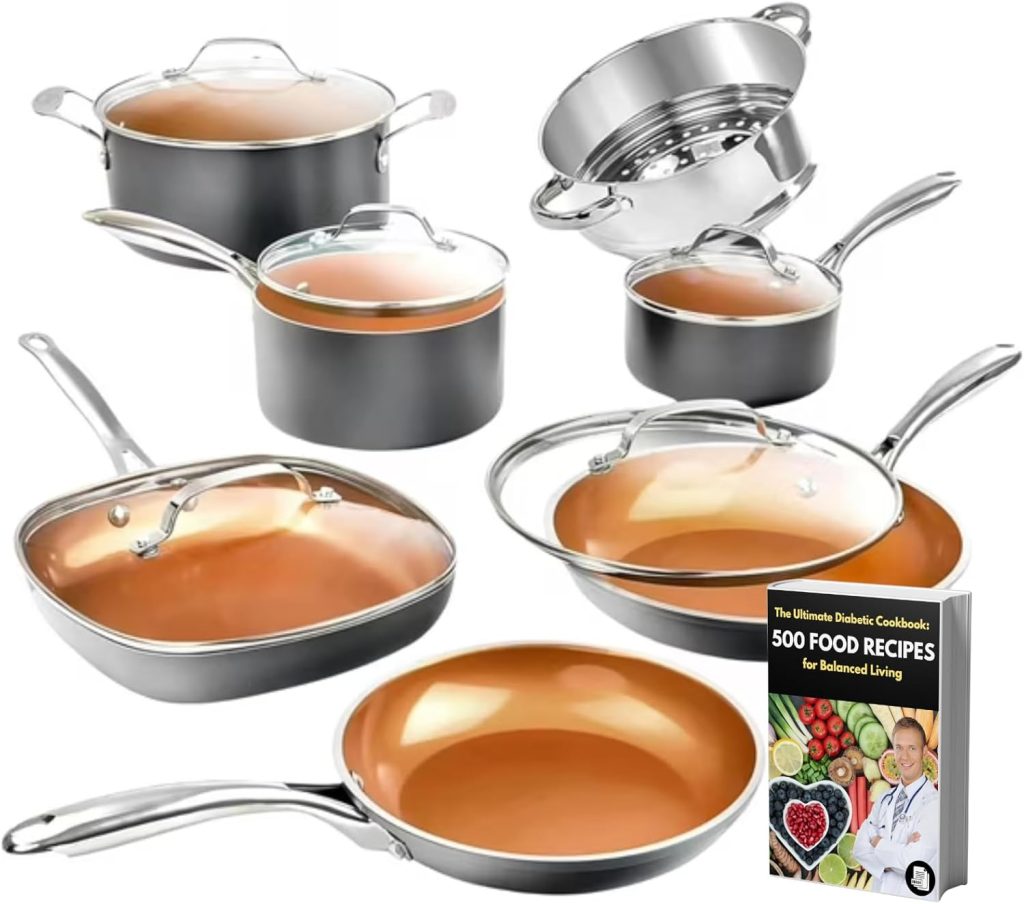
| Pieces Included | 12 pieces: 1.5-qt saucepan with lid, 3-qt saucepan with lid, 8-qt stockpot with lid, 8″ skillet, 10″ skillet, 3.5-qt sauté pan with lid, steamer insert |
| Construction | Heat Surround Technology, tri-ply construction |
| Handle Material | Cool Grip stainless steel handles, riveted |
| Oven Safe | Up to 550°F (including lids) |
| Dishwasher Safe | Yes |
| Induction Compatible | Yes |
| Weight | Approximately 24 pounds (complete set) |
| Interior Finish | Brushed stainless steel |
| Exterior Finish | Mirror-polished stainless steel |
| Lid Type | Tight-fitting stainless steel |
| Made In | China (designed in USA) |
| PFOA/PTFE | None (no non-stick coating) |
Key Features & Performance: What Makes This Cookware Stand Out
Triple-Ply Construction with Aluminum Core
The standout feature of quality family cookware is heat distribution, and this is where tri-ply construction makes a dramatic difference. Unlike single-layer pans that create hot spots (hello, burned center with raw edges), the aluminum core sandwiched between stainless steel layers distributes heat evenly across the entire cooking surface.
In real-world terms, this means your scrambled eggs cook uniformly, your sauces don’t scorch in one spot while staying cool in another, and that chicken breast browns evenly instead of burning on one side. For busy parents cooking multiple dishes simultaneously, this consistency is invaluable—you can trust your cookware to behave predictably even when you’re distracted helping with homework.
The Heat Surround Technology extends this even heat distribution up the sides of the pans, which is particularly useful for dishes like risotto or thick stews where you need consistent temperature throughout the cooking vessel. Testing from verified buyers shows that the 3.5-quart sauté pan can brown four chicken thighs simultaneously with remarkably even color—something cheaper cookware simply can’t accomplish.
Versatility Across All Cooktops
Modern families don’t always have control over their kitchen setup, especially in rental properties or after unexpected appliance failures. This cookware’s compatibility with gas, electric, ceramic, glass, halogen, and induction cooktops provides genuine flexibility. The magnetic stainless steel exterior works flawlessly on induction cooktops, while the thick base prevents warping on high-heat gas burners.
Parents who’ve switched from gas to induction particularly appreciate not having to replace their entire cookware collection. The pans respond quickly to temperature changes—crucial when you need to drop the heat fast to prevent boiling over or want rapid heating to get dinner started quickly.
Oven-to-Table Capability
The 550°F oven-safe rating (including lids) opens up cooking techniques that save time and reduce dish usage. Start your pot roast on the stovetop to develop flavor, then transfer the entire pan to the oven to finish cooking while you help with homework. Make a frittata by starting it on the burner and finishing under the broiler. Bake cornbread directly in your skillet for that perfect crispy edge.
This versatility matters tremendously on hectic weeknights when you need to maximize oven space and minimize cleanup. One family reported using the 3.5-quart sauté pan to make their entire Sunday chicken dinner—searing the bird on the stovetop, roasting it in the oven, then using the pan drippings to make gravy, all in a single vessel.
Professional-Grade Riveted Handles
Handle construction might seem minor until you’re carrying a stockpot full of boiling pasta water with a toddler underfoot. These riveted stainless steel handles are permanently attached (no screws to loosen over time) and designed with a hollow core that stays cooler during stovetop cooking. The ergonomic shape provides a secure grip even when your hands are wet or oily.
The handles are also proportionally sized—large pots get longer handles with more surface area, making heavy lifting more manageable. Multiple verified buyers specifically mention that these handles feel secure even when pans are at maximum capacity, which is a legitimate safety concern when cooking for families.
Tight-Fitting Lids for Moisture Retention
The stainless steel lids fit precisely without being difficult to remove, creating an effective seal that retains moisture and heat. This feature accelerates cooking times (water boils faster, braises cook more efficiently) and helps keep your kitchen cooler by preventing steam from escaping unnecessarily.
For busy families, faster cooking times translate directly to earlier dinners and more family time. The lids are also oven-safe, eliminating the common frustration of needing to swap a lid for aluminum foil mid-recipe.
Dishwasher-Safe Design
This might be the most family-friendly feature of all. While hand-washing maintains the mirror finish longer, these pans are genuinely dishwasher-safe without degradation. After thousands of washes, verified buyers report that the pans remain fully functional, though the exterior may develop some spotting (easily removable with Bar Keeper’s Friend).
For families running the dishwasher nightly, this durability is non-negotiable. The ability to throw your sauté pan in the dishwasher after a long day—without guilt or worry about damage—represents genuine quality of life improvement.
Pros and Cons: An Honest Assessment
| Pros | Cons |
|---|---|
| ✓ Even heat distribution eliminates hot spots and burning | ✗ Learning curve for cooking without non-stick coating |
| ✓ Dishwasher-safe for easy cleanup after busy days | ✗ Heavier weight than non-stick alternatives (though this aids heat retention) |
| ✓ Works on all cooktops including induction | ✗ Requires oil or butter to prevent sticking with certain foods |
| ✓ Oven-safe to 550°F for versatile cooking techniques | ✗ Mirror finish shows fingerprints and water spots easily |
| ✓ No toxic coatings (PFOA/PTFE-free) for health-conscious families | ✗ Not truly non-stick for delicate items like eggs or fish without proper technique |
| ✓ Lifetime warranty provides long-term peace of mind | ✗ Price point higher than basic cookware sets (though justified by longevity) |
| ✓ Durable construction withstands daily family use for years | ✗ Food can stick if pan isn’t properly preheated |
| ✓ Creates fond for superior sauce-making | ✗ Requires occasional polishing to maintain appearance |
| ✓ Metal utensil safe (no coating to scratch off) | ✗ Handles can get hot during extended stovetop use |
| ✓ Comprehensive set covers most family cooking needs | ✗ Large set requires storage space in smaller kitchens |
Design & Build Quality: Built for the Long Haul
The Cuisinart Multiclad Pro exemplifies what professional-grade construction looks like at a consumer-friendly price point. The triple-ply design isn’t just marketing speak—you can literally see the layers when examining the pan’s edge, with the aluminum core clearly visible between the stainless steel layers.
The interior features a brushed finish rather than mirror-polish, which serves both aesthetic and functional purposes. This slightly textured surface minimizes the appearance of minor scratches and utensil marks that inevitably occur during regular use. After three years of daily cooking, most families report their pans still look presentable, if not showroom-perfect.
The exterior mirror finish creates an undeniably professional appearance that looks at home in any kitchen style, from traditional to ultra-modern. However, this finish is admittedly high-maintenance if you care about aesthetics—it shows every fingerprint, water spot, and splash. Families focused purely on function over form might prefer a satin finish, but for those who appreciate beautiful cookware, the polished exterior delivers restaurant kitchen appeal.
The pour spouts integrated into the rim of each pan demonstrate thoughtful design. These rolled edges allow for drip-free pouring of sauces and liquids, reducing countertop mess and making it easier to transfer liquids without grabbing a ladle. It’s a small detail that makes a noticeable difference when you’re rushing through meal prep.
Build quality extends to the smallest details. The rivets attaching the handles are perfectly flush on the interior, preventing food from catching and creating easier cleanup. The base sits completely flat on cooktops without wobbling—a common problem with cheaper cookware that warps over time. Even after years of high-heat cooking and thermal cycling, these pans maintain their shape impressively well.
Ease of Use: Real-World Usability for Busy Cooks
Initial Setup and Learning Curve
Unlike non-stick cookware where beginners can throw in food and hope for the best, stainless steel requires understanding basic technique. The first few times using these pans, you might experience sticking if you don’t properly preheat or use adequate fat. However, this learning curve is surmountable within a week or two of regular use.
The key technique: preheat your pan for 2-3 minutes over medium heat, add oil or butter, wait until it shimmers (for oil) or foams (for butter), then add your food. This process creates a temporary non-stick surface through the Leidenfrost effect, where a vapor barrier prevents direct contact between food and metal.
Families transitioning from non-stick often report an adjustment period, but most conclude that the superior heat control and browning capability justify learning proper technique. One parent noted, “After two weeks, I was cooking better steaks and chicken than I ever did with non-stick. It just took understanding how to work with stainless steel.”
Day-to-Day Cooking Experience
In daily use, the cookware’s balanced weight provides stability without being cumbersome. The 10-inch skillet weighs enough to sit securely on the burner but remains light enough for one-handed maneuvering when tossing vegetables or flipping food. The handles stay surprisingly cool during stovetop cooking, though oven mitts are wise after extended high-heat cooking or oven use.
The generous capacity of each piece accommodates family-sized portions comfortably. The 8-quart stockpot easily handles pasta for six people with room to spare. The 3.5-quart sauté pan can brown enough meat for a family meal without crowding, which is essential for proper caramelization.
Temperature responsiveness impresses both novice and experienced cooks. Unlike cheap pans that take forever to heat up and cool down, these respond relatively quickly to burner adjustments. This control matters when you’re multitasking between multiple dishes and need precise heat management.
Cleanup Reality Check
The dishwasher-safe claim holds up in real-world use, though results vary by dishwasher and detergent. Most families report that regular dishwashing keeps the pans functionally clean but may leave some mineral deposits or discoloration on the exterior. A monthly treatment with Bar Keeper’s Friend or similar cleanser restores the mirror finish.
For hand-washing (which does maintain appearance better), the brushed interior releases food reasonably well with hot soapy water and a non-abrasive sponge. Stubborn stuck-on food responds to deglazing with a little wine, broth, or water while the pan is still warm—a technique that also creates delicious pan sauces.
The lack of non-stick coating means you can use metal spatulas, whisks, and spoons without worry. This freedom matters in a busy family kitchen where grabbing the right tool quickly trumps carefully selecting plastic or silicone implements.
Performance: How It Handles Real Family Cooking
Heat Distribution and Retention
The aluminum core’s heat distribution delivers consistent results across different heat sources and burner sizes. When making tomato sauce for pasta, verified buyers note that the bottom doesn’t scorch while the top stays cool—a common problem with thinner cookware. The heat travels up the sides effectively, creating an even cooking environment throughout the pan.
Heat retention impresses particularly when searing meat. The pan maintains temperature when cold protein hits the surface, enabling proper browning rather than steaming. For families who appreciate restaurant-quality results, this performance characteristic transforms weeknight dinners from merely adequate to genuinely delicious.
One family documented making pancakes for five people: the griddle-like surface of the large skillet maintained consistent temperature across the entire cooking surface, producing uniformly golden pancakes from edge to edge. This even heating extends to delicate tasks like melting chocolate or making custards, where hot spots would cause immediate problems.
Versatility Across Cooking Techniques
The cookware excels at techniques that benefit from fond development—the flavorful browned bits that stick to the pan bottom during cooking. While non-stick surfaces prevent fond formation, stainless steel embraces it, enabling superior sauces through deglazing. This might seem like a minor point, but it represents the difference between bland chicken and chicken with a rich pan sauce made from the same cooking process.
Families report success with diverse cooking methods: sautéing vegetables maintains their texture and color, braising meats produces tender results with concentrated flavors, and simmering soups develops complex taste profiles. The oven-safe construction enables techniques like starting a steak on the stovetop and finishing in the oven, or baking a skillet cookie for dessert.
The steamer insert transforms the stockpot into a multi-functional vessel for healthy vegetable preparation, dumplings, or reheating without additional equipment. This versatility reduces clutter and provides options when planning varied family meals.
Capacity and Proportions
The set’s sizing addresses common family cooking scenarios effectively. The 1.5-quart saucepan handles morning oatmeal or reheating soup perfectly. The 3-quart saucepan accommodates side dishes or small-batch cooking. The 8-quart stockpot manages everything from large pasta dinners to batch-cooking soups for freezing.
The 3.5-quart sauté pan with lid arguably becomes the workhorse piece, handling one-pan dinners, stir-fries, and braised dishes with equal competence. Its wider surface area compared to saucepans provides more space for browning, while the higher sides (compared to skillets) contain splatter and allow for liquid-based cooking methods.
Durability & Maintenance: Long-Term Performance
Longevity and Wear Patterns
Verified buyer feedback spanning multiple years reveals impressive durability. The triple-ply construction doesn’t separate or delaminate even after years of thermal cycling and dishwasher use. The riveted handles remain secure without loosening—a common failure point in cheaper cookware.
The interior brushed finish develops a patina over time that many cooks appreciate, as it indicates seasoning and can actually improve cooking performance. Unlike non-stick coatings that inevitably degrade, stainless steel maintains full functionality indefinitely. Minor scratches from metal utensils don’t affect performance, though they do become visible.
The exterior mirror finish shows wear more noticeably, developing water spots, fingerprints, and potential discoloration from high heat or mineral deposits. However, these aesthetic changes don’t impact cooking performance. Families can choose whether maintaining showroom appearance matters or simply embracing the lived-in look of well-used cookware.
Several long-term users report that even after five-plus years of daily use, the pans remain perfectly flat without warping, the handles stay secure, and the cooking performance matches new condition. This longevity justifies the higher initial investment compared to budget alternatives that require replacement every few years.
Maintenance Requirements
Daily maintenance involves either dishwashing or hand-washing with standard dish soap. For stuck-on food, soaking with hot water usually loosens residue adequately. The pans tolerate aggressive scrubbing with non-abrasive pads without damage, unlike delicate non-stick surfaces.
Periodic deep cleaning with specialized stainless steel cleaner (Bar Keeper’s Friend being the most commonly mentioned) removes discoloration, water spots, and rainbow heat staining. This process takes perhaps ten minutes every few months and restores the like-new appearance for families who prioritize aesthetics.
The lack of special coatings means no restrictions on utensils, cleaning methods, or temperature ranges. You won’t void warranties by using metal utensils, cleaning with abrasive materials, or heating beyond recommended temperatures. This freedom from special handling requirements appeals to busy families who need cookware that tolerates real-world use.
Proper storage prevents scratches—either hanging from a pot rack, stacking with pan protectors between pieces, or storing with adequate space. The durable construction tolerates stacking better than non-stick, but protecting the mirror finish requires reasonable care.
Customer Experience: What Real Buyers Say
Verified Purchase Feedback Analysis
Amazon reviews spanning thousands of verified purchases reveal consistent patterns. The cookware maintains a 4.5+ star average across multiple years, with the vast majority of negative reviews citing either aesthetic concerns (fingerprints, spotting) or user error related to sticking from improper technique.
Positive reviews emphasize several recurring themes:
- Dramatic improvement in cooking results compared to previous cookware, particularly for browning meat and developing flavors
- Durability that exceeds expectations, with many users reporting five-plus years of daily use without performance degradation
- Versatility across different cooking methods, enabling techniques previously impossible with non-stick or thin cookware
- Professional appearance and feel that enhances the cooking experience
Critical reviews typically mention:
- Weight being heavier than expected, though most acknowledge this contributes to heat retention
- Sticking issues during the learning curve, usually resolved after understanding proper preheating technique
- Aesthetic maintenance requirements for maintaining the mirror finish
- Price concerns, though most conclude the longevity justifies the investment
Common Usage Patterns
Families report using specific pieces more frequently than others. The 3.5-quart sauté pan becomes the weeknight workhorse, handling everything from stir-fries to one-pan pasta dishes. The 10-inch skillet sees regular use for breakfast items, grilled cheese, and quick protein preparation. The stockpot gets weekly workouts for pasta nights and batch-cooking soups.
The 1.5-quart saucepan, while useful, receives less attention in larger families who typically need bigger portions. Some reviewers wished for a 2-quart size instead, though others appreciate having a small pan for precise tasks like melting butter or heating small portions.
Several reviewers mention using the oven-safe capability more than anticipated once they realized its potential. Starting dishes on the stovetop and finishing in the oven becomes a preferred technique for weeknight chicken thighs, pork chops, and even reheating leftovers with better results than microwave reheating.
Return and Warranty Experiences
Cuisinart’s lifetime warranty provides genuine peace of mind, with most buyers reporting responsive customer service when issues arise. The warranty covers manufacturing defects but not damage from misuse (though stainless steel’s durability means such damage rarely occurs).
Return rates appear relatively low, with most returns occurring during the initial learning curve when buyers unfamiliar with stainless steel technique become frustrated with sticking. Those who persist through this brief adjustment period rarely express buyer’s remorse.
The warranty’s transferability (it follows the product, not the original purchaser) adds resale value and provides confidence for long-term ownership. Several second-hand buyers report successful warranty claims on sets purchased from previous owners.
Price & Value for Money: Investment Analysis
Cost Breakdown and Comparison
At $250-$350 depending on sales, the Cuisinart Multiclad Pro represents a middle-tier investment in family cookware. This price point positions it significantly above budget sets ($100-$150) but well below luxury brands like All-Clad or Demeyere ($600-$1,200 for comparable sets).
The per-piece cost analysis reveals strong value: dividing the typical $300 price by twelve pieces yields $25 per item. Considering each piece’s quality, versatility, and expected longevity (10+ years with proper care), the annual cost-per-piece falls to approximately $2.50—a fraction of replacing cheaper cookware every few years.
Long-Term Value Proposition
The true value becomes apparent over time. Budget non-stick cookware typically requires replacement every 18-24 months as coatings degrade. Over ten years, you’d purchase five or six replacement sets at $100-$150 each, totaling $500-$900 plus the hassle of disposal and repurchasing.
Quality stainless steel cookware, properly maintained, functions indefinitely. Multiple verified reviews span five to eight years with zero functional degradation. The lifetime warranty provides additional security, though most users never need to invoke it.
For families cooking multiple meals daily, the performance improvements translate to tangible benefits: better-tasting food through superior browning and sauce-making, time savings from more efficient heat distribution, and reduced frustration from consistent, predictable cooking results.
When Budget Alternatives Make Sense
Budget cookware makes sense for specific situations: college students, first apartments, or supplementing existing collections. However, for families committed to regular home cooking, the middle-tier investment typically proves more economical over time.
The calculation changes if you rarely cook or need cookware primarily for simple tasks like boiling pasta or heating soup. For minimalist cooking needs, budget options suffice. But families preparing varied meals, using multiple cooking techniques, and valuing efficiency benefit substantially from quality cookware’s performance characteristics.
Comparison Table: How It Stacks Up Against Competitors
| Feature | Cuisinart Multiclad Pro | T-fal Ultimate Hard Anodized | All-Clad D3 Stainless | Calphalon Classic Stainless |
|---|---|---|---|---|
| Price | $250-$350 | $150-$200 | $600-$800 | $180-$250 |
| Material | Tri-ply stainless steel | Hard-anodized aluminum (non-stick) | Tri-ply stainless steel | Impact-bonded stainless steel |
| Oven Safe | 550°F | 400°F | 600°F | 450°F |
| Dishwasher Safe | Yes | Yes (hand-wash recommended) | Yes | Yes |
| Induction Compatible | Yes | No | Yes | Yes |
| Warranty | Lifetime | Lifetime | Lifetime | 10 years |
| Amazon Rating | 4.6/5 stars | 4.5/5 stars | 4.7/5 stars | 4.4/5 stars |
| Pieces | 12 | 17 | 10 | 10 |
| Weight (set) | 24 lbs | 18 lbs | 28 lbs | 22 lbs |
| Construction | Full tri-ply | Base only | Full tri-ply | Impact-bonded base |
| Made In | China | USA | USA | China |
| Best For | Value-conscious families seeking pro performance | Budget-focused buyers wanting non-stick ease | Serious cooks prioritizing ultimate quality | Mid-range shoppers needing basics |
Detailed Competitor Analysis
T-fal Ultimate Hard Anodized offers non-stick convenience at a lower price point, making it attractive for families prioritizing easy cleanup over browning capability. However, the non-stick coating will eventually degrade, requiring replacement. The lack of induction compatibility and lower oven-safe temperature limit versatility. Best for: Families strongly preferring non-stick convenience and gentler cooking techniques.
All-Clad D3 Stainless represents the gold standard, with slightly superior heat distribution and American manufacturing. The higher price ($250-$450 more) provides marginal performance improvements that professional chefs notice but may not justify the expense for most families. Build quality edges out Cuisinart slightly, but functional performance remains comparable. Best for: Cooks seeking the absolute finest quality and willing to pay premium prices.
Calphalon Classic Stainless costs similarly to Cuisinart but uses impact-bonded construction (aluminum disc attached to the base) rather than full tri-ply. This design provides good base heat distribution but doesn’t extend even heating up the pan sides. Adequate for most cooking but lacking for techniques requiring consistent sidewall temperature. Best for: Budget-conscious buyers needing basic stainless steel without premium features.
Who Should Buy This Product?
Ideal Customer Profile
This cookware set perfectly suits families who:
Cook frequently (4+ times weekly): The investment makes sense when cookware receives regular use. Daily cooks will appreciate quality construction that withstands constant use while delivering consistent results.
Value long-term quality over short-term savings: Buyers willing to invest moderately upfront to avoid repeat purchases in coming years find exceptional value. The lifetime warranty and proven durability appeal to those thinking beyond immediate cost.
Want to improve their cooking skills: The superior heat control and browning capability enable technique development impossible with budget cookware. Families wanting to expand beyond basic meals benefit from the versatility.
Need dishwasher-safe convenience: Busy parents who rely on dishwashers for cleanup will appreciate that these pans tolerate automated washing without degradation, unlike many stainless steel sets requiring hand-washing.
Cook on varied heat sources: Families with induction cooktops, or those who might switch cooktop types in the future, benefit from universal compatibility.
Prefer health-conscious cooking: Those avoiding PFOA/PTFE coatings appreciate the chemical-free stainless steel construction that doesn’t leach into food.
Who Might Look Elsewhere
This set may not suit buyers who:
Exclusively prefer non-stick cooking: If you’re unwilling to learn proper stainless steel technique or strongly prefer the convenience of modern non-stick coatings, dedicated non-stick cookware might better match your preferences.
Have minimal storage space: The 12-piece set requires substantial cabinet room. Studio apartment dwellers or tiny kitchens might prefer smaller collections or nesting sets.
Cook primarily simple dishes: If your cooking rarely extends beyond boiling pasta, heating soup, or basic sautéing, budget cookware would likely meet your needs adequately at lower cost.
Prioritize lightweight cookware: The substantial construction means heavier pans. Those with strength limitations or preferences for featherweight cookware might find these too hefty.
Cannot allocate $250-$350 to cookware: While providing strong value long-term, the upfront investment isn’t trivial. Families on tight budgets might need to start with essential pieces individually rather than complete sets.
Buying Guide: Choosing the Right Cookware for Your Family
Understanding Cookware Materials
Stainless Steel (recommended for most families):
Stainless steel combines durability, versatility, and safety. It doesn’t react with acidic foods, tolerates high heat, and lasts indefinitely. The learning curve involves proper preheating and fat usage, but rewards you with superior browning and fond development for sauce-making. Look for tri-ply or 5-ply construction with aluminum or copper cores for even heat distribution. Single-layer stainless steel creates hot spots and cooks unevenly.
Non-Stick Aluminum:
Non-stick coatings provide easy cleanup and require minimal oil, making them popular for health-conscious cooking and delicate foods like eggs or fish. However, coatings inevitably degrade over 18-36 months with regular use, requiring replacement. Modern ceramic and PTFE coatings are safer than older formulations but still have limited lifespans. Non-stick pans also can’t achieve the high heat and browning capability of stainless steel. Best used as supplementary pieces for specific tasks rather than primary cookware.
Cast Iron:
Cast iron provides exceptional heat retention and natural non-stick properties when properly seasoned. It’s nearly indestructible and improves with age. However, it’s extremely heavy, requires seasoning maintenance, reacts with acidic foods, and heats slowly. Best for specific applications (searing steaks, baking cornbread, high-heat frying) rather than general-purpose cooking.
Hard-Anodized Aluminum:
Anodization creates a hard, non-reactive surface on aluminum, providing durability with lightweight construction. Often includes non-stick coating for easier cooking. These pans heat quickly and distribute heat well but aren’t induction-compatible. Exterior surfaces may show wear over time. Good middle ground between pure non-stick and stainless steel.
Copper:
Professional-grade copper provides the absolute best heat conductivity and responsiveness. However, it requires regular polishing, typically costs 3-5x more than stainless steel, and needs stainless steel or tin lining to prevent food reactions. Best reserved for serious cooking enthusiasts rather than busy families.
Essential Pieces for Family Cooking
Not all cookware pieces receive equal use. When building your collection, prioritize these workhorses:
Large Skillet (10-12 inches): Your most-used piece. Choose one with straight sides (sauté pan) for versatility in sauce-based dishes, or sloped sides (traditional skillet) for easy food release when sautéing. Lid inclusion adds functionality.
Medium Saucepan (3-4 quarts): Handles side dishes, sauces, grains, and small-batch cooking. This size accommodates most sauce recipes and vegetable portions for families.
Large Stockpot (8+ quarts): Essential for pasta, soups, stocks, and batch cooking. The larger capacity you can store, the better—you’ll never regret having more space when cooking for gatherings or meal-prepping.
Small Saucepan (1.5-2 quarts): Perfect for morning oatmeal, melting butter, heating small portions, or making pan sauces. Often overlooked but used regularly in family kitchens.
Optional but valuable additions: A second medium skillet (for preparing multiple components simultaneously), a braiser or deep sauté pan (for one-pot meals), and a dedicated non-stick pan for eggs.
Key Features to Evaluate
Construction Type:
Full-clad (tri-ply or multi-ply) cookware extends aluminum or copper layers throughout the pan, providing even heat on bases and sidewalls. Impact-bonded or disc-bottom designs attach an aluminum disc only to the base, providing good bottom heat but cooler sidewalls. Full-clad construction costs more but performs better for most cooking techniques.
Handle Design:
Handles should be securely riveted (not screwed), stay cool during stovetop cooking, and provide comfortable grip even when wearing oven mitts. Long handles on large pots offer better leverage for heavy lifting. Helper handles on opposite sides of large pieces aid in safe transportation.
Lid Quality:
Tight-fitting lids retain moisture and heat, improving cooking efficiency. Glass lids allow monitoring without lifting, but stainless steel tolerates higher oven temperatures. Ensure lids are oven-safe to the same temperature as the pan body.
Oven-Safe Temperature:
Higher ratings (500°F+) provide more versatility for techniques like starting on stovetop and finishing in the oven. Verify that handles and lids match the pan body’s temperature rating.
Weight and Balance:
Heavier cookware typically indicates thicker construction and better heat retention but can be cumbersome when full. The best balance feels substantial without being unwieldy, with weight distributed evenly between pan and handle.
Interior Surface:
Mirror-polished interiors look beautiful but show every mark. Brushed or satin finishes hide minor scratches and wear better over time. Functionality remains identical—this choice reflects aesthetic preference.
Compatibility:
Ensure cookware works with your cooktop. Induction requires magnetic bases (stainless steel or cast iron). Glass and ceramic cooktops need flat, smooth bottoms. Gas works with anything.
Common Mistakes to Avoid
Buying incomplete sets to save money:
Starter sets lacking essential pieces force you to purchase additional items individually at higher per-piece costs. Better to invest in a comprehensive set once than piece together a collection over time.
Choosing cookware based on appearance:
Beautiful copper or colorful enamel cast iron looks stunning but may not suit your cooking style, maintenance tolerance, or technique level. Prioritize functionality over aesthetics.
Ignoring weight during selection:
Holding an empty pan in the store differs dramatically from maneuvering a filled pan during cooking. Consider your strength and cooking style—lightweight construction suits some cooks, while others prefer substantial heft.
Expecting non-stick performance from stainless steel:
Stainless steel requires different technique than non-stick. Proper preheating and adequate fat prevent sticking, but the learning curve frustrates some new users. Understand what you’re buying.
Neglecting storage requirements:
Large cookware sets require substantial cabinet space. Measure your storage areas before purchasing to avoid unpleasant surprises.
Choosing maximum oven temperature based on occasional use:
Unless you regularly cook at very high temperatures, a 450°F rating serves most family cooking needs adequately. Paying extra for 600°F capability you’ll never use wastes money.
Dismissing dishwasher-safe claims:
Some cookware tolerates dishwashers functionally but degrades aesthetically. Understand whether you prioritize function or appearance when evaluating dishwasher compatibility.
Budget Allocation Strategy
Minimum effective investment: $200-$300 buys quality cookware that will last 10+ years. Going cheaper typically means replacing within 2-3 years, costing more long-term.
Sweet spot: $250-$400 provides professional-quality performance with consumer-friendly pricing. Most families find this range delivers optimal value.
Premium tier: $500-$1,000+ offers marginal performance improvements over mid-tier options. Worth it for serious cooking enthusiasts but unnecessary for most families.
Strategic purchasing: Buy quality cookware during Black Friday, Prime Day, or holiday sales when discounts reach 30-50%. Alternatively, purchase essential pieces individually as budget allows, prioritizing most-used items first.
Maintenance Expectations
Realistic maintenance understanding prevents buyer’s remorse:
Daily care: All cookware requires cleaning after use. Dishwasher-safe ratings vary in effectiveness—test your specific dishwasher and detergent combination.
Periodic deep cleaning: Stainless steel benefits from specialized cleaner every few months. Budget 10-15 minutes for this maintenance.
Aesthetic maintenance: Mirror finishes require more care than satin or brushed surfaces. Decide whether pristine appearance matters or lived-in patina appeals.
Long-term considerations: Quality stainless steel requires no special seasoning or coating renewal. Non-stick needs replacement every few years. Cast iron demands ongoing seasoning maintenance.
FAQs: Your Cookware Questions Answered
1. How do I prevent food from sticking to stainless steel cookware?
The key to preventing sticking involves proper preheating and adequate fat. Heat your pan over medium heat for 2-3 minutes until it’s evenly hot (test by sprinkling water drops—they should form beads and roll around the pan). Add oil or butter and heat until it shimmers or foams. Only then add your food, and resist the urge to move it immediately—proteins especially need time to develop a crust that naturally releases from the pan. If food is stubbornly stuck, it’s not ready to flip. Proper technique eliminates most sticking issues within a week or two of practice.
2. Can I really put these pans in the dishwasher without damage?
Yes, the Cuisinart Multiclad Pro is genuinely dishwasher-safe and maintains functionality after thousands of wash cycles. However, dishwashing may cause some spotting, discoloration, or loss of mirror shine on the exterior over time. These aesthetic changes don’t affect cooking performance. If you prioritize maintaining showroom appearance, hand-washing preserves the finish better. For busy families prioritizing convenience over aesthetics, dishwashing works perfectly fine.
3. Why should I choose stainless steel over non-stick for family cooking?
Stainless steel lasts indefinitely while non-stick coatings degrade and require replacement every 18-36 months. Stainless steel tolerates higher heat, enabling proper browning and searing that develops superior flavors. It creates fond (browned bits) that form the foundation for delicious pan sauces. You can use metal utensils without worry, and it’s completely chemical-free. The trade-off is a brief learning curve for proper technique, but most families find the performance benefits worth this small investment in skill development.
4. How long does quality stainless steel cookware actually last?
With proper care, stainless steel cookware lasts indefinitely—literally decades or even generations. The construction doesn’t degrade over time like non-stick coatings. Verified reviews include users reporting 5-8 years of daily use with zero functional degradation, and many families pass quality stainless steel down through generations. The only wear is aesthetic (minor scratching, potential discoloration) which doesn’t impact cooking performance. This longevity makes the higher initial investment economically sensible compared to repeatedly replacing cheaper cookware.
5. What’s the difference between tri-ply and impact-bonded cookware?
Tri-ply (or multi-ply) construction sandwiches an aluminum core between stainless steel layers throughout the entire pan—base and sidewalls. This provides even heat distribution across all cooking surfaces. Impact-bonded cookware attaches an aluminum disc only to the base, providing good bottom heat but leaving sidewalls as single-layer stainless steel that heats more slowly and less evenly. Tri-ply costs more but performs better for most cooking techniques, especially those involving sidewall temperature like risotto or thick sauces.
6. Do I need to “season” stainless steel cookware like cast iron?
No, stainless steel requires no seasoning process. Unlike cast iron which develops a polymerized oil coating, stainless steel relies on proper technique (preheating and adequate fat) for food release. Some cooks notice that stainless steel develops slight natural non-stick properties over time through microscopic seasoning in surface scratches, but this isn’t necessary for good performance. Simply clean your stainless steel after each use and store it—no special maintenance required.
7. Can I use metal utensils on stainless steel without scratching it?
Yes, metal utensils won’t damage the functionality of stainless steel, though they may leave minor cosmetic scratches on the brushed interior surface. Unlike non-stick coatings that can be destroyed by metal implements, stainless steel is extremely durable. Most families use metal spatulas, whisks, and spoons freely. The minor scratches that develop actually become part of the pan’s character and don’t affect performance. If maintaining pristine appearance matters, silicone or wooden utensils prevent visible scratching.
8. Why do stainless steel pans sometimes develop rainbow or blue discoloration?
These color changes result from heat exposure causing oxidation on the stainless steel surface—essentially a thin layer of chromium oxide that forms at high temperatures. This discoloration is purely cosmetic and doesn’t indicate damage or affect cooking performance or safety. You can easily remove it using Bar Keeper’s Friend or a similar stainless steel cleaner. To minimize discoloration, avoid extremely high heat when possible and ensure your pans aren’t completely dry when heated. Some cooks embrace the patina as evidence of well-used cookware.
9. What’s the best way to clean stubborn stuck-on food from stainless steel?
For stuck-on food, the easiest approach is deglazing: while the pan is still warm (but not dangerously hot), add a cup of water, wine, or broth and bring it to a simmer while gently scraping with a wooden spoon. This loosens stuck food and creates the foundation for a delicious pan sauce. For dried-on messes, soak the pan with hot soapy water for 15-30 minutes, then clean with a non-abrasive scrubber. For truly stubborn spots, make a paste of baking soda and water, apply it to stuck areas, let sit for 15 minutes, then scrub. Bar Keeper’s Friend provides another effective option for difficult cleaning challenges.
10. Is the weight difference between cookware sets really noticeable during cooking?
Yes, weight impacts handling noticeably. Heavier cookware (like quality stainless steel) feels more substantial and stable on burners, provides better heat retention, and won’t shift when stirring vigorously. However, it’s more tiring to maneuver when full, especially for large pots or one-handed pan manipulation. Lighter cookware feels easier to handle but may tip more easily and provide less consistent heat retention. Most cooks adapt to their cookware’s weight within weeks. The heavier 24-pound weight of quality sets like Cuisinart Multiclad Pro is distributed across multiple pieces, so individual pans feel manageable.
11. How do I know when my stainless steel pan is properly preheated?
Use the water drop test: flick a few drops of water onto the dry pan surface. If the water immediately evaporates, the pan is too hot. If it spreads out and slowly evaporates, it’s not hot enough. When properly preheated, water drops will form tight beads that dance and roll around the pan surface (the Leidenfrost effect). This typically takes 2-3 minutes over medium heat. Another indicator: if you’re using oil, it should shimmer and flow easily across the surface when the pan is ready. This preheating step is crucial for preventing sticking.
12. Can I use stainless steel cookware on an induction cooktop?
The Cuisinart Multiclad Pro works perfectly on induction cooktops because the magnetic stainless steel exterior responds to induction’s electromagnetic field. However, not all stainless steel is induction-compatible—some stainless steel alloys aren’t sufficiently magnetic. Always verify induction compatibility specifically rather than assuming all stainless steel works. Test by seeing if a magnet sticks firmly to the pan’s bottom. If it does, the cookware will work on induction. The Multiclad Pro’s induction compatibility provides valuable flexibility for families who might change cooktop types in the future.
13. How many pieces do I actually need, or is a 12-piece set excessive?
The 12-piece count includes lids, so you’re getting 6-7 actual cooking vessels. For most families, this provides appropriate variety: small/medium/large saucepans for different tasks, skillet(s) for sautéing and browning, stockpot for pasta and soups, and a versatile sauté pan. This variety prevents the frustration of making do with mismatched sizes. However, smaller households or minimalists might prefer starting with 4-5 essential pieces. Larger families often wish they’d bought bigger sizes or additional duplicates of most-used pieces. The 12-piece configuration represents a practical starting collection that covers most cooking scenarios without excessive redundancy.
14. What’s the difference between a skillet and a sauté pan, and which do I need?
Skillets have sloped sides that make flipping and releasing food easy—ideal for sautéing vegetables, making omelets, or frying. Sauté pans have straight sides and typically come with lids, providing more volume for liquid-based cooking like braising or making pan sauces. The straight sides contain splatter better and provide more cooking surface area at the rim. For families, a sauté pan often proves more versatile because it handles everything a skillet does plus tasks requiring liquids. If choosing just one large pan, the 3.5-quart sauté pan with lid provides maximum flexibility.
15. Does stainless steel leach any metals into food during cooking?
High-quality stainless steel is extremely stable and leaches negligible amounts of metals into food under normal cooking conditions. Stainless steel consists primarily of iron, chromium, and nickel in stable alloy form. Some studies show microscopic nickel migration in highly acidic foods cooked for extended periods, but amounts remain well below safety thresholds established by health authorities. For the tiny percentage of people with severe nickel allergies, nickel-free stainless steel alternatives exist. For the vast majority of families, stainless steel provides one of the safest cooking surfaces available—far safer than older aluminum concerns or non-stick coating degradation issues.
Final Verdict: Is This Cookware Worth Your Investment?
After extensively analyzing construction quality, real-world performance, verified buyer experiences, and long-term value, the Cuisinart Multiclad Pro 12-Piece Stainless Steel Cookware Set emerges as an outstanding choice for busy families seeking professional-quality cooking results without premium pricing.
The Bottom Line
This cookware delivers where it matters most: consistent heat distribution that eliminates hot spots and burning, durable construction that withstands years of daily family use, and versatile performance across multiple cooking techniques and heat sources. The $250-$350 investment represents genuine middle-tier value—significantly better than budget alternatives while costing half what luxury brands charge for comparable performance.
The lifetime warranty provides confidence in long-term ownership, and verified buyer experiences spanning five-plus years confirm that these pans maintain full functionality indefinitely with reasonable care. Unlike non-stick cookware requiring replacement every few years, this stainless steel set represents a one-time purchase that will serve your family for decades.
Who Benefits Most
This cookware particularly suits families who cook frequently (four or more times weekly), value superior food quality and flavor development, prefer chemical-free cooking surfaces, need dishwasher-safe convenience, and think long-term about purchases rather than focusing solely on upfront cost.
Parents who enjoy cooking and want to develop their skills will appreciate how this cookware enables technique improvement impossible with budget alternatives. The superior browning capability, even heat distribution, and fond development for sauce-making elevate everyday meals from acceptable to genuinely delicious.
The Trade-Offs
The primary concessions involve the learning curve for proper stainless steel technique (easily surmountable within two weeks), heavier weight than non-stick alternatives (though most cooks prefer substantial construction), and maintenance of the mirror finish if aesthetics matter (functional performance remains unchanged by cosmetic wear).
Families exclusively committed to non-stick convenience or those cooking primarily simple dishes might not fully utilize this cookware’s capabilities. However, most families discover that learning basic stainless steel technique quickly becomes second nature and appreciate the superior results.
The Recommendation
For busy families seeking cookware that balances professional performance, family-friendly durability, and reasonable pricing, the Cuisinart Multiclad Pro earns a strong recommendation. The combination of tri-ply construction, comprehensive piece selection, lifetime warranty, and proven longevity creates compelling value that becomes more apparent with each year of ownership.
The set’s versatility across cooktops (including induction), oven-safe design, and dishwasher durability specifically address real-world family cooking challenges. These aren’t finicky show pieces requiring special handling—they’re workhorse pans built to withstand the chaos of actual family kitchens.
If your budget allows the $250-$350 investment and you’re willing to spend a week learning proper stainless steel technique, this cookware will likely transform your cooking experience and remain a kitchen centerpiece for years or even decades to come. The superior food quality, reduced frustration from consistent performance, and elimination of repeat purchases justify the initial cost many times over.
For families serious about home cooking who want equipment that matches their commitment without breaking the bank, the Cuisinart Multiclad Pro represents exactly the right balance of quality, performance, and value. It’s cookware you’ll appreciate every time you cook—and isn’t that what matters most?

Leave a Reply