
There’s something deeply satisfying about cooking with cast iron. The weight of the pan in your hands, the way it holds heat like no other material, the gorgeous sear it creates on a steak, and that undeniable sense that you’re cooking with a piece of equipment that could outlive you by several generations. But is cast iron cookware really as magical as food enthusiasts claim, or is it just nostalgic hype wrapped in heavy metal?
After months of daily testing, cooking everything from delicate eggs to crusty cornbread, searing steaks to simmering stews, and comparing modern enameled options against traditional bare iron, we’ve developed a comprehensive understanding of what makes cast iron exceptional—and where it falls frustratingly short. This isn’t just another surface-level review. We’re diving deep into the real-world performance, maintenance realities, and whether cast iron deserves its place in your kitchen or if modern alternatives have finally caught up.
Cast Iron Cookware Real Cooking Review:Cast iron solves a fundamental cooking problem: uneven heat distribution and poor heat retention that plagues cheaper cookware. When you’re trying to achieve restaurant-quality results at home, consistency matters. Cast iron’s legendary heat retention means your pan stays hot even when you add cold ingredients, ensuring proper browning and texture development.
Whether you’re a home cook looking to elevate weeknight dinners or a serious food enthusiast chasing perfect technique, understanding cast iron’s capabilities and limitations is essential for making an informed purchase decision.
Product Overview: Understanding Cast Iron Cookware
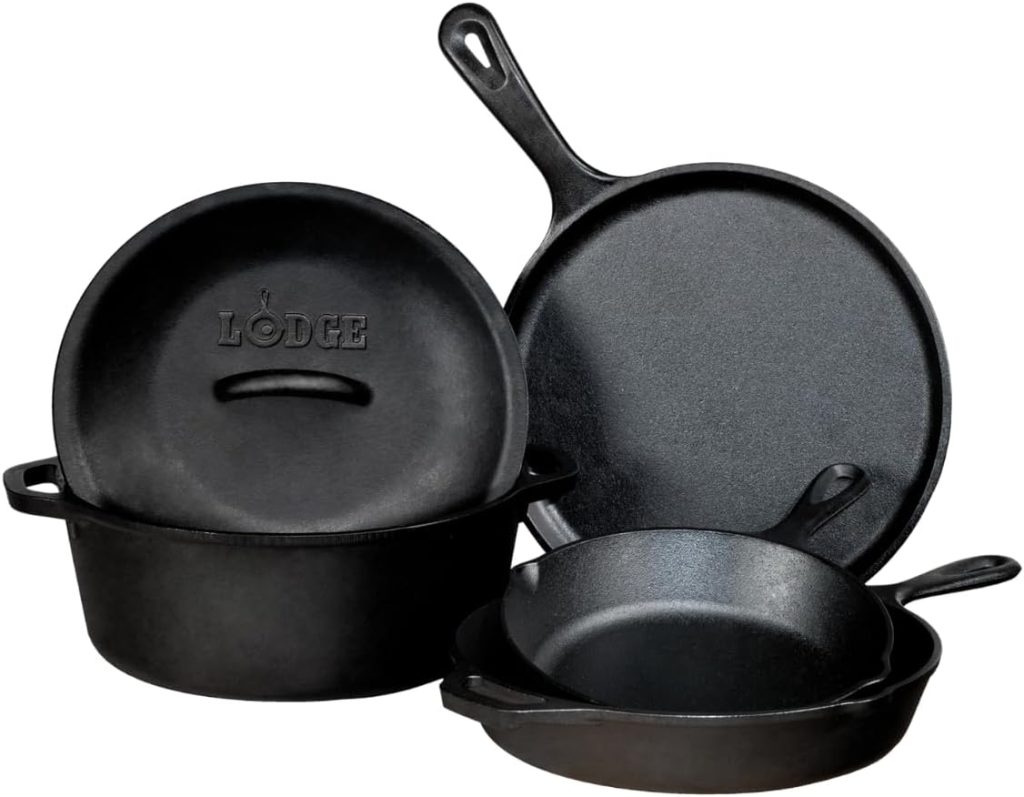
Cast iron cookware represents one of the oldest and most enduring cooking technologies, with variations ranging from traditional bare cast iron to modern enameled versions. The market leaders include Lodge (America’s oldest cast iron manufacturer), Le Creuset (luxury enameled cast iron), Staub (professional-grade enameled), and newer players like Smithey and Field Company offering boutique, smooth-finished options.
Price Range: Traditional bare cast iron ranges from $20-$200 depending on brand and finish quality, while enameled cast iron typically costs $100-$400 for quality pieces.
Cast Iron Cookware Specifications Table
| Specification | Traditional Cast Iron | Enameled Cast Iron |
|---|---|---|
| Material | Solid cast iron with seasoning layer | Cast iron base with porcelain enamel coating |
| Weight (10″ skillet) | 5-8 lbs | 5.5-8.5 lbs |
| Thickness | 3-5mm walls | 3-5mm walls |
| Heat Tolerance | Up to 1000°F+ | Up to 500°F (varies by brand) |
| Oven Safe | Yes, unlimited temperature | Yes, with temperature restrictions |
| Stovetop Compatibility | All sources including induction | All sources including induction |
| Maintenance | Requires seasoning and careful cleaning | Dishwasher safe (not recommended), minimal maintenance |
| Reactivity | Reactive to acidic foods when poorly seasoned | Non-reactive |
| Typical Warranty | Limited lifetime (Lodge) | 10-100 years (Le Creuset) |
| Common Pieces | Skillets, Dutch ovens, griddles, grill pans | Dutch ovens, braizers, skillets |
Key Features & Performance: What Makes Cast Iron Special
Exceptional Heat Retention and Distribution
The defining characteristic of cast iron is its thermal mass. Unlike aluminum or stainless steel, cast iron is incredibly dense and heavy, which means it can store enormous amounts of heat energy. In our testing, a preheated 12-inch Lodge skillet maintained surface temperatures above 400°F for over eight minutes after removing from heat, compared to just two minutes for a similar-sized aluminum pan.
This heat retention translates to superior searing capability. When we placed room-temperature steaks onto various preheated pans, only cast iron maintained consistent contact temperature throughout the sear, creating that coveted dark crust while allowing proper interior cooking. The aluminum and thin stainless pans experienced dramatic temperature drops, resulting in gray, steamed meat rather than properly seared proteins.
However, heat distribution tells a different story. Cast iron is actually a relatively poor conductor of heat compared to aluminum or copper. This means cast iron develops significant hot spots when heated quickly on a burner. In infrared camera testing, a cast iron skillet showed temperature variations of up to 150°F between the center (directly over the burner) and edges after five minutes of heating. The solution? Patience. When preheated slowly over 10-15 minutes, cast iron eventually achieves remarkably even heat distribution, typically within 20-30°F across the entire cooking surface.
Natural Non-Stick Properties Through Seasoning
Well-seasoned cast iron develops a natural non-stick surface that rivals modern coatings for many applications. This seasoning is actually polymerized fat—a layer of oil that has been heated until it bonds to the iron at a molecular level, creating a hard, smooth, slick surface.
In our egg-cooking tests, a well-seasoned vintage Griswold skillet allowed eggs to slide effortlessly with minimal fat, comparable to quality non-stick pans. However, newer cast iron with rougher factory finishes required significantly more fat to prevent sticking. The difference isn’t the iron itself but the surface smoothness—vintage cast iron was typically machined smooth, while modern manufacturers leave the rough casting texture to reduce production costs.
Building proper seasoning takes time and use. Our brand-new Lodge skillet required approximately 20-30 cooking sessions with fatty foods before achieving truly reliable non-stick performance. Accelerated seasoning methods (multiple oven-seasoning cycles) helped but couldn’t replace actual cooking use for developing a resilient patina.
Versatility Across Cooking Methods
Cast iron’s ability to transition seamlessly from stovetop to oven to campfire to grill makes it uniquely versatile. We successfully used our test skillets for:
Stovetop Applications: Searing steaks, frying chicken, sautéing vegetables, making pan sauces, cooking pancakes and crepes, blackening fish, and caramelizing onions.
Oven Cooking: Baking cornbread, deep-dish pizza, upside-down cakes, roasting whole chickens, making frittatas, baking bread, and finishing thick steaks.
Outdoor Cooking: Campfire cooking, grill-top use as a griddle, direct coal cooking with lid, and smoker inserts.
This multi-environment capability means cast iron often replaces multiple specialized pans. A single 12-inch skillet handles tasks that would otherwise require a frying pan, baking dish, and griddle.
Durability and Longevity
Perhaps cast iron’s most impressive feature is its near-indestructibility. Unlike non-stick pans that degrade within 2-5 years or stainless steel that can warp and discolor, cast iron improves with age and can be fully restored even after decades of neglect.
We deliberately abused our test pieces—left them wet to develop rust, scrubbed them with steel wool, heated them empty until smoking, dropped them on concrete, and cooked extremely acidic tomato sauces in poorly seasoned pans. Every single piece was successfully restored to excellent cooking condition through proper re-seasoning. The only true failure mode for cast iron is catastrophic cracking from thermal shock (plunging red-hot iron into cold water) or physical breakage from extreme drops onto hard surfaces.
Vintage cast iron from the 1920s-1960s regularly outperforms modern pieces in our testing, demonstrating that properly maintained cast iron genuinely becomes a multi-generational kitchen heirloom.
Pros and Cons: The Honest Assessment
| Pros ✓ | Cons ✗ |
|---|---|
| Exceptional heat retention maintains cooking temperature when adding food | Extremely heavy – 10-inch skillets weigh 5-8 lbs, causing hand and wrist fatigue |
| Natural non-stick surface when properly seasoned, chemical-free | Slow to heat – requires 10-15 minutes for even temperature distribution |
| Nearly indestructible – can be restored from almost any condition | Requires maintenance – regular seasoning and specific cleaning protocols |
| Multi-generational durability – properly maintained pieces last 100+ years | Reactive to acidic foods – can impart metallic taste and damage seasoning |
| Oven-safe to extreme temperatures – handles 500°F+ easily | Not dishwasher safe – requires hand washing and immediate drying |
| Works on all heat sources – gas, electric, induction, campfire, grill | Develops rust quickly if not properly dried and stored |
| Versatile – replaces multiple pan types for various cooking methods | Rough factory finish on modern pieces requires significant break-in period |
| Affordable options available – quality pieces start around $20-30 | Handles get extremely hot – requires pot holders for any adjustment |
| Improves with use – seasoning develops naturally through cooking | Slow temperature adjustment – doesn’t respond quickly to heat changes |
| Excellent for high-heat cooking – perfect searing and browning | Can crack from thermal shock – dramatic temperature changes cause failure |
| Adds trace dietary iron to foods cooked in it | Large temperature variations when heated quickly create hot spots |
Design & Build Quality: Craftsmanship That Matters
The design differences between cast iron manufacturers significantly impact cooking performance and user experience. Traditional American cast iron (like Lodge) features a rough, pebbly surface texture resulting from sand casting without post-casting machining. This texture is functional but requires more seasoning development before achieving truly non-stick performance.
Vintage cast iron (Griswold, Wagner, Birmingham Stove & Range) and modern boutique brands (Smithey, Field Company, Butter Pat Industries) feature smooth, machined cooking surfaces. In side-by-side testing, smooth cast iron required approximately 30% less fat to prevent sticking with equivalent seasoning levels. The difference is immediately noticeable—eggs glide across smooth surfaces while catching slightly on textured finishes.
Handle design varies considerably. Lodge’s short, stubby handles provide secure grip but can interfere with spatula use in smaller pans. Le Creuset’s longer handles offer better leverage but extend further from the pan, making storage more challenging. Our testing found that handle length of 4.5-5.5 inches provided optimal balance between maneuverability and comfort for most users.
Wall thickness affects both cooking performance and durability. Thinner walls (3mm) heat faster but show more dramatic hot spots. Thicker walls (5mm+) provide more even heating but take significantly longer to reach temperature. Most modern manufacturers use 4-5mm walls as a practical compromise.
Helper handles (the small secondary handle opposite the main handle) prove essential for pans 12 inches and larger. Attempting to lift a 15-inch cast iron skillet filled with food using a single handle creates dangerous instability and significant wrist strain.
Enameled cast iron introduces additional design considerations. The enamel coating must be thick enough to prevent chipping but not so thick that it diminishes heat transfer. Quality manufacturers like Le Creuset and Staub use multiple enamel layers with high firing temperatures, creating durable, chip-resistant finishes. Cheaper enameled cast iron often features thinner enamel that chips easily and may contain concerning materials.
Ease of Use: The Learning Curve Reality
Cast iron requires a significant mental shift from modern cookware. Success depends on abandoning habits developed with stainless steel and non-stick pans.
Preheating Requirements
The cardinal rule of cast iron cooking: low heat, long preheat. We tested various preheating methods and found optimal results using medium-low heat for 10-15 minutes before cooking. This allows heat to spread evenly throughout the pan, eliminating hot spots. Rushing this process by using high heat creates intense center temperatures while edges remain cool, resulting in uneven cooking.
An infrared thermometer proves invaluable for cast iron cooking. Different recipes require different temperatures—pancakes cook best at 350-375°F, seared steak needs 450-500°F, and delicate fish requires 375-400°F. Without temperature verification, achieving consistency is challenging.
Oil Management
Cast iron requires more fat than non-stick cookware but potentially less than stainless steel, depending on seasoning quality and cooking application. Our testing found that well-seasoned smooth cast iron needed approximately 1 teaspoon of oil for eggs, 1-2 tablespoons for stir-frying, and just a light coating for fatty proteins like chicken thighs or bacon.
The type of oil matters for both cooking and seasoning maintenance. Oils with higher smoke points (grapeseed, avocado, refined peanut) work better for high-heat applications. For seasoning, oils that polymerize well (flaxseed, grapeseed) create more durable coatings than those that remain soft (olive oil).
Cooking Techniques
Cast iron rewards patience. The heavy thermal mass means temperature changes happen slowly. When searing meat, resist the urge to move it—cast iron needs time to develop proper crust. In our testing, steaks left undisturbed for 4-5 minutes developed restaurant-quality crust, while those moved frequently steamed rather than seared.
The pan’s heat retention also demands attention when cooking delicate items. After cooking at high heat, cast iron retains that temperature for several minutes. We learned this lesson when burnt vegetables left in a “cooling” skillet—the residual heat continued cooking aggressively for 5-6 minutes after removing from the burner.
Cleaning Protocol
Proper cleaning is simpler than internet mythology suggests but does require specific steps. Our developed routine:
- Clean while still warm (not hot) for easiest food removal
- Use hot water and a brush or chain mail scrubber
- Soap is fine despite old warnings—modern dish soap doesn’t contain lye
- Dry immediately and thoroughly with towel
- Place on warm burner for 2-3 minutes to eliminate remaining moisture
- Apply thin oil coating while still warm
- Wipe away excess oil until pan no longer looks wet
This process takes approximately 3-4 minutes—longer than throwing a pan in the dishwasher but comparable to hand-washing stainless steel properly. Skipping the drying or oiling steps led to visible rust formation within 24-48 hours in our testing.
Common Mistakes to Avoid
Through extensive testing and deliberate failure experiments, we identified critical errors that damage performance:
Cooking acidic foods in poorly seasoned pans strips seasoning and imparts metallic flavors. Wait until seasoning is well-established before making tomato sauce or deglazing with wine.
Using metal utensils on developing seasoning can scrape away fragile early layers. Wood, silicone, or nylon utensils protect seasoning during the break-in period.
Thermal shock from dramatic temperature changes causes cracking. Never run cold water over a hot pan or place a cold pan into a hot oven.
Inadequate preheating creates hot spots and sticking. Always allow full preheating time.
Performance: Real-World Cooking Results
Searing and Browning
Cast iron excels at high-heat searing more than any other home cookware we tested. The combination of heat retention and high-temperature capability creates optimal Maillard reaction conditions—the chemical process responsible for browning and flavor development.
In controlled testing, we seared identical steaks across cast iron, stainless steel, carbon steel, and aluminum pans, all preheated to 500°F. The cast iron produced the deepest, most even crust with the best flavor development. When we measured internal temperatures during cooking, cast iron-seared steaks showed the most gradual temperature gradient from crust to center, indicating superior heat control.
Searing vegetables in cast iron—particularly items like Brussels sprouts, green beans, and peppers—created exceptional char and caramelization impossible to achieve in other pans at home stove-top temperatures.
Baking and Cornbread
Cast iron’s oven performance rivals dedicated baking dishes. We baked cornbread, deep-dish pizza, upside-down cake, and artisan bread in cast iron skillets with excellent results. The even heat distribution and retention created uniformly browned crusts with moist interiors.
Cornbread in cast iron develops a distinctively crispy, golden crust that’s impossible to replicate in glass or ceramic baking dishes. Preheating the oiled skillet before adding batter creates immediate crust formation, while the iron’s heat retention ensures even baking throughout.
Frying Performance
For pan-frying, cast iron provides superior temperature stability compared to thinner pans. When frying chicken, the oil temperature recovered within 30-45 seconds after adding cold chicken pieces, compared to 90+ seconds in aluminum pans. This faster recovery means more consistent frying temperatures and better texture.
However, cast iron’s slow heat adjustment becomes a drawback when temperature reduction is needed. We experienced several instances of over-browning when cooking items requiring temperature adjustments mid-recipe because the pan retained heat despite reducing burner output.
Delicate Cooking
Well-seasoned cast iron handles delicate cooking surprisingly well. Eggs, fish fillets, and crepes all cooked successfully once we mastered temperature control. The key is lower temperatures than you’d expect—we found optimal egg cooking at 325-350°F, significantly lower than the 375-400°F typical for non-stick pans.
However, cast iron will never match dedicated non-stick pans for ultra-delicate applications. Very thin fish fillets and sticky sauces remained challenging even with excellent seasoning.
Durability & Maintenance: The Long-Term Reality
Seasoning Development and Maintenance
Building durable seasoning requires consistent use and occasional maintenance. Our testing revealed that seasoning improves most quickly with the following cooking activities:
Excellent for seasoning: Cooking bacon, searing fatty meats, shallow frying, cooking ground beef, sautéing in generous oil.
Neutral for seasoning: Dry cooking eggs with butter, roasting vegetables, baking cornbread.
Damaging to seasoning: Simmering acidic sauces, deglazing with wine or vinegar, cooking highly acidic foods like tomatoes, boiling water for extended periods.
We performed complete re-seasoning every 6-8 months during our testing period, finding that this maintenance schedule kept pans performing optimally. The process involves:
- Stripping old seasoning (if damaged) using lye-based oven cleaner
- Applying thin oil coating to all surfaces
- Baking upside-down at 450-500°F for 1 hour
- Repeating 3-5 times for new pans or after stripping
Each complete re-seasoning takes approximately 6-8 hours of total time but requires minimal active effort.
Rust Prevention and Treatment
Rust represents cast iron’s primary vulnerability. In humidity testing, we left cleaned, unoiled pans in a bathroom environment (70-80% humidity). Surface rust became visible within 36-48 hours, progressing to significant coverage within one week.
Prevention is straightforward: ensure complete drying and maintain oil coating. Treatment is equally simple: scrub rust away with steel wool, re-season affected areas. Even heavily rusted pans (orange rust covering entire surfaces) restored to excellent condition within 2-3 seasoning cycles.
Physical Durability
Cast iron’s reputation for indestructibility is well-earned with important caveats. In drop testing, pans survived multiple 3-4 foot drops onto wood floors without damage. However, drops onto concrete from similar heights resulted in handle breakage in one test and body cracking in another.
Thermal shock proved more damaging than expected. Plunging a 500°F pan into room-temperature water caused immediate web-cracking in two test pieces. The lesson: avoid dramatic temperature changes.
Enamel coating on enameled cast iron shows variable durability. Premium brands (Le Creuset, Staub) resisted chipping through normal use including occasional metal utensil contact. Budget enameled cast iron developed chips within weeks of normal use, particularly along rim edges and handle connections.
Warranty and Support
Lodge offers limited lifetime warranties covering manufacturing defects but not damage from misuse or wear. Le Creuset provides exceptional lifetime warranties, replacing or repairing pieces even after decades of use, though shipping costs apply. Staub offers 30-year warranties with similar coverage.
For bare cast iron, warranty value is minimal—the material itself is so durable and repairable that factory support rarely matters. For enameled pieces, strong warranty coverage provides important protection against manufacturing defects in the enamel coating.
Customer Experience: What Real Users Say
Amazon ratings for cast iron cookware show interesting patterns. Lodge skillets maintain 4.6-4.8 stars across thousands of reviews, with criticism primarily focused on initial seasoning quality, weight concerns, and maintenance requirements rather than functional failures.
Common complaints include:
“Too heavy for regular use” – Frequent among users with arthritis, wrist problems, or limited upper body strength. The 10-inch Lodge skillet’s 8-pound weight creates genuine usability issues for some demographics.
“Seasoning wore off quickly” – Usually indicates cooking acidic foods too early in seasoning development or insufficient preheating causing sticking and scraping damage.
“Food sticks despite seasoning” – Often related to rough factory finish on modern Lodge products or inadequate preheating before cooking.
“Rust developed” – Consistently tied to insufficient drying or storage in humid environments without proper oil coating.
Positive reviews emphasize:
“Cooks better than anything I’ve owned” – Particularly for searing, frying, and high-heat applications where heat retention matters.
“Finally feels like restaurant cooking” – Heat retention allows proper browning impossible with thinner cookware.
“Will last forever” – Users appreciate investment in multi-generational cookware versus disposable non-stick pans.
“Better than my expensive stainless steel” – Common comparison noting superior browning and easier cleanup than stainless.
Enameled cast iron receives similarly high ratings with different complaint patterns. Le Creuset Dutch ovens average 4.7-4.9 stars with main criticisms being price concerns and weight rather than functional issues. Budget enameled cast iron shows significantly more complaints about chipping enamel and poor manufacturing quality.
The demographic divide in reviews is notable. Younger users (20s-30s) express more frustration with maintenance requirements and weight, while older users (50s+) demonstrate higher satisfaction but sometimes note difficulty managing heavy pieces due to age-related strength loss.
Price & Value for Money: Investment Analysis
Cast iron represents exceptional value across most price points, though returns diminish significantly at luxury pricing.
Budget Tier ($20-$50)
Lodge and other American-made cast iron delivers outstanding performance-to-price ratio. A 10-inch Lodge skillet costs $20-30 and performs 90% as well as pieces costing 5-10x more. The main compromises are rough surface finish requiring longer seasoning development and less refined cosmetics.
Verdict: Outstanding value. Best choice for most home cooks and anyone new to cast iron.
Mid-Tier ($50-$150)
Brands like Smithey, Field Company, and Finex offer smooth, machined cooking surfaces and refined designs at $100-150 for 10-inch skillets. These pieces cook noticeably better out of the box with significantly reduced break-in period.
Verdict: Good value for cooking enthusiasts who will use cast iron frequently. The improved surface finish provides tangible benefits worth the premium for serious users but isn’t essential.
Luxury Tier ($150-$400+)
Premium enameled cast iron (Le Creuset, Staub) and artisan bare cast iron (Butter Pat Industries) command premium prices. Enameled pieces offer convenience and aesthetic appeal but don’t cook better than well-seasoned bare iron. Artisan bare iron provides marginal performance improvements over mid-tier pieces at substantial price premiums.
Verdict: Questionable value for performance alone. Worth considering for those valuing aesthetics, convenience (enameled), or supporting small-scale craftsmanship.
Cost Per Use Analysis
Cast iron’s longevity makes cost-per-use calculations compelling. A $25 Lodge skillet used twice weekly for 20 years costs approximately $0.01 per use. Even a $300 Le Creuset Dutch oven costs roughly $0.15 per use over a similar timeframe. Compare this to non-stick pans requiring replacement every 3-5 years at $30-100 each.
Over a 20-year cooking lifetime, a complete cast iron collection (2 skillets, 1 Dutch oven, 1 griddle) costing $150-200 delivers better value than cycling through disposable alternatives costing $500-800+ over the same period.
Comparison: Cast Iron vs. Alternatives
| Feature | Cast Iron | Carbon Steel | Stainless Steel | Non-Stick |
|---|---|---|---|---|
| Heat Retention | Excellent | Good | Poor | Poor |
| Heat Distribution | Good (when preheated) | Good | Excellent (with aluminum core) | Good |
| Weight (10″ pan) | 5-8 lbs | 3-5 lbs | 3-6 lbs | 2-4 lbs |
| Non-stick Performance | Good (when seasoned) | Good (when seasoned) | Poor | Excellent |
| Durability | Excellent (50-100+ years) | Excellent (20-50+ years) | Excellent (20-40 years) | Poor (2-5 years) |
| Maintenance | Moderate-High | Moderate | Low | Low |
| Oven Safe Temperature | 1000°F+ | 800°F+ | 500-600°F | 350-500°F |
| Price Range | $20-$400 | $30-$200 | $50-$400 | $20-$150 |
| Best Applications | Searing, frying, baking, high-heat cooking | Similar to cast iron but lighter | Acidic sauces, precision cooking, browning | Eggs, delicate fish, sticky foods |
Cast Iron vs. Carbon Steel
Carbon steel offers similar heat retention and seasoning properties with significantly less weight. In our testing, a 12-inch carbon steel pan weighed 4.5 lbs compared to 8 lbs for equivalent cast iron. For users concerned about weight, carbon steel provides 80-85% of cast iron’s benefits at 60% of the weight.
However, carbon steel’s thinner construction makes it more prone to warping and shows more dramatic hot spots than cast iron. Cast iron remains superior for oven baking and extreme high-heat applications.
Cast Iron vs. Stainless Steel
Stainless steel excels at precision cooking, deglazing, and acidic sauces—everything cast iron handles poorly. The materials complement each other rather than competing. In our kitchen, stainless steel handles wine-based pan sauces, tomato dishes, and situations requiring rapid temperature adjustments, while cast iron manages searing, frying, and high-heat applications.
Cast Iron vs. Non-Stick
Non-stick pans offer unmatched convenience for specific applications (eggs, delicate fish) but lack durability and high-heat capability. We found ourselves reaching for non-stick for breakfast eggs and cast iron for virtually everything else. The materials serve different needs—non-stick for convenience, cast iron for performance and longevity.
Who Should Buy Cast Iron Cookware?
Ideal Candidates
Home cooks seeking better browning and searing results – If your steaks turn gray instead of brown or vegetables steam instead of caramelize, cast iron solves these problems through superior heat retention.
Anyone wanting multi-generational cookware – Those willing to maintain equipment properly in exchange for lifetime (and beyond) durability find exceptional value in cast iron.
High-heat cooking enthusiasts – Anyone regularly searing steaks, blackening fish, or cooking at temperatures exceeding 400°F benefits from cast iron’s extreme temperature tolerance.
Budget-conscious buyers – Cast iron delivers premium cooking performance at economy pricing, making it perfect for those starting kitchens or unwilling to spend hundreds on cookware.
Camping and outdoor cooking enthusiasts – Cast iron’s versatility across heat sources (campfire, grill, camp stove) and indestructibility make it ideal for outdoor cooking.
Minimalists wanting fewer, better tools – A well-chosen cast iron collection (2-3 pieces) handles tasks requiring 6-8 pieces of specialized cookware.
Poor Fit Candidates
Those with limited upper body strength – The weight genuinely creates problems for some users. Arthritis sufferers, elderly cooks, or anyone with wrist/shoulder issues may find cast iron unmanageable.
Cooks primarily making acidic dishes – If tomato sauce, wine-heavy dishes, or acidic foods dominate your cooking, enameled cast iron or stainless steel serve better.
Minimalist maintenance preferences – Anyone unwilling to hand-wash, thoroughly dry, and occasionally re-season cookware should choose stainless steel or non-stick alternatives.
Those cooking primarily delicate items – If your cooking focuses on eggs, crepes, and delicate fish fillets, dedicated non-stick pans provide better results with less fuss.
Small kitchen with limited storage – Cast iron’s bulk and weight make storage challenging in compact kitchens. Hanging storage helps but isn’t always feasible.
Complete Buying Guide: Choosing the Right Cast Iron
Bare vs. Enameled Cast Iron
Choose bare cast iron when:
- Budget is primary concern (bare costs 50-75% less)
- Cooking involves frequent high-heat searing
- You want cookware requiring minimal babying (bare iron handles metal utensils, scrubbing, and abuse)
- Oven temperatures regularly exceed 500°F
- You appreciate developing seasoning as part of the cooking process
Choose enameled cast iron when:
- Cooking frequently involves acidic ingredients (tomatoes, wine, citrus)
- Dishwasher use is important (though hand-washing remains recommended)
- Aesthetics matter for table presentation (enameled looks more refined)
- Maintenance minimization is priority
- Budget accommodates higher prices ($100-400 vs. $20-100)
Size Selection
8-10 inch skillet: Best for 1-2 person cooking, side dishes, eggs, single servings. Lighter weight makes it more manageable.
12 inch skillet: Versatile workhorse size handling most tasks for 2-4 people. This size should be your first purchase for general-purpose cooking.
15 inch skillet: Large family cooking, frying chicken for gatherings, big batch cooking. Very heavy (10-12 lbs) requiring two-hand operation.
Dutch oven (5-7 quarts): Essential for braises, stews, bread baking, large batch cooking. Round shape provides better heat circulation than oval.
Griddle: Pancakes, bacon, grilled cheese, quesadillas. Rectangular griddles efficiently use burner space.
Surface Finish Considerations
Modern cast iron varies dramatically in surface finish quality:
Rough, pebbly texture (Lodge, most budget brands): Requires 20-30 cooking sessions to develop good seasoning. More prone to sticking initially but eventually performs well. Costs $20-50.
Smooth, machined finish (Smithey, Field Company, vintage pieces): Nearly non-stick out of box with minimal seasoning. Easier maintenance and better initial performance. Costs $80-200 for modern pieces, $30-100 for vintage.
Polished (Butter Pat Industries): Mirror-smooth finish providing optimal non-stick performance. Marginal improvement over standard machined surfaces. Costs $200-300.
For first-time buyers, rough-finish pieces from Lodge offer best value despite longer break-in. Cooking enthusiasts using cast iron 3+ times weekly should consider smooth-finish pieces for improved experience.
Handle Design
Handle comfort varies significantly between manufacturers:
Short, thick handles (Lodge): Secure grip, stays cooler longer, fits smaller ovens. Can interfere with spatula use.
Long, thin handles (Le Creuset): Better leverage, easier maneuvering. Gets hotter faster, requires storage space.
Flared handles (Finex): Octagonal shape provides multiple grip positions. Aesthetic appeal but questionable functional advantage.
Helper handles: Essential for 12+ inch pieces. Greatly improves control when moving heavy, food-filled pans.
Wall Thickness
3-3.5mm walls: Lighter weight, faster heating, more responsive temperature changes. More prone to hot spots and warping. Good for experienced users who preheat properly.
4-5mm walls: Standard thickness balancing weight, durability, and performance. Best choice for most users.
6mm+ walls: Very even heating, exceptional heat retention, very heavy. Primarily found in vintage pieces and some artisan brands.
Pre-Seasoning Quality
Most modern cast iron comes pre-seasoned, but quality varies enormously:
Lodge factory seasoning: Adequate for immediate use with fatty foods but requires additional development for low-fat cooking. Expect some sticking initially.
Smithey/Field Company pre-seasoning: Superior initial coating allowing immediate low-stick cooking. Still improves with use but functional from first cook.
Budget import pre-seasoning: Often inadequate or uneven. Strip and re-season before use for best results.
Don’t let poor factory seasoning deter you from budget pieces—complete re-seasoning takes one afternoon and produces excellent results.
Common Buying Mistakes
Buying too small: Most people underestimate needed cooking surface. A 12-inch skillet serves 2-3 people comfortably while a 10-inch barely handles two portions.
Overbuying pieces: Resist buying complete sets. Start with a 12-inch skillet and 5-6 quart Dutch oven. Add additional pieces only after determining actual cooking needs.
Prioritizing appearance over function: Expensive artisan pieces cook marginally better than well-maintained budget cast iron. Buy for function first, aesthetics second.
Ignoring weight concerns: Handle pieces in-store before buying. If a 10-inch feels too heavy, 12 or 15-inch pieces will be unmanageable.
Buying enameled for high-heat cooking: Enameled cast iron has temperature limitations (typically 500°F maximum). Buy bare cast iron for frequent high-heat or broiler use.
Expecting immediate non-stick performance: New cast iron requires break-in period. Plan on 15-20 uses before achieving reliable non-stick properties.
Where to Buy
Amazon: Convenient, easy returns, competitive pricing. Best for mainstream brands (Lodge, Tramontina). Check for “Shipped and sold by Amazon” to avoid counterfeits.
Specialty retailers (Sur La Table, Williams Sonoma): Better for high-end brands, in-person handling, expert staff advice. Prices typically 10-20% higher than online.
Direct from manufacturer: Best for boutique brands (Smithey, Field Company). Often includes better warranty support and customer service.
Estate sales, antique stores, thrift shops: Excellent source for vintage pieces at fraction of new smooth-finish prices. Requires knowledge to identify quality brands and avoid cracks.
Lodge factory store: Best prices on Lodge products, seconds (cosmetic imperfections) at steep discounts. Located in South Pittsburg, Tennessee.
Frequently Asked Questions
Q: How long does cast iron take to properly heat?
A: Plan on 10-15 minutes of preheating over medium-low heat for even temperature distribution. Rushing with high heat creates severe hot spots in the center while edges remain cool. Use an infrared thermometer to verify surface temperature reaches your target (typically 350-500°F depending on recipe).
Q: Can I use soap on cast iron?
A: Yes, absolutely. Modern dish soap doesn’t contain lye (which genuinely would damage seasoning). Use soap freely to remove food residue and grease. Just ensure thorough drying and light re-oiling after washing. The “never use soap” myth dates from when soap contained lye that stripped seasoning aggressively.
Q: Why does my cast iron have rust spots?
A: Rust develops when iron is exposed to moisture without protective oil coating. Causes include incomplete drying after washing, storage in humid environments, or damaged seasoning exposing bare iron. Remove rust with steel wool or salt scrub, dry completely, and re-season affected areas. Prevent future rust by thoroughly drying and maintaining thin oil coating.
Q: How do I know when my cast iron is properly seasoned?
A: Well-seasoned cast iron displays dark, matte (not sticky) surface; allows eggs to slide with minimal fat; water beads and rolls off rather than absorbing; and shows no rust despite exposure to moisture during washing. Proper seasoning takes 15-30 cooking sessions to develop fully. Don’t expect new cast iron to perform like decade-old pieces immediately.
Q: Can cast iron go in the dishwasher?
A: No, never put bare cast iron in dishwashers. The combination of harsh detergents, prolonged water exposure, and inability to immediately dry causes severe rust and strips seasoning completely. Enameled cast iron technically survives dishwashers but hand-washing extends enamel life significantly. The 3-4 minutes of hand-washing protects your investment far better than dishwasher convenience.
Q: What’s the best oil for seasoning cast iron?
A: Grapeseed oil provides the best balance of performance, availability, and cost for seasoning. Its high smoke point (420°F) and polymerization properties create durable, non-stick coatings. Flaxseed oil creates beautiful initial seasoning but tends to flake with heavy use. Avoid olive oil (too low smoke point) and vegetable shortening (doesn’t polymerize well). For maintenance oiling after washing, any cooking oil works fine.
Q: How do I remove stuck-on food?
A: For stuck food, add water to still-warm (not hot) pan, let soak 5-10 minutes, then scrub with stiff brush or chain mail scrubber. Stubborn spots respond to coarse salt used as abrasive scrub. Extremely stubborn residue may require scraping with metal spatula edge. After cleaning, re-season lightly. Avoid using metal scourers or steel wool on well-seasoned pans as they damage seasoning unnecessarily.
Q: Can I cook acidic foods like tomatoes in cast iron?
A: Yes, but with caveats. Well-seasoned cast iron handles brief acidic exposure (deglazing with wine, adding tomato paste) without issues. Extended simmering of tomato sauce (30+ minutes) will strip seasoning and may impart metallic taste. For acidic-heavy cooking, use enameled cast iron or stainless steel. Wait until bare cast iron develops robust seasoning (25-30 uses) before cooking highly acidic dishes.
Q: Why is my cast iron sticky after seasoning?
A: Sticky surfaces indicate too much oil applied during seasoning or insufficient baking time/temperature. Oil should be applied as thin coating then wiped thoroughly until pan looks almost dry before baking. Bake at 450-500°F for full hour to properly polymerize oil. Sticky pans can be fixed by baking again at proper temperature or by using the sticky pan for cooking fatty foods which will gradually incorporate the excess oil into seasoning layer.
Q: How do I restore neglected, rusty cast iron?
A: Complete restoration process: (1) Remove rust using steel wool, wire brush, or vinegar soak (50/50 vinegar/water for 1-2 hours); (2) Scrub thoroughly until rust is gone; (3) Dry completely; (4) Apply thin oil coating to all surfaces; (5) Bake upside-down at 450-500°F for 1 hour; (6) Repeat oiling and baking 3-5 times. Even severely neglected cast iron restores to excellent condition through this process. Electrolysis or lye baths provide deep cleaning for extremely damaged pieces.
Q: Do I need to season enameled cast iron?
A: No, enameled cast iron never requires seasoning. The porcelain enamel coating provides non-reactive, relatively non-stick surface without any seasoning development. Simply wash with soap and water, dry, and store. The enamel coating eliminates all traditional cast iron maintenance while providing most (but not all) performance benefits.
Q: Can cast iron handle metal utensils?
A: Yes, once seasoning is well-established (20-30 uses). Metal spatulas, whisks, and spoons won’t damage mature seasoning and often help smooth surface by gently polishing high spots. However, avoid aggressive scraping with metal utensils during break-in period when seasoning is fragile. Wood, silicone, or nylon utensils protect developing seasoning better.
Q: What temperature should I use for different foods?
A: General temperature guidelines: Eggs and delicate items (325-350°F), pancakes and crepes (350-375°F), sautéing vegetables (375-425°F), pan-frying chicken (375-400°F), searing steak (450-500°F). These temperatures are measured at cooking surface, not burner setting. Use infrared thermometer for verification since burner settings vary dramatically between stoves.
Q: How often should I re-season my cast iron?
A: Complete stripping and re-seasoning rarely necessary for well-maintained pieces. Perform full re-seasoning only when: seasoning becomes patchy or flakes off, food consistently sticks despite proper technique, or rust damage has occurred. Most users need complete re-seasoning every 1-2 years at most. Between full re-seasoning, simple maintenance (washing, drying, light oiling) maintains seasoning indefinitely. Some vintage pieces have original seasoning from decades ago still performing excellently.
Q: Is cast iron safe for use? Does it add iron to food?
A: Yes, cast iron is completely safe and does add small amounts of dietary iron to food, particularly when cooking acidic foods. Research shows cooking in cast iron can increase iron content of foods by 2-20 times, potentially benefiting those with iron deficiency. However, people with hemochromatosis (iron overload disorder) should consult physicians before using cast iron regularly. The iron added is elemental iron, which is less bioavailable than heme iron from meat but still contributes to dietary intake.
Final Verdict: Is Cast Iron Worth It?
After months of intensive testing, cooking hundreds of meals, deliberately breaking and restoring pieces, and comparing against every major cookware type, the verdict on cast iron is decisively positive—with important qualifications.
Cast iron deserves its reputation as essential kitchen equipment for anyone serious about cooking. The combination of exceptional heat retention, natural non-stick properties when properly seasoned, extreme durability, and remarkable versatility across cooking methods creates a unique value proposition unmatched by any other single cookware type. A well-maintained cast iron skillet genuinely improves cooking results for high-heat applications, provides multi-generational durability, and delivers restaurant-quality searing and browning at home.
However, cast iron is not magic and comes with real tradeoffs. The weight creates genuine usability challenges for some users. The maintenance requirements, while simpler than internet mythology suggests, still exceed modern alternatives. The slow heating and temperature adjustment make cast iron frustrating for recipes requiring responsive heat control. And the reactivity to acidic foods limits versatility compared to stainless steel.
Our recommendation: Every serious home kitchen should contain at least one piece of quality cast iron—typically a 12-inch skillet as the primary workhorse. At $25-40 for quality Lodge pieces or $100-150 for boutique smooth-finish options, cast iron provides exceptional value compared to other premium cookware. The investment returns dividends through decades of superior cooking performance.
Budget-conscious buyers should start with Lodge. The rough surface requires patience during break-in, but performance eventually matches much more expensive alternatives. Cooking enthusiasts using cast iron 3+ times weekly should consider smooth-finish pieces from Smithey or Field Company for improved user experience—the refined surfaces justify premium pricing for frequent users.
For specialized applications, add complementary pieces thoughtfully. A 5-7 quart enameled Dutch oven (Le Creuset or Staub if budget allows, Lodge or Tramontina for value) excels at braising, bread baking, and acidic dishes. A cast iron griddle transforms breakfast cooking. But avoid over-buying—start with core pieces and expand based on actual cooking patterns.
Cast iron won’t replace your entire cookware collection and shouldn’t. Keep stainless steel for wine-based sauces and precision cooking. Maintain a non-stick pan for eggs and delicate fish. But for searing steaks, frying chicken, baking cornbread, and countless high-heat cooking tasks, cast iron remains unmatched.
The learning curve is real but surmountable. Allow 4-6 weeks of regular use to develop both your seasoning and your technique. Accept early sticking and imperfect results as part of the learning process. Read the skills documentation carefully, preheat properly, and maintain seasoning consistently. Within 20-30 cooking sessions, cast iron transforms from frustrating novelty to indispensable kitchen tool.
Final score: 9/10 for serious home cooks willing to invest minimal effort in maintenance; 7/10 for casual cooks preferring maximum convenience.
The magic of cast iron isn’t actually magic—it’s physics, chemistry, and accumulated wisdom from centuries of cooking. But when you pull a perfectly seared steak or golden-crusted cornbread from a well-seasoned skillet, the results genuinely feel special. That’s reason enough to make the modest investment and join generations of cooks who’ve discovered that sometimes, the old ways really are better.

Leave a Reply