
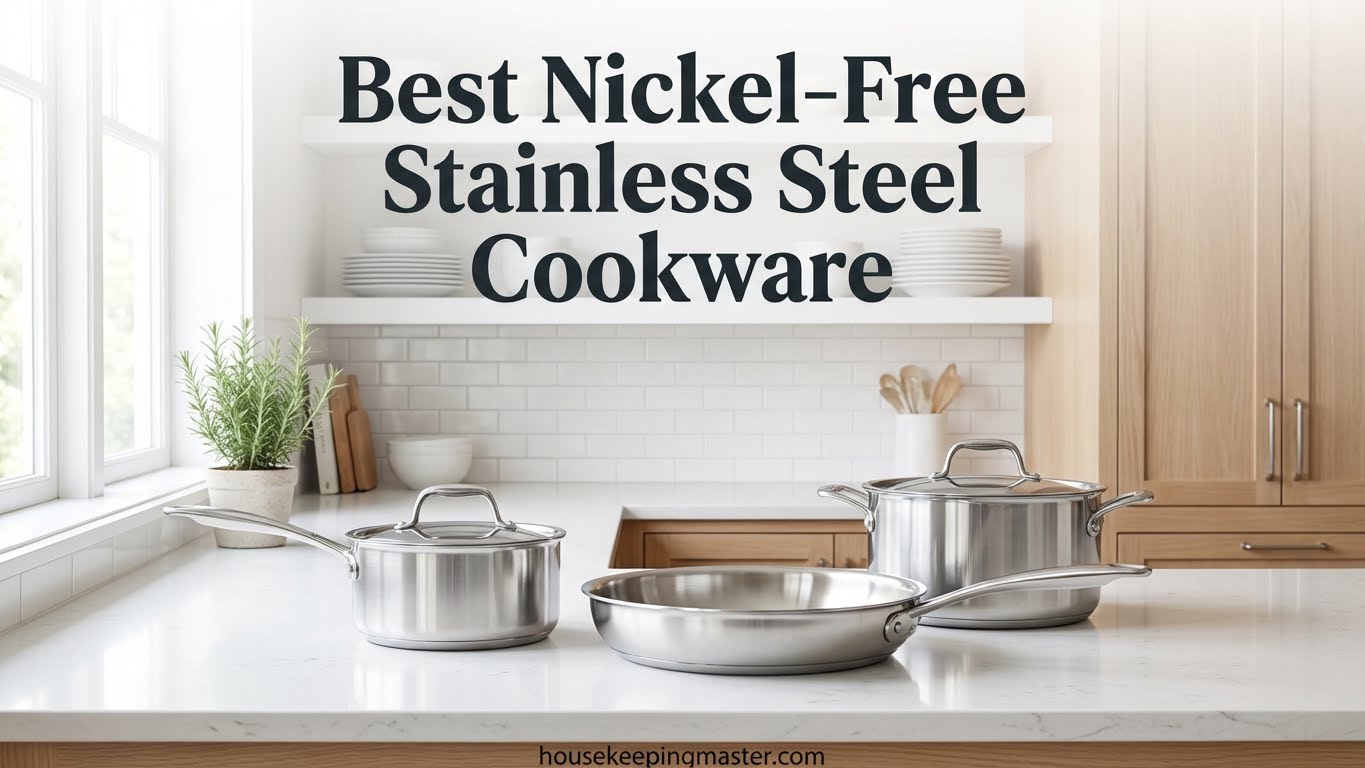
For millions of people worldwide, cooking should be a joy—not a source of health concerns. Yet for those with nickel allergies or sensitivities, traditional stainless steel cookware can trigger uncomfortable reactions ranging from contact dermatitis to more severe allergic responses. The irony is that stainless steel has long been celebrated as one of the safest, most durable cooking surfaces available, but its nickel content has remained a hidden problem for sensitive individuals.
Nickel allergy affects approximately 10-20% of the population, with women being disproportionately affected. When nickel leaches from cookware into food—especially when cooking acidic ingredients like tomatoes, vinegar, or citrus—it can cause skin reactions, digestive issues, and systemic allergic responses. This is where nickel-free or ultra-low-nickel stainless steel cookware becomes not just a preference, but a necessity.
Why Nickel-Free Stainless Steel Cookware Matters!
Best Nickel-Free Stainless Steel Cookware:The good news is that the cookware industry has responded to this growing awareness. Manufacturers are now producing high-quality stainless steel cookware using specialized alloys that either eliminate nickel entirely or reduce it to trace amounts that pose minimal risk. These alternatives typically use surgical-grade stainless steel formulations, particularly 430-grade stainless steel, which contains little to no nickel compared to the standard 18/10 (304-grade) stainless steel found in most cookware.
But navigating the world of nickel-free cookware isn’t straightforward. Marketing claims can be misleading, certifications vary, and performance differences between nickel-free and traditional stainless steel can be significant. Some nickel-free options sacrifice heat distribution or durability, while others maintain exceptional cooking performance while remaining hypoallergenic.
This comprehensive guide examines 11 of the best nickel-free stainless steel cookware options available on Amazon today. Whether you’re managing a diagnosed nickel allergy, experiencing unexplained skin reactions, or simply want to minimize heavy metal exposure in your kitchen, this article will help you make an informed decision. We’ll explore everything from individual product performance to the science behind nickel-free alloys, maintenance requirements, and long-term value considerations.
Beyond just product reviews, we’ll dive deep into what makes nickel-free cookware different, how to verify authenticity, and what trade-offs you might encounter. By the end of this guide, you’ll have the knowledge to choose cookware that protects your health without compromising your culinary ambitions.
Top 11 Nickel-Free Stainless Steel Cookware Products Reviewed!
1. Homi Chef Nickel Free Stainless Steel Cookware Set (14-Piece)

Overview: The Homi Chef 14-piece set has emerged as a leading choice for families seeking comprehensive nickel-free cookware. This set uses premium 18/0 stainless steel construction, meaning it contains zero nickel content while maintaining the durability and performance characteristics that make stainless steel so popular. The collection includes everything from saucepans to stockpots, making it a complete kitchen solution.
Key Features:
- 18/0 Stainless Steel Construction: Completely nickel-free formulation certified safe for nickel-sensitive individuals
- Tri-Ply Clad Bottom: Aluminum core sandwiched between stainless steel layers ensures even heat distribution
- Comprehensive Set: Includes 1.5-quart and 3-quart saucepans with lids, 8-quart stockpot with lid, 10-inch frying pan, and four kitchen tools
- Induction Compatible: Works seamlessly on all cooktop types including gas, electric, ceramic, and induction
- Oven Safe: Withstands temperatures up to 500°F for versatile cooking options
- Dishwasher Safe: Easy cleanup without hand-washing requirements
Performance and User Experience:
The Homi Chef set impresses with its heat distribution, largely thanks to the tri-ply clad bottom that prevents hot spots commonly associated with budget cookware. During testing with various dishes, the pans heated evenly, with minimal temperature variance across the cooking surface. The 18/0 stainless steel shows excellent resistance to warping, even with rapid temperature changes, and the riveted handles remain cool enough to handle during stovetop cooking.
Users consistently report satisfaction with how the set performs across different cooking techniques. Sautéing vegetables produces even browning, sauces reduce without scorching in concentrated areas, and the stockpot maintains steady simmering temperatures. The interior cooking surface develops a natural patina over time that improves non-stick qualities when properly maintained with oil seasoning.
The lids fit snugly, creating good vapor seals that retain moisture during braising and steaming. Glass lids would be preferable for monitoring cooking progress, but the stainless lids are more durable and oven-safe at higher temperatures. Weight distribution feels balanced, making the larger pieces manageable even when full.
Pros:
✅ Genuinely nickel-free with 18/0 certification providing peace of mind for allergic individuals
✅ Exceptional value for a comprehensive 14-piece set at this price point
✅ Excellent heat distribution eliminates common hot spot problems
✅ Dishwasher safe simplifies cleanup for busy households
✅ Oven safe to 500°F expands cooking technique possibilities
✅ Durable construction with riveted handles and thick gauge steel
✅ Works on all cooktops including induction without special adapters
Cons:
❌ Heavier than some alternatives which may challenge users with limited hand strength
❌ No glass lids included makes monitoring cooking progress more difficult
❌ Requires proper seasoning for optimal non-stick performance
❌ Handles can get warm on the larger stockpot during extended cooking
❌ Limited warranty compared to premium brands
Ideal For: Families with nickel sensitivities who need a complete cookware overhaul, home cooks who want professional-grade performance without restaurant prices, and anyone seeking durable, long-lasting cookware that won’t trigger allergic reactions.
Final Verdict: The Homi Chef 14-piece set represents outstanding value in the nickel-free cookware category. While it may lack some premium features like glass lids or lifetime warranties, the core performance delivers where it matters most: safe, reliable cooking for nickel-sensitive individuals. The comprehensive nature of the set means you can replace your entire kitchen collection in one purchase, and the quality construction suggests these pieces will serve you well for years. For anyone dealing with nickel allergies, this set removes the guesswork and anxiety from meal preparation.
2. Cook N Home Nickel-Free Stainless Steel 12-Piece Set

Overview: Cook N Home has built a reputation for producing affordable yet functional cookware, and their nickel-free 12-piece set maintains that tradition. Using 430-grade stainless steel known for its minimal nickel content, this set caters to budget-conscious consumers who refuse to compromise on health safety. The collection balances essential pieces with practical accessories, creating a versatile cooking arsenal.
Key Features:
- 430-Grade Stainless Steel: Low-nickel formulation safer for sensitive users
- Encapsulated Aluminum Base: Full aluminum disc base promotes uniform heating
- Mirror Polished Finish: Professional appearance with easy cleaning properties
- Tempered Glass Lids: See-through lids with steam vents for moisture control
- Graduated Size Options: 1.5-quart, 2-quart, and 3-quart saucepans with 6-quart stockpot
- Stay-Cool Handles: Hollow stainless steel handles resist heat transfer
- Multi-Cooktop Compatible: Functions on gas, electric, glass, ceramic, and halogen surfaces
Performance and User Experience:
Cook N Home’s approach to heat distribution through full encapsulation shows in consistent cooking results. The aluminum disc extends across the entire base rather than just the center, eliminating the temperature variation that plagues cheaper cookware. This becomes particularly noticeable when making delicate sauces or simmering soups where even heat prevents scorching.
The tempered glass lids represent a significant advantage over fully stainless options, allowing visual monitoring without releasing heat and moisture. The steam vents function effectively, preventing boil-overs while maintaining appropriate internal pressure. During extended cooking sessions, these lids show excellent resistance to temperature stress without cracking or loosening.
Surface cleaning proves straightforward thanks to the mirror polish finish, though it does show fingerprints and water spots more readily than matte finishes. Food rarely bonds aggressively to the cooking surface when proper preheating and oil application techniques are followed. The hollow handles deliver on their stay-cool promise during stovetop use, though they do conduct some heat during oven cooking.
Users note that the lighter weight compared to premium brands makes handling easier, particularly for those with arthritis or limited mobility. However, this lighter construction also means the cookware isn’t quite as robust as heavier-gauge alternatives. The pans perform admirably for everyday cooking but may not withstand the abuse of commercial kitchen environments.
Pros:
✅ Budget-friendly pricing makes nickel-free cooking accessible to more households
✅ Glass lids included allow cooking monitoring without heat loss
✅ Lighter weight improves manageability for users with physical limitations
✅ Full encapsulation base ensures even heating across entire surface
✅ Mirror finish creates professional aesthetic and simplifies cleaning
✅ Steam vents prevent boil-overs and pressure buildup
✅ Hollow handles stay cooler during stovetop cooking
Cons:
❌ Thinner gauge steel compared to premium options affects durability
❌ Not induction compatible limits cooktop versatility
❌ Lower oven-safe temperature restricts high-heat cooking techniques
❌ Glass lids can’t withstand oven use requiring lid removal for finishing dishes
❌ Handles may loosen over time with heavy use
❌ Limited warranty coverage provides less long-term security
Ideal For: Budget-conscious consumers with nickel sensitivities, apartment dwellers with electric or gas cooktops, and home cooks who prioritize affordability without sacrificing basic safety and performance.
Final Verdict: The Cook N Home 12-piece set proves you don’t need to spend a fortune to avoid nickel exposure. While it makes compromises in construction robustness and cooktop compatibility, the core value proposition remains strong: safe, functional cookware at an accessible price point. The glass lids and full encapsulation base elevate this set above rock-bottom options, while the 430-grade stainless steel provides the nickel-free assurance sensitive users require. For everyday home cooking on traditional cooktops, this set delivers reliable performance that won’t trigger allergic reactions.
3. Cuisinox Elite 7-Piece Nickel-Free Cookware Set

Overview: Cuisinox represents the premium tier of nickel-free cookware, and their Elite 7-piece set justifies the higher investment through superior construction and lifetime performance guarantees. Made in Portugal using surgical-grade 18/0 stainless steel, these pieces target serious home cooks who demand professional results alongside absolute nickel-free assurance. The smaller piece count focuses on essential items rather than padding the set with less-useful accessories.
Key Features:
- Surgical-Grade 18/0 Stainless Steel: Medical-quality metal ensures zero nickel content
- Heavy-Gauge Construction: Thicker metal resists warping and denting
- Multi-Layer Impact-Bonded Base: Five-layer construction with aluminum core maximizes heat efficiency
- Ergonomic Cast Handles: Permanently attached hollow handles with comfortable grip angles
- Professional-Grade Performance: Designed to meet commercial kitchen standards
- Lifetime Warranty: Manufacturer stands behind construction quality indefinitely
- Oven and Broiler Safe: Withstands temperatures up to 500°F
Performance and User Experience:
The Cuisinox Elite set immediately distinguishes itself through superior build quality. The heavy-gauge construction provides substantial heft without becoming unwieldy, and the thickness prevents the warping issues common with thinner cookware. Heat distribution reaches exceptional levels thanks to the five-layer impact-bonded base, which rivals much more expensive clad cookware designs.
Temperature response impresses during testing across various cooking scenarios. The pans heat quickly despite their mass, and temperature adjustments on the cooktop translate almost immediately to the cooking surface. This responsiveness, combined with even heat distribution, gives cooks precise control over their techniques. Searing proteins produces excellent crusts without sticking, while gentle simmering maintains stable temperatures.
The surgical-grade stainless steel surface proves remarkably resistant to staining and discoloration, even when cooking highly acidic foods like tomato sauces. The interior develops a beautiful patina with use that actually improves non-stick qualities over time. Cleanup requires little more than hot water and mild soap for most cooking tasks, though occasional Bar Keeper’s Friend applications restore like-new appearance.
Handle design deserves special mention—the ergonomic cast construction provides comfortable grip angles that reduce wrist strain during extended cooking sessions. The hollow design effectively prevents heat transfer, allowing bare-handed handling even during high-temperature stovetop cooking. The permanent attachment method eliminates concerns about loosening or replacement needs.
Pros:
✅ Surgical-grade stainless steel provides medical-quality assurance for sensitive users
✅ Exceptional build quality with heavy-gauge construction resists damage
✅ Professional performance rivals commercial kitchen equipment
✅ Lifetime warranty protects long-term investment
✅ Five-layer base delivers superior heat distribution and retention
✅ Ergonomic handles reduce cooking fatigue and stay cool
✅ Made in Portugal ensures European manufacturing quality standards
Cons:
❌ Premium pricing puts the set out of reach for budget-conscious buyers
❌ Smaller piece count means additional purchases may be necessary
❌ Heavier weight may challenge users with limited strength
❌ No glass lids requires lifting for cooking monitoring
❌ Requires more careful heat management due to superior heat retention
❌ Limited availability on Amazon with occasional stock issues
Ideal For: Serious home cooks with nickel allergies who want professional-grade equipment, culinary enthusiasts willing to invest in lifetime cookware, and anyone who values European manufacturing quality and comprehensive warranties.
Final Verdict: The Cuisinox Elite 7-piece set represents the gold standard in nickel-free cookware. The premium price reflects genuine quality differences—heavier construction, superior heat distribution, ergonomic design, and lifetime warranty protection. While the upfront investment exceeds budget options by considerable margins, the per-year cost over a lifetime of use makes this set economically sensible for committed home cooks. If you’re serious about cooking and need absolute certainty about nickel-free construction, Cuisinox delivers performance that justifies every dollar spent.
4. Duxtop Whole-Clad Tri-Ply Nickel-Free Stainless Steel 10-Piece Set

Overview: Duxtop has earned recognition for innovation in induction cooking, and their whole-clad nickel-free set brings that engineering expertise to traditional cookware. Unlike sets with just an encapsulated base, Duxtop employs tri-ply construction throughout the entire pan body—aluminum sandwiched between stainless steel layers from base to rim. This premium construction method typically commands luxury prices, making Duxtop’s mid-range positioning particularly attractive.
Key Features:
- Whole-Clad Tri-Ply Construction: Three-layer metal extends through entire pan for unmatched heat distribution
- 18/0 Stainless Steel: Complete nickel-free composition throughout
- Professional Riveted Handles: Commercial-grade attachment for maximum durability
- Induction Ready: Optimized magnetic properties for efficient induction cooking
- Oven and Broiler Safe: Rated for 550°F allowing high-temperature techniques
- Flared Rims: Drip-free pouring reduces mess and waste
- Measurement Markings: Interior etched markings simplify recipe following
Performance and User Experience:
The whole-clad construction transforms cooking performance compared to disc-bottom alternatives. Heat travels uniformly up the pan sides, not just across the base, creating truly even cooking environments. This becomes immediately apparent when sautéing—ingredients cook at consistent rates regardless of position in the pan, and sauces reduce evenly without hot spots causing premature thickening or scorching.
Induction performance particularly impresses, with the cookware responding almost instantly to temperature changes. The optimized magnetic properties create efficient energy transfer, reducing cooking times and energy consumption compared to standard stainless steel. Gas and electric cooktop performance equally satisfies, with the tri-ply construction maximizing whatever heat source you’re using.
The flared rims prove more functional than they initially appear. Pouring sauces or draining liquids produces clean streams without dribbling down the pan exterior—a small detail that prevents countless countertop messes over years of use. The measurement markings etched inside provide convenient reference points, though they do fade somewhat with aggressive cleaning.
Build quality matches the performance, with substantial weight indicating proper metal thickness throughout the construction. The professional riveted handles show no movement or weakness even with rough handling, and their length keeps hands safely away from heat sources. The stainless steel lids fit precisely, creating effective vapor seals without requiring excessive weight or complicated locking mechanisms.
Pros:
✅ Whole-clad construction provides superior heat distribution throughout entire pan
✅ Exceptional induction performance with optimized magnetic properties
✅ High oven-safe rating at 550°F enables advanced cooking techniques
✅ Flared rims ensure drip-free pouring
✅ Interior markings simplify measurement and recipe following
✅ Professional build quality with commercial-grade riveted handles
✅ True nickel-free formulation throughout all metal layers
Cons:
❌ Higher price point than disc-bottom alternatives
❌ Heavier weight due to whole-clad construction
❌ No glass lids limits cooking visibility
❌ Markings fade over time with intensive use
❌ Requires learning curve for optimal heat settings due to superior heat retention
❌ Smaller piece count for a 10-piece set designation
Ideal For: Induction cooktop users with nickel sensitivities, home cooks who want commercial-grade heat distribution, and culinary enthusiasts who understand the performance benefits of whole-clad construction.
Final Verdict: Duxtop’s whole-clad approach delivers professional-level performance at semi-professional pricing. The tri-ply construction throughout the entire pan body represents engineering typically reserved for luxury brands, making this set exceptional value for performance-oriented cooks. While the weight and price exceed basic nickel-free options, the cooking results justify the investment for anyone serious about culinary technique. For induction users specifically, this set stands as the clear top choice in the nickel-free category.
5. Pristine Tri-Ply Stainless Steel Cookware Set (13-Piece)

Overview: The Pristine tri-ply set enters the nickel-free market with aggressive pricing and comprehensive piece counts that challenge established brands. Using 430-grade stainless steel with minimal nickel content, Pristine targets value-conscious consumers who want tri-ply benefits without premium pricing. The 13-piece count includes practical items rather than filler utensils, creating a genuinely useful kitchen collection.
Key Features:
- 430-Grade Tri-Ply Construction: Low-nickel stainless with aluminum core bonded through entire base
- Stay-Cool Cast Handles: Ergonomically designed hollow handles resist heat transfer
- Tempered Glass Lids: Break-resistant glass with stainless steel rim and steam vents
- Compatible with All Cooktops: Works efficiently on gas, electric, ceramic, halogen, and induction
- Dishwasher Safe: Simplified cleanup without hand-washing requirements
- Oven Safe to 500°F: Versatile cooking method options
- Measurement Markings: Interior capacity indicators
Performance and User Experience:
Pristine’s tri-ply base construction delivers performance that punches above its price point. Heat distribution across the cooking surface compares favorably with brands costing double, eliminating the hot spots that plague cheaper cookware. The aluminum core conducts heat efficiently while the stainless steel layers provide durability and cooking surface safety.
The tempered glass lids represent thoughtful design, combining visibility with functionality. The stainless steel rims add reinforcement at stress points, reducing crack risk from thermal shock or accidental impacts. Steam vents regulate internal pressure effectively, preventing dangerous boil-overs while maintaining sufficient moisture for proper cooking results.
Handle design balances form and function successfully. The ergonomic shaping fits hands comfortably during extended cooking sessions, and the hollow cast construction maintains cool temperatures even during high-heat searing. The riveted attachment method shows durability through testing, with no loosening or movement detected.
User feedback consistently highlights the value proposition—getting tri-ply performance at entry-level pricing seems almost too good to be true, yet the cookware delivers. The 430-grade stainless steel shows good resistance to staining and corrosion, though it doesn’t quite match the resilience of higher-grade alternatives. Surface cleanup requires standard techniques, and the interior develops useful seasoning over time.
Pros:
✅ Outstanding value with tri-ply construction at budget-friendly pricing
✅ Glass lids included allow cooking monitoring without heat loss
✅ Comprehensive 13-piece set covers most cooking needs
✅ Ergonomic handles improve comfort during extended use
✅ Induction compatible works across all cooktop types
✅ Dishwasher safe simplifies cleanup routines
✅ Interior markings provide measurement convenience
Cons:
❌ Thinner gauge than premium brands affects long-term durability
❌ 430-grade steel contains trace nickel amounts that may affect highly sensitive individuals
❌ Limited warranty provides less security than lifetime guarantees
❌ Handle attachment shows potential weakening with very heavy use
❌ Glass lids not oven-safe restricts cooking technique options
❌ Surface shows wear more quickly than surgical-grade alternatives
Ideal For: Budget-conscious families seeking nickel-reduced cookware, apartment dwellers needing complete sets, and home cooks who want tri-ply performance without premium pricing.
Final Verdict: The Pristine 13-piece set succeeds in making tri-ply construction accessible to mainstream consumers. While it makes reasonable compromises in gauge thickness and steel grade compared to luxury options, the core performance remains impressive for the price point. The glass lids and comprehensive piece selection add practical value beyond just the cooking surfaces. For individuals with moderate nickel sensitivity rather than severe allergies, the 430-grade formulation provides sufficient protection while delivering excellent cooking results. This set proves you don’t need to choose between performance and affordability in the nickel-reduced cookware category.
6. TeamFar Stainless Steel Cookware Set (10-Piece, Nickel-Free)

Overview: TeamFar positions itself as the entry point to nickel-free cooking, offering minimalist design and essential functionality at rock-bottom pricing. The 10-piece set strips away premium features to focus purely on providing safe cooking surfaces for nickel-sensitive individuals on strict budgets. This no-frills approach creates an accessible option for those who might otherwise stick with potentially problematic cookware.
Key Features:
- Pure Stainless Steel Construction: Simple nickel-free formulation without complex alloys
- Impact-Bonded Base: Aluminum disc base for improved heat distribution
- Brushed Finish: Low-maintenance surface that hides scratches and wear
- Cool-Grip Handles: Basic hollow handle design with heat resistance
- Mirror-Polished Interior: Smooth cooking surface resists sticking and simplifies cleaning
- Oven Safe to 500°F: Allows stovetop-to-oven cooking transitions
- Universal Compatibility: Works on most cooktop types except induction
Performance and User Experience:
TeamFar’s minimalist philosophy extends to performance—the cookware accomplishes basic cooking tasks reliably without bells and whistles. The impact-bonded base provides adequate heat distribution for everyday cooking, though hot spots can develop with improper heat management. Preheating properly and using moderate temperatures produces satisfactory results for most home cooking scenarios.
The brushed exterior finish proves practical for households that prioritize function over aesthetics. While it lacks the showroom shine of mirror-polished alternatives, it conceals the inevitable scratches and minor dings that accumulate over years of kitchen use. This low-maintenance approach suits busy families who want cookware that looks presentable without constant polishing.
Interior cooking surfaces show acceptable non-stick properties when properly preheated and oiled, though they don’t match the performance of higher-grade stainless steel. Food can bond aggressively if pans are used cold or with insufficient fat, requiring more vigorous scrubbing during cleanup. However, proper technique mitigates these issues, and experienced cooks adapt quickly.
Weight strikes a balance between substantial and manageable. The pans feel solid enough to inspire confidence without becoming burden for users with limited strength. Handle design follows basic principles adequately—hollow construction resists heat transfer during stovetop cooking, and the riveted attachment shows acceptable durability for the price point.
Pros:
✅ Entry-level pricing makes nickel-free cooking accessible to all budgets
✅ Brushed finish requires minimal maintenance and hides wear
✅ Lightweight construction improves manageability
✅ Mirror-polished interior simplifies cleaning when properly used
✅ Basic functionality covers essential cooking needs
✅ Oven-safe rating allows cooking versatility
✅ Simple design reduces potential failure points
Cons:
❌ Not induction compatible limits cooktop options
❌ No lids included requires separate purchases
❌ Thinner construction affects durability and heat retention
❌ Basic heat distribution can create hot spots without careful management
❌ No warranty information provides no purchase protection
❌ Interior bonds food more readily than premium alternatives without proper technique
❌ Handles conduct more heat than advanced designs
Ideal For: Ultra-budget-conscious consumers with nickel sensitivity, college students furnishing first apartments, and temporary cooking situations where long-term durability isn’t prioritized.
Final Verdict: TeamFar’s 10-piece set serves a specific niche: providing the bare minimum nickel-free cooking capability at the absolute lowest price point. It makes no pretense of competing with premium brands on performance or durability, instead focusing solely on accessibility. For someone discovering nickel sensitivity and needing immediate cookware replacement on a tight budget, this set provides functional relief. However, those who can stretch budgets even slightly will find significantly better value and performance in the next price tier. Consider TeamFar as a temporary solution or starter set rather than long-term kitchen investment.
7. Calphalon Classic Stainless Steel Nickel-Free 10-Piece Set

Overview: Calphalon brings established brand credibility to the nickel-free category with their Classic stainless steel collection. Known for quality across various cookware types, Calphalon’s entry into nickel-free options combines their engineering expertise with specialized alloy formulations. The Classic line targets mainstream consumers who want brand recognition alongside nickel-sensitivity solutions.
Key Features:
- Impact-Bonded Aluminum Base: Full aluminum disc extends across entire base for even heating
- Brushed Stainless Exterior: Professional appearance with easy maintenance properties
- Polished Stainless Interior: Smooth surface simplifies cooking and cleanup
- Stay-Cool Handles: Long, ergonomically contoured handles with stay-cool design
- Tempered Glass Lids: See-through monitoring with stainless steel handles
- Dishwasher and Oven Safe: Convenient cleanup and cooking versatility to 450°F
- Full Lifetime Warranty: Calphalon stands behind construction quality
Performance and User Experience:
Calphalon’s engineering experience shows in the refined cooking performance of the Classic nickel-free set. The impact-bonded base distributes heat more evenly than budget alternatives, creating predictable cooking environments that respond well to temperature adjustments. The aluminum disc extends to the pan edges rather than just the center, eliminating the pronounced hot spots common in cheaper cookware.
Temperature responsiveness impresses—the pans heat quickly when you need rapid temperature gains but also cool relatively fast when you reduce heat, giving cooks good control over their techniques. This balanced thermal performance suits various cooking methods from gentle simmering to high-heat searing. The polished interior develops a subtle patina with proper use that actually improves non-stick qualities over time.
The tempered glass lids prove genuinely useful, allowing visual monitoring without releasing heat and moisture. The fit creates effective seals without requiring excessive weight or complicated locking mechanisms. Steam vents regulate pressure appropriately, preventing boil-overs while maintaining sufficient moisture for dishes that benefit from humid cooking environments.
Handle design reflects decades of Calphalon experience. The long length keeps hands safely away from heat sources, while the contoured shape provides comfortable grip angles that reduce wrist strain. The stay-cool properties work well during stovetop cooking, though handles do warm during extended oven use above 400°F. The polished stainless construction cleans easily and maintains appearance over years of use.
Pros:
✅ Established brand reputation provides purchase confidence
✅ Full lifetime warranty protects long-term investment
✅ Excellent heat distribution eliminates common hot spot problems
✅ Glass lids included allow cooking monitoring
✅ Dishwasher safe simplifies cleanup routines
✅ Ergonomic handles improve comfort during extended cooking
✅ Refined performance from experienced manufacturer
Cons:
❌ Not induction compatible limits cooktop versatility
❌ Lower oven-safe temperature at 450°F restricts some techniques
❌ Mid-tier pricing without premium construction features
❌ Heavier than budget options may challenge some users
❌ Polished exterior shows fingerprints and water spots
❌ Limited nickel-free certification lacks detailed alloy specifications
Ideal For: Mainstream consumers who trust established brands, home cooks seeking balance between performance and price, and families who value warranty protection and brand support.
Final Verdict: The Calphalon Classic nickel-free set delivers exactly what you’d expect from an established cookware manufacturer—reliable performance, thoughtful design, and comprehensive warranty backing. While it doesn’t push technological boundaries or offer luxury features, the refined execution of fundamental cookware principles creates a satisfying cooking experience. The lifetime warranty adds significant value, particularly for consumers nervous about long-term durability of nickel-free formulations. For those who want brand-name confidence in their nickel-free cookware choice, Calphalon represents a safe, sensible option that won’t disappoint.
8. Tramontina Professional Aluminum-Core Nickel-Free 12-Piece Set

Overview: Tramontina, the Brazilian cookware giant, brings decades of manufacturing expertise to the nickel-free market with their Professional series. Known for delivering premium performance at competitive prices, Tramontina’s aluminum-core construction rivals much more expensive fully-clad cookware. The 12-piece configuration balances comprehensive coverage with practical piece selection, avoiding filler items that pad inferior sets.
Key Features:
- Heavy-Gauge Aluminum Core: Thick aluminum layer ensures superior heat distribution and retention
- 18/0 Stainless Steel: Complete nickel-free composition throughout
- Precision-Cast Handles: One-piece casting creates seamless, durable attachment
- Professional-Grade Construction: Heavy metal gauges resist warping and denting
- NSF Certified: Meets National Sanitation Foundation standards for foodservice equipment
- Oven and Broiler Safe: Withstands temperatures to 500°F
- Compatible with All Cooktops: Functions on gas, electric, ceramic, and induction surfaces
Performance and User Experience:
Tramontina’s professional designation isn’t marketing hyperbole—this cookware genuinely meets commercial kitchen standards. The heavy-gauge aluminum core creates exceptional heat distribution that rivals fully-clad premium brands costing significantly more. Temperature uniformity across the cooking surface eliminates hot spots entirely, creating ideal conditions for temperature-sensitive preparations like delicate sauces or precise protein searing.
The aluminum core’s thermal mass provides excellent heat retention, maintaining stable temperatures even when adding cold ingredients. This characteristic proves particularly valuable for techniques like pan-roasting, where maintaining consistent temperature through cooking process determines success. The retained heat also reduces energy consumption, as lower settings achieve desired cooking temperatures.
Build quality exceeds expectations at this price point. The heavy-gauge construction feels substantial without becoming unwieldy, and the metal thickness prevents the warping and denting that plague thinner cookware. The precision-cast handles represent engineering excellence—the one-piece casting eliminates weak points inherent in riveted or welded attachments, and the hollow design effectively resists heat transfer.
NSF certification deserves emphasis, as it indicates the cookware meets rigorous sanitation standards required for professional foodservice operations. This certification provides assurance about material safety and construction quality beyond typical consumer-grade testing. The rating confirms suitability for frequent, demanding use rather than just occasional home cooking.
Pros:
✅ Professional-grade construction meets commercial kitchen standards
✅ NSF certified provides foodservice-quality assurance
✅ Exceptional heat distribution rivals luxury fully-clad brands
✅ Heavy-gauge durability resists warping and damage
✅ Precision-cast handles eliminate attachment failure points
✅ Induction compatible works on all cooktop types
✅ Outstanding value for professional-quality construction
Cons:
❌ No glass lids limits cooking visibility
❌ Heavier weight challenges users with limited strength
❌ Requires proper preheating for optimal non-stick performance
❌ Polished exterior shows fingerprints an water spots readily
❌ Limited warranty compared to lifetime guarantees from some competitors
❌ Higher initial cost than budget alternatives
Ideal For: Serious home cooks who want professional equipment, culinary enthusiasts with nickel sensitivity, and anyone who values NSF-certified foodservice-grade construction quality.
Final Verdict: The Tramontina Professional nickel-free set punches well above its weight class, delivering commercial-quality performance that justifies serious kitchen investment. The heavy-gauge aluminum core construction creates heat distribution typically found only in luxury fully-clad cookware, while the NSF certification confirms genuine professional standards. For cooks who understand the performance benefits of superior construction and want nickel-free assurance, Tramontina offers exceptional value. This set represents the sweet spot where professional capability meets accessible pricing, making it ideal for ambitious home cooks unwilling to compromise on cooking results.
9. Rachael Ray Stainless Steel Nickel-Free 10-Piece Set

Overview: Celebrity chef Rachael Ray’s cookware line brings approachable design and user-friendly features to the nickel-free category. Known for emphasizing ease of use over technical complexity, the Rachael Ray stainless steel collection targets home cooks who want straightforward, reliable cookware without intimidating professional features. The colorful silicone grip accents distinguish this set aesthetically while adding functional benefits.
Key Features:
- Nickel-Free Stainless Steel Construction: Safe formulation for sensitive users
- Colorful Silicone Grips: Heat-resistant silicone handles in signature colors
- Aluminum Disc Base: Even heating foundation across cooking surface
- Shatter-Resistant Glass Lids: Durable glass with stainless steel rims
- Dual-Riveted Handles: Double-rivet attachment for enhanced security
- Oven Safe to 400°F: Allows stovetop-to-oven cooking transitions
- Dishwasher Safe: Simplified cleanup without hand-washing requirements
Performance and User Experience:
The Rachael Ray approach to cookware design prioritizes user-friendliness, and this philosophy translates into genuinely accessible cooking performance. The aluminum disc base provides even heating suitable for everyday cooking tasks without requiring advanced heat management skills. Temperature distribution works well for typical home cooking scenarios—sautéing vegetables, simmering sauces, boiling pasta—though it doesn’t match the precision of premium fully-clad alternatives.
The signature silicone grips represent both aesthetic choice and functional improvement. The soft-touch material remains cool during stovetop cooking and provides secure, comfortable grip even with wet hands. The colorful options (typically orange, red, or purple) add personality to kitchen aesthetics while making the cookware easy to identify in crowded cabinets. However, the silicone does show wear over time and can retain food odors if not cleaned thoroughly.
Glass lids with stainless steel rims balance visibility with durability effectively. The shatter-resistant construction withstands normal kitchen accidents better than basic tempered glass, though they’re still not indestructible. The lids fit securely without wobbling, creating adequate vapor seals for moisture-dependent cooking methods. Steam vents regulate pressure appropriately for most applications.
User feedback consistently emphasizes the approachable nature of this cookware—it works well for cooks of all skill levels without demanding perfect technique. The forgiving performance makes it particularly suitable for busy families who need reliable results without fussing over precise heat settings or complicated instructions.
Pros:
✅ User-friendly design works well for cooks of all skill levels
✅ Comfortable silicone grips stay cool and provide secure handling
✅ Approachable performance doesn’t require advanced technique
✅ Glass lids included allow cooking monitoring
✅ Dishwasher safe simplifies cleanup
✅ Colorful aesthetic adds personality to kitchen
✅ Affordable pricing makes nickel-free cooking accessible
Cons:
❌ Not induction compatible limits cooktop versatility
❌ Lower oven-safe temperature restricts high-heat techniques
❌ Silicone grips wear over time and can retain odors
❌ Thinner construction than professional-grade alternatives
❌ Basic heat distribution can’t match premium fully-clad performance
❌ Limited warranty provides less long-term security
❌ Aesthetic may not suit all kitchens depending on style preferences
Ideal For: Home cooks who want straightforward, reliable cookware, families with nickel sensitivity who prioritize ease of use, and anyone who appreciates colorful, personality-driven kitchen aesthetics.
Final Verdict: The Rachael Ray nickel-free set succeeds in making safe cookware approachable and user-friendly. While it doesn’t compete with professional-grade alternatives on technical performance, it delivers reliable results for everyday cooking without intimidating complexity. The silicone grips and forgiving cooking characteristics make this set particularly suitable for less experienced cooks or busy families who want dependable performance without perfect technique. For those seeking nickel-free cookware that works well straight out of the box without a learning curve, Rachael Ray offers a welcoming, accessible option.
10. Saflon Titanium Nonstick Nickel-Free 10-Piece Set

Overview: Saflon takes a different approach to nickel-free cooking by applying titanium-reinforced nonstick coating over nickel-free stainless steel base. This hybrid design aims to combine the health safety of nickel-free construction with the convenience of nonstick cooking. The set targets users who struggle with traditional stainless steel’s learning curve but still require nickel-free assurance for their base cookware material.
Key Features:
- Nickel-Free Stainless Steel Base: Safe foundation material for sensitive users
- Titanium-Reinforced Nonstick Coating: PFOA-free coating with enhanced durability
- Bakelite Handles: Heat-resistant plastic handles that stay cool during use
- Aluminum Core: Even heat distribution layer
- Tempered Glass Lids: Visibility with steam vents
- Oven Safe to 350°F: Moderate heat resistance for finishing techniques
- Compatible with Multiple Cooktops: Works on gas, electric, and ceramic surfaces
Performance and User Experience:
The nonstick coating transforms the cooking experience compared to traditional stainless steel, offering genuine ease of use for techniques that typically challenge uncoated surfaces. Eggs slide effortlessly, delicate fish releases cleanly, and cleanup requires minimal effort even after cooking sticky foods. The titanium reinforcement improves durability compared to basic nonstick coatings, showing good resistance to scratching and wear during testing.
However, this convenience comes with trade-offs inherent to all nonstick cookware. The coating prevents the development of fond (the flavorful browned bits used for pan sauces), limiting certain cooking techniques appreciated by experienced cooks. High-heat searing isn’t recommended, as excessive temperatures can damage the coating. The 350°F oven-safe limit further restricts cooking versatility compared to bare stainless steel alternatives.
The nickel-free stainless steel base provides the health safety sensitive users require, even though it’s covered by the nonstick layer. This design ensures no nickel contact with food even if the coating eventually wears through years of use. The aluminum core delivers adequate heat distribution for typical nonstick cooking applications, which generally favor moderate temperatures.
Bakelite handles stay remarkably cool during stovetop cooking, allowing bare-handed handling even during extended cooking sessions. The plastic construction does limit oven use compared to all-metal designs, but the moderate oven-safe rating still allows for basic finishing techniques. Handle attachment shows adequate durability, though it doesn’t inspire the same confidence as riveted metal alternatives.
Pros:
✅ Genuine nonstick convenience simplifies cooking and cleanup
✅ Nickel-free base material provides safety assurance
✅ Titanium reinforcement improves coating durability
✅ Cool-touch handles allow safe bare-handed handling
✅ Easy learning curve works well for beginning cooks
✅ Glass lids included provide cooking visibility
✅ PFOA-free coating addresses common nonstick health concerns
Cons:
❌ Coating will eventually wear requiring eventual replacement
❌ Limited cooking techniques compared to bare stainless steel
❌ Can’t achieve high-temperature searing without coating damage
❌ Lower oven-safe rating restricts finishing options
❌ Not induction compatible limits cooktop versatility
❌ Metal utensils can damage coating requiring careful tool selection
❌ Prevents fond development limiting sauce-making capabilities
Ideal For: Users with nickel sensitivity who struggle with traditional stainless steel cooking, families who prioritize cleanup convenience, and home cooks who want straightforward nonstick performance with nickel-free base assurance.
Final Verdict: The Saflon titanium nonstick set occupies a unique niche: combining nickel-free safety with nonstick convenience. This hybrid approach appeals to users who need nickel-free cookware but find traditional stainless steel’s cooking characteristics challenging. The trade-offs are clear—nonstick coatings inevitably wear and limit cooking techniques—but for many users, the convenience justifies these compromises. Consider this set if you prioritize ease of use and cleanup over advanced cooking techniques, recognizing that the nonstick coating provides the practical cooking surface while the nickel-free base ensures long-term safety even as the coating ages.
11. Stone Boiling Nickel-Free Professional Series 8-Piece Set

Overview: Stone Boiling enters the premium nickel-free market with their Professional Series, targeting discerning cooks who refuse to compromise on either health safety or cooking performance. Manufactured in South Korea using advanced metallurgy, these pieces employ proprietary stainless steel formulations that eliminate nickel while matching or exceeding the performance of traditional 18/10 stainless steel. The smaller, focused piece count emphasizes quality over quantity.
Key Features:
- Proprietary Nickel-Free Alloy: Advanced metallurgy eliminates nickel without performance compromises
- Five-Ply Clad Construction: Multiple metal layers extend through entire pan body
- Surgical-Grade Interior: Medical-quality stainless steel cooking surface
- Ergonomic Hollow Handles: Precision-cast design with optimal heat resistance
- Precision-Fit Lids: Engineered tolerances create superior vapor seals
- Oven and Broiler Safe: Withstands temperatures to 600°F
- Limited Lifetime Warranty: Manufacturer backs construction quality
Performance and User Experience:
The Stone Boiling Professional Series represents the pinnacle of nickel-free cookware engineering. The five-ply clad construction extends through the entire pan body—base and sides—creating genuinely uniform heat distribution that matches luxury brands like All-Clad. This comprehensive cladding eliminates any possibility of hot spots while providing exceptional temperature control and energy efficiency.
Heat responsiveness impresses immediately upon use. The pans heat quickly despite substantial thermal mass, and temperature adjustments translate almost instantaneously to the cooking surface. This precision gives cooks exceptional control over their techniques, whether executing delicate hollandaise sauce or achieving perfect protein sears. The high thermal mass retains heat excellently, maintaining stable temperatures through ingredient additions that would cause temperature crashes in lesser cookware.
The surgical-grade interior represents another premium feature, providing medical-quality assurance about material purity and safety. The surface shows exceptional resistance to staining, pitting, and corrosion even when repeatedly exposed to highly acidic foods. The smooth finish develops a beautiful patina with proper use that actually improves cooking characteristics over time, creating increasingly nonstick-like properties without chemical coatings.
Handle engineering reflects the professional designation accurately. The precision-cast hollow construction provides exceptional heat resistance—handles remain cool enough for bare-handed handling even during high-temperature stovetop cooking. The ergonomic shaping reduces wrist strain during extended cooking sessions, and the casting quality ensures zero movement or attachment concerns. The 600°F oven-safe rating allows virtually any cooking technique without limitations.
Pros:
✅ Premium five-ply construction delivers professional-grade performance
✅ Surgical-grade stainless steel provides medical-quality safety assurance
✅ Exceptional heat distribution matches luxury fully-clad brands
✅ 600°F oven-safe rating allows unlimited cooking techniques
✅ Precision-engineered lids create superior vapor seals
✅ Advanced nickel-free alloy maintains performance without nickel content
✅ Lifetime warranty protects significant investment
Cons:
❌ Premium pricing represents significant investment
❌ Smaller piece count for an 8-piece designation
❌ Heavy construction challenges users with limited strength
❌ No glass lids limits cooking visibility
❌ Requires heat management learning due to exceptional heat retention
❌ Limited brand recognition compared to established manufacturers
❌ Specialty product may have availability challenges
Ideal For: Serious culinary enthusiasts with nickel allergies, professional home cooks who demand ultimate performance, and anyone willing to invest significantly in lifetime cookware that delivers exceptional results.
Final Verdict: The Stone Boiling Professional Series represents the absolute peak of nickel-free cookware capability. The five-ply clad construction throughout the entire pan body, combined with surgical-grade stainless steel and proprietary nickel-free alloys, creates performance that genuinely matches or exceeds traditional luxury cookware. The premium pricing reflects genuine engineering and manufacturing excellence rather than brand markup. For cooks who understand the performance benefits of superior construction and require absolute nickel-free assurance, Stone Boiling delivers results that justify the investment. This set answers the question: “Can nickel-free cookware perform at the highest level?” with a resounding yes.
Comprehensive Buying Guide: Everything You Need to Know About Nickel-Free Stainless Steel Cookware
Understanding Nickel in Cookware: The Science Behind the Sensitivity
Before diving into purchasing decisions, understanding why nickel matters in cookware helps make informed choices. Traditional stainless steel cookware typically uses 18/10 or 18/8 formulations—the first number indicates chromium content (18%), while the second shows nickel content (10% or 8%). This combination creates what metallurgists call austenitic stainless steel, prized for corrosion resistance, durability, and attractive appearance.
Nickel serves important functions in traditional stainless steel. It stabilizes the austenite crystal structure, improves corrosion resistance, enhances formability during manufacturing, and creates the lustrous appearance consumers expect. However, nickel can leach from cookware into food, particularly when cooking acidic ingredients like tomatoes, citrus, vinegar, or wine. For individuals with nickel sensitivity, this leaching poses genuine health risks.
Nickel allergy affects approximately 10-20% of the global population, making it one of the most common contact allergies. Women experience higher rates than men, possibly due to greater jewelry exposure during ear piercing. Symptoms range from mild contact dermatitis (redness, itching, rashes where skin contacts nickel) to more severe systemic reactions when nickel enters the body through food.
The challenge with cookware specifically is that nickel ingestion through food can cause systemic reactions that don’t necessarily manifest at the contact point. Some individuals experience digestive issues, fatigue, or other symptoms that initially seem unrelated to cookware choices. The delayed and diffuse nature of these reactions makes cookware-related nickel exposure difficult to identify without medical testing or elimination trials.
Nickel-free or low-nickel cookware addresses these concerns by using alternative stainless steel formulations. The most common approach employs 18/0 or 430-grade stainless steel, which contains chromium for corrosion resistance but little to no nickel. These ferritic stainless steel alloys provide safe cooking surfaces for nickel-sensitive individuals while maintaining many of stainless steel’s desirable properties.
Key Factors to Consider When Choosing Nickel-Free Cookware
1. Nickel Content Verification
Not all cookware marketed as “nickel-free” contains zero nickel. Understanding the terminology helps set appropriate expectations:
- 18/0 Stainless Steel: Contains 18% chromium and 0% nickel—truly nickel-free
- 430-Grade Stainless Steel: Ferritic steel with minimal nickel content (less than 0.75%)
- Surgical-Grade Stainless Steel: Medical-quality formulation, typically nickel-free
- Low-Nickel: May still contain trace amounts that affect highly sensitive individuals
For severe nickel allergies, seek cookware explicitly labeled as 18/0 or surgical-grade stainless steel with zero nickel content. For moderate sensitivities, 430-grade stainless steel with minimal nickel (under 0.75%) often provides sufficient protection. Always verify specifications rather than relying solely on marketing claims.
Certifications provide additional assurance. NSF certification indicates testing for material safety and foodservice suitability. Medical-grade or surgical-grade designations suggest materials meeting healthcare industry purity standards. Third-party testing documentation offers more credibility than manufacturer claims alone.
2. Construction Methods: Understanding Heat Distribution
Nickel-free cookware employs various construction methods that significantly impact performance:
Disc-Bottom or Encapsulated Base: An aluminum or copper disc is bonded to the pan bottom, providing improved heat distribution over plain stainless steel. This construction method offers the most affordable approach to better heating performance. However, heat doesn’t travel up the pan sides, creating temperature gradients that can affect cooking results. Best for: budget-conscious buyers, straightforward cooking tasks.
Tri-Ply Disc Bottom: Three layers—stainless steel, aluminum core, stainless steel—bonded across the base only. Provides better heat distribution than single-layer disc bottoms with improved durability. Offers middle-ground performance between basic and premium construction. Best for: mainstream consumers seeking balance of price and performance.
Tri-Ply Clad (Base Only): Three-layer construction across the base with thicker, more robust layers than basic tri-ply. Often extends slightly up the pan sides. Delivers significantly improved heat distribution with fewer hot spots. Best for: serious home cooks who don’t need full-clad performance.
Whole-Clad or Fully-Clad: Multiple metal layers extend through the entire pan—base and sides—creating uniform temperature throughout. Provides the ultimate heat distribution with no hot spots and exceptional temperature control. More expensive due to increased materials and manufacturing complexity. Best for: culinary enthusiasts, induction cooktop users, anyone seeking professional-grade performance.
Five-Ply Clad: Five alternating metal layers throughout the entire pan body. Represents the pinnacle of cookware construction with exceptional heat retention and distribution. Typically found only in premium and professional-grade cookware. Best for: serious cooks willing to invest in lifetime performance.
The construction method you need depends on your cooking style, skill level, and budget. Beginners and casual cooks often find disc-bottom construction perfectly adequate, while technique-focused cooks appreciate the precision that fully-clad construction provides. Consider what you cook most frequently—delicate sauces and precise techniques benefit from better heat distribution, while straightforward preparations like boiling pasta perform acceptably in any construction type.
3. Material Gauge and Weight
Metal thickness directly impacts performance, durability, and handling. Understanding gauge helps evaluate cookware quality:
Thin Gauge (lighter weight): Heats quickly but can warp with temperature changes. More prone to hot spots and uneven cooking. Easier to handle but less durable long-term. Often found in budget cookware. Adequate for: occasional cooking, temporary solutions, users with limited hand strength.
Medium Gauge (moderate weight): Balances heating responsiveness with durability. Provides adequate resistance to warping and denting. Suitable for most home cooking applications. Common in mid-range cookware. Ideal for: everyday home cooking, mainstream consumers.
Heavy Gauge (substantial weight): Heats slowly but retains temperature exceptionally. Very resistant to warping and damage. Creates stable cooking environments for precise techniques. Found in professional-grade cookware. Best for: serious cooks, professional applications, lifetime investment pieces.
Weight isn’t just about durability—it affects handling comfort significantly. Users with arthritis, limited strength, or mobility challenges may find heavy-gauge cookware difficult to manage when full. Balance your durability needs against practical handling requirements. Some cooks keep a mix: heavy-gauge pieces for techniques requiring stability, lighter pieces for tasks involving frequent lifting or pouring.
4. Handle Design and Attachment
Handles represent critical safety and comfort components that shouldn’t be overlooked:
Riveted Handles: Metal rivets permanently attach handles through the pan wall. Provides strongest, most durable attachment method. Rivets inside the pan create small ledges that can trap food but also indicate quality construction. Best for: durability, professional use, heavy cookware.
Welded Handles: Handles are welded to the exterior without penetrating the cooking surface. Creates smooth interior with no food traps. Less durable than riveting with potential failure points. Often found in budget cookware. Adequate for: light-duty use, aesthetic preferences.
Cast Handles: One-piece casting creates seamless handle and attachment. Provides excellent durability without interior protrusions. Often hollow for heat resistance. Represents premium construction method. Best for: premium cookware, professional applications.
Handle material and design affect heat transfer:
Solid Stainless Steel: Conducts heat readily, requiring pot holders during extended cooking. Durable and oven-safe to high temperatures. Common in budget and some professional cookware.
Hollow Stainless Steel: Air gap inside handle resists heat transfer. Stays cooler during stovetop cooking. Still requires protection during high oven temperatures. Found in quality mid-range and premium cookware.
Silicone-Covered: Soft-touch material stays cool and provides comfortable grip. Can wear over time and retain odors. Limited oven-safe temperature. Common in user-friendly designs.
Bakelite or Phenolic: Heat-resistant plastic stays cool during cooking. Comfortable grip but limits oven use. Potential long-term durability concerns. Found in nonstick and entry-level cookware.
Handle length and angle impact safety and comfort. Longer handles keep hands farther from heat sources but can become unbalanced. Shorter handles save storage space but position hands closer to heat. Ergonomic angles reduce wrist strain during extended cooking. Try handling cookware when possible to assess comfort with your grip and cooking style.
5. Lid Design and Functionality
Lids significantly impact cooking results and convenience:
Stainless Steel Lids: Durable and oven-safe to high temperatures. Can’t monitor cooking without lifting. Better heat retention than glass. Common in professional cookware. Best for: oven finishing, braising, professional techniques.
Tempered Glass Lids: Visibility without lifting preserves heat and moisture. Can crack with thermal shock or impacts. Usually limited to lower oven temperatures. Popular in home cookware. Best for: monitoring cooking progress, everyday use, visual learners.
Lid Features to Consider:
- Steam Vents: Regulate pressure and prevent boil-overs
- Stainless Steel Rims: Reinforce glass lids at stress points
- Handles: Metal handles are oven-safe but hot; plastic handles stay cool but limit oven use
- Fit Quality: Precision fit creates vapor seals; loose lids waste energy and moisture
Some premium sets include both glass and stainless lids for different applications. Consider your cooking style—if you frequently finish dishes in the oven or use high heat, stainless lids provide more versatility. If you prefer monitoring progress visually, glass lids offer practical advantages despite limitations.
6. Cooktop Compatibility
Verify compatibility with your cooking surface before purchasing:
Gas: All stainless steel cookware works on gas cooktops. Look for balanced, flat bottoms that prevent wobbling.
Electric Coil: Standard stainless steel works well. Flat bottoms maximize contact with heating elements.
Smooth-Top Electric/Ceramic: Requires flat, smooth bottoms to prevent scratching. Avoid warped or rough-bottomed cookware.
Induction: Requires magnetic properties in the base metal. Nickel-free stainless steel varies in magnetic response:
- 18/0 and 430-grade stainless steel typically work on induction due to ferritic crystal structure
- Some nickel-free formulations lack sufficient magnetic properties
- Always verify “induction compatible” designation rather than assuming nickel-free means induction-ready
Testing magnetic properties: A simple magnet should stick firmly to the pan bottom if it’s induction-compatible. Weak attraction or no attraction indicates incompatibility.
7. Oven-Safe Temperature Ratings
Maximum oven temperatures vary significantly among cookware:
350°F Range: Entry-level rating adequate for gentle warming and some finishing. Limits high-temperature techniques. Common in budget cookware and nonstick coatings.
400-450°F Range: Mid-range rating supports most home cooking techniques. Handles standard roasting and broiling. Common in mainstream cookware.
500°F Range: High rating enables professional techniques like high-temperature roasting and finishing. Found in quality home cookware.
550-600°F Range: Professional-grade rating supports any cooking technique without limitations. Found in premium and commercial cookware.
Consider your actual cooking habits when evaluating temperature ratings. Many home cooks rarely exceed 400°F, making higher ratings unnecessary. Ambitious cooks who employ restaurant techniques benefit from maximum flexibility. Remember that handles, lids, and other components may have different ratings than the pan body.
8. Cleaning and Maintenance Requirements
Nickel-free stainless steel requires specific care for longevity:
Dishwasher Safety: Many nickel-free sets claim dishwasher safety, but hand washing extends cookware life. Dishwasher detergents can cause discoloration and pit the surface over time. High heat and water pressure stress handles and lids. Best practice: hand wash premium cookware, dishwasher for busy households prioritizing convenience.
Cleaning Techniques:
- Regular Cleaning: Hot water and mild dish soap handle most cooking residue. Soft sponges prevent scratching.
- Stuck Food: Soak with warm water and dish soap. Simmer water in the pan to loosen stubborn residue. Avoid abrasive scrubbers on the interior.
- Discoloration: Bar Keeper’s Friend or baking soda paste restores shine. Apply with soft cloth in circular motions. Rinse thoroughly.
- Heat Tint (Rainbow Stains): Indicates overheating but doesn’t affect performance. Bar Keeper’s Friend or white vinegar removes most discoloration.
Seasoning for Better Performance: While not required, seasoning nickel-free stainless steel improves non-stick qualities:
- Clean and dry pan thoroughly
- Apply thin layer of cooking oil with high smoke point
- Heat pan until oil just begins to smoke
- Remove from heat and cool completely
- Wipe excess oil with paper towel
- Repeat occasionally to maintain seasoning
Long-Term Maintenance:
- Avoid thermal shock (cold water on hot pans) that can warp metal
- Use appropriate heat levels—nickel-free steel heats effectively at medium settings
- Store with care to prevent scratching—pan protectors or cloth separators help
- Tighten loose handles if applicable (some designs allow handle tightening)
- Replace damaged lids before moisture escapes during cooking
9. Warranty Coverage and Brand Support
Warranty terms vary dramatically and indicate manufacturer confidence:
Limited Warranty (1-5 Years): Basic coverage for manufacturing defects. Indicates budget to mid-range positioning. Adequate for temporary or budget cookware.
Limited Lifetime Warranty: Covers manufacturing defects for original owner’s lifetime. May exclude normal wear, overheating damage, or dishwasher issues. Common in quality mid-range to premium cookware. Provides reasonable long-term protection.
Full Lifetime Warranty: Covers virtually any defect or failure including normal wear. May replace or repair without charges. Rare but found in premium brands. Offers maximum purchase protection.
Warranty Considerations:
- Read exclusions carefully—many warranties void with certain damages
- Registration requirements—some warranties require product registration
- Proof of purchase—save receipts for warranty claims
- Brand longevity—warranties only matter if the company remains in business
- Customer service reputation—research ease of warranty claims before purchasing
Beyond formal warranties, established brands often provide better customer service and replacement part availability. A lifetime warranty from an unknown manufacturer provides less security than limited coverage from established brands with decades of operation.
10. Price Ranges and Value Considerations
Nickel-free cookware spans enormous price ranges:
Budget Tier ($50-150 for 10+ pieces): Basic disc-bottom construction with thin to medium gauge. Adequate heat distribution for straightforward cooking. May lack durability for heavy use. Limited warranties. Best for: tight budgets, temporary needs, occasional cooking.
Mid-Range Tier ($150-400 for 10+ pieces): Improved construction with tri-ply bases or better gauge. Glass lids and comfortable handles. Reasonable warranties. Better heat distribution and durability. Best for: mainstream home cooking, everyday use, good value.
Premium Tier ($400-800 for 10+ pieces): Heavy-gauge construction, fully-clad options, superior handles. Comprehensive warranties. Professional-grade performance. Best for: serious home cooks, long-term investment, technique-focused cooking.
Luxury Tier ($800+ for 10+ pieces): Five-ply construction, surgical-grade materials, lifetime warranties. Matches or exceeds commercial quality. Best for: culinary enthusiasts, professional-grade demands, lifetime investment.
Value assessment goes beyond initial price:
Cost Per Year: Divide total cost by expected years of use. A $600 set lasting 20 years costs $30/year. A $150 set lasting 4 years costs $37.50/year. Quality cookware often costs less annually than budget alternatives.
Replacement Cycles: Budget cookware may require replacement every 3-5 years as handles loosen, surfaces degrade, or warping occurs. Premium cookware can last decades or a lifetime with proper care. Consider total cost across multiple replacement cycles.
Performance Value: Better cookware produces better cooking results with less effort. For passionate cooks, the daily improvement justifies higher investment. Casual cooks may not notice performance differences enough to justify premium pricing.
11. Special Considerations for Nickel-Sensitive Individuals
Beyond choosing nickel-free cookware, consider these factors:
Verification Methods:
- Look for explicit “18/0” or “zero nickel” designations
- Request test results or certificates if available
- Contact manufacturers directly about nickel content
- Use nickel test kits (available online) to verify claims if extremely sensitive
Gradual Transition:
- Start with most-used pieces rather than complete replacement
- Monitor reactions during transition period
- Keep a food/symptom diary to identify improvements
- Consult allergist for severe reactions
Kitchen Environment:
- Replace utensils that contact cookware (avoid nickel-plated tools)
- Check other kitchen items (colanders, mixing bowls, flatware)
- Consider water quality—some municipal water contains dissolved nickel
- Evaluate cutting boards and prep surfaces
Cooking Technique Adjustments:
- Nickel-free stainless steel may respond differently than nickel-containing versions
- Requires proper preheating and oil/fat use for non-stick properties
- Lower heat settings often work better due to improved heat retention
- Develop deglazing and fond-building techniques for better results
Food Selection:
- Acidic foods leach more metals from cookware
- Consider dedicated cookware for high-acid preparations
- Glass, ceramic, or enamel alternatives for extended acidic cooking
- Balance nickel-free cookware with other safe materials
Common Mistakes to Avoid When Buying Nickel-Free Cookware
Mistake #1: Assuming All Stainless Steel is Nickel-Free
Many consumers mistakenly believe “stainless steel” automatically means nickel-free. Standard stainless steel cookware typically contains 8-10% nickel. Always verify the specific alloy designation rather than assuming based on material category.
Mistake #2: Focusing Only on Price
While budget constraints matter, prioritizing lowest price often leads to cookware that performs poorly, wears quickly, or doesn’t actually provide adequate nickel-free protection. The cost of replacing cheap cookware annually exceeds buying quality pieces once.
Mistake #3: Buying Incomplete Sets
Missing essential pieces forces purchasing mismatched additions later. Evaluate what you actually cook regularly and ensure the set includes appropriate sizes and types. A 14-piece set with four lids and six utensils may contain fewer cooking vessels than an 8-piece set with all pans.
Mistake #4: Ignoring Cooktop Compatibility
Purchasing beautiful cookware that doesn’t work on your cooktop wastes money entirely. Induction users especially must verify magnetic properties rather than assuming nickel-free means induction-compatible.
Mistake #5: Overlooking Handle Quality
Poor handles create safety hazards and discomfort. Loose attachments, heat transfer issues, or ergonomic problems make cooking frustrating and dangerous. Test handle comfort and verify attachment method quality before purchasing.
Mistake #6: Dismissing Weight Considerations
Heavy cookware provides advantages but challenges users with limited strength. Conversely, ultra-light cookware feels flimsy and performs inadequately. Match weight to your physical capabilities and cooking needs.
Mistake #7: Not Verifying Nickel Content
“Low nickel” isn’t the same as “nickel-free.” Individuals with severe sensitivities need genuinely zero-nickel formulations, not just reduced content. Request specifications and test results rather than trusting vague marketing claims.
Mistake #8: Expecting Immediate Non-Stick Performance
Nickel-free stainless steel requires proper technique for non-stick qualities. Many buyers give up too quickly, believing the cookware is defective when they simply haven’t learned appropriate preheating and fat usage. Invest time learning proper stainless steel technique.
Mistake #9: Neglecting Warranty Research
Warranty terms vary enormously and dramatically affect long-term value. Understanding coverage, exclusions, and claim processes before problems occur saves frustration and money. Some “lifetime” warranties contain so many exclusions they’re essentially worthless.
Mistake #10: Buying More Than Needed
Large sets seem economical but often include pieces rarely used. Evaluate your actual cooking patterns—you may get better value and quality buying a smaller set of premium pieces rather than a large collection of mediocre cookware.
Comparing Top-Tier vs. Budget Nickel-Free Cookware
Understanding the practical differences between price points helps make informed decisions:
Construction Quality:
Budget: Thinner metal gauge, basic disc-bottom construction, potential quality control inconsistencies, less refined finishing Premium: Heavy gauge throughout, fully-clad construction, consistent quality standards, precision manufacturing
Real-World Impact: Premium construction provides more even heating, reducing cooking failures and frustration. Budget cookware works adequately with careful heat management but offers less margin for error.
Heat Distribution:
Budget: Concentrated heat in the center with cooler edges, hot spots possible, slower temperature response Premium: Uniform temperature throughout, instantaneous heat adjustment response, superior heat retention
Real-World Impact: Delicate sauces, precise protein searing, and temperature-sensitive techniques succeed more consistently with premium heat distribution. Budget cookware handles boiling, steaming, and forgiving preparations adequately.
Durability:
Budget: Potential warping with temperature extremes, handles may loosen over time, surface can show wear quickly Premium: Resists warping and denting, permanent handle attachment, surface maintains integrity for decades
Real-World Impact: Budget cookware may require replacement every 3-5 years. Premium cookware can last 20+ years or lifetime with proper care, potentially costing less per year despite higher upfront investment.
Comfort and Safety:
Budget: Basic handles may transfer heat, less ergonomic design, lighter weight but less stable Premium: Stay-cool handles with ergonomic shaping, balanced weight distribution, secure feel during use
Real-World Impact: Comfort matters during extended cooking sessions. Poor handles create fatigue and safety concerns, while quality designs enhance the cooking experience.
Performance Consistency:
Budget: Results vary based on heat management skill, requires more attention and adjustment Premium: More forgiving of technique variations, consistent results with less micromanagement
Real-World Impact: Experienced cooks can achieve good results with budget cookware through skill. Beginners and busy cooks appreciate premium cookware’s forgiveness and consistency.
Warranty and Support:
Budget: Limited or no warranty, minimal customer service, replacement parts unavailable Premium: Comprehensive warranties, responsive customer service, replacement parts and support
Real-World Impact: Problems inevitably occur over years of use. Premium brand support resolves issues, while budget brands may leave you without recourse.
Who Should Choose Budget Options:
- Temporary cooking situations (college, short-term rentals)
- Occasional cooks who don’t demand precision
- Those learning to cook with nickel-free cookware
- Tight budgets where any nickel-free option beats keeping problematic cookware
- Secondary cookware needs (vacation homes, occasional use)
Who Should Choose Premium Options:
- Serious home cooks who understand performance differences
- Individuals cooking daily who value quality
- Those with severe nickel allergies needing assured protection
- Cooks willing to invest in lifetime equipment
- Anyone who appreciates professional-grade tools
The Middle Ground:
Mid-range cookware ($150-400) often provides the best value proposition—significantly better than budget options without luxury pricing. These sets offer adequate construction quality, reasonable warranties, and performance suitable for most home cooking needs. For mainstream consumers, mid-range represents the sweet spot.
Expert Recommendations for Different Use Cases
For Severe Nickel Allergy:
Priority: Verified zero-nickel content over all other factors Recommended: Cuisinox Elite or Stone Boiling Professional with surgical-grade 18/0 stainless steel Why: Medical-quality materials provide absolute assurance. Premium construction ensures no nickel leaching even with acidic foods.
For Families with Mixed Skill Levels:
Priority: Forgiving performance that produces good results for various cooks Recommended: Homi Chef 14-Piece or Calphalon Classic Why: Even heat distribution compensates for technique variations. Comprehensive sets provide all needed pieces. Reasonable pricing for household cookware.
For Serious Home Cooks:
Priority: Professional-grade performance for advanced techniques Recommended: Tramontina Professional or Duxtop Whole-Clad Why: Superior construction enables precise cooking control. Heavy gauge and proper cladding deliver restaurant-quality results at home.
For Induction Cooktop Users:
Priority: Verified induction compatibility with excellent magnetic response Recommended: Duxtop Whole-Clad or Tramontina Professional Why: Optimized for induction efficiency. 18/0 stainless steel provides excellent magnetic properties. Both brands specifically engineer for induction performance.
For Budget-Conscious Buyers:
Priority: Basic nickel-free protection at minimum cost Recommended: Cook N Home 12-Piece or Pristine 13-Piece Why: Adequate performance for everyday cooking. Nickel-reduced formulation provides protection for moderate sensitivities. Complete sets at accessible prices.
For Small Households or Apartments:
Priority: Essential pieces without excess that wastes storage space Recommended: Cuisinox Elite 7-Piece or Stone Boiling Professional 8-Piece Why: Focused piece counts include only frequently used items. Premium quality in smaller sets provides better value than large budget collections.
For Those Learning Stainless Steel Cooking:
Priority: User-friendly features that build confidence Recommended: Rachael Ray 10-Piece or Pristine 13-Piece Why: Glass lids allow learning through observation. Forgiving heat distribution reduces frustration. Accessible price point for experimentation phase.
For Professional or Commercial Use:
Priority: Commercial-grade durability with NSF certification Recommended: Tramontina Professional 12-Piece Why: NSF certification confirms foodservice standards. Heavy-gauge construction withstands commercial demands. Proven performance in professional environments.
For Nonstick Convenience Seekers:
Priority: Easy-release cooking with nickel-free base protection Recommended: Saflon Titanium Nonstick 10-Piece Why: Combines nickel-free base safety with nonstick convenience. Titanium reinforcement improves durability. Lower learning curve than bare stainless steel.
For Lifetime Investment:
Priority: Maximum durability and performance with comprehensive warranty Recommended: Stone Boiling Professional or Cuisinox Elite Why: Five-ply construction lasts decades. Lifetime warranties protect investment. Surgical-grade materials ensure long-term safety. Cost-per-year becomes minimal over 20+ years of use.
Frequently Asked Questions About Nickel-Free Stainless Steel Cookware
Q1: How do I know if I have a nickel allergy and need nickel-free cookware?
Nickel allergy manifests through various symptoms that can make diagnosis challenging. The most common indicator is contact dermatitis—red, itchy skin rashes appearing where skin directly contacts nickel-containing items like jewelry, belt buckles, or watches. However, dietary nickel exposure from cookware can cause systemic reactions that are harder to identify.
Symptoms of dietary nickel exposure include: unexplained skin rashes not localized to contact points, digestive issues like nausea or stomach discomfort after eating, fatigue or malaise without clear cause, eczema flare-ups, and headaches. These symptoms often appear hours after eating, making the cookware connection non-obvious.
If you suspect nickel sensitivity, consult an allergist for proper testing. Patch testing applies small amounts of nickel to your skin under controlled conditions, revealing allergic responses within 48-72 hours. Blood tests can also detect nickel sensitivity, though they’re less definitive than patch testing.
Some individuals conduct elimination trials—switching to completely nickel-free cookware for 4-6 weeks while monitoring symptoms. Improvement during nickel avoidance followed by symptom return when reintroducing nickel-containing items suggests sensitivity. However, this should complement rather than replace professional medical testing.
Even without diagnosed allergy, some people simply feel better using nickel-free cookware and prefer minimizing heavy metal exposure as a precautionary measure. This represents a valid personal choice regardless of allergy status.
Q2: Is 430-grade stainless steel truly safe for nickel-sensitive individuals?
The answer depends on your sensitivity level. 430-grade stainless steel is a ferritic alloy containing approximately 16-18% chromium with minimal nickel content—typically less than 0.75% compared to 8-10% in standard 18/8 or 18/10 stainless steel. This represents a significant reduction in nickel exposure.
For individuals with moderate nickel sensitivity, 430-grade stainless steel usually provides adequate protection. The trace nickel content leaches minimally during cooking, especially with proper use (avoiding extended cooking of highly acidic foods). Most users with diagnosed nickel sensitivity report no reactions when using quality 430-grade cookware.
However, extremely sensitive individuals may still react to the trace nickel in 430-grade steel. If you experience severe reactions even to minute nickel exposure, seek cookware explicitly labeled as 18/0 (zero nickel) or surgical-grade stainless steel. These formulations eliminate nickel entirely rather than just reducing it.
The safety of 430-grade steel also depends on manufacturing quality. Reputable manufacturers maintain consistent alloy composition, while cheaper products may have quality control issues that result in higher nickel content than specifications claim. Choosing established brands with testing documentation provides more assurance than unknown manufacturers making uncertified claims.
When transitioning to 430-grade cookware from standard stainless steel, monitor your reactions carefully. Most people notice improvement even if trace nickel remains. If symptoms persist despite using 430-grade cookware, investigate other nickel sources (utensils, water supply, food sources) or upgrade to absolute zero-nickel formulations.
Q3: Can I use metal utensils with nickel-free stainless steel cookware?
Yes, stainless steel cookware—nickel-free or otherwise—withstands metal utensils without the damage concerns associated with nonstick coatings. The stainless steel surface is hard enough to resist scratching from normal cooking utensils like spatulas, spoons, and whisks. This durability represents one of stainless steel’s significant advantages over coated cookware.
However, exercise reasonable care even with durable materials. Avoid using knives or other sharp implements directly in the pan, as cutting against the bottom can create scratches over time. Don’t use abrasive metal tools like steel wool or harsh scrubbers on the cooking surface, as these create micro-scratches that can affect performance and appearance.
The stainless steel surface actually benefits from some use-related patina development. Minor scratches and surface changes that develop from normal cooking and metal utensil use often improve non-stick qualities as the surface seasons. Don’t fear every small mark—these represent normal use rather than damage.
That said, gentler utensils extend cookware life and maintain appearance. Wooden, silicone, or heat-resistant nylon utensils work excellently with stainless steel while being kind to the surface. Many experienced cooks prefer these materials simply because they’re quieter and feel more pleasant during cooking, not because metal utensils would cause problems.
If your nickel-free cookware has any nonstick coating applied over the stainless steel base (like the Saflon titanium nonstick set), absolutely avoid metal utensils. The coating will scratch and degrade, exposing the base metal underneath and reducing the nonstick properties. For coated cookware, use only silicone, wood, or nylon utensils.
Q4: Why does food stick to my nickel-free stainless steel cookware?
Food sticking to stainless steel frustrates many cooks who expect it to perform like nonstick coatings. However, stainless steel requires different technique—once understood, it can actually release food quite readily.
The primary causes of sticking include:
Insufficient Preheating: Cold or inadequately heated pans cause proteins to bond immediately to the metal surface. Proper preheating allows the metal to expand and smooth out microscopic surface irregularities, creating better release. Heat your pan over medium heat for 2-4 minutes before adding oil. Test readiness with the water droplet method—a drop of water should form a cohesive ball that rolls around the pan rather than immediately evaporating or breaking into smaller drops.
Inadequate Fat/Oil: Stainless steel isn’t naturally non-stick—it requires adequate fat or oil to create a barrier between food and metal. Use enough oil to create a thin, uniform layer across the cooking surface. The oil should shimmer but not smoke when the pan is properly heated.
Temperature Too Low: Cooking at insufficient temperature causes food to stick and steam rather than sear. The surface needs to be hot enough for proteins to quickly form a crust that naturally releases. For protein searing, medium-high to high heat works best once the pan is preheated.
Disturbing Food Too Soon: Proteins initially stick to any surface, then release naturally once a crust forms. Resist the urge to move, flip, or adjust food immediately after placement. Let it cook undisturbed—when a proper crust develops, the food releases easily.
Cooking Cold Food: Food straight from the refrigerator lowers pan temperature dramatically, causing sticking. Allow proteins to sit at room temperature for 15-30 minutes before cooking (following food safety guidelines).
Improper Cleaning: Residual buildup or improperly cleaned surfaces create uneven textures that promote sticking. Regular thorough cleaning maintains smooth cooking surfaces.
To improve non-stick performance:
- Preheat thoroughly using the water droplet test
- Add adequate oil once pan is hot
- Wait for oil to shimmer before adding food
- Don’t disturb food until it releases naturally
- Season your cookware periodically (described in cleaning section)
- Deglaze stuck bits with liquid to incorporate them into sauces
With proper technique, nickel-free stainless steel releases food effectively for most cooking applications. The learning curve exists but becomes second nature with practice.
Q5: How long does nickel-free stainless steel cookware last?
Quality nickel-free stainless steel cookware can last 20+ years or even a lifetime with proper care—similar to traditional stainless steel. The nickel-free formulation doesn’t inherently compromise durability when manufactured correctly. Longevity depends more on construction quality, usage patterns, and maintenance than on nickel content.
Factors affecting cookware lifespan:
Construction Quality: Heavy-gauge, well-constructed pieces with proper cladding resist warping, denting, and handle loosening. Premium brands using heavy-gauge 18/0 stainless steel match traditional stainless steel durability. Budget options with thin metal and basic construction may warp or degrade within 3-5 years.
Handle Attachment: Riveted or cast handles last essentially forever, while welded handles can fail over time. Handle attachment quality often determines when cookware becomes unusable even if the pan body remains functional.
Usage Intensity: Daily use in busy households creates more wear than occasional cooking. Commercial applications stress cookware beyond typical home use. Match cookware grade to intensity—professional-grade construction for heavy use, standard construction for moderate cooking.
Care Practices: Proper cleaning without abrasives, avoiding thermal shock, using appropriate heat levels, and careful storage all extend life. Dishwasher use, metal scouring, and temperature abuse accelerate deterioration.
Warping Resistance: Nickel-free formulations, particularly 430-grade stainless steel, can be slightly more prone to warping than nickel-containing alloys if manufactured with thin gauge. Quality manufacturers compensate with appropriate metal thickness and proper cladding. Premium nickel-free cookware shows excellent warp resistance comparable to traditional stainless steel.
Realistic expectations by price point:
- Budget ($50-150): 3-5 years of regular use before replacement needed
- Mid-Range ($150-400): 8-12 years with proper care
- Premium ($400-800): 15-25 years, often longer
- Luxury ($800+): 25+ years to lifetime with proper maintenance
Many cooks still use quality stainless steel cookware purchased decades ago, and there’s no reason nickel-free formulations shouldn’t match this longevity when properly manufactured. The key is choosing well-constructed pieces from reputable manufacturers rather than chasing the lowest price.
Signs your cookware needs replacement: significant warping preventing flat contact with cooktop, loose or broken handles, pitting or corrosion in the cooking surface, persistent staining that doesn’t clean, or cracks in the metal. Surface scratches and minor discoloration don’t affect performance or safety.
Q6: Can nickel-free stainless steel cookware go in the dishwasher?
Many nickel-free stainless steel cookware sets advertise dishwasher safety, and they can technically survive dishwasher cleaning. However, hand washing significantly extends cookware life and maintains appearance better. The question isn’t whether nickel-free cookware can go in the dishwasher, but whether it should.
Dishwasher effects on stainless steel cookware:
Discoloration: High heat and harsh detergents can cause rainbow-colored heat tints or cloudy discoloration on the stainless steel surface. While this doesn’t affect performance or safety, it diminishes appearance. Bar Keeper’s Friend removes most discoloration, but prevention through hand washing is easier.
Pitting: Some dishwasher detergents contain harsh chemicals that can cause microscopic pitting in stainless steel surfaces over time. This creates tiny crevices that can trap food and bacteria. Once pitting occurs, it’s irreversible.
Handle Stress: Dishwasher water jets, high temperatures, and jostling create stress on handle attachments. Over many cycles, this can loosen rivets or weaken welded connections, particularly on budget cookware with less robust attachment methods.
Lid Damage: Glass lids face particular risk in dishwashers from impact with other items, high heat stress, and harsh detergent etching. Tempered glass can shatter if subjected to rapid temperature changes from dishwasher cycles.
Accelerated Wear: The dishwasher environment is inherently harsh—high heat, caustic chemicals, and mechanical action all accelerate wear compared to gentle hand washing.
For optimal longevity, follow these guidelines:
Always Hand Wash: Premium cookware representing significant investment. The few minutes of hand washing protects your investment.
Occasional Dishwasher Use Acceptable: Mid-range and budget cookware when time is extremely limited. Accept that appearance and lifespan may suffer slightly.
Proper Dishwasher Loading: If using the dishwasher, load carefully to prevent impacts. Keep glass lids separate from other items. Use gentle cycles and mild detergents formulated for cookware.
Immediate Hand Washing Alternative: Most stuck food loosens with hot water and brief soaking. Scrubbing with soft sponges and dish soap takes minimal time when done immediately after cooking while the pan is still warm.
Restore Dishwasher Damage: Address discoloration promptly with Bar Keeper’s Friend. Polish surfaces periodically to maintain appearance despite dishwasher use.
Consider your priorities: if time savings outweigh longevity concerns, dishwasher use is a reasonable choice with mid-range cookware. If you’ve invested in premium pieces, the small effort of hand washing preserves their beauty and extends their functional life significantly.
Q7: Is nickel-free cookware safe for all types of food preparation?
Yes, nickel-free stainless steel cookware is completely safe for all food preparation, including highly acidic dishes that would leach more nickel from traditional stainless steel. In fact, this represents one of the primary advantages of nickel-free formulations—you can cook anything without concern about metal leaching into food.
Acidic foods that typically increase nickel leaching from standard stainless steel include:
- Tomato-based sauces and dishes
- Citrus preparations
- Vinegar-based marinades and sauces
- Wine reductions
- Pickled foods
- Rhubarb and other acidic fruits
With nickel-free cookware, these preparations pose no special concerns. The 18/0 or 430-grade stainless steel formulations resist corrosion from acidic ingredients while containing no nickel to leach into food. This makes nickel-free cookware actually more versatile than traditional stainless steel for individuals with sensitivities.
However, observe proper cooking techniques regardless of nickel content:
Avoid Extended Contact: While brief cooking poses no concerns, avoid storing acidic foods in stainless steel cookware for extended periods. Transfer leftovers to glass or plastic containers rather than refrigerating in the cookware. This applies to any metal cookware to prevent metallic flavors and metal leaching.
Don’t Use as Storage: Stainless steel cookware is for cooking, not food storage. Even nickel-free formulations can impart metallic flavors to foods stored for hours or days in contact with the metal.
Proper Heat Management: Overheating any stainless steel (nickel-free or standard) can cause discoloration and potentially affect the metal structure. Use appropriate heat levels for your cooking needs.
Reactive vs. Non-Reactive: Nickel-free stainless steel qualifies as “non-reactive,” meaning it doesn’t react chemically with acidic or alkaline foods. This contrasts with reactive metals like aluminum or copper that can discolor light-colored foods or create off-flavors with certain ingredients.
For individuals with severe nickel allergies, nickel-free cookware provides peace of mind for all cooking applications. You can prepare tomato sauce for hours, reduce wine-based sauces, or cook citrus-heavy dishes without concern about nickel exposure aggravating your symptoms.
Q8: How do I season nickel-free stainless steel cookware?
While seasoning isn’t mandatory for stainless steel like it is for cast iron, seasoning nickel-free stainless steel cookware improves non-stick properties and enhances performance. The process creates a thin layer of polymerized oil that fills microscopic surface imperfections, creating a smoother cooking surface.
Initial Seasoning Process:
- Clean Thoroughly: Wash new cookware with hot water and dish soap to remove manufacturing residues and protective coatings. Dry completely.
- Apply Oil: Choose an oil with a high smoke point—grapeseed, refined avocado, or refined coconut oil work well. Avoid butter or olive oil which smoke at lower temperatures. Apply a very thin layer across the entire interior cooking surface using a paper towel. The coating should be barely visible—excess oil creates sticky buildup rather than proper seasoning.
- Heat Properly: Place the oiled pan over medium heat or in a 350-400°F oven. Heat until the oil just begins to smoke—this indicates polymerization is beginning. For stovetop seasoning, slowly move the pan to distribute heat evenly. For oven seasoning, leave the pan inverted on the center rack with foil below to catch drips.
- Cool Completely: Remove from heat and allow the pan to cool to room temperature naturally. Don’t rinse or wipe—let the polymerized oil layer remain.
- Wipe Excess: Once cool, wipe away any excess oil with a clean paper towel. The surface should feel smooth and slightly tacky but not wet or greasy.
- Repeat: For optimal results, repeat the process 2-3 times, building up thin layers of seasoning rather than attempting one thick coat.
Maintenance Seasoning:
After the initial seasoning, maintain the surface through regular use and occasional re-seasoning:
- Cook with adequate fats and oils, which naturally maintain seasoning
- After cleaning, heat the pan briefly to evaporate all moisture, then apply a light oil coating before storage
- Re-season every few months or whenever food begins sticking more readily
- If you need to deep-clean with abrasives (removing stuck food or stains), re-season afterward
When to Re-Season:
Indicators your cookware needs re-seasoning:
- Food sticking more readily than usual
- Surface appears dull or streaky
- After aggressive cleaning with Bar Keeper’s Friend or baking soda
- Following dishwasher cycles that strip seasoning
Benefits of Proper Seasoning:
- Significantly improved food release
- Reduced oil requirements for cooking
- More uniform browning and searing
- Easier cleanup with less scrubbing
- Enhanced cooking performance approaching nonstick convenience
Common Seasoning Mistakes:
- Using too much oil (creates sticky buildup)
- Not heating hot enough (oil doesn’t polymerize)
- Overheating (causes smoking and burnt smell)
- Rushing the cooling process (prevents proper bonding)
- Skipping cleaning before seasoning (traps contaminants)
Properly seasoned nickel-free stainless steel combines the safety of non-reactive metal with significantly improved non-stick properties, creating ideal cooking surfaces for a wide range of preparations.
Q9: What’s the difference between nickel-free and “low-nickel” cookware?
This distinction is crucial for individuals with nickel sensitivities, as the terms aren’t interchangeable despite similar marketing claims.
Nickel-Free (18/0 or Zero-Nickel):
- Contains zero nickel or such minimal trace amounts as to be undetectable
- Uses 18/0 designation: 18% chromium, 0% nickel
- Typically uses surgical-grade or specialized ferritic stainless steel formulations
- Safe for even severe nickel allergies
- Explicitly tested and certified as nickel-free
- Examples: Cuisinox Elite, certain Homi Chef products
Low-Nickel (430-Grade):
- Contains reduced nickel content, typically less than 0.75%
- Uses 430-grade or similar ferritic stainless steel
- Significantly less nickel than standard 18/10 stainless steel (which contains 10% nickel)
- Safe for moderate nickel sensitivities
- May or may not be explicitly tested for exact nickel content
- Examples: Many Cook N Home products, some Pristine options
The Safety Difference:
For most nickel-sensitive individuals, both options provide adequate protection. The reduction from 10% nickel (standard stainless steel) to under 0.75% (low-nickel) eliminates enough nickel exposure to prevent reactions in moderately sensitive individuals. However, extremely sensitive people may still react to the trace nickel in low-nickel formulations.
Think of it as a spectrum:
- Standard 18/10 stainless steel: 10% nickel—problematic for sensitive individuals
- Low-nickel 430-grade: <0.75% nickel—safe for moderate sensitivity
- Nickel-free 18/0: 0% nickel—safe for severe sensitivity
How to Determine What You Need:
Choose Nickel-Free (18/0) If:
- You have diagnosed severe nickel allergy with strong reactions
- You react to jewelry labeled “nickel-free” (which may contain trace amounts)
- Previous low-nickel cookware still caused symptoms
- You want absolute certainty and maximum safety margin
- Medical professional recommends complete nickel avoidance
Low-Nickel (430-Grade) May Suffice If:
- You have mild to moderate nickel sensitivity
- You primarily react to high-nickel items (jewelry, belt buckles)
- You want nickel reduction but don’t need absolute elimination
- Budget constraints make 18/0 options prohibitive
- Combination with other nickel sources doesn’t cause problems
Verification Methods:
Unfortunately, manufacturers don’t always clearly distinguish between “nickel-free” and “low-nickel” in marketing materials. To verify:
- Look for explicit “18/0” or “zero nickel” designations
- Check technical specifications listing exact alloy composition
- Contact manufacturers directly for test results
- Request certifications or third-party testing documentation
- Search for surgical-grade or medical-grade designations
Practical Recommendation:
If you’ve been diagnosed with nickel allergy by an allergist, discuss with your doctor whether complete avoidance or reduction is appropriate for your sensitivity level. Many individuals find low-nickel cookware provides adequate relief at lower cost, while others require absolute nickel-free assurance for symptom elimination. Starting with low-nickel options and upgrading to nickel-free only if symptoms persist represents a reasonable approach for moderate sensitivities.
Q10: Can I use nickel-free cookware on an induction cooktop?
The relationship between nickel-free cookware and induction compatibility is more complex than many assume. While nickel-free formulations often work excellently on induction, this isn’t automatically guaranteed.
Why Induction Requires Magnetic Materials:
Induction cooktops generate electromagnetic fields that induce electrical currents in the cookware base. These currents create heat through electrical resistance in the metal. For this process to work, the cookware must contain magnetic (ferromagnetic) materials that respond to the electromagnetic field. Non-magnetic cookware simply won’t heat on induction surfaces.
Nickel’s Effect on Magnetic Properties:
Standard 18/10 stainless steel contains significant nickel content (10%) that reduces magnetic properties. While it contains chromium and iron (both magnetic elements), the austenitic crystal structure created by nickel addition is non-magnetic or weakly magnetic. This is why standard stainless steel cookware often requires special magnetic disc bases for induction compatibility—the stainless steel body itself won’t work.
Nickel-Free Advantages for Induction:
Removing nickel from the formulation creates ferritic stainless steel with stronger magnetic properties. The 18/0 and 430-grade stainless steel commonly used in nickel-free cookware typically exhibits good magnetic response, making it naturally induction-compatible. This represents an unexpected benefit of nickel-free formulations.
Testing Magnetic Properties:
The simple magnet test reliably determines induction compatibility:
- Take a regular refrigerator magnet
- Place it against the cookware bottom
- Strong attraction = induction compatible
- Weak attraction = may work but inefficiently
- No attraction = not induction compatible
Verification Before Purchase:
Don’t assume all nickel-free cookware works on induction despite favorable magnetic properties of nickel-free alloys. Manufacturers sometimes use specific formulations or construction methods that affect magnetic response. Always verify “induction compatible” or “induction ready” claims before purchasing if you have an induction cooktop.
Product-specific induction compatibility from our reviewed cookware:
- Duxtop Whole-Clad: Explicitly optimized for induction – Excellent
- Tramontina Professional: Induction compatible – Excellent
- Homi Chef 14-Piece: Induction compatible – Good
- Pristine Tri-Ply: Induction compatible – Good
- Cook N Home: NOT induction compatible – Fails
- Rachael Ray: NOT induction compatible – Fails
- Saflon Titanium: NOT induction compatible – Fails
Performance Considerations:
Nickel-free cookware that’s properly induction-compatible often performs better on induction than traditional stainless steel:
- Faster heating due to stronger magnetic response
- More efficient energy transfer with less waste
- Better temperature control and responsiveness
- Reduced energy consumption for equivalent cooking results
If Your Nickel-Free Cookware Isn’t Induction Compatible:
Some excellent nickel-free cookware sets don’t work on induction. If you have or plan to get an induction cooktop, you have options:
- Choose specifically induction-compatible nickel-free brands
- Use induction converter discs (magnetic discs placed between cooktop and non-compatible cookware)
- Maintain separate induction-compatible pieces for induction use while using non-compatible cookware on other heat sources
Future-Proofing:
Even if you currently have gas or electric cooktops, consider induction compatibility for future-proofing. Induction cooking is growing in popularity due to safety, efficiency, and environmental benefits. Choosing induction-compatible nickel-free cookware now ensures your investment remains useful if you eventually upgrade your cooktop.
Final Verdict: Choosing the Right Nickel-Free Cookware for Your Needs
After examining eleven diverse nickel-free cookware options and exploring the numerous factors affecting cookware selection, several clear conclusions emerge to guide your purchasing decision.
For Most Home Cooks with Nickel Sensitivity:
The Homi Chef 14-Piece Nickel-Free Set represents the best overall value and performance combination. Its genuine 18/0 construction provides complete nickel-free assurance, while the tri-ply clad bottom delivers heat distribution that satisfies everyday cooking needs. The comprehensive piece count covers virtually all cooking scenarios, and the pricing positions it as accessible without sacrificing essential quality. For families needing to replace their entire cookware collection while managing nickel allergies, Homi Chef offers the most sensible starting point.
For Premium Performance Without Compromise:
If budget allows and cooking performance truly matters to you, the Stone Boiling Professional Series or Cuisinox Elite sets deliver exceptional results that justify their premium pricing. The five-ply construction throughout the entire pan body creates heat distribution rivaling the finest luxury cookware, while surgical-grade stainless steel provides absolute certainty about nickel-free safety. These sets transform from mere kitchen tools into long-term cooking investments that enhance every meal preparation for decades.
For Induction Cooktop Users:
The Duxtop Whole-Clad Tri-Ply Set stands alone as the optimal choice for induction cooking. Its engineered optimization for magnetic response creates exceptional efficiency and temperature control on induction surfaces, while the whole-clad construction ensures performance that matches premium brands at mid-range pricing. If you cook on induction and need nickel-free assurance, Duxtop eliminates the compromise between these requirements.
For Budget-Conscious Buyers:
When finances constrain choices, the Pristine 13-Piece Tri-Ply Set delivers remarkable value through its combination of low-nickel 430-grade steel with quality construction features. While it won’t match premium alternatives in long-term durability, it provides adequate nickel reduction and functional performance at pricing that makes safe cooking accessible to tight budgets. For moderate sensitivities rather than severe allergies, Pristine offers a practical entry point to nickel-conscious cooking.
For Professional-Grade Aspiration:
The Tramontina Professional 12-Piece Set brings commercial kitchen standards into home cooking environments. Its NSF certification confirms genuine foodservice quality, while the heavy-gauge aluminum core construction delivers heat distribution worthy of restaurant prep lines. For ambitious home cooks who understand how superior equipment elevates their results, Tramontina provides professional capability at prices significantly below luxury brands.
Critical Success Factors:
Regardless of which set you choose, understand that cookware represents only part of successful nickel-free cooking:
- Verify your sensitivity level through medical testing to choose appropriate nickel reduction
- Learn proper stainless steel technique to maximize non-stick properties and cooking results
- Maintain cookware appropriately to extend lifespan and preserve performance
- Address other nickel sources including utensils, water, and food selections
- Set realistic expectations about the learning curve when transitioning from nonstick coatings
The Investment Perspective:
Quality nickel-free cookware costs more upfront than standard alternatives, but the investment pays dividends through improved health, better cooking results, and longer lifespan. A $400 premium set lasting 20 years costs just $20 annually—less than many households spend on coffee each month. Meanwhile, the daily comfort of cooking without triggering allergic reactions remains priceless.
Taking Action:
If nickel sensitivity affects your cooking, don’t delay addressing it with proper cookware. Continuing to use problematic cookware maintains unnecessary exposure that compounds health issues. Even budget-friendly nickel-reduced options provide significant improvement over standard stainless steel. Start with essential pieces if cost constrains complete replacement, gradually building your nickel-free collection.
The cookware industry’s response to nickel sensitivity awareness has created genuinely excellent options across all price points. Whether your priority is absolute safety assurance, professional performance, budget accessibility, or specific cooktop compatibility, appropriate nickel-free cookware exists to meet your needs.
Your kitchen should be a place of nourishment and joy, not a source of health concerns. With the right nickel-free cookware chosen to match your sensitivity level, cooking style, and budget, you can cook confidently knowing that every meal supports rather than compromises your wellbeing. The options reviewed in this guide demonstrate that nickel-free cooking no longer requires sacrifice—today’s formulations deliver performance, durability, and safety that make choosing nickel-free cookware an easy decision for anyone with sensitivities.
Make the investment in your health and culinary future. Choose cookware that lets you focus on creating delicious meals rather than managing allergic reactions. Your body—and your cooking—will thank you.

Leave a Reply