

Stepping into student life often means cooking for yourself for the first time. Whether you’re living in a cramped dorm room with a single burner, sharing a small apartment kitchen with roommates, or managing your first off-campus house, having the right cookware can make the difference between surviving on instant noodles and actually enjoying nutritious, home-cooked meals.
The challenge for students is finding cookware that balances three critical factors: affordability, functionality, and durability. You need pots and pans that won’t drain your already-stretched budget, won’t take up precious cabinet space, and won’t fall apart after a semester of use. The good news? You don’t need to spend hundreds of dollars on professional-grade equipment to cook delicious meals.
Quality student cookware should be versatile enough to handle everything from scrambling eggs for breakfast to preparing pasta for dinner guests. It should be easy to clean because let’s face it, nobody wants to spend an hour scrubbing burnt food off a pan when there’s studying to do. And it should be durable enough to survive the learning curve of cooking, including the occasional burnt dinner or forgotten pot on the stove.

Best Cookware for Students:The cookware market can be overwhelming, with countless brands, materials, and price points competing for your attention. Stainless steel, non-stick, ceramic, cast iron—each material has its advantages and drawbacks. Some sets come with every imaginable piece, while others focus on the essentials. Some are dishwasher-safe, while others require hand washing. Understanding these differences is crucial to making an informed purchase.
For students, portability can also be a consideration. If you’re moving between dorms or apartments each year, you’ll want cookware that’s lightweight and packs efficiently. If you’re cooking on a hot plate or induction burner, compatibility becomes important. And if you’re sharing a kitchen with roommates, you might want pieces that are clearly identifiable as yours.
Why Quality Cookware Matters for Student Life!
This comprehensive guide reviews 11 of the best cookware options specifically chosen with student needs in mind. We’ve evaluated each set based on price, performance, durability, ease of cleaning, and overall value. Whether you’re looking for a complete starter set, individual versatile pieces, or budget-friendly options that still deliver quality results, you’ll find recommendations that fit your needs and budget.
Beyond the product reviews, we’ll walk you through everything you need to know about choosing cookware as a student. You’ll learn which materials work best for different cooking styles, what pieces are truly essential versus nice-to-have extras, and how to care for your cookware to maximize its lifespan. By the end of this article, you’ll be equipped to make a confident purchasing decision that sets you up for successful cooking throughout your student years and beyond.
Top 11 Cookware Sets for Students – Detailed Reviews!
1. T-fal Initiatives Nonstick Cookware Set, 18 Piece
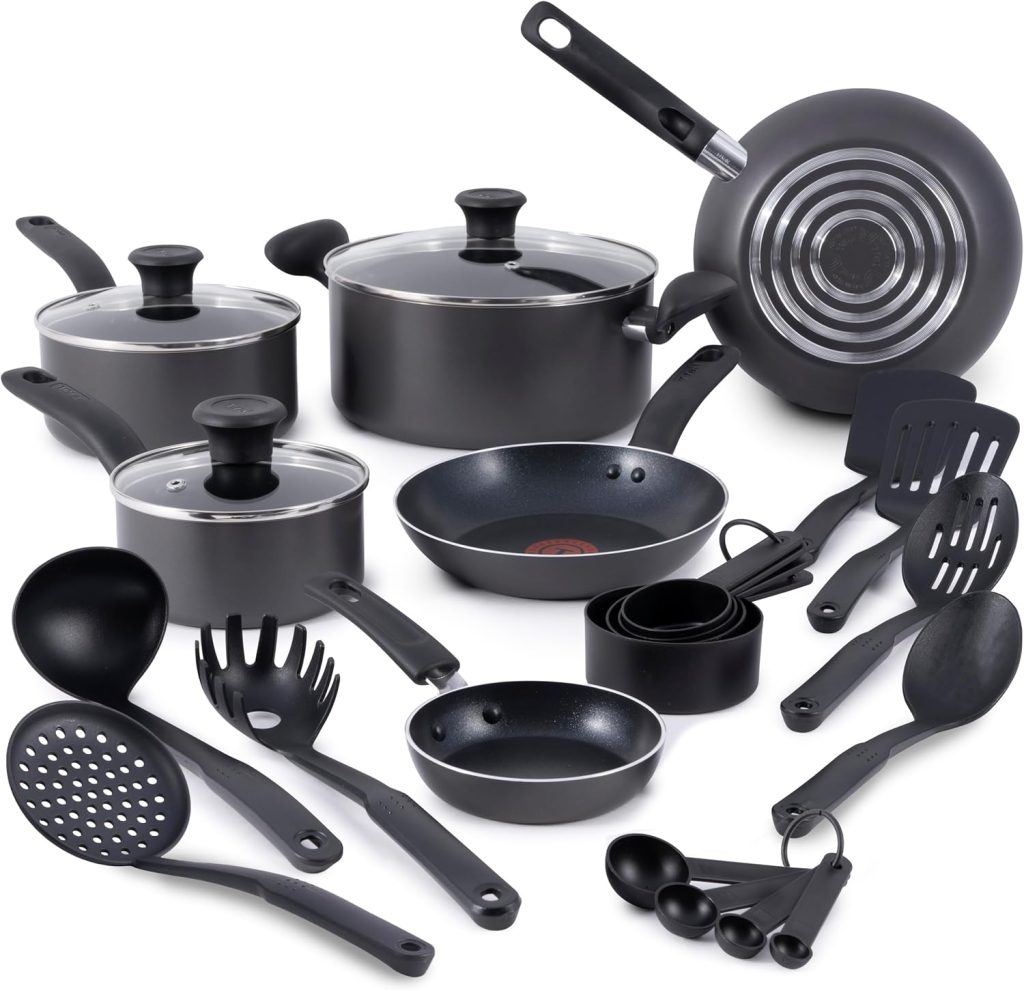
The T-fal Initiatives set has become a staple recommendation for students, and for good reason. This comprehensive 18-piece collection includes everything a beginner cook needs without breaking the bank. The set features various pot and pan sizes, along with nylon utensils and measuring cups, making it a true all-in-one solution for equipping your first kitchen.
What sets T-fal apart is their proprietary Thermo-Spot heat indicator technology. This ingenious feature shows you when the pan is perfectly preheated and ready for cooking. For inexperienced cooks, this eliminates the guesswork and helps prevent common mistakes like adding food to a cold pan or overheating oil. The spot turns solid red when the optimal cooking temperature is reached, giving you confidence with every meal.
The non-stick coating performs admirably for everyday cooking tasks. Eggs slide right off with minimal oil, and cleanup is genuinely effortless—most messes wipe away with a paper towel or gentle sponge washing. The coating is PFOA-free, addressing health concerns that some students might have about traditional non-stick surfaces.
Construction-wise, these pieces are made from aluminum, which heats quickly and evenly. This is particularly beneficial for students cooking on electric or gas stovetops in rental properties, as the responsive heating helps prevent hot spots and burning. The handles stay cool during cooking and are riveted securely to the body, though they’re not oven-safe, which limits versatility somewhat.
The 18-piece count can be slightly misleading, as it includes lids and utensils in the total. However, you still get eight actual cooking vessels: 8-inch and 10.25-inch fry pans, 1-quart and 2-quart saucepans with lids, a 5-quart Dutch oven with lid, and a square griddle. This variety covers the vast majority of student cooking needs, from making ramen and sauces to cooking stir-fries and even pancakes.
One consideration is that these are designed as entry-level cookware. They’re not heirloom pieces that will last decades, but they’re built to provide several years of reliable service with proper care. For students who might only need cookware for 4-6 years before upgrading to professional-level equipment, this lifespan is actually ideal.
Key Features:
- Thermo-Spot heat indicator technology for perfect preheating
- 18-piece set including pots, pans, lids, and cooking utensils
- PFOA-free non-stick interior coating for healthy cooking
- Aluminum construction for even heat distribution
- Dishwasher-safe pieces for convenient cleanup
- Vented glass lids to monitor cooking progress
Pros:
✅ Exceptional value for money with complete kitchen starter set
✅ Heat indicator takes the guesswork out of cooking
✅ Lightweight and easy to handle, perfect for beginners
✅ Non-stick surface makes cleanup incredibly easy
✅ Includes utensils and measuring tools
✅ Works on gas, electric, and ceramic stovetops
Cons:
❌ Not suitable for oven use or high-heat cooking
❌ Non-stick coating may wear with metal utensil use
❌ Handles can feel slightly flimsy compared to premium brands
❌ Not compatible with induction cooktops
Ideal For: Budget-conscious students furnishing their first kitchen who want a complete set that covers all basic cooking needs without requiring additional purchases.
Final Verdict: The T-fal Initiatives set represents outstanding value for student cooks. While it won’t satisfy serious culinary enthusiasts or last a lifetime, it provides everything needed to prepare healthy meals throughout college years at a price point that won’t stress a student budget. The heat indicator feature alone makes this worth considering for cooking newcomers.
2. AmazonBasics Non-Stick Cookware Set, 8 Piece
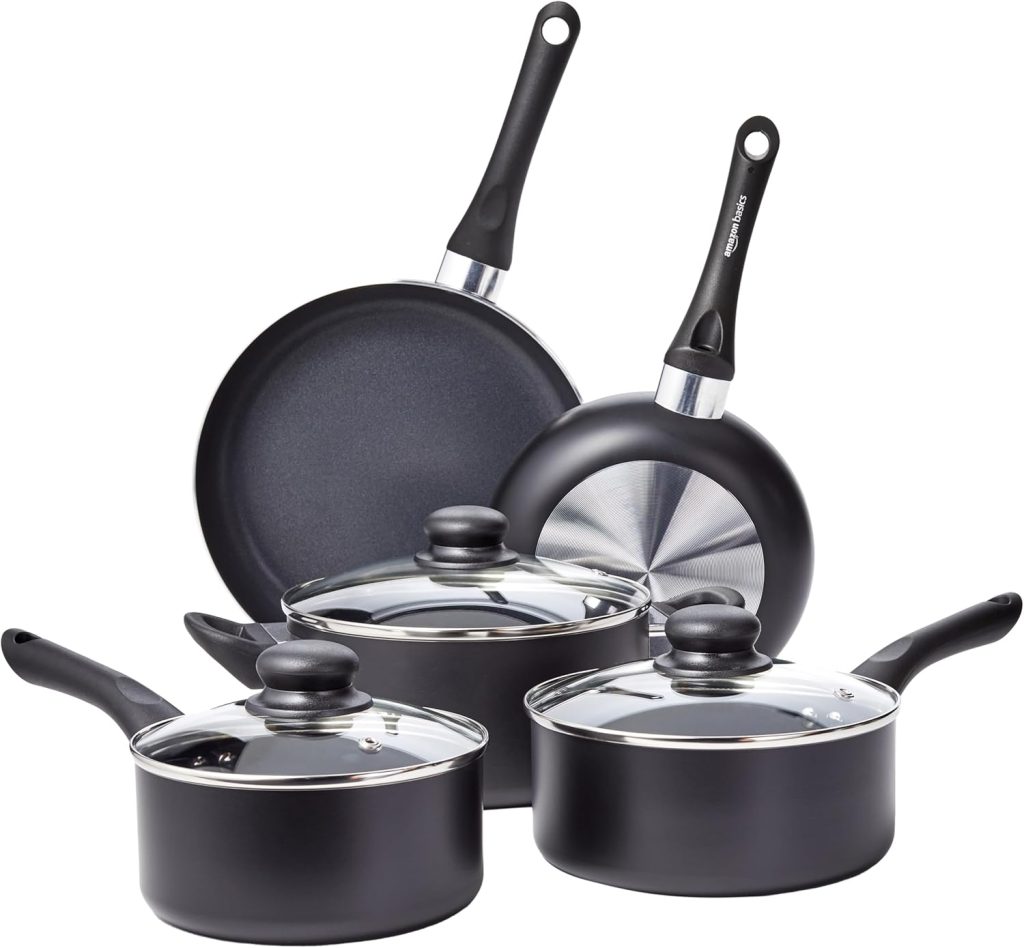
Amazon’s house brand has made significant inroads into the cookware market with their no-frills, value-focused approach. This 8-piece set strips away unnecessary extras and focuses on delivering the essential pans that students actually use daily. It’s a minimalist approach that works surprisingly well for those living in small spaces with limited storage.
The set includes a 10-inch fry pan, 8-inch fry pan, 2-quart saucepan with lid, and 3-quart casserole pot with lid. This selection covers about 90% of typical student cooking scenarios—frying eggs and proteins, making sauces and soups, boiling pasta, and preparing one-pot meals. The deliberate exclusion of rarely-used specialty pieces keeps costs down and cabinets uncluttered.
Construction quality is solid for the price point. The aluminum body provides good heat conduction, and the non-stick coating works effectively for low to medium-heat cooking. Food releases cleanly, and eggs, pancakes, and grilled cheese sandwiches cook without sticking or tearing. The coating is also free from BPA and PFOA, meeting modern safety standards.
One standout feature is the soft-touch handles. Unlike bare metal or cheap plastic handles found on some budget cookware, these stay cool during stovetop cooking and provide a comfortable, secure grip. They’re also designed with a slight curve that keeps them away from heat sources, further reducing the risk of burns.
The tempered glass lids are a nice touch at this price point. They allow you to monitor cooking progress without lifting the lid and releasing heat, which is especially helpful when learning to cook rice, simmer sauces, or steam vegetables. The lids fit snugly with small vents to prevent boil-overs, though they’re not quite as tight-sealing as more expensive alternatives.
Durability is acceptable but not exceptional. With gentle use and proper care—hand washing, using wooden or silicone utensils, avoiding high heat—these pans should last through several years of college. However, they’re not built to withstand heavy abuse or neglect. The non-stick coating can scratch if you use metal utensils, and high heat can cause warping over time.
The major limitation is the lack of oven-safety. While the pans can technically go in the oven briefly at low temperatures, the handles and coating aren’t designed for this, limiting your cooking techniques. You can’t start a dish on the stovetop and finish it in the oven, which some recipes require.
Key Features:
- 8-piece set with essential frying and saucepan sizes
- Non-stick coating for easy food release and cleanup
- Soft-touch handles that stay cool during cooking
- Tempered glass lids for monitoring without lifting
- Aluminum construction for even heat distribution
- Compatible with gas and electric stovetops
Pros:
✅ Excellent price-to-performance ratio
✅ Minimalist selection perfect for small kitchens
✅ Comfortable handles with ergonomic design
✅ Easy to clean and maintain
✅ Glass lids allow visual monitoring
✅ Lightweight and easy to maneuver
Cons:
❌ Not oven-safe beyond very low temperatures
❌ No induction compatibility
❌ Non-stick coating requires careful use to prevent scratching
❌ Fewer pieces than some competing sets
Ideal For: Minimalist students who want quality basics without paying for pieces they won’t use, or those with very limited cabinet space who need a compact, essential-only collection.
Final Verdict: The Amazon basics set proves you don’t need to spend a fortune for functional cookware. It’s an intelligent, stripped-down selection that focuses resources on making a few pieces well rather than including every possible pan. For students who cook regularly but simply, this represents smart spending.
3. Cook N Home 15-Piece Non-Stick Cookware Set
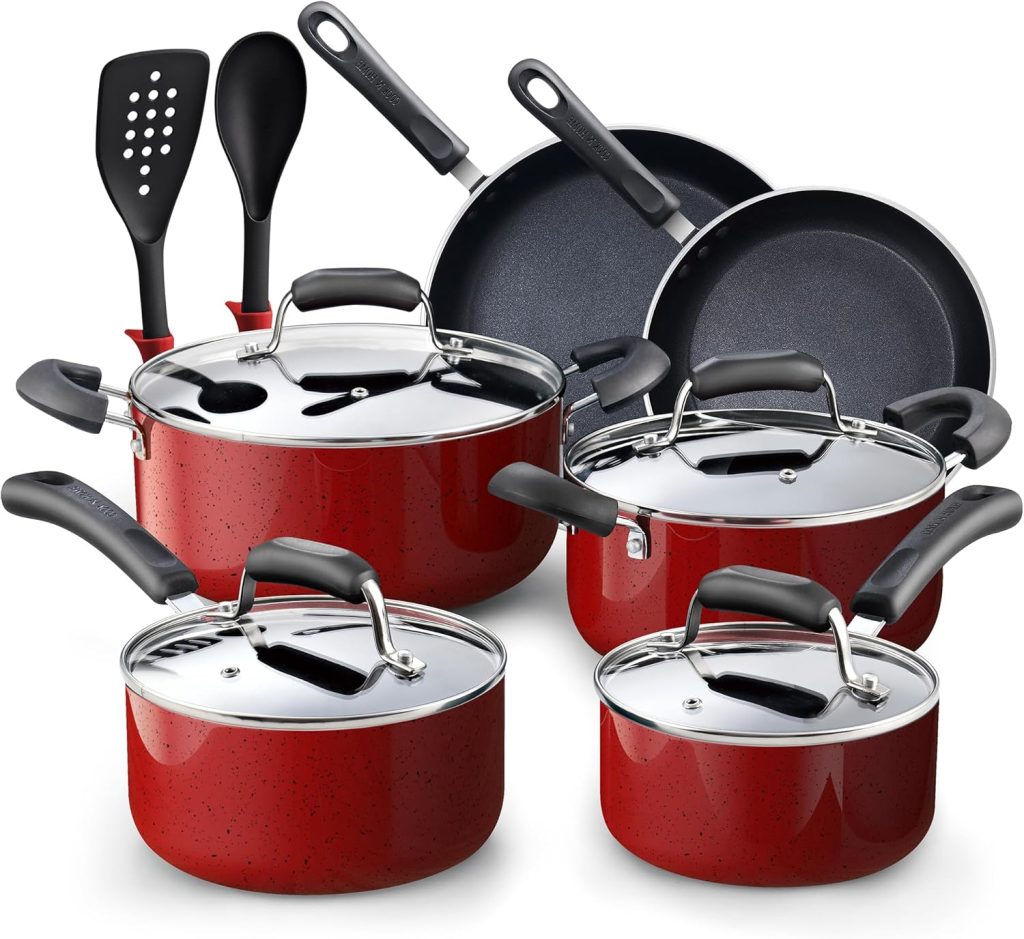
Cook N Home strikes an interesting middle ground between budget and mid-range cookware. This 15-piece set offers more variety than bare-bones options while maintaining an affordable price that fits student budgets. It’s designed for cooks who want options but aren’t ready to invest in premium brands.
The set’s composition is thoughtfully curated: 8-inch and 9.5-inch fry pans, 1-quart and 2-quart saucepans with lids, a 3-quart casserole with lid, a 5-quart Dutch oven with lid, plus a steamer insert and five nylon utensils. This variety enables different cooking techniques without redundancy. The steamer insert, in particular, is a useful addition for students trying to eat healthier on a budget.
The non-stick coating is a step up from bare-minimum options. It’s a multi-layer system that provides better food release and shows improved durability compared to single-layer alternatives. Delicate foods like fish fillets and crepes release cleanly, and the surface maintains its non-stick properties even after months of regular use.
Heat distribution is impressively even, thanks to a thick aluminum construction. Hot spots are minimal, which means fewer burnt patches on your pancakes or unevenly cooked stir-fries. The pans heat up quickly, which is great for students in a hurry between classes, but they also respond well when you adjust the temperature.
The handles deserve special mention. They’re designed with a silicone coating that stays remarkably cool even during extended cooking sessions. Unlike purely plastic handles that can feel cheap or flimsy, these feel substantial and secure. They’re also angled to keep your hands away from heat sources and provide good leverage when lifting full pots.
Storage is a consideration with a 15-piece set. While the nesting design helps pieces fit inside each other, you’ll still need reasonable cabinet space. For students in tiny kitchens, this might be challenging. However, the variety pays off in versatility—you’re less likely to find yourself needing a pan you don’t have.
The set is dishwasher-safe, though hand washing extends the life of the non-stick coating significantly. In reality, these pans are so easy to clean that hand washing takes just seconds—a quick wipe with a soapy sponge usually does the job. The dishwasher compatibility is more about convenience when you’re swamped with exams and can’t face another chore.
One weakness is oven temperature limits. The set is oven-safe only to 350°F, which restricts some baking and roasting applications. You can finish a frittata in the oven or keep food warm, but you can’t use these for high-temperature roasting or broiling.
Key Features:
- 15-piece set with varied pan sizes and utensils
- Multi-layer non-stick coating for durability
- Thick aluminum construction prevents hot spots
- Silicone-coated handles stay cool
- Includes steamer insert for healthy cooking
- Dishwasher-safe for convenient cleanup
Pros:
✅ Great balance of variety and affordability
✅ Excellent non-stick performance
✅ Even heating reduces cooking failures
✅ Cool-touch handles enhance safety
✅ Steamer insert adds versatility
✅ Stylish appearance suitable for visible storage
Cons:
❌ Requires more storage space than minimal sets
❌ Limited oven-safe temperature (350°F max)
❌ Not induction-compatible
❌ Non-stick coating eventually wears with heavy use
Ideal For: Students who cook frequently and want the flexibility to try different recipes and techniques without being limited by their cookware selection.
Final Verdict: Cook N Home offers an excellent stepping stone between basic and premium cookware. It provides the variety and performance that expanding your cooking skills requires, without the premium price tag. For students serious about learning to cook well, this set removes equipment as a limiting factor.
4. Rachael Ray Cucina Hard Anodized Nonstick Cookware Set, 12 Piece
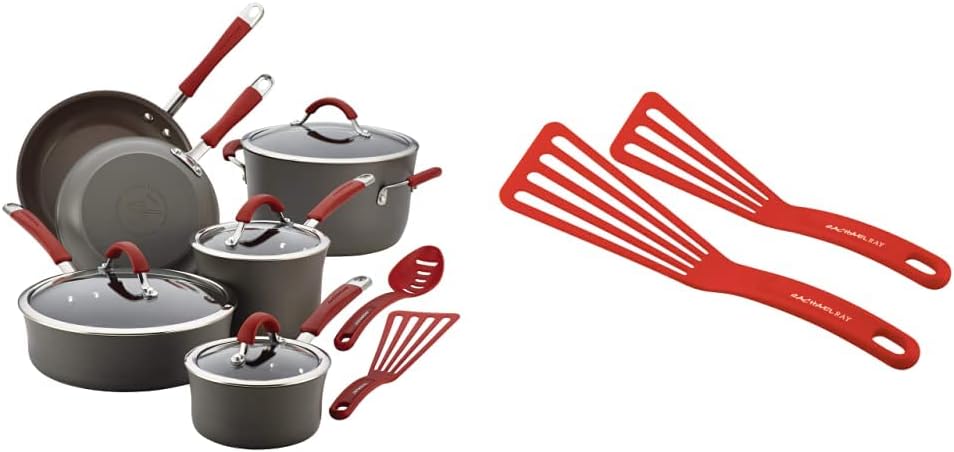
Rachael Ray’s Cucina line brings personality and performance to student kitchens. Unlike generic black or silver sets, Cucina cookware comes in vibrant colors—mushroom brown, cranberry red, or pumpkin orange—that make a design statement. For students who care about kitchen aesthetics or want their cookware to double as decor in open shelving, this stands out.
Beyond appearances, the hard-anodized construction represents a significant upgrade from standard aluminum. Hard anodization creates a surface that’s harder than stainless steel, more scratch-resistant, and doesn’t react with acidic foods. This means your tomato sauce won’t take on a metallic taste, and the pans can withstand more aggressive cooking and cleaning than softer alternatives.
The 12-piece set includes 1-quart and 3-quart covered saucepans, a 6-quart covered stockpot, 8.5-inch and 10-inch frying pans, and a 3-quart covered sauté pan. This selection emphasizes larger pans, making it ideal for students who cook for roommates, meal prep in batches, or entertain friends. The stockpot is genuinely large enough for making big batches of soup or boiling pasta for a group.
The non-stick coating is PFOA-free and delivers excellent food release. What’s particularly impressive is its longevity—many users report the non-stick properties holding up well even after a year or more of regular use. The coating is also more forgiving of occasional metal utensil contact than cheaper alternatives, though wooden or silicone tools are still recommended.
Oven-safety up to 400°F expands your cooking repertoire significantly. You can sear chicken on the stovetop and finish it in the oven, bake frittatas, or use the oven to keep dishes warm while preparing sides. This temperature tolerance covers most recipes that call for oven-finishing, making the set far more versatile.
The rubberized stainless steel handles are both functional and stylish. They feature Rachael Ray’s signature color accents and are dual-riveted for strength. They stay cool during stovetop cooking and provide a comfortable, secure grip even when wearing oven mitts. The handles are oven-safe, which is crucial for recipes requiring oven transfer.
Glass lids with stainless steel rims complete the upscale feel. They’re sturdy, fit well, and include small vents to release steam and prevent boil-overs. Being able to monitor cooking progress without lifting the lid helps maintain temperature and moisture, leading to better cooking results.
The investment is higher than budget options, but the durability and performance justify the cost for students who plan to keep their cookware beyond graduation. These pans are built to last 5-10 years with proper care, making them a better long-term value than replacing cheap cookware every couple of years.
Key Features:
- Hard-anodized construction for exceptional durability
- 12-piece set with emphasis on larger cooking vessels
- Oven-safe to 400°F for versatile cooking techniques
- PFOA-free non-stick coating with superior longevity
- Rubberized stainless steel handles with color accents
- Sturdy glass lids for monitoring cooking progress
Pros:
✅ Distinctive colors add personality to your kitchen
✅ Hard-anodized construction resists scratching and warping
✅ Higher oven-safe temperature enables more recipes
✅ Non-stick coating maintains performance over time
✅ Larger sizes perfect for batch cooking and entertaining
✅ Handles designed for comfort and durability
Cons:
❌ Higher price point than basic student cookware
❌ Larger pieces require more storage space
❌ Hand-washing recommended despite dishwasher claims
❌ Not compatible with induction cooktops
Ideal For: Students with slightly bigger budgets who want cookware that performs well, lasts longer, and makes a visual statement in their kitchen space.
Final Verdict: Rachael Ray Cucina represents a smart investment for students willing to spend a bit more upfront for better quality. The combination of performance, durability, and style makes this set appealing for those who see cooking as more than just fuel—it’s an enjoyable part of daily life worth investing in properly.
5. Farberware Dishwasher Safe Nonstick Aluminum Cookware Set, 15 Piece
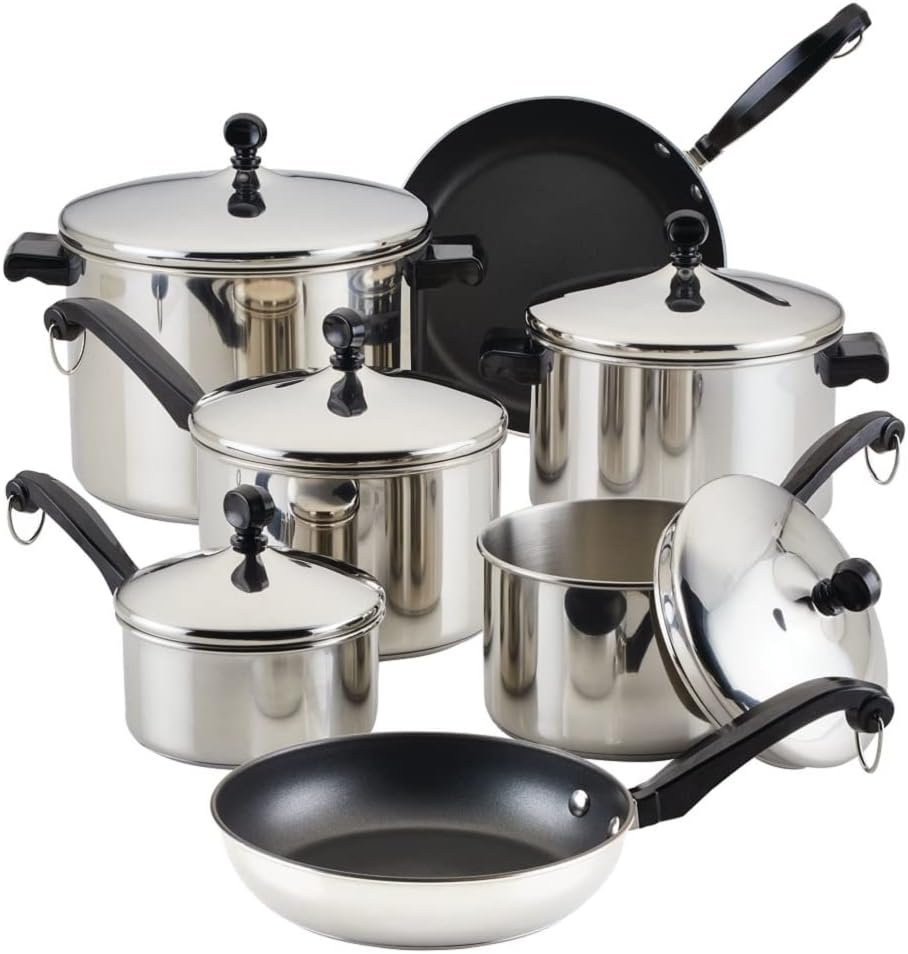
Farberware has been a trusted name in American cookware for over a century, and their modern offerings maintain that reputation while adapting to contemporary needs. This 15-piece set represents their expertise in creating durable, user-friendly cookware that handles everyday cooking demands without fuss.
The set provides comprehensive coverage: 1-quart and 2-quart covered saucepans, 5-quart covered Dutch oven, 8-inch and 10-inch frying pans, plus a square griddle and five cooking utensils. The griddle is particularly useful for students—it’s perfect for pancakes, grilled sandwiches, quesadillas, and even warming tortillas. Having this variety means you’re equipped for anything from a quick breakfast to a full dinner party.
Construction quality reflects Farberware’s heritage. The heavy-gauge aluminum construction distributes heat evenly and resists warping even with frequent use. These pans feel substantial in hand without being excessively heavy, striking a good balance between sturdiness and maneuverability for novice cooks.
The non-stick interior is one of Farberware’s strong points. Food releases exceptionally well, and the coating shows good resistance to scratching and wearing. Even after months of use, eggs continue to slide effortlessly, and cleanup remains minimal. The coating is also PFOA-free, meeting health-conscious consumer demands.
Handle design prioritizes safety and comfort. The double-riveted handles feature a rubberized coating that provides secure grip and stays cool during stovetop cooking. They’re also distinctively colored in red or blue depending on the set variation, making them easy to identify and adding a touch of visual appeal.
The glass lids fit precisely and include steam vents to prevent messy boil-overs. The metal rims are reinforced to prevent chipping, which is a common failure point on cheaper glass lids. Being able to see your food as it cooks helps you learn proper cooking times and techniques, which is invaluable for students still building their kitchen skills.
Oven-safe to 350°F gives you flexibility for finishing dishes or keeping food warm. While not as high as premium sets, this temperature accommodates most recipes requiring oven use. You can bake cornbread in the skillet, finish mac and cheese in the Dutch oven, or roast vegetables in the frying pan.
Durability is where Farberware’s experience shines. These pans are built to withstand years of regular use. Multiple users report their Farberware sets lasting through college and well into their professional lives, making them an excellent long-term investment despite the moderate price.
The dishwasher-safe designation is genuine—these pans hold up well to repeated dishwasher cycles. However, hand washing still extends the life of the non-stick coating. For students juggling busy schedules, knowing you can throw everything in the dishwasher on hectic days is a significant convenience.
Key Features:
- 15-piece comprehensive set including griddle and utensils
- Heavy-gauge aluminum construction resists warping
- Premium non-stick coating for easy food release
- Rubberized, double-riveted handles in distinctive colors
- Shatter-resistant glass lids with reinforced rims
- Dishwasher-safe and oven-safe to 350°F
Pros:
✅ Established brand reputation for reliability
✅ Excellent heat distribution for consistent results
✅ Non-stick coating maintains performance over years
✅ Square griddle adds versatility
✅ True dishwasher-safe convenience
✅ Handles designed for safety and comfort
Cons:
❌ Not suitable for induction cooktops
❌ Moderate oven temperature limit
❌ Slightly higher price than basic sets
❌ Full set requires adequate storage space
Ideal For: Students who value brand reliability and want cookware that will serve them well beyond graduation, with the durability to justify a moderate upfront investment.
Final Verdict: Farberware delivers exactly what students need: reliable, durable cookware from a trusted brand at a reasonable price. The combination of performance, longevity, and comprehensive piece selection makes this set a sound choice for students serious about cooking throughout college and beyond.
6. GreenLife Soft Grip Healthy Ceramic Nonstick Cookware Set, 16 Piece
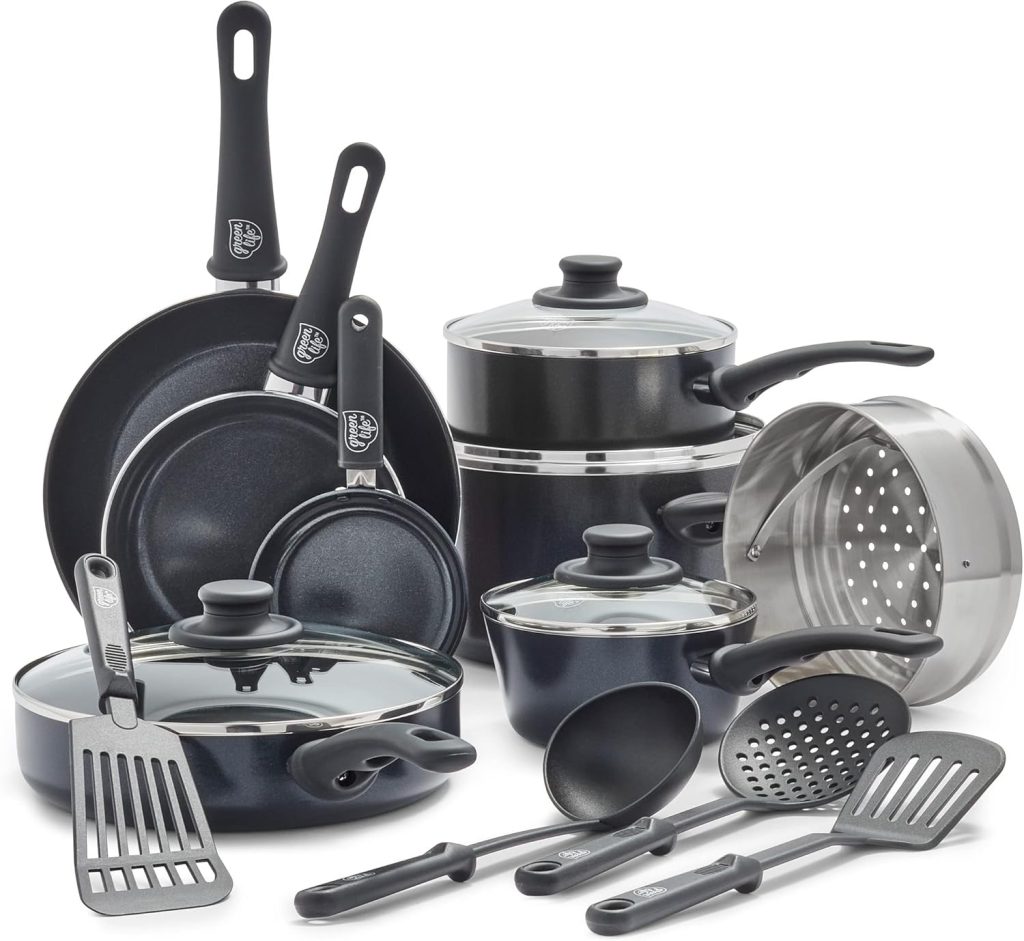
GreenLife has carved out a niche in the cookware market by focusing on health-conscious consumers who want non-stick performance without traditional PTFE coatings. Their Soft Grip collection brings this philosophy to students through vibrant colors, lightweight construction, and genuinely eco-friendly materials.
The ceramic non-stick coating is derived from sand and is completely free from PFAS, PFOA, lead, and cadmium. For students concerned about chemicals in their cookware, this provides peace of mind. The coating is applied using a Sol-Gel process that creates a durable, slick surface that performs admirably with fats and oils, though it requires slightly more oil than traditional non-stick for optimal performance.
The 16-piece set is impressively comprehensive: 7-inch and 9.5-inch frying pans, 1-quart and 2-quart covered saucepans, 5-quart covered stockpot, 2.5-quart covered sauté pan, 7-inch stainless steel steamer, and four kitchen utensils. This variety covers virtually every cooking scenario a student might encounter, from steaming vegetables to making large batches of chili.
What immediately stands out is the color selection. Available in turquoise, lavender, or burgundy, these sets add cheerful personality to any kitchen. The Soft Grip handles match the exterior color and are designed with Bakelite for stay-cool performance and comfortable handling. For students in apartments with open kitchens, this cookware looks attractive enough to display.
The aluminum body with a reinforced base provides even heating, though it’s noticeably lighter than traditional non-stick aluminum sets. This lightness is actually advantageous for students—the pans are easy to maneuver, convenient to wash, and don’t strain your wrists during extended cooking sessions. However, the light weight also means these aren’t the most heavy-duty option for very aggressive cooking.
Oven-safe to 350°F allows for finishing dishes in the oven, though you’ll want to use oven mitts as the handles do get hot at higher temperatures. The glass lids are also oven-safe, giving you flexibility in how you use each piece.
Cleanup is genuinely easy—the ceramic surface wipes clean with minimal effort. However, ceramic coatings require different care than traditional non-stick. High heat can damage the coating over time, so cooking on low to medium heat is essential. Additionally, thermal shock (placing a hot pan in cold water) should be avoided to prevent coating degradation.
Dishwasher-safe designation notwithstanding, hand washing is strongly recommended to extend the life of the ceramic coating. The good news is that hand washing takes mere seconds due to the excellent non-stick properties. A soft sponge and mild dish soap are all you need.
The major consideration with ceramic cookware is longevity. While the GreenLife coating performs well initially, ceramic non-stick typically doesn’t last as long as PTFE-based alternatives. With proper care—low to medium heat, gentle cleaning, avoiding metal utensils—expect 2-4 years of good performance. For students on a 4-year college timeline, this aligns perfectly.
Key Features:
- 16-piece set with comprehensive pan selection
- Ceramic non-stick coating free from PFAS, PFOA, lead, and cadmium
- Lightweight aluminum construction with reinforced base
- Soft Grip Bakelite handles in matching colors
- Includes stainless steel steamer insert
- Oven-safe to 350°F
Pros:
✅ Toxin-free ceramic coating for health-conscious cooking
✅ Vibrant color options brighten up your kitchen
✅ Lightweight design easy for anyone to handle
✅ Excellent non-stick performance with proper use
✅ Eco-friendly manufacturing process
✅ Affordable price for a comprehensive set
Cons:
❌ Ceramic coating longevity shorter than PTFE
❌ Requires careful temperature management
❌ Not suitable for high-heat cooking techniques
❌ Not induction-compatible
Ideal For: Health-conscious students who prioritize toxin-free cookware and want a colorful, complete set that aligns with sustainable living values.
Final Verdict: GreenLife Soft Grip successfully combines environmental responsibility with practical functionality. While it requires more careful use than traditional non-stick, it delivers on its promise of healthy, chemical-free cooking in an attractive, affordable package perfect for students’ needs and values.
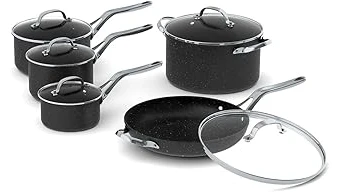
7. Gotham Steel Pots and Pans Set, 10 Piece
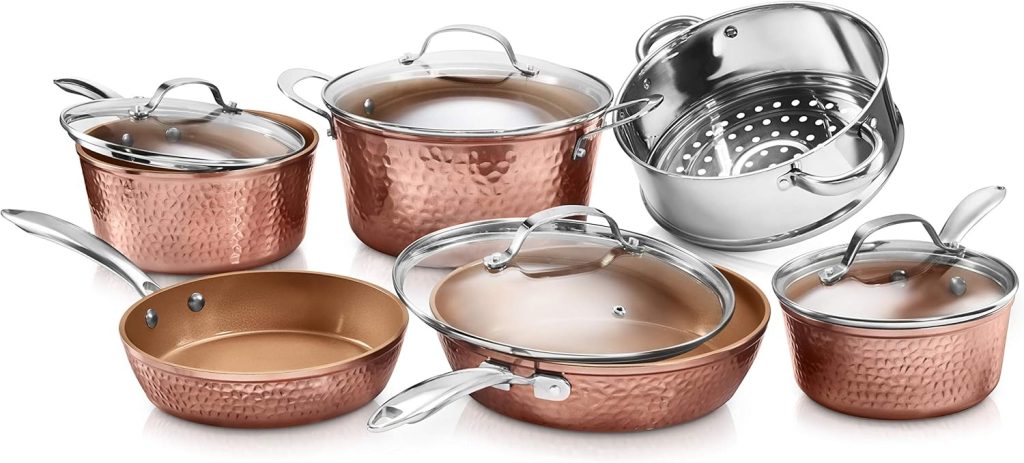
Gotham Steel has made a name through aggressive marketing claims of ultra-non-stick, ultra-durable cookware at accessible prices. The reality, while perhaps not quite matching the “as seen on TV” hype, is still impressive for budget-conscious students. This 10-piece set delivers solid performance in a compact package.
The signature feature is the Ti-Cerama coating—a combination of titanium and ceramic that promises superior non-stick properties and durability. In practice, the coating works very well for typical student cooking. Eggs genuinely slide around without sticking, cheese doesn’t bond permanently to the surface, and most messes wipe away effortlessly. The titanium reinforcement does seem to provide better scratch resistance than pure ceramic alternatives.
The set includes 8.5-inch and 10.25-inch frying pans, 1.5-quart and 2.5-quart covered saucepans, and a 5-quart covered stockpot. This selection hits the essential pan sizes without redundancy. The stockpot is particularly useful for students—large enough for making big batches of pasta, soup, or chili for meal prepping or feeding roommates.
Construction utilizes aluminum with a stainless steel induction plate, which makes this set compatible with all cooktop types including induction. This is a significant advantage for students in modern apartments or dorms equipped with induction burners, as many budget sets don’t offer this compatibility. The aluminum ensures even heating, while the steel plate provides the magnetic properties needed for induction.
The handles are stainless steel and stay relatively cool during stovetop cooking, though they’re not as cool-touch as rubberized alternatives. They’re riveted securely and feel sturdy, with a comfortable shape that provides good leverage. Being solid stainless steel also means they’re fully oven-safe without temperature restrictions from the handles themselves.
Speaking of ovens, these pans are oven-safe to 500°F, which is exceptional at this price point. This high tolerance allows for broiling, high-temperature roasting, and techniques like oven-finishing steaks. For students looking to expand their cooking techniques beyond basic stovetop methods, this versatility is valuable.
The glass lids fit well and include steam vents. They’re not the thickest glass you’ll find, but they’re adequate for the purpose and haven’t shown issues with cracking or chipping in typical use. Being able to monitor cooking without lifting the lid helps maintain consistent temperature and moisture.
Durability is good but not exceptional. The non-stick coating holds up well to normal use but can degrade if you frequently use metal utensils or cook on very high heat. The coating isn’t quite as durable as advertised in promotional materials, but it’s competitive with other ceramic-based options in this price range. Realistic expectations are 2-3 years of good performance with typical student use.
Cleanup is genuinely easy, though dishwasher use will accelerate coating wear. Hand washing with a soft sponge takes just seconds, so there’s little practical reason to use the dishwasher. The interior is smooth enough that stuck food is rare, and gentle scrubbing removes any residue without difficulty.
Key Features:
- 10-piece set with essential pan sizes
- Ti-Cerama coating combining titanium and ceramic
- Induction-compatible with stainless steel base
- Oven-safe to 500°F for versatile cooking
- Stainless steel handles for durability
- Works on all cooktop types
Pros:
✅ Rare induction compatibility in this price range
✅ Exceptional oven-safe temperature tolerance
✅ Strong non-stick performance
✅ Metal utensil resistant (though still not recommended)
✅ Lightweight yet feels substantial
✅ Affordable for the feature set
Cons:
❌ Coating durability doesn’t match marketing claims
❌ Handles get warmer than rubberized alternatives
❌ Non-stick performance degrades with high-heat use
❌ Slightly less comprehensive than larger sets
Ideal For: Students with induction cooktops or those who want the flexibility to use their cookware in high-temperature oven applications without spending premium prices.
Final Verdict: Gotham Steel delivers commendable performance and valuable features like induction compatibility and high oven-safety at a student-friendly price. While it won’t last forever, it provides excellent value during college years and makes advanced cooking techniques accessible to budget-limited students.
8. Cuisinart Chef’s Classic Stainless Steel Cookware Set, 10 Piece
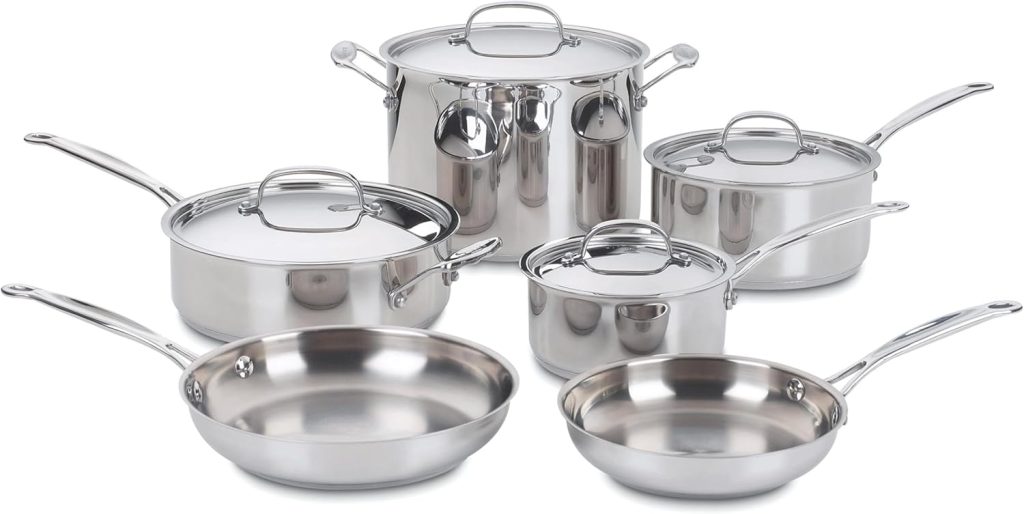
Cuisinart’s entry represents a significant departure from non-stick sets—this is pure stainless steel cookware designed for students ready to develop more advanced cooking skills. While it requires learning different techniques, stainless steel offers advantages that non-stick can’t match: it’s virtually indestructible, develops fond (browned bits) for making pan sauces, and can withstand any cooking temperature.
The 10-piece set includes 1.5-quart and 3-quart covered saucepans, 8-quart covered stockpot, 8-inch skillet, and 10-inch covered skillet. This selection focuses on the most versatile sizes, with the notably large stockpot being ideal for boiling pasta, making large batches of soup or stock, or even steaming vegetables using a steamer basket.
Construction quality is where Cuisinart justifies its reputation. These are genuinely substantial pans with mirror-polished stainless steel exteriors and 18/10 stainless interiors that won’t react with acidic foods. The encapsulated aluminum core base provides excellent heat distribution, eliminating hot spots that plague cheaper stainless cookware. Heat travels up the sides too, ensuring even cooking throughout.
The handles are brushed stainless steel, riveted securely with stay-cool design. While they will eventually conduct heat during extended cooking, they stay cooler than you’d expect from bare metal. The handles are also oven-safe to 500°F, and the entire pan can handle any oven temperature, opening up possibilities for dishes that start on the stovetop and finish in the oven.
Glass lids with stainless steel rims are sturdy and fit precisely. They’re oven-safe and allow monitoring without disturbing the cooking process. The tight fit helps retain moisture and heat, which is particularly important when braising or simmering.
Learning to cook with stainless steel does involve a learning curve. Food will stick if you don’t preheat properly or use insufficient fat. The technique involves heating the pan, adding fat, letting it heat until shimmering, then adding food and leaving it alone until it naturally releases. Once mastered, this technique produces superior results for searing proteins and developing flavor.
The advantage of stainless steel is longevity and versatility. These pans will literally last a lifetime with proper care. You can use metal utensils without worry, cook on high heat, deglaze with wine or stock, and put them in the dishwasher without damaging any coating. They’re the professional choice for good reason.
Cleaning requires more effort than non-stick. Stuck-on food needs soaking and scrubbing, though deglazing the pan after cooking and cleaning while still warm helps significantly. Bar Keeper’s Friend cleanser works wonders for restoring shine and removing stubborn stains. For students willing to invest a few extra minutes in maintenance, the payoff is cookware that improves with age.
For students serious about learning to cook properly and wanting cookware that transitions from college to career and beyond, stainless steel makes sense. It’s also ideal for health-conscious cooks concerned about non-stick coatings, as stainless steel is completely inert and non-reactive.
Key Features:
- 10-piece stainless steel construction
- 18/10 stainless steel interior won’t react with foods
- Aluminum encapsulated base for even heat distribution
- Oven and broiler safe without temperature limits
- Tight-fitting glass lids with stainless rims
- Dishwasher-safe for convenient cleaning
Pros:
✅ Professional-quality construction at accessible price
✅ Lifetime durability with proper care
✅ Develops fond for making restaurant-quality pan sauces
✅ Safe for all cooking techniques and temperatures
✅ Works on all cooktop types including induction
✅ Completely non-reactive and chemical-free
Cons:
❌ Requires learning proper preheating and cooking techniques
❌ Food sticks without proper technique and fat
❌ Cleaning requires more effort than non-stick
❌ Heavier than aluminum non-stick alternatives
Ideal For: Students ready to invest time in learning proper cooking techniques who want professional-quality cookware that will last well beyond graduation into their professional lives.
Final Verdict: Cuisinart Chef’s Classic represents an investment in both cookware and cooking education. While the learning curve is real, mastering stainless steel technique elevates your cooking significantly. For students viewing cooking as a lifelong skill worth developing properly, this set provides the tools to succeed at a fraction of professional cookware prices.
9. Lodge Pre-Seasoned Cast Iron Skillet, 10.25 Inch
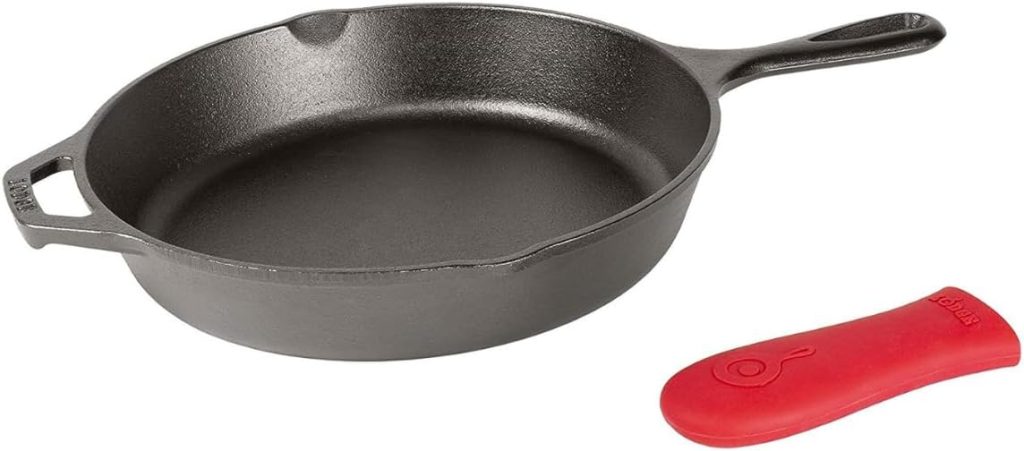
While technically a single piece rather than a set, the Lodge cast iron skillet deserves inclusion for its exceptional versatility, durability, and value. For students wanting one reliable, do-everything pan that will literally last generations, cast iron is unmatched. This 10.25-inch size is the perfect sweet spot—large enough for most tasks but not so big that it’s unwieldy for beginners.
Lodge is America’s oldest family-owned cookware manufacturer, and their cast iron represents the gold standard. This skillet comes pre-seasoned and ready to use right out of the box. The seasoning is a polymerized oil layer that creates a natural, non-stick surface that improves with use. Unlike chemical non-stick coatings that degrade, cast iron seasoning gets better over time.
The cooking performance is exceptional once you understand the material. Cast iron holds heat incredibly well, making it perfect for searing steaks, cooking hash browns, making cornbread, or baking desserts. It works on any heat source—gas, electric, induction, campfires, even directly on coals. You can start a dish on the stovetop and move it directly into a 500°F+ oven without concern.
The depth and shape of this skillet make it remarkably versatile. Students use it for everything from scrambling eggs and making quesadillas to baking brownies and roasting chicken. It’s equally suited to breakfast, lunch, dinner, and dessert. With just this one pan, you can cook complete meals.
The built-in assist handle opposite the main handle makes moving this heavy pan much easier, especially when wearing oven mitts. The main handle is designed to stay relatively cool on the stovetop, though it will conduct heat eventually and definitely requires mitts when removing from the oven.
Care and maintenance are simpler than myths suggest, but different from other cookware. You avoid dish soap (or use very little), don’t soak the pan, and dry thoroughly after washing to prevent rust. A light coating of oil after each use maintains the seasoning. This routine takes maybe 30 seconds more than washing a non-stick pan, and many students find the ritual satisfying.
The weight is considerable—this isn’t a pan you’ll casually flip like a non-stick aluminum skillet. However, the weight contributes to even heating and heat retention. For students with physical limitations, the weight might be a consideration, but most find they adapt quickly.
The main limitation is reactivity with acidic foods. Cooking tomato sauce or deglazing with wine can strip seasoning and impart a metallic taste if the pan isn’t well-seasoned. Once a solid seasoning layer is established, this becomes less of an issue, but it’s worth knowing early on.
Cast iron also requires preheating. You can’t just throw it on high heat and start cooking—it needs to warm gradually and evenly. Taking 5-10 minutes to preheat properly prevents hot spots and ensures even cooking. For students always in a rush, this demands patience.
The value proposition is extraordinary. At typically under $25, this pan will outlive you. It’s common to inherit cast iron from grandparents, use it for decades, and pass it to your children. Even if you mistreat it—let it rust, cook acidic foods, scrub off all the seasoning—it can be restored with some effort. It’s essentially indestructible.
Key Features:
- 10.25-inch pre-seasoned cast iron construction
- Naturally non-stick surface that improves with use
- Works on all heat sources including induction and open fires
- Oven-safe to any temperature
- Built-in assist handle for easier handling
- Made in USA with lifetime durability
Pros:
✅ Exceptional value for lifetime durability
✅ Incredibly versatile cooking applications
✅ Natural non-stick develops with use
✅ Superior heat retention and distribution
✅ Can go from stovetop to oven to campfire
✅ Chemical-free cooking surface
Cons:
❌ Heavy weight may challenge some users
❌ Requires different care routine than other cookware
❌ Needs proper preheating for best results
❌ Reactive with acidic foods until well-seasoned
Ideal For: Students wanting one ultimate multi-purpose pan that handles everything from breakfast eggs to oven-baked desserts, and who appreciate cooking with traditional, time-tested materials.
Final Verdict: The Lodge cast-iron skillet is perhaps the single best cookware investment a student can make. While it’s not the right tool for every job, it handles about 80% of cooking tasks brilliantly and will still be performing perfectly decades from now. Combined with one or two complementary pieces, it forms the foundation of an excellent student kitchen.
10. Calphalon Classic Nonstick Cookware Set, 10 Piece
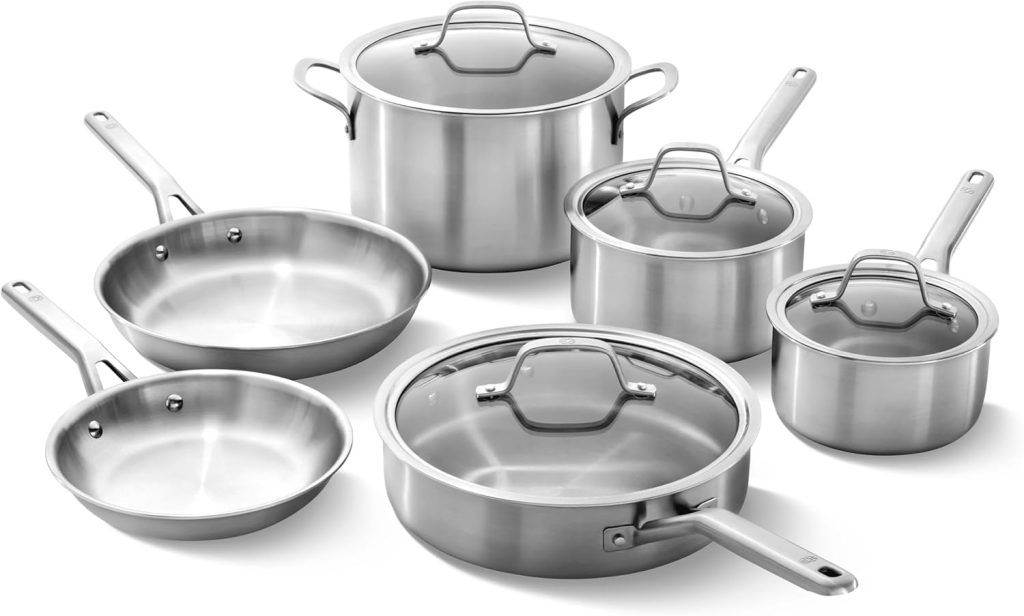
Calphalon represents the upper tier of student-appropriate cookware—a brand known in professional kitchens now offering sets designed for home cooks. The Classic line brings Calphalon’s engineering expertise to an accessible price point, creating cookware that feels premium without the premium price tag.
The 10-piece set includes 8-inch and 10-inch frying pans, 1.5-quart and 2.5-quart covered saucepans, and a 5-quart covered sauté pan. This selection emphasizes versatility—the sauté pan is particularly useful with its wide surface area for browning and its depth for simmering, essentially combining frying pan and pot capabilities.
Construction utilizes dual-layer non-stick coating that’s remarkably durable. Calphalon’s non-stick technology allows for metal utensil use, which is rare at this price point. While you should still use wooden or silicone tools to maximize coating life, the occasional metal utensil contact won’t ruin the pan like it would with cheaper alternatives.
The hard-anodized aluminum construction is a major upgrade from standard aluminum. The anodizing process creates a surface twice as hard as stainless steel, resistant to scratching, corrosion, and warping. These pans will maintain their shape and performance even after years of use. The hard-anodized exterior also heats evenly and efficiently, preventing hot spots.
Handles are designed with genuine thought. They’re stainless steel with a stay-cool design, riveted securely to the body. The shape is contoured for comfortable grip, and the angle keeps your hands away from heat sources. Long handles on frying pans and helper handles on larger pots make maneuvering easy even when wearing bulky oven mitts.
Glass lids are tempered for durability and fit precisely to seal in moisture and heat. The stainless steel rims are sturdy and show no tendency toward chipping or loosening. Steam vents are properly sized to prevent pressure buildup without releasing too much heat.
Oven-safety to 450°F gives you significant flexibility. This temperature handles nearly any recipe requiring oven finishing, from frittatas to baked pastas to roasted vegetables. The high tolerance means you’re not constantly checking recipe temperatures against pan limitations.
What truly separates Calphalon is the attention to detail. Edges are rolled and smooth, lids fit without wobbling, handles are positioned optimally, and everything just feels well-made. There’s a noticeable difference in quality when you compare these side-by-side with budget options—they feel more substantial, balanced, and refined.
The investment is higher than basic student sets, typically 50-75% more than budget options. However, the durability and performance improvements justify the cost for students who cook regularly and want cookware that grows with their skills. These pans are equally appropriate for a college apartment and your first professional kitchen.
Maintenance is straightforward—hand washing is recommended to preserve the non-stick coating, though occasional dishwasher use won’t destroy the pans. The dual-layer coating resists staining and maintains its non-stick properties much longer than single-layer alternatives, meaning you’re not replacing these after a year or two.
Key Features:
- 10-piece set with premium hard-anodized construction
- Dual-layer non-stick coating resists metal utensil damage
- Oven-safe to 450°F for versatile cooking
- Stay-cool stainless steel handles
- Tempered glass lids with stainless rims
- Hard-anodized aluminum twice as hard as stainless steel
Pros:
✅ Professional-quality construction and design
✅ Exceptional durability for long-term use
✅ Metal utensil safe non-stick coating
✅ Superior heat distribution and retention
✅ High oven-safe temperature
✅ Sauté pan adds cooking versatility
Cons:
❌ Higher price point than budget student cookware
❌ Not dishwasher-recommended for longevity
❌ Not compatible with induction cooktops
❌ Heavier than basic aluminum sets
Ideal For: Students who cook frequently, plan to keep their cookware beyond graduation, and want to invest in quality that delivers professional-level performance without professional prices.
Final Verdict: Calphalon Classic strikes the perfect balance between student affordability and professional performance. While it requires a larger initial investment, the superior construction and durability make it a better long-term value than replacing cheaper cookware multiple times. For serious student cooks, this represents smart spending.
11. Carote Nonstick Granite Cookware Set, 10 Piece
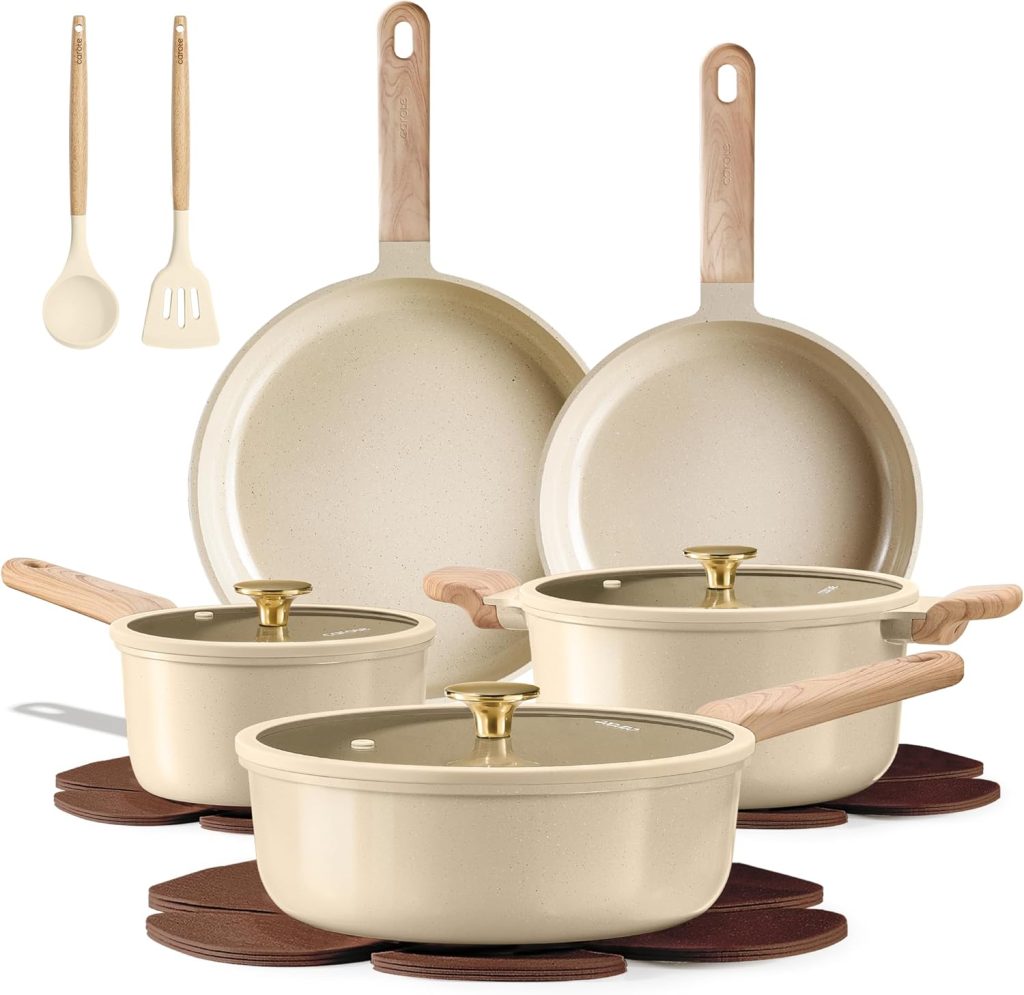
Carote has emerged as a disruptive force in the cookware market, offering distinctive granite-pattern cookware with modern PFOA-free coatings at surprisingly affordable prices. Their sets appeal to style-conscious students who want cookware that looks as good as it performs, without requiring a major financial commitment.
The 10-piece set includes 9.5-inch and 11-inch frying pans, 1.5-quart and 2.5-quart covered saucepans, and a 4.3-quart covered casserole. The sizes are well-chosen for student cooking, with the larger frying pan accommodating generous portions or cooking for multiple people. The casserole size is ideal for one-pot meals, pasta dishes, or batch cooking.
What immediately catches attention is the granite-speckled exterior finish. Available in various color combinations including white granite, beige granite, and classic black, these sets look far more expensive than their price tag suggests. For students with open kitchen shelving or limited cabinet space who keep cookware visible, the aesthetic appeal is significant.
The non-stick coating is applied using a five-layer process that creates a remarkably slick surface. Food releases effortlessly, cleanup takes seconds, and the coating shows impressive durability for the price point. It’s PFOA, PFAS, PTFE, lead, and cadmium-free, addressing health concerns without sacrificing performance.
The die-cast aluminum construction with an extended bottom design ensures even heat distribution. These pans heat quickly and maintain temperature well, preventing the cold spots that can cause uneven cooking. The extended bottom also provides stability on burners, reducing the risk of tipping.
Handles are designed with a woodgrain-effect coating that stays cool during cooking and provides excellent grip. They’re riveted securely and angled ergonomically for comfortable use. The design is thoughtful—you can lift and maneuver even the larger pans with one hand, though two hands are always safer with full pots.
Glass lids fit snugly with small steam vents. They’re not the heaviest glass, but they’re adequate for the price point and allow clear visibility of cooking progress. The handles on the lids match the pot handles aesthetically, creating a cohesive look.
Oven-safe to 350°F allows for finishing dishes or keeping food warm, though this isn’t designed as oven-centric cookware. The temperature limitation is reasonable given the handle construction and price point.
The major selling point is value. These sets often cost less than half what you’d pay for comparable Rachael Ray or Calphalon options, yet deliver 80-90% of the performance. For budget-conscious students, that value proposition is compelling. You’re getting attractive, functional cookware that punches well above its weight class.
Longevity is the tradeoff. With careful use—hand washing, low to medium heat, wooden or silicone utensils—these should last 2-3 years of regular cooking. That’s perfectly acceptable for students who need cookware for college but plan to upgrade to higher-end options once established in their careers.
The non-stick coating will eventually wear, typically showing decreased performance after 18-24 months of heavy use. However, at this price point, you could theoretically replace the entire set for less than buying one premium pan, making the limited lifespan less concerning.
Key Features:
- 10-piece set with distinctive granite-pattern finish
- Five-layer PFOA/PTFE-free non-stick coating
- Die-cast aluminum with extended bottom design
- Woodgrain-effect stay-cool handles
- Oven-safe to 350°F
- Works on gas, electric, and ceramic cooktops
Pros:
✅ Outstanding value for the price point
✅ Attractive granite design elevates kitchen aesthetics
✅ Excellent non-stick performance
✅ Lightweight and easy to handle
✅ Chemical-free coating for health-conscious cooking
✅ Fast, even heating saves time and energy
Cons:
❌ Not compatible with induction cooktops
❌ Shorter lifespan than premium alternatives
❌ Not dishwasher-safe despite some claims
❌ Lower oven-safe temperature than competitors
Ideal For: Budget-conscious students who want cookware that looks expensive and performs well during college years, with the understanding that they’ll upgrade to premium cookware post-graduation.
Final Verdict: Carote delivers exceptional bang for your buck. While it won’t become a family heirloom, it provides attractive, functional cookware that meets student needs at a price that won’t stress tight budgets. For students prioritizing value and aesthetics, this set is hard to beat.
Comprehensive Buying Guide: Choosing the Right Cookware for Student Life!
Selecting cookware as a student involves balancing competing priorities: cost, quality, versatility, and longevity. Unlike established professionals who can invest in premium cookware as a long-term asset, students typically need functional equipment that fits tight budgets while still delivering reliable performance. This guide helps you navigate those tradeoffs intelligently.
Understanding Cookware Materials
The material of your cookware fundamentally determines how it performs, how much maintenance it requires, and how long it lasts. Each material excels in certain applications while having limitations in others.
Aluminum is the most common material in student cookware because it’s affordable, lightweight, and conducts heat excellently. Pure aluminum heats quickly and evenly, preventing hot spots that cause burning. The downside is that aluminum is soft and dents easily, reacts with acidic foods (though this is typically addressed with non-stick coatings or hard-anodization), and can’t be used on induction cooktops unless it includes a steel base.
Hard-Anodized Aluminum takes standard aluminum and treats it electrochemically to create a surface harder than stainless steel. This process dramatically improves scratch resistance and durability while maintaining aluminum’s superior heat conduction. Hard-anodized cookware costs more than standard aluminum but less than stainless steel, making it an excellent middle ground for students who cook frequently and want equipment that lasts.
Stainless Steel is the professional kitchen standard for good reason. It’s virtually indestructible, doesn’t react with any foods, can withstand extreme temperatures, and develops fond (browned bits) that form the basis of complex sauces. The challenges are that pure stainless steel is a poor heat conductor (it creates hot spots), food sticks without proper technique, and quality stainless cookware is expensive. Good stainless cookware addresses the heat conductivity issue with an aluminum or copper core sandwiched between stainless layers.
Cast Iron represents the ultimate in durability and versatility. A single cast iron skillet can handle tasks from frying eggs to baking cornbread to searing steaks. Cast iron is extraordinarily affordable, develops a natural non-stick patina, and literally lasts forever. The tradeoffs are significant weight, slower heating, reactive nature with acidic foods, and a different maintenance routine. For students willing to learn cast iron technique, one good skillet provides incredible value.
Ceramic Non-Stick has gained popularity among health-conscious cooks. Derived from sand rather than chemicals, ceramic coatings avoid PTFE/PFOA concerns while providing excellent food release. Ceramic performs best at low to medium temperatures and requires more oil than traditional non-stick. The coating typically lasts 1-3 years before non-stick properties degrade, making it ideal for students who plan to upgrade cookware after graduation anyway.
Traditional Non-Stick (PTFE) remains popular because it genuinely works. Food slides off effortlessly, cleanup is minimal, and you can cook with very little fat. Modern PFOA-free formulations address previous health concerns. The limitations are temperature sensitivity (avoid high heat), coating degradation over time, and restrictions on metal utensil use. For students who primarily cook eggs, pancakes, and other delicate foods, traditional non-stick delivers excellent results at low cost.
Essential Pieces vs. Nice-to-Haves
Student kitchens and budgets benefit from focusing on truly versatile pieces rather than comprehensive sets packed with specialty items you’ll rarely use.
The 10-inch frying pan might be the single most important piece. It handles eggs, grilled cheese, sautéed vegetables, pan-seared proteins, and countless other daily tasks. If you can only afford one pan, make it this.
An 8-inch frying pan complements the larger one perfectly. It’s ideal for cooking single portions, heating tortillas, toasting nuts, or making small batches without heating a large pan unnecessarily. It also means you can cook two components simultaneously.
A 2-quart saucepan with lid is essential for making sauces, heating soup, cooking grains, boiling eggs, and steaming vegetables. This size handles most saucepan tasks without being too large to manage or store.
A large pot (5-6 quarts) is necessary for boiling pasta, making big batches of soup or chili, blanching vegetables, or cooking for groups. This is especially important for students who meal prep or frequently cook for roommates.
Beyond these four pieces, everything else is supplementary. A sauté pan offers the width of a frying pan with the depth of a saucepan, making it incredibly versatile but not strictly necessary if budget is tight. A stockpot is wonderful if you make large batches of stock or frequently cook for many people, but the large pot above suffices for most students. Specialty items like griddles, roasting pans, or double boilers can wait until you’ve mastered basics and know you’ll use them regularly.
Set vs. Individual Pieces
Complete cookware sets tempt with apparent value—buy 10 or 15 pieces for one discounted price. However, sets often include items you won’t use, forcing you to pay for (and store) unnecessary equipment. The “piece count” can also be misleading when lids and utensils count toward the total.
Sets make sense when the included pieces genuinely match your cooking needs and the per-piece cost is lower than buying individually. Calculate the value by identifying which pieces you’d actually buy separately, pricing them individually, and comparing to the set price. If you’d use at least 70% of the pieces and save 30% or more versus individual purchase, the set provides good value.
Individual pieces offer precision—you buy exactly what you need, potentially in higher quality since the budget isn’t spread across many items. This approach works well if you’re building gradually or have specific requirements (like needing induction-compatible cookware).
A hybrid approach often works best: buy a small essential set covering the basics, then add individual specialty pieces as needs and budget allow. This gets you cooking quickly without forcing you into a one-size-fits-all solution.
Compatibility with Your Cooking Surface
Your cooktop type significantly impacts which cookware works for you. Gas and electric coil burners work with any cookware material, offering maximum flexibility. Smooth-top electric ranges (ceramic or glass) work with flat-bottomed cookware in any material but can scratch easily, making you want to avoid sliding pans across the surface.
Induction cooktops are increasingly common in modern apartments and offer energy efficiency and precise temperature control, but they require magnetic cookware. Only pots and pans with iron or magnetic stainless steel bases work on induction. Aluminum, copper, and ceramic cookware won’t heat unless they include a magnetic steel plate in the base. Check for “induction-compatible” labeling or test with a magnet—if it sticks firmly to the bottom, it works on induction.
Budget Considerations and Long-Term Value
Student cookware budgets typically range from $50 for bare minimums to $200 for quality sets that last beyond graduation. Your cooking frequency should guide spending—if you cook daily, investing in better-quality equipment pays off through better results and longer life. If you cook occasionally and rely heavily on dining halls or takeout, basic equipment suffices.
Consider total cost of ownership rather than just upfront price. A $40 set that needs replacing after two years costs more than a $100 set that lasts six years. Budget cookware often requires replacement before graduation, while mid-range options typically survive college and transition to post-graduation life.
The sweet spot for most students is the $75-150 range, which buys durable hard-anodized or quality stainless steel sets from established brands. These provide professional-level performance without professional prices, lasting through college and beyond with proper care.
Understanding Oven-Safe Ratings
Many recipes start on the stovetop and finish in the oven, or use the oven to keep food warm while preparing other dishes. Oven-safe cookware expands your culinary possibilities significantly.
Pay attention to temperature ratings, which typically range from 350°F to 500°F. Lower ratings (350°F) handle finishing frittatas, baking cornbread, and gentle warming but exclude high-temperature roasting and broiling. Higher ratings (400°F+) allow for techniques like oven-finishing steaks, high-temperature roasting, and broiling.
The limiting factor is usually handles or lids rather than the pan body. Plastic and rubberized handles typically limit oven use to 350°F or less. Solid metal handles are usually oven-safe to much higher temperatures. Glass lids vary—some are oven-safe while others aren’t. Check manufacturer specifications for each component.
Maintenance and Care Requirements
Your willingness to hand-wash cookware versus using a dishwasher should influence purchasing decisions. Most cookware performs better and lasts longer with hand washing, but dishwasher convenience matters when you’re juggling classes, studying, and social life.
Non-stick coatings universally last longer with hand washing, even when marked dishwasher-safe. The high heat and harsh detergents in dishwashers gradually degrade coatings. However, hand-washing non-stick takes mere seconds—the non-stick nature makes cleanup trivial.
Stainless steel is genuinely dishwasher-safe and emerges clean and shiny. However, hand-washing while the pan is still warm and using the fond to make a quick pan sauce is excellent cooking practice that teaches fundamental techniques.
Cast iron requires the most different maintenance—no dish soap (or very little), no soaking, thorough drying, and light oiling after each use. This routine seems daunting initially but becomes second nature quickly. The payoff is a pan that literally lasts forever and improves with use.
Common Mistakes to Avoid
Buying too much too soon tops the list of student cookware mistakes. Resist the urge to buy every pan imaginable before understanding how you actually cook. Start with essentials, discover your cooking style, then fill gaps based on real needs.
Choosing based solely on price leads to frustration. Ultra-cheap cookware performs poorly, making cooking unpleasant and results disappointing. This can discourage you from cooking at all, defeating the entire purpose. Spending slightly more on quality basics pays dividends in cooking enjoyment and success.
Ignoring user reviews and ratings wastes money. Take ten minutes to read genuine user experiences on Amazon or other retailers. Look for patterns in reviews—if multiple people mention handles getting loose or coating peeling quickly, believe them.
Neglecting storage considerations causes headaches in small kitchens. Measure your cabinet space before buying. Nesting sets that stack inside each other save space. Consider whether you have room for a 15-piece set or should focus on a compact 8-piece selection.
Overlooking compatibility with your cooktop is costly. Verify that any cookware you buy works with your apartment’s stove. This is especially critical for induction cooktops, which require magnetic cookware.
Using metal utensils on non-stick destroys coatings prematurely. Invest $10 in silicone or wooden utensils and your non-stick pans will last years instead of months.
Cooking on excessively high heat damages cookware and food. Most cooking happens at medium or medium-high heat. Low to medium heat extends the life of non-stick coatings and prevents warping.
Making the Final Decision
Start by listing what you genuinely cook or want to learn to cook. If pasta, stir-fries, and eggs dominate, your needs differ from someone making soups and stews. Choose cookware that matches your actual cooking style rather than aspirational cooking you might do someday.
Consider your living situation’s timeline. If you’re a freshman expecting to live in dorms with minimal cooking facilities for two more years, buying premium cookware doesn’t make sense. If you’re a junior moving into an apartment where you’ll cook daily, investing in quality pays off.
Factor in mobility. If you move between states every summer or semester, lightweight cookware matters. If you’re settled for 2-3 years, weight becomes less critical than performance.
Read this guide’s product reviews with your specific situation in mind. The “best” cookware varies by individual circumstances—budget, cooking frequency, skill level, and personal priorities. Match the products to your needs rather than blindly choosing the highest-rated option.
Finally, remember that cookware is a tool. Like any tool, expensive doesn’t always mean better for your purposes. A budget set used enthusiastically teaches more about cooking than premium cookware sitting unused because you’re intimidated by it. Choose equipment that empowers you to cook regularly and enjoyably, whatever that means for your situation.
Frequently Asked Questions
What’s the minimum amount I should spend on cookware as a student?
For genuinely functional cookware that won’t frustrate you or fall apart quickly, budget at least $50-75 for a basic set or essential individual pieces. This gets you entry-level but functional equipment from established brands like T-fal, AmazonBasics, or GreenLife. These options perform adequately, clean easily, and last 2-3 years with normal use. Anything significantly cheaper—sub-$30 sets—typically features poor heat distribution, flimsy construction, and non-stick coatings that fail within months. That said, if budget is absolutely critical, one quality 10-inch pan for $20-25 plus one pot for $15-20 covers bare minimum cooking needs better than a cheap complete set. You can add pieces gradually as finances allow.
Is non-stick or stainless steel better for beginners?
Non-stick cookware is significantly more forgiving for beginners. Food releases easily even without perfect technique, cleanup takes seconds, and you can cook with minimal fat. This ease of use encourages regular cooking, helping you build skills and confidence. Stainless steel requires proper preheating, adequate fat, and patience to let food release naturally—without these, everything sticks frustratingly. However, stainless steel teaches fundamental cooking techniques, lasts forever, and handles high heat and metal utensils without damage. The best approach for most students is starting with non-stick for daily use while learning, potentially adding one stainless steel pan once you’ve mastered basics and want to develop pan sauce techniques.
How long should student cookware last?
Lifespan varies dramatically by quality tier and care. Budget non-stick sets ($50-75) typically last 2-3 years with regular use before coatings degrade noticeably. Mid-range hard-anodized or ceramic sets ($100-150) often last 4-6 years. Quality stainless steel ($150+) lasts decades or even a lifetime. Cast iron is essentially eternal—it can be passed down through generations. For most students, cookware lasting through 4 years of college is perfectly adequate. If you’re careful with preheating temperatures, hand-wash regularly, and use appropriate utensils, even budget cookware can exceed expected lifespan. Conversely, dishwasher use, high heat, and metal utensils on non-stick can destroy even quality coatings within a year.
Can I put non-stick pans in the dishwasher?
While many non-stick pans are labeled dishwasher-safe, hand-washing dramatically extends coating life. Dishwashers use high heat and harsh detergents that gradually degrade non-stick surfaces, causing them to lose slickness and develop rough spots. The good news is that non-stick pans are so easy to clean that hand-washing takes literally 15-30 seconds—just wipe with a soapy sponge and rinse. If you’re exhausted or overwhelmed and need to use the dishwasher occasionally, your pans won’t instantly die, but making dishwasher use routine will noticeably shorten lifespan. Stainless steel and cast iron have different rules—stainless is genuinely dishwasher-safe, while cast iron should never see a dishwasher.
Do I really need an expensive knife set if I’m buying quality cookware?
Interestingly, knives matter more than cookware for cooking success and safety. One excellent 8-inch chef’s knife (around $30-50) outperforms a complete set of mediocre knives. Dull, poor-quality knives are genuinely dangerous because they slip and require excessive force, while sharp, quality knives cut effortlessly and precisely. If your budget forces a choice, invest more in knives than cookware—you can make great food in basic pans with excellent knives, but expensive cookware won’t help if you can’t prep ingredients properly. That said, you don’t need both to be expensive. Budget cookware plus one quality knife creates an excellent student kitchen setup. Avoid those massive 20-piece knife blocks—they’re mostly filler pieces you’ll never use.
What’s the difference between ceramic and traditional non-stick?
Traditional non-stick coatings (PTFE-based, commonly called Teflon) are polymers applied to metal surfaces. Modern versions are PFOA-free and considered safe, offering excellent food release, durability of 3-5 years with care, and tolerance for minimal cooking oil. Ceramic non-stick is derived from sand using a Sol-Gel process, avoiding PTFE entirely. Ceramic appeals to health-conscious cooks concerned about synthetic coatings and works beautifully initially, but typically lasts only 1-3 years before non-stick properties degrade. Ceramic also requires slightly more cooking oil and careful temperature management—high heat damages the coating permanently. For students, traditional non-stick generally offers better longevity and performance, while ceramic suits those prioritizing natural materials over maximum lifespan.
Should I buy individual pieces or a complete set?
This depends on your specific needs and existing equipment. Complete sets offer better per-piece value when you need everything included and would actually use most pieces. Calculate value by identifying which pieces you’d buy separately anyway, pricing them individually, and comparing to the set price. If you’d use 70% or more of the pieces and save at least 30% versus individual purchase, the set makes sense. Individual pieces are smarter when you have specific needs, already own some cookware, or want higher quality by focusing budget on fewer items. Many students find success with a hybrid approach: buy a small essential set (6-8 pieces) covering basics, then add individual specialty pieces as specific needs arise. This prevents buying rarely-used items while ensuring you have daily essentials immediately.
How do I know if cookware is induction-compatible?
The simplest test is using a magnet—if it sticks firmly to the bottom of the pan, the cookware works on induction. Induction cooktops heat by creating a magnetic field that generates heat in the pan itself, requiring ferrous (magnetic) metal. Cookware made from or with bases of cast iron or magnetic stainless steel works perfectly. Pure aluminum, copper, and ceramic won’t heat on induction unless they include a magnetic steel plate bonded to the bottom. Product descriptions usually specify “induction-compatible” or show induction symbols. If you’re in an apartment with induction cooking, this feature is mandatory, not optional—incompatible cookware simply won’t heat at all. Fortunately, many modern cookware sets include induction-compatible bases at minimal additional cost.
Can I use metal utensils on non-stick pans?
Most non-stick manufacturers recommend against metal utensils because even gentle contact gradually scratches the coating, creating rough spots where food sticks and eventually causing coating failure. Some premium non-stick pans (like Calphalon’s dual-layer coating) claim metal utensil compatibility, which means occasional metal contact won’t immediately destroy the coating—but wooden, silicone, or nylon utensils still extend pan life. The reality for students is that investing $10-15 in a basic silicone or wooden utensil set protects a $75 cookware investment, making it economically smart. If you accidentally use a metal fork once, your pan won’t instantly fail, but making it routine will shorten a 3-year lifespan to 1 year or less. If you strongly prefer metal utensils, consider stainless steel or cast iron cookware that welcomes them.
What’s the best way to remove stuck-on food without damaging cookware?
For non-stick cookware, stuck food usually means cooking temperature was too high or the coating is degrading. Soak the pan in warm, soapy water for 15-30 minutes, then use a soft sponge or cloth to gently wipe away residue. Never use abrasive scrubbers or steel wool on non-stick—they destroy the coating. For stubborn spots, make a paste from baking soda and water, apply to the stuck area, let sit briefly, then wipe away. For stainless steel, embrace deglazing—while the pan is still hot, add liquid (water, wine, or stock), which will bubble and release stuck bits. Scrape gently with a wooden spoon, creating the basis for a pan sauce while cleaning simultaneously. For truly stubborn stainless steel residue, Bar Keeper’s Friend cleanser works miracles. For cast iron, coarse salt acts as a gentle abrasive—sprinkle salt in the pan, scrub with a damp cloth or paper towel, then rinse and re-season with oil.
Final Verdict: Making Your Cookware Decision!
Choosing cookware as a student ultimately comes down to matching equipment to your reality—not to idealized cooking aspirations, but to how you actually live, cook, and manage time and money. The “best” cookware is the cookware you’ll actually use regularly, that fits your budget comfortably, and that makes cooking enjoyable rather than frustrating.
For most students on tight budgets who cook regularly, the T-fal Initiatives 18-Piece Set or Cook N Home 15-Piece Set represent outstanding value. They provide everything needed to cook varied meals, require minimal technique or maintenance, and deliver years of reliable service without straining student finances. The comprehensive piece selection means you won’t find yourself unable to make a recipe because you lack the right pan.
Students with slightly more budget flexibility who want cookware that transitions beyond graduation should seriously consider the Calphalon Classic 10-Piece Set or Rachael Ray Cucina 12-Piece Set. These mid-range options offer noticeably better construction, longer lifespan, and performance that supports skill development. You’re not just buying pans—you’re investing in tools that enable better cooking and last long enough to justify their higher cost.
For minimalist students with limited space or those furnishing a small apartment efficiently, the AmazonBasics 8-Piece Set focuses budget on essential pieces without filler. Paired with perhaps a Lodge Cast Iron Skillet for versatility, this combination handles 95% of student cooking needs in a compact, affordable package.
Health-conscious students concerned about cookware chemicals will appreciate the GreenLife Soft Grip 16-Piece Set, which delivers toxin-free ceramic cooking at budget-friendly prices, or could invest in the Cuisinart Chef’s Classic Stainless Steel for completely inert, chemical-free cooking that lasts a lifetime.
Students in modern apartments with induction cooktops must prioritize compatibility, making the Gotham Steel 10-Piece Set particularly valuable with its rare combination of induction compatibility and budget pricing.
Remember that cookware is fundamentally a tool for creating nourishing meals, expressing creativity, and caring for yourself and others. The right cookware empowers you to cook regularly rather than defaulting to expensive, less healthy takeout. It enables you to share meals with friends, learn valuable lifelong skills, and establish healthy eating habits that serve you well beyond student years.
Don’t let analysis paralysis prevent you from starting. Imperfect cookware used enthusiastically teaches more about cooking than perfect cookware sitting unused. Choose equipment that matches your current needs and budget, start cooking, and refine your collection based on real experience rather than speculation about what you might need someday.
Finally, take care of whatever you choose. Hand-wash when possible, use appropriate utensils, avoid excessive heat, and your cookware—even budget options—will serve you reliably throughout your student years. The investment you make today in functional cookware pays dividends in healthier eating, money saved on takeout, skills developed, and the simple satisfaction of feeding yourself well. Choose wisely, cook often, and enjoy the journey of becoming confident in the kitchen.

Leave a Reply