
The cookware you use every day plays a more significant role in your health than you might realize. While we carefully select organic vegetables and grass-fed meats, many of us overlook the surfaces where we actually cook that food. Traditional non-stick pans, aluminum cookware, and certain ceramic coatings can leach harmful chemicals into your meals, potentially affecting your hormonal balance, thyroid function, and overall wellness.
The conversation around non-toxic cookware has evolved dramatically over the past decade. What once seemed like a niche concern for health enthusiasts has become mainstream knowledge, particularly as research continues to reveal the dangers of PFAS (per- and polyfluoroalkyl substances), commonly known as “forever chemicals.” These compounds, found in conventional non-stick coatings, don’t break down in the environment or in our bodies, accumulating over time with potentially serious health consequences.
But going non-toxic doesn’t mean sacrificing performance or convenience. Today’s market offers an impressive array of cookware options that combine safety with exceptional cooking capabilities. From stainless steel that rivals the performance of professional kitchens to ceramic coatings that actually release food easily, and from cast iron that lasts generations to innovative materials that push the boundaries of what’s possible without compromising health.
Why Non-Toxic Cookware Matters for Your Health and Kitchen!
Best Cookware for Non-Toxic Cooking:The challenge lies in navigating the overwhelming number of choices. Marketing claims can be misleading, with terms like “green,” “eco-friendly,” or “chemical-free” thrown around without substantiation. Some products genuinely deliver on their promises, while others simply repackage old problems in new language. Price points vary wildly, from budget-friendly options under $50 to investment pieces that cost several hundred dollars per pan.
This comprehensive guide cuts through the noise to present eleven genuinely non-toxic cookware options that have been tested, reviewed, and proven in real kitchens. Whether you’re a home cook preparing weeknight dinners, a culinary enthusiast exploring new techniques, or someone managing specific health concerns that make non-toxic cookware essential, you’ll find options that fit your needs, budget, and cooking style.
We’ve evaluated each product based on multiple criteria: material safety, cooking performance, durability, ease of cleaning, heat distribution, value for money, and real-world user satisfaction. Beyond individual reviews, we’ll provide you with the knowledge to make informed decisions, understand what makes cookware truly non-toxic, and avoid common pitfalls that even experienced cooks encounter when making the switch.
The investment in non-toxic cookware isn’t just about avoiding harm—it’s about actively supporting your health, creating a safer environment for your family, and often discovering that food simply tastes better when it’s not competing with chemical off-gassing or metallic flavors. Let’s explore the best options available today and help you build a cookware collection that serves both your culinary ambitions and your commitment to wellness.
Top 11 Non-Toxic Cookware Products Reviewed!
1. Caraway Non-Stick Ceramic Cookware Set
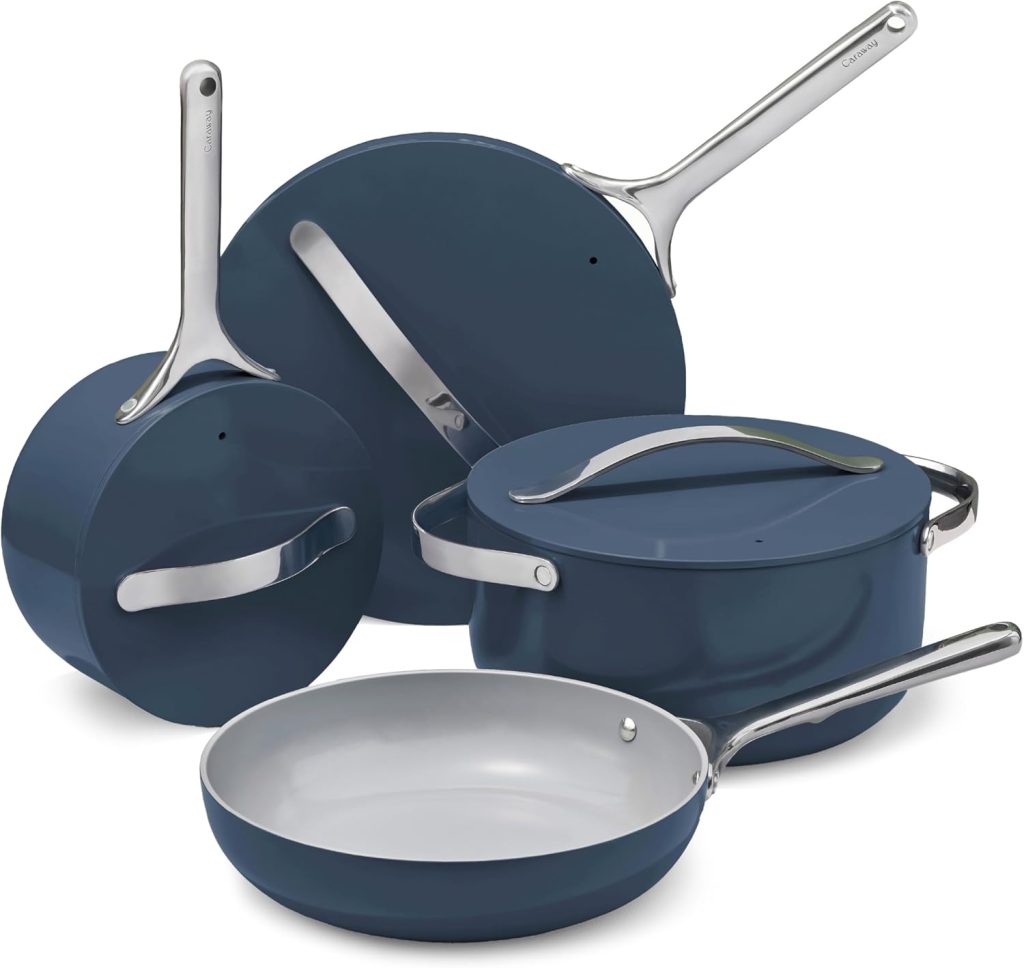
Overview: Caraway has become the darling of the non-toxic cookware world, and for good reason. This direct-to-consumer brand combines Instagram-worthy aesthetics with genuinely safe materials and solid cooking performance. The ceramic coating is free from PTFE, PFOA, PFAS, lead, cadmium, and other toxic substances, making it one of the cleanest options available.
Key Features:
- Mineral-based ceramic non-stick coating derived from sand
- Aluminum core with stainless steel handles that stay cool
- Available in seven sophisticated colors including Sage, Cream, Navy, and Perracotta
- Oven-safe up to 550°F
- Includes magnetic pan racks and canvas lid storage for organization
- Compatible with gas, electric, and radiant ring stoves (not induction)
- Comes in 4-piece, 7-piece, and 9-piece sets
Performance and User Experience:
Caraway’s cooking performance genuinely impresses, especially considering the ceramic coating. Eggs slide around with just a touch of oil, pancakes flip easily, and even sticky foods like cheese release without excessive effort. The heat distribution is remarkably even thanks to the aluminum core, preventing hot spots that can burn delicate sauces or proteins.
The handles feel substantial and remain cool even during extended stovetop cooking, though you’ll want to use mitts when transferring pans from the oven. The weight feels balanced—substantial enough to feel quality without being so heavy that maneuvering becomes a workout. Users consistently report that the coating holds up well with proper care, maintaining its non-stick properties for years rather than months.
What sets Caraway apart is the attention to the complete user experience. The included storage solutions are genuinely useful, not gimmicky. The magnetic pan rack keeps everything organized in cabinets, while the canvas lid holders prevent the annoying clatter and scratching that occurs when stacking cookware conventionally.
Pros:
✅ Truly non-toxic materials with transparent ingredient disclosure
✅ Beautiful design that elevates kitchen aesthetics
✅ Even heat distribution prevents burning and sticking
✅ Thoughtful storage solutions included
✅ Handles stay cool during stovetop cooking
✅ Easy to clean with smooth ceramic surface
✅ Company offers excellent customer service and care guides
Cons:
❌ Not compatible with induction cooktops (major limitation for some)
❌ Higher price point than many ceramic options
❌ Ceramic coating requires gentle care to maintain longevity
❌ Some users report coating degradation after 2-3 years with heavy use
❌ Metal utensils will damage the surface despite claims of durability
Ideal For: Home cooks who value both aesthetics and health, those with gas or electric stoves, anyone seeking a complete set to refresh their entire cookware collection, and people who don’t mind investing in their kitchen tools.
Final Verdict: Caraway delivers on its promise of safe, beautiful, functional cookware. While not perfect—particularly the lack of induction compatibility—it represents one of the best balanced options for those prioritizing non-toxic materials without sacrificing performance. The investment feels justified given the thoughtful design, effective cooking capabilities, and genuine commitment to material safety. If you’re making the switch to non-toxic cookware and want something that performs well while looking fantastic, Caraway deserves serious consideration.
2. Made In Stainless Steel 5-Ply Cookware
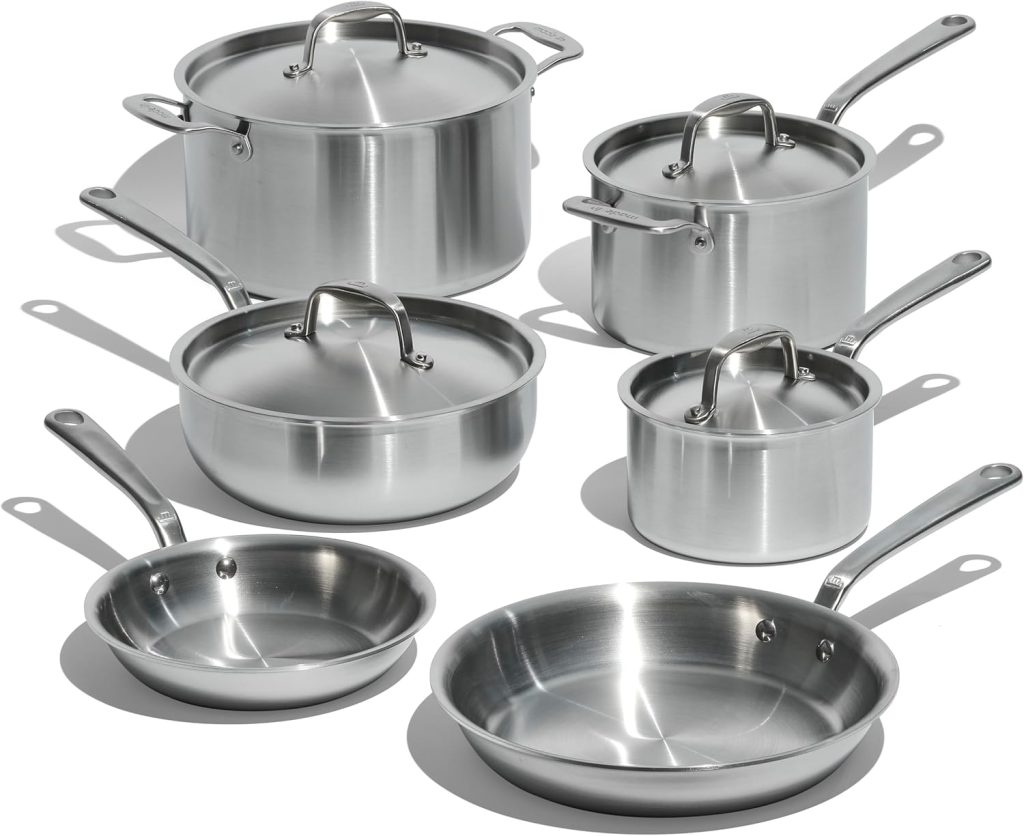
Overview: Made In has quietly built a reputation as the professionals’ choice for stainless steel cookware, offering restaurant-quality construction at prices that undercut luxury brands. Their 5-ply stainless steel construction features alternating layers of stainless steel and aluminum, creating cookware that distributes heat evenly while remaining completely non-reactive and non-toxic.
Key Features:
- 5-ply construction with aluminum core for superior heat distribution
- 18/10 stainless steel cooking surface (non-reactive and non-toxic)
- Flush rivets for smooth interior surface
- Oven and broiler-safe up to 800°F
- Compatible with all cooktops including induction
- Lifetime warranty against defects
- Crafted in partnership with century-old Italian and French factories
- Available as individual pieces or sets
Performance and User Experience:
This is where Made In truly shines. The 5-ply construction creates thermal mass that holds heat beautifully, allowing for excellent sears on proteins and maintaining steady temperatures for delicate sauces. The cooking surface is impeccably smooth, with flush rivets that prevent food buildup in hard-to-clean corners—a detail that matters more than you’d think during daily use.
Stainless steel has a learning curve, and Made In is no exception. Food will stick if you don’t properly preheat the pan and use adequate fat. However, once you master the technique (preheat until water droplets dance, then add oil until it shimmers), the rewards are substantial. You get genuine fond development for pan sauces, beautiful caramelization on vegetables, and the ability to deglaze without worrying about coating damage.
The weight feels professional—substantial enough to feel premium but not so heavy that flipping food becomes difficult. Heat distribution is exceptionally even, preventing the hot spots that plague thinner stainless steel. Users report that these pans age beautifully, developing a patina that actually improves performance over time rather than degrading like non-stick surfaces.
Pros:
✅ Completely inert and non-toxic with no coating to wear off
✅ Exceptional heat distribution from 5-ply construction
✅ Extremely durable and will last decades with proper care
✅ Oven-safe to 800°F for finishing techniques
✅ Flush rivets make cleaning significantly easier
✅ Works on all cooktops, including induction
✅ Develops fondness for superior sauce-making
✅ Professional-grade quality at accessible prices
Cons:
❌ Learning curve for those accustomed to non-stick
❌ Requires proper preheating technique to prevent sticking
❌ Can discolor from high heat (though this doesn’t affect performance)
❌ Heavier than aluminum or ceramic options
❌ Not truly non-stick even when properly used
❌ Requires more oil or fat than coated cookware
Ideal For: Serious home cooks ready to master proper cooking technique, anyone seeking lifetime cookware that won’t need replacement, professional chefs cooking at home, and those who want completely non-reactive surfaces for acidic foods.
Final Verdict: Made In represents the gold standard for non-toxic cookware for those willing to invest time in learning proper technique. The 5-ply construction delivers professional-level performance, the materials are completely safe and inert, and the durability means this is truly the last cookware you’ll need to buy. While the initial adjustment from non-stick can be frustrating, the superior cooking results and peace of mind about material safety make this an excellent investment for committed home cooks.
3. GreenPan Valencia Pro Ceramic Non-Stick Set
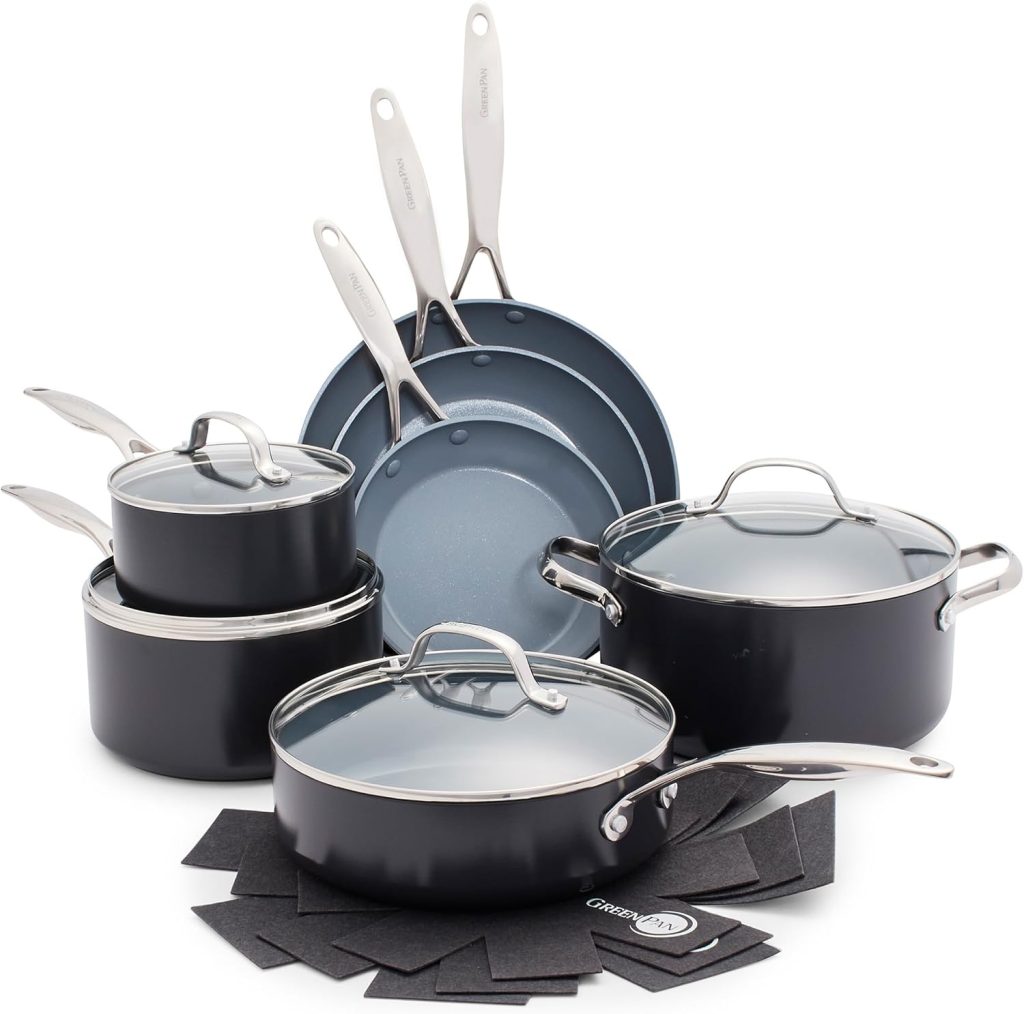
Overview: GreenPan pioneered ceramic non-stick technology and continues to innovate with collections like Valencia Pro. This set features their Thermolon coating, which the company claims is manufactured without PFAS or other toxic chemicals. The construction balances affordability with genuine non-stick performance, making it accessible for those transitioning to non-toxic cookware on a budget.
Key Features:
- Thermolon ceramic non-stick coating free from PFAS, PFOA, lead, and cadmium
- Hard anodized aluminum body for durability and even heating
- Stainless steel handles riveted for durability
- Oven and broiler safe up to 600°F
- Dishwasher safe (though hand washing recommended)
- Compatible with all stovetops including induction
- Scratch-resistant coating that can withstand metal utensils (though not recommended)
- Available in multiple set configurations
Performance and User Experience:
GreenPan’s Valencia Pro delivers reliable non-stick performance at a price point that won’t cause sticker shock. Eggs release cleanly with minimal oil, pancakes flip without tearing, and cleanup is genuinely easy after most cooking tasks. The hard-anodized aluminum body heats quickly and distributes heat reasonably well, though not quite as evenly as fully-clad stainless steel.
The coating shows impressive durability for ceramic, maintaining its non-stick properties for one to two years with regular use—significantly better than many budget ceramic options that deteriorate within months. Users report that proper care (avoiding high heat, using gentle utensils, hand washing) extends the coating’s life considerably.
Heat response is quick, which benefits morning cooking routines but requires attention to prevent overheating. The handles feel sturdy and well-attached, staying cool during stovetop cooking though they heat up in the oven. The induction compatibility is a significant advantage over brands like Caraway, expanding the potential user base.
Pros:
✅ PFAS-free ceramic coating with no toxic chemicals
✅ Significantly more affordable than premium ceramic brands
✅ Compatible with induction cooktops
✅ Hard-anodized construction adds durability
✅ Dishwasher-safe for convenient cleaning
✅ Good non-stick performance when new
✅ Quick heating saves time during cooking
✅ Company pioneered ceramic non-stick technology
Cons:
❌ Coating longevity is not as good as stainless steel or cast iron
❌ Heat distribution not as even as higher-end options
❌ Some users report coating degradation after 12-18 months
❌ Dark interior makes it harder to monitor browning
❌ Handle design less ergonomic than premium brands
❌ Non-stick performance declines noticeably after first year
Ideal For: Budget-conscious cooks seeking non-toxic options, those with induction cooktops who can’t use aluminum-core ceramic, families needing dishwasher-safe convenience, and anyone wanting to test ceramic cookware without major investment.
Final Verdict: GreenPan Valencia Pro offers legitimate non-toxic cooking at an accessible price point. While it doesn’t match the longevity of stainless steel or the performance of premium ceramic, it provides a sensible entry point into PFAS-free cooking. Set expectations appropriately—plan to replace after two to three years rather than expecting lifetime performance—and you’ll find this offers solid value for the investment.
4. Lodge Cast Iron Skillet
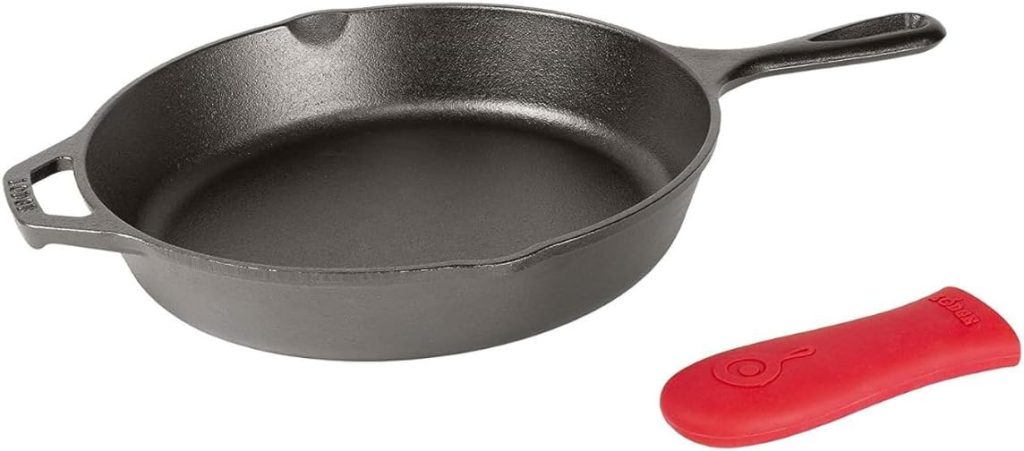
Overview: Lodge has been manufacturing cast iron cookware in Tennessee since 1896, and their seasoned skillets represent the most time-tested non-toxic cooking surface available. Pre-seasoned with vegetable oil, these pans arrive ready to use and improve with age when properly maintained. At their modest price point, Lodge skillets offer unbeatable value for genuinely non-toxic, lifetime cookware.
Key Features:
- 100% cast iron with no coatings or chemicals
- Pre-seasoned with vegetable oil (soy-based)
- Available in sizes from 6.5″ to 15″ diameter
- Oven-safe to any temperature
- Compatible with all heat sources including induction and campfires
- Dual pour spouts for right and left-handed use
- Assist handle on larger sizes for safe maneuvering
- Made in USA with lifetime warranty
Performance and User Experience:
Cast iron’s cooking performance is legendary for good reason. The thermal mass creates incredibly even heating once preheated, holding temperature steadily even when cold food hits the surface. This makes cast iron exceptional for searing steaks, achieving crispy-skinned chicken, and creating perfectly golden cornbread. Heat retention also means cast iron transitions beautifully from stovetop to oven to table for one-pan presentations.
The pre-seasoning from Lodge provides a decent starting point, though the pan improves dramatically with continued use and care. Unlike ceramic coatings that degrade, cast iron’s seasoning actually gets better over time, becoming more naturally non-stick with each use. Eggs still require adequate fat and proper technique, but well-seasoned cast iron rivals synthetic non-stick for release with the added benefit of being completely safe and repairable.
The weight is substantial—the 12″ skillet weighs over 8 pounds—which provides stability but can be challenging for those with limited grip strength. The helper handle on larger sizes is genuinely useful when transferring full pans. Heat handles remain essential since cast iron conducts heat thoroughly.
Pros:
✅ Completely non-toxic with no chemicals or coatings ever
✅ Improves with age rather than degrading
✅ Unmatched heat retention for searing and baking
✅ Extremely affordable considering lifetime use
✅ Can be restored even if neglected or damaged
✅ Oven-safe to any temperature without concerns
✅ Works on any heat source, including campfires
✅ Made in USA supporting domestic manufacturing
Cons:
❌ Heavy weight can be challenging to maneuver
❌ Requires seasoning, maintenance and specific care
❌ Not ideal for acidic foods, which can damage seasoning
❌ Reactive with certain ingredients until well-seasoned
❌ Slow to heat compared to thinner cookware
❌ Handle gets extremely hot, requiring mitts
❌ Not dishwasher safe and shouldn’t be soaked
Ideal For: Anyone seeking truly non-toxic, lifetime cookware, budget-conscious cooks, those who enjoy the ritual of cast iron care, camping enthusiasts, and people who want cookware that becomes an heirloom.
Final Verdict: Lodge cast iron represents the most affordable, time-tested non-toxic cookware available. While it requires more care than contemporary options and has a learning curve, the rewards are substantial: cooking performance that rivals any surface, complete freedom from chemical concerns, and durability measured in decades rather than years. For the price of two to three restaurant meals, you can own cookware that lasts generations.
5. Xtrema Pure Ceramic Cookware
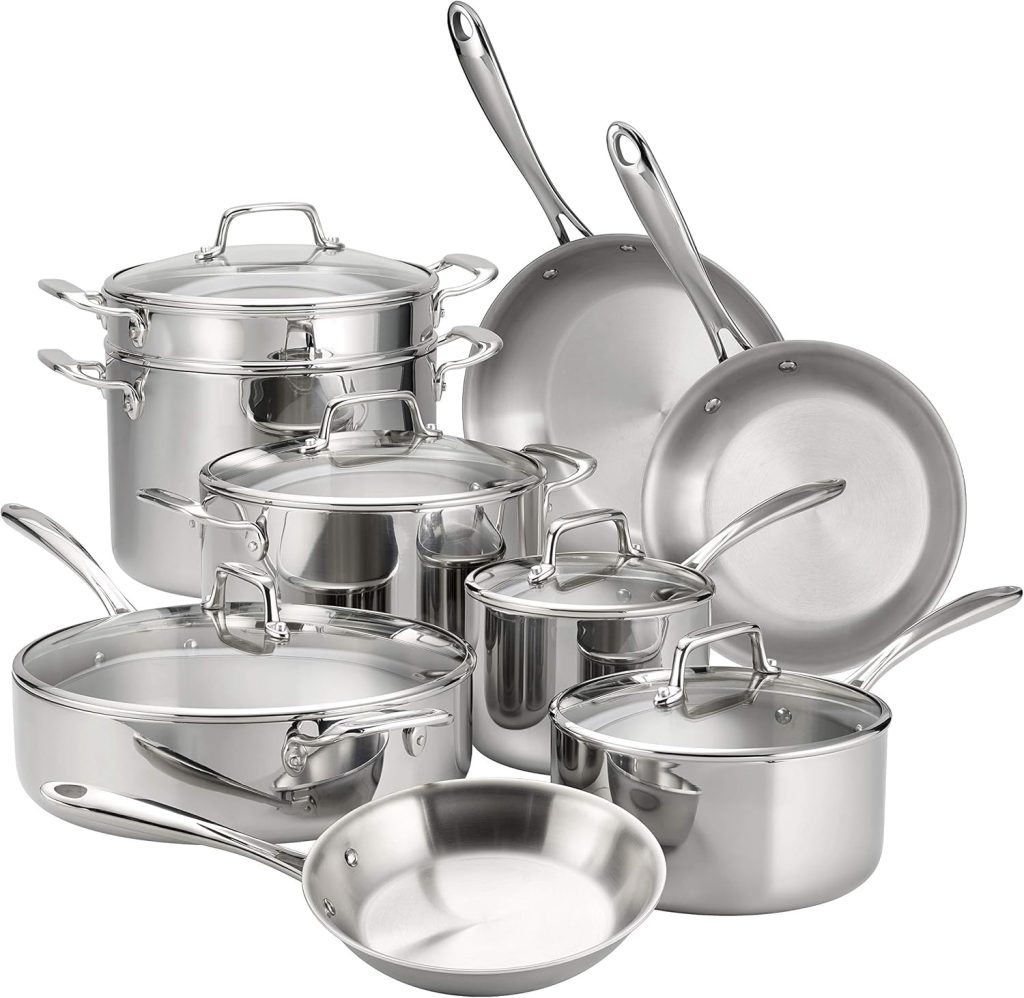
Overview: Xtrema takes ceramic cookware to its logical extreme—pure ceramic construction with no metal core, no non-stick coatings, and absolutely nothing between your food and simple, fired clay. This 100% ceramic approach eliminates concerns about aluminum leaching, PFAS coatings, or any other potential toxins. The result is unquestionably the most non-toxic cookware available, though with unique performance characteristics.
Key Features:
- 100% pure ceramic with no metal core or coatings
- Fired at extremely high temperatures for durability
- Completely non-reactive with all foods
- Oven, broiler, and grill safe up to 2500°F
- Microwave and freezer safe
- Compatible with gas, electric, and ceramic cooktops (not induction due to no metal)
- Dishwasher safe
- Lifetime guarantee against manufacturing defects
- Made from natural minerals with no added chemicals
Performance and User Experience:
Cooking with pure ceramic feels fundamentally different from any other cookware. Heat distribution is extremely even once the pan reaches temperature, preventing hot spots entirely. However, ceramic heats slowly—patience is essential during preheating. The thermal mass then holds heat exceptionally well, maintaining steady temperatures throughout cooking.
The surface isn’t naturally non-stick despite marketing claims. Proper preheating and adequate fat are essential to prevent sticking, similar to stainless steel. However, unlike metal, ceramic won’t develop fond (those flavorful browned bits), which affects sauce-making techniques. The advantage is complete non-reactivity—you can cook highly acidic tomato sauce for hours without any metallic taste or material interaction.
Durability impresses once you adjust to the material. While ceramic can chip if dropped on hard surfaces, it resists scratching, staining, and wear remarkably well. Users report that Xtrema pans look nearly identical after years of use as when new. The ability to use metal utensils without concern is genuinely liberating.
Pros:
✅ Absolutely zero toxic materials or potential for leaching
✅ Completely non-reactive with any food or ingredient
✅ Extreme heat tolerance up to 2500°F
✅ Microwave and freezer safe for unique versatility
✅ Easy to clean with dishwasher-safe convenience
✅ Will never wear out or degrade like coatings
✅ No metallic taste even with acidic foods
✅ Metal utensils safe to use without concerns
Cons:
❌ Not compatible with induction cooktops
❌ Heavy weight similar to cast iron
❌ Expensive compared to most ceramic alternatives
❌ Slow to heat requiring patience and planning
❌ Can chip if dropped on hard surfaces
❌ Not naturally non-stick despite marketing
❌ Won’t develop fond for traditional pan sauces
❌ Limited availability in retail stores
Ideal For: Those with extreme chemical sensitivities, anyone wanting the absolute safest cookware regardless of performance trade-offs, people who value extreme durability, and cooks comfortable adapting techniques to ceramic’s unique properties.
Final Verdict: Xtrema offers unparalleled peace of mind regarding material safety. If your primary concern is eliminating every possible toxin from your cooking, this is the ultimate solution. However, the performance characteristics require adaptation, the price is substantial, and the weight won’t suit everyone. This is specialized cookware for those prioritizing absolute safety over convenience or traditional cooking techniques.
6. All-Clad D3 Stainless Steel Tri-Ply Set
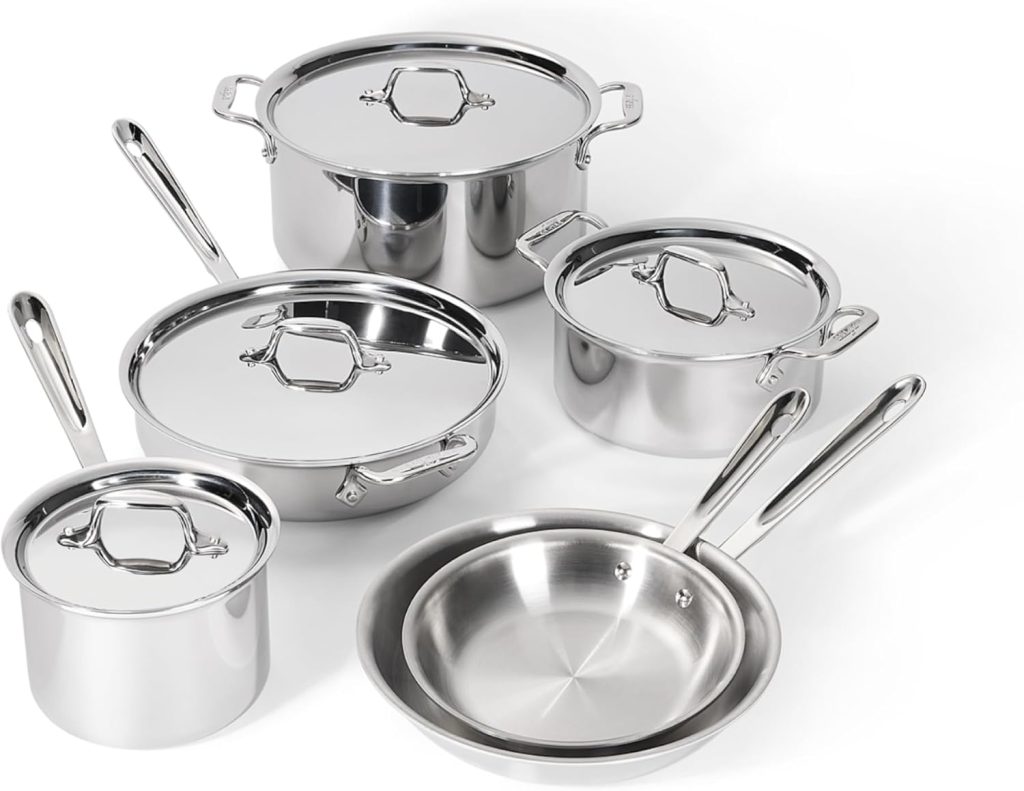
Overview: All-Clad invented bonded cookware in 1971 and remains the benchmark against which all stainless steel is measured. The D3 line features three layers of metal—stainless steel exterior, aluminum core, and stainless cooking surface—creating professional-grade performance with completely non-toxic materials. While expensive, this represents a genuine buy-it-for-life investment.
Key Features:
- Tri-ply construction with aluminum core bonded to stainless steel
- 18/10 stainless steel cooking surface (highly non-reactive)
- Induction compatible and works on all cooktops
- Oven and broiler safe to 600°F
- Stick handles designed to stay cool
- Flared rims for drip-free pouring
- Limited lifetime warranty
- Made in USA
- Available as individual pieces or sets
Performance and User Experience:
All-Clad’s cooking performance justifies its premium reputation. The tri-ply construction extends through the entire pan—not just the bottom—creating remarkably even heat distribution up the sides. This prevents the common issue where food browns beautifully in the center but remains pale around the edges. Temperature control is precise, responding quickly to adjustments while maintaining steady heat.
The stainless steel surface requires proper technique but rewards skill with superior results. Proteins develop restaurant-quality crusts, vegetables caramelize beautifully, and the fond that develops makes spectacular pan sauces. The cooking surface is impeccably smooth, making deglazing and cleaning more straightforward than lesser stainless steel.
Build quality is immediately apparent. The handles are expertly balanced, remaining comfortable during extended cooking and genuinely staying cooler than competitors. Rivets are carefully finished, lids fit precisely, and everything feels substantial without being unwieldy. Users consistently report that All-Clad pans look and perform nearly identically after a decade of regular use as when purchased.
Pros:
✅ Industry-leading heat distribution from true tri-ply construction
✅ Completely non-toxic and non-reactive stainless steel
✅ Superior build quality that justifies premium pricing
✅ Handles engineered to stay cooler during cooking
✅ Excellent temperature control and responsiveness
✅ Made in USA with limited lifetime warranty
✅ Professional-grade performance in home kitchens
✅ Maintains appearance and performance for decades
Cons:
❌ Significantly expensive, especially for complete sets
❌ Learning curve for those new to stainless steel
❌ Food will stick without proper preheating technique
❌ Can discolor from high heat (though doesn’t affect cooking)
❌ Requires more active cleaning than non-stick
❌ Heavy compared to aluminum or ceramic options
❌ Polished exterior shows fingerprints and requires maintenance
Ideal For: Serious home cooks seeking the absolute best, those building a lifetime cookware collection, professional chefs outfitting home kitchens, and anyone who appreciates superior craftsmanship and is willing to invest accordingly.
Final Verdict: All-Clad D3 represents the pinnacle of stainless steel cookware for most home cooks. While the price is substantial, the combination of superior performance, genuine durability, and complete material safety makes this a sound long-term investment. If budget allows and you’re committed to mastering proper stainless steel technique, All-Clad delivers cooking experiences that lesser cookware simply cannot match.
7. Staub Cast Iron Dutch Oven
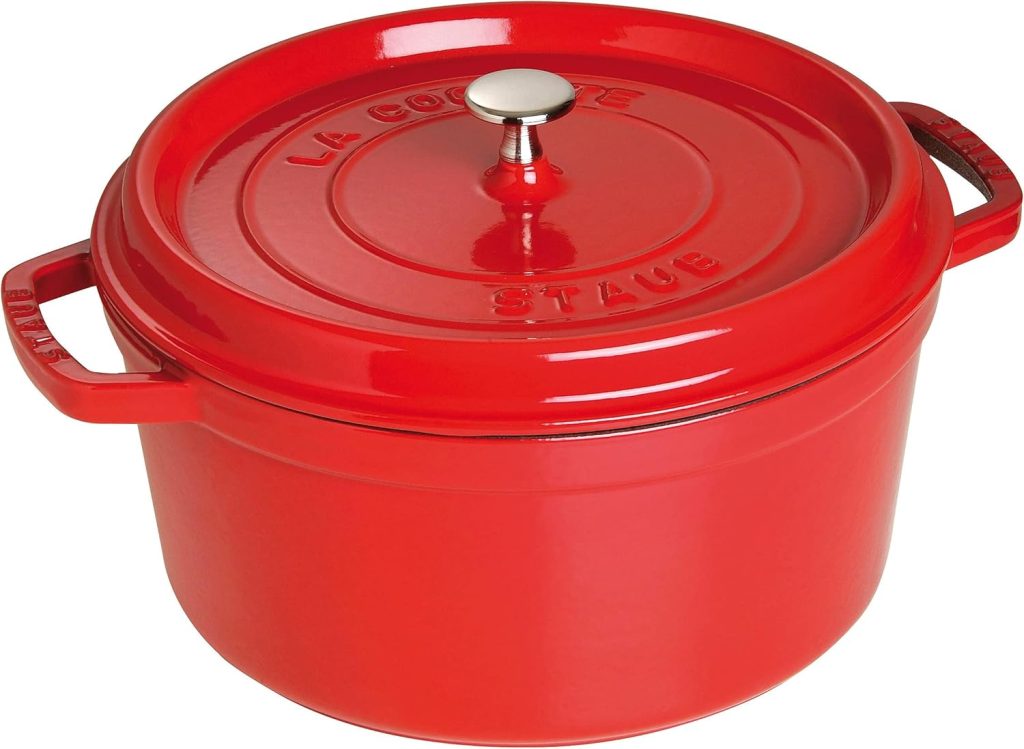
Overview: While Lodge offers excellent value in cast iron skillets, Staub represents the premium end of enameled cast iron cookware. These French-made Dutch ovens feature a special matte black enamel interior that’s more durable than traditional glossy finishes, combined with Staub’s signature self-basting lid design. The result is cookware that’s both heirloom-quality and completely non-toxic.
Key Features:
- Cast iron core with glass-porcelain enamel coating
- Matte black enamel interior resists chipping and staining
- Self-basting lid with spike-pattern underside
- Oven-safe to 500°F
- Works on all cooktops including induction
- Brass knob (nickel plated on some models) oven-safe to 500°F
- Made in France with lifetime warranty
- Available in multiple sizes and colors
Performance and User Experience:
Staub’s cooking performance excels particularly in slow-cooking, braising, and baking applications. The cast iron provides exceptional heat retention, maintaining steady temperatures for hours of cooking. The unique lid design features raised spikes on the interior that continuously collect condensation and rain it back onto food, creating a self-basting effect that keeps roasts moist and enhances flavor development.
The matte black interior is genuinely superior to traditional enamel. It withstands higher temperatures without damage, resists staining even from turmeric or tomatoes, and develops a natural patina that improves performance over time—unusual for enamel. Browning and searing directly in the Dutch oven works beautifully, eliminating the need to dirty additional pans.
Weight is substantial—a 5.5-quart round cocotte weighs nearly 12 pounds empty. This provides stability on the stovetop but requires two hands and care when full. The tight-fitting lid seals beautifully, creating a nearly airtight cooking environment that’s ideal for braises and stews.
Pros:
✅ Completely non-toxic enamel over pure cast iron
✅ Matte enamel resists chipping better than glossy finishes
✅ Self-basting lid design enhances moisture retention
✅ Exceptional heat retention for steady cooking temperatures
✅ Can sear, braise, and bake all in one vessel
✅ Gorgeous design worthy of table presentation
✅ Made in France with traditional craftsmanship
✅ Lifetime warranty demonstrates quality commitment
Cons:
❌ Very expensive compared to bare cast iron
❌ Extremely heavy when filled with food
❌ Limited oven temperature (500°F vs unlimited for bare cast iron)
❌ Enamel can chip if dropped on hard surfaces
❌ Dark interior makes it harder to monitor browning
❌ Not every home needs a Dutch oven
❌ Requires significant storage space
Ideal For: Home cooks who regularly braise, make stews, bake bread, or slow-cook, those seeking heirloom cookware that makes a statement, and anyone who wants the benefits of cast iron without the seasoning maintenance.
Final Verdict: Staub represents the ultimate expression of enameled cast iron, combining French craftsmanship with genuinely innovative design features. While the price is steep and the weight is considerable, this is cookware that performs beautifully while being completely safe, and that you’ll pass down to future generations. If you regularly make dishes that benefit from moist heat cooking, Staub’s investment pays dividends in both cooking results and years of use.
8. Abbio Stainless Steel Non-Stick Hybrid Skillet
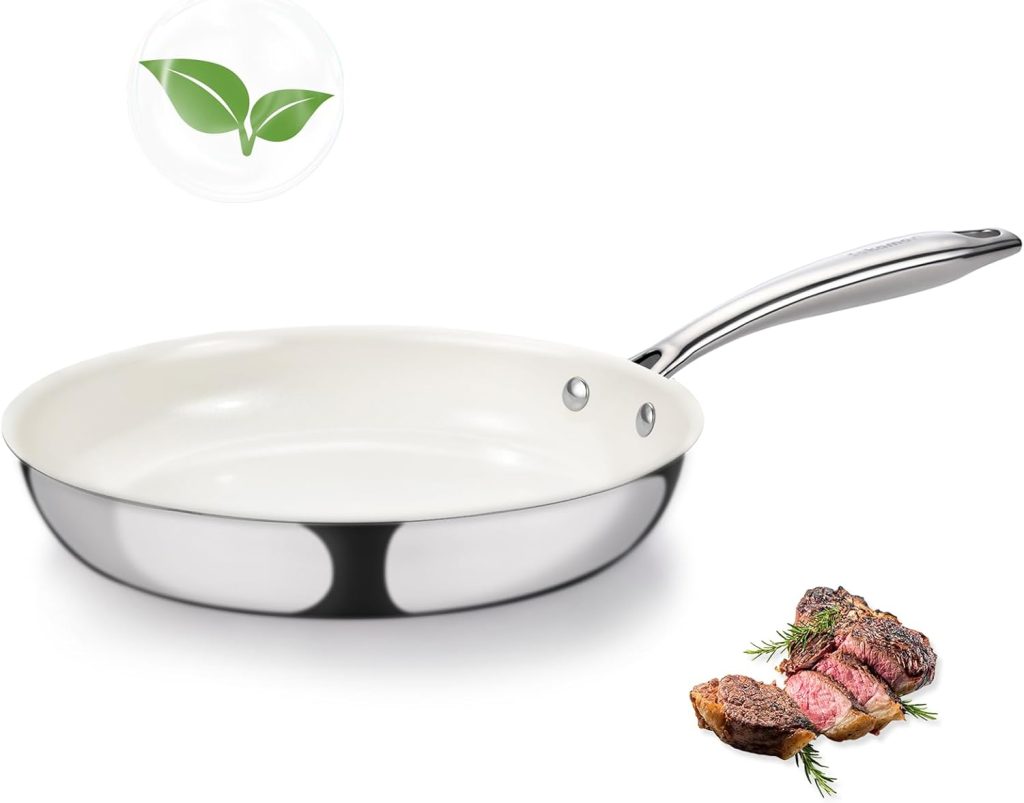
Overview: Abbio represents an intriguing middle ground—a stainless steel pan with a proprietary non-stick coating that claims to be genuinely non-toxic while providing easier food release than bare stainless. This hybrid approach attempts to combine the durability and safety of stainless steel with the convenience of non-stick, targeting cooks who want healthier options without the learning curve.
Key Features:
- 5-ply stainless steel construction for even heating
- Proprietary non-stick coating free from PFOA, PFAS, and PTFE
- Induction compatible and works on all cooktops
- Oven-safe to 500°F
- Stay-cool handles with ergonomic design
- Dishwasher safe (though hand washing recommended for coating longevity)
- Made in partnership with Italian manufacturers
- 100-day trial period with full refund option
Performance and User Experience:
Abbio’s hybrid design delivers on its promise of easier cooking than bare stainless steel while maintaining better heat distribution than most ceramic pans. Eggs release reasonably well with minimal oil, though not quite as effortlessly as fresh ceramic or PTFE non-stick. The stainless steel construction provides excellent heat control and the ability to develop fond for pan sauces—something most non-stick surfaces can’t achieve.
The coating shows decent durability, maintaining its properties for approximately 18-24 months with proper care. This falls short of bare stainless steel’s lifetime performance but exceeds many ceramic coatings that degrade within a year. Users report that avoiding high heat and metal utensils significantly extends coating life.
Heat distribution is excellent thanks to the 5-ply construction, eliminating hot spots and providing precise temperature control. The handles are notably comfortable and stay cool during stovetop cooking. The weight feels substantial but manageable, striking a good balance between sturdy construction and everyday usability.
Pros:
✅ Non-stick convenience without PFAS or toxic chemicals
✅ Superior heat distribution from 5-ply construction
✅ Easier than bare stainless steel for novice cooks
✅ Can develop fond for pan sauces unlike most non-stick
✅ Comfortable, well-designed handles
✅ 100-day trial period removes purchase risk
✅ Dishwasher-safe for easy cleanup
✅ Induction compatible
Cons:
❌ Coating will eventually need replacement unlike bare stainless
❌ More expensive than similar construction without coating
❌ Not truly non-stick like fresh ceramic or PTFE
❌ High heat can damage coating requiring temperature vigilance
❌ Metal utensils will scratch despite stainless steel base
❌ Limited long-term durability data since relatively new brand
❌ Coating claims not independently verified like established brands
Ideal For: Cooks transitioning from traditional non-stick who want something healthier but familiar, those seeking middle-ground between non-stick convenience and stainless durability, and people willing to eventually replace cookware every few years.
Final Verdict: Abbio’s hybrid approach offers a reasonable compromise for cooks not ready to fully commit to bare stainless steel. The non-toxic coating provides easier cooking than uncoated stainless while the 5-ply construction delivers professional-level heat control. However, the coating’s limited lifespan and premium pricing mean this isn’t the most economical long-term choice. Best viewed as a stepping stone toward mastering stainless steel technique or as a specialized piece for specific cooking needs.
9. Le Creuset Enameled Cast Iron Signature Series
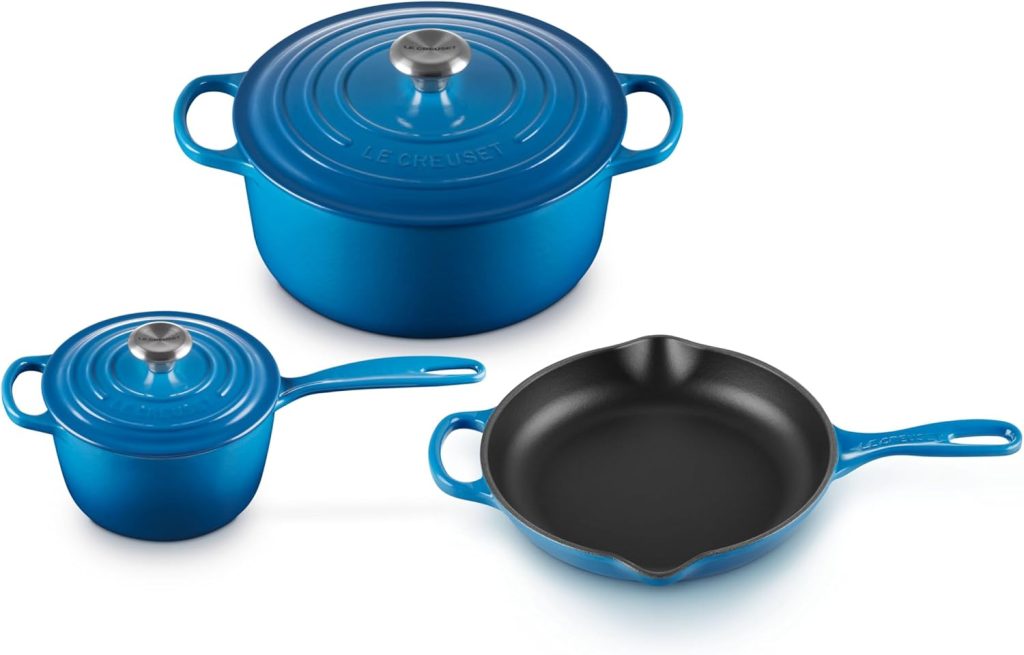
Overview: Le Creuset has been the gold standard for enameled cast iron since 1925, combining French artisanal craftsmanship with vibrant aesthetics and exceptional performance. While similar to Staub in construction, Le Creuset features a lighter-colored interior enamel that makes monitoring browning easier, along with slightly less weight and more color options for those who value kitchen aesthetics.
Key Features:
- Cast iron core with multi-layer enamel coating
- Light-colored interior enamel for visibility
- Oven-safe to 500°F
- Large loop handles for secure grip
- Compatible with all cooktops including induction
- Phenolic knobs on some models (lower heat tolerance)
- Available in over 40 colors
- Limited lifetime warranty
- Made in France with traditional hand-finishing
Performance and User Experience:
Le Creuset delivers cooking performance nearly identical to Staub, with excellent heat retention and distribution creating ideal conditions for braises, stews, and bread baking. The primary performance difference lies in the interior enamel color—Le Creuset’s lighter finish makes it significantly easier to monitor browning and caramelization, which matters for recipes where visual cues are important.
The enamel coating is durable though requires more care than Staub’s matte finish. Avoiding thermal shock (don’t place a hot pot in cold water) and using non-metal utensils extends the life considerably. The lighter interior does show staining over time, particularly from tomato-based dishes, though this doesn’t affect performance or safety.
The handles are slightly larger and easier to grip than Staub’s, particularly when wearing oven mitts. Weight is marginally lighter—a 5.5-quart round Dutch oven weighs about 10.5 pounds compared to Staub’s 12 pounds—making it more manageable for some users. The fit between pot and lid is excellent, though not quite as tight as Staub’s, meaning slightly less moisture retention.
Pros:
✅ Completely non-toxic enamel overcast iron construction
✅ Light interior makes monitoring cooking easy
✅ Slightly lighter than comparable Staub pieces
✅ More color options for aesthetic preferences
✅ Larger handles easier to grip with mitts
✅ Excellent brand reputation and customer service
✅ Made in France with traditional craftsmanship
✅ Lifetime warranty on manufacturing defects
Cons:
❌ Very expensive, often pricier than Staub
❌ Heavy, even though lighter than some alternatives
❌ Light interior stains over time
❌ Enamel requires careful handling to avoid chipping
❌ Phenolic knobs on some models limit oven temperature
❌ Performance virtually identical to less expensive options
❌ Not dishwasher safe despite enamel construction
Ideal For: Cooks who prioritize being able to see cooking progress, those building a colorful cookware collection, anyone who finds Staub’s weight prohibitive, and people who want an iconic brand with established customer service.
Final Verdict: Le Creuset remains an excellent choice for enameled cast iron, though whether it justifies the premium over Staub or Lodge depends on personal priorities. The lighter interior genuinely aids cooking visibility, the slight weight reduction matters for some users, and the color selection is unmatched. However, you’re partly paying for brand heritage rather than superior performance. If aesthetic considerations matter and the budget permits, Le Creuset delivers both beauty and functionality that lasts for generations.
10. GreenLife Soft Grip Ceramic Non-Stick Set
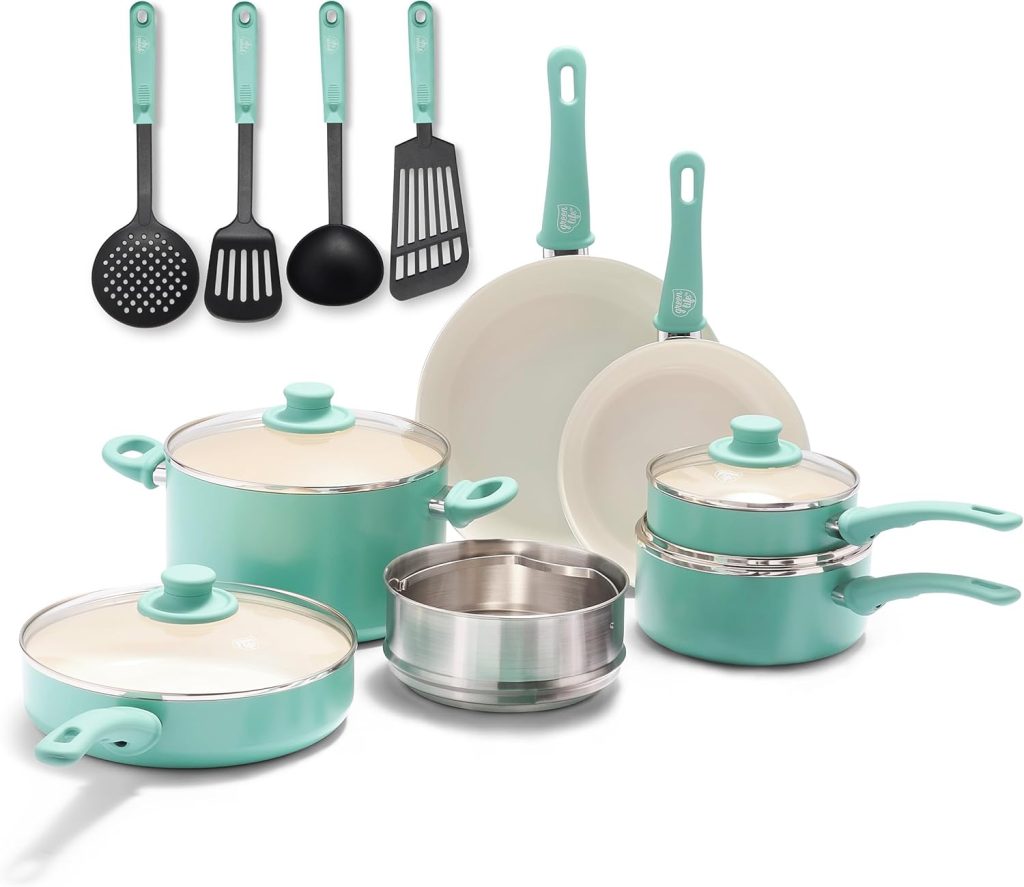
Overview: GreenLife brings non-toxic ceramic cookware to the budget-friendly segment without completely sacrificing performance. Part of the same family as GreenPan, GreenLife uses Thermolon ceramic coating but in a more affordable package with aluminum construction and comfortable soft-grip handles. This set targets families and casual cooks seeking PFAS-free cookware without major investment.
Key Features:
- Thermolon ceramic non-stick coating free from PFAS, PFOA, lead, and cadmium
- Reinforced aluminum construction
- Soft-grip Bakelite handles that stay cool
- Oven-safe to 350°F
- Dishwasher safe
- Available in turquoise, lavender, burgundy, and other colors
- Typically includes 14-16 piece sets with utensils and lids
- Not compatible with induction cooktops
Performance and User Experience:
GreenLife’s cooking performance exceeds expectations for its price point. The ceramic coating releases food reasonably well when new, making breakfast cooking and basic sautéing straightforward. Heat distribution is adequate for everyday cooking though not as even as hard-anodized or stainless steel—expect some hot spots near the center of larger pans.
The soft-grip handles are genuinely comfortable and remain cool during stovetop use, a significant advantage for casual cooks who may not always remember to use pot holders. However, the Bakelite construction limits oven temperature to just 350°F, which restricts some cooking techniques.
Durability represents the main trade-off at this price point. The coating typically maintains good non-stick properties for 6-12 months of regular use before beginning to degrade. With gentle care—hand washing, low to medium heat, wooden or silicone utensils—some users extend this to 18 months. However, this remains far short of stainless steel or cast iron longevity.
Pros:
✅ Very affordable entry into non-toxic cookware
✅ PFAS-free ceramic coating is genuinely safer
✅ Comfortable soft-grip handles stay cool
✅ Dishwasher safe for convenient cleaning
✅ Lightweight and easy to handle
✅ Good non-stick performance when new
✅ Cheerful colors brighten kitchen aesthetics
✅ Large set includes most needed pieces
Cons:
❌ Coating durability limited to 12-18 months typically
❌ Not compatible with induction cooktops
❌ Low oven temperature limit (350°F) restricts techniques
❌ Aluminum construction provides uneven heating
❌ Non-stick performance degrades noticeably over time
❌ Some reports of coating bubbling or peeling
❌ Thin construction dents or warps more easily
Ideal For: Budget-conscious families, college students, first apartments, rental properties, casual cooks who primarily use low to medium heat, and anyone wanting to test ceramic cookware before investing more.
Final Verdict: GreenLife delivers exactly what it promises: affordable, non-toxic cookware for everyday cooking. Set appropriate expectations—plan to replace this set every couple of years rather than expecting lifetime performance—and you’ll find it offers solid value. This is practical cookware for real-world budgets, trading longevity for accessibility while still avoiding the toxic chemicals in traditional non-stick.
11. Misen Stainless Steel 3-Ply Cookware
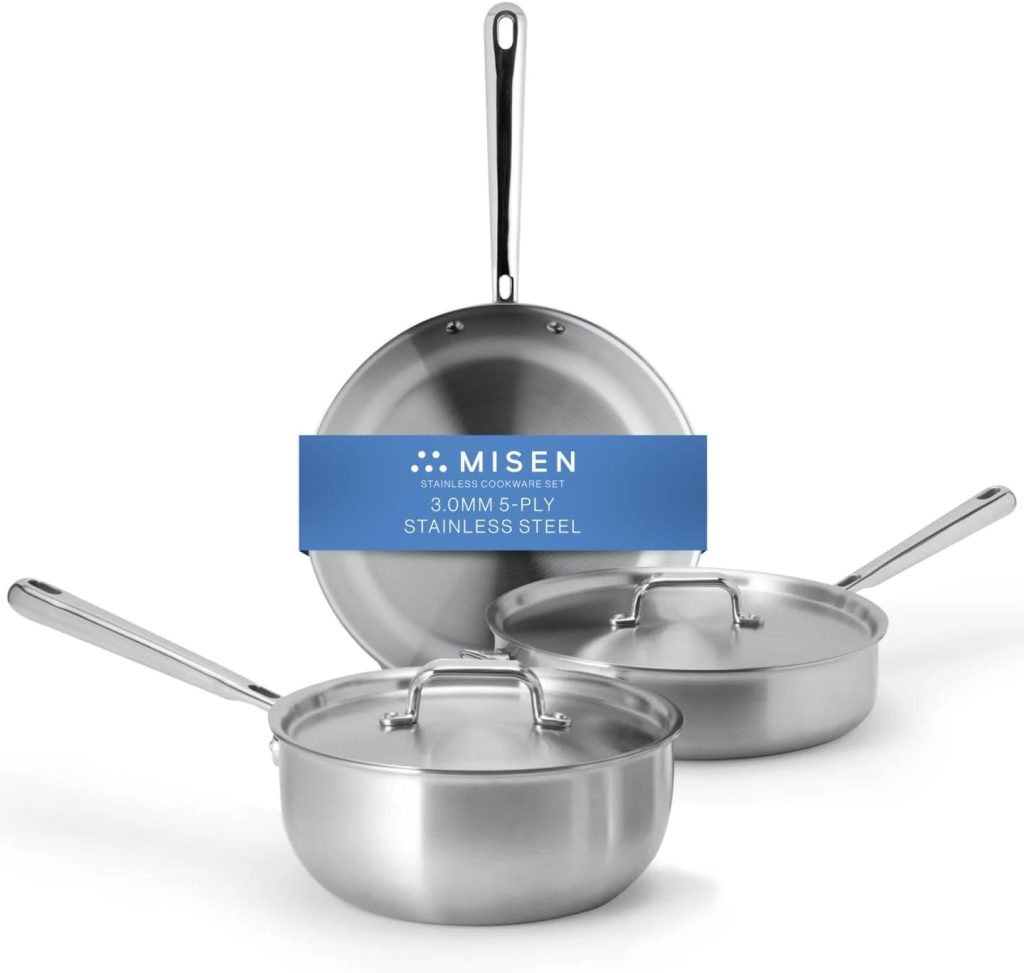
Overview: Misen entered the direct-to-consumer cookware market with a mission to deliver professional-quality construction at prices between budget and luxury brands. Their 3-ply stainless steel construction uses the same fundamental design as All-Clad at roughly half the price, making quality non-toxic cookware more accessible. The trade-off comes primarily in brand heritage and some finishing details rather than core performance.
Key Features:
- 3-ply construction with aluminum core bonded to stainless steel
- 18/8 stainless steel cooking surface
- Induction compatible and works on all cooktops
- Oven and broiler safe to 500°F
- Stay-cool handles with comfortable grip
- Lifetime warranty against defects
- Available as individual pieces or sets
- Made in India using quality materials and manufacturing
Performance and User Experience:
Misen’s cooking performance genuinely rivals much more expensive stainless steel. The 3-ply construction provides even heat distribution that prevents hot spots, while the stainless steel surface responds quickly to temperature adjustments. Proteins develop excellent crusts, vegetables caramelize beautifully, and the fond that develops makes flavorful pan sauces.
The cooking surface isn’t quite as impeccably smooth as All-Clad, which means deglazing occasionally requires a bit more elbow grease. However, the difference is subtle and unlikely to matter for most home cooks. Heat distribution is excellent in the bottom of pans though slightly less even up the sides compared to true tri-ply construction where bonding extends throughout.
Build quality is solid with minor caveats. Handles are comfortable and well-attached, though they heat up slightly more than premium brands during extended cooking. Lids fit well without the precision of luxury cookware, and rivets are functional though not quite as perfectly finished. These details affect experience rather than core cooking ability.
Pros:
✅ Professional-quality performance at mid-range pricing
✅ Completely non-toxic stainless steel construction
✅ Even heat distribution from 3-ply bonding
✅ Lifetime warranty demonstrates quality commitment
✅ Significantly less expensive than All-Clad or other luxury brands
✅ Induction compatible
✅ Responsive temperature control for precise cooking
✅ Direct-to-consumer model provides better value
Cons:
❌ Finishing details not quite as refined as luxury brands
❌ Handles heat up more than premium competitors
❌ Cooking surface not as perfectly smooth as All-Clad
❌ Newer brand with less long-term durability data
❌ Made in India rather than USA (matters to some buyers)
❌ Learning curve for those new to stainless steel
❌ Food will stick without proper technique
Ideal For: Value-conscious cooks seeking quality without luxury pricing, those transitioning from non-stick to stainless steel, home cooks who want professional-grade performance without elite brand premiums, and anyone building a cookware collection on a reasonable budget.
Final Verdict: Misen successfully delivers on its value proposition—professional cooking performance at accessible prices. While finishing details trail luxury brands, the core cooking experience rivals cookware costing twice as much. For most home cooks, the performance differences between Misen and All-Clad won’t justify the significant price gap. This represents smart spending for quality non-toxic cookware that will last decades while leaving budget for other kitchen investments.
Comprehensive Buying Guide: How to Choose the Best Non-Toxic Cookware!
Understanding Non-Toxic Materials: What Actually Matters
The term “non-toxic” gets thrown around liberally in cookware marketing, but understanding what makes cookware genuinely safe requires looking beyond surface-level claims. At its core, non-toxic cookware means cooking surfaces and materials that won’t leach harmful chemicals, heavy metals, or synthetic compounds into your food during normal use.
PFAS (Forever Chemicals): The most critical concern is PFAS—per- and polyfluoroalkyl substances—found in traditional non-stick coatings like Teflon. These “forever chemicals” accumulate in human bodies and the environment, never breaking down. They’re linked to thyroid disease, immune system problems, certain cancers, and hormonal disruption. Any cookware marketed as non-toxic must be completely PFAS-free, including PFOA, PFOS, and newer PFAS compounds that manufacturers sometimes use as “safer” alternatives but carry similar concerns.
Heavy Metals: Lead and cadmium can appear in ceramic glazes and some colored coatings. Quality manufacturers test for these, but cheap imports sometimes fail to meet safety standards. Always look for certification that cookware is free from lead, cadmium, and other heavy metals, particularly with ceramic or colored enamel pieces.
Aluminum Concerns: While aluminum itself is generally recognized as safe, there’s ongoing debate about aluminum exposure and potential health impacts. Anodized aluminum is considered safe because the surface is sealed, preventing direct contact between aluminum and food. Many health-conscious cooks prefer stainless steel, cast iron, or ceramic options that eliminate aluminum entirely.
Truly Safe Materials: The safest cookware materials with the longest track records are:
- Stainless steel (particularly 18/10 or 18/8 grades)
- Cast iron (bare or enameled)
- Pure ceramic (not ceramic-coated)
- Glass (for bakeware)
These materials are completely inert, won’t react with acidic foods, and won’t degrade over time to release particles into food.
Material Types: Detailed Comparison
Stainless Steel: Stainless steel represents the gold standard for non-reactive, durable cookware. The numbers you’ll see—18/10 or 18/8—refer to chromium and nickel content. Higher-quality stainless steel is bonded with aluminum or copper cores for better heat distribution. Pure stainless steel doesn’t conduct heat well, so quality cookware features multiple layers (3-ply, 5-ply, or more) with aluminum or copper sandwiched between stainless steel layers.
Advantages include complete non-reactivity with any food, exceptional durability measured in decades, ability to develop fond for rich sauces, oven-safety to very high temperatures, and dishwasher-safe convenience. The learning curve involves proper preheating and using adequate fat to prevent sticking, but the cooking results justify the effort.
Cast Iron: The most traditional cookware material, cast iron offers unparalleled heat retention and improves with age when properly maintained. Modern pre-seasoned options like Lodge arrive ready to use, though the seasoning improves over time. Cast iron excels at high-heat cooking, developing restaurant-quality crusts on proteins and maintaining steady temperatures for baking.
Enameled cast iron like Le Creuset or Staub eliminates seasoning requirements while maintaining heat retention benefits. The enamel coating is completely non-toxic and non-reactive, ideal for acidic foods that would damage bare cast iron’s seasoning. The trade-off is higher cost, added weight, and potential for enamel chipping if dropped.
Ceramic (Coating): Ceramic non-stick coatings represent the most popular PFAS-free alternative to traditional non-stick. These mineral-based coatings are applied to metal cores (typically aluminum) and offer convenient food release without toxic chemicals. Quality matters enormously—premium ceramic like Caraway or GreenPan Valencia Pro lasts significantly longer than budget options.
The primary limitation is durability. Even the best ceramic coatings degrade over time, typically lasting 1-3 years depending on use and care. High heat accelerates degradation, and metal utensils will damage the surface. View ceramic as “consumable” cookware you’ll replace periodically rather than lifetime investments.
Pure Ceramic: Brands like Xtrema offer 100% ceramic construction with no metal core and no coating—just fired clay similar to pottery. This eliminates any possibility of leaching or coating degradation. Pure ceramic is completely non-reactive, handles extreme temperatures, and lasts indefinitely without wearing out.
However, pure ceramic is heavy, slow to heat, incompatible with induction, expensive, and can chip if dropped. The cooking experience differs from metal cookware—it won’t develop fond, requires different technique, and demands patience during preheating. This is specialized cookware for those prioritizing absolute safety above all other considerations.
Construction Details That Impact Performance
Ply Count and Heat Distribution: In stainless steel cookware, ply count refers to layers of metal bonded together. 3-ply (also called tri-ply) features a core of aluminum or copper sandwiched between two layers of stainless steel. 5-ply adds additional layers for even better heat distribution. More layers generally mean better, more even heating, though the improvements diminish beyond 5-ply for most home cooking.
Critically, examine whether the ply construction extends up the sides of pans or only covers the bottom. Full-clad construction (sides and bottom) provides dramatically better heat distribution, preventing the common problem where food cooks unevenly with hot centers and cooler edges.
Handle Design and Attachment: Handles matter more than most cooks realize. Well-designed handles stay cool during stovetop cooking through a combination of material choice and angle that keeps them away from direct heat. They’re ergonomically shaped for comfortable grip and properly balanced so filled pans don’t tip forward.
Attachment method affects longevity—welded handles are strongest but conduct more heat, while riveted handles are nearly as durable with better heat resistance. Hollow handles stay cooler than solid metal but may feel less substantial. Test how handles feel before committing to a full set.
Lid Fit and Design: Proper lid fit matters for moisture retention and even cooking. Quality lids sit snugly without gaps while allowing controlled steam release. Glass lids let you monitor cooking without removing the lid and losing heat. Metal lids are more durable but require removing to check food.
Some specialty designs like Staub’s self-basting lids genuinely improve cooking results by continuously redistributing condensation back onto food. While not essential, these thoughtful details can elevate your cooking experience.
Sizing: Building a Functional Collection
Most home cooks need surprisingly few pieces. A well-chosen set of 4-5 pieces handles virtually all cooking tasks more effectively than a 16-piece set where most items remain unused. Consider building your collection with:
Essential Pieces:
- 10″ or 12″ skillet or frying pan (daily workhorse for most tasks)
- 3-quart saucepan with lid (sauces, grains, reheating)
- 8-quart stockpot with lid (pasta, soups, stocks, boiling)
- Optional: 5-6 quart Dutch oven for braising, baking, stewing
Specialty Additions:
- 8″ skillet for small portions or eggs
- 4-quart sauté pan with straight sides for larger volume sautéing
- 2-quart saucepan for small batches
- Grill pan if you lack outdoor grilling options
Avoid the temptation to buy enormous sets with 14-20 pieces. You’ll likely use 4-5 items regularly while the rest occupy valuable cabinet space. Quality in fewer pieces outperforms quantity in mediocre cookware.
Common Mistakes to Avoid When Buying
Mistake 1: Assuming Higher Price Always Means Better Quality While premium brands like All-Clad genuinely offer superior construction, not all expensive cookware justifies its price. Some brands charge premium prices for average construction plus designer marketing. Conversely, some mid-range brands like Misen deliver professional performance at fraction of luxury prices. Research construction details and read actual user reviews rather than relying on price alone.
Mistake 2: Buying Complete Sets Blindly Cookware sets often include pieces you’ll rarely use while missing items you’d want. You may end up with three sizes of saucepans but no decent skillet, or multiple frying pans but no stockpot. Building a collection piece by piece costs more initially but ensures every item earns its storage space.
Mistake 3: Ignoring Cooktop Compatibility Induction cooktops require magnetic cookware—cast iron and most stainless steel work, but aluminum and copper don’t unless they have magnetic bases. Ceramic-coated aluminum often isn’t induction-compatible despite being marketed as “works on all stovetops.” Verify compatibility before purchasing if you have or might acquire an induction cooktop.
Mistake 4: Expecting Immediate Non-Stick Performance from Stainless Steel Stainless steel and cast iron require proper technique to minimize sticking. They’ll never match fresh ceramic or PTFE non-stick for food release. If you’re unwilling to learn preheating techniques and accept some cleanup effort, ceramic coating might suit your needs better despite its shorter lifespan.
Mistake 5: Neglecting Proper Care from Day One Every material has specific care requirements that dramatically affect longevity. Ceramic coatings degrade faster with high heat and metal utensils. Cast iron rusts without proper drying and seasoning maintenance. Even dishwasher-safe stainless steel looks better longer with hand washing. Understanding and following care instructions from the start extends cookware life significantly.
Mistake 6: Buying Based on Color or Aesthetics Alone Beautiful cookware photos on Instagram are seductive, but performance and material safety should drive decisions. That stunning copper exterior won’t matter if the cooking surface is reactive or the handle heats up dangerously. Choose based on functionality first, then aesthetics within options that meet performance requirements.
Budget Allocation: How Much Should You Spend?
Entry Level ($100-300): This budget gets quality starter sets from brands like GreenLife or individual pieces from GreenPan or Lodge. Expect ceramic coatings that last 1-2 years or cast iron that lasts forever. This is appropriate for first apartments, casual cooks, or those testing non-toxic cookware before major investment.
Mid-Range ($300-800): Sweet spot for serious home cooks, this budget affords better ceramic like Caraway or solid stainless steel from Misen plus quality cast iron pieces. You’re getting materials and construction that will last 5-10 years (ceramic) or lifetime (stainless and cast iron) with proper care.
Premium ($800-2000+): This range brings luxury brands like All-Clad, Le Creuset, or Staub into reach. You’re paying for best-in-class construction, refined details, established warranties, and brand heritage. The cooking performance improvements over mid-range options are real but modest—you’re primarily buying superior durability, fit and finish, and lifetime support.
Investment Strategy: Consider mixing price points strategically. Invest in stainless steel or cast iron pieces you’ll use daily and keep for decades. Save money on specialized pieces used occasionally where medium durability suffices. A $150 All-Clad skillet you use daily makes sense; a $150 sauce pot you use weekly might be overkill.
Maintenance and Longevity Considerations
Ceramic Coatings: To maximize ceramic coating life, use only low to medium heat, hand wash with soft sponges, use wooden or silicone utensils, and allow pans to cool before washing. Never use cooking spray which builds up residue that degrades non-stick properties. Even with perfect care, expect to replace ceramic cookware every 2-3 years.
Stainless Steel: Extremely low maintenance—dishwasher safe, though hand washing prevents water spot buildup. Bar Keeper’s Friend or baking soda paste removes stubborn stains and discoloration without affecting performance. Stainless steel is nearly indestructible; properly cared for, it truly lasts lifetime.
Cast Iron: Bare cast iron requires the most involved care but rewards attention with improved performance. Clean while still warm with hot water and scrub brush (no soap needed for well-seasoned pans), dry thoroughly, and rub with thin layer of oil. Enamel cast iron is dishwasher safe but hand washing preserves the finish. Both types last generations.
General Tips: Always allow cookware to cool before washing to prevent thermal shock that can warp pans or crack enamel. Avoid metal utensils on any coated surface. Never overheat empty pans. Store carefully to prevent scratching—pan protectors or paper towels between stacked pieces help.
Expert Recommendations for Different Use Cases
For Beginners Switching from Traditional Non-Stick: Start with ceramic coating like Caraway or GreenPan Valencia Pro. The familiar non-stick experience eases transition while eliminating PFAS exposure. Add a small cast iron skillet for learning traditional techniques without overwhelming your entire cooking approach. Plan to eventually incorporate stainless steel as skills develop.
For Serious Home Cooks: Invest in quality stainless steel (Misen or All-Clad) for daily cooking, add cast iron for specialized high-heat tasks, and keep one ceramic pan for eggs and delicate fish. This combination handles any recipe while providing complete material safety and lifetime durability.
For Health-Conscious Families: Prioritize PFAS-free ceramic coating for everyday convenience (GreenPan or Caraway) plus cast iron for baking and roasting. The easy-clean ceramic accommodates busy schedules while cast iron provides heirloom quality for long-term use. Consider one small stainless steel saucepan for acidic foods like tomato sauce.
For Budget-Conscious Cooks: Start with Lodge cast iron (incredible value for lifetime cookware) and a GreenLife ceramic set for convenience. This combination provides safe cooking for under $200 total. Gradually upgrade individual pieces to quality stainless steel as budget allows, building a mixed collection over time.
For Those with Induction Cooktops: Verify magnetic compatibility carefully—cast iron and most stainless steel work perfectly. Avoid aluminum-core ceramic unless specifically marketed as induction-compatible. Made In, All-Clad, Misen stainless steel, plus Lodge or Staub cast iron all perform excellently on induction.
For Apartment Dwellers with Limited Storage: Choose nesting sets where smaller pieces stack inside larger ones. Caraway includes thoughtful storage solutions. Alternatively, buy individual pieces in just the sizes you’ll actually use rather than full sets with redundant items. Wall-mounted racks maximize vertical storage.
Frequently Asked Questions (FAQs)
Is ceramic cookware really safer than traditional non-stick?
Yes, quality ceramic cookware is significantly safer than PTFE-based non-stick (Teflon). Traditional non-stick contains PFAS—”forever chemicals” that persist in the environment and human body, linked to various health issues including thyroid problems, immune system disruption, and certain cancers. Ceramic coatings use mineral-based materials derived from sand with no PFAS, PFOA, lead, or cadmium when properly manufactured.
However, not all ceramic cookware is created equal. Cheap imports sometimes contain undisclosed additives or heavy metals. Stick with reputable brands like Caraway, GreenPan, or GreenLife that provide transparent ingredient disclosure and third-party testing. The safety advantage is real and significant—you’re eliminating a class of persistent toxins from your cooking—but quality and sourcing matter tremendously.
The trade-off is durability. Ceramic coatings eventually wear out and need replacement, typically lasting 1-3 years depending on use and care. Traditional PTFE non-stick also degrades but often lasts slightly longer. Both require eventual replacement, but with ceramic, you’re not accumulating persistent chemicals during those years of use.
How long does non-toxic cookware typically last?
Longevity varies dramatically by material type:
Stainless Steel: Essentially unlimited lifespan. Quality stainless steel cookware lasts 20-30+ years or even lifetime with proper care. It may discolor or develop patina but maintains full cooking functionality indefinitely. This makes stainless steel the most economical long-term choice despite higher initial cost.
Cast Iron: Bare cast iron can literally last centuries—you can still buy vintage cast iron from the early 1900s that functions perfectly. Modern pre-seasoned cast iron like Lodge will last your lifetime and become an heirloom. Enameled cast iron like Le Creuset or Staub lasts 20-30+ years if not chipped, often with lifetime warranties.
Ceramic Coating: The limiting factor in non-toxic cookware. Budget ceramic lasts 6-12 months, mid-range options like GreenPan last 1-2 years, and premium ceramic like Caraway lasts 2-3 years with careful use. The coating gradually loses non-stick properties even with perfect care. Plan to replace ceramic cookware periodically—it’s consumable rather than permanent.
Pure Ceramic: Xtrema-style solid ceramic lasts indefinitely like stainless steel. The material itself won’t degrade, though it can chip if dropped on hard surfaces. With reasonable care, expect decades of use.
To maximize any cookware’s lifespan: hand wash when possible, avoid temperature extremes and thermal shock, use appropriate utensils (wood/silicone for coatings), never overheat empty pans, and store carefully to prevent damage.
Can I use metal utensils on non-toxic cookware?
It depends entirely on the specific cookware type:
Never Use Metal On: Ceramic-coated cookware (scratches destroy the coating), any hybrid non-stick coatings like Abbio (metal damages the surface), and enameled cast iron (metal can chip the enamel porcelain). Stick with wooden, silicone, or heat-resistant nylon utensils to preserve these surfaces.
Safe to Use Metal On: Bare stainless steel (metal won’t damage stainless steel), bare cast iron (actually helps maintain seasoning), and pure ceramic like Xtrema (fired ceramic resists scratching). These materials tolerate metal whisks, spatulas, and spoons without damage.
Gray Area: Some manufacturers claim their ceramic coatings resist metal utensils. While technically true that they won’t immediately scratch, metal does accelerate coating degradation. If you want ceramic coating to last as long as possible, stick with gentler utensils regardless of marketing claims.
For most home cooks, having a set of wooden and silicone utensils solves this issue entirely. They’re gentle on all cookware types, including coated surfaces, while still providing effective cooking functionality. Save metal utensils for your stainless steel and cast iron pieces where they can’t cause damage.
What’s the difference between hard anodized and regular aluminum?
Aluminum is lightweight and conducts heat excellently, making it popular for cookware cores. However, raw aluminum is reactive—it can leach into acidic foods and may pit or discolor. Hard anodization is an electrochemical process that transforms the aluminum surface into a hard, non-porous oxide layer.
Hard anodized aluminum offers several advantages: the surface is non-reactive and won’t leach aluminum into food, it’s extremely hard and scratch-resistant (harder than stainless steel), and it provides naturally stick-resistant properties even without additional coating. The process creates a durable, safe surface that combines aluminum’s heat conductivity with protection from direct food contact.
Many ceramic non-stick pans use hard anodized aluminum as the base before applying ceramic coating. This provides durability and even heating while the ceramic adds non-stick convenience. GreenPan Valencia Pro is an example of this construction.
From a health perspective, hard anodized aluminum is considered safe—the anodization process seals the aluminum, preventing leaching. However, if the anodized surface becomes deeply scratched or damaged, the raw aluminum underneath could potentially contact food. This is why many health-conscious cooks prefer stainless steel or cast iron where the cooking surface itself is the safe material rather than relying on surface treatment.
Is stainless steel cookware difficult to use for beginners?
Stainless steel has a learning curve but isn’t as challenging as its reputation suggests. The key is understanding that stainless steel isn’t designed to be non-stick—it’s designed for superior heat control, durability, and browning capabilities. Once you grasp the proper technique, it becomes intuitive.
The essential technique: preheat your pan over medium heat for 2-3 minutes. Test readiness with the water droplet test—drop a small amount of water in the pan; if it forms a ball that rolls around, the pan is ready. Add oil and heat until it shimmers and flows easily. Only then add food. Proteins will initially stick but release naturally once properly seared. Resist the urge to move or flip too soon.
Common beginner mistakes include: not preheating adequately (leading to severe sticking), using insufficient fat or oil, trying to move food too early, and using temperatures that are too low. Each of these is easily correctable with knowledge and a few practice sessions.
Benefits that reward the learning effort include: developing rich fond for restaurant-quality pan sauces, achieving proper browning and caramelization, eliminating concerns about coating degradation, using metal utensils freely, and owning cookware that improves rather than degrades over time.
Start with one stainless steel skillet for proteins and vegetables while keeping ceramic or non-stick for eggs and delicate fish. As confidence builds, you’ll naturally reach for stainless steel more often. Within a few weeks, proper technique becomes second nature.
How do I know if my ceramic cookware needs replacing?
Several clear signs indicate ceramic coating has degraded and performance is compromised:
Food Sticking Consistently: When food that previously released easily now sticks stubbornly despite proper preheating and adequate oil, the coating has lost its non-stick properties. Occasional sticking isn’t necessarily cause for replacement, but consistent difficulty indicates wear.
Visible Coating Damage: Scratches, chips, or areas where the coating has worn through to the base metal underneath all signal it’s time to replace. Using damaged ceramic cookware may expose you to aluminum or other base materials that the coating was designed to protect against.
Discoloration That Won’t Clean: While some discoloration is normal and doesn’t affect safety, persistent dark patches or stains that remain despite proper cleaning can indicate coating breakdown. This often coincides with declining non-stick performance.
Food Particles Adhering to Surface: If tiny bits of food get embedded in the coating and can’t be removed with normal cleaning, the ceramic surface has become porous or damaged. This traps bacteria and affects performance.
Coating Bubbling or Peeling: Any bubbling, flaking, or peeling of the coating is an immediate signal to stop using the cookware. Ingesting coating particles isn’t dangerous with quality ceramic, but the cookware no longer functions properly or safely.
To extend ceramic cookware life: avoid high heat (medium is sufficient for most cooking), never use cooking spray (builds up residue), hand wash with soft sponges, use wood or silicone utensils, and let pans cool before washing. Even with perfect care, expect eventual replacement—budget ceramic lasts 6-12 months, quality ceramic 2-3 years.
Are there any health risks with cast iron cookware?
Cast iron is one of the safest, most proven cookware materials with a track record spanning centuries. For most people, cast iron presents no health risks and may even provide beneficial dietary iron. However, there are specific situations where concerns exist:
Iron Overload Conditions: People with hemochromatosis or other conditions causing iron overload should consult healthcare providers before using cast iron regularly. Cooking in cast iron does leach small amounts of iron into food—typically beneficial for those with iron deficiency but potentially problematic for those who already have excess iron.
Acidic Foods and Bare Cast Iron: Cooking highly acidic foods (tomato sauce, citrus-based dishes, vinegar-heavy preparations) in bare cast iron can cause two issues: the acid strips away seasoning, requiring re-seasoning; and more iron leaches into food, creating metallic taste and potentially excessive iron intake. Enameled cast iron solves this—the enamel coating is completely non-reactive.
Seasoning Materials: Traditional seasoning uses vegetable oil heated to polymerization. This creates a safe, natural non-stick surface. However, some people dislike that trace amounts of oil remain. There’s no evidence this presents health concerns, but it’s a consideration for those seeking absolute purity. Pure ceramic or stainless steel requires no seasoning.
Lead in Vintage Cast Iron: Some antique cast iron, particularly imported pieces from unknown sources, may contain lead. This is primarily a concern with extremely old or imported pieces, not modern American-made cast iron from brands like Lodge. Stick with new or vintage American cast iron from reputable sources.
For the vast majority of users, cast iron is not only safe but actively beneficial. The iron that leaches into food is bioavailable and helps prevent iron deficiency anemia—a common nutritional problem, especially for women of childbearing age. The amounts are modest and well below upper intake limits for healthy individuals.
What makes cookware “truly” non-stick without chemicals?
Genuinely non-stick cooking without synthetic coatings relies on physics and proper technique rather than chemical coatings. Understanding these principles helps you cook effectively with any non-toxic cookware:
Leidenfrost Effect (Stainless Steel): When stainless steel reaches the right temperature, a microscopic layer of steam forms between food and metal, creating a barrier that prevents sticking. This is why properly preheated stainless steel with adequate oil allows food to release. The protein bond formed initially breaks as food cooks, allowing natural release—forcing it early causes tearing.
Seasoning Polymerization (Cast Iron): Cast iron’s seasoning is polymerized oil—fat heated to the point where it bonds molecularly to the iron surface, creating a smooth, slick, naturally non-stick layer. Multiple thin layers of properly polymerized oil create durable non-stick properties that actually improve over time. This is truly non-stick without any synthetic chemicals.
Mineral-Based Ceramic: Quality ceramic coatings use silicon dioxide (essentially sand) and other minerals rather than plastics or synthetic polymers. These minerals are naturally smooth and slippery, providing non-stick properties without PFAS or PTFE. The ceramic is glass-like, creating a hard, smooth surface that food doesn’t readily adhere to.
Surface Porosity: All non-stick surfaces—chemical or natural—work partly by being extremely smooth at the microscopic level. Rough surfaces have tiny pores where food particles lodge. Smooth surfaces minimize contact area. This is why well-seasoned cast iron and polished stainless steel perform better than rough, poorly maintained surfaces.
The key difference is permanence and safety. Synthetic PTFE non-stick provides excellent food release when new but degrades over time, releases toxic fumes when overheated, and contains persistent chemicals. Natural non-stick—seasoned cast iron or properly used stainless steel—requires technique but is permanent, safe at any temperature, and actually improves with age. Ceramic coating bridges these approaches, offering easy food release without synthetic chemicals but with limited lifespan like traditional non-stick.
Can non-toxic cookware go in the dishwasher?
Dishwasher compatibility varies significantly by cookware type, and hand washing generally extends the life of any cookware:
Dishwasher Safe: Stainless steel (though hand washing prevents water spots and maintains shine better), enameled cast iron like Le Creuset or Staub (though hand washing preserves the enamel finish), and many ceramic-coated pans are marketed as dishwasher safe (though the harsh detergents and high heat accelerate coating degradation).
Never Dishwasher: Bare cast iron (will strip seasoning and cause rust), and carbon steel (same issues as bare cast iron). Pure ceramic from brands like Xtrema is technically dishwasher safe but unnecessary given how easily it hand washes.
Gray Area: Ceramic-coated cookware. While many brands claim dishwasher safety, the harsh detergents, high heat, and jostling can scratch the coating and accelerate wear. If you want ceramic coating to last as long as possible, hand wash with gentle dish soap and soft sponges. The convenience of dishwashing isn’t worth halving your cookware’s lifespan.
Best Practice: Hand wash all cookware when possible using hot water, gentle dish soap, and soft sponges or brushes. It takes only marginally more time than loading a dishwasher and significantly extends cookware life. For stainless steel with stuck-on food, fill with hot soapy water and let soak 10-15 minutes before washing—it comes clean with minimal effort.
Exception: If you’re physically unable to hand wash or the time commitment genuinely prevents you from cooking, dishwasher-safe stainless steel provides the best balance of durability and convenience. Just accept that the finish may dull over years of machine washing.
How do I properly season and maintain cast iron?
Cast iron maintenance is simpler than internet lore suggests, though it does require specific care. Here’s the essential process:
Initial Seasoning (if not pre-seasoned):
- Scrub the pan with hot soapy water and stiff brush to remove factory coating
- Dry thoroughly, then place in 200°F oven for 10 minutes to ensure complete drying
- Apply very thin layer of neutral cooking oil (canola, vegetable, grapeseed) with paper towel
- Wipe off excess—the layer should look dry, not shiny
- Place pan upside down in 450-500°F oven with foil on bottom rack to catch drips
- Bake 1 hour, turn off oven, let cool completely inside oven
- Repeat this process 3-5 times for durable seasoning
Daily Cleaning:
- Clean while pan is still warm (not hot) using hot water and stiff brush or scraper
- Soap is actually fine for well-seasoned pans—the myth about “no soap ever” is outdated
- Dry thoroughly immediately—don’t let cast iron air dry or it will rust
- While still slightly warm, rub with tiny amount of oil using paper towel
- Buff off excess oil—pan should feel smooth, not greasy
Maintaining Seasoning: The more you cook with fat (sautéing, frying, roasting), the better your seasoning becomes. Avoid cooking highly acidic foods until seasoning is very well established. If food sticks consistently, do a stovetop seasoning: heat pan until smoking, add thin layer of oil, continue heating 10 minutes, wipe out excess, repeat 2-3 times.
Fixing Problems: Rust: Scrub with steel wool, reseason from scratch. Flaking seasoning: Scrub off loose bits, do stovetop seasoning. Sticky residue: You used too much oil—heat pan to smoking, wipe out excess, let cool. Food sticking: Not enough fat in pan, pan not hot enough, or seasoning needs building.
What Not to Do: Never put cast iron through the dishwasher (strips seasoning, causes rust), never let it soak in water (rust), never store while still damp (rust), and avoid cooking wine-heavy or tomato-based sauces until seasoning is very established.
With proper care, cast iron improves continuously for years, developing a smooth, naturally non-stick surface that rivals any synthetic coating while remaining completely safe and chemical-free.
What’s the best cookware choice for someone with chemical sensitivities?
For those with chemical sensitivities, MCS (Multiple Chemical Sensitivity), or autoimmune conditions that make them reactive to synthetic materials, choosing cookware requires extra caution:
First Choice: Pure Materials Without Coatings
- Stainless Steel: Completely inert with no coatings to off-gas. Choose 18/10 or 18/8 grades from established manufacturers. Brands like All-Clad, Made In, or Misen provide transparency about materials and manufacturing.
- Bare Cast Iron: Nothing but iron—no coatings, no chemicals, no finishing treatments. Lodge is American-made with transparent manufacturing. Skip enameled cast iron as some people react to the enamel coating itself.
- Pure Ceramic (Xtrema): 100% ceramic with absolutely nothing else. No metal core that might leach, no coatings that might off-gas. This is the most inert option available, though expensive and heavy.
Probably Safe But Test Individually:
- Enameled Cast Iron: The enamel is essentially glass fused to iron. Most people tolerate it well, but some react to the enamel or the transition area between enamel and iron. Le Creuset and Staub manufacture in Europe with high standards.
- Quality Ceramic Coatings: Brands like Caraway or GreenPan use mineral-based coatings without synthetic polymers. However, some people react to the binding agents or the off-gassing during initial use. If trying ceramic coating, buy from retailers with good return policies and test in well-ventilated areas.
Avoid:
- All PTFE non-stick (Teflon and similar)—these definitely off-gas, especially when heated
- Cheap imported ceramic that may contain undisclosed additives
- Any cookware with non-stick coatings not clearly labeled as ceramic or from unknown manufacturers
- Anodized aluminum (the anodization process uses acids and chemicals some people react to)
Testing Protocol: When trying new cookware with chemical sensitivity, start with a small piece and test in a well-ventilated area. Heat it empty outdoors or with windows open before cooking food. If you experience headaches, respiratory issues, or other symptoms, return it immediately. Once comfortable, cook simple foods before progressing to your normal cooking.
Best Practice: Most chemically sensitive individuals do best with bare stainless steel and cast iron. Yes, these require more technique, but the complete absence of any coatings or treatments eliminates a major source of potential reactions. The investment in learning proper technique pays off in both cooking capability and peace of mind.
Final Verdict: Expert Recommendations and Closing Thoughts!
Navigating the world of non-toxic cookware can feel overwhelming, but the core message is encouraging: excellent options exist at every price point, and making the switch doesn’t require sacrificing cooking performance or convenience. The key is matching cookware to your actual needs, budget, and cooking style rather than chasing an idealized “perfect” setup.
If You Can Only Buy One Piece: Start with a 10″ or 12″ stainless steel skillet from Misen or Made In. This single piece handles the majority of everyday cooking tasks, lasts lifetime, and eliminates the most common source of PFAS exposure. The $80-150 investment provides decades of safe, versatile cooking while you gradually build out the rest of your collection.
Best Overall Value: The Caraway ceramic set wins for those wanting complete, ready-to-use cookware that performs well while looking beautiful. Yes, the ceramic coating will eventually need replacement, but the thoughtful design, genuine safety, and included storage solutions justify the investment for most home cooks. The combination of aesthetics and functionality makes cooking more enjoyable, which matters.
Best Long-Term Investment: All-Clad D3 stainless steel represents the ultimate buy-it-for-life choice. While expensive, the per-year cost over decades of use makes it economical. The professional-grade performance elevates your cooking, and the complete material safety provides peace of mind. If budget permits and you’re committed to learning proper technique, this is cookware you’ll never regret buying.
Best Budget Choice: Combine Lodge cast iron ($25-45 for a skillet) with a GreenLife ceramic set ($100-150). This gives you lifetime cookware for high-heat tasks plus convenient non-stick for everyday cooking, all under $200. It’s not the prettiest combination, but it’s genuinely safe, performs well, and proves that non-toxic cooking doesn’t require luxury budgets.
Best for Serious Cooks: Build a collection mixing Made In or Misen stainless steel for daily cooking, Lodge or Staub cast iron for specialized tasks, and keep one Caraway ceramic pan for eggs and delicate fish. This combination handles any recipe in any cookbook while providing the precision and control serious cooking demands.
The Transition Strategy: Don’t throw out all your cookware tomorrow. Replace pieces gradually as they wear out or as budget permits. Start with the pan you use most frequently—likely a frying pan or sauté pan. Once comfortable with that, replace your second-most-used piece. This spreads the cost, reduces waste, and allows you to learn each material’s nuances without overwhelming your cooking routine.
What Really Matters: Material safety is non-negotiable—avoid PFAS completely. Beyond that, the “best” cookware is whatever you’ll actually use regularly with enjoyment. A beautiful Caraway set you cook with daily is better than All-Clad gathering dust because you’re intimidated by stainless steel. Conversely, if you love cooking technique and chase perfect results, invest in professional-grade stainless steel even if it costs more.
The Bottom Line: Making the switch to non-toxic cookware is one of the most impactful health decisions you can make for your kitchen. Unlike many wellness trends that provide marginal benefits, eliminating PFAS and other toxic chemicals from daily cooking provides substantial, measurable risk reduction. The cookware options reviewed here prove that you don’t need to choose between health and performance—you can have both.
Your cooking deserves cookware that supports rather than undermines your health. Whether you invest in premium stainless steel, embrace the ritual of cast iron care, or enjoy the convenience of ceramic coating, you’re making a choice that benefits you and your family every single day. That’s an investment worth making.

Leave a Reply